Phonics-Based Sorting and Classifying Worksheets for Kindergarten Literacy

📅 Feb 3, 2025 👤 Nylen Smith

Phonics-based sorting and classifying activities enhance kindergarten literacy by helping children recognize sound patterns and letter combinations. These worksheets strengthen foundational reading skills through engaging exercises that promote phonemic awareness and vocabulary development. Explore our collection of phonics-based sorting and classifying worksheets to support early literacy growth.

Initial Sound Phonics Sorting Worksheet
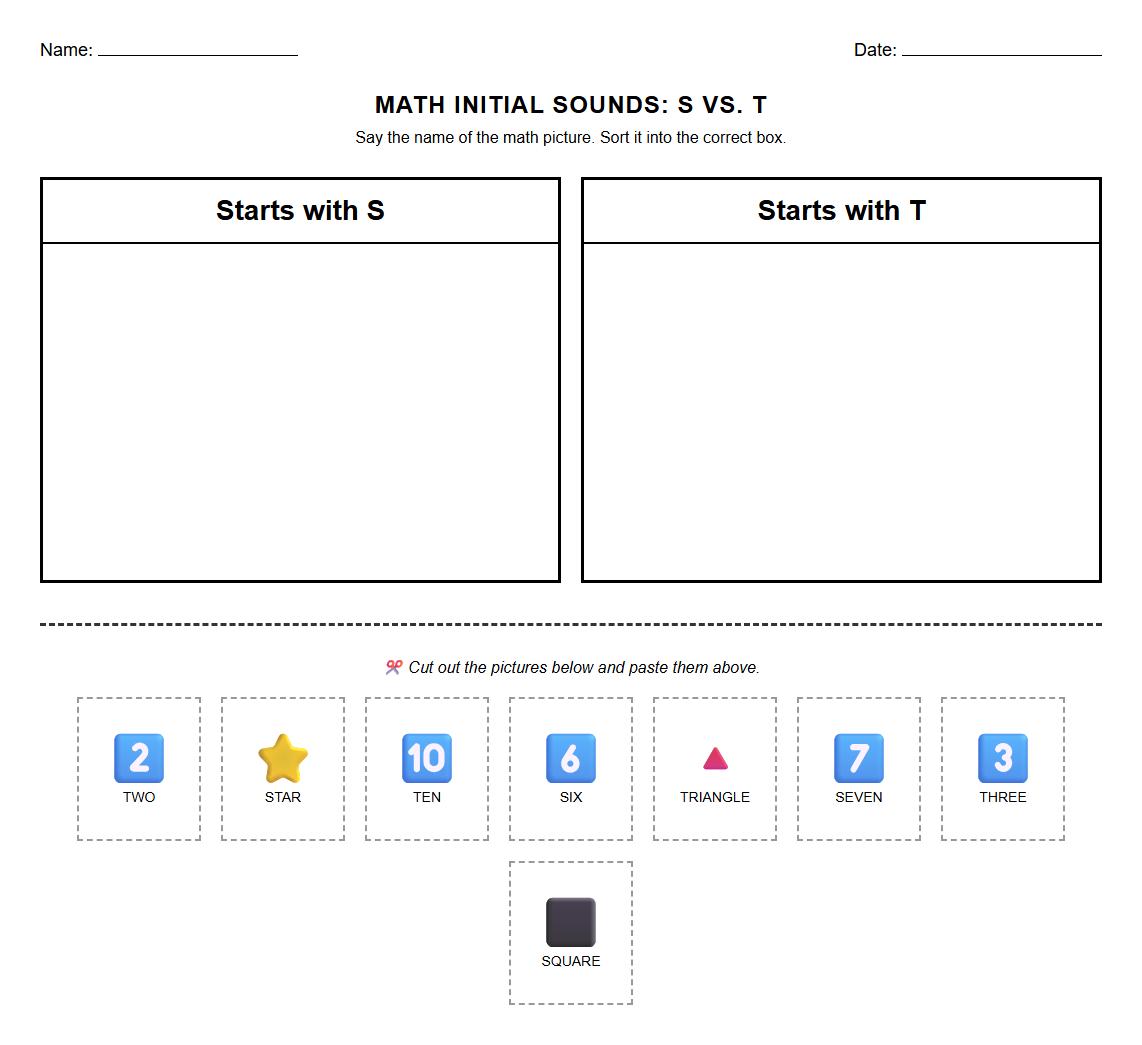
Initial Sound Phonics Sorting Worksheet

Download PDF     Pin it

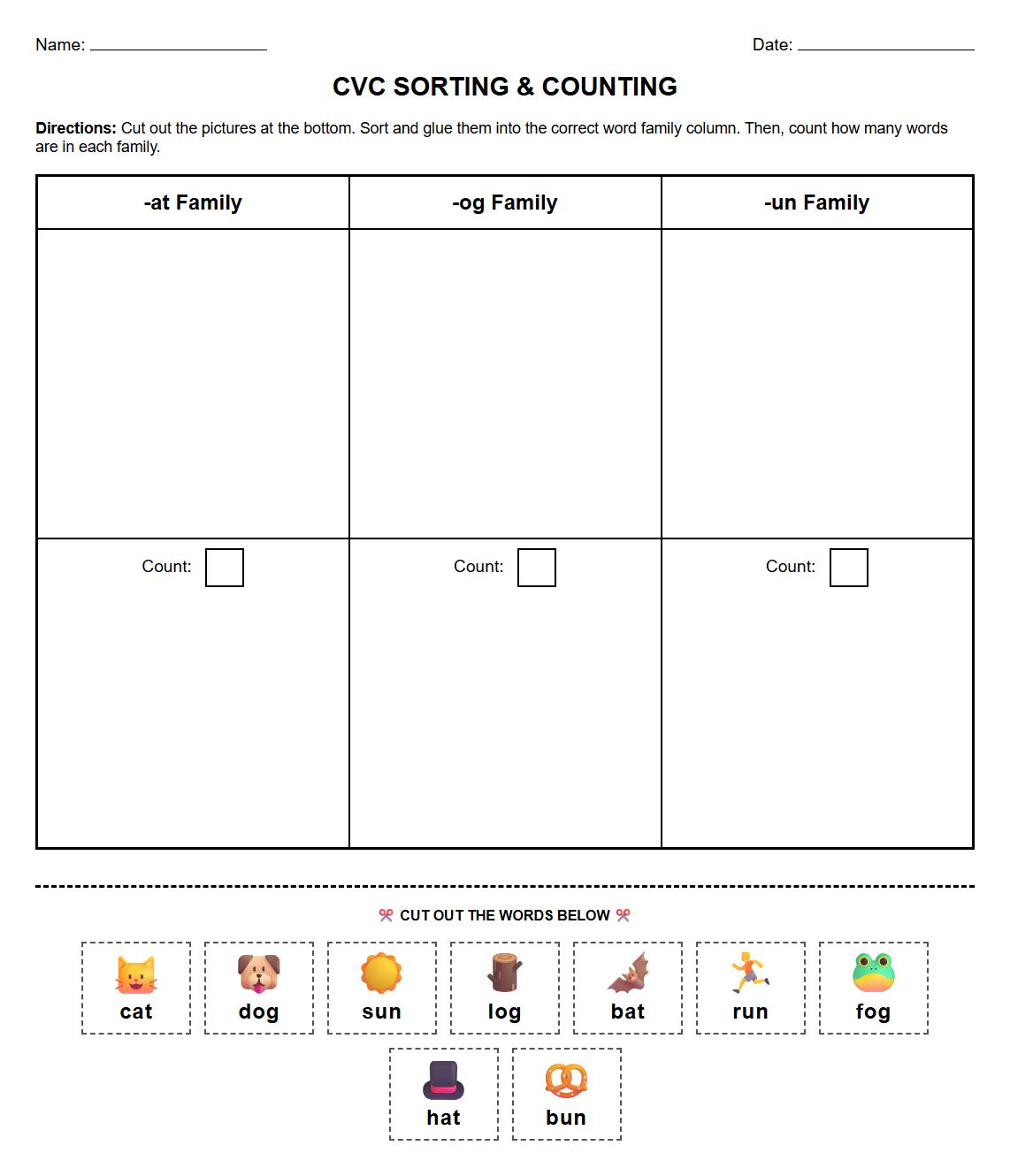
CVC Word Family Sorting Activity

CVC Word Family Sorting Activity

Download PDF     Pin it

Short Vowel Sound Classification Sheet
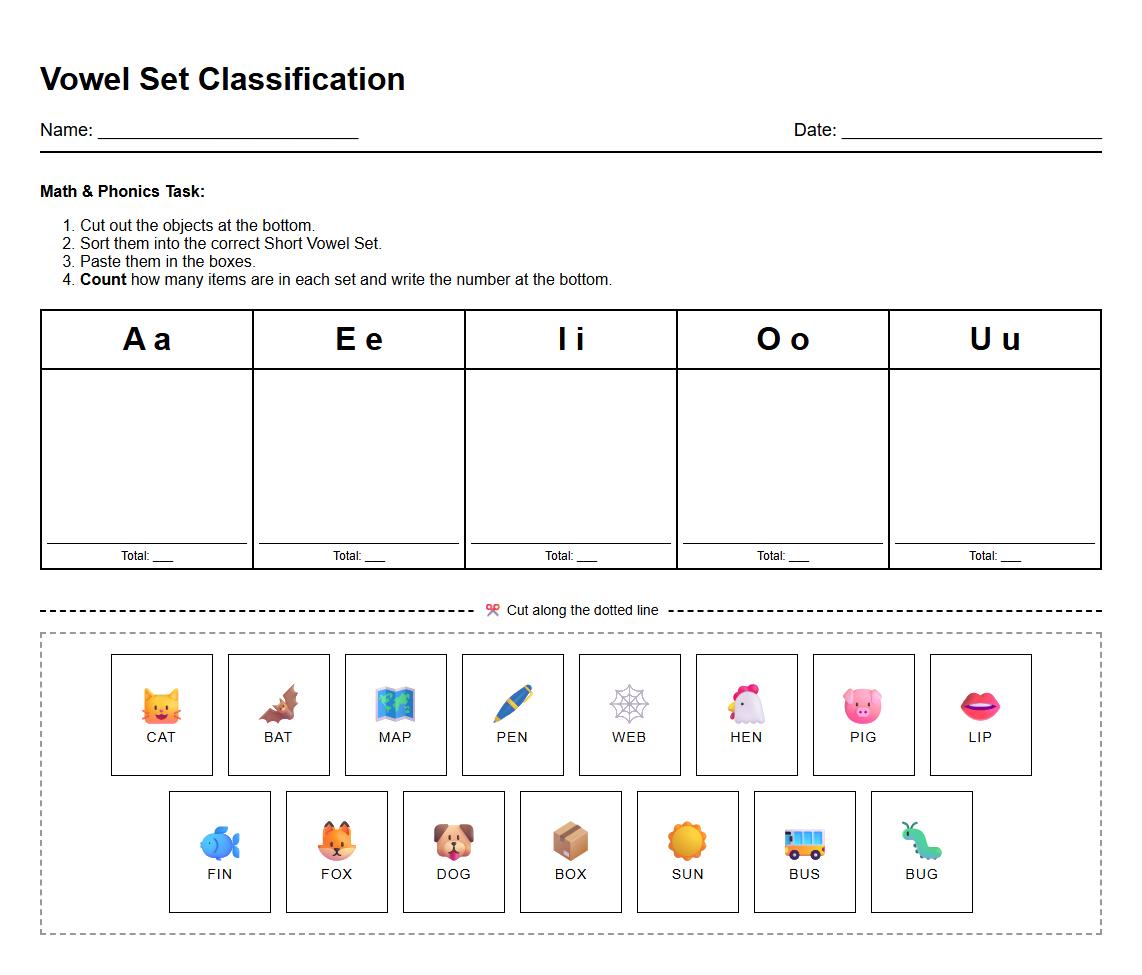
Short Vowel Sound Classification Sheet

Download PDF     Pin it

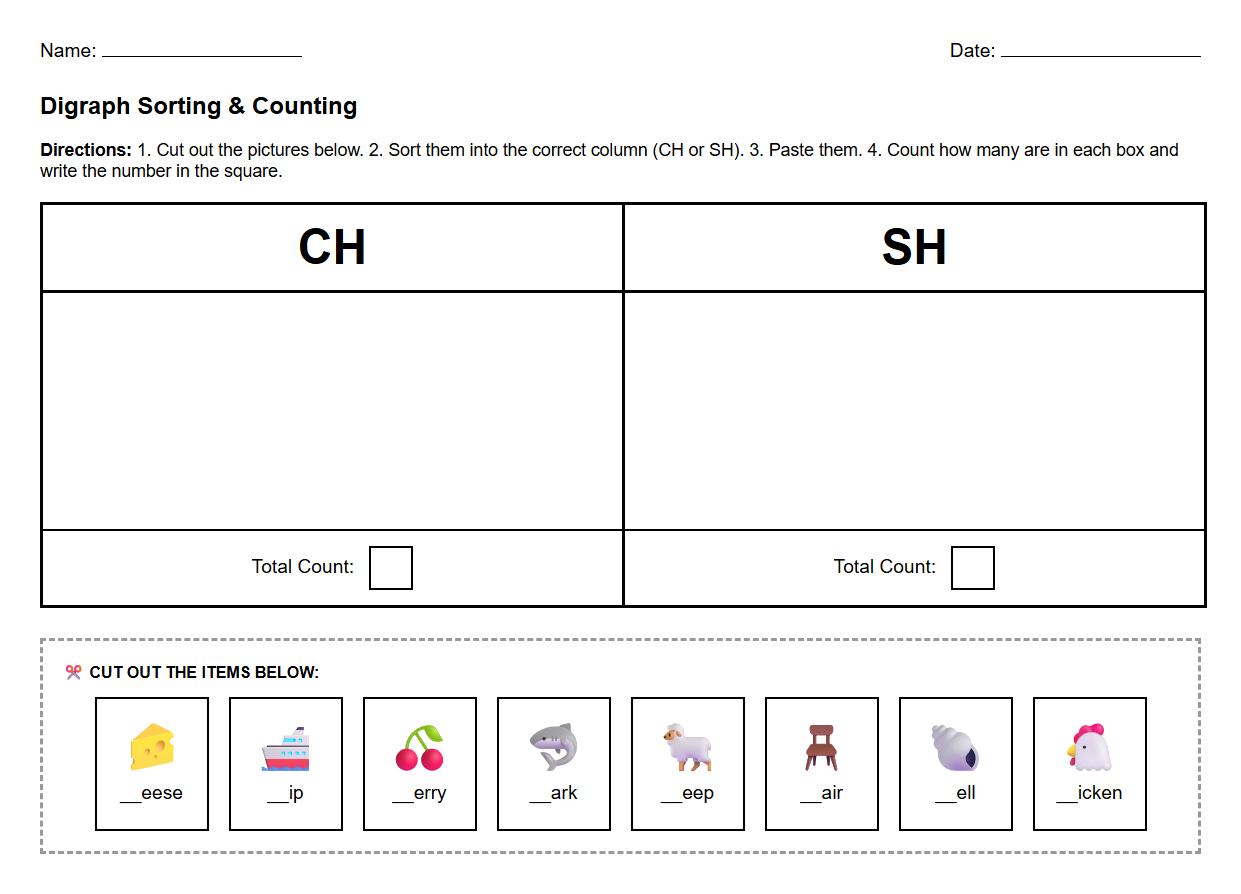
Digraph Sorting Phonics Practice

Digraph Sorting Phonics Practice

Download PDF     Pin it

Blends Classifying Worksheet

Blends Classifying Worksheet

Download PDF     Pin it

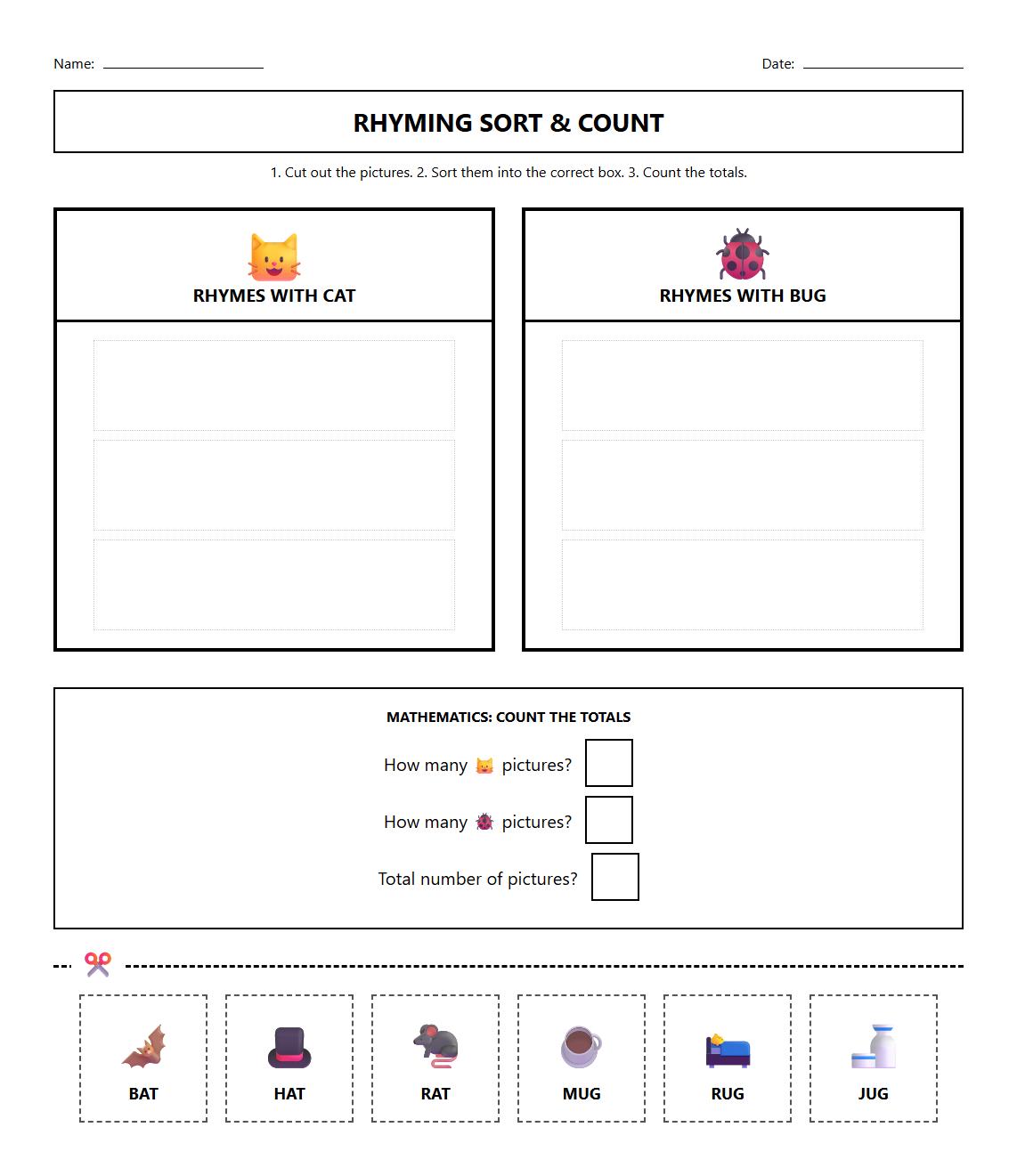
Rhyming Word Sorting Task

Rhyming Word Sorting Task

Download PDF     Pin it

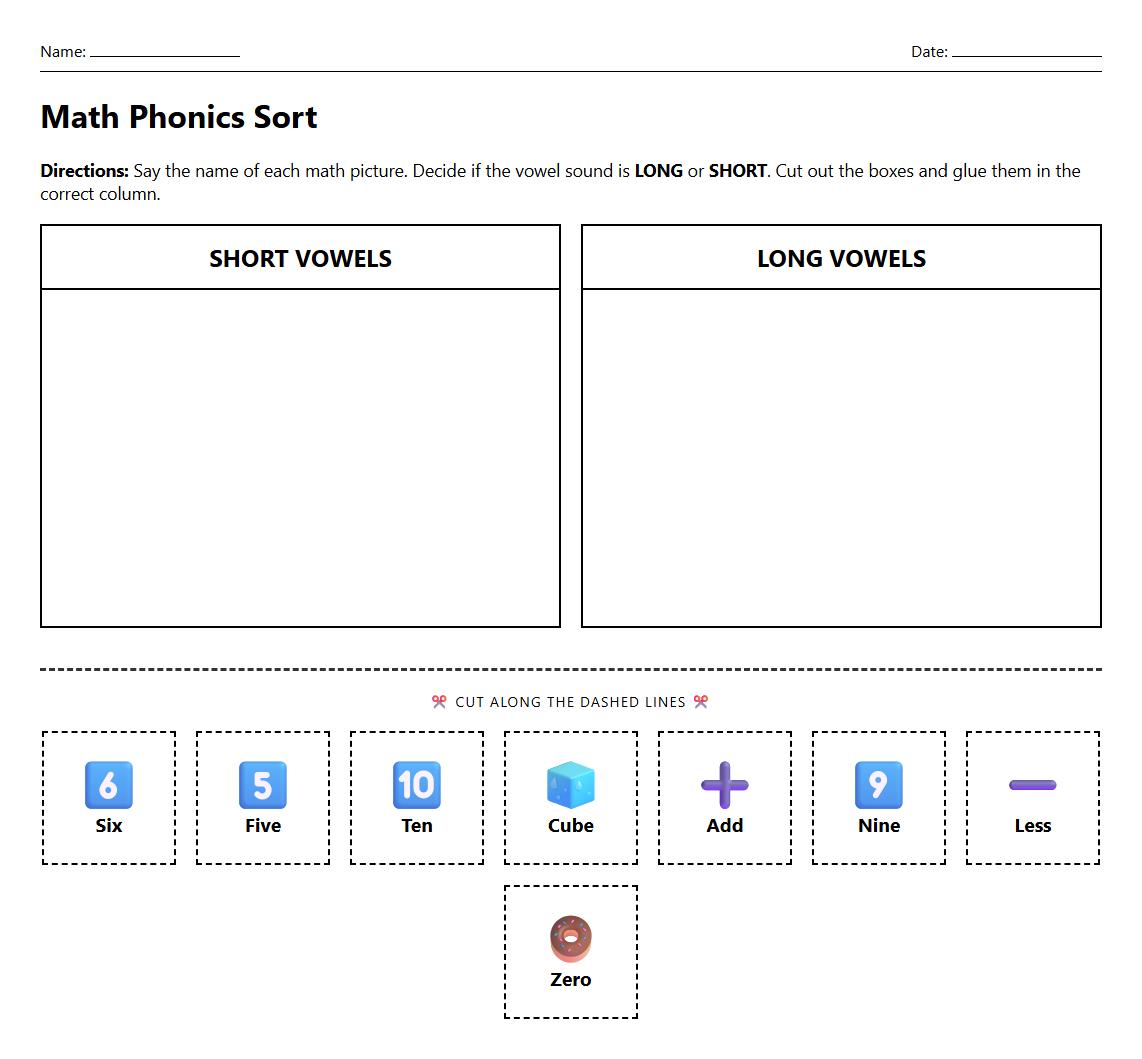
Long and Short Vowel Phonics Sort

Long and Short Vowel Phonics Sort

Download PDF     Pin it

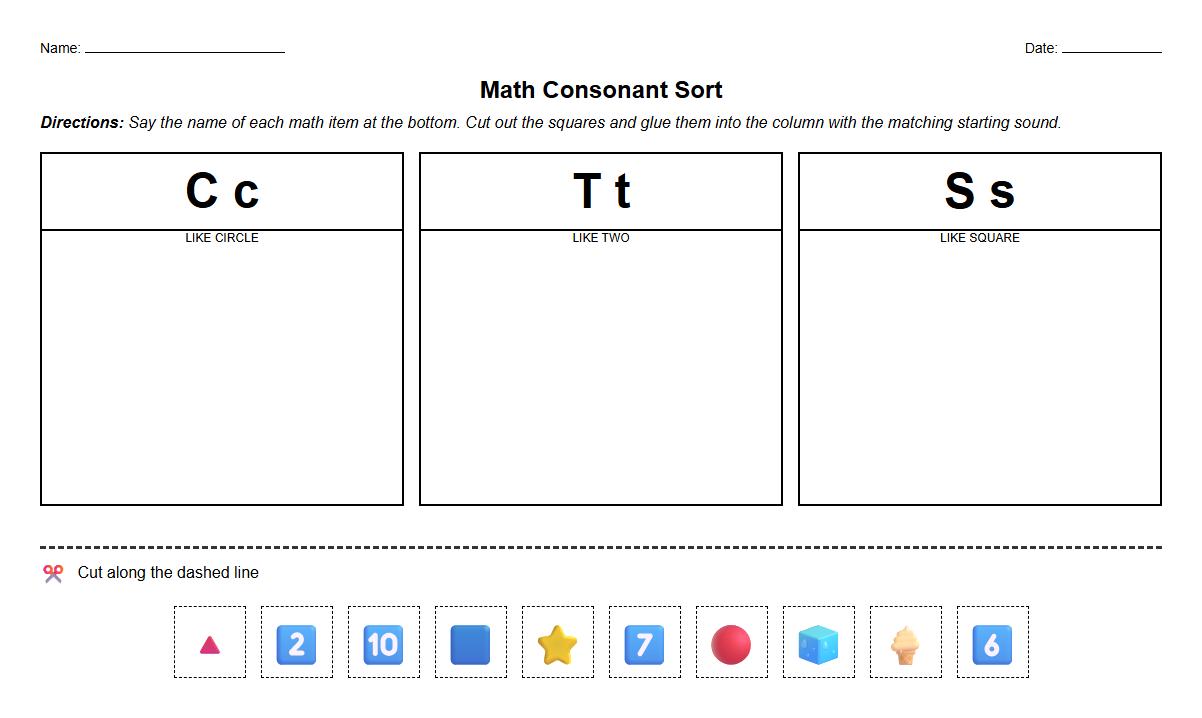
Consonant Sound Sorting Mat

Consonant Sound Sorting Mat

Download PDF     Pin it

R Controlled Vowel Classification Worksheet
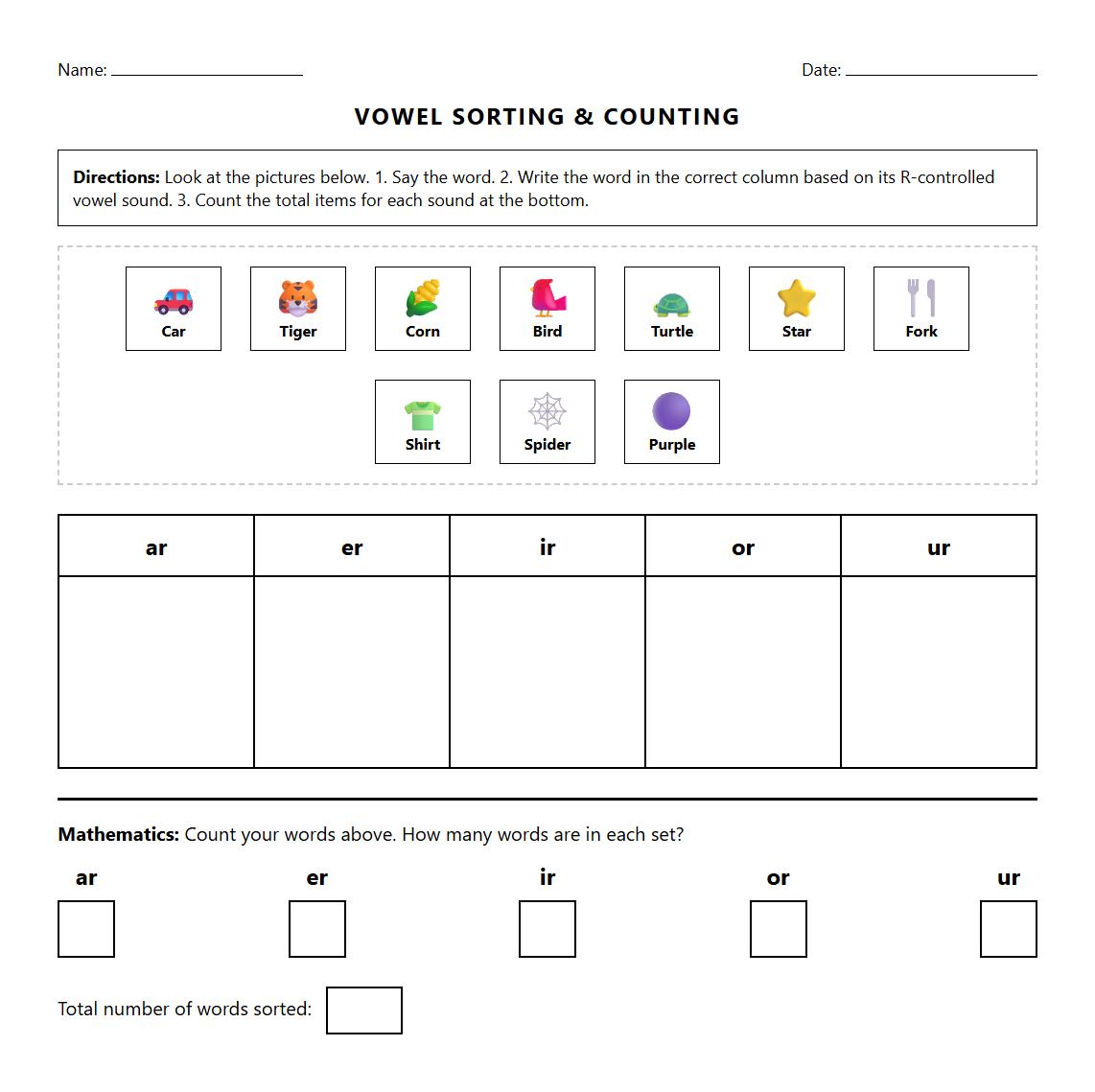
R Controlled Vowel Classification Worksheet

Download PDF     Pin it

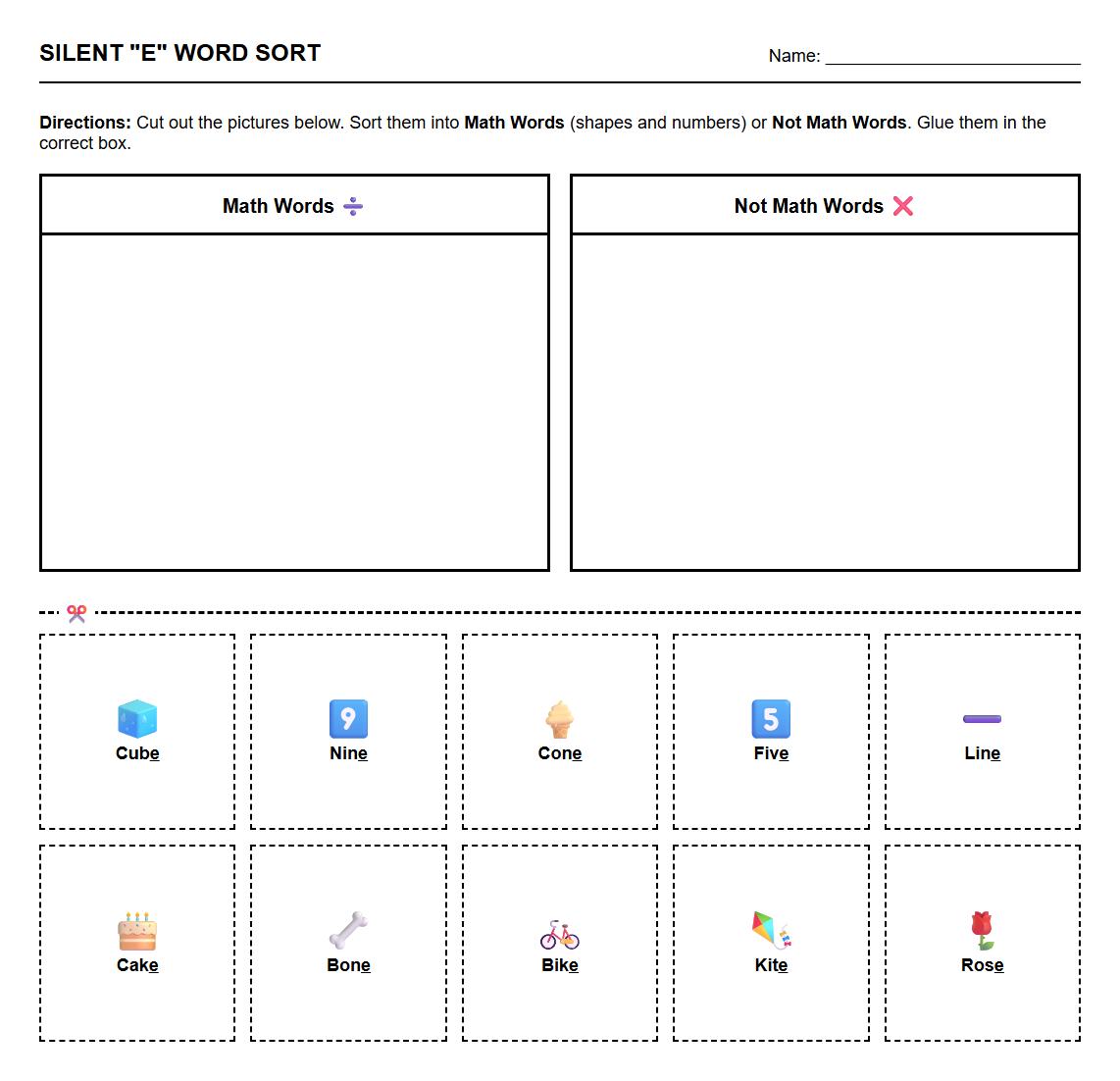
Silent E Word Sort Activity

Silent E Word Sort Activity

Download PDF     Pin it

Meaning of Sorting Words by Beginning Sounds in Kindergarten Literacy

Sorting words by their beginning sounds involves grouping words that share the same initial phoneme or sound. This activity helps children recognize and differentiate sounds, which is a key skill in early literacy development. By focusing on initial sounds, students build a foundation for decoding and spelling words. It also enhances their phonemic awareness, an essential step toward reading proficiency.

Using Picture Cards for Phonics Classification

Teachers can use picture cards to visually represent words and help students connect sounds with images. By sorting cards based on beginning sounds, children classify items and reinforce phonics concepts. This hands-on approach makes learning interactive and concrete, aiding memory retention. Additionally, picture cards support diverse learning styles and keep students engaged.

Common Categories in Phonics-Based Sorting Worksheets

Phonics sorting worksheets often use categories such as beginning sounds, ending sounds, and vowel patterns. Other common categories include consonant blends and digraphs. These groups help children focus on specific phonetic elements crucial to word recognition. Such categories provide a structured way to practice various phonics skills progressively.

Supporting Early Reading Skills Through Ending Sound Sorting

Sorting words by their ending sounds strengthens phonemic awareness by helping children hear and identify final phonemes. This skill is vital for decoding, spelling, and rhyming activities. Mastery of ending sounds improves reading fluency and contributes to a deeper understanding of word structure. It also prepares students for more complex phonics patterns.

Effective Phonics Patterns to Introduce in Initial Sorting Worksheets

Initial sorting worksheets benefit from focusing on simple, clear phonics patterns such as consonant-vowel-consonant (CVC) words and common consonant sounds like /b/, /m/, and /s/. Introducing short vowel sounds first helps children grasp fundamental phonemic concepts. Gradually, teachers can add blends and digraphs to increase challenge. Keeping patterns consistent supports confidence-building in early learners.

Improving Phonemic Awareness with Sorting and Classifying Activities

Sorting and classifying activities encourage children to listen closely to sounds and make sound-word connections. These tasks enhance the ability to segment and manipulate phonemes, which are critical for decoding words. Such engagement fosters better auditory discrimination skills. Consequently, phonemic awareness improves, laying the groundwork for successful reading acquisition.

Typical Materials in Phonics-Based Sorting Worksheets for Kindergarten

Worksheets usually include pictures, word lists, sorting grids, and occasionally manipulatives like tokens or counters. Visual aids such as image cards help link sounds to concrete objects. Clear instructions guide children through the sorting process step-by-step. These materials are designed to be simple yet effective for reinforcing phonetic concepts.

Assessing Student Progress with Sorting and Classifying Worksheets

Teachers assess progress by observing students' ability to correctly sort words or pictures based on phonics criteria. Performance can be measured through completed worksheets and participation in related activities. Informal assessments during sorting tasks help identify areas needing reinforcement. Regular use allows tracking of phonemic awareness development over time.

Adaptations for Students Struggling with Phonics-Based Sorting

For students facing challenges, teachers can simplify tasks by using fewer categories or focusing on highly familiar sounds. Providing additional visual and auditory support, like repeated sound pronunciation, can aid understanding. Implementing one-on-one guidance or using multi-sensory approaches helps reinforce learning. Patience and incremental difficulty adjustments ensure all students stay engaged.

Family Support for Sorting and Classifying Phonics Skills at Home

Families can reinforce sorting skills by engaging in daily sound recognition games using household items or picture books. Encouraging children to identify beginning and ending sounds during everyday activities builds practical phonics awareness. Consistent practice at home complements school learning and promotes confidence. Simple, playful interactions make phonics enjoyable for the whole family.


More in Mathematics Category


About the author. Nylen Smith is a dedicated educator and cofounder of KWorksheet.com, a popular platform specializing in high-quality kindergarten worksheets and printable activities.

Disclaimer. The information provided in this document is for general informational purposes and/or document sample only and is not guaranteed to be factually right or complete. Please report to us via contact-us page if you find and error in this page, thanks.

Comments

No comment yet