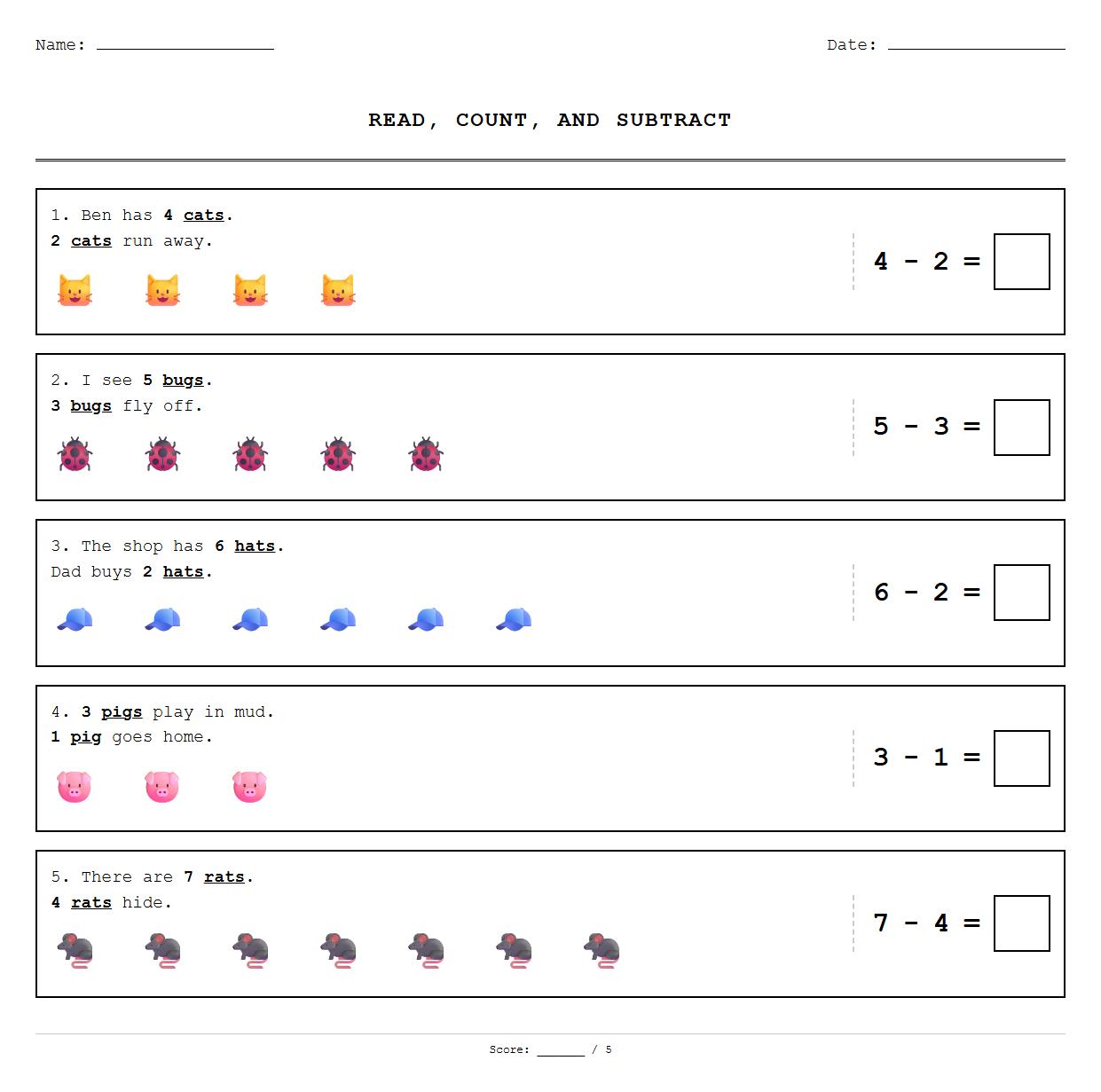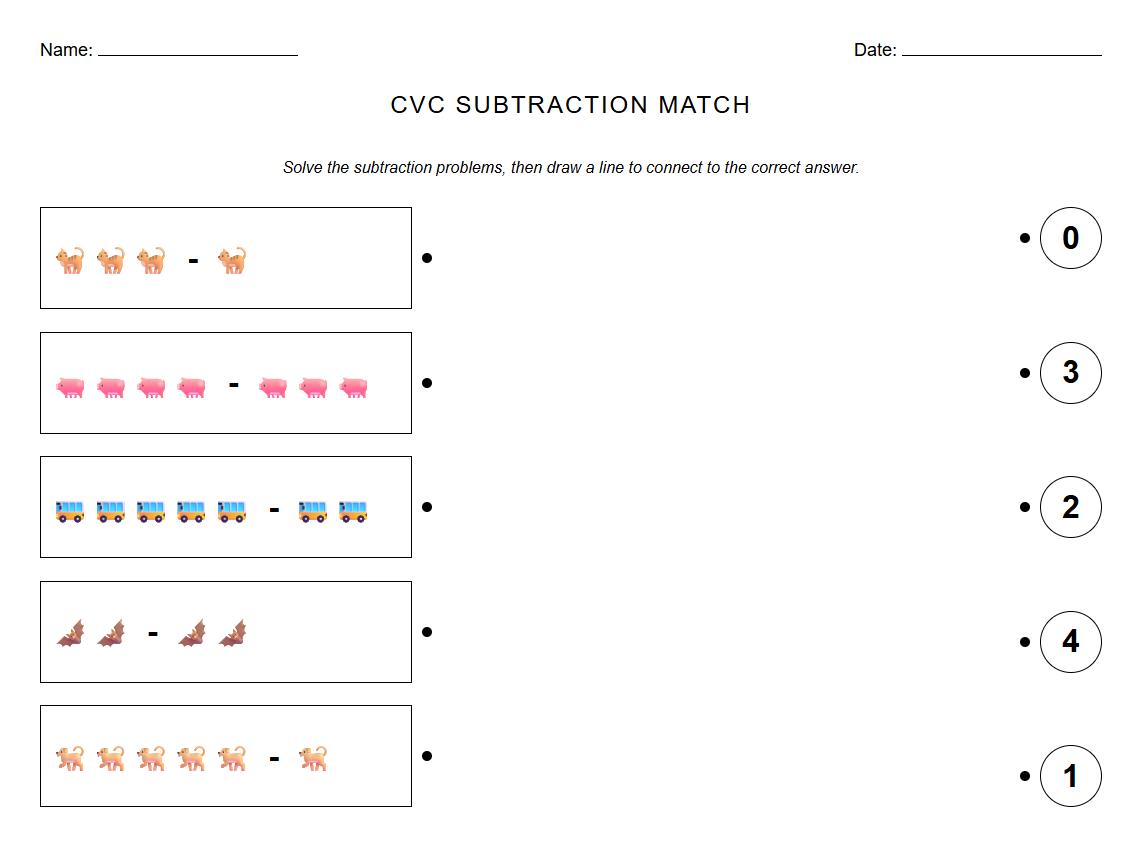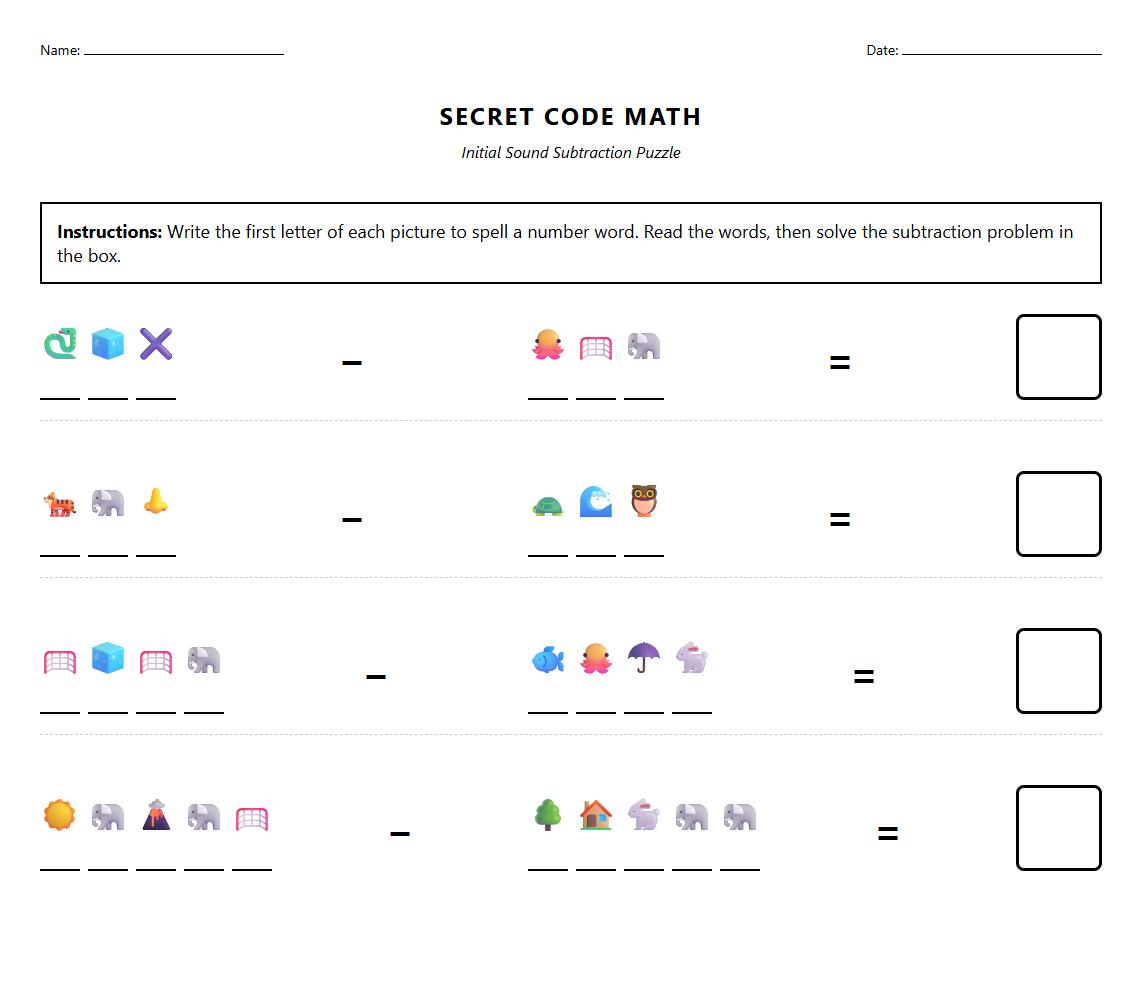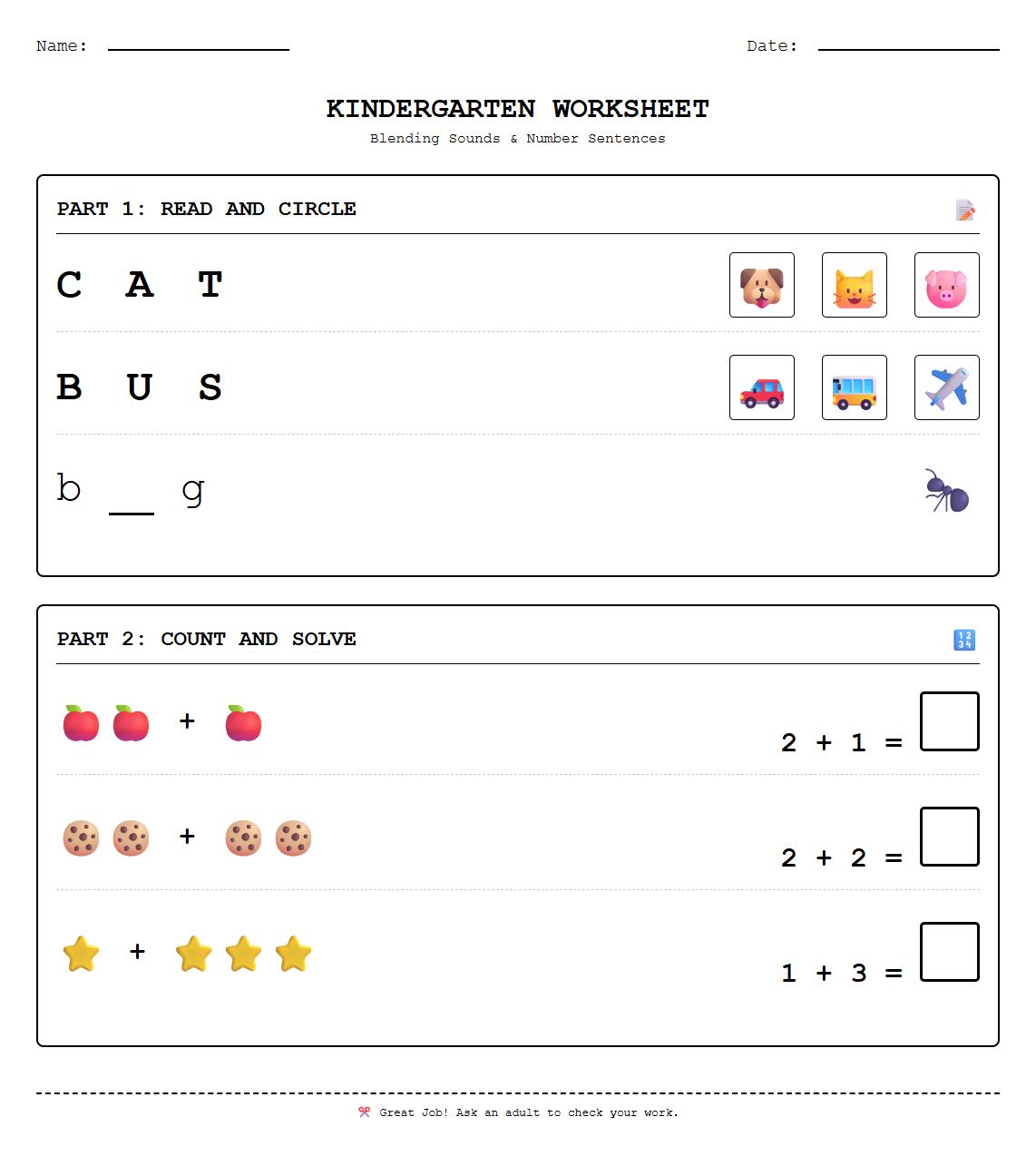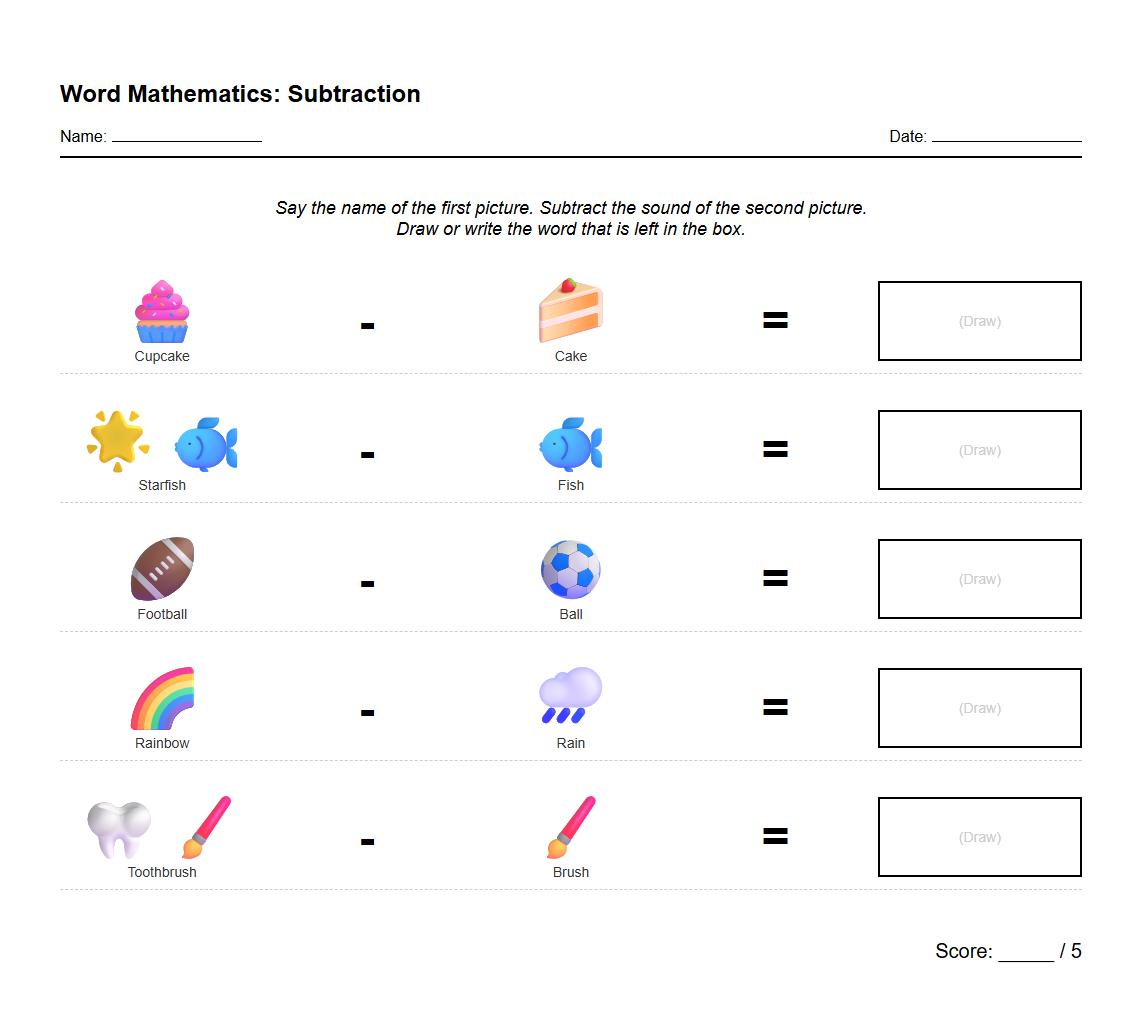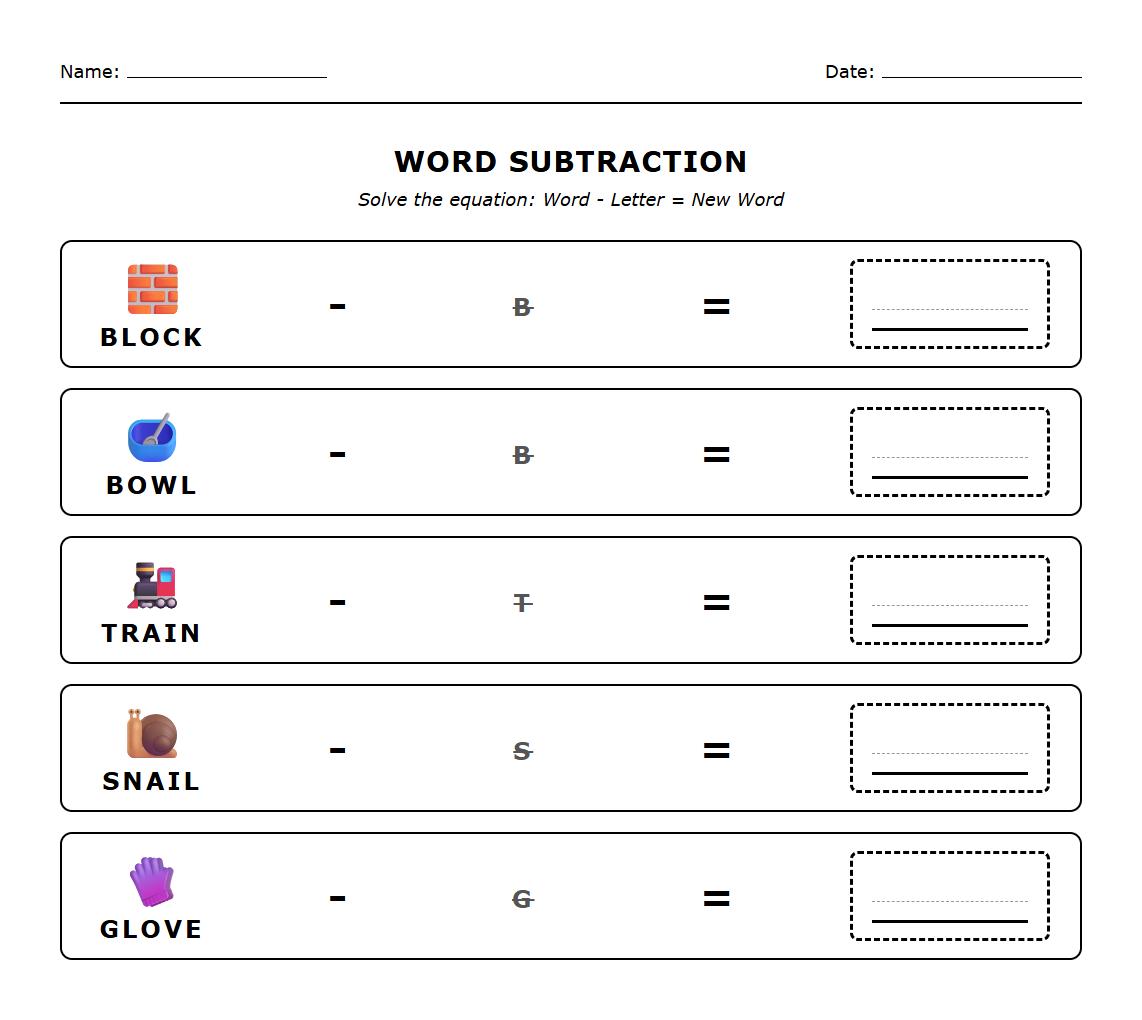
Phonics Integrated Basic Subtraction Worksheets combine early literacy skills with foundational math concepts, helping young learners grasp subtraction through engaging, phonics-based activities. These worksheets enhance number recognition and problem-solving abilities while reinforcing letter sounds and word formation. Explore the available worksheets to support your child's early learning journey effectively.
Understanding the Sound of the Letter S
The letter S makes the /s/ sound as in the word sun. This clear, hissing sound is crucial for early phonics learning. Encouraging children to listen and repeat helps strengthen their letter-sound recognition. Use fun activities emphasizing words starting with S to enhance their skills.
Basic Subtraction: Apples Example
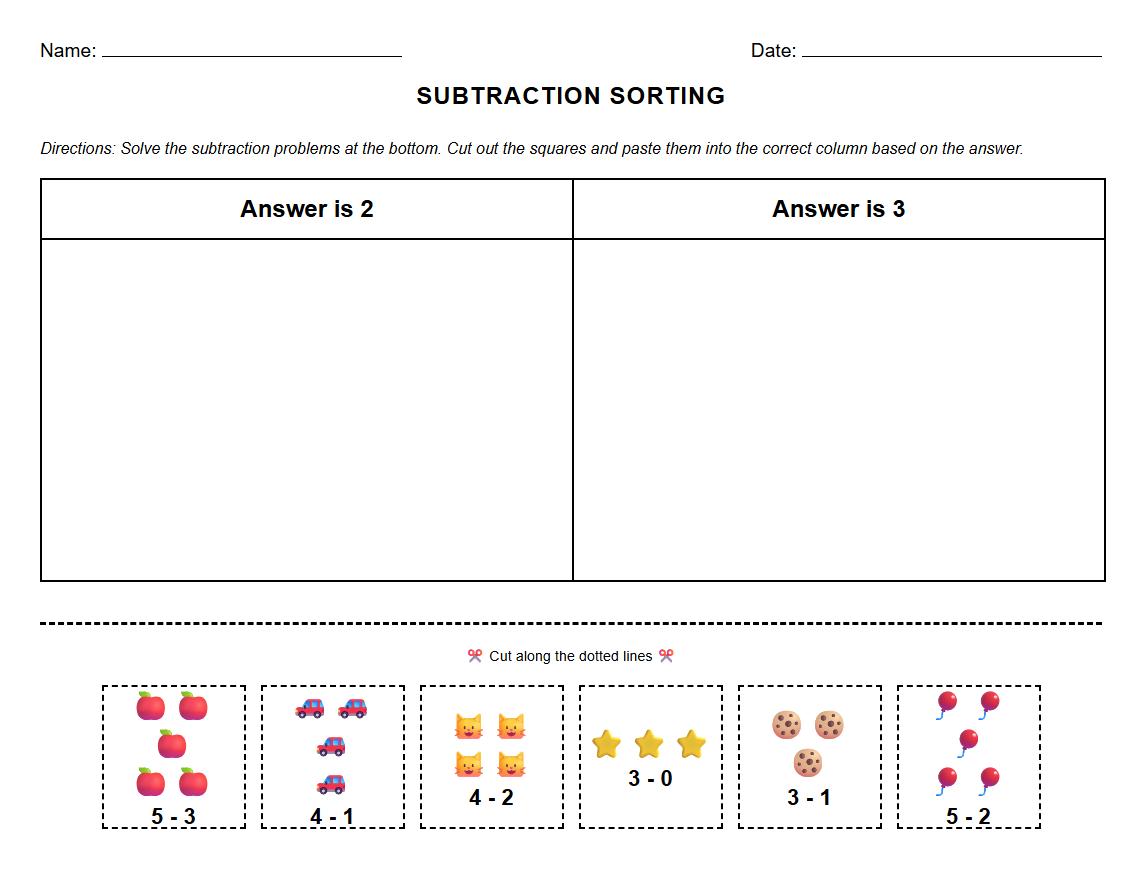
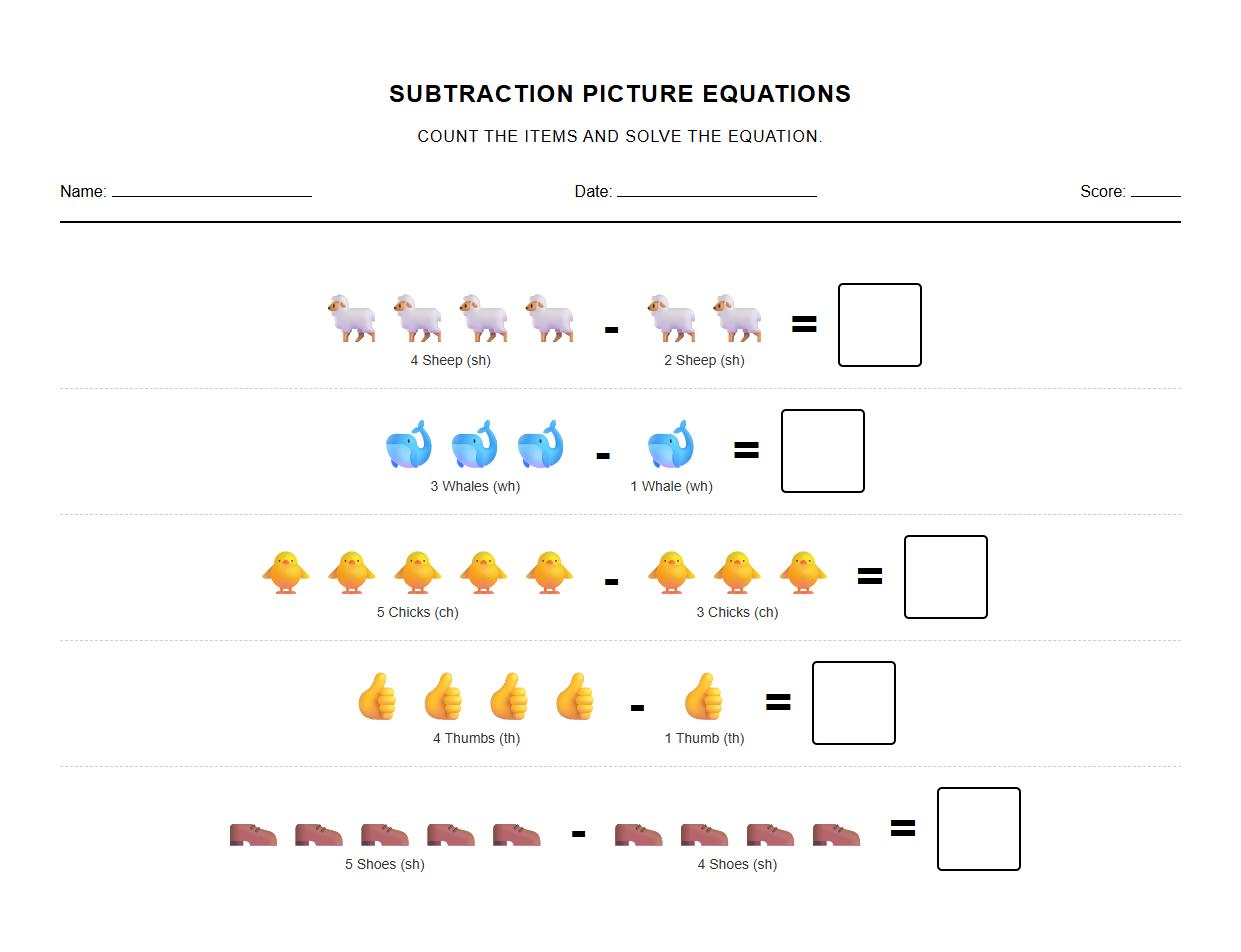
When you have 5 apples and take away 2, 3 apples are left. This simple subtraction introduces children to the concept of removing objects. Visual aids like real apples or pictures help solidify understanding. Encourage parents and teachers to use everyday items for practical learning.
Identifying Initial Sounds: Letter B
Ask children which picture starts with the letter B: ball or cat? This activity focuses on recognizing initial sounds and matching them to letters. Engaging children with images and sounds boosts phonemic awareness crucial for reading readiness. Use clear, distinct pictures to avoid confusion.
Rhyming Words: Dog Example
Circle the word that rhymes with dog: log or pen? Rhyming helps children develop sound patterns and phonological skills. Encouraging rhyming games enhances their ability to decode new words. Include diverse rhyme pairs for a comprehensive learning experience.
Subtraction Practice: Pencils
How many pencils remain if you subtract 3 from 7? The answer is 4 pencils. Counting backward or using physical objects supports understanding of subtraction. This builds a strong foundation in basic math concepts. Reinforce with repeated, hands-on practice.
Matching Letter Sounds: Letter M
Which word matches the sound of letter M: moon or fish? The correct answer is moon, which begins with the /m/ sound. Teaching children to associate sounds with letters promotes reading skills. Use auditory and visual cues to enhance learning.
Simple Subtraction with Cookies
If you have 4 cookies and eat 1, then 3 cookies are left. This example simplifies subtraction for young learners. Using familiar items like cookies makes math relatable and fun. Encourage sharing and interactive problem solving.
Identifying Beginning Letters
Identify the letter that begins the word hat. The first letter is H. Early letter recognition is critical for reading development. Use letter flashcards and matching games to support this skill.
Number Sentence Matching
Find the number sentence that matches: 6 minus 2 equals what? The correct sentence is 6 - 2 = 4. Connecting numbers with subtraction symbols strengthens math literacy. Visual number lines and charts aid comprehension.
Identifying Words That Do Not Belong
Which word does not belong: bat, cat, sun? The word sun does not belong because it starts with a different letter sound. This activity develops critical thinking and categorization skills. Use group discussions to deepen understanding.


Hands On Subtraction Worksheet for Kindergarten Grade