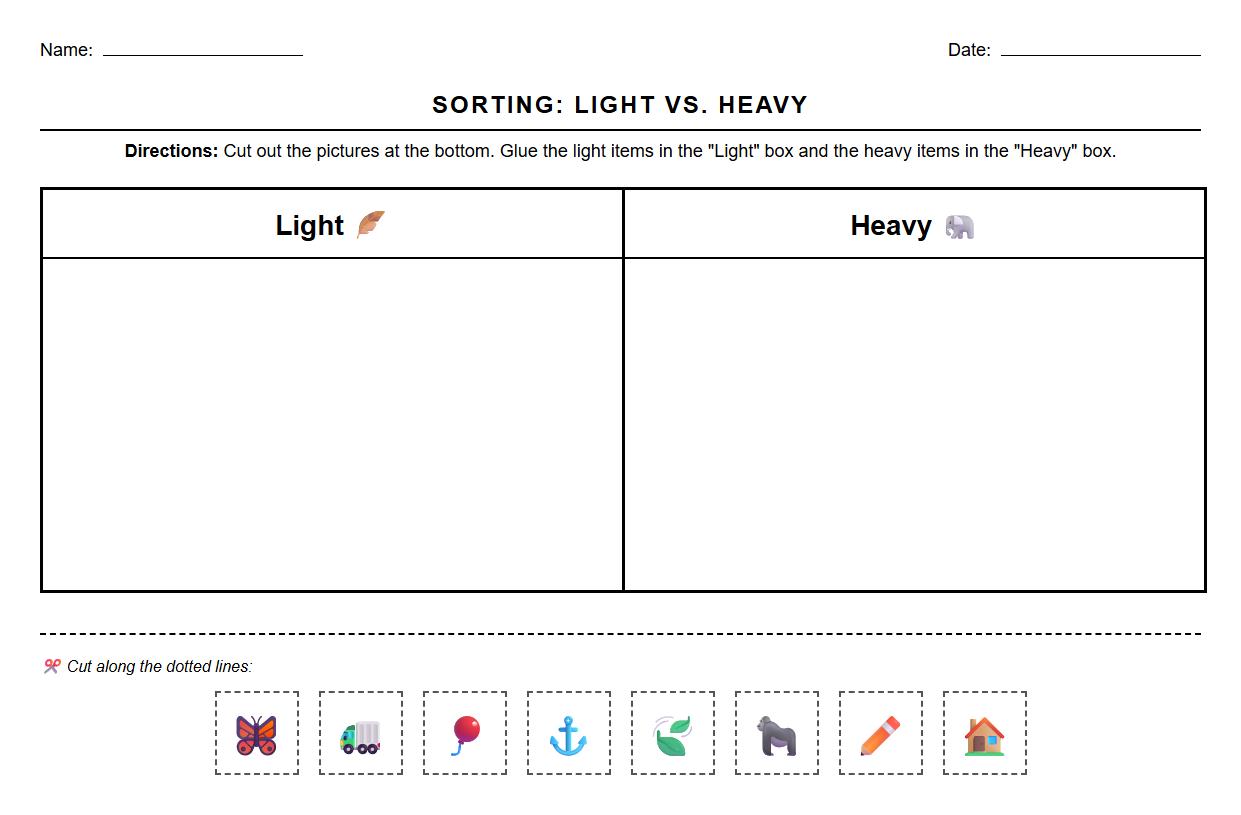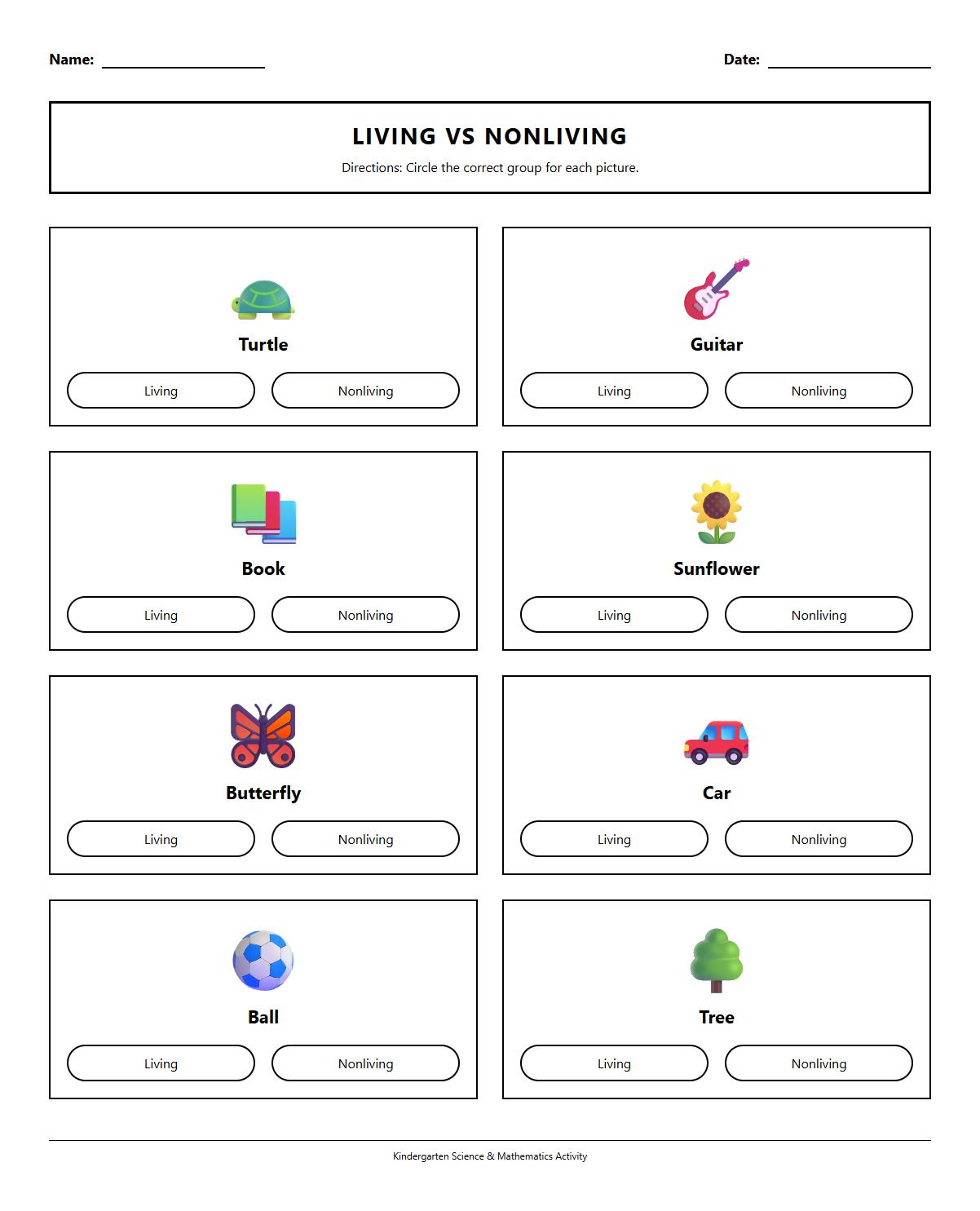
Sorting and classifying are essential foundational math skills that help kindergarten students recognize patterns and organize information effectively. These activities enhance critical thinking and support the development of early problem-solving abilities. Explore our collection of worksheets designed to strengthen these important skills.
Sorting Objects by Color
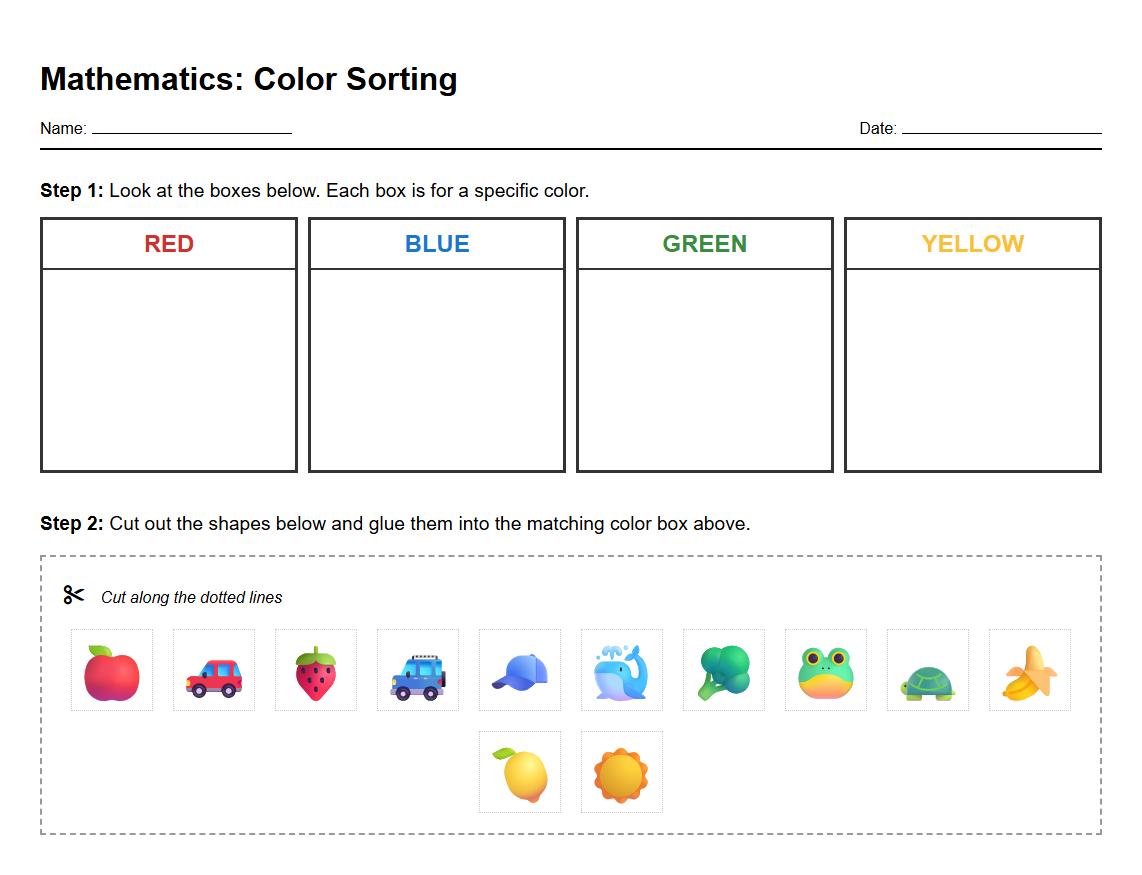
Children can sort everyday objects such as blocks, buttons, crayons, and toys by color. This activity helps develop their visual discrimination and fine motor skills. Encourage children to identify primary and secondary colors while sorting. It's an engaging way for them to learn about color recognition.
Grouping Items by Shape
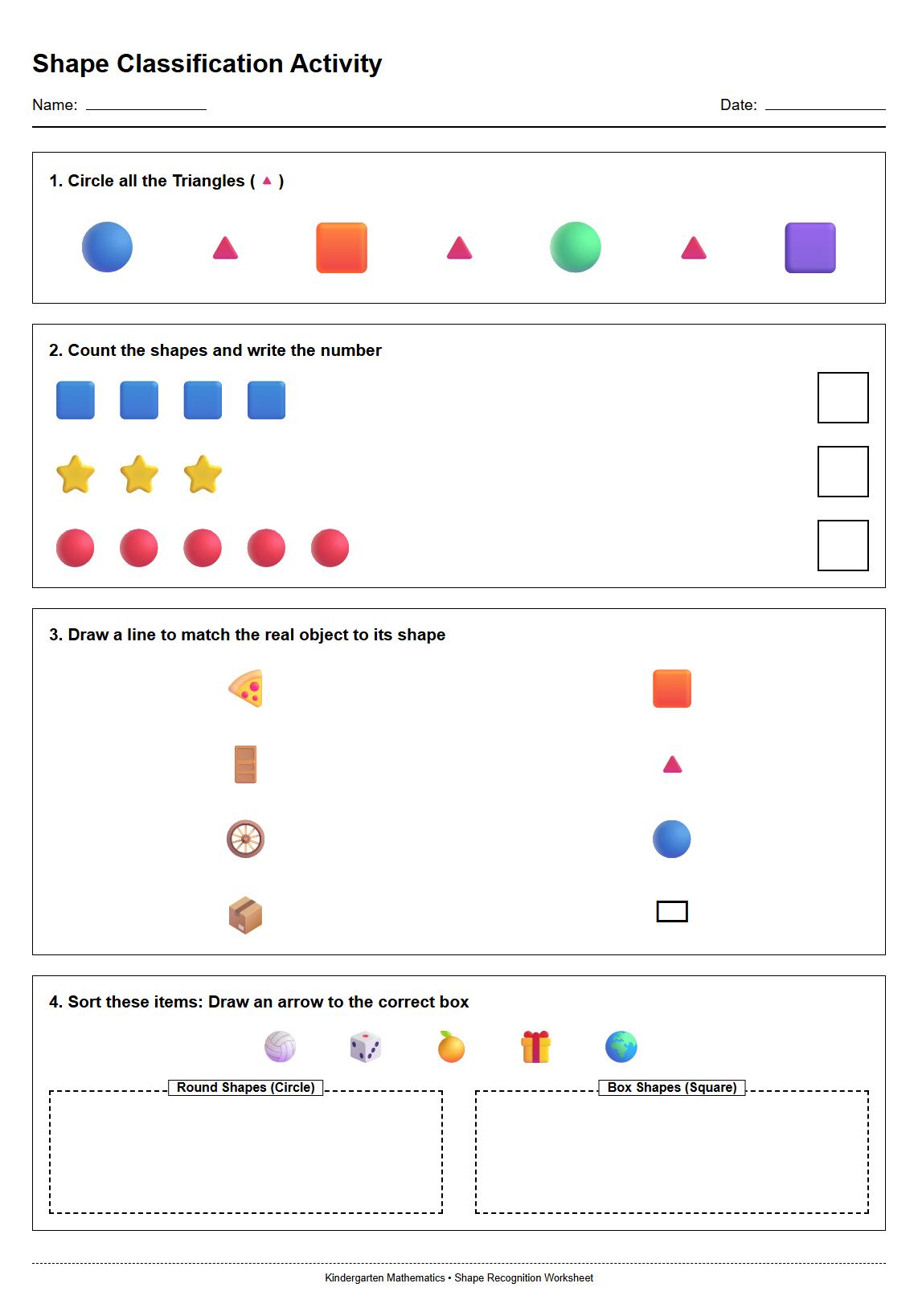
Grouping items by shape involves categorizing objects like circles, squares, triangles, and rectangles. Use shape blocks or cutouts to help children recognize different geometric forms. This activity improves spatial reasoning and introduces basic geometry concepts. Ask children to describe the shapes as they sort.
Sorting by Size
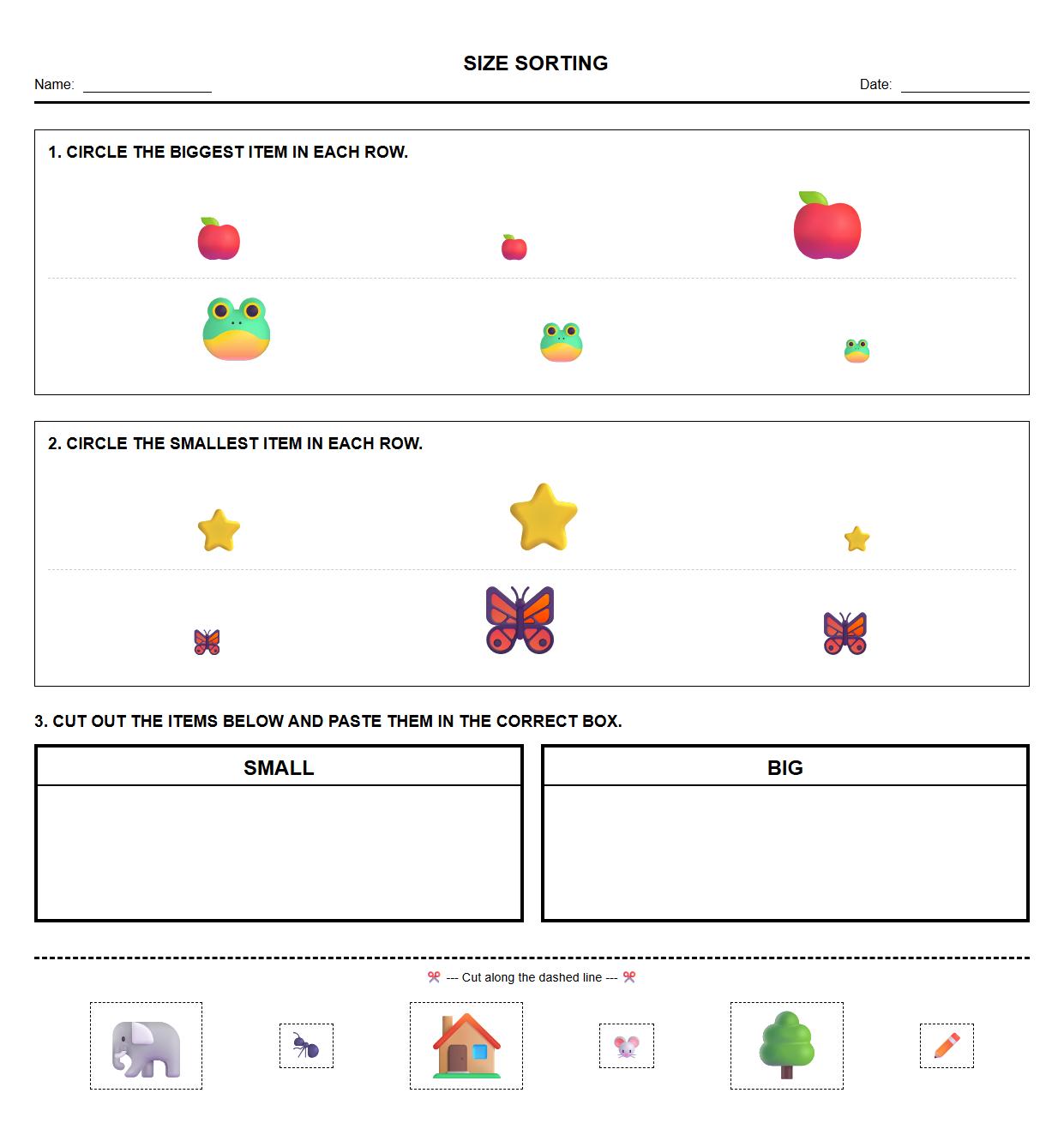
Objects such as toys, blocks, or leaves can be sorted based on size, such as small, medium, and large. Sorting by size helps children understand measurement and comparison. Encourage children to use words like bigger, smaller, longest, and shortest during the activity. This cultivates their ability to classify and organize by physical attributes. For more, explore comparing big and small items.
Grouping Identical Items
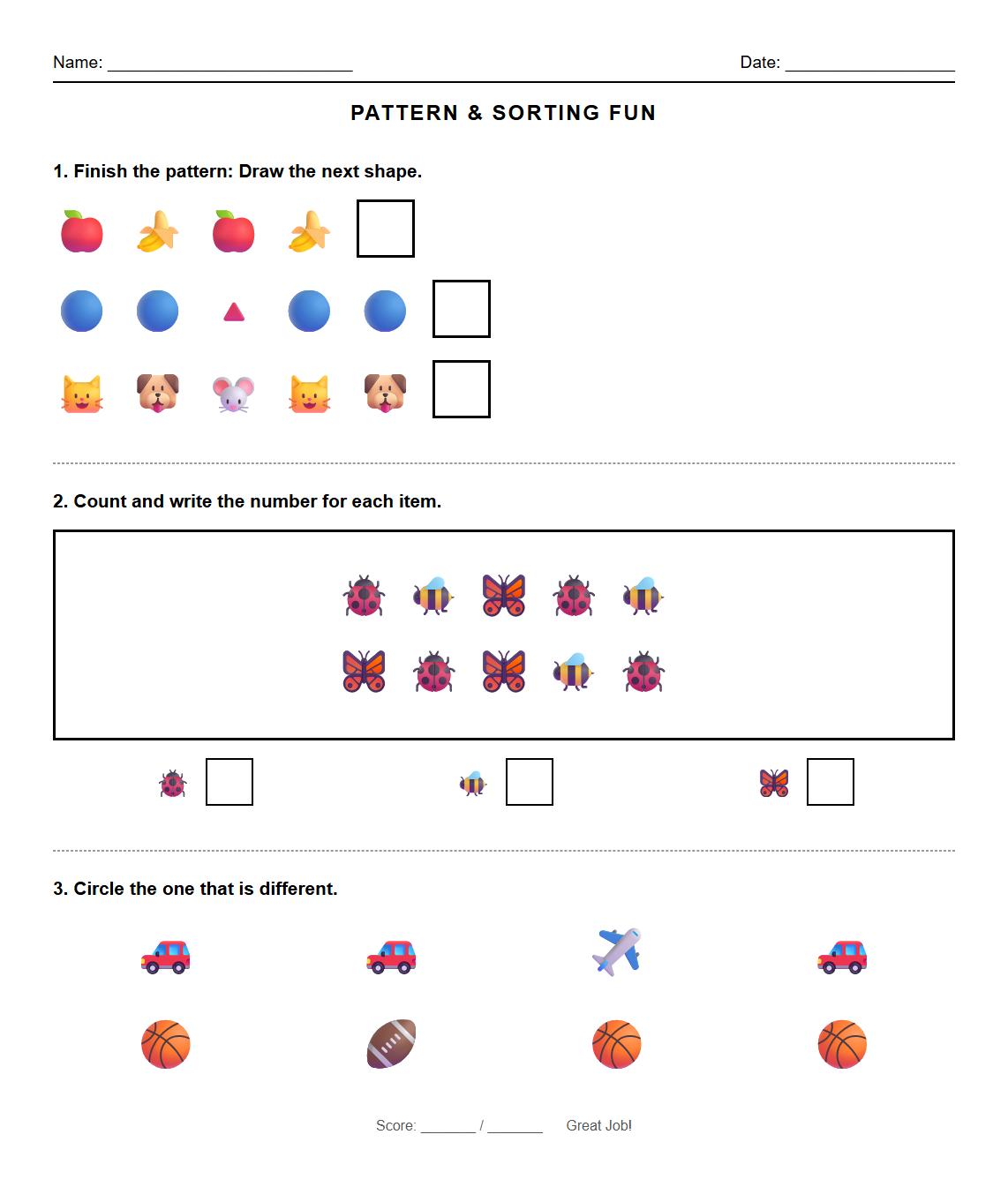
Children can find items that are exactly the same and put them in one group to understand matching concepts. This exercise aids in developing memory and attention to detail. Use pairs of socks, matching cards, or identical toys for this purpose. Highlight the importance of recognizing similarities and differences. Try a match and complete pattern worksheet for practice.
Counting Groups by Color
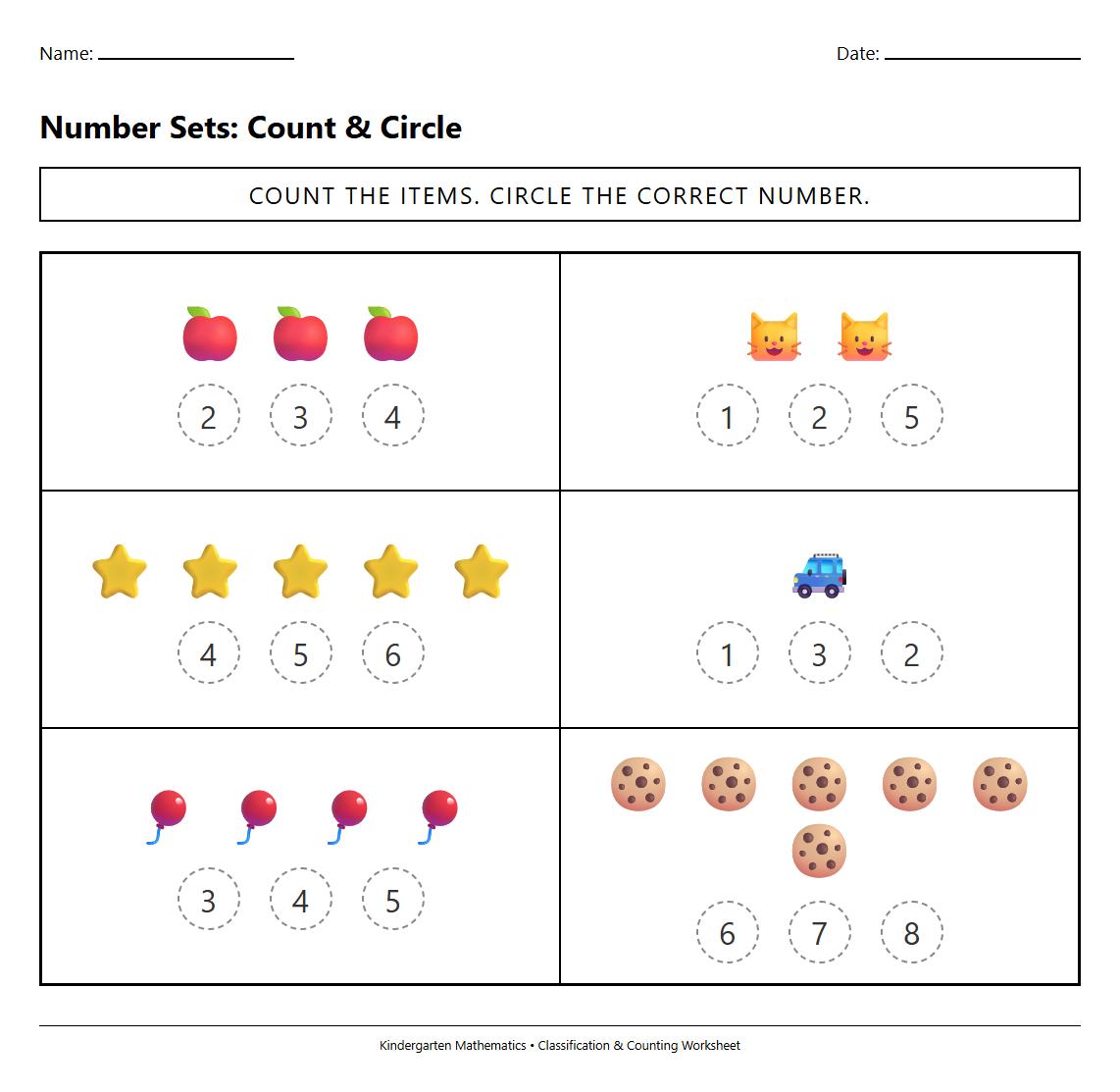
After sorting objects by color, children can count how many distinct color groups they created. This reinforces both sorting skills and early counting concepts. Encourage children to say the number of items out loud for verbal practice. Counting groups also helps track their sorting accuracy with tally mark activities.
Identifying Objects That Don't Fit
Challenge children to find objects that do not belong in their sorted groups and explain why. This promotes critical thinking and reasoning skills. For example, a blue block in a red pile stands out as it doesn't fit. Discussing these differences helps children understand categorization nuances.
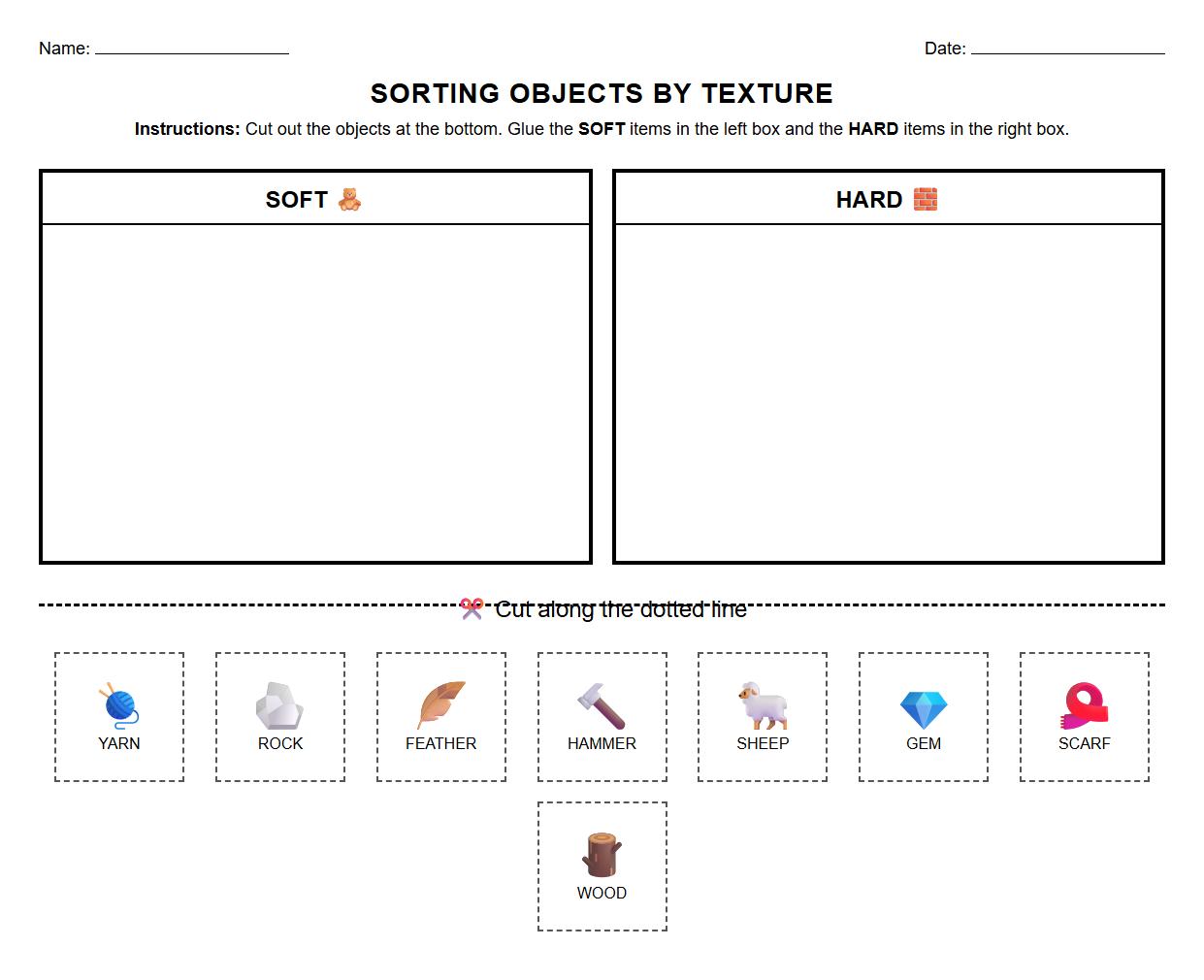
Sorting by Texture
Using blocks or fabric pieces, children can sort items based on their texture, such as rough, smooth, or bumpy. This sensory activity enhances tactile awareness and vocabulary development. Encourage children to explore with their hands and describe how each item feels. Texture sorting integrates sensory learning with classification.
Counting Items in Each Group
After sorting, have children count the number of items in each category to practice number recognition and counting skills. This step helps connect sorting with quantitative understanding. Children can record results using drawings or simple charts. It's a practical way to combine math with sorting activities.
Organizing Pictures by Rules
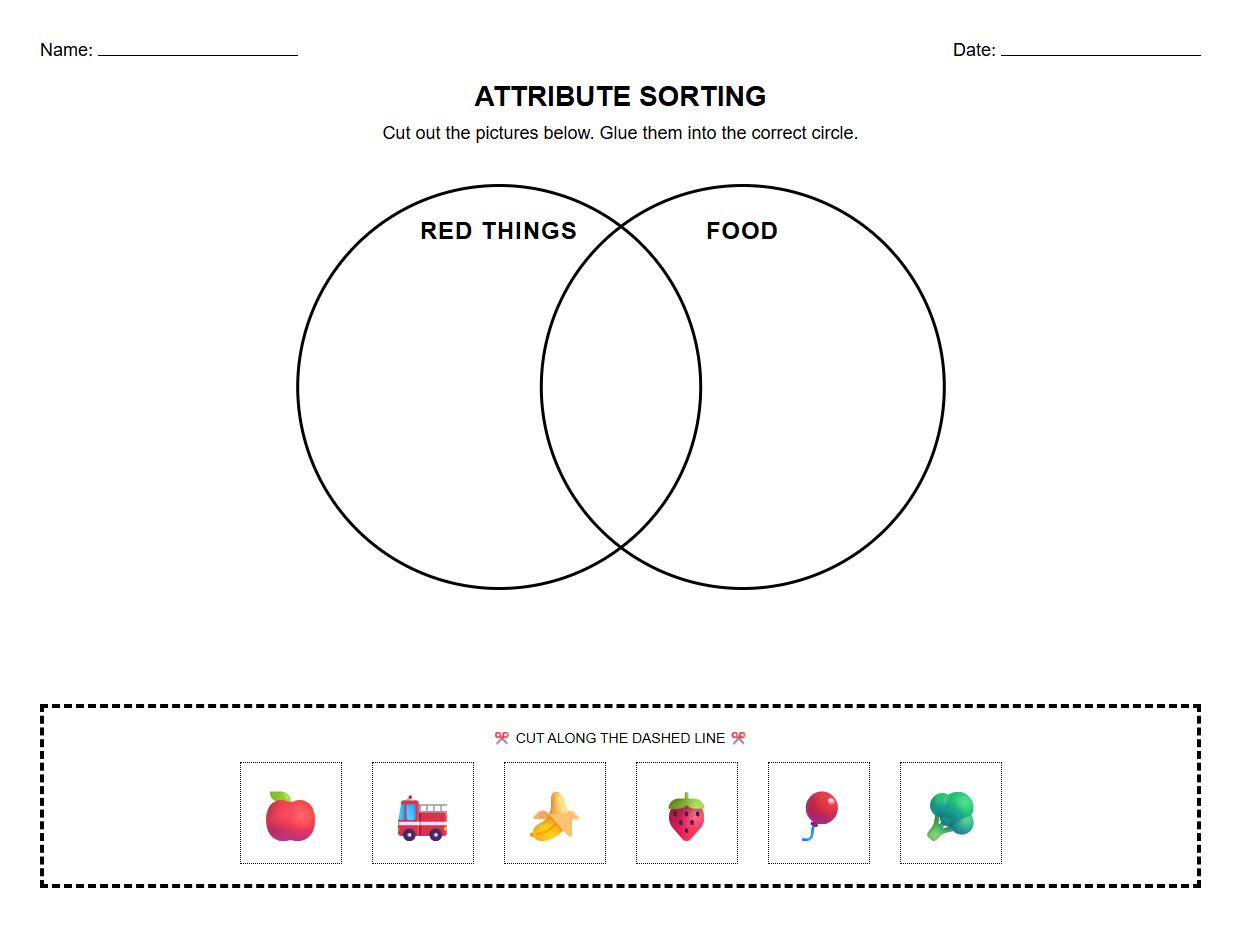
Ask children what rule they used to organize pictures, such as grouping by animals, colors, or shapes. Explaining their organizing logic strengthens verbal skills and cognitive processing. It encourages children to think about classification criteria intentionally. This reflection deepens their understanding of sorting principles. Learn more about estimating and organizing skills.
Classifying Animals and Toys Separately
Separating animals from toys teaches children about categories and classification in the natural and man-made world. Use images or physical representations to illustrate differences clearly. This activity promotes knowledge of living versus non-living objects. It helps children understand how to sort based on function and origin.


Phonics-Based Sorting and Classifying Worksheets for Kindergarten Literacy