Early Math Skills Basic Subtraction Activity Worksheet

📅 May 16, 2025 👤 Nylen Smith

Practice foundational subtraction skills with engaging, hands-on activities designed to build numerical understanding and confidence. These exercises focus on simple subtraction problems that help young learners develop problem-solving abilities and number sense. Explore our available worksheets to support early math success and make learning subtraction fun.

Basic Subtraction Facts Worksheet with Visual Aids
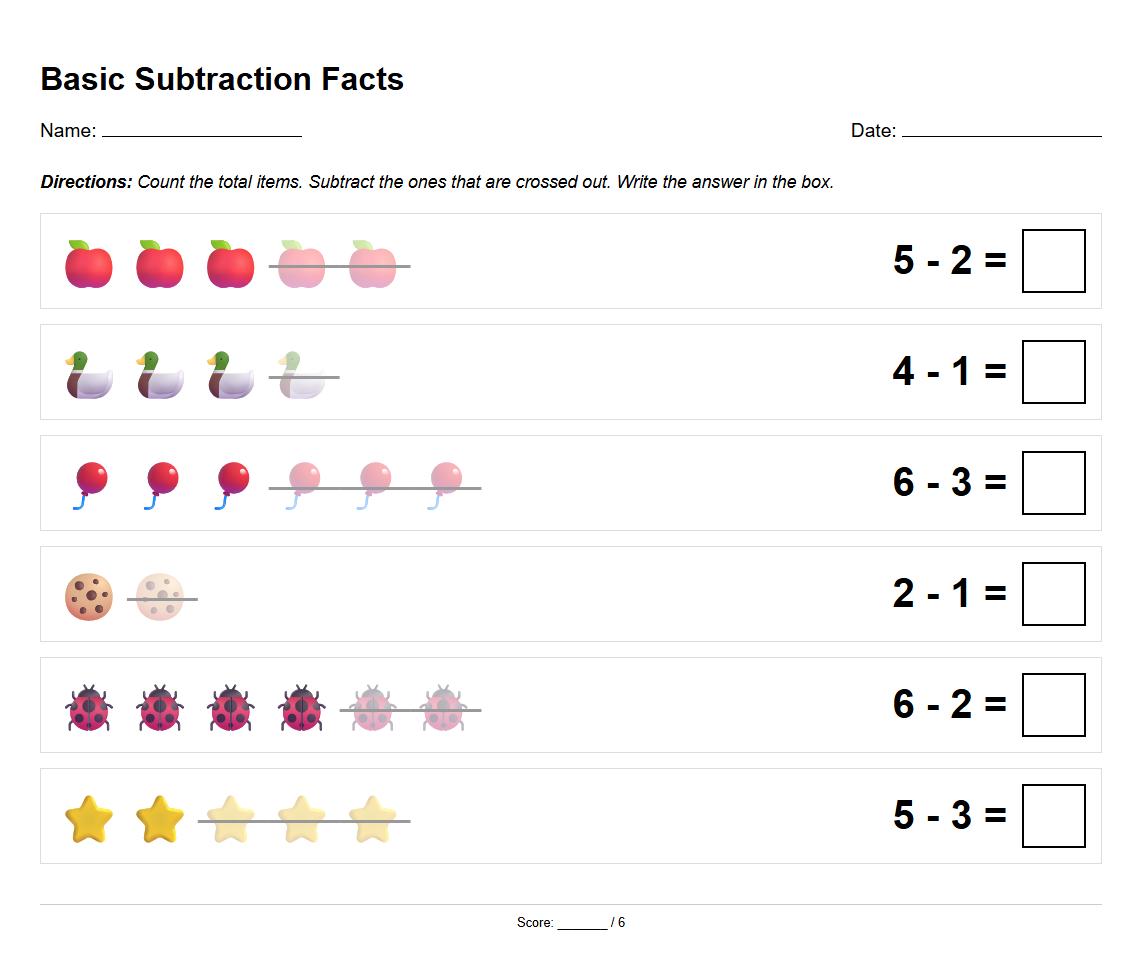
Basic Subtraction Facts Worksheet with Visual Aids

Download PDF     Pin it

Subtraction within Ten Using Number Lines Worksheet
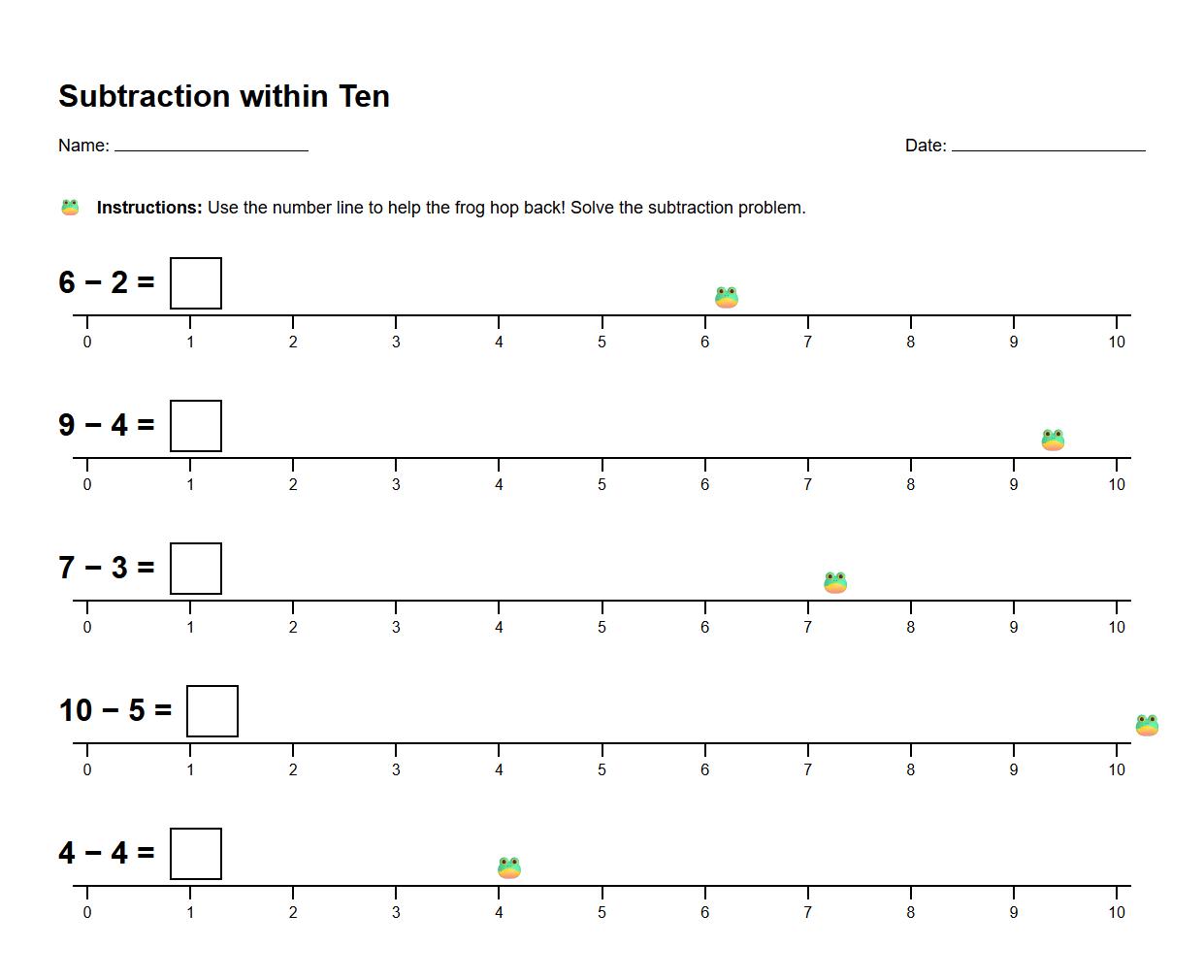
Subtraction within Ten Using Number Lines Worksheet

Download PDF     Pin it

Single Digit Subtraction with Picture Cues Worksheet
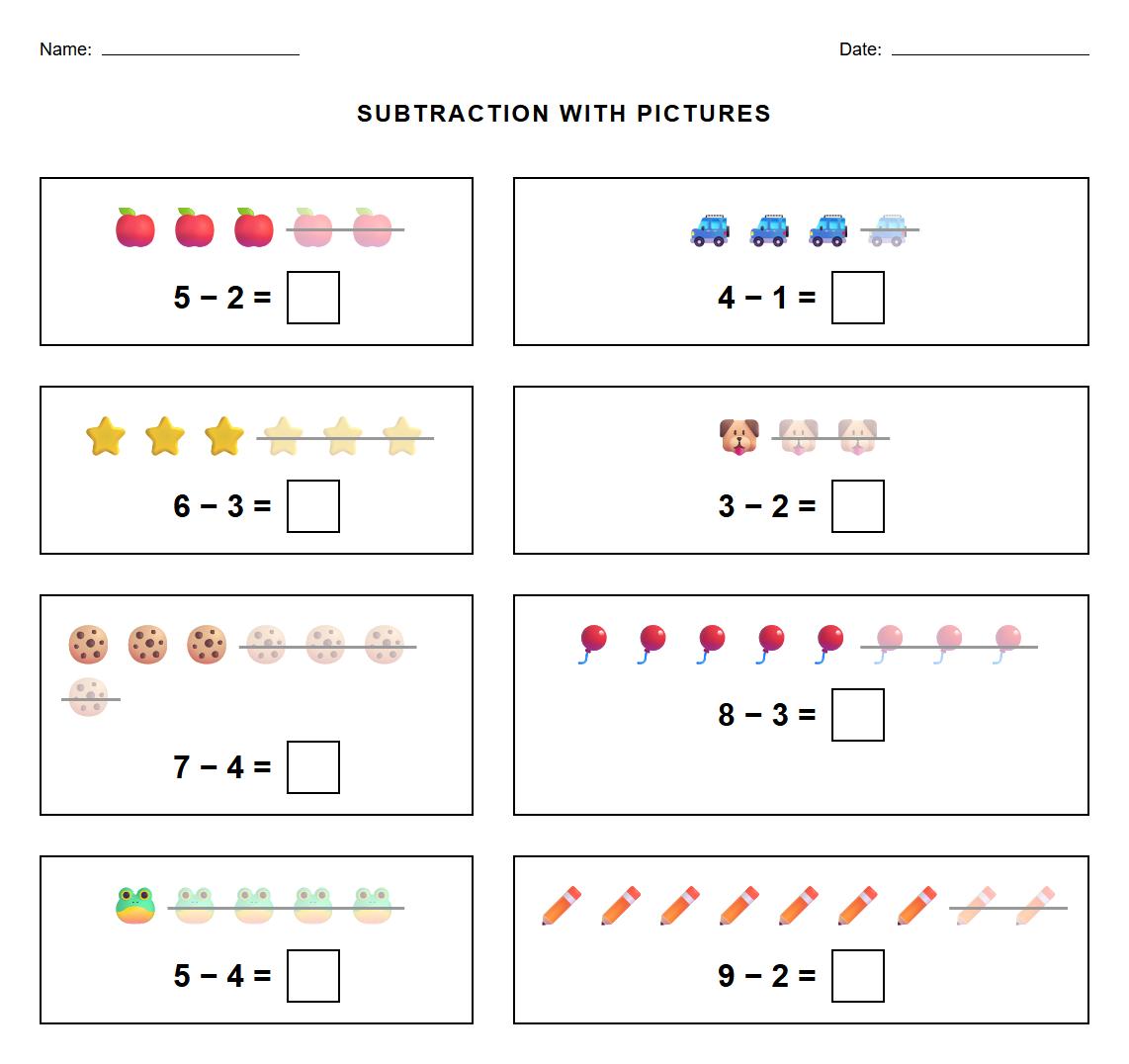
Single Digit Subtraction with Picture Cues Worksheet

Download PDF     Pin it

Subtraction Equations with Missing Minuend or Subtrahend Worksheet
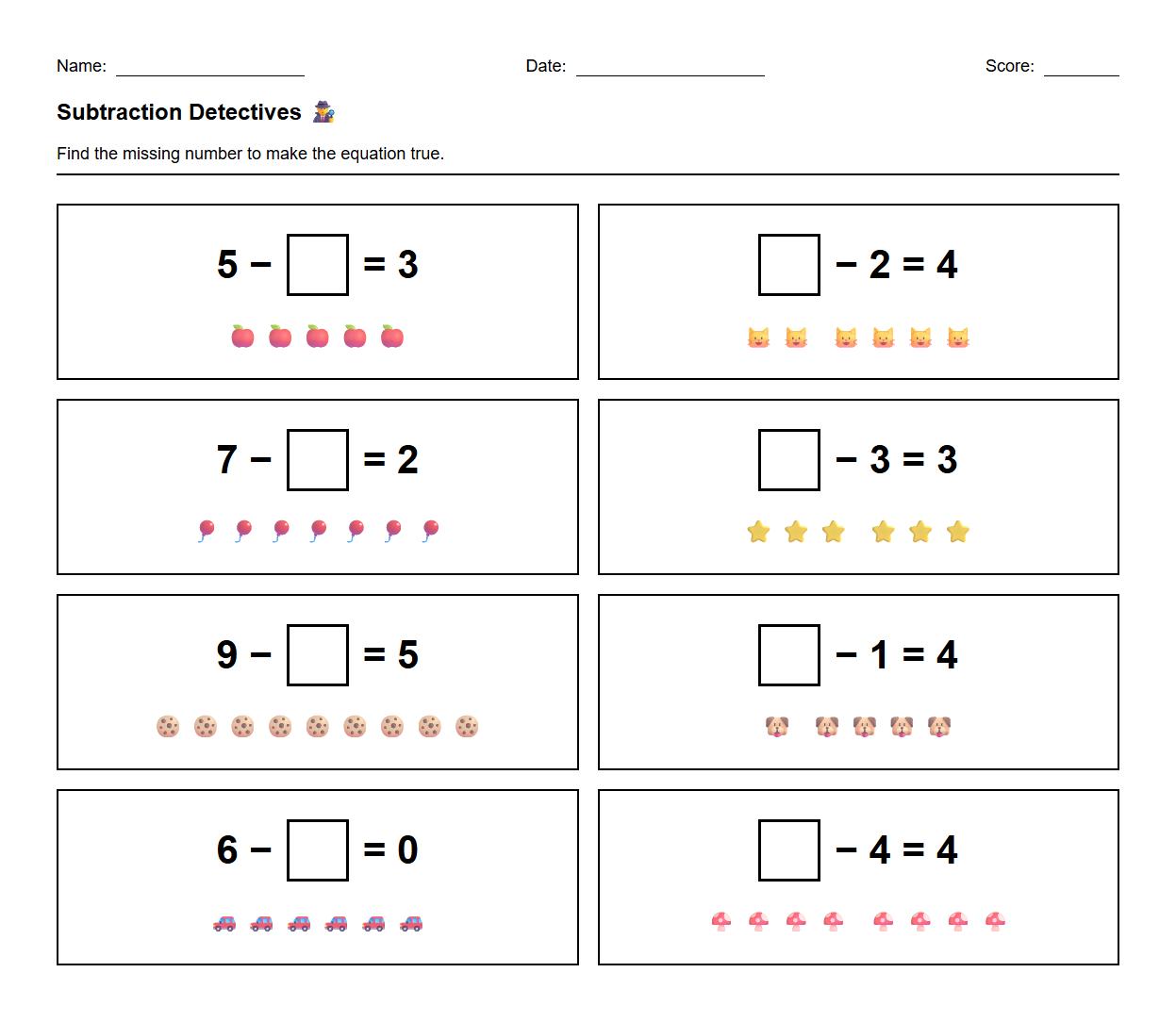
Subtraction Equations with Missing Minuend or Subtrahend Worksheet

Download PDF     Pin it

Subtraction Word Problems for Early Numeracy Skills Worksheet
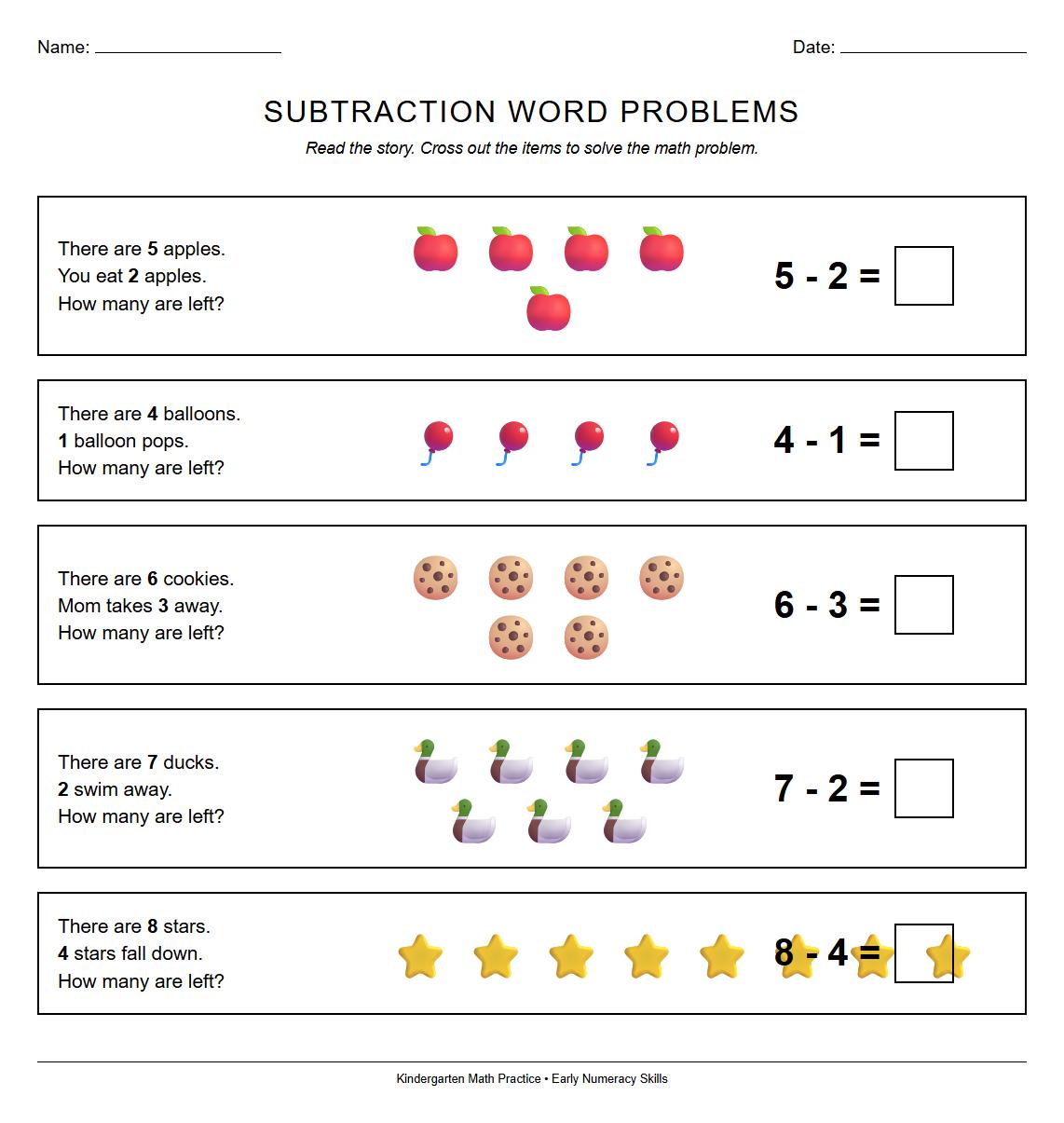
Subtraction Word Problems for Early Numeracy Skills Worksheet

Download PDF     Pin it

Subtraction Sentence Completion Worksheet
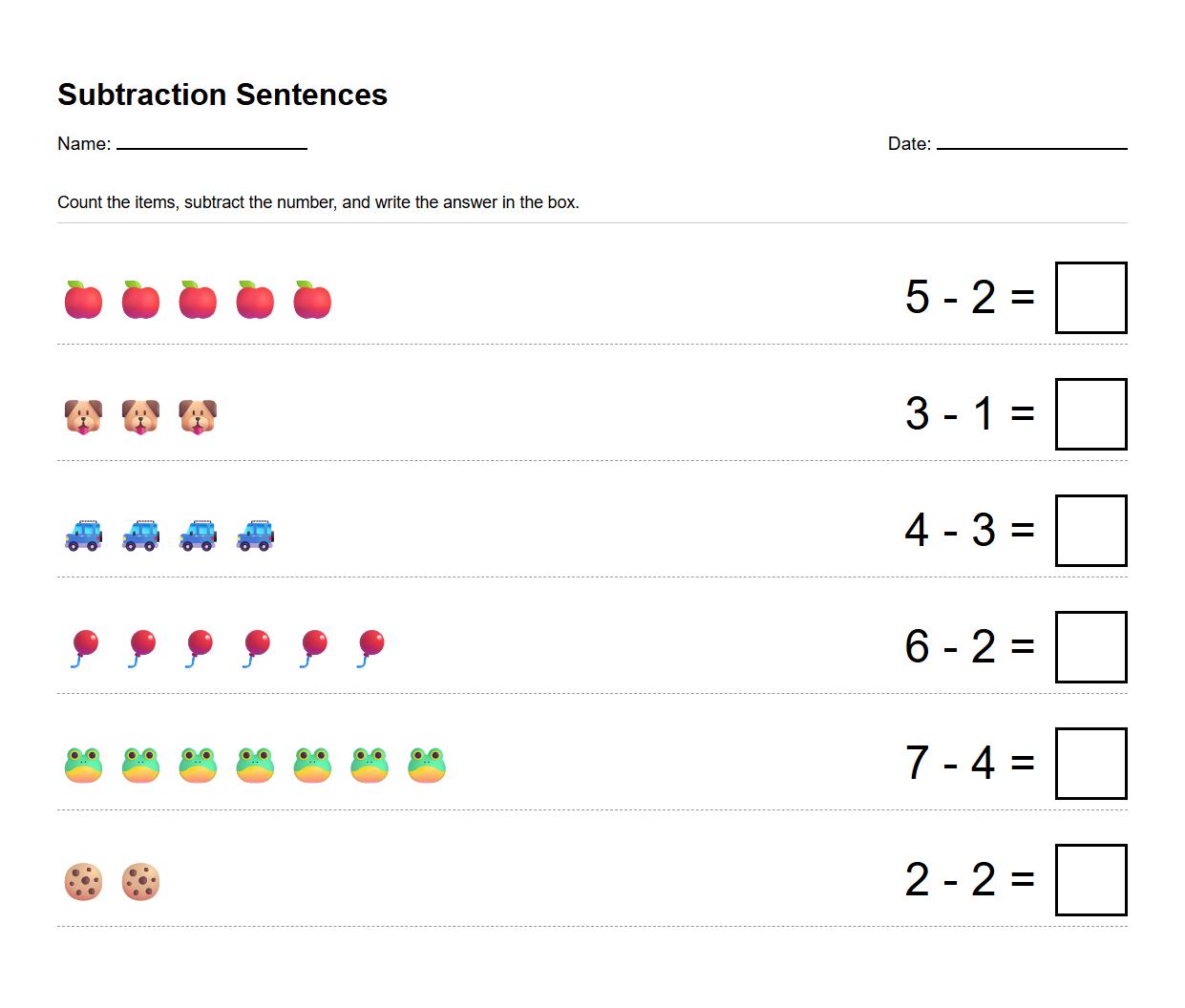
Subtraction Sentence Completion Worksheet

Download PDF     Pin it

Subtraction Using Ten Frame Representation Worksheet
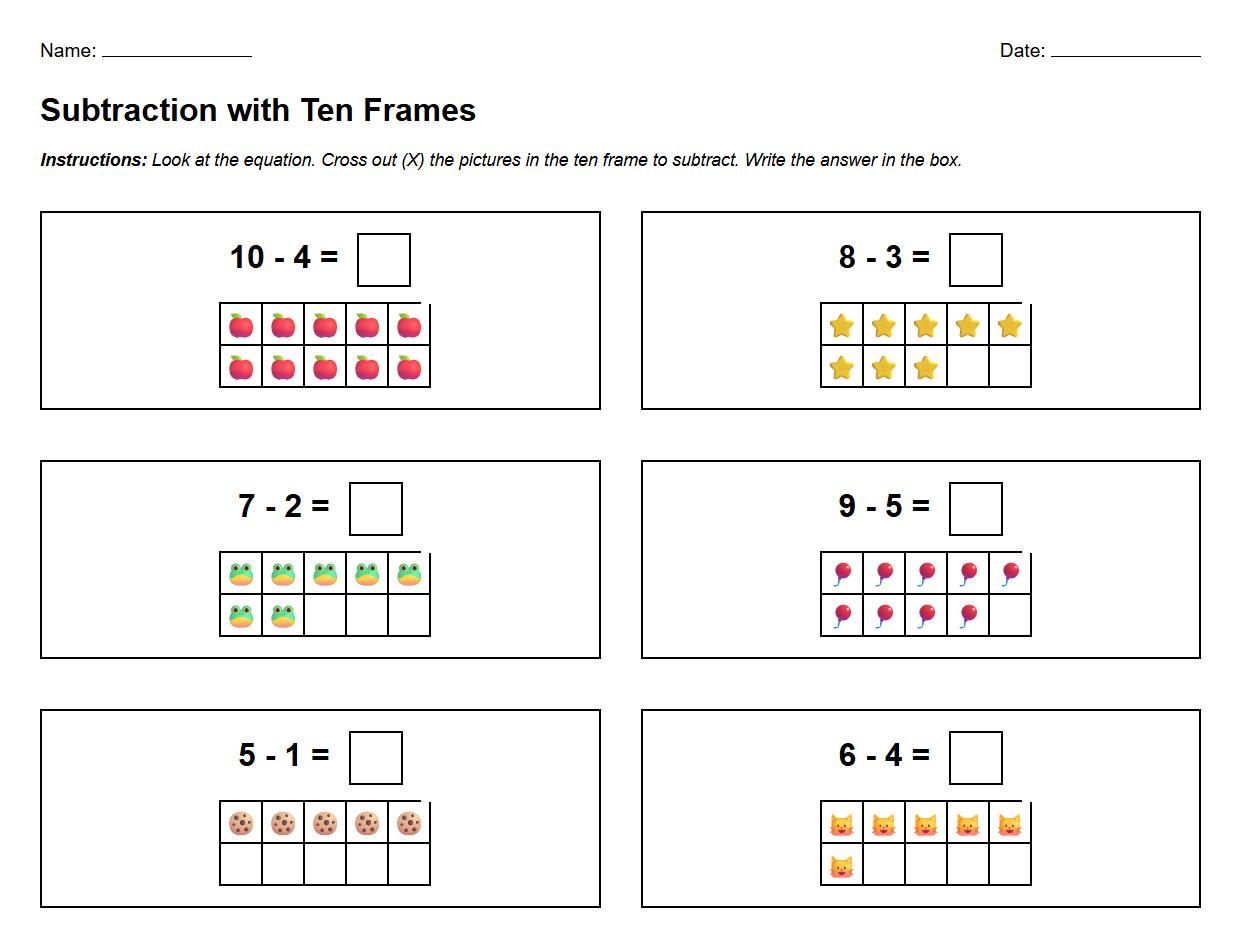
Subtraction Using Ten Frame Representation Worksheet

Download PDF     Pin it

Subtraction with Counters and Manipulatives Worksheet
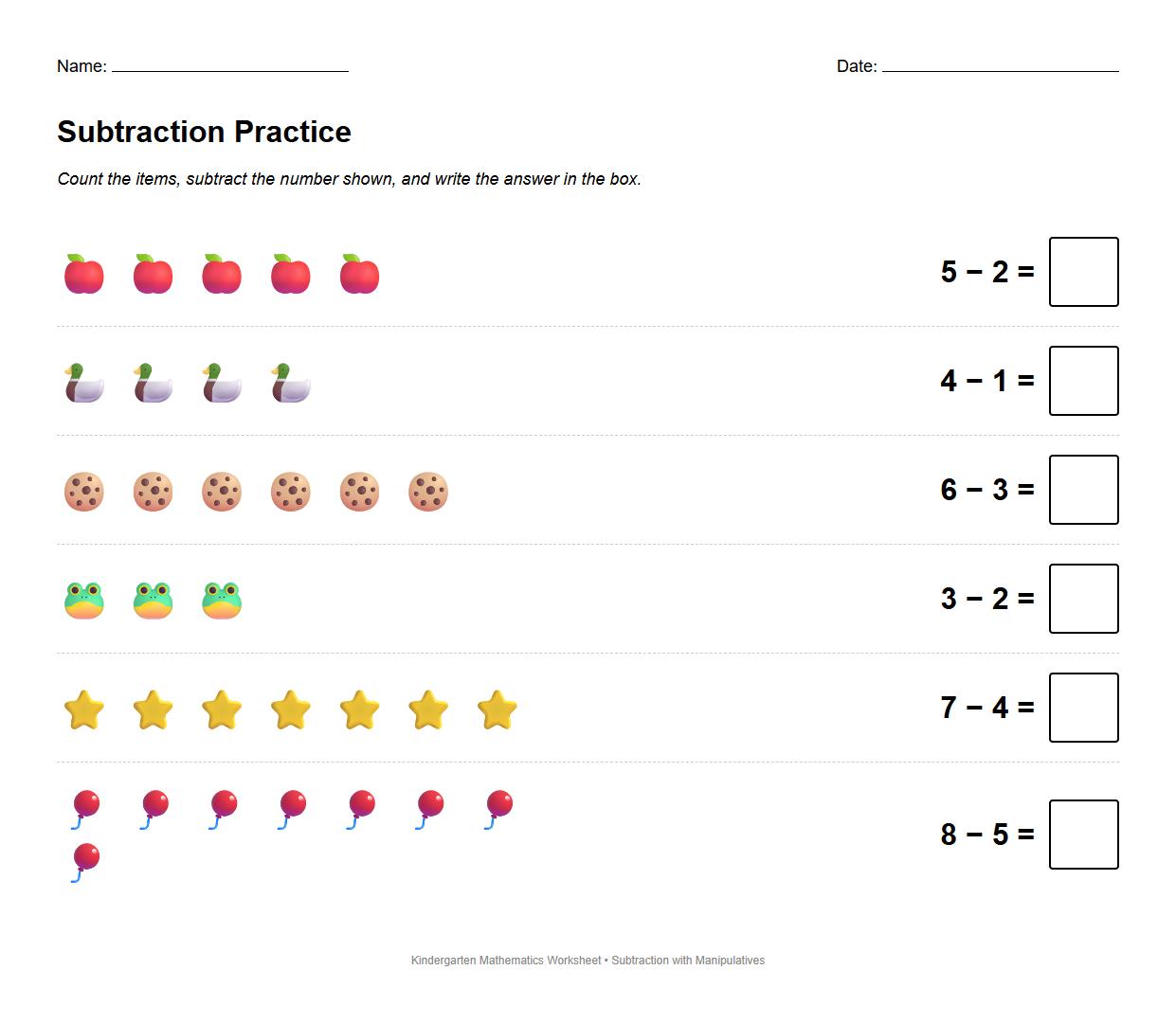
Subtraction with Counters and Manipulatives Worksheet

Download PDF     Pin it

Subtraction Fluency Drill for Early Number Sense Worksheet
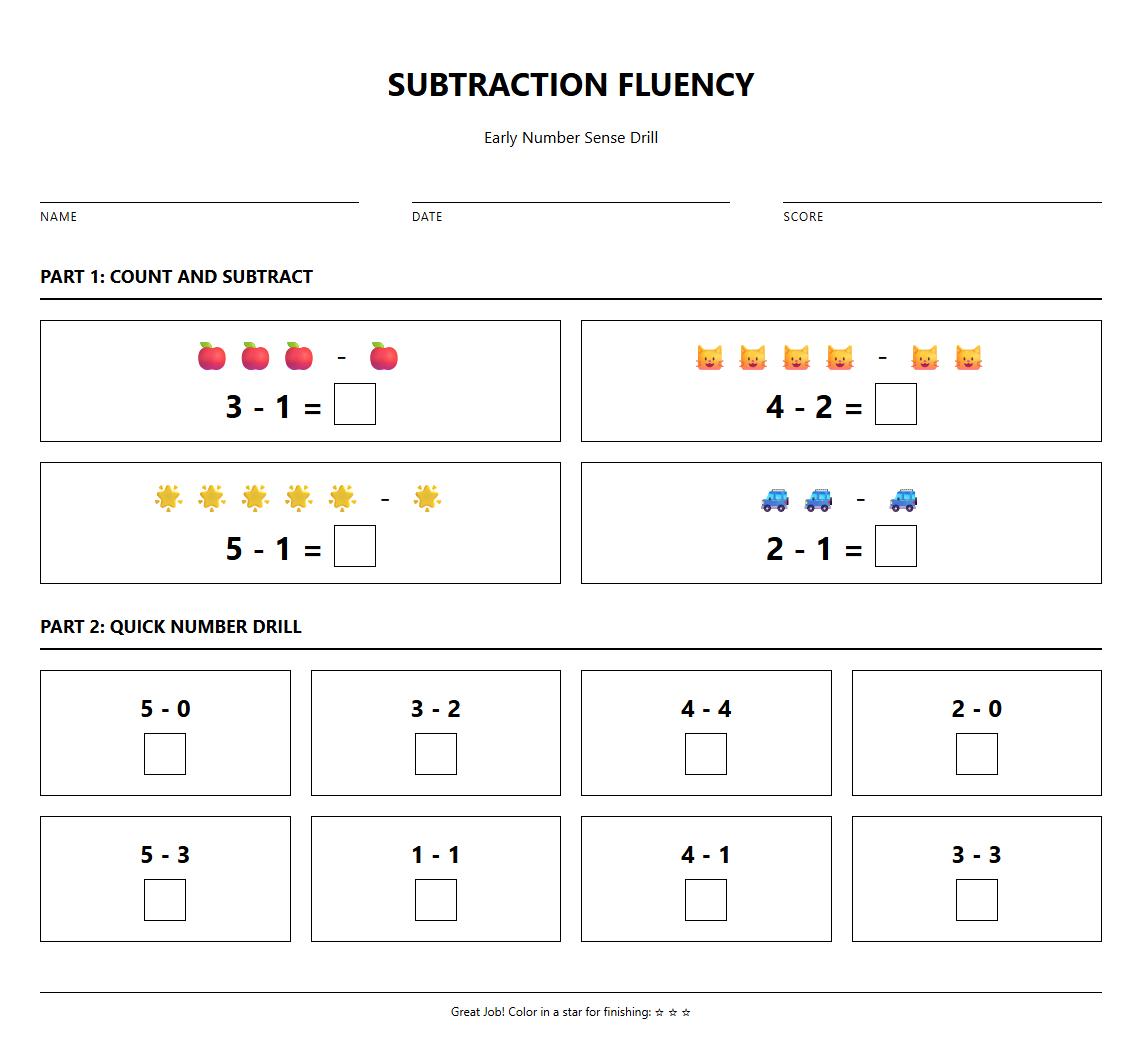
Subtraction Fluency Drill for Early Number Sense Worksheet

Download PDF     Pin it

Subtraction Matching Exercise with Math Symbols Worksheet
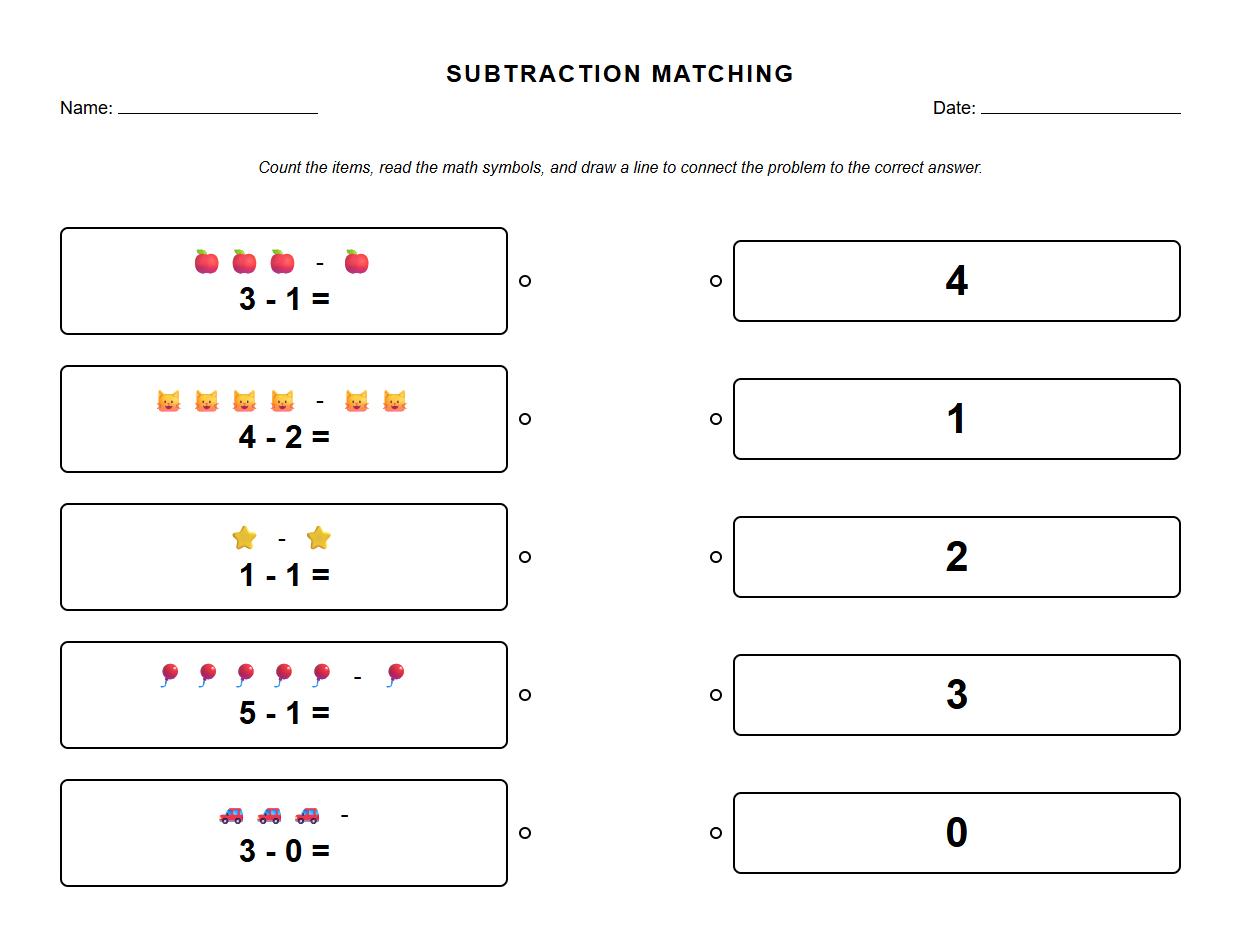
Subtraction Matching Exercise with Math Symbols Worksheet

Download PDF     Pin it

Understanding the Difference Between Eight and Three

The difference between eight and three is a basic subtraction concept important for young learners. Eight minus three equals five. Teaching this helps children grasp how numbers relate to each other. Using visual aids can make this idea clearer and more engaging.

How Many Apples Are Left If You Take Away Two From Five?

If you have five apples and take away two, you are left with three apples. This simple subtraction question encourages children to practice counting backwards. It reinforces the concept of taking things away and seeing how much remains. Using real objects like apples can make learning tangible.

Subtract Four From Seven, What Do You Get?

Subtracting four from seven gives you three. This helps children understand how subtraction works with numbers close to each other. It's important to practice this to build a strong number sense. Visual and hands-on activities enhance comprehension.

If You Have Six Pencils and Give Away One, How Many Do You Have Now?

If you start with six pencils and give one away, you now have five pencils. This real-life scenario helps children connect subtraction with daily experiences. It also teaches them about sharing and how it affects quantities. Encouraging children to count objects makes the process fun and clear.

Take Away Three From Nine, How Many Are Left?

When you take away three from nine, six remains. This exercise shows children how to subtract larger numbers. It's a step to develop their ability to handle bigger quantities. Using objects or drawings can help visualize the process.

What is Five Minus Two?

Five minus two equals three. This basic subtraction fact is essential for early math skills. Practicing such simple problems builds confidence in young learners. Repetition and varied examples solidify understanding.

If There Are Ten Balloons and You Pop Four, How Many Are Left?

If you have ten balloons and pop four, six balloons remain. This fun scenario helps children apply subtraction to real-world situations. It illustrates the concept of loss in a relatable way. Visualizing the popping balloons strengthens the lesson.

Subtract One From Four, What Is the Answer?

Four minus one equals three. This straightforward subtraction reinforces counting down by one. It's a foundational skill for more complex math. Using fingers or objects can assist children in learning this concept.

If You Have Seven Cookies and Eat Three, How Many Cookies Remain?

Eating three cookies out of seven leaves you with four cookies. This problem ties subtraction to everyday actions, helping children understand its use. It encourages them to think about quantities in practical terms. Hands-on activities like counting cookies make the learning process enjoyable.

What Is the Result When You Take Away Two From Six?

Taking away two from six gives you four. This basic subtraction fact is key for building math fluency. Practicing questions like these prepares children for more advanced arithmetic. Using stories and objects helps maintain their interest.


More in Mathematics Category


About the author. Nylen Smith is a dedicated educator and cofounder of KWorksheet.com, a popular platform specializing in high-quality kindergarten worksheets and printable activities.

Disclaimer. The information provided in this document is for general informational purposes and/or document sample only and is not guaranteed to be factually right or complete. Please report to us via contact-us page if you find and error in this page, thanks.

Comments

No comment yet