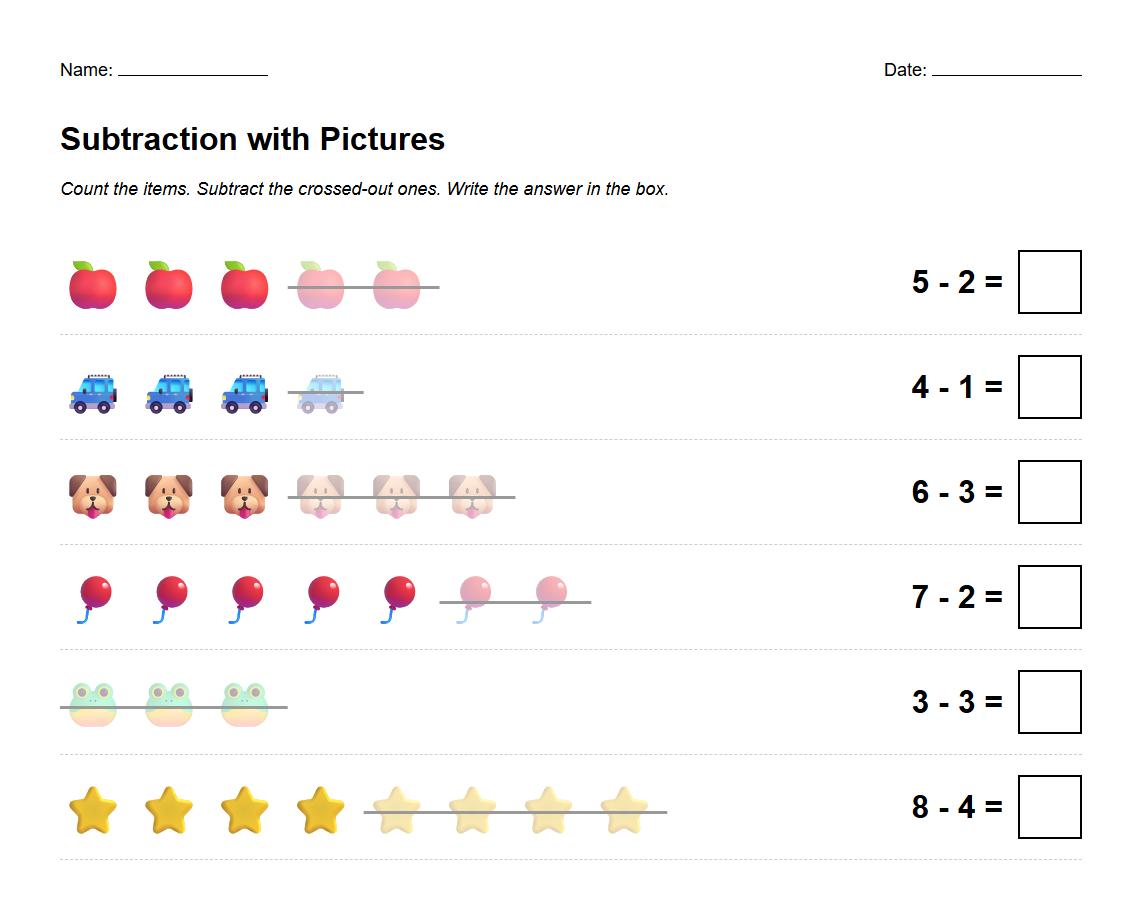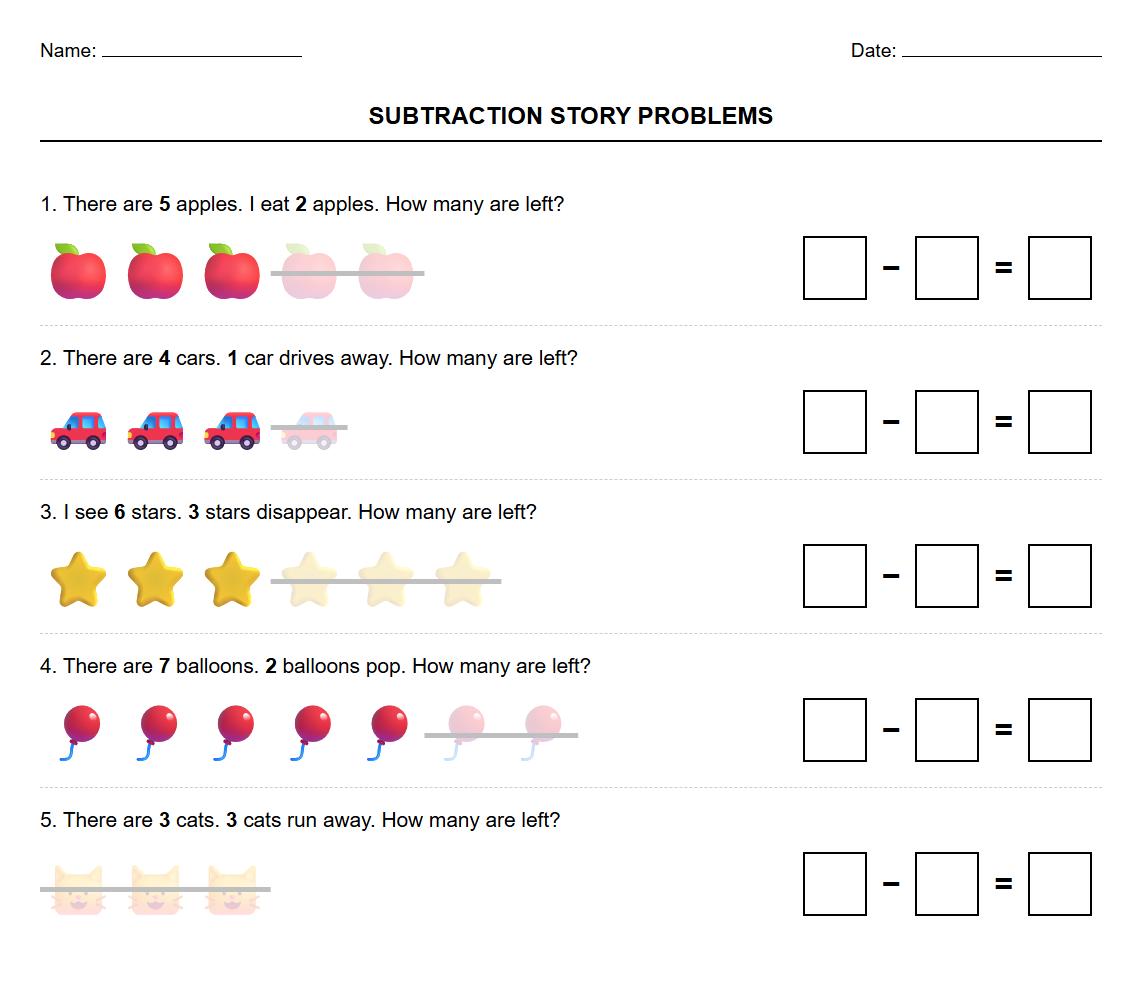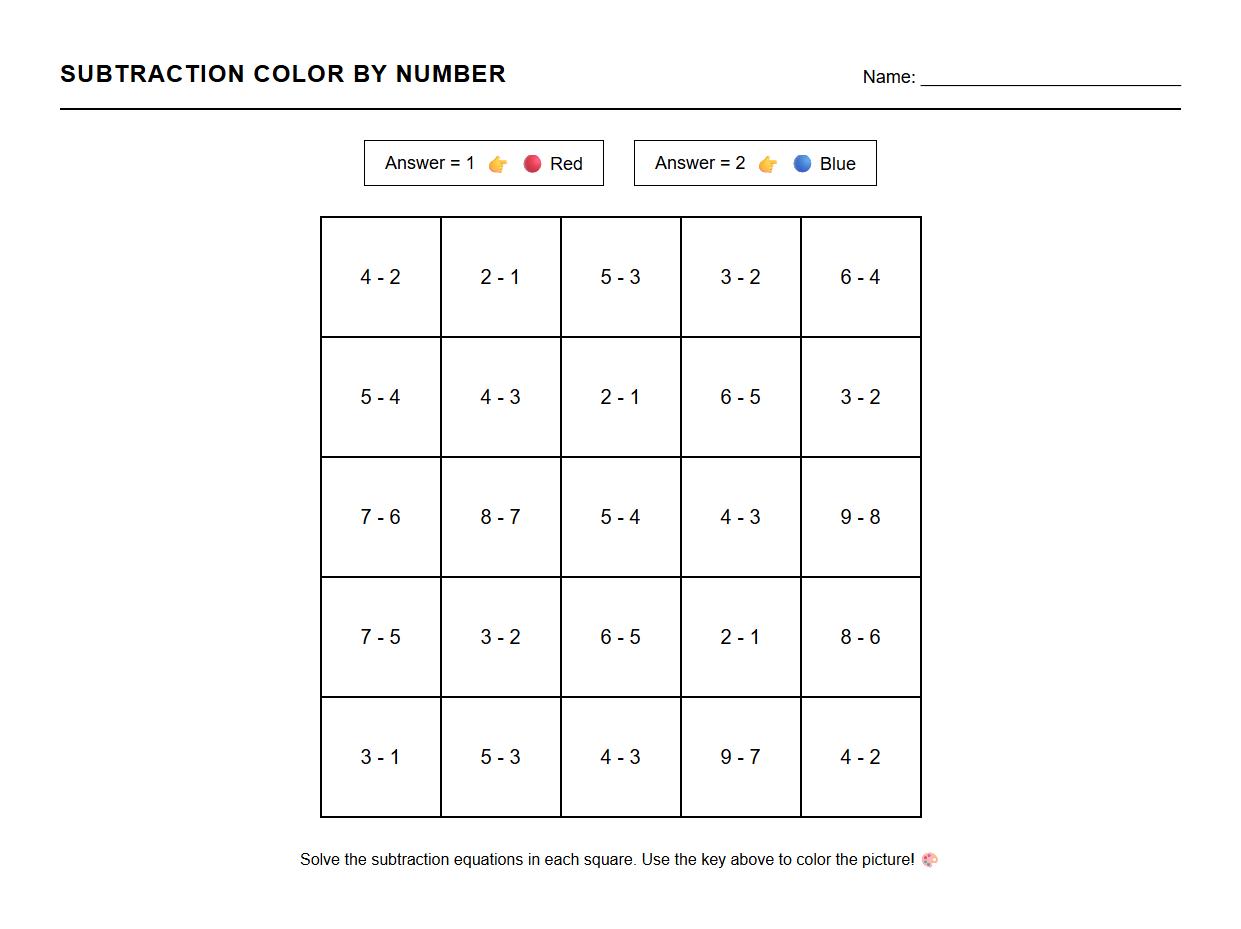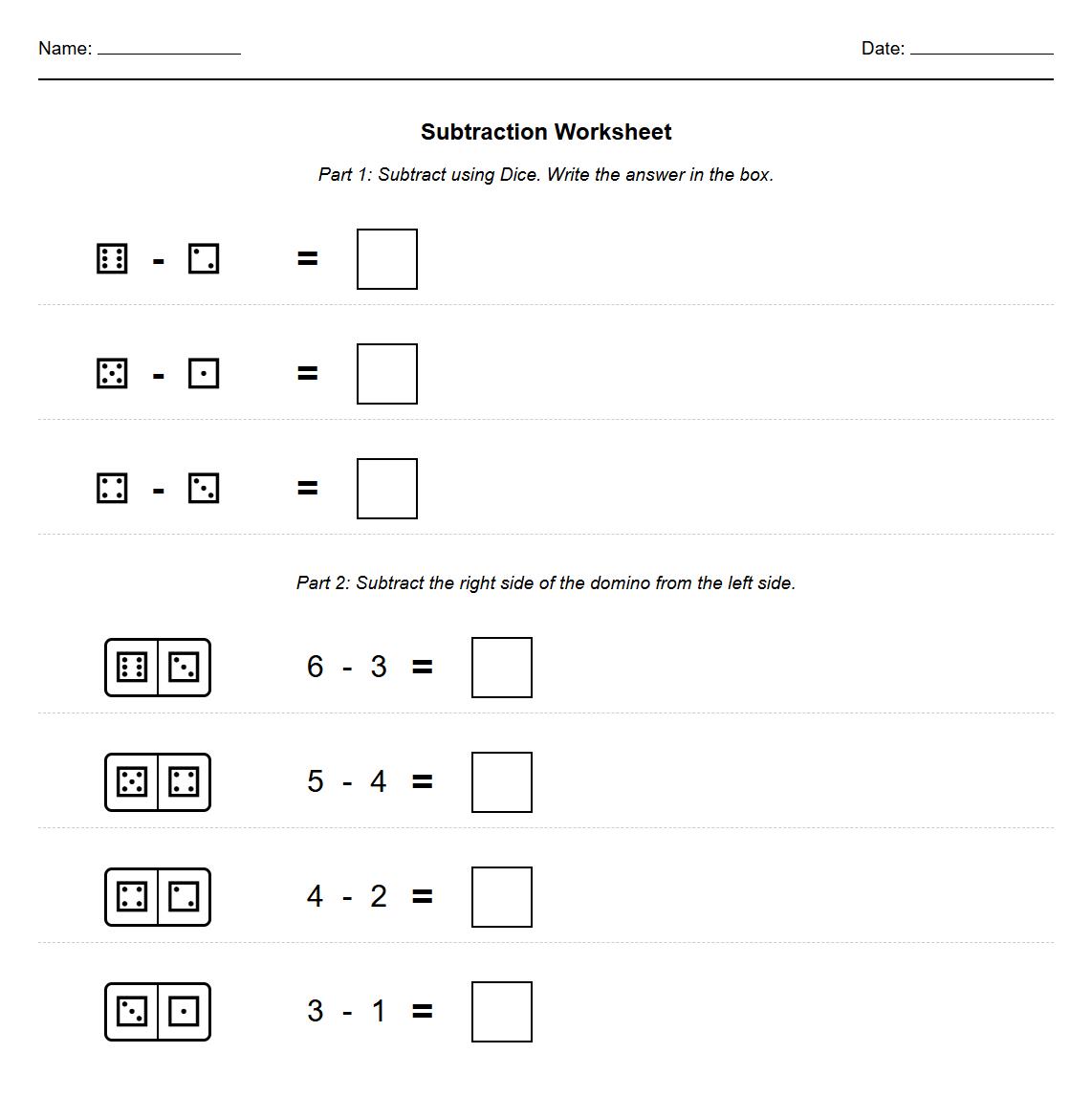
Hands-on subtraction activities help kindergarten students build foundational math skills through interactive learning and practical examples. Engaging with these exercises enhances number sense and boosts confidence in basic subtraction concepts. Explore our carefully crafted subtraction worksheets to support your child's math journey.
Objects for Hands-On Subtraction Activities in Kindergarten
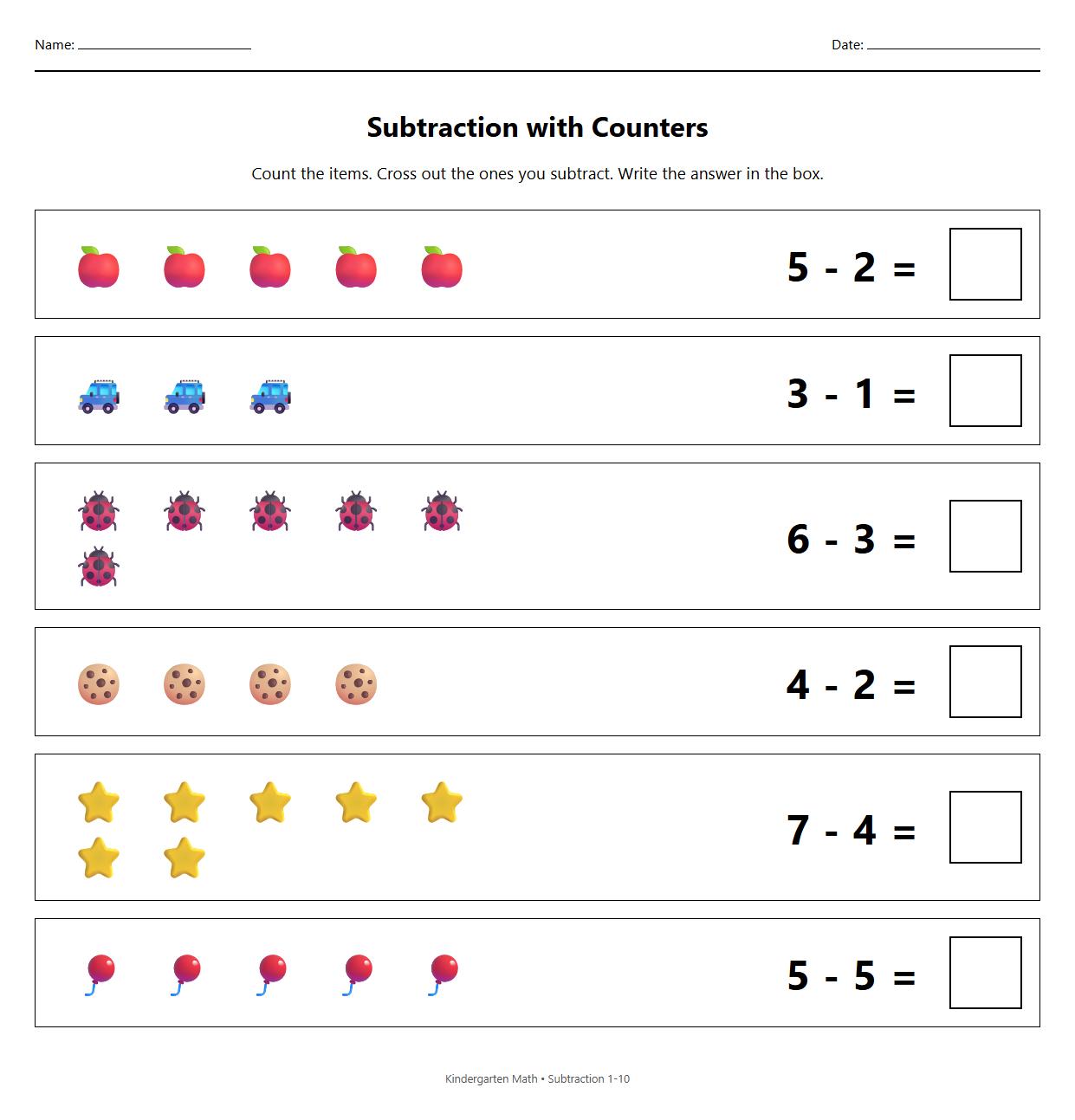
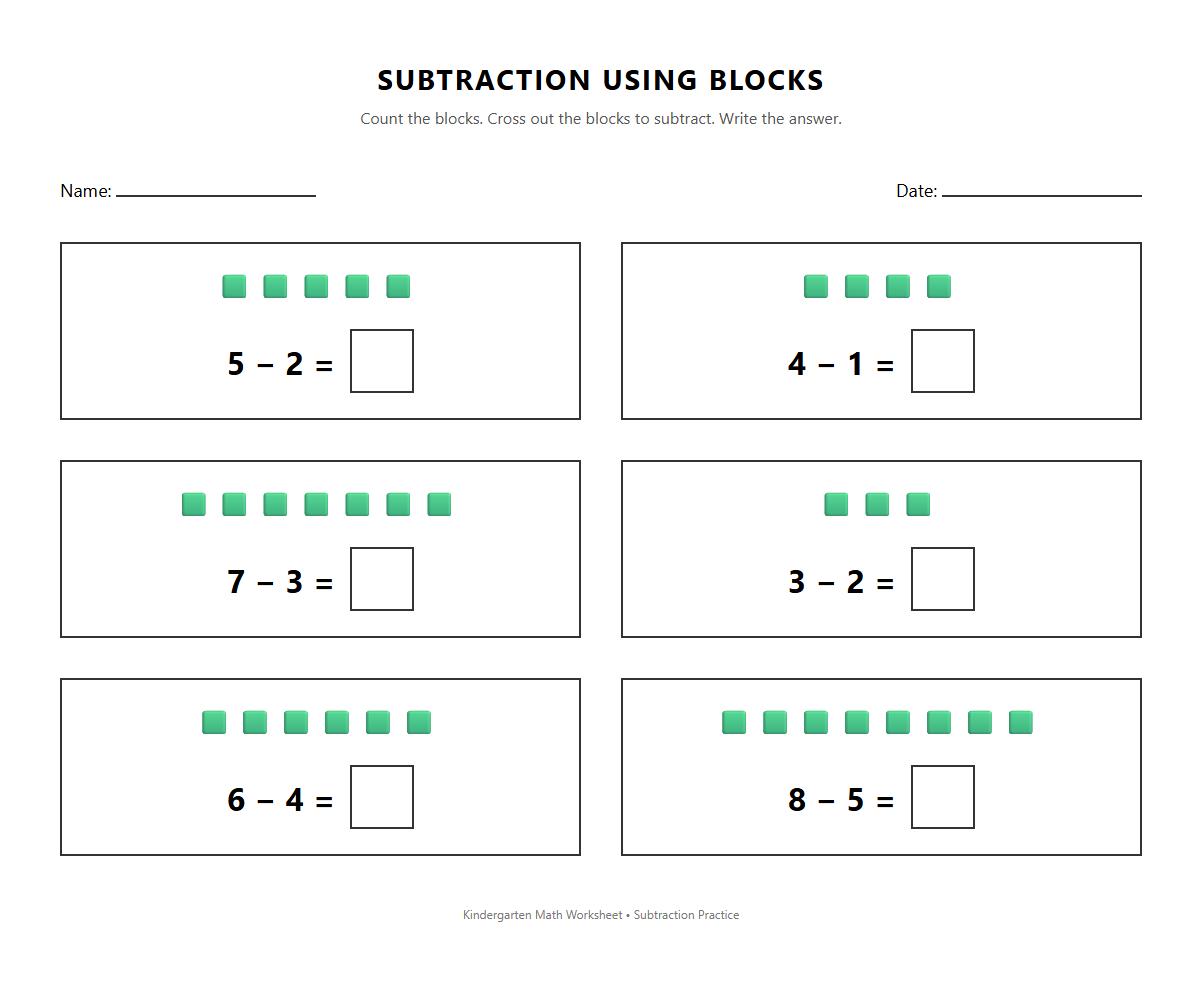
Teachers and parents can use everyday objects like buttons, blocks, toy cars, or fruit for subtraction activities. These tangible items help children physically remove and count, making abstract concepts more concrete. Using colorful and familiar objects increases children's interest and engagement. Incorporating natural materials, such as leaves or pebbles, also enhances sensory learning experiences. For ideas on using objects in teaching math, visit 2D and 3D Figures Interactive Worksheet.
How Hands-On Subtraction Worksheets Help Young Children Understand Math
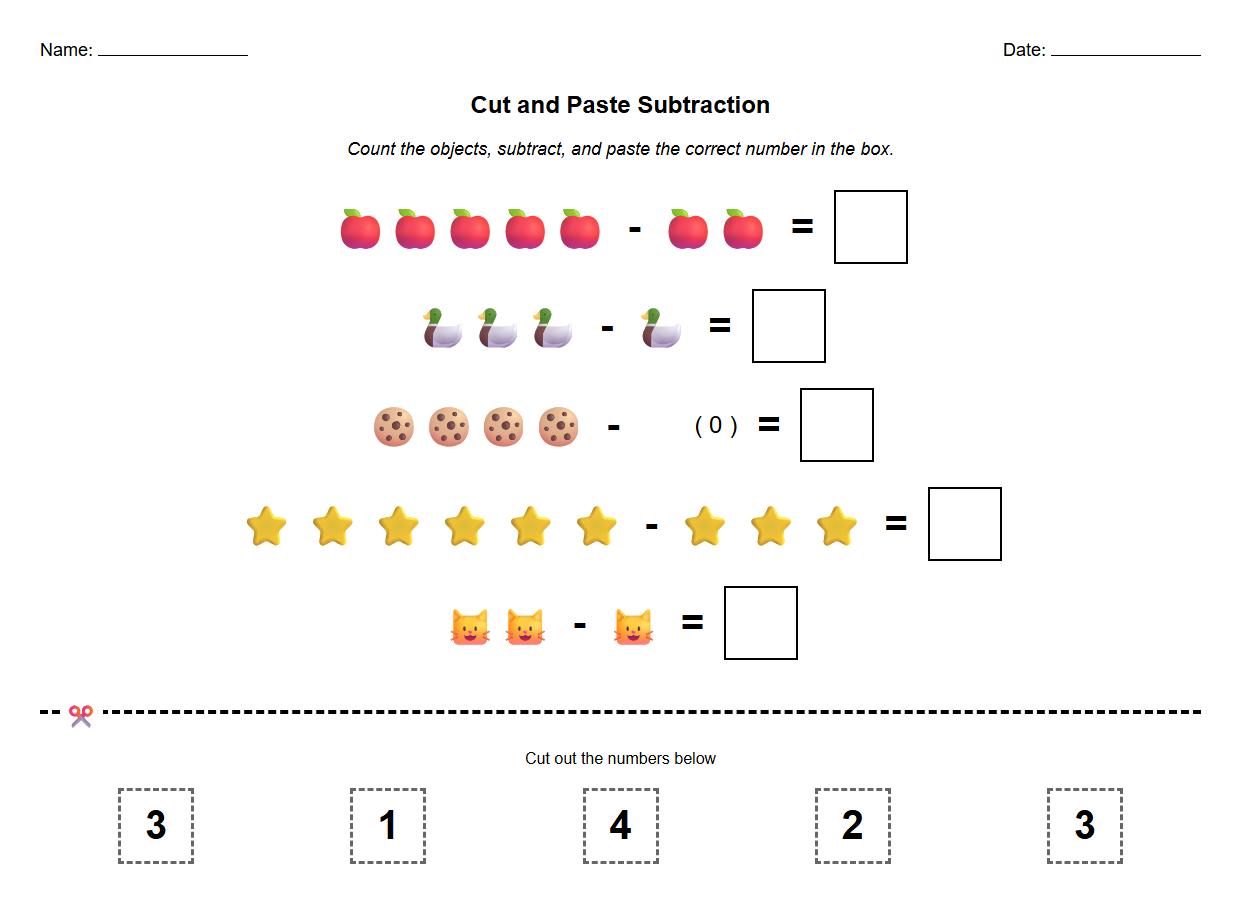
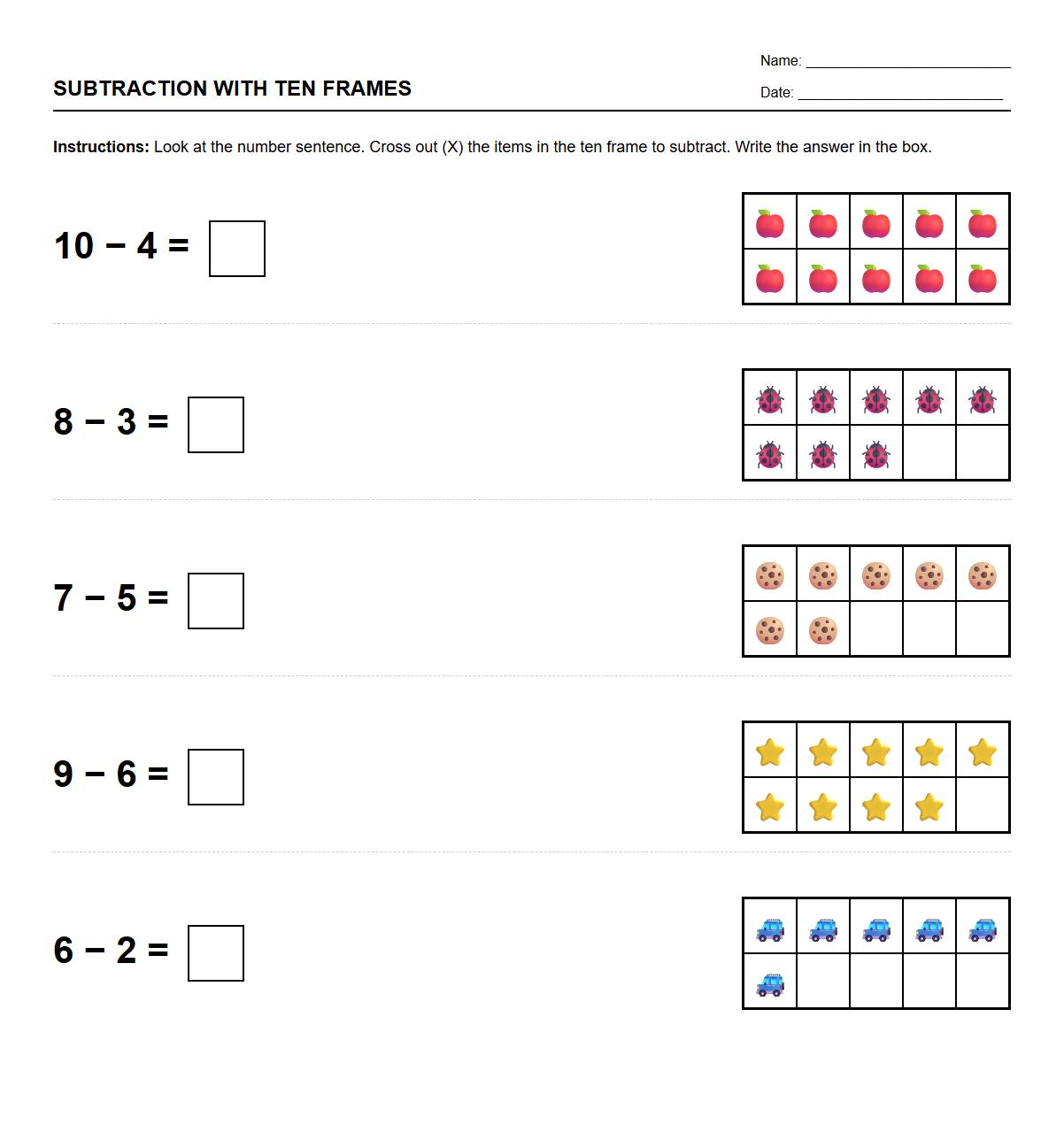
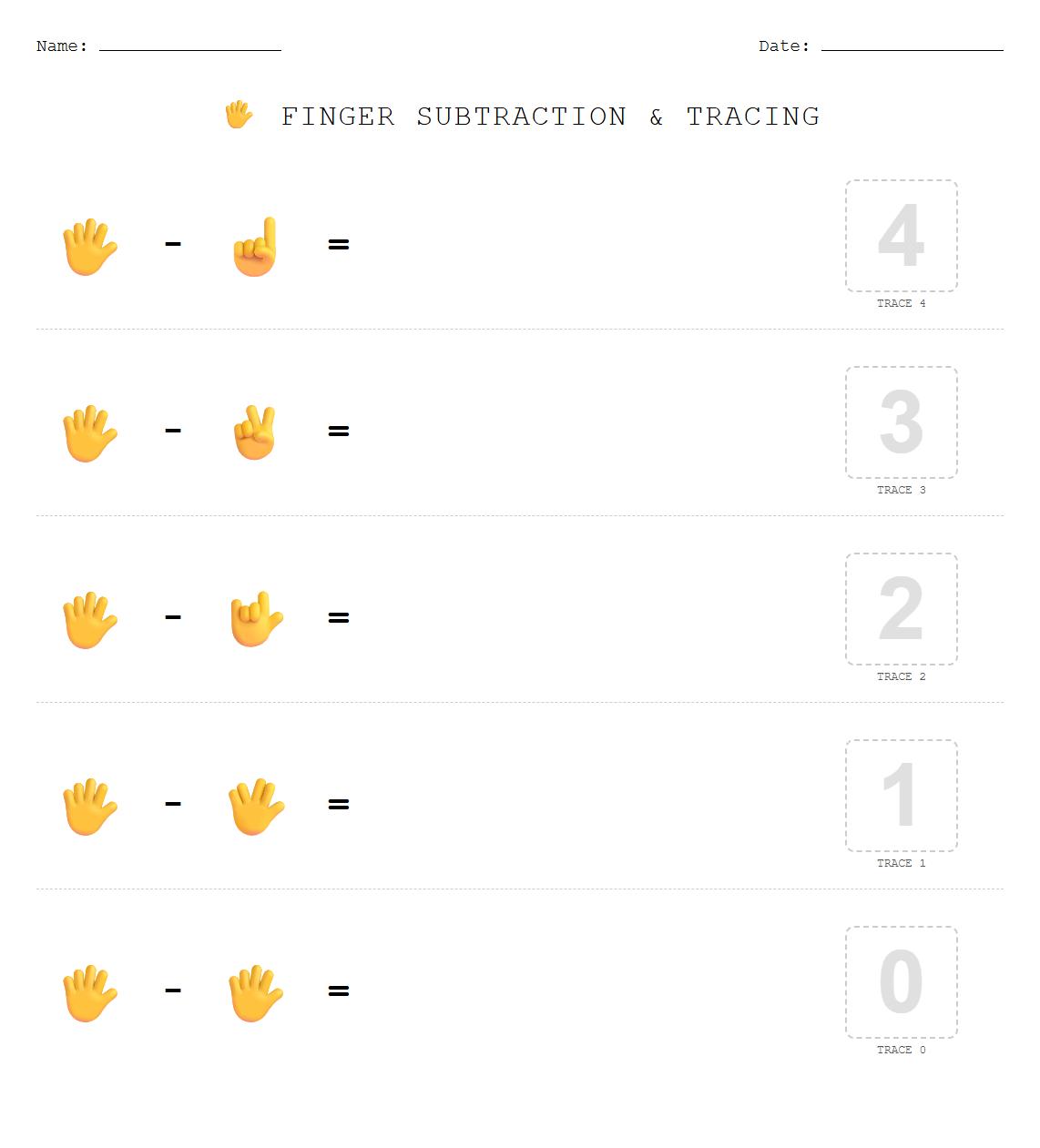
Hands-on subtraction worksheets provide visual and tactile elements that clarify the subtraction process. By combining pictures with manipulatives, children can connect physical actions to numerical concepts. This method reinforces counting backward and the idea of "taking away." It fosters deeper comprehension and reduces math anxiety in early learners. For visual worksheet activities, see Visual Data Organization - Tally Worksheet.
Strategies to Make Subtraction Fun and Engaging for Kindergarten Students
Using games, storytelling, and song-based activities turns subtraction into an enjoyable challenge. Incorporating rewards and positive feedback motivates students to participate eagerly. Interactive activities like "subtraction scavenger hunts" or role-playing help maintain excitement. Varied approaches cater to different interests and keep children engaged. For engaging classroom ideas, check Engaging Phonics Worksheet Activities.
Number of Items per Problem for Effective Hands-On Subtraction Practice
It is best to use between 3 to 10 items per subtraction problem to ensure clarity and manageability. Small sets prevent overwhelming young learners while providing meaningful practice. Gradually increasing the number builds confidence and skill. Keeping the item count within this range aids focus and accuracy. For number writing and counting resources, visit Kindergarten Number Writing Practice.
Visual Aids Supporting Hands-On Subtraction in the Classroom
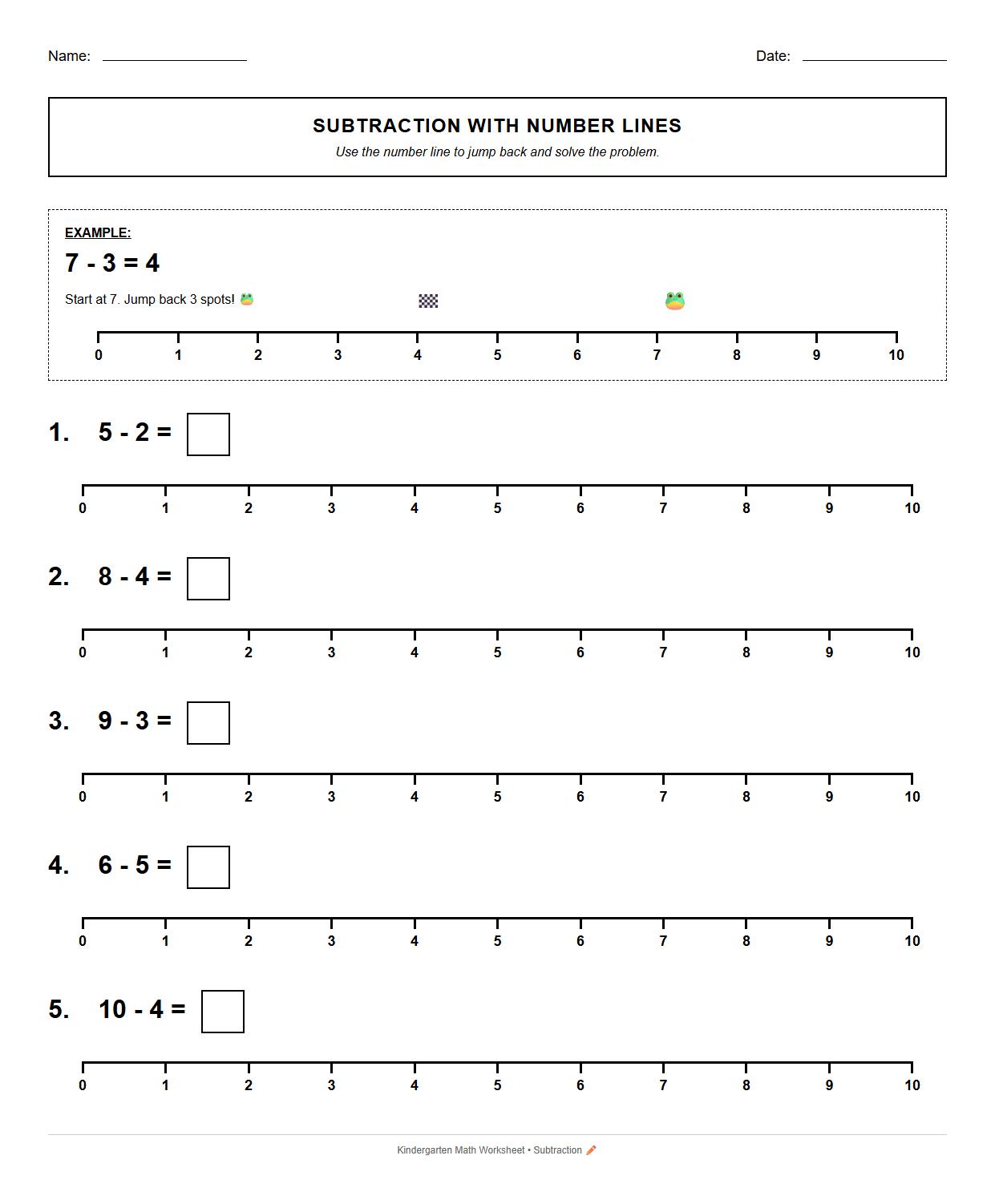
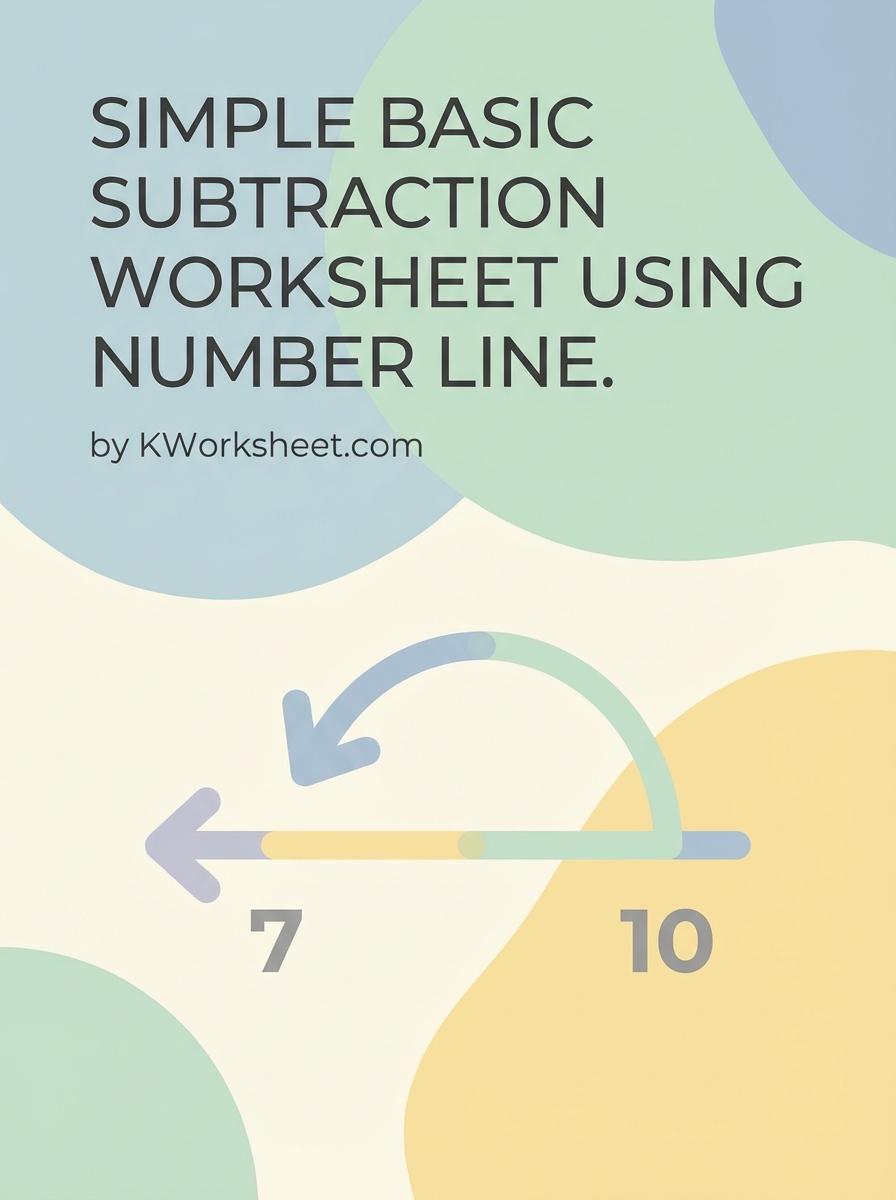
Visual aids like number lines, subtraction charts, and pictorial flashcards enhance understanding. Color-coded objects and counters clarify which items are subtracted. Visual stories or comic strips incorporating subtraction scenarios engage young learners. These aids provide multi-sensory input essential for effective learning. For worksheets on pattern recognition with visuals, see Pattern Recognition AABB Worksheet Activity.
Assessing Understanding Using Hands-On Subtraction Worksheets
Teachers assess students by observing their ability to correctly manipulate objects and solve problems. Worksheets allow tracking of accuracy and conceptual comprehension over time. Asking students to explain their subtraction process reveals depth of understanding. Regular informal assessments guide instruction and intervention. For sorting and classifying worksheets, visit Kindergarten Science Worksheet Template.
Common Mistakes Kindergarteners Make During Subtraction Activities
Children often struggle with forgetting to physically remove items, leading to counting errors. Confusing subtraction with addition or losing track of the remaining objects is frequent. Some kids may count from the wrong starting number or subtract in the wrong order. Recognizing these mistakes early helps teachers provide targeted support. To reinforce basic addition and subtraction concepts, try Counting Strategies - Basic Addition Worksheet.
How Hands-On Subtraction Worksheets Address Different Learning Styles
These worksheets combine visual, kinesthetic, and auditory learning through images, physical manipulation, and verbal counting. They support visual learners with pictures, hands-on learners with objects, and auditory learners through counting aloud. This multi-modal approach ensures all students can grasp subtraction concepts. It makes learning accessible and inclusive. For phonics and categorization practice involving various learning modes, visit Phonics and Categorization Worksheet.
The Role of Counting Aloud in Hands-On Subtraction Exercises
Counting aloud reinforces number sequences and reduces mistakes in subtraction tasks. It helps children internalize the concept of "taking away" by vocalizing the removal process. This verbal practice enhances memory and cognitive connections between numbers. Teachers can use counting aloud to model correct subtraction behavior. For clock reading and counting aloud related exercises, see Clock Reading Worksheets.
Real-Life Examples That Make Subtraction Relatable for Kindergarten Students
Examples like sharing snacks, losing toys, or putting away books show subtraction in everyday contexts. Relatable situations make subtraction meaningful and easier to understand. Role-playing scenarios such as "if you have 5 apples and eat 2" connect math to real experiences. These examples help children see subtraction as part of their daily lives. Check out phonics-based telling time examples at Phonics-Based Telling Time Worksheets.


Simple Basic Subtraction Worksheet Using Number Line