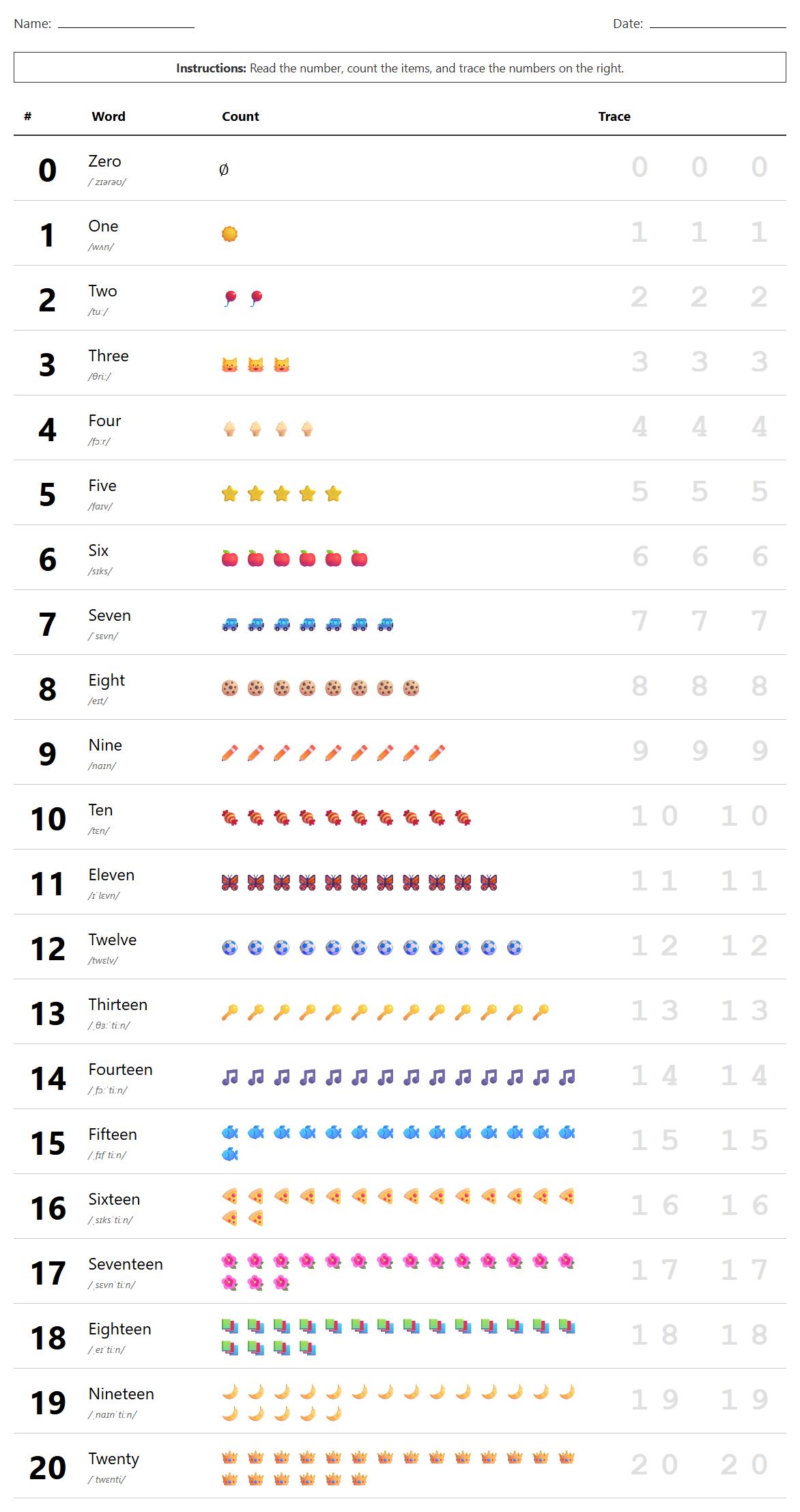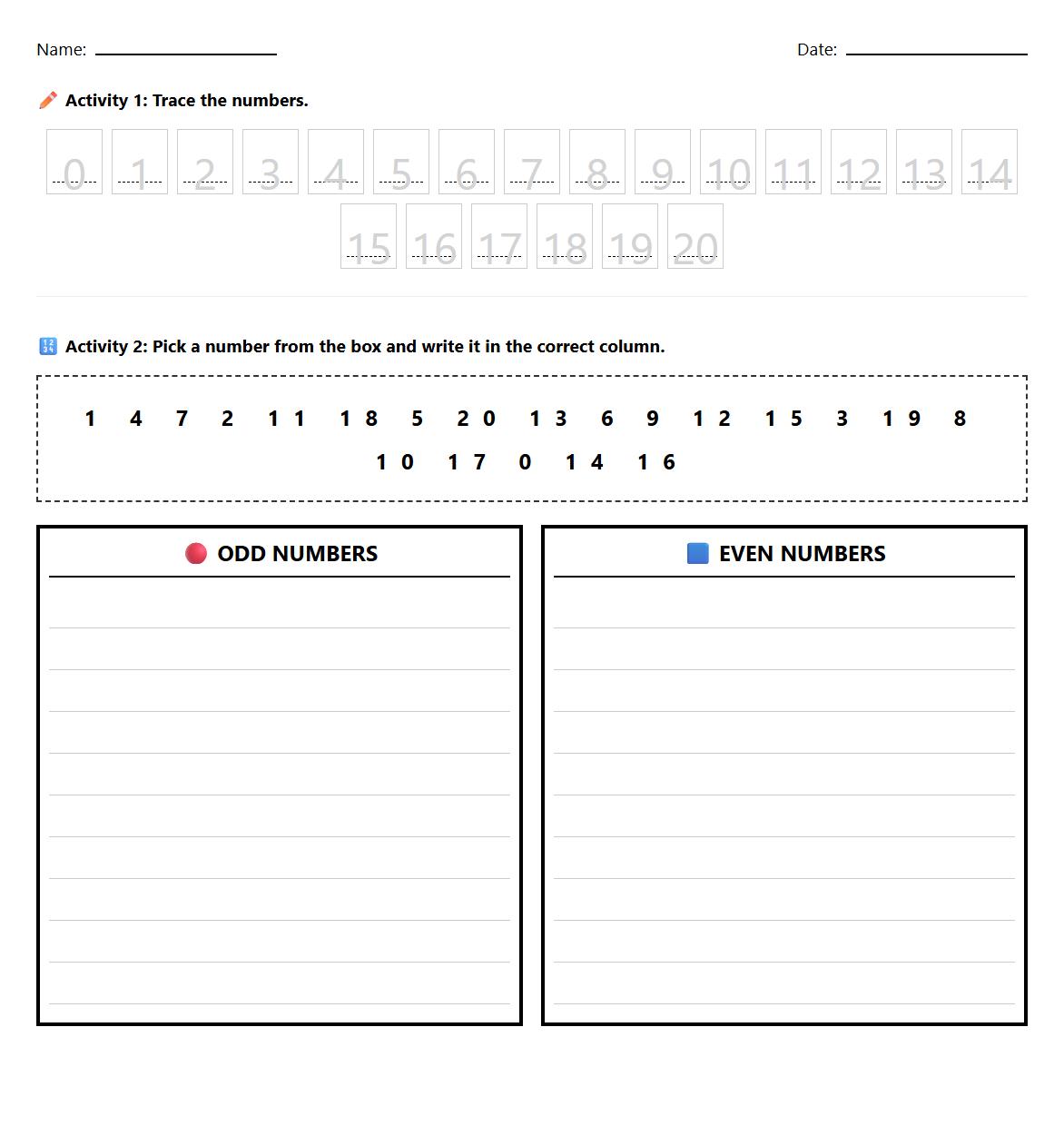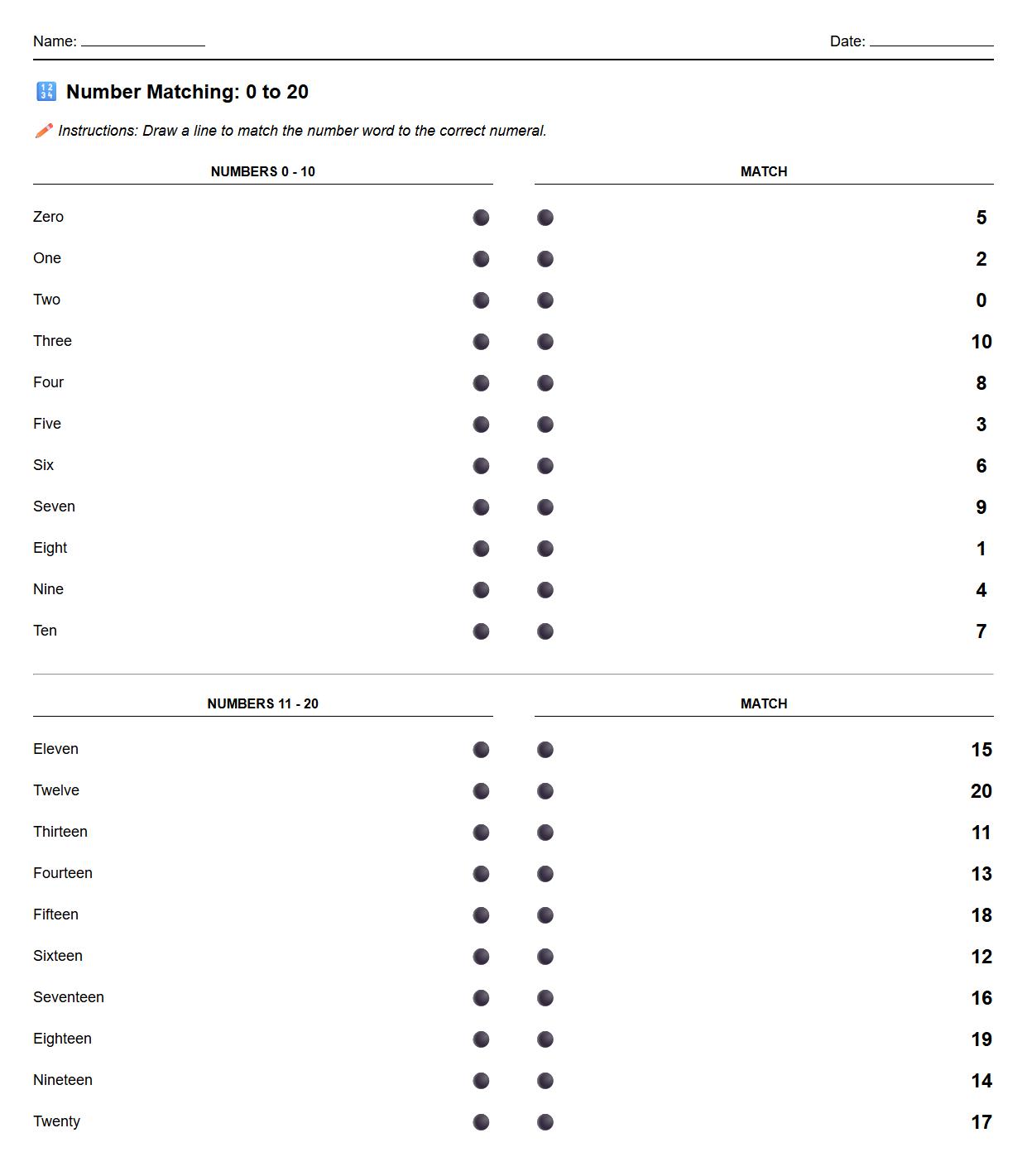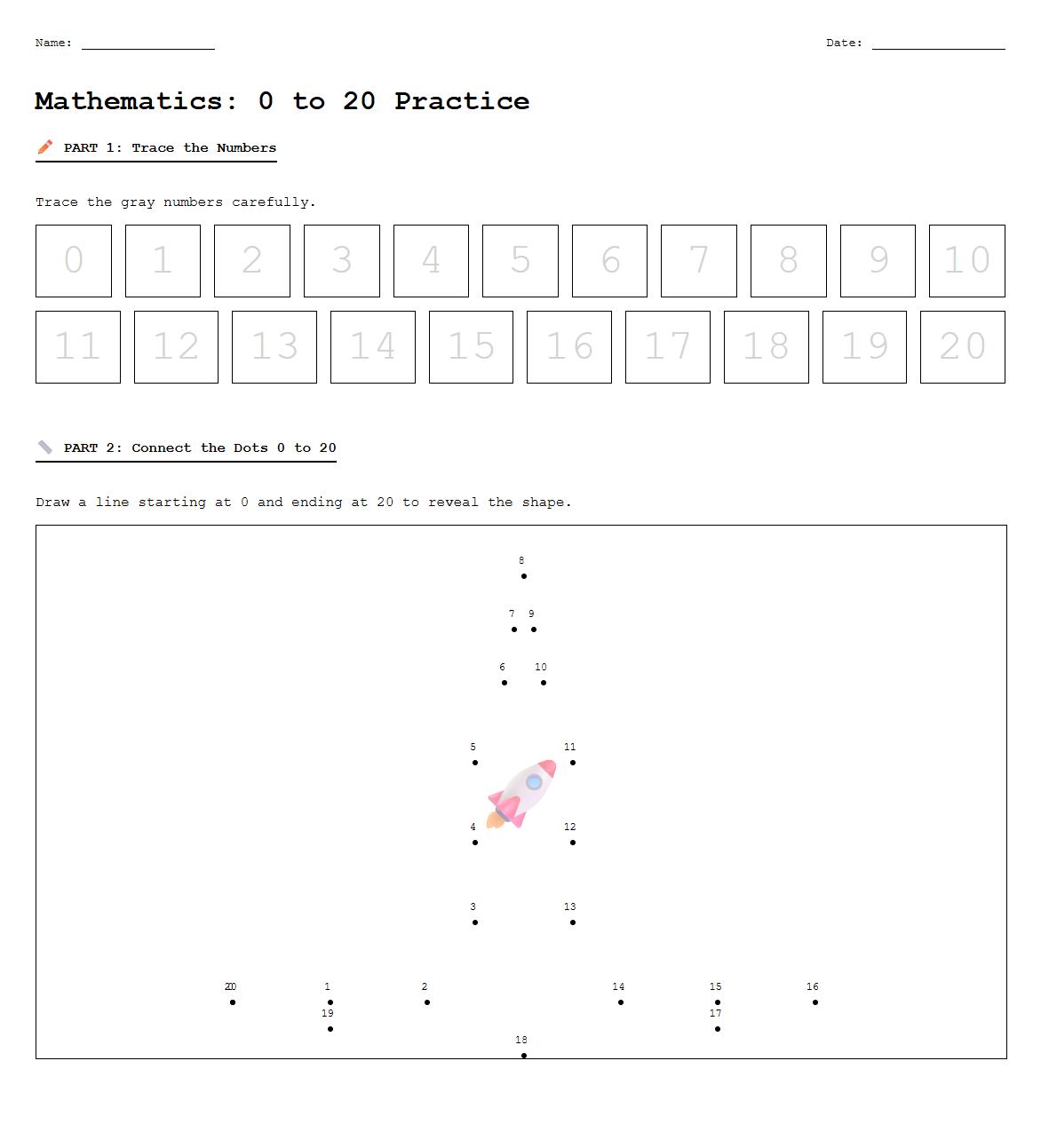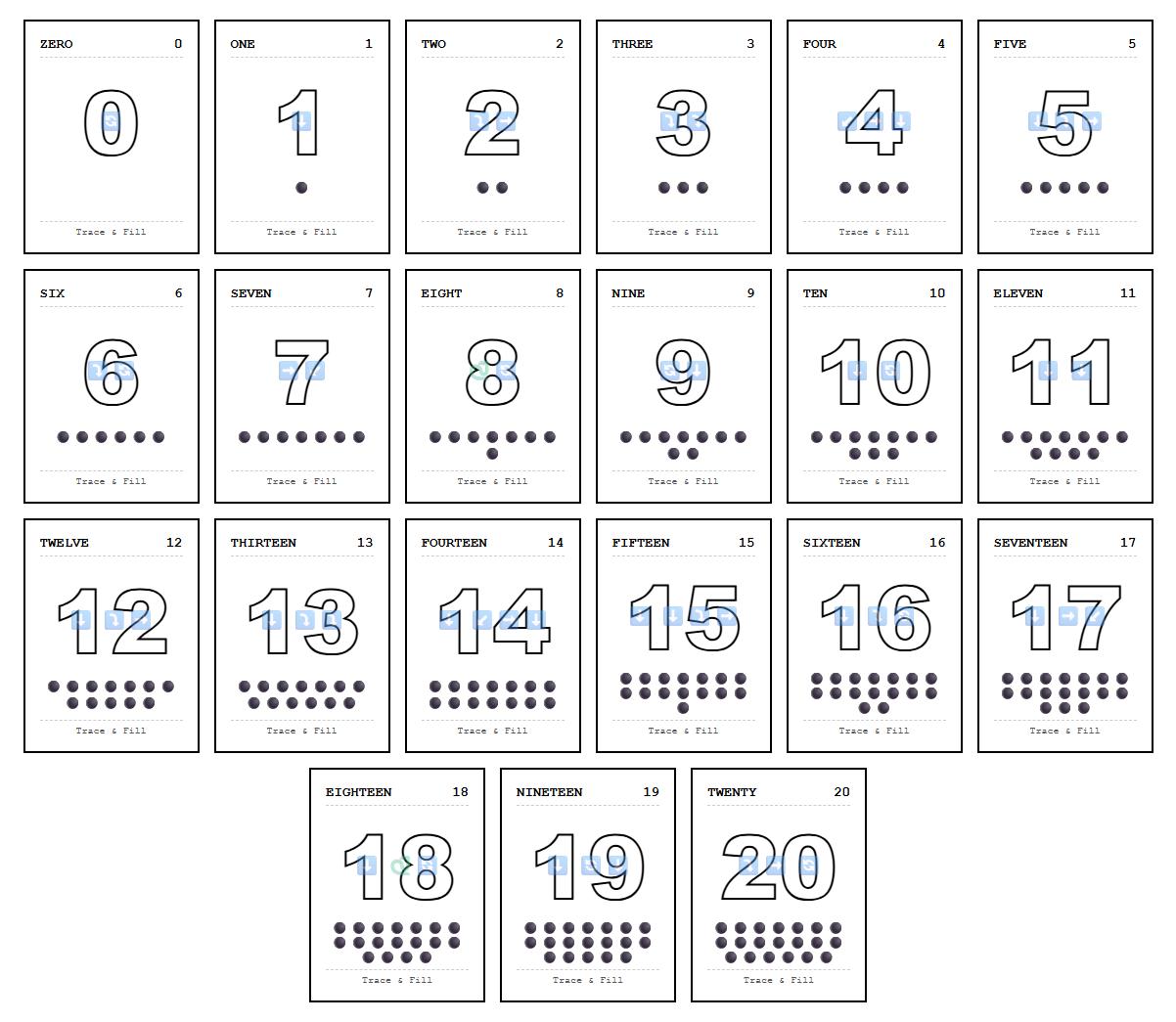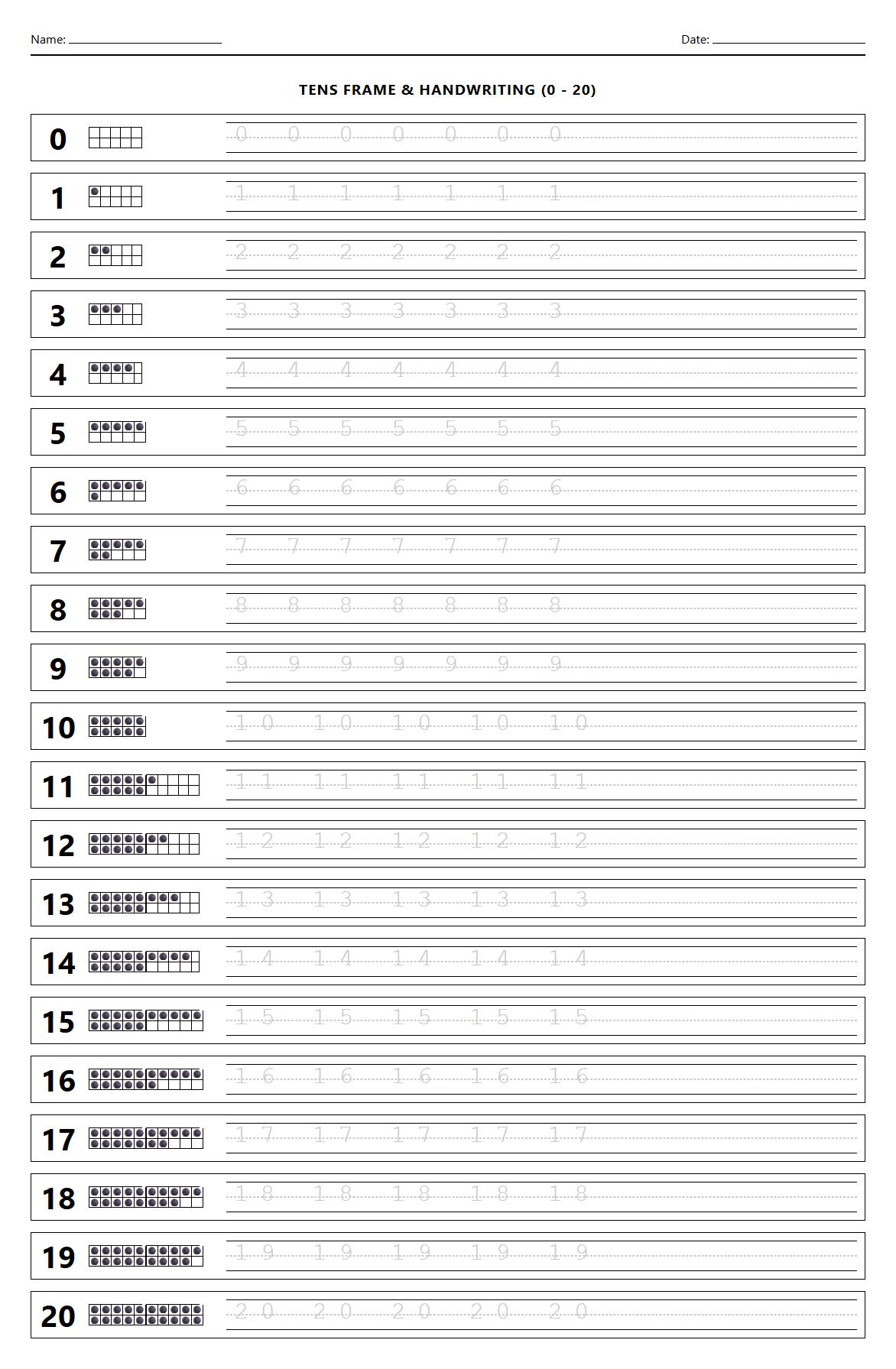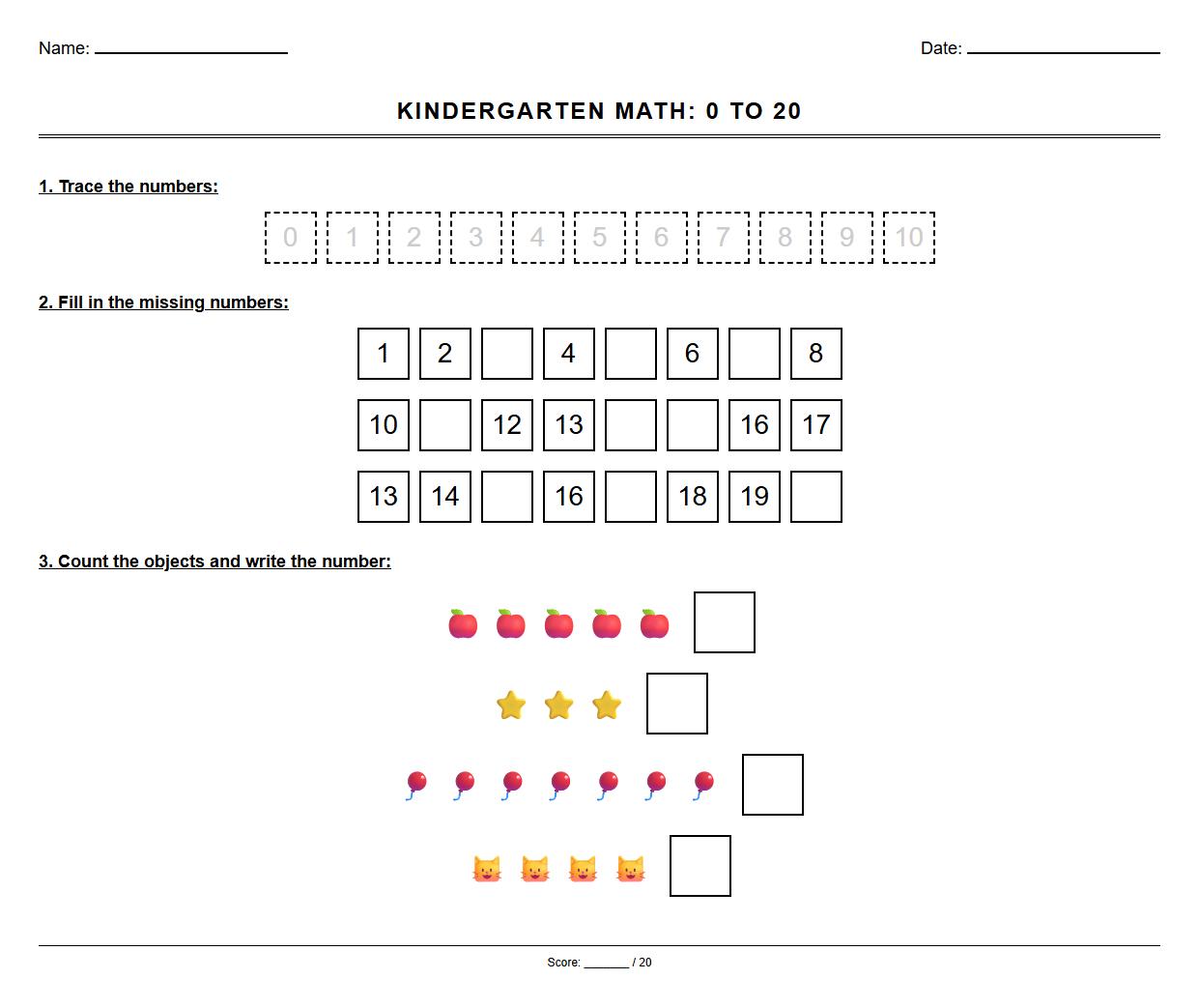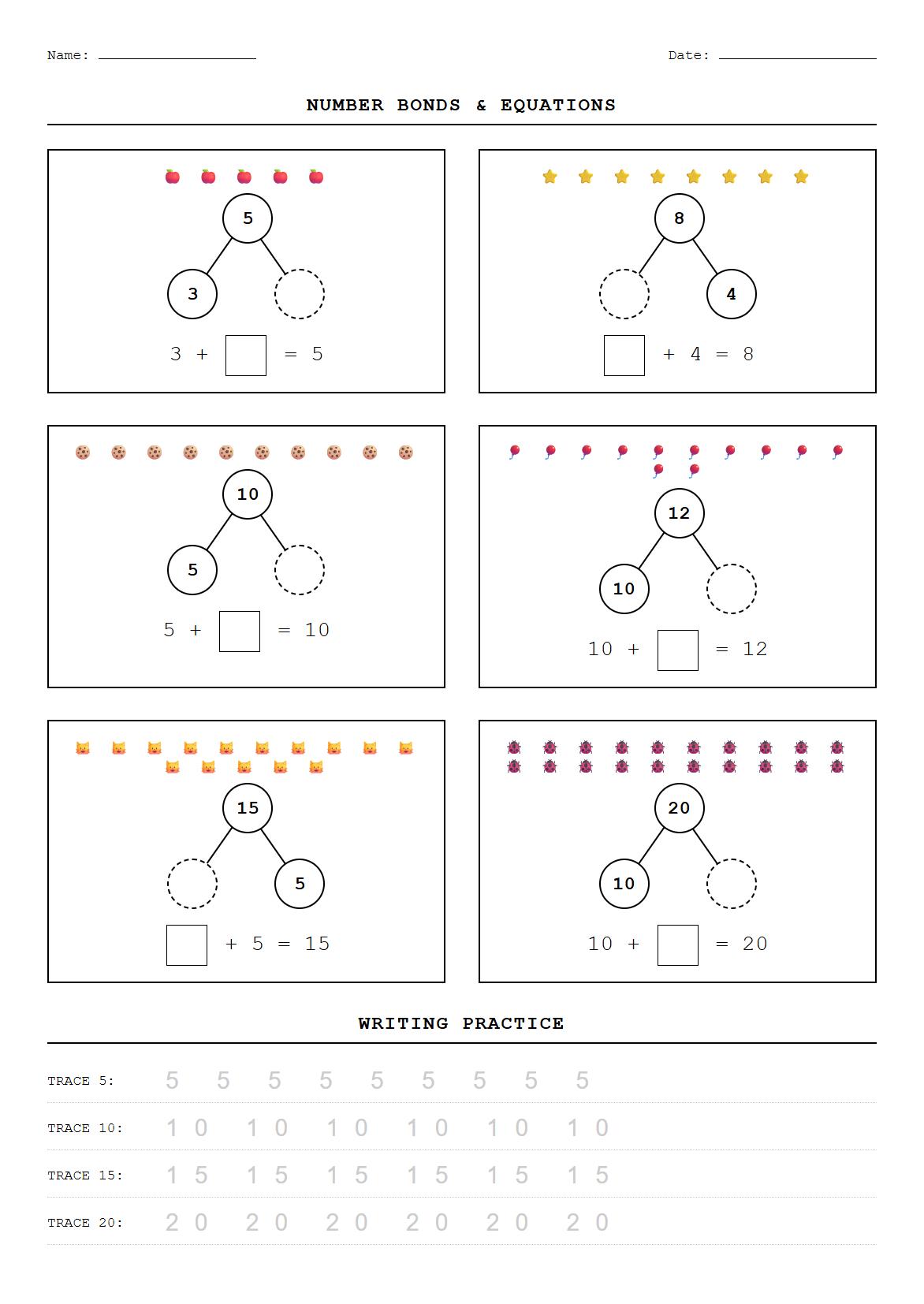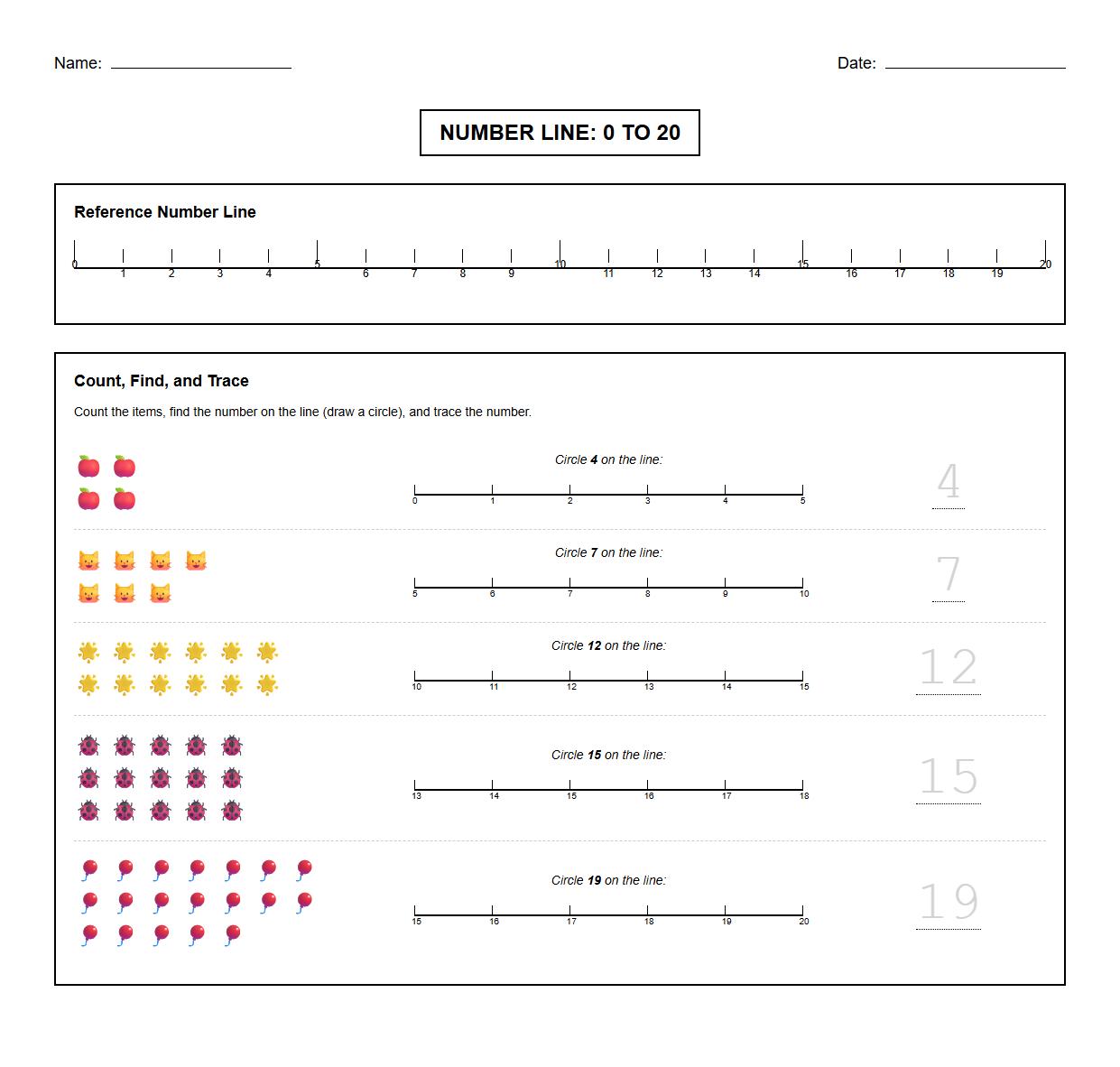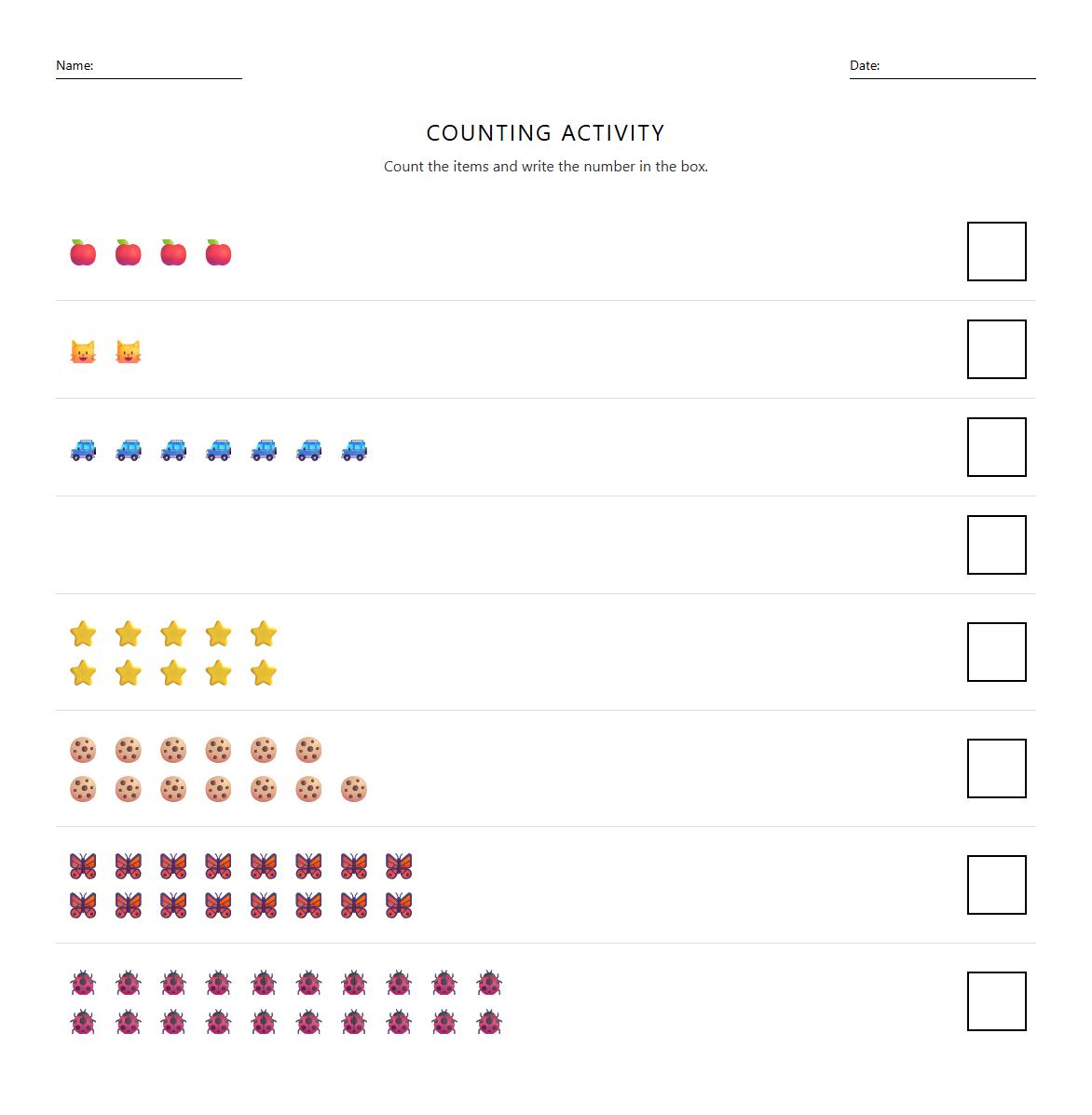
Practice recognizing and writing numbers from 0 to 20 with this engaging worksheet designed to improve number identification and handwriting skills. Clear, traceable numbers guide learners in forming digits accurately while reinforcing numerical order. Explore the complete set of Number Identification and Handwriting Worksheets to support early math development.
Identifying Numbers on the Worksheet
Ask your child, "What number is shown on this worksheet?" to encourage number recognition skills. This activity helps young learners connect visual symbols to numbers, boosting their understanding of numerical concepts. Try a visual activity similar to what's found in the visual data organization kindergarten tally worksheet.
Tracing and Writing Numbers
Guide your child to trace and write the number five on the worksheet. Tracing improves fine motor skills and familiarizes children with number shapes, building a foundation for independent writing. Incorporate tracing with practical examples like the ones in the kindergarten math drill worksheet focusing on basic addition.
Understanding Number Sequence
Engage your child by asking, "Which number comes after eleven?" This question promotes their ability to count forward and understand numerical order, essential for early math learning. Learn sequencing methods in activities such as the shape patterns sequencing worksheet.
Number Recognition and Sorting
Have your child circle all the number twos on the worksheet. This sorting task enhances visual discrimination and reinforces number recognition through active participation. For more sorting practice, explore the concept sorting worksheet: big versus small.
Coloring Numbers to Reinforce Learning
Ask your child to color the number ten in yellow. Coloring specific numbers strengthens memory and makes learning interactive and fun. Connect this activity with pattern colorings like in the color and shape pattern worksheet (AB).
Counting and Writing Larger Numbers
Encourage your child to count and write the number seventeen. Writing larger numbers practices number formation and helps solidify counting skills beyond ten. Support this with quantity recognition from worksheets like the practice reading graphs and tally charts worksheet.
Tracing and Finding Specific Numbers
Help your child find and trace the number thirteen. This focused tracing activity supports number recognition and fine motor development. See similar tasks in the visual discrimination worksheet for kindergarten.
Matching Numbers with Quantities
Ask your child to draw a line to match the number with the correct group of objects. This exercise connects numbers to quantities, deepening their understanding of number meaning. You can explore hands-on pairing in the hands-on AB pattern worksheet.
Understanding Preceding Numbers
Question your child, "Which number comes before four?" to develop their ability to count backward and recognize numerical order reversely. Practice this skill using examples from the early math & phonics worksheet: measuring and sorting height.
Writing Numbers in Sequence
Encourage writing numbers from zero to twenty in order. This comprehensive task reinforces counting, number formation, and sequential memory skills critical for kindergarten readiness. Extend sequencing using the kindergarten worksheet: identifying short and long objects in measurement.


Numeral Recognition and Penmanship Activity for Kindergarten 0 to 20