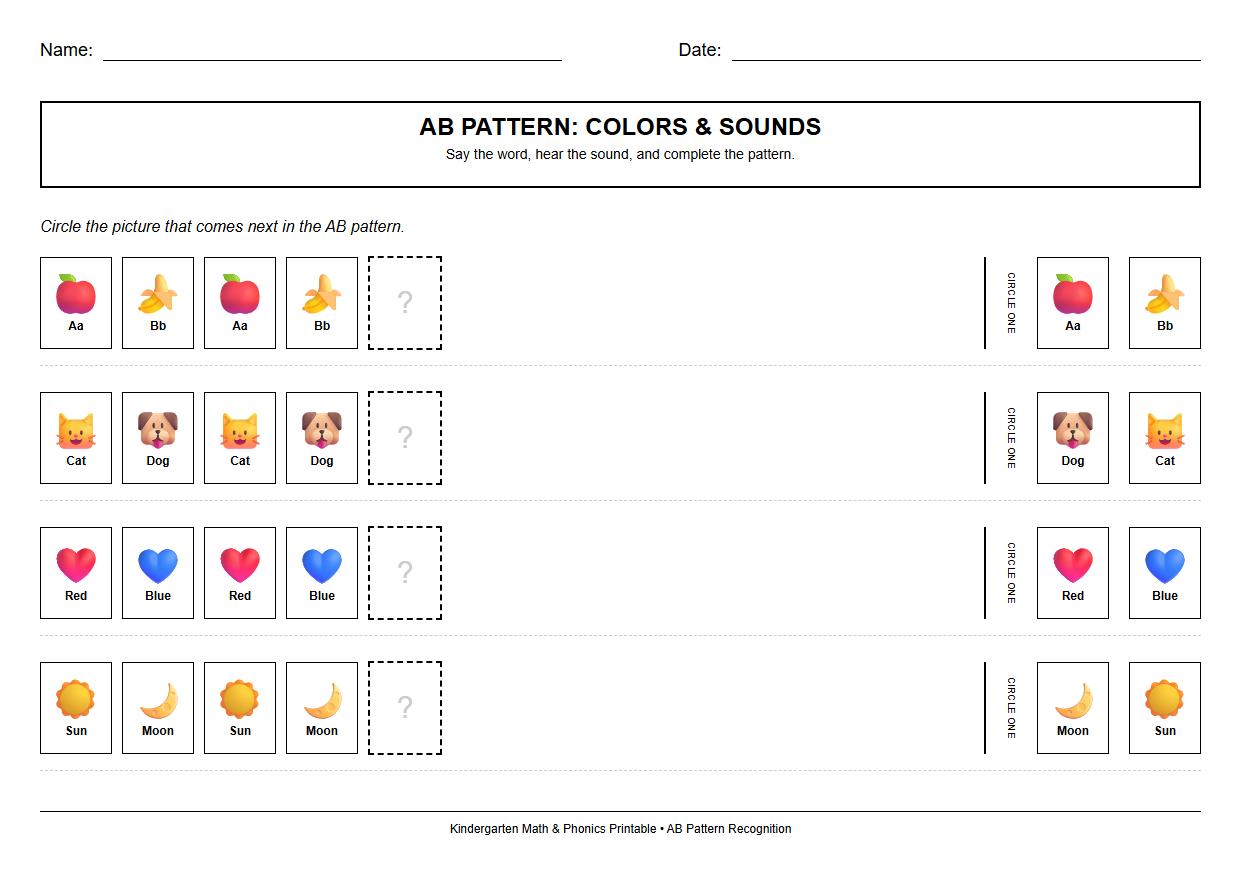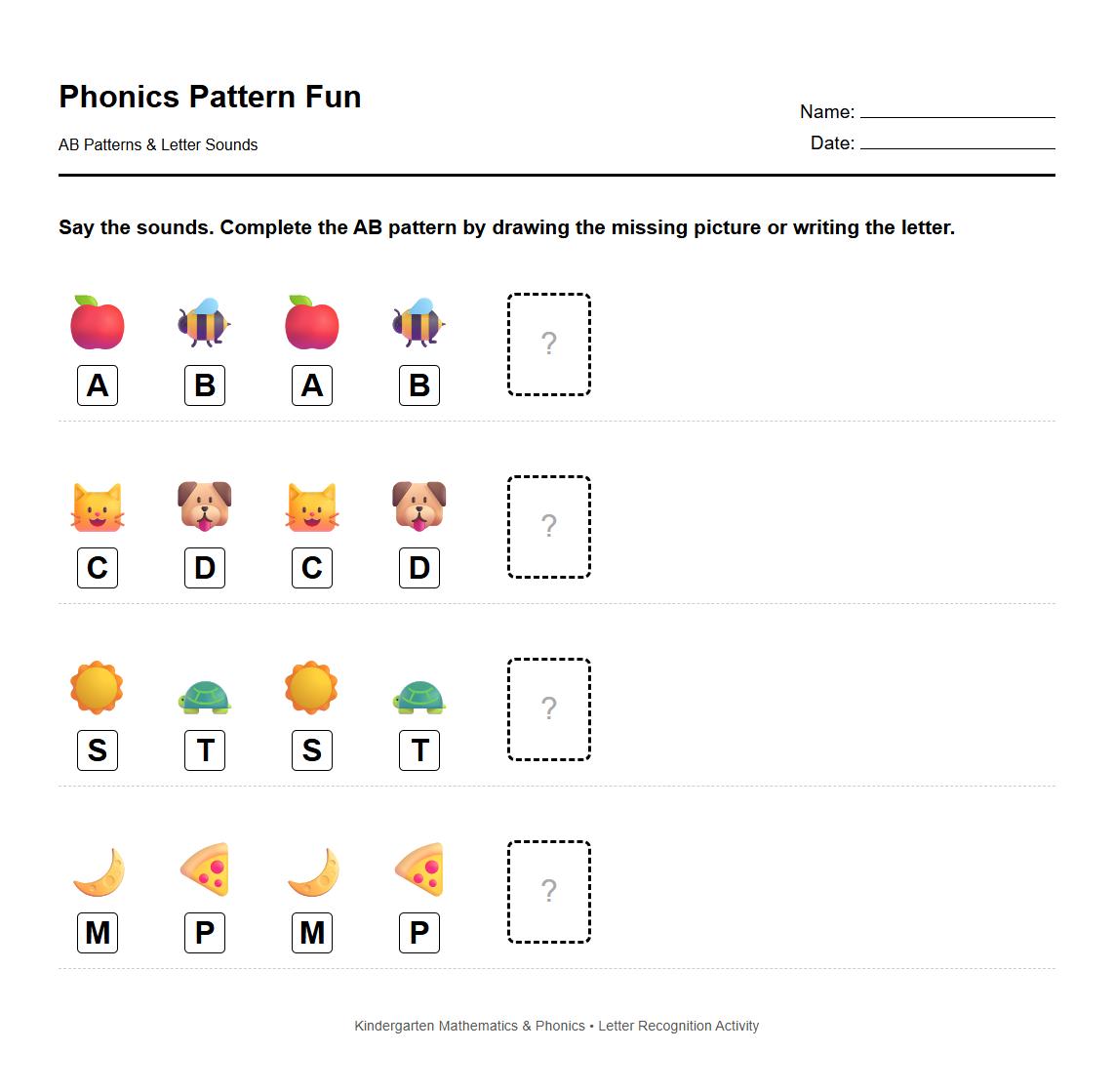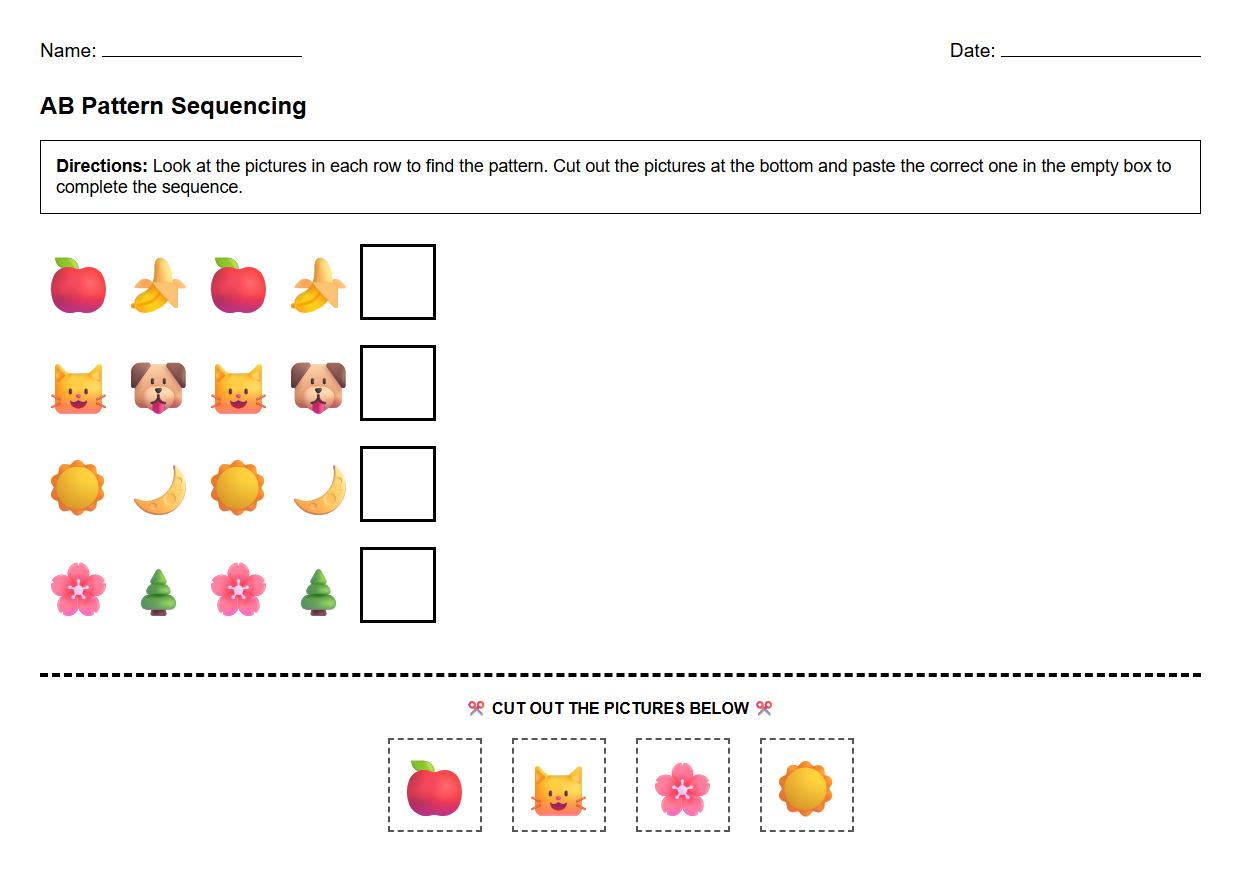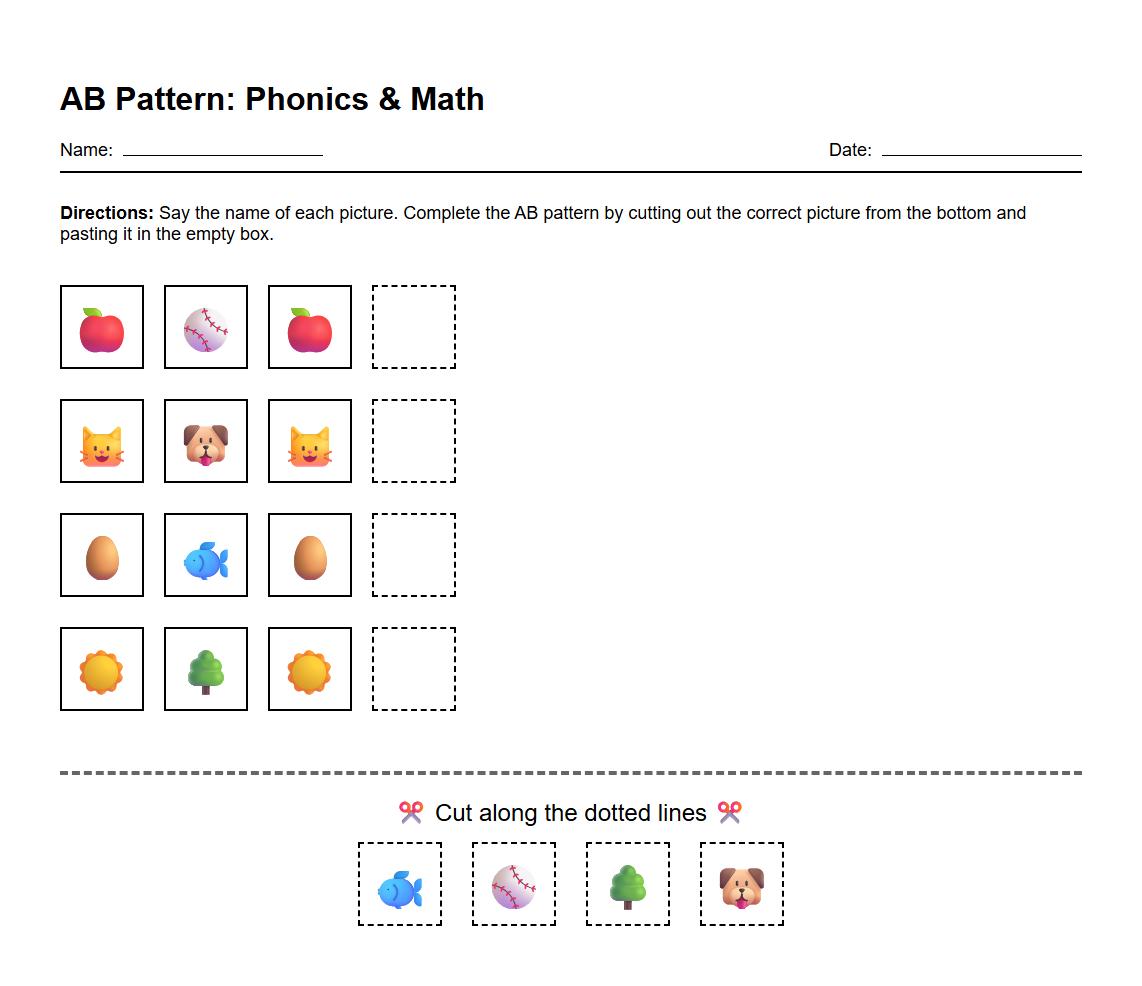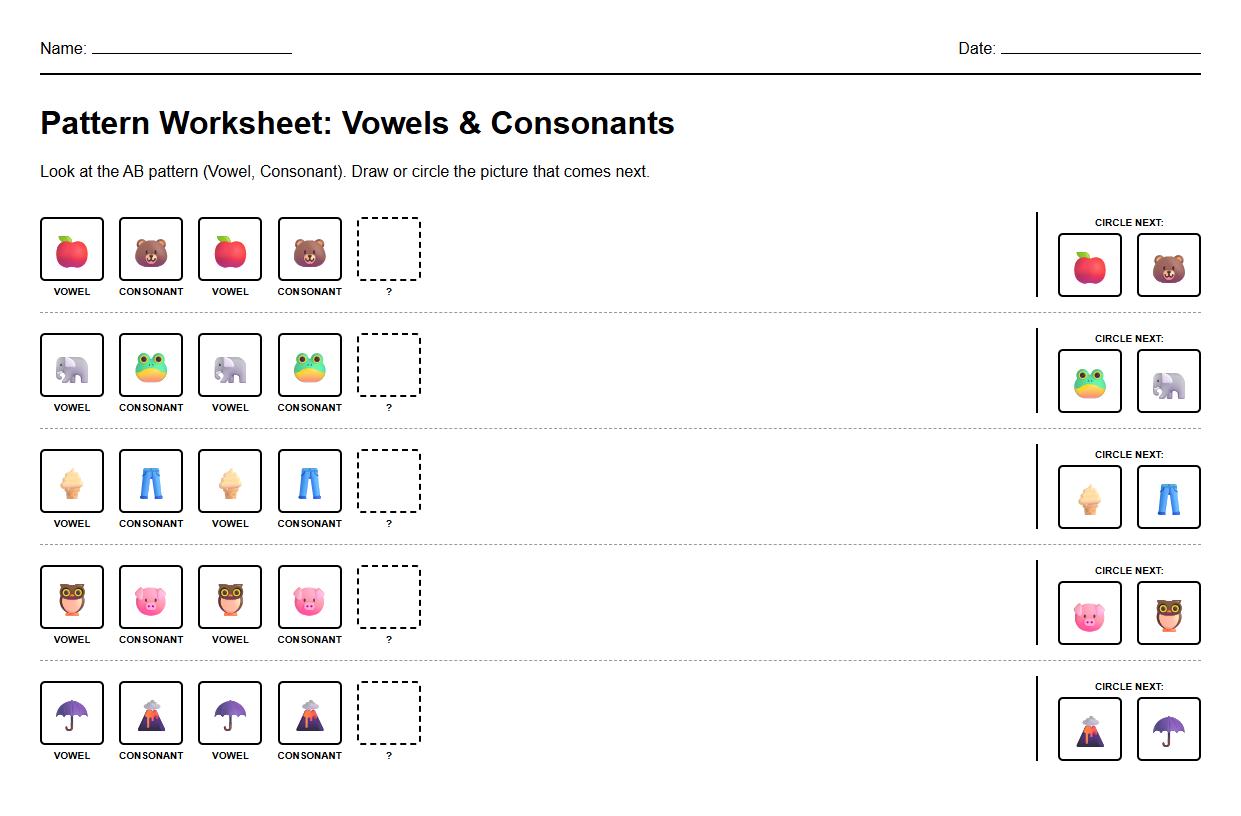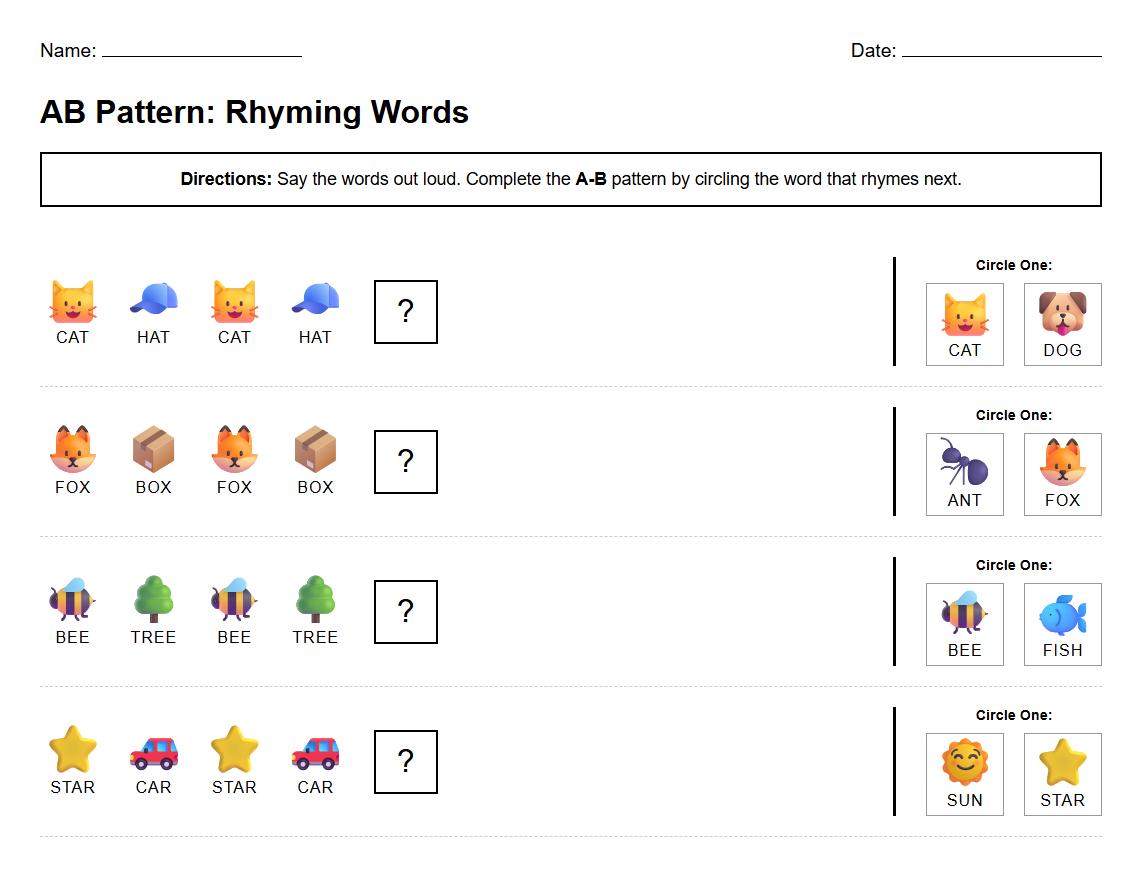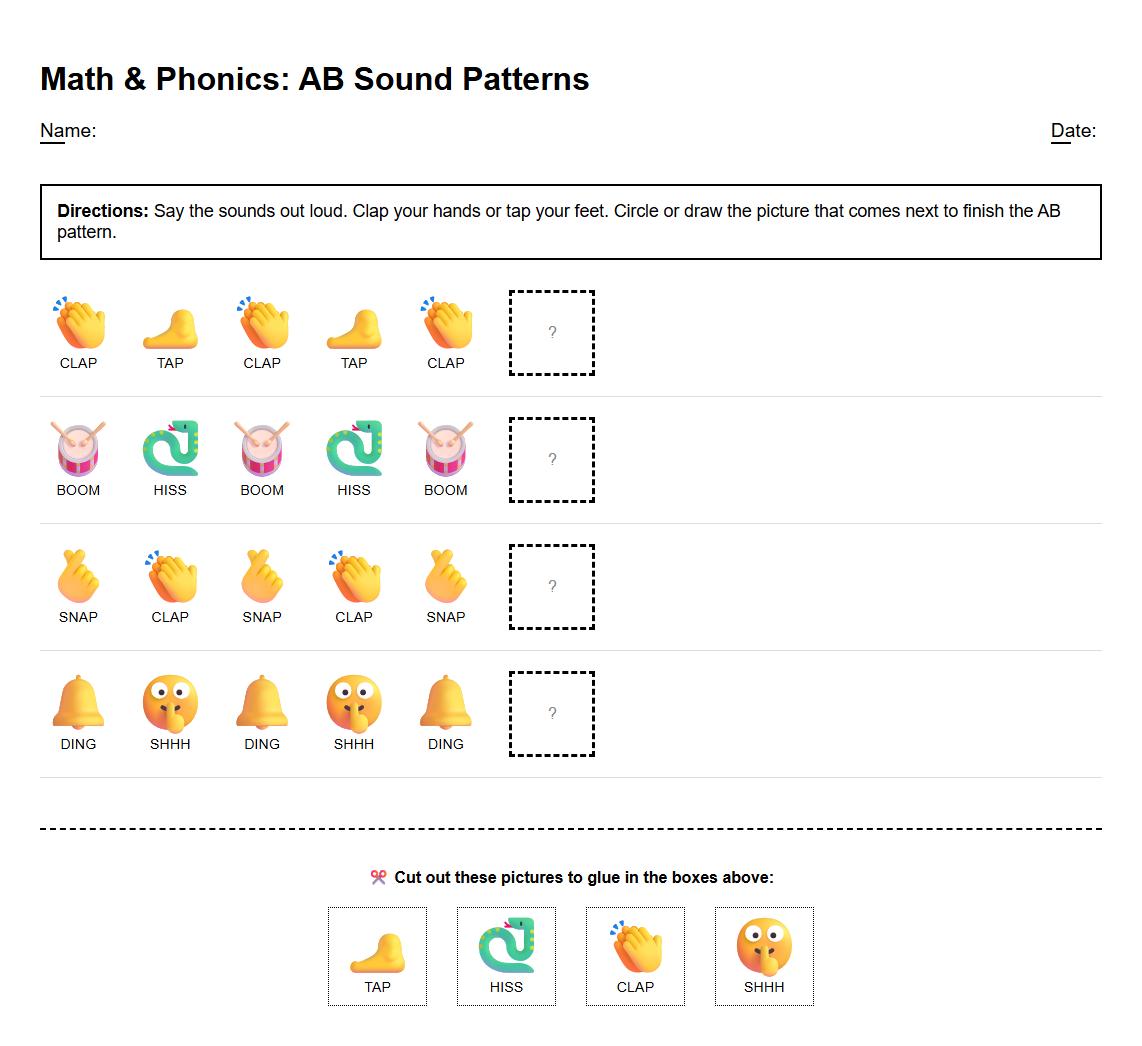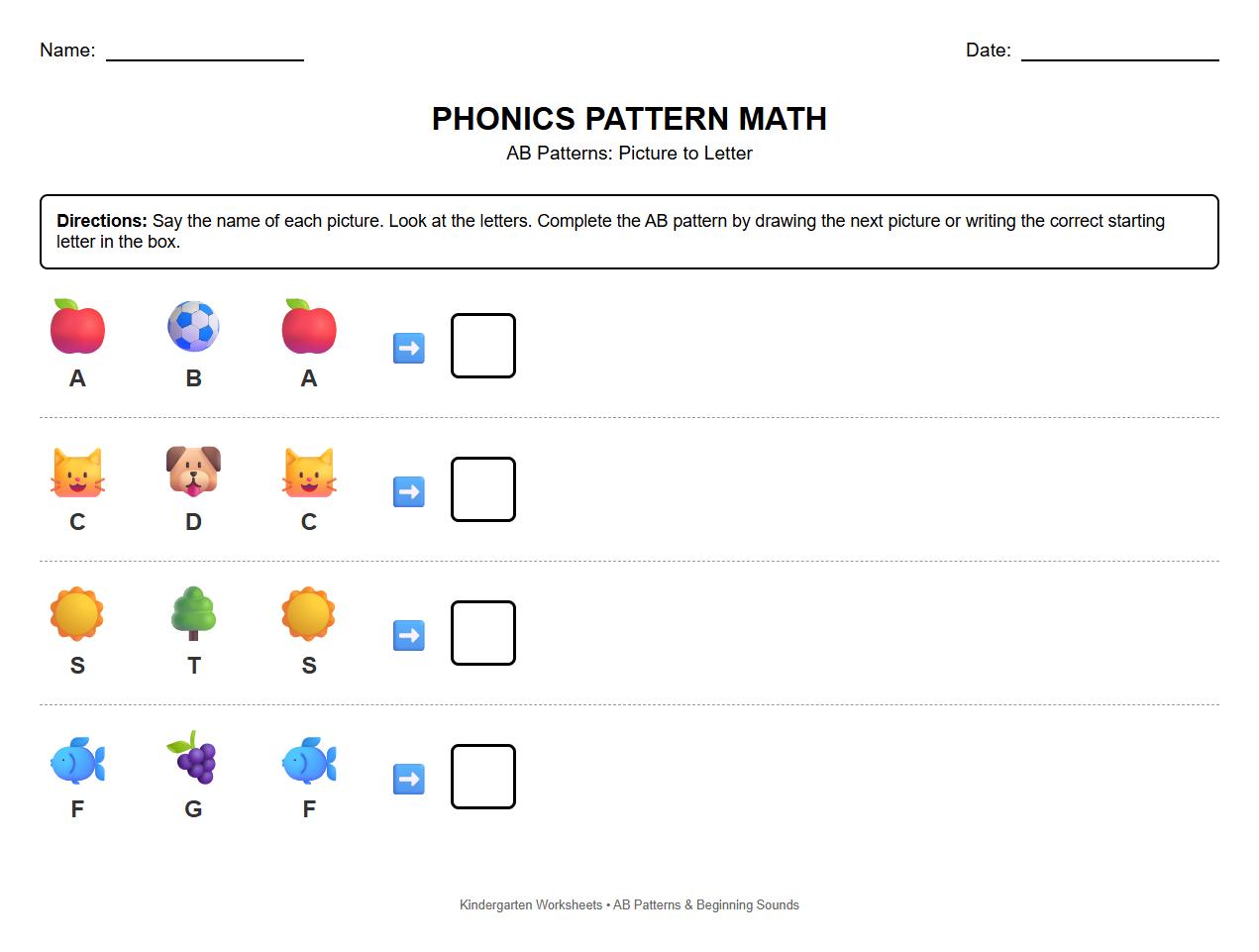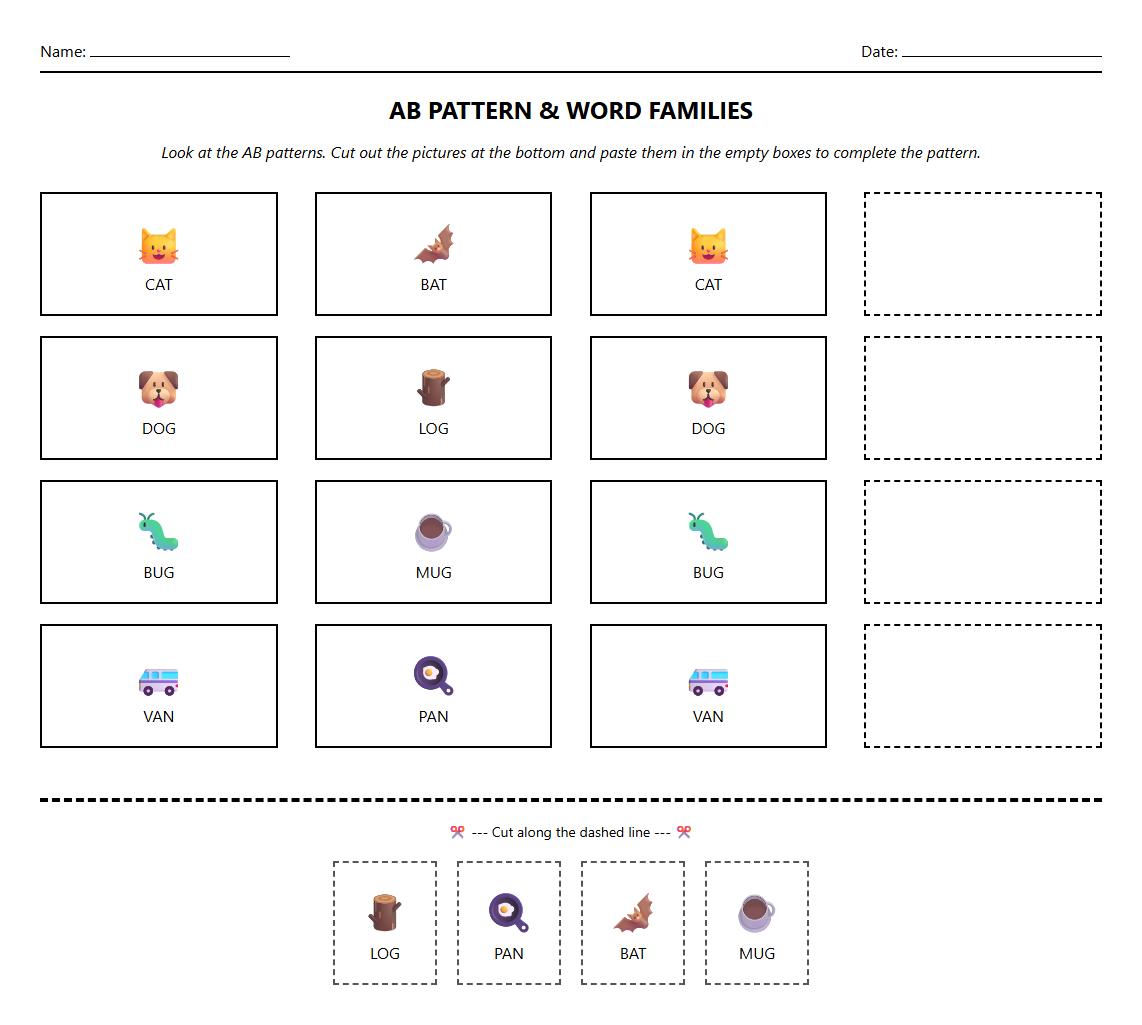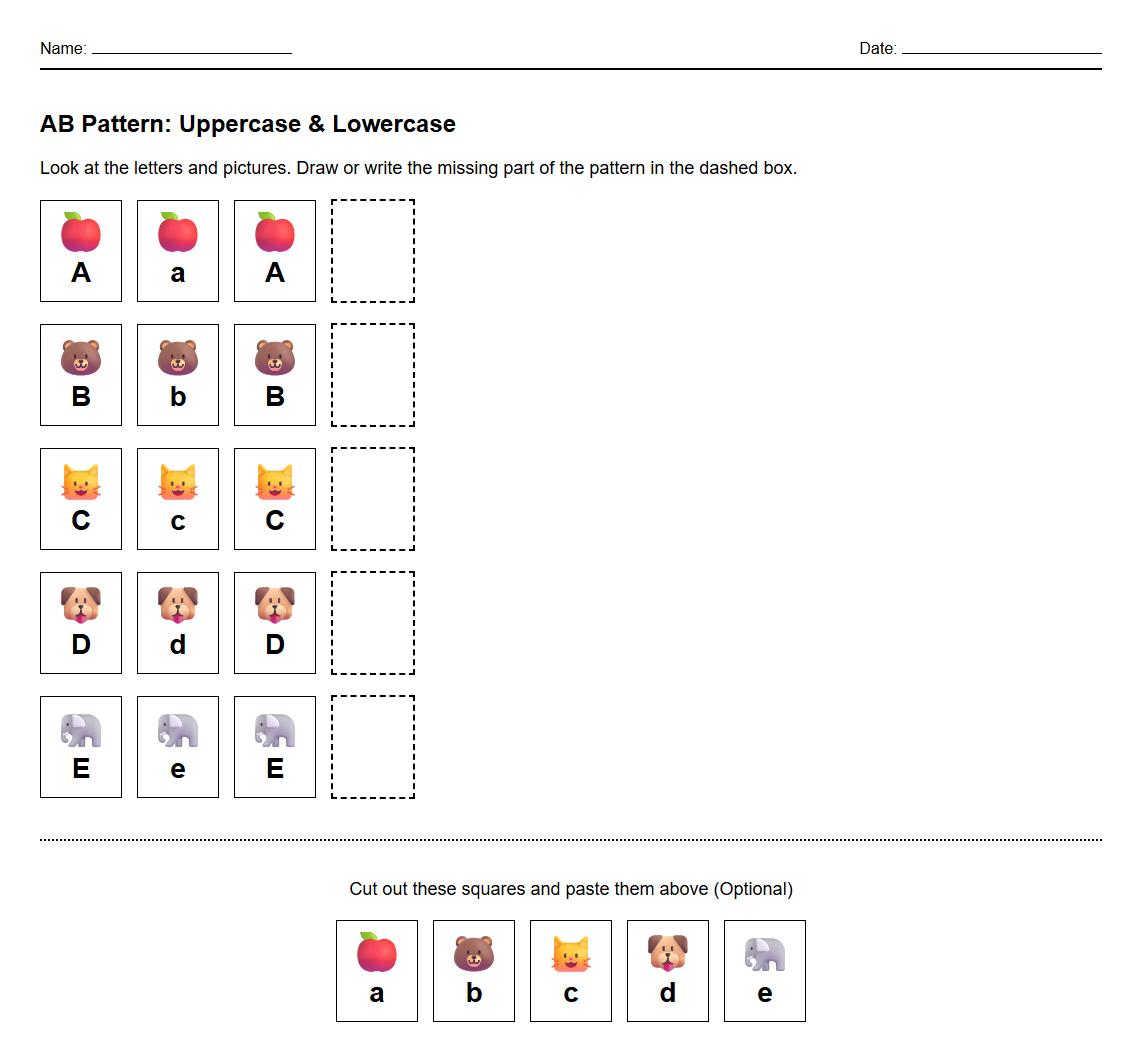
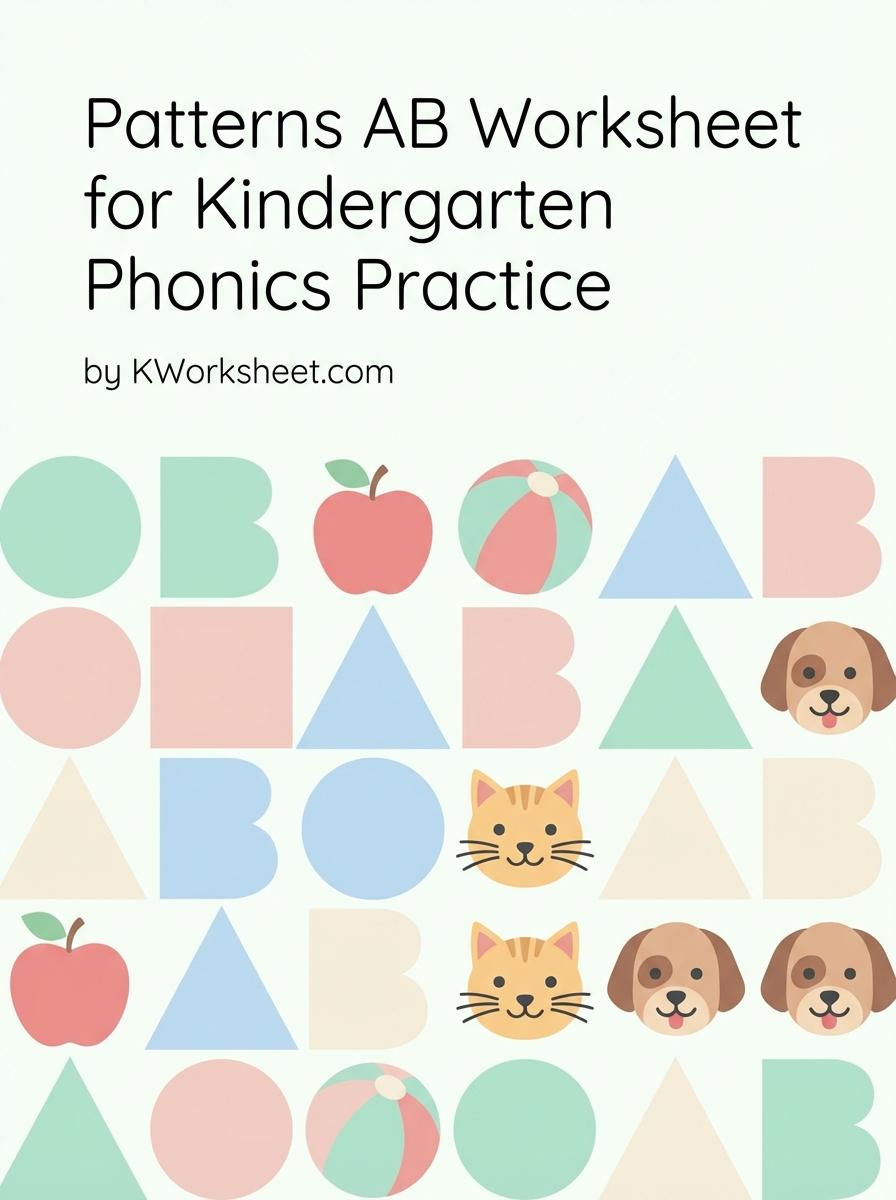
Patterns AB worksheets help kindergarten students recognize and complete repeating sequences using letters, sounds, or pictures, building early phonics and cognitive skills. These exercises enhance pattern recognition, critical thinking, and fine motor coordination, essential for literacy development. Explore the available worksheets to support your child's phonics practice and early learning journey.
What color comes next in this AB pattern sequence?
Understanding the next color in an AB pattern helps children develop predictive skills and color recognition. Encourage kids to observe the sequence carefully before responding. Use bright, contrasting colors to make the pattern more engaging. Repetition of the pattern aids memory and sequencing abilities.
Which two shapes repeat in this AB pattern?
Identifying the repeating shapes reinforces shape recognition and pattern understanding. Focus on two different shapes, such as circles and squares, to create a clear AB pattern. This activity supports early geometry skills and logical thinking. Ask children to name the shapes as they spot the pattern.
Can you continue the AB pattern with these pictures?
Encourage children to extend the pattern using the given images to enhance critical thinking and sequencing. This exercise boosts creativity by allowing them to predict what comes next. Using familiar pictures makes the pattern relatable and enjoyable. Prompt them to explain their reasoning for added verbal development.
Which letter sound comes after the first in this AB pattern?
Recognizing the letter sounds in an AB pattern strengthens early phonics skills. Help children identify the first sound, then focus on the next in sequence. This activity improves auditory discrimination and early reading readiness. Reinforce learning by repeating the sounds aloud together.
Point to the object that will come next in this AB sequence
Asking children to predict and point to the next object in a sequence improves focus and visual discrimination. Use clear, distinct objects to make the pattern easy to follow. This interactive practice develops attention to detail and confidence in pattern recognition. Encourage discussion about their choice to deepen understanding.
Say the sounds you hear in this AB pattern
Listening for and repeating sounds in an AB pattern enhances phonemic awareness. Engage children in saying each sound aloud to build confidence in speaking and listening. This exercise supports early literacy through sound blending and segmentation. Make it fun with rhythmic chants or claps to accompany the pattern.
What happens if we start the AB pattern with a different color?
Changing the starting color in an AB pattern helps children understand pattern flexibility and sequence variations. This activity encourages problem-solving and adaptability in thinking. Discuss how the pattern changes and what stays consistent. It fosters deeper conceptual knowledge about patterns.
Can you draw an AB pattern using these crayons?
Drawing an AB pattern with crayons encourages hands-on learning and fine motor skills. Children can apply their understanding of alternating colors or shapes creatively. This activity integrates art with cognitive development, making learning multisensory. Praise their work to build confidence and enthusiasm for patterns.
Which word starts the pattern in this AB phonics series?
Identifying the starting word in a phonics pattern strengthens early reading and sequencing skills. Use simple, repetitive words to make the pattern clear and memorable. This practice enhances word recognition and phonetic awareness. Encourage children to say the words aloud to reinforce learning.
How many times can you repeat the AB pattern before stopping?
Counting the repetitions in an AB pattern builds numeracy and attention span. Challenge children to repeat the pattern several times, noting when it stops. This activity promotes patience and self-monitoring skills. Use visual or tactile aids to make counting more accessible and enjoyable.


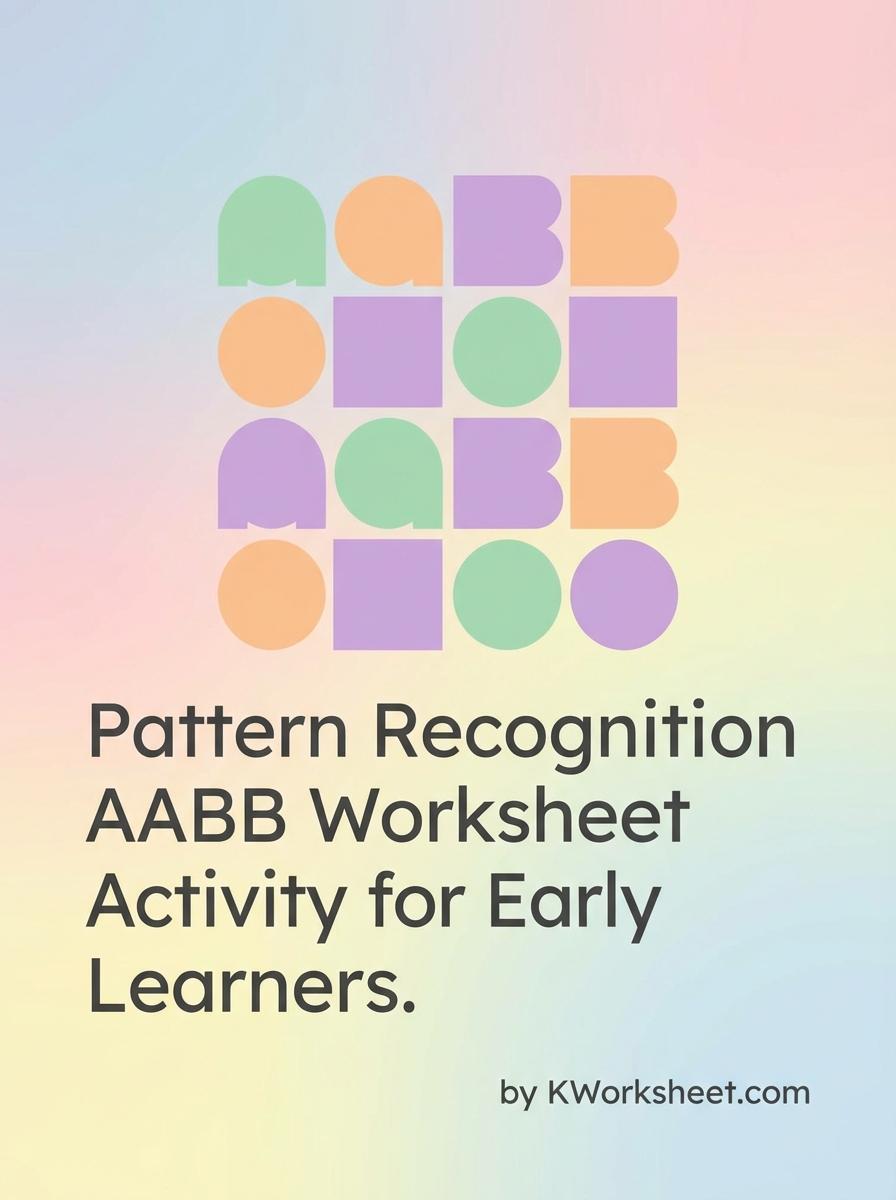
Pattern Recognition AABB Worksheet Activity for Early Learners