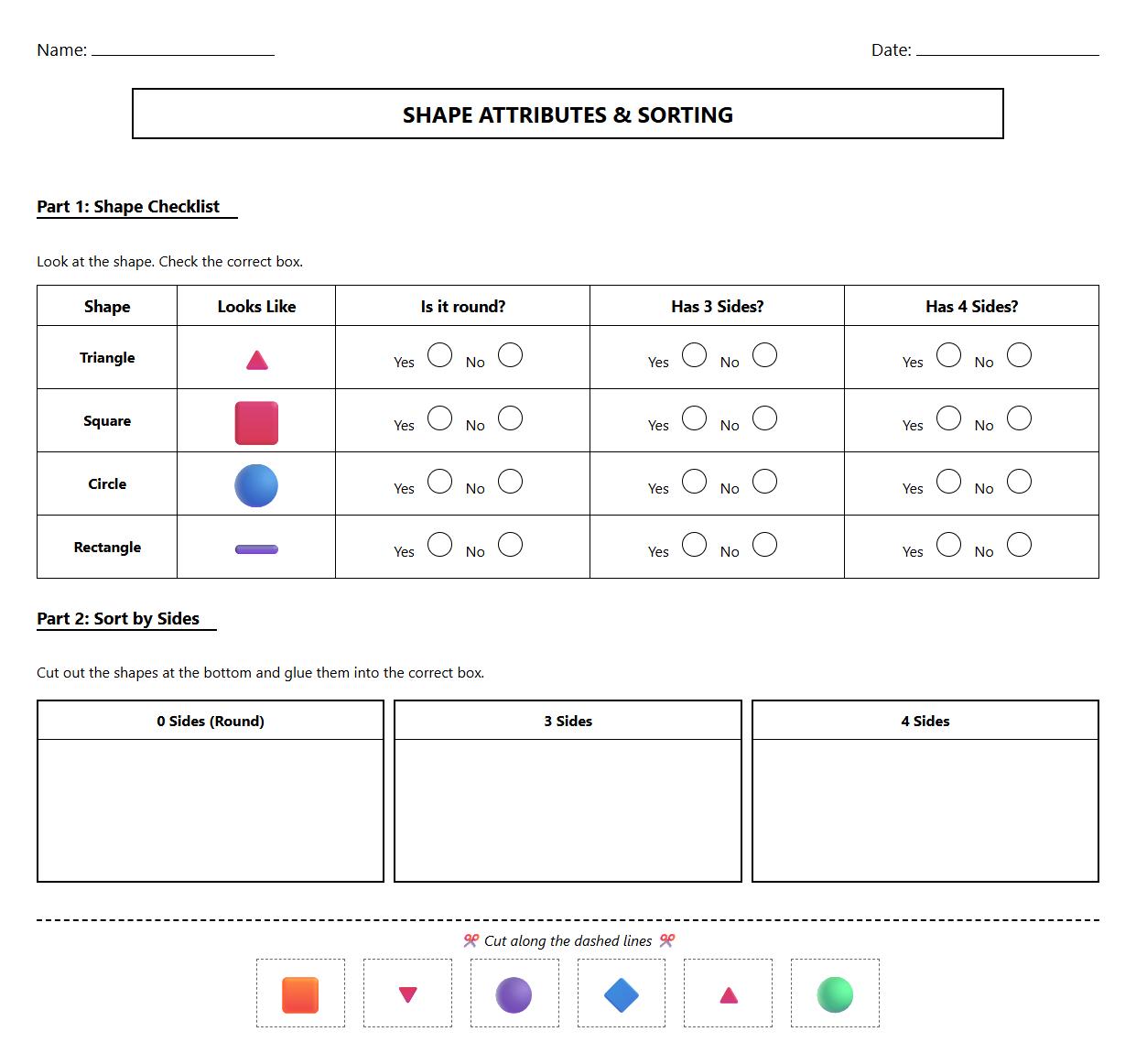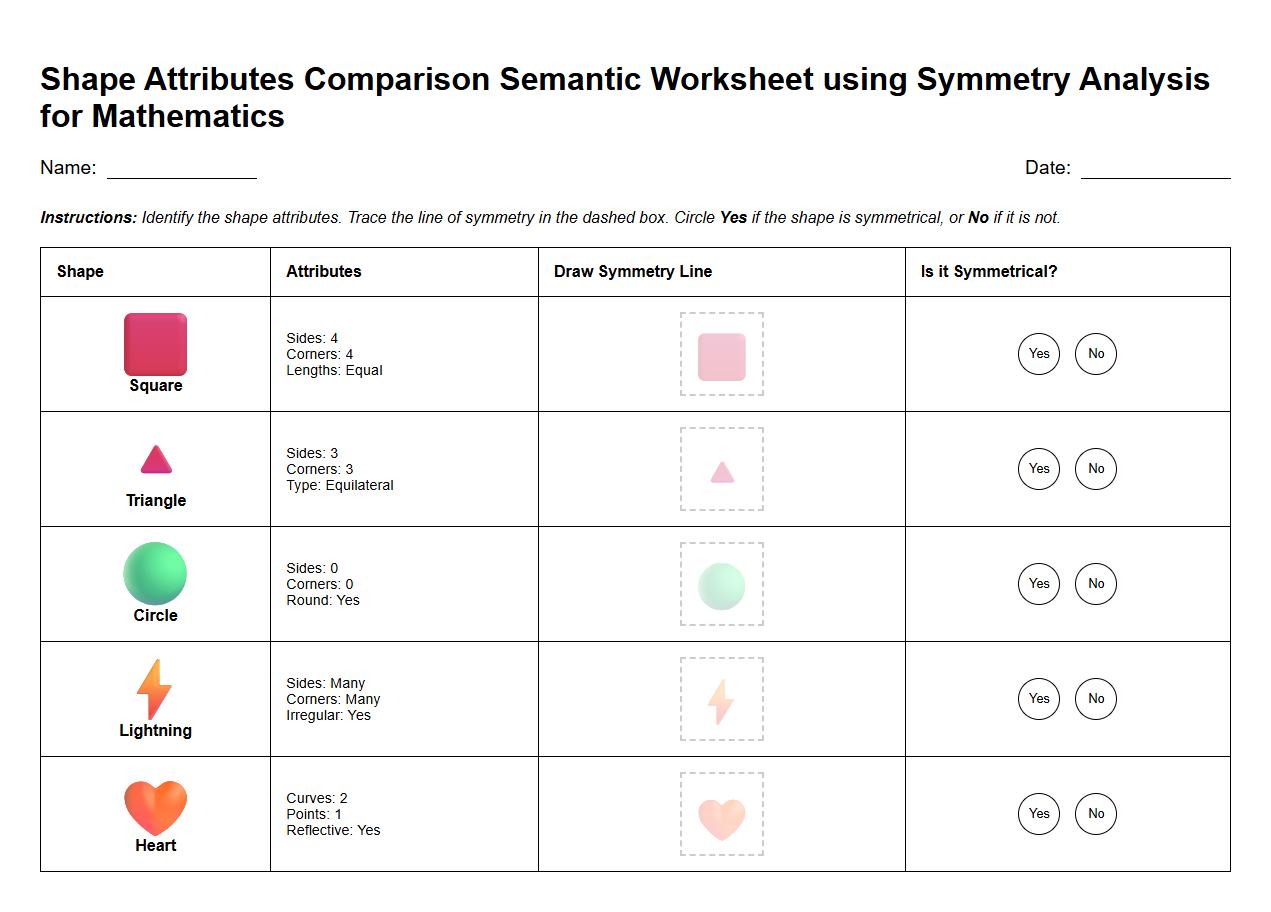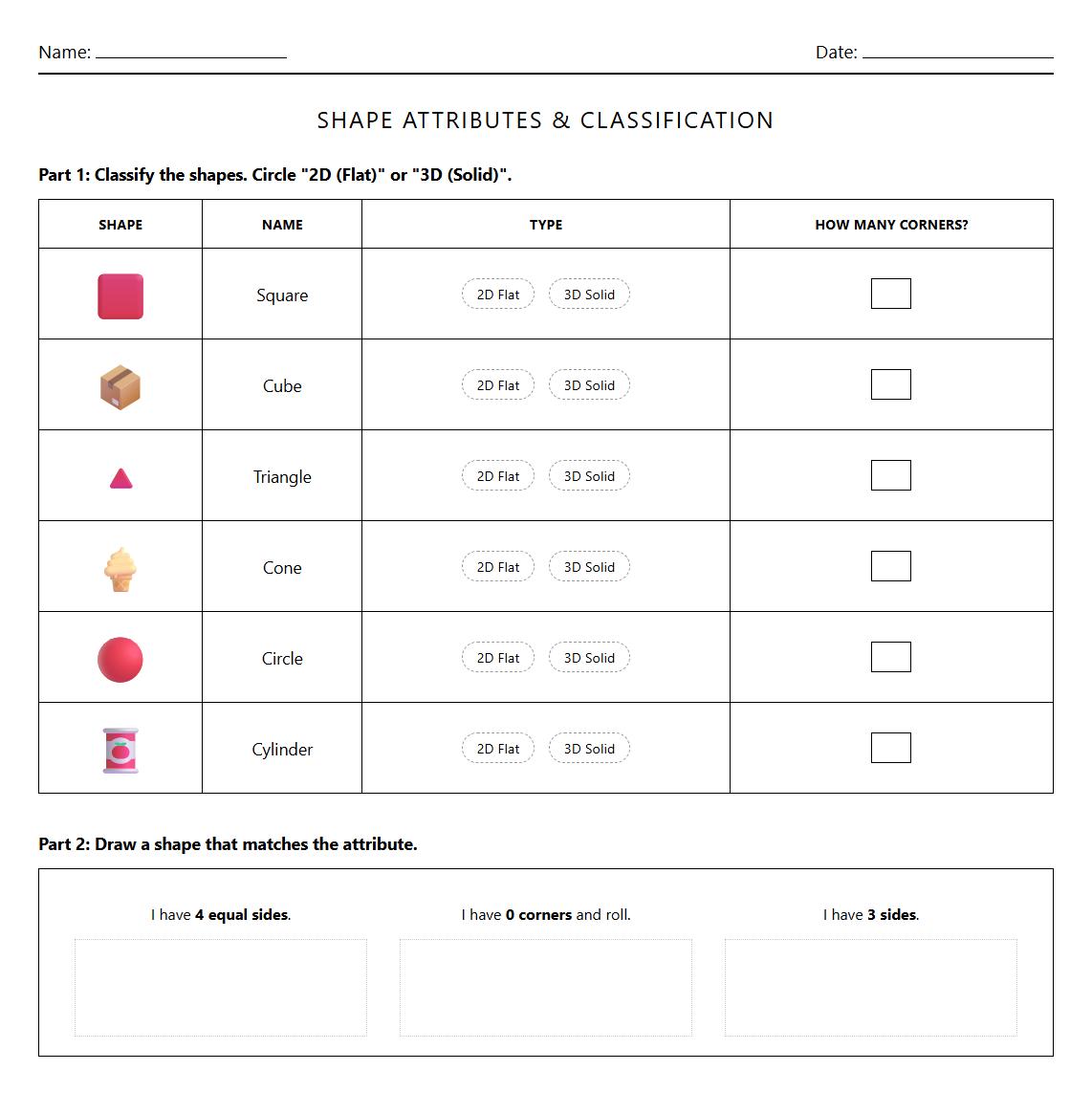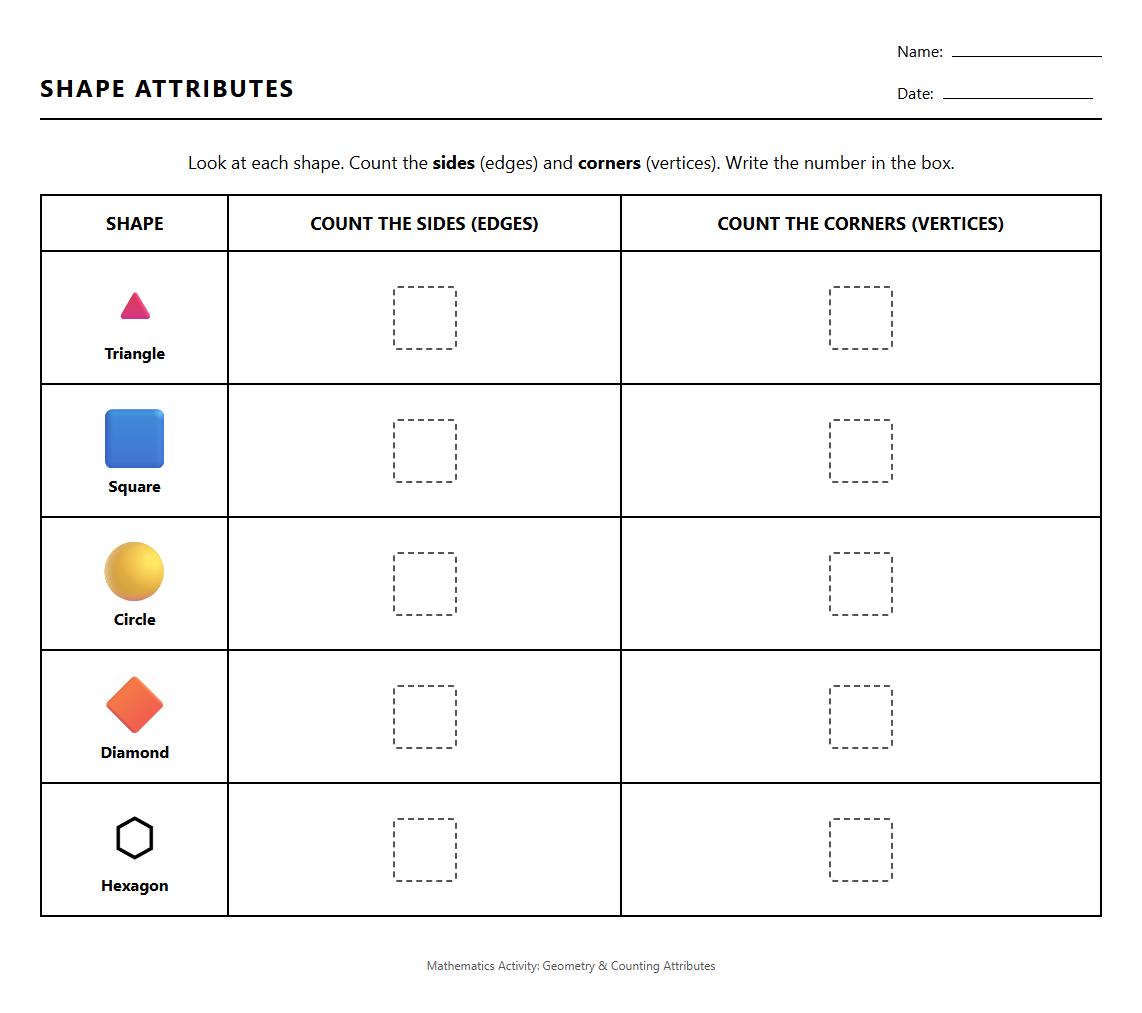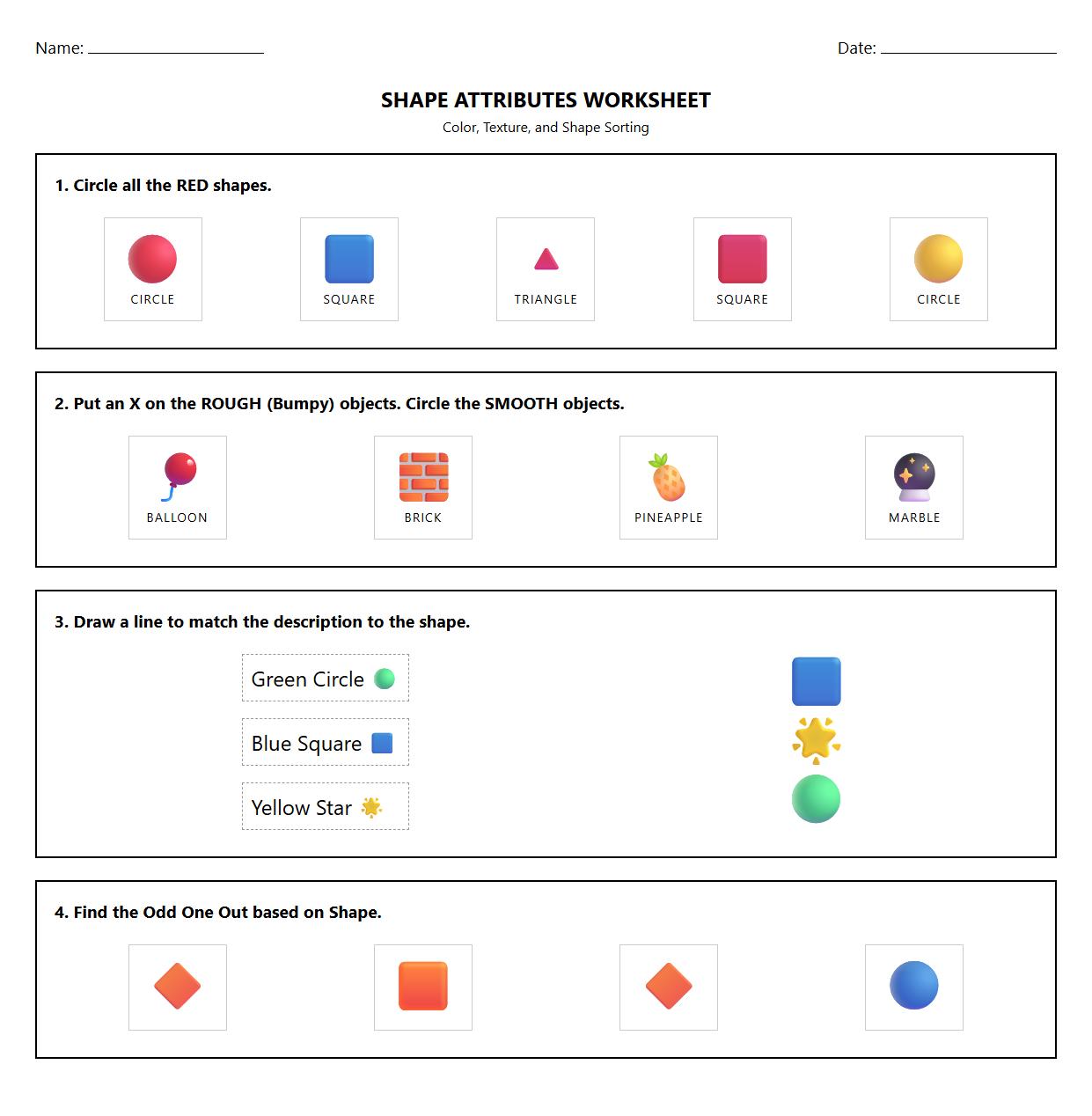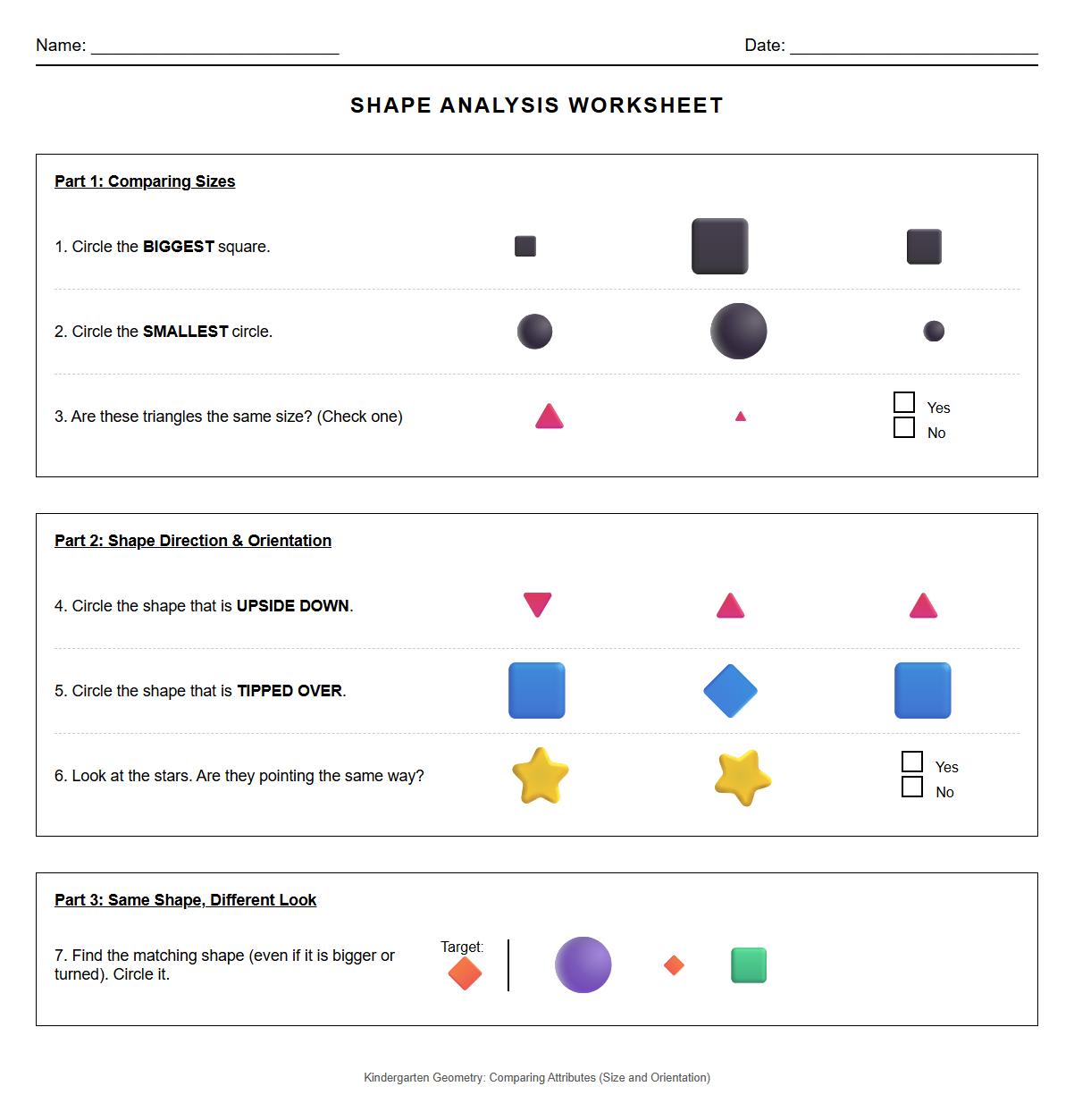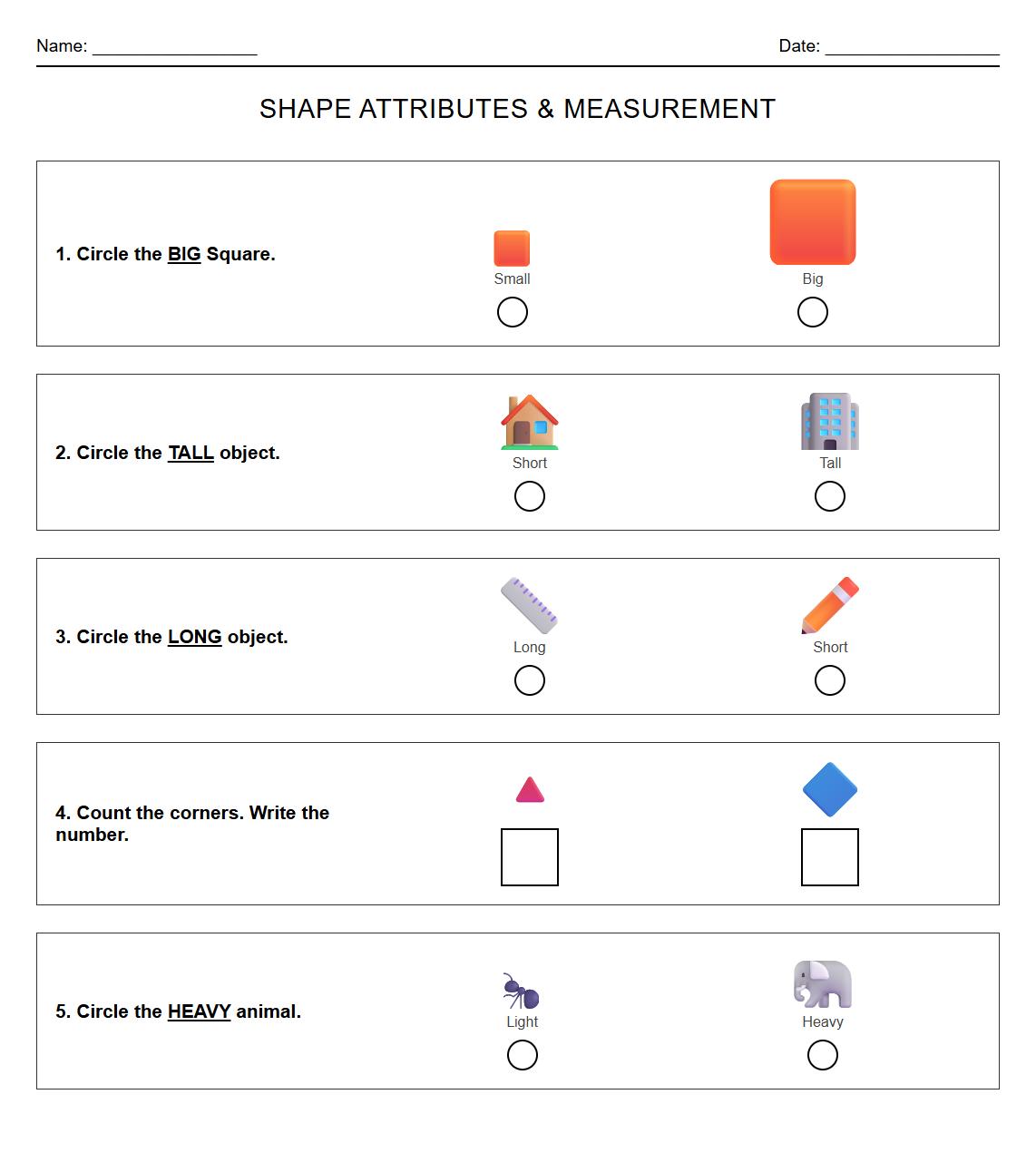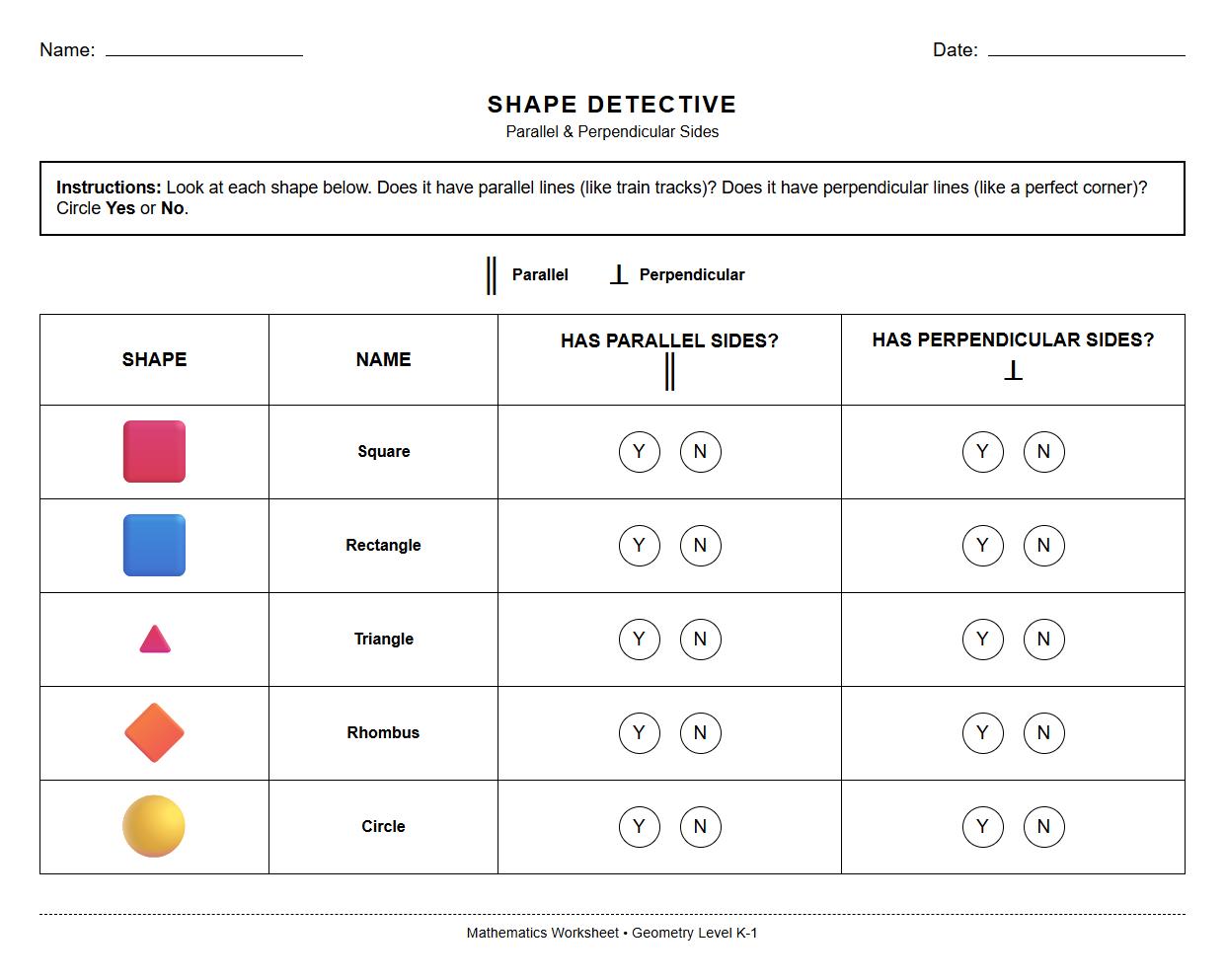
Explore key shape attributes like sides, angles, and symmetry to enhance your understanding of geometric figures. Comparing these properties helps develop critical thinking and spatial awareness in math learning. Check out the available worksheets to practice shape attribute comparison skills.
Comparing Corners: Triangle vs. Square
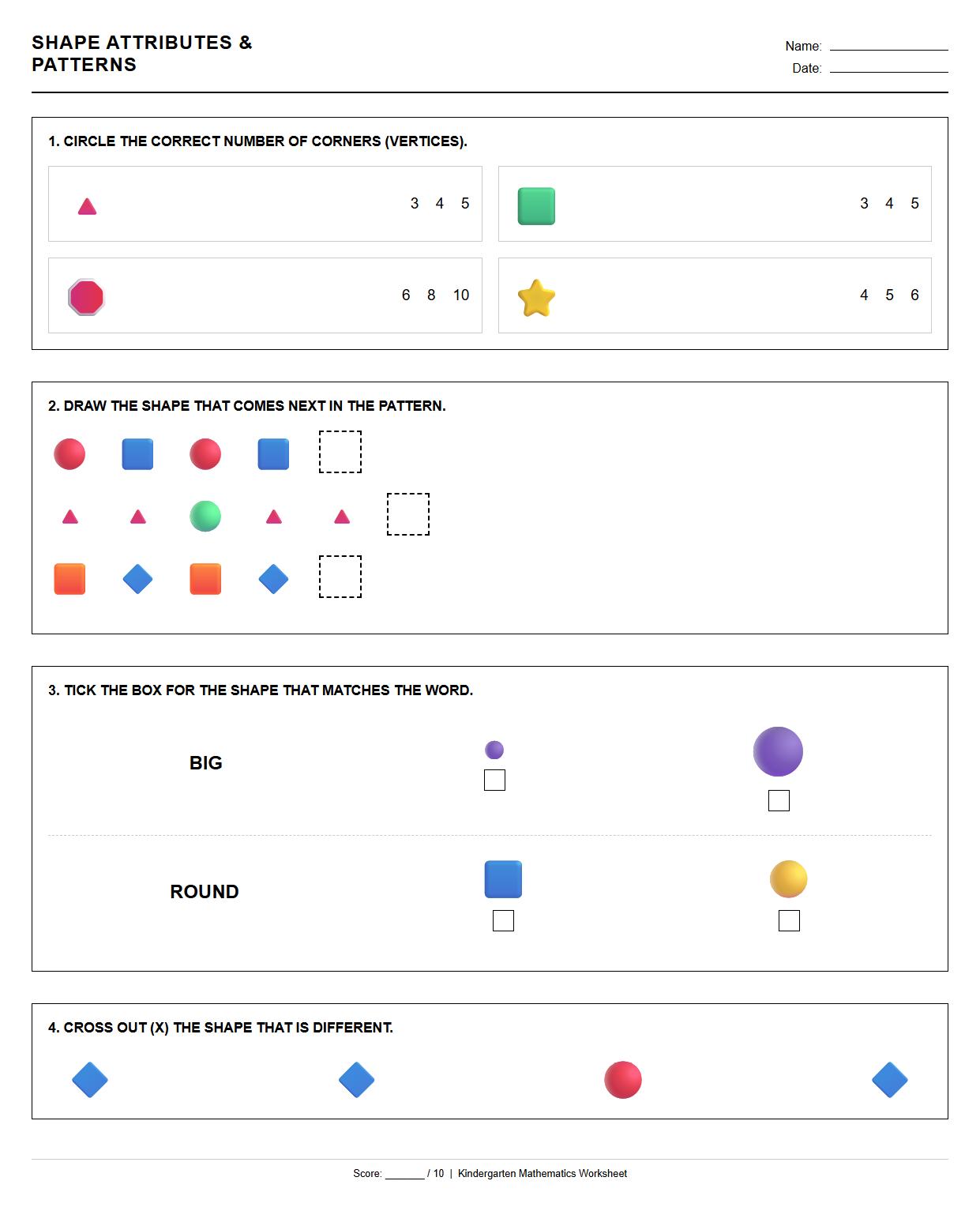
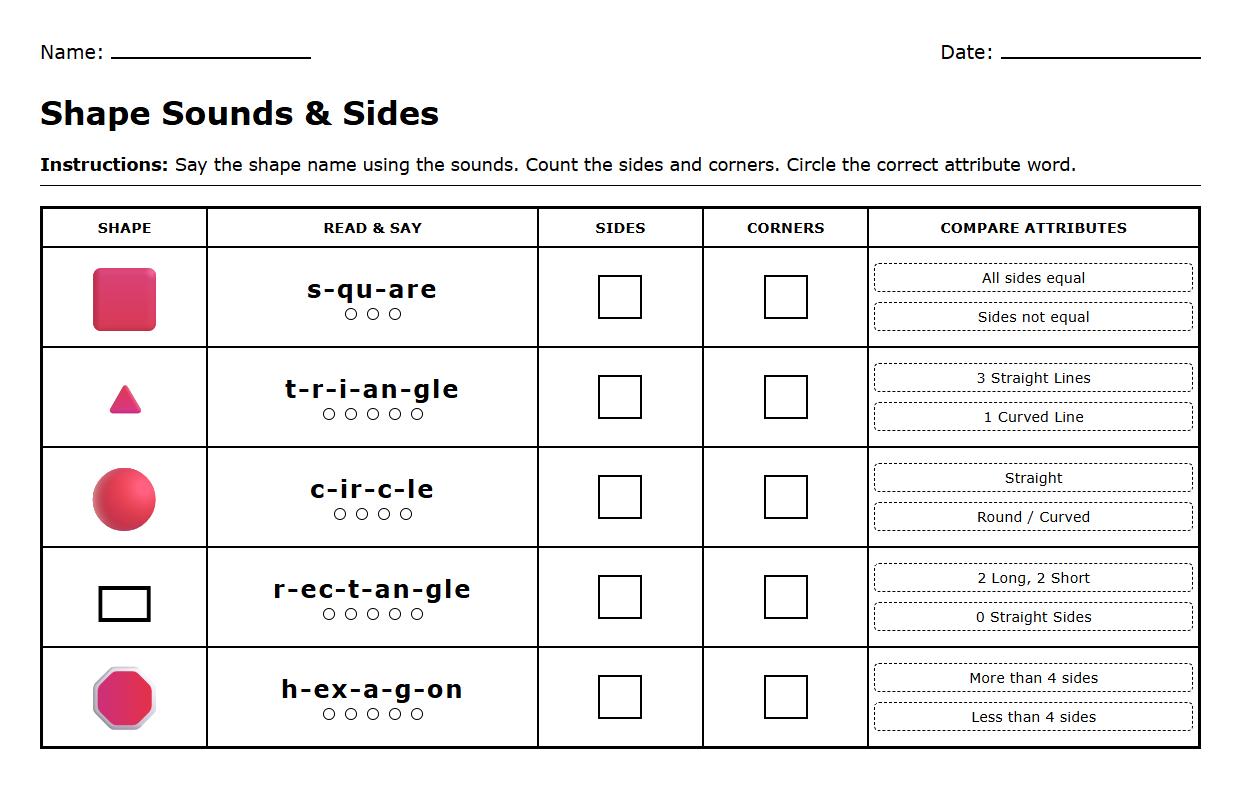
The square has more corners than the triangle. A triangle has 3 corners, while a square has 4 corners. Understanding corners helps children recognize shapes better. Teach your students to count corners for easy identification.
Identifying Round Shapes
The circle is the shape that is perfectly round and has no sides. Unlike polygons, circles have a continuous curve with no corners. Introduce circles to children as smooth, round shapes. This helps develop their sensory and visual skills.
Comparing Length: Rectangle vs. Circle
The rectangle is typically longer than a circle since it has straight, extended sides. Circles have no length or width in the same way but are measured by diameter. Use this comparison to show children different ways to measure shapes. Hands-on activities can reinforce these concepts.
Shapes with Equal Sides: Square vs. Rectangle
The square has equal sides, while a rectangle's sides may differ in length. Squares have four equal sides and four right angles. This characteristic makes squares unique among rectangles. Encourage children to use side length to distinguish these shapes.
Shapes That Roll Easily: Circle vs. Triangle
The circle can roll easily because it has no corners or edges. Triangles have sides and corners that prevent smooth rolling. This activity promotes understanding of shape properties in a fun way. Use toys or balls to demonstrate rolling shapes.
Shape with Three Sides
The shape with exactly three sides is the triangle. Each side meets at a corner called a vertex. Triangles form the basis for many other shapes and structures. Teaching triangles enhances children's basic geometry knowledge.
Shape That Looks the Same on All Sides
The circle looks the same all around because it has no corners or edges. This symmetry is a key feature children should recognize. Circles are found in many everyday objects. Highlighting symmetry helps develop spatial awareness.
More Straight Sides: Rectangle vs. Triangle
The rectangle has more straight sides than a triangle. A rectangle has 4 straight sides, whereas a triangle has 3. Counting sides is an important step in identifying shapes. Use drawing exercises to reinforce this skill.
Comparing Size: Small Circle vs. Big Circle
The small circle is smaller than the big circle, demonstrating size differences within the same shape. This comparison helps children learn about proportion and scale. Use both circles in sorting activities for visual learning. Size recognition is a key developmental goal.
Shape That is Taller: Rectangle vs. Square
The rectangle is usually taller or longer than the square due to unequal side lengths. Squares have sides of equal length, while rectangles vary in height and width. Discuss height differences to introduce measurement concepts. Visual aids can support this lesson.


Shape Hunt in the Classroom: 2D and 3D Object Recognition