Shape Building Challenge Activity with Spatial Reasoning

📅 Apr 18, 2025 👤 Nylen Smith

Enhance spatial reasoning skills by engaging in the Shape Building Challenge Activity, where participants construct various forms using geometric shapes. This hands-on approach promotes critical thinking and improves the ability to visualize and manipulate objects in space. Explore the available worksheets to support learning and make practice both fun and effective.

2D Shape Construction with Tangrams worksheet
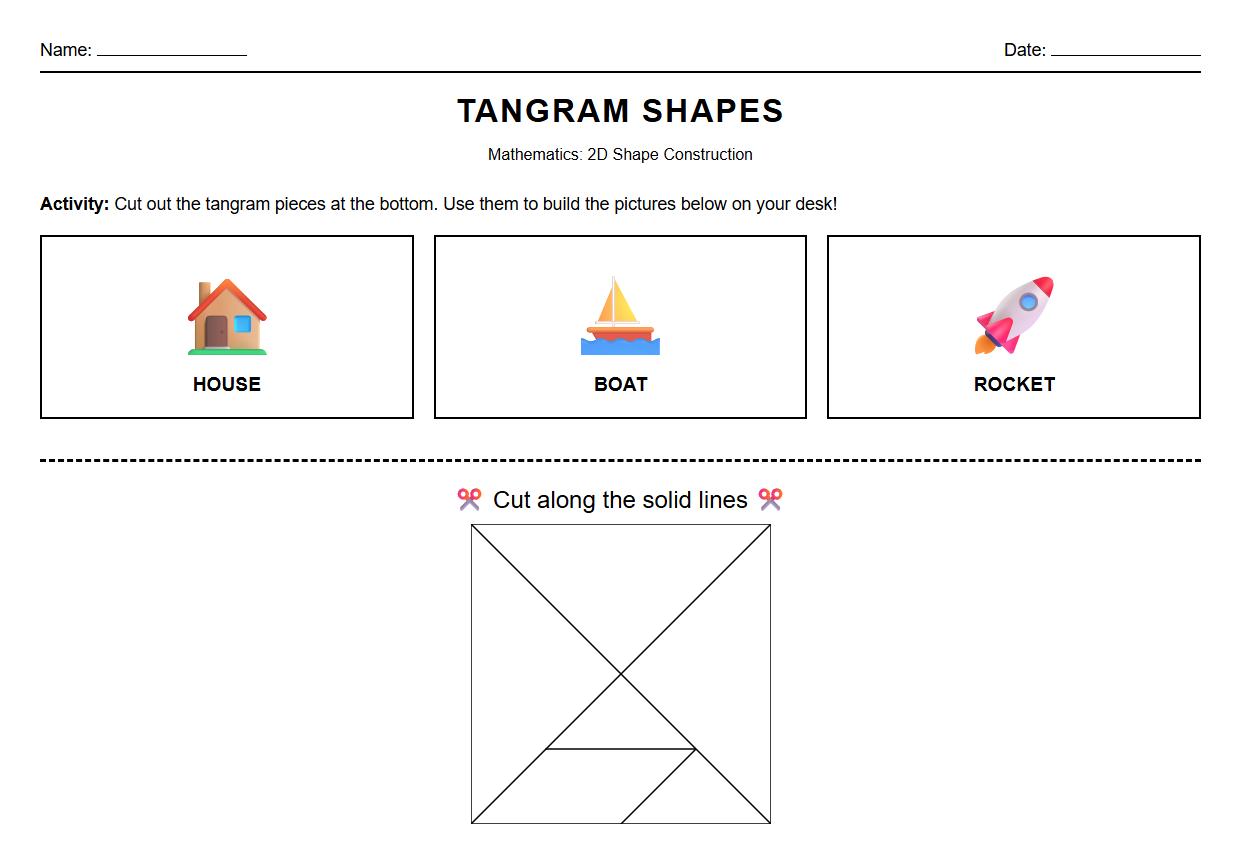
2D Shape Construction with Tangrams worksheet

Download PDF     Pin it

3D Shape Building using Cube Nets worksheet
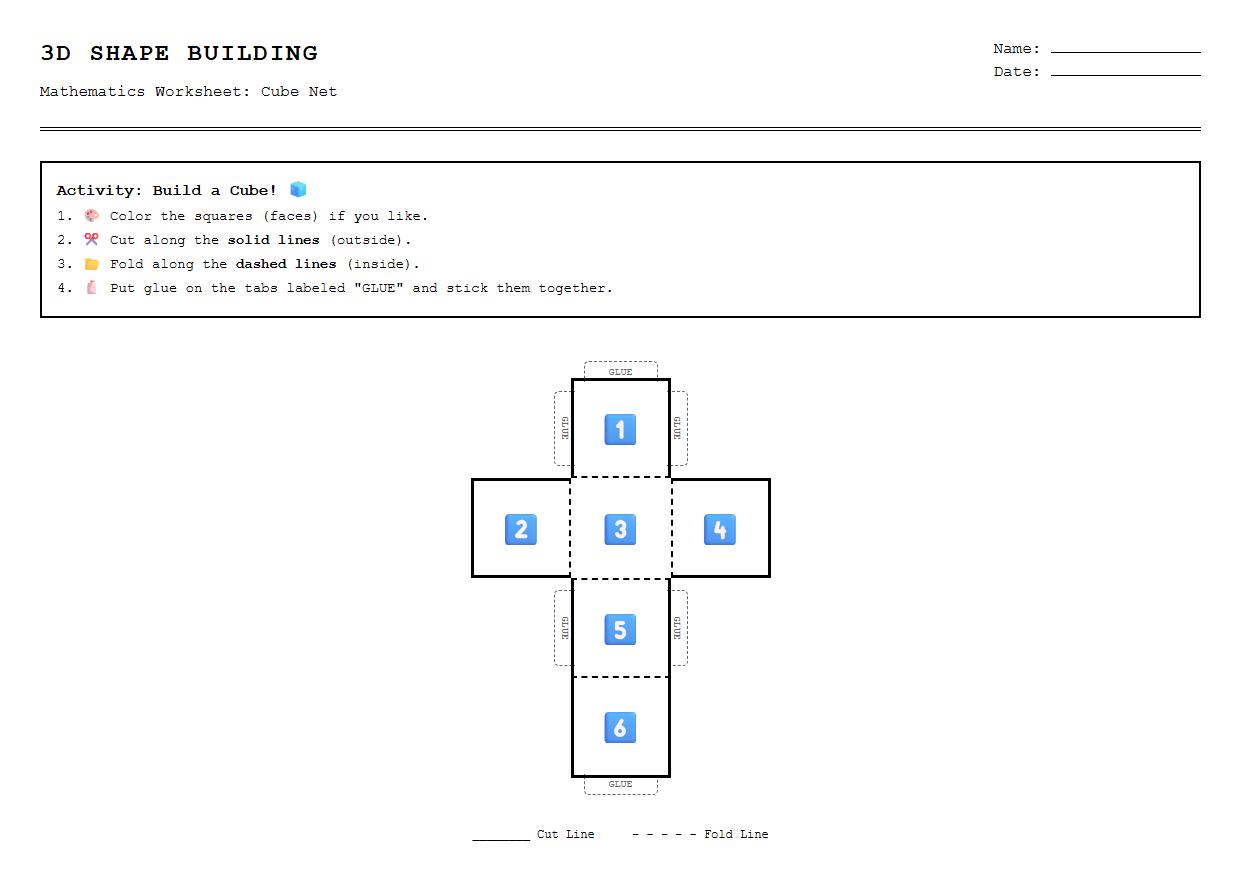
3D Shape Building using Cube Nets worksheet

Download PDF     Pin it

Symmetry and Mirror Image Shape Challenge worksheet
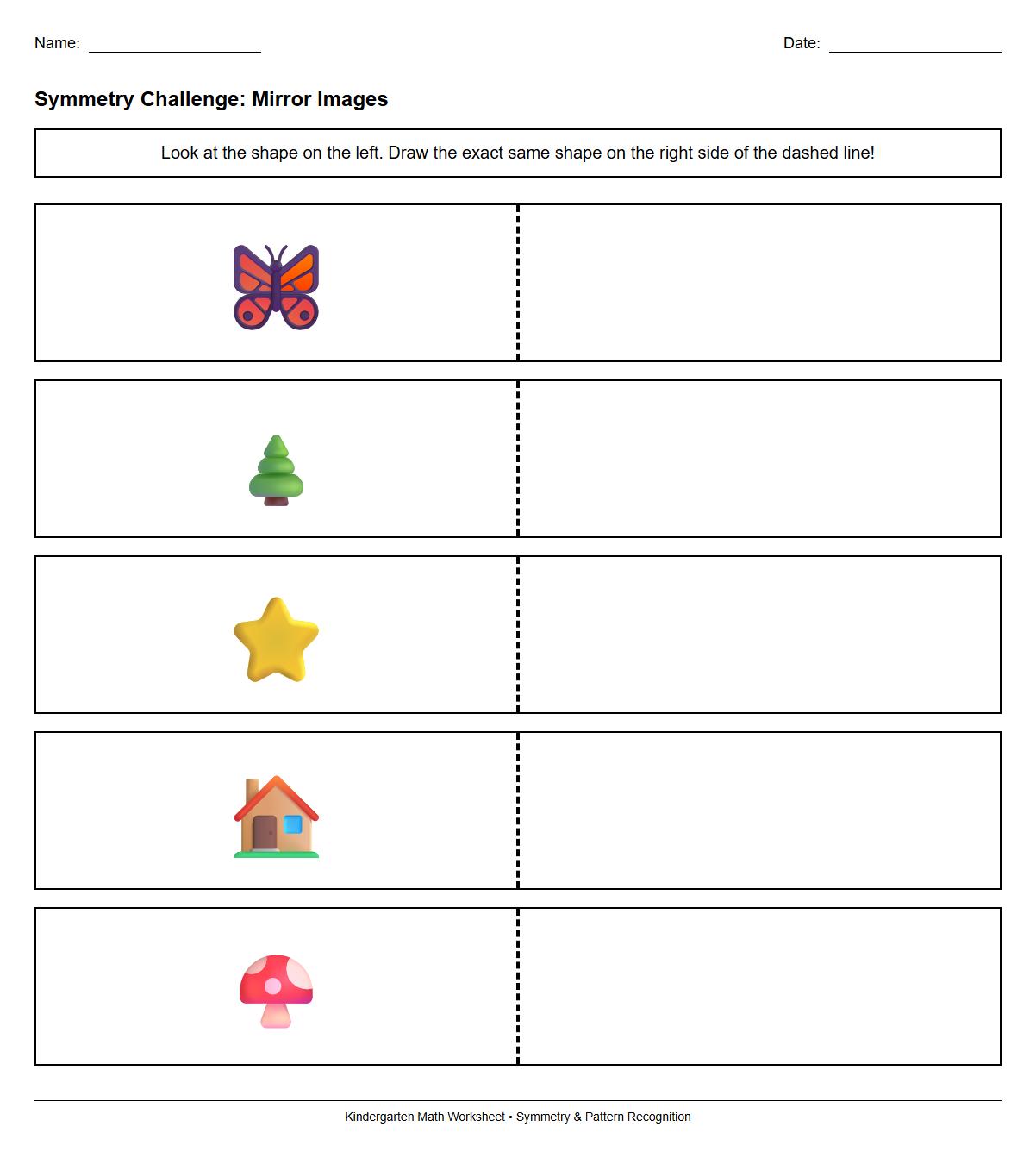
Symmetry and Mirror Image Shape Challenge worksheet

Download PDF     Pin it

Pattern Block Spatial Arrangement worksheet
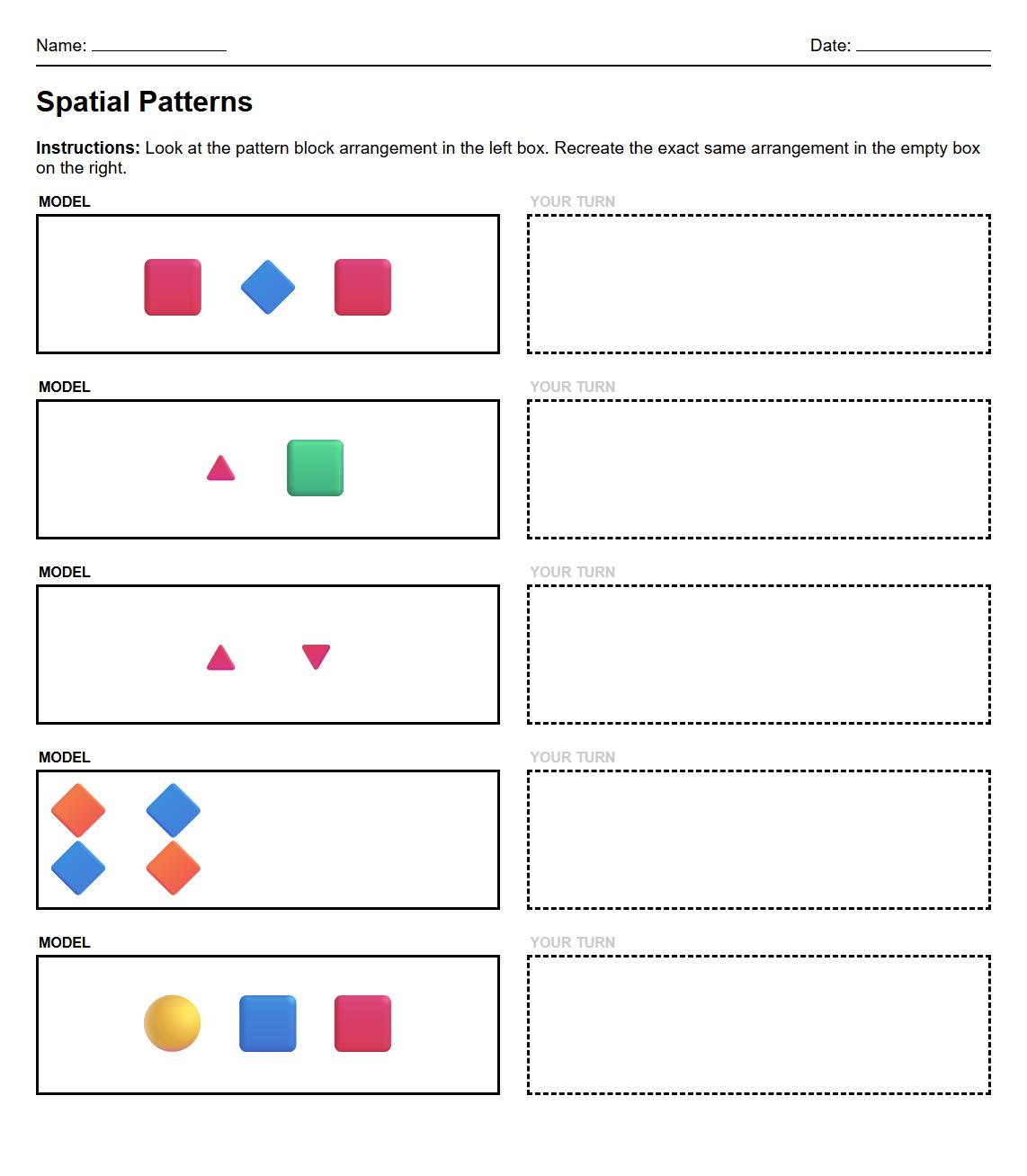
Pattern Block Spatial Arrangement worksheet

Download PDF     Pin it

Build the Figure with Geometric Shapes worksheet
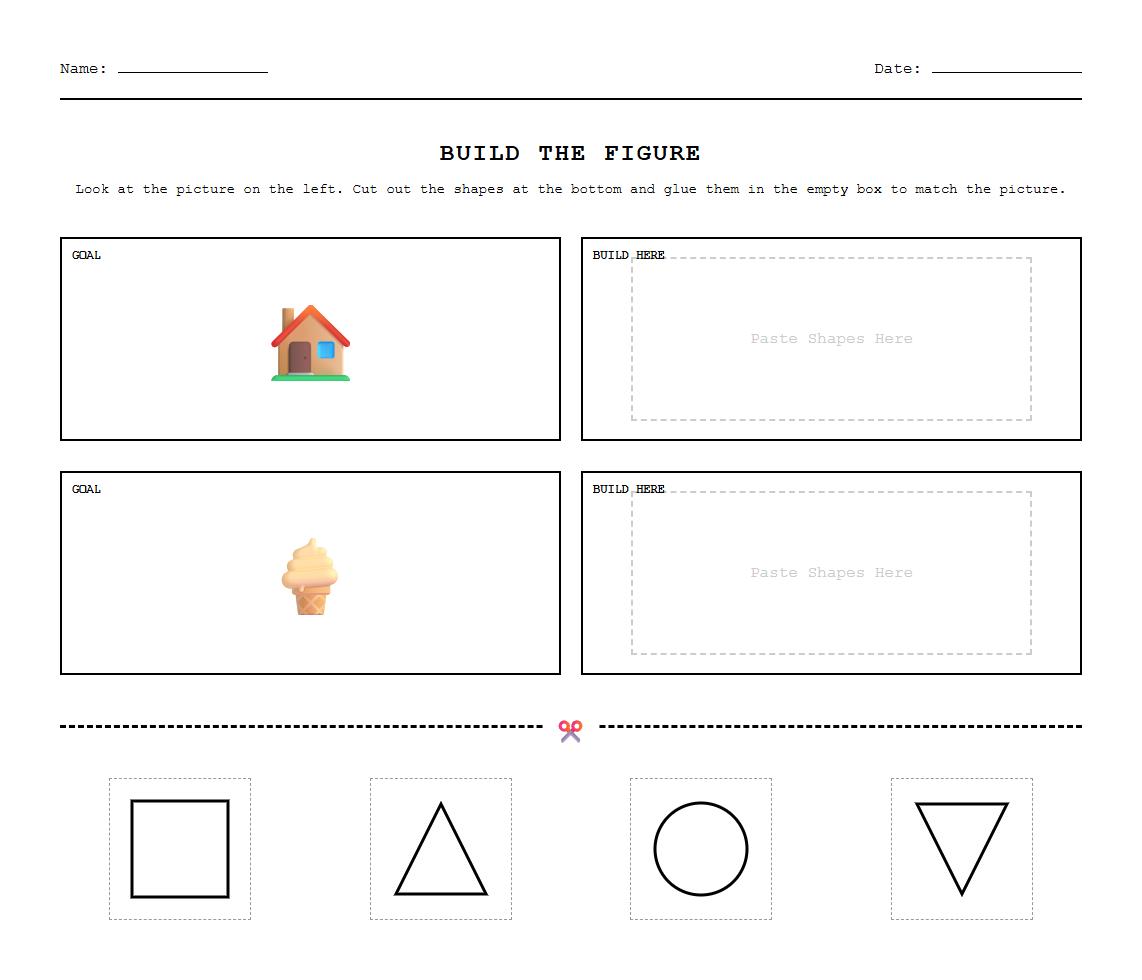
Build the Figure with Geometric Shapes worksheet

Download PDF     Pin it

Tessellation Design Challenge for Spatial Reasoning worksheet
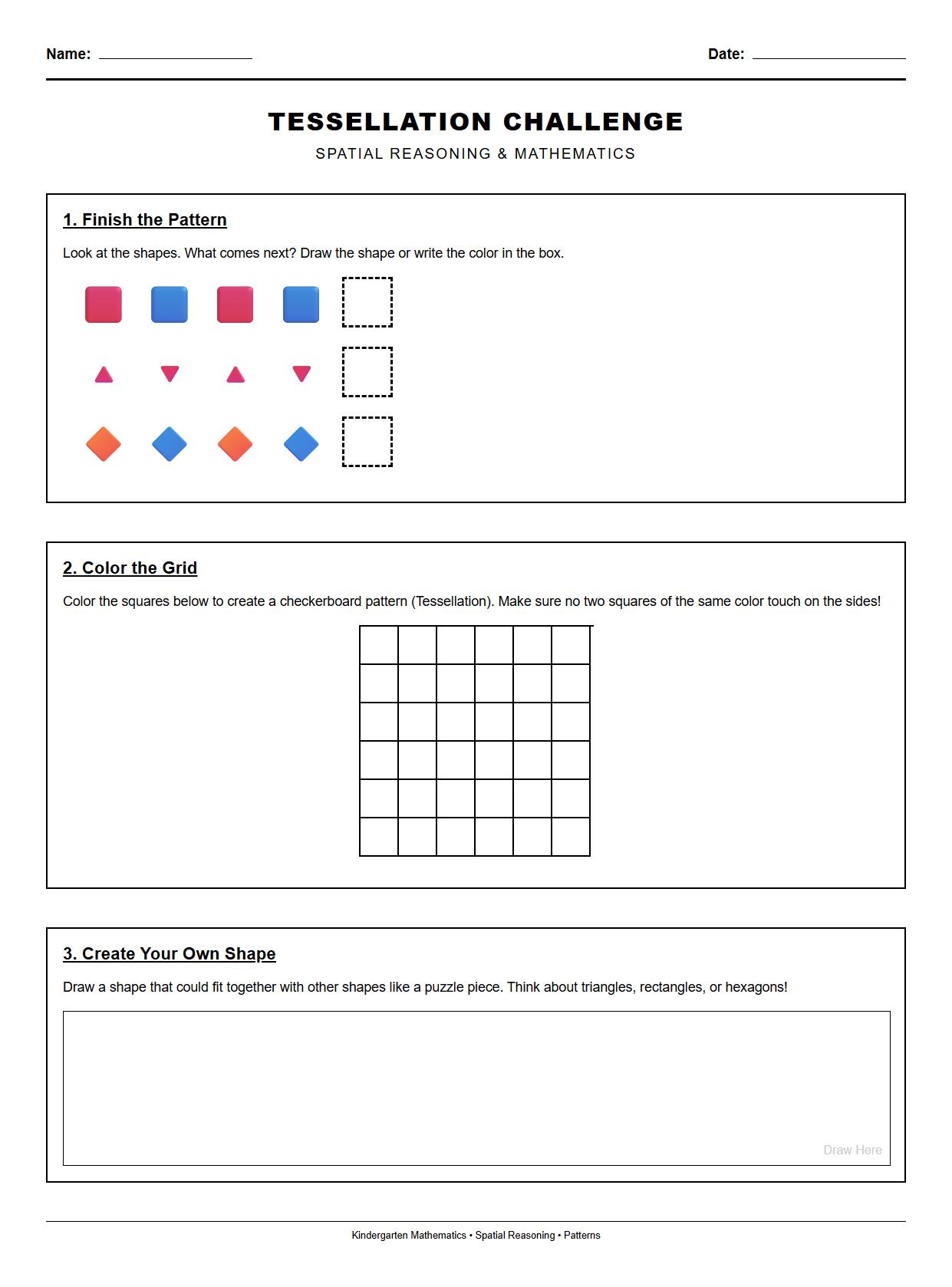
Tessellation Design Challenge for Spatial Reasoning worksheet

Download PDF     Pin it

Block Rotation and Reflection Activity worksheet
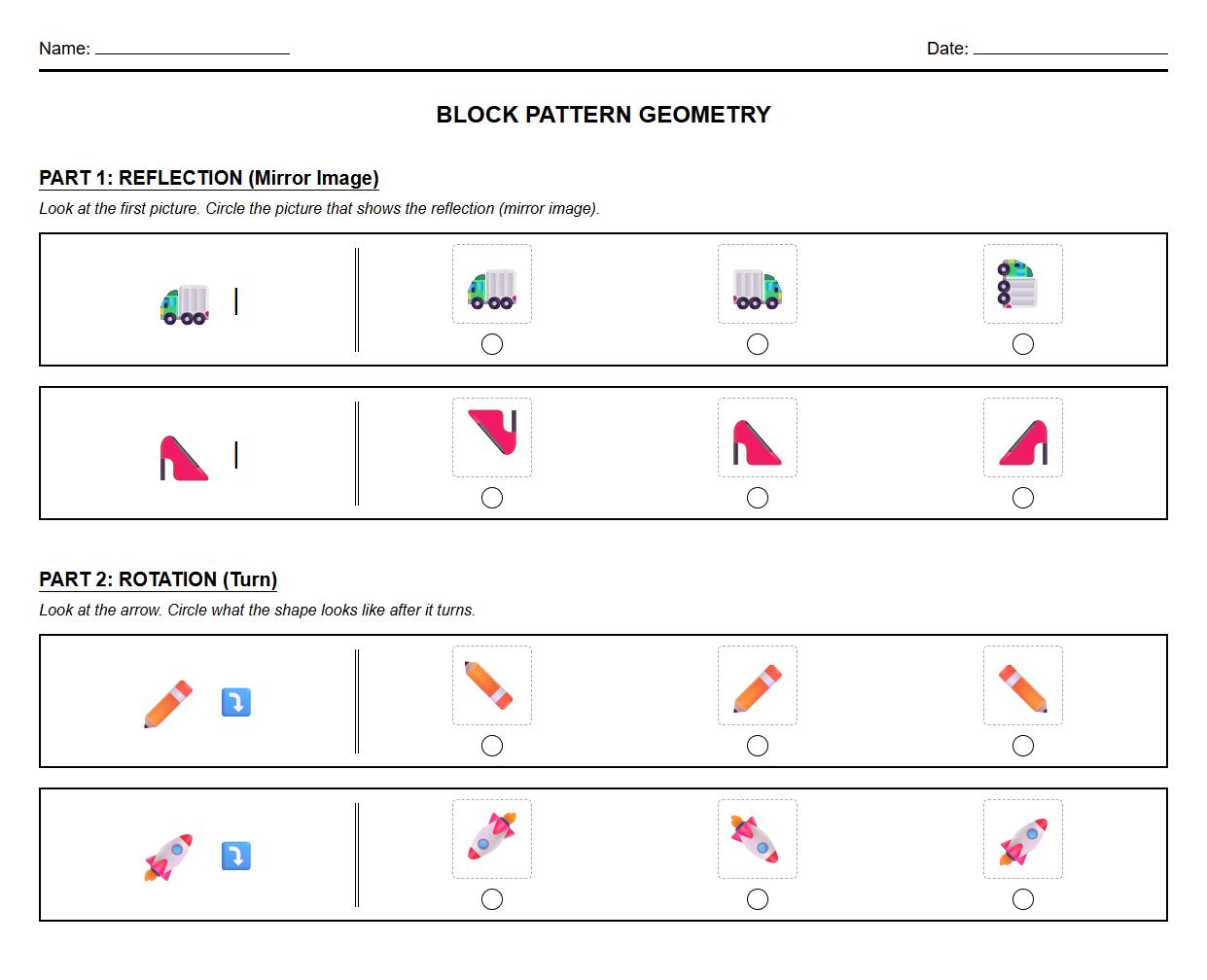
Block Rotation and Reflection Activity worksheet

Download PDF     Pin it

Visualizing Shape Transformations worksheet
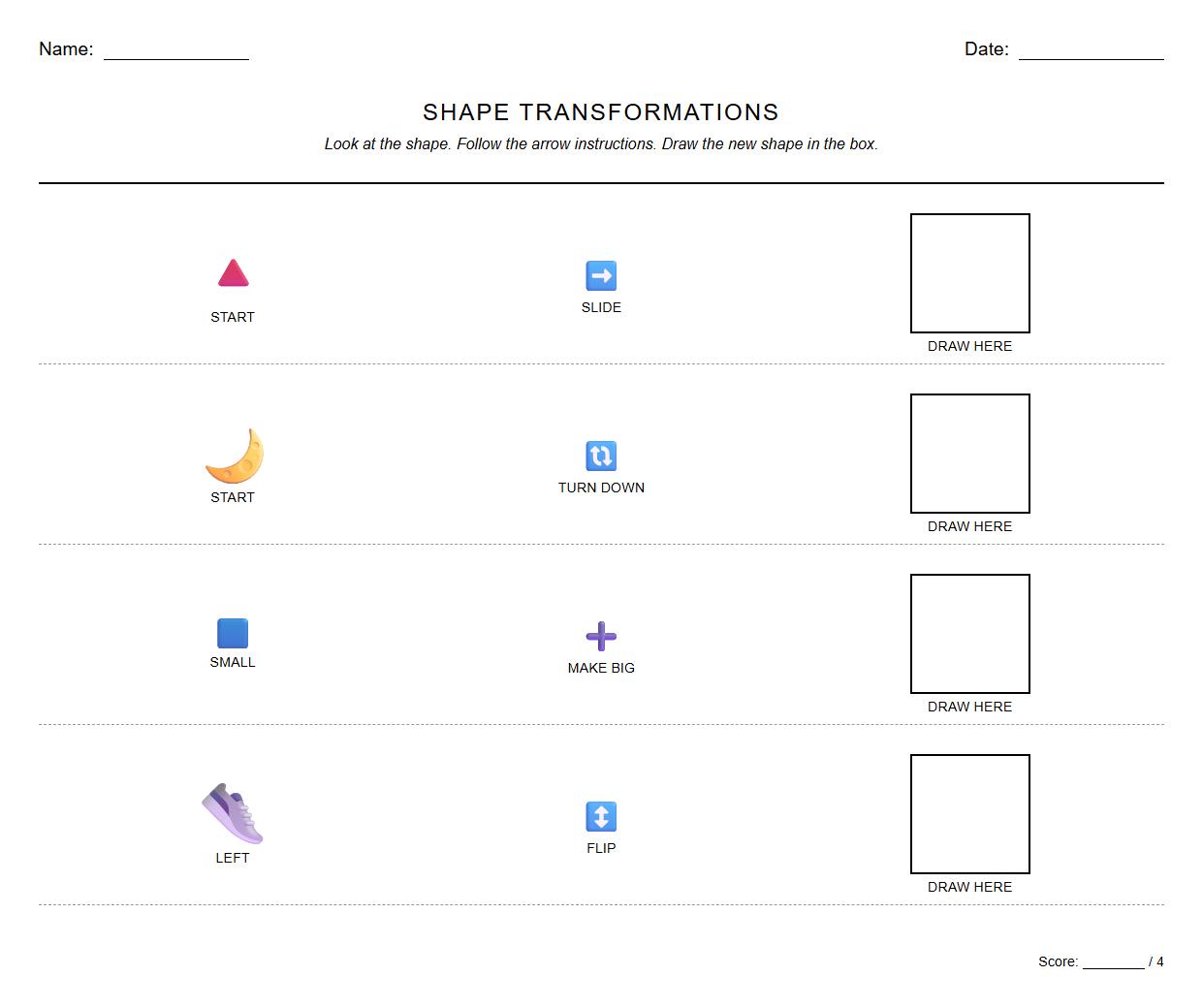
Visualizing Shape Transformations worksheet

Download PDF     Pin it

Shape Composition with Overlapping Figures worksheet
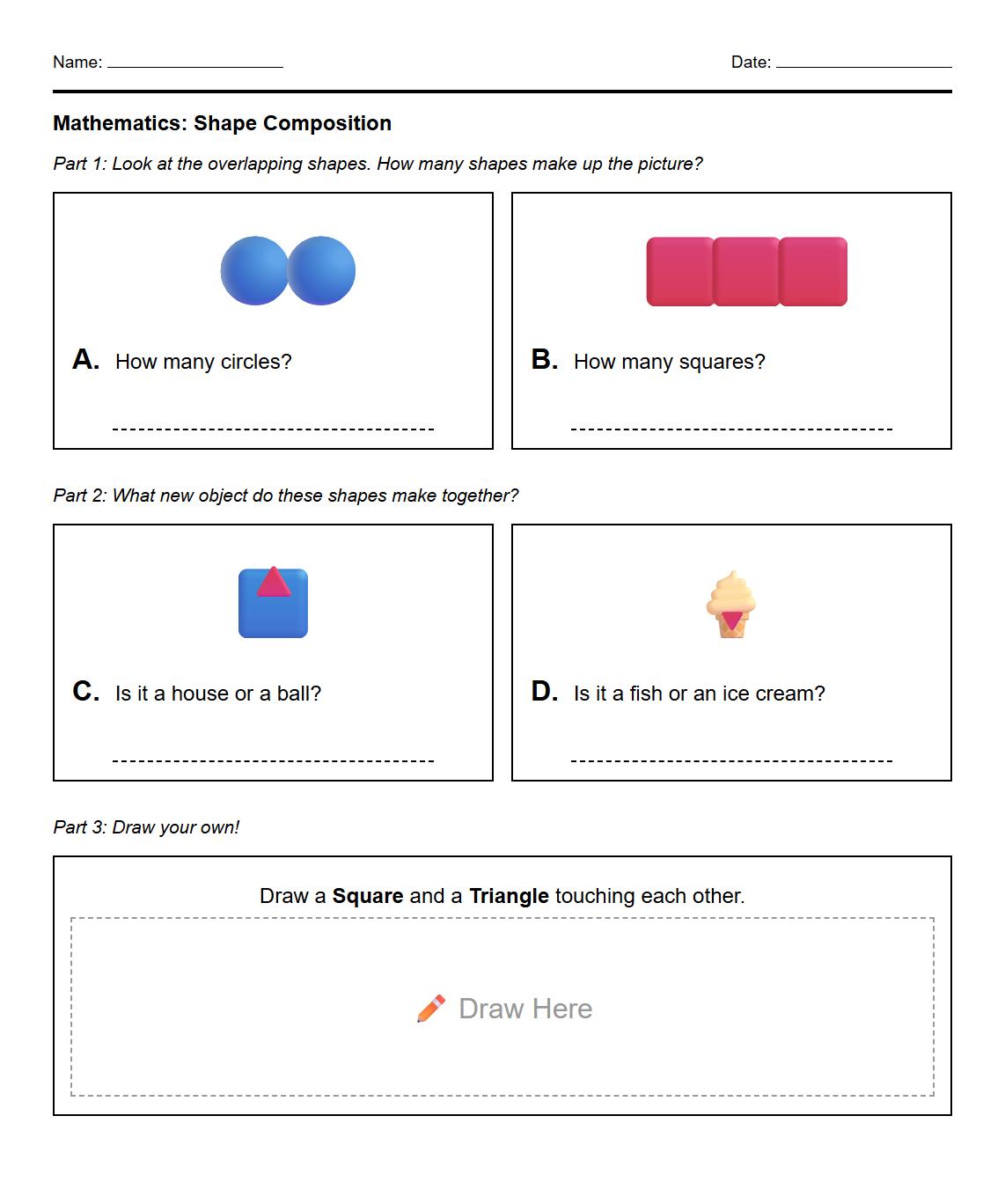
Shape Composition with Overlapping Figures worksheet

Download PDF     Pin it

Phonics Shapes Coding with Spatial Placement worksheet
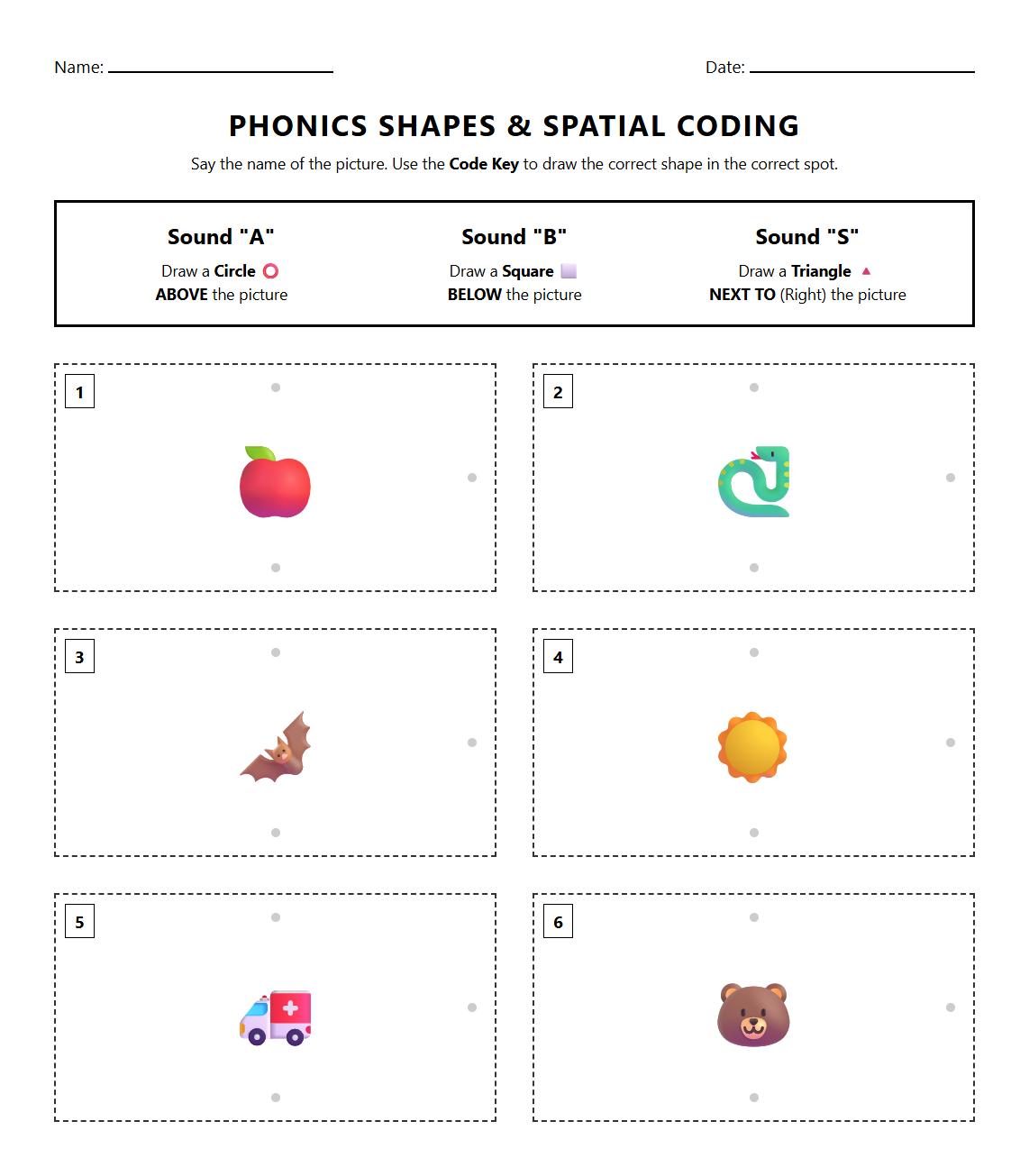
Phonics Shapes Coding with Spatial Placement worksheet

Download PDF     Pin it

Using Blocks to Make a Triangle

Encourage children to arrange their blocks to form a triangle by placing three blocks with their edges touching. This activity helps develop their spatial awareness and understanding of basic geometric shapes. Remind them that rotating or flipping the blocks can assist in fitting the pieces together perfectly. It is a fun way for kids to explore shape formation and creativity.

Identifying Shapes in Your Structure

After building, ask children to observe and name the different shapes they see within their finished structure. This fosters shape recognition and vocabulary growth. Encourage them to look for squares, triangles, rectangles, or even new combined shapes. Discussing these shapes helps deepen their understanding of geometry in a hands-on way.

Building Taller Shapes with Blocks

Challenge children to stack their blocks to create a taller shape than their original. This activity supports their fine motor skills and understanding of balance and stability. Ask them which blocks are best for stacking without falling over, linking it to concepts of size and shape. It encourages problem-solving while experimenting with height and structure.

Fitting Shapes Together Without Gaps

Encourage children to find which shapes fit together perfectly without gaps or overlaps. This encourages critical thinking and helps them learn about how polygons can combine to fill space. Use this opportunity to introduce concepts like tessellation and spatial reasoning. It's a creative way to explore geometry and teamwork.

Building Squares in Different Ways

Ask children to try making a square using different combinations of blocks. Exploring multiple ways to build the same shape cultivates flexibility in thinking and shape comprehension. This exercise promotes creativity and problem-solving as they experiment with arrangements. It also reinforces their understanding of square properties.

Creating Real-Life Shapes

Invite children to build shapes that resemble objects or animals they know from real life. This activity connects imaginative play with geometric learning and enhances engagement. It also fosters creativity and storytelling as kids explain their creations. This method helps link abstract shapes to everyday experiences.

The Effect of Turning or Flipping Shapes

Encourage children to explore what happens when they turn or flip a block in their shape. This builds an understanding of symmetry, orientation, and transformation in geometry. Discuss how shapes can look different but still be the same when rotated or flipped. It strengthens their visual and spatial reasoning skills.

Deciding Which Pieces to Use First

Ask children how they chose the first blocks to start their structure. Reflecting on their decisions helps develop planning and sequencing skills. It encourages them to think ahead and strategize. This promotes metacognitive skills as they evaluate their building approach.

Copying a Friend's Shape Exactly

Challenge children to recreate a friend's shape exactly using the same blocks. This develops attention to detail and observational skills. It also fosters collaboration and patience as they work together. Copying helps reinforce shape recognition and construction techniques.

Creating New Shapes by Combining Triangles

Ask children what new shape forms when they combine two triangles. This introduces the idea of composite shapes and how basic shapes can create more complex figures like diamonds or squares. It encourages experimentation and understanding of geometry. This exercise enhances creative thinking and shape manipulation skills.


More in Mathematics Category


About the author. Nylen Smith is a dedicated educator and cofounder of KWorksheet.com, a popular platform specializing in high-quality kindergarten worksheets and printable activities.

Disclaimer. The information provided in this document is for general informational purposes and/or document sample only and is not guaranteed to be factually right or complete. Please report to us via contact-us page if you find and error in this page, thanks.

Comments

No comment yet