Hands On Kindergarten Worksheets for US Coin Recognition

📅 Feb 12, 2025 👤 Nylen Smith

Kindergarten students develop essential money skills through hands-on activities featuring US coin recognition. These worksheets encourage identifying and differentiating pennies, nickels, dimes, and quarters using engaging exercises. Explore the collection of interactive worksheets designed to reinforce practical coin recognition skills.

Coin Sorting Phonics Worksheet
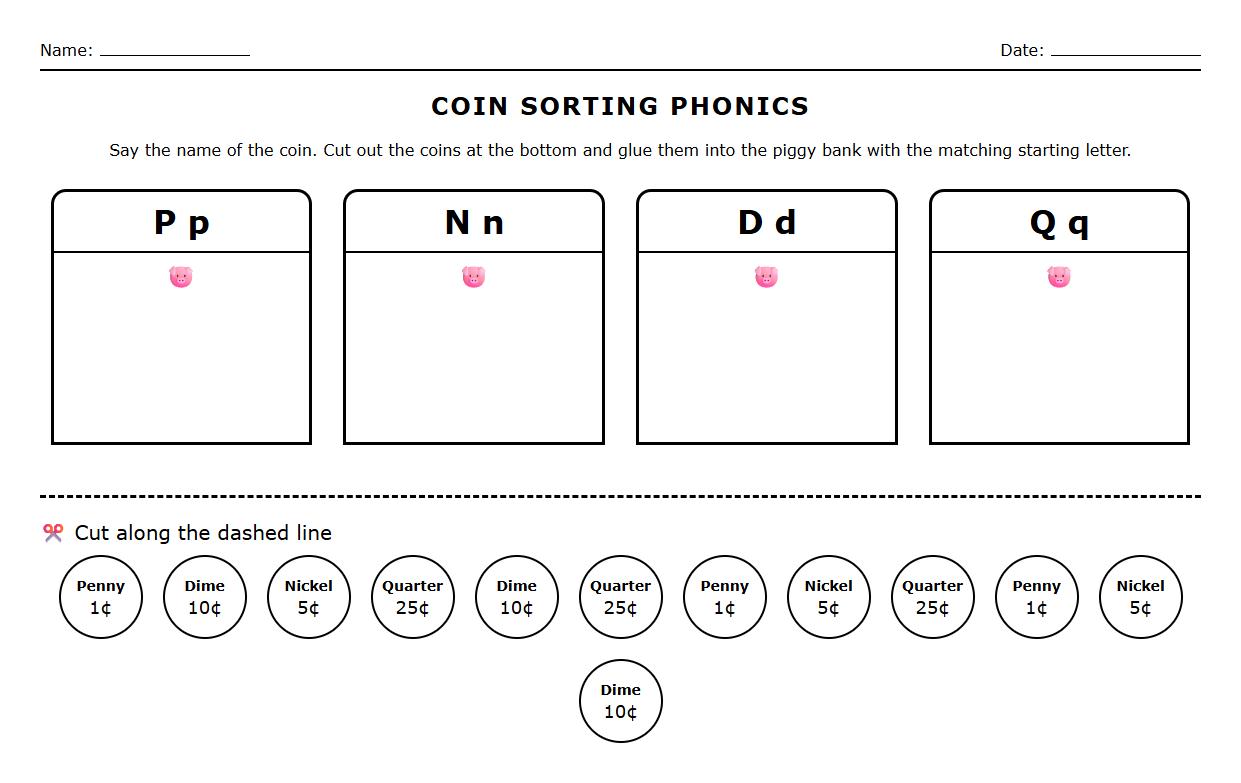
Coin Sorting Phonics Worksheet

Download PDF     Pin it

Coin Value Identification Worksheet
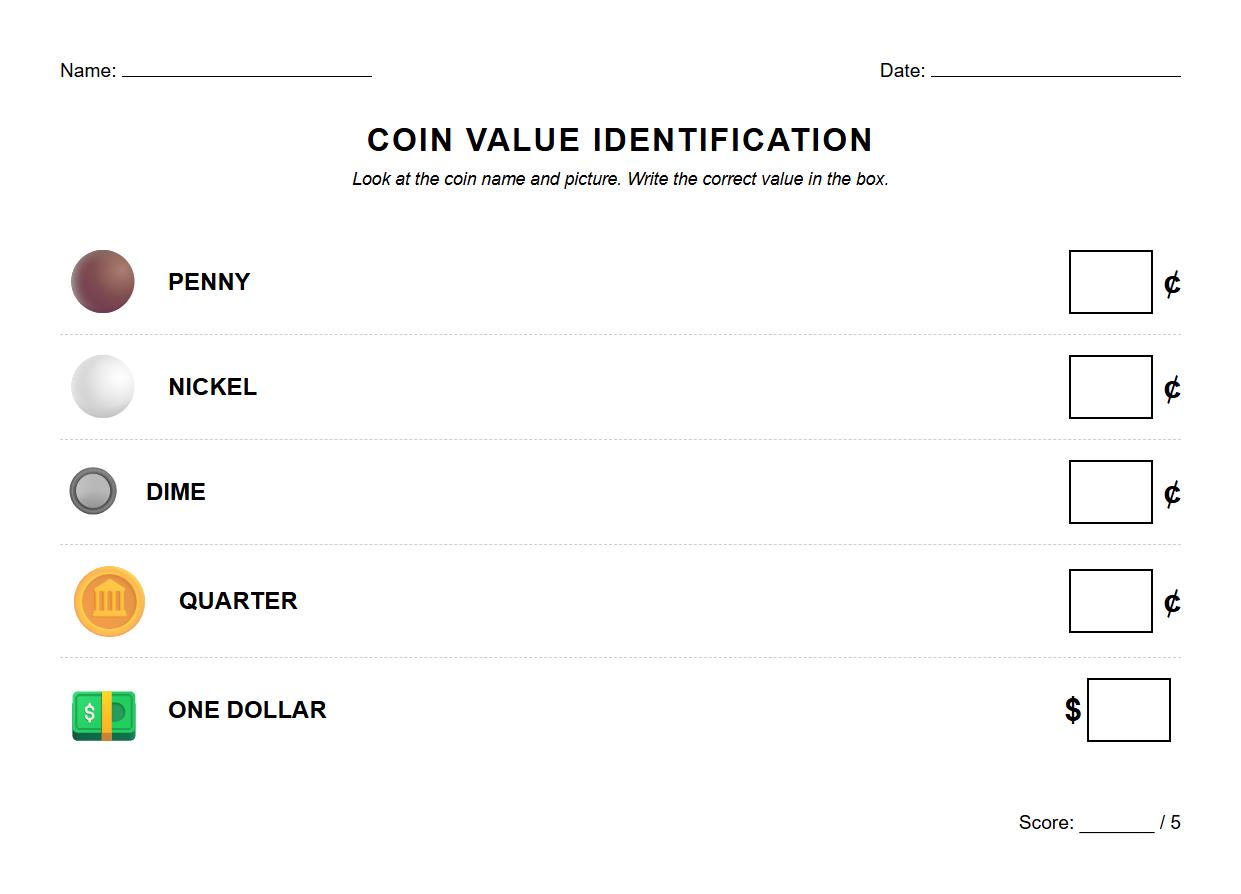
Coin Value Identification Worksheet

Download PDF     Pin it

Matching Coins to Amounts Worksheet
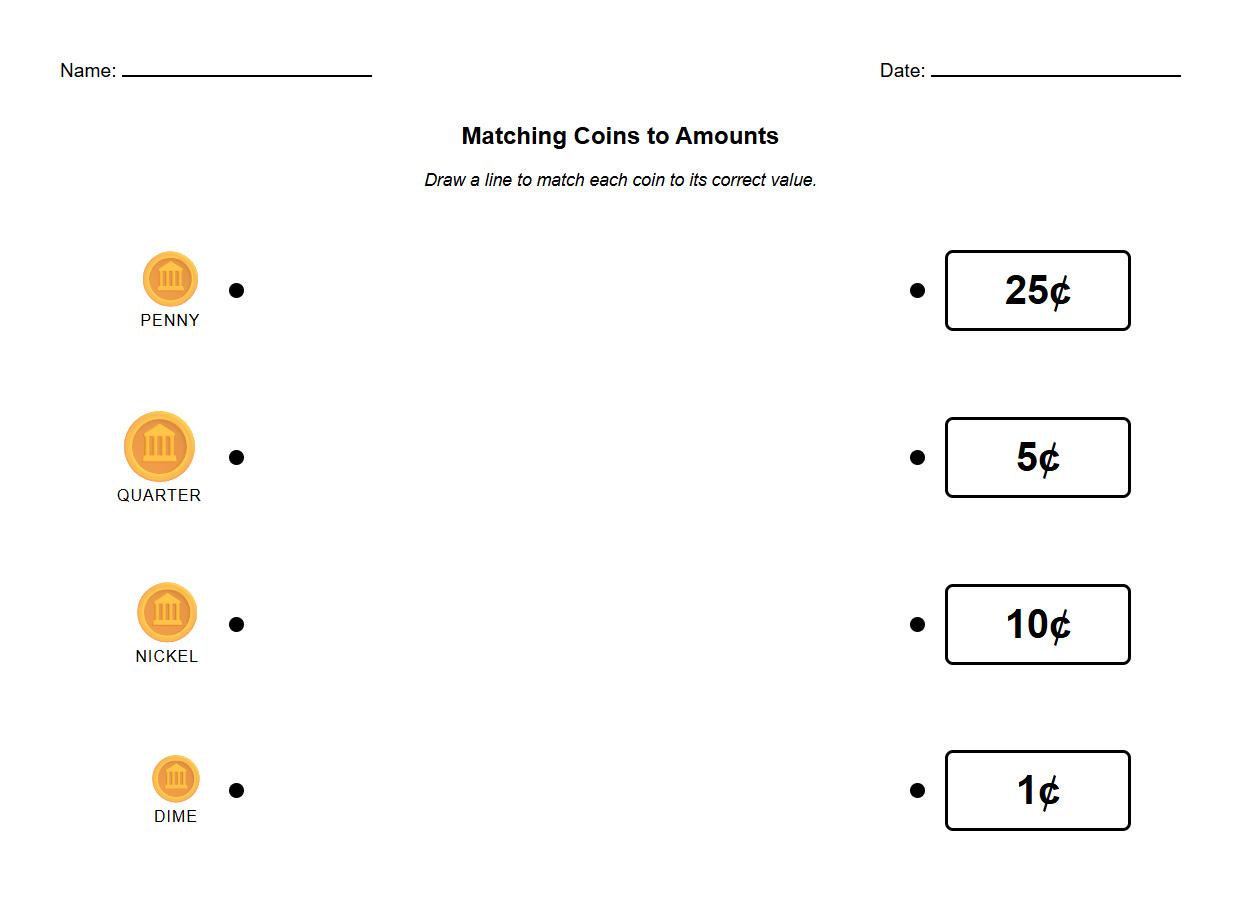
Matching Coins to Amounts Worksheet

Download PDF     Pin it

Coin Counting Number Sense Worksheet
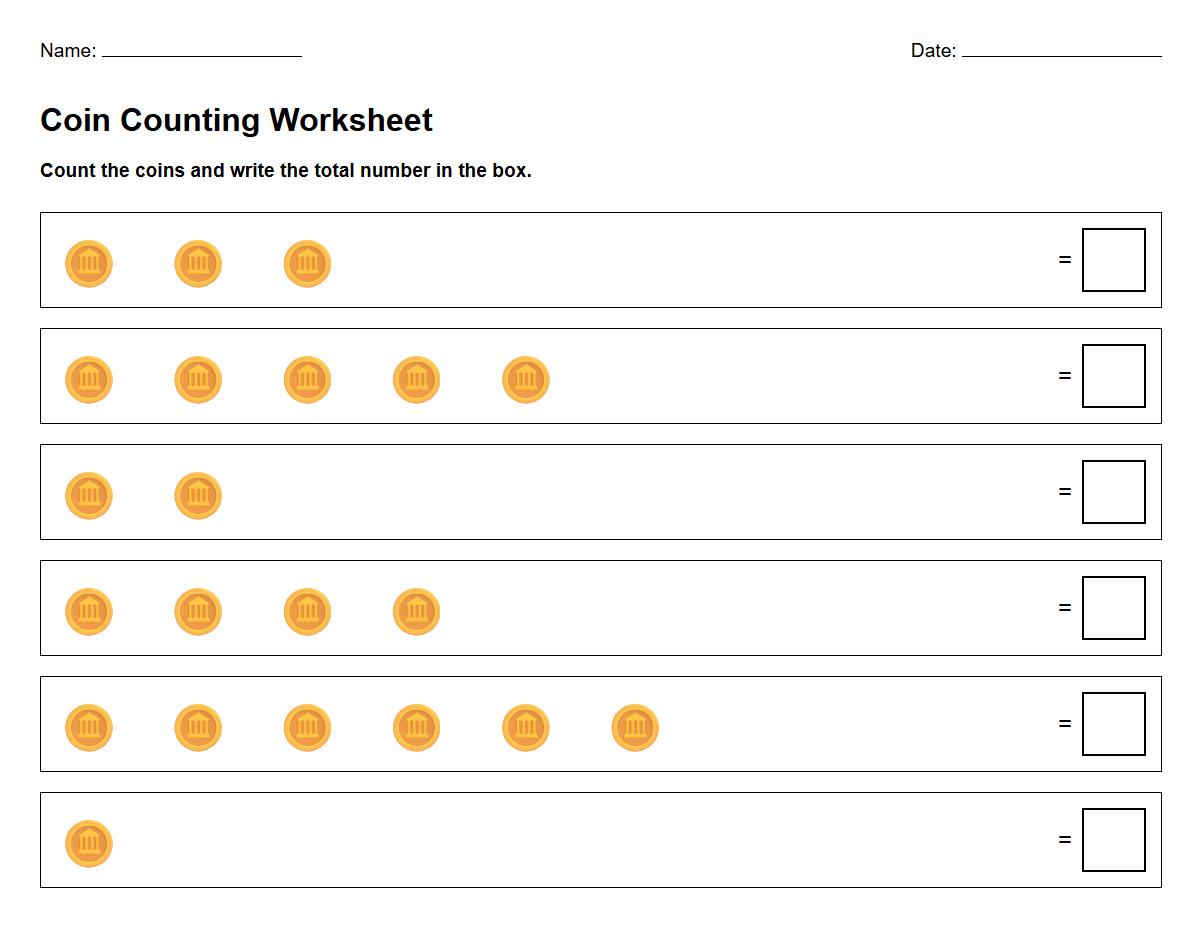
Coin Counting Number Sense Worksheet

Download PDF     Pin it

Coin Recognition Visual Discrimination Worksheet
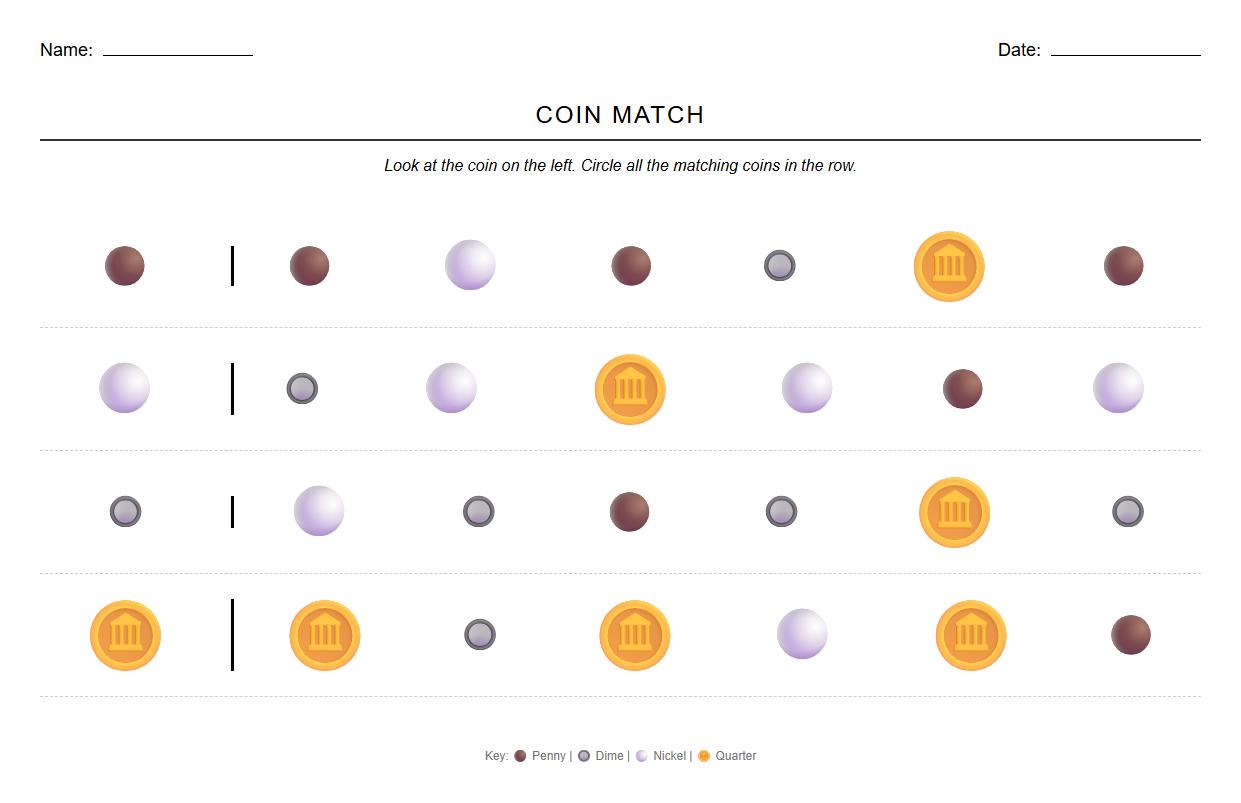
Coin Recognition Visual Discrimination Worksheet

Download PDF     Pin it

Coin Name Tracing Fine Motor Worksheet
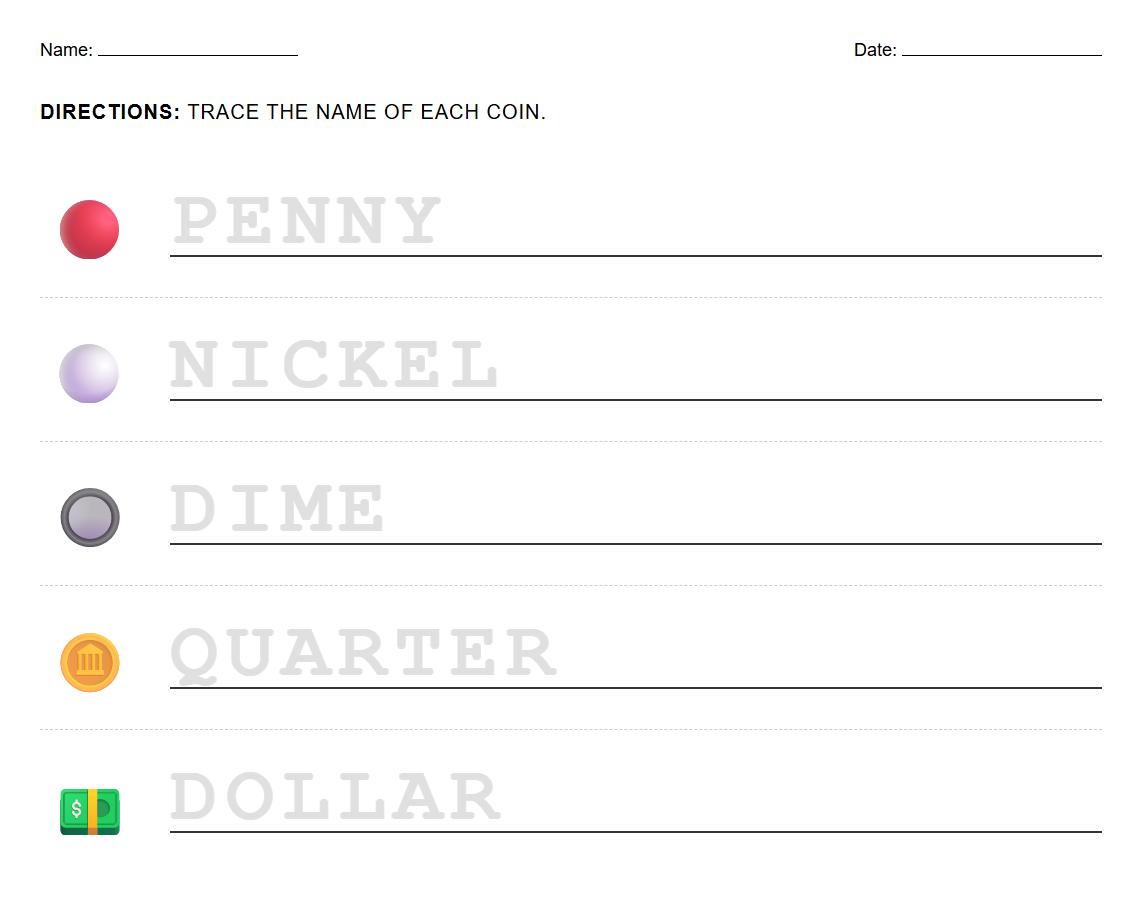
Coin Name Tracing Fine Motor Worksheet

Download PDF     Pin it

Coin Addition Simple Math Worksheet
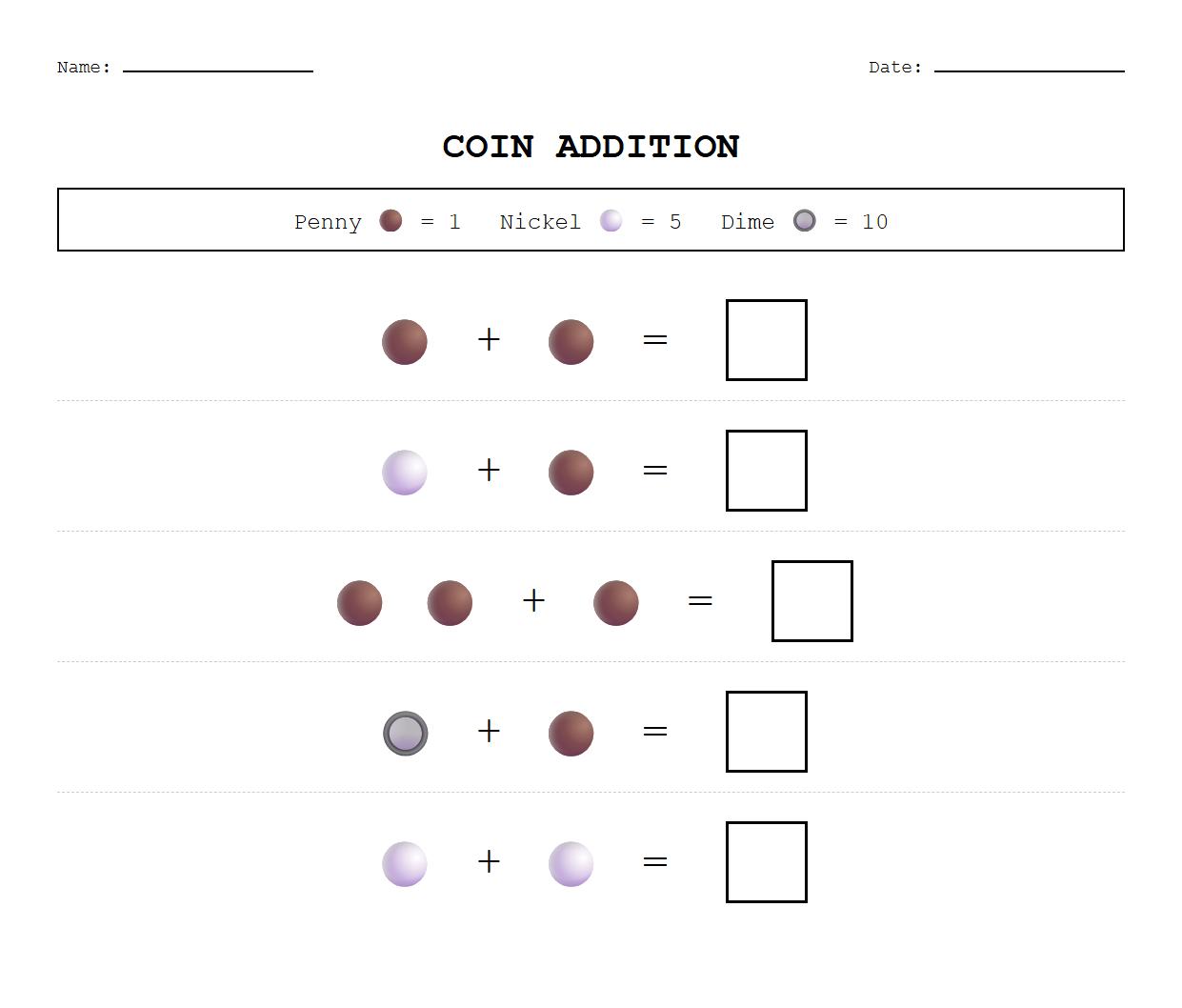
Coin Addition Simple Math Worksheet

Download PDF     Pin it

Coin Patterning Sequencing Worksheet
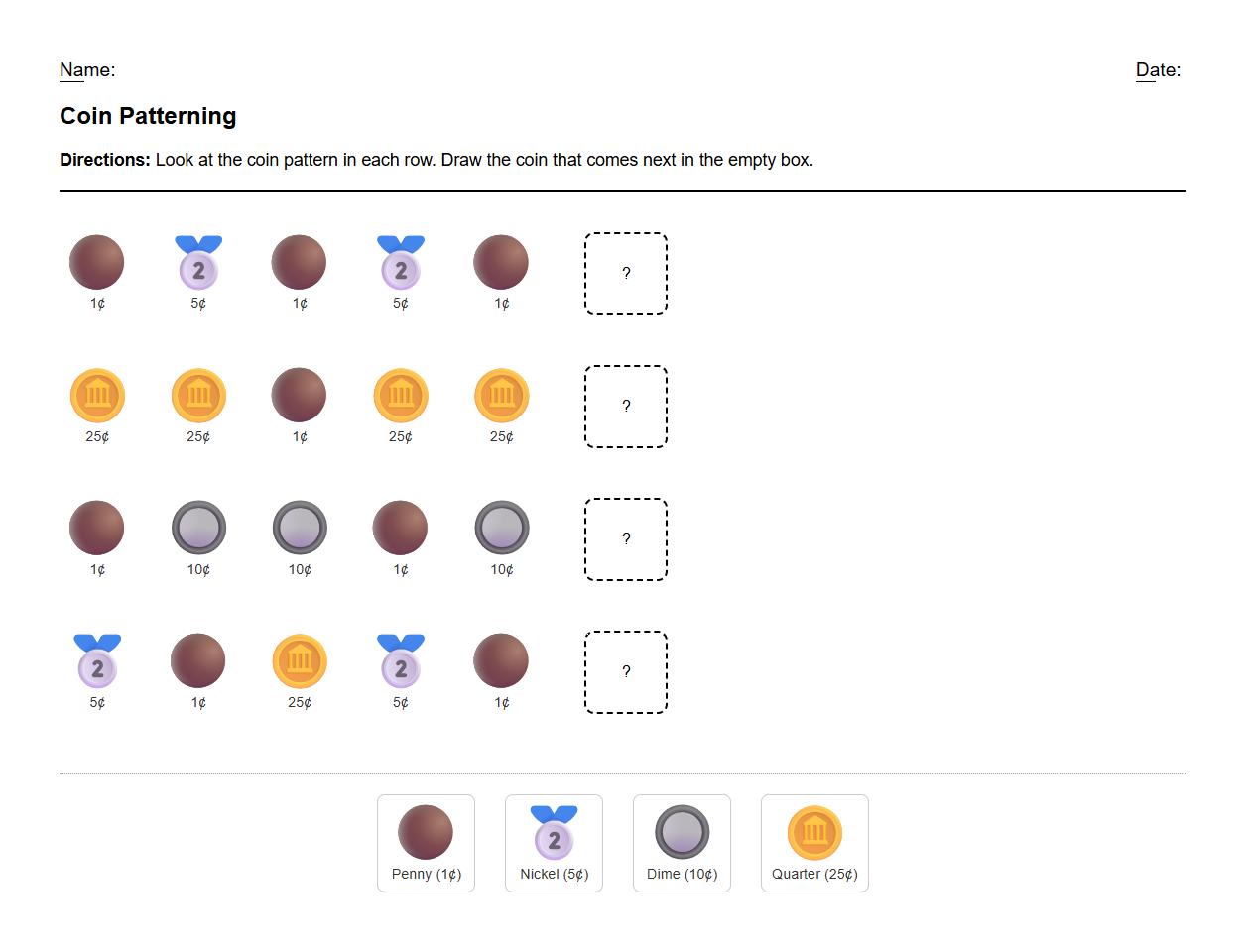
Coin Patterning Sequencing Worksheet

Download PDF     Pin it

Coin Comparison Greater or Less Than Worksheet
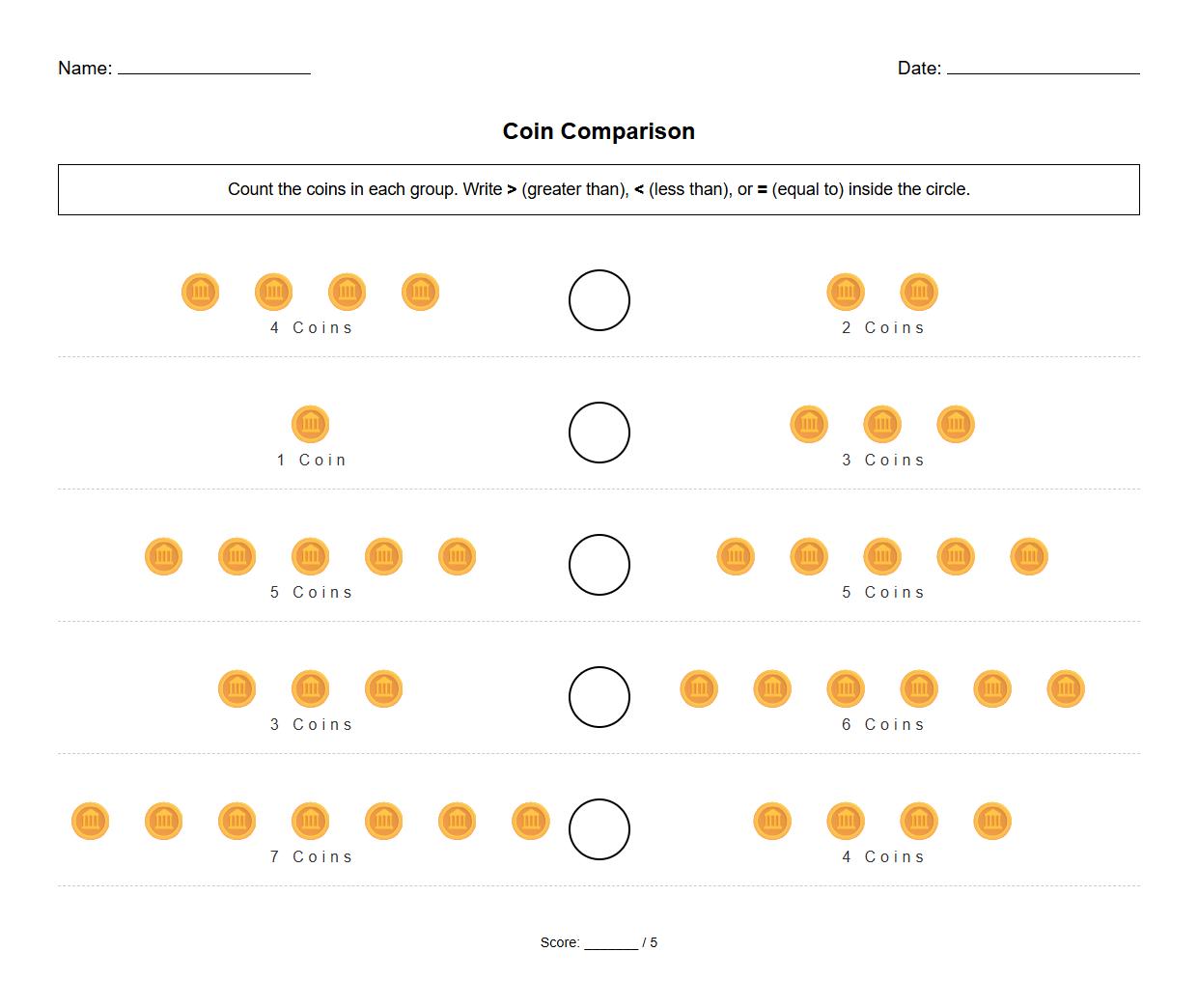
Coin Comparison Greater or Less Than Worksheet

Download PDF     Pin it

Matching Coin Images to Written Values Worksheet
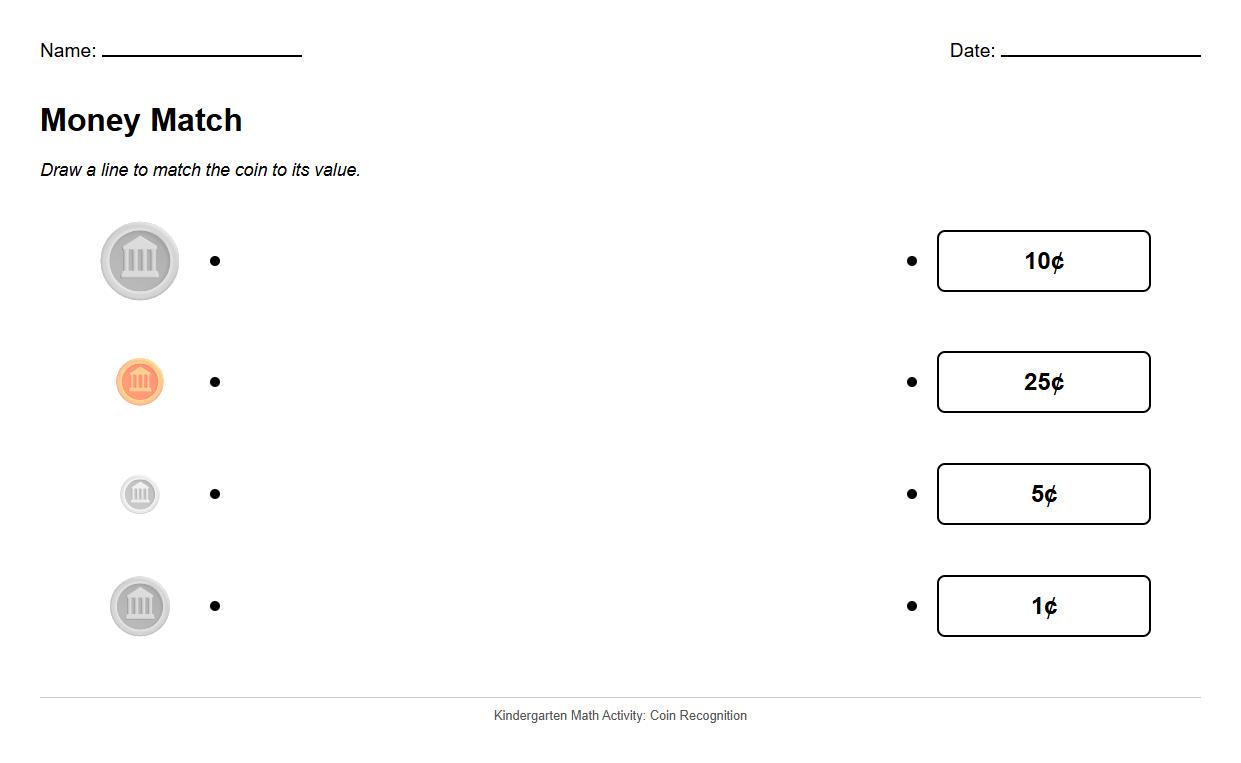
Matching Coin Images to Written Values Worksheet

Download PDF     Pin it

Name of the Coin

The coin shown in the worksheet is called a penny. It is one of the most common coins used in everyday transactions. Teaching children to recognize this coin helps build their money identification skills. The penny is a great starting point for learning about U.S. currency.

Value of the Coin

This coin is worth one cent. Understanding its value helps children grasp basic math and money concepts. It is important to relate the coin's appearance to its value for easy recognition. Parents and teachers can use this information during simple counting activities.

Size Comparison: Dime vs. Nickel

The nickel is bigger in size compared to the dime. This size difference is a useful visual cue for children to distinguish between the two coins. Teaching size recognition along with name and value supports comprehensive learning. Using real or pictured coins enhances this learning experience.

Matching Coins to Values

Match each coin to its correct value to reinforce understanding. Activities like these promote memory and cognitive skills for young learners. Use clear images and labels for best results. Parents and teachers can encourage children to explain their matches aloud.

Circular Identification: Pennies

Circle all the pennies in the row to practice coin recognition. This activity helps children identify and differentiate pennies from other coins. It also improves attention to detail and visual discrimination. Using visuals makes learning more engaging and effective.

Connecting Coins to Names

Draw a line from each coin to its name to build association skills. This task supports children in linking images with vocabulary. It encourages reading and writing practice in a fun and interactive manner. Clear instructions make the activity easy to follow.

Coloring Quarters

Color the quarters on the page to foster recognition and fine motor skills. Coloring activities keep children engaged and aid in memory retention. This method also allows children to focus on specific coins amidst others. Adding a creative element makes learning money enjoyable.

Counting Nickels

Count and write how many nickels you see on the worksheet. This strengthens counting skills and numerical writing practice. It also helps children identify nickels through repeated interaction. Encouraging verbal counting can enhance their confidence.

Identifying Abraham Lincoln's Coin

The coin with the picture of Abraham Lincoln is the penny. Knowing the historical figure on the coin adds an educational history element. This fact makes learning about coins more interesting for kids. Teachers and parents can share quick stories about Lincoln to enrich the lesson.

Finding a Coin Not Worth Five Cents

Find and color one coin that is not worth five cents to practice value differentiation. This activity helps children distinguish between nickels and other coins like pennies or quarters. It encourages critical thinking about money values. Clear examples improve understanding and retention.


More in Mathematics Category


About the author. Nylen Smith is a dedicated educator and cofounder of KWorksheet.com, a popular platform specializing in high-quality kindergarten worksheets and printable activities.

Disclaimer. The information provided in this document is for general informational purposes and/or document sample only and is not guaranteed to be factually right or complete. Please report to us via contact-us page if you find and error in this page, thanks.

Comments

No comment yet