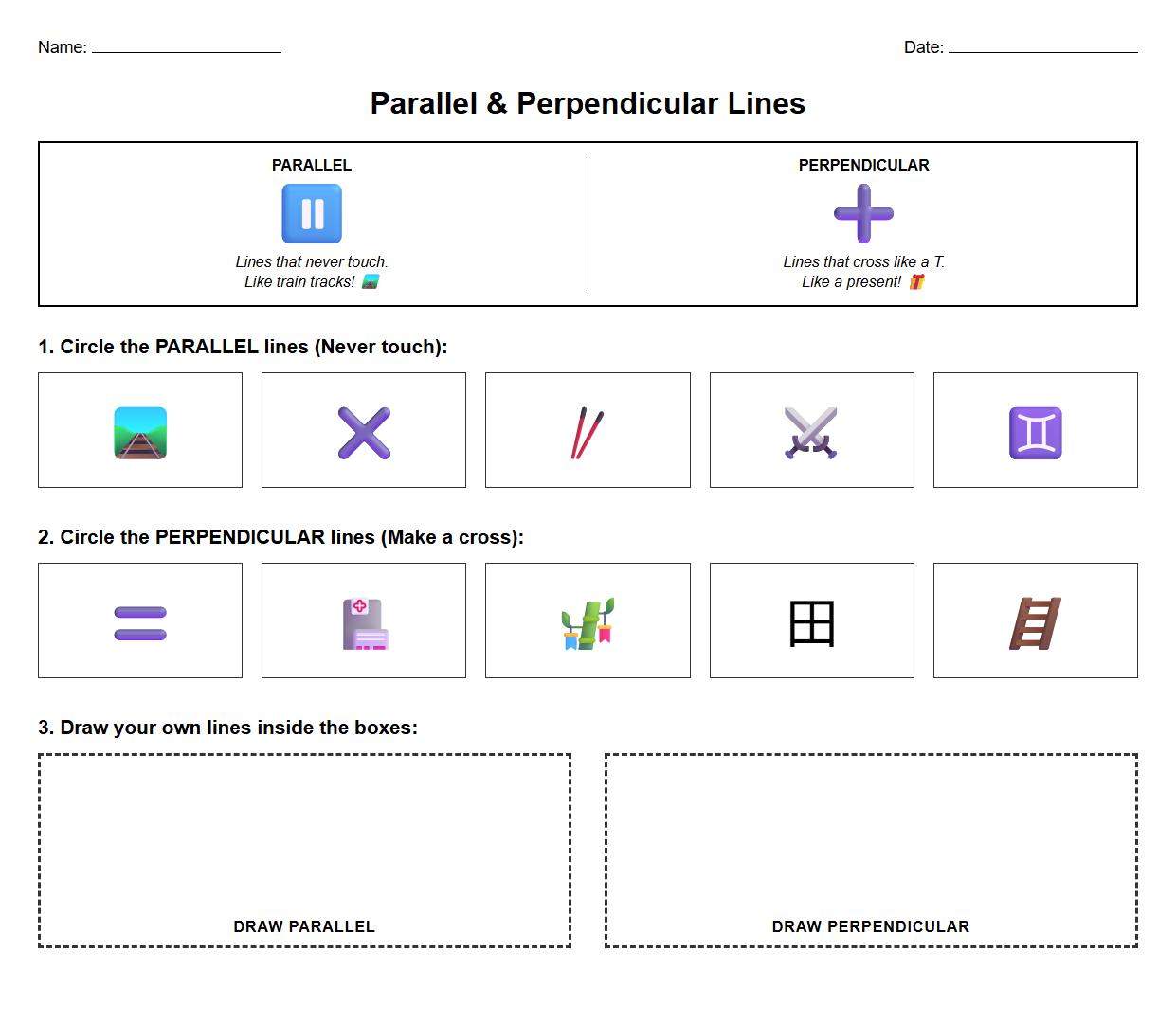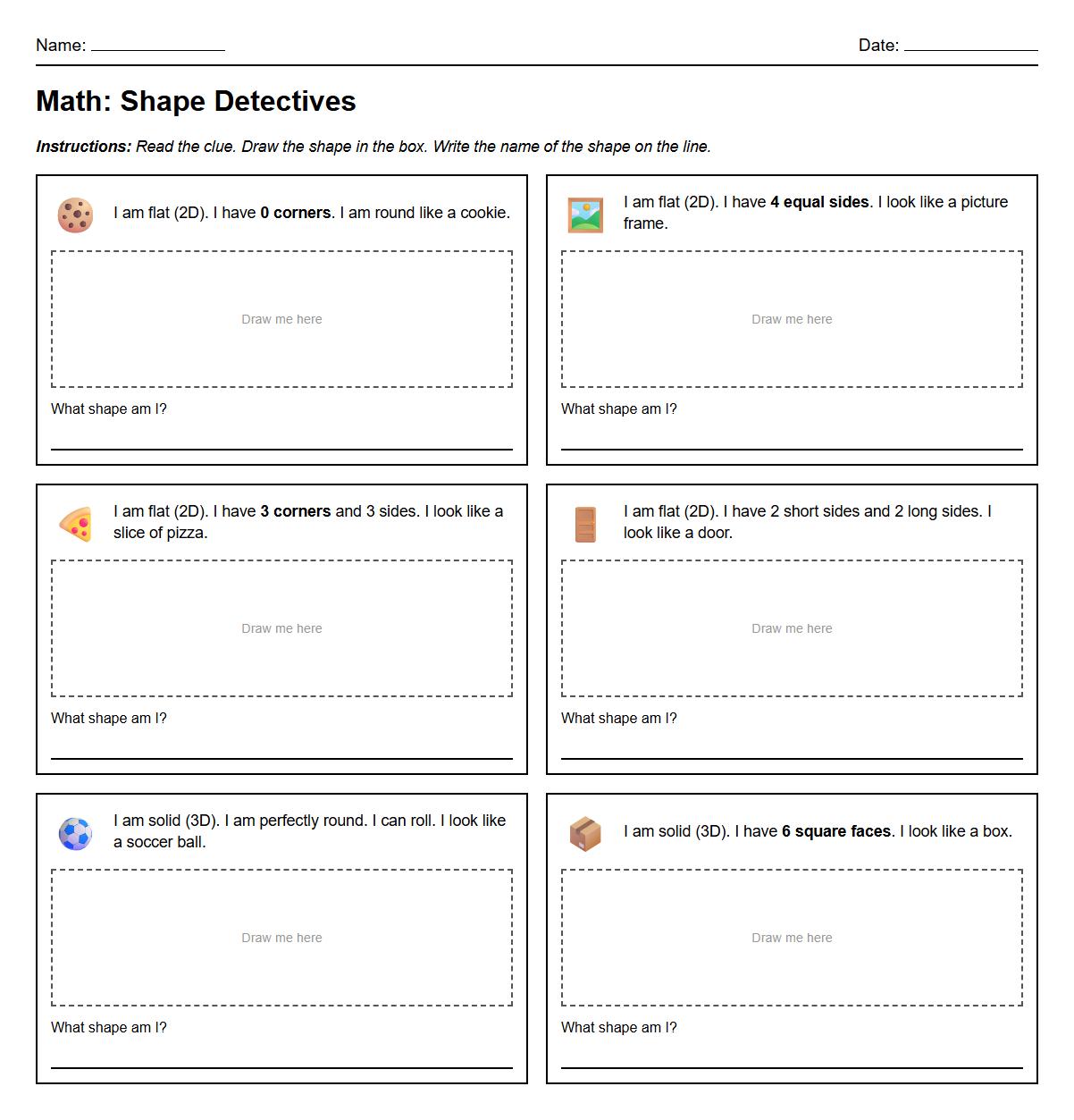
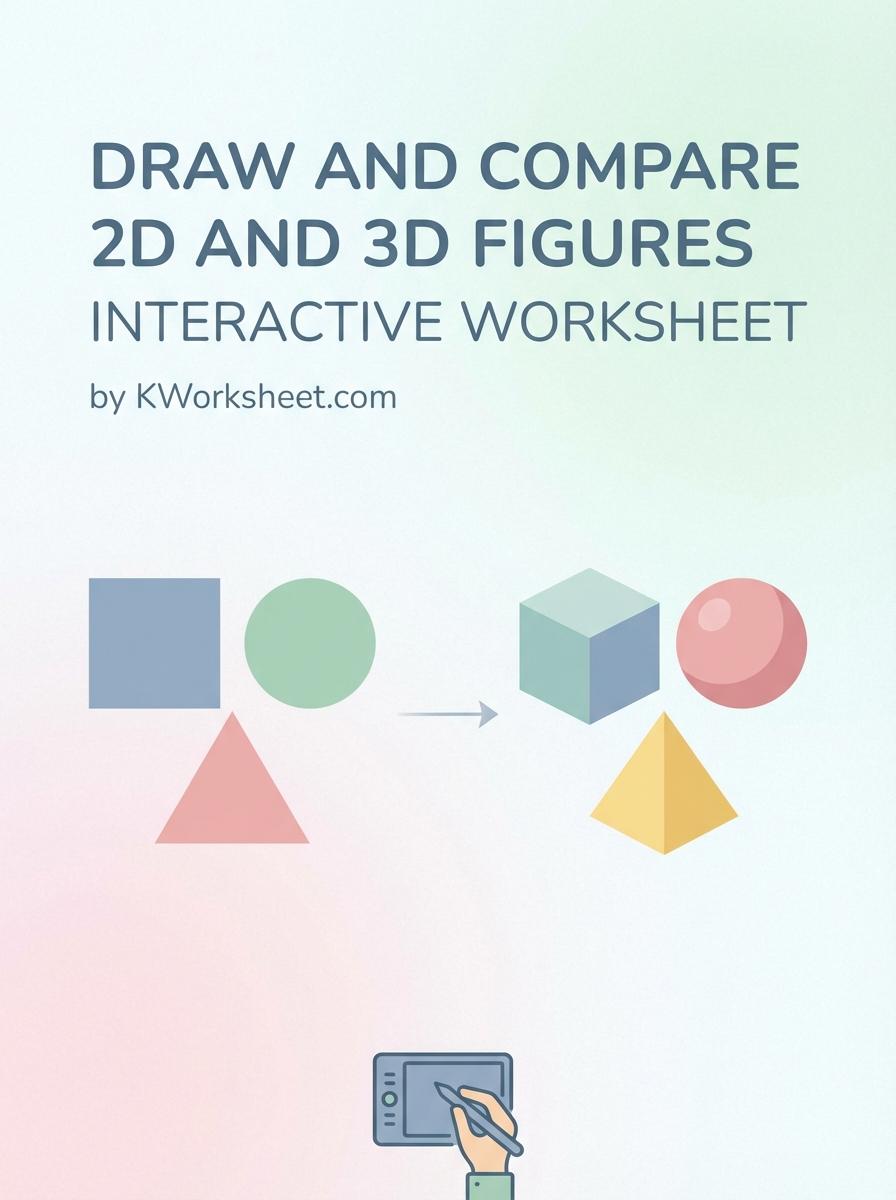
Explore the differences and similarities between 2D and 3D shapes by drawing and analyzing their properties in this interactive worksheet. Master concepts such as edges, vertices, faces, and angles through engaging, hands-on activities. Check out the available worksheets to deepen your understanding of geometric figures.
Drawing a Square and a Cube
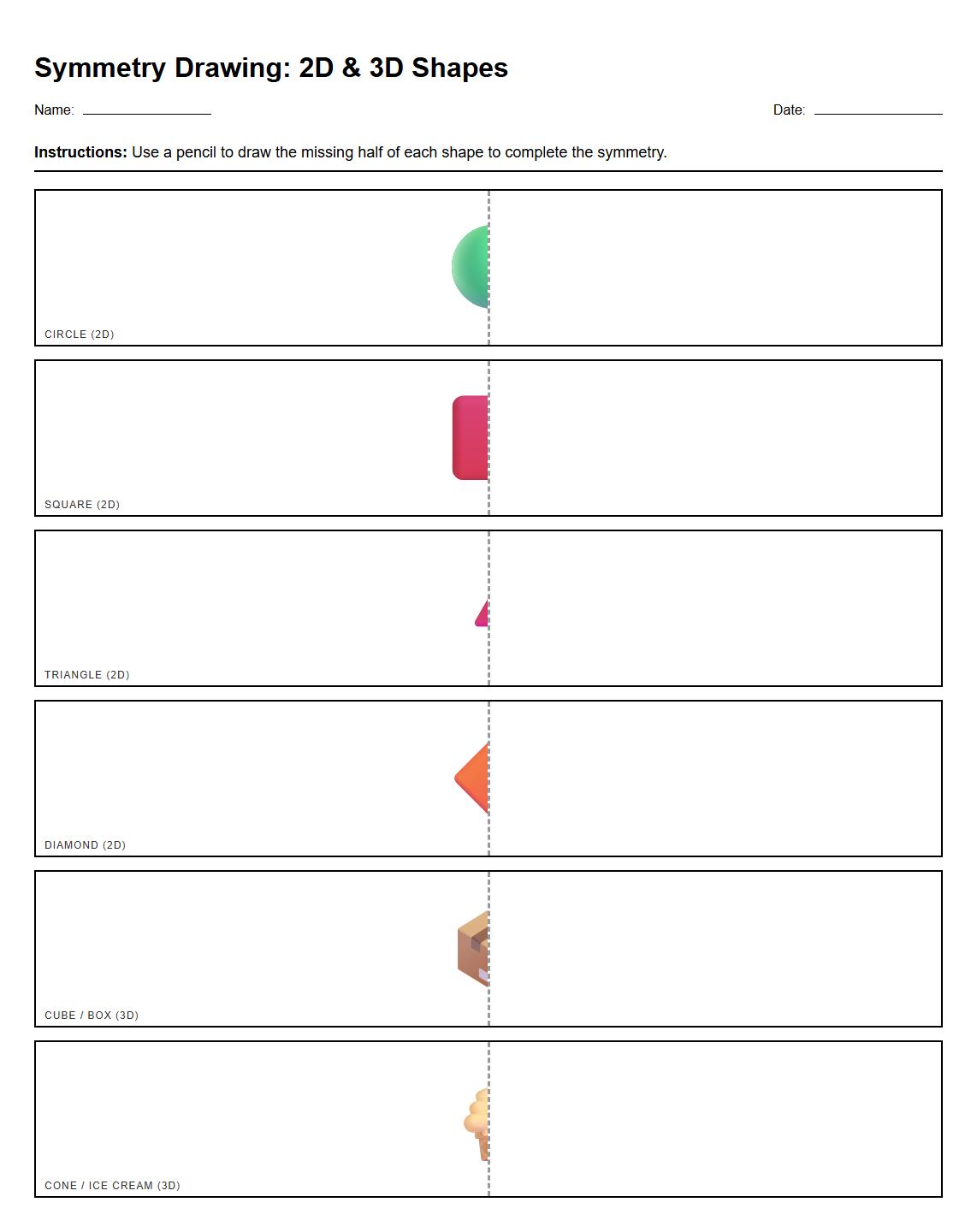
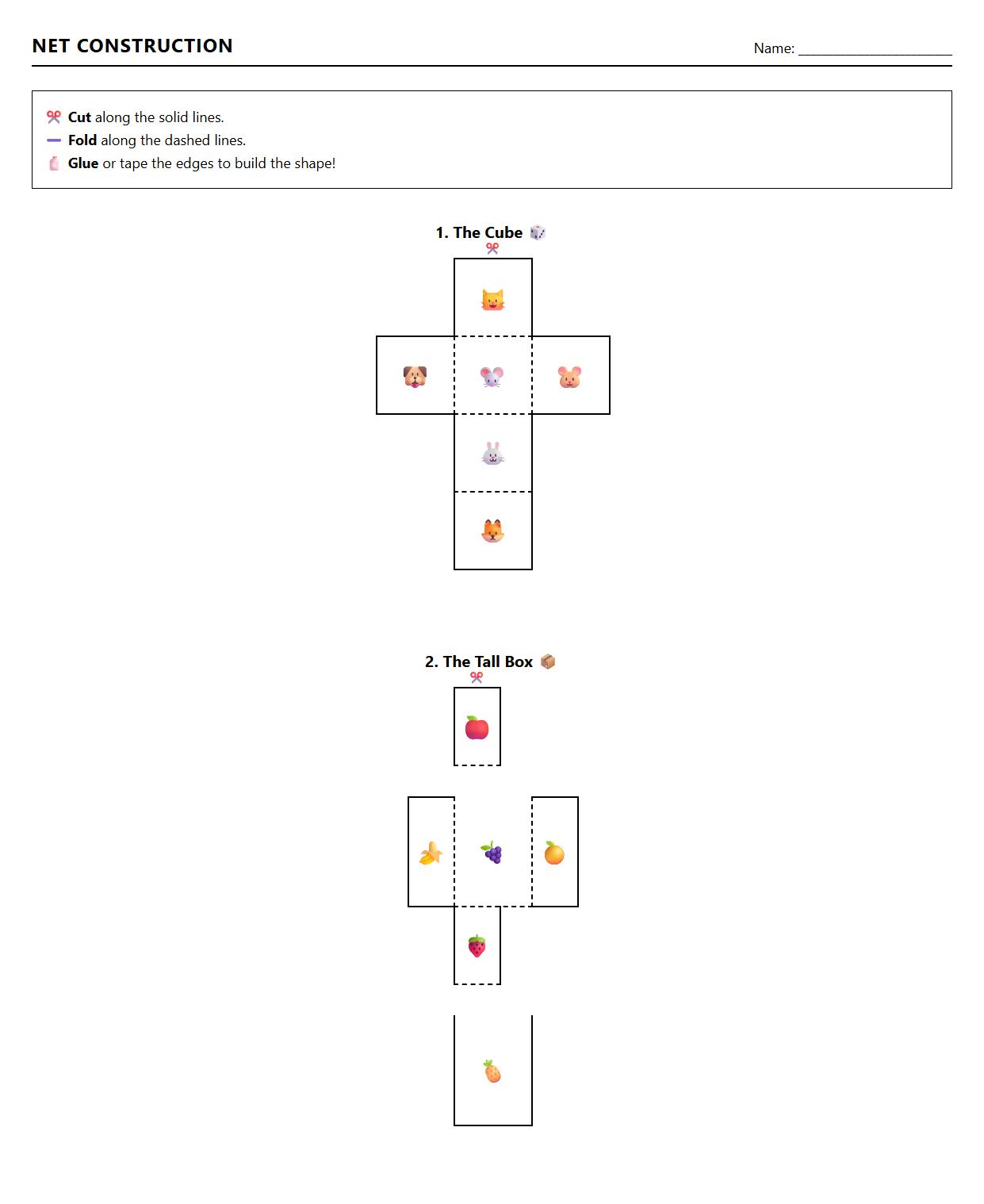
Encourage children to draw a square as a flat, two-dimensional shape with four equal sides on their worksheet. Next, guide them to draw a cube, a solid, three-dimensional shape with six equal square faces. This exercise helps children understand the difference between 2D and 3D shapes through simple drawing.
Differences Between Circle and Sphere
Explain that a circle is a flat, two-dimensional shape with one continuous curved line. In contrast, a sphere is a solid, three-dimensional shape like a ball, having a curved surface all around. This distinction helps children grasp the concept of flat versus solid shapes.
Identifying Flat and Solid Shapes
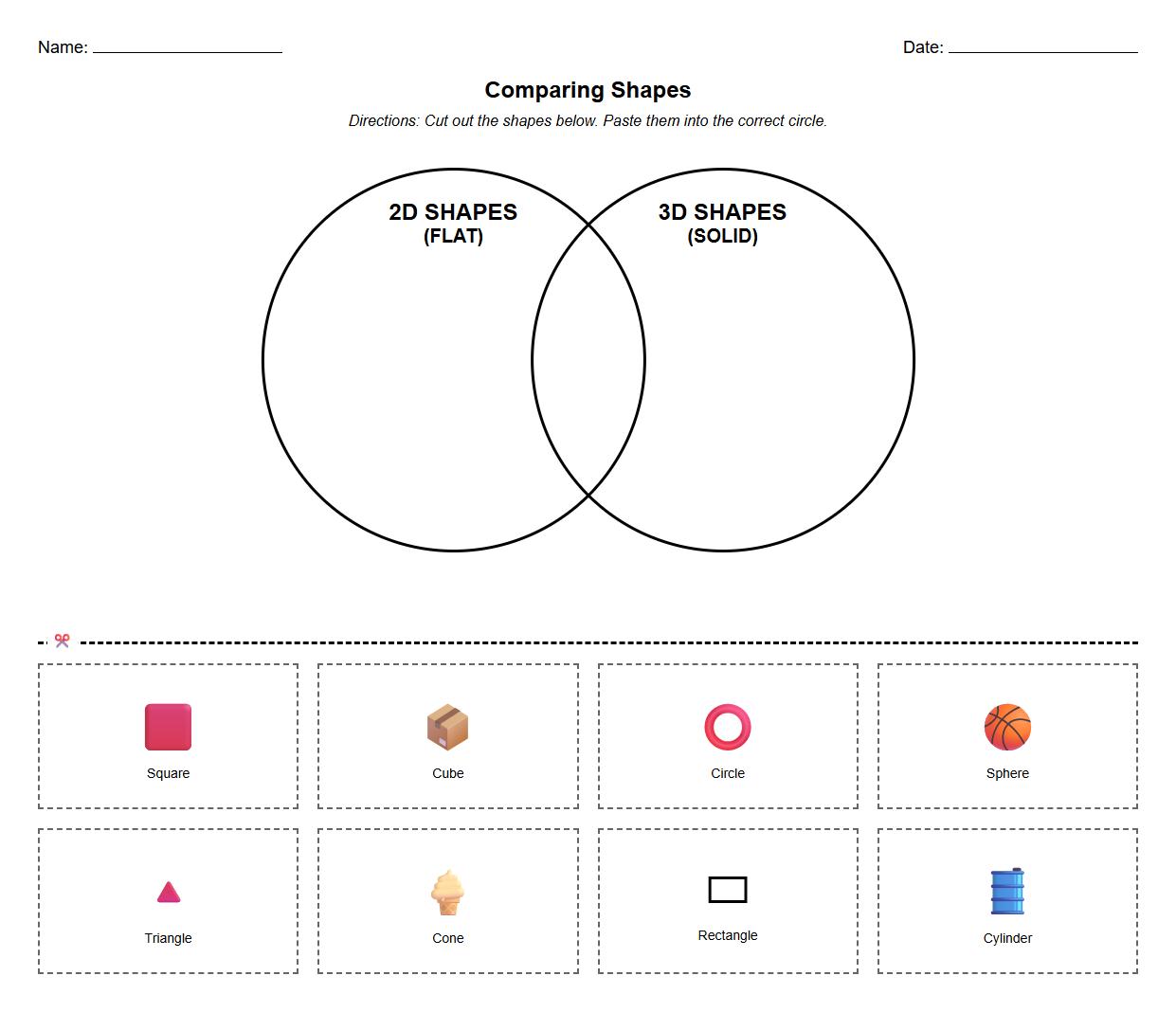
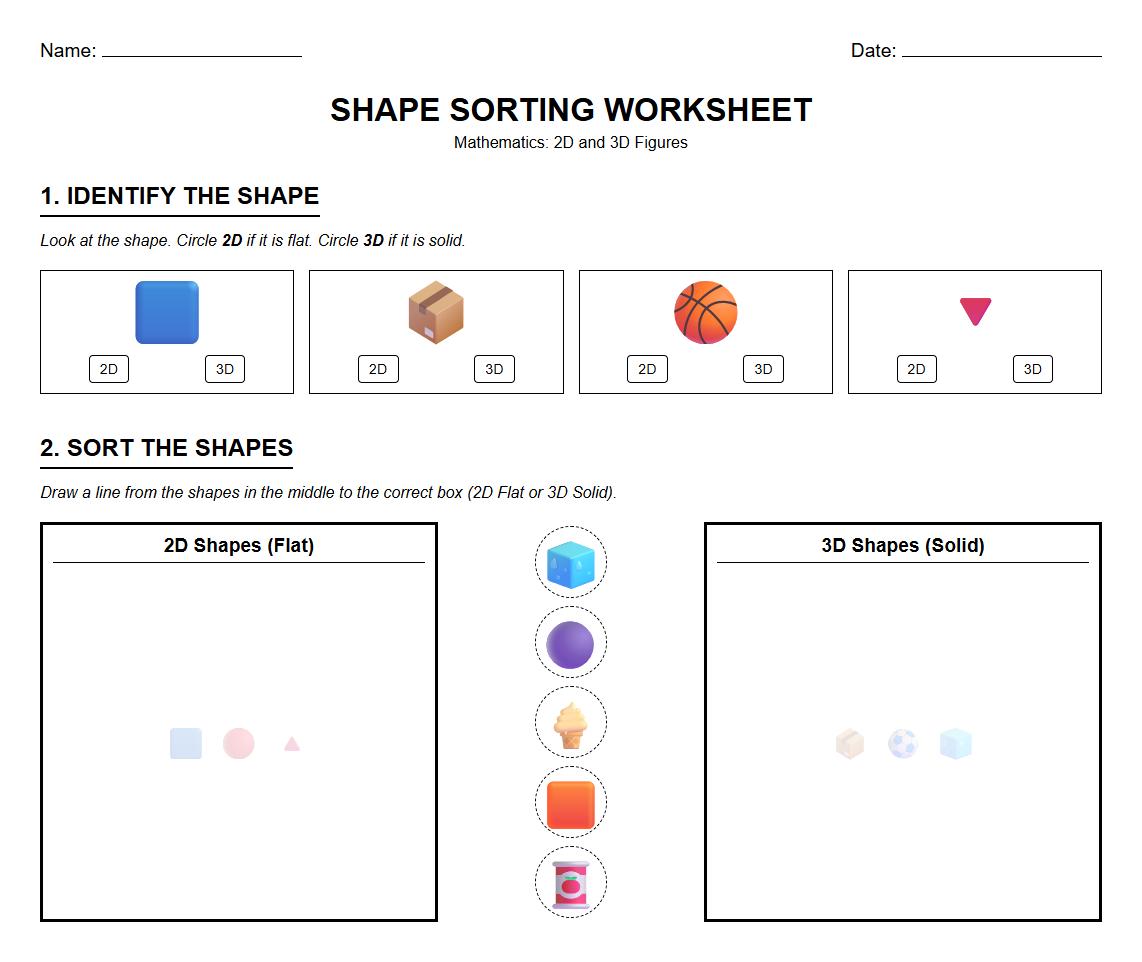
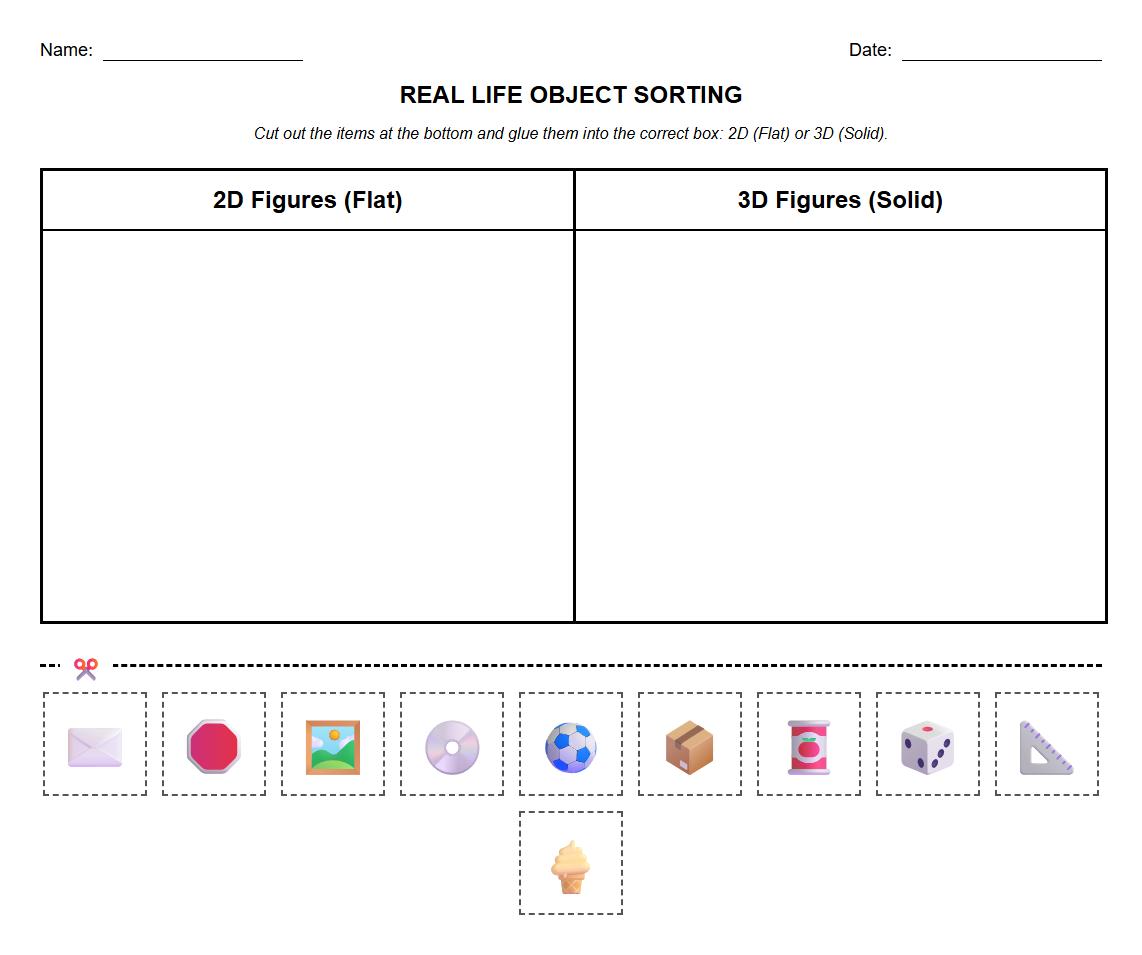
Flat shapes, or 2D shapes, include figures like squares, triangles, and rectangles, which have length and width only. Solid shapes, or 3D shapes, like cubes, spheres, and rectangular boxes, have depth in addition to length and width. Recognizing the difference builds foundational spatial skills.
Counting Sides of a Triangle and a Cube
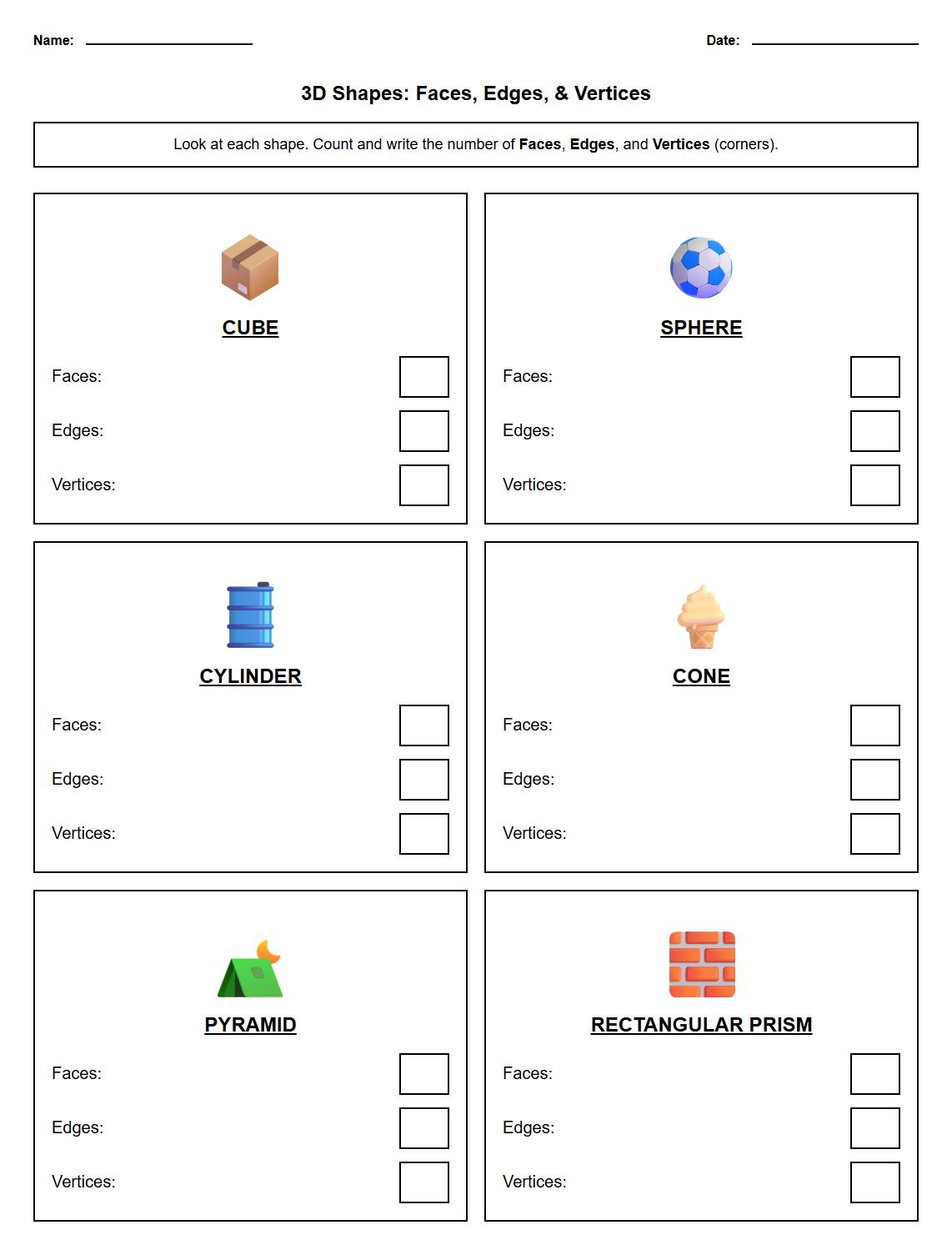
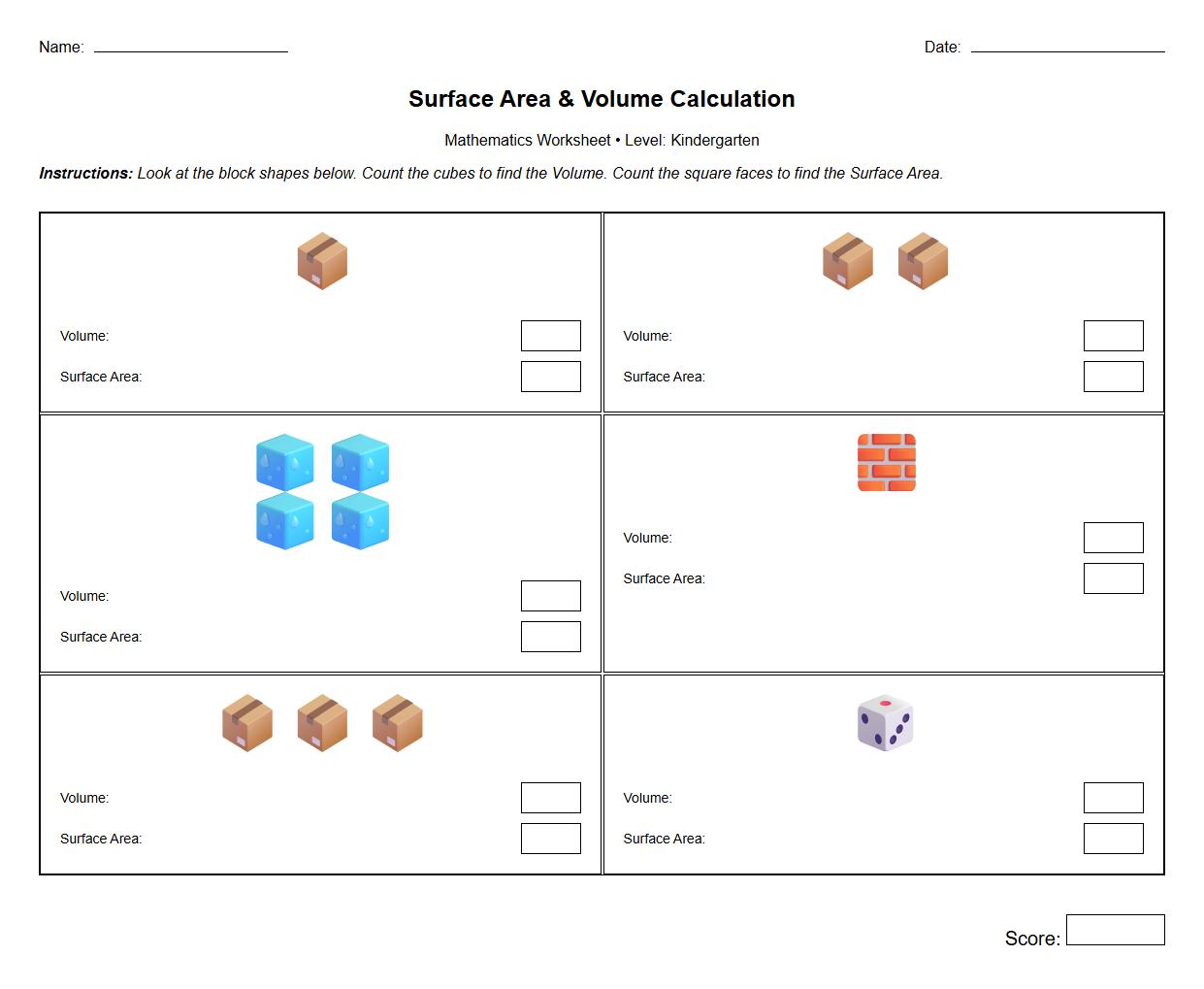
Ask children to count the three sides of a triangle, emphasizing it is a 2D shape. For the cube, explain it has 12 edges or sides, highlighting its 3D nature. This activity sharpens their counting and shape recognition skills.
Drawing a Rectangle and Rectangular Box Side by Side
Guide children to draw a flat rectangle alongside a rectangular box, which is a solid 3D shape. This visual comparison illustrates the difference between 2D and 3D figures. Encourage them to notice how the box has depth unlike the rectangle.
Stacking Shapes Easily
Discuss which shapes can be stacked easily, like cubes and rectangular boxes, because of their flat surfaces. Shapes like spheres or cylinders may roll and are harder to stack. This understanding relates to real-world applications of shapes.
Identifying 2D and 3D Shapes in the Classroom
Encourage children to explore their classroom and find both 2D shapes (like posters or windows) and 3D shapes (like balls or boxes). This activity connects learning with their environment, making it more engaging and meaningful.
Finding Shapes in Your Lunchbox
Ask children to look inside their lunchbox and identify various shapes. They may find 2D shapes on packaging and 3D shapes in the containers or food items. This practical exploration fosters shape recognition in everyday life.
Coloring 2D and 3D Shapes Differently
Provide coloring activities where children color 2D shapes blue and 3D shapes red. This color differentiation reinforces their understanding of flat versus solid shapes. It also adds a fun, visual learning element to the worksheet.
Matching 2D Shapes with 3D Partners
Challenge children to match each 2D shape with its corresponding 3D shape, such as matching a circle with a sphere or a square with a cube. This helps solidify the relationship between flat and solid geometrical figures. It's an excellent way to deepen their conceptual knowledge.


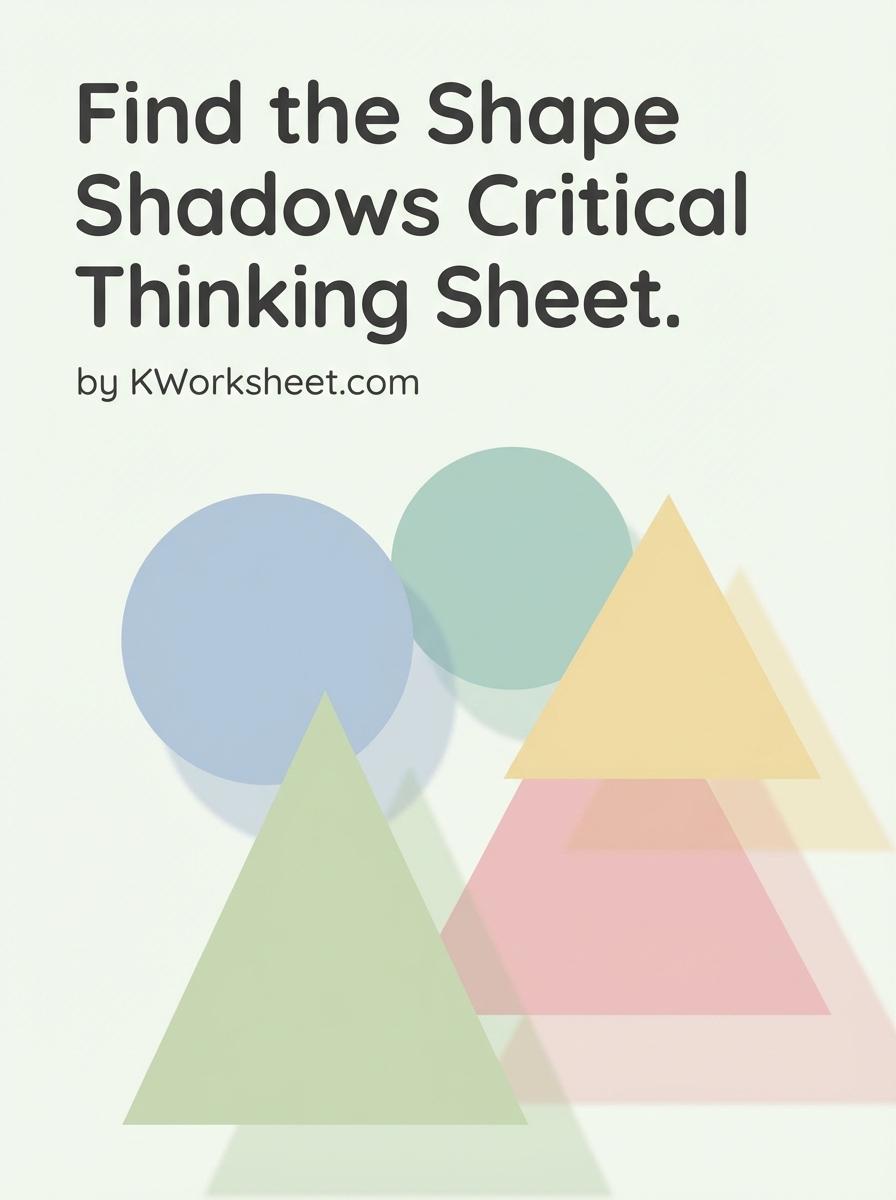
Find the Shape Shadows Critical Thinking Sheet