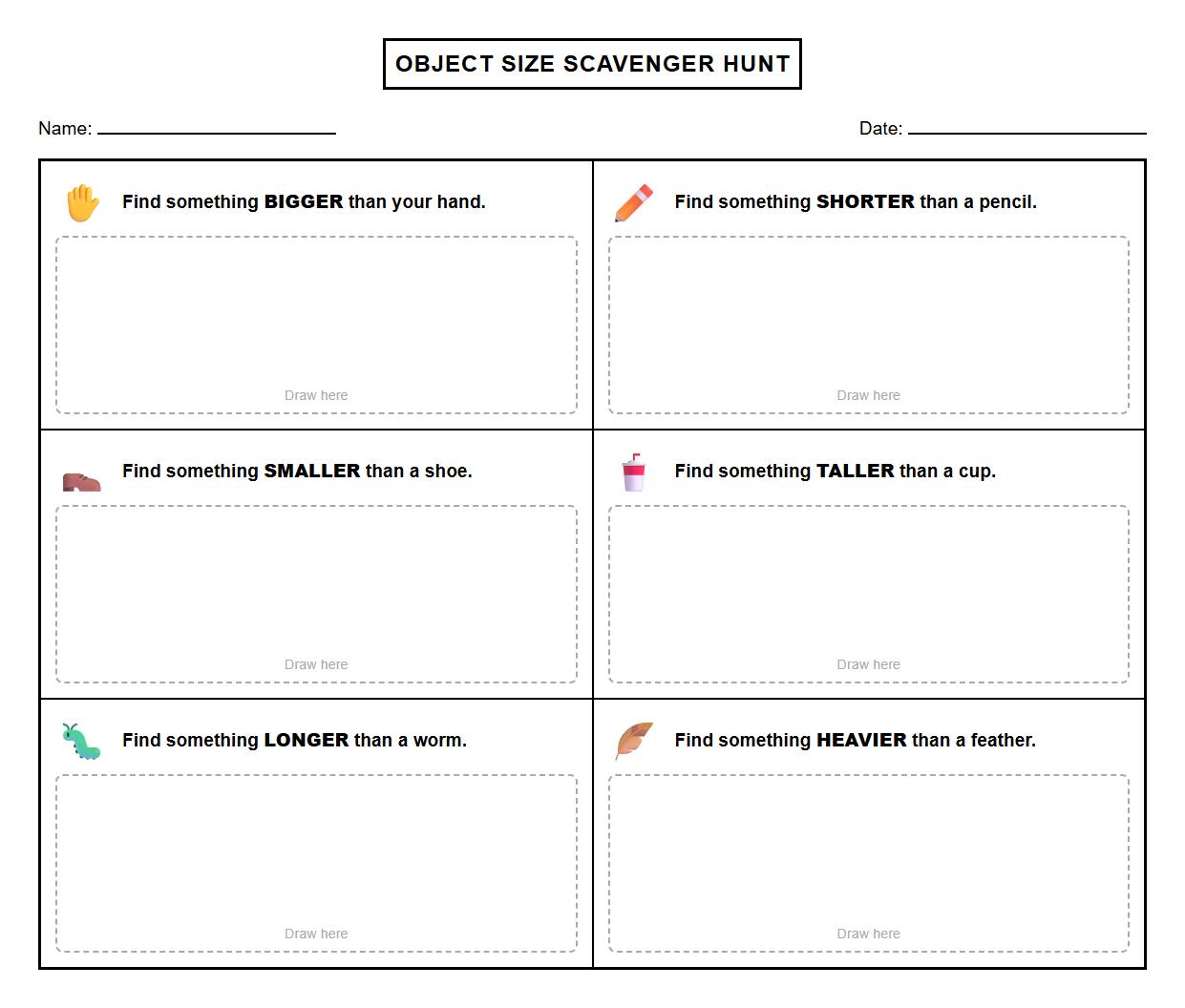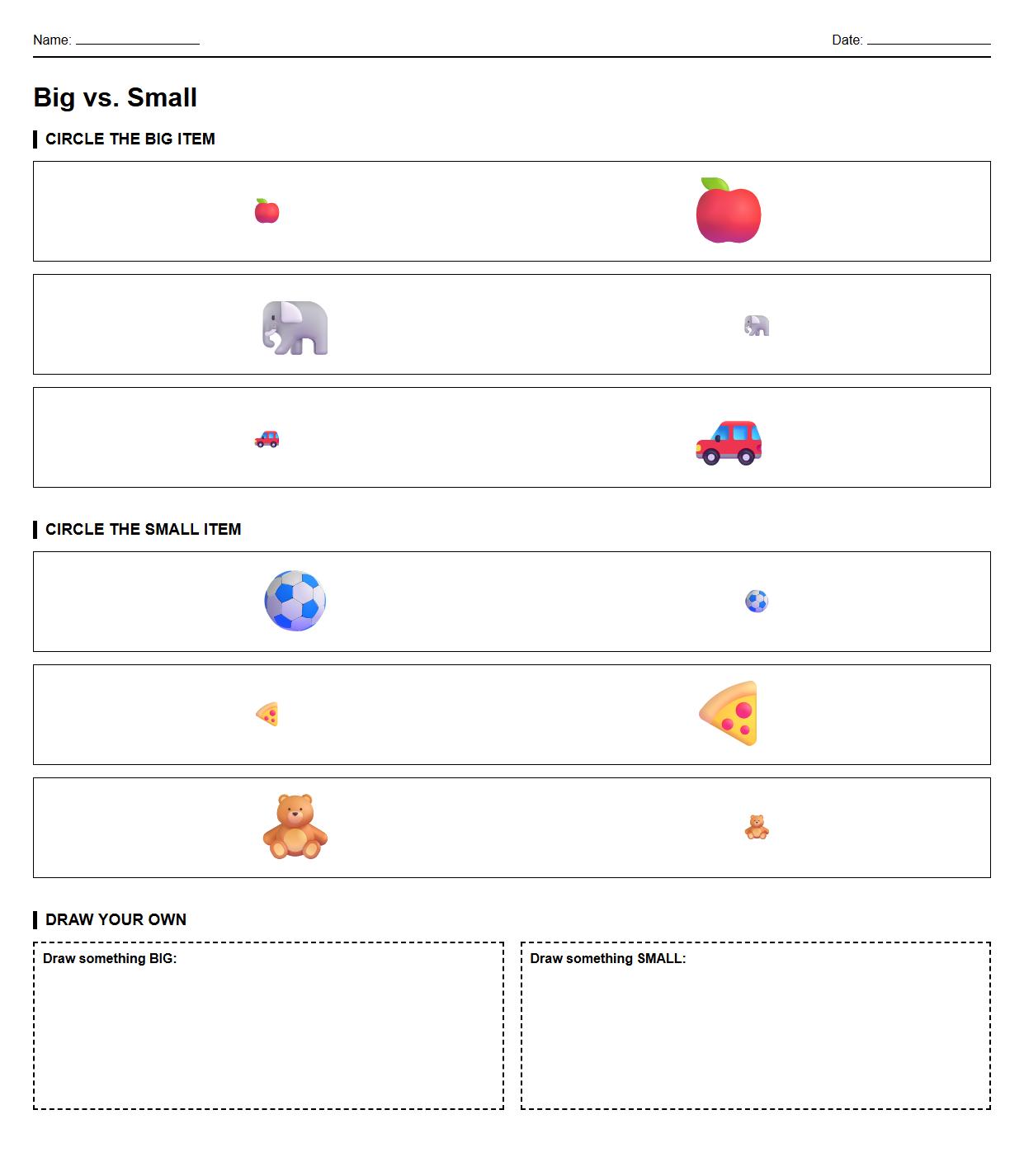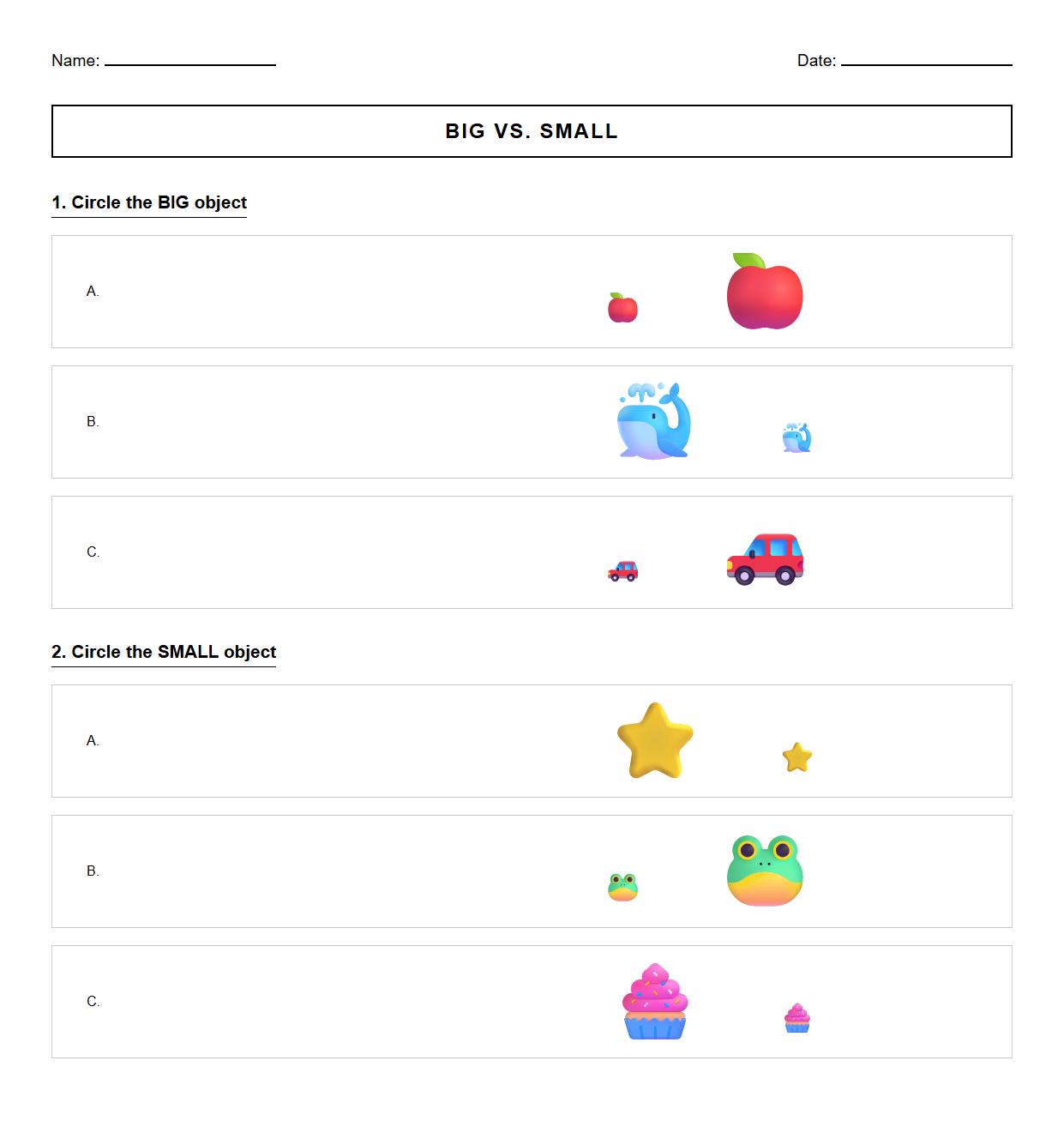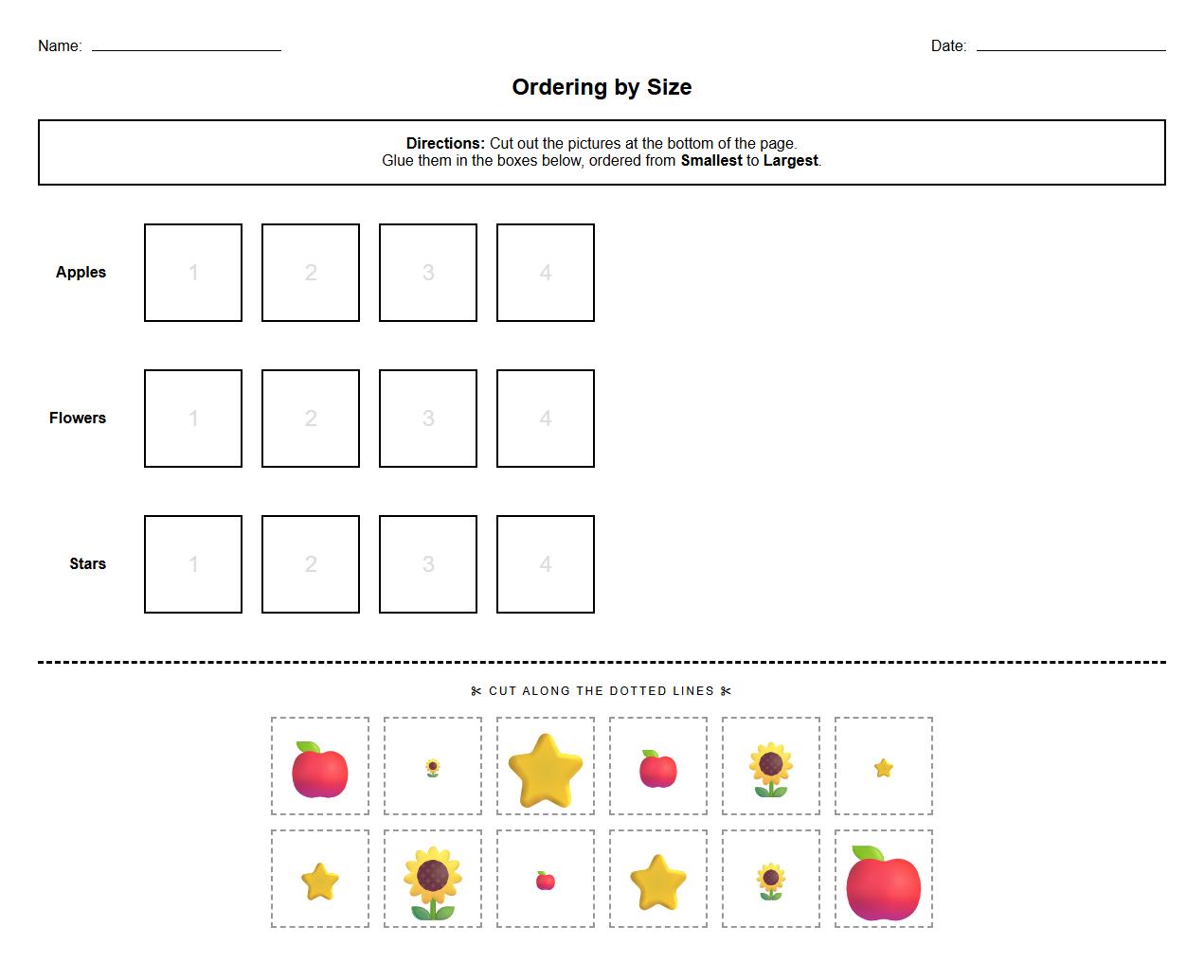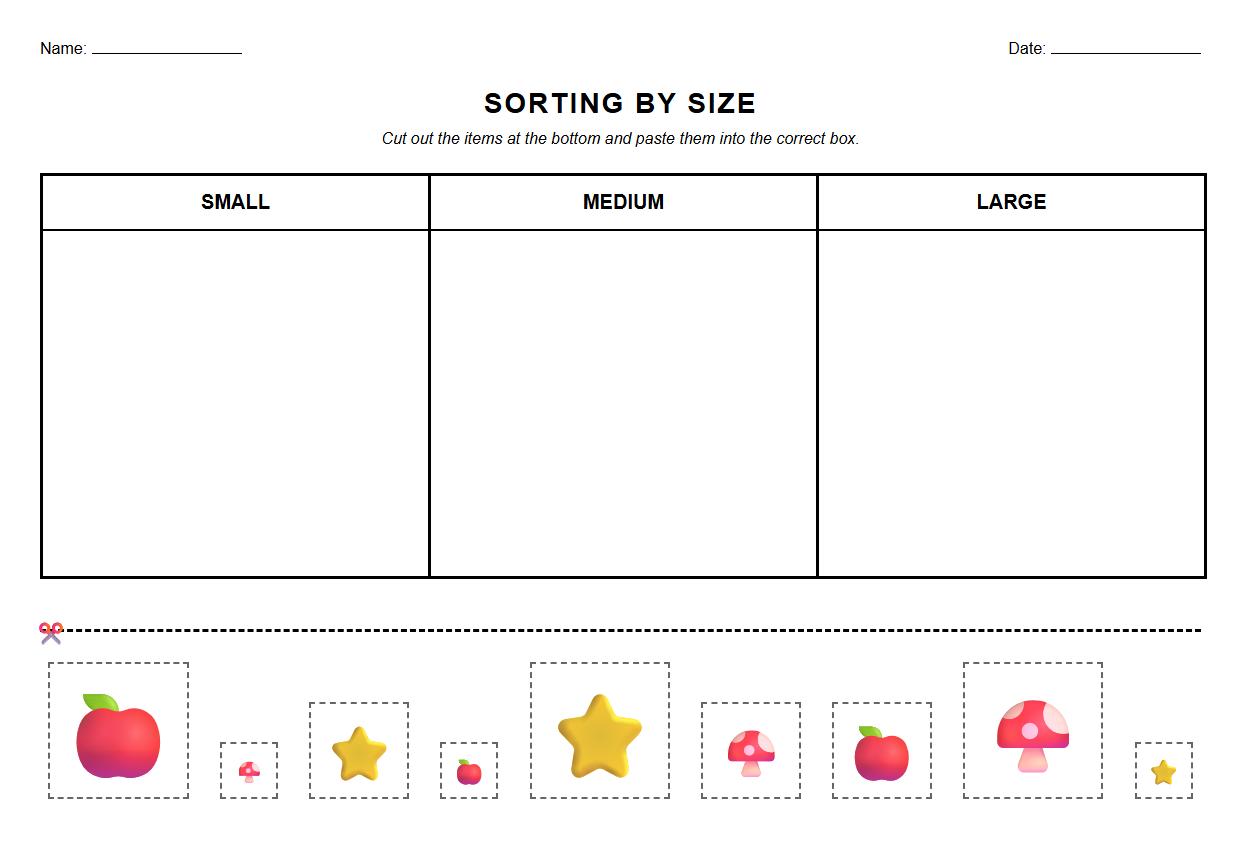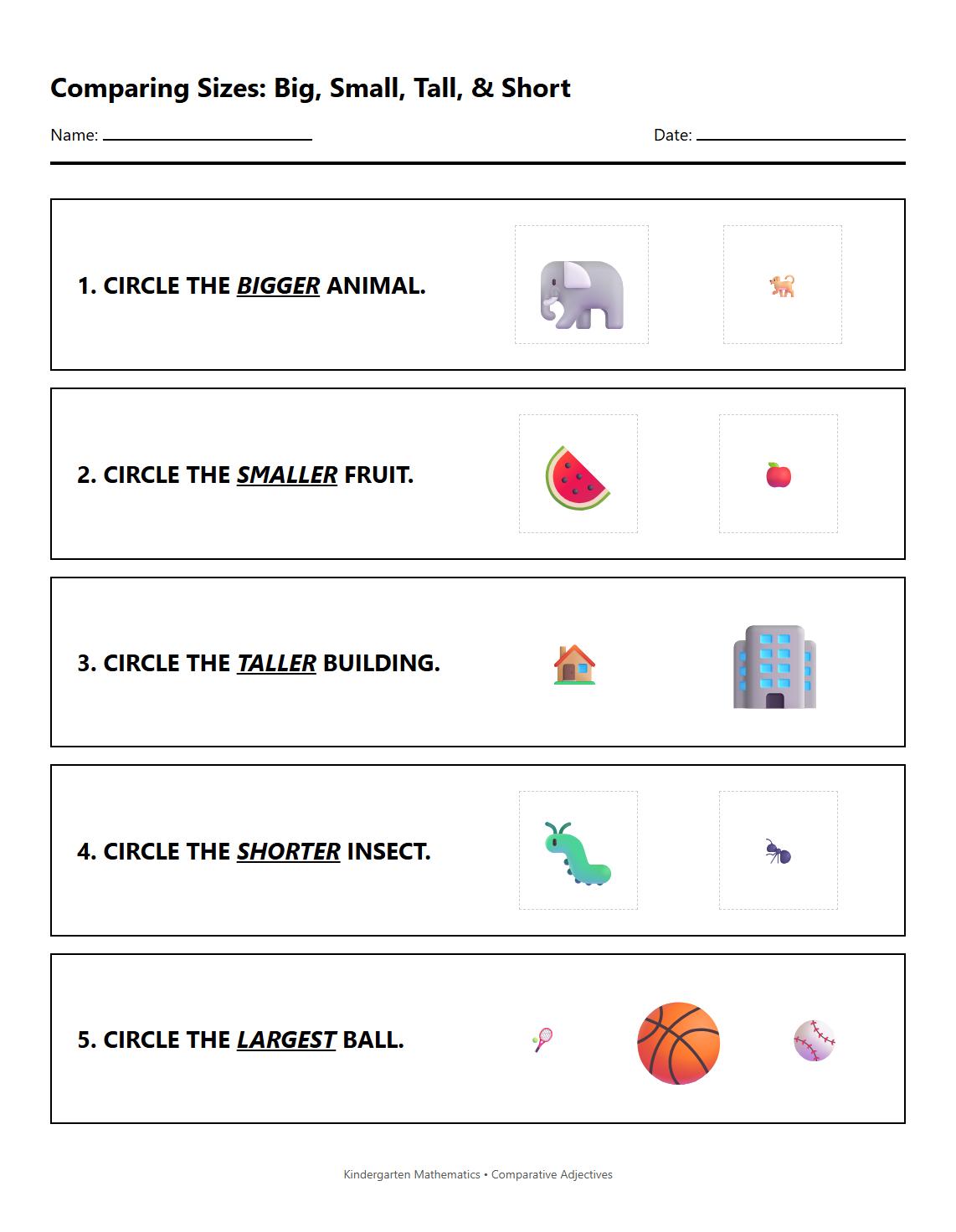
This teacher resource worksheet helps students develop critical thinking by comparing big and small items through engaging exercises. It encourages observation skills and enhances vocabulary related to size and measurement. Explore the available worksheets to support hands-on learning and classroom activities.
Biggest Object Identification
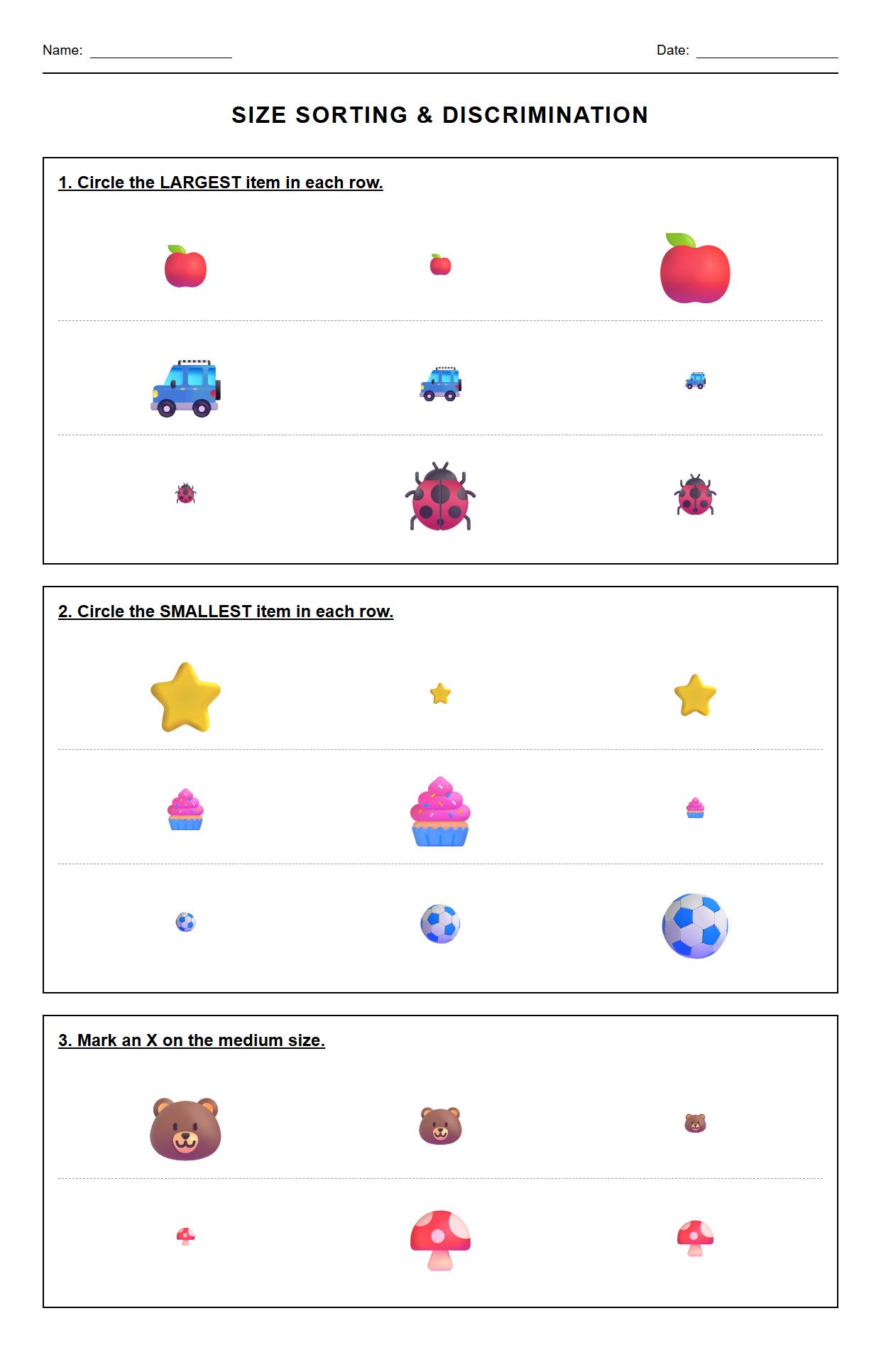
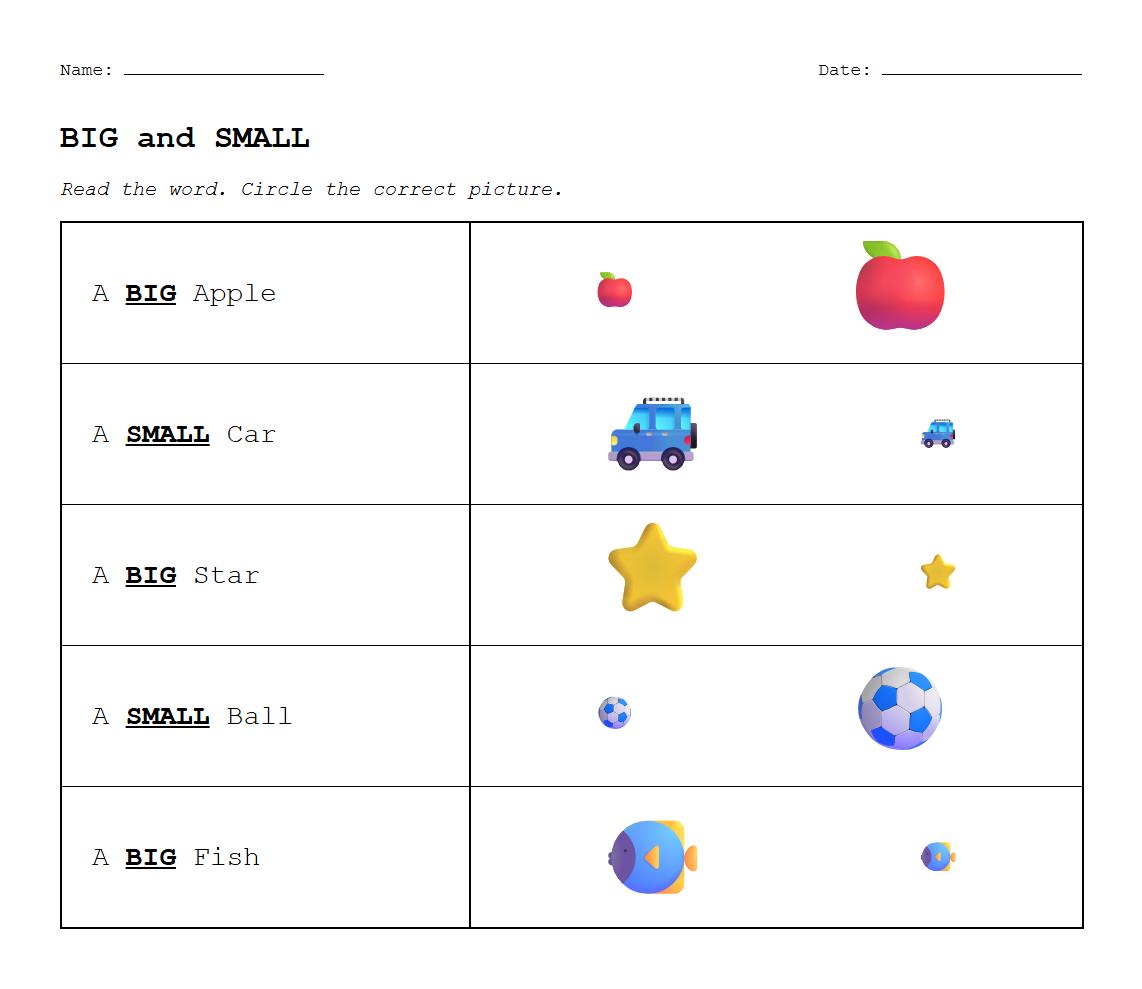
Ask the children to find the biggest object in the picture. This activity helps improve their size recognition skills. Encourage them to explain why they think it is the biggest. Use simple language to support understanding.
Comparing Sizes: Ball and Box
Guide children to compare the ball and the box to see which one is smaller. This exercise develops their ability to differentiate between sizes. Use visual cues and ask them to physically point to the items. Reinforce learning by repeating similar comparisons.
Circling the Smallest Animal
Have the children circle the smallest animal on the worksheet. This encourages careful observation and fine motor skills. Make sure they understand the concept of small versus large. Praise their efforts to boost confidence.
Identifying the Biggest Fruit
Invite kids to point to the biggest fruit shown. This task helps them practice size comparison within a specific category. Use questions that promote critical thinking. Encourage discussion about the differences in size and shape.
Comparing Shoe Sizes
Ask if the shoes are the same size or different sizes. This strengthens their comparison skills and attention to detail. Provide hands-on experience by letting them touch or measure the shoes. Support their answers with examples.
Shape Size Comparison: Triangle and Square
Encourage children to identify which shape is bigger, the triangle or the square. This exercise helps with shape recognition and size differentiation. Use visual aids to clarify the concept. Reinforce learning through repetition.
Showing the Smallest Toy
Prompt children to use their finger to show the smallest toy on the worksheet. This supports size awareness and improves fine motor control. Engage them in conversation about how they decided which toy is smallest. Reward their correct responses.
Matching Big and Small Objects
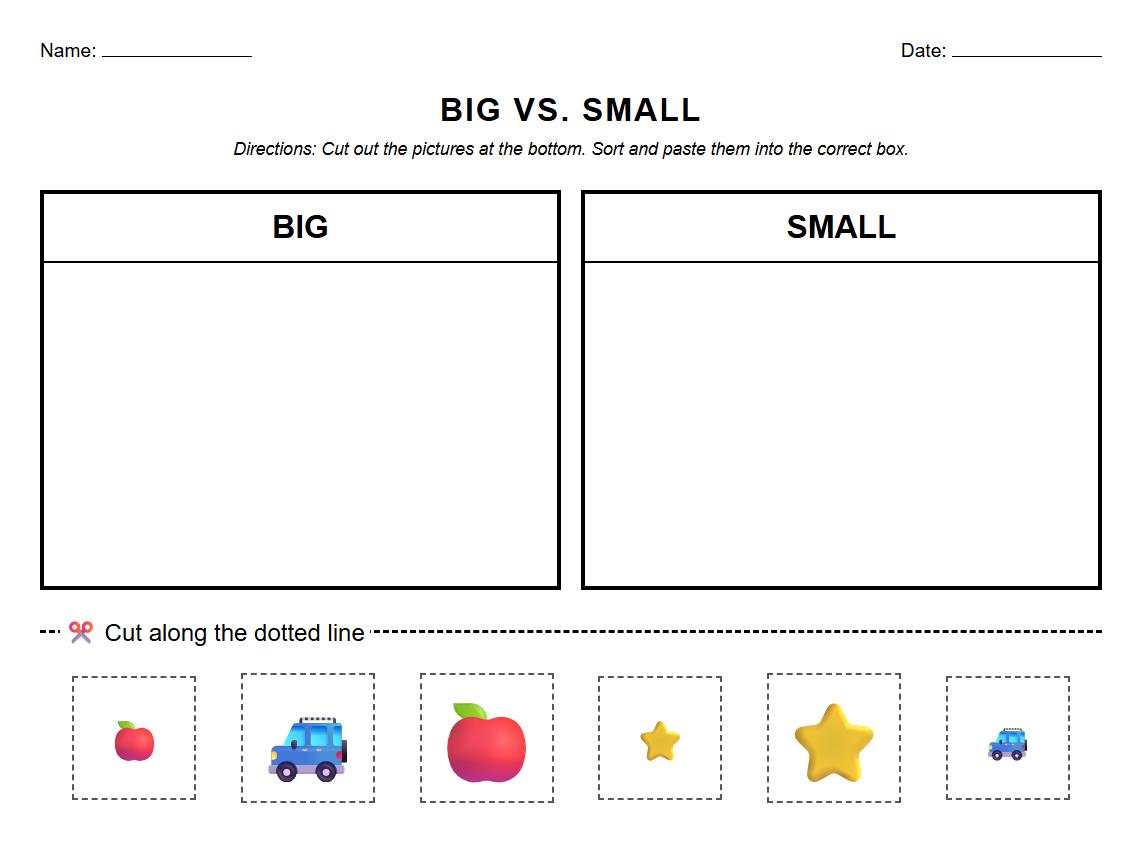
Guide kids to match the big object with the small object. This activity enhances cognitive skills by teaching relationships between sizes. Use clear examples and step-by-step instructions. Encourage peer collaboration for better learning through pattern activities.
Counting Groups with More Big Items
Have the children determine which group has more big items. This combines counting with size comparison, boosting numeracy and observation skills. Use visual grouping for clarity. Recognize their effort to encourage participation.
Pencil and Eraser Size Comparison
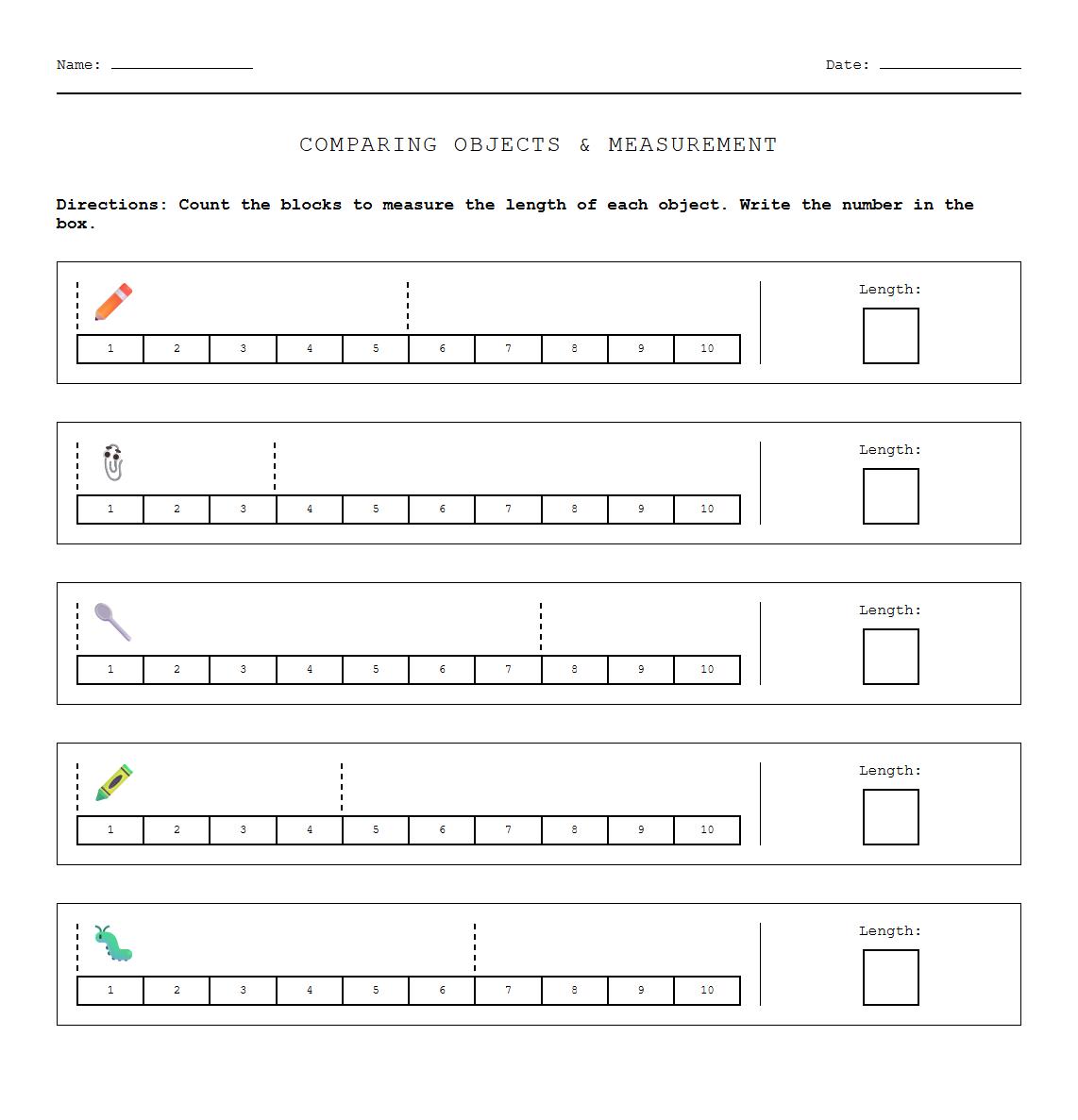
Ask whether the pencil is bigger or smaller than the eraser. This simple comparison aids understanding of relative size. Let children handle both items if available to make the comparison tangible. Discuss their observations to deepen comprehension.


Kindergarten Math Phonics Worksheet Practicing More and Less Concepts