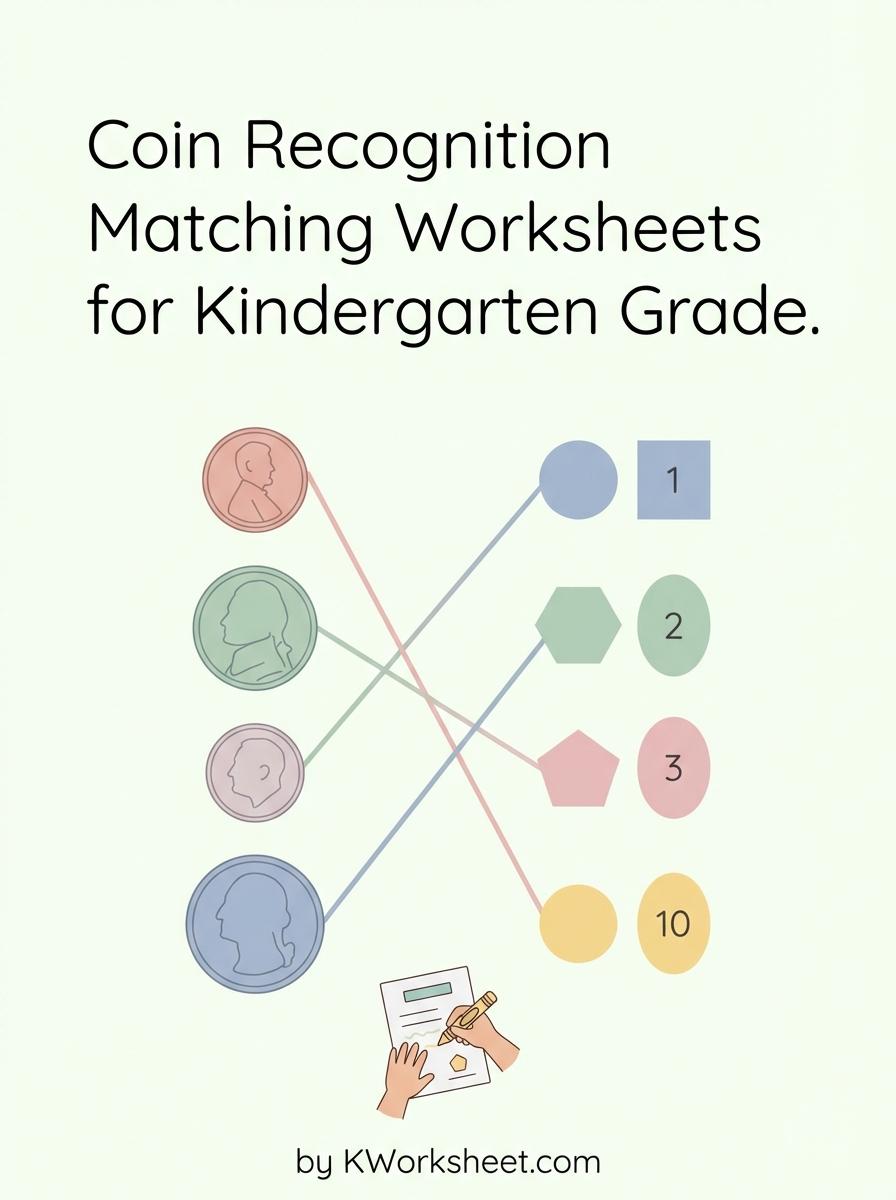
Coin Recognition Matching Worksheets for Kindergarten Grade

📅 Jun 9, 2025 👤 Nylen Smith

Kindergarten students develop essential cognitive skills by engaging with coin recognition matching worksheets that reinforce the identification of pennies, nickels, dimes, and quarters. These activities enhance their ability to distinguish coin values while improving fine motor coordination and visual memory. Explore the available worksheets to support early money skills in a fun and educational way.

Coin Recognition Phonics Worksheet
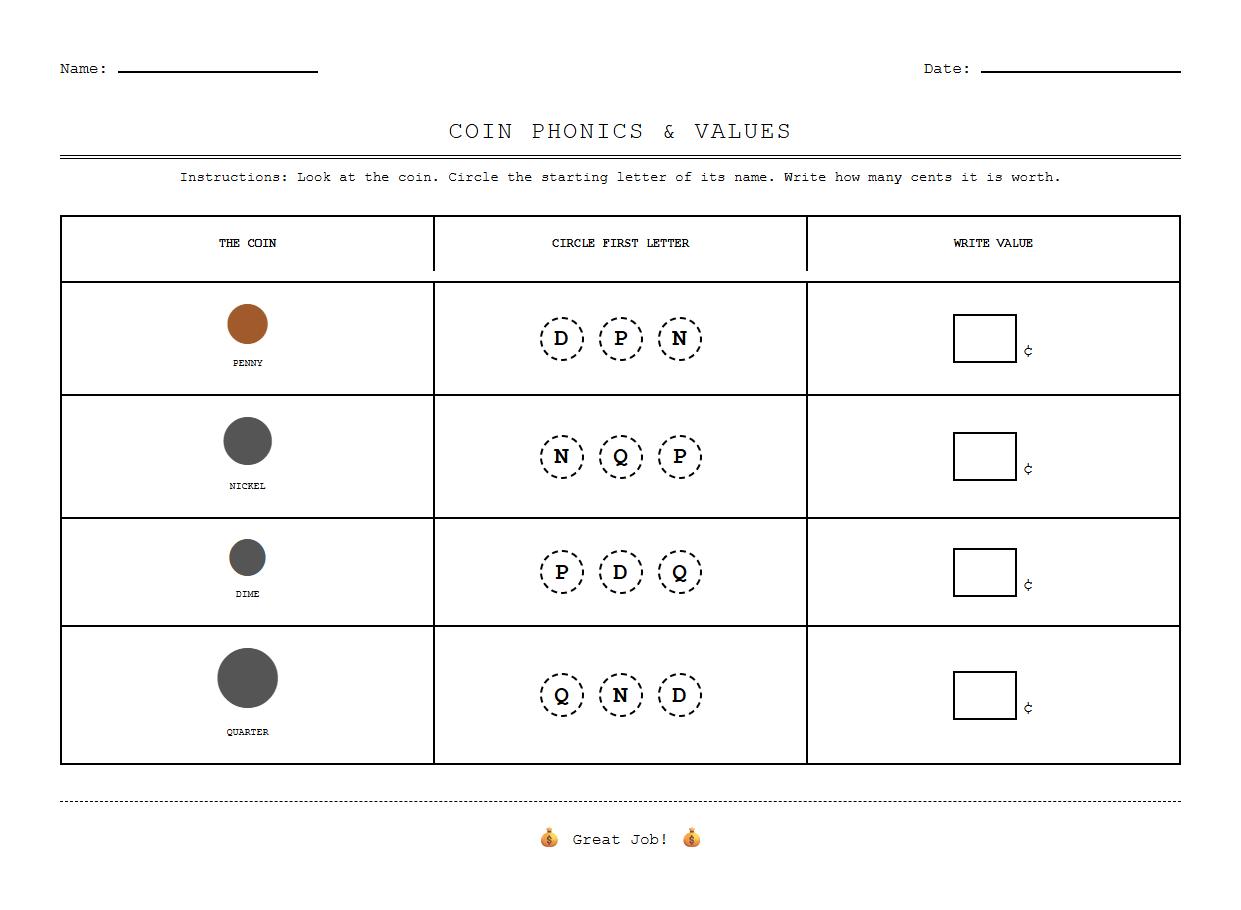
Coin Recognition Phonics Worksheet

Download PDF     Pin it

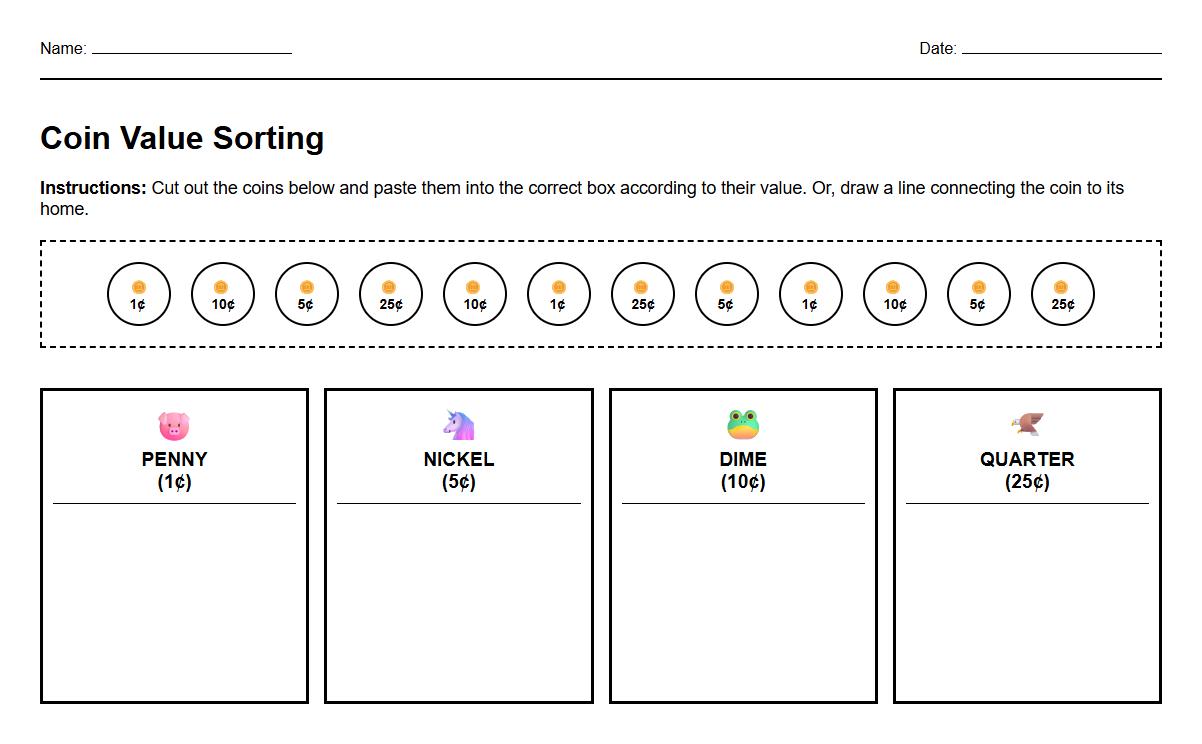
Coin Value Sorting Activity Sheet

Coin Value Sorting Activity Sheet
Download PDF     Pin it

Visual Discrimination Coin Comparison Worksheet
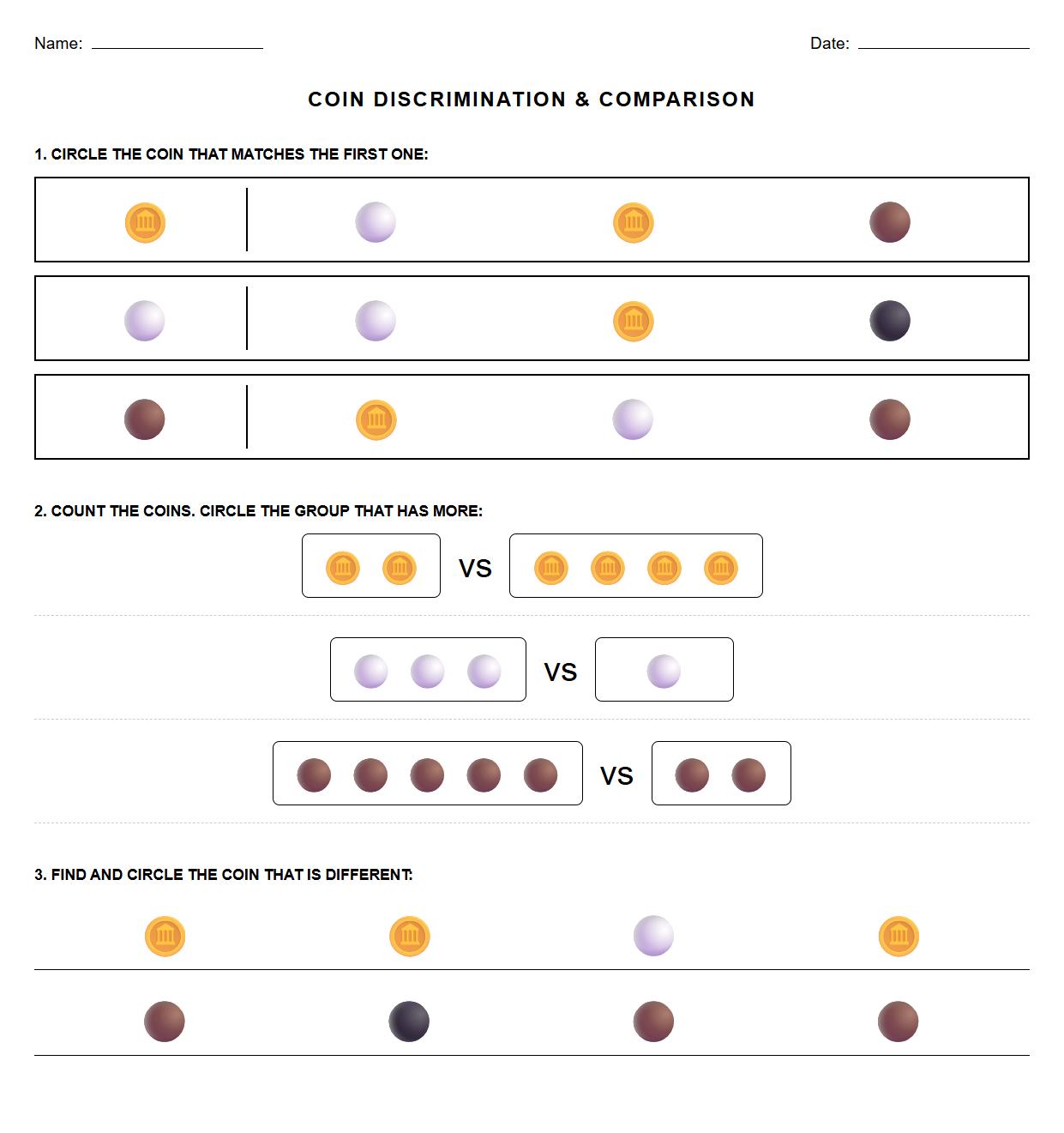
Visual Discrimination Coin Comparison Worksheet

Download PDF     Pin it

Picture to Coin Identification Task
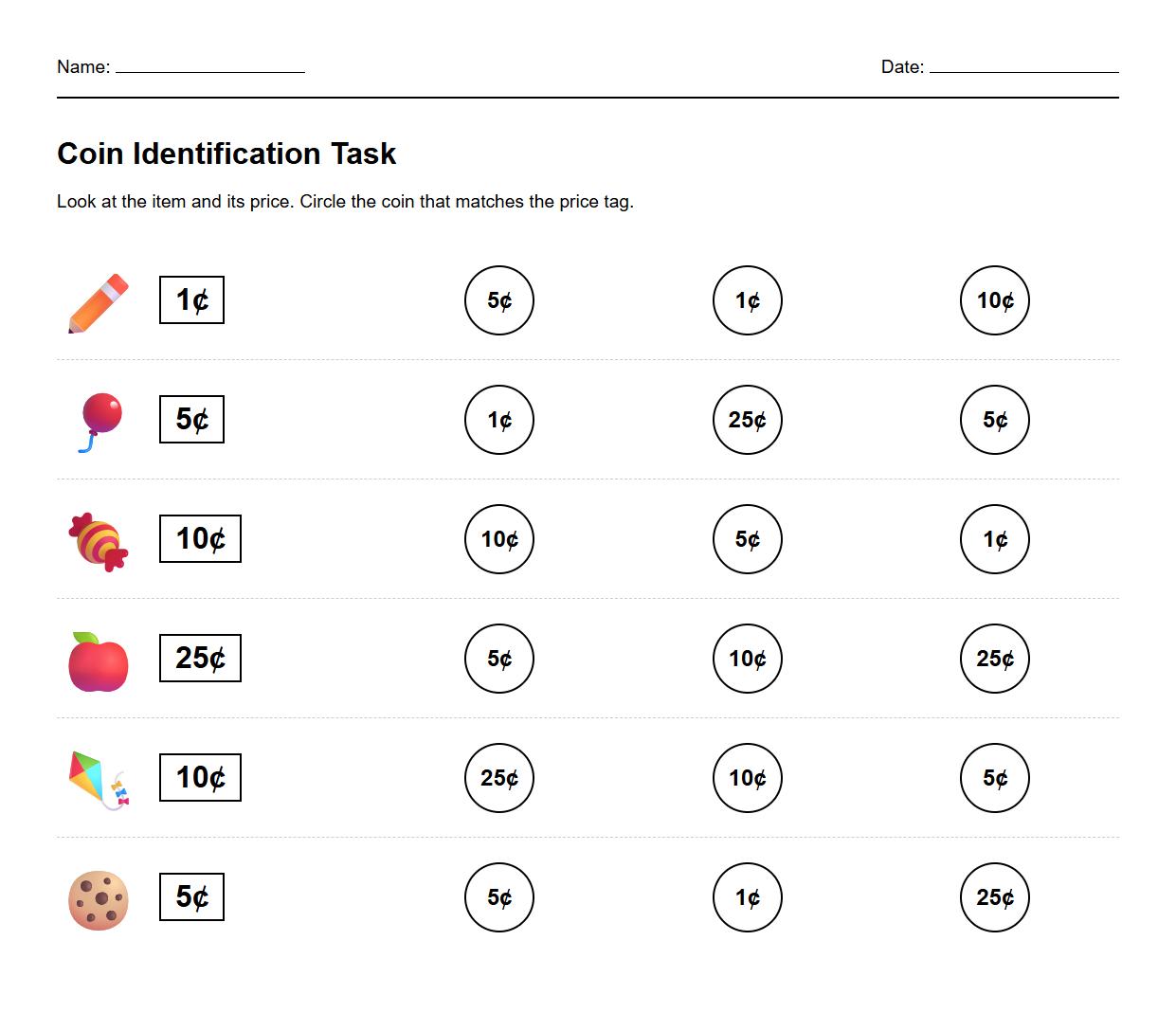
Picture to Coin Identification Task

Download PDF     Pin it

Trace and Match Coin Denominations Exercise
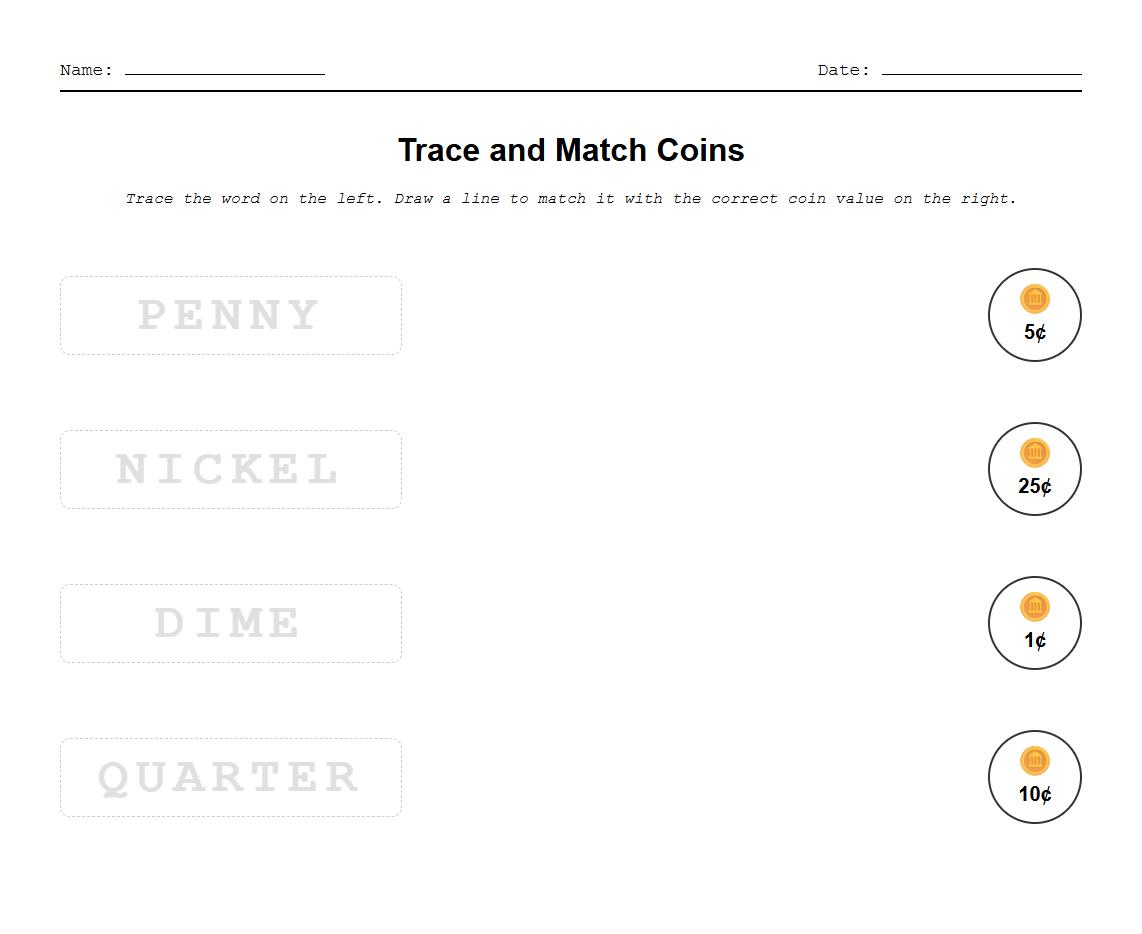
Trace and Match Coin Denominations Exercise

Download PDF     Pin it

Realistic Coin Illustration Matching Sheet
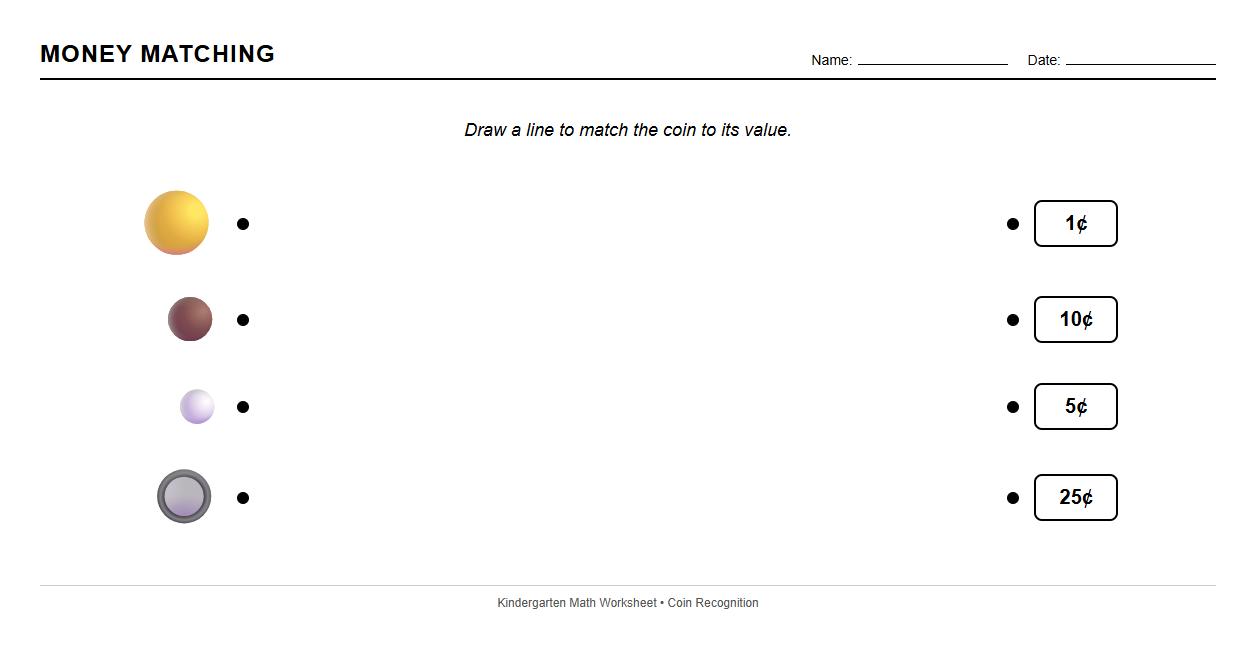
Realistic Coin Illustration Matching Sheet

Download PDF     Pin it

United States Currency Symbol Association Worksheet
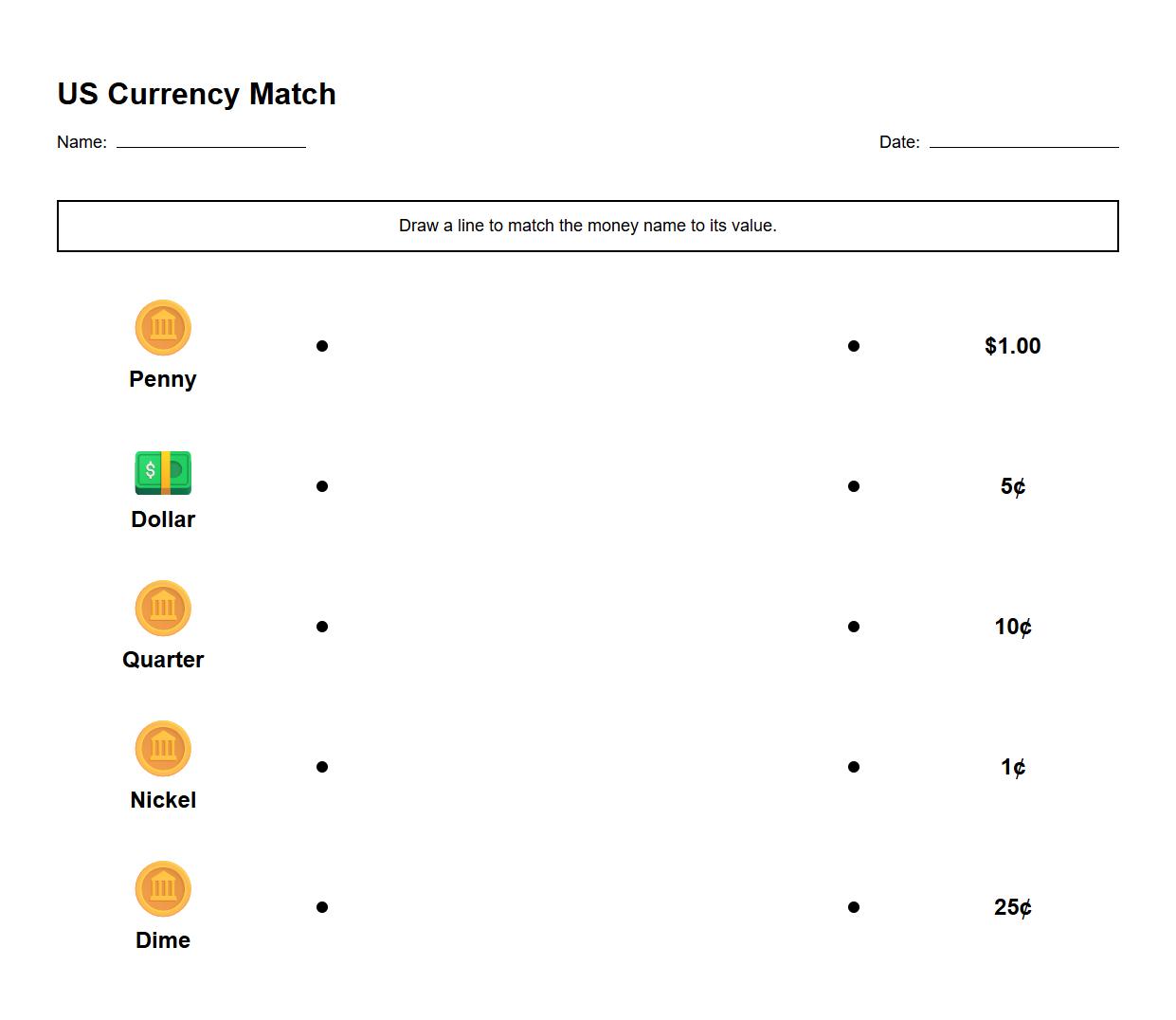
United States Currency Symbol Association Worksheet

Download PDF     Pin it

Coin Size and Shape Sorting Worksheet
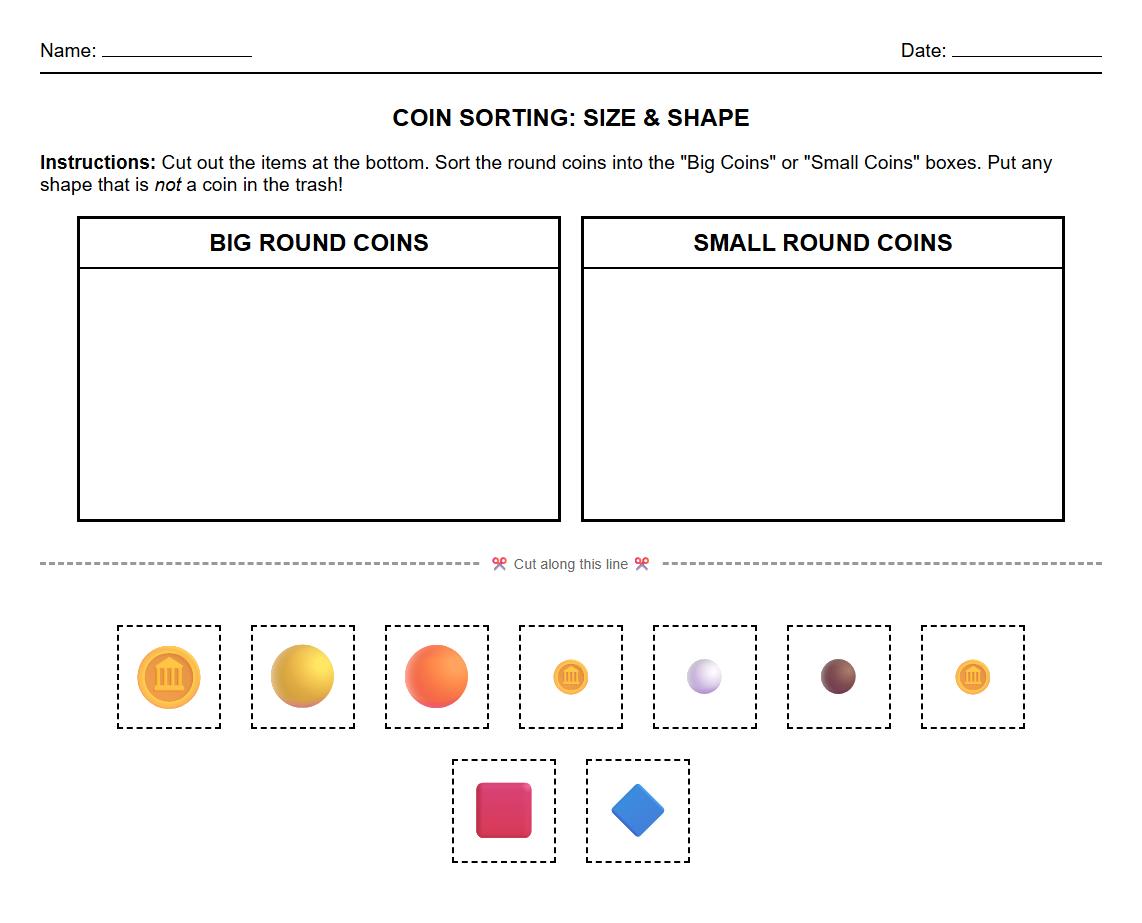
Coin Size and Shape Sorting Worksheet

Download PDF     Pin it

Coin Name to Value Semantic Matching Activity
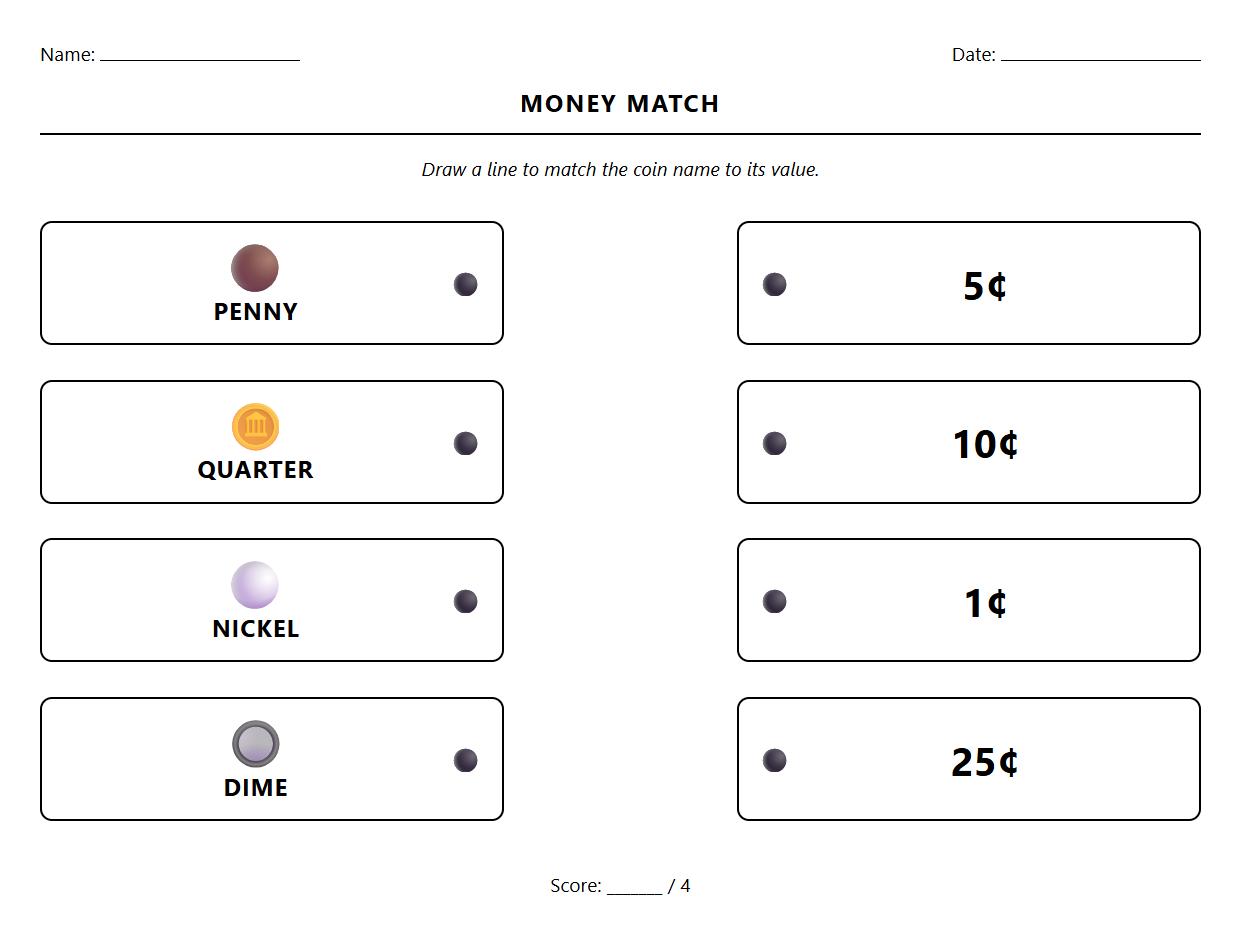
Coin Name to Value Semantic Matching Activity

Download PDF     Pin it

Coin Feature Recognition and Classification Worksheet
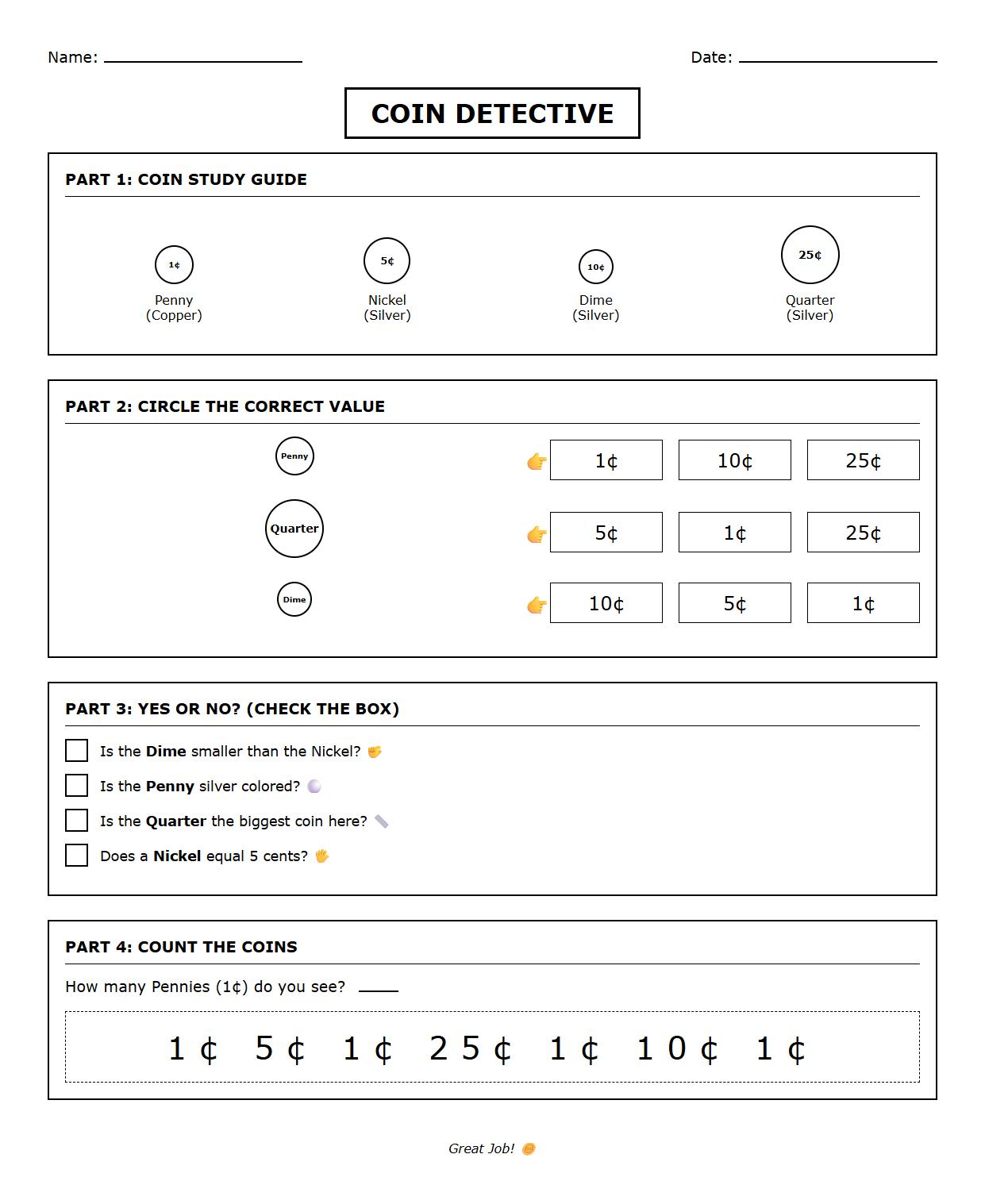
Coin Feature Recognition and Classification Worksheet

Download PDF     Pin it

Identifying Abraham Lincoln's Coin

The penny shows the picture of Abraham Lincoln. This coin is used daily and is an important part of learning about U.S. currency. Help children recognize the penny by its unique design. Teaching this helps build their money identification skills early on.

Matching Coins to Their Values

Children practice matching each coin to its correct value to reinforce number skills. Use worksheets that display coins alongside their values, encouraging learners to pair them correctly. This activity enhances both coin recognition and counting abilities efficiently.

Identifying the Largest Coin

The half dollar is the biggest coin in size commonly found in U.S. currency sets. By comparing sizes, children develop visual discrimination and size comparison skills. Encourage kids to place coins from largest to smallest for better understanding.

Finding the Five Cent Coin

The nickel is worth five cents and is larger than a dime but smaller than a quarter. Asking kids to find this coin helps them distinguish between different coins and their values. It also supports learning through interactive and engaging activities.

Connecting Coins to Their Names

Drawing lines to match each coin with its name helps strengthen early reading and recognition skills. This activity combines fine motor practice with cognitive learning. It's a fun way for children to connect visual images and words.

Comparing Size: Dime vs. Penny

The dime is smaller than the penny despite being worth more. Highlighting this fact helps children understand that size does not always indicate value. This comparison promotes critical thinking about money, as well as number sense.

Circling the One Cent Coin

Ask children to circle the penny, which is worth one cent. This simple task boosts attention to detail and strengthens coin recognition. It also reinforces understanding of coin values in a visual way, similar to visual data organization.

Identifying the Copper-Colored Coin

The penny is the only copper-colored coin commonly used in circulation. Recognizing its color makes the penny easier to identify for young learners. Color-based learning aids memory and classification skills.

Matching Coins to Buyable Items

Help children learn value by matching each coin to an item they can purchase with it. This practical approach links money to real-world use, enhancing both math and life skills. It makes learning meaningful and contextual.

Coloring Quarters and Leaving Others Blank

Coloring only the quarters encourages attention to detail and reinforces coin identification. Leaving other coins blank helps kids focus on one coin at a time. This selective coloring task supports concentration and fine motor skills.


More in Mathematics Category


About the author. Nylen Smith is a dedicated educator and cofounder of KWorksheet.com, a popular platform specializing in high-quality kindergarten worksheets and printable activities.

Disclaimer. The information provided in this document is for general informational purposes and/or document sample only and is not guaranteed to be factually right or complete. Please report to us via contact-us page if you find and error in this page, thanks.

Comments

No comment yet