Kindergarten Coin Sorting Activities for Early Math Skills

📅 May 22, 2025 👤 Nylen Smith

Kindergarten coin sorting activities enhance early math skills by teaching children to recognize different coins and their values, fostering counting and categorization abilities. These hands-on exercises support fine motor development and lay a foundation for financial literacy. Explore our engaging worksheets to make learning coin sorting fun and effective for young learners.

Coin Identification Worksheet featuring images of pennies, nickels, dimes, and quarters
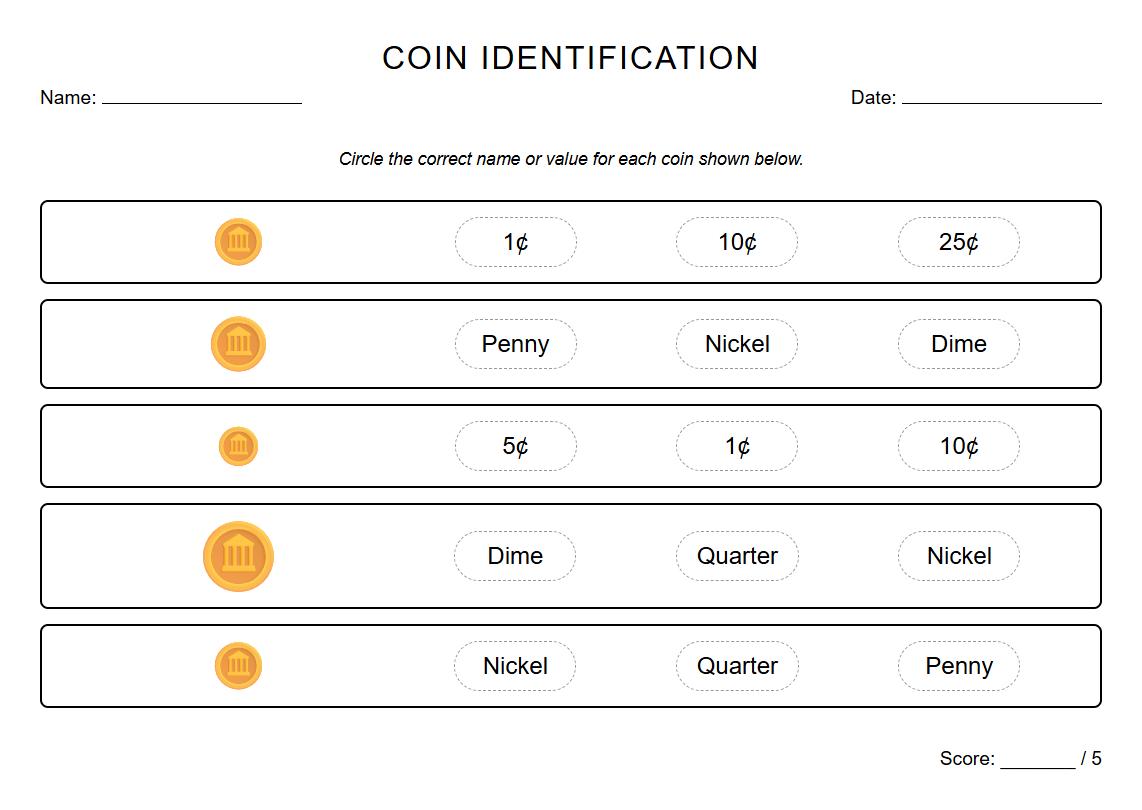
Coin Identification Worksheet featuring images of pennies, nickels, dimes, and quarters

Download PDF     Pin it

Coin Value Matching Sheet using visual discrimination and numerical recognition
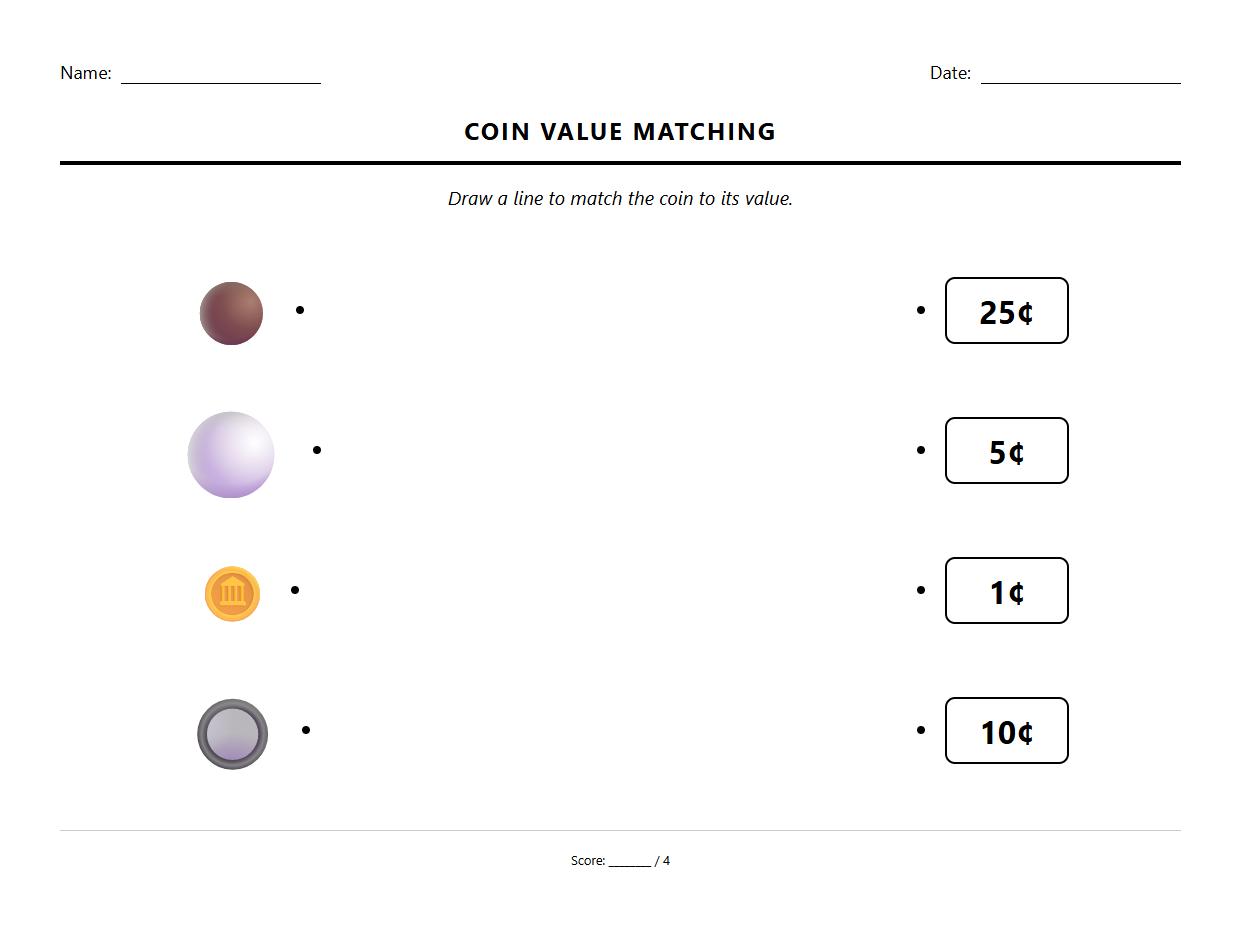
Coin Value Matching Sheet using visual discrimination and numerical recognition

Download PDF     Pin it

Hands On Coin Sorting Mat for classifying by denomination
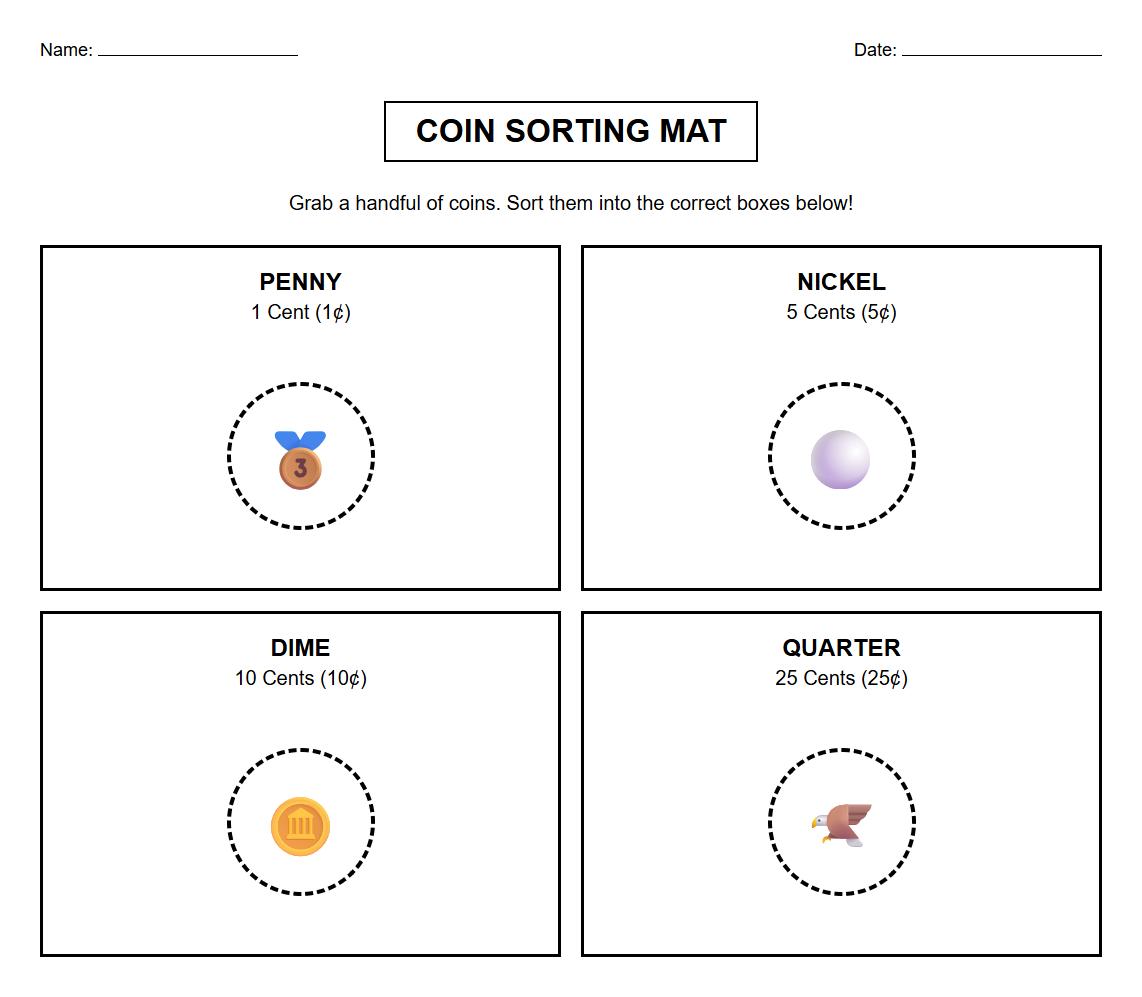
Hands On Coin Sorting Mat for classifying by denomination

Download PDF     Pin it

Coin Counting Practice Sheet incorporating basic addition and skip counting
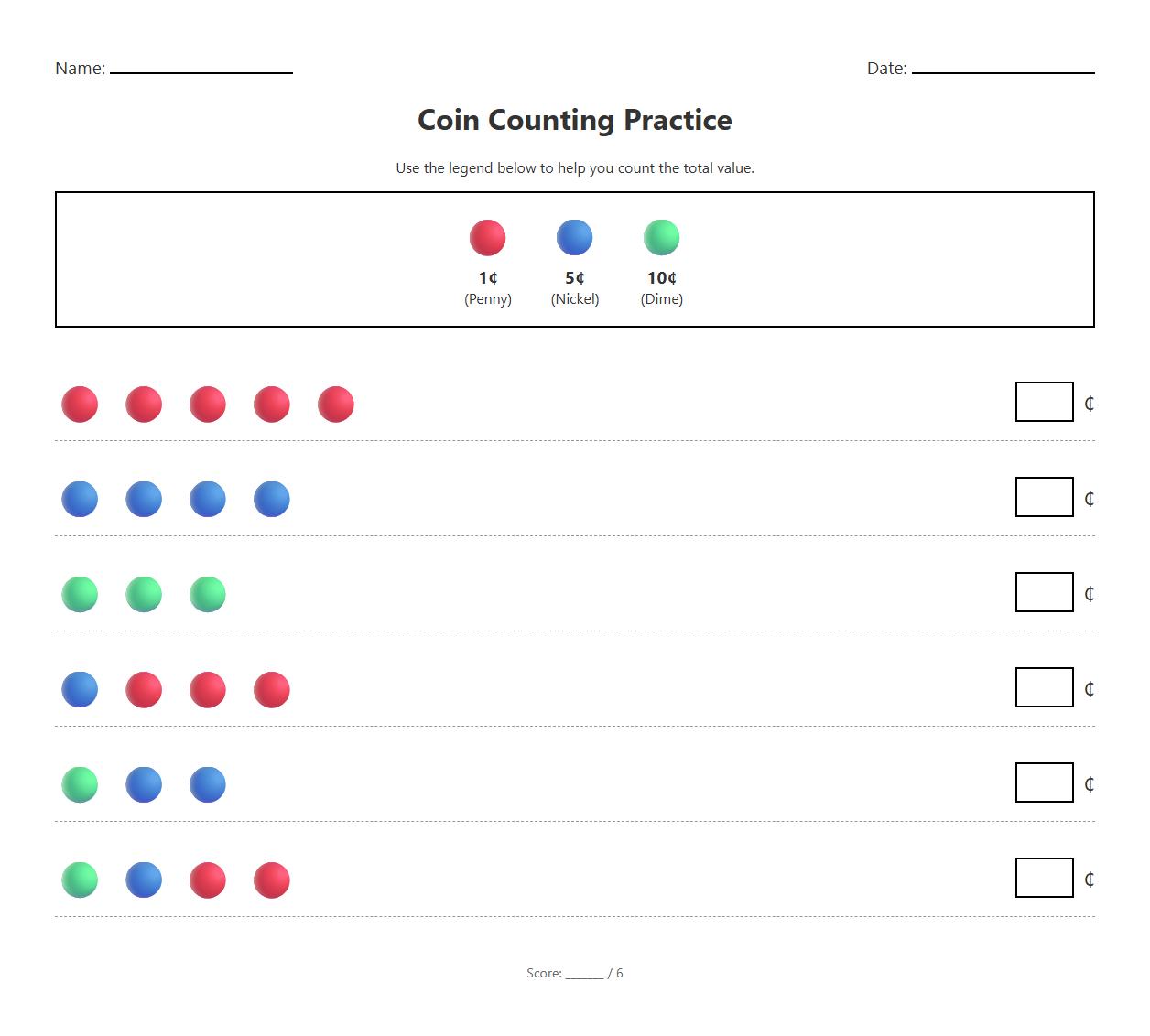
Coin Counting Practice Sheet incorporating basic addition and skip counting

Download PDF     Pin it

Graphing Coins Activity integrating data analysis skills
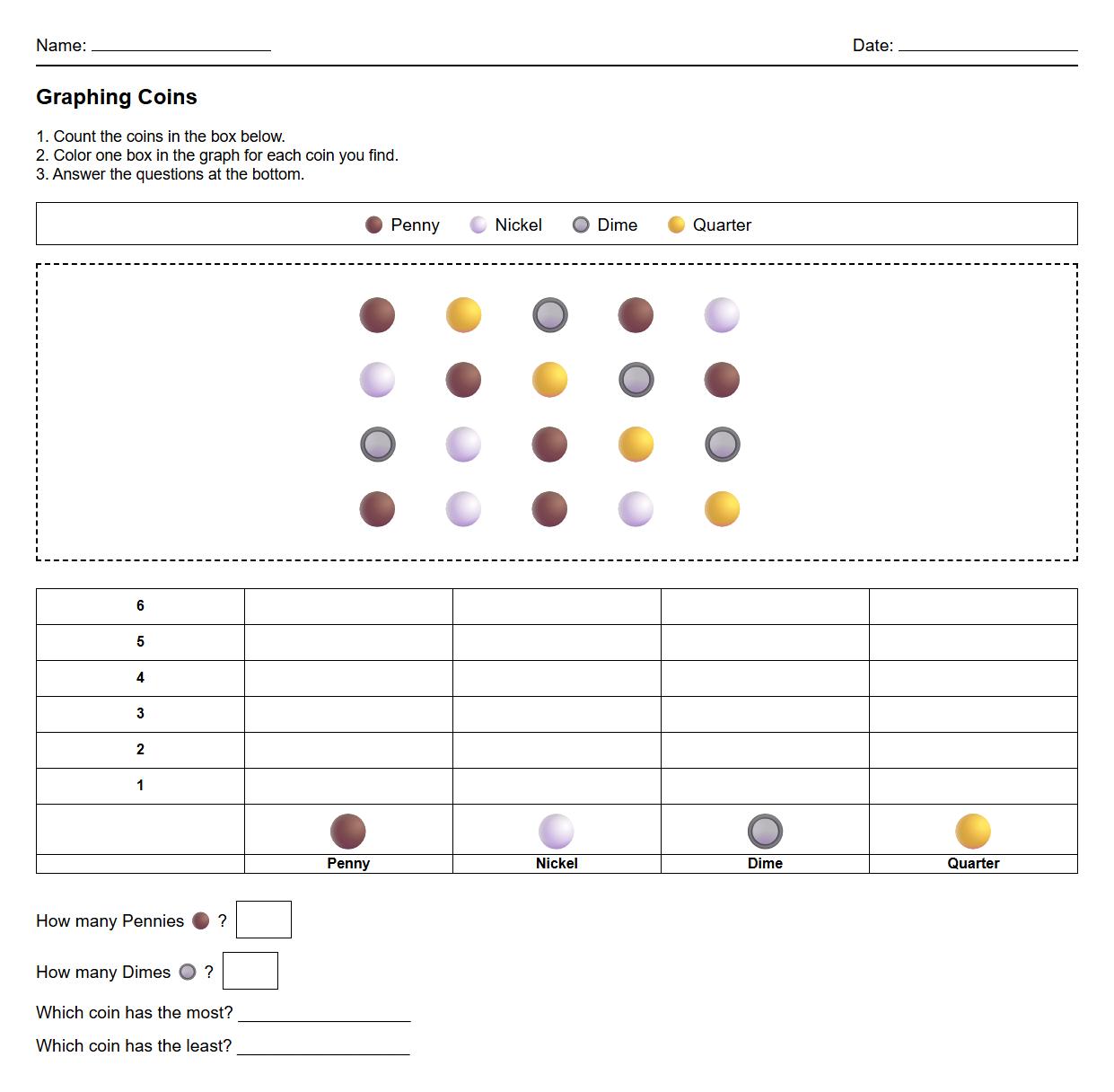
Graphing Coins Activity integrating data analysis skills

Download PDF     Pin it

Coin Patterning Exercise for recognizing and creating AB or ABC patterns
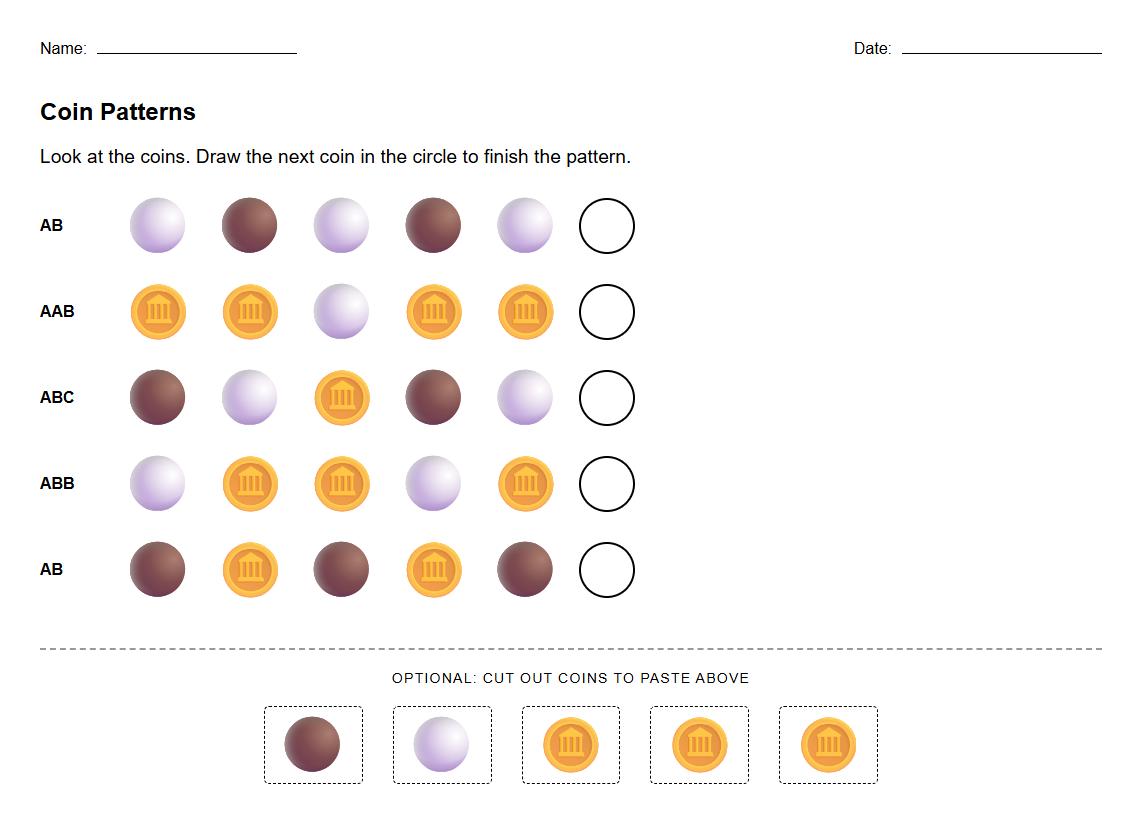
Coin Patterning Exercise for recognizing and creating AB or ABC patterns

Download PDF     Pin it

Coin Comparison Chart using greater than, less than, and equal symbols
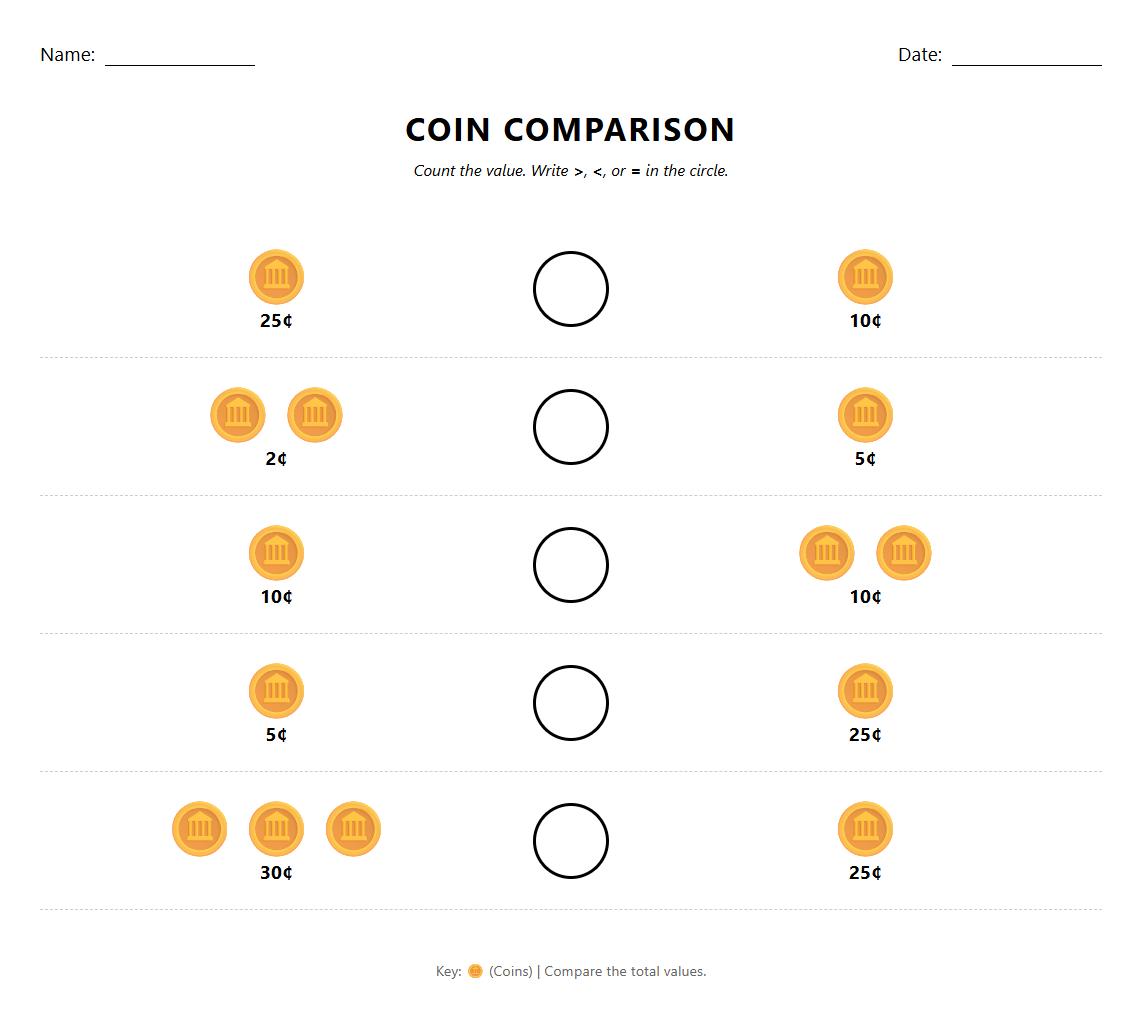
Coin Comparison Chart using greater than, less than, and equal symbols

Download PDF     Pin it

Color by Coin Phonics Activity associating beginning sound of coin names
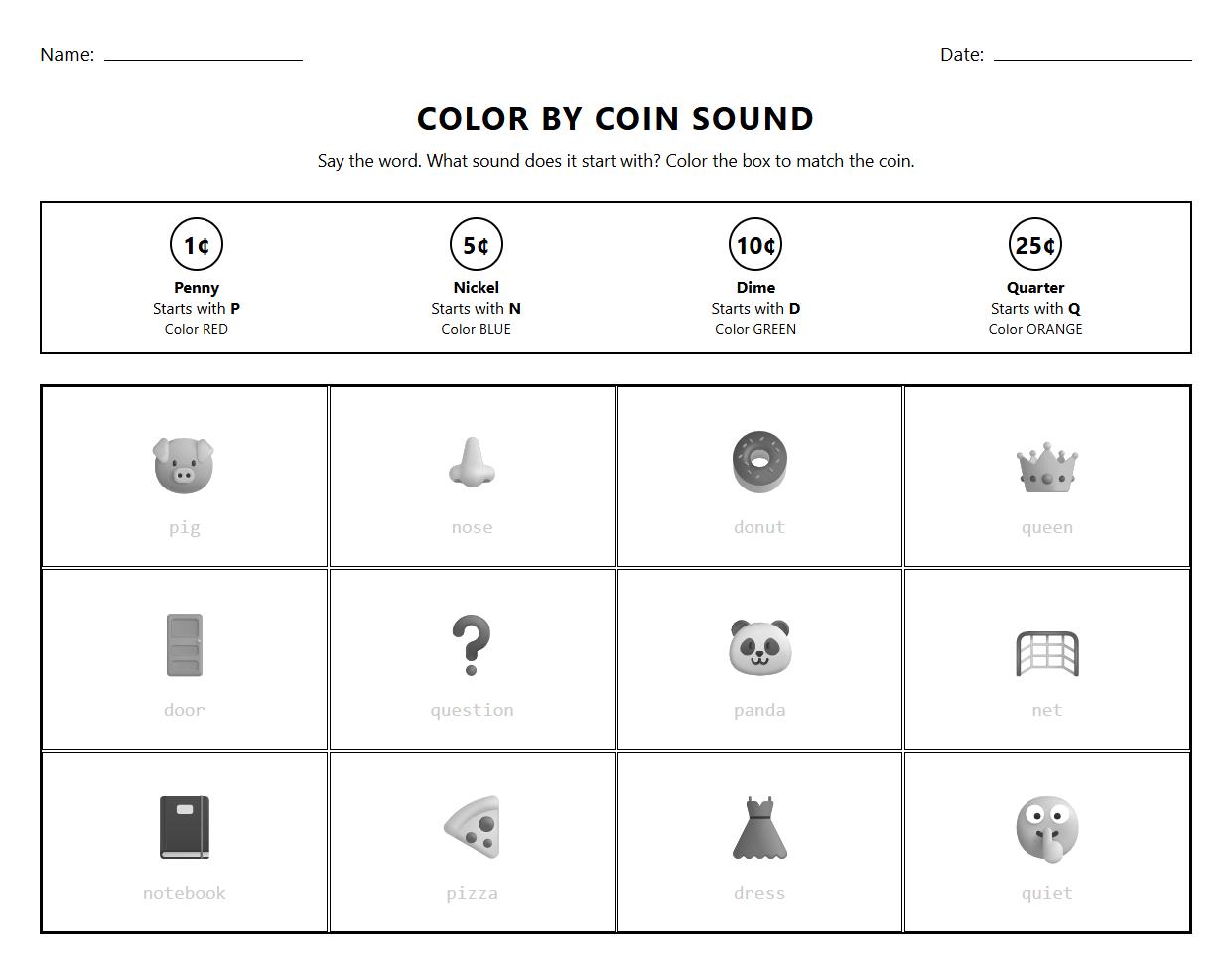
Color by Coin Phonics Activity associating beginning sound of coin names

Download PDF     Pin it

Coin Sorting Cut and Paste using fine motor and categorization
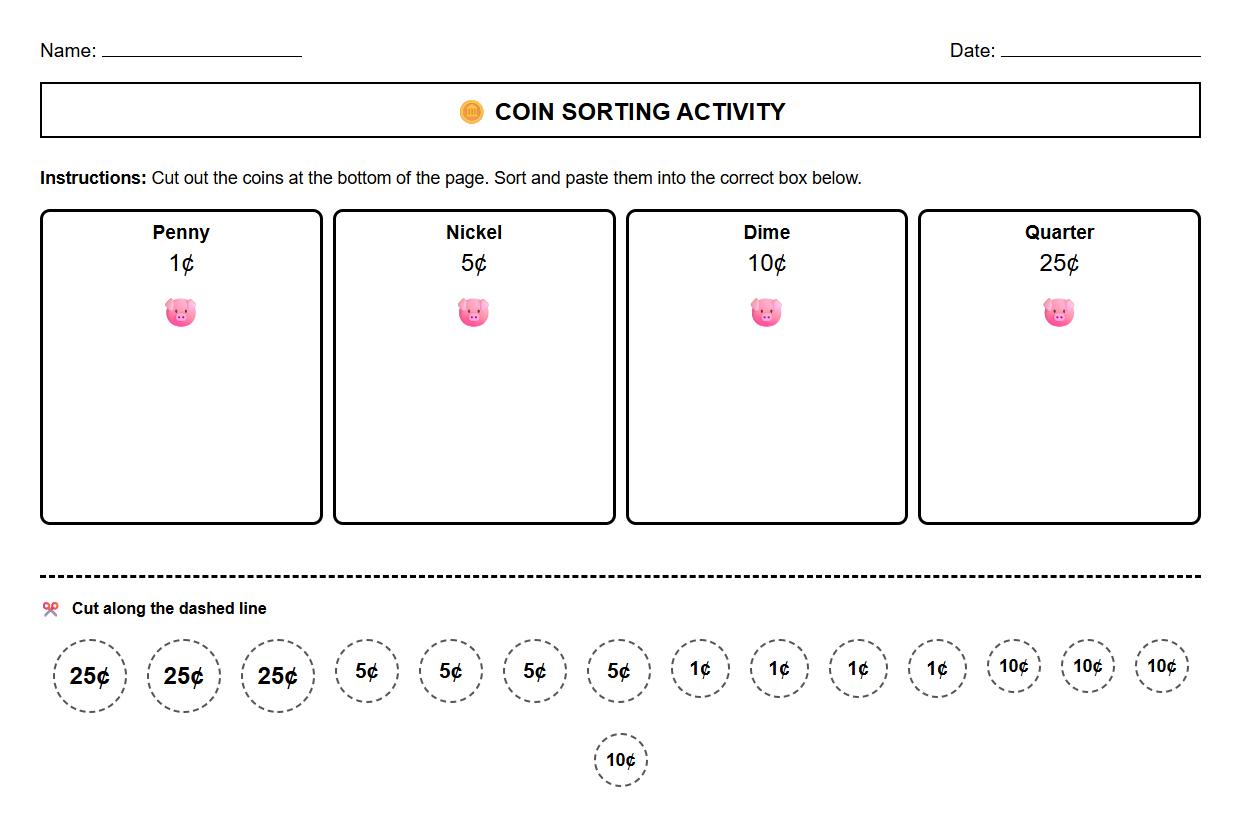
Coin Sorting Cut and Paste using fine motor and categorization

Download PDF     Pin it

Real World Coin Sorting Scenario for practical application and critical thinking
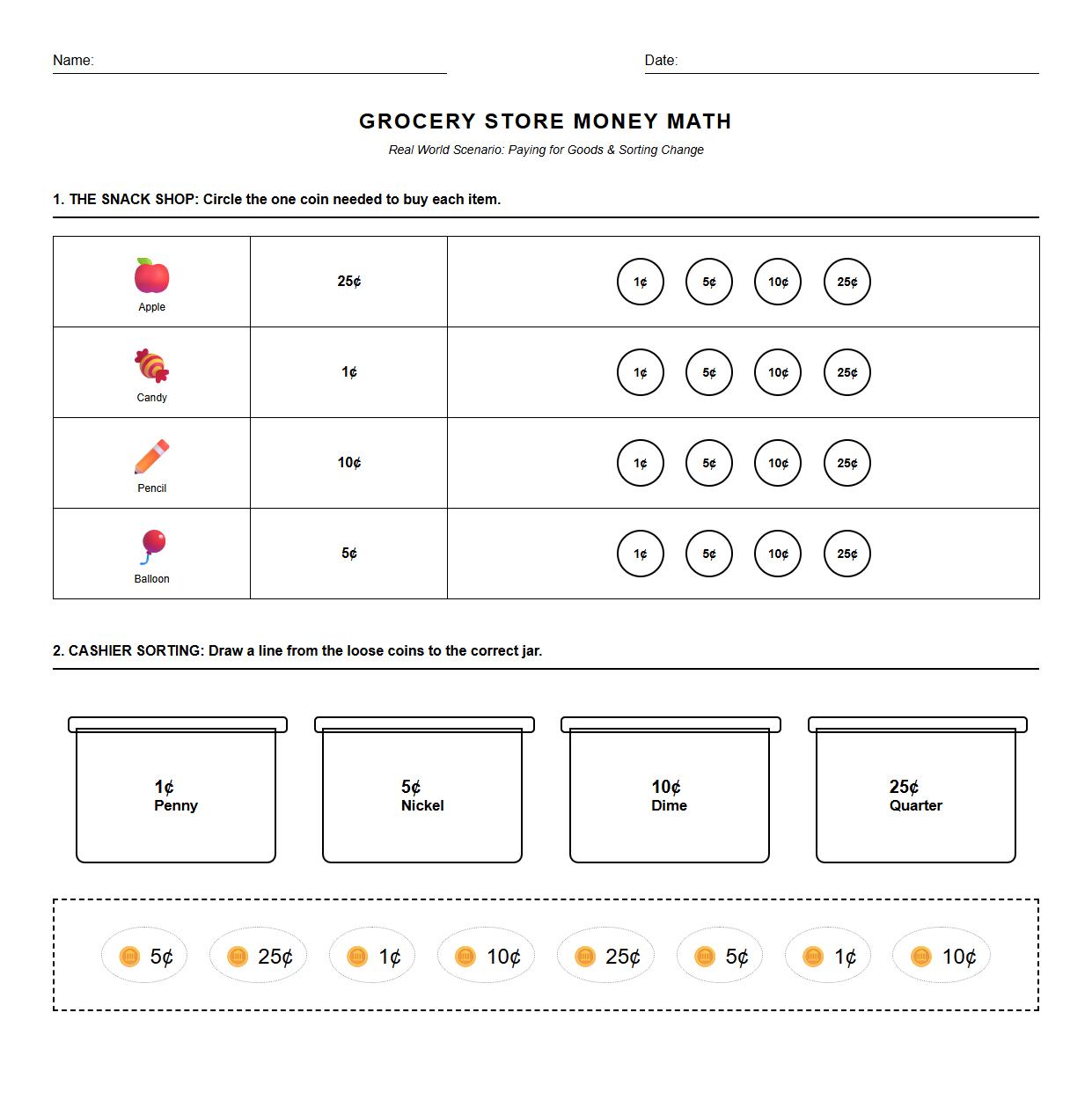
Real World Coin Sorting Scenario for practical application and critical thinking

Download PDF     Pin it

Fun Coin Sorting Games for Kindergarten Students

Engage children with coin sorting games such as "Coin Match," where students match coins to pictures or values, and "Coin Hunt," where they search for coins hidden around the room. Another popular game is "Coin Toss," where kids categorize coins based on size or color after tossing them into bins. These games combine play with learning to keep young learners excited about coin recognition and sorting.

How Coin Sorting Helps Develop Early Math Skills

Coin sorting enhances early math skills by encouraging pattern recognition, classification, and comparison. Children learn to differentiate coins by size, color, and value, which promotes understanding of numerical concepts. Additionally, sorting supports fine motor skills as kids handle small objects carefully. This activity also lays the foundation for addition and subtraction by grouping coins according to their values.

Best Coins to Start Sorting Activities in Kindergarten

Begin with easy-to-identify coins such as the penny, nickel, and dime, which differ in size, color, and value. These coins provide clear visual and tactile differences that simplify sorting tasks for young learners. Introducing fewer coin types at first avoids confusion and builds confidence. Gradually, more complex coins like quarters can be added to expand their skills.

Creating Hands-On Coin Sorting Stations for Teachers

Teachers can set up hands-on sorting stations by providing labeled trays or containers for each type of coin. Including magnifying glasses and sorting mats helps students focus on details and organize coins systematically. Clear instructions and visuals support independent learning, while rotating materials keeps stations fresh and engaging. Group activities at these stations also encourage collaboration and discussion.

Materials Needed for a Kindergarten Coin Sorting Activity

Essential materials include a variety of real or play coins, sorting trays or cups, printed coin charts, and counting mats. Optional items like tweezers or small baskets can add dexterity challenges. Providing visual aids and number labels helps reinforce coin values and counting. Ensuring materials are child-safe and easy to handle is crucial for a successful activity.

Supporting Counting and Value Recognition Through Coin Sorting

Coin sorting activities promote counting skills as children count grouped coins, reinforcing number sequences. Recognizing coin values during sorting establishes a foundation for money math concepts like making change. Sorting by value also improves conceptual understanding of quantity and worth. These multisensory experiences support retention and practical money skills.

Simple Classroom Rules for Coin Sorting Exercises

Set clear rules such as handling coins gently, keeping coins on the sorting mats, and waiting turns to minimize distractions. Encourage students to stay focused on the sorting task and respect others' space. Reinforce cleanliness by putting coins away properly after activities. These guidelines create a safe, organized environment conducive to effective learning.

Frequency of Coin Sorting in the Kindergarten Math Curriculum

Including coin sorting activities weekly reinforces learning without overwhelming students. Regular practice helps solidify recognition and counting skills while keeping enthusiasm high. Teachers can integrate coin sorting into broader math lessons on numbers and patterns. Consistency is key to developing long-lasting money concepts.

How Parents Can Reinforce Coin Sorting Skills at Home

Parents can encourage coin sorting by providing a small collection of coins for play and sorting games. Involving children in real-life activities like sorting change or paying for small purchases strengthens practical understanding. Using everyday objects as sorting containers makes the learning familiar and fun. Praise and positive reinforcement boost confidence and motivation.

Assessment Methods to Track Progress in Coin Sorting Skills

Teachers can use observational checklists during activities to note students' sorting accuracy and coin recognition. Simple quizzes or matching worksheets help evaluate individual understanding. Recording counting tasks and value identification provides measurable data on progress. Informal discussions and student reflections also reveal confidence and concept mastery.


More in Mathematics Category


About the author. Nylen Smith is a dedicated educator and cofounder of KWorksheet.com, a popular platform specializing in high-quality kindergarten worksheets and printable activities.

Disclaimer. The information provided in this document is for general informational purposes and/or document sample only and is not guaranteed to be factually right or complete. Please report to us via contact-us page if you find and error in this page, thanks.

Comments

No comment yet