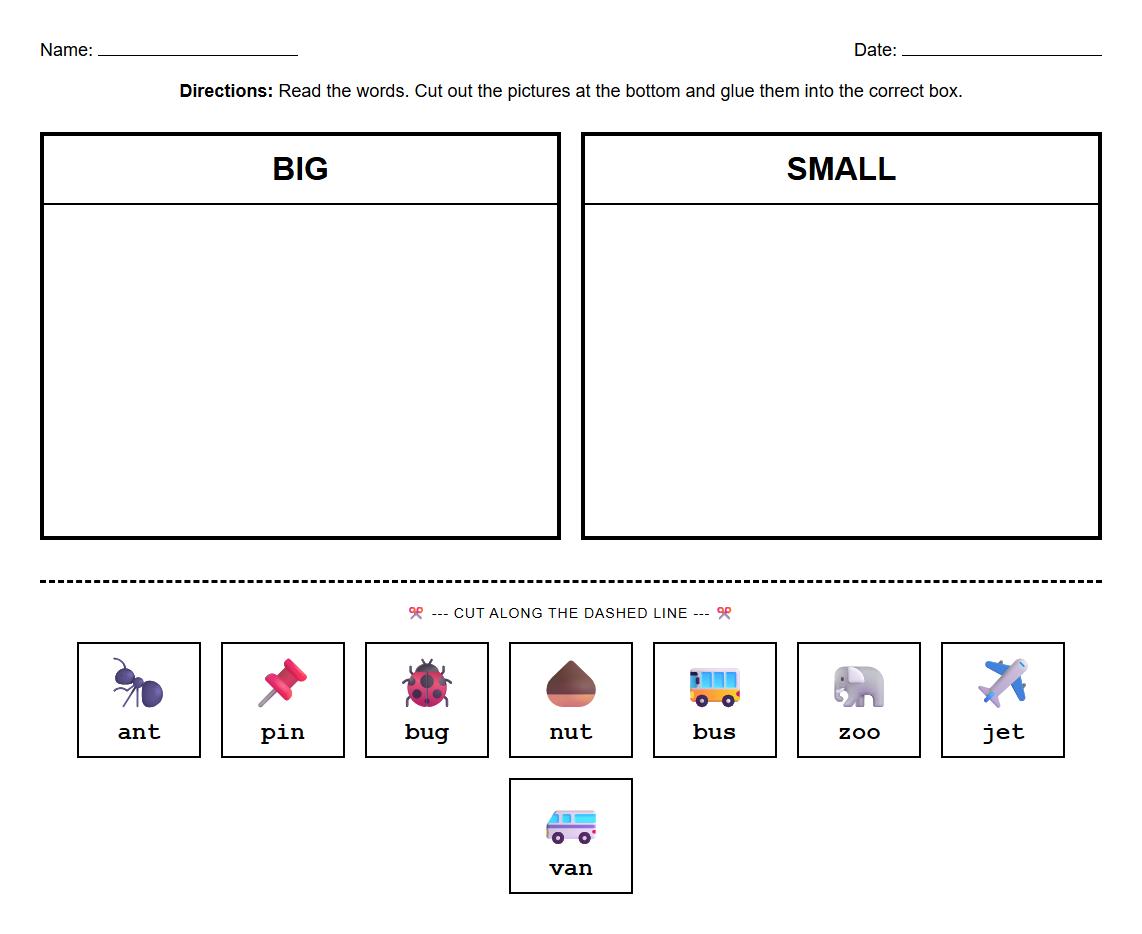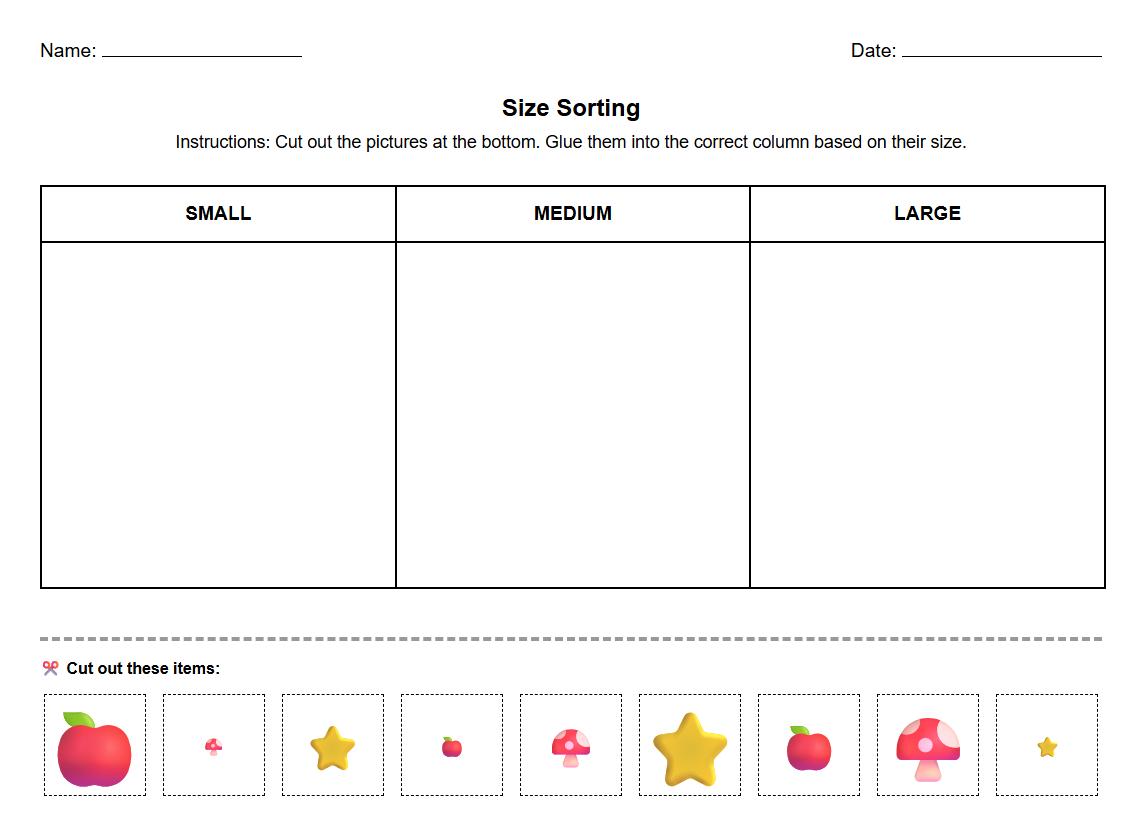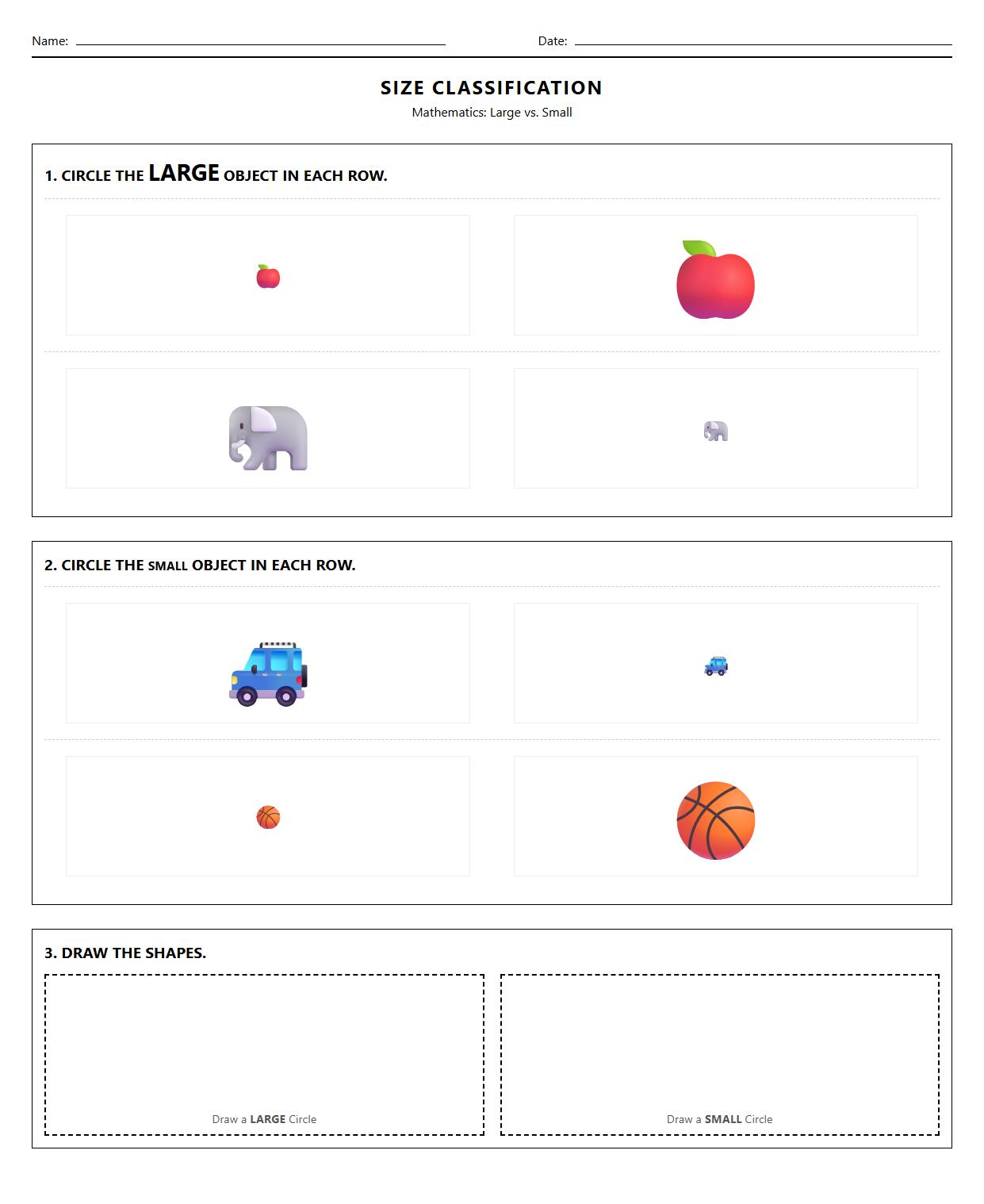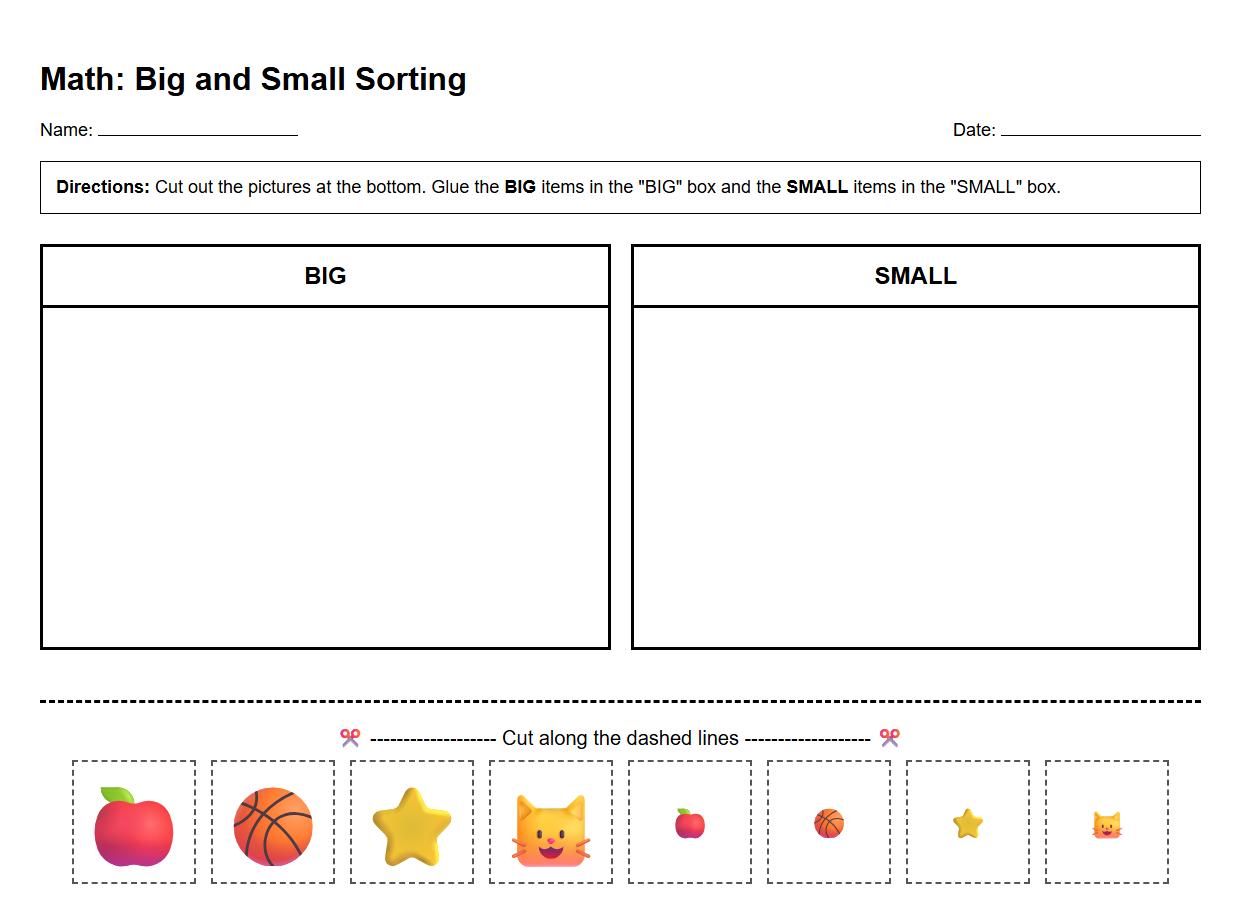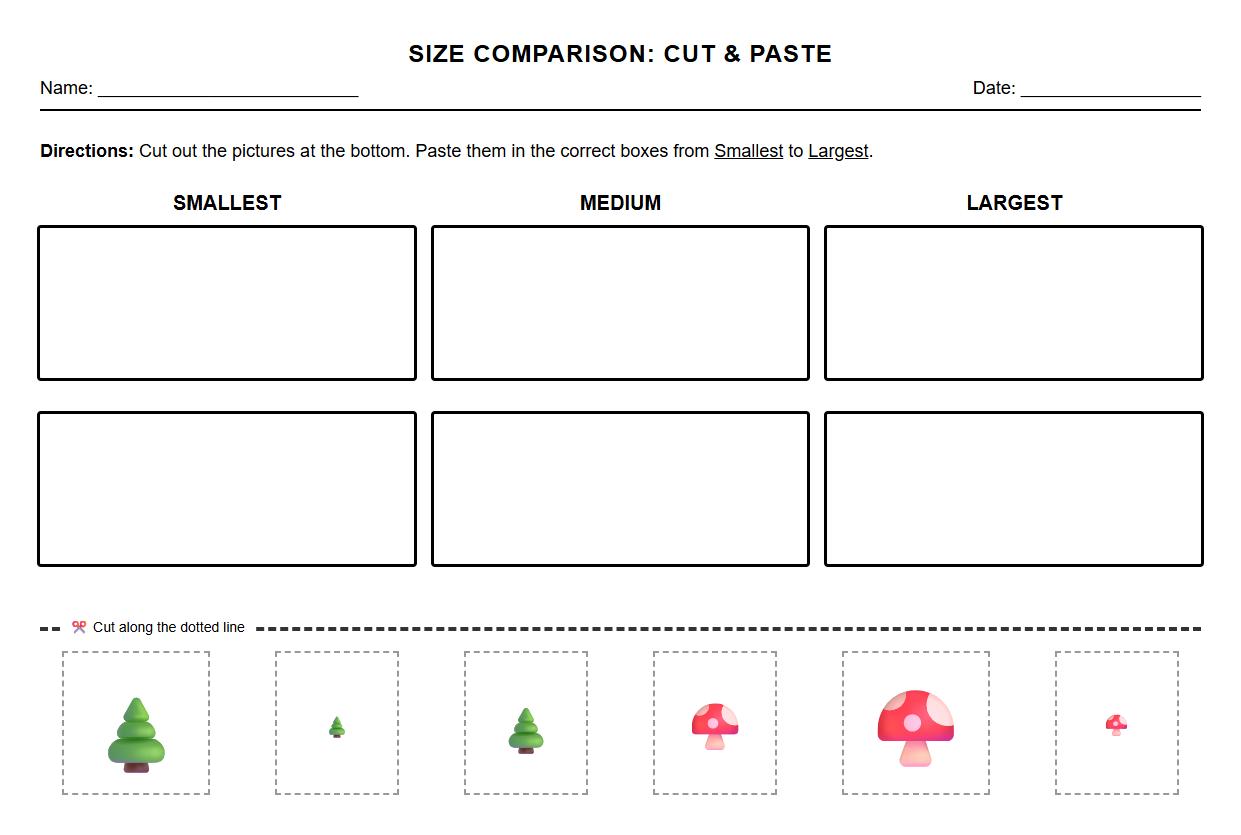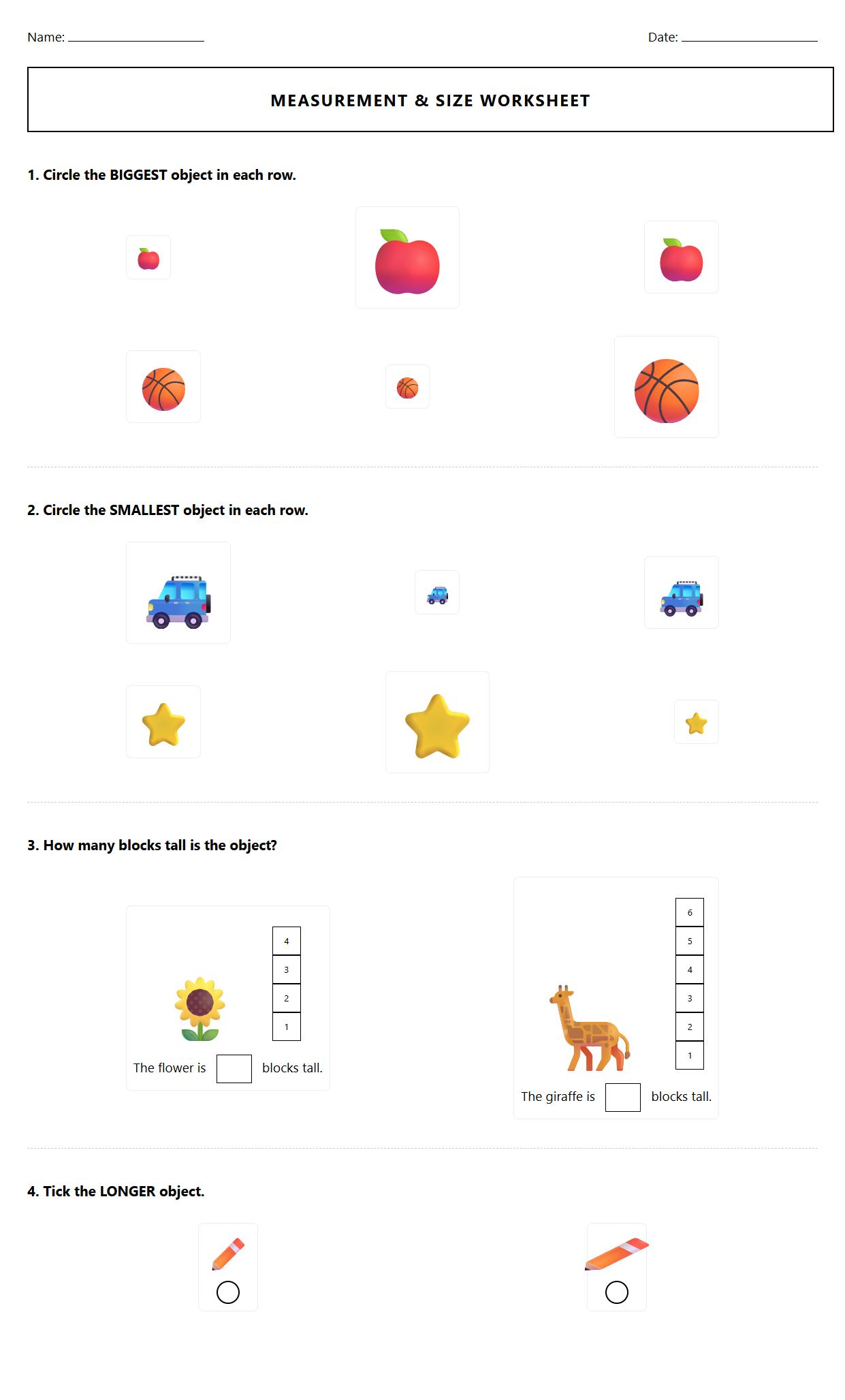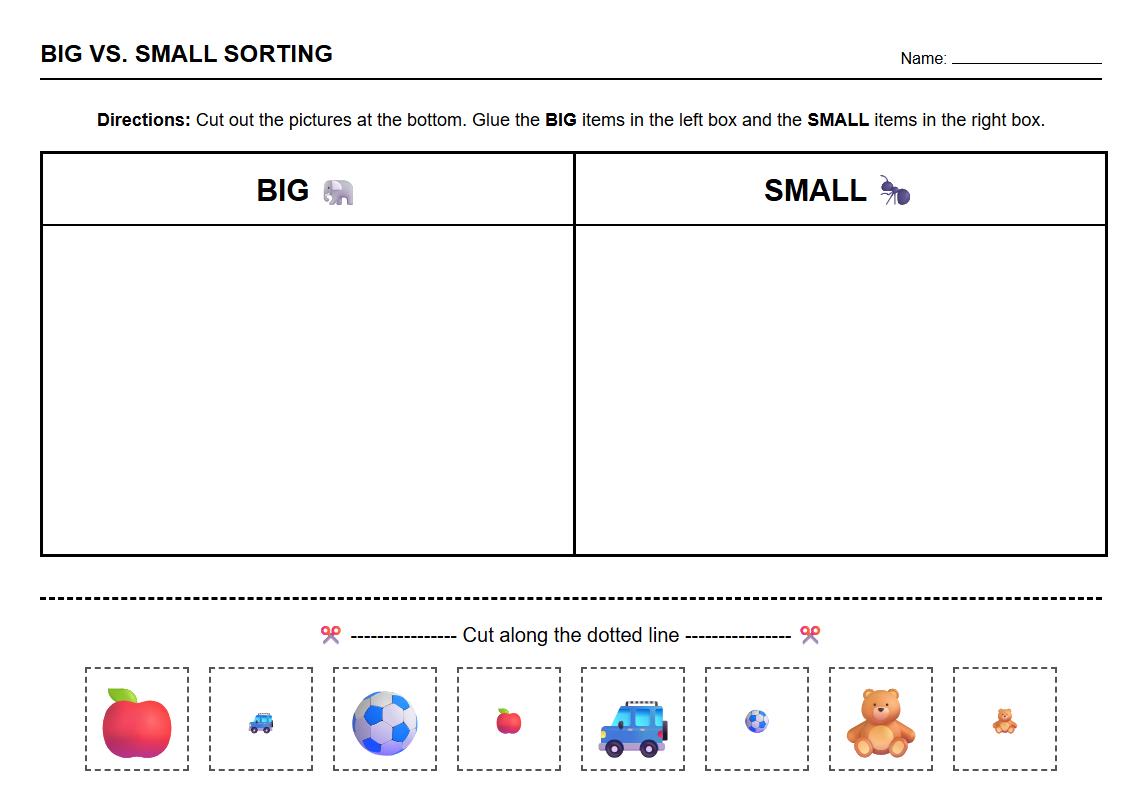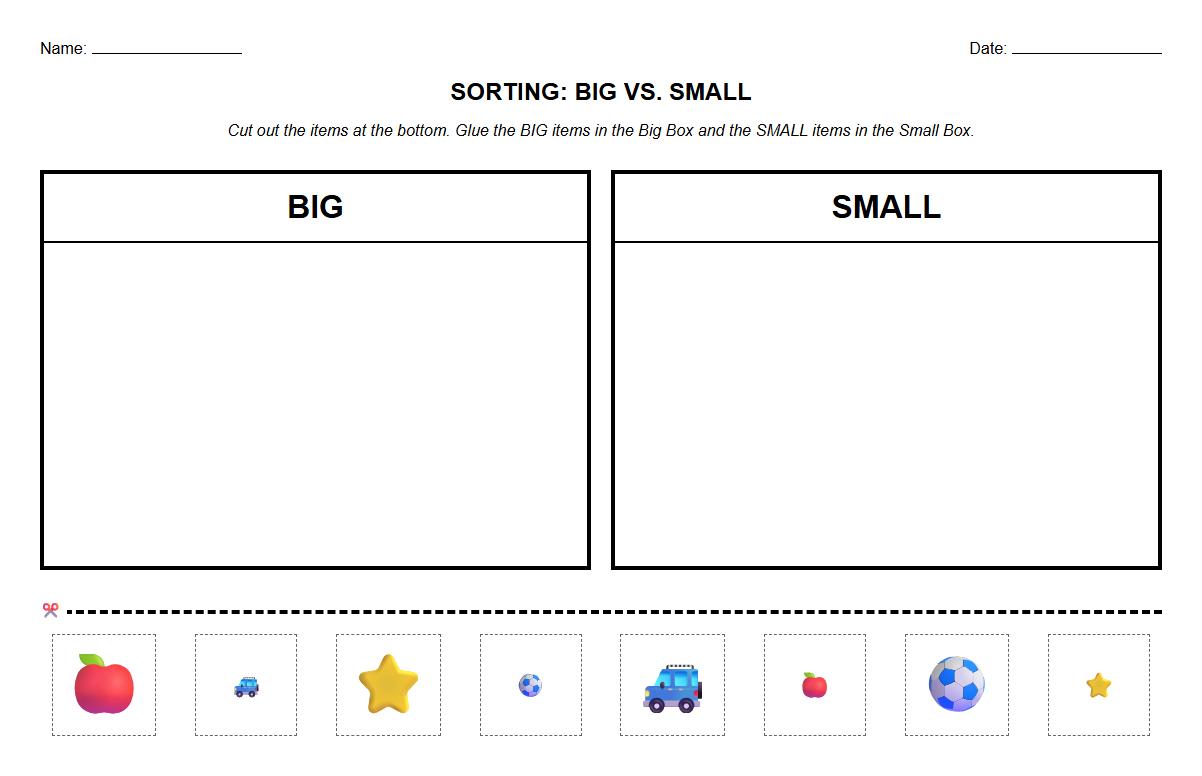
Sorting objects by size enhances young learners' ability to distinguish big from small, fostering critical thinking and categorization skills. This hands-on activity supports early math development and visual discrimination crucial for kindergarten readiness. Explore our variety of Concept Sorting Worksheets to engage your students in mastering size concepts effectively.
Understanding Big and Small Objects in the Classroom
In our classroom, some objects are big like the tables and chairs, while others are small such as pencils and erasers. Recognizing these differences helps children develop an understanding of size. Teachers and parents can guide children to observe and compare to learn this concept effectively. This worksheet is designed to make sorting easy and fun.
Sorting Pictures into Big and Small Groups
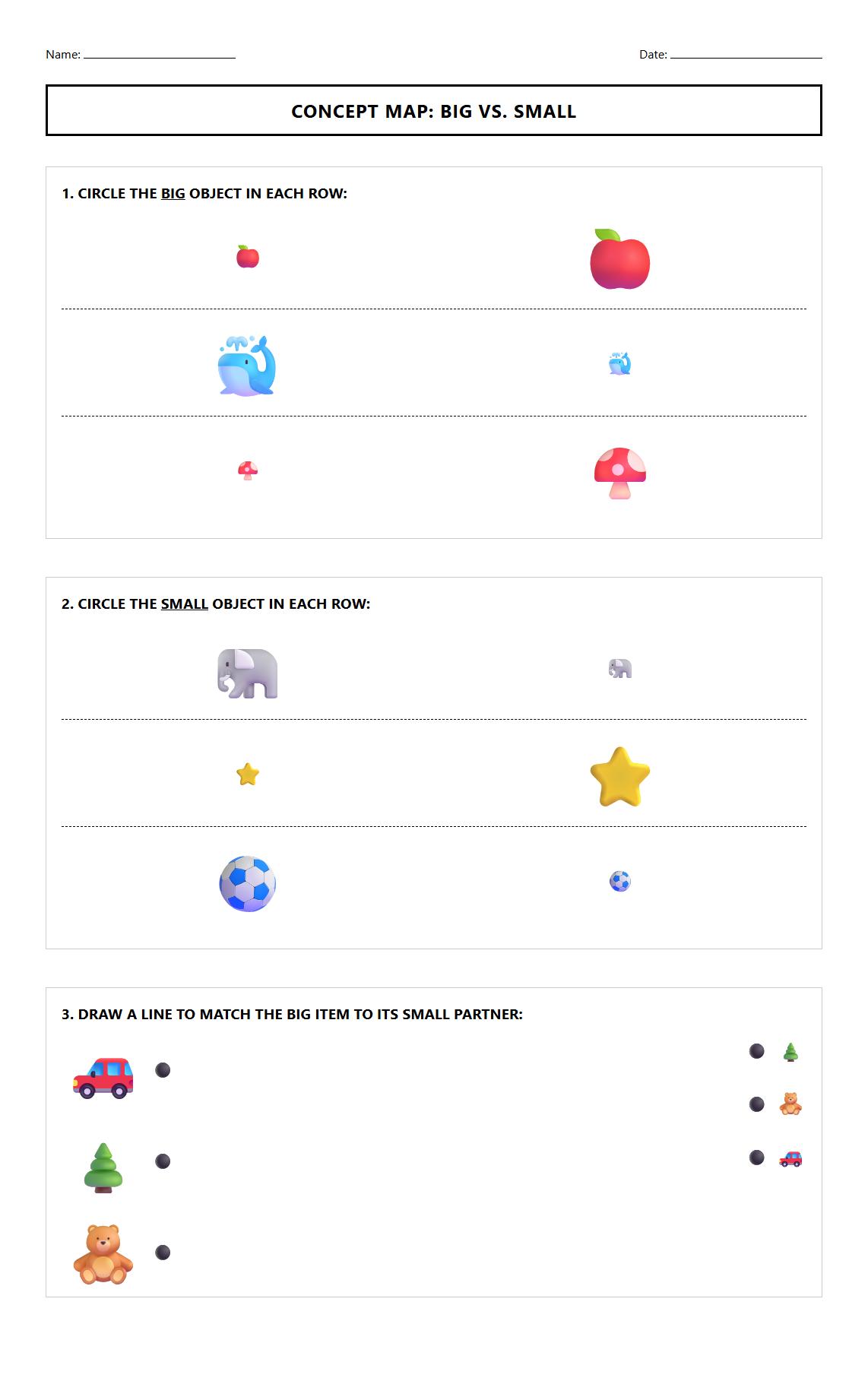
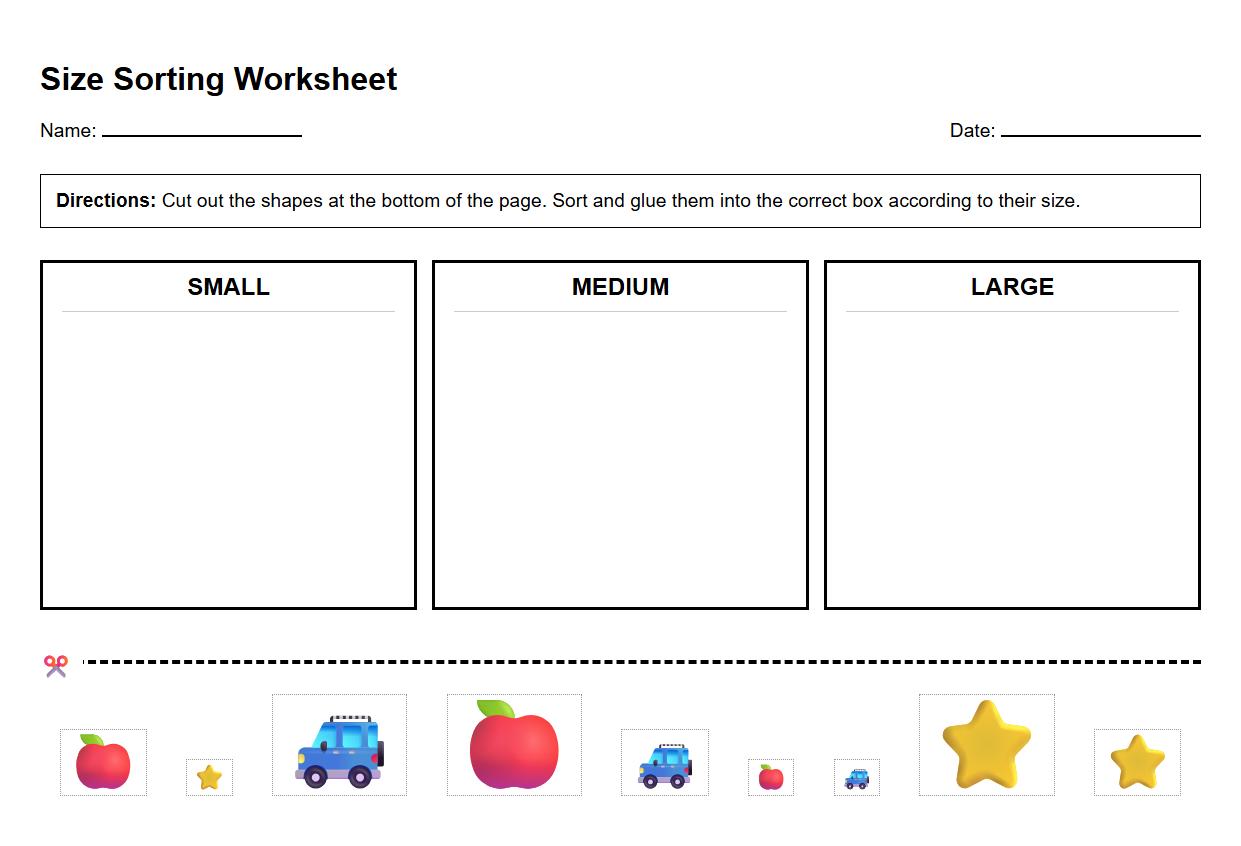
Look closely at each picture in the worksheet and decide if the object is big or small. You can sort images by placing them into two groups based on data representation and size. Sorting helps children categorize items and improves their observation skills. Encourage children to explain their choices for deeper understanding.
Identifying Big and Small Animals
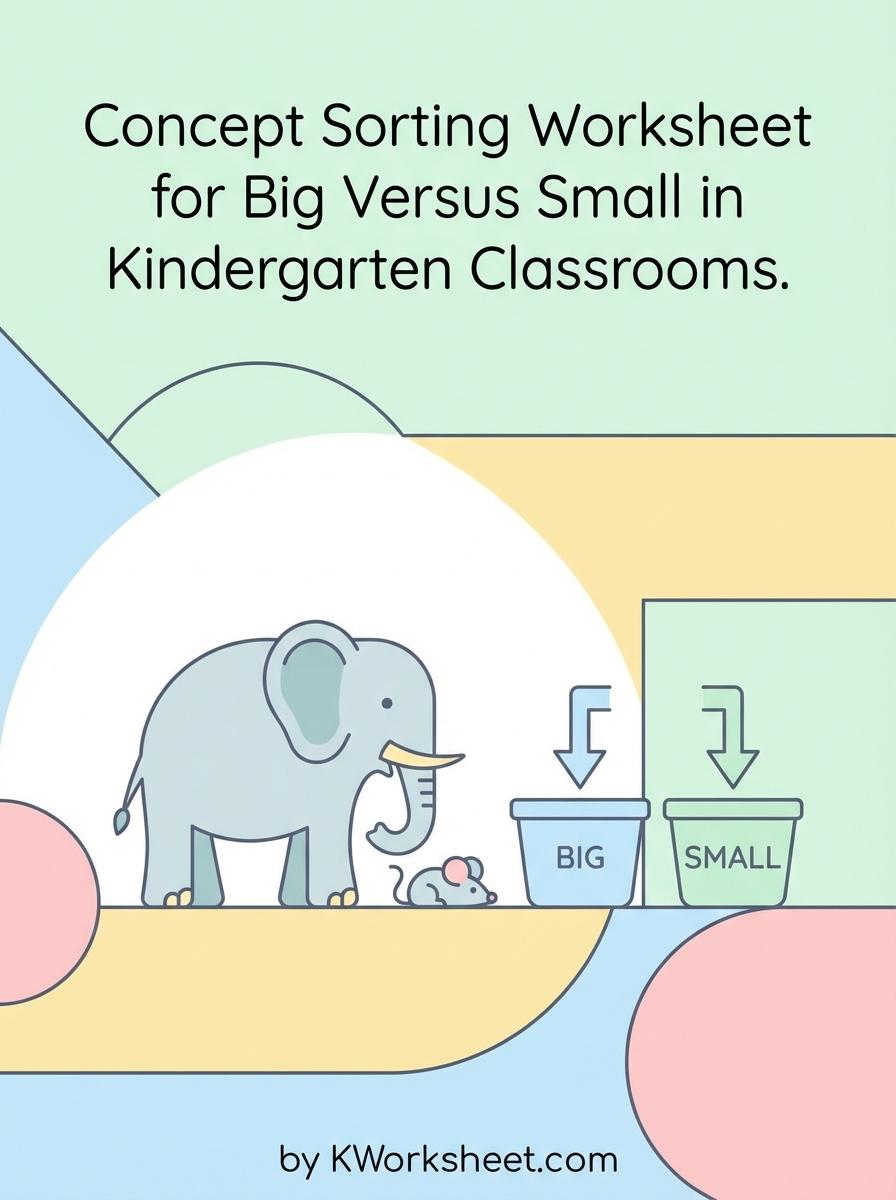
Within the worksheet, some animals are big, like an elephant, and others are small, like a mouse. We know which is big or small by looking at their size relative to each other. Discussing animal sizes helps children connect classroom learning with the real world. This makes the activity enjoyable and educational.
How to Know if Something is Big or Small
You can tell if something is big or small by comparing it to objects around it. If an item takes up more space or is taller, it is generally big; if it takes less space, it's small. Using hands or other familiar items to measure can also help children understand size. Size concepts are fundamental building blocks in early learning.
Classroom Items That Belong in the Big Category
Big items in the classroom include things like desks, shelves, and large books. These items are easy for children to spot because they are larger than most other objects. Teaching children which items are big helps them observe their environment closely. It also assists with organizing the classroom effectively.
Objects That Belong in the Small Group
Small objects in the classroom could be crayons, scissors, and stickers. These are easily handled by small hands and are often used in fine motor skill development. Sorting these smaller items separately from big items encourages attention to detail. It also supports vocabulary development as children name the objects.
Matching Big Objects with Their Small Versions
In this worksheet, children are encouraged to match items of different sizes but the same type. For example, a big ball with a small ball or a big chair with a small chair. This activity improves visual discrimination and critical thinking. Matching skills are key for early cognitive development.
Observing What Makes an Item Big
Children learn to identify big items by noticing details like size, height, and width. They can describe objects using words like tall, large, or heavy to justify their choice. Asking "What do you see that makes this item big?" encourages descriptive language. This promotes stronger communication skills alongside size recognition.
Counting How Many Big Things Are in Images
Counting the number of big items in the pictures helps children practice math and observation. This activity integrates size learning with early numeracy skills. Encouraging kids to count aloud and point to objects reinforces both concepts. It also makes learning interactive and engaging.
Why Sorting by Size is Important in Our Classroom
Sorting things by size helps children organize their thoughts and understand the world better. It enhances their ability to classify and categorize objects, which is an important cognitive skill. Size sorting also supports problem-solving and language development. These foundational skills prepare children for more complex learning ahead.


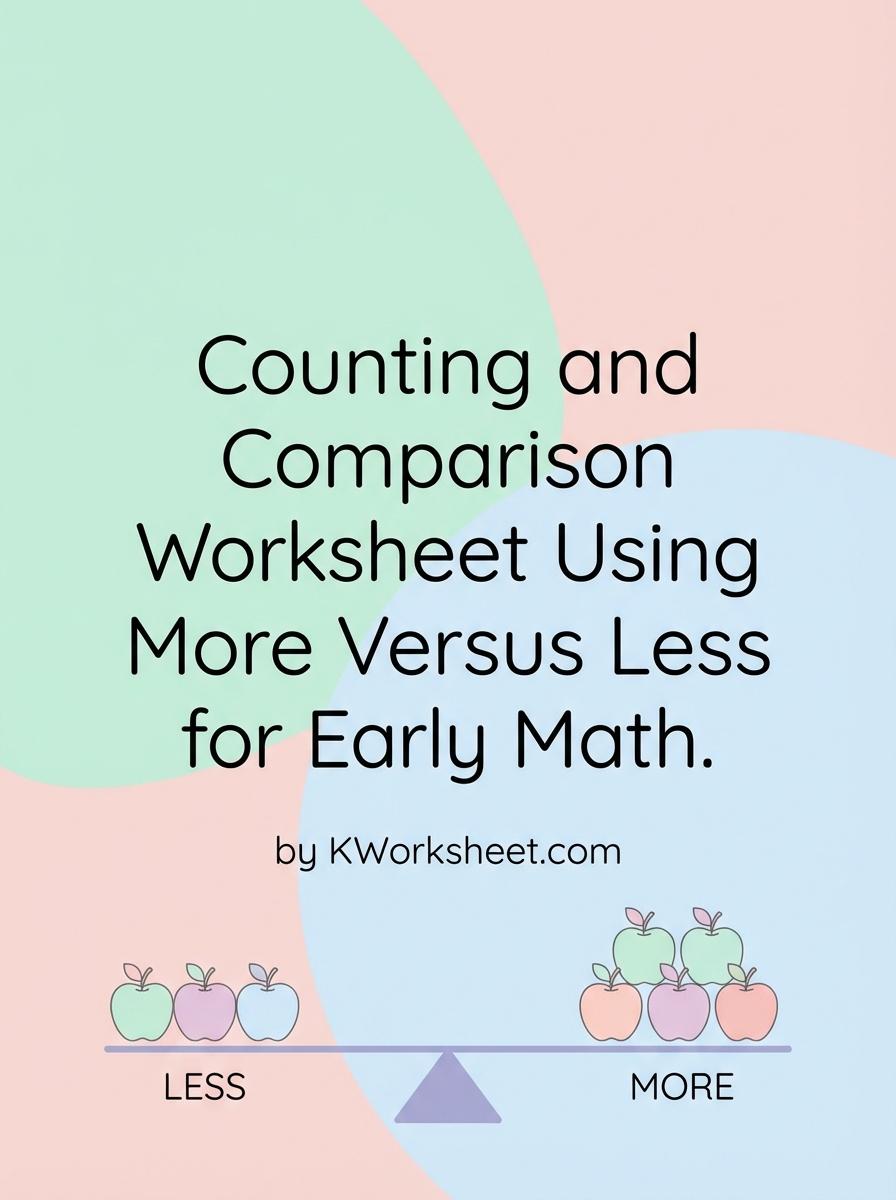
Counting and Comparison Worksheet Using More Versus Less for Early Math