Kindergarten students develop language skills by learning to describe their experiences using sensory words related to sight, sound, smell, taste, and touch. This activity enhances vocabulary and encourages observation by connecting words with the five senses. Explore the available worksheets to support sensory word exploration and early literacy development.
The Five Senses
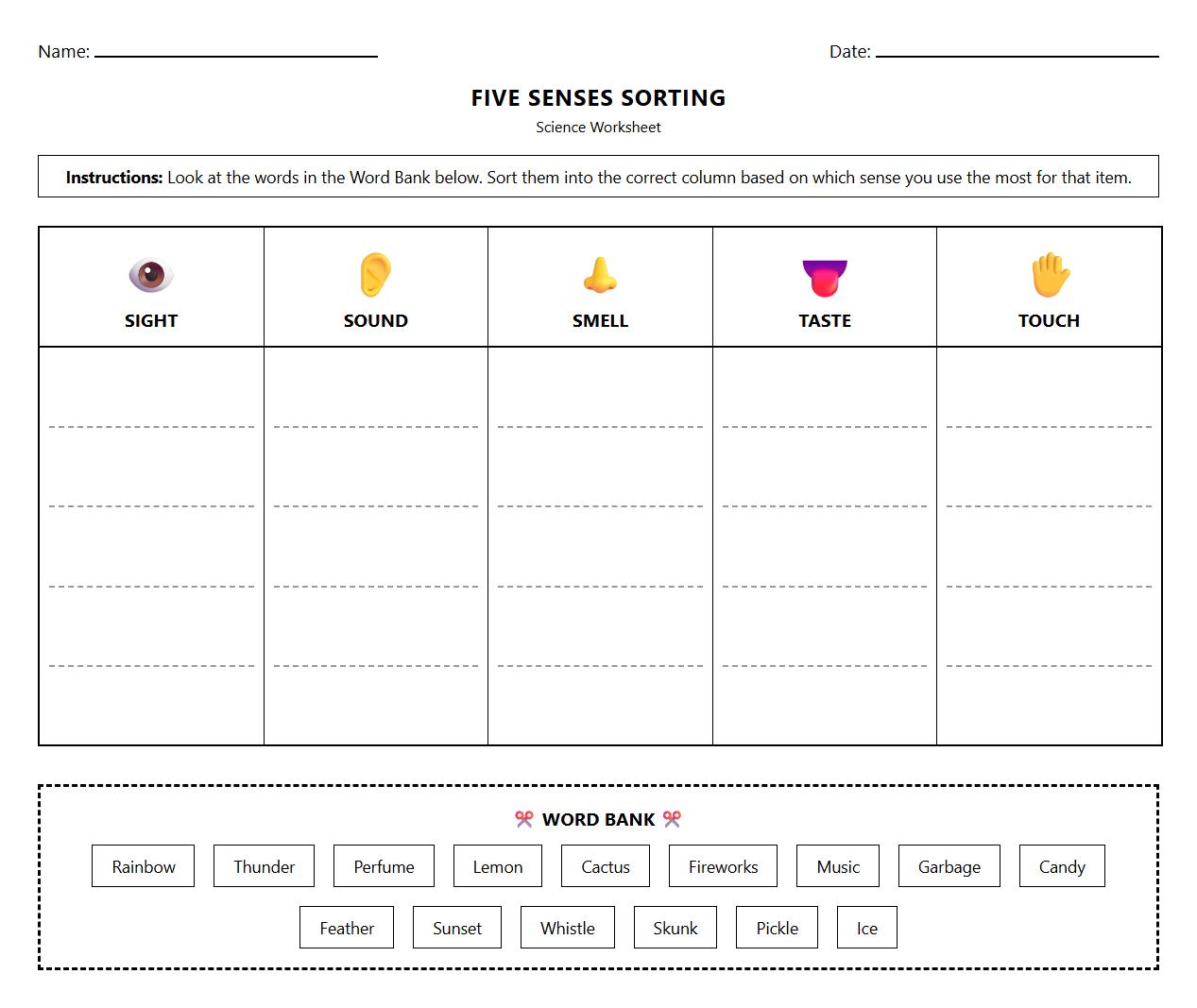
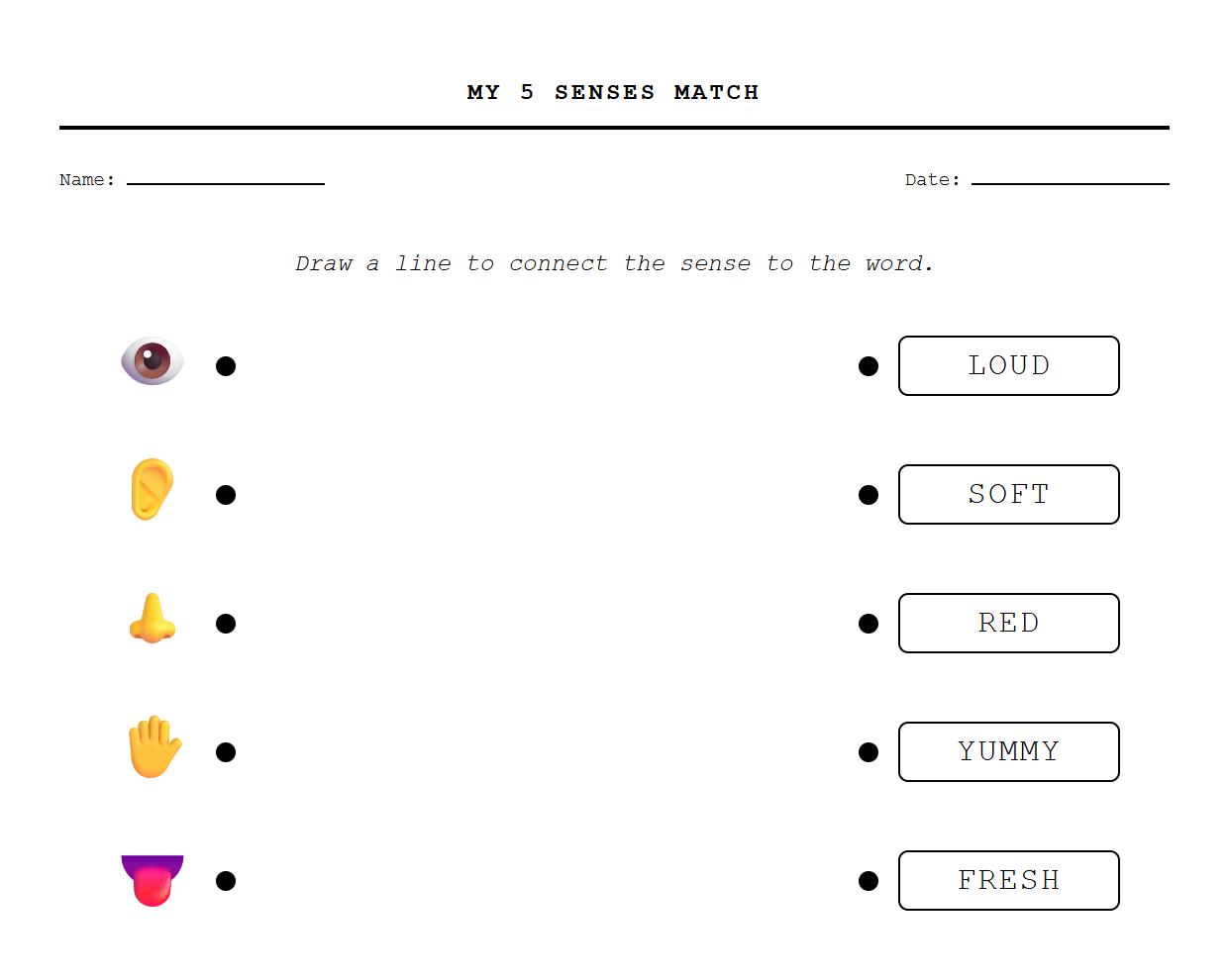
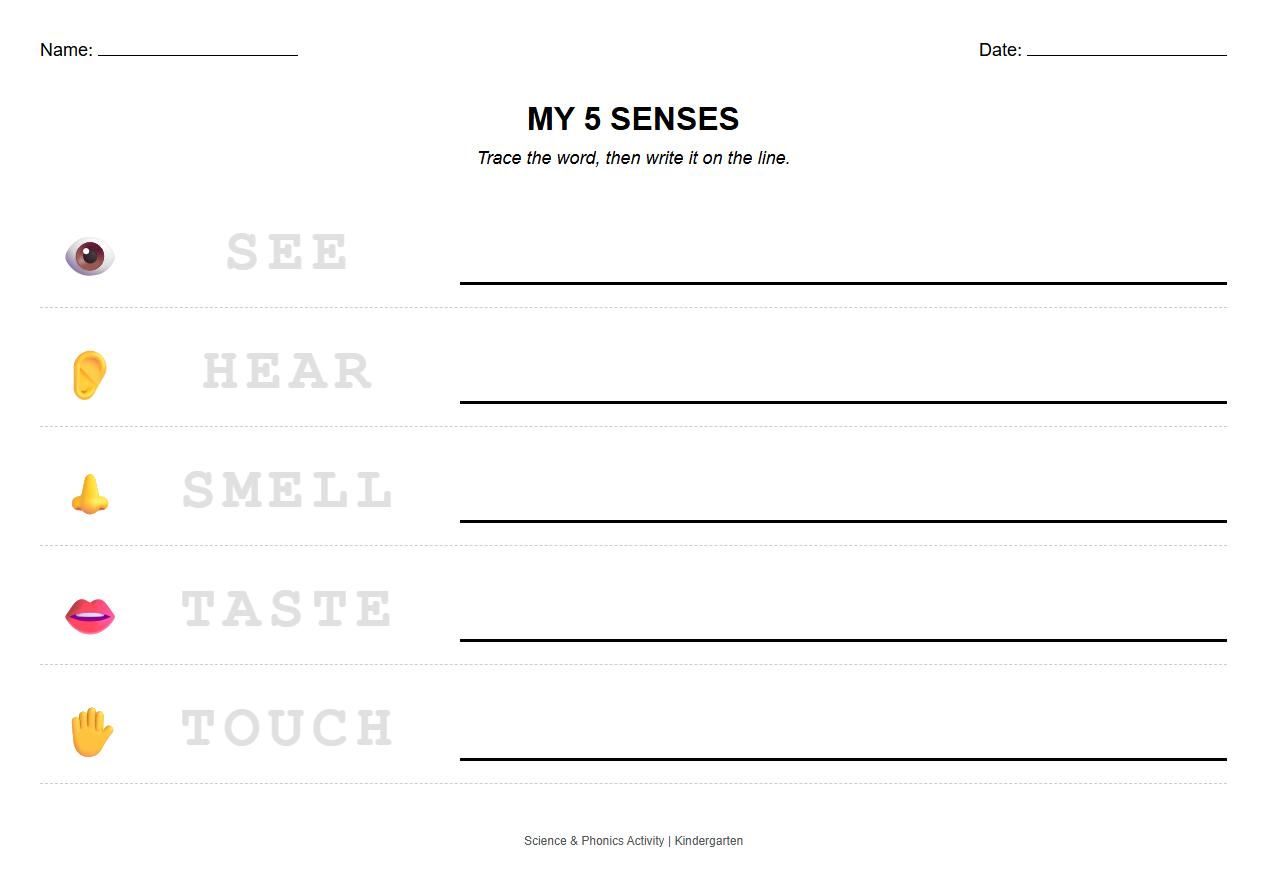
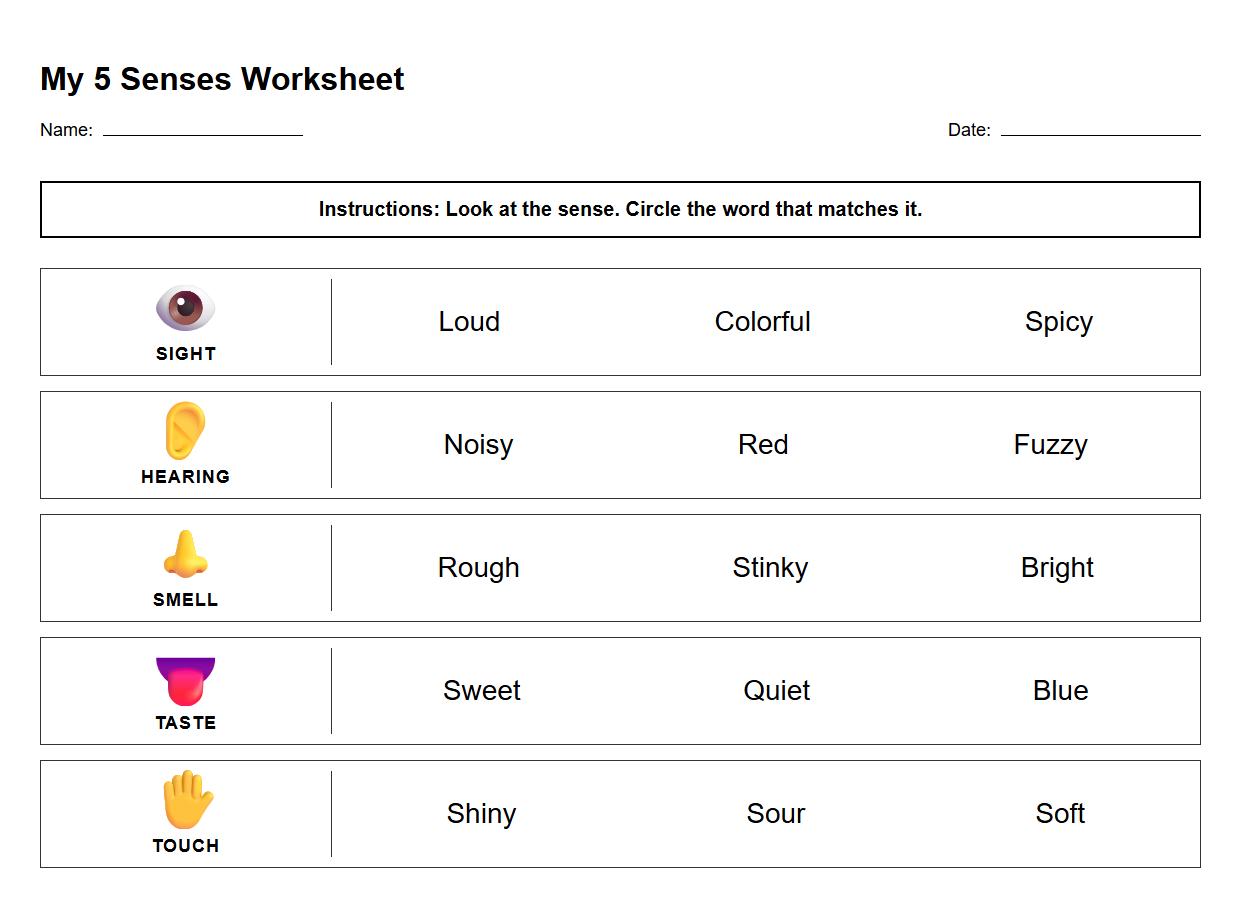
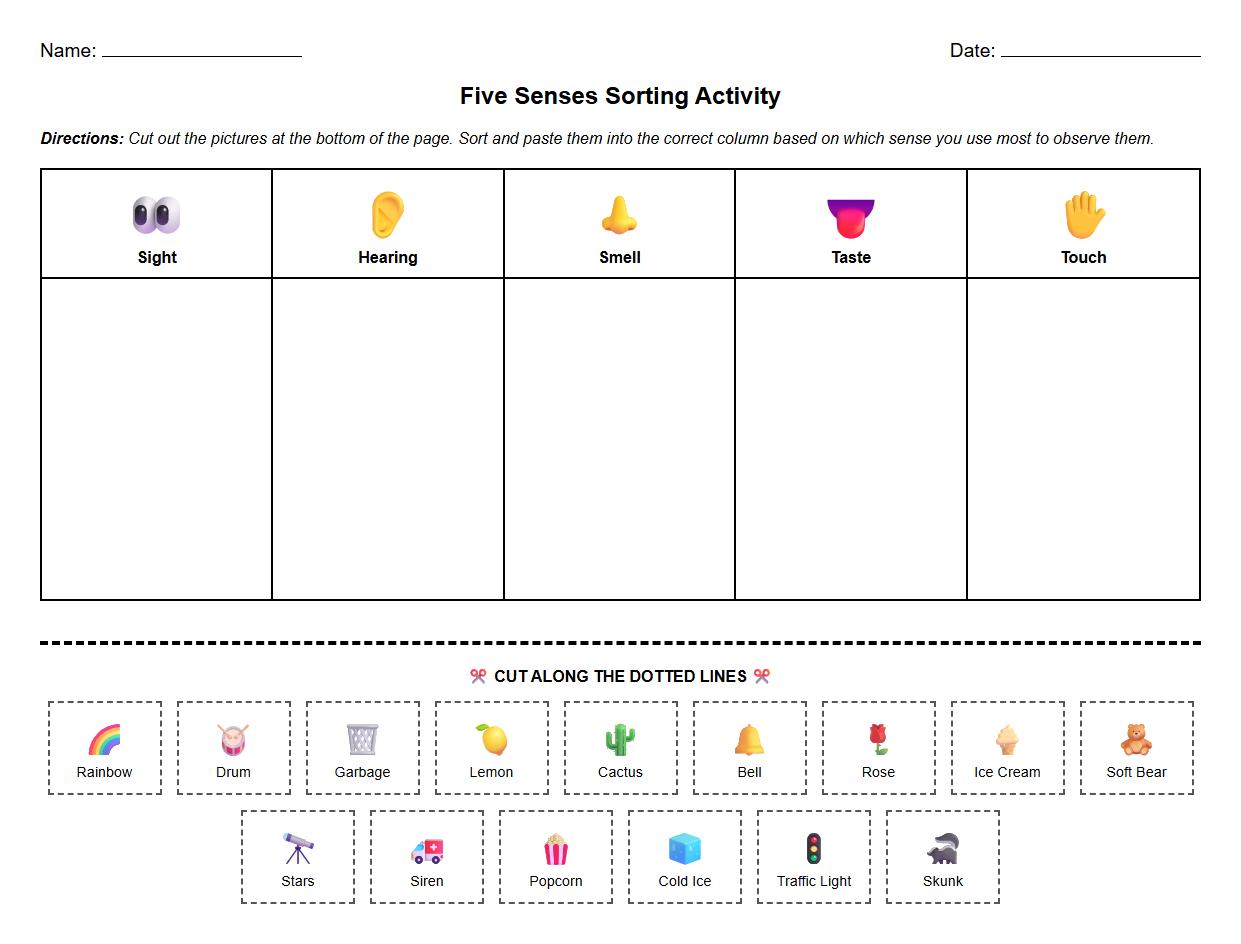
We use our five senses to explore and understand the world around us. These senses are sight, hearing, touch, smell, and taste. Each sense helps us gather different types of information from our environment. Encouraging children to use all their senses can enhance their learning experience.
Hearing Music and Sounds
We use our ears to hear music and sounds. Listening helps us enjoy songs, understand speech, and notice important noises. Teachers and parents can play various sounds to develop children's auditory skills. Practicing sound recognition supports language and cognitive growth.
Touching Soft Objects
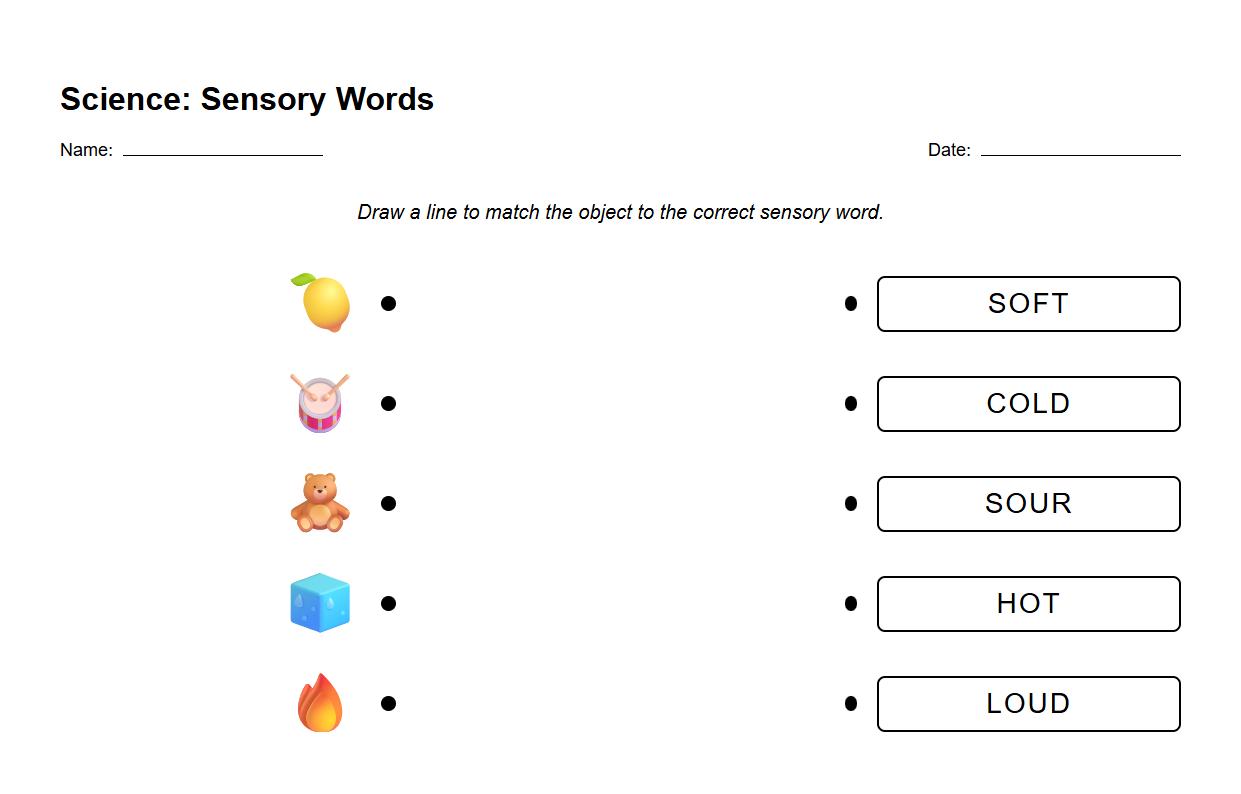
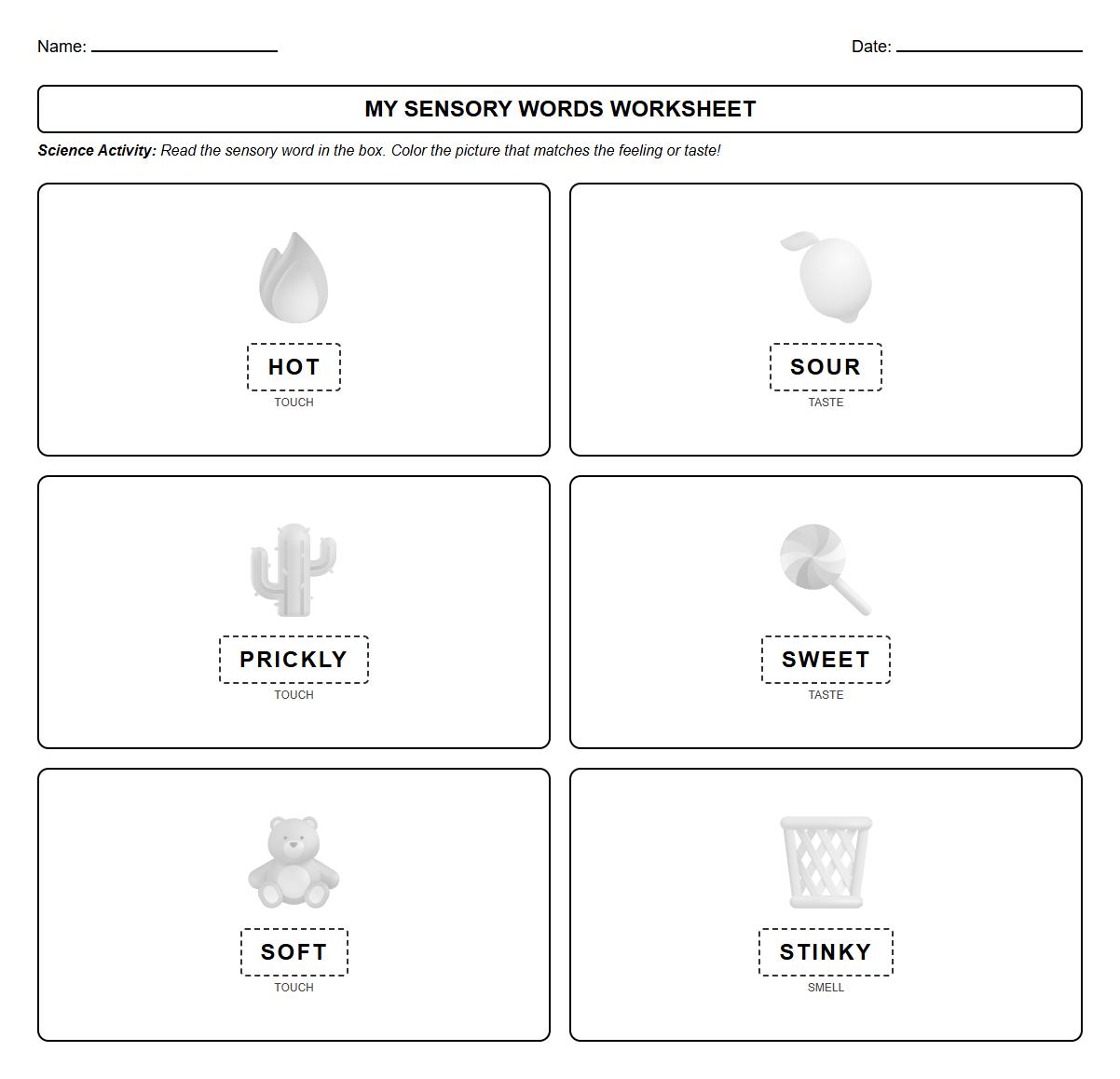
Senses like touch let us feel textures such as softness. For instance, a stuffed animal is something soft we can touch. Exploring different textures helps children develop fine motor skills. Providing a variety of objects enhances sensory awareness.
Smelling Flowers
The nose is the organ we use to smell flowers in a garden. Smelling helps children experience and describe pleasant scents. Encouraging outdoor activities with plants can stimulate their olfactory sense. This sense also connects to memory and emotion.
Tasting Ice Cream
We use our tongue to taste delicious treats like ice cream. Taste helps us enjoy different flavors such as sweet, sour, bitter, and salty. Sampling various foods supports the development of healthy eating habits. Teaching taste vocabulary enriches language skills.
Describing Appearance
Words like colorful, shiny, bright, and smooth describe how things look. Using descriptive language helps children express what they see clearly. Drawing and storytelling activities encourage observation and creativity. Visual descriptions also support reading skills.
Tasting a Lemon
A lemon tastes sour when you eat it. This taste can be surprising and fun for children to experience. Discussing taste reactions allows children to connect feelings with their senses. Exploring new flavors promotes curiosity and experimentation.
Feeling Temperature
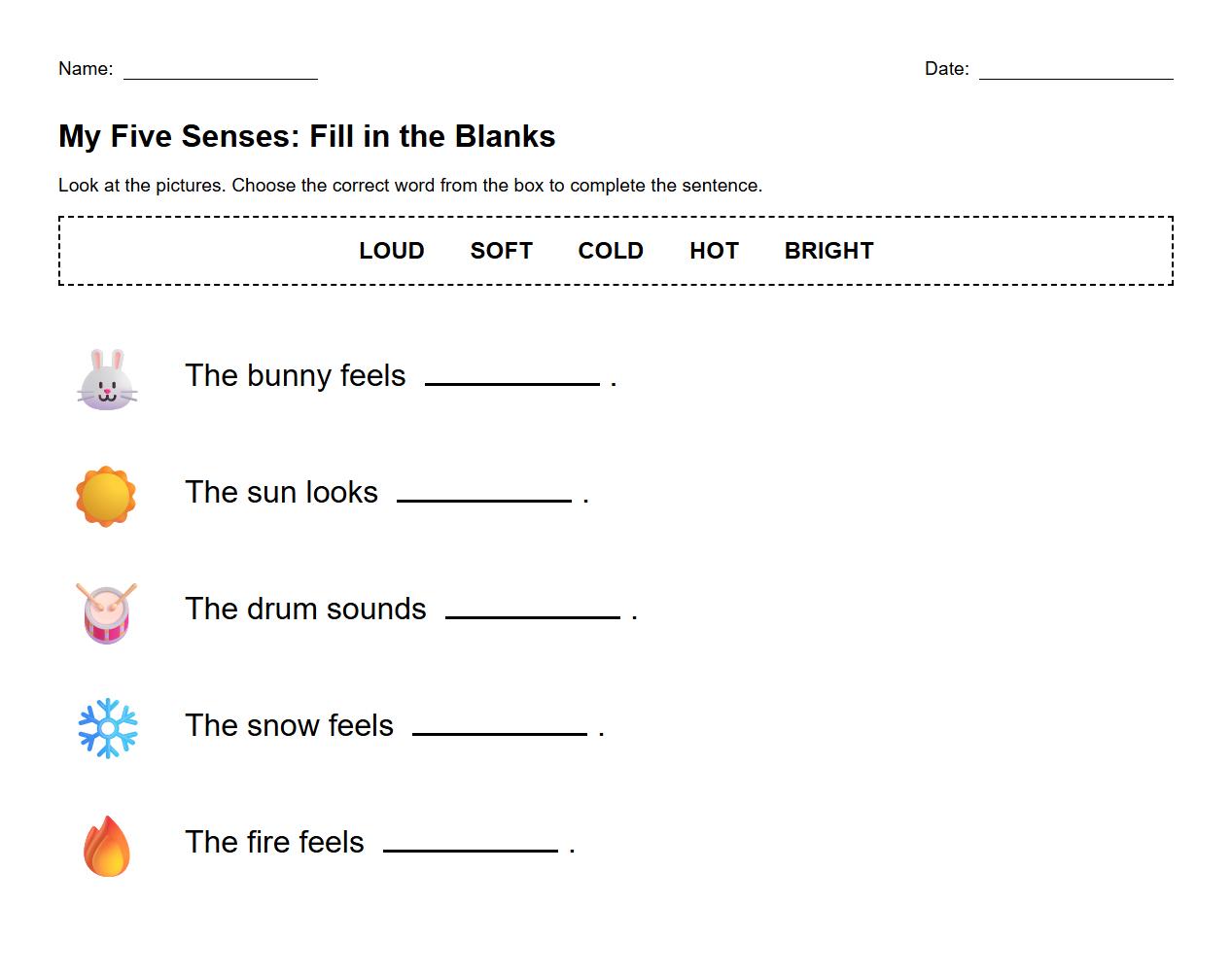
The sense of touch helps us feel if something is hot or cold. This awareness is important for safety and comfort. Parents and teachers can guide children to describe temperature using simple words. Understanding temperature helps children make informed choices.
Classroom Sounds
Common sounds in a classroom include the teacher talking, pencils writing, and chairs moving. Recognizing these sounds helps children focus and respond appropriately. Listening activities improve attention and auditory processing. Encouraging sound identification aids classroom management.
Describing Cookie Smells
Cookies often smell sweet, warm, delicious, and buttery. Using these words helps children describe scents vividly. Smell-based descriptions can spark imagination and sensory storytelling. Exploring smells enhances vocabulary and sensory experiences.


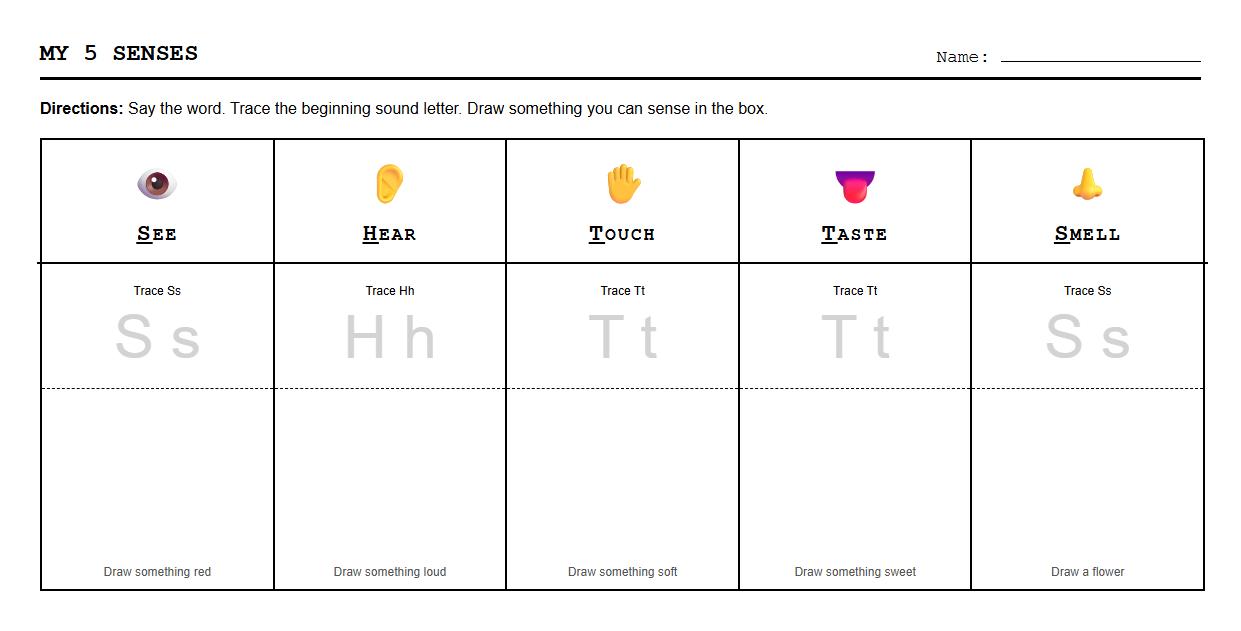
Phonics Identification Worksheet Using the Five Senses for Young Learners