Hands-On Five Senses Worksheet Incorporating Science and Language Arts

📅 Feb 23, 2025 👤 Nylen Smith

Explore the five senses through an engaging hands-on worksheet that blends science concepts with language arts skills. This interactive activity enhances sensory awareness while fostering vocabulary development and critical thinking. Discover the full range of worksheets available to support multisensory learning experiences.

Phonics and Vocabulary Matching Five Senses Worksheet
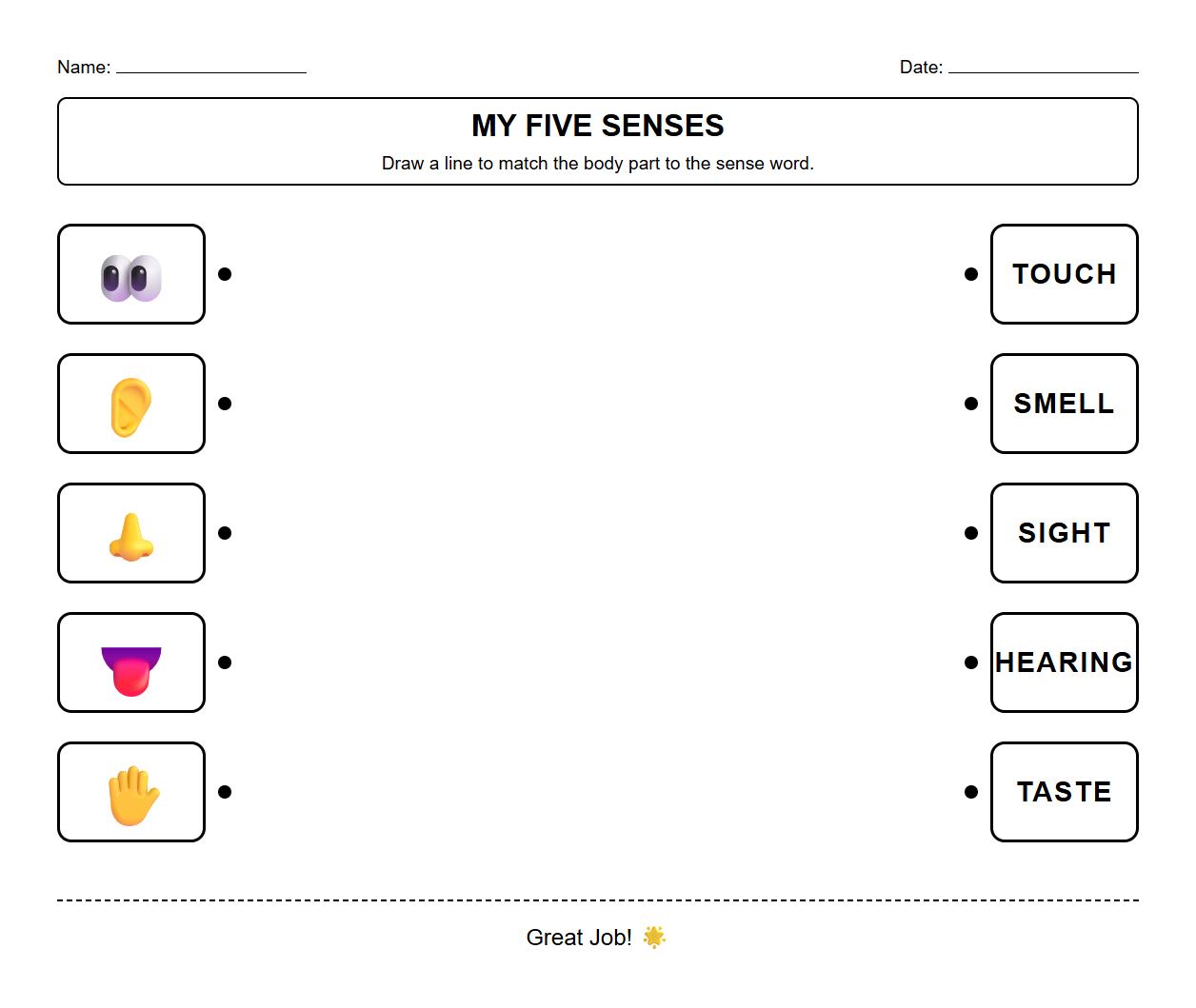
Phonics and Vocabulary Matching Five Senses Worksheet

Download PDF     Pin it

Sensory Observation Chart with Descriptive Writing Prompts
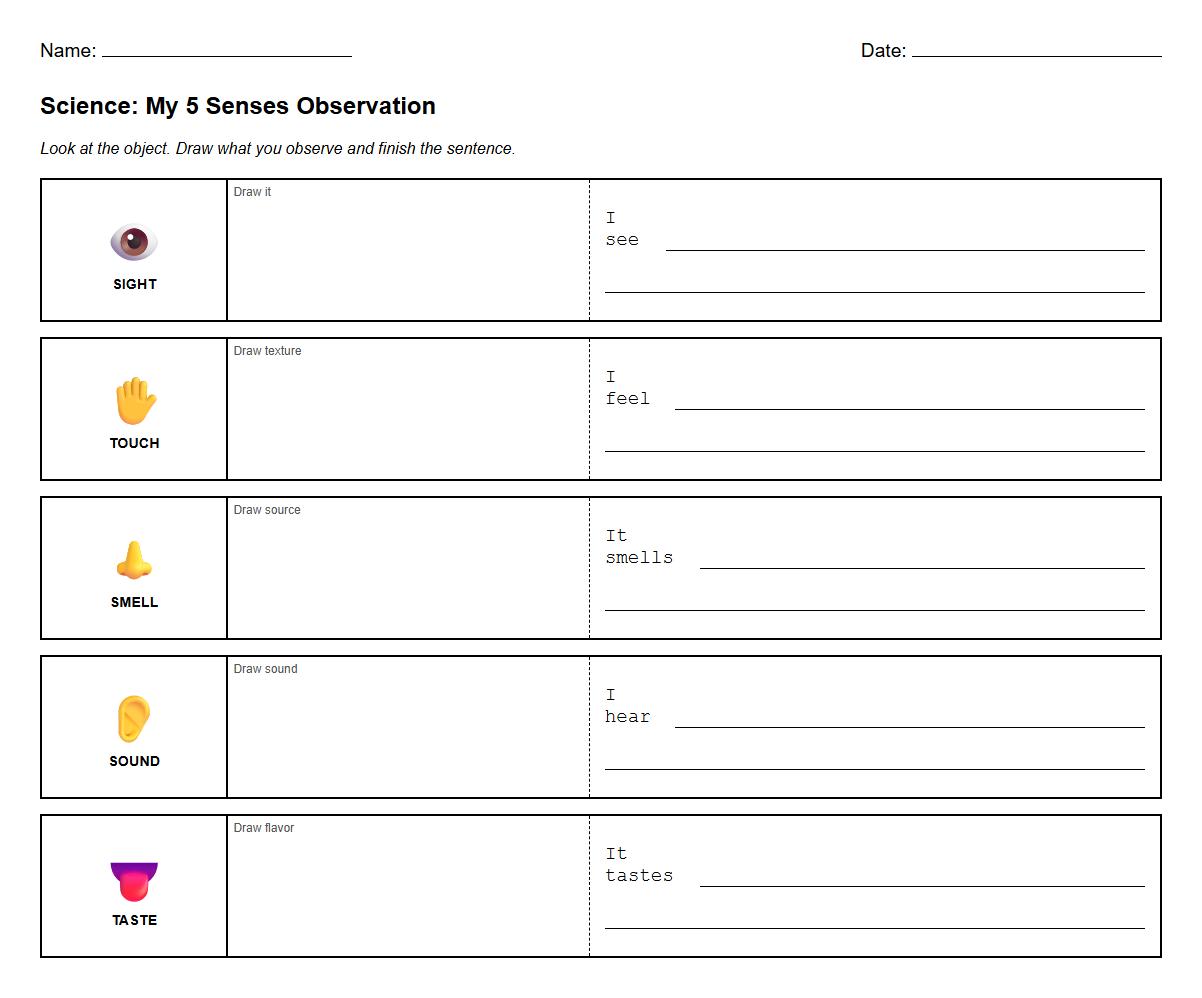
Sensory Observation Chart with Descriptive Writing Prompts

Download PDF     Pin it

Five Senses Experiments Recording Sheet Incorporating Data Analysis
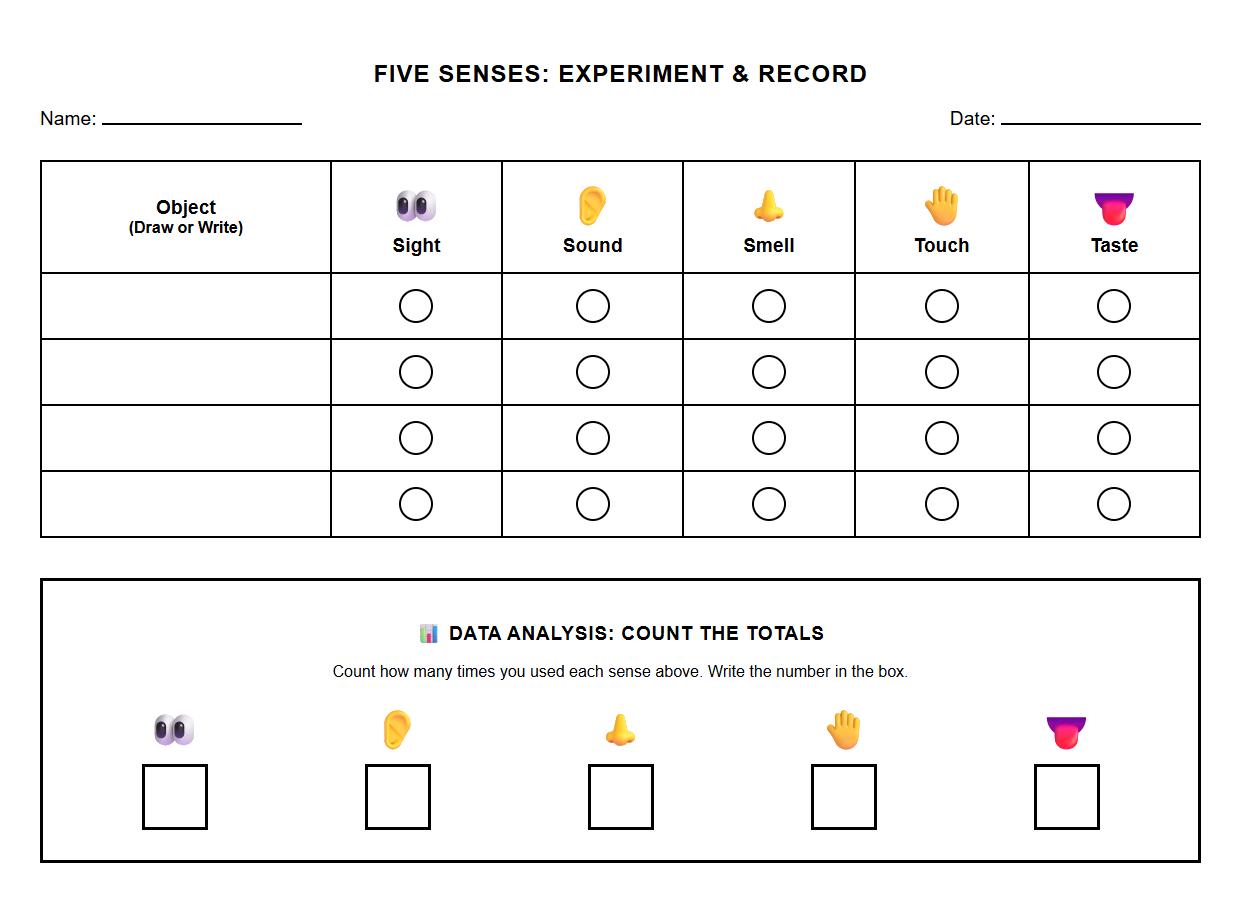
Five Senses Experiments Recording Sheet Incorporating Data Analysis

Download PDF     Pin it

Sensory Word Bank and Sentence Construction Activity
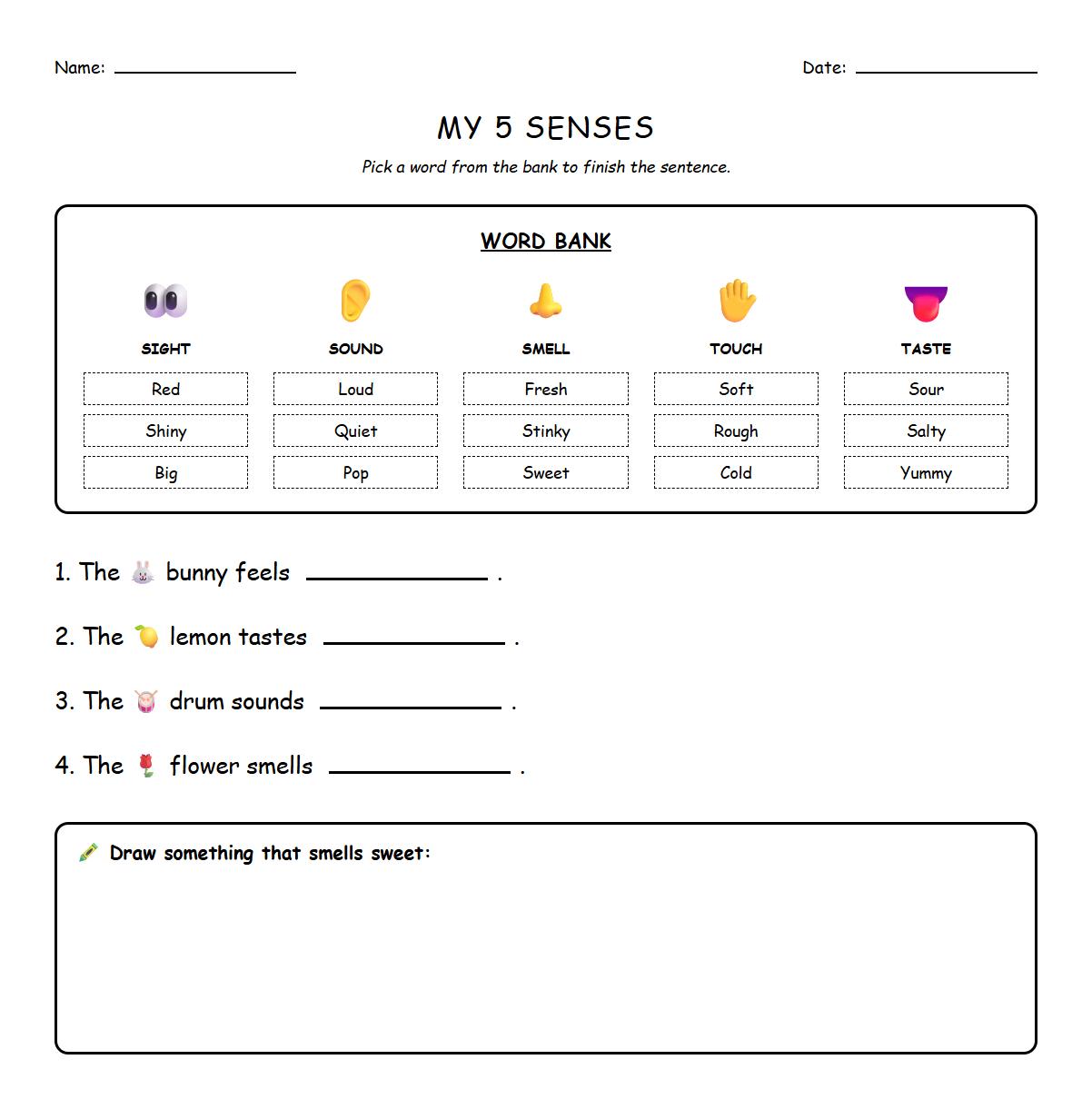
Sensory Word Bank and Sentence Construction Activity

Download PDF     Pin it

Graphic Organizer for Classifying Sensory Details
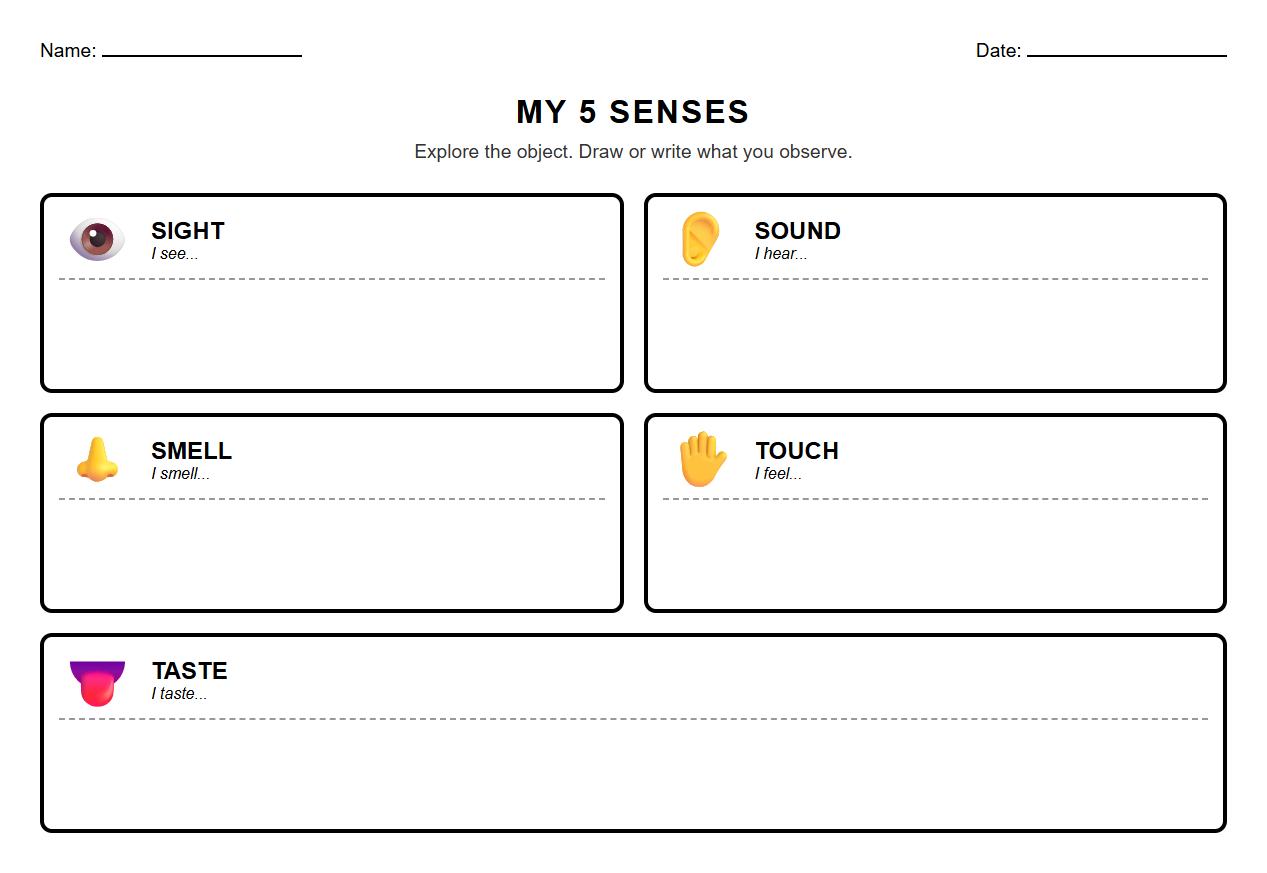
Graphic Organizer for Classifying Sensory Details

Download PDF     Pin it

Sequencing Events Using Five Senses in Science Investigation
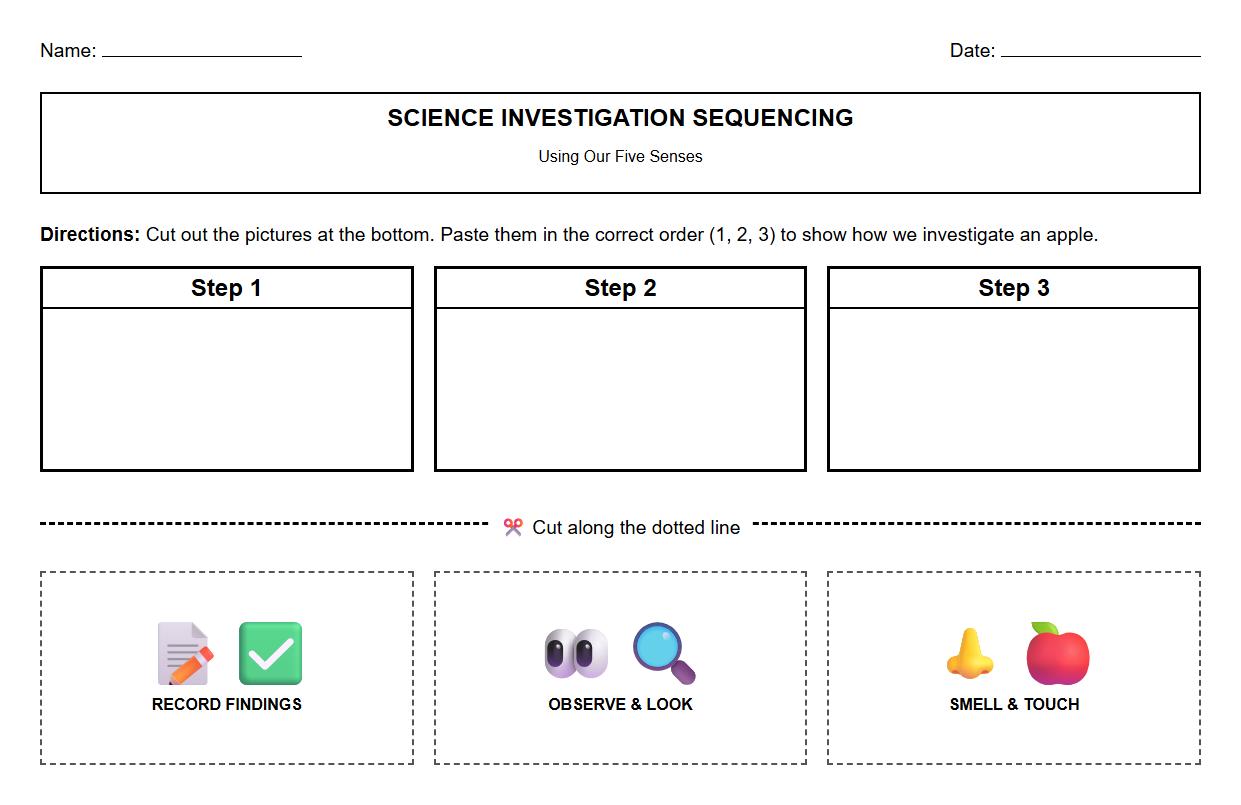
Sequencing Events Using Five Senses in Science Investigation

Download PDF     Pin it

Sensory Poem Template Integrating Language and Science
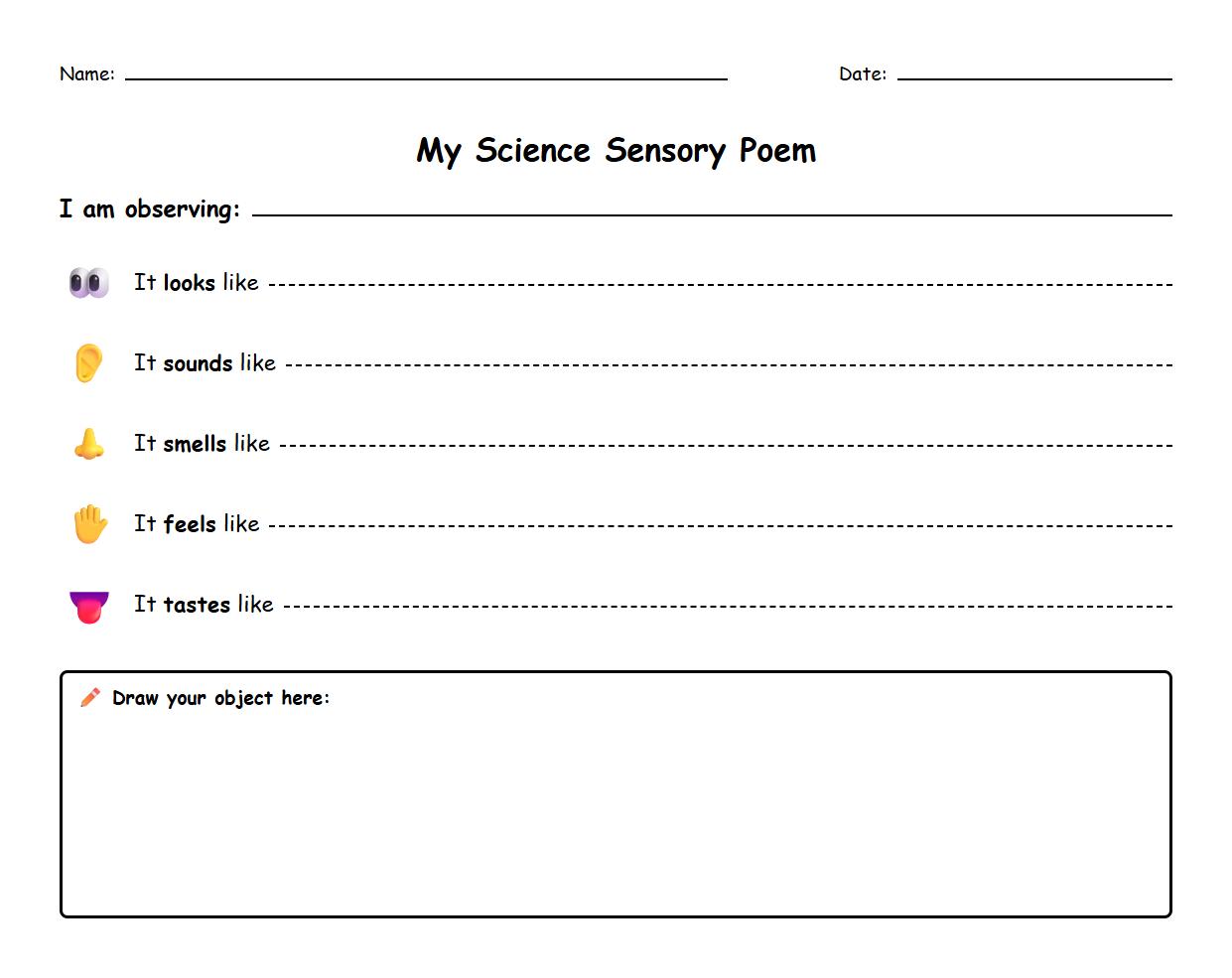
Sensory Poem Template Integrating Language and Science

Download PDF     Pin it

Science Journal Entry Page Focusing on Empirical Sensory Data
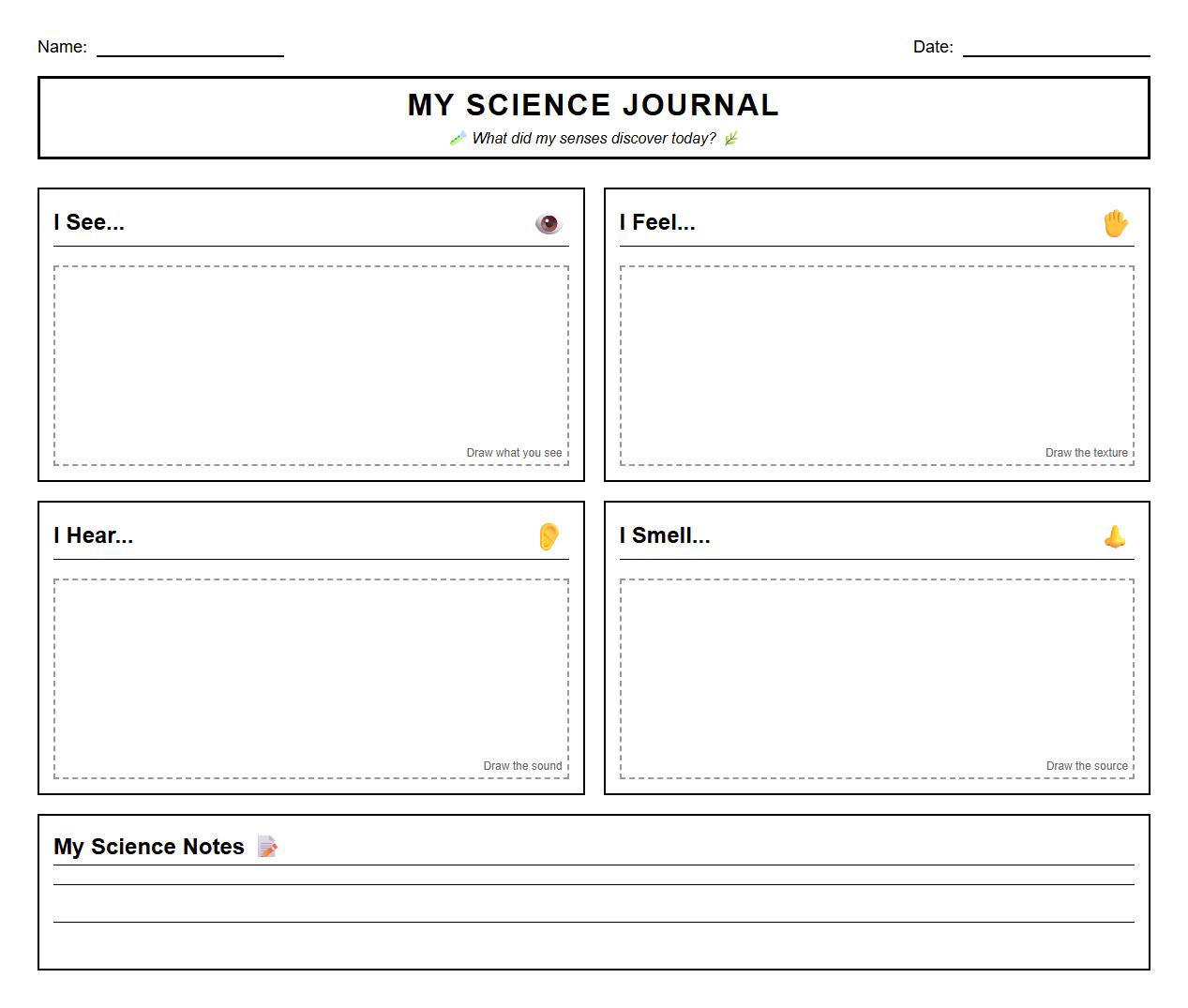
Science Journal Entry Page Focusing on Empirical Sensory Data

Download PDF     Pin it

Story Map Highlighting Sensory Imagery Extraction
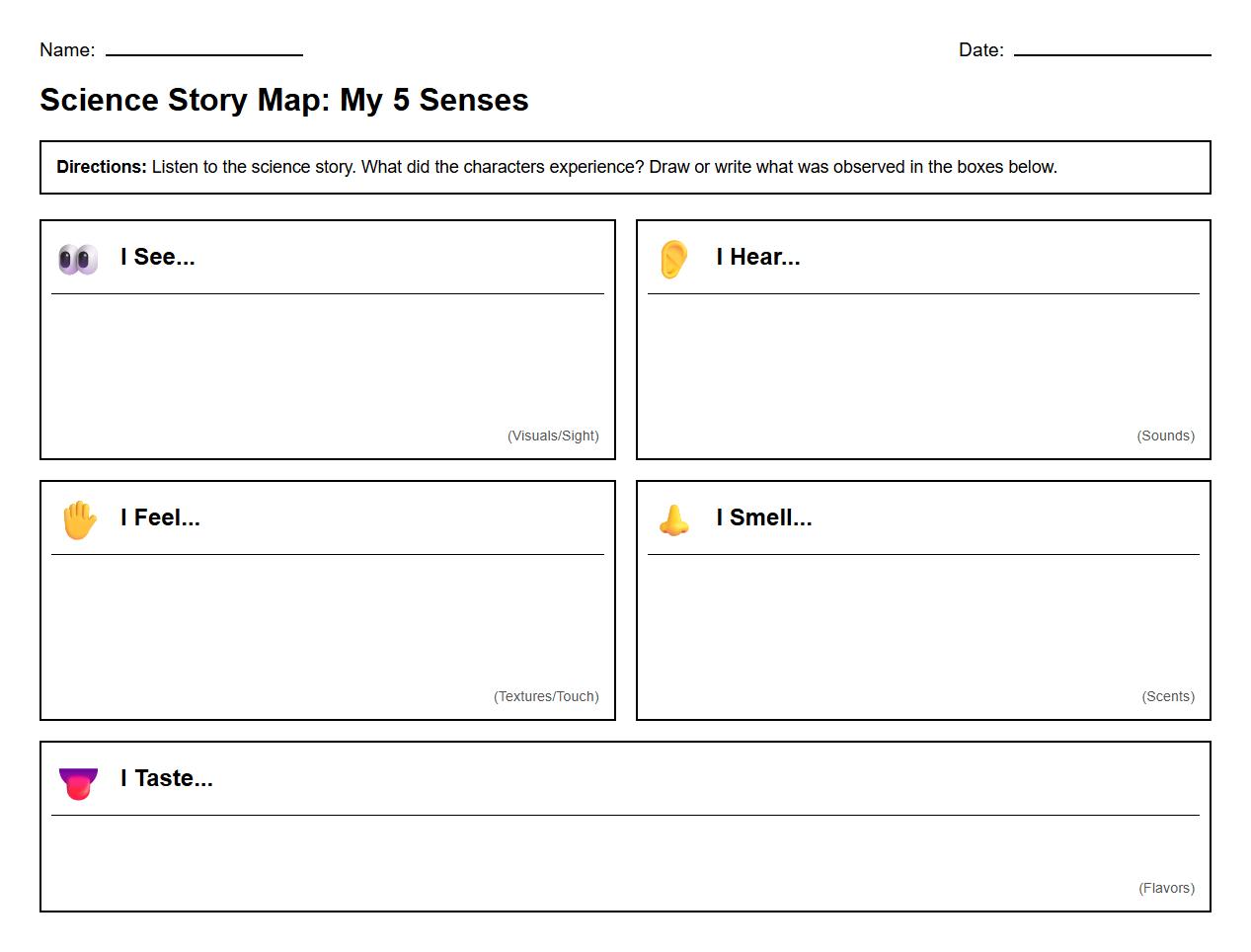
Story Map Highlighting Sensory Imagery Extraction

Download PDF     Pin it

Five Senses Adjective Sort with Categorization and Application
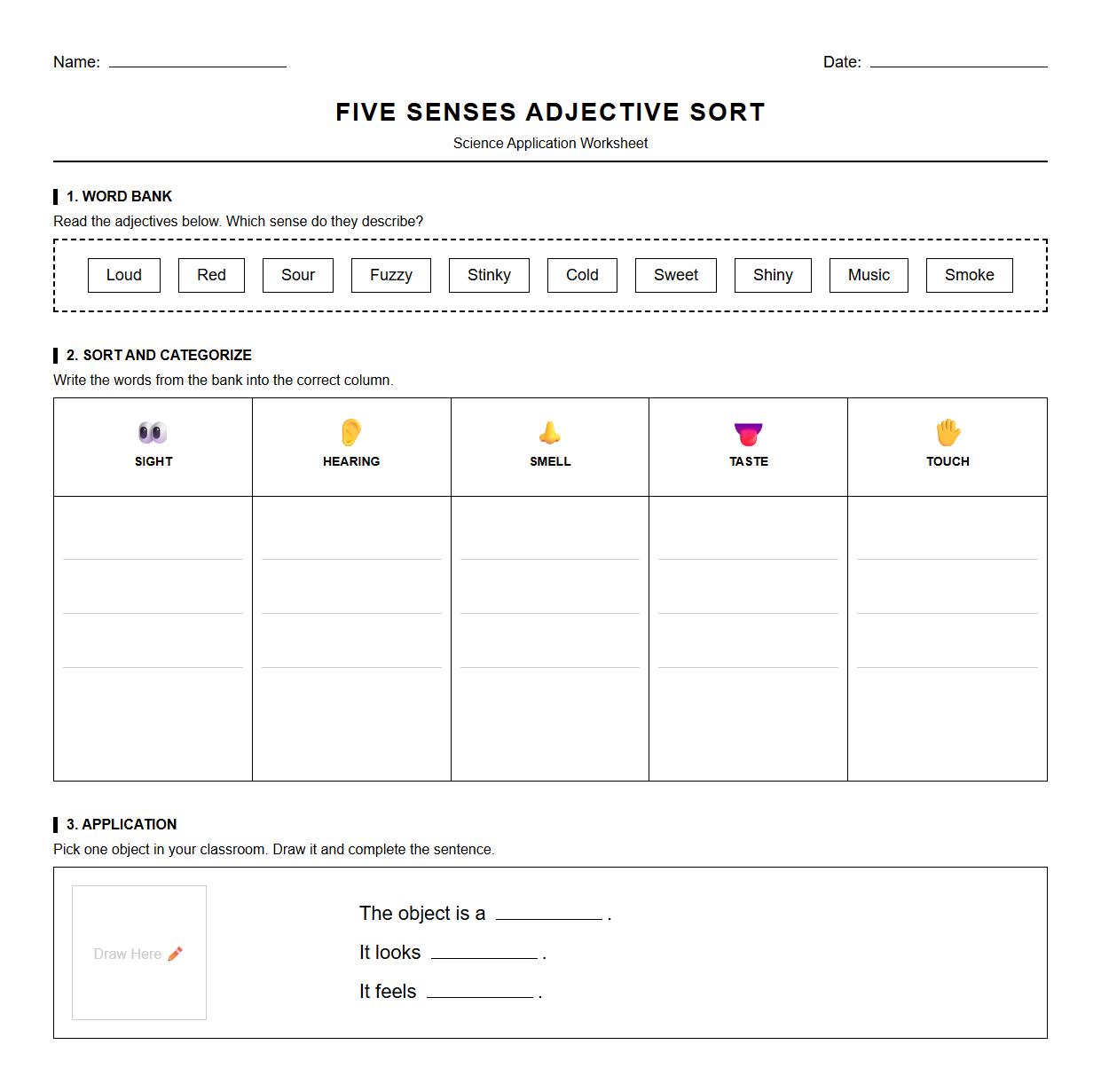
Five Senses Adjective Sort with Categorization and Application

Download PDF     Pin it

Objects You Can Touch in the Classroom

In the classroom, you can touch various objects that feel either soft or rough. Examples of soft items include stuffed animals and cushions, while rough textures may be found on sandpaper or certain book covers. Encouraging children to explore these textures helps develop their sense of touch and categorization skills.

Items to Identify by Smelling

Some worksheet items can only be identified by their smell, such as flowers, spices, or fruits depicted. Asking children to guess these items through scent enhances their olfactory sense and attention to detail. Integrating smell-based activities fosters sensory awareness in young learners.

Describing Environmental Sounds

Children can practice describing the sounds around them using varied descriptive words like loud, soft, buzzing, or chirping. Recognizing and naming different sounds supports auditory discrimination and language development. It also builds a connection between sounds and their sources.

Objects from Worksheets and Stories

Teachers can prompt children to list three things they see on worksheets that also appear in familiar stories, such as animals, trees, or vehicles. This exercise reinforces visual recognition and comprehension. It also links literacy to everyday learning contexts.

Describing Food Taste

Encourage children to describe the taste of each food item pictured in the worksheet, using terms like sweet, sour, salty, or bitter. This activity sharpens their sensory vocabulary and awareness of flavor differences. It also promotes healthy eating discussions.

Senses for Safety in Science Activities

The sense of sight and hearing are crucial for staying safe during science experiments. Watching for visual cues and listening to instructions or warnings help children avoid hazards. Teaching safety ensures a positive learning experience.

Drawing Sounds You Hear

Ask children to draw something they hear but cannot see, such as a bird chirping or a bell ringing. This creative task links auditory input to visual expression, enhancing imagination and sensory integration. It also encourages attentive listening.

Matching Classroom Objects to Worksheets

Children can identify which objects in the classroom resemble items shown on the worksheet, strengthening observational skills. Matching real items to pictures aids in concept reinforcement and vocabulary building. It makes learning interactive and relevant.

Words to Describe Textures

Introduce words to describe tactile sensations, such as rough, smooth, bumpy, or soft. These descriptive terms help children articulate their sensory experiences more clearly. Encouraging detailed feedback enhances language development.

Using Multiple Senses Simultaneously

Children can learn to use more than one sense at the same time during activities, such as smelling and touching a flower or listening and watching a demonstration. Multi-sensory learning boosts engagement and retention. It also supports holistic development.


More in Science Category


About the author. Nylen Smith is a dedicated educator and cofounder of KWorksheet.com, a popular platform specializing in high-quality kindergarten worksheets and printable activities.

Disclaimer. The information provided in this document is for general informational purposes and/or document sample only and is not guaranteed to be factually right or complete. Please report to us via contact-us page if you find and error in this page, thanks.

Comments

No comment yet