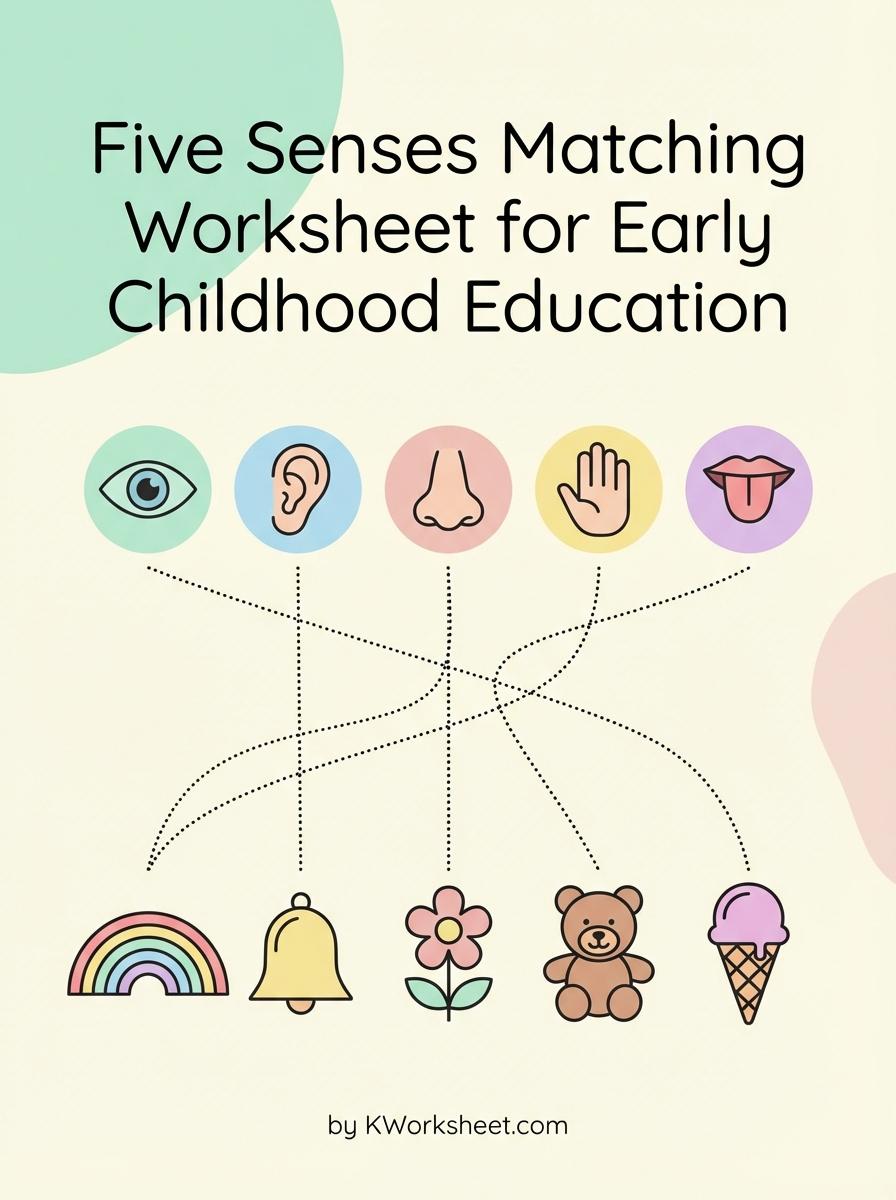
Five Senses Matching Worksheet for Early Childhood Education

📅 Jun 7, 2025 👤 Nylen Smith

Five Senses Matching Worksheet enhances sensory recognition by engaging young learners in identifying and matching objects to their corresponding senses. Activities are designed to boost cognitive development and promote interactive learning through sight, sound, touch, taste, and smell awareness. Explore the variety of available worksheets to support sensory skills in early childhood education.

Five Senses and Object Phonics Matching Worksheet
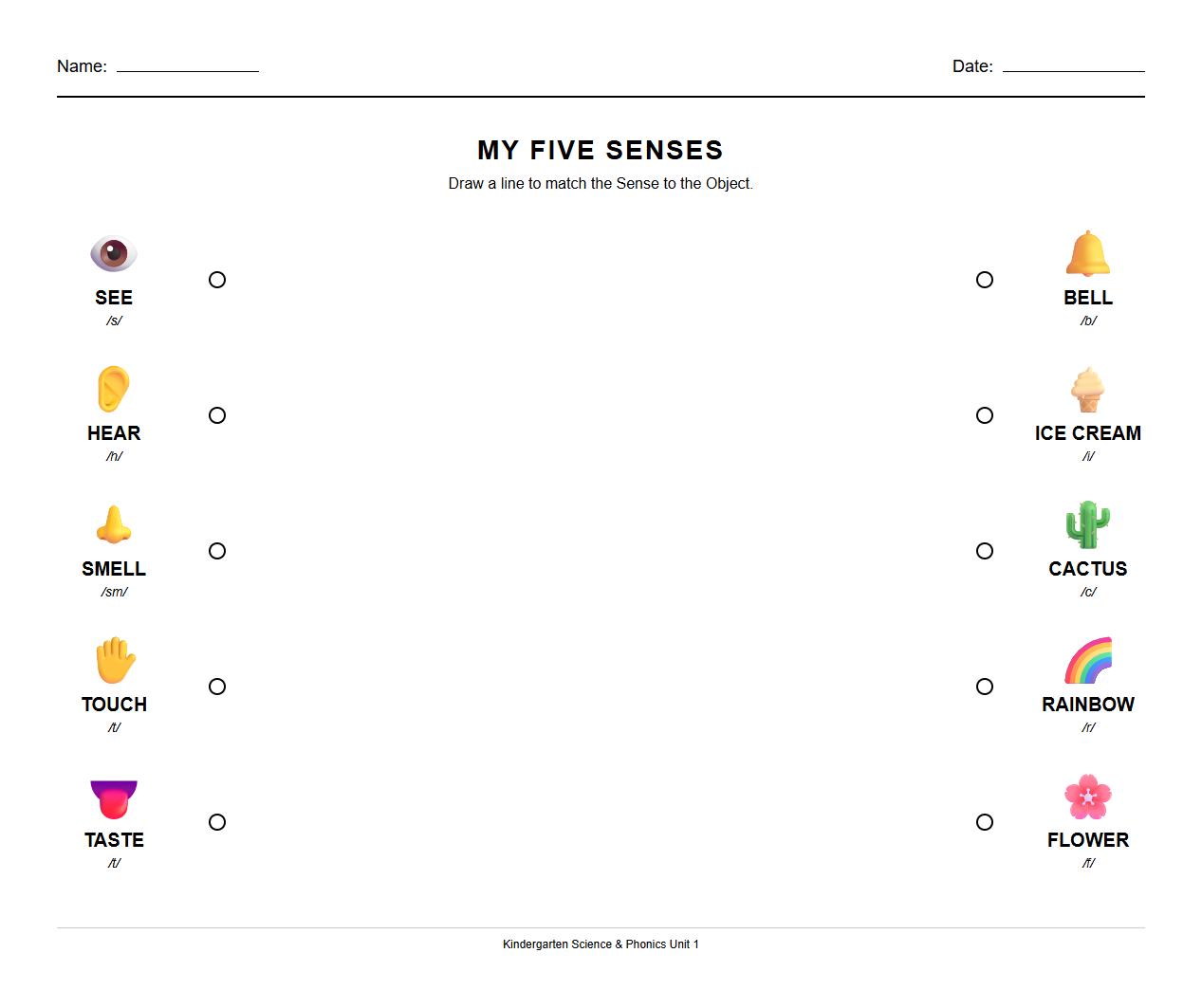
Five Senses and Object Phonics Matching Worksheet

Download PDF     Pin it

Sensory Identification and Sorting Worksheet
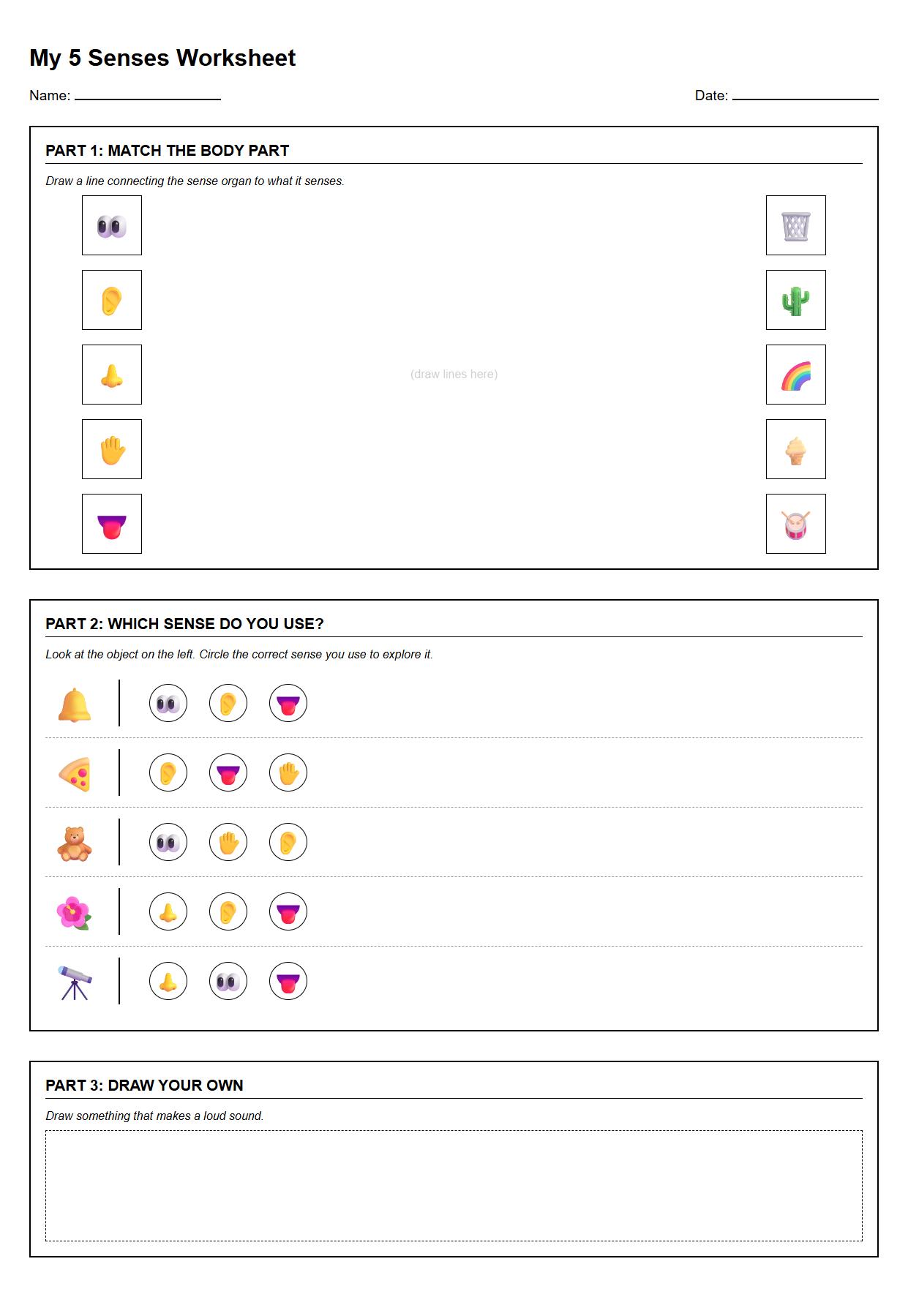
Sensory Identification and Sorting Worksheet

Download PDF     Pin it

Visual Discrimination with Five Senses Worksheet
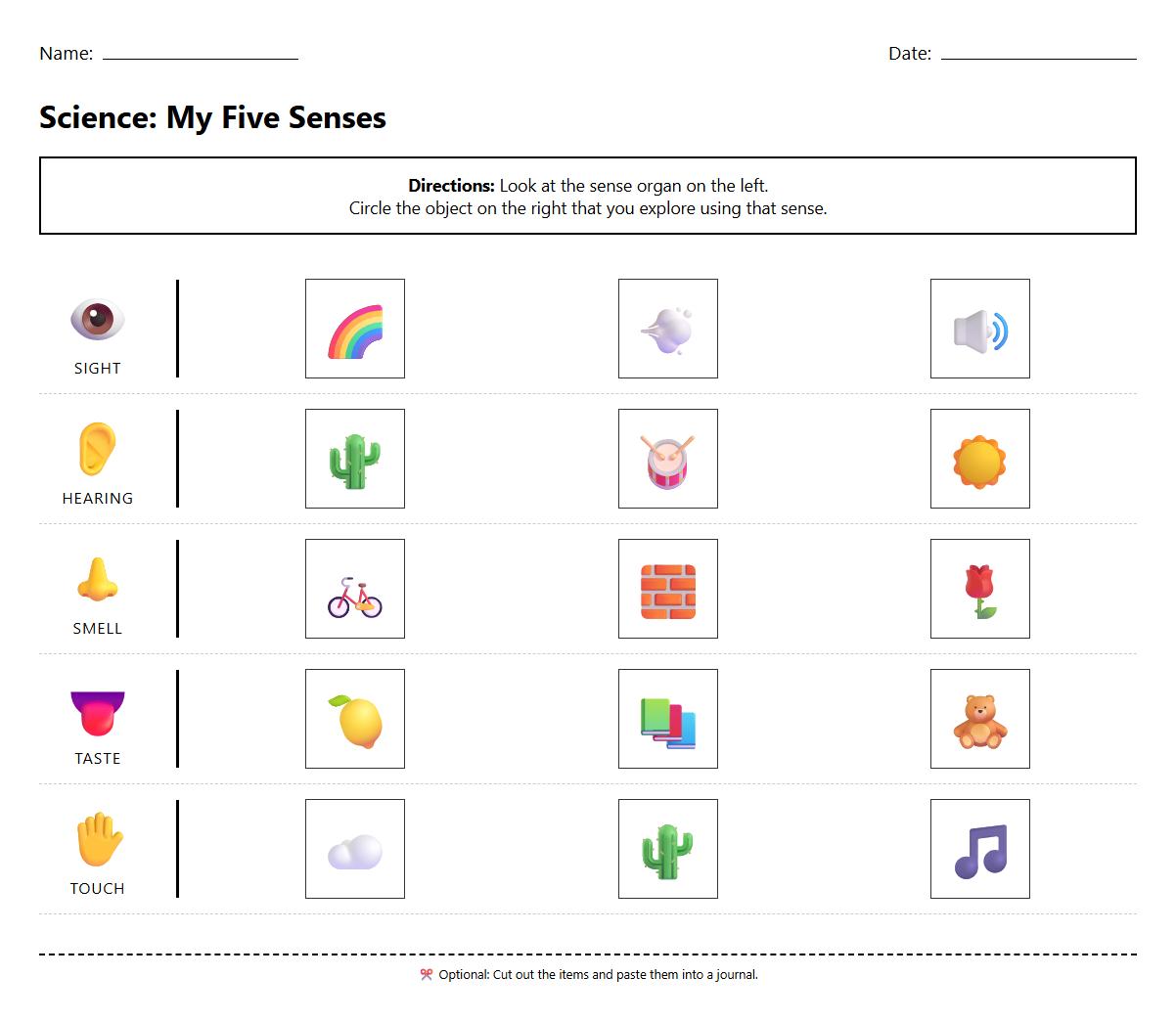
Visual Discrimination with Five Senses Worksheet

Download PDF     Pin it

Auditory Recognition through Picture Matching Worksheet
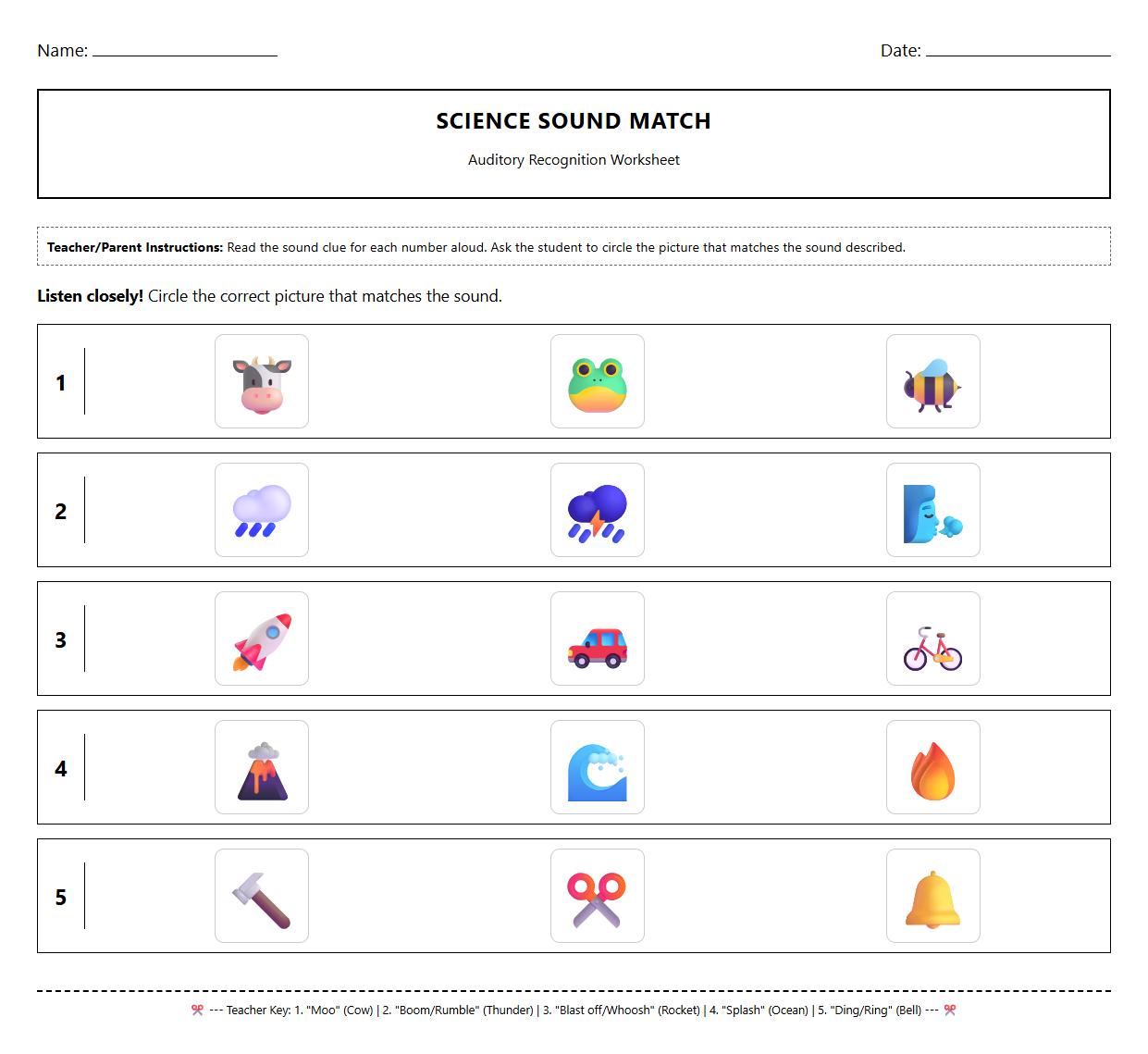
Auditory Recognition through Picture Matching Worksheet

Download PDF     Pin it

Texture Exploration and Tactile Senses Worksheet
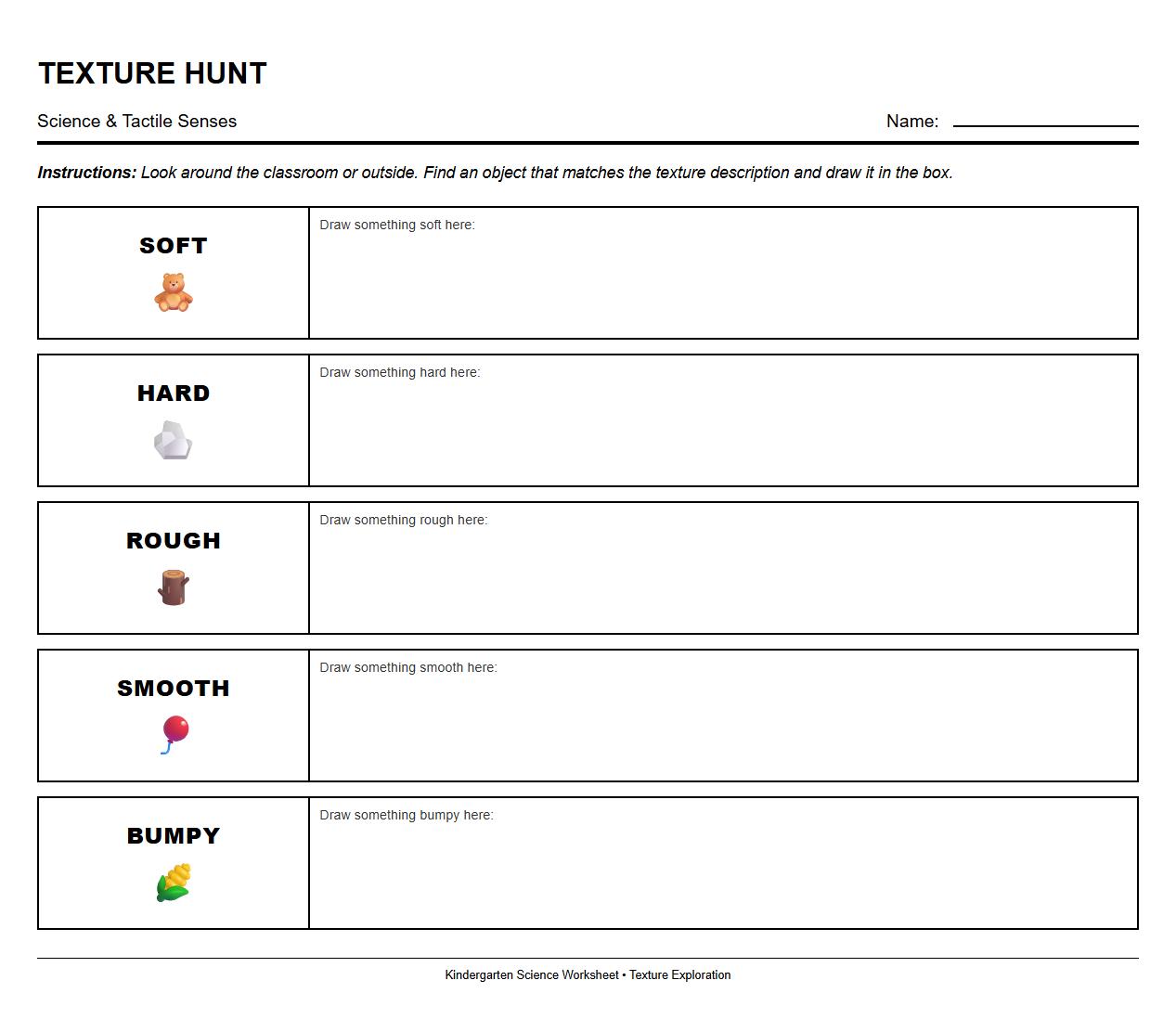
Texture Exploration and Tactile Senses Worksheet

Download PDF     Pin it

Olfactory Sensory Matching with Real Images Worksheet
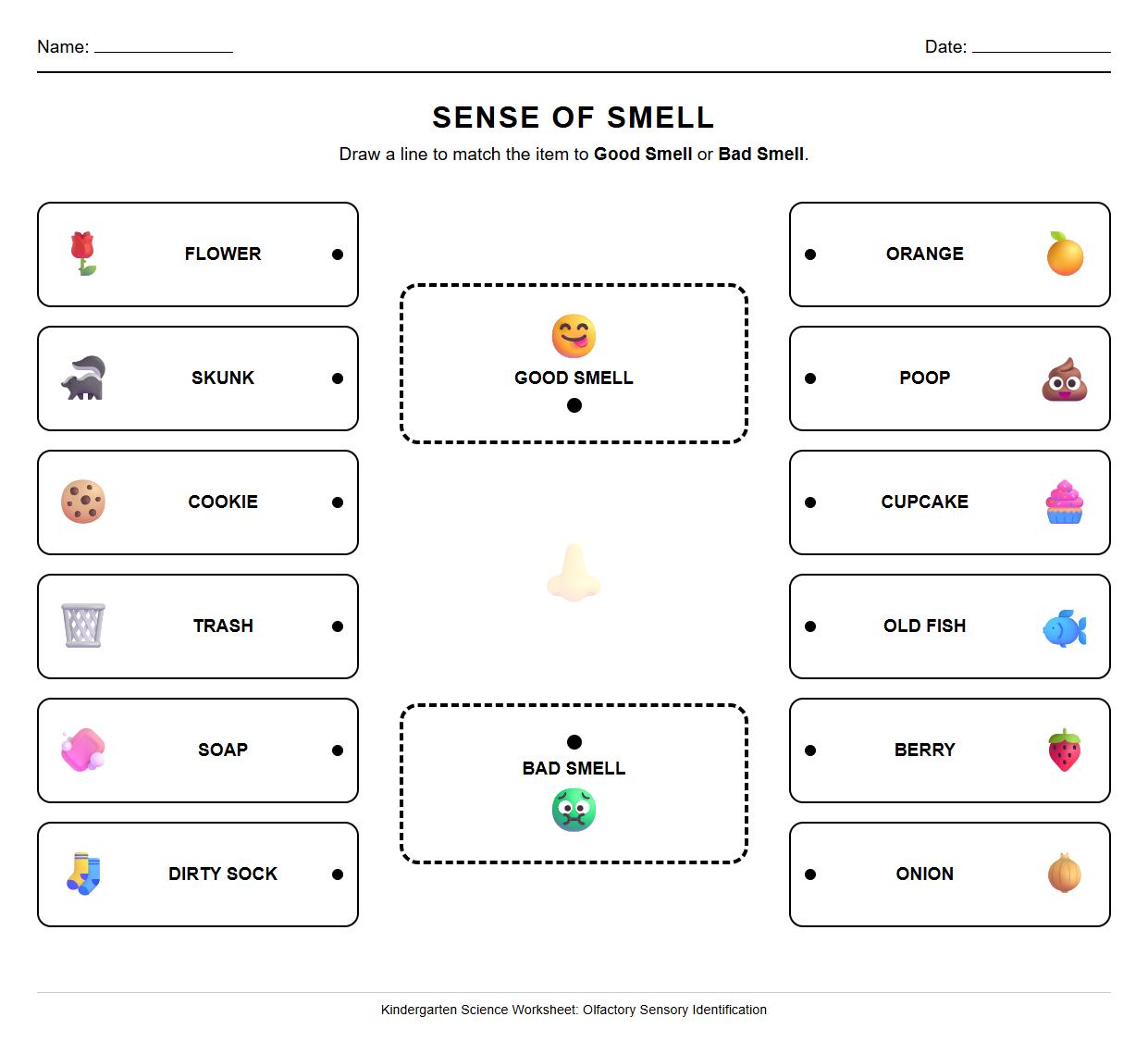
Olfactory Sensory Matching with Real Images Worksheet

Download PDF     Pin it

Flavor Classification using Taste Sense Worksheet
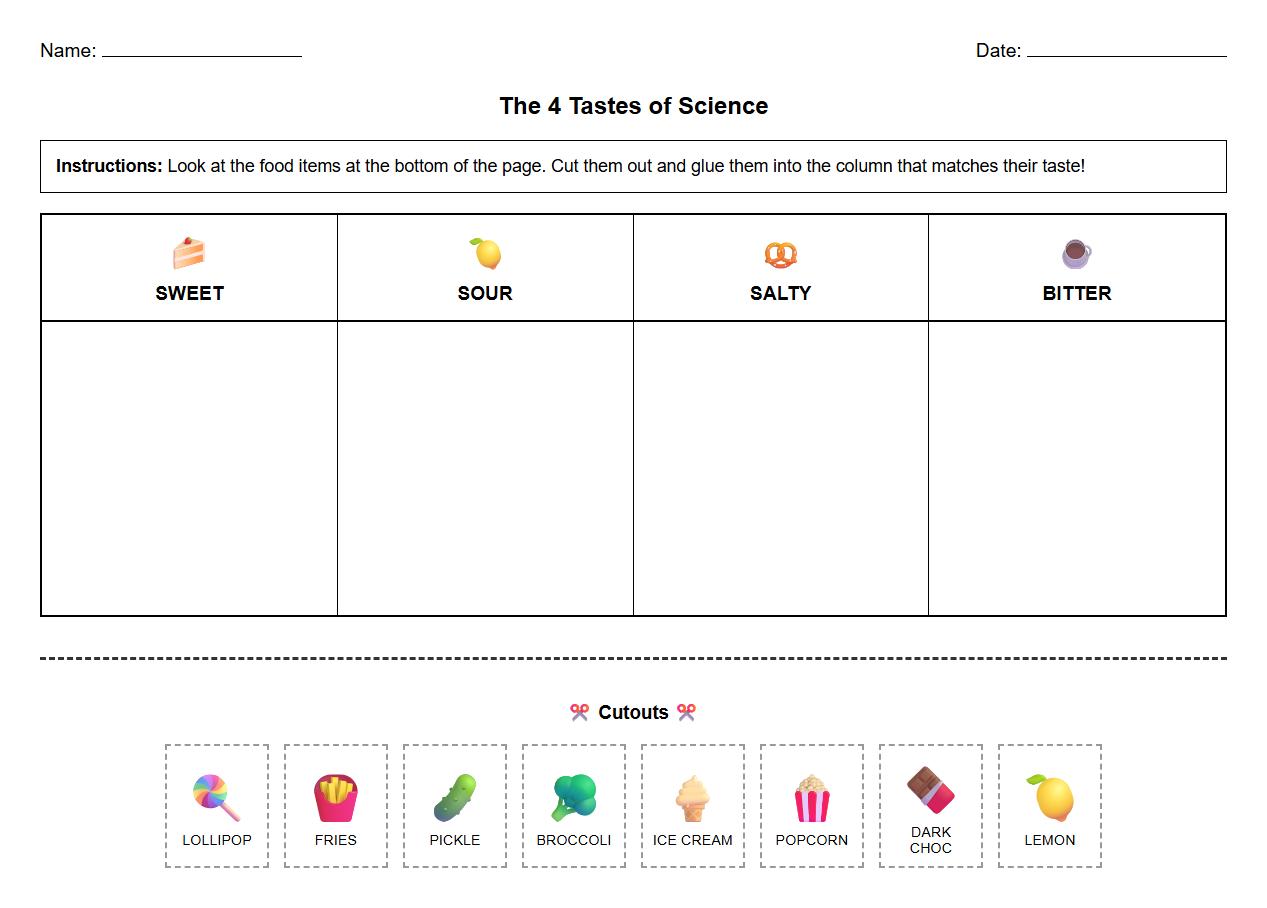
Flavor Classification using Taste Sense Worksheet

Download PDF     Pin it

Five Senses Vocabulary and Phonics Connection Worksheet
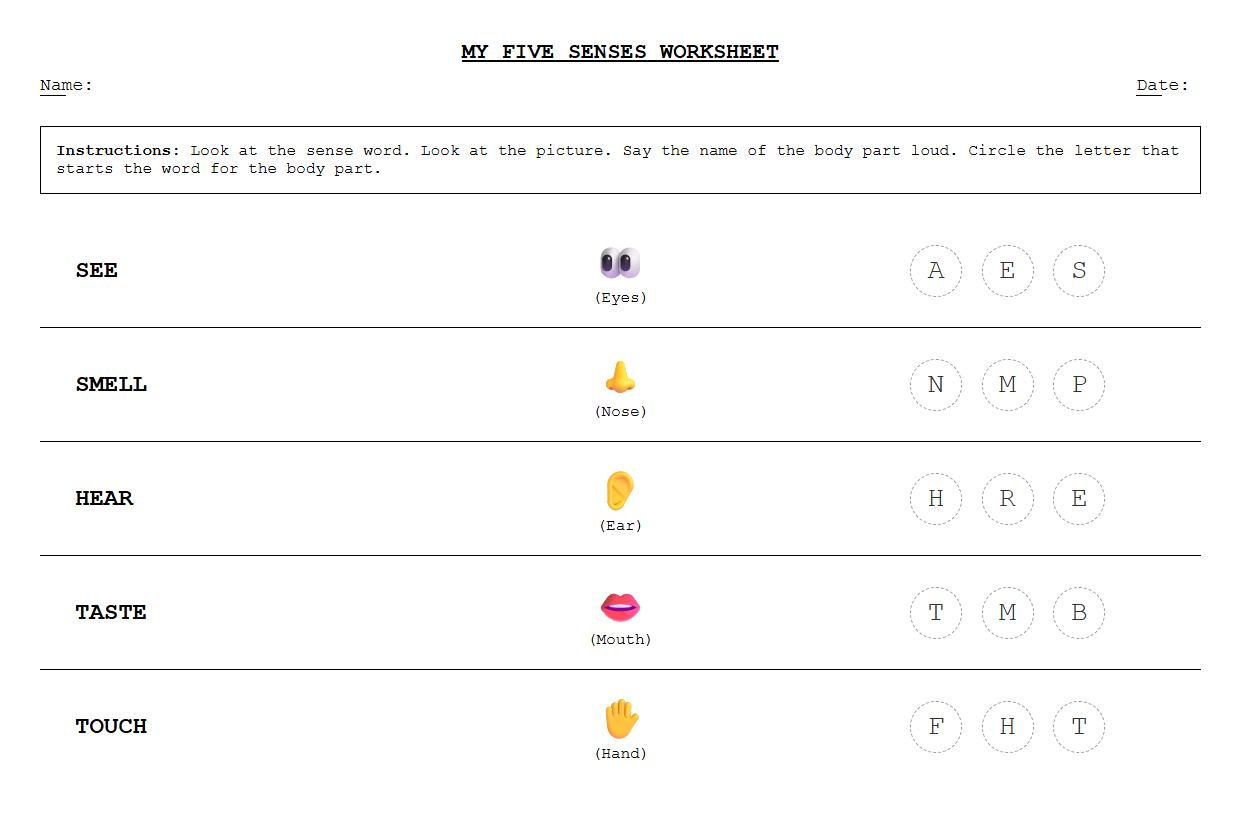
Five Senses Vocabulary and Phonics Connection Worksheet

Download PDF     Pin it

Sensory Stimulus and Response Matching Worksheet
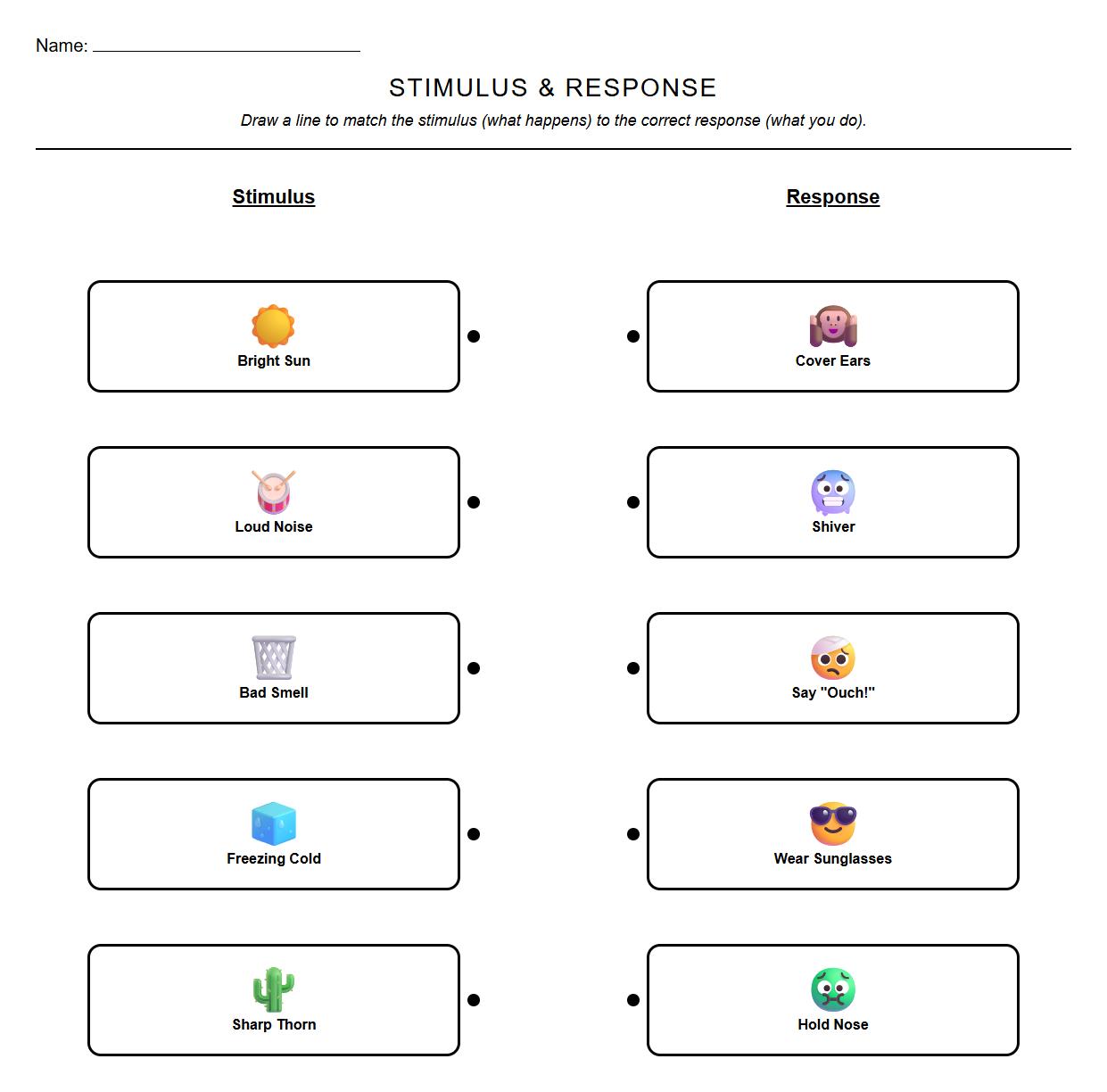
Sensory Stimulus and Response Matching Worksheet

Download PDF     Pin it

Multisensory Integration and Object Association Worksheet
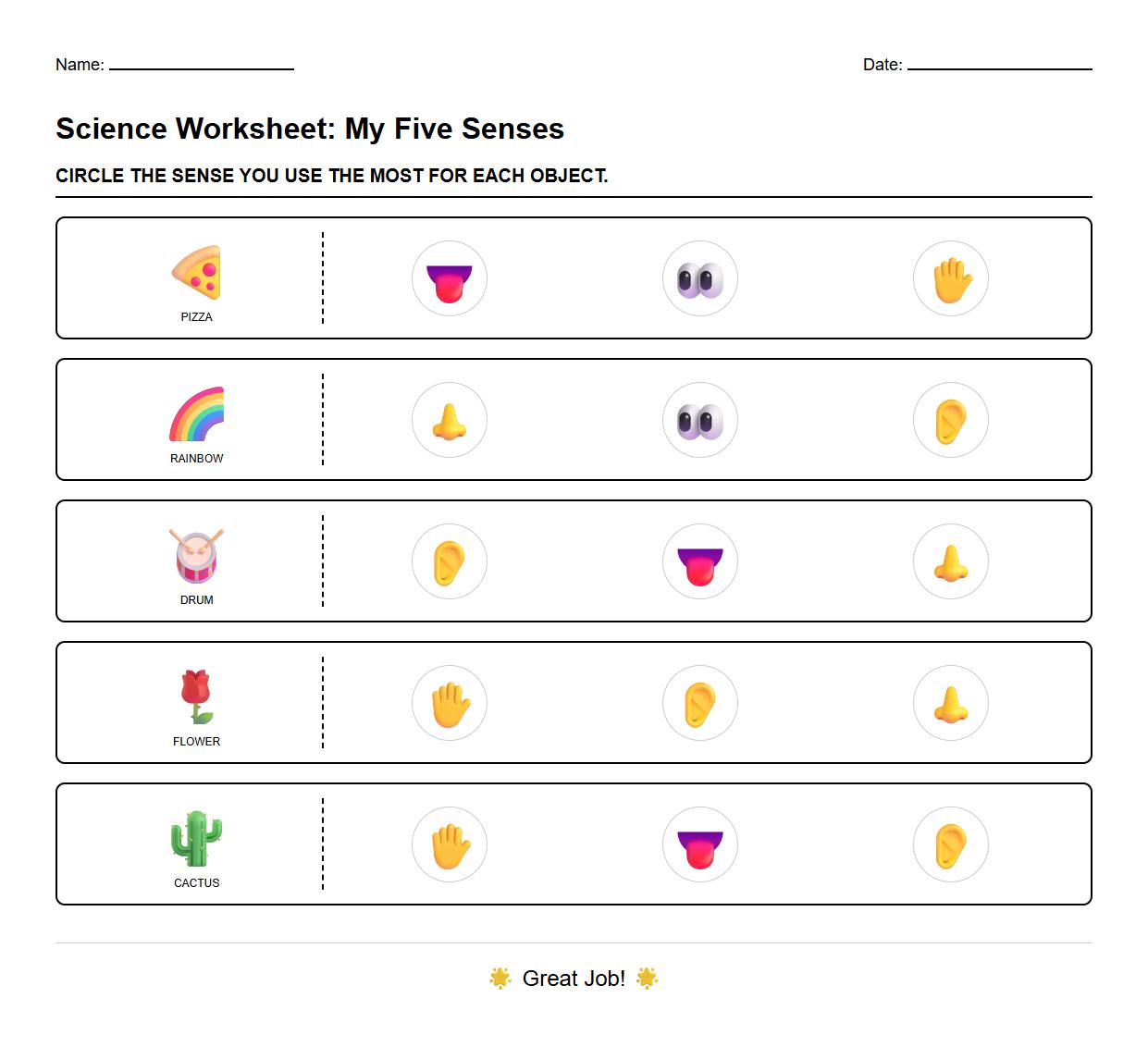
Multisensory Integration and Object Association Worksheet

Download PDF     Pin it

Which sense do we use to smell a flower?

We use our nose to smell a flower. The nose detects different scents and helps us enjoy pleasant fragrances. Introducing this sense helps children understand how they interact with the world. Teachers and parents can encourage smelling flowers during outdoor activities.

What do you use to hear music?

We use our ears to hear music. Ears pick up sound waves and allow us to enjoy melodies and rhythms. Hearing plays a vital role in language and communication development. Asking children to listen carefully to different sounds enhances their auditory skills.

Which part of your body helps you touch a soft teddy bear?

The skin on our fingers helps us touch a soft teddy bear. Our sense of touch allows us to feel textures like softness or roughness. Exploring different objects helps children recognize various textures. Parents and teachers can use tactile play to stimulate this sense.

How do you know if lemonade is sour or sweet?

We use our tongue to taste if lemonade is sour or sweet. The tongue detects flavors, helping us identify different tastes. Tasting activities introduce children to sensory differences in foods. This sense is essential for food preferences and safety awareness.

What sense helps you see colors in a rainbow?

Our eyes help us see colors in a rainbow. Sight allows us to observe vibrant and beautiful colors around us. Observing colors improves children's visual recognition and creativity. Teachers can use rainbow-themed activities to engage children's sense of sight.

Which body part helps you taste ice cream?

The tongue helps us taste ice cream. It senses sweetness, coldness, and different flavors. Taste is a sense that adds enjoyment to eating and helps us identify safe foods. Sharing ice cream moments supports sensory learning and bonding.

What sense do you use when you listen to birds chirping?

We use our ears to listen to birds chirping. Hearing helps us recognize natural sounds and improve attention skills. Listening to nature sounds encourages calmness and curiosity in children. It also enhances their auditory discrimination abilities.

How do you feel the roughness of sandpaper?

We use the skin on our hands to feel the roughness of sandpaper. The sense of touch informs us about surface textures. Exploring rough and smooth surfaces helps children develop fine motor skills. Sensory play with different materials supports tactile learning.

What sense lets you see your friends' smiles?

The sense of sight lets us see our friends' smiles. Seeing facial expressions helps us understand emotions and social cues. Visual interaction fosters relationships and communication skills. Encouraging children to notice smiles strengthens their social awareness.

Which part of your body helps you smell cookies baking?

Our nose helps us smell cookies baking. Smelling delicious aromas triggers feelings of comfort and anticipation. This sense supports memory and emotional connections. Parents can involve children in baking to stimulate their olfactory sense effectively.


More in Science Category


About the author. Nylen Smith is a dedicated educator and cofounder of KWorksheet.com, a popular platform specializing in high-quality kindergarten worksheets and printable activities.

Disclaimer. The information provided in this document is for general informational purposes and/or document sample only and is not guaranteed to be factually right or complete. Please report to us via contact-us page if you find and error in this page, thanks.

Comments

No comment yet