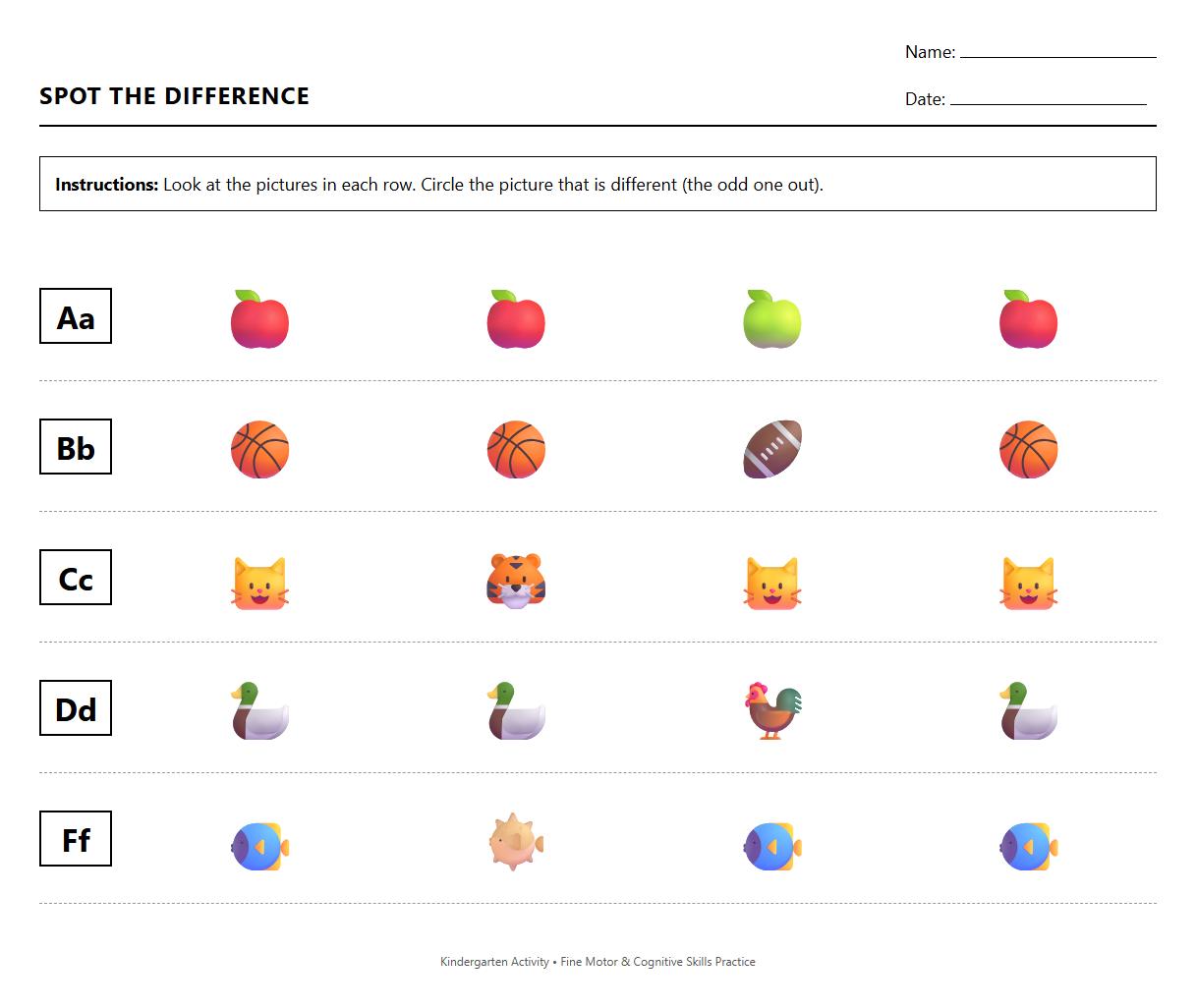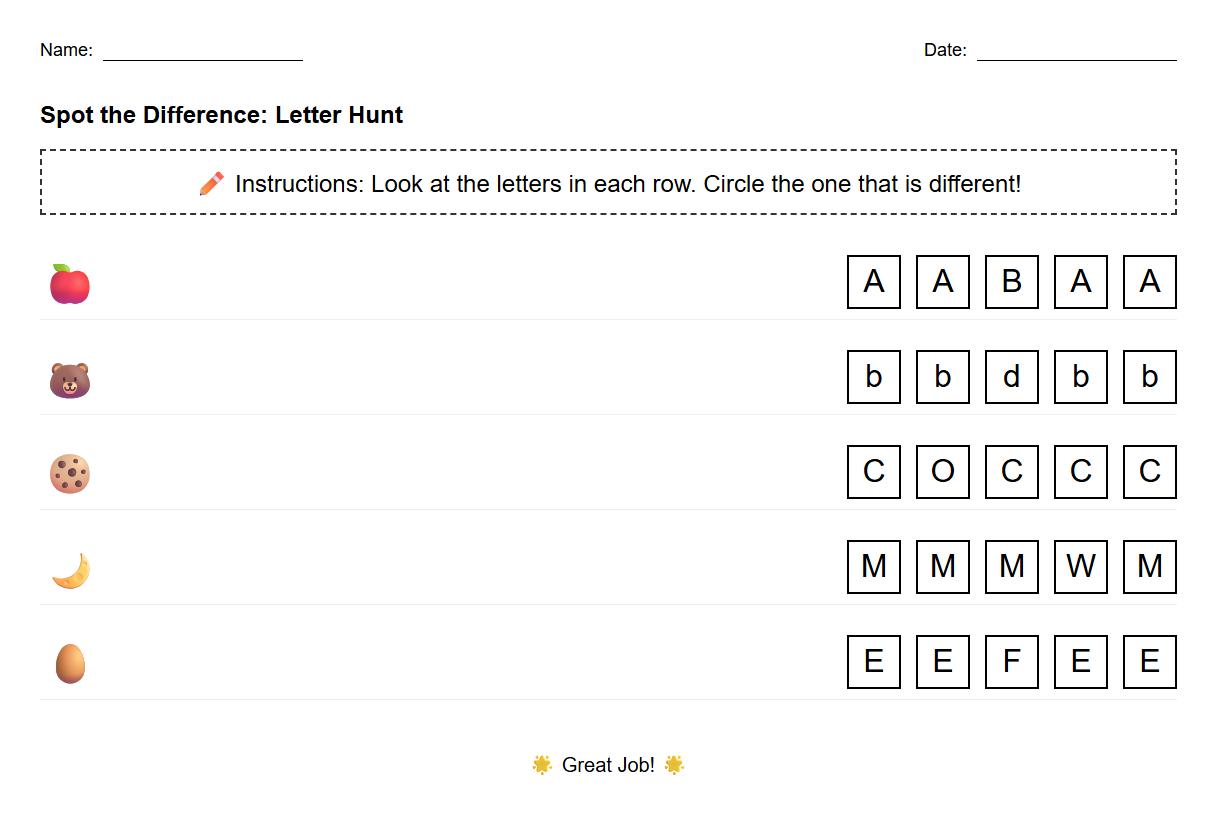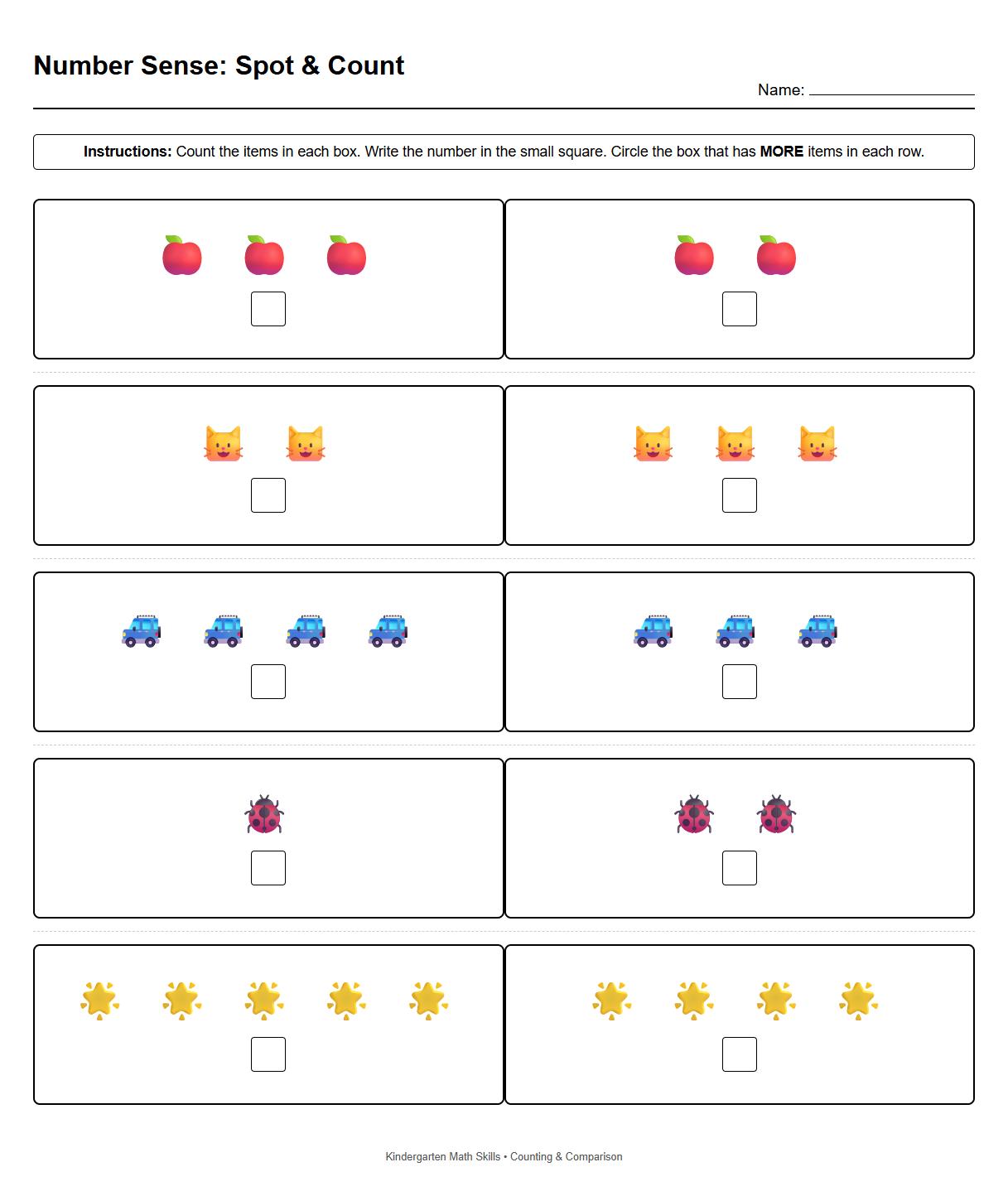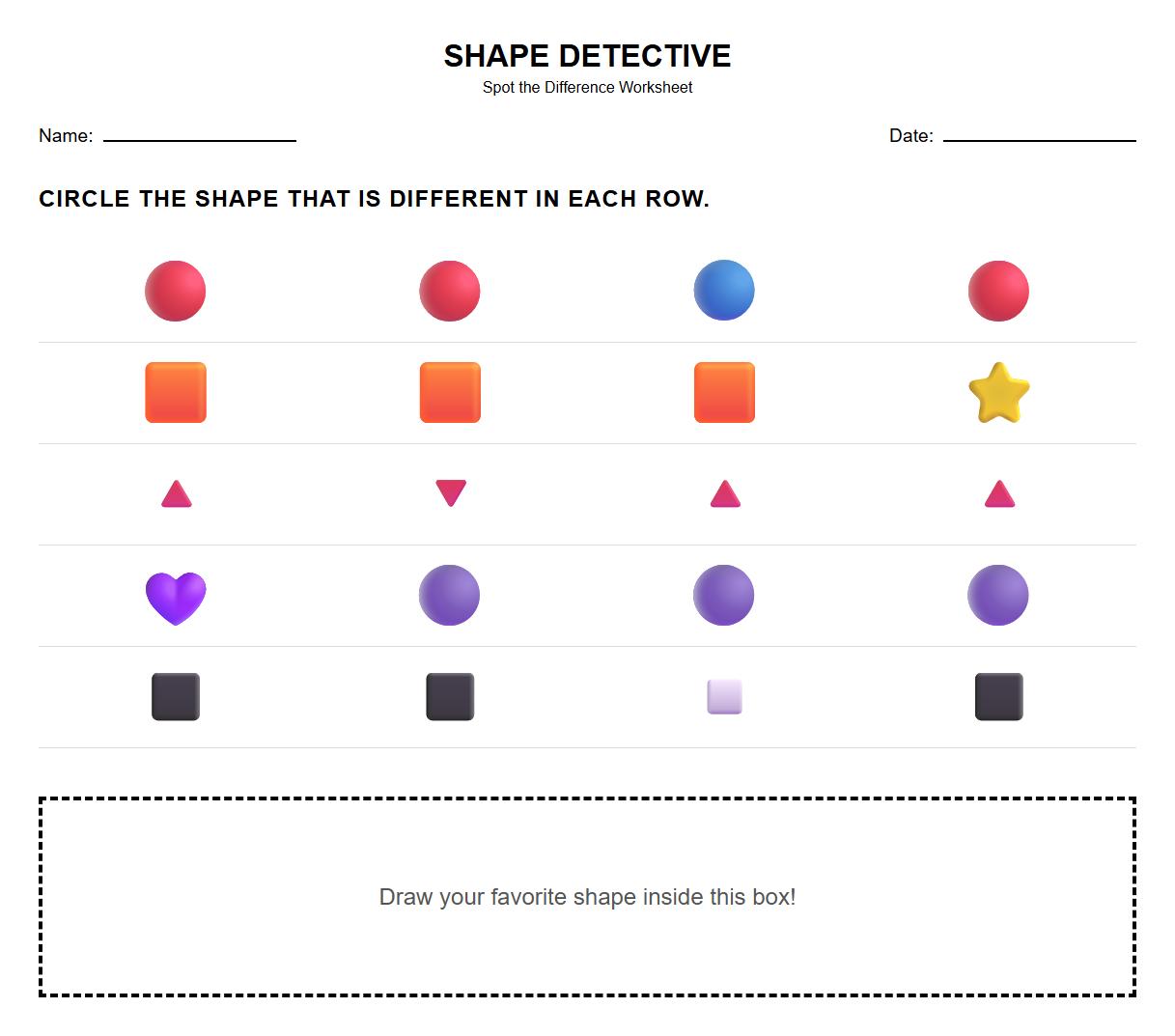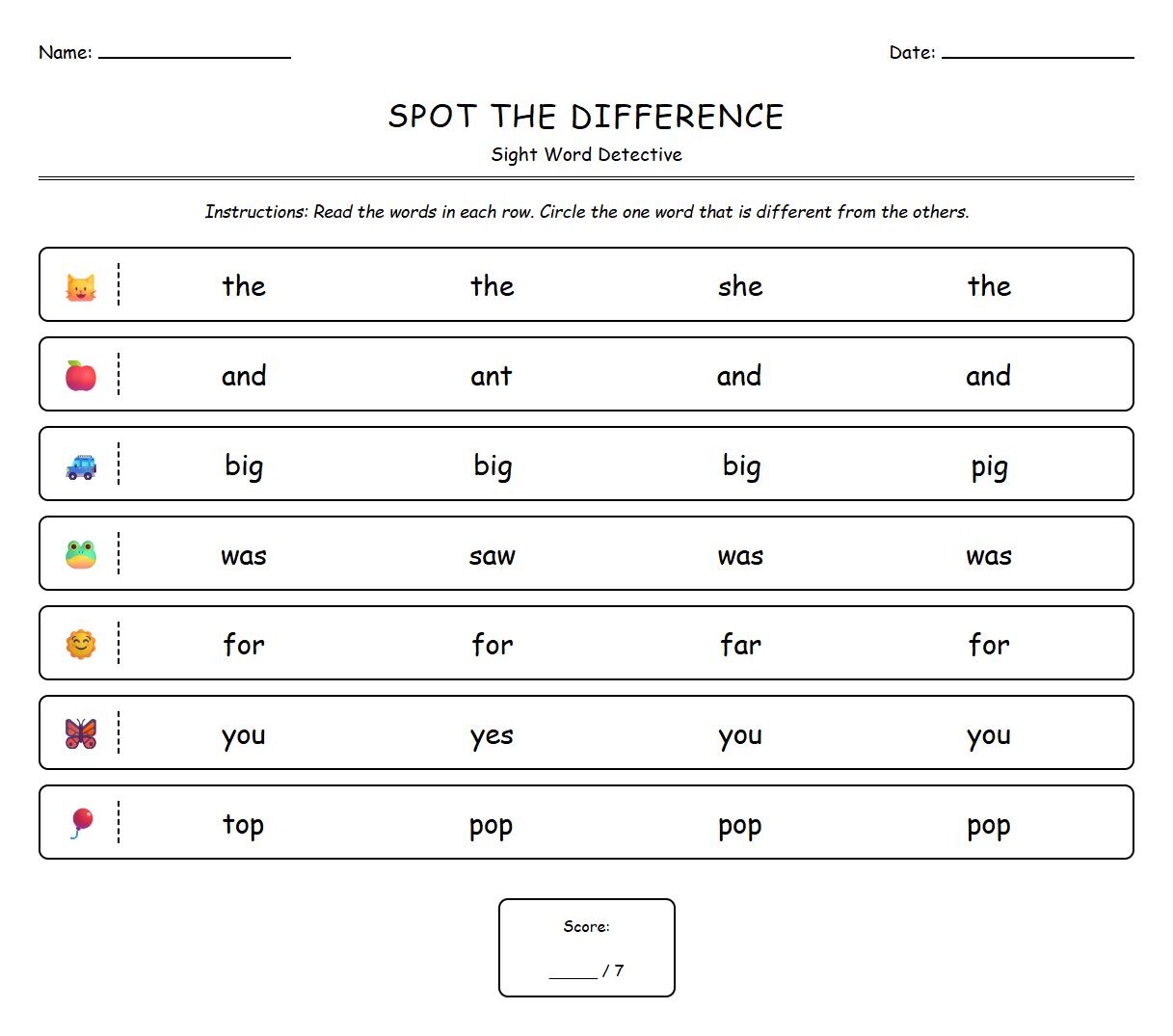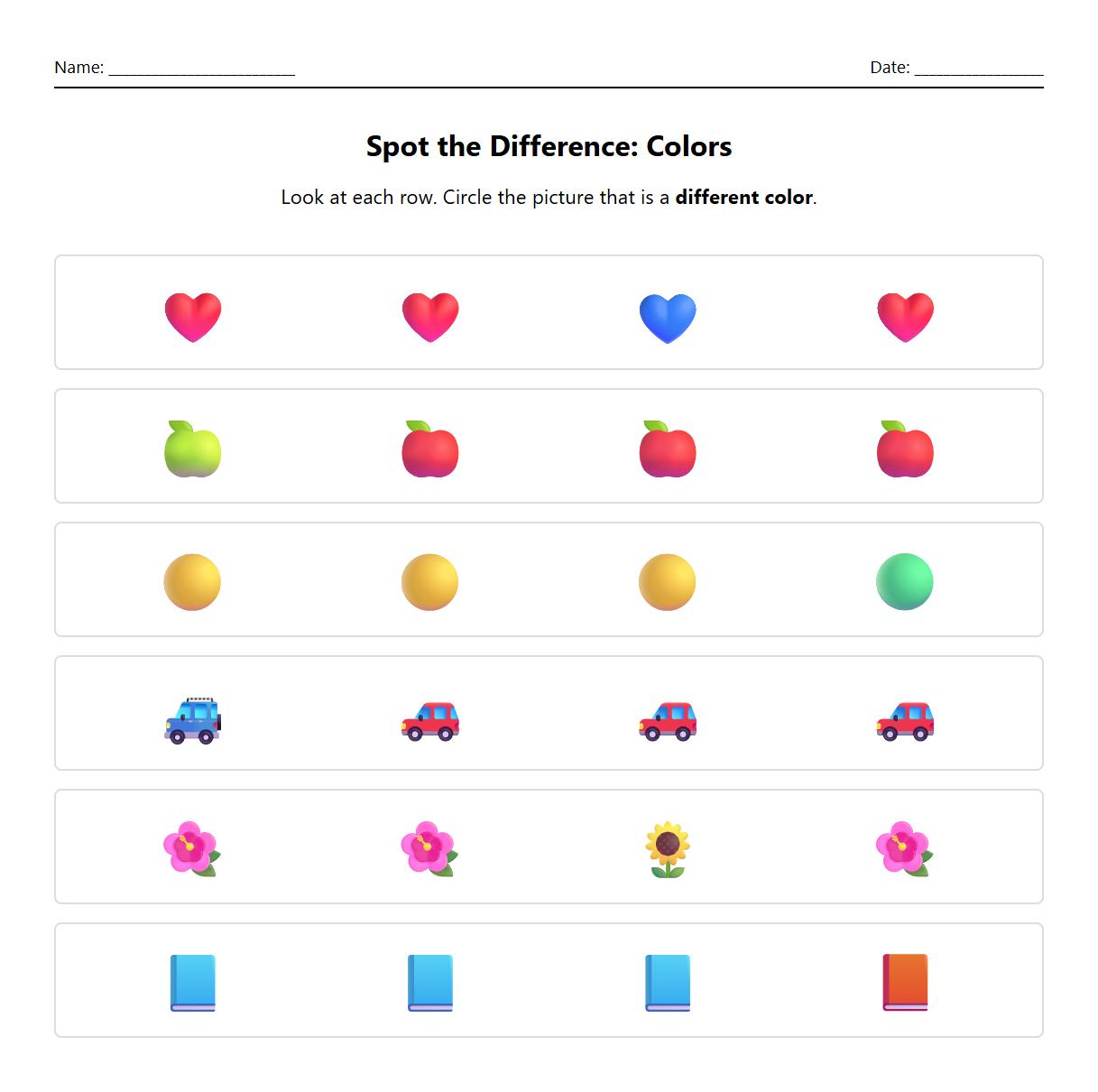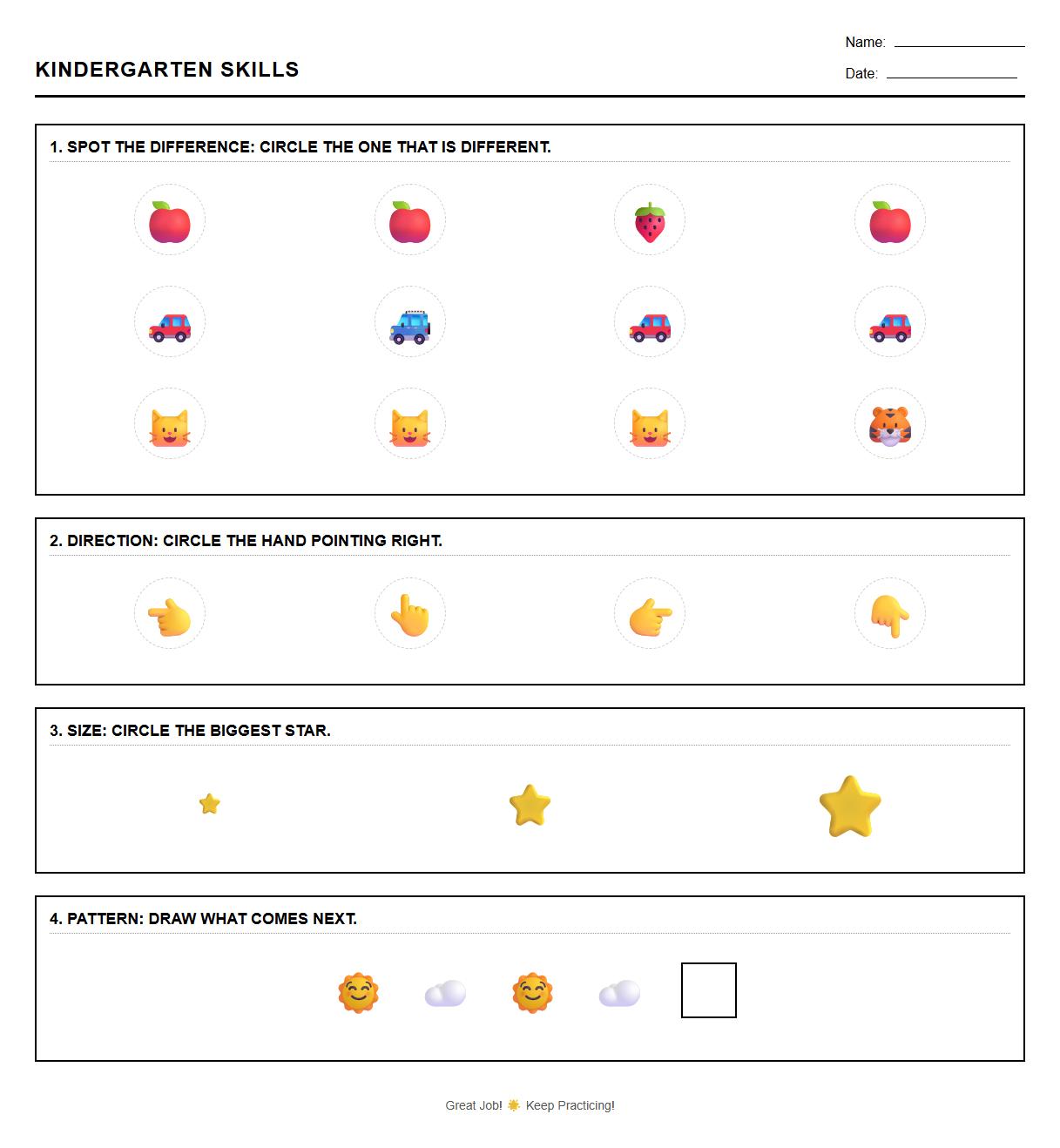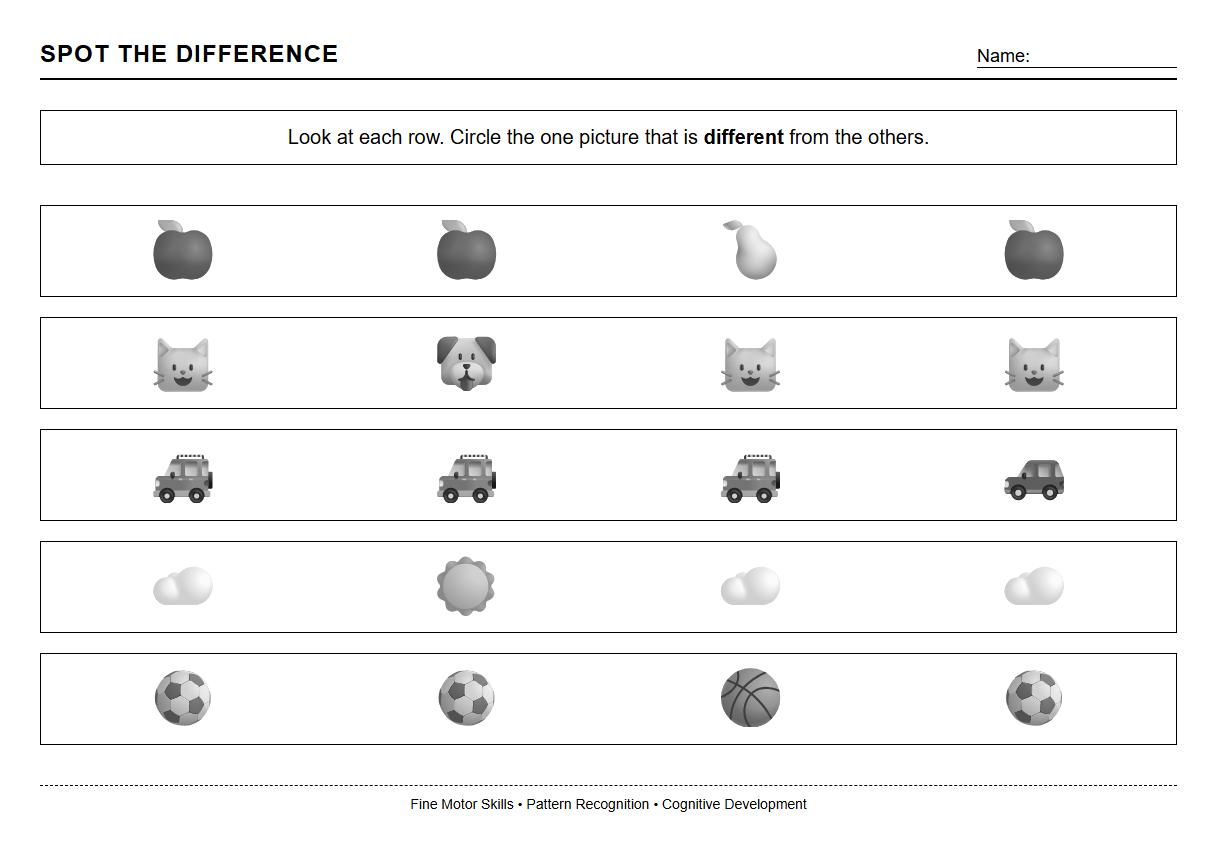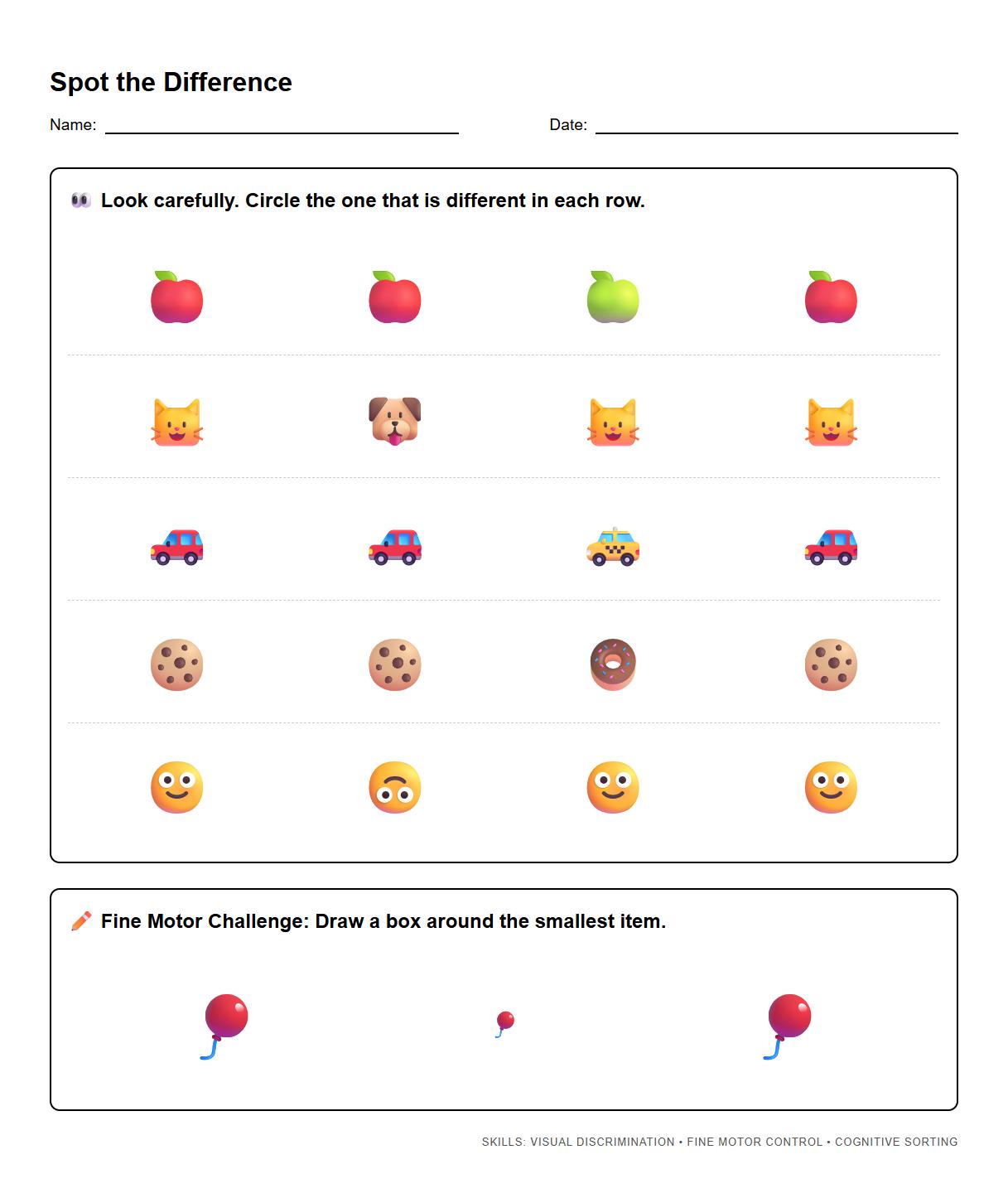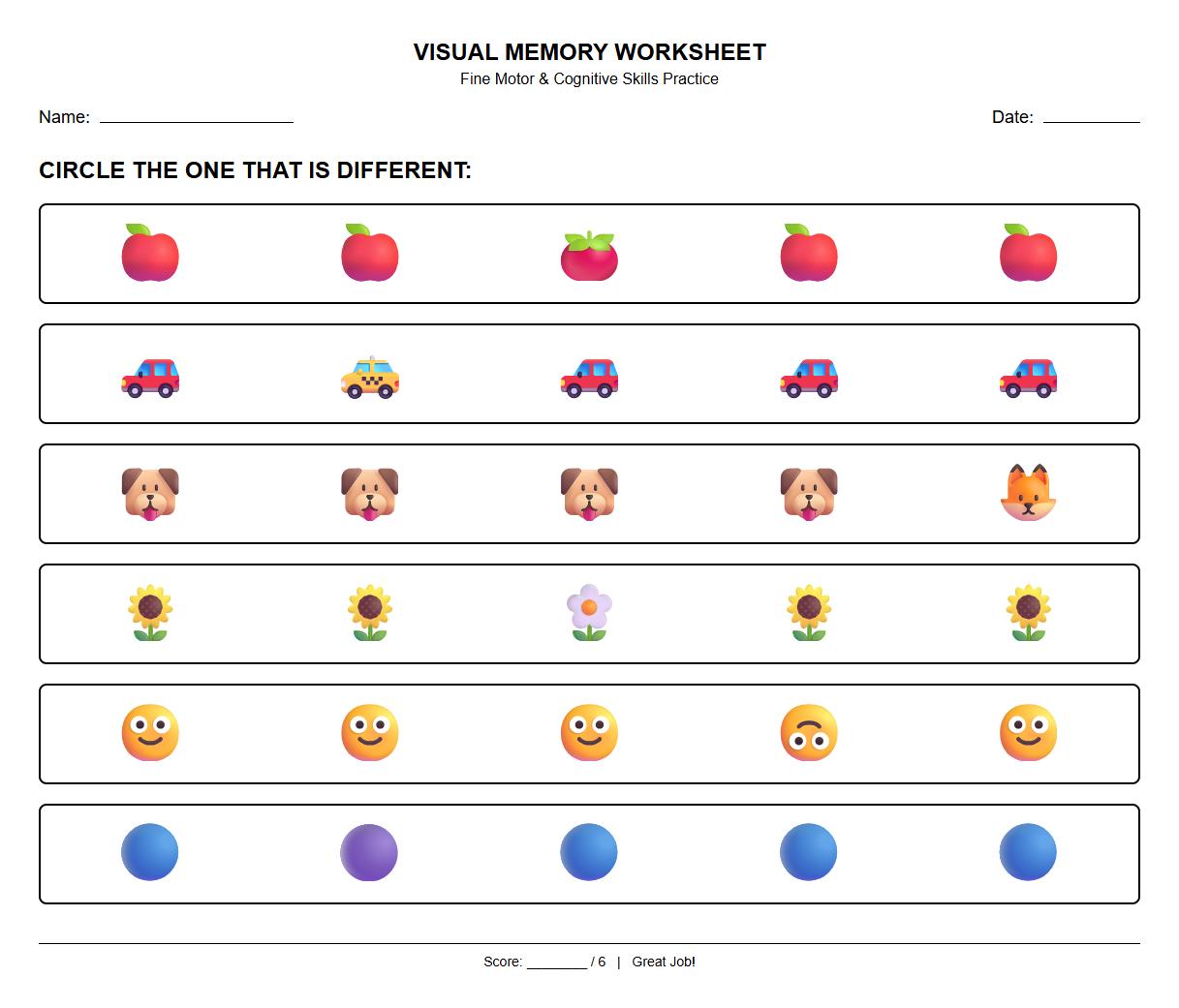
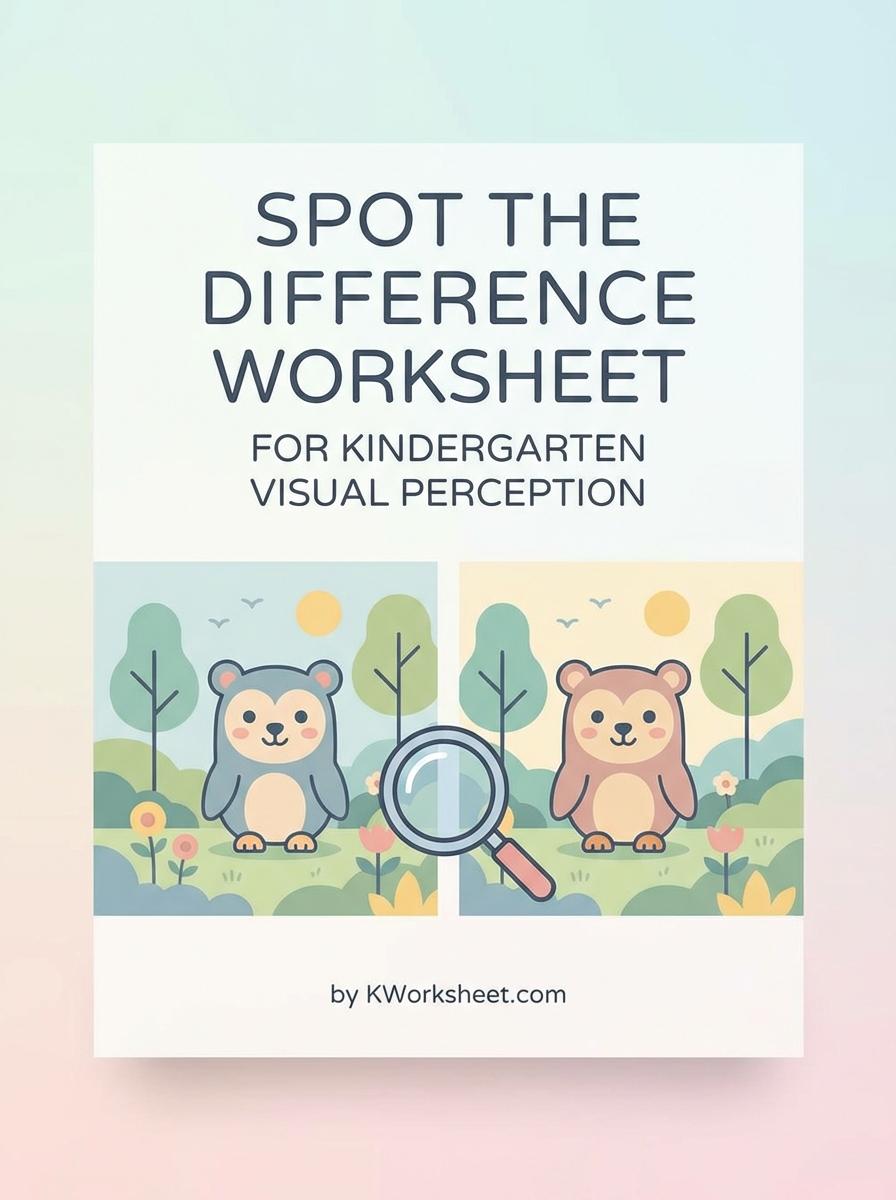
Spot the Difference worksheets enhance kindergarten visual perception by encouraging children to observe details and improve concentration skills. These activities boost cognitive development and support early learning by refining attention to subtle variations in images. Explore our carefully designed worksheets to help young learners develop sharper observation and critical thinking abilities.
Main Objective of Spot the Difference Worksheets for Kindergarten Students
The primary goal of spot the difference worksheets is to sharpen young learners' visual attention and focus by encouraging detailed observation. These activities engage children in comparing two similar images, helping them detect subtle differences. They foster cognitive development by enhancing critical thinking and problem-solving skills early on. Additionally, these worksheets build patience and perseverance in a fun and interactive way.
Enhancing Visual Perception Skills in Young Learners
Spot the difference activities boost visual perception by training children to notice and process visual details accurately. They improve the ability to distinguish shapes, colors, sizes, and spatial relationships through pattern recognition. This heightened visual awareness supports other skills like reading and writing readiness. Engaging regularly in these tasks strengthens neural connections related to visual discrimination.
Importance of Visual Discrimination Activities in Early Childhood Education
Visual discrimination is critical for early learning as it allows children to identify differences and similarities in their environment, aiding language, math, and literacy development. These activities enhance the ability to categorize and organize information effectively. They also support fine motor coordination and attention to detail, essential for classroom success. Early practice prevents future learning difficulties linked to visual processing.
Effective Types of Images for Kindergarten Spot the Difference Worksheets
Images used should be colorful, engaging, and age-appropriate featuring familiar objects like animals, toys, or scenes from daily life. Simple yet distinct differences, such as changes in shape, color, or the presence/absence of an item, work best. Visual complexity should be moderate to balance challenge and accessibility for young children. Clear, uncluttered images help maintain focus and reduce frustration.
Assessing Student Progress Using Spot the Difference Worksheets
Teachers can monitor progress by noting the accuracy and speed with which students identify differences over time. Observing strategies children use and their persistence can reveal growth in visual discrimination and problem-solving. Regular use of worksheets allows for identifying those who may need extra support. Results can inform individualized instruction and targeted interventions.
Strategies to Support Children Struggling with Visual Perception Tasks
Breaking tasks into smaller steps and providing guided practice helps children overcome difficulties. Using verbal cues and highlighting differences visually can scaffold learning effectively. Incorporating multisensory activities strengthens overall perception skills and keeps children engaged. Positive reinforcement and patience are key to building confidence in challenging visual tasks.
Ideal Number of Differences for Kindergarten Worksheets
An ideal worksheet includes between 5 to 7 differences to maintain an optimal challenge without causing frustration. This range is manageable for young learners' attention spans and processing abilities. Fewer differences may reduce engagement, while too many can overwhelm and discourage. Adjustments can be made based on students' skill levels.
Cognitive Skills Developed Through Spot the Difference Activities
These activities develop attention to detail, visual discrimination, memory, and problem-solving skills. They encourage sustained focus and improve spatial awareness by requiring comparisons between images. Additionally, children enhance their executive functioning, including planning and decision-making. Such cognitive growth lays a strong foundation for academic success.
Integration Into a Broader Kindergarten Curriculum
Spot the difference worksheets complement subjects like literacy and math by reinforcing observation and critical thinking. They can be incorporated into thematic units, art activities, or as warm-up exercises to stimulate concentration. Collaboration with peers during these tasks promotes social learning and communication. Their versatility supports diverse teaching objectives across the curriculum.
Adapting Spot the Difference Worksheets for Learners with Visual Impairments
For children with visual impairments, using high-contrast images and larger details enhances accessibility. Tactile versions with raised textures can substitute traditional worksheets to support touch-based discrimination. Incorporating audio descriptions or assistive technology also aids engagement. Customizing tasks ensures inclusivity and supports all learners' development.


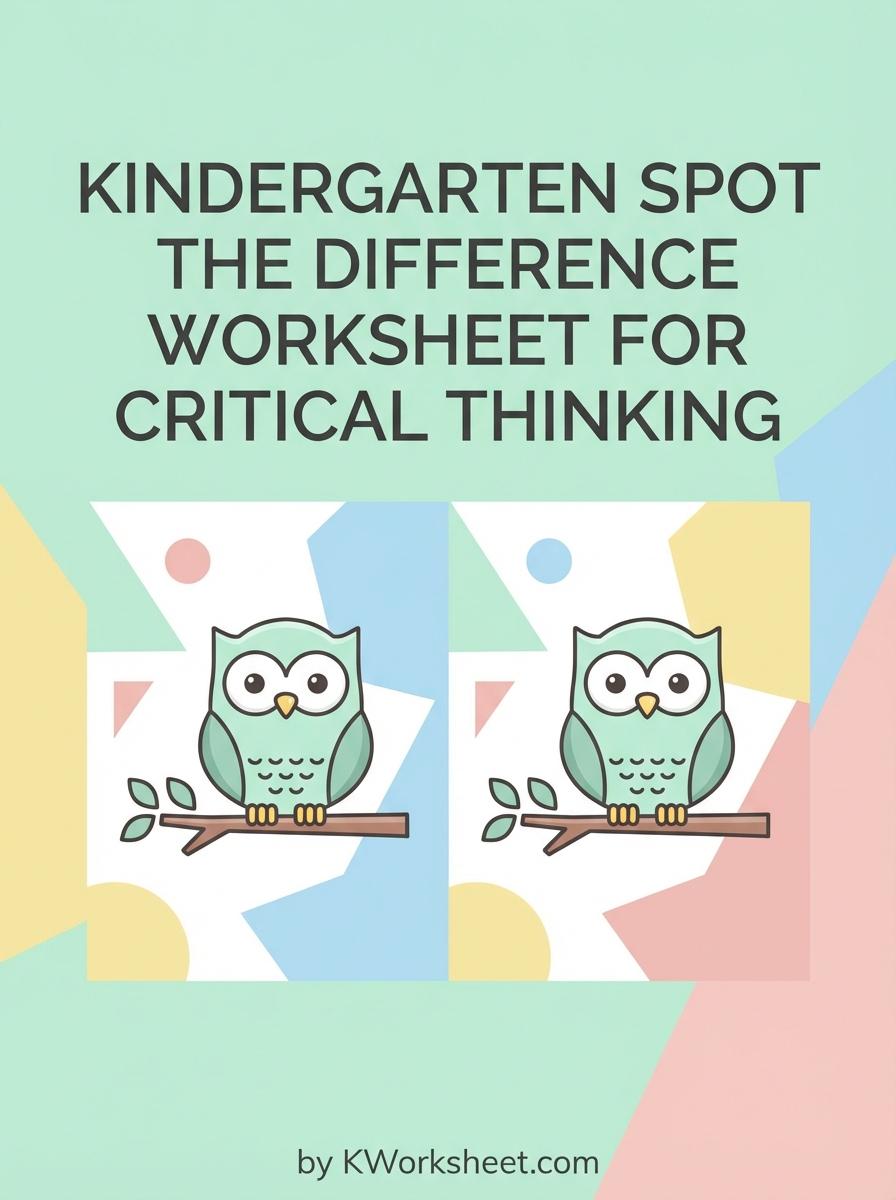
Kindergarten Spot the Difference Worksheet for Critical Thinking