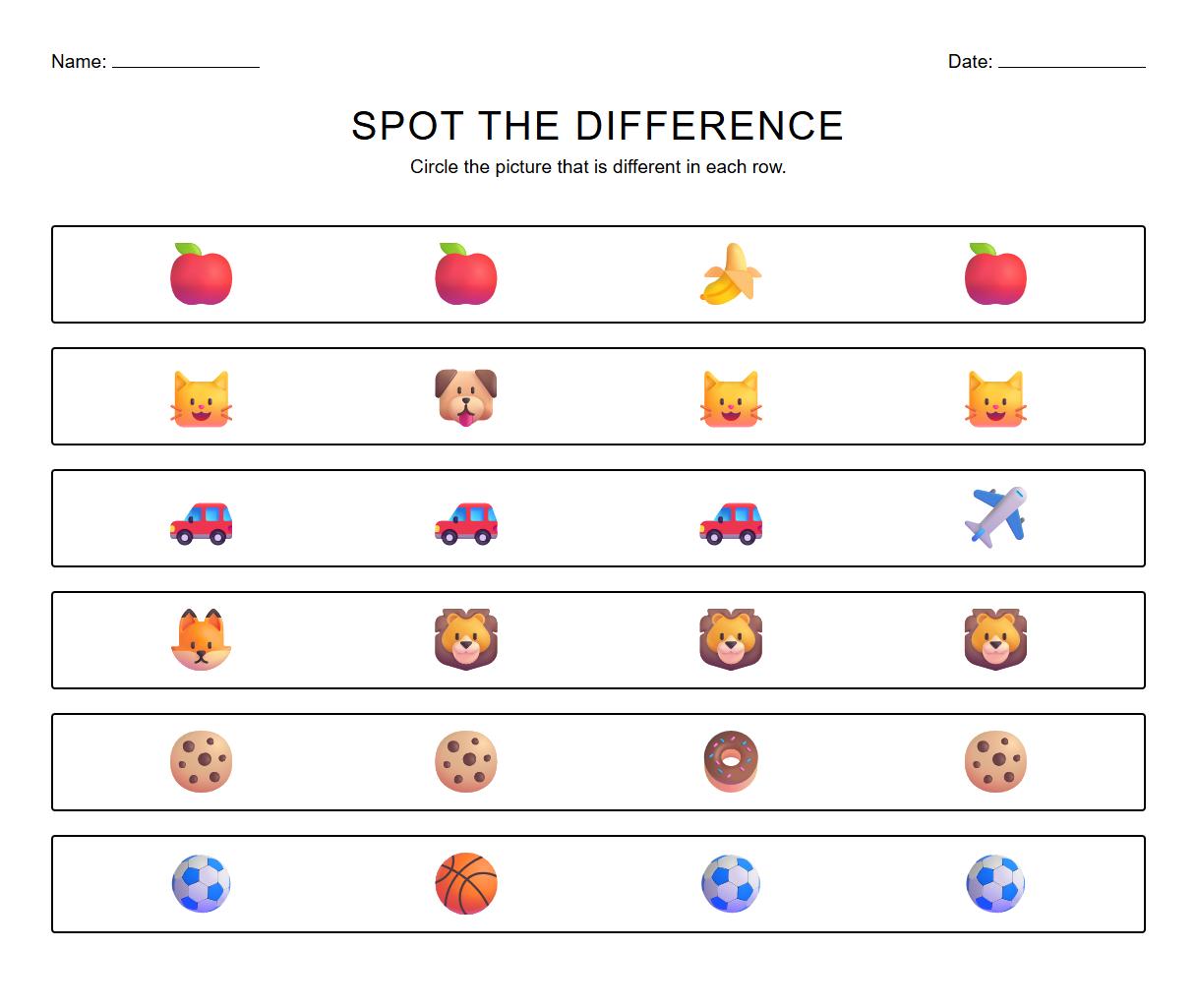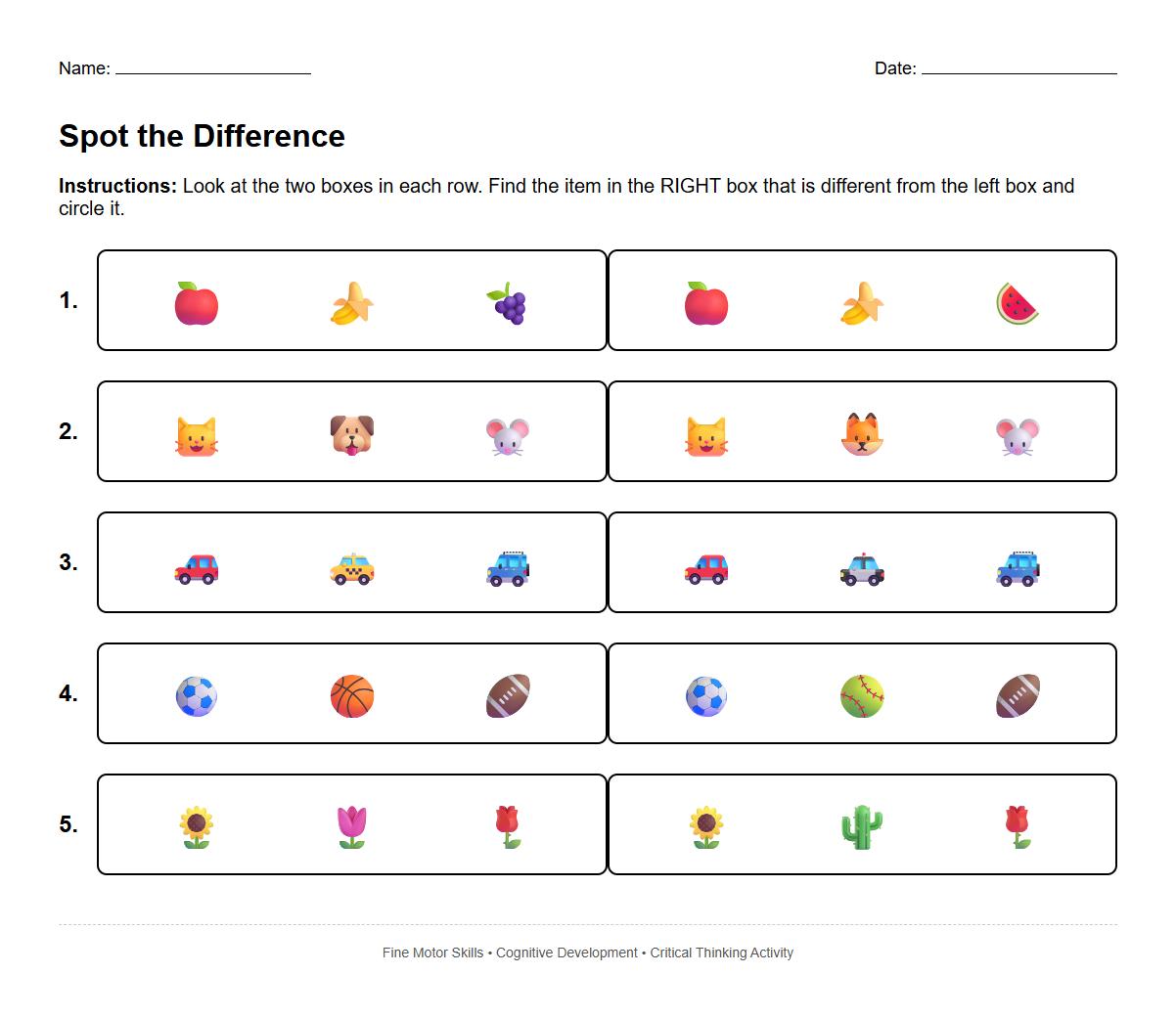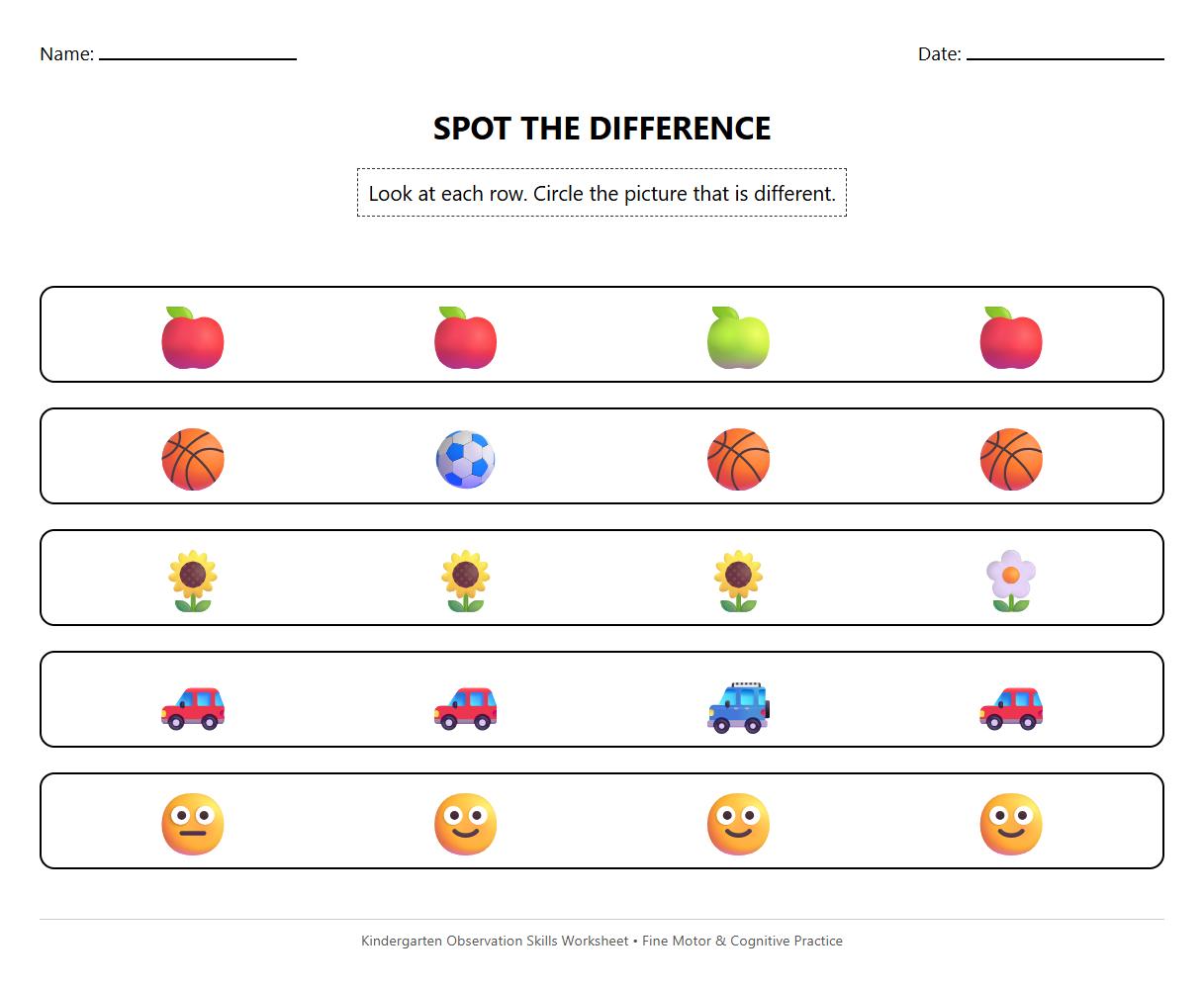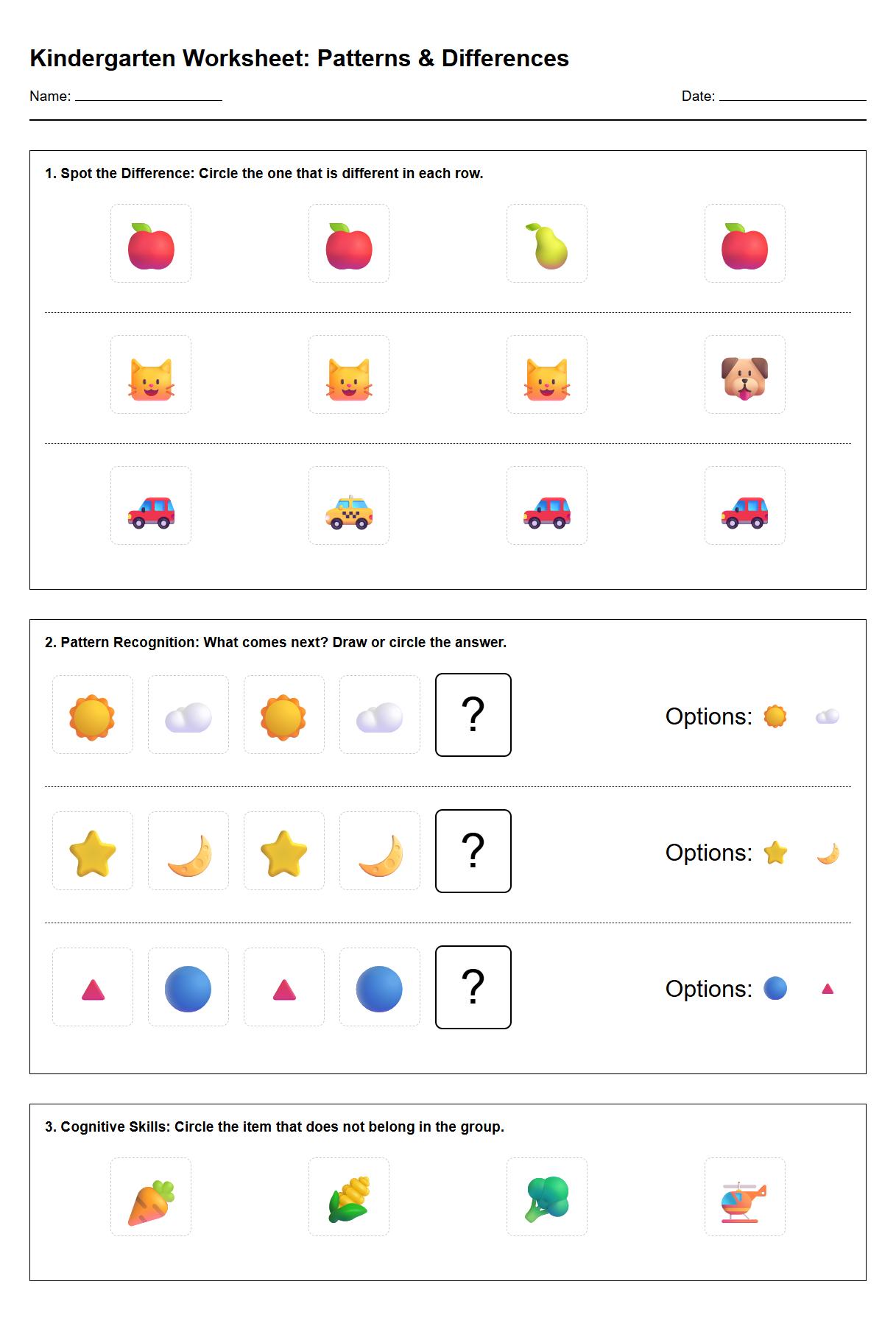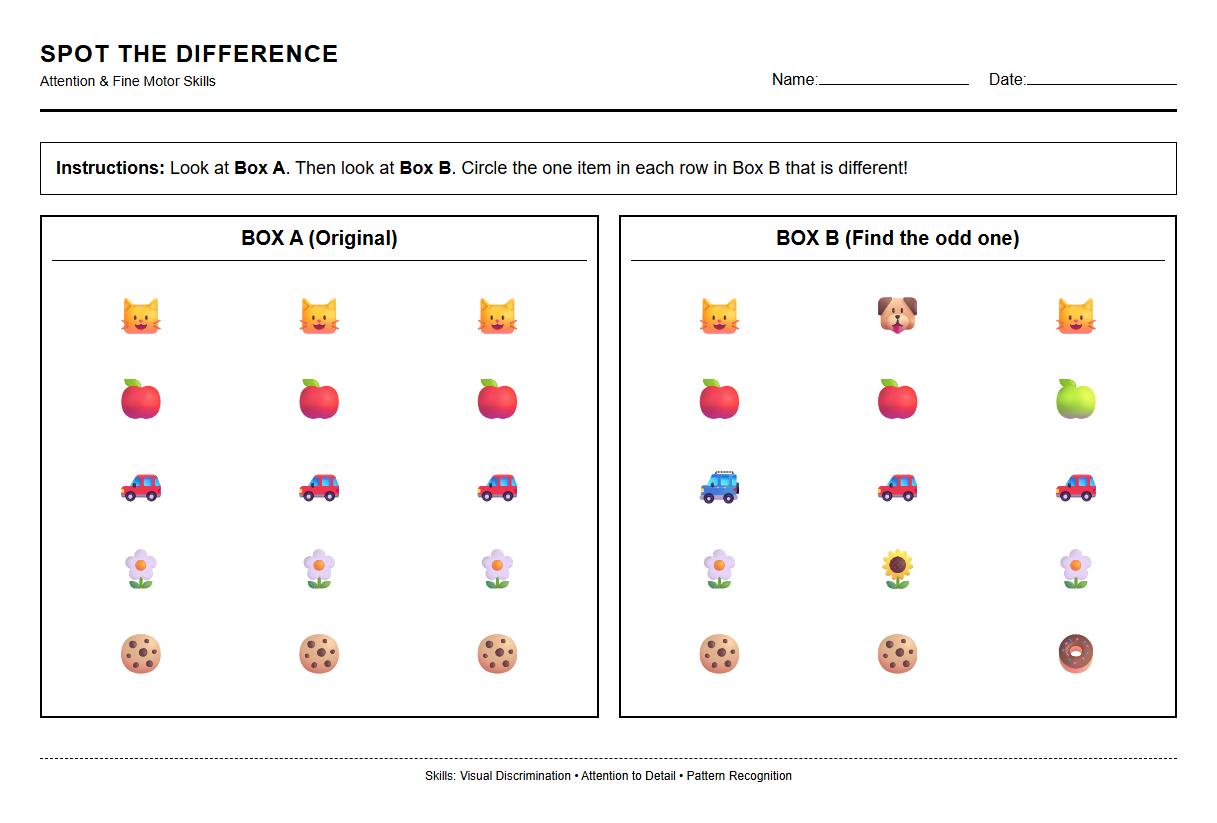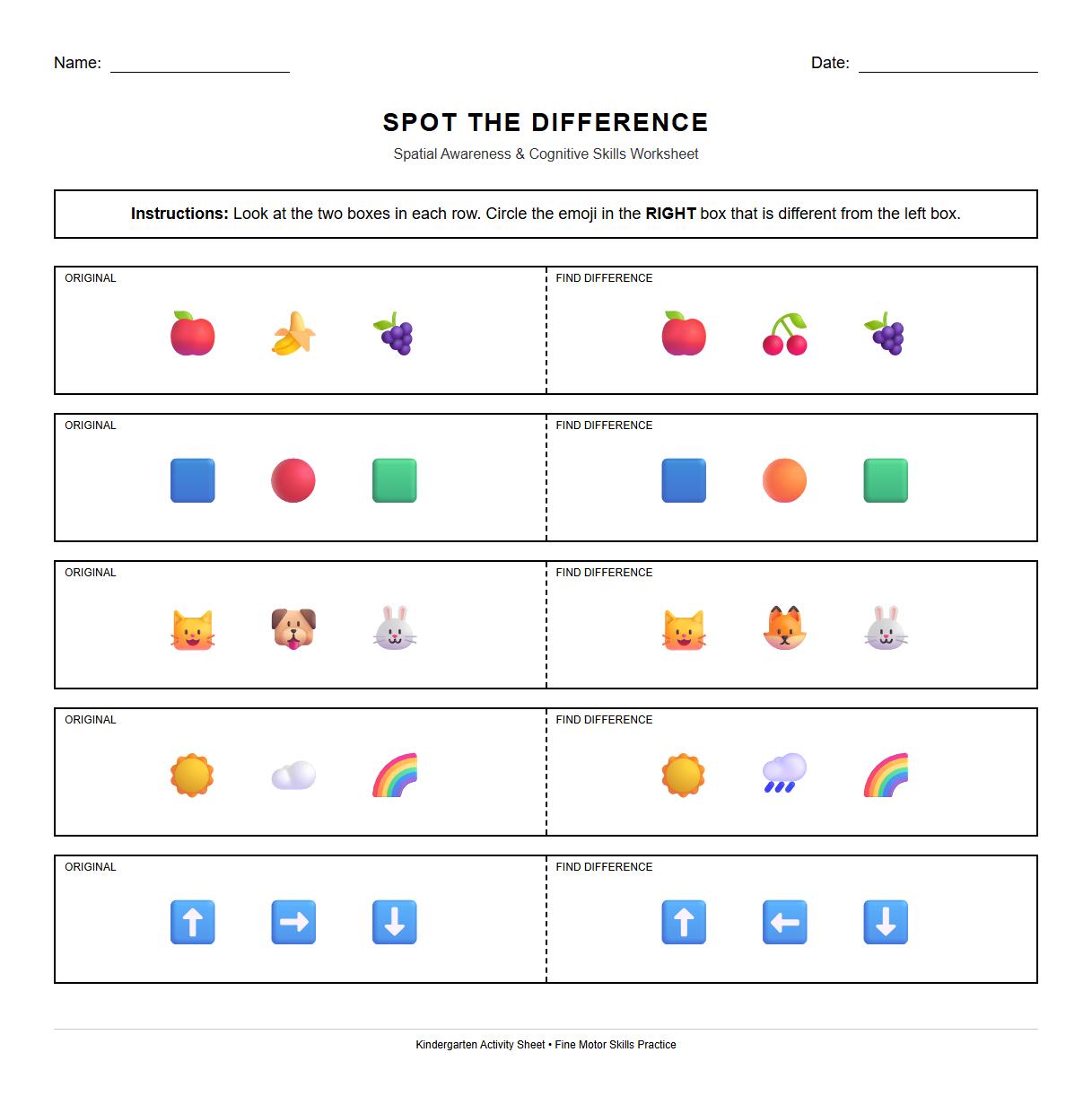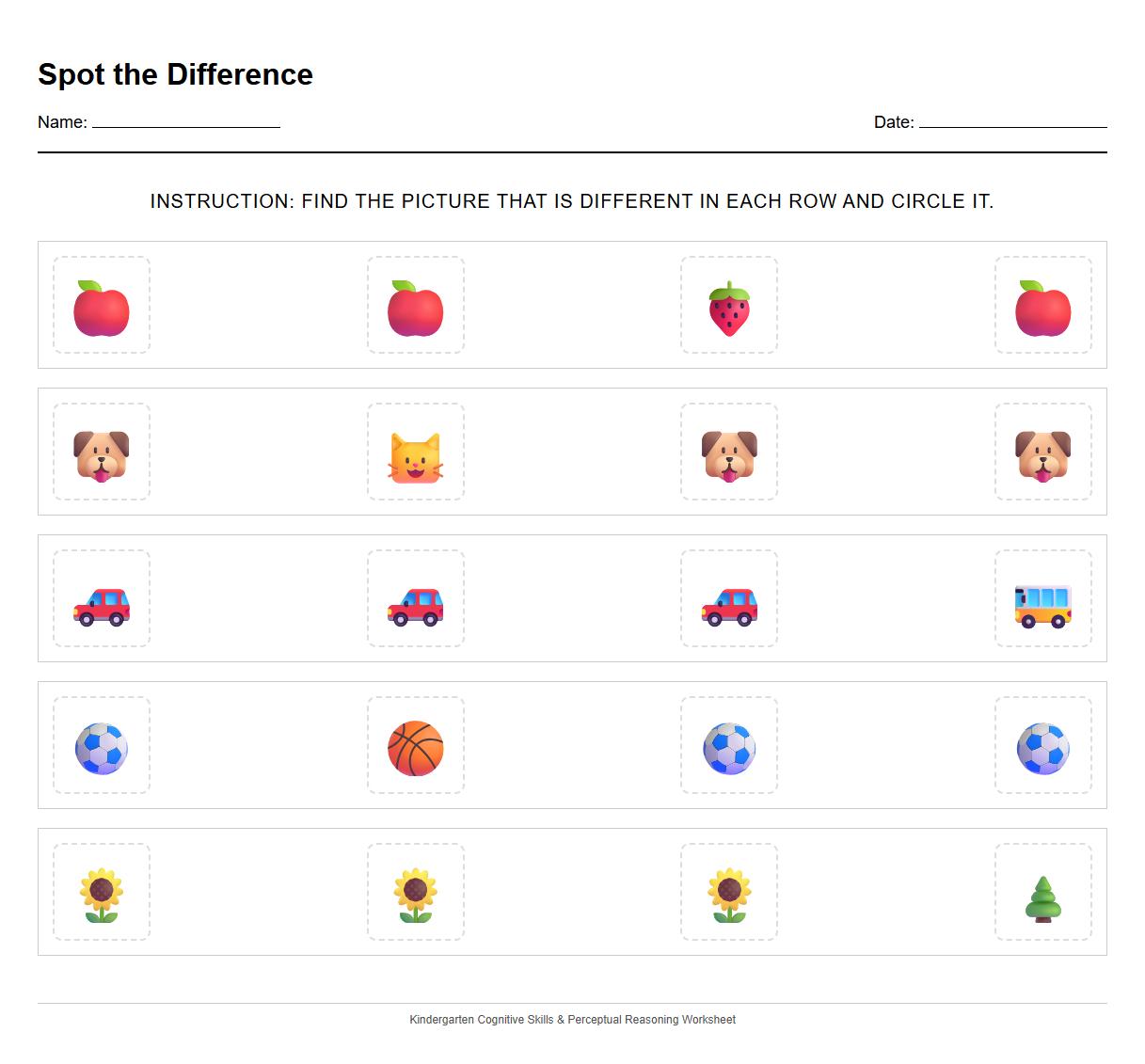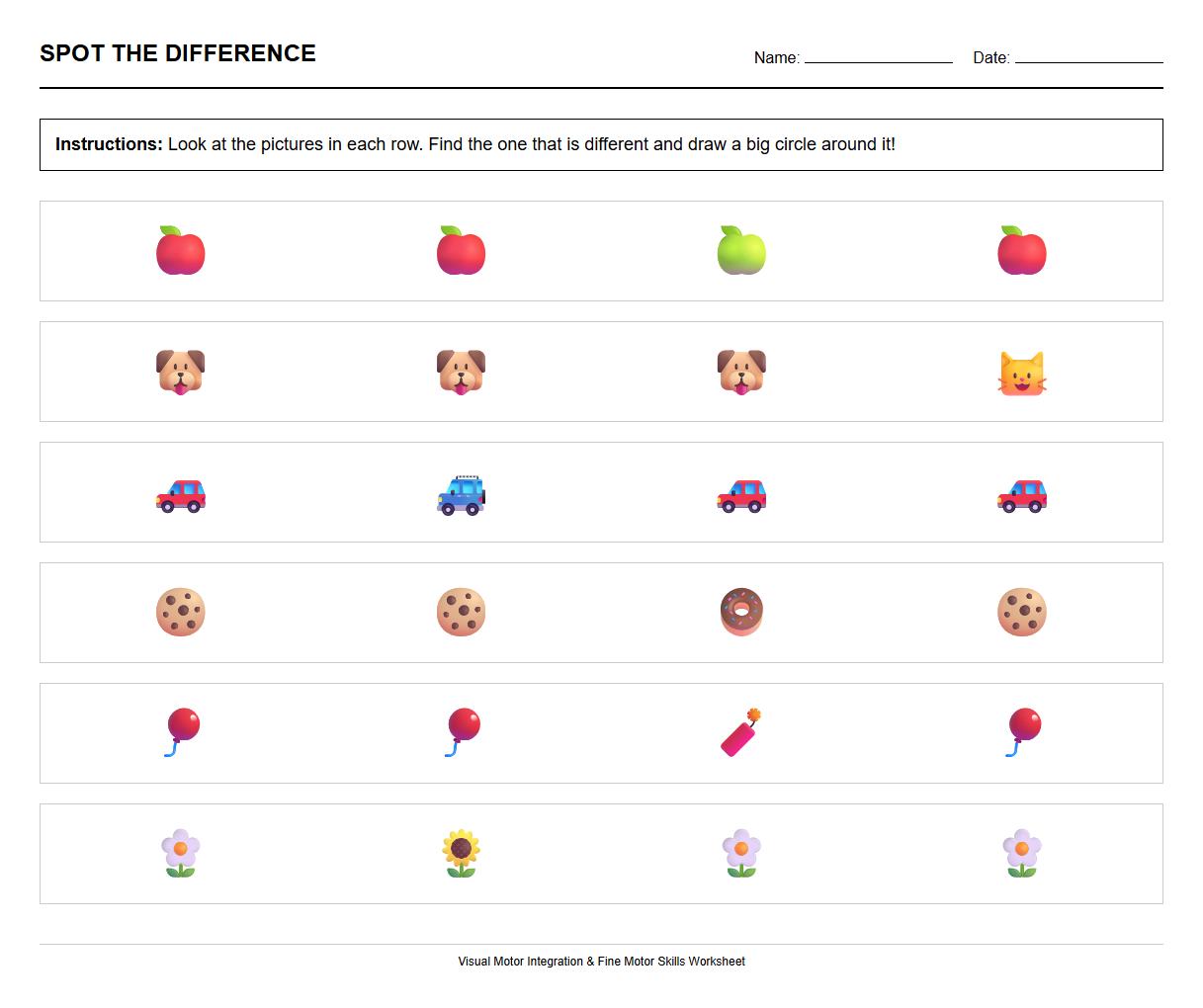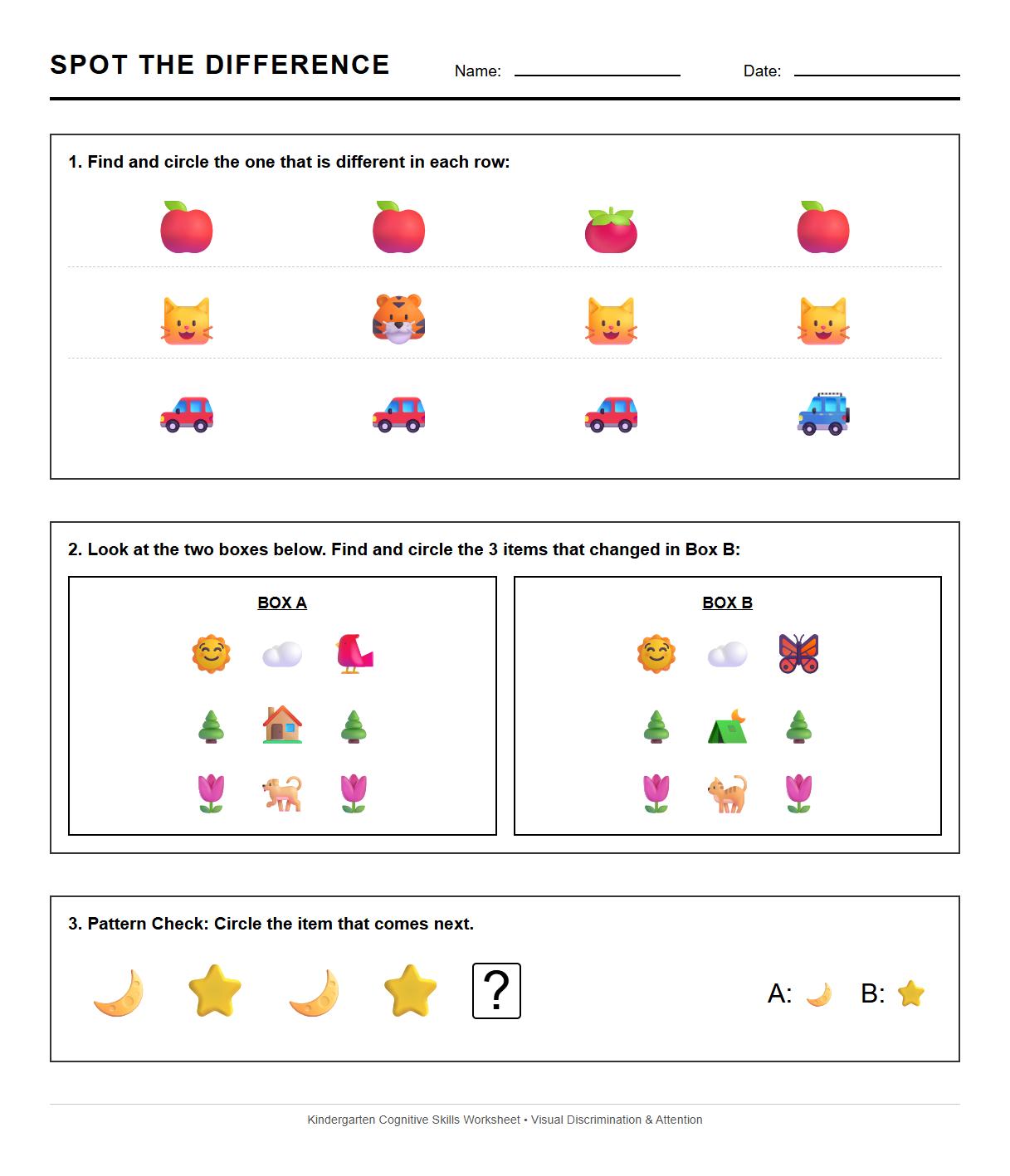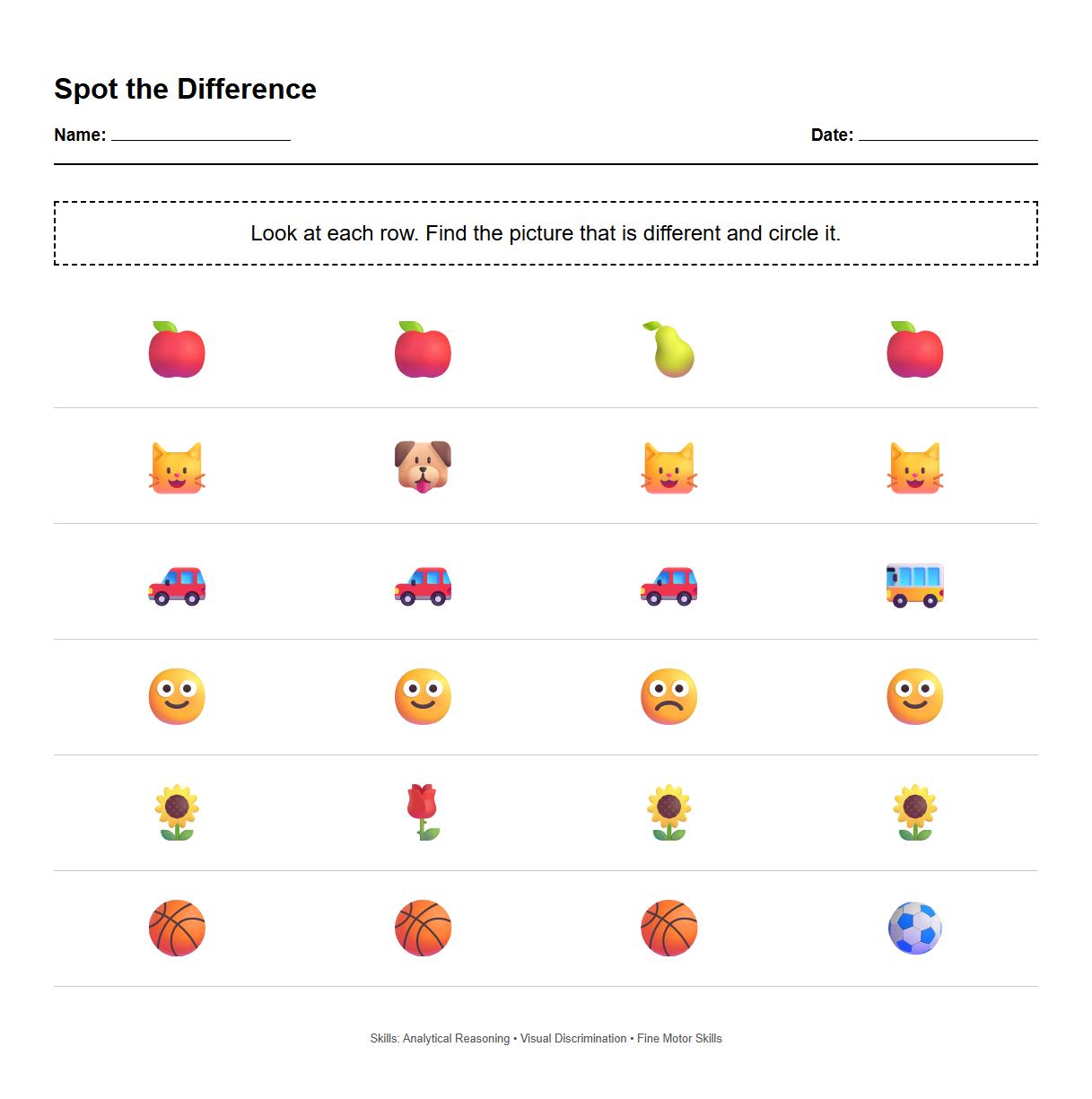
Spot the Difference worksheets for kindergarten enhance visual discrimination and attention to detail, key skills in early cognitive development. Identifying subtle variations between pictures sharpens observation and critical thinking abilities. Explore our collection of engaging spot the difference worksheets to boost your child's learning journey.
How Spotting Differences Enhances Visual Discrimination Skills in Kindergarten Students
Spotting differences helps kindergarten students develop visual discrimination skills by training their eyes to notice subtle variations in shapes, colors, and patterns. This ability is crucial for reading readiness and general observation. By practicing these activities, children improve their focus and attention to detail. Enhanced visual discrimination lays a foundation for more complex learning tasks.
Ways Spot the Difference Worksheets Support Cognitive Development in Early Learners
Spot the difference worksheets boost cognitive development by encouraging problem-solving and critical thinking. Students compare images, analyze details, and use memory to identify discrepancies. These tasks strengthen working memory and attention span. They also help build patience and persistence through engaging challenges.
Types of Images Most Effective for Engaging Kindergartners in Spot the Difference Activities
The most engaging images for kindergartners are colorful, familiar, and relatable scenes, such as animals, playgrounds, or everyday objects. Using simple yet distinct visual elements keeps children interested without overwhelming them. Cartoon-style pictures with clear, bold features are also effective. Varied themes hold attention and encourage repeated practice.
Frequency of Including Spot the Difference Worksheets in the Kindergarten Curriculum
Teachers should include spot the difference worksheets regularly but balanced within their curriculum, ideally 1-2 times per week. This frequency ensures skill reinforcement without causing monotony. Integrating these activities alongside other learning tools maximizes developmental benefits. Consistency helps track progress and develop sustained attention.
Best Practices for Designing Spot the Difference Worksheets for Young Children
Effective worksheets feature clear, simple images with a moderate number of differences to match developmental levels. Use high contrast and bold colors for better visibility. Instructions should be concise and age-appropriate. Balancing challenge with achievability fosters both confidence and skill growth.
Assessing a Kindergartner's Progress Using Spot the Difference Worksheets
Teachers can assess progress by observing accuracy, time taken, and ability to verbalize differences. Tracking improvement over multiple worksheets helps identify growth in visual discrimination and attention. Providing feedback encourages student engagement and highlights areas needing support. Informal assessments during group activities also offer insights into cognitive development.
Additional Skills Fostered Through Spot the Difference Activities
Besides cognitive growth, spot the difference activities nurture fine motor skills as children point or circle differences. They also enhance social skills when done collaboratively, promoting communication and turn-taking. Emotional skills like patience and persistence are strengthened through focused effort. These activities thus support holistic early childhood development.
Using Spot the Difference Worksheets at Home to Reinforce Classroom Learning
Parents can reinforce learning by incorporating spot the difference worksheets into daily routines, making the activity a fun shared experience. Encouraging children to explain their findings builds language skills and confidence. Parents should provide a supportive atmosphere without pressure. Home practice complements classroom instruction and solidifies skills.
Adaptations to Support Children with Learning Differences Using Spot the Difference Activities
Adapting worksheets with fewer differences, larger images, and simplified visuals helps children with learning differences engage successfully. Providing verbal cues or guiding questions can scaffold understanding. Multi-sensory options, like tactile versions, support diverse learners. Flexibility ensures inclusivity and maximizes participation.
Digital Tools or Apps That Complement Traditional Spot the Difference Worksheets in Kindergarten Education
Digital platforms like ABCmouse and Starfall offer interactive spot the difference games suited for young learners. These apps provide instant feedback and adapt difficulty based on performance. Incorporating technology alongside paper worksheets enhances engagement and accessibility. Blending both methods caters to varied learning styles.


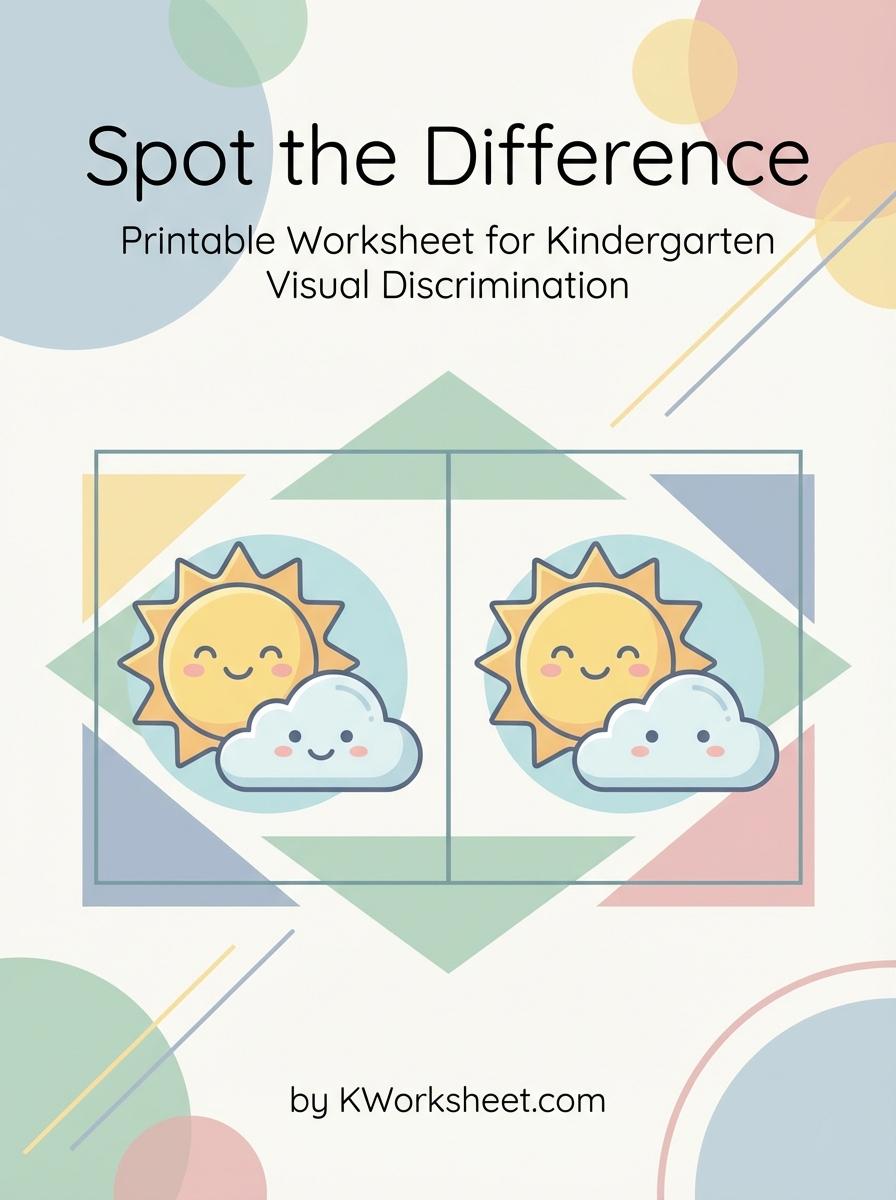
Spot the Difference Printable Worksheet for Kindergarten Visual Discrimination