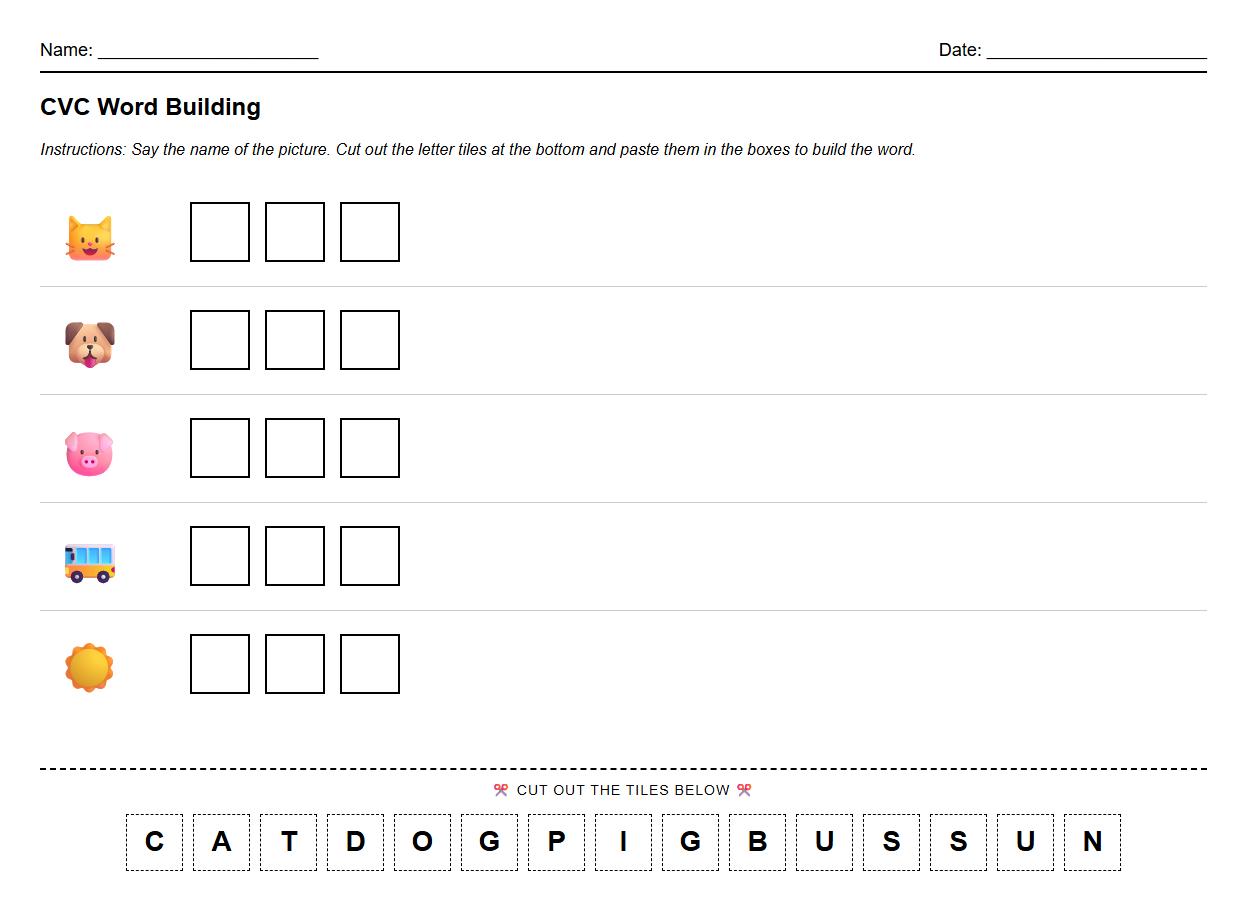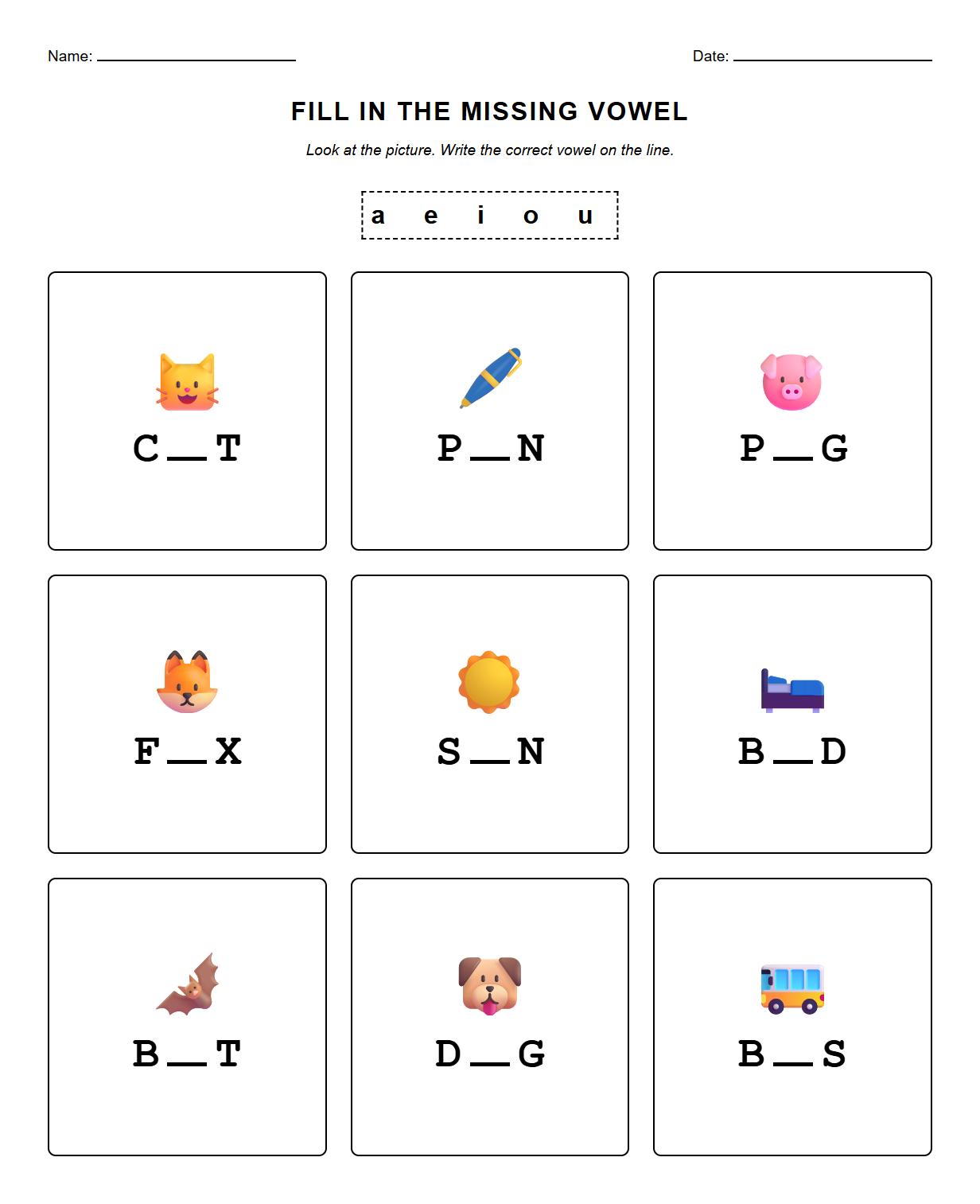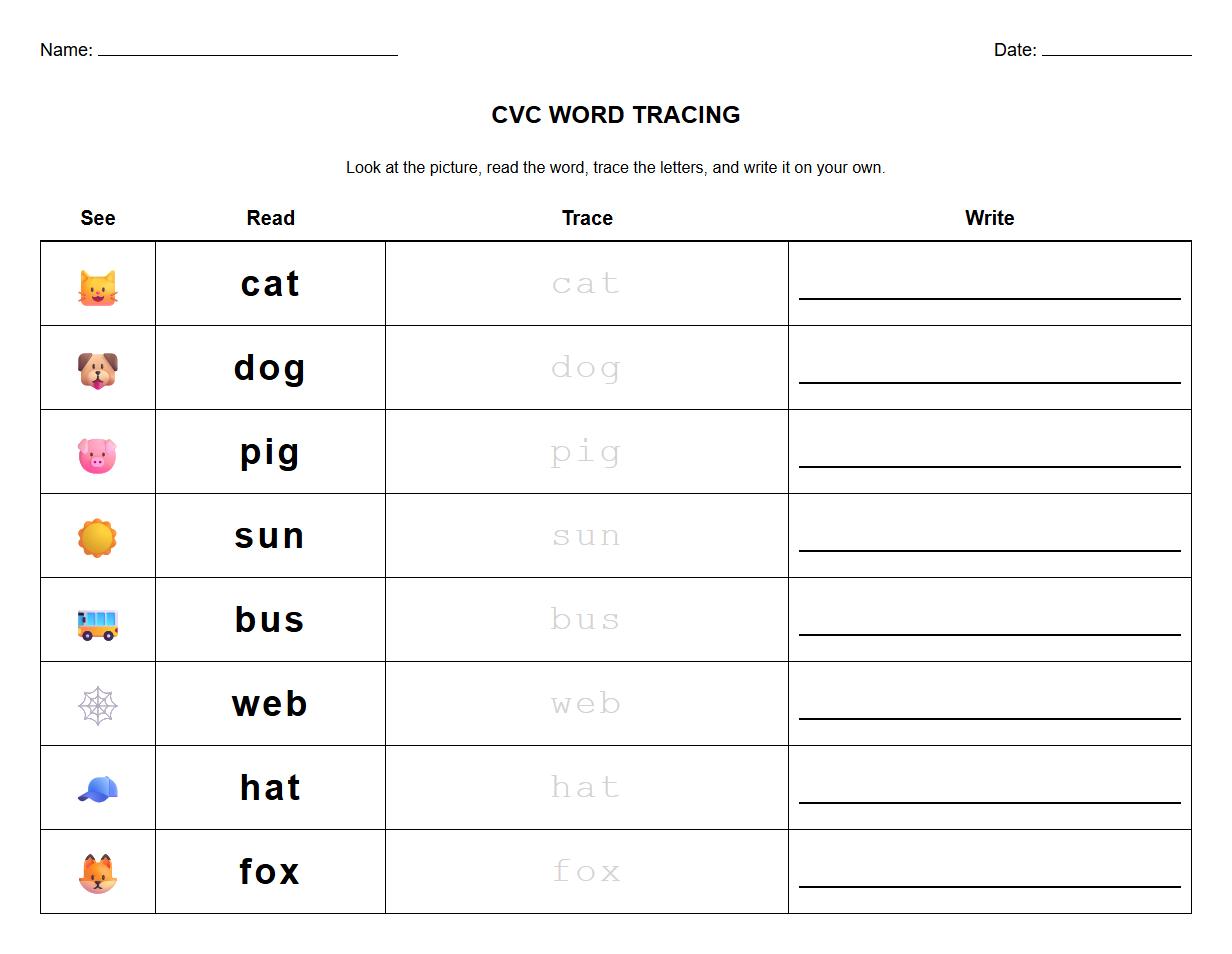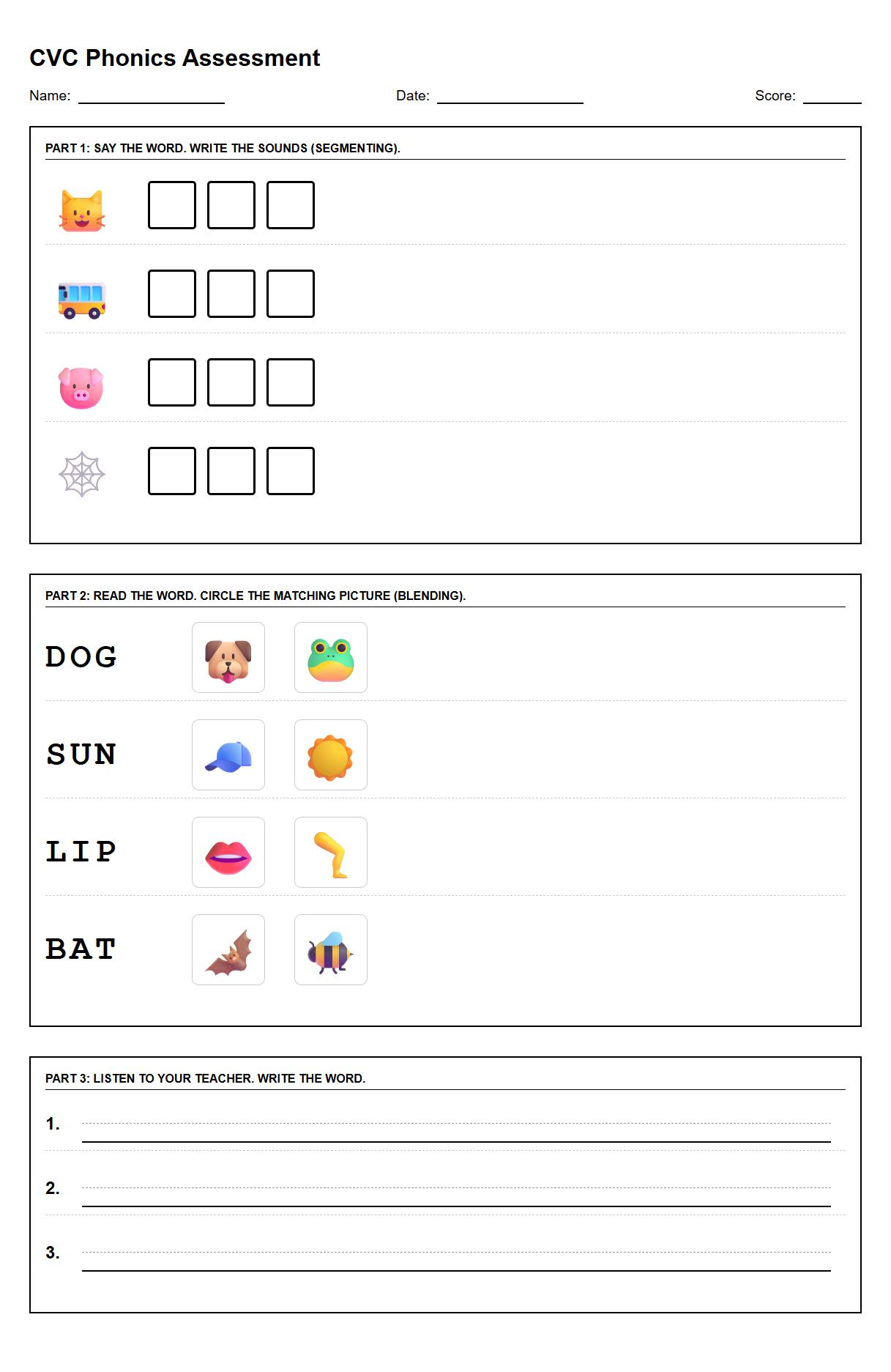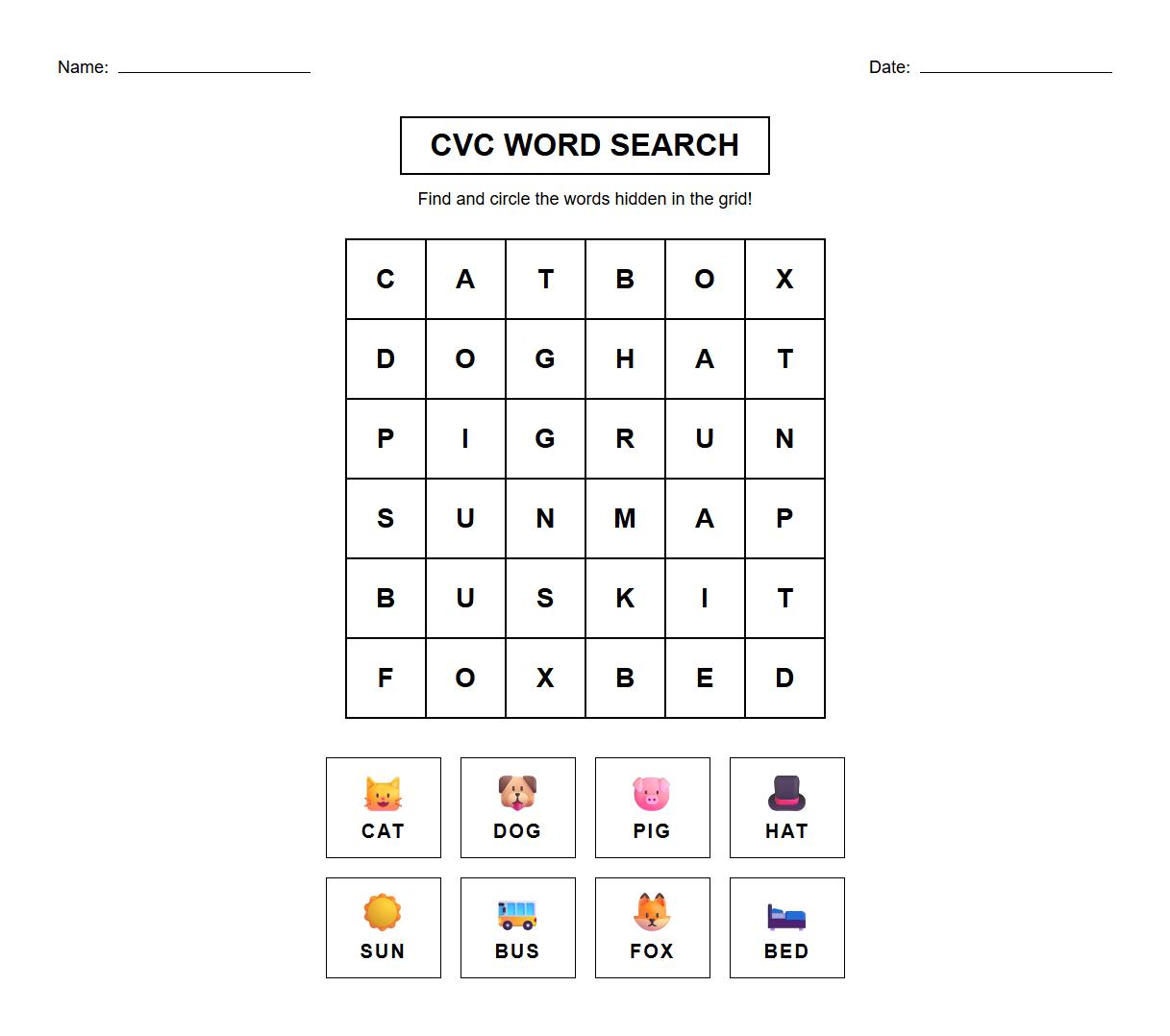
Mastering beginning phonics skills is essential for early readers to confidently decode CVC (consonant-vowel-consonant) words and build foundational literacy. These worksheets focus on targeted practice with simple three-letter words, enhancing letter-sound recognition and blending abilities. Explore the available worksheets to support your child's phonics journey effectively.
Understanding the Sound of the First Letter in "Cat"
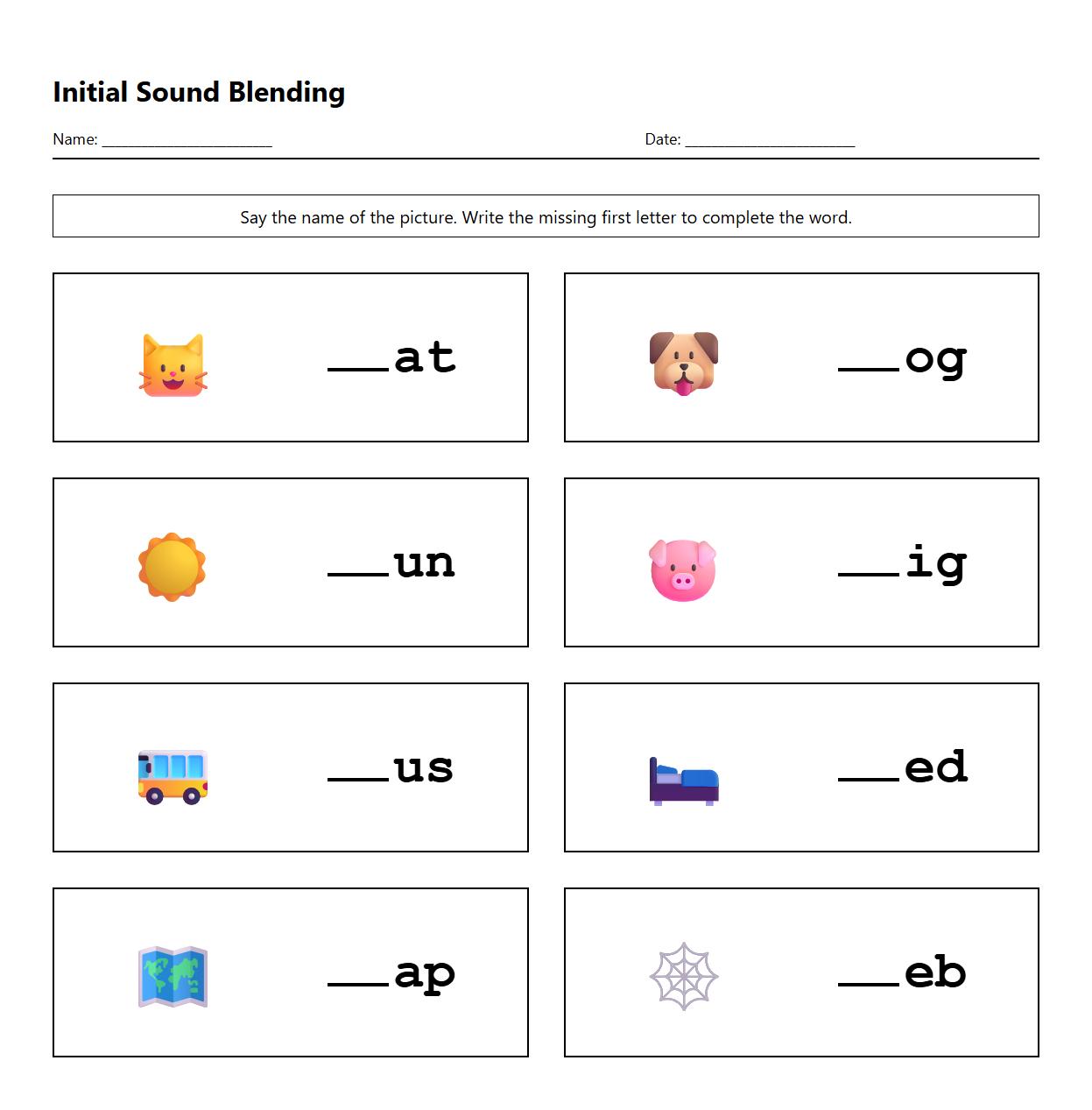
Teachers and parents should help children identify the initial sound in "cat." The first letter "c" makes a /k/ sound, which is crucial for early phonics skills. Recognizing these sounds aids in developing strong reading foundations. Encourage children to say the sound and the word aloud for better retention.
Circling the CVC Word that Rhymes with "Dog"
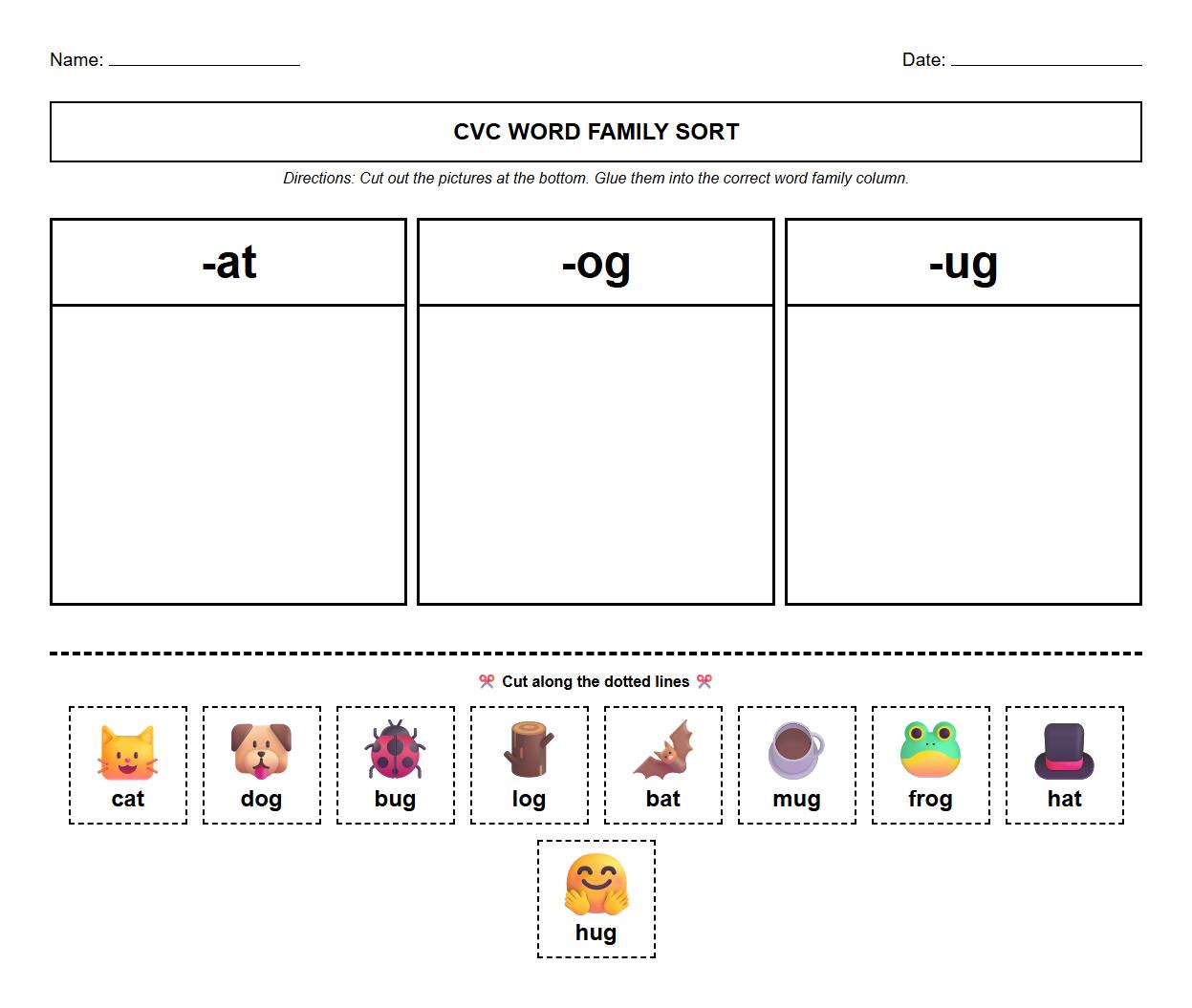
Guide children to find the CVC word that rhymes with "dog," such as "log" or "fog." Rhyming activities strengthen phonemic awareness and listening skills. Use pictures along with words to make the activity engaging. Ask children to say both words aloud to hear the rhyming pattern clearly.
Identifying Words that Begin with the Same Sound as "Bat"
Help children select a word that starts with the same initial sound as "bat," which is /b/. This exercise develops early sound matching abilities. Use simple CVC words like "ball" or "bag" for clarity. Reinforce by repeating the words focusing on the initial sound.
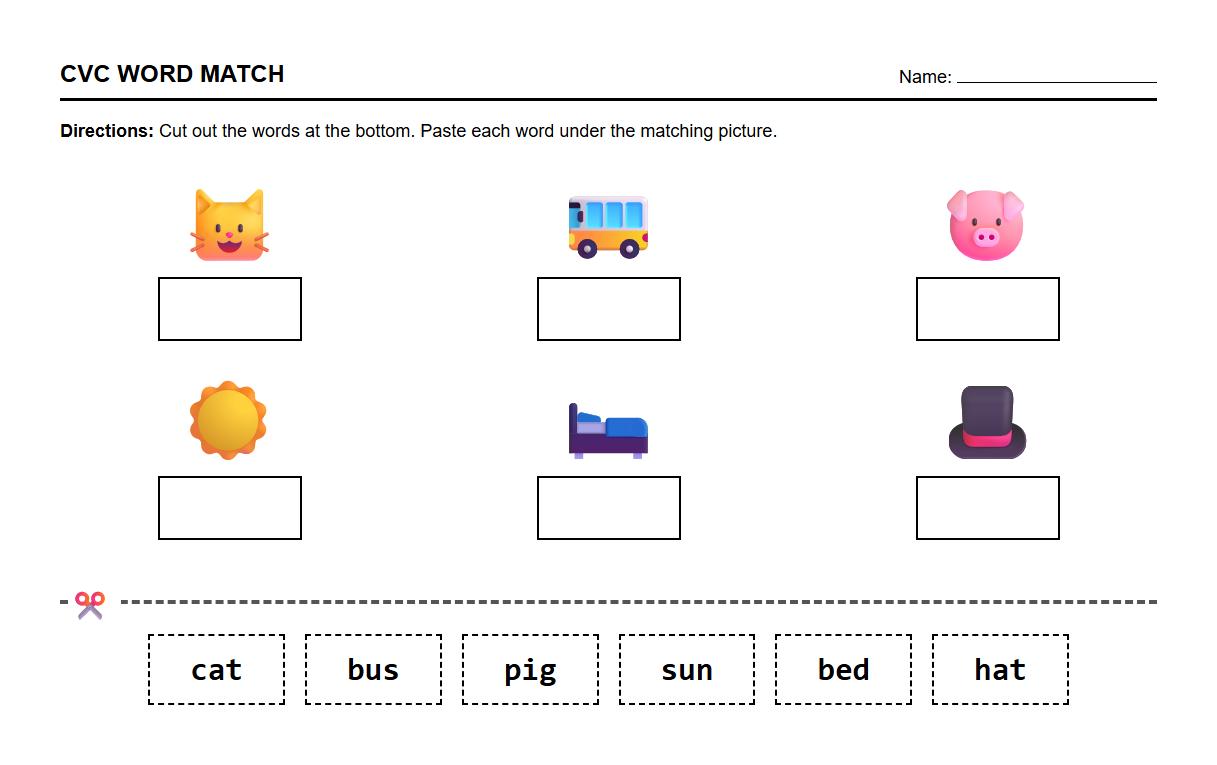
Matching Pictures to the CVC Word "Sun"
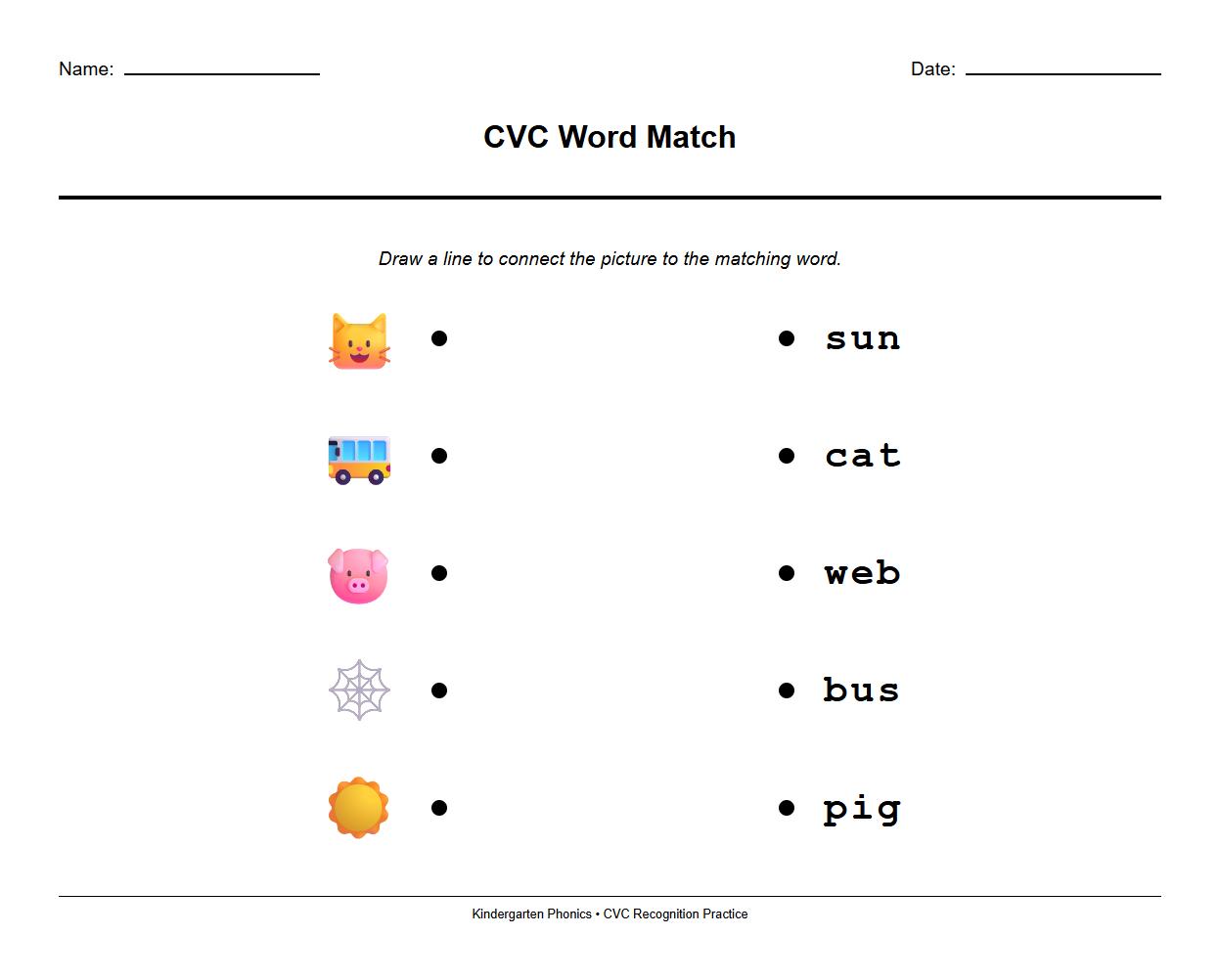
Present children with pictures and the word "sun" to help them associate images with written words. Visual connections deepen vocabulary and reading comprehension. Encourage children to point and say the word aloud when they match the picture. This strengthens word recognition and memory.
Filling in the Missing Vowel in "H_t"
Ask children to fill in the missing vowel in the word "h_t" to form "hat," emphasizing vowel sounds. This task improves spelling and phonics skills. Use vowel flashcards or sounds to support their choice. Practice with multiple examples to reinforce vowel patterns.
Drawing Lines to Connect the Word and Its Picture "Pig"
Encourage children to draw a line connecting the word "pig" with its picture to boost word-picture association. This activity enhances word recognition and fine motor skills. Visual matching supports early literacy development. Celebrate their success to build confidence.
Identifying the CVC Word that Ends with the Sound "T"
Assist children in finding a CVC word that ends with the /t/ sound, such as "cat" or "bat." Understanding ending sounds strengthens decoding abilities. Say each word slowly, emphasizing the final sound. Engage children by asking them to repeat and spot the letter "t."
Changing the First Letter in "Man" to Make a New Word
Encourage children to replace the first letter in "man" to create new words like "pan" or "tan." This fosters creativity and phonemic manipulation skills. This exercise teaches how initial sounds alter word meanings. Reinforce learning by spelling and reading new words aloud.
Clapping Out the Sounds in the Word "Pen"
Help children clap out the sounds or syllables in "pen," breaking it down to /p/ /e/ /n/. Clapping provides a multisensory way to hear and segment phonemes. This strengthens phonological awareness essential for reading. Repeat this activity with different CVC words for practice.
Coloring the CVC Word that Matches the Picture of a Bed
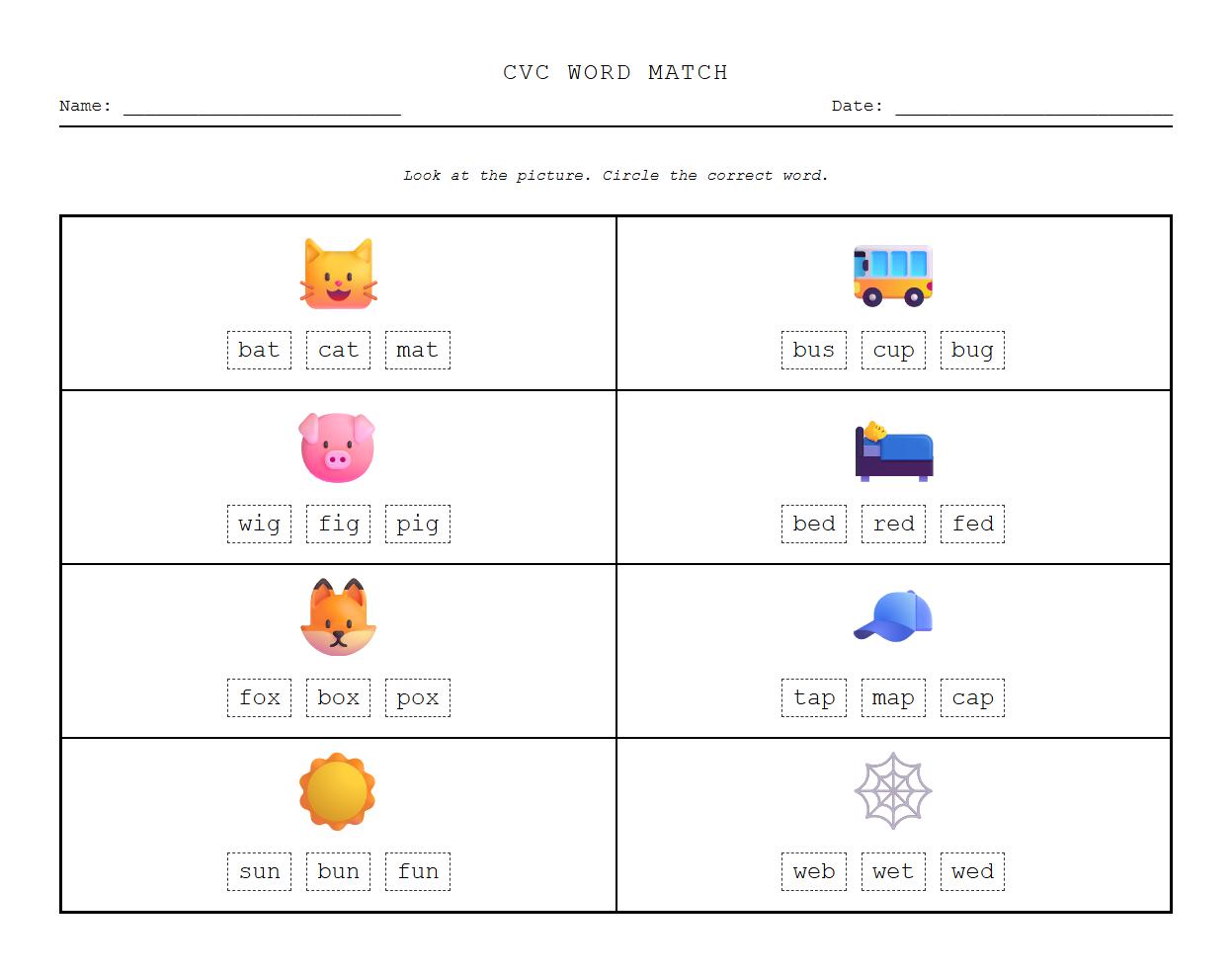
Provide children with a coloring sheet where they color the CVC word that matches a picture of a bed. This reinforces word recognition and connects text with visuals. Engaging coloring tasks make learning fun and memorable. Encourage children to say the word before coloring.


CVC Words Short Vowel Sound Worksheet for Early Readers