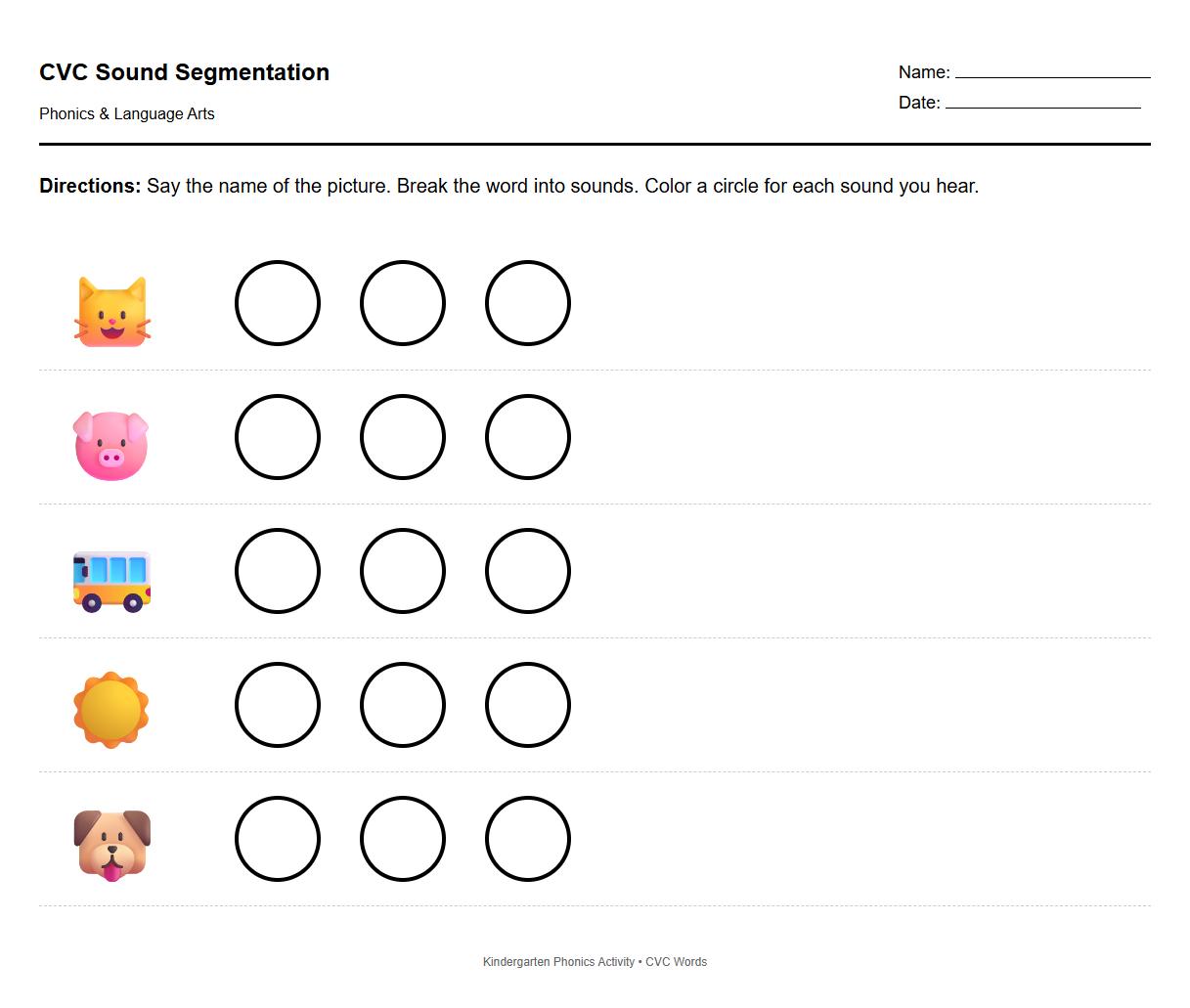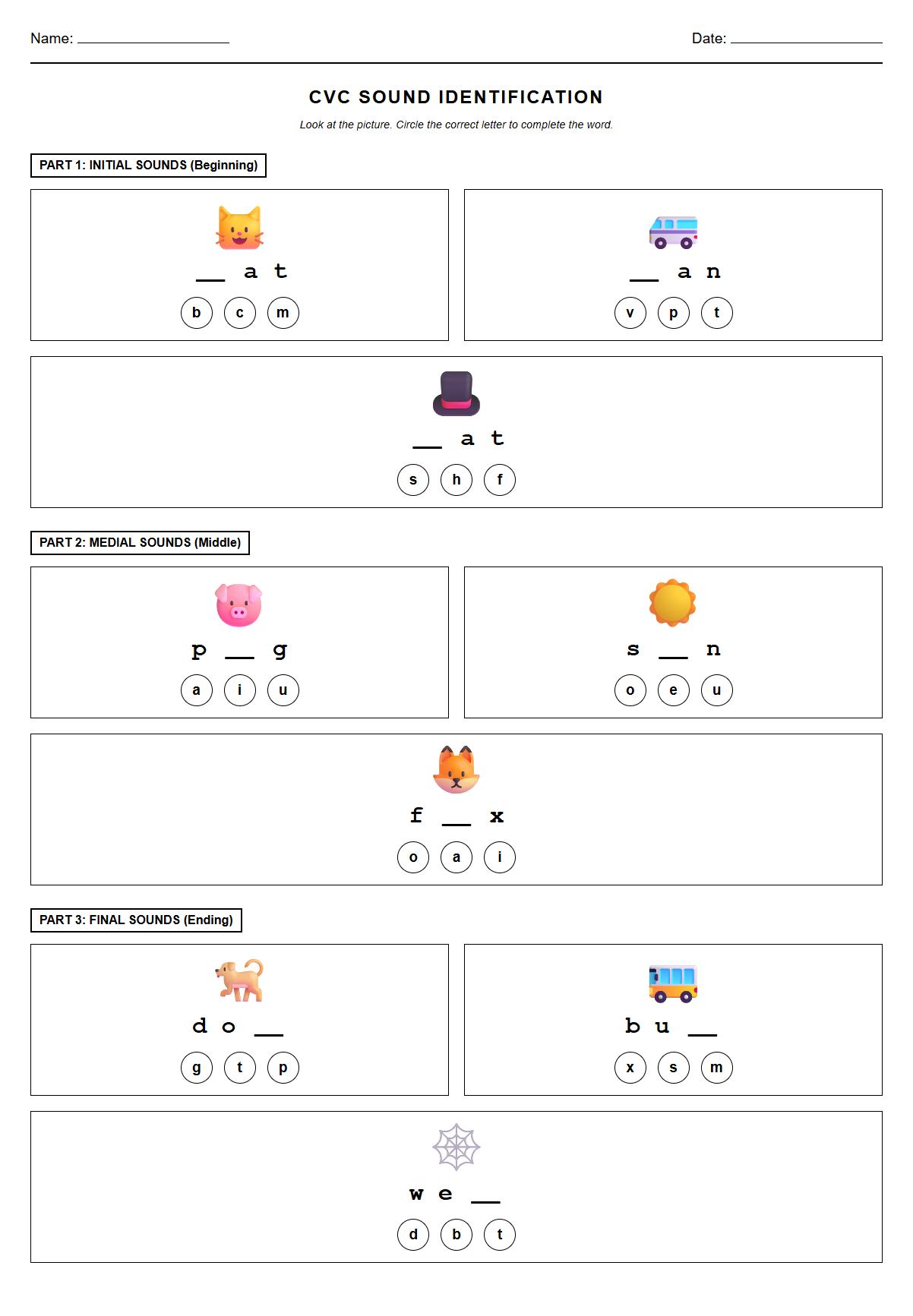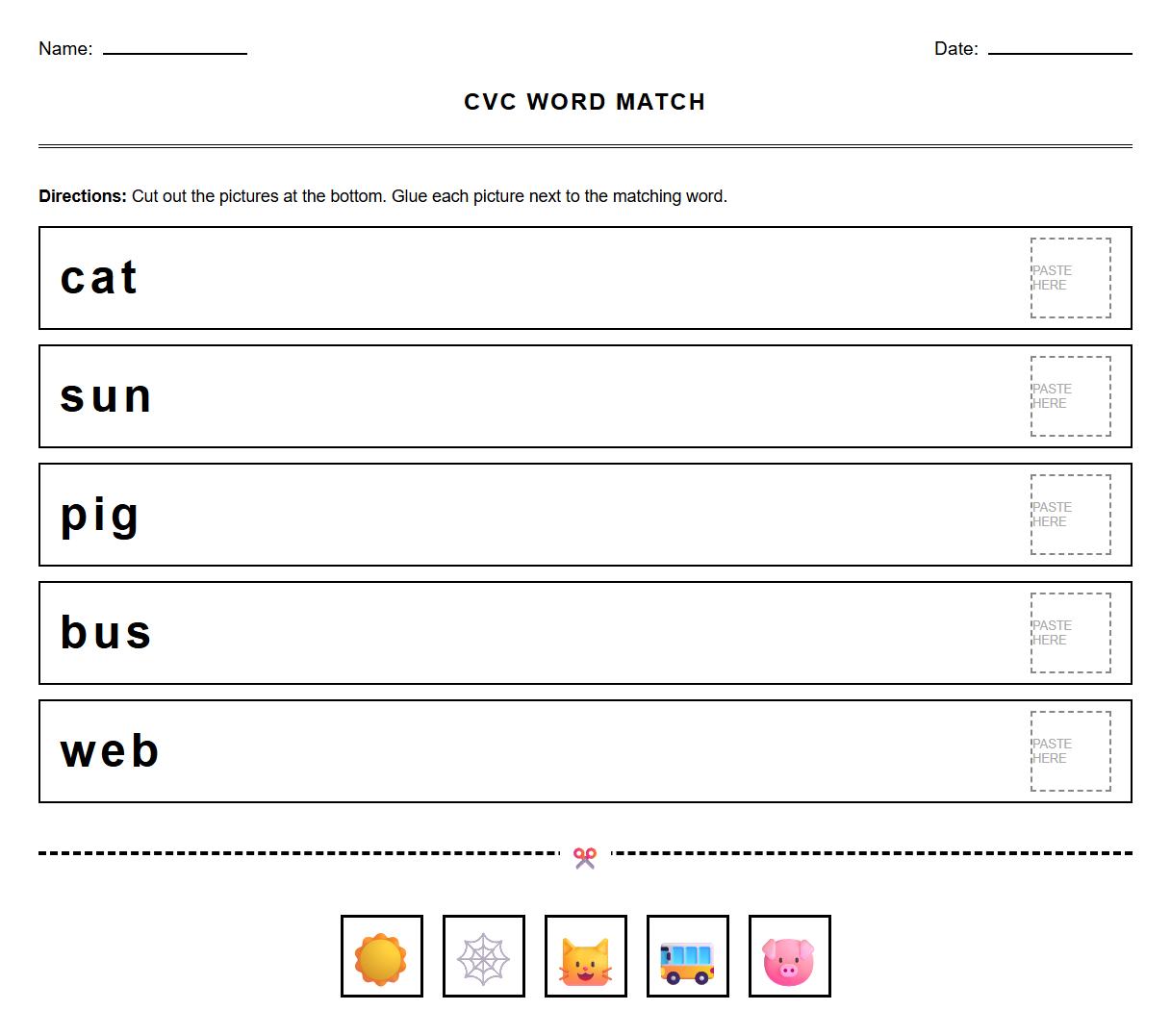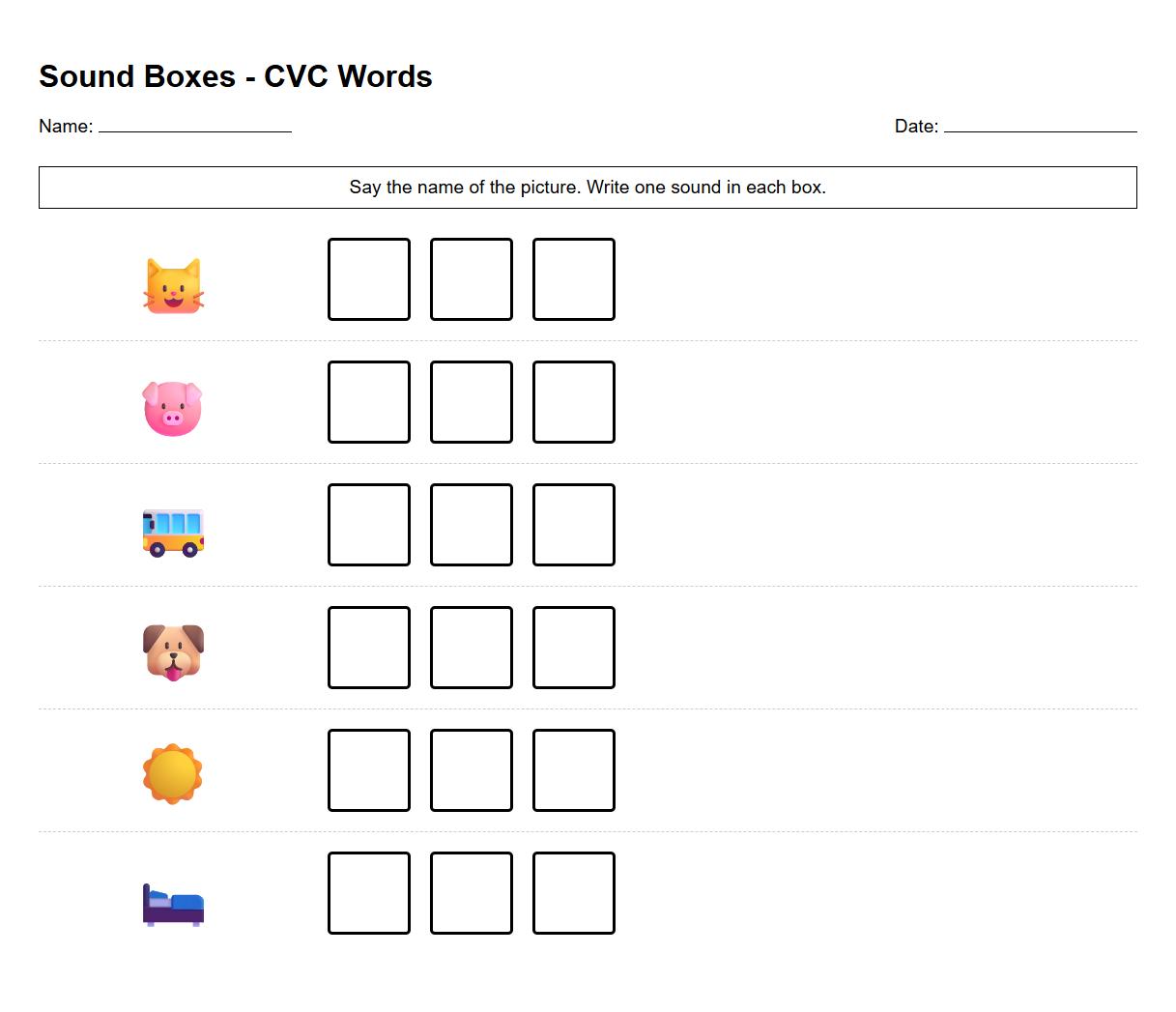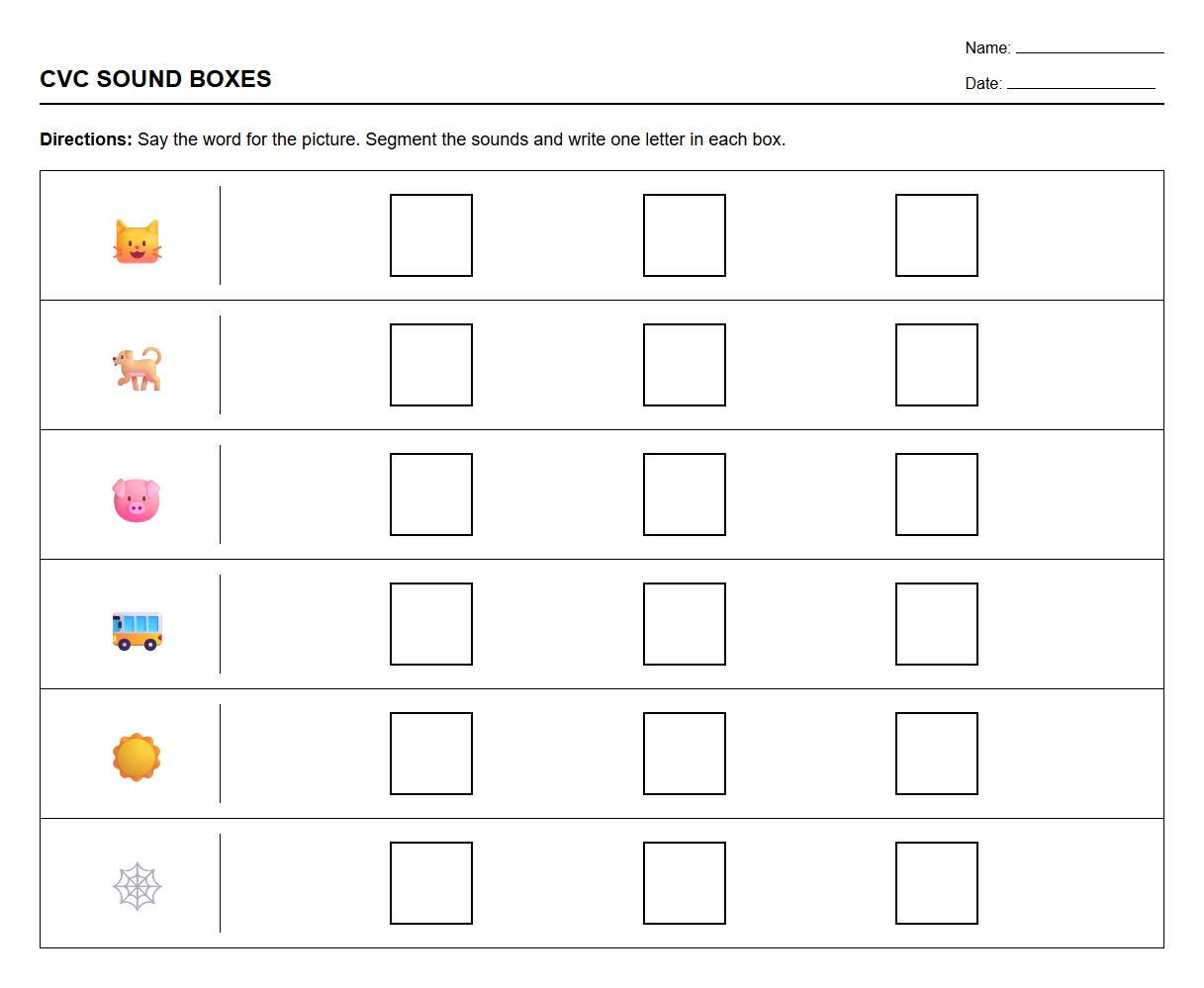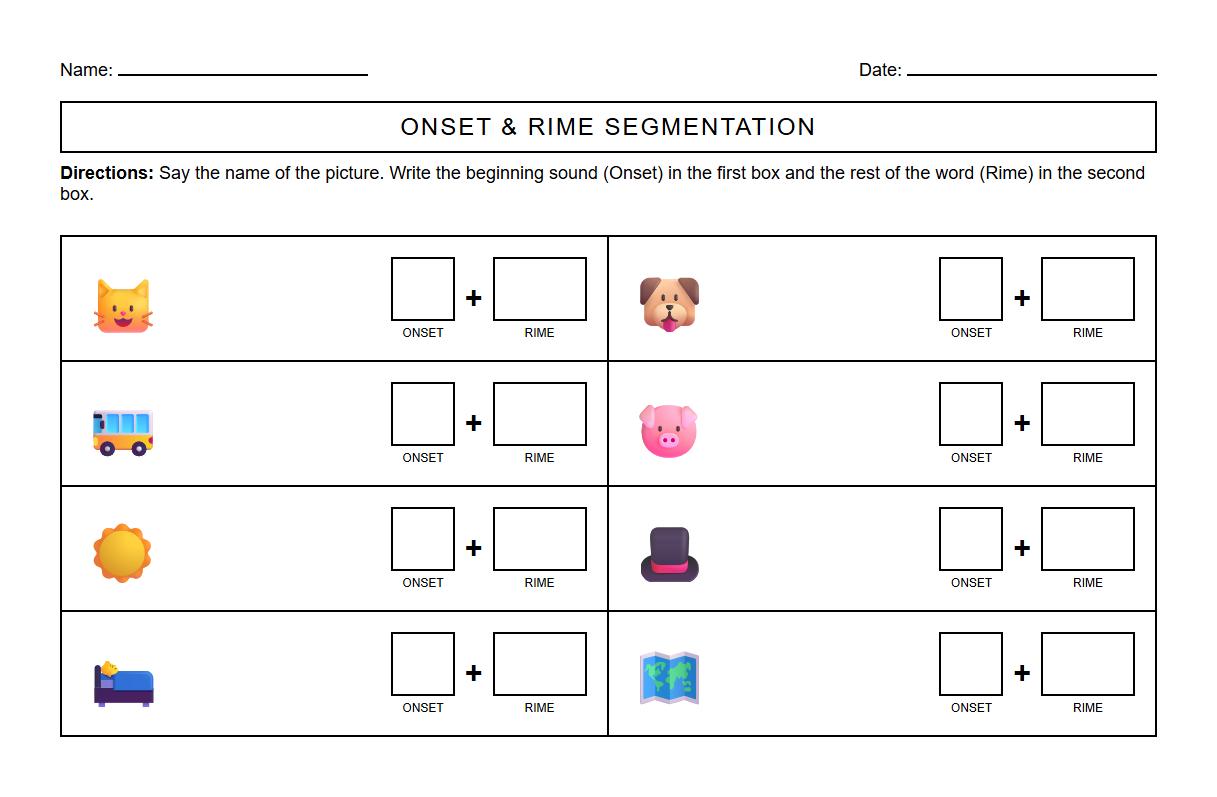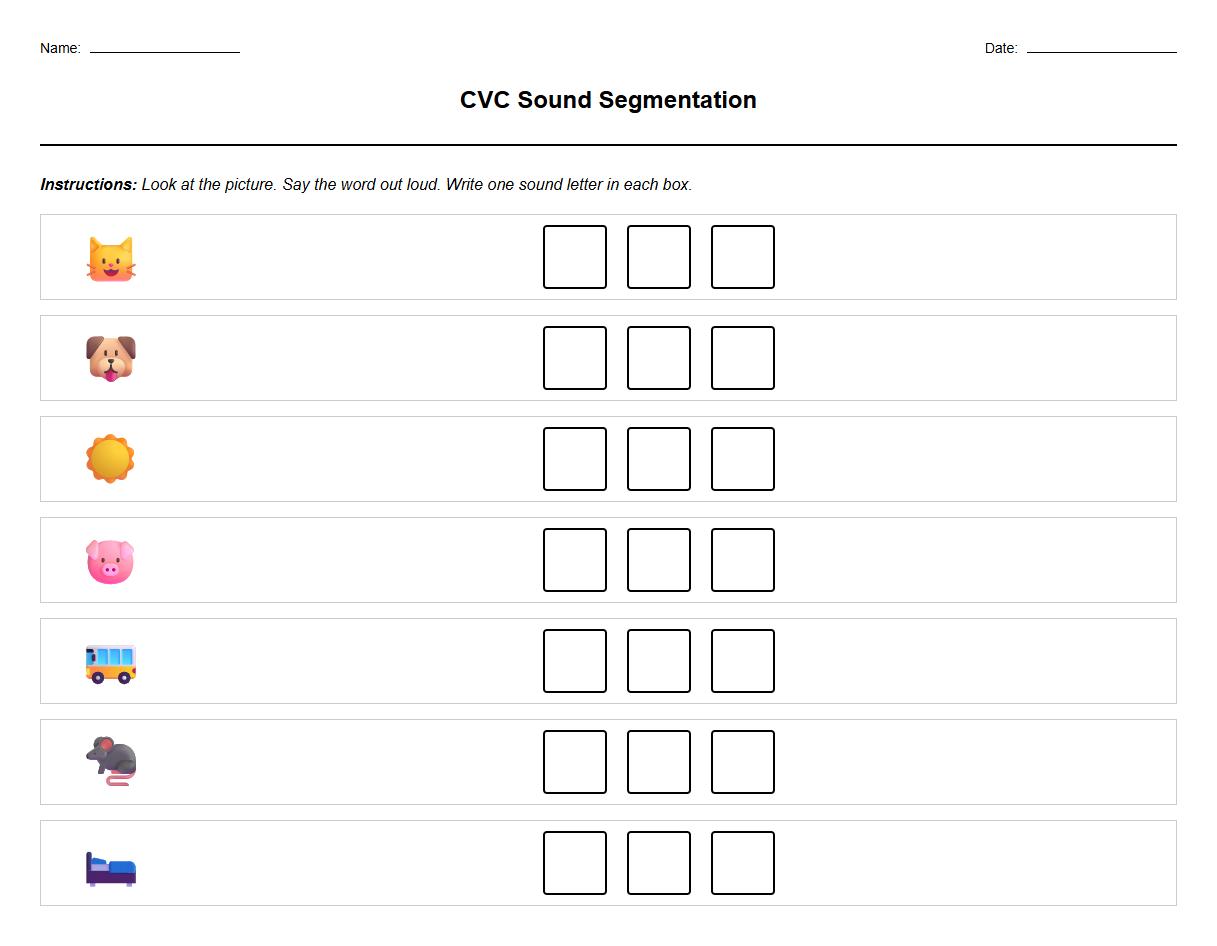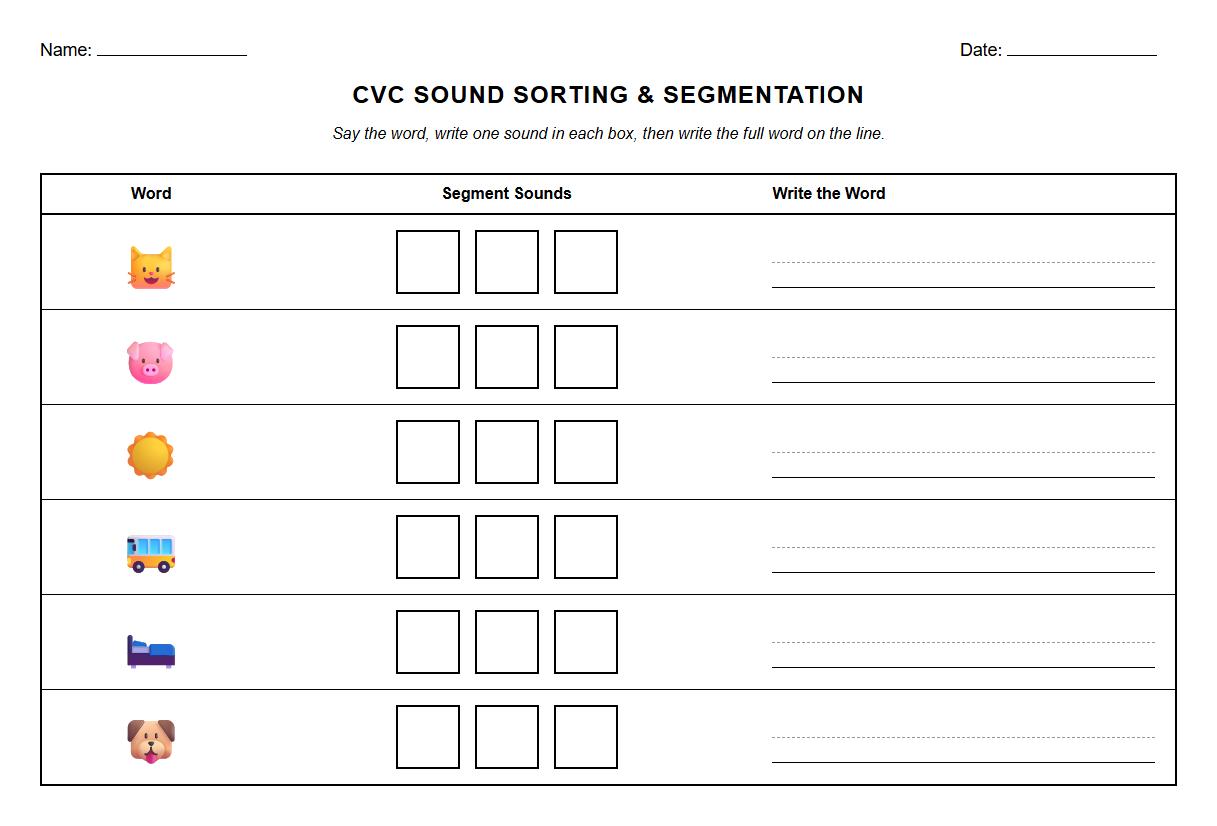
Mastering CVC words sound segmentation builds a strong foundation for early reading skills by helping kindergarteners break down simple consonant-vowel-consonant words into individual sounds. These worksheets engage young learners with fun, interactive activities that enhance phonemic awareness and decoding abilities. Explore our collection of CVC Words Sound Segmentation worksheets to support your child's literacy journey.
What is a CVC Word in Kindergarten Phonics Instruction?
A CVC word consists of three letters: a consonant, a vowel, and another consonant, such as "cat" or "dog." These words are foundational in kindergarten phonics instruction, helping children understand the basic structure of sounds in words. Teaching CVC words supports early decoding skills essential for reading development. They are simple, predictable, and perfect for introducing letter-sound relationships.
How Does Sound Segmentation Improve Early Reading Skills?
Sound segmentation involves breaking words into individual sounds or phonemes, which is a critical skill for early readers. It enhances phonemic awareness, allowing children to recognize and manipulate sounds within words effectively. This skill supports decoding, spelling, and reading fluency. Practicing segmentation leads to better word recognition and confidence in reading.
What Activities are Included in a CVC Words Sound Segmentation Worksheet Pack?
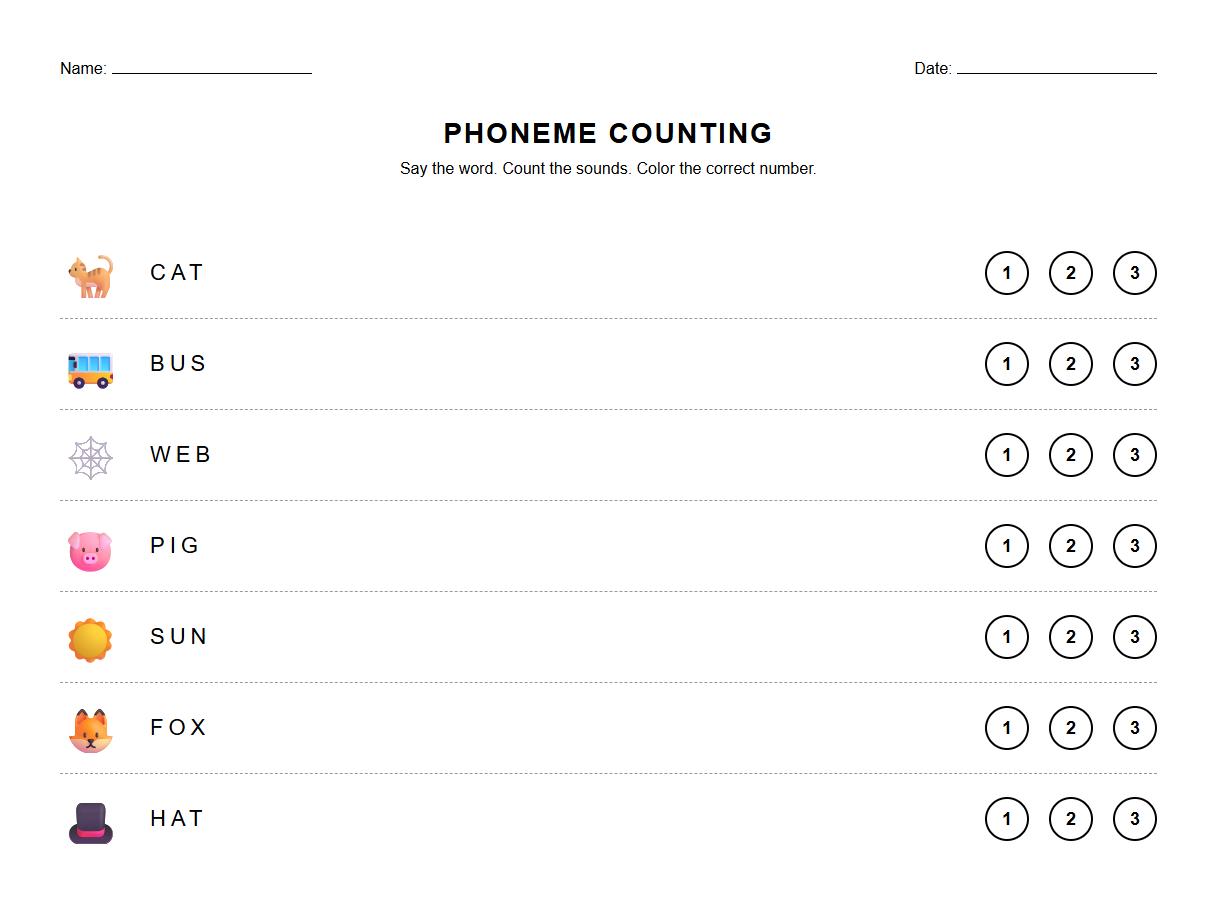
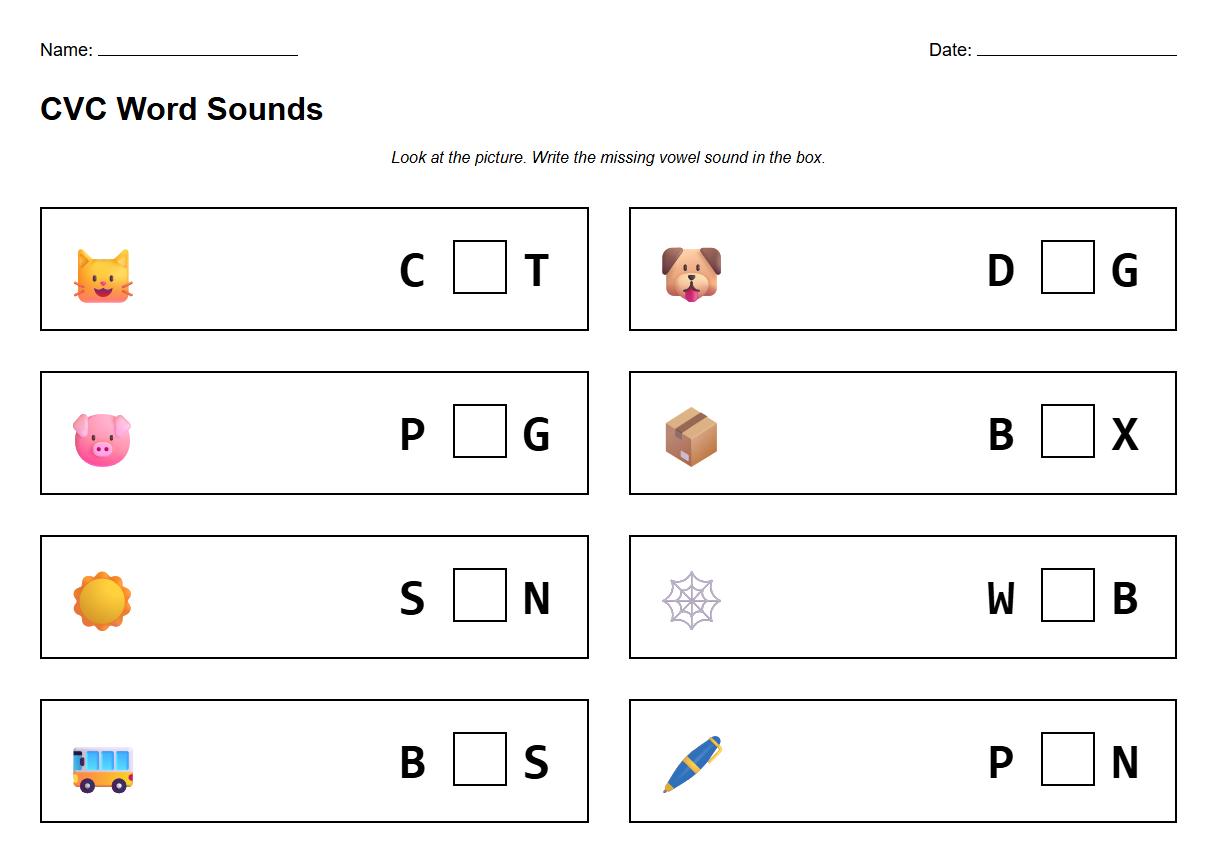
A typical pack includes activities like sound counting, matching sounds to letters, and blending individual phonemes to form words. Worksheets may also feature picture-to-word matching and cut-and-paste sound segmentation exercises. These tasks engage students actively in isolating and identifying sounds. They provide varied approaches to reinforce CVC word sounds effectively.
How Can Teachers Use CVC Worksheets for Small Group Instruction?
Teachers can use CVC worksheets in small groups to provide targeted phonics support based on individual student needs. Small groups allow for personalized feedback and repeated practice of difficult sounds. Worksheets facilitate hands-on learning and cooperative activities where peers support each other. This focused instruction accelerates mastery of sound segmentation and early reading skills.
What Strategies Help Children Identify Beginning, Middle, and Ending Sounds?
Effective strategies include using visual cues, such as highlighting each phoneme with different colors or placing images that represent sounds. Teachers often use sound boxes or Elkonin boxes to segment words into beginning, middle, and ending sounds. Repetition and multisensory approaches like clapping or tapping help reinforce sound patterns. These methods make abstract phonics concepts concrete and accessible.
How Does Practicing CVC Segmentation Support Spelling Development?
Practicing CVC sound segmentation strengthens phonemic awareness, which is vital for accurate spelling. Children learn to hear and map sounds to corresponding letters, which improves their ability to spell simple words correctly. This foundational skill supports progressing to more complex word forms. Consistent segmentation practice builds confidence and independence in spelling.
What Visual Aids Are Most Effective for Teaching CVC Sound Segmentation?
Visual aids like Elkonin boxes, picture cards, and color-coded phoneme strips are highly effective. These tools help students visually separate and organize sounds within a word. Incorporating hands-on materials like letter tiles or magnetic letters further enhances engagement. Visual aids simplify the learning process and provide concrete references for abstract sounds. Learn more about visual aids and support from this phonics worksheet resource.
How Can Parents Reinforce CVC Segmentation Skills at Home?
Parents can support learning by practicing sound segmentation during everyday activities, such as reading books or playing word games. Encouraging children to clap out sounds or use household items to represent sounds reinforces skills. Simple conversations focusing on beginning, middle, and ending sounds help deepen understanding. Consistent, fun practice at home complements classroom instruction effectively; try using these language arts worksheets for additional support.
What Assessment Methods Track Progress with CVC Sound Segmentation?
Assessment methods include one-on-one listening tasks, where children segment words orally, and worksheet completion with error analysis. Progress can also be tracked through digital phonics games that provide immediate feedback. Recording and reviewing student responses over time helps teachers adjust instruction. Frequent informal assessments ensure timely support for each learner. Access assessment ideas from this worksheet collection.
What Common Challenges Do Kindergartners Face with CVC Sound Segmentation?
Many kindergartners struggle with distinguishing similar sounds, especially in the middle vowel position. Difficulty in isolating and blending sounds can lead to confusion and frustration. Limited attention spans and inconsistent practice may hinder mastery. Addressing these challenges requires patience, targeted support, and engaging multisensory activities.


Phonics Blending Exercise Worksheets for CVC Word Mastery