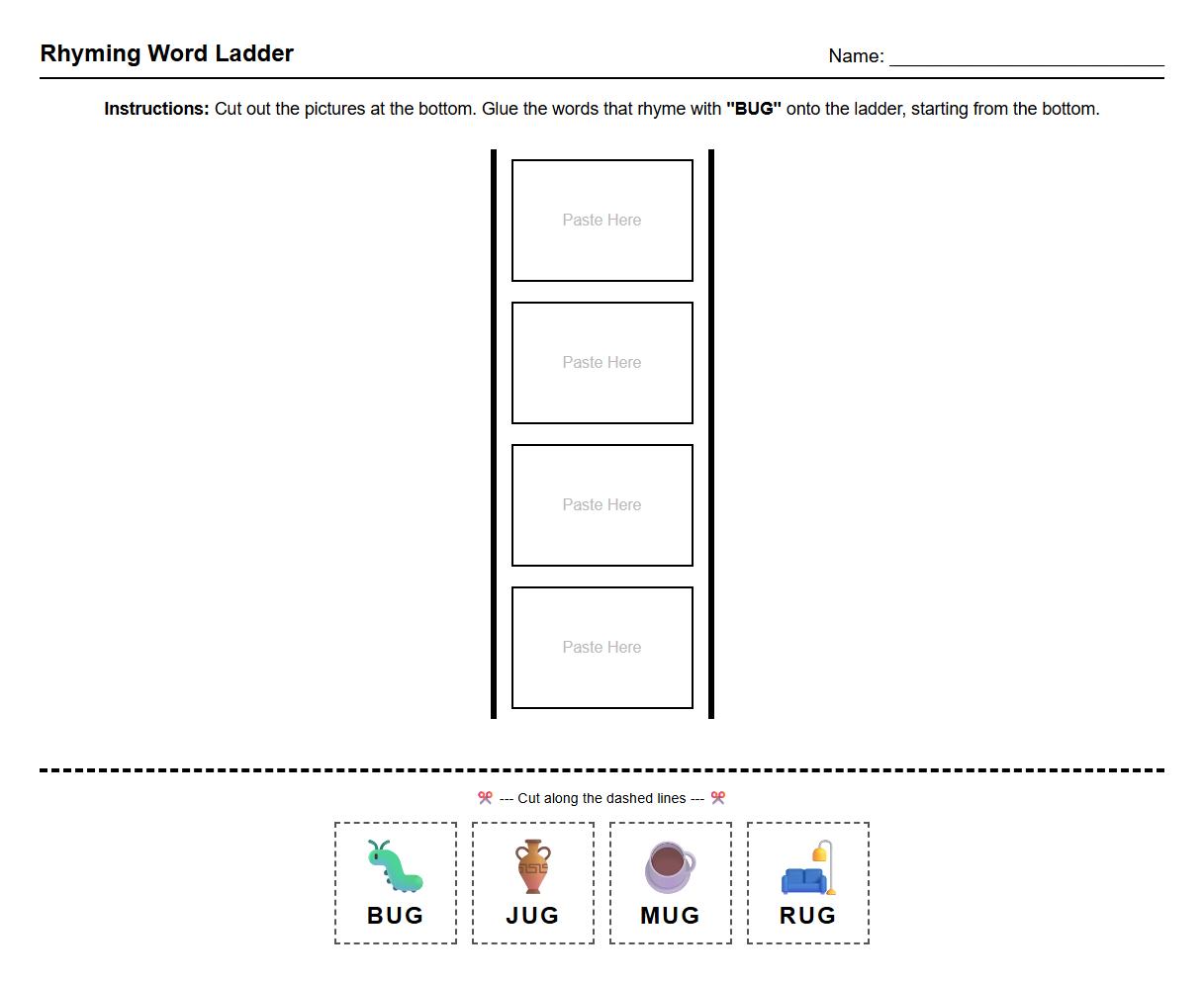
Developing early literacy skills is enhanced through engaging, interactive rhyming words activities that reinforce phonemic awareness and vocabulary building. These exercises support children in recognizing sound patterns, which are crucial for reading and spelling proficiency. Explore our selection of interactive rhyming words worksheets to boost your child's foundational language abilities.
Words That Rhyme with Cat
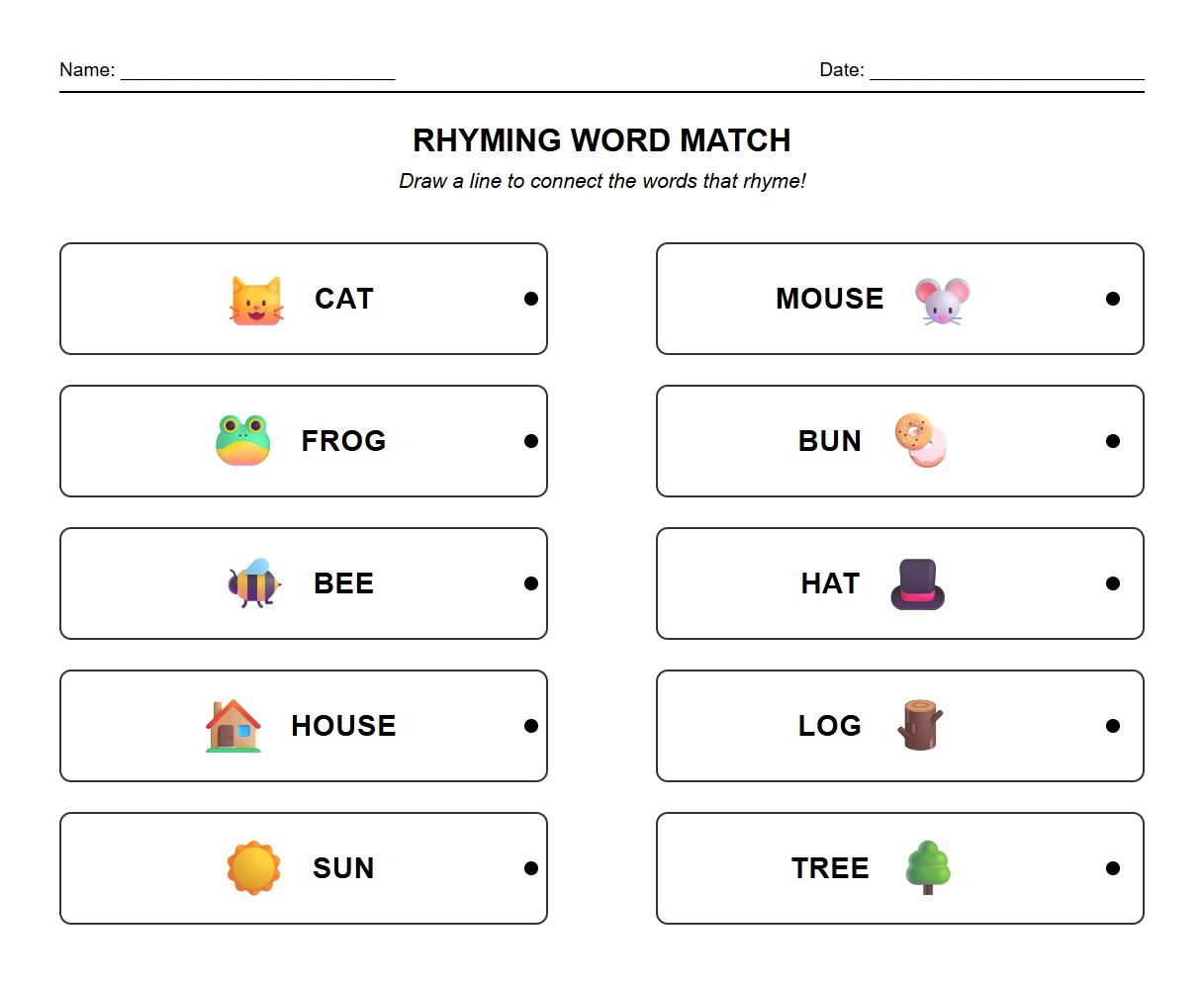
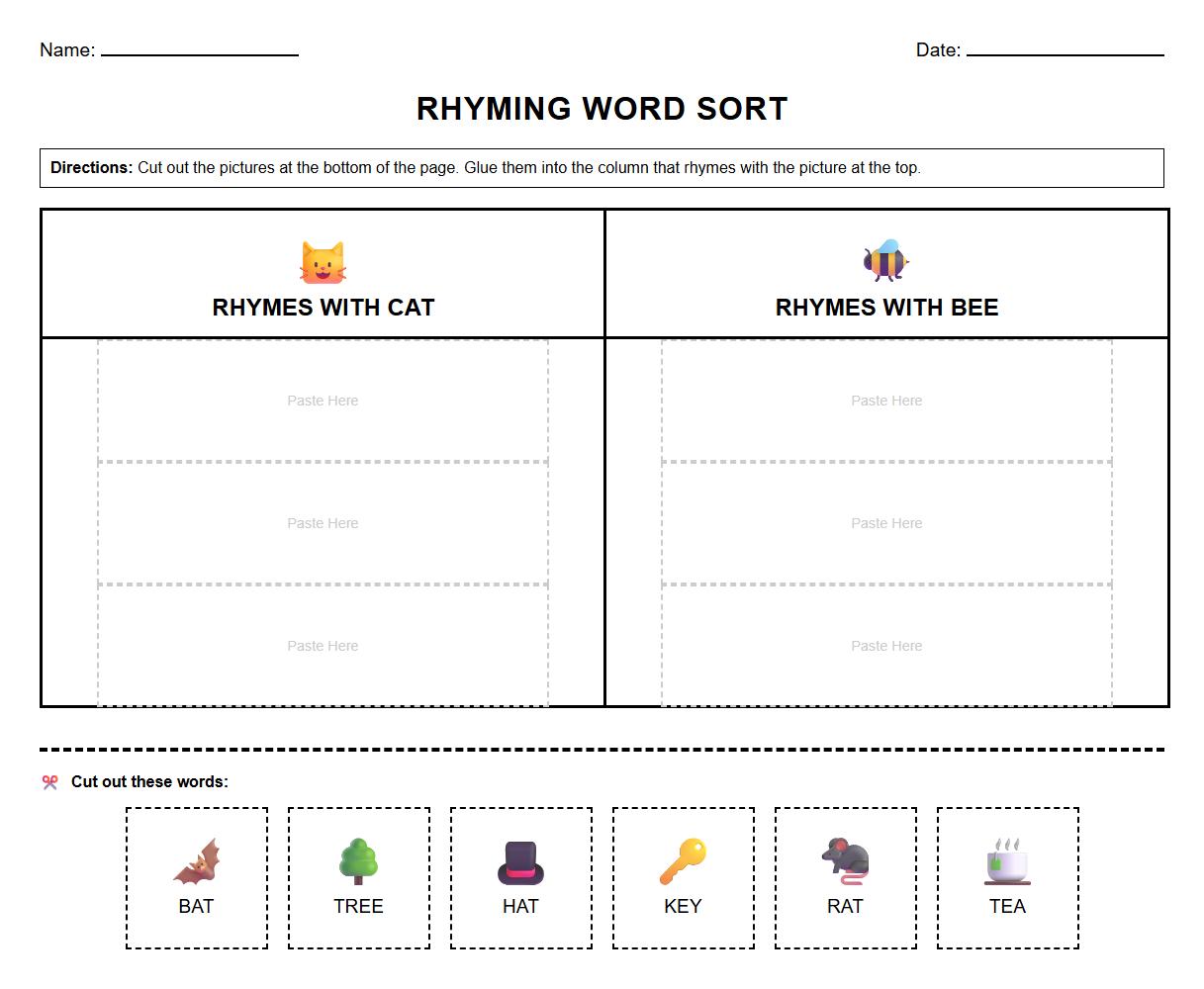
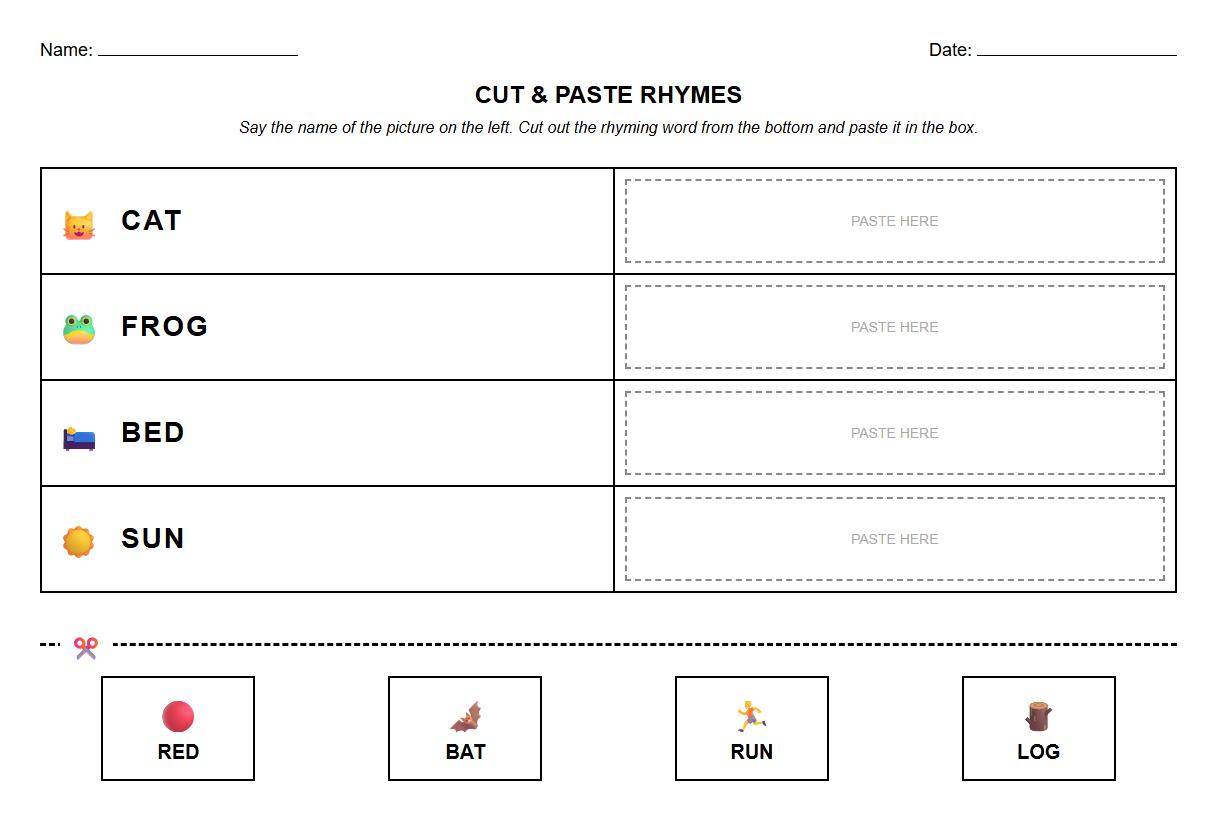
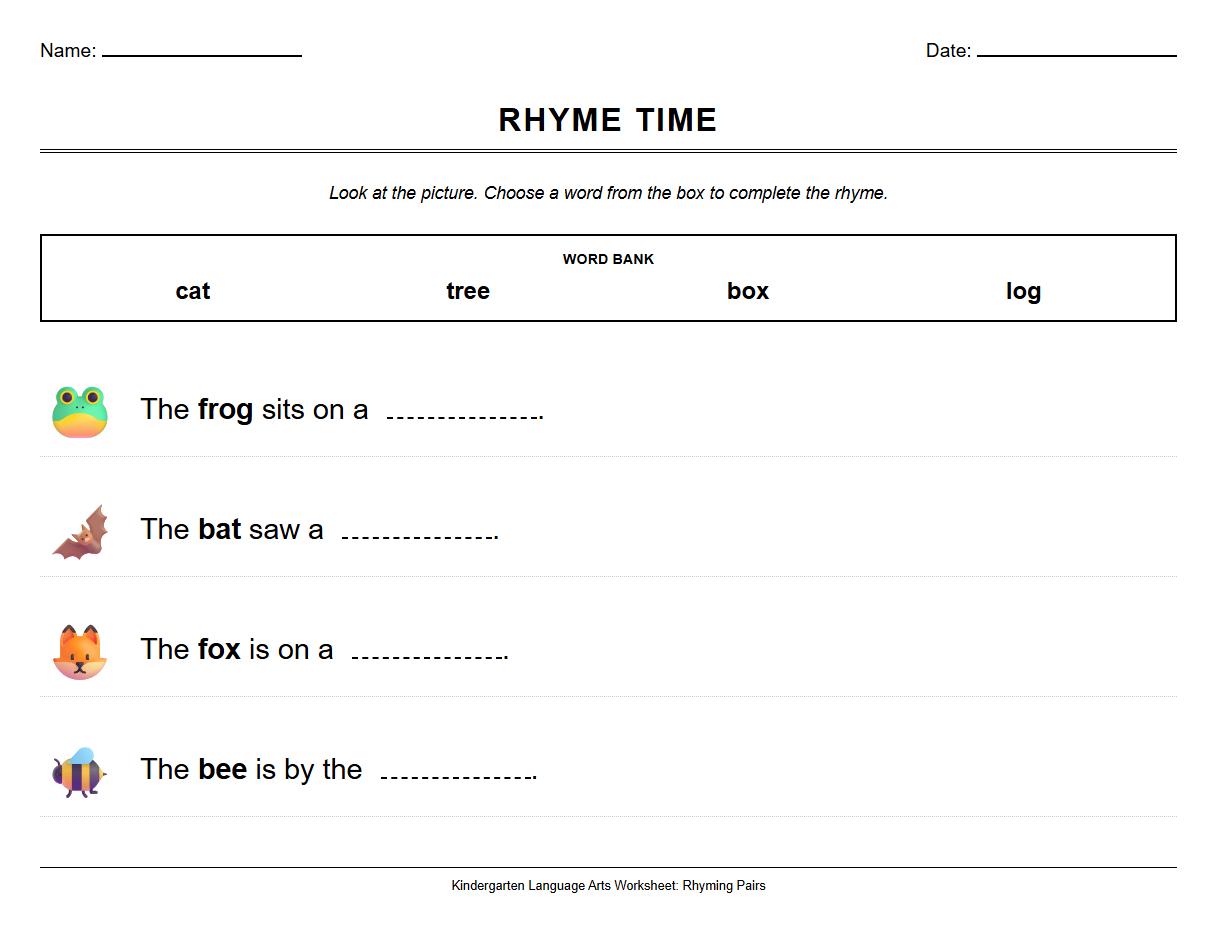
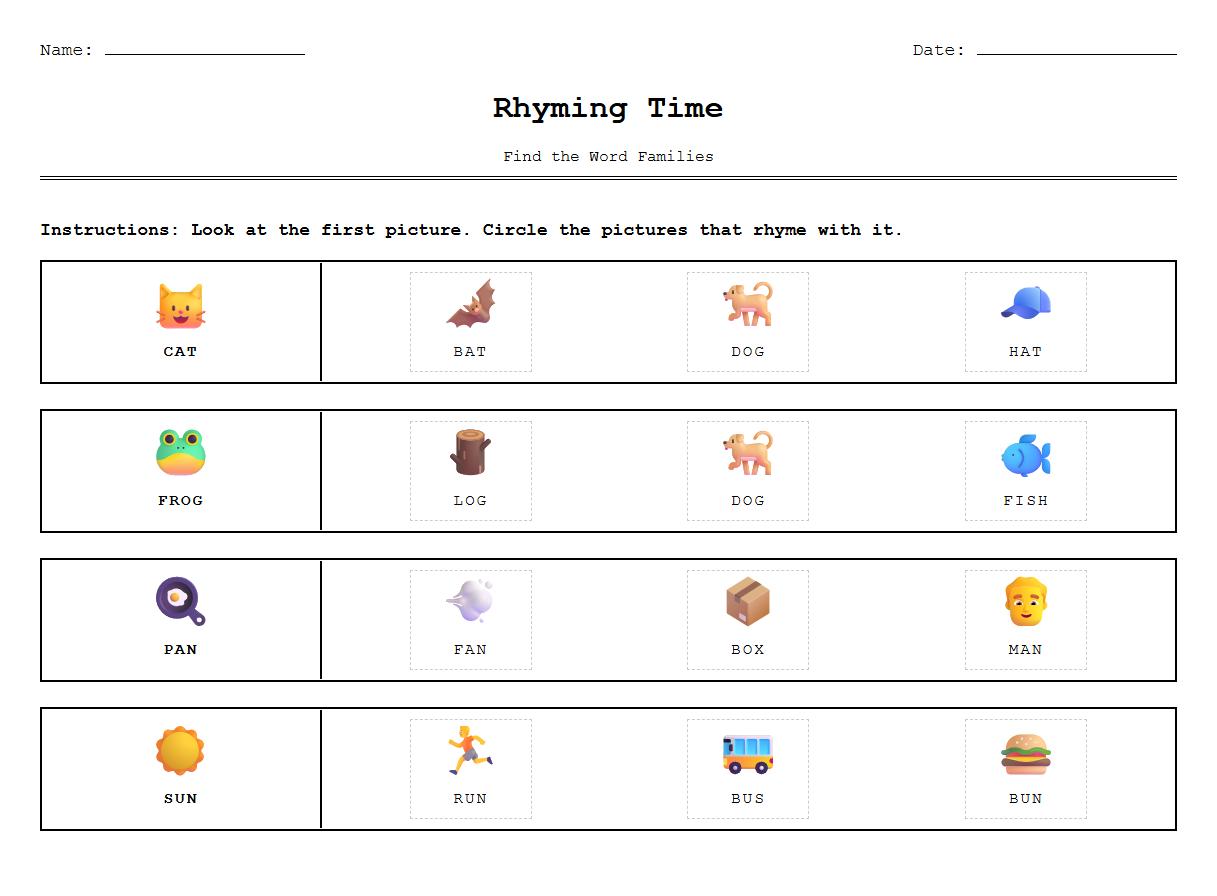
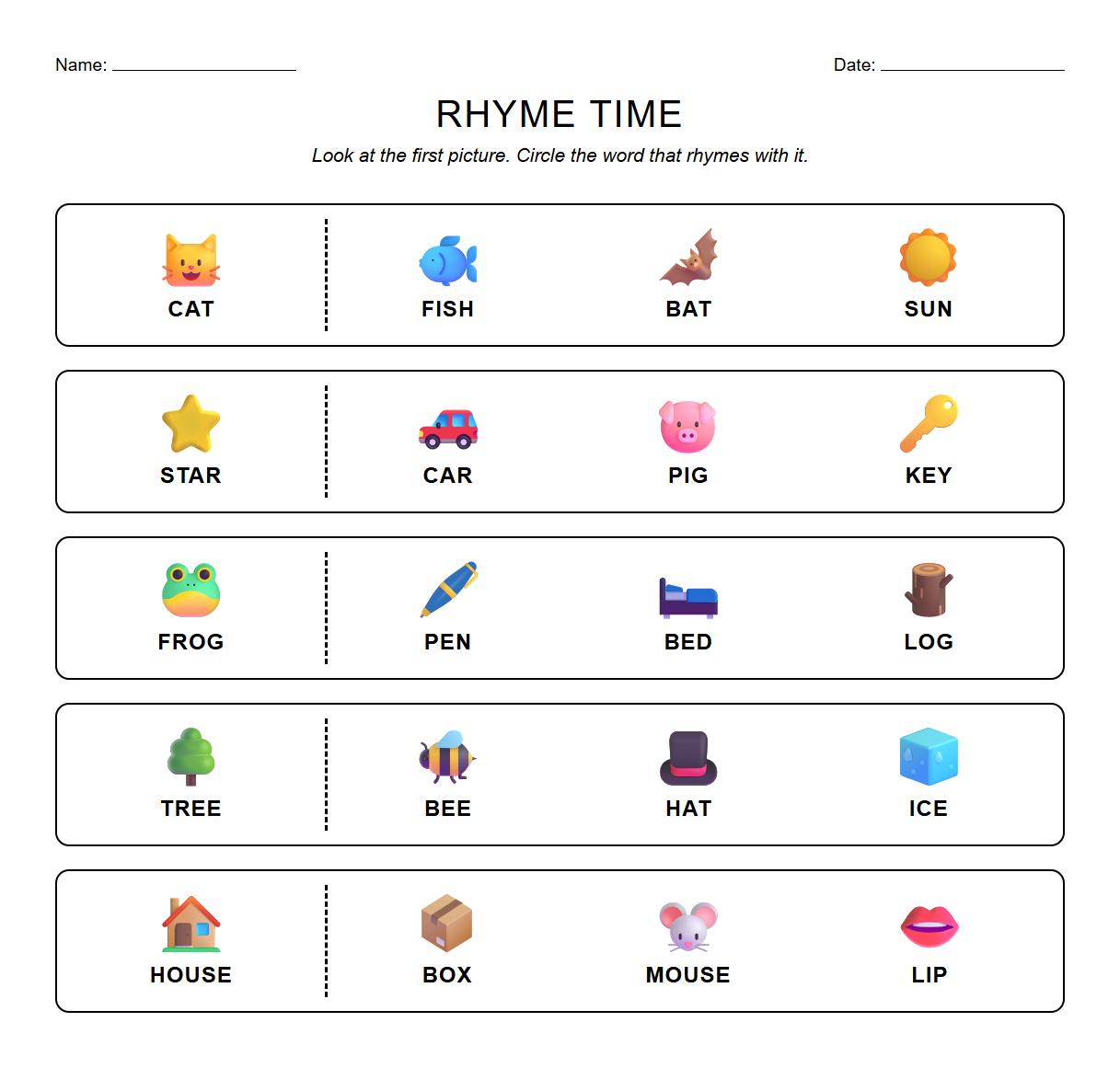
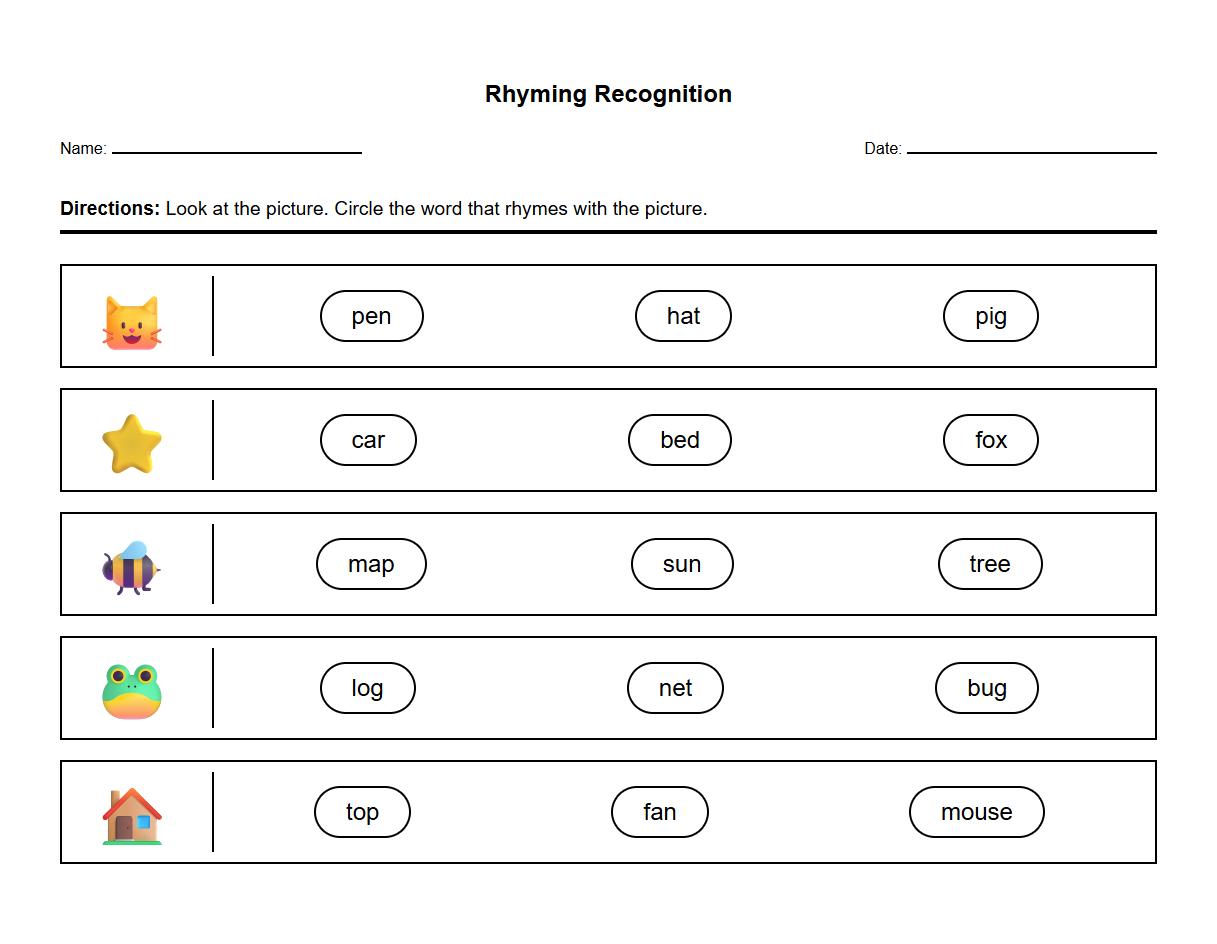
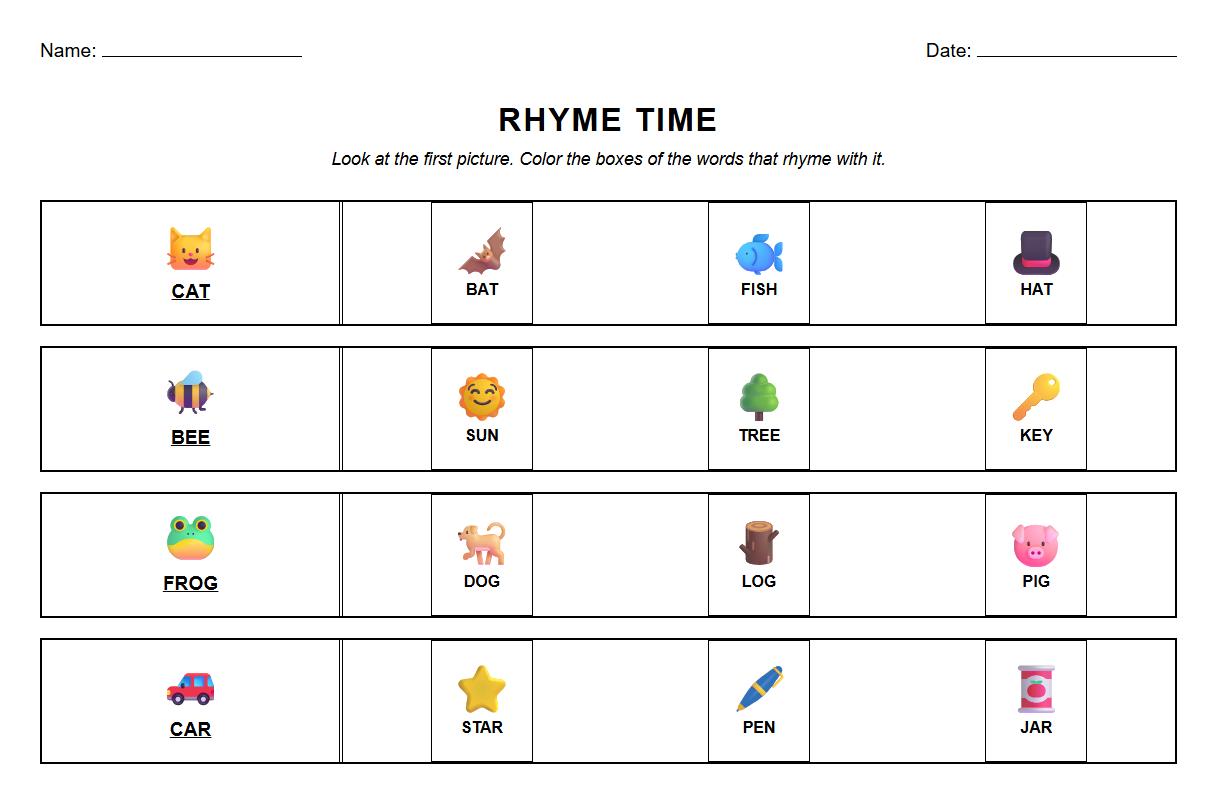
In this worksheet, words that rhyme with "cat" include "hat," "bat," and "rat." These simple rhyming words help children recognize similar sounds. Rhyming is an engaging way to build early phonetic skills. Encourage children to say each word aloud for better sound recognition.
Matching Pictures to Rhyming Words
Teachers and parents can guide children to match pictures with rhyming words on the worksheet. For example, a picture of a bat can be matched with "hat." This activity strengthens visual and auditory connections. It also makes learning fun and interactive for kindergarteners.
Rhyming Words for Dog
The word that rhymes with "dog" found on this page is "log." Identifying such pairs enhances phonemic awareness. Children learn to listen carefully for similar endings in words. This skill supports early reading development effectively.
Counting Rhyming Pairs
On the worksheet, there are several rhyming pairs to find, typically between four to six pairs. Counting these pairs helps children practice focusing on sound patterns. It also improves their ability to distinguish rhyming words. Teachers can assist by highlighting each pair as they go along.
Circling Words That Rhyme with Sun
Children should circle the words like "fun," "run," and "bun" that rhyme with "sun." This task encourages attention to word endings and sound matching. It also supports phonological awareness in a hands-on way. Parents can reinforce this by discussing the sounds together.
Identifying Pictures That Rhyme with Hat
The picture that rhymes with "hat" is usually a "bat" or "cat" image on the worksheet. Pointing out these pictures helps kids connect rhyming words with visual cues. This strengthens their memory and vocabulary. It makes learning rhyme more concrete.
Drawing Lines to Connect Rhyming Words
Drawing lines between rhyming words is a great hands-on activity for kids. It helps them visually connect rhyming pairs and understand sound similarities. Using colorful pencils or crayons can make this task even more engaging. This exercise improves both fine motor skills and phonetic understanding.
Adding New Rhyming Words
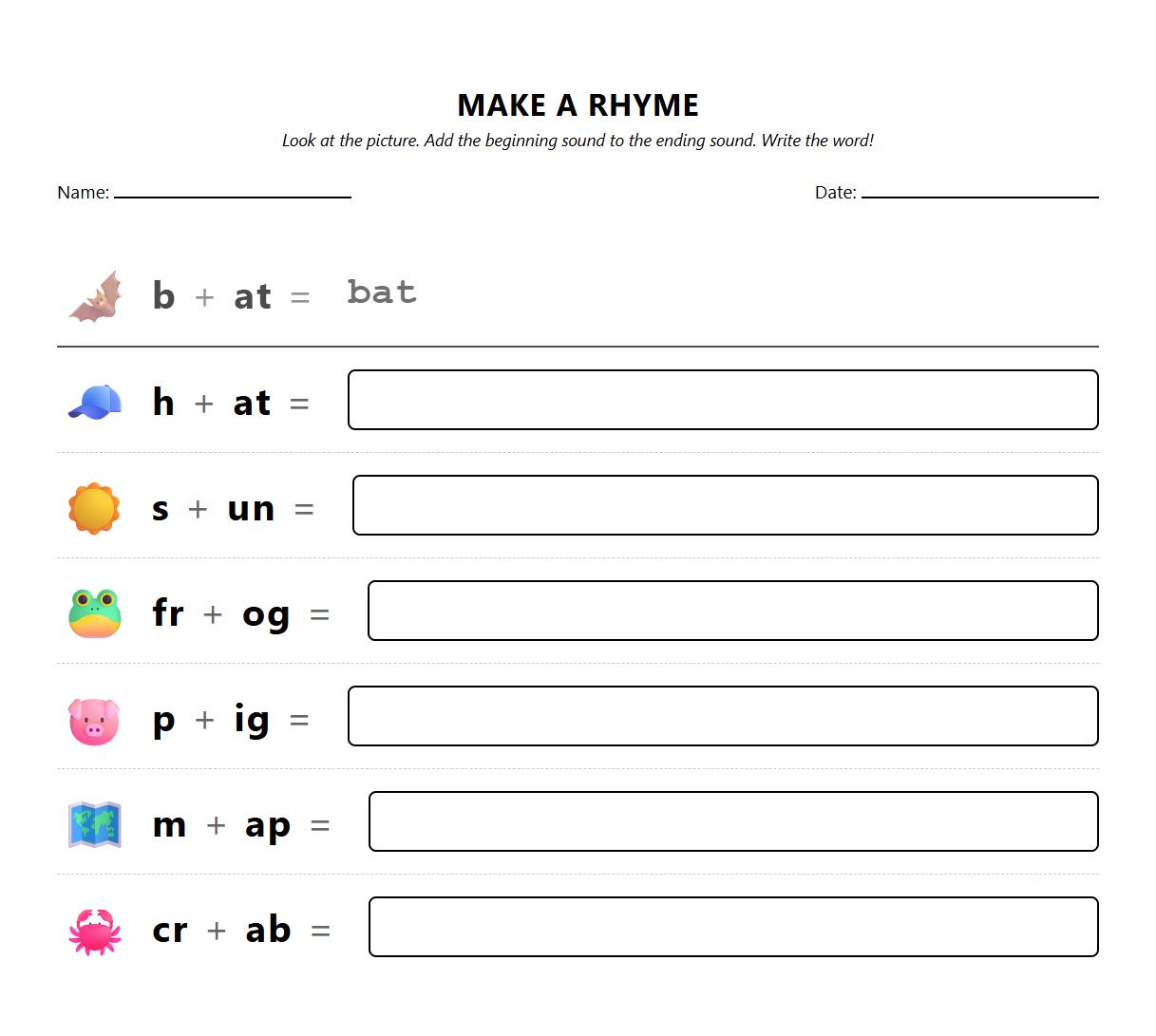
Encourage children to think of and add a new rhyming word to the worksheet list. For example, adding "mat" alongside "cat" and "hat" expands their word families. This creative step enhances vocabulary and phonological awareness. It also fosters a love for playing with language.
How Rhyming Helps Reading
Rhyming helps children read new words by teaching them to recognize patterns in sounds. It builds their confidence in decoding unfamiliar words. Rhymes make learning predictable and enjoyable, aiding memory retention. This foundational skill supports early literacy success.
Saying Rhyming Pairs Aloud
Encourage children to say each pair of rhyming words aloud to practice pronunciation and sound recognition. This oral activity improves their phonological skills and fluency. Repetition and listening help reinforce word endings and rhythm. Speaking rhymes boosts early language development effectively.


Fun Phonics Rhyming Words Worksheets for Kindergarten Learners