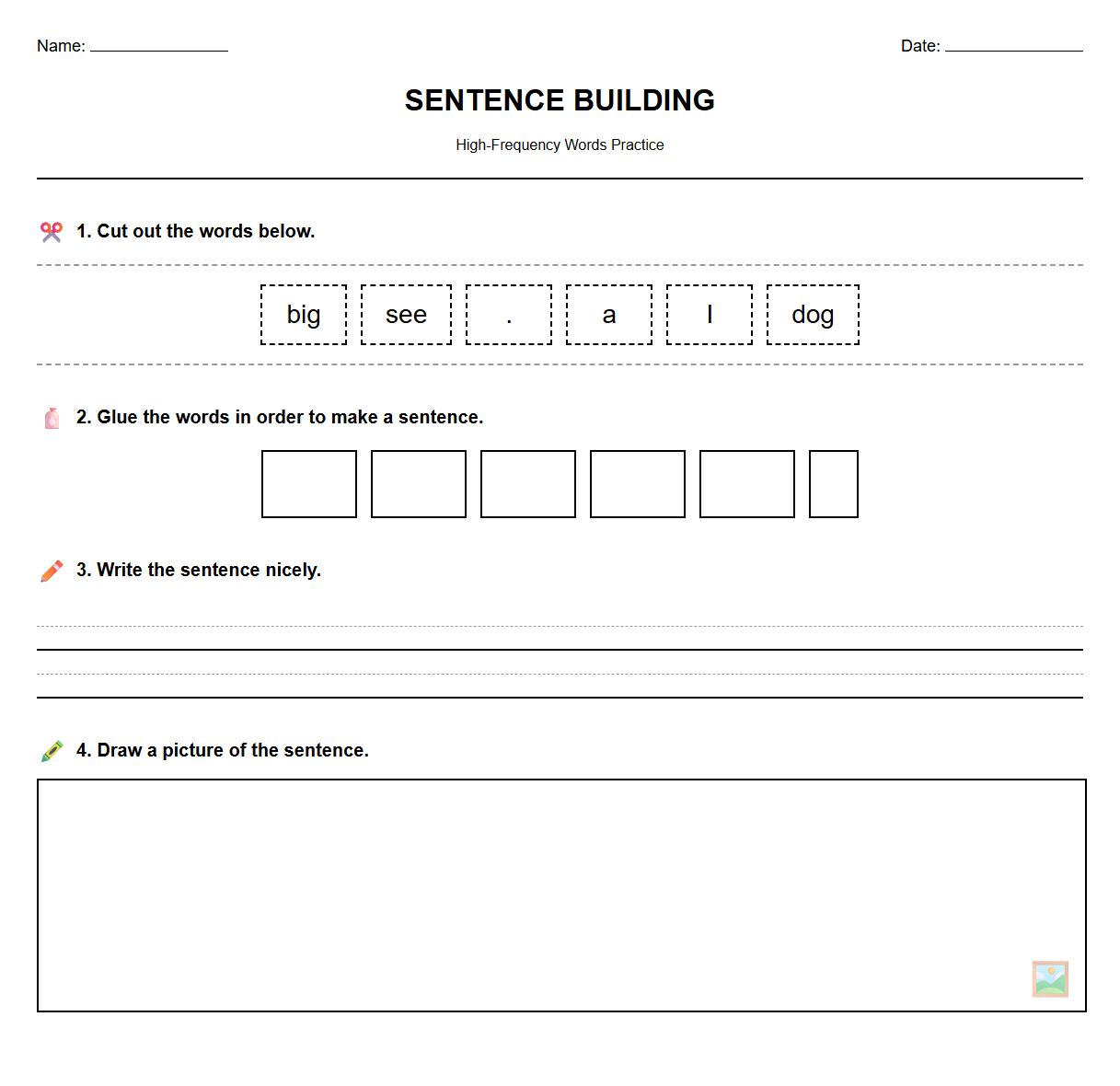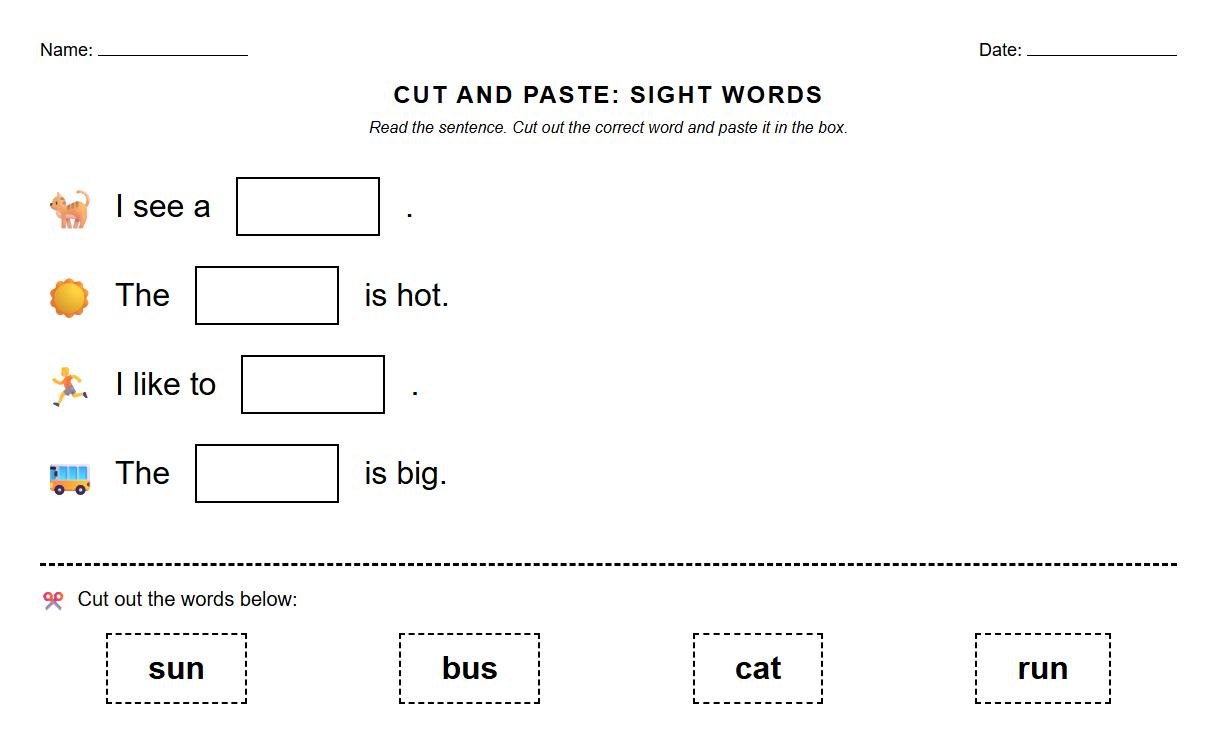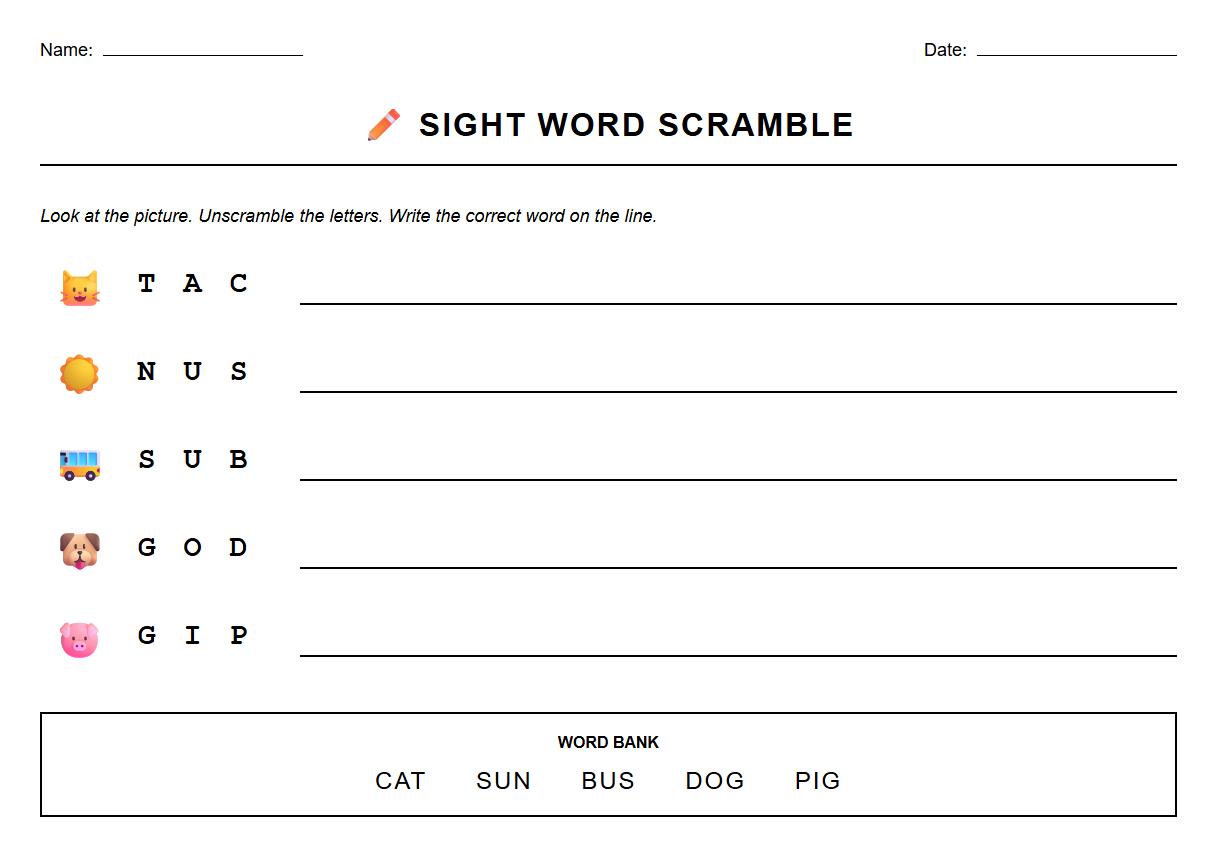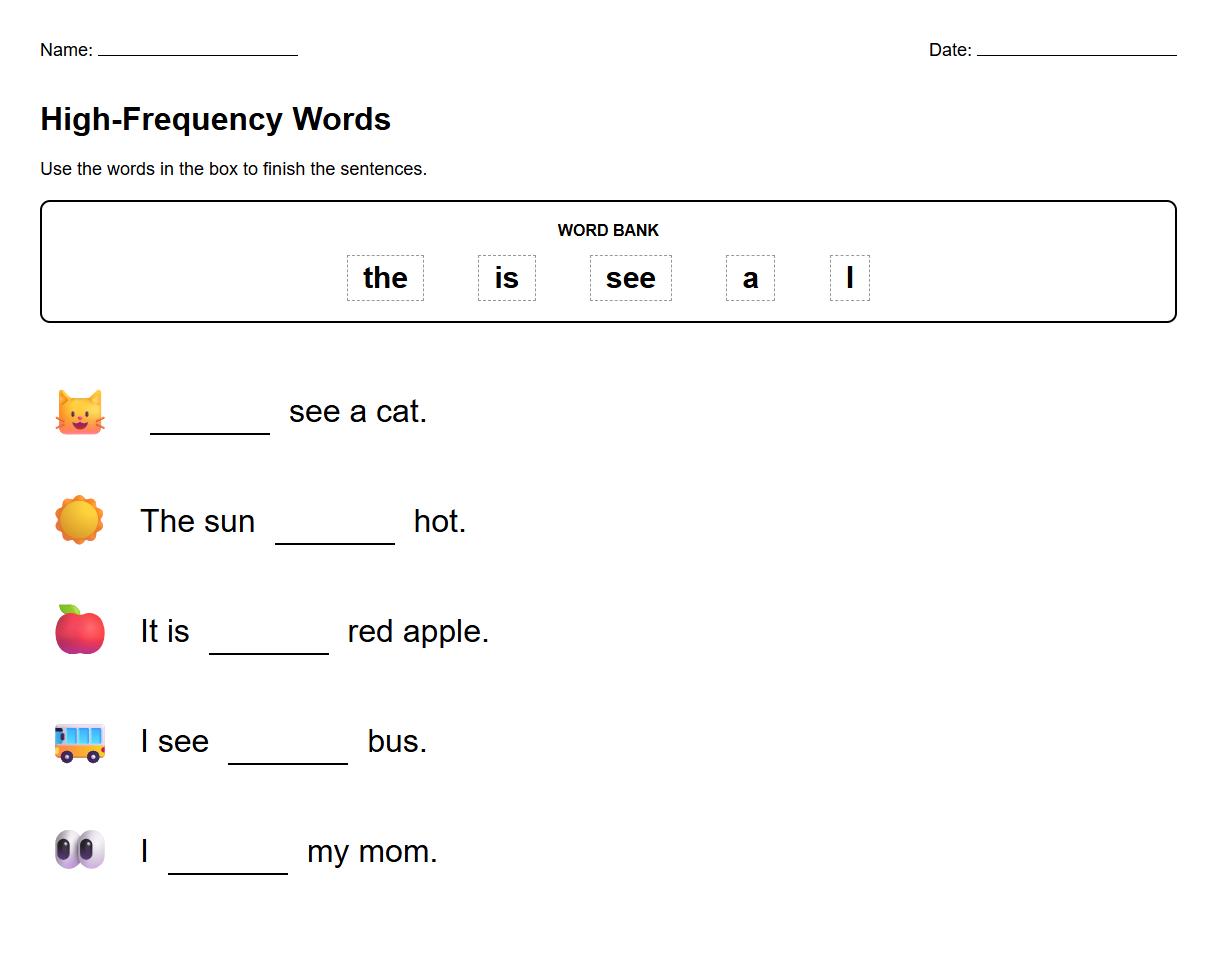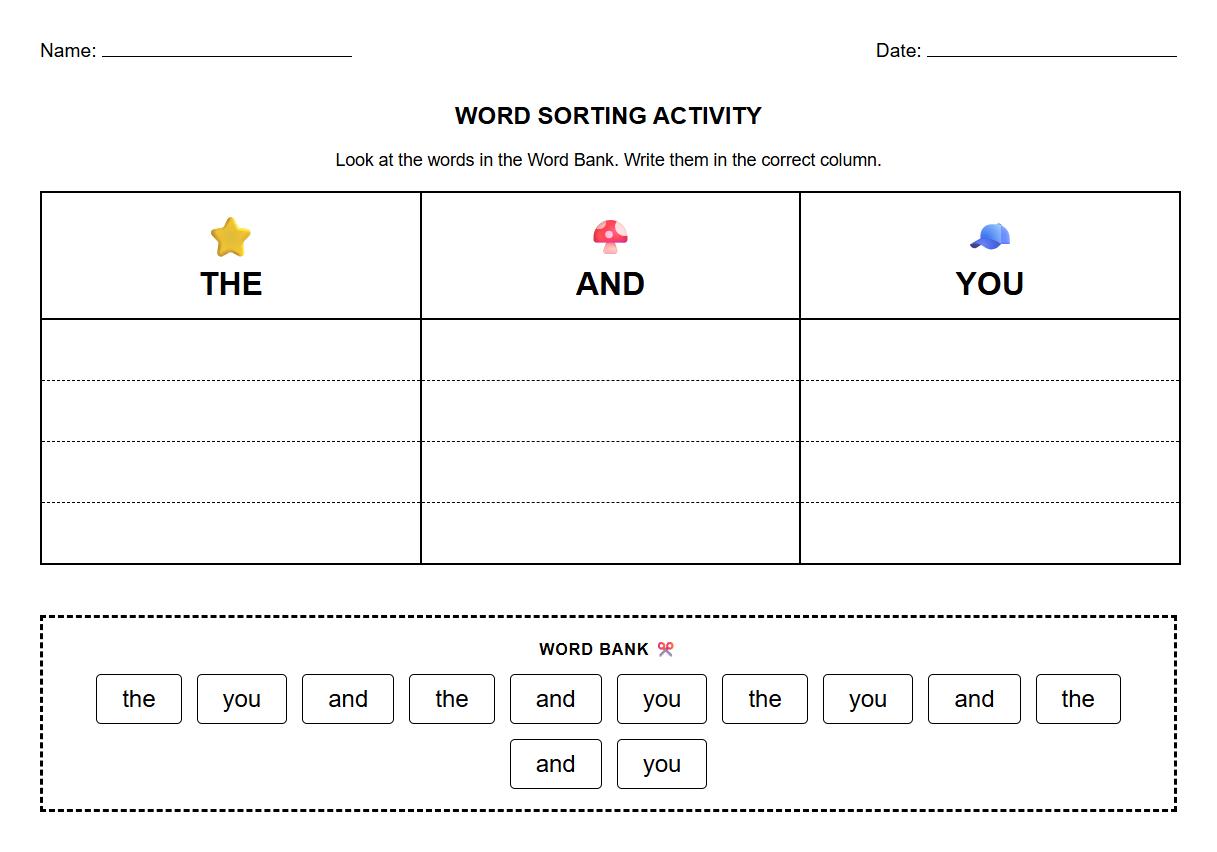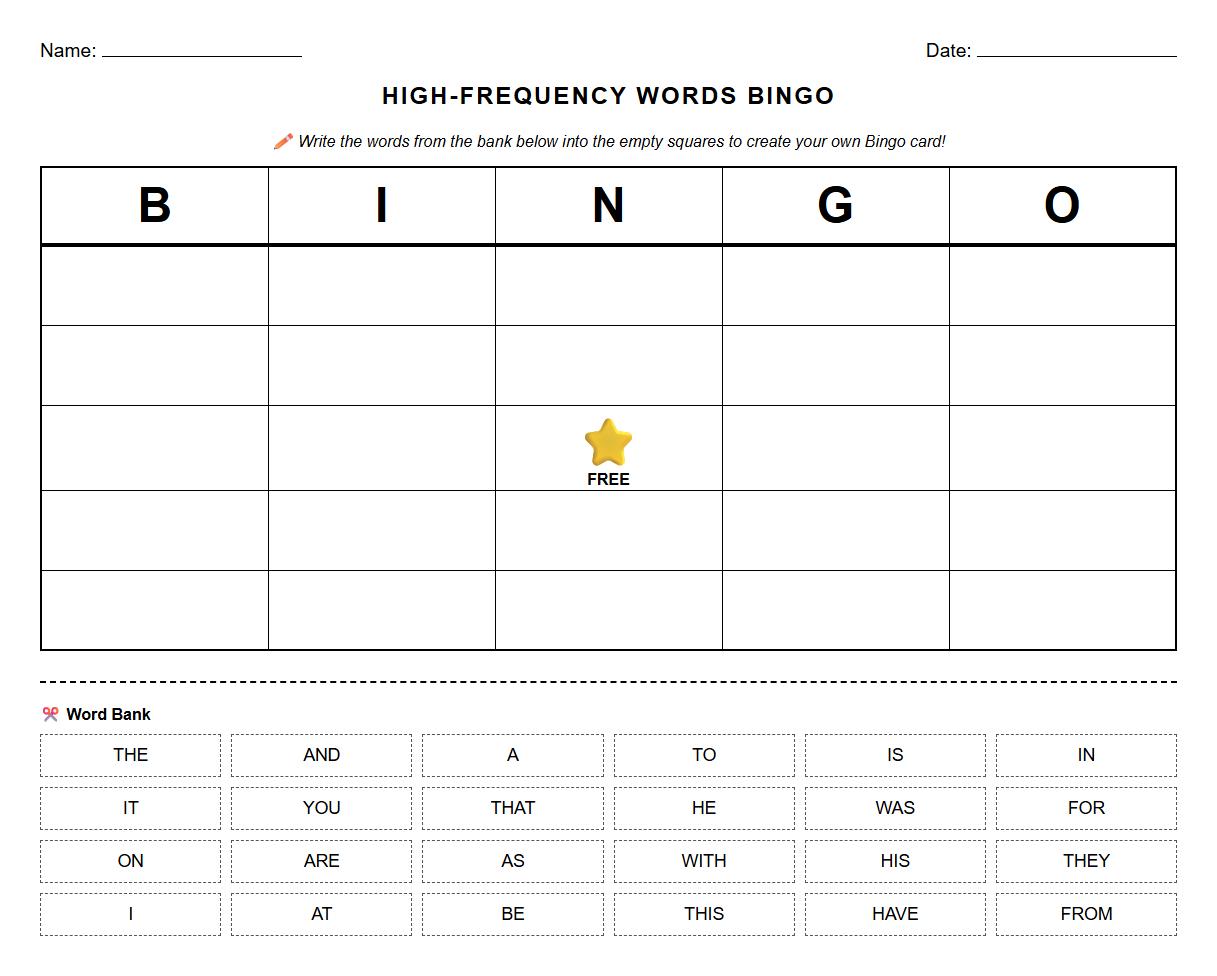
Mastering high-frequency words accelerates reading fluency and comprehension for early readers. These sight words appear frequently in texts, making their quick recognition essential for building strong literacy skills. Explore our collection of high-frequency word recognition worksheets designed to enhance your child's reading confidence and speed.
High-Frequency Word Starting with W
A common high-frequency word that starts with W is "was". These words are important for young learners to recognize quickly to improve their reading fluency. Teachers and parents can help children by using flashcards and repeated reading activities. Identifying words that start with specific letters supports letter-sound relationship skills.
Circle All Words Seen More Than Once
Ask children to carefully scan the list and circle words that appear multiple times. This activity strengthens visual discrimination and word recognition skills. Encouraging repetition helps in solidifying memory of high-frequency words. Parents and teachers can assist by modeling how to spot and circle these repeated words.
Shortest Word on the List
Find and point out the shortest word on the worksheet to the child. Short words often include "a," "I," or "an," which are foundational in early literacy. Identifying the shortest word helps children focus on word length and letter count. This supports their understanding of word structures.
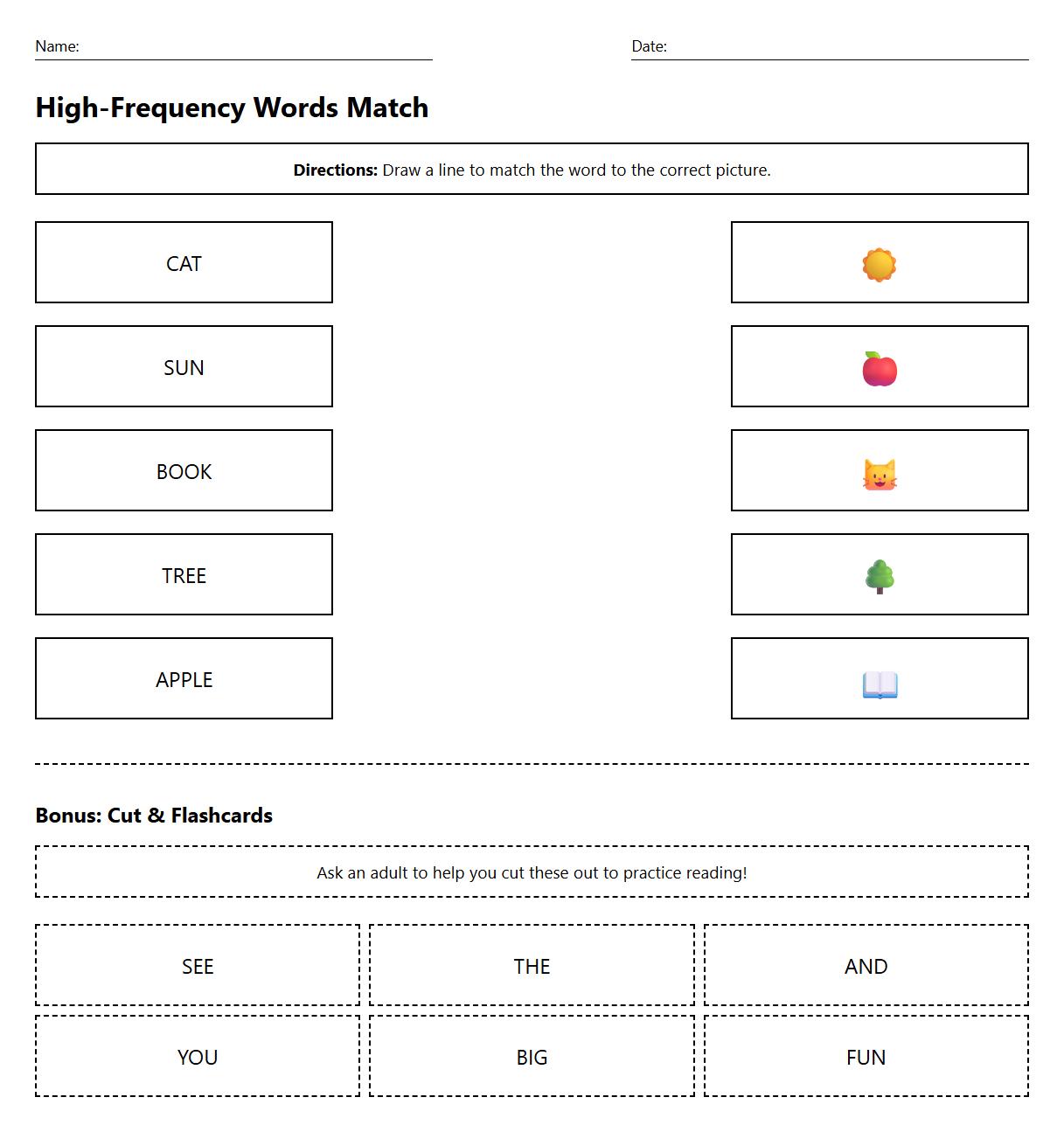
Match High-Frequency Word to Picture
Have the child match words to corresponding pictures to connect visual cues with word meaning. This makes learning interactive and reinforces comprehension. Matching activities engage multiple senses, aiding memory retention. It's a crucial step in linking spoken language to reading and writing.
Word that Begins with the Letter S
Ask the child to identify a word starting with "S". This task promotes letter recognition and phonemic awareness. Examples of high-frequency words starting with S may include "see," "said," or "she." Practicing letter sounds helps children decode unfamiliar words in the future.
Highlight the Word Meaning "Female Parent"
Guide children to find and highlight the word that means "female parent," usually "mom" or "mother." This enhances vocabulary by associating words with familiar family roles. Highlighting also supports visual scanning and focus. Relating words to real-life concepts makes learning meaningful.
Writing the Word Heard
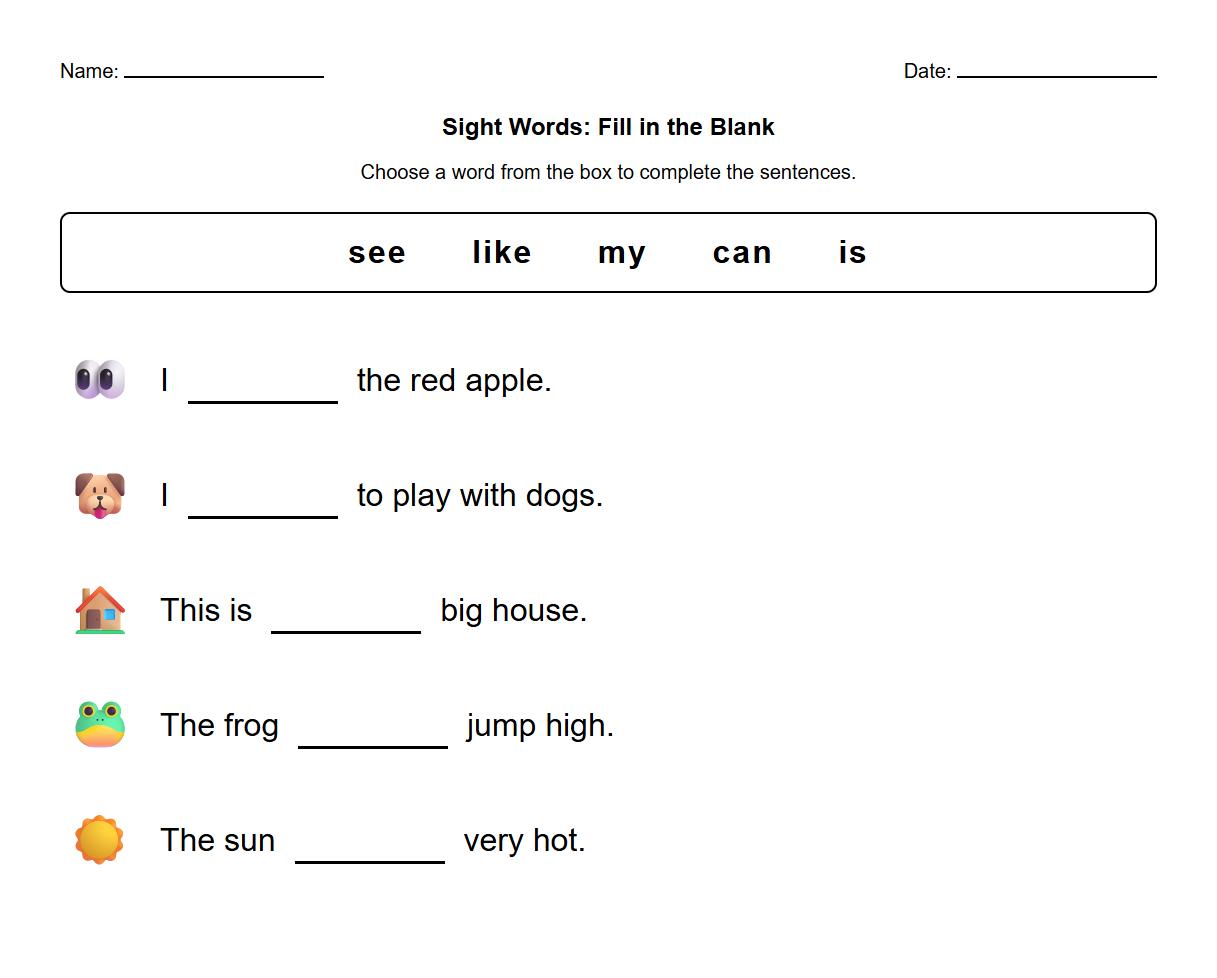
Encourage children to listen carefully and write the word they hear in the provided box. This activity combines listening, spelling, and writing skills. It supports phonological awareness by connecting sounds to letters. Parents and teachers can say the word slowly and repeat if needed to help accuracy.
Words That Rhyme with "Cat"
Ask children to find words that rhyme with "cat" such as "hat," "bat," or "rat." Rhyming builds phonological awareness, an essential pre-reading skill. Grouping words by sound helps with decoding and spelling patterns. Rhyming games and songs can make this learning fun and engaging.
Finding a Word That Tells Where Something Is
Help children locate a word indicating location, like "here," "there," or "where." Understanding these words improves sentence comprehension and spatial awareness. Teaching positional words enhances overall language skills. Use picture clues to make this easier and more interactive.
Word Ending with the Letter D
Identify the word that ends with the letter "D" to practice ending sounds and spelling. Words like "and," "had," or "said" are common examples. Emphasizing word endings supports proper pronunciation and writing accuracy. Repeated exposure to such words strengthens reading ability.


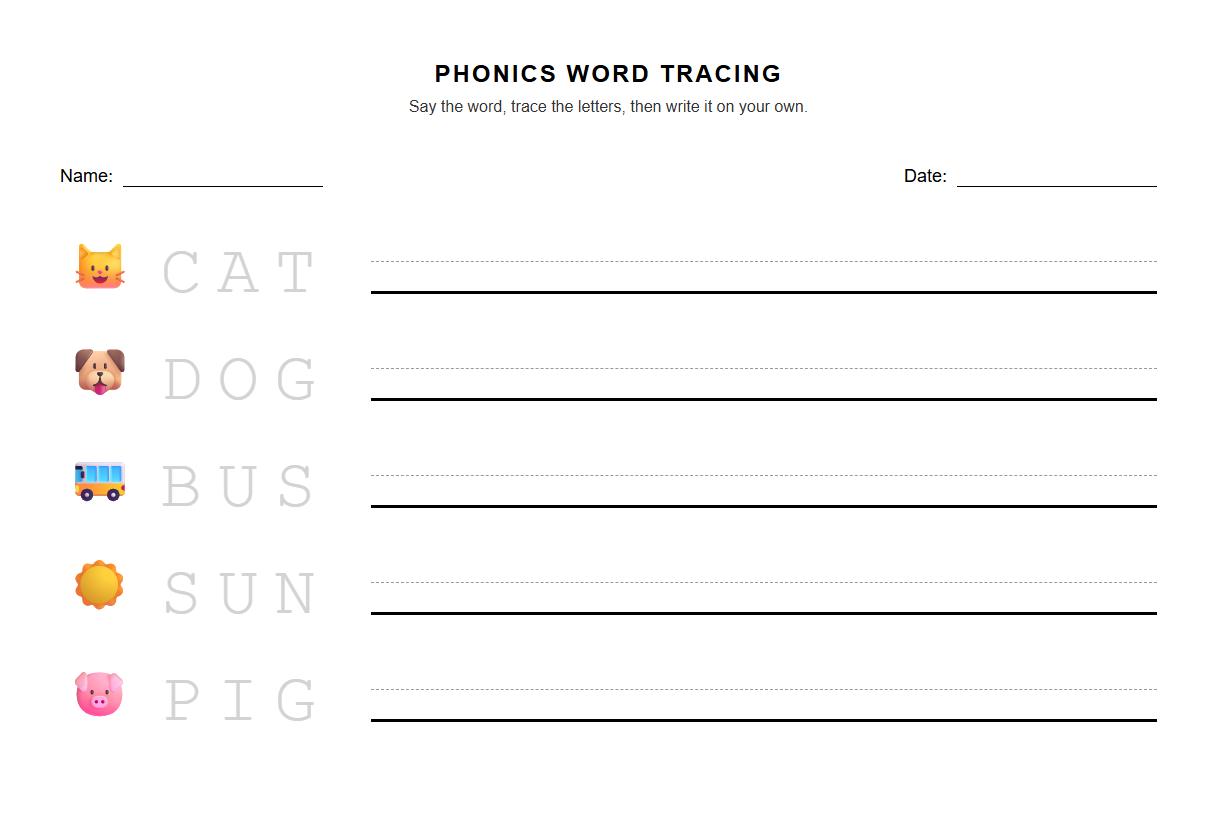
Kindergarten Grade Sight Words Tracing and Reading Practice