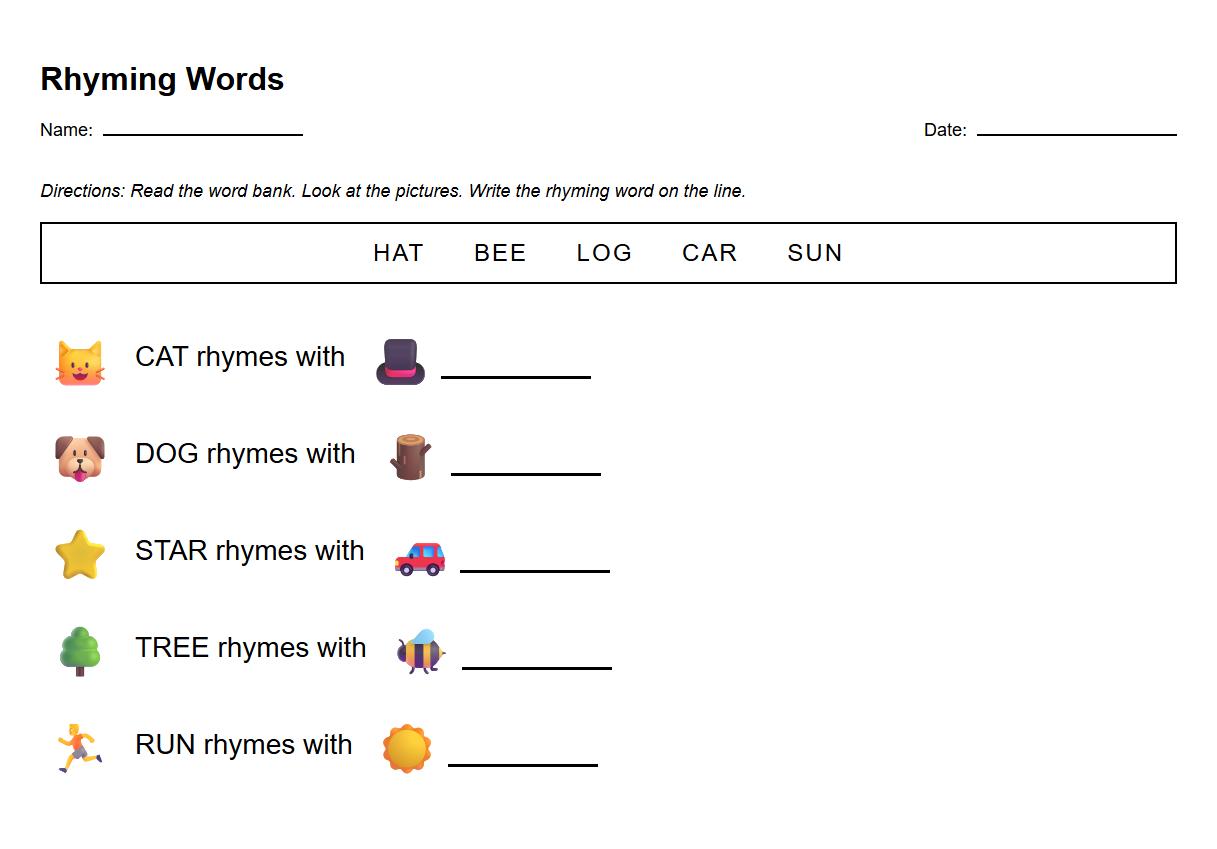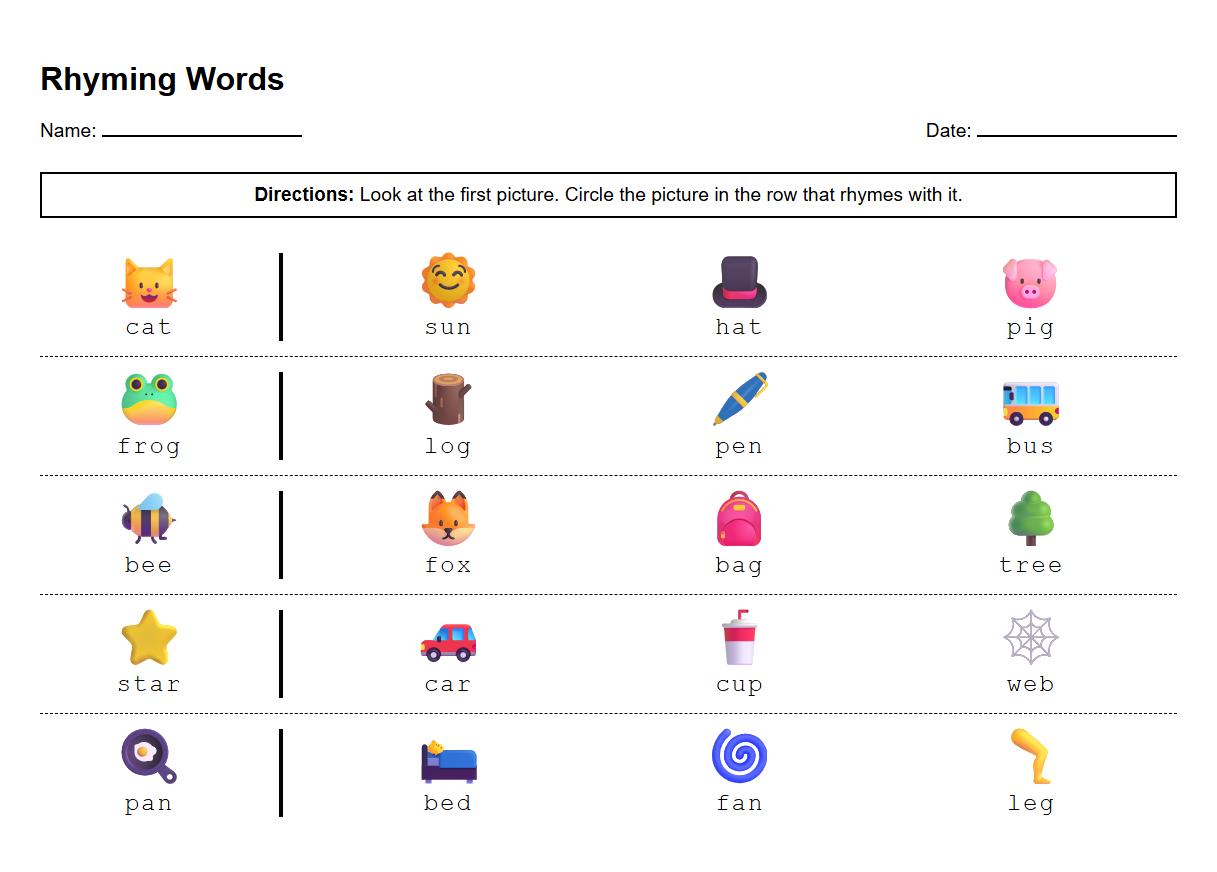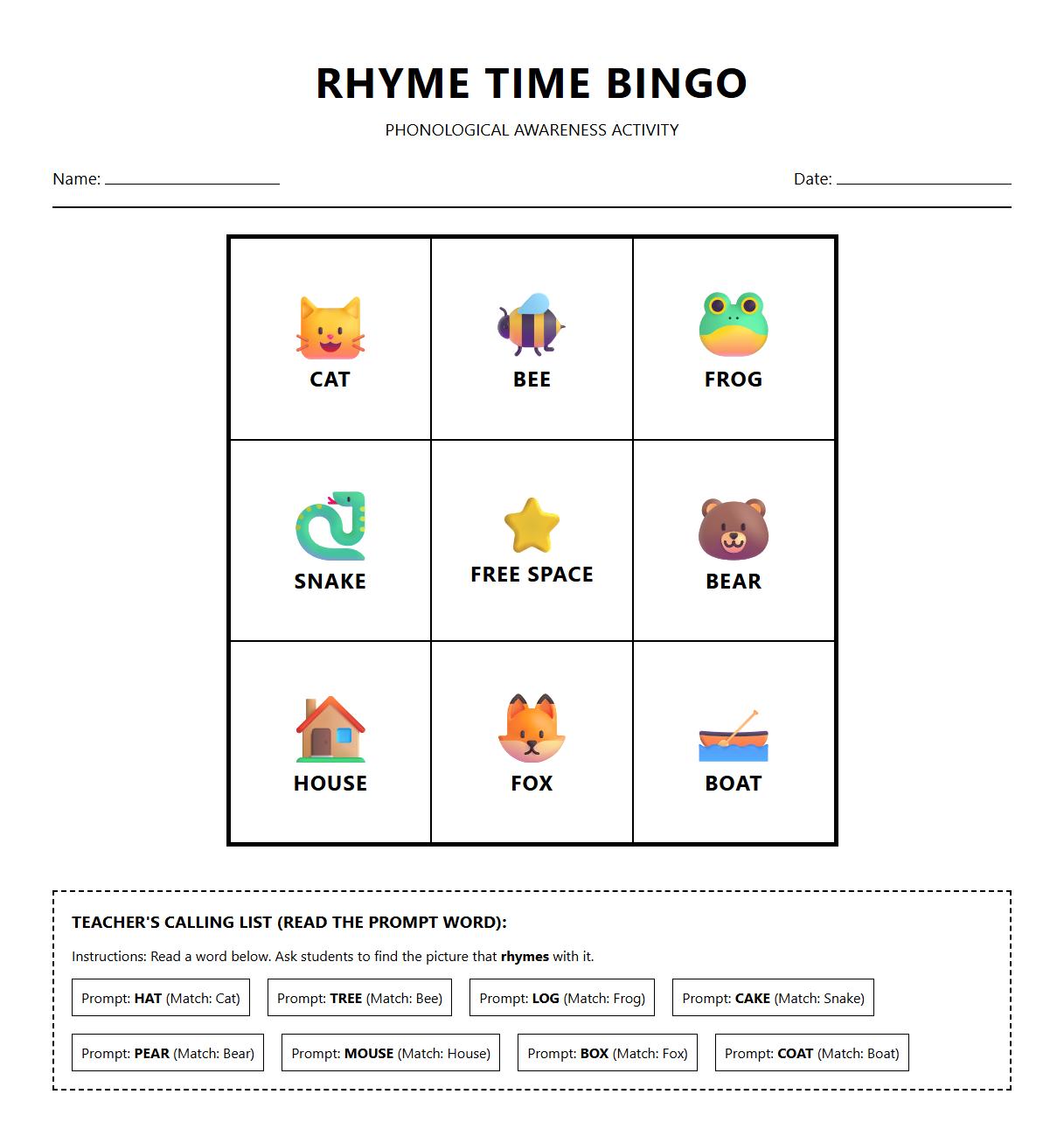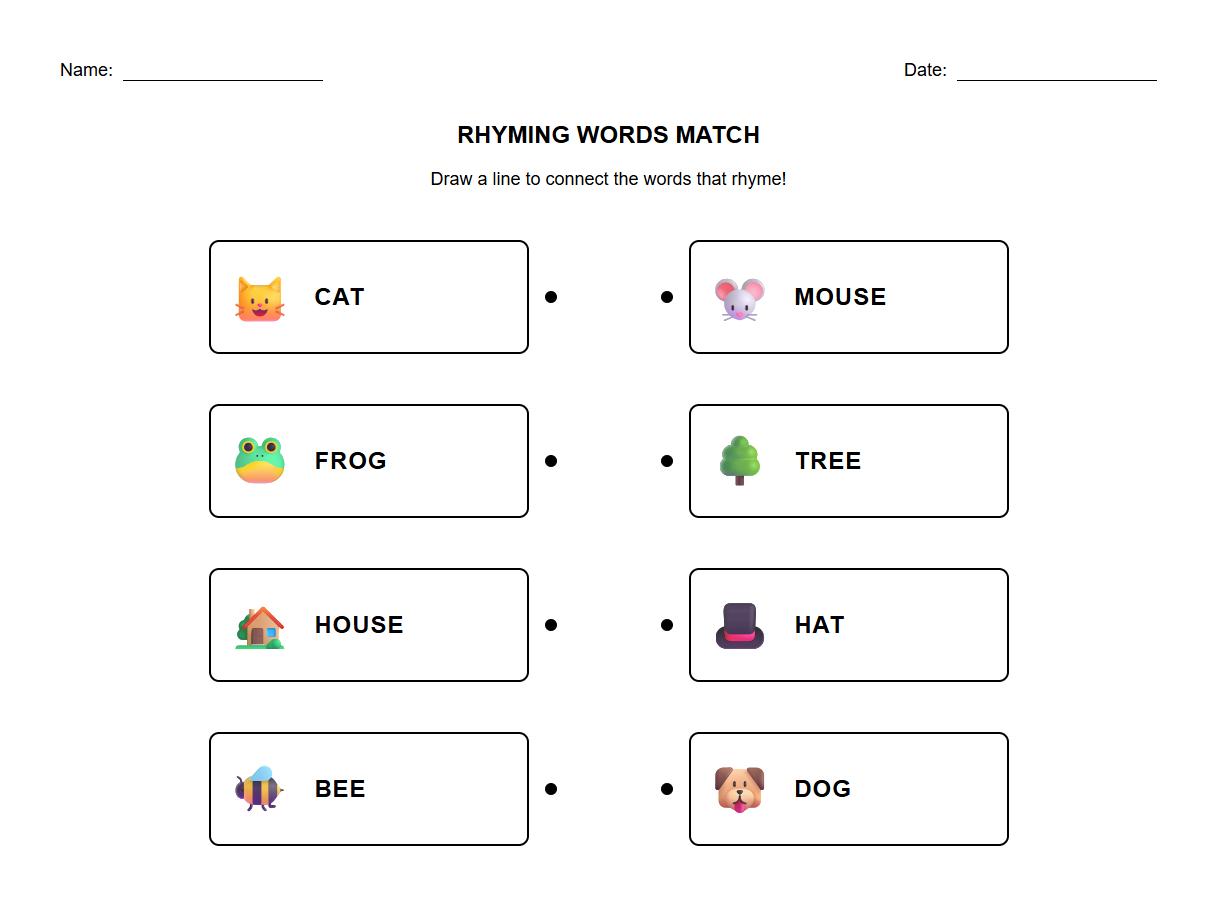
Kindergarten rhyming words worksheets effectively support the development of phonological awareness by helping young learners recognize and produce rhyme patterns. These activities enhance auditory discrimination and lay a solid foundation for reading skills through engaging and interactive exercises. Explore the available worksheets to enrich your kindergarten phonological awareness lessons.
What is Phonological Awareness and Why is it Important in Kindergarten?
Phonological awareness is the ability to recognize and manipulate the sound structures in spoken language, such as syllables and rhymes. It is a critical skill that serves as a foundation for reading and spelling development in young children. In kindergarten, building phonological awareness supports early literacy by helping children understand how sounds form words. This skill enhances vocabulary, comprehension, and overall communication abilities.
How Do Rhyming Words Help Develop Early Reading Skills in Children?
Rhyming words help children identify similar sound patterns, which fosters their ability to decode new words. By recognizing rhymes, children become more aware of word families and phonetic patterns, aiding in word recognition and spelling. This awareness strengthens their listening and pronunciation skills, critical for fluent reading. Rhyming also makes learning fun and engaging, encouraging children to explore language playfully.
What Types of Activities are Included in Rhyming Word Worksheets for Kindergarten?
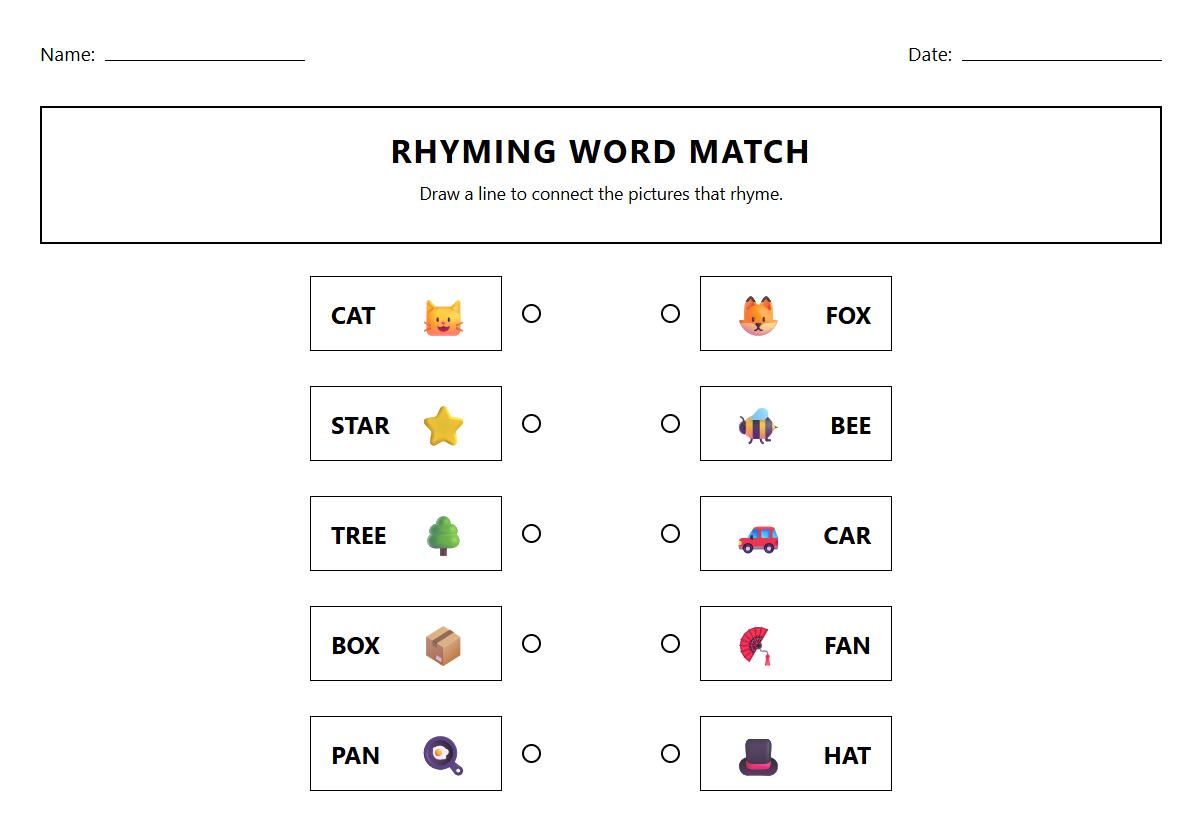
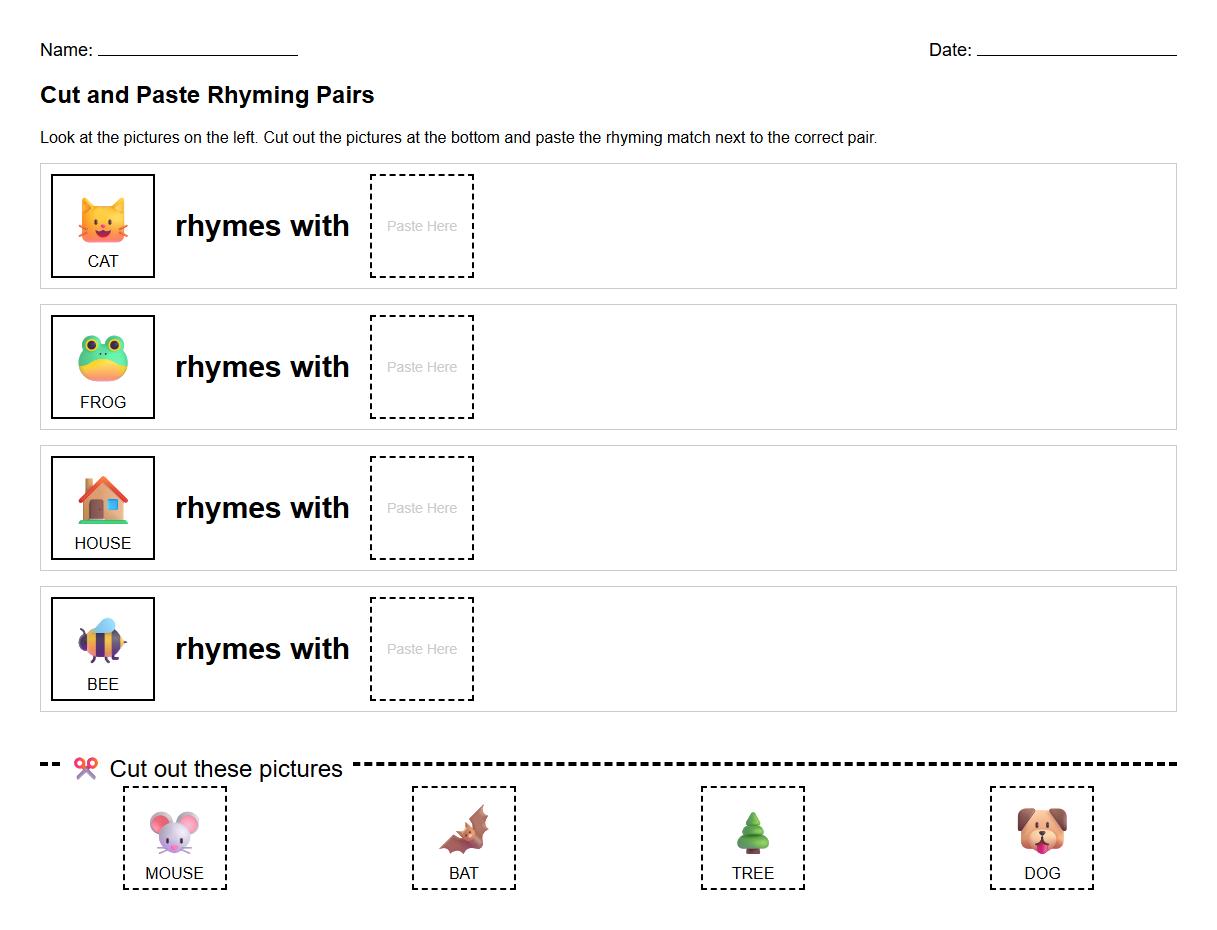
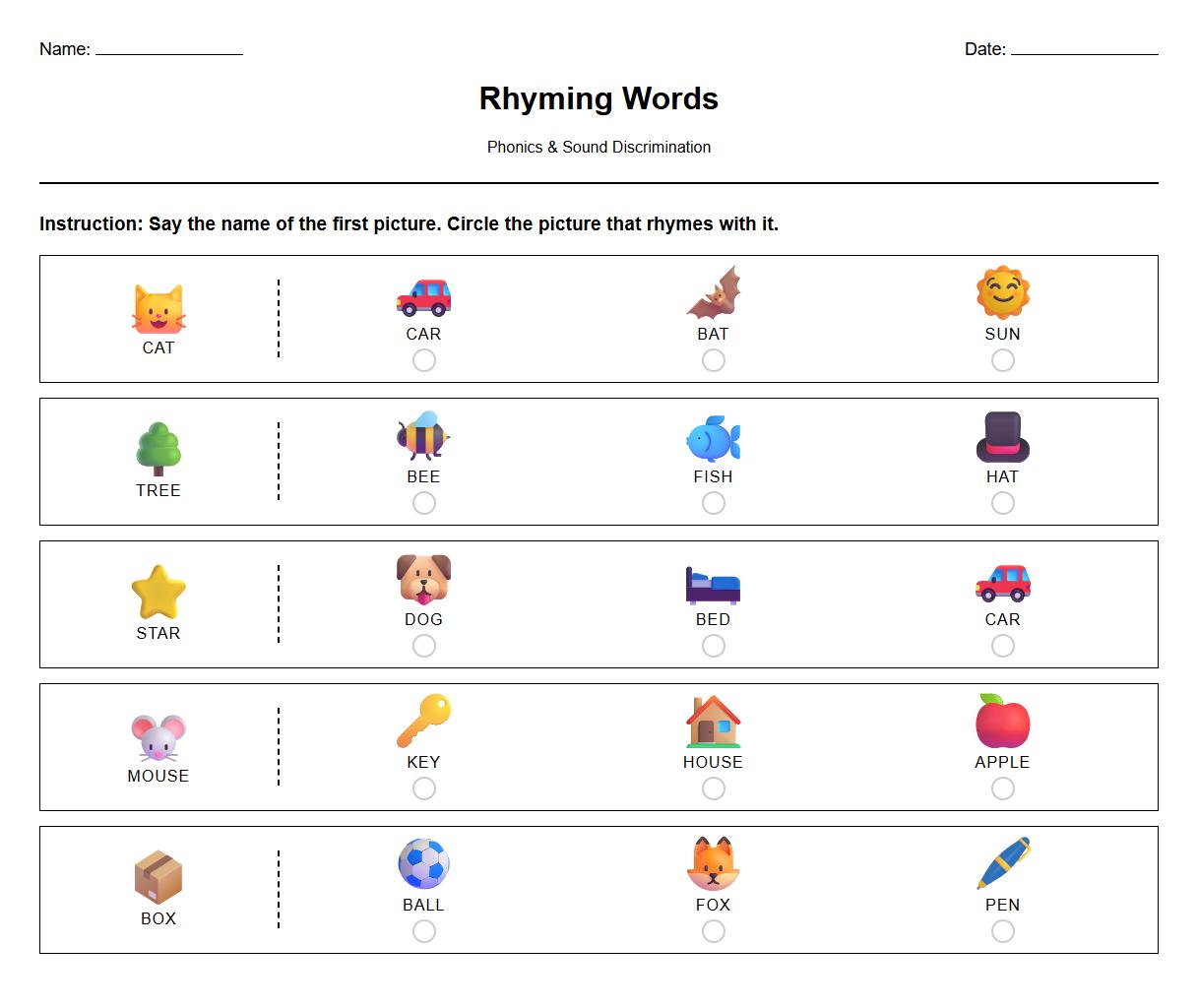
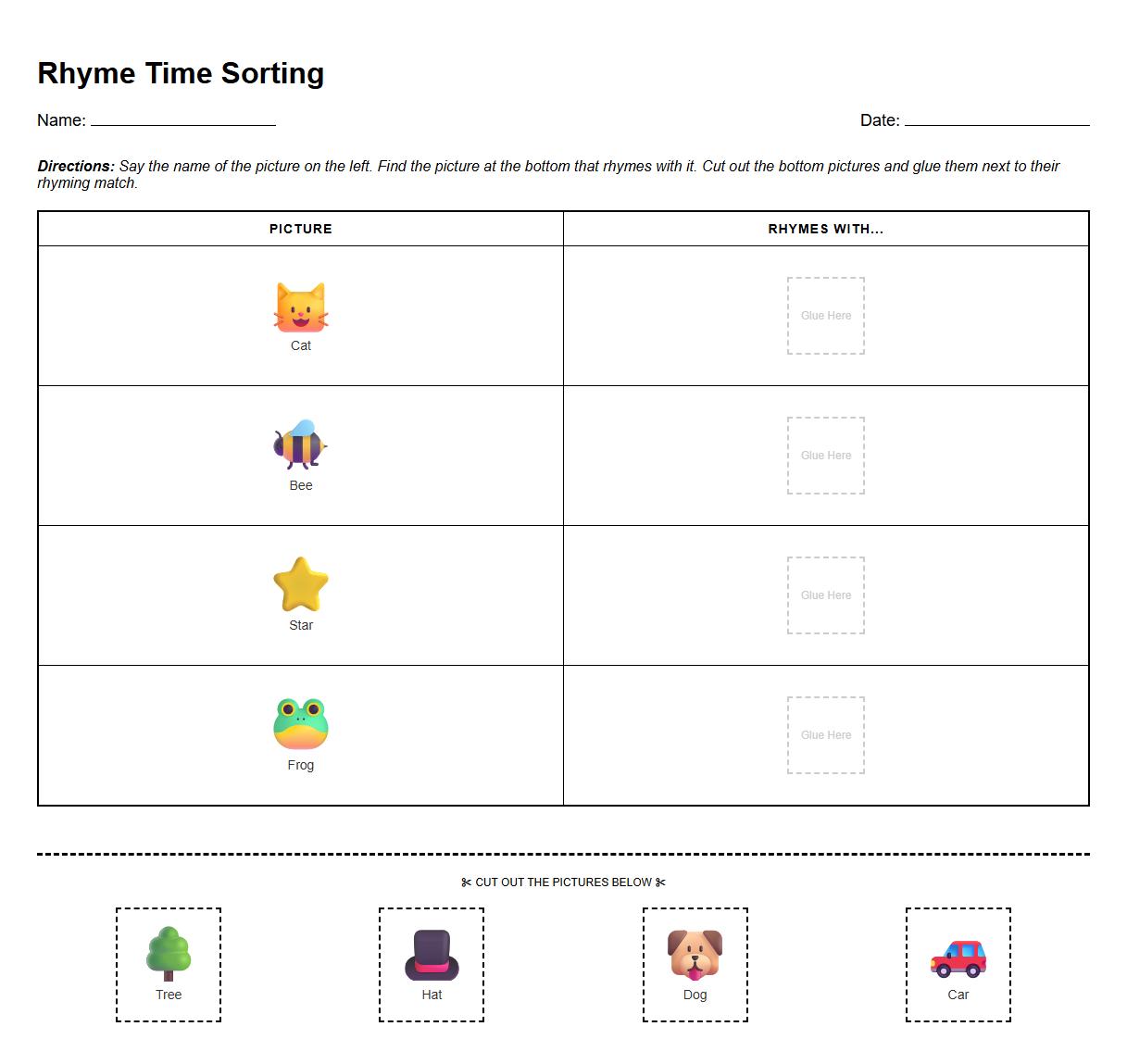
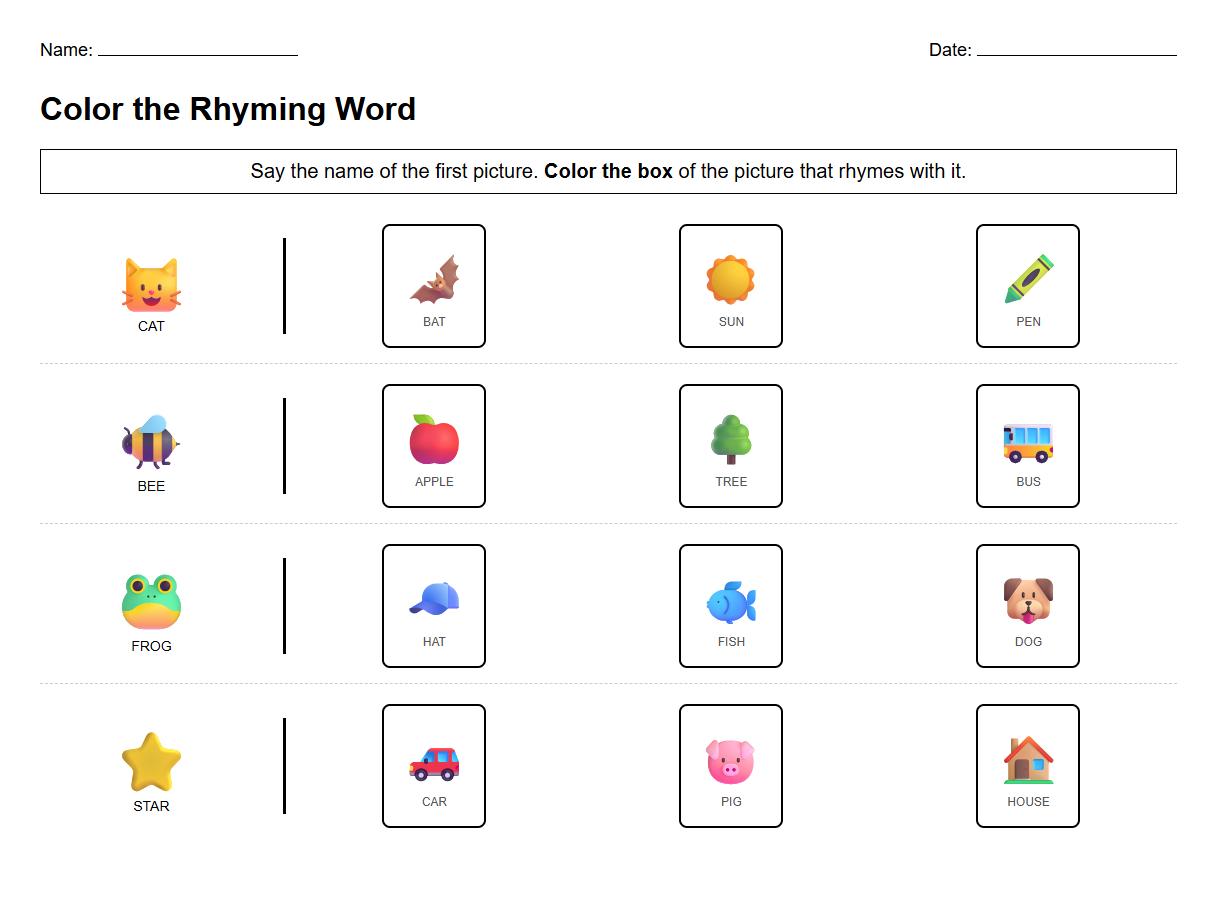
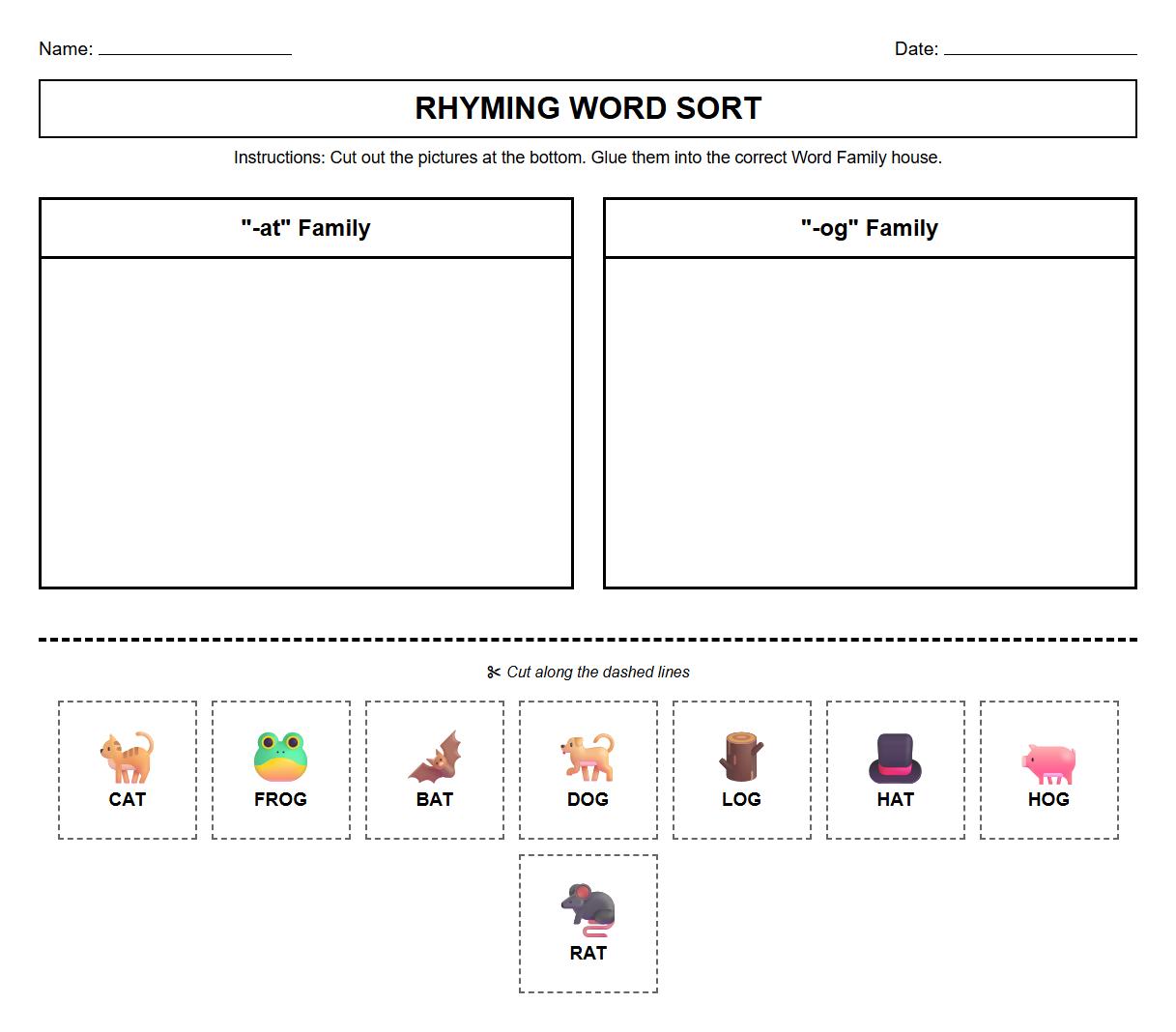
Rhyming word worksheets typically include activities such as matching rhyming pairs, filling in missing rhyming words, and sorting words by rhyme. They may also involve circling or coloring words that rhyme, and simple writing exercises to reinforce rhyming patterns. These activities are designed to be interactive and visually appealing to hold young learners' attention. Worksheets often combine auditory and visual tasks to strengthen phonological awareness effectively.
How Often Should Kindergarten Students Practice Rhyming Words for Effective Learning?
Consistent practice of rhyming words is essential, with daily or several times a week sessions recommended for kindergarten students. Short, focused sessions of 10-15 minutes work best to maintain children's interest and attention span. Regular rhyming practice helps solidify phonological skills and promotes steady progress in literacy. Incorporating rhyming activities into various parts of the day enhances learning retention and enjoyment.
What Are Some Common Rhyming Word Pairs Used in Kindergarten Worksheets?
Common rhyming pairs include simple and familiar words such as cat-hat, dog-frog, sun-run, and ball-call. These pairs are carefully chosen to be age-appropriate and easy to pronounce, supporting early phonetic development. Using everyday vocabulary helps children relate sounds to words they encounter in their environment. Familiar rhyming pairs encourage confidence and reinforce sound recognition.
How Can Teachers Assess Phonological Awareness Using Rhyming Word Worksheets?
Teachers can assess phonological awareness by observing how accurately children identify, produce, and match rhyming words on worksheets. Tracking progress with timed exercises and varied rhyming tasks helps monitor skill development. Assessment includes noting which rhymes children recognize automatically and which require more practice. Worksheets provide a practical and structured way to evaluate each child's phonological strengths and challenges.
What Role Do Visual Aids Play in Teaching Rhyming Words to Young Learners?
Visual aids such as pictures accompanying words help kindergarten learners connect sounds with meanings. They support memory retention by providing concrete representations of rhyming words. Visuals make abstract sound patterns more accessible and engage children's attention. Incorporating colorful images in rhyming worksheets enhances motivation and comprehension.
How Can Parents Support Phonological Awareness at Home with Rhyming Activities?
Parents can encourage phonological awareness by reading rhyming books, singing songs, and playing rhyming games with their children daily. Using simple rhyming word worksheets at home strengthens skills learned at school and boosts confidence. Engaging in conversations that highlight rhyming words fosters natural learning in a relaxed environment. Consistent, playful practice helps bridge school and home literacy efforts.
What Challenges Do Some Kindergarten Students Face with Rhyming, and How Can Worksheets Help?
Some students struggle with distinguishing similar sounds or identifying rhyme patterns due to auditory processing difficulties or limited exposure to language. Rhyming word worksheets provide structured practice that breaks down these challenges into manageable tasks. Repeated exposure through worksheets builds familiarity and confidence in recognizing rhymes. Differentiated activities within worksheets can cater to varying skill levels and learning paces.
How Do Interactive Rhyming Word Games Complement Worksheet Practice in the Classroom?
Interactive rhyming word games create a dynamic learning environment that reinforces concepts practiced on worksheets. Games encourage active participation and social interaction, making phonological awareness enjoyable. Combining hands-on play with worksheet exercises addresses different learning styles and boosts motivation. Together, they provide a balanced approach to mastering rhyming skills in kindergarten.


Phonics Skill Building: Kindergarten Rhyming Words Worksheet Solutions