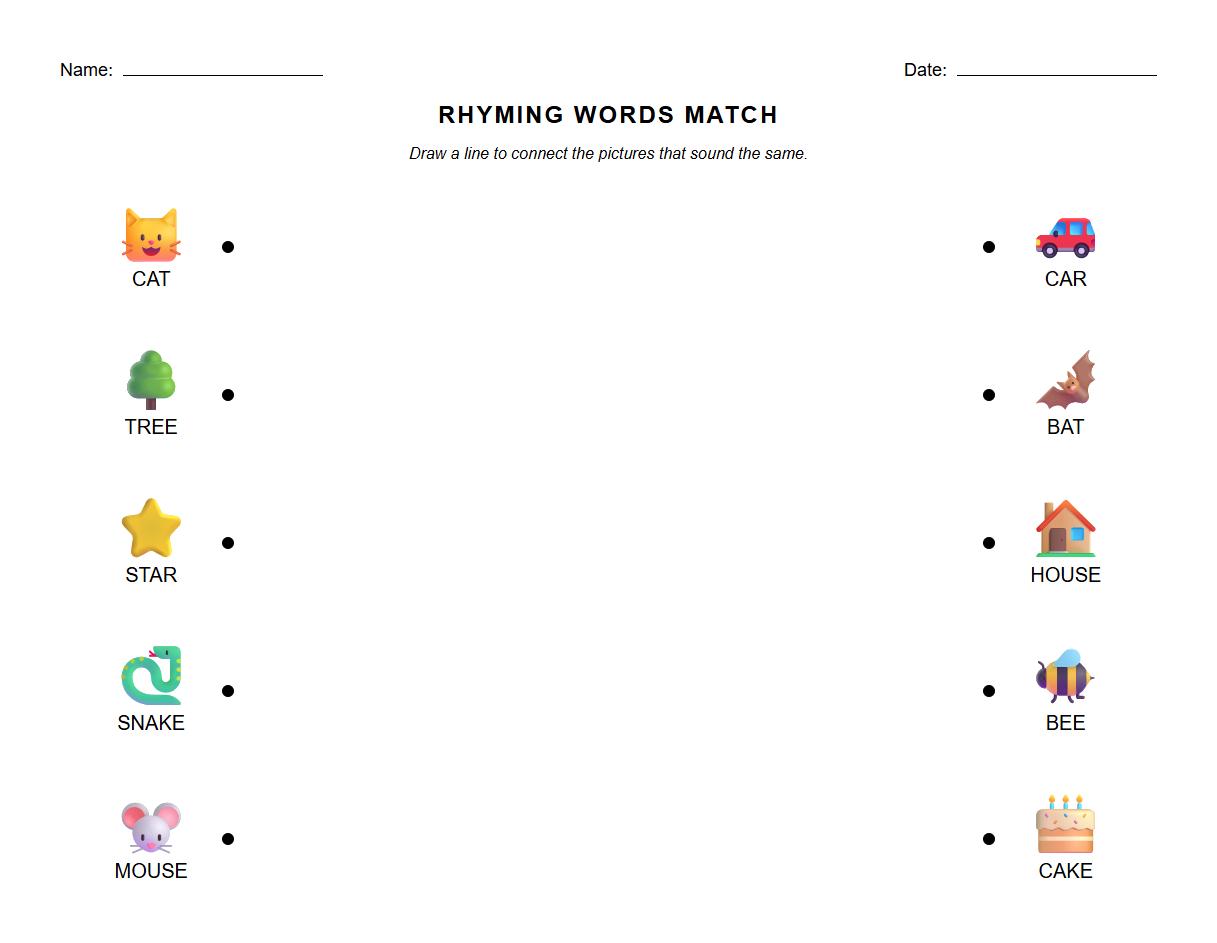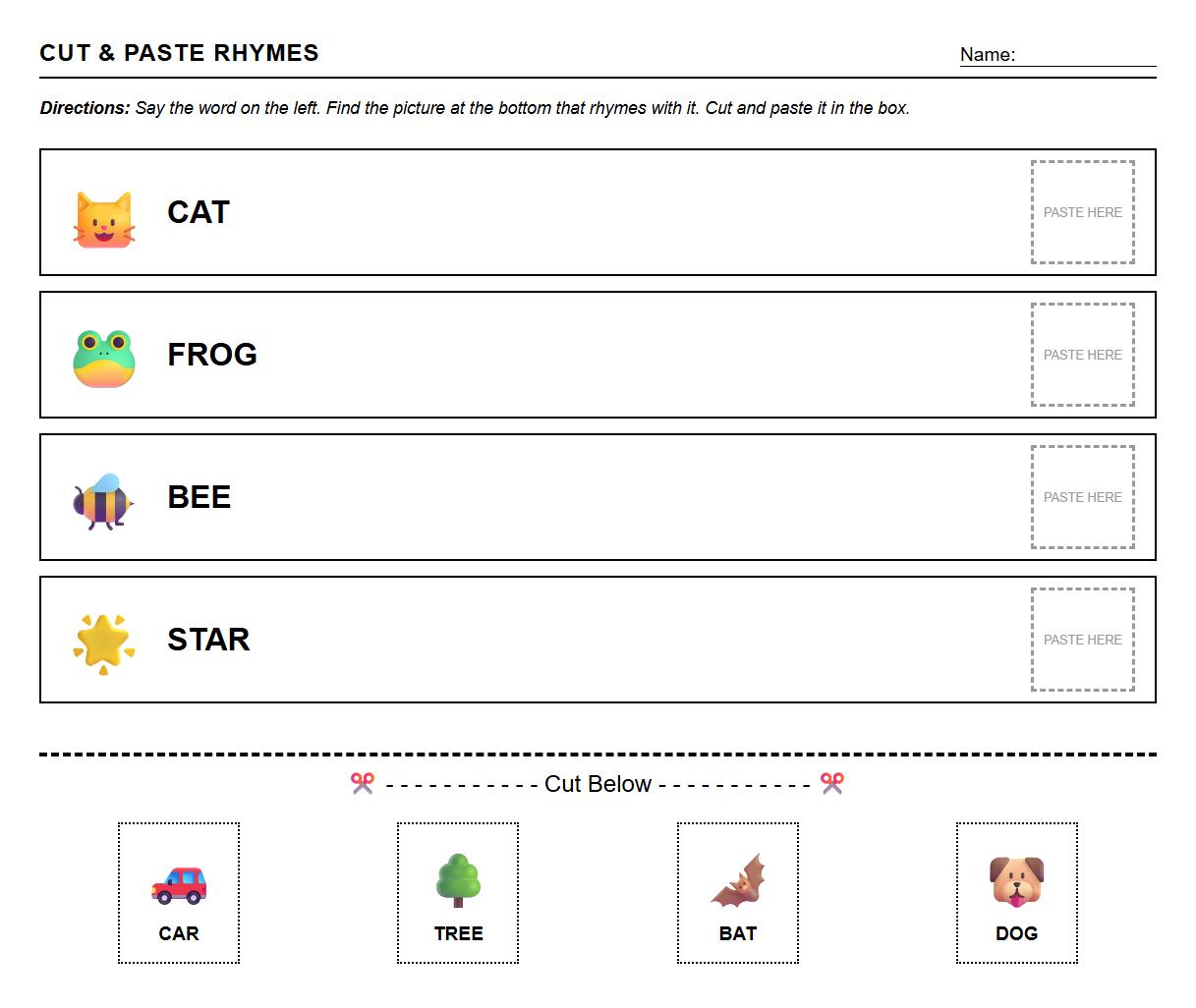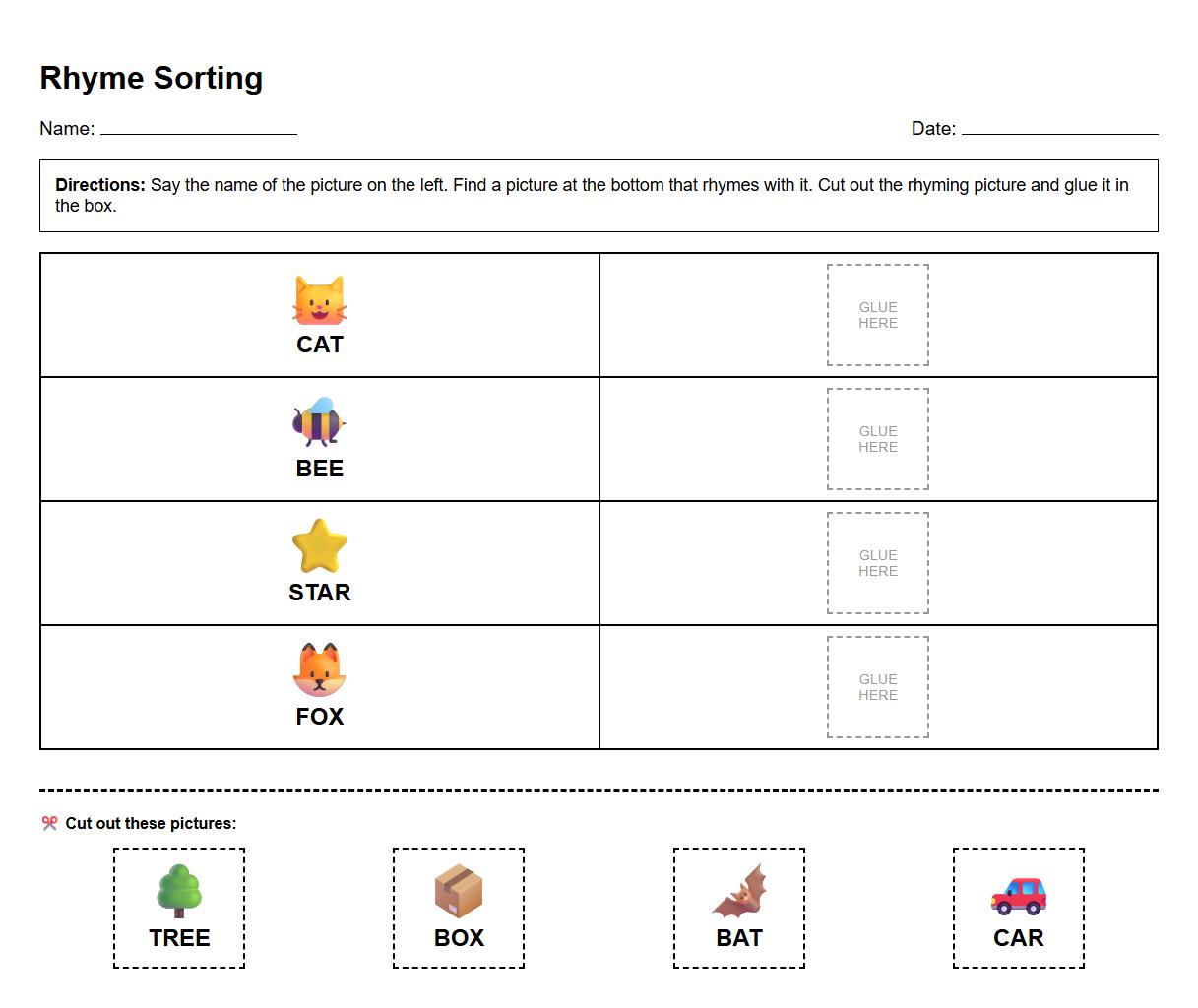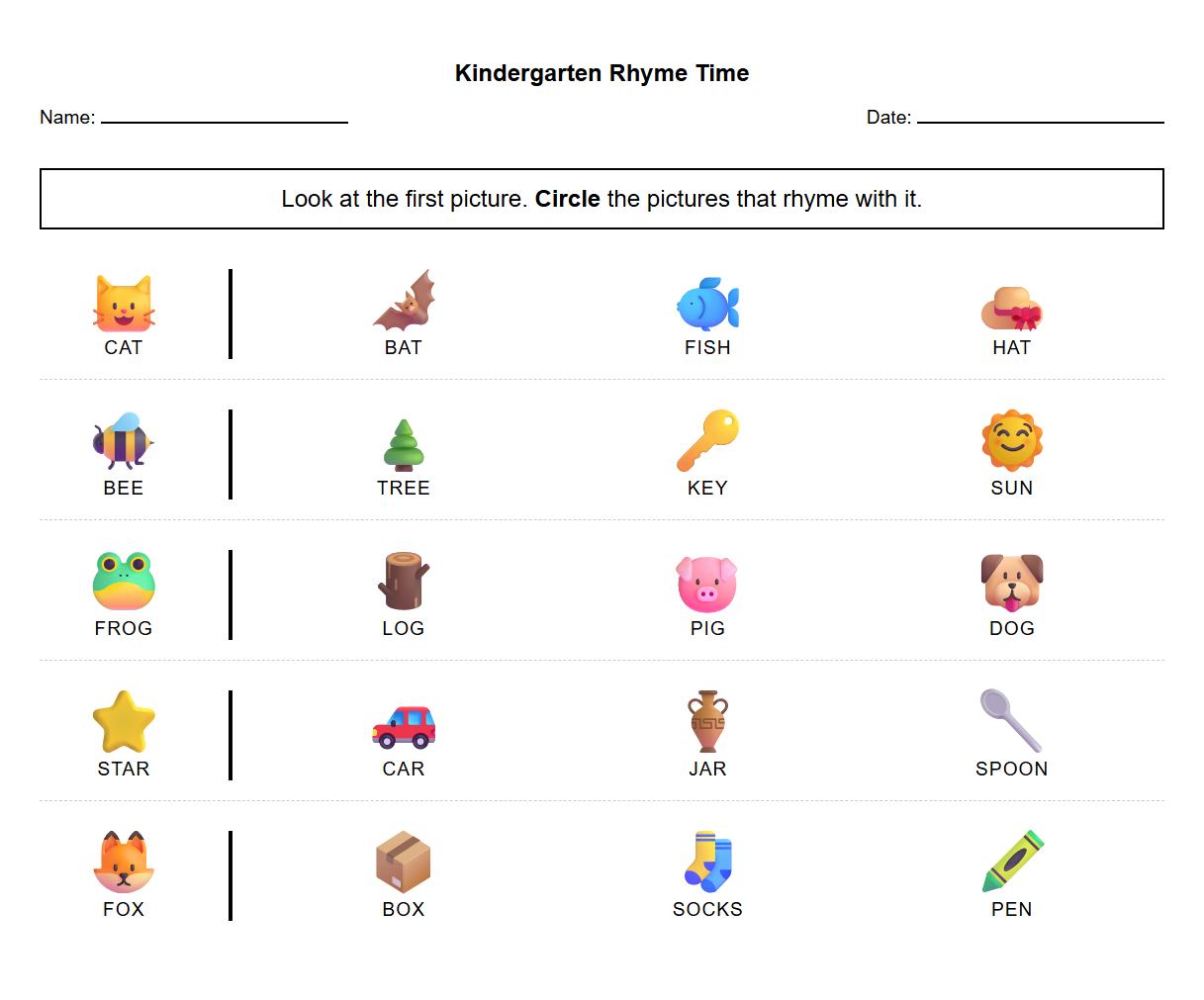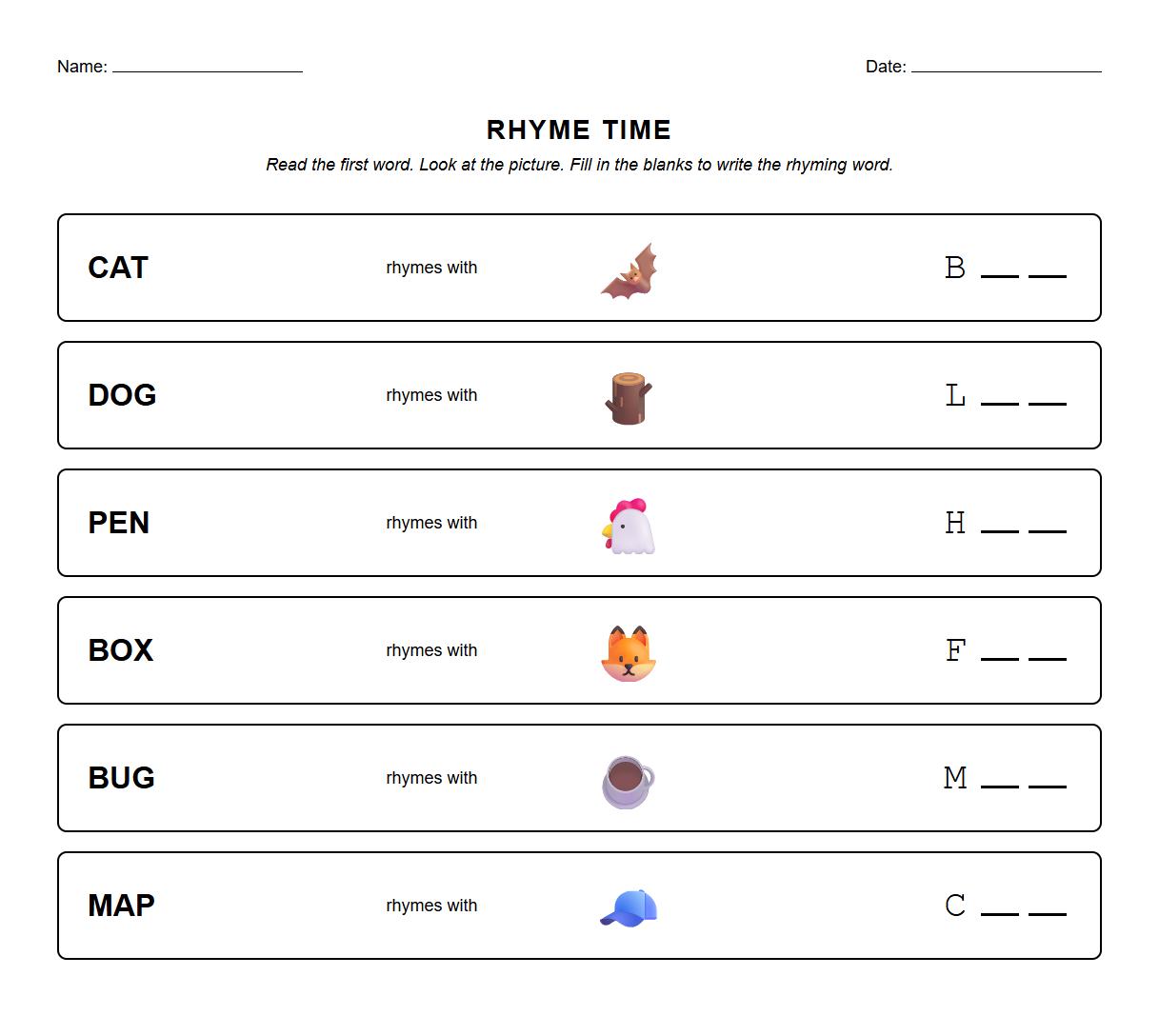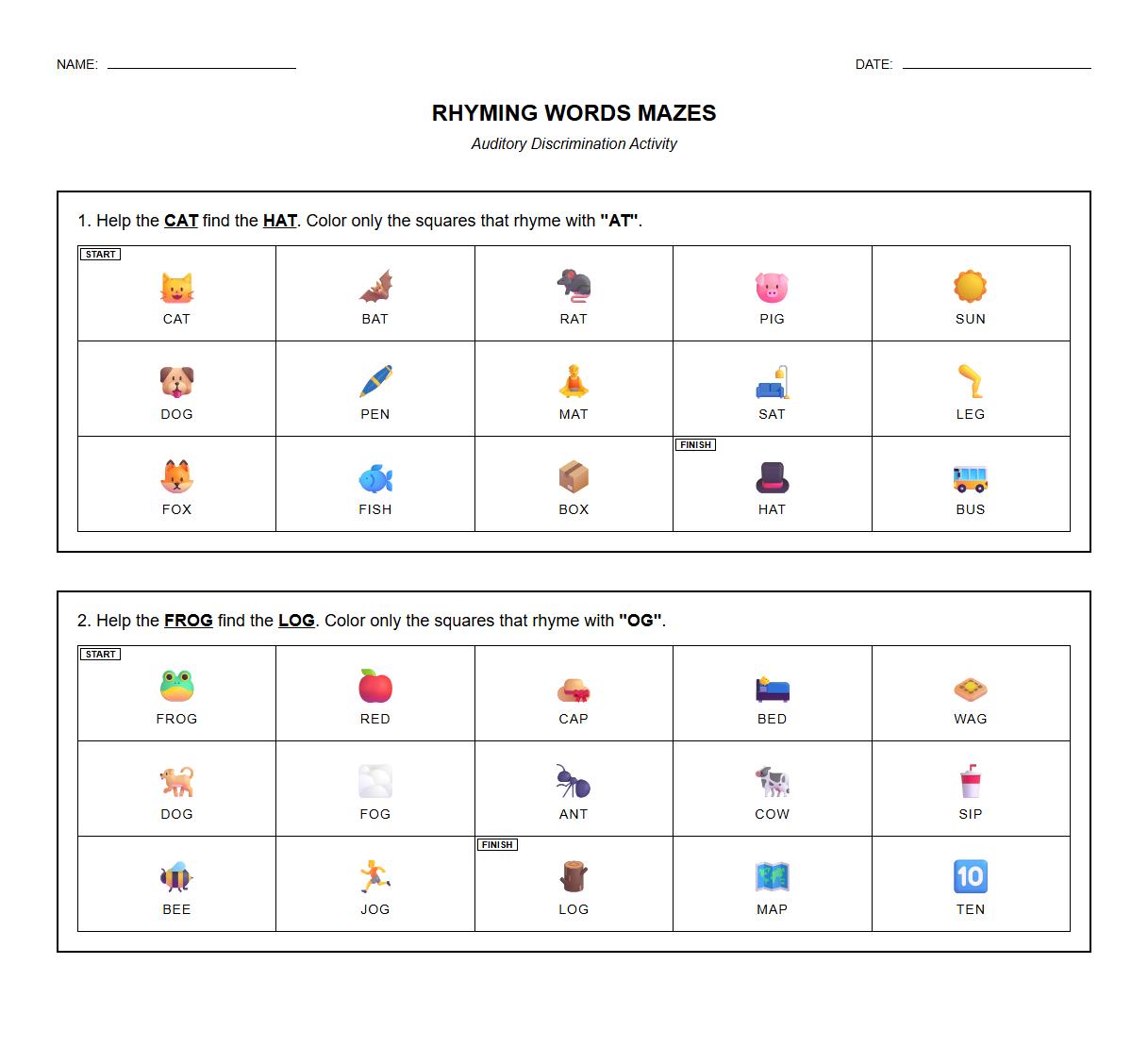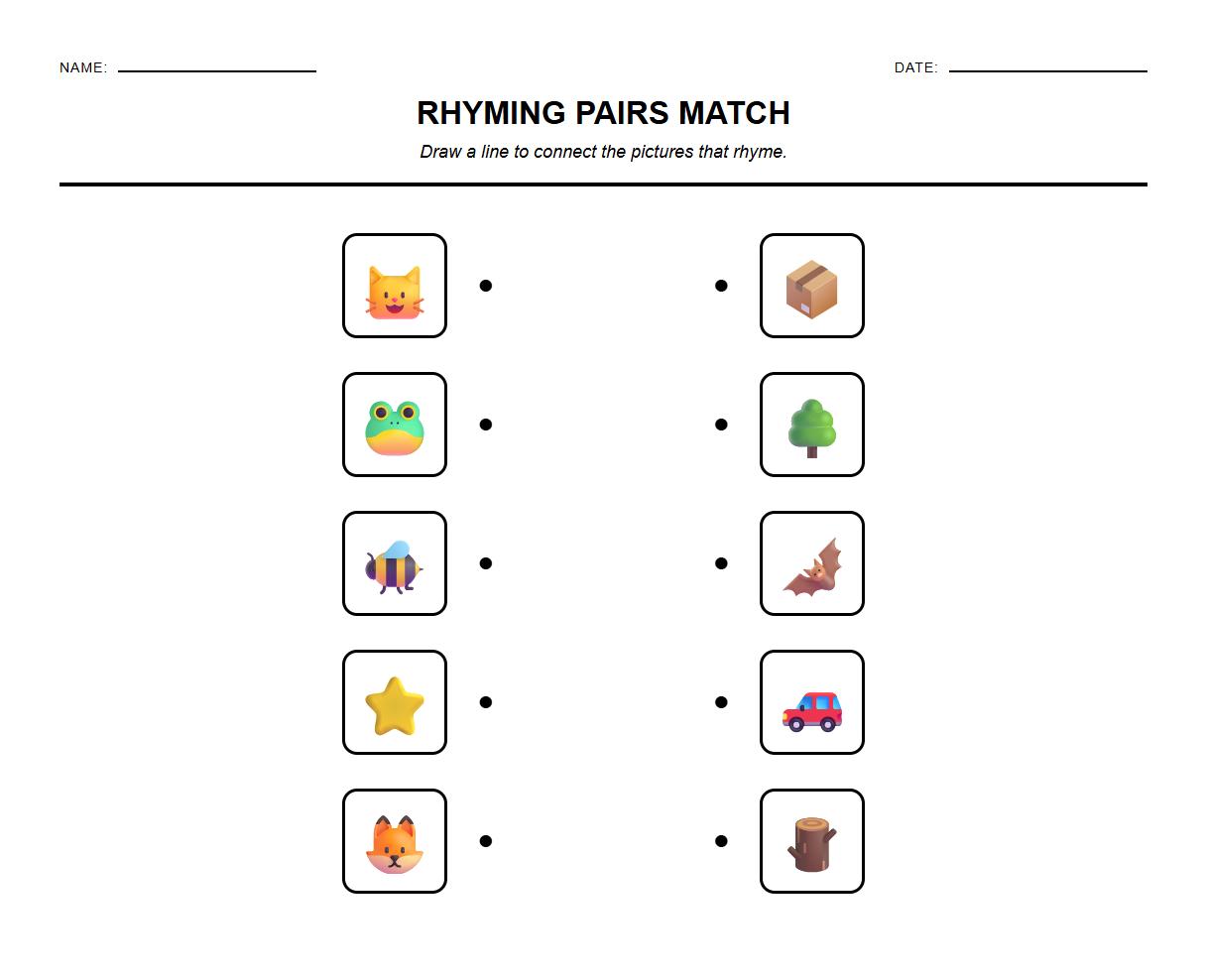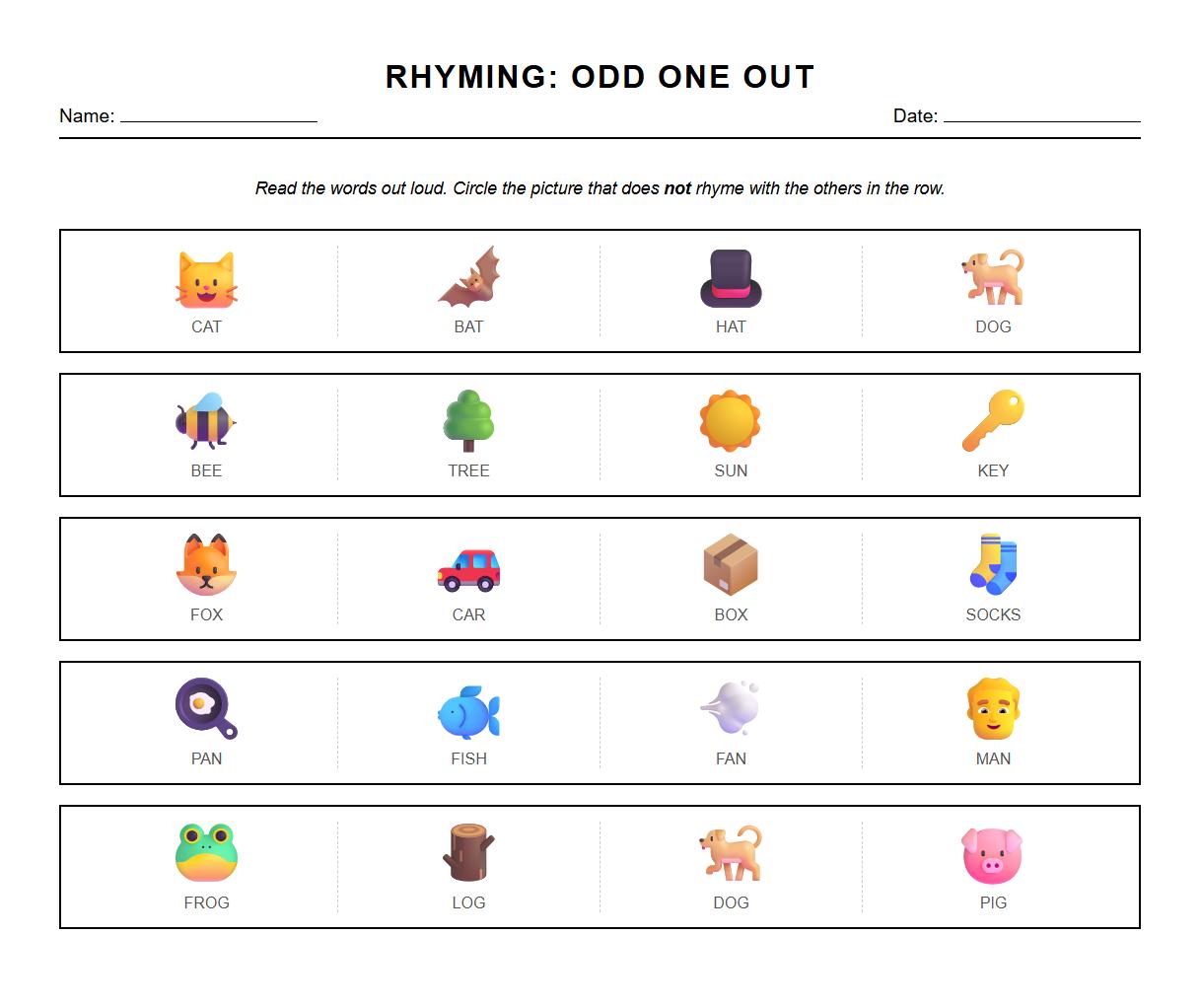
Kindergarten rhyming words worksheets are essential tools for developing phonemic awareness and early reading skills. These engaging exercises help children recognize sound patterns and improve their ability to decode words through playful repetition. Explore our collection of worksheets to support your child's learning journey.
What Are Rhyming Words in Kindergarten Phonemic Awareness?
Rhyming words are words that have the same ending sounds, such as "cat" and "hat." In kindergarten phonemic awareness, understanding rhymes helps children recognize sound patterns. This skill is crucial for developing early reading and spelling abilities. Teaching rhyming words encourages auditory discrimination and phonological memory.
How Do Rhyming Words Worksheets Help Develop Early Reading Skills?
Rhyming word worksheets enhance phonemic awareness by allowing children to practice identifying and producing rhyming sounds. These worksheets support vocabulary growth and improve listening skills. Repeated exposure to rhymes aids in decoding and word recognition. Consequently, this builds a strong foundation for fluent reading.
Common Examples of Rhyming Word Pairs for Kindergarten Students
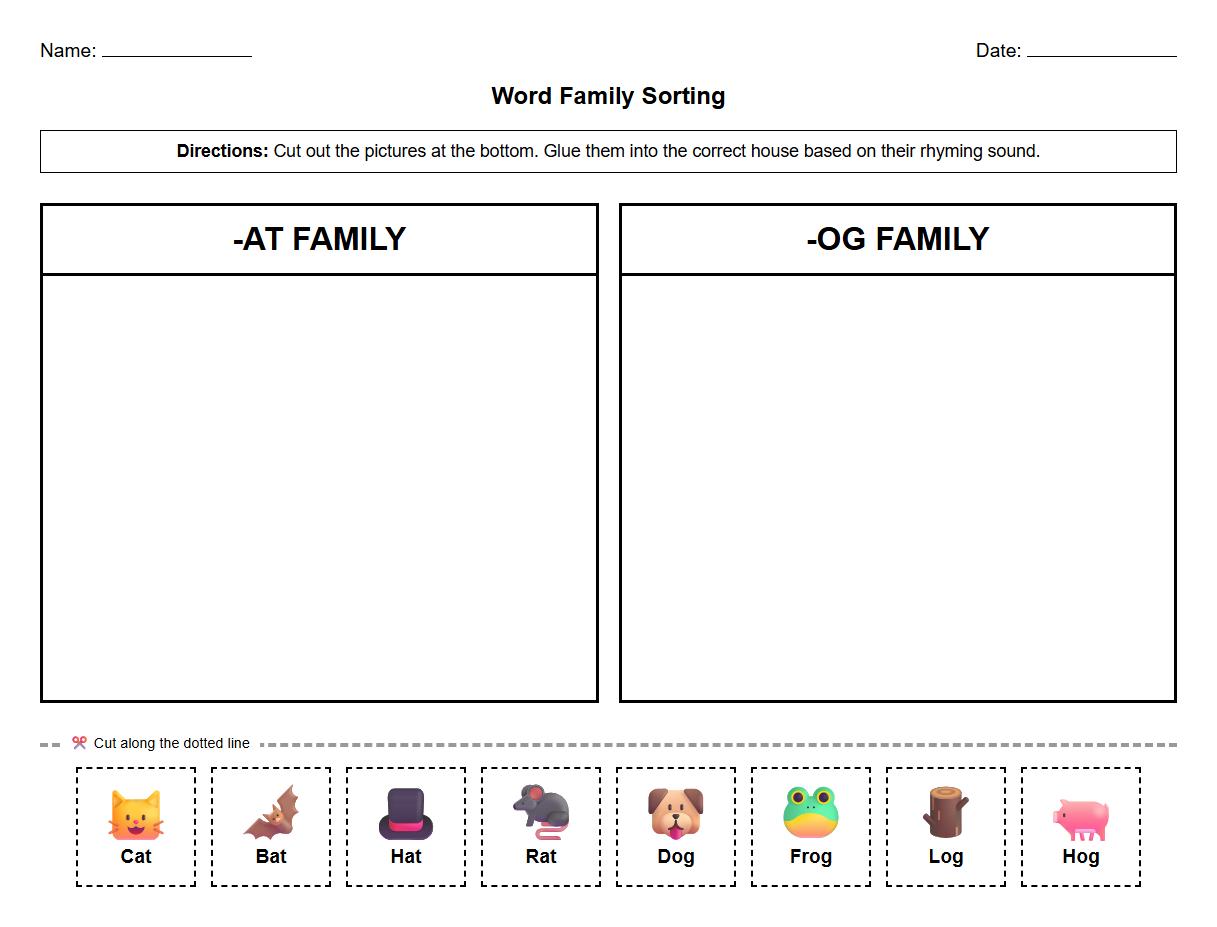
Typical rhyming pairs suitable for kindergarten include "dog/frog," "sun/fun," "ball/tall," and "cat/hat." These pairs use simple and familiar words to help children easily recognize rhyming sounds. Introducing playful and everyday nouns or verbs makes learning relatable. Such examples support quick mastery of rhyming concepts.
Ideal Number of Rhyming Pairs in a Kindergarten Worksheet
An effective rhyming worksheet should contain between 5 to 8 rhyming pairs. This quantity balances practice without overwhelming young learners. It keeps children focused and engaged throughout the activity. Providing varied but manageable tasks reinforces learning success.
Interactive Activities to Accompany Rhyming Words Worksheets
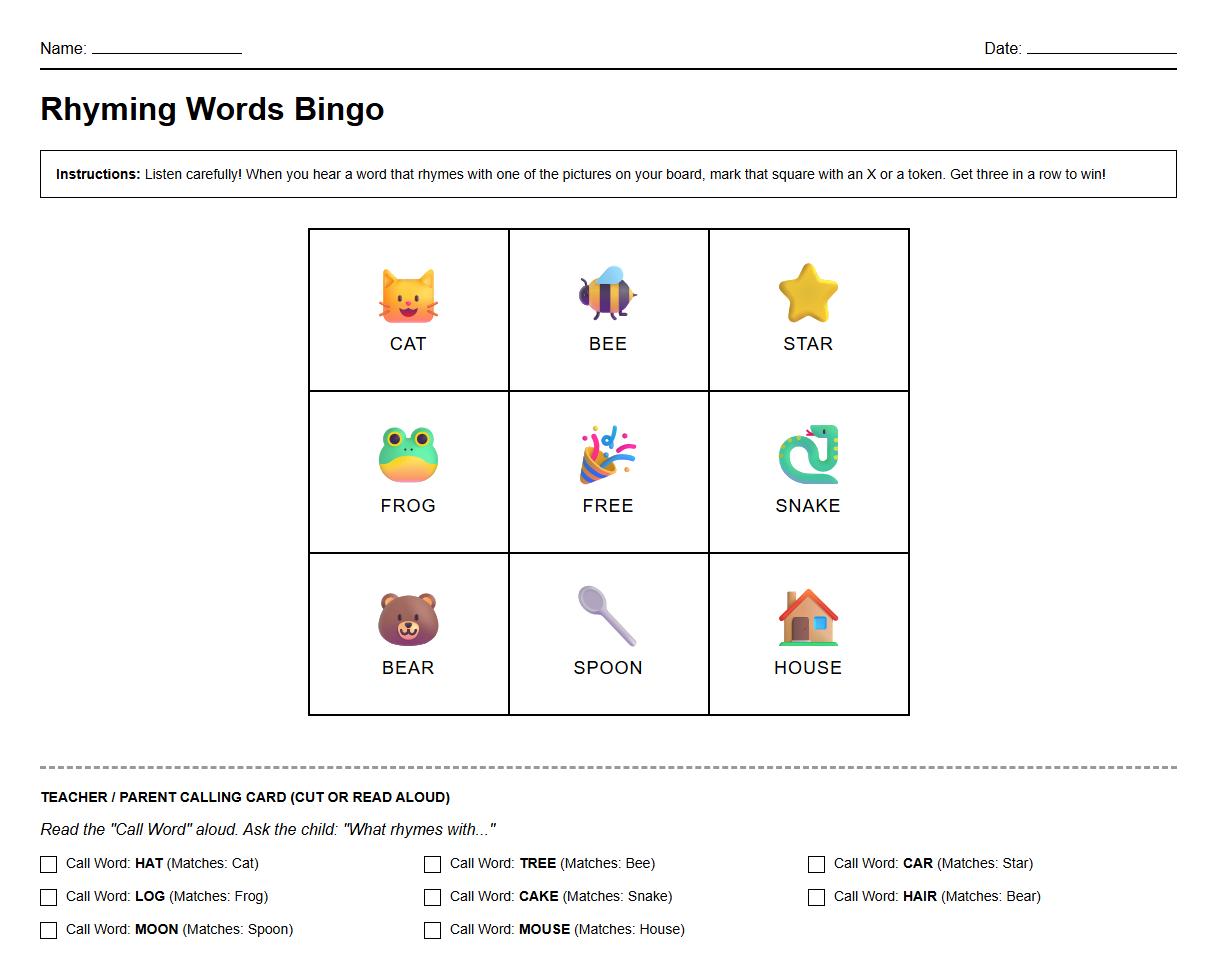
Interactive activities like matching games, rhyming songs, and sound clapping can complement worksheets. These hands-on activities motivate children to actively engage with rhyming words. Classroom discussions about rhyming pairs encourage verbal skills and peer learning. Movement-based games also help kinesthetic learners grasp phonemic patterns.
The Importance of Visual Aids or Pictures in Rhyming Worksheets
Visual aids such as colorful pictures help young learners connect sounds to meanings easily. They provide context that supports word recognition and memory. Including images keeps children interested and makes abstract sound patterns more concrete. Visual cues enhance comprehension and retention of rhymes.
Assessing Student Progress Using Rhyming Word Worksheets
Teachers can assess student progress by observing accuracy in identifying and producing rhymes on worksheets. Progress monitoring involves checking responses and listening to oral rhyme generation. Regular feedback helps tailor instruction to individual needs. Data from worksheets assist in planning targeted interventions.
Best Themes or Topics for Engaging Rhyming Word Worksheets
Engaging worksheets often use themes such as animals, weather, seasons, or family. These child-friendly topics spark interest and relate to students' everyday experiences. Incorporating familiar vocabulary supports motivation and comprehension. Themes also allow cross-curricular connections, enriching learning.
Frequency of Rhyming Activities in the Kindergarten Curriculum
Integrating rhyming activities at least 2 to 3 times per week is ideal for reinforcing phonemic awareness. Consistency strengthens children's ability to hear and produce rhymes independently. Frequent practice leads to improved reading readiness and confidence. Balanced exposure ensures skills develop steadily without fatigue.
Strategies to Help Struggling Students Improve Rhyming and Phonemic Awareness
Using multisensory approaches, like visual aids, tactile letters, and auditory games, supports struggling learners. Explicit instruction with repetitive practice helps solidify rhyming skills. Breaking tasks into smaller steps and using positive reinforcement encourage persistence. Collaborating with parents for at-home practice further enhances progress.


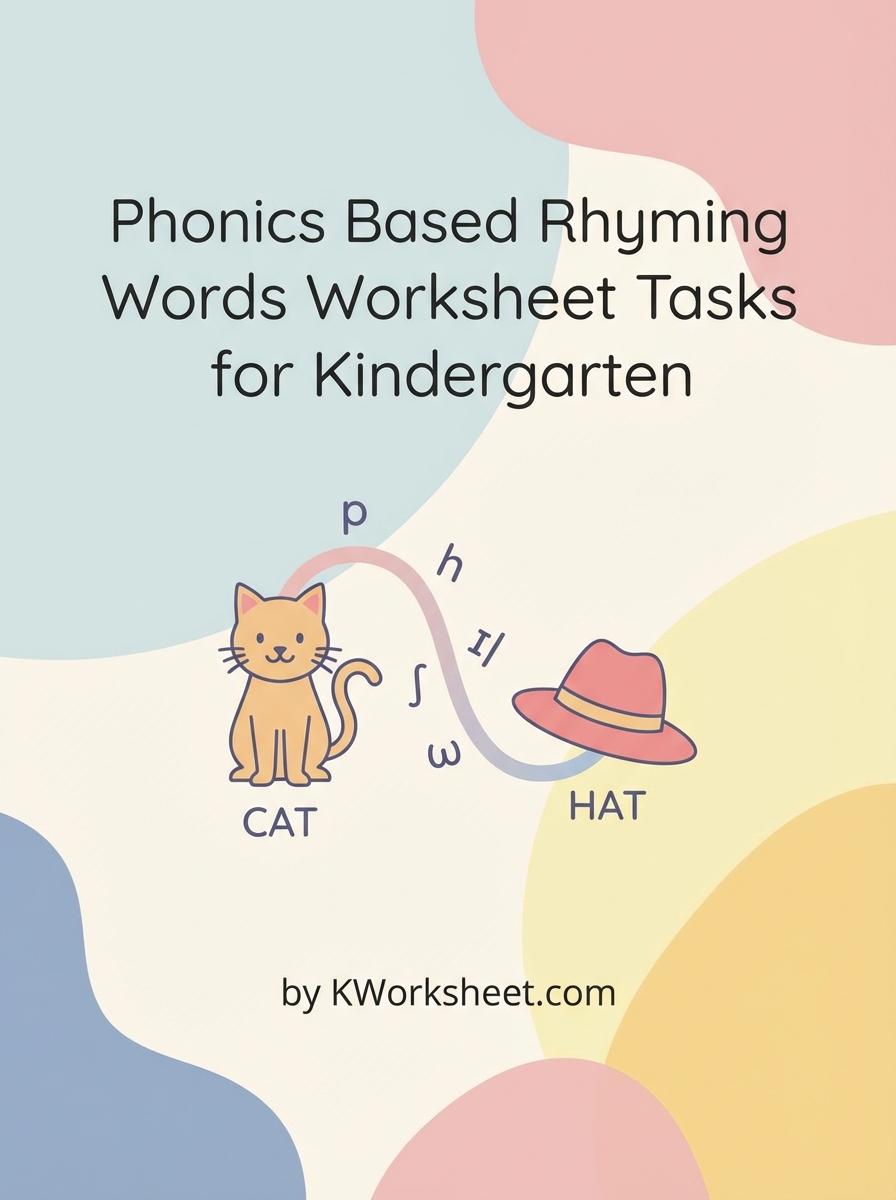
Phonics Based Rhyming Words Worksheet Tasks for Kindergarten