Kindergarten Literacy: Rhyming Words Worksheet Series for Phonics Mastery

📅 Jun 18, 2025 👤 Nylen Smith

Kindergarten literacy development is enhanced through engaging rhyming words activities that strengthen phonemic awareness and decoding skills. These targeted worksheets help young learners recognize sound patterns, promoting early reading proficiency. Explore the available Kindergarten Literacy: Rhyming Words Worksheet Series to support your child's phonics mastery journey.

Rhyming Words Matching: Phonics Identification Worksheet
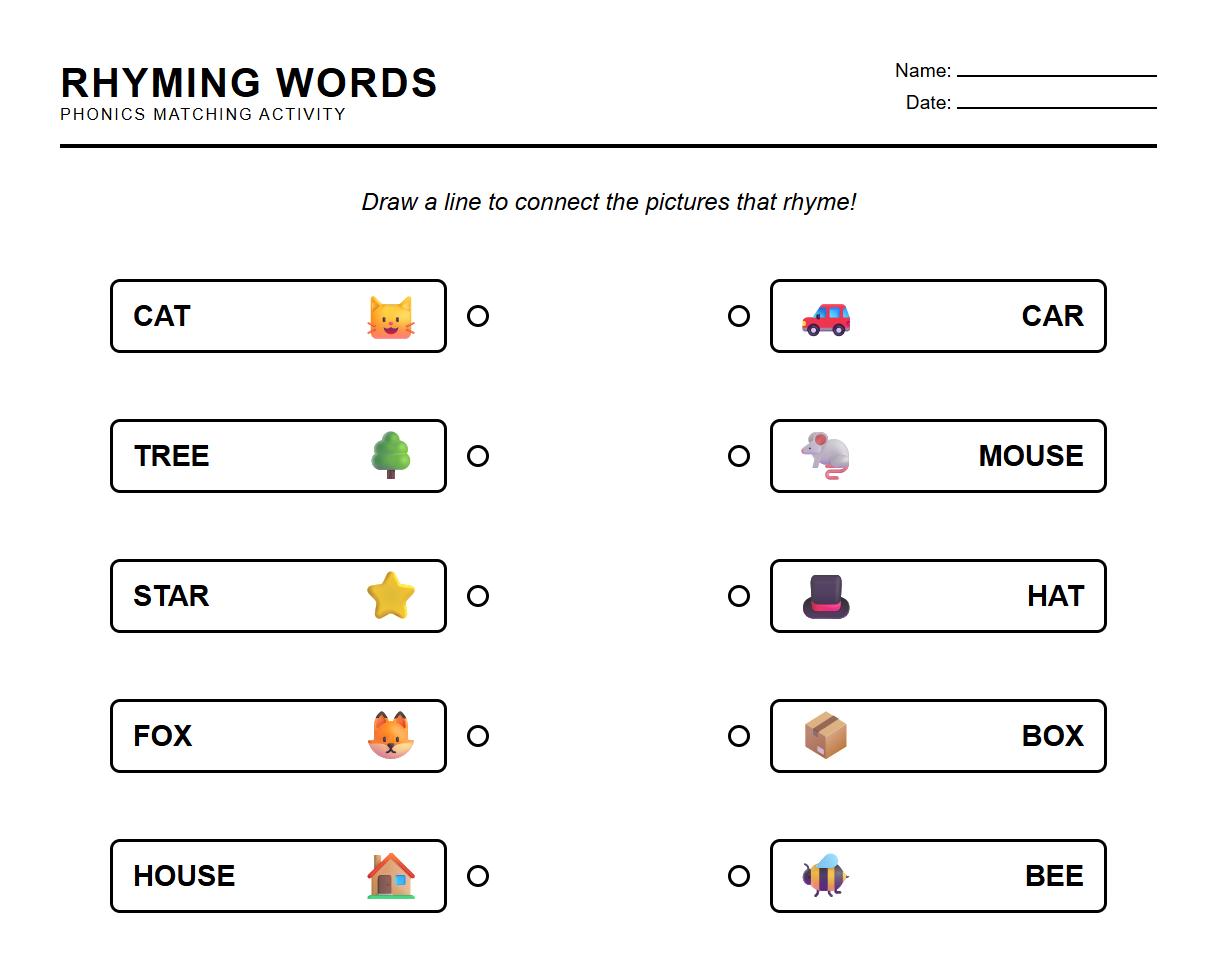
Rhyming Words Matching: Phonics Identification Worksheet

Download PDF     Pin it

Phonemic Awareness: Fill in the Blank Rhyming Words
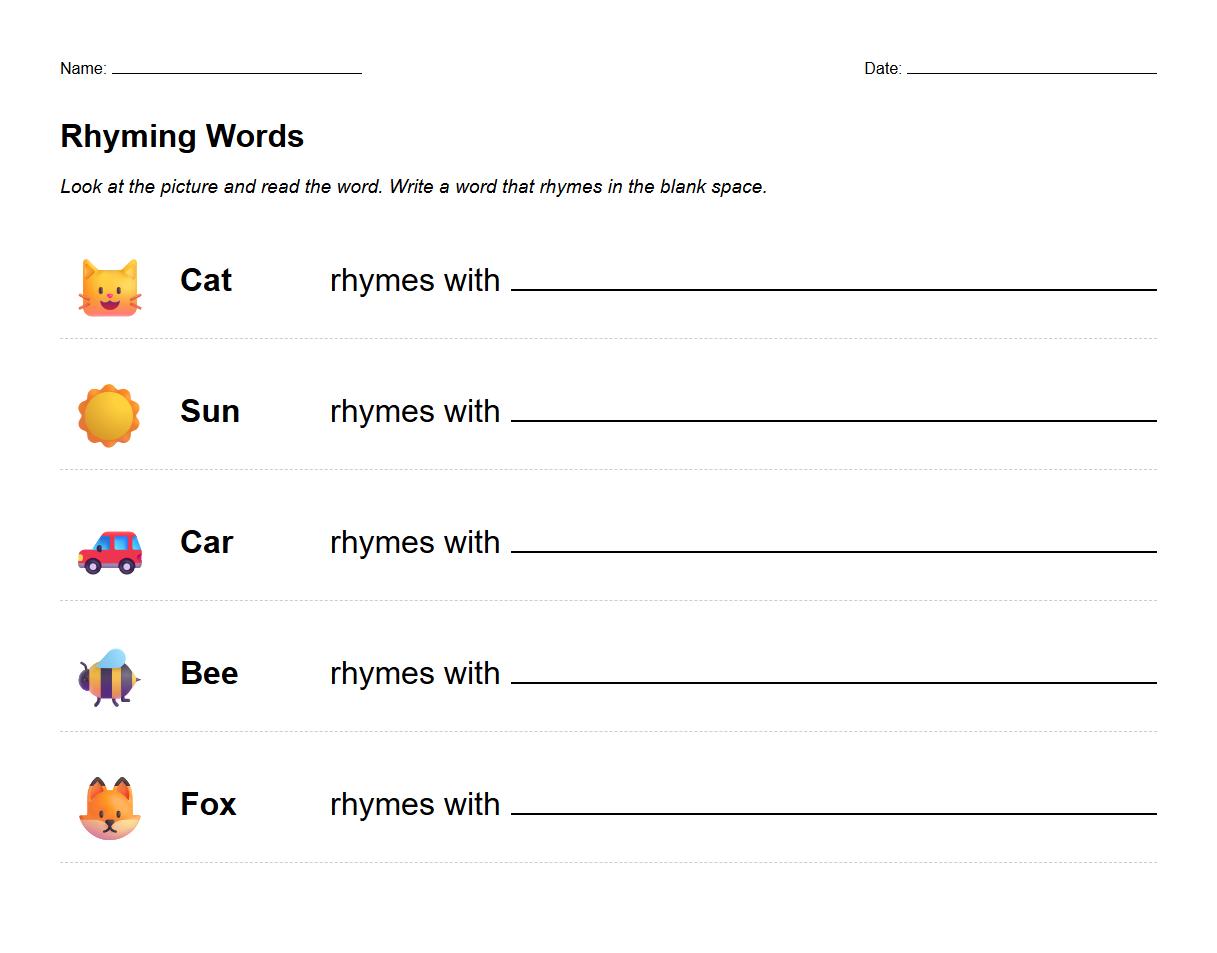
Phonemic Awareness: Fill in the Blank Rhyming Words

Download PDF     Pin it

Cut and Paste Rhyming Pairs Phonics Exercise
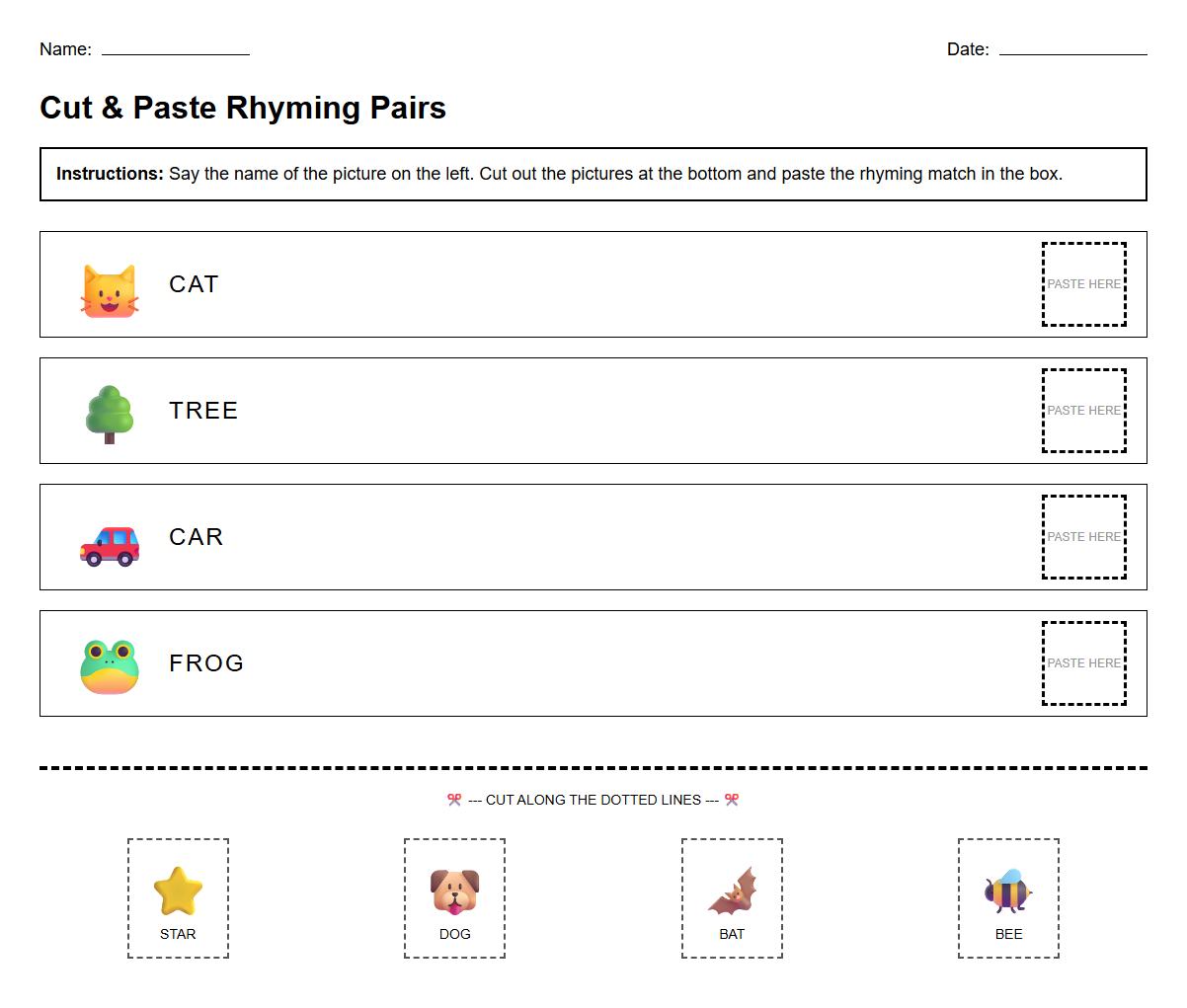
Cut and Paste Rhyming Pairs Phonics Exercise

Download PDF     Pin it

Picture to Word Rhyming Recognition Worksheet
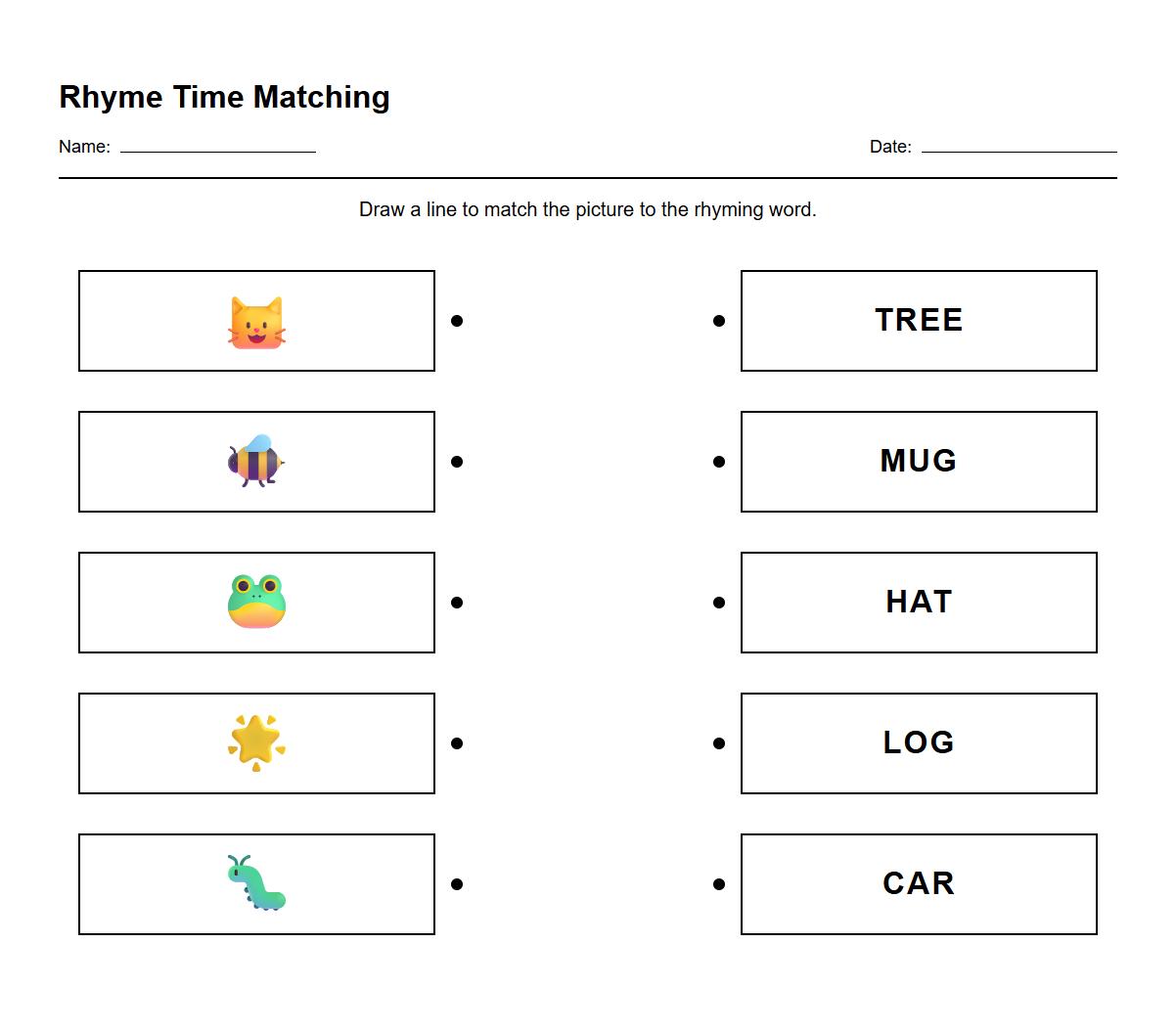
Picture to Word Rhyming Recognition Worksheet

Download PDF     Pin it

Circle the Rhyming Word Phonics Activity
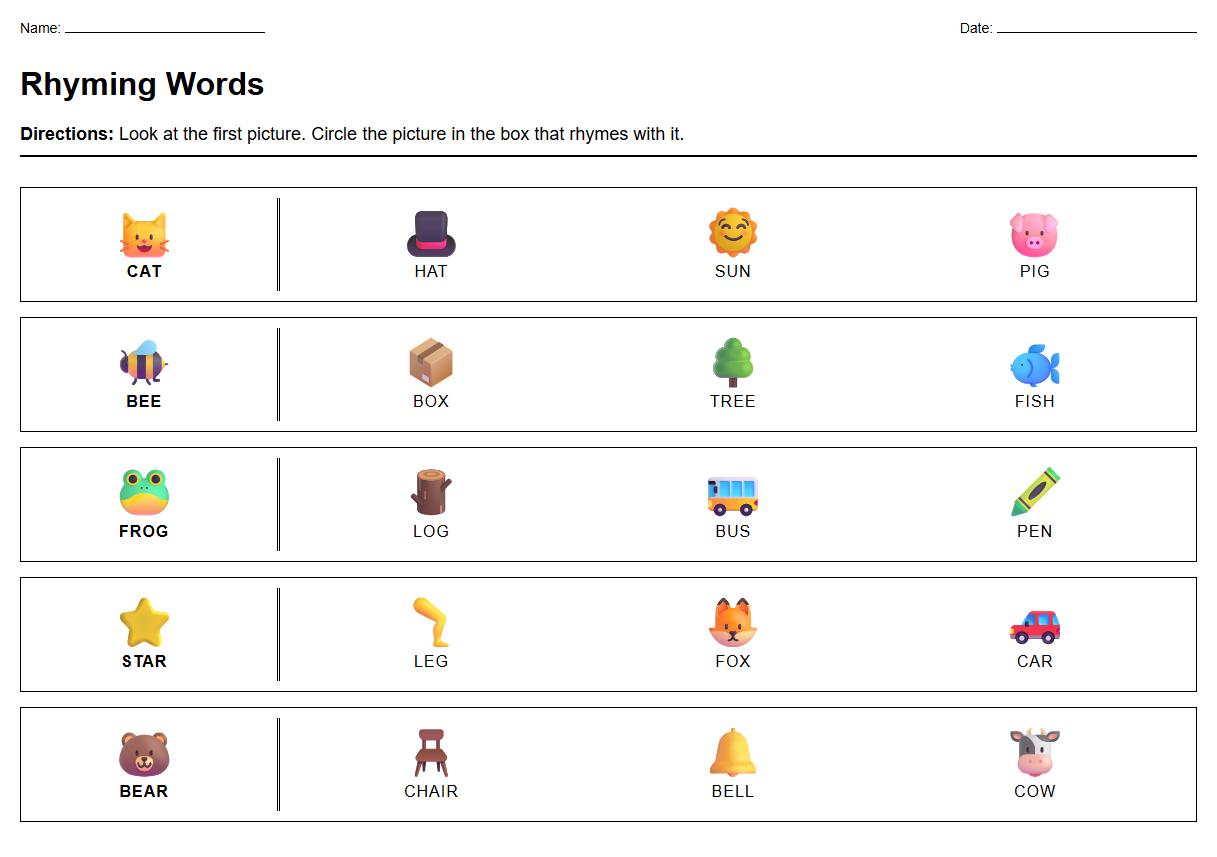
Circle the Rhyming Word Phonics Activity

Download PDF     Pin it

Rhyming Word Odd One Out Phonics Worksheet
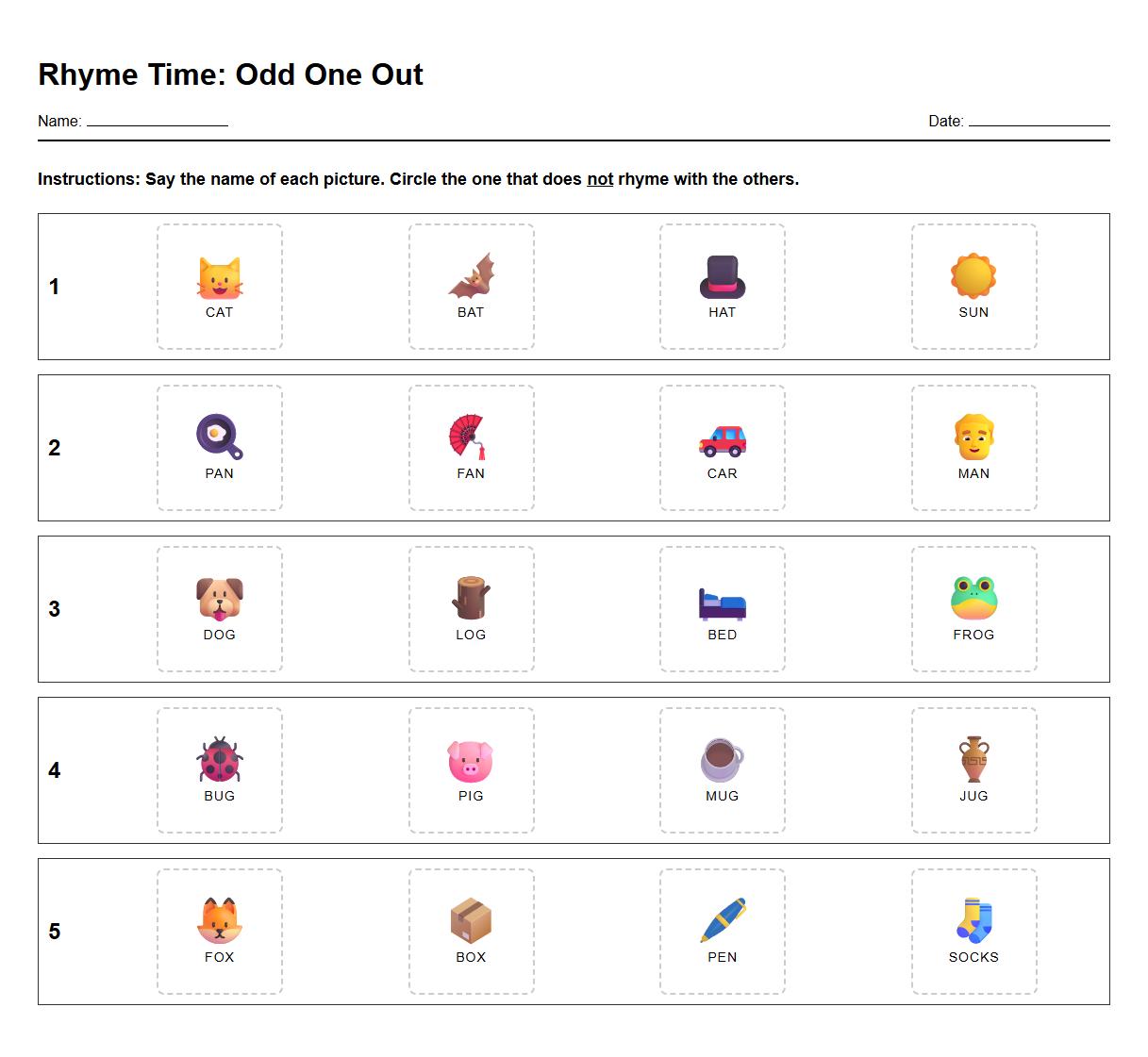
Rhyming Word Odd One Out Phonics Worksheet

Download PDF     Pin it

Read and Color Rhyming Words Phonological Awareness
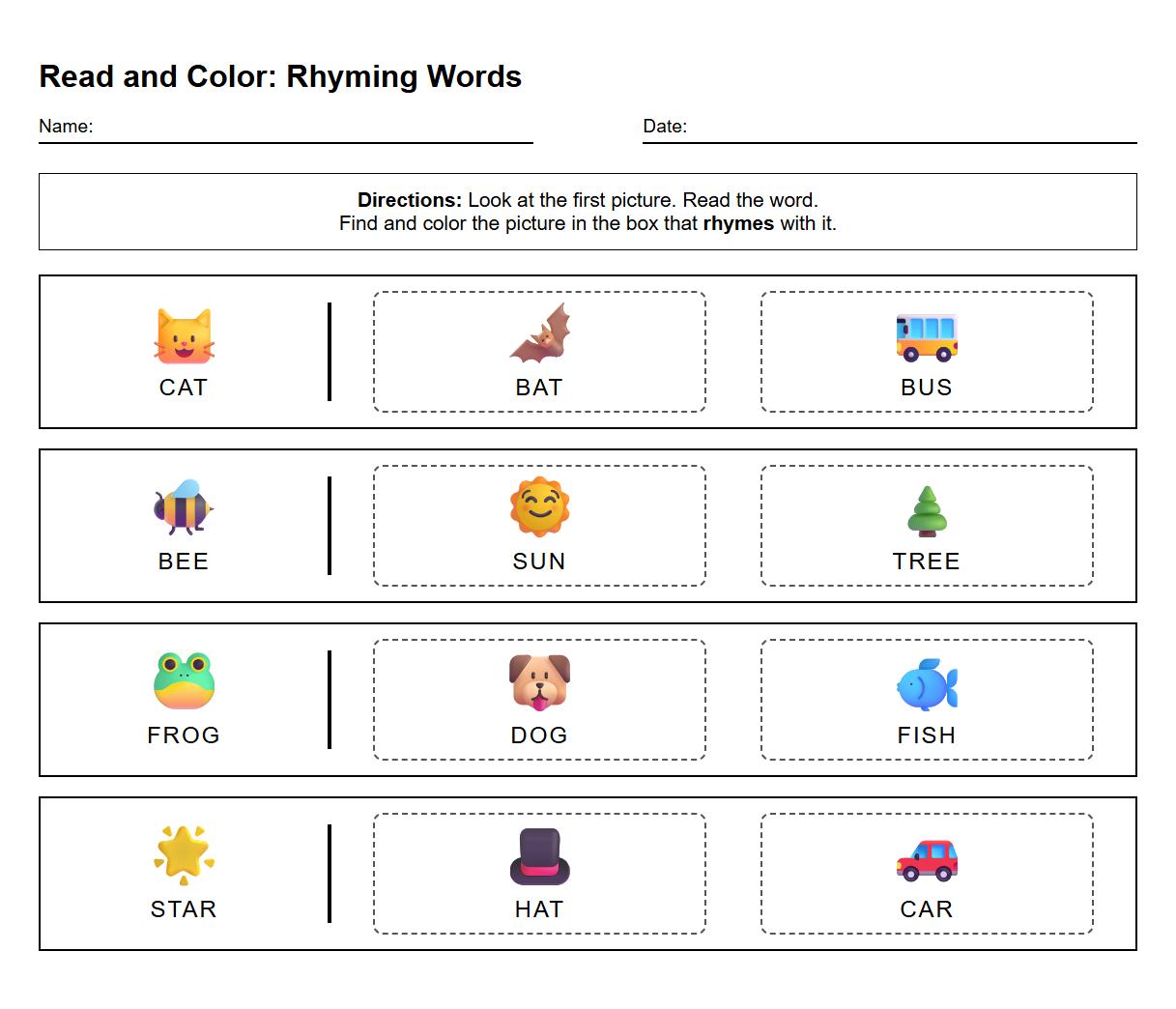
Read and Color Rhyming Words Phonological Awareness

Download PDF     Pin it

Word Family Rhymes Sorting Worksheet for Early Literacy
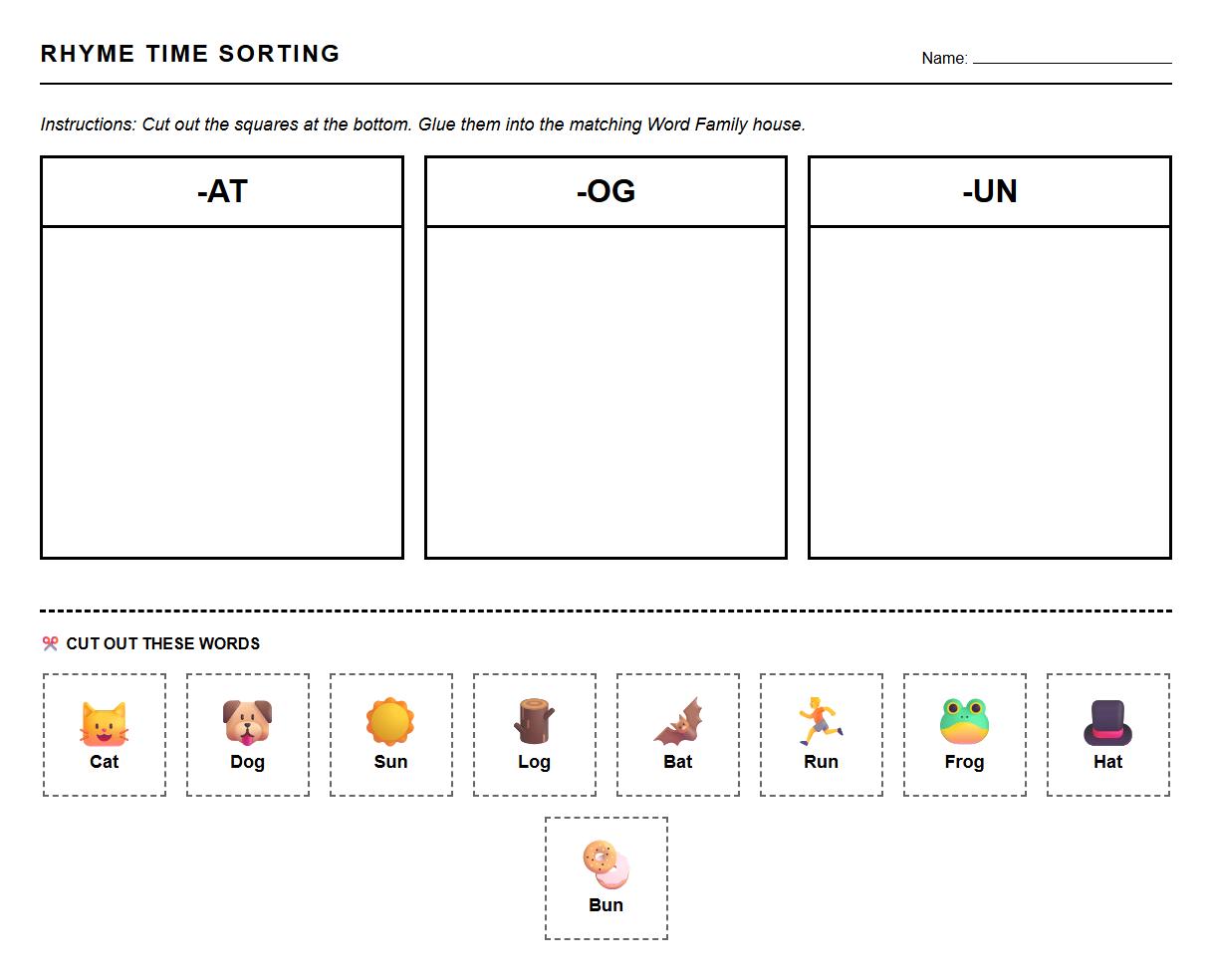
Word Family Rhymes Sorting Worksheet for Early Literacy

Download PDF     Pin it

Trace and Write Rhyming Words Phonics Practice
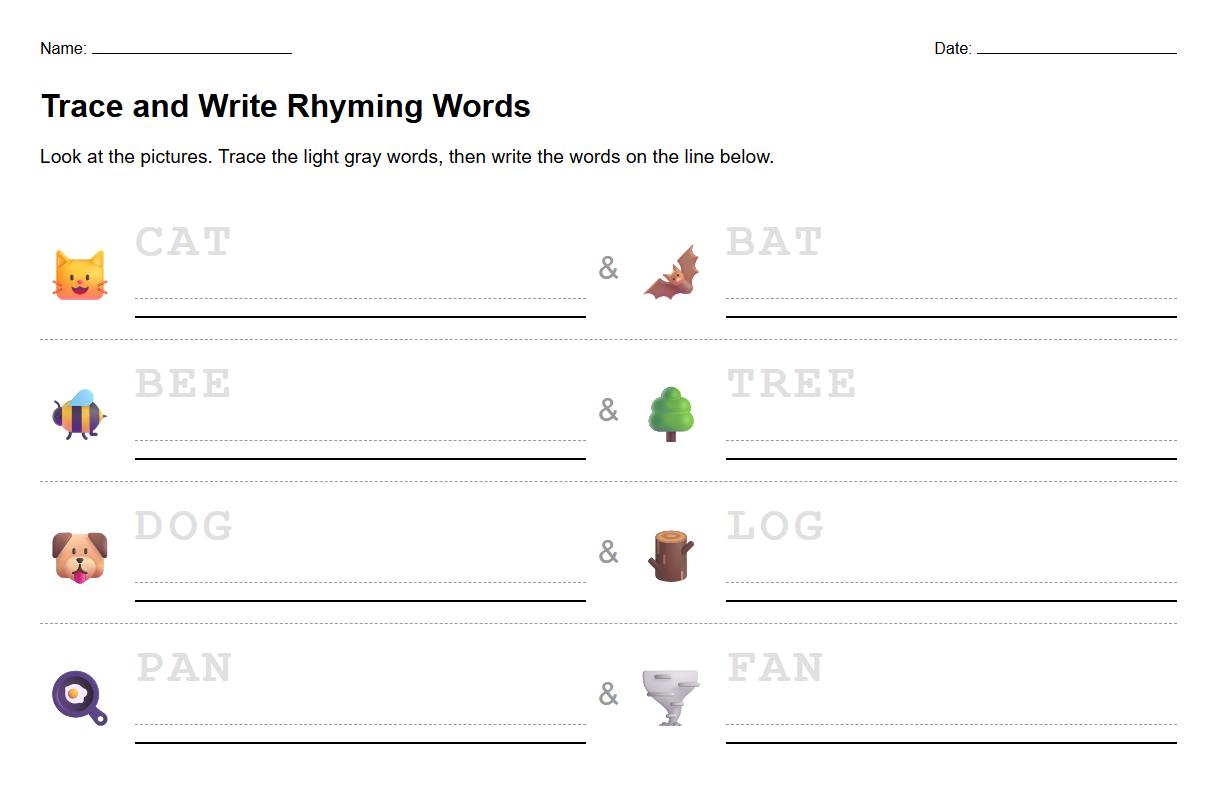
Trace and Write Rhyming Words Phonics Practice

Download PDF     Pin it

Rhyming Words Listening Discrimination Phonemic Worksheet
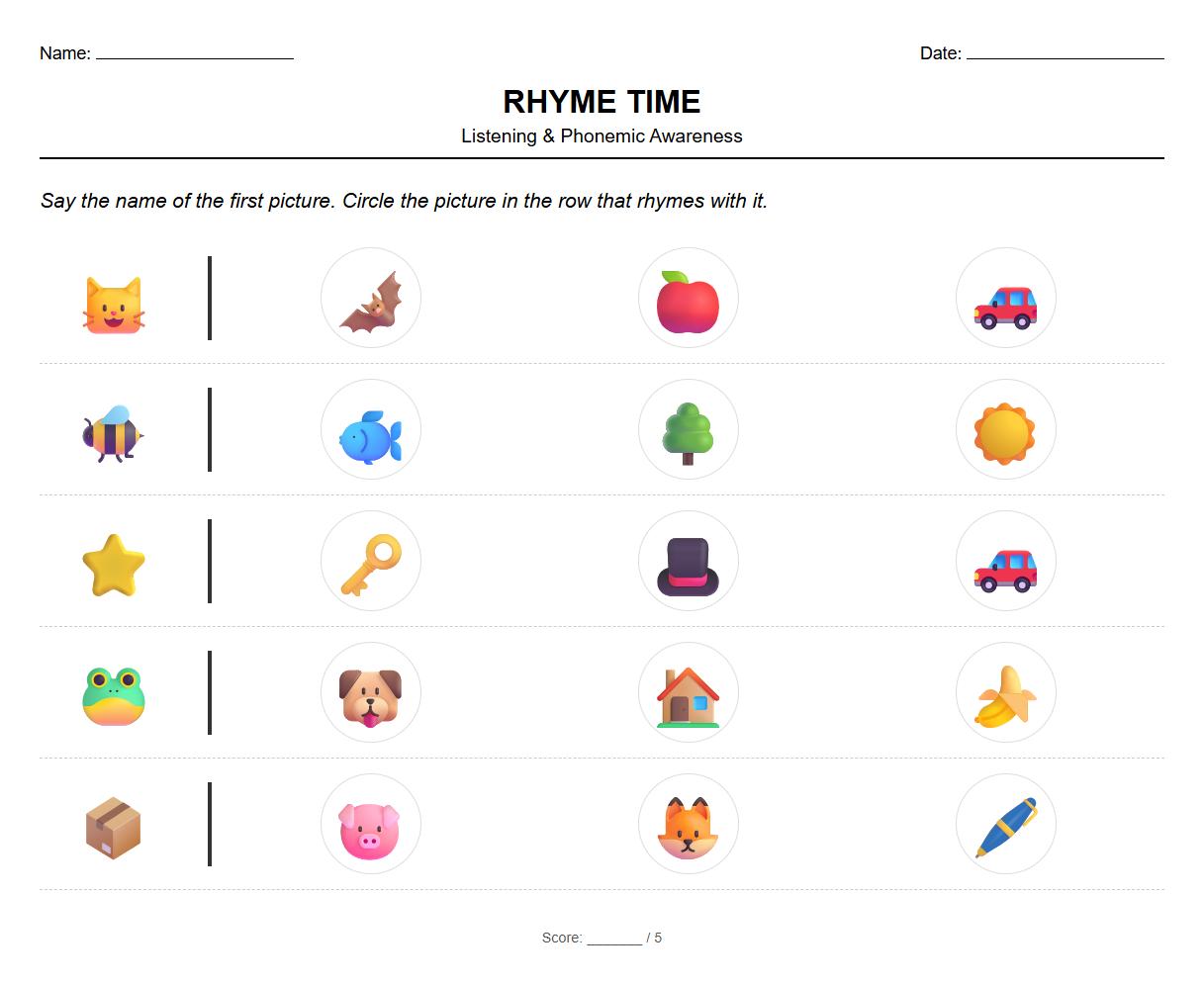
Rhyming Words Listening Discrimination Phonemic Worksheet

Download PDF     Pin it

What are Rhyming Words Used for in Early Literacy Development?

Rhyming words play a crucial role in early literacy development by helping children recognize sound patterns in language. They enhance phonological awareness, which is foundational for learning to read. Rhymes boost memory, vocabulary, and listening skills. They also make learning fun and engaging, encouraging children to participate actively.

How Can Rhyming Worksheets Improve Phonics Skills in Kindergarten?

Rhyming worksheets improve phonics skills by helping children identify common sounds in words. They provide practice in segmenting and blending sounds, essential for decoding new words. Worksheets encourage repetition and reinforcement, which deepen phonemic awareness. This targeted practice supports early reading fluency and confidence.

Which Common Word Families Are Best for Kindergarten Rhyme Practice?

Common word families such as -at, -an, -it, -og, and -en are excellent for kindergarten rhyme practice. These groups of words share similar ending sounds, making it easier for children to spot rhymes. They form a strong foundation for phonics instruction. Using familiar word families improves children's ability to predict and read new words independently.

How Do Picture Clues Support Rhyming Word Recognition?

Picture clues support rhyming word recognition by providing visual context that links sounds to meanings. They aid memory retention and help children associate words with images. Pictures reduce cognitive load, making it easier for young learners to focus on rhyming sounds. This visual support encourages engagement and self-correction.

What Activities Help Kindergarten Students Find Rhyming Pairs?

Activities like rhyme matching games, sorting word cards, and singing rhyming songs help kindergarten students find rhyming pairs. These interactive methods make learning playful and hands-on. Using tactile materials or movement-based exercises increases motivation. Consistent practice through diverse activities strengthens phonological skills.

How Can Teachers Assess Mastery of Rhyming Words?

Teachers can assess mastery of rhyming words through oral assessments, such as asking students to generate rhyming words or identify rhymes in sentences. Using rhyming worksheets and games allows observation of individual progress. Tracking students' ability to recognize and produce rhymes over time gives clear insight into development. Informal assessments like play-based tasks are also effective.

What Are Examples of Three-Letter Rhyming Words for Beginners?

Examples of three-letter rhyming words suitable for beginners include cat, hat, and bat; dog, fog, and log; pin, tin, and win. These simple words share common short vowel and ending consonant sounds. They provide an accessible introduction to rhyming patterns. Using these words supports early phonics and decoding skills.

How Often Should Rhyming Words Worksheets Be Used Each Week?

Rhyming words worksheets should ideally be used 2 to 3 times per week to maintain consistent practice without overwhelming students. Short, focused sessions are most effective for retention and engagement. Integrating rhyming activities alongside other literacy skills balances instruction. Frequent exposure supports steady improvement and confidence.

What Strategies Support Children Who Struggle with Rhyming Words?

For children who struggle with rhyming words, multisensory approaches such as using manipulatives, clapping syllables, and visual aids are beneficial. Breaking words into smaller parts and providing repeated modeling improves understanding. One-on-one support and positive reinforcement boost motivation. Patience and varied instruction styles help address different learning needs.

How Can Parents Reinforce Rhyming Skills at Home?

Parents can reinforce rhyming skills at home through reading rhyming books, playing rhyming word games, and singing songs with rhymes. Encouraging children to create their own rhymes builds creativity and confidence. Daily conversations incorporating rhymes support natural language learning. Providing a fun, supportive environment fosters a love of language and literacy.


More in Language Arts Category


About the author. Nylen Smith is a dedicated educator and cofounder of KWorksheet.com, a popular platform specializing in high-quality kindergarten worksheets and printable activities.

Disclaimer. The information provided in this document is for general informational purposes and/or document sample only and is not guaranteed to be factually right or complete. Please report to us via contact-us page if you find and error in this page, thanks.

Comments

No comment yet