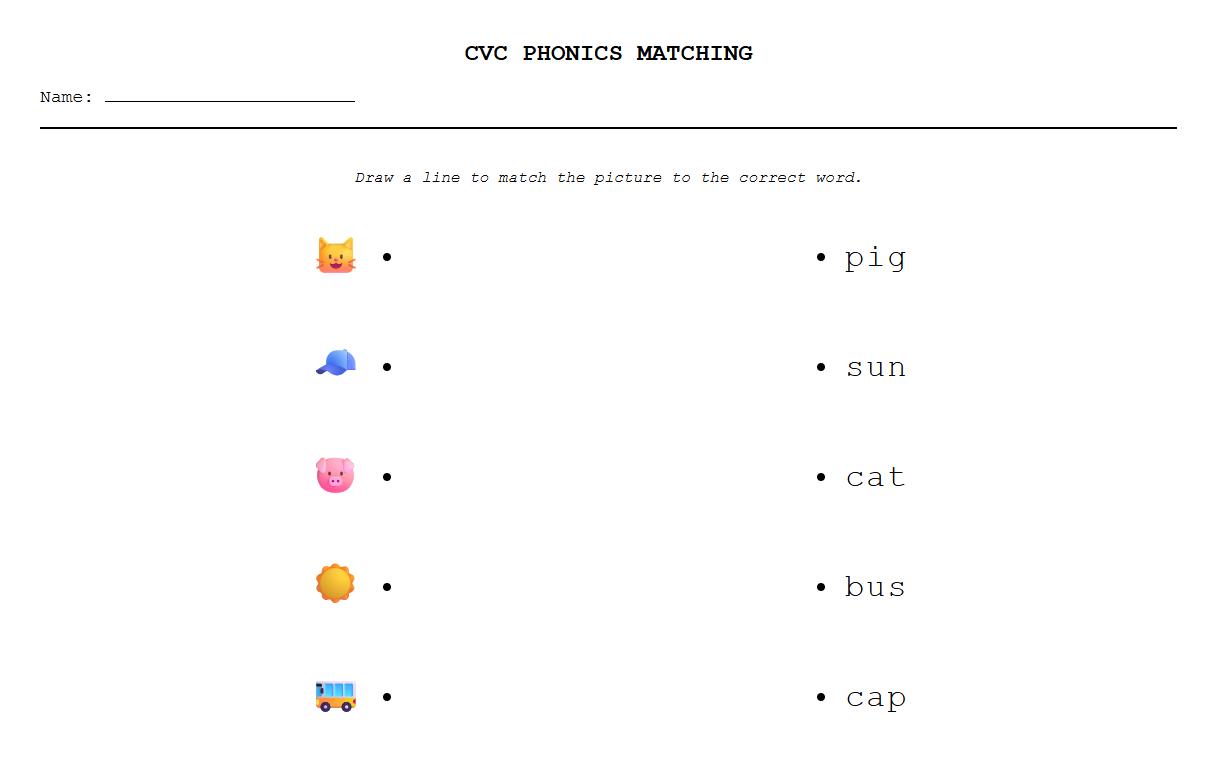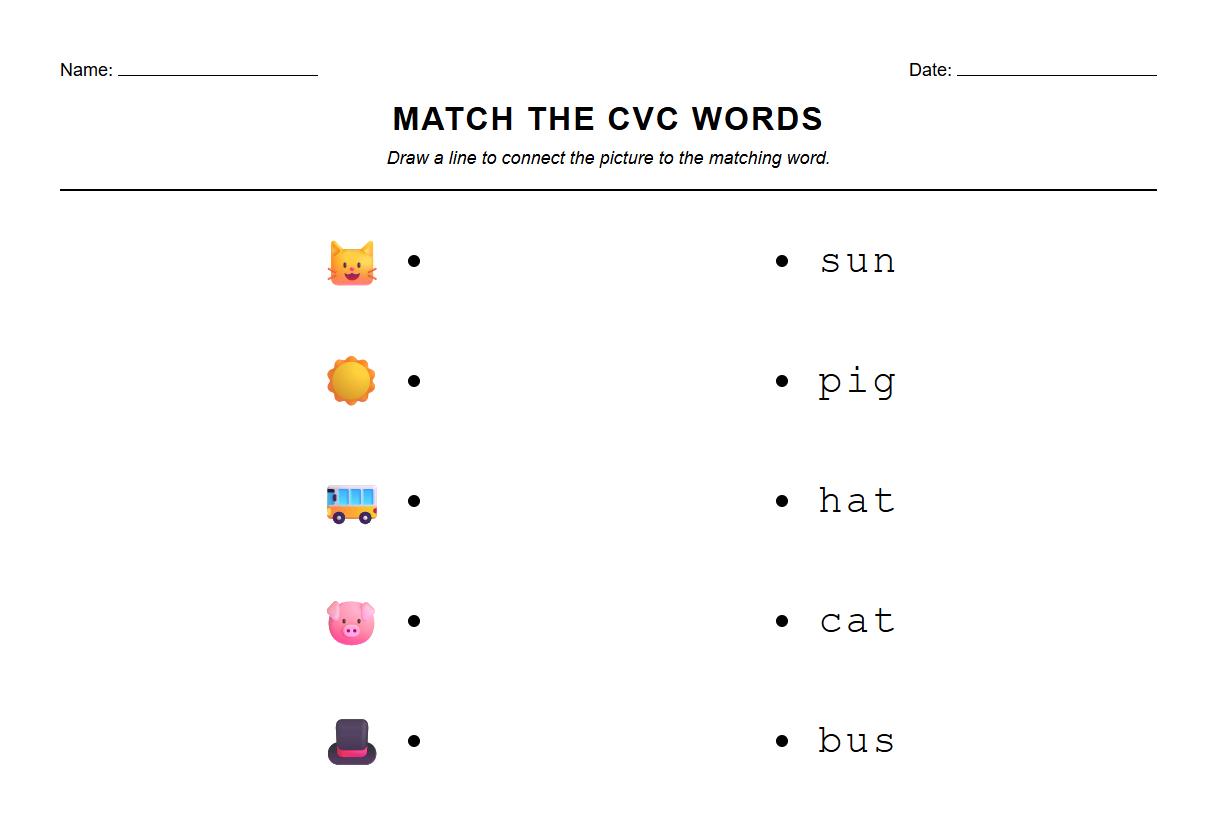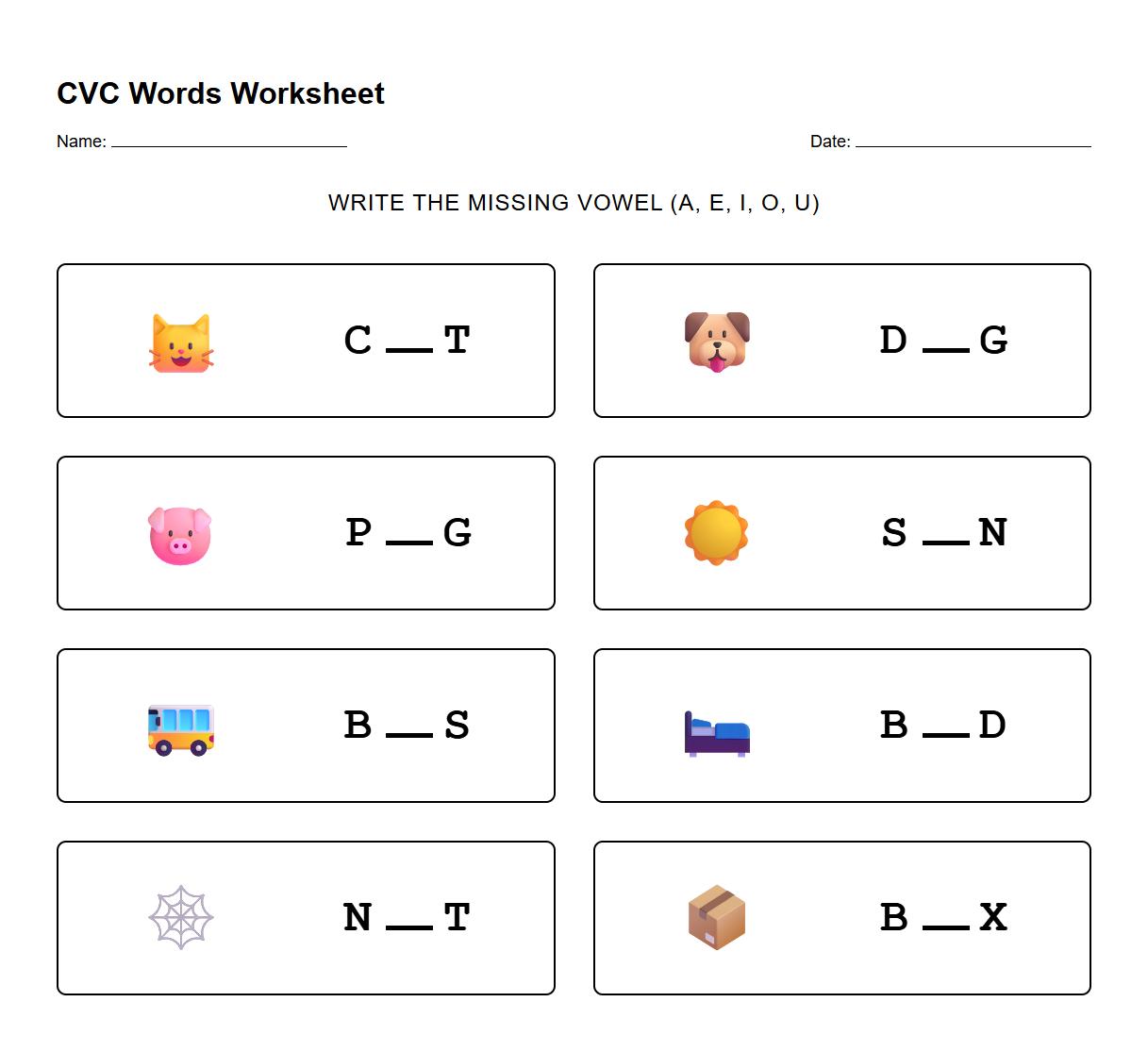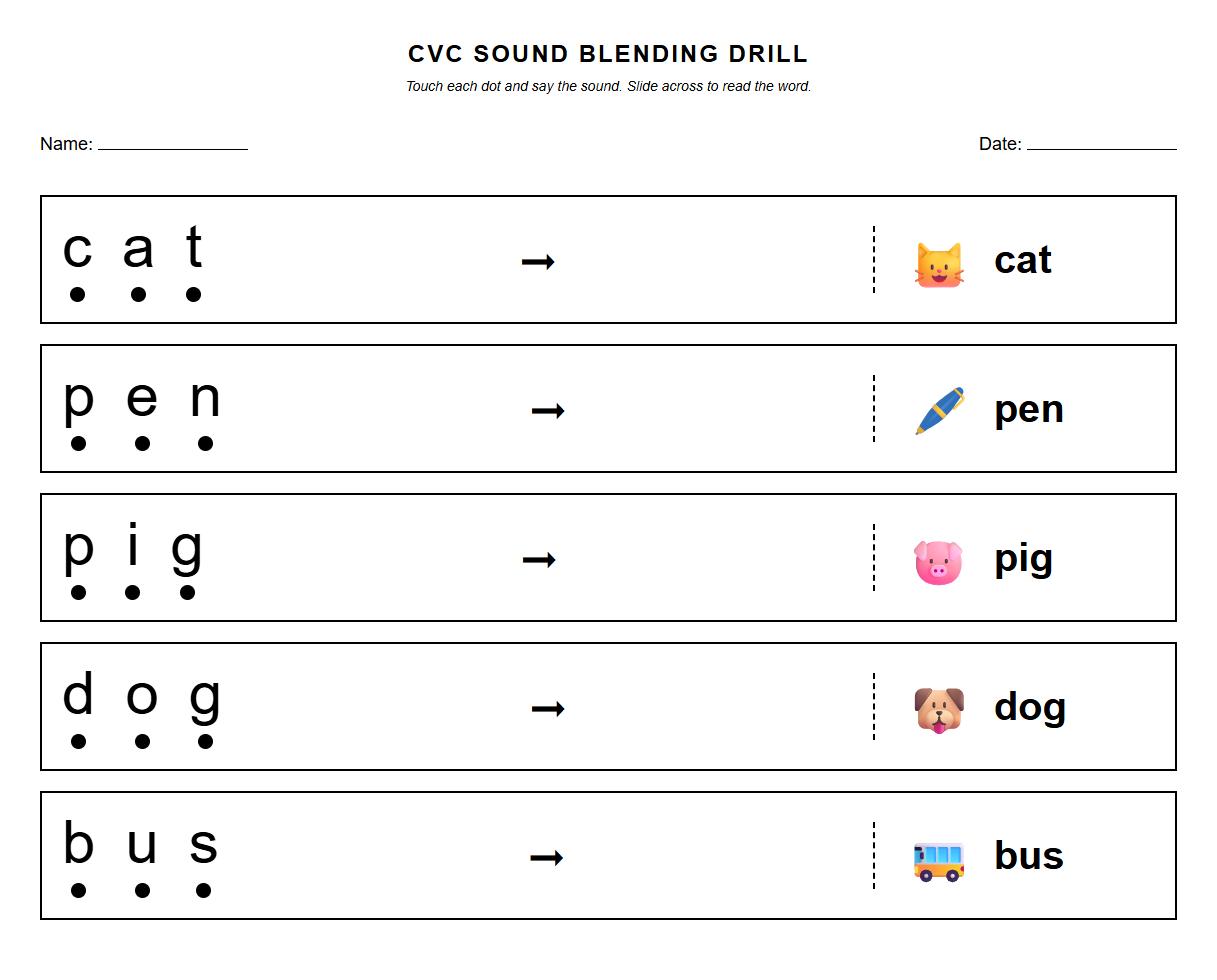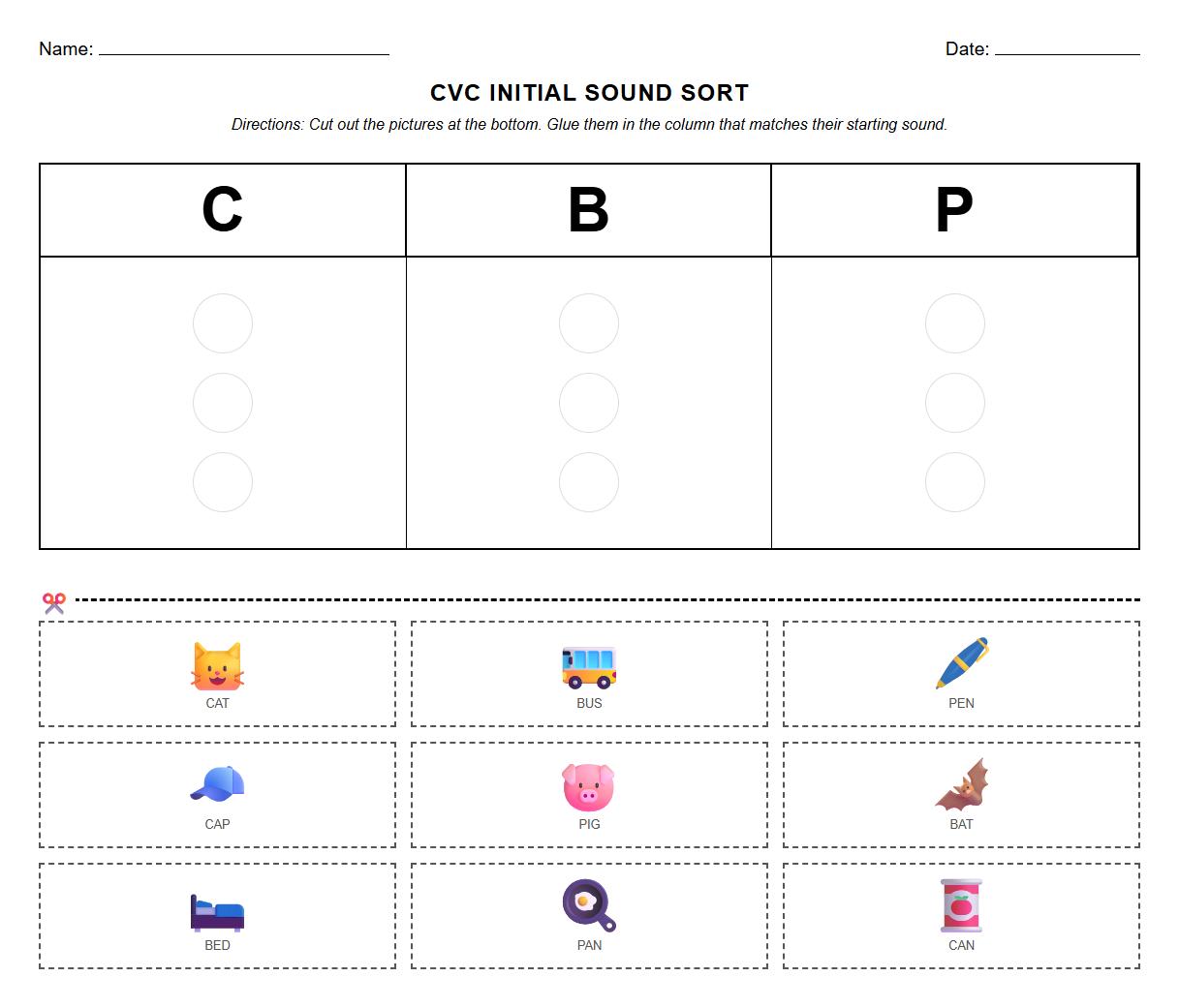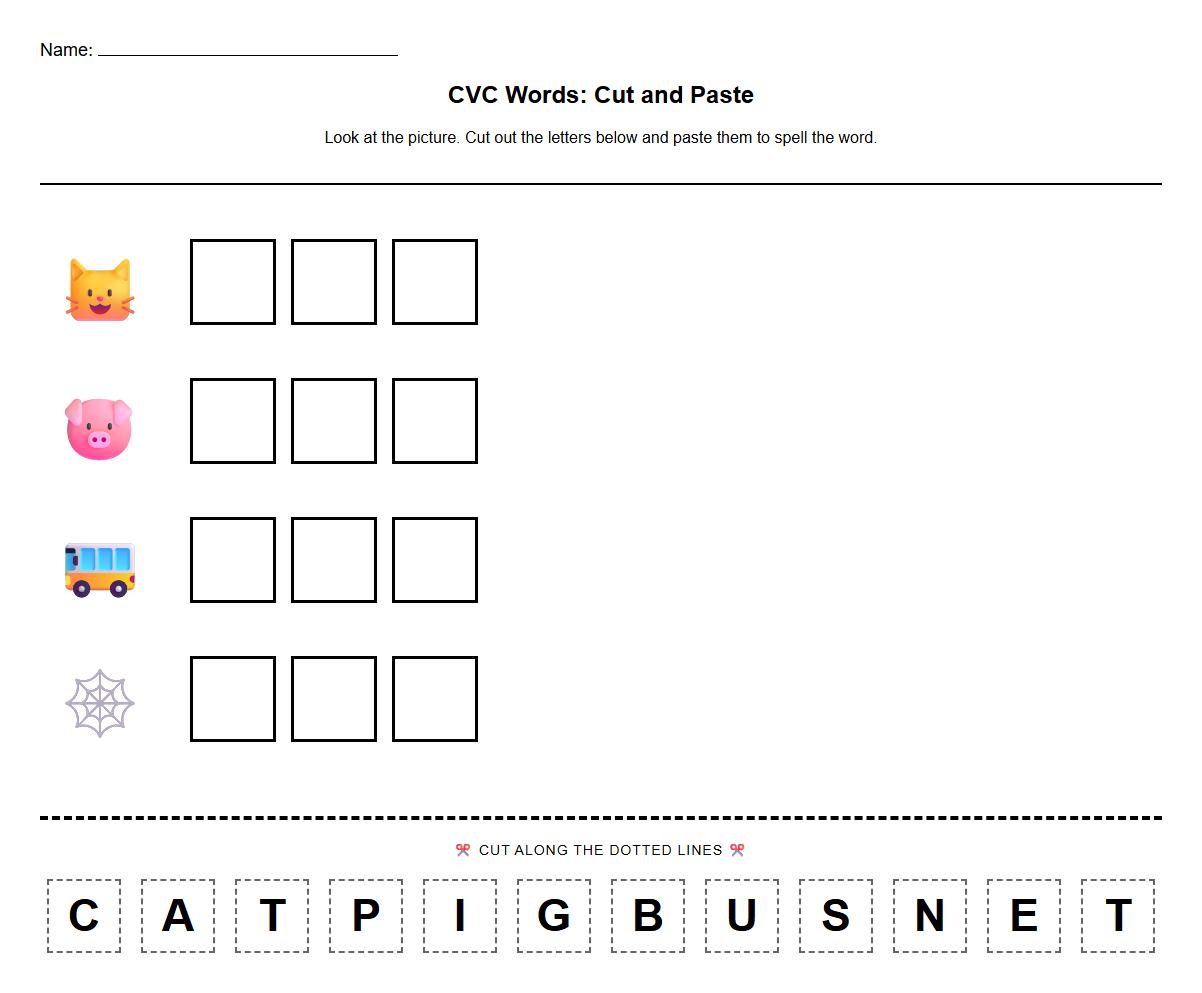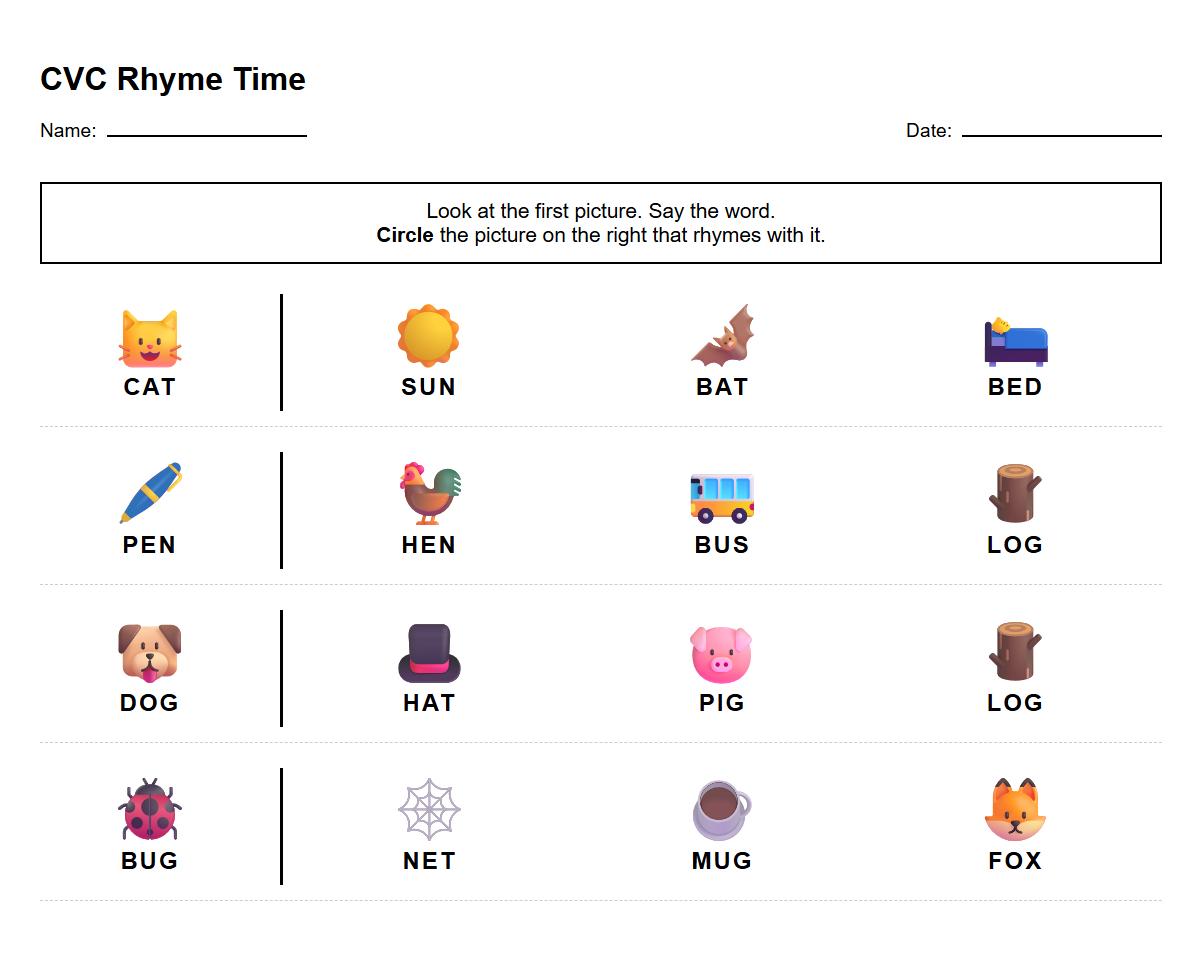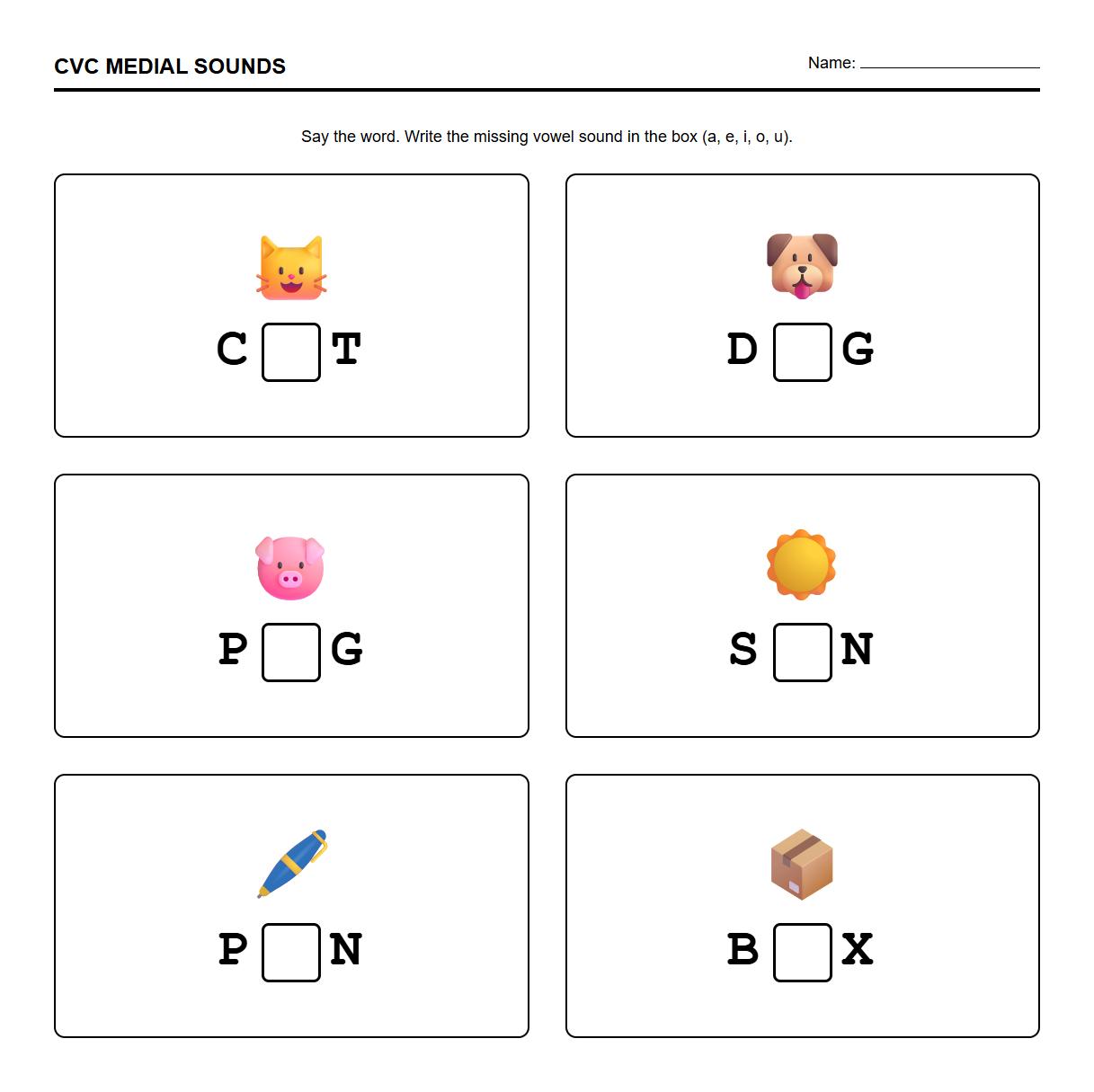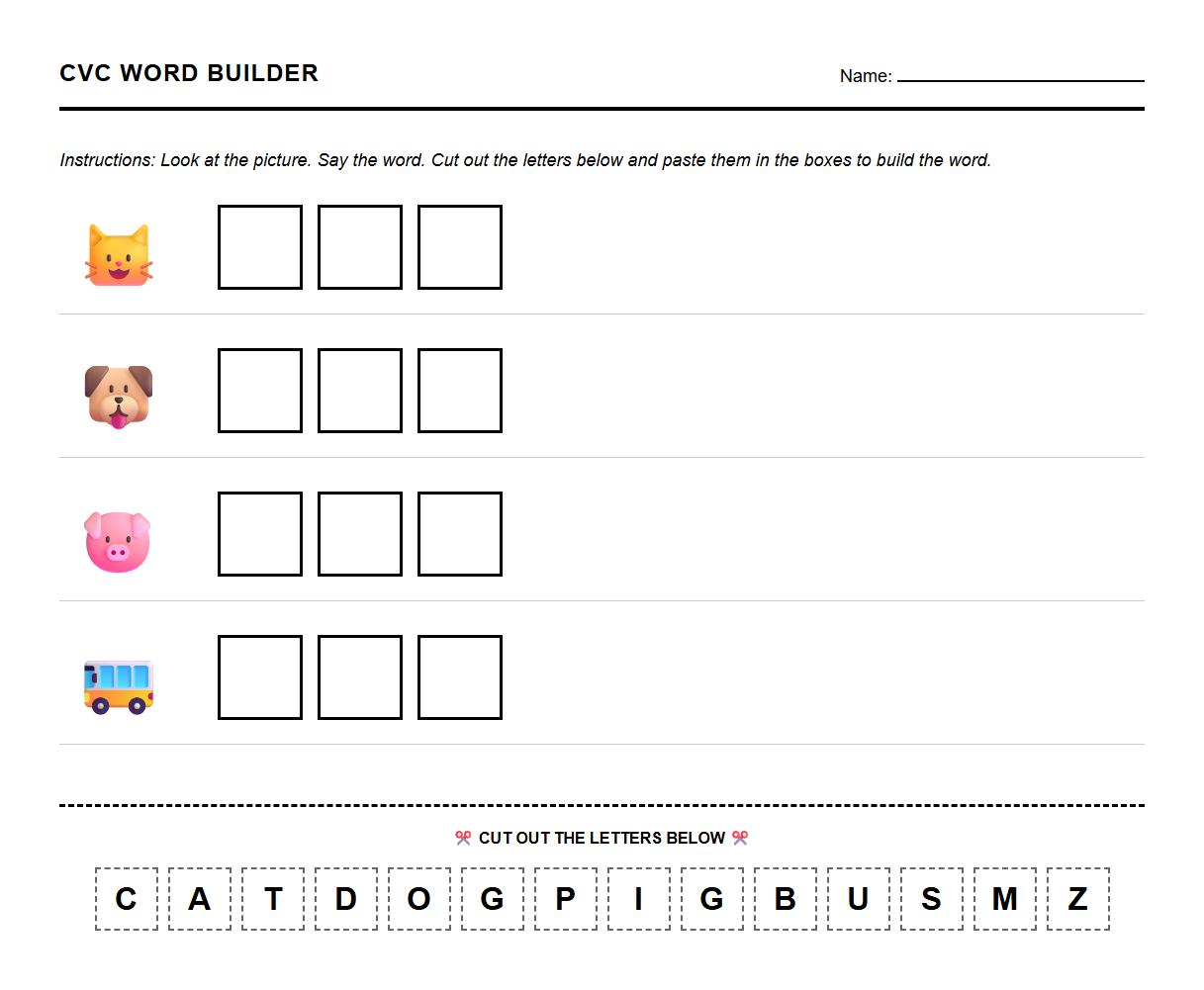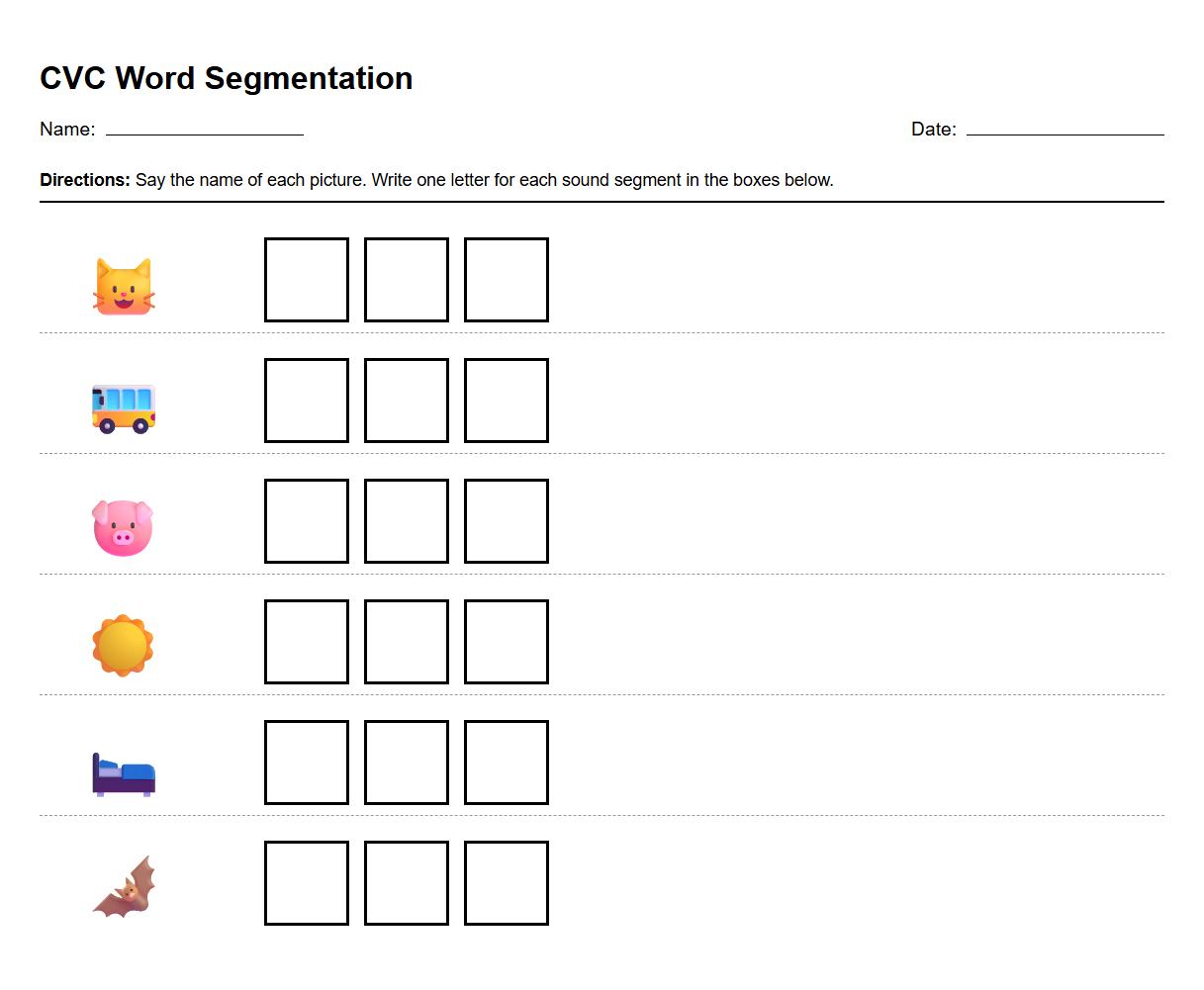
Kindergarten CVC Words Identification Worksheet Set helps young learners build foundational reading skills through engaging, simple word recognition exercises. These worksheets focus on consonant-vowel-consonant patterns to enhance phonemic awareness and decoding abilities. Explore the available worksheets to support early literacy development effectively.
What are CVC Words?
CVC words are simple three-letter words composed of a consonant, a vowel, and another consonant, such as "cat" or "dog." They serve as foundational building blocks for early reading skills. These words are phonetic and easy to sound out, making them ideal for kindergarten learners. Understanding CVC words helps children progress from recognizing letters to forming and reading words. For practice with foundational literacy, try this interactive alphabet tracing activity.
How do CVC Words Help Kindergarten Students Learn to Read?
CVC words enable young readers to practice phonemic awareness by blending sounds together. They build confidence as children decode words independently using basic phonics rules. This strengthens their ability to recognize patterns in language. Consequently, CVC words lay a critical groundwork for more complex reading skills. For activities focused on structure, visit these sentence structure worksheets.
What Activities Can Reinforce CVC Word Recognition?
Engaging activities like word matching games, flashcards, and phonics puzzles effectively reinforce CVC word recognition. Interactive worksheets where children fill in missing letters or sort words by sound also solidify learning. Incorporating playful repetition supports memory retention. These activities keep young learners motivated and attentive during practice. Explore more with rhyming words worksheet series.
Why is CVC Word Identification Important in Early Literacy?
Identifying CVC words promotes early literacy by developing decoding skills crucial to reading fluency. It helps children link letters to sounds, facilitating word recognition and spelling. Early mastery of these words boosts reading confidence and comprehension. This foundational skill is vital for academic success in reading. For phonics practice, see matching words: short and long vowel sounds worksheets.
How Can Teachers Assess CVC Word Mastery?
Teachers can assess CVC word mastery through oral reading exercises and written assessments. Observing students during phonics activities helps identify areas needing improvement. Using checklists to track progress on recognizing and spelling CVC words is effective. Regular assessments inform tailored instruction for each child's needs. For vocabulary extension, try these worksheets featuring synonyms and antonyms.
Which CVC Words Should Be Introduced First to Kindergarteners?
Initially, introduce simple and familiar CVC words with short vowel sounds, such as "cat," "dog," and "hat." Focus on words containing easily distinguishable consonants to build confidence. Gradually increase difficulty by including less common sounds and blends. Starting with high-frequency words enhances early reading success. For phonological awareness, check phonological awareness worksheets.
What Visual Aids Support CVC Word Worksheets?
Visual aids like colorful pictures, word banks, and letter tiles support understanding of CVC words. Illustrations that correspond to the words help connect images with sounds. Using bold fonts and highlighted vowels can guide focus on phonics elements. Visual tools make worksheets engaging and accessible for young learners. Try incorporating digraph identification activities for added support.
How Can Parents Help Practice CVC Words at Home?
Parents can foster CVC word practice by reading aloud with children and playing phonics games. Using everyday objects to associate words with sounds enhances learning relevance. Encouraging writing and spelling through fun activities reinforces skills. Consistent, positive support at home promotes literacy development. Tools for starting sounds can be found at phonemic awareness worksheets.
What are Common Challenges with CVC Word Identification?
Children may struggle with CVC word identification due to confusion between similar sounds or letters. Difficulty blending phonemes can hinder decoding, and inconsistent practice may slow progress. Some learners might confuse letter-sound relationships, requiring targeted intervention. Addressing challenges early ensures steady literacy growth. For sequencing and comprehension, use picture-based sequencing worksheets.
How Can Technology Enhance CVC Word Learning in Kindergarten?
Technology offers interactive apps and games that engage children in practicing CVC words effectively. Audio features support correct pronunciation and immediate feedback reinforces learning. Digital worksheets and animations make phonics activities fun and accessible. Integrating technology supplements traditional teaching methods for better outcomes. For hands-on word formation, find sentence building worksheets.


Simple Phonics Matching Activities with CVC Word Families