Kindergarten Phonics Practice Identifying Beginning Sounds

📅 Jan 17, 2025 👤 Nylen Smith

Kindergarten phonics practice focusing on identifying beginning sounds helps young learners develop essential reading skills by recognizing the initial letters in words. Engaging activities enhance letter-sound correspondence, boosting early literacy confidence. Explore these fun and effective worksheets to support your child's phonics journey.

Alphabet Matching for Beginning Sounds
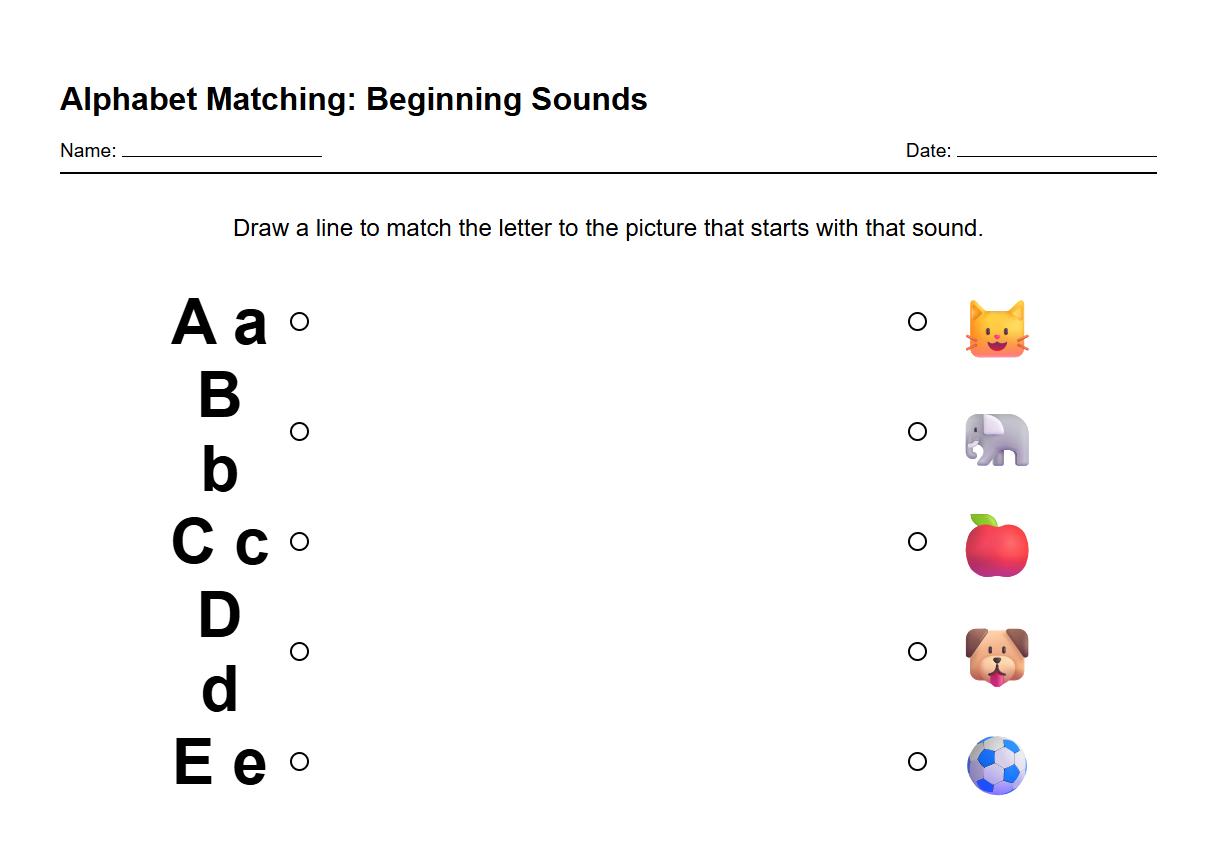
Alphabet Matching for Beginning Sounds

Download PDF     Pin it

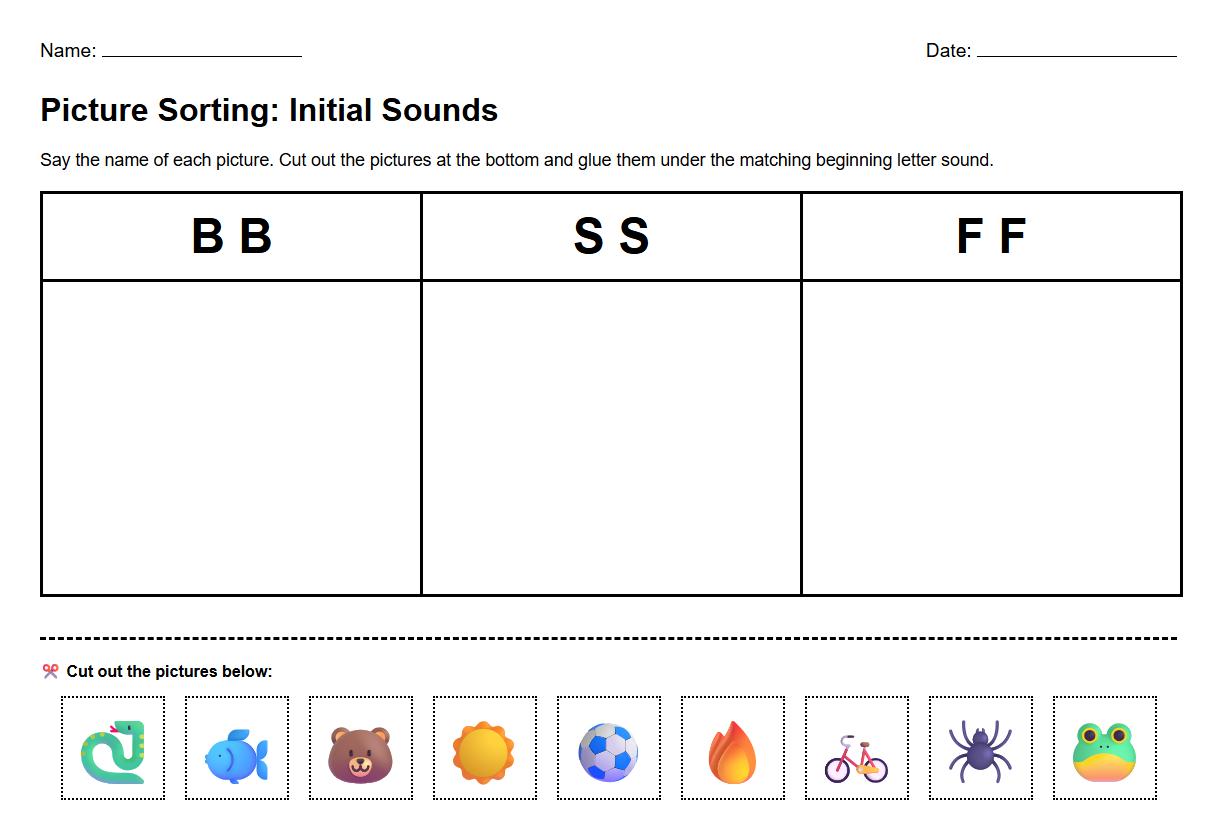
Picture Sorting by Initial Phoneme

Picture Sorting by Initial Phoneme

Download PDF     Pin it

Cut and Paste Initial Sound Recognition
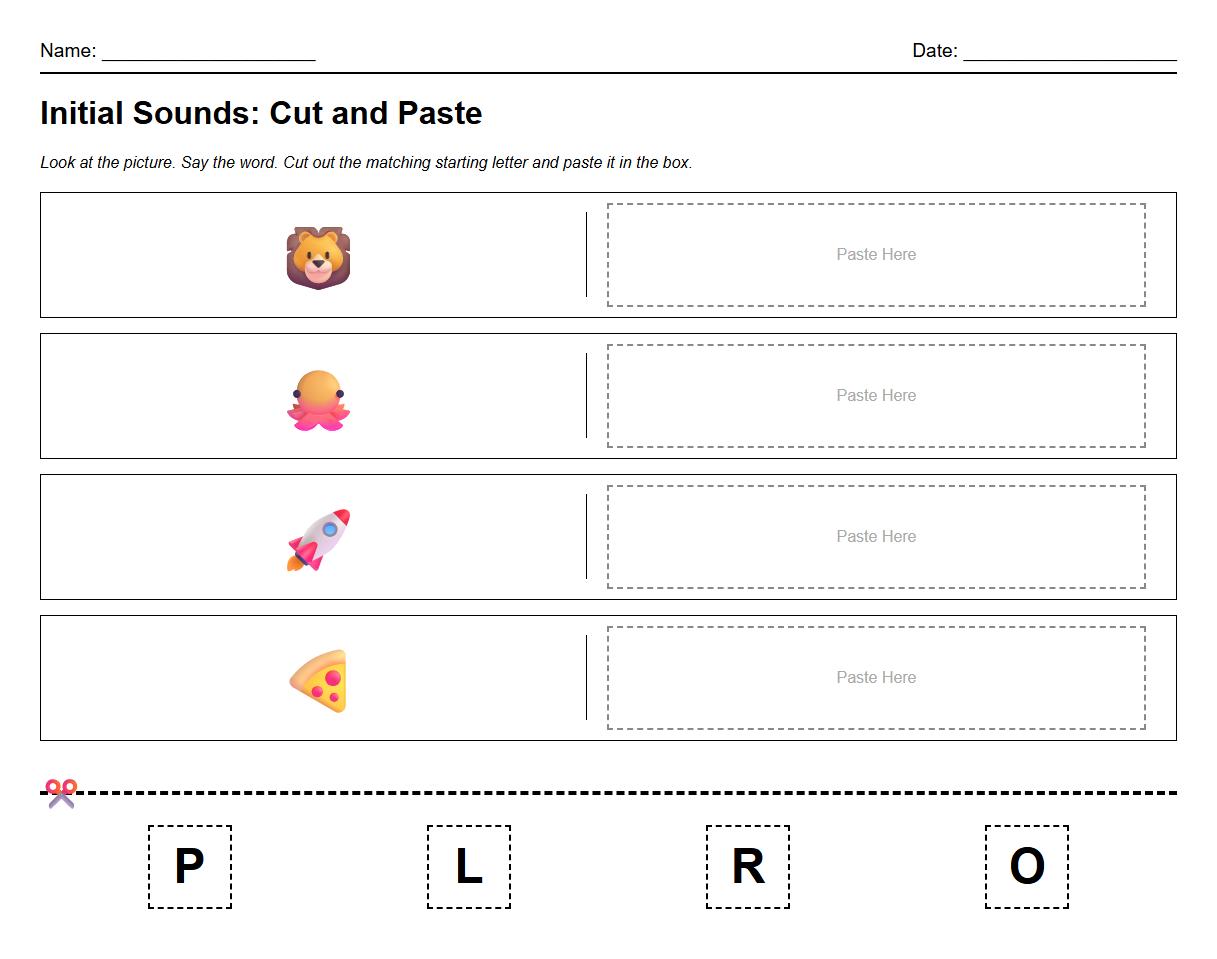
Cut and Paste Initial Sound Recognition

Download PDF     Pin it

Circle the Object with Target Beginning Sound
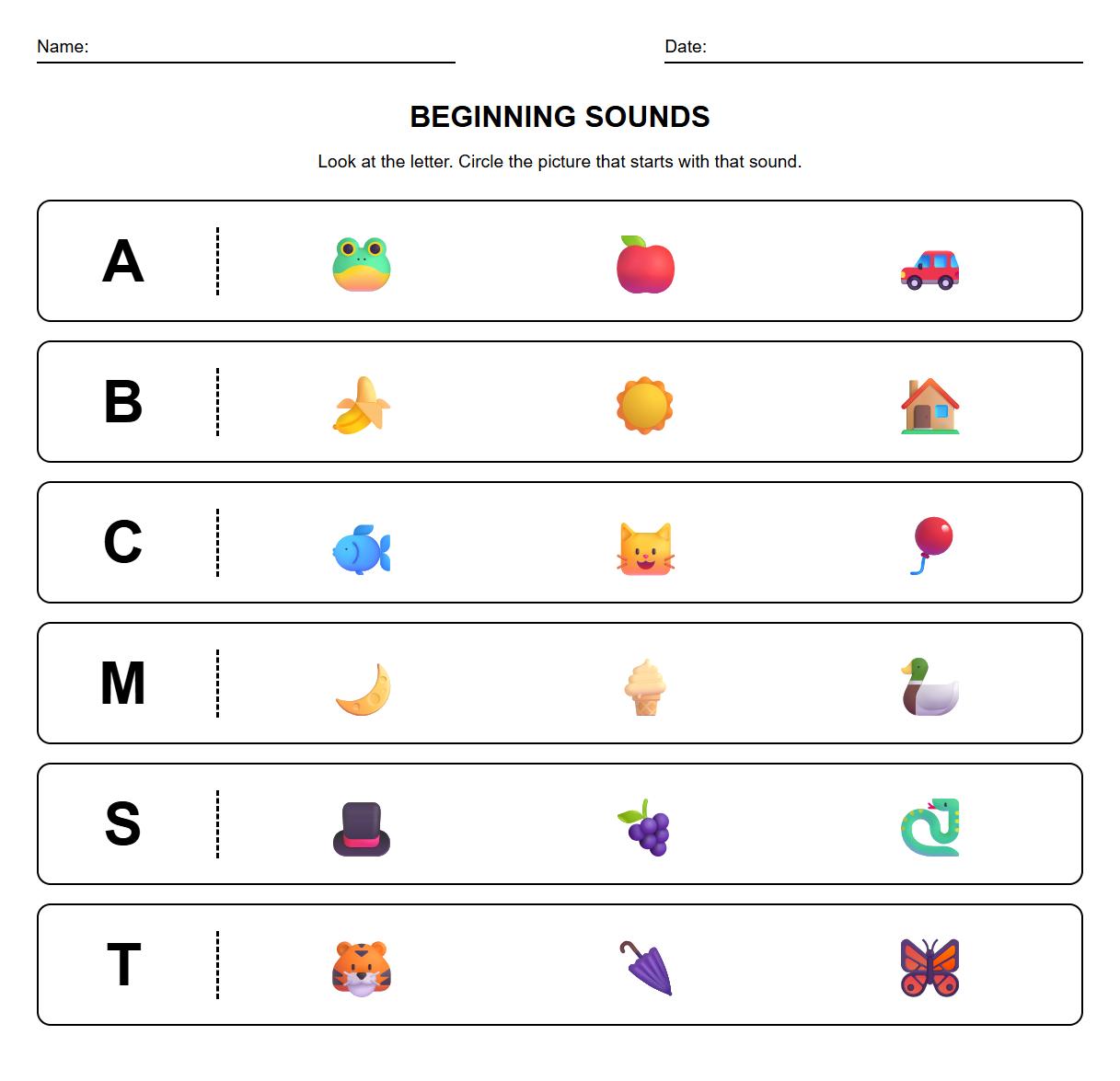
Circle the Object with Target Beginning Sound

Download PDF     Pin it

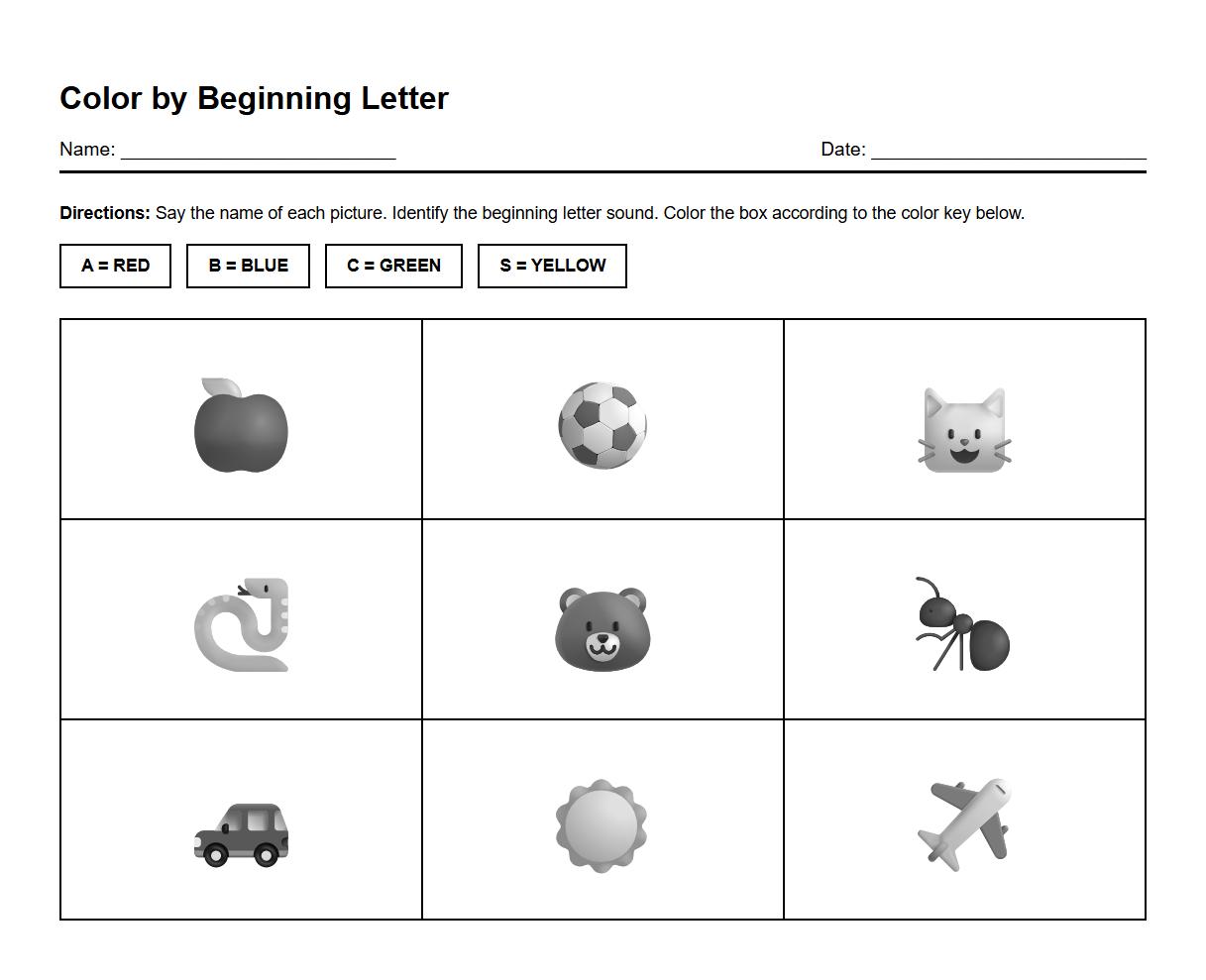
Color by Beginning Letter Worksheet

Color by Beginning Letter Worksheet

Download PDF     Pin it

Trace and Match Initial Phonics Sounds
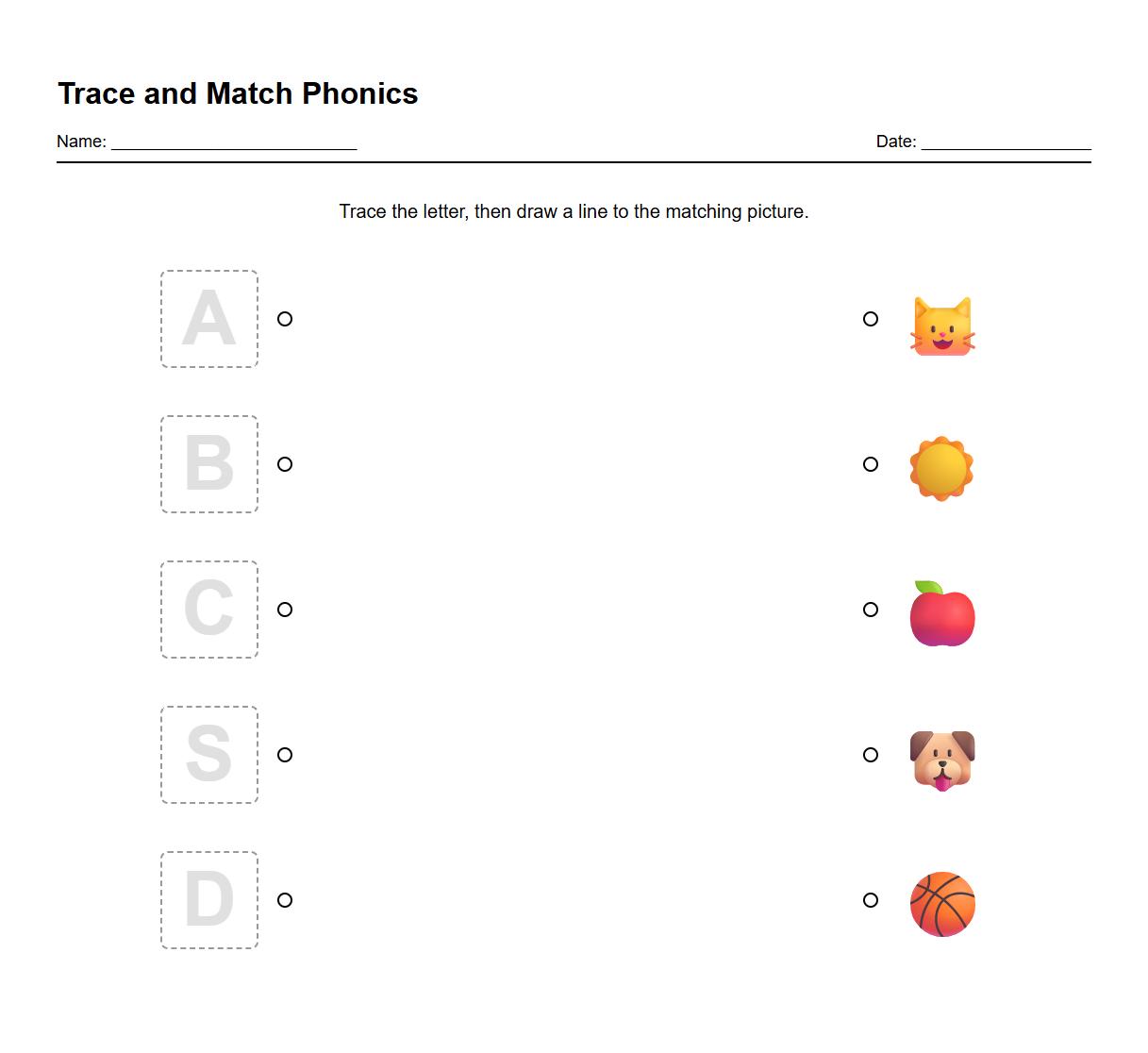
Trace and Match Initial Phonics Sounds

Download PDF     Pin it

Find and Mark Picture with Given Starting Sound
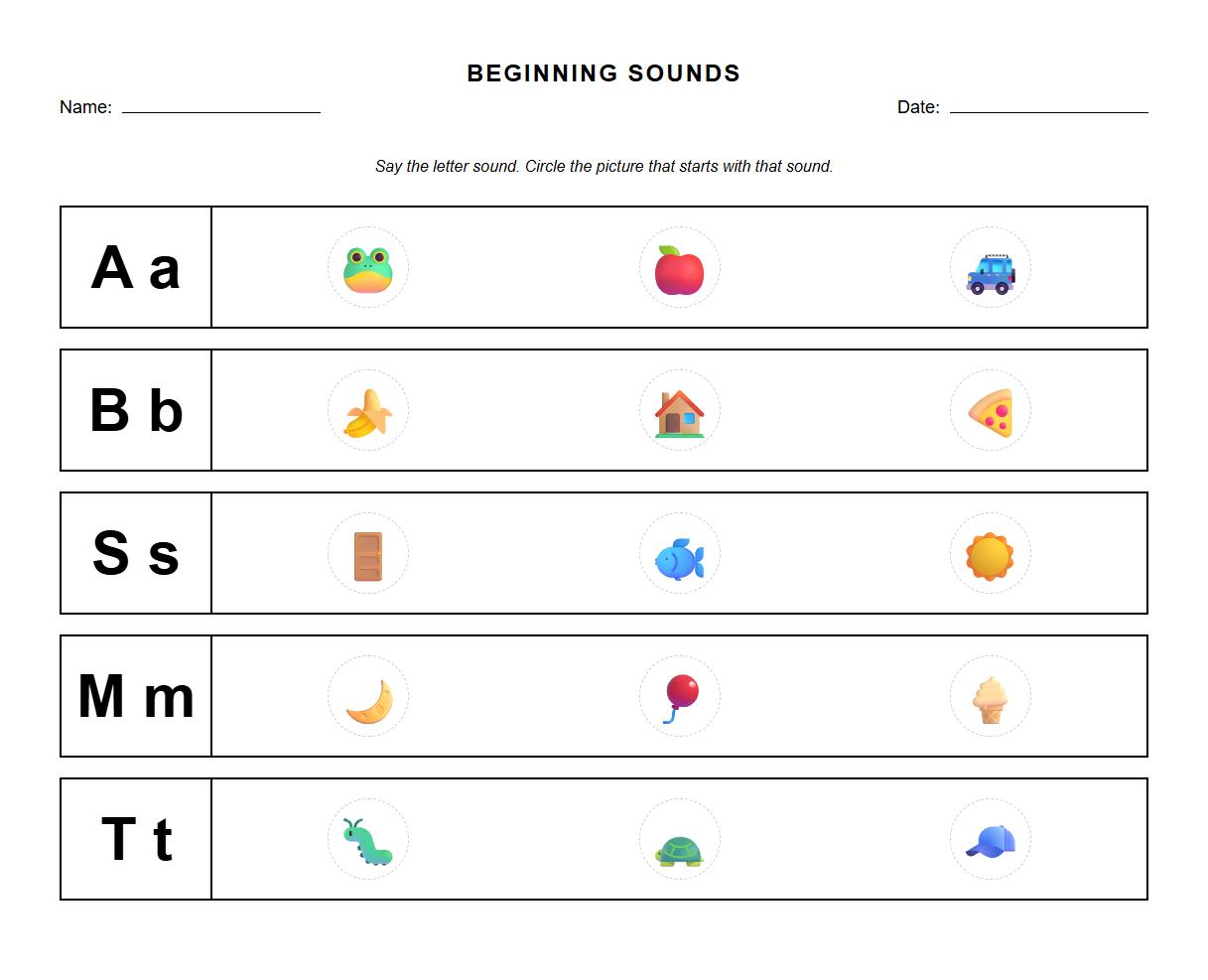
Find and Mark Picture with Given Starting Sound

Download PDF     Pin it

Fill in the Missing Beginning Letter
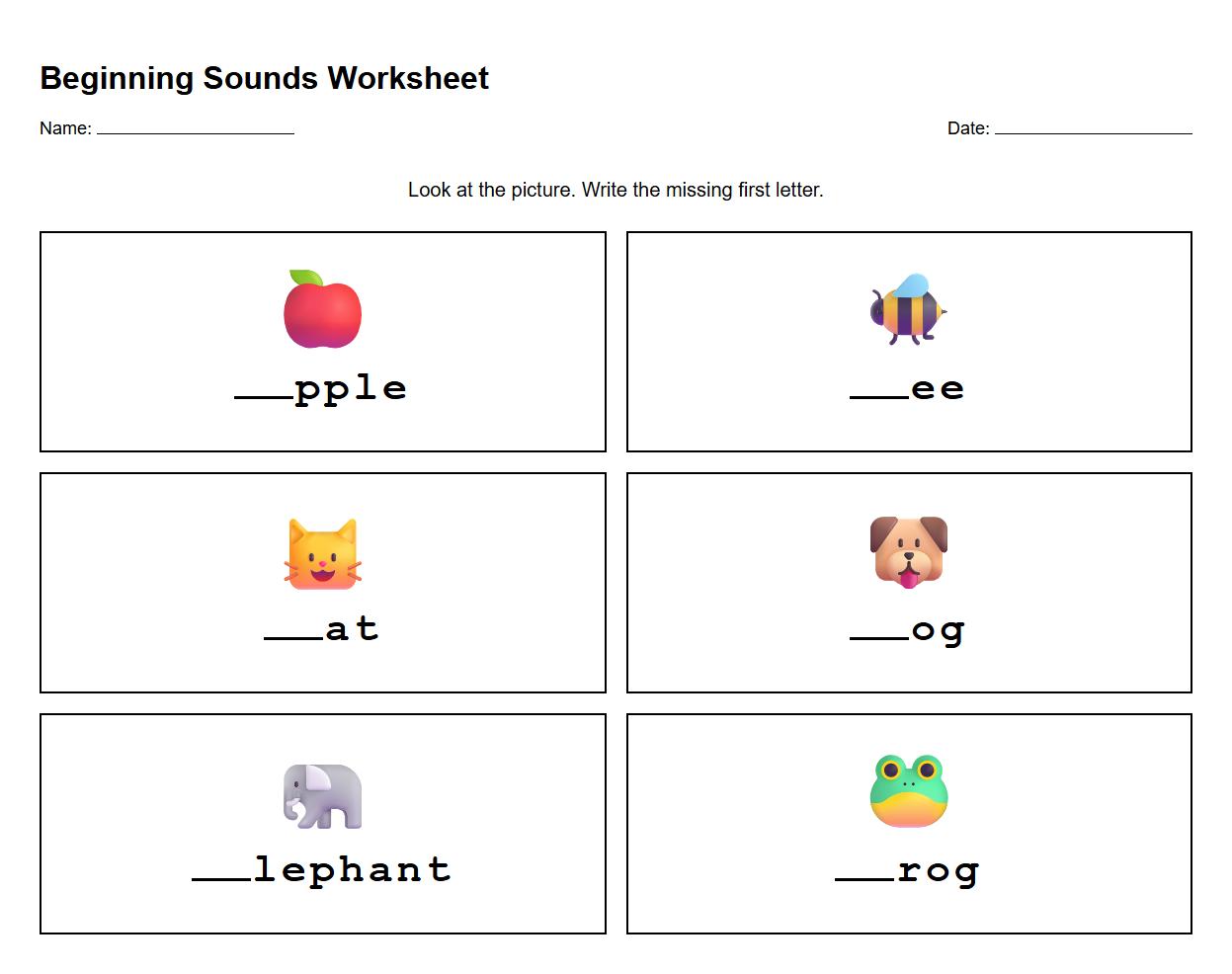
Fill in the Missing Beginning Letter

Download PDF     Pin it

Draw a Line from Image to Correct Starting Sound
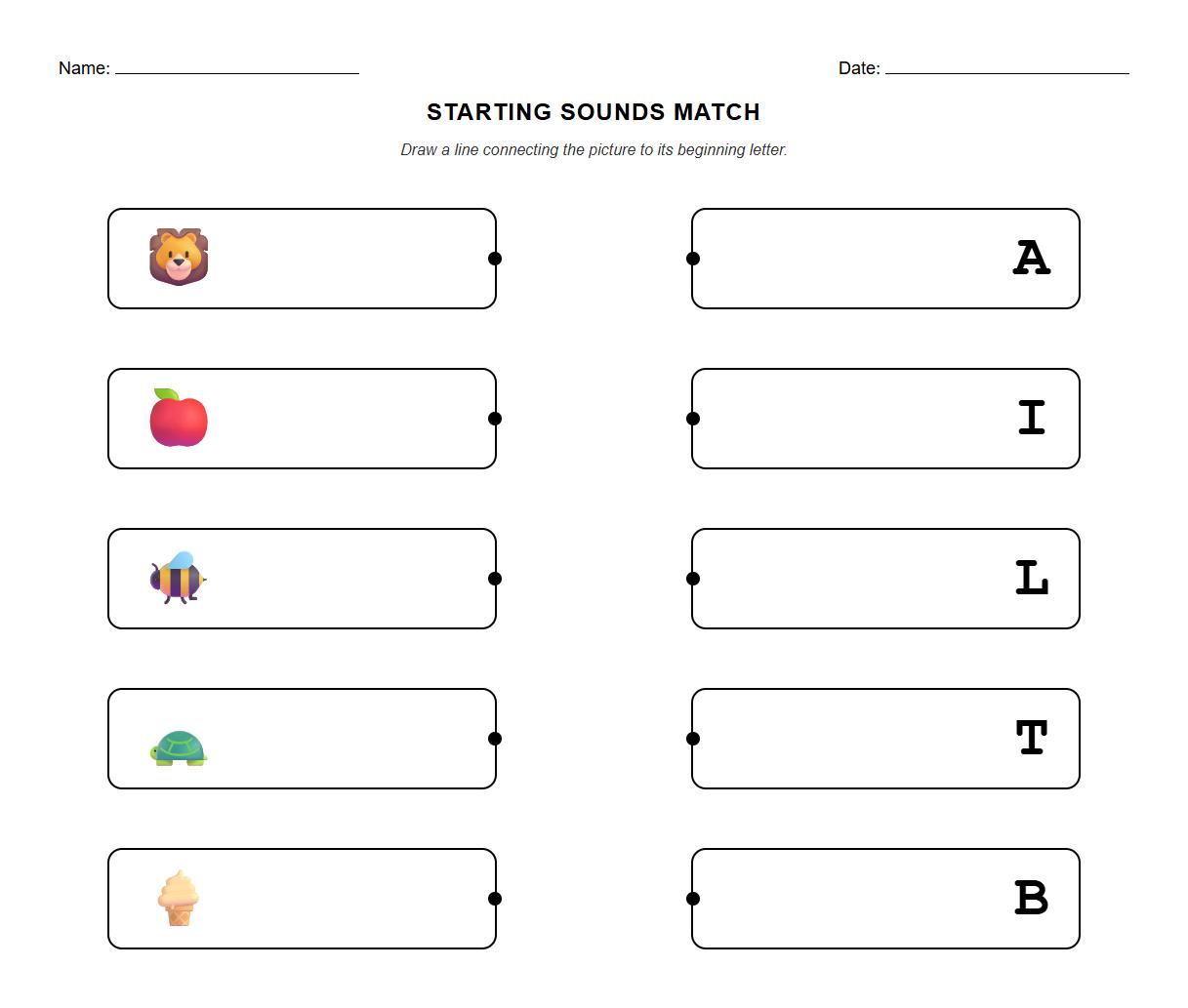
Draw a Line from Image to Correct Starting Sound

Download PDF     Pin it

Spin and Identify Initial Phoneme Game Worksheet
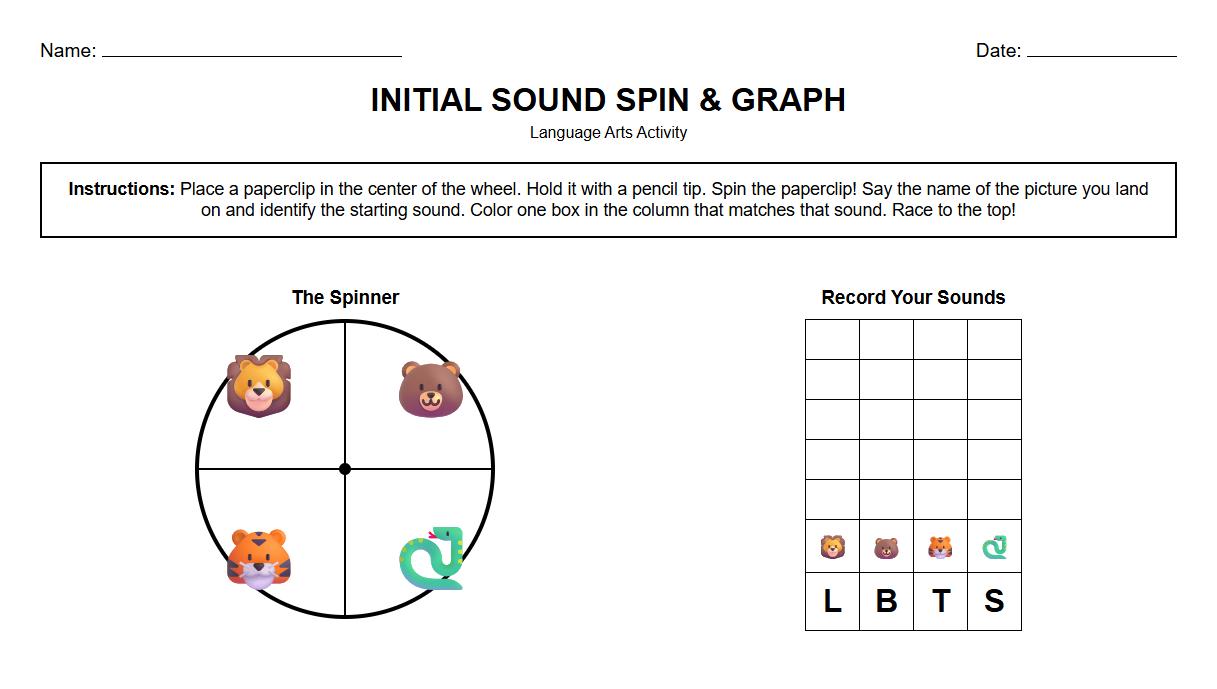
Spin and Identify Initial Phoneme Game Worksheet

Download PDF     Pin it

Which picture starts with the sound B?

Encourage children to identify the initial sound B in pictures such as a ball, bird, or banana. This activity enhances their phonemic awareness by connecting sounds to images. Use pictures that clearly represent easy-to-name objects to help them focus on the sound recognition. Parents and teachers can use this as a fun, interactive learning tool.

What is the first sound in the word sun?

Guide children to listen carefully to the beginning sound in the word "sun," which is /s/. This encourages early phonics skills and sound discrimination. Use repetition and comparison with other words starting with the same sound for reinforcement. This foundational skill helps build reading and speaking abilities.

Point to the object that begins with the letter M

Help children learn to associate the letter M with familiar objects like moon, mouse, or milk. This task improves letter recognition and vocabulary simultaneously. Teachers and parents can encourage pointing and naming to reinforce memory. It also builds confidence in recognizing letter sounds in everyday surroundings.

Which word starts with the same sound as dog?

Ask children to find words starting with the same initial sound as dog, such as "doll" or "duck." This strengthens their ability to identify rhyming sounds and word families. Use a variety of examples to make the exercise engaging and help children understand sound patterns. This skill is crucial for early reading development.

What letter does the word fish begin with?

Teach children to recognize the first letter in words by asking this question. The word "fish" begins with the letter F. This practice helps build letter-sound correspondence for reading readiness. Visual aids and sound repetition support this learning process effectively.

Find a picture that starts with the sound T

Encourage children to identify pictures such as a "tree," "train," or "tiger" that begin with the T sound. This activity helps with auditory discrimination and vocabulary growth. By associating sounds with images, children develop stronger phonics skills. It also makes learning fun and interactive.

Which of these words begins with the K sound?

Focus on the K sound by asking children to choose words like "kite," "key," or "kangaroo." Differentiating /k/ sounds from other similar sounds improves listening and pronunciation skills. Use a mix of familiar and new words to expand their sound recognition. This supports foundational literacy development.

What is the beginning sound in the word pen?

Help children isolate the first sound /p/ in "pen" to develop their phonemic awareness. This is important for learning to decode words during reading. Encourage them to repeat the sound and practice with other words starting with P. Consistent practice strengthens their auditory processing of sounds.

Name an object that starts with the letter A

Prompt children to think of objects like "apple," "ant," or "airplane" that start with the letter A. Naming items builds their vocabulary and letter recognition simultaneously. Use visual cues to support their learning and keep the activity engaging. This also prepares them for letter-sound teaching.

Choose the word that begins with the same sound as cat

Help children find words that start with the same sound as cat, such as "car," "cap," or "cake." This strengthens their ability to group words by initial phonemes. Engage them with pictures or word cards to enhance learning. This phonics exercise is key to mastering early reading skills.


More in Language Arts Category


About the author. Nylen Smith is a dedicated educator and cofounder of KWorksheet.com, a popular platform specializing in high-quality kindergarten worksheets and printable activities.

Disclaimer. The information provided in this document is for general informational purposes and/or document sample only and is not guaranteed to be factually right or complete. Please report to us via contact-us page if you find and error in this page, thanks.

Comments

No comment yet