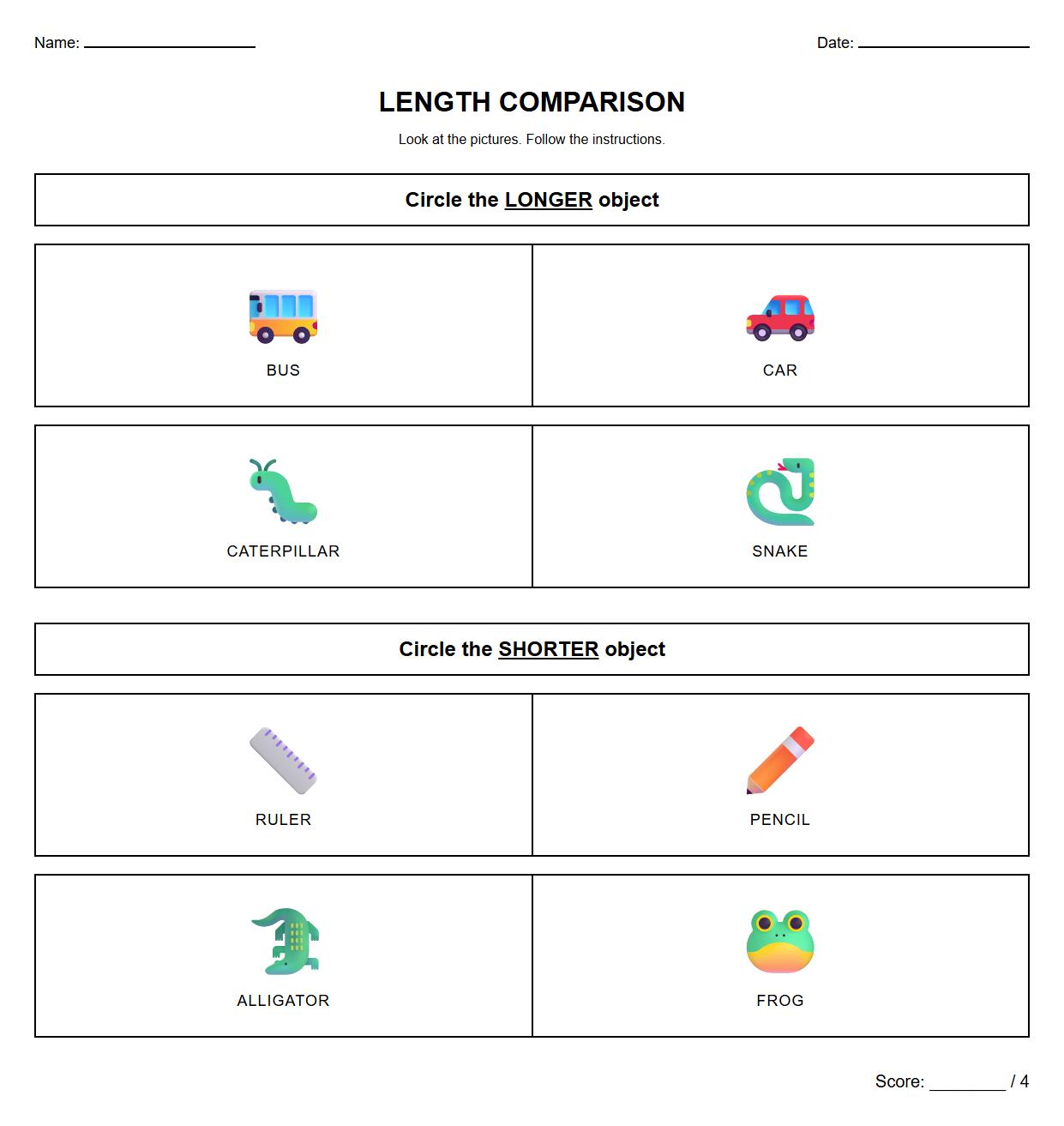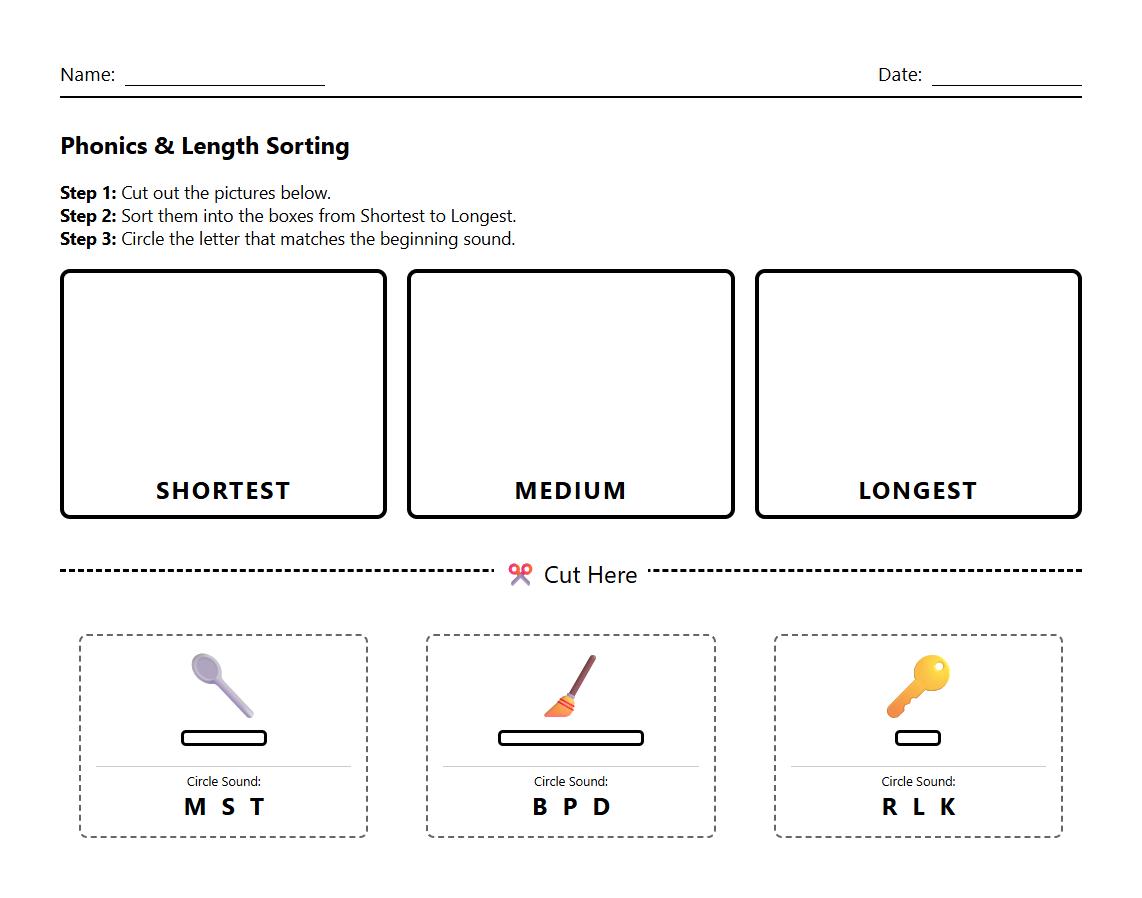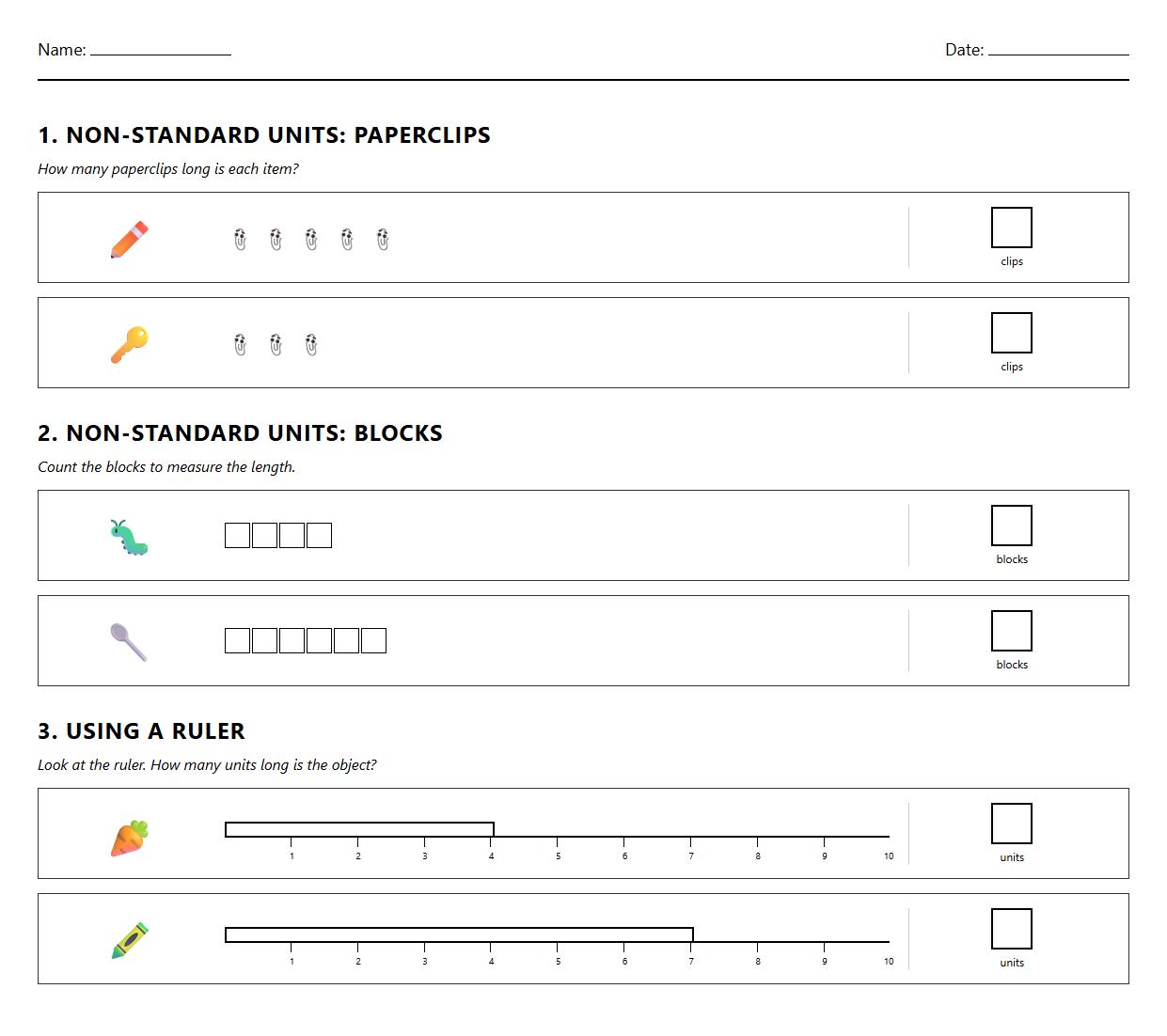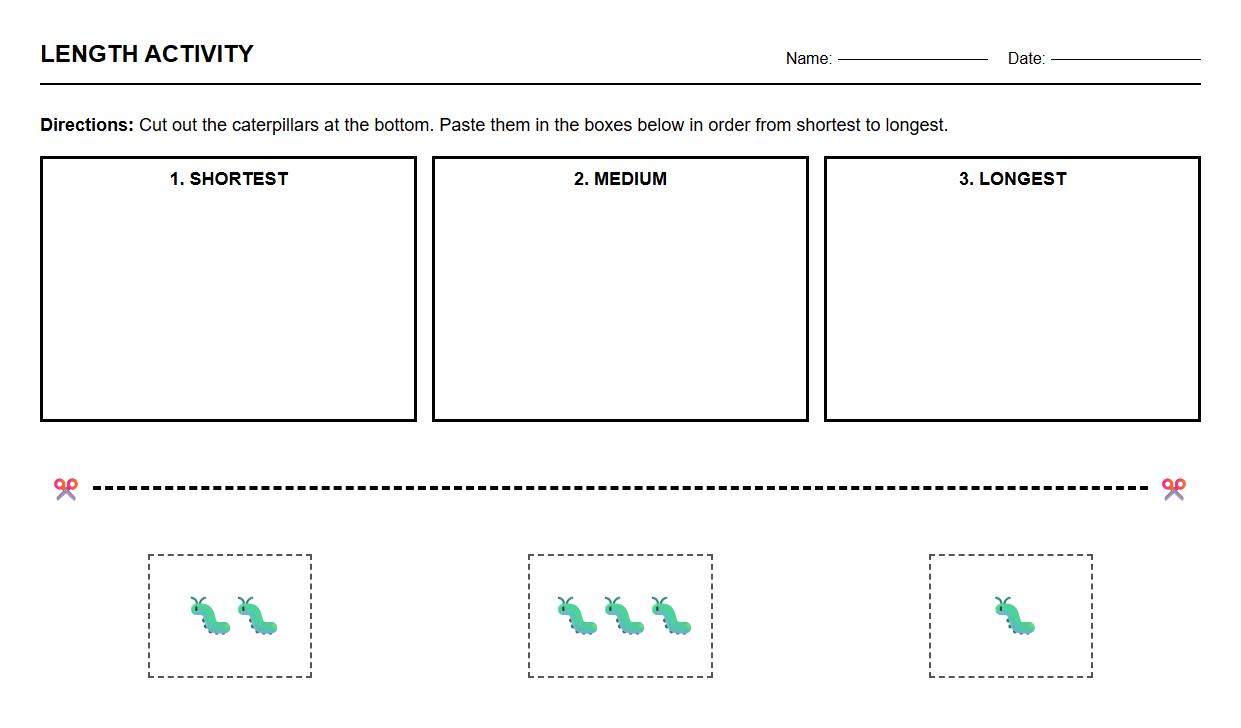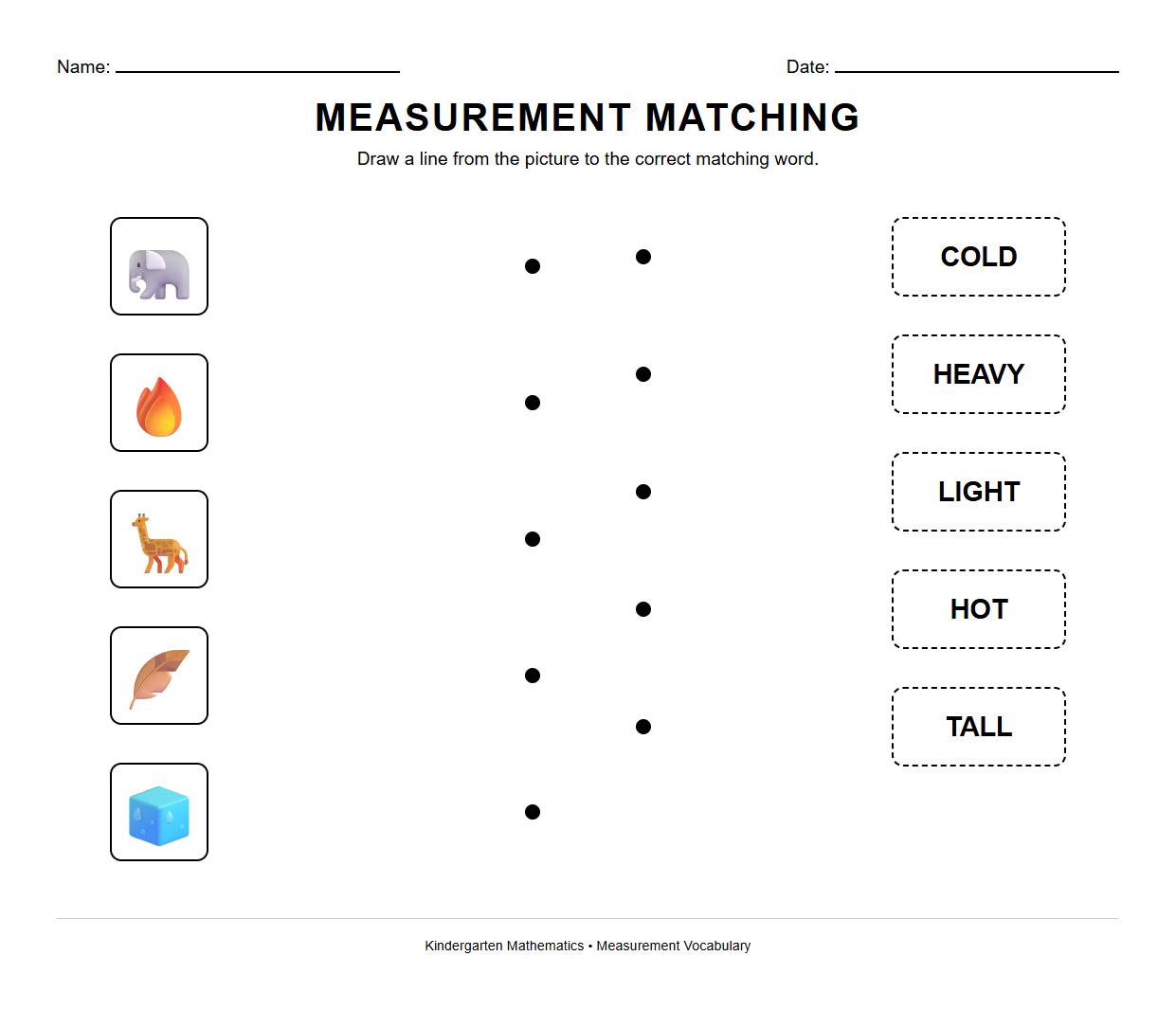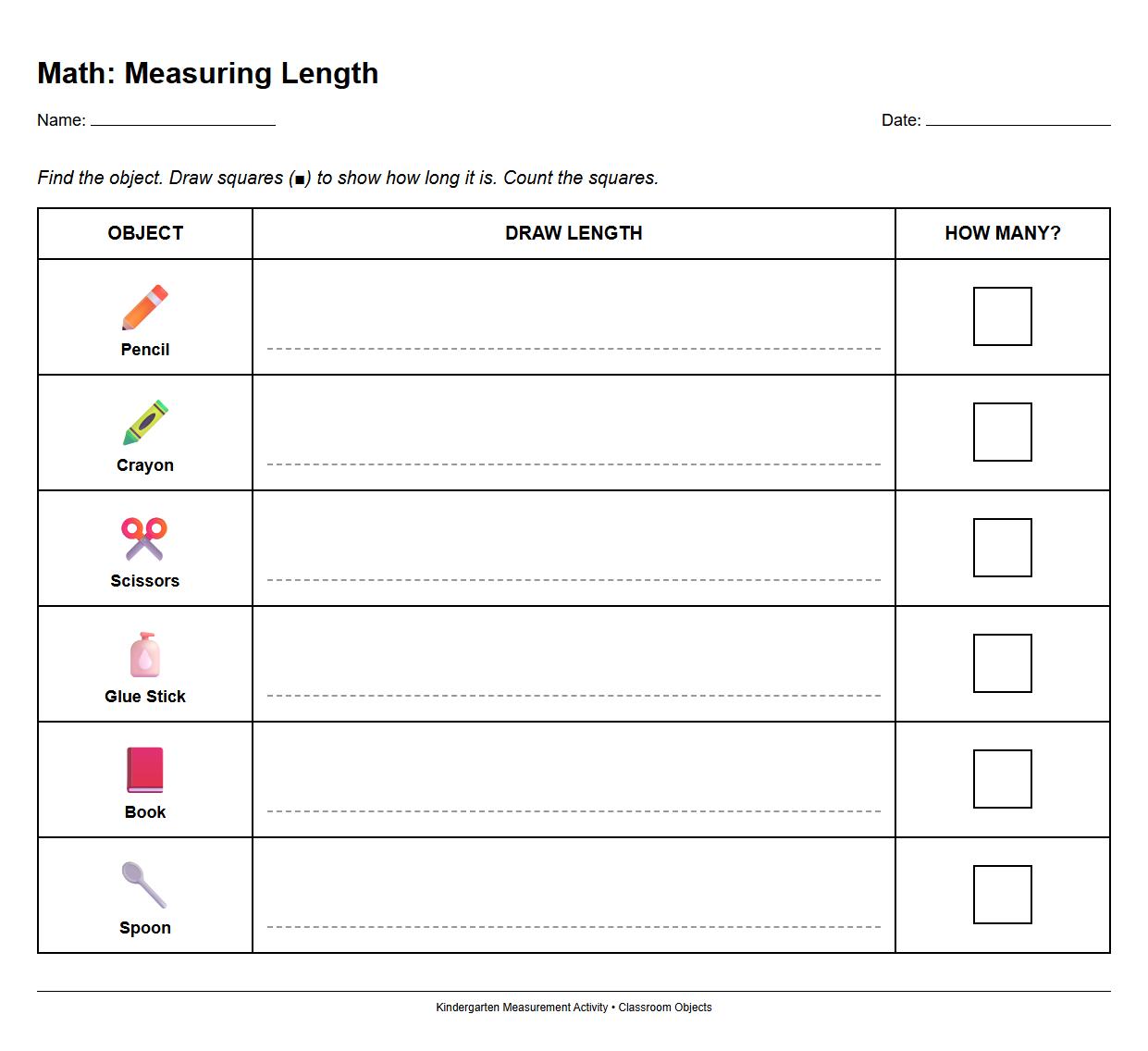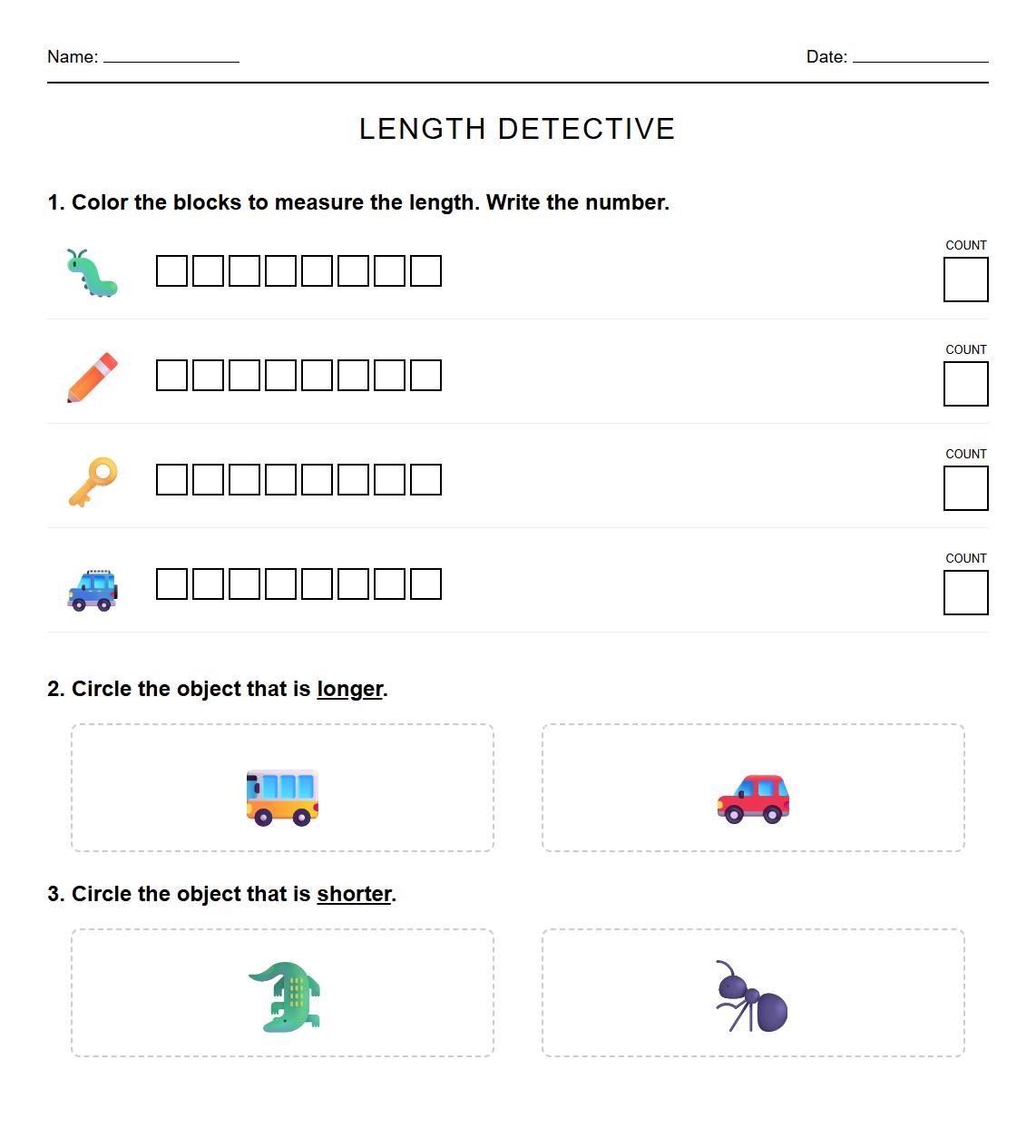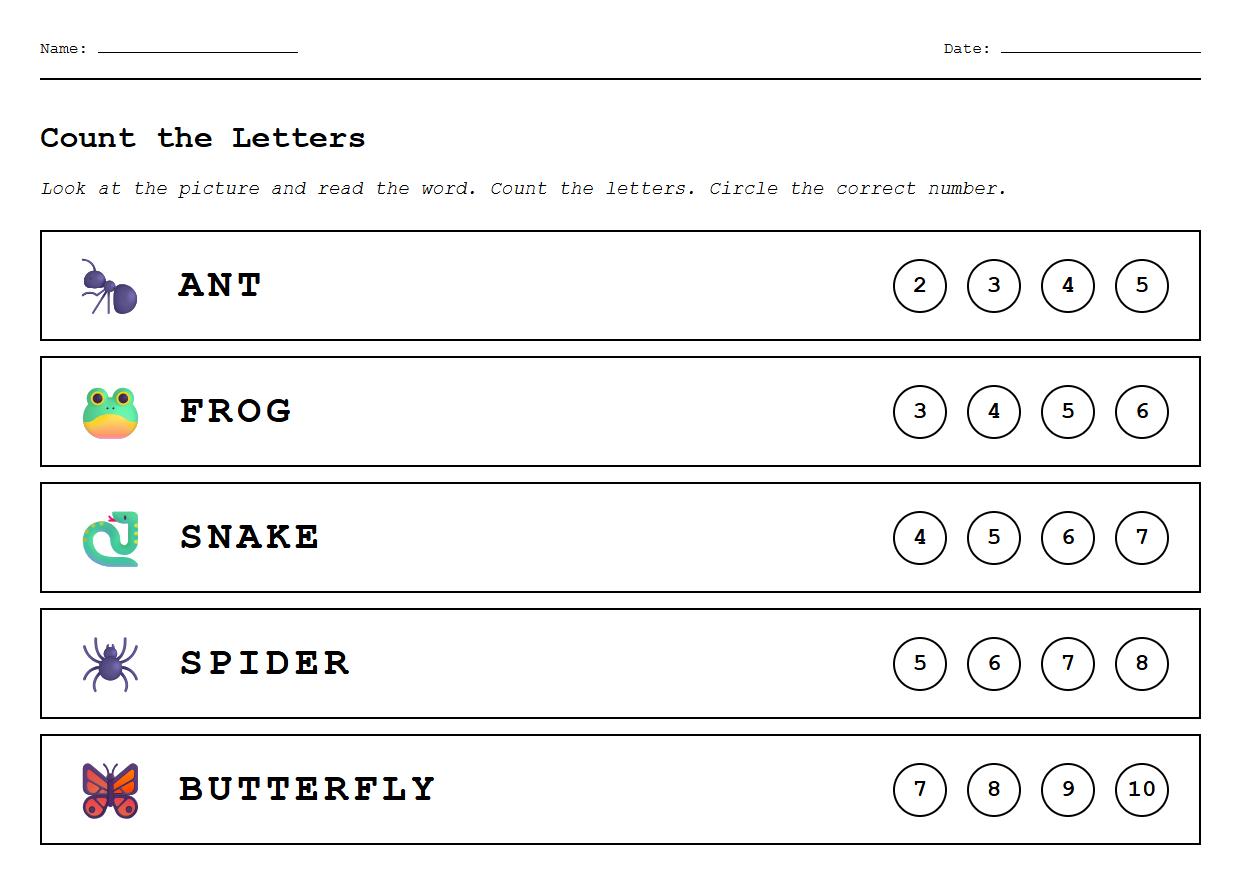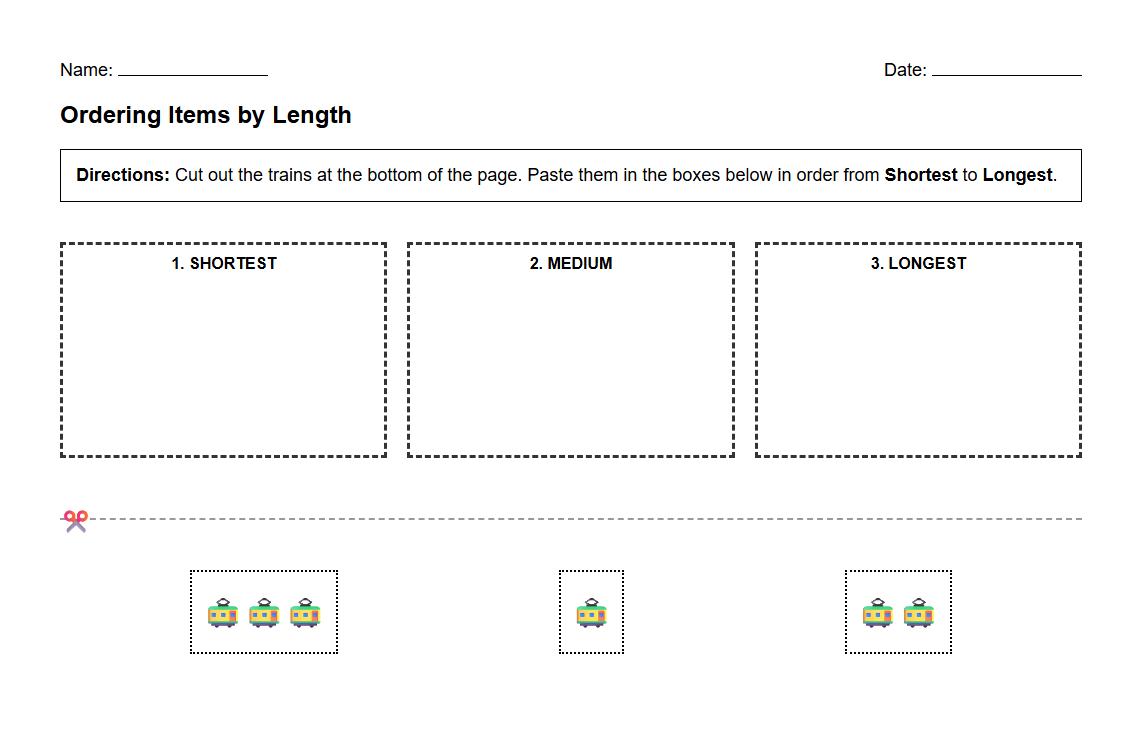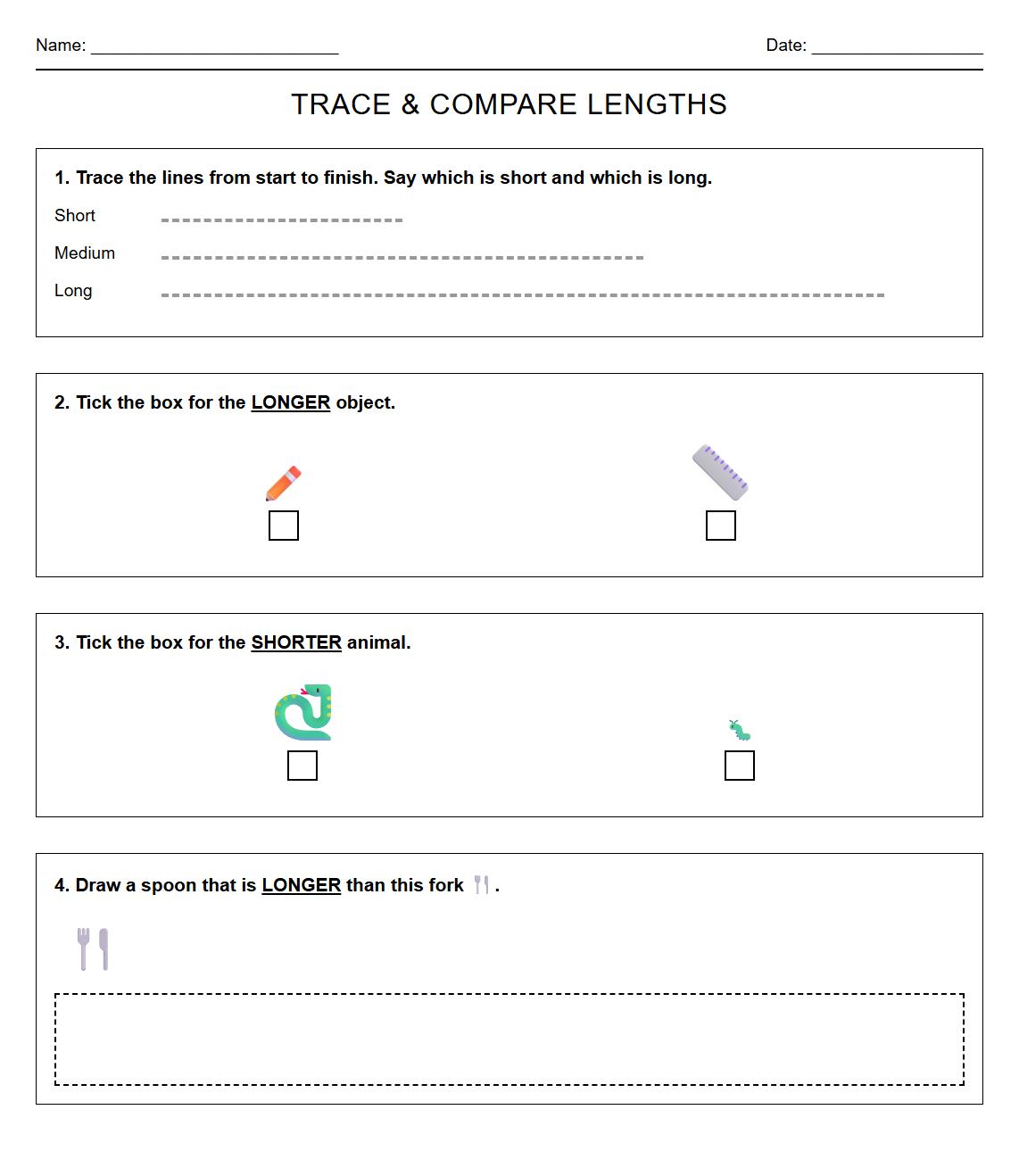
Kindergarten students develop essential measurement skills by detecting length differences using hands-on activities designed to compare various objects. These exercises enhance their ability to observe, estimate, and articulate distinctions in length, fostering a strong foundation in early math concepts. Explore the available worksheets to support your child's learning journey in measurement.
Comparing Lengths: Pencil vs. Crayon
Encourage children to observe and compare the length of a pencil and a crayon. This exercise helps develop their understanding of size differences. Ask them to identify which object is longer by visual or hands-on comparison. This simple activity builds essential measurement skills in a fun way.
Finding Shorter Objects in the Classroom
Challenge children to find an item in the classroom that is shorter than their notebook. This task encourages exploration and critical thinking about object sizes. It's a practical way to introduce the concept of relative length. Children learn to observe their environment carefully while engaging with everyday items.
Measuring Length with Blocks
Ask children to measure the length of their shoe using blocks as units. Counting how many blocks long their shoe is develops their ability to estimate and measure. This activity reinforces the concept of non-standard units of measurement. It also makes learning interactive and relatable.
Comparing Ribbon Length to Arm
Have children compare the length of a ribbon to their arm to determine if it is longer or shorter. This comparison encourages body awareness and measurement skills. It also introduces the idea of using the human body as a reference in measuring objects. Such activities promote both physical and cognitive development.
Tallness Comparison: Book vs. Water Bottle
Guide children to compare the height of a book with a water bottle. Determining which object is taller helps sharpen their observation and comparison skills. This task also teaches vocabulary related to height and measurement. Understanding these concepts is key for early math learning.
Finding Items of the Same Length
Invite children to line up two items that are the same length. This activity supports their understanding of equality in measurement. It also enhances their attention to detail and spatial awareness. Working with pairs allows for hands-on learning and cooperative play.
Identifying the Shortest Marker
Encourage children to look inside their marker box and find the shortest marker. This exercise teaches comparison and sorting skills. Understanding terms like shortest and longest builds foundational math language. It also fosters careful observation and classification.
Measuring with Steps
Suggest that children measure the length of a table using their steps. This introduces the concept of using non-standard units measurement based on their body. It helps them understand distance and length in a practical, physical way. Measuring with steps is a fun and active learning method.
Identifying the Longest Line on the Worksheet
Ask children to find which line on their worksheet is the longest. This activity develops their ability to compare lengths visually. It also improves their focus and attention to detail. Recognizing length differences is critical for early literacy and math skills.
Finding Taller Objects Outside
Encourage children to look outside and find something taller than themselves. This promotes outdoor exploration and awareness of their surroundings. It also helps children understand height comparisons in a real-world context. Such activities connect classroom learning with everyday life.


Phonics Based Measurement Worksheet Recording Object Weights for Kindergarten