Kindergarten Worksheet Practice Identifying Short and Long Objects in Measurement

📅 Feb 14, 2025 👤 Nylen Smith

Young learners develop essential measurement skills by distinguishing between short and long objects, enhancing their observation and comparison abilities. Engaging activities focused on identifying the length of everyday items build foundational math concepts in a fun and interactive way. Explore our collection of kindergarten worksheets designed to practice and reinforce recognizing short and long objects.

Sorting Worksheet for Measuring Object Length: Short vs Long
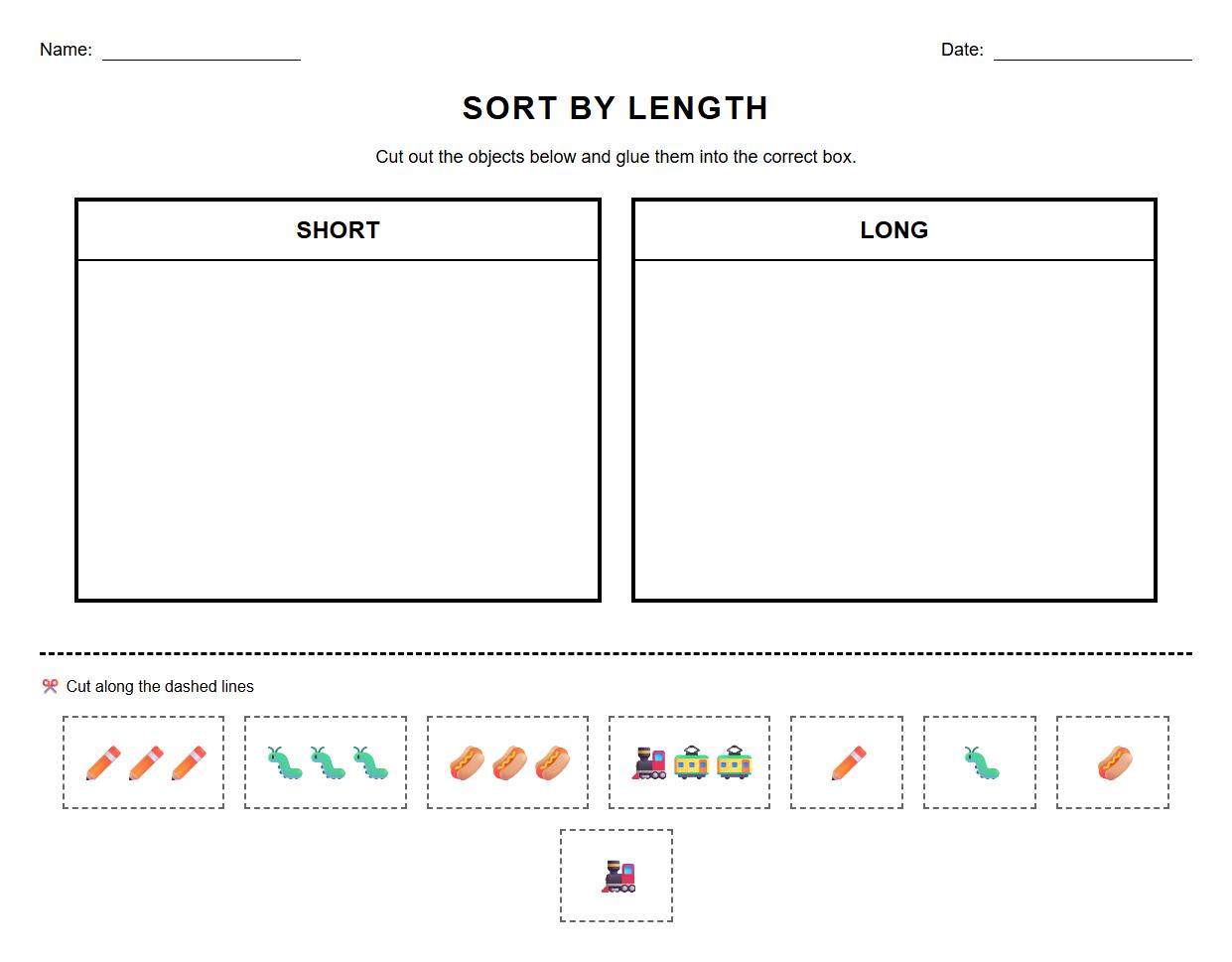
Sorting Worksheet for Measuring Object Length: Short vs Long

Download PDF     Pin it

Cut and Paste Activity: Classifying Short and Long Objects
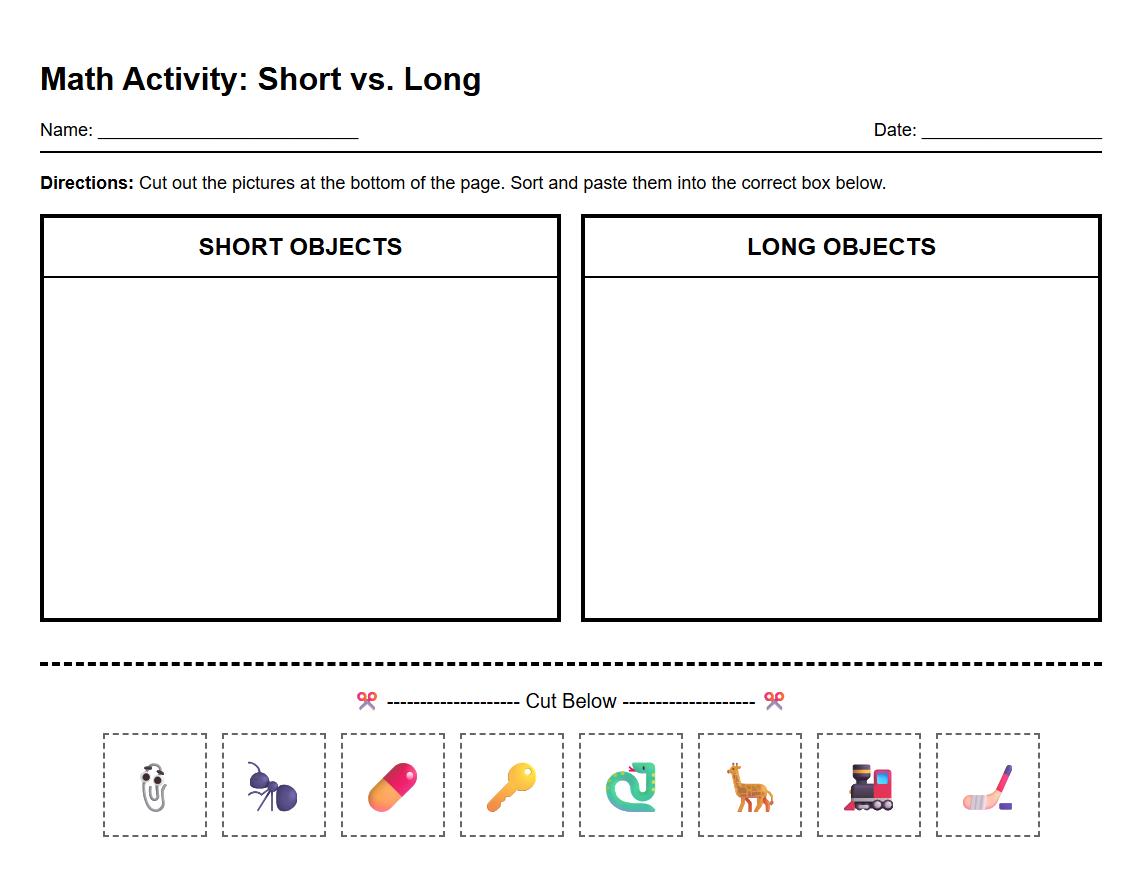
Cut and Paste Activity: Classifying Short and Long Objects

Download PDF     Pin it

Circle the Longer Object: Visual Comparison Worksheet
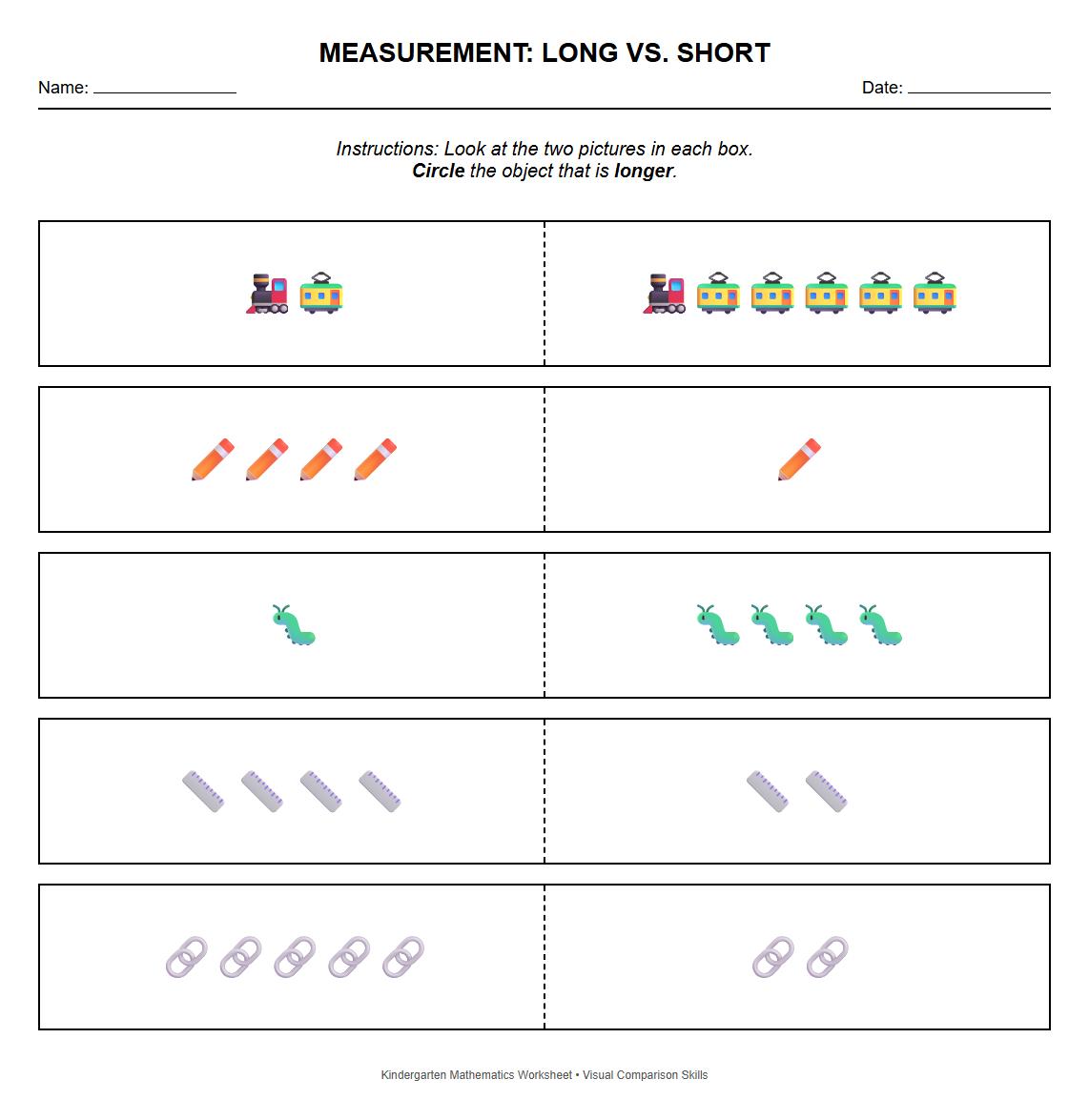
Circle the Longer Object: Visual Comparison Worksheet

Download PDF     Pin it

Trace and Match Worksheet: Connect Short and Long Items
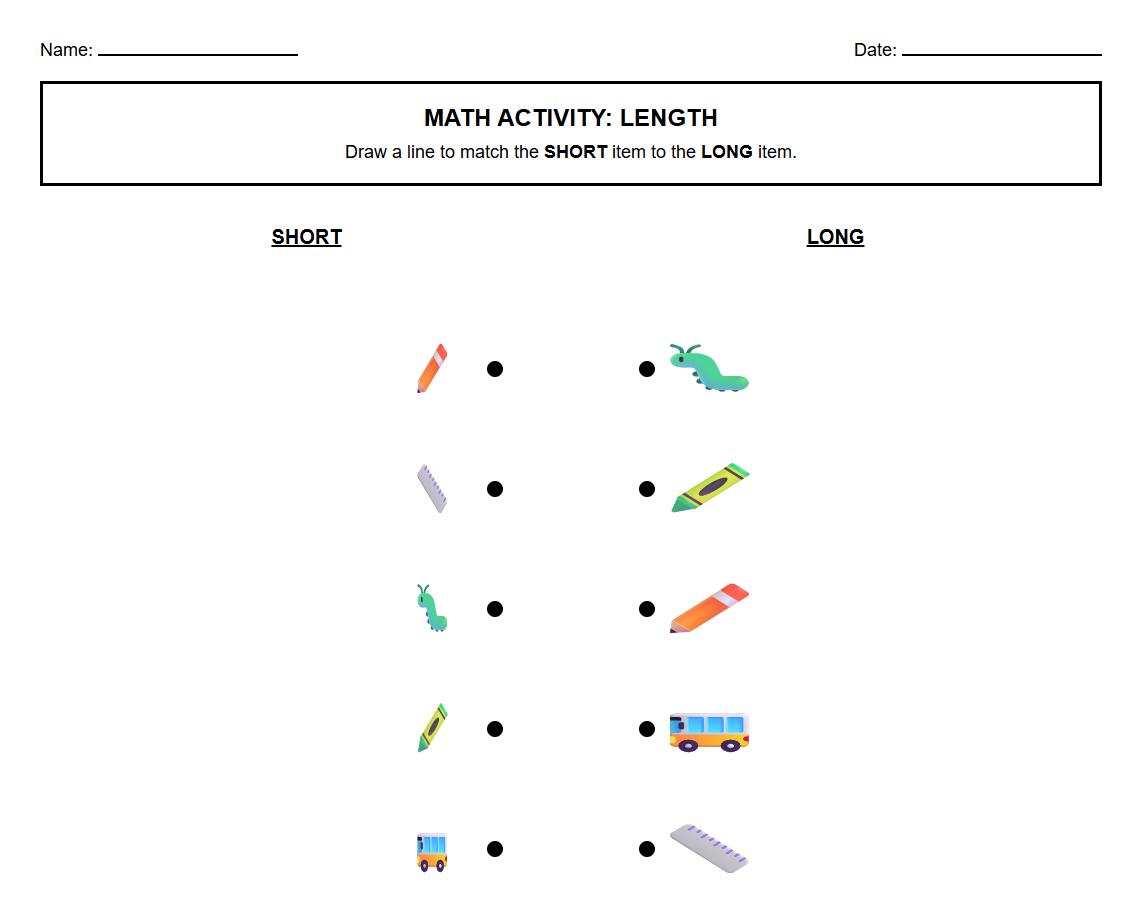
Trace and Match Worksheet: Connect Short and Long Items

Download PDF     Pin it

Color Coding Sheet for Identifying Length Differences
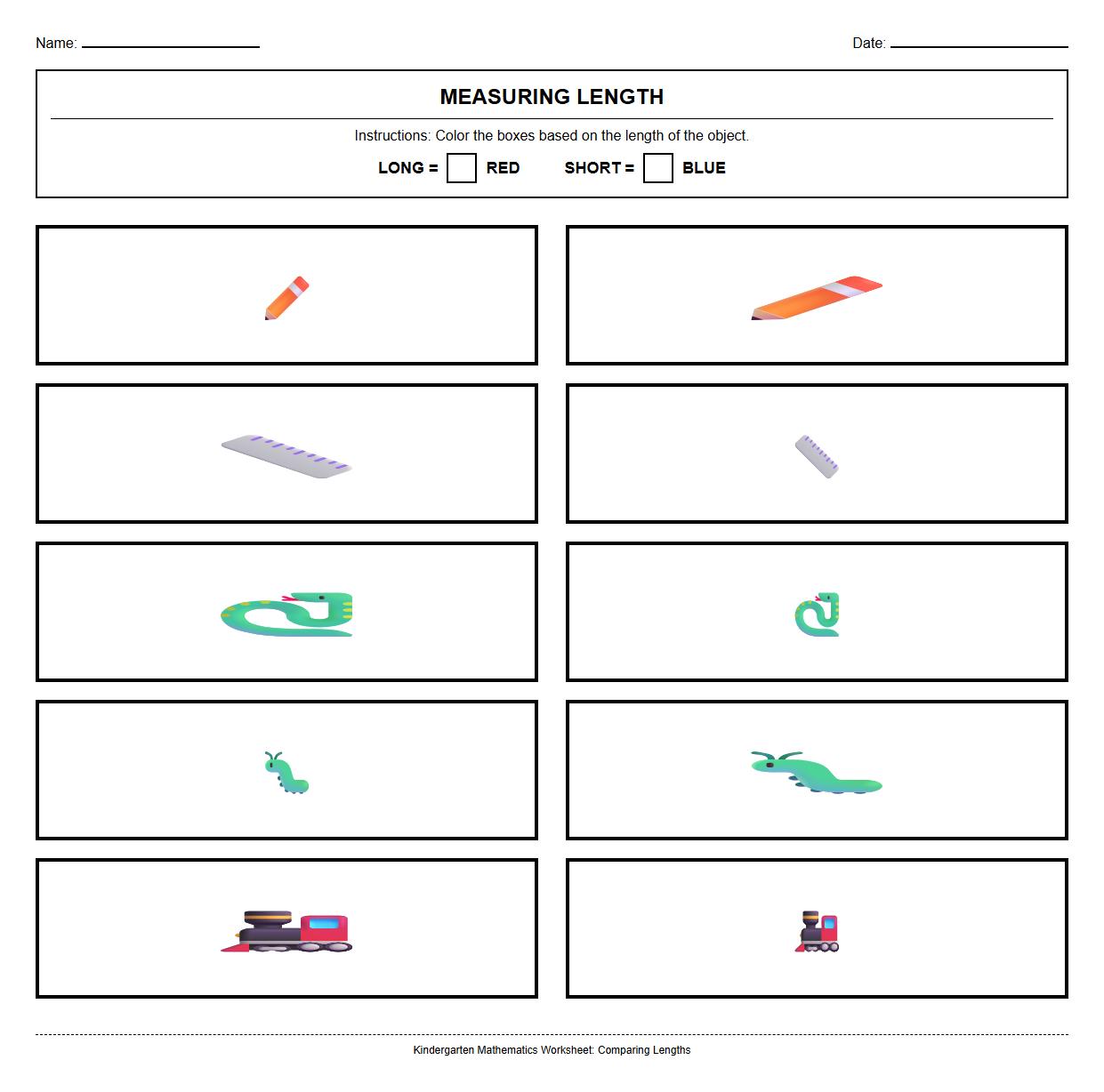
Color Coding Sheet for Identifying Length Differences

Download PDF     Pin it

Measurement Comparison Sheet: Select Short or Long Objects
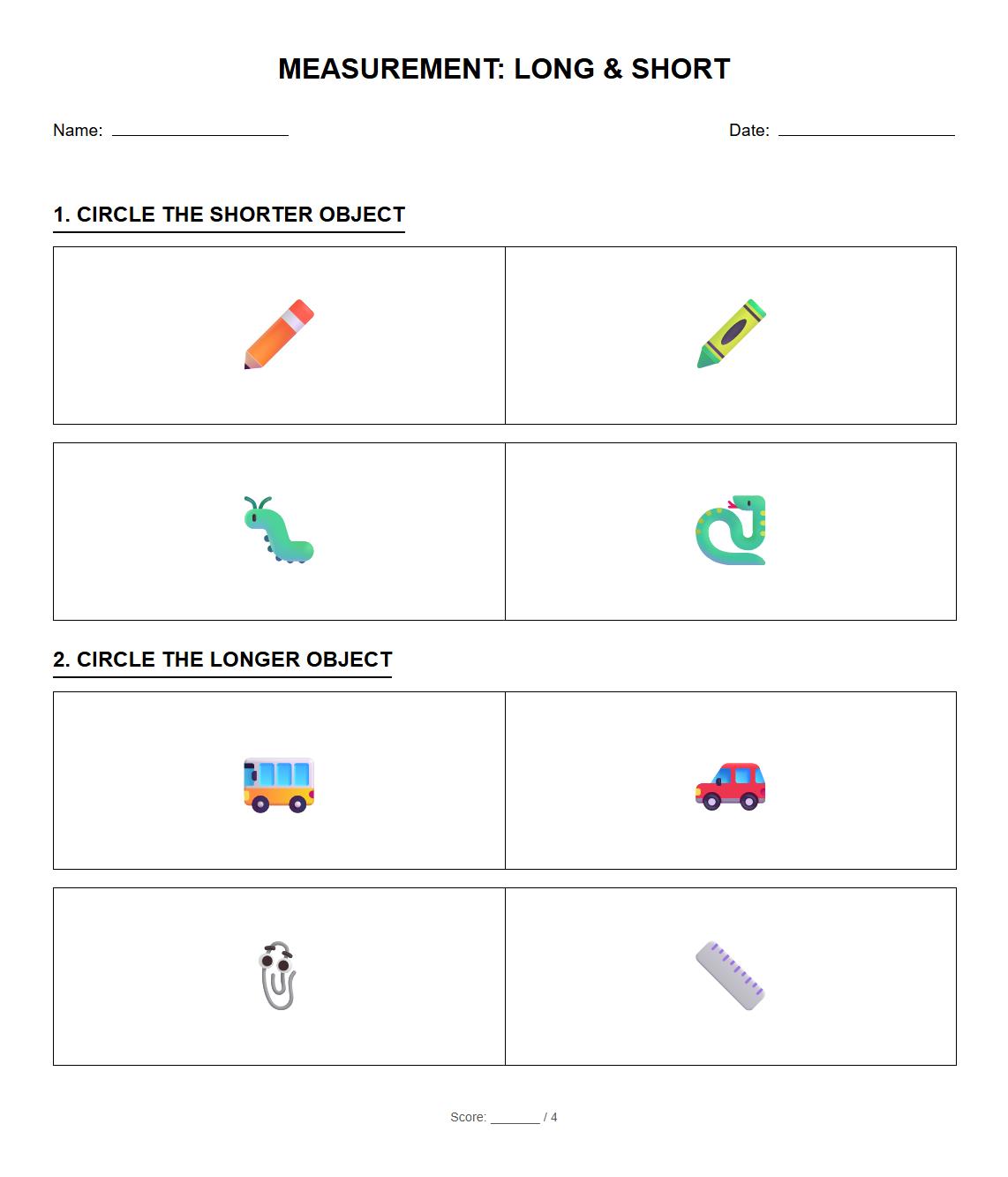
Measurement Comparison Sheet: Select Short or Long Objects

Download PDF     Pin it

Draw Lines Between Objects of Similar Length Worksheet
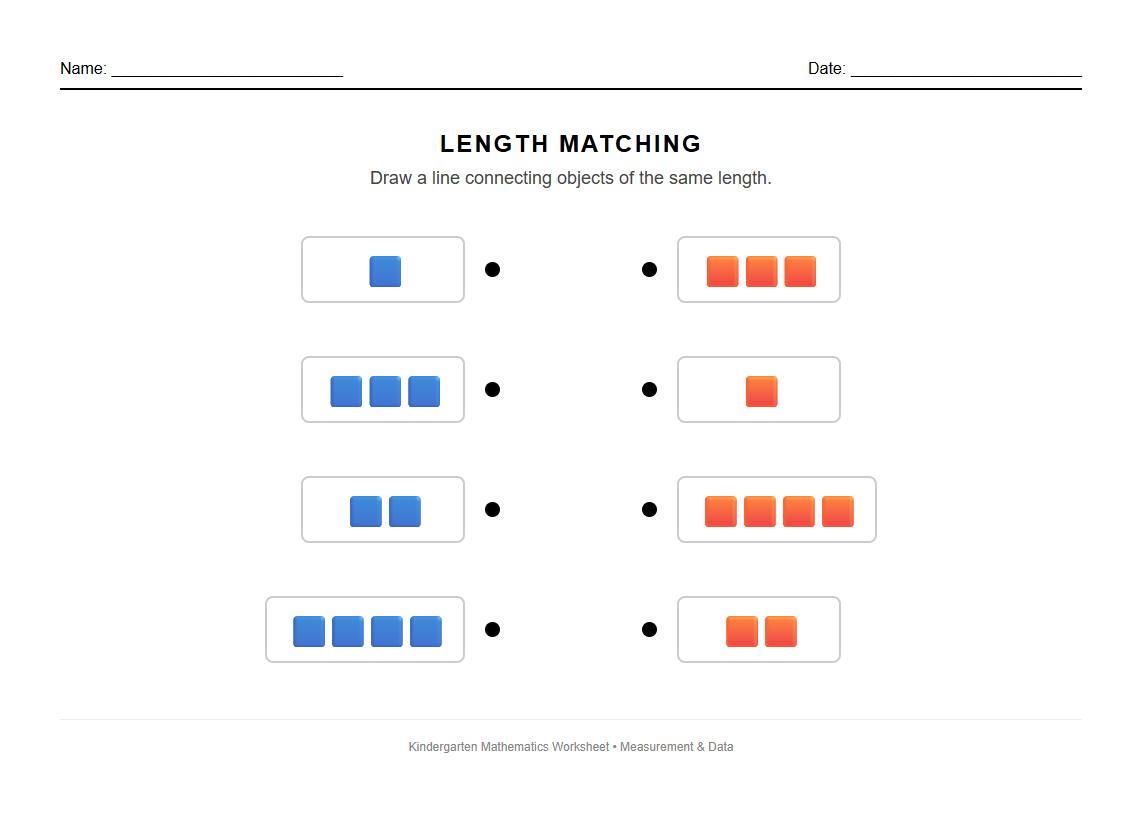
Draw Lines Between Objects of Similar Length Worksheet

Download PDF     Pin it

Object Length Sequencing Activity Using Picture Cards
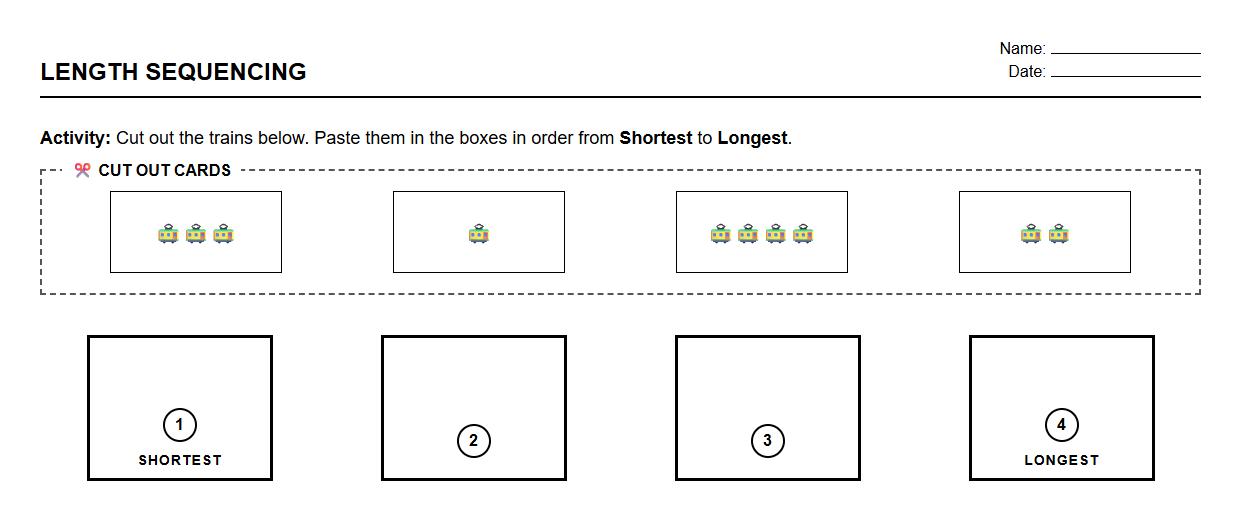
Object Length Sequencing Activity Using Picture Cards

Download PDF     Pin it

Find and Mark Worksheets: Identifying Short and Long in a Set
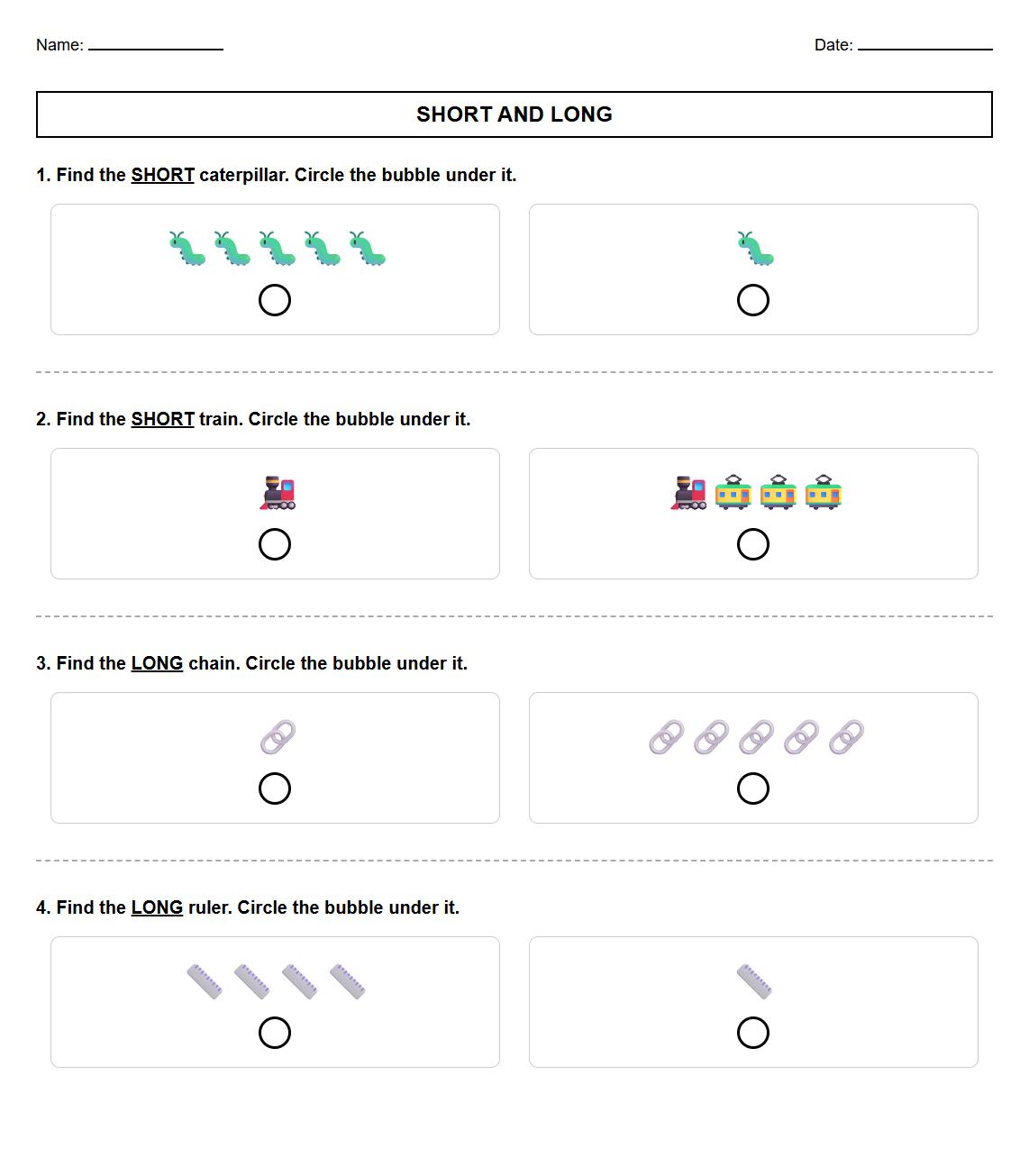
Find and Mark Worksheets: Identifying Short and Long in a Set

Download PDF     Pin it

Worksheet for Drawing Short and Long Versions of Everyday Objects
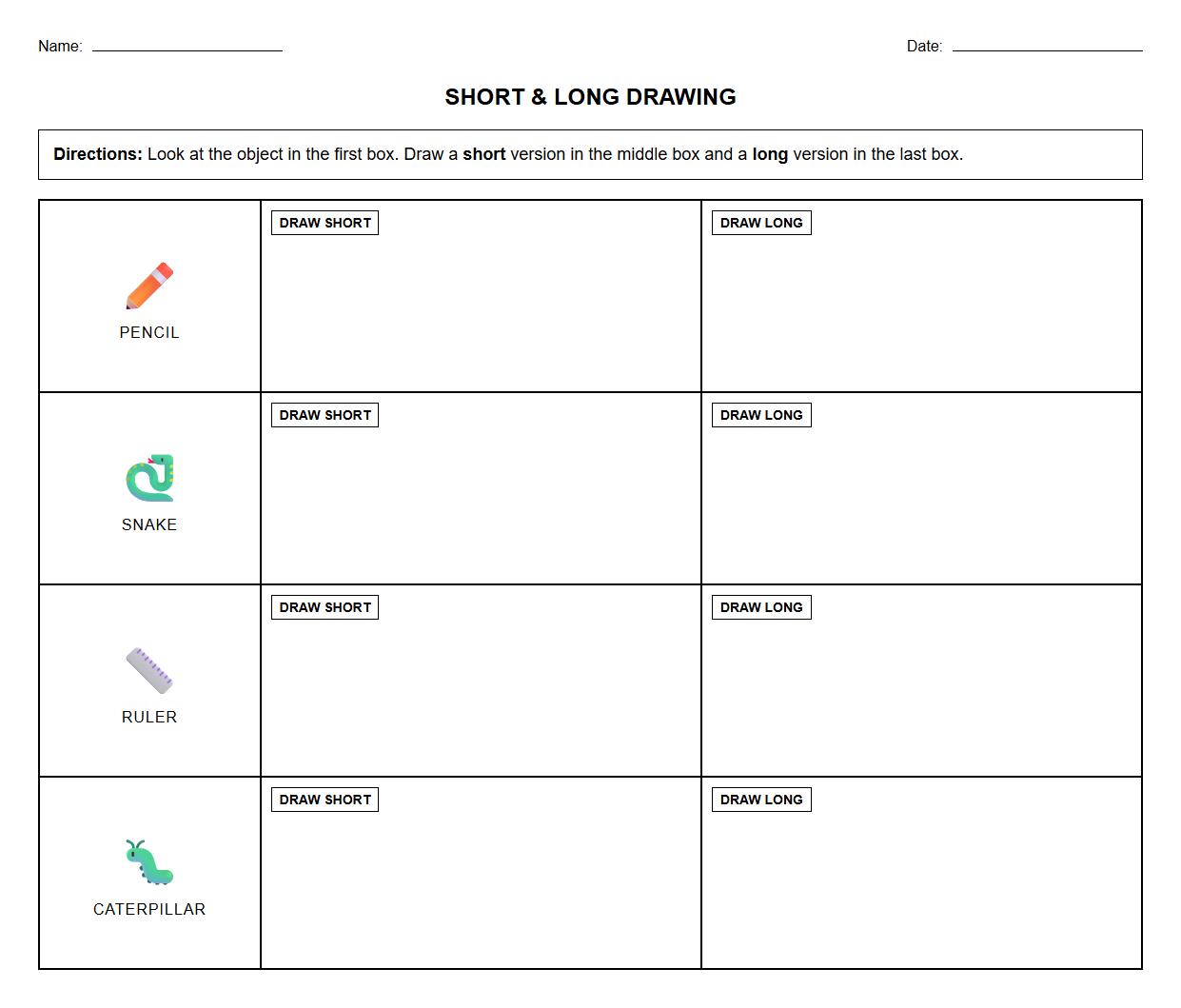
Worksheet for Drawing Short and Long Versions of Everyday Objects

Download PDF     Pin it

Comparing Lengths: Pencil and Ruler

Ask the child to observe and decide which object is shorter, the pencil or the ruler. This exercise helps develop comparison skills and understanding of measurement concepts. Encouraging them to use visual clues promotes critical thinking. It's a practical way to explore length differences in everyday items.

Finding the Longest Item on the Table

Guide children to scan the table and identify the longest item present. This activity enhances their ability to compare several objects at once. It also builds their vocabulary related to size and measurement. Parents and teachers can support by asking questions that prompt observation and reasoning.

Circular Task: Shortest Crayon

Invite the child to circle the shortest crayon among a group. This task sharpens visual discrimination and fine motor skills. It also reinforces the concept of length by focusing on the smallest measurement. Using colorful crayons keeps the activity engaging and fun.

Comparing Line Lengths: Red or Blue?

Present the two lines, red and blue, and ask the child to select which one is longer. This comparison supports early math concepts and helps them understand measurement differences through color coding. It's a simple way to integrate color recognition with length comparison. Feedback encourages careful observation and decision-making.

Identifying the Shortest Block

Have the child point to the shortest block among several options. This activity develops their ability to notice small differences in length. It also enhances spatial awareness and vocabulary related to size. Practicing pointing promotes language skills and physical coordination.

Length Comparison: Shoes vs. Hand

Ask children to compare their shoes with their hand to determine which is longer or shorter. This real-world comparison helps them relate measurement concepts to their own bodies. It encourages self-awareness and practical application of learning. Discussing the results reinforces understanding.

Matching Objects to Length Categories

Instruct the child to draw lines matching each object to either short or long categories. This activity combines fine motor skills with cognitive classification tasks. It fosters organizational thinking and understanding of length vocabulary. Clear instructions help parents and teachers facilitate the exercise effectively.

Book vs. Eraser: Which is Longer?

Encourage children to decide which is longer, the book or the eraser, fostering comparison and reasoning skills. This question develops their ability to make size judgments between familiar items. It can initiate conversations about everyday objects and their measurements. Supporting discussion enhances critical thinking.

Coloring the Longest Snake

Ask the child to color the longest snake on the worksheet, combining creativity with measurement concepts. This fun task integrates art and math, making learning enjoyable and memorable. It also strengthens hand-eye coordination and attention to detail. Coloring the longest object reinforces the concept of length differences.

Shortest Object Identification in Pictures

Invite children to find and identify the shortest object in a picture. This encourages observation and comparative analysis. It helps develop language skills as they describe their choice. Discussing pictures supports visual literacy and measurement understanding.


More in Mathematics Category


About the author. Nylen Smith is a dedicated educator and cofounder of KWorksheet.com, a popular platform specializing in high-quality kindergarten worksheets and printable activities.

Disclaimer. The information provided in this document is for general informational purposes and/or document sample only and is not guaranteed to be factually right or complete. Please report to us via contact-us page if you find and error in this page, thanks.

Comments

No comment yet