Kindergarten Worksheet for Big Versus Small Size Comparison Using Pictures

📅 May 15, 2025 👤 Nylen Smith

Kindergarten worksheets focused on big versus small size comparison using pictures help young learners develop essential visual discrimination and vocabulary skills. These engaging activities encourage children to identify and differentiate objects based on size, enhancing their cognitive and observational abilities. Explore the available worksheets to support your child's early learning in a fun and interactive way.

Visual Discrimination Worksheet for Big and Small Object Identification
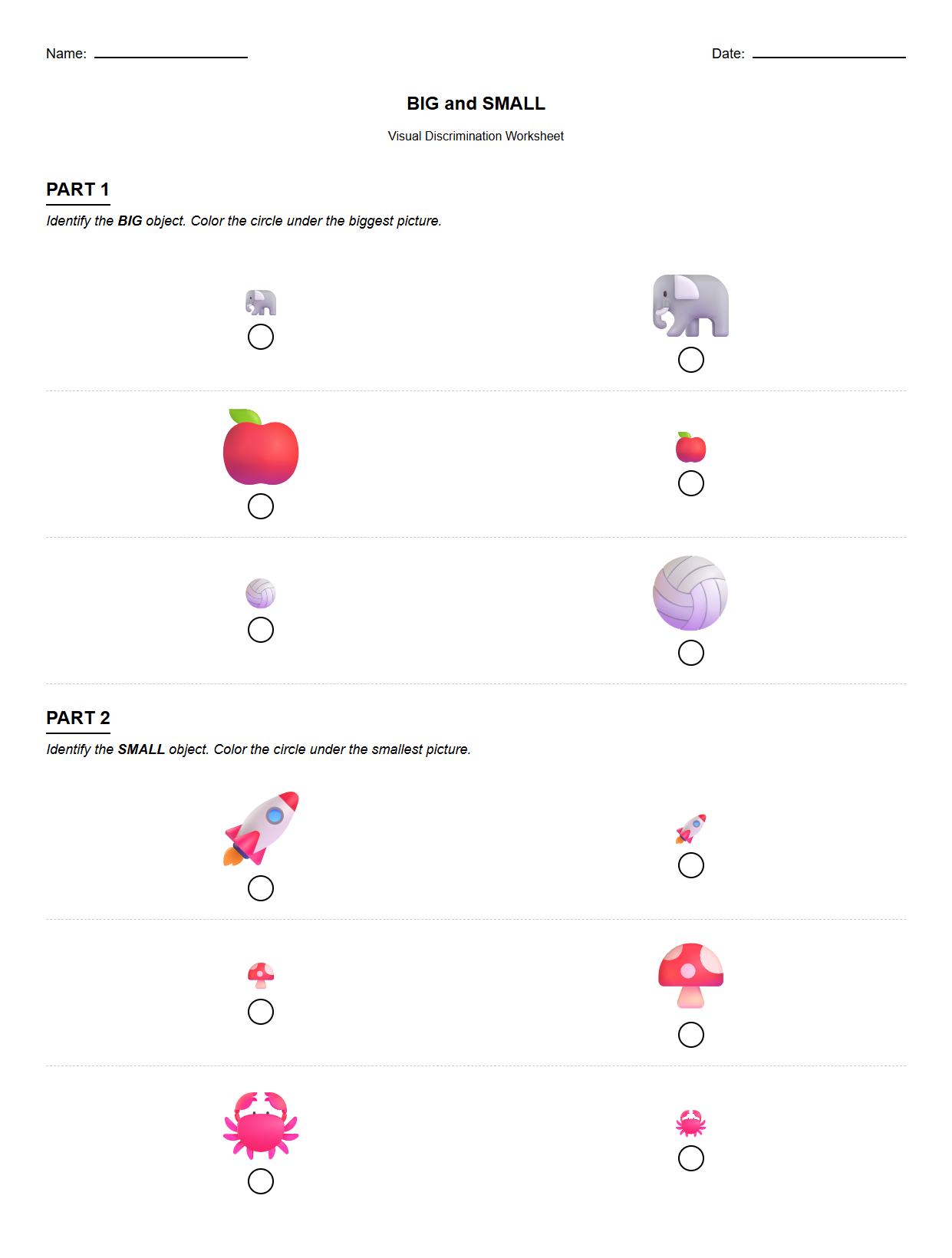
Visual Discrimination Worksheet for Big and Small Object Identification

Download PDF     Pin it

Size Comparison Activity Sheet with Animal Images
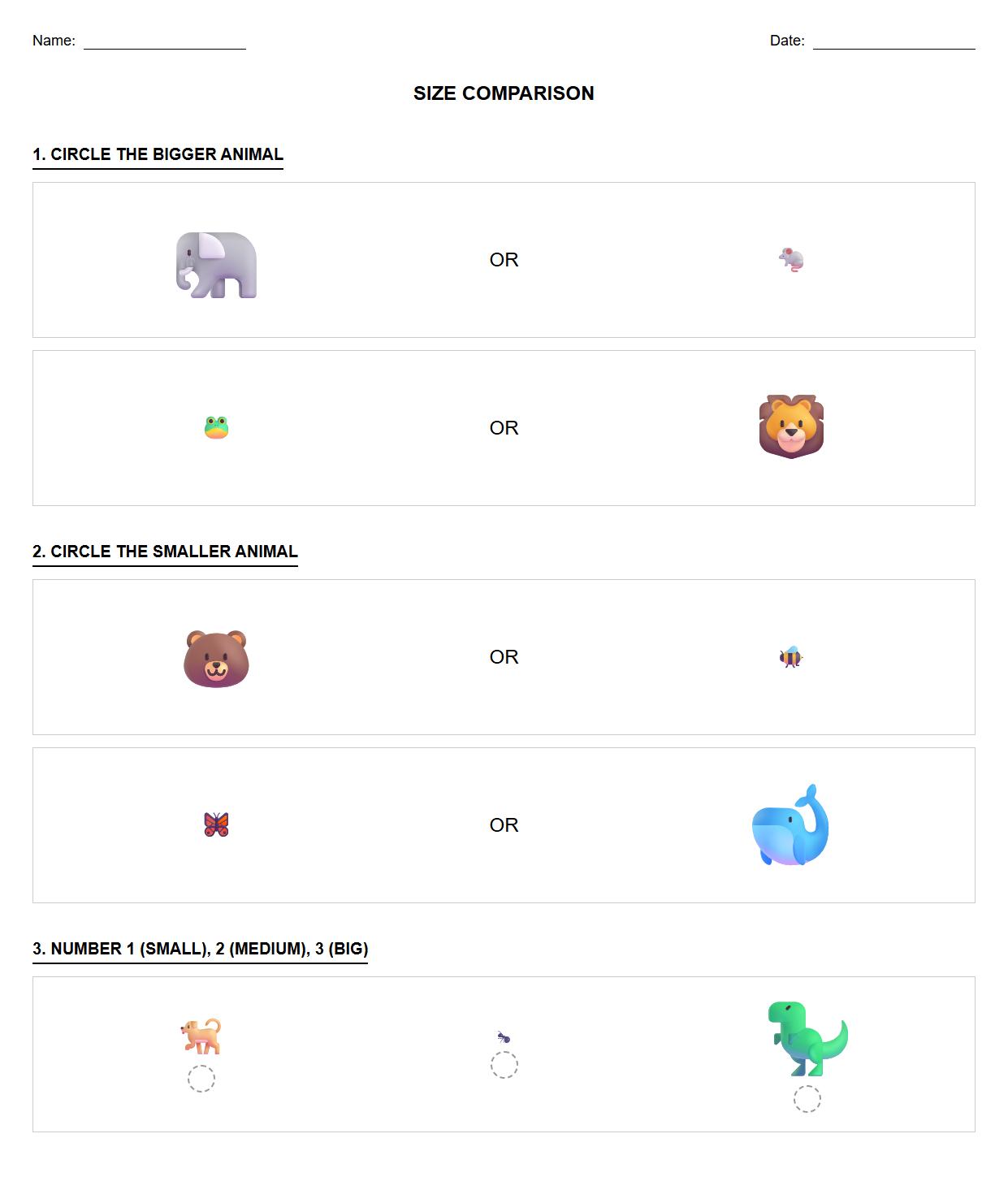
Size Comparison Activity Sheet with Animal Images

Download PDF     Pin it

Sorting Task Worksheet for Large and Small Shapes
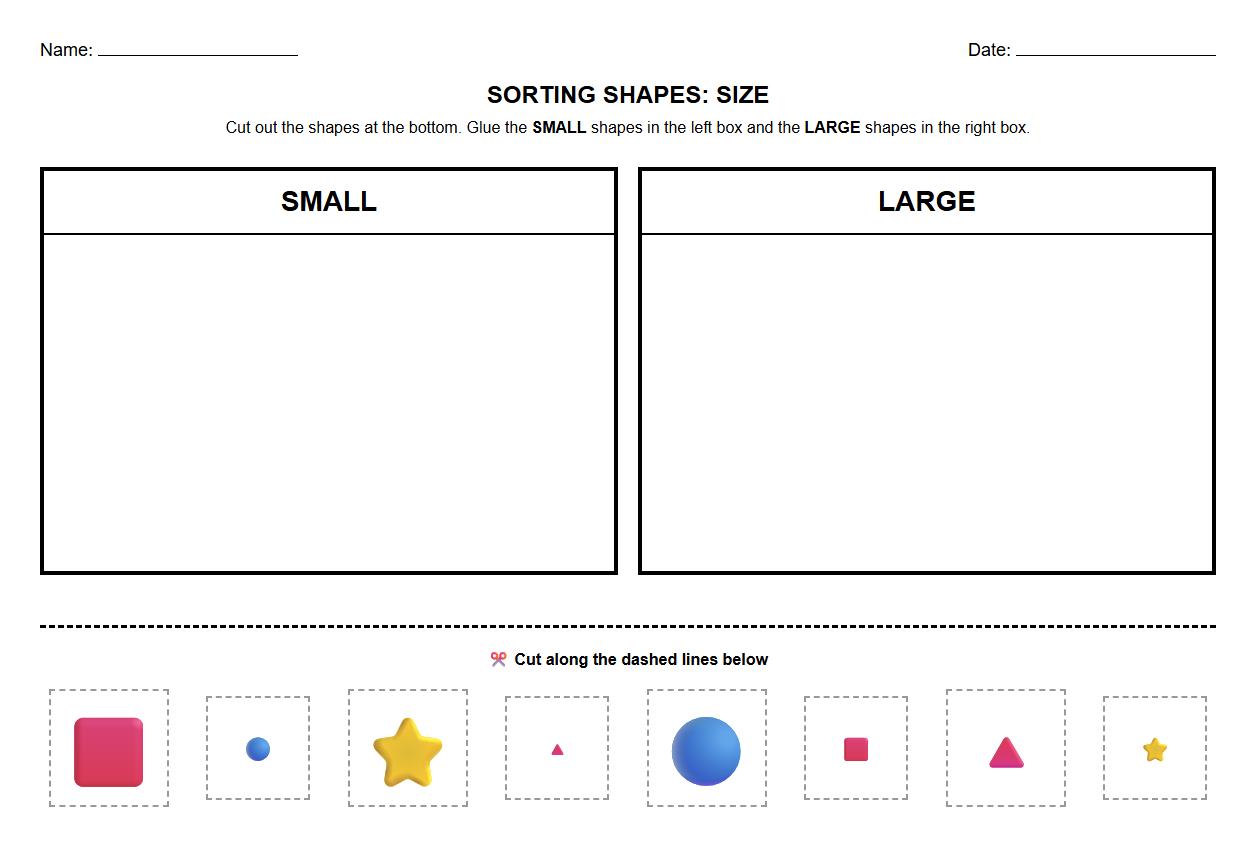
Sorting Task Worksheet for Large and Small Shapes

Download PDF     Pin it

Picture-Based Size Differentiation Exercise for Early Learners
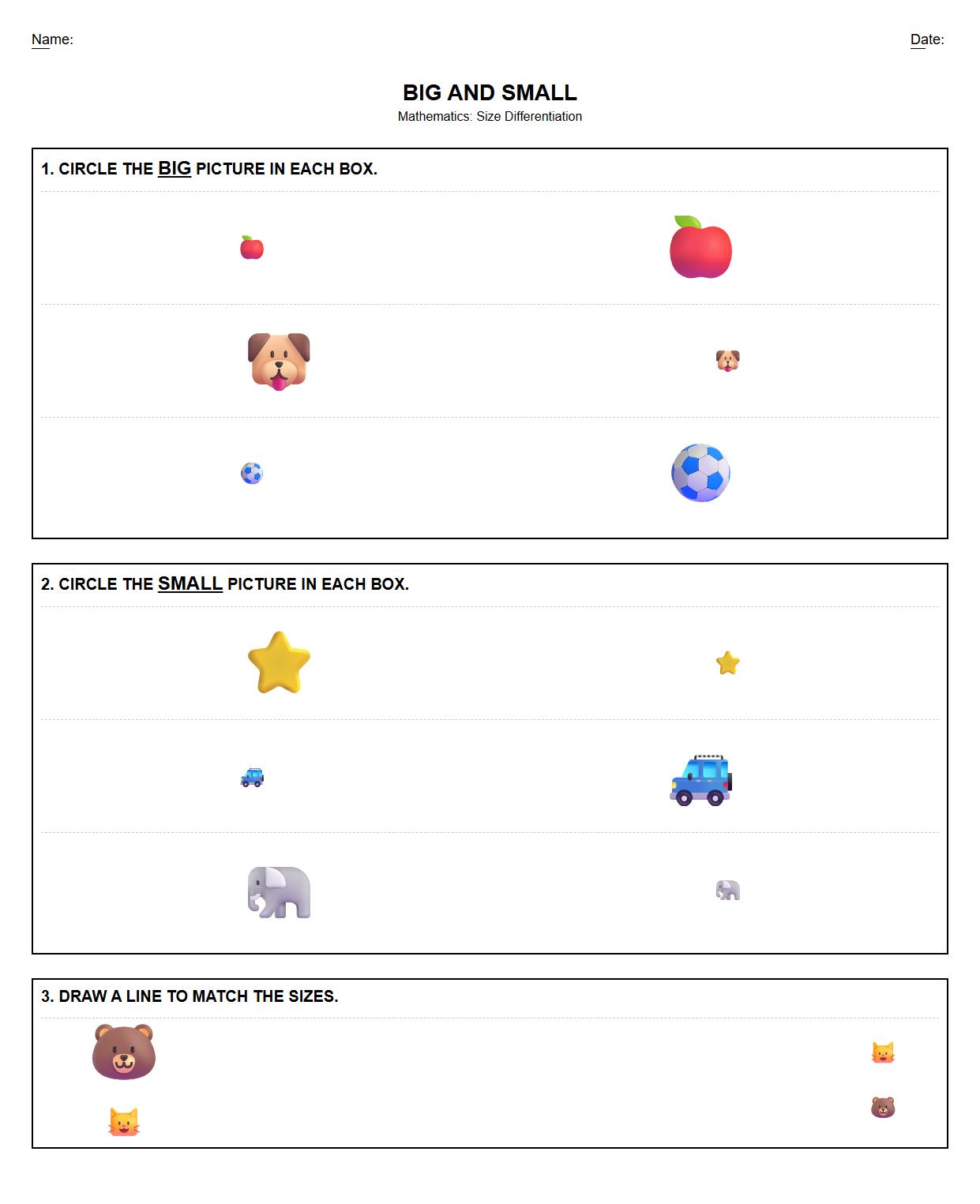
Picture-Based Size Differentiation Exercise for Early Learners

Download PDF     Pin it

Object Matching Worksheet for Contrasting Big and Small Items
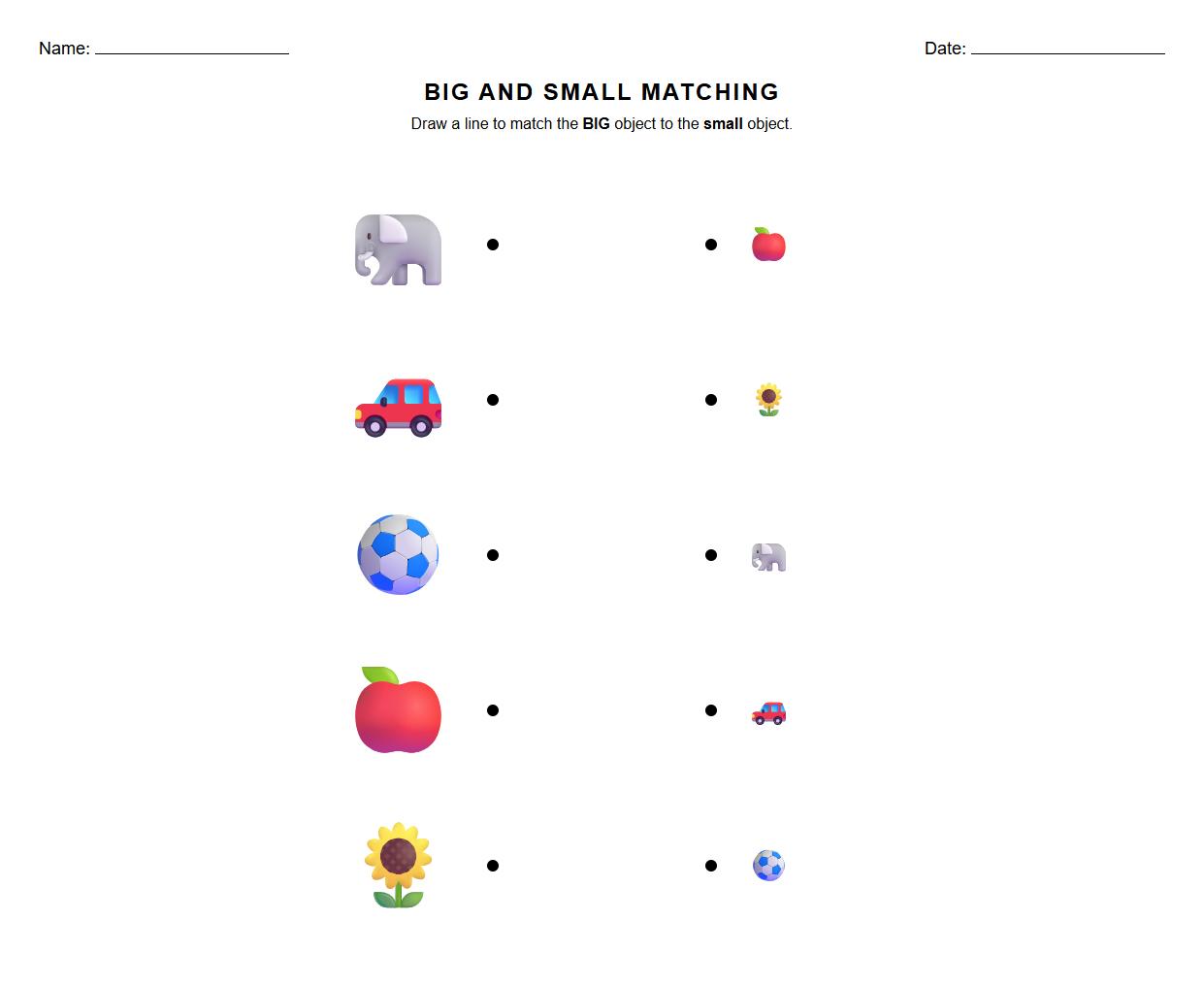
Object Matching Worksheet for Contrasting Big and Small Items

Download PDF     Pin it

Hands-on Classification Page for Big Versus Small Toys
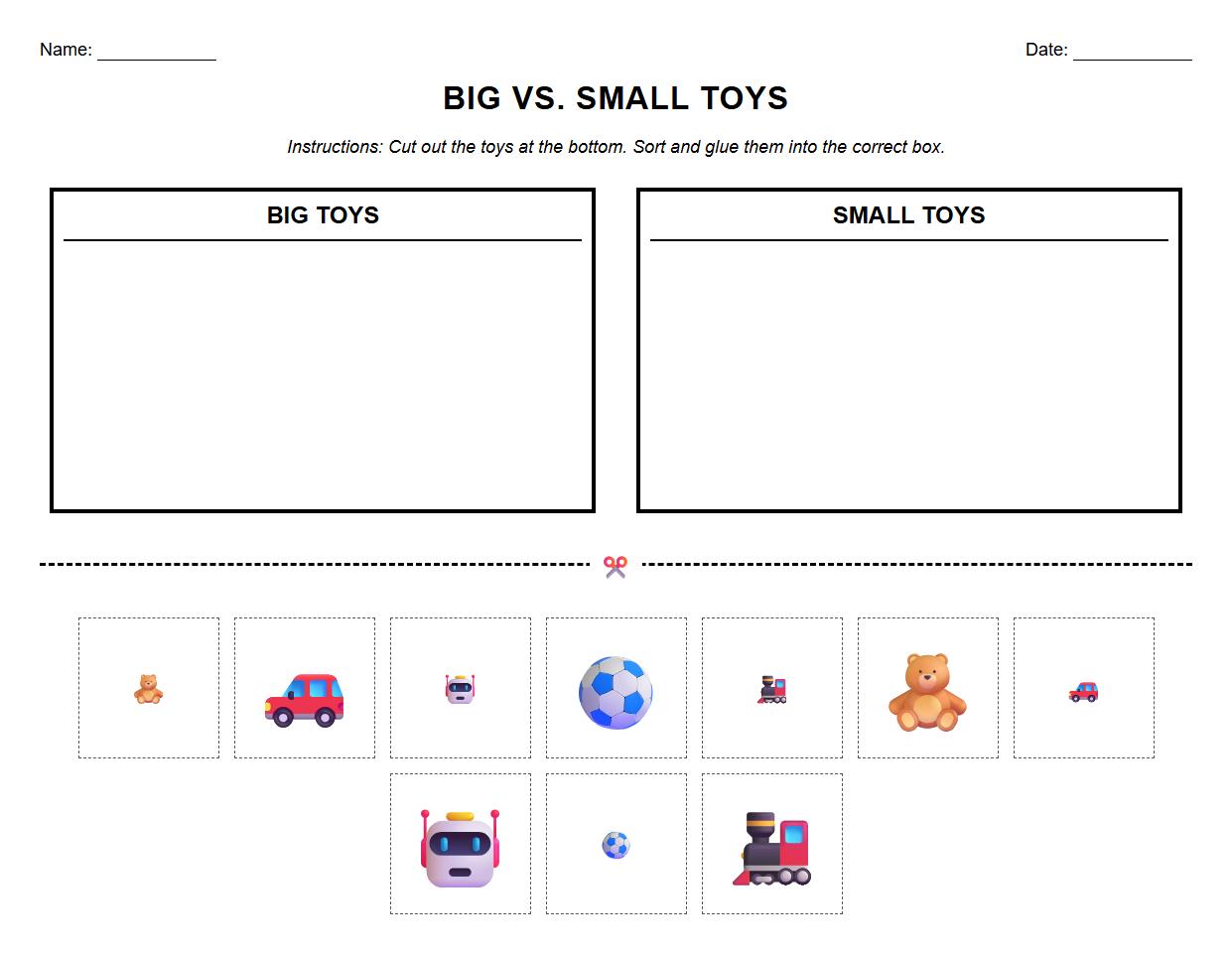
Hands-on Classification Page for Big Versus Small Toys

Download PDF     Pin it

Graphic Organizer Worksheet Using Size Attributes
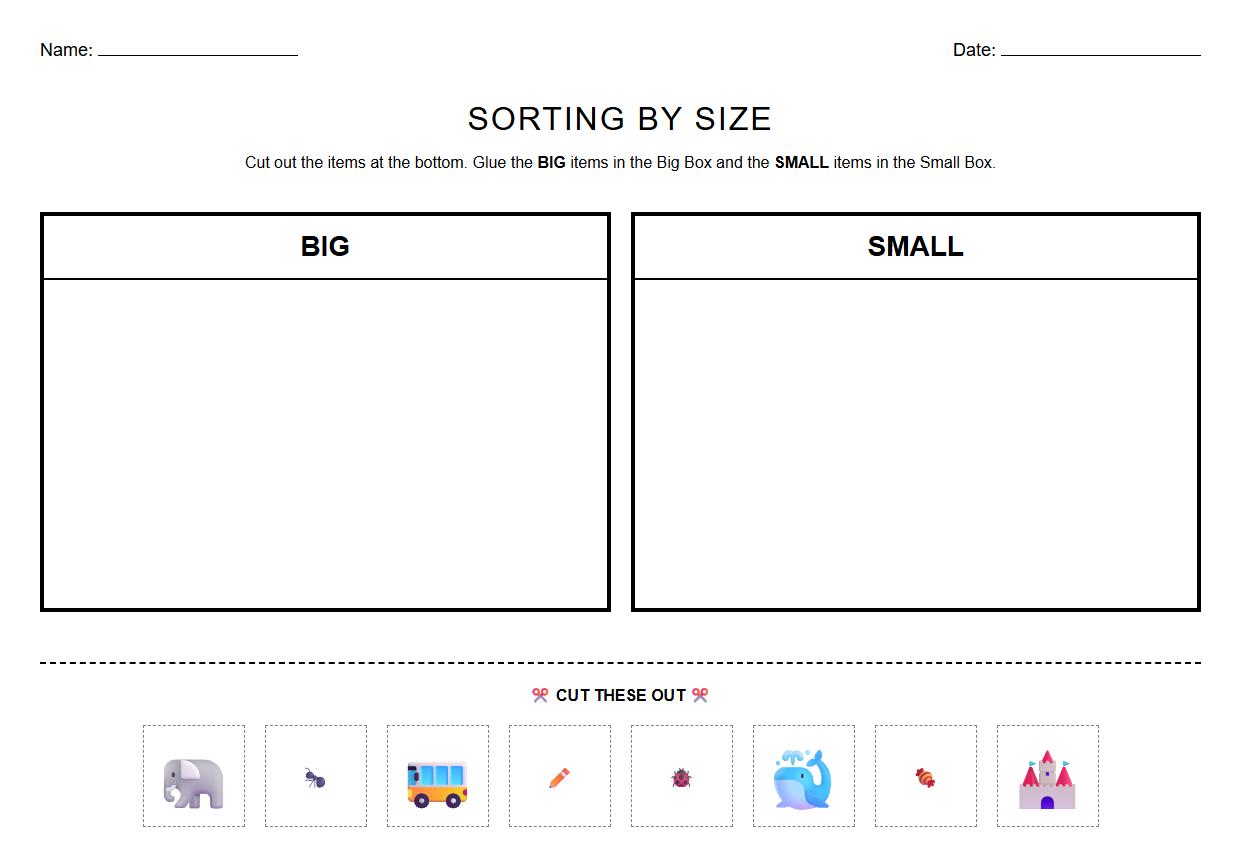
Graphic Organizer Worksheet Using Size Attributes

Download PDF     Pin it

Phonics and Vocabulary Integration Worksheet with Size Pictures
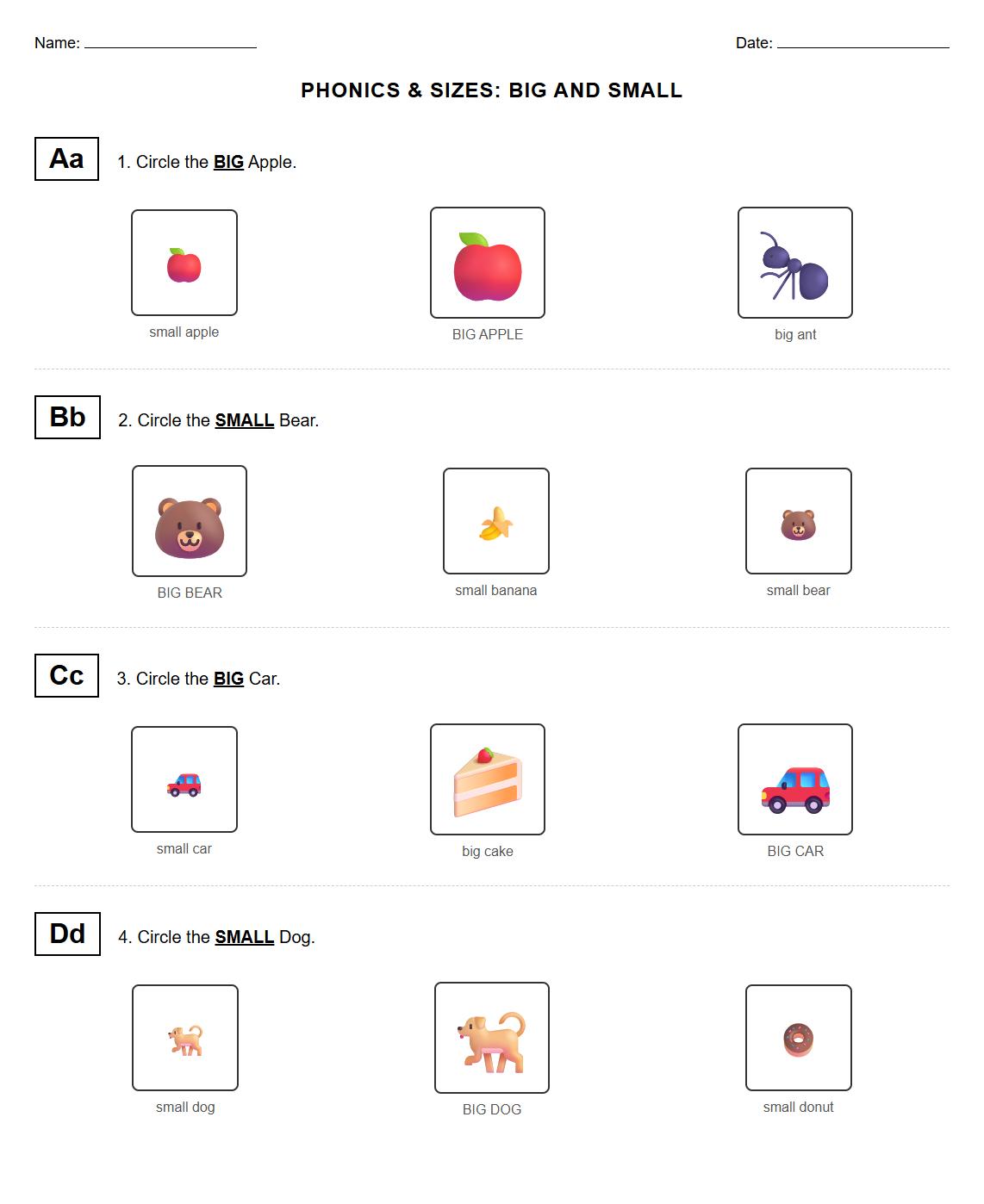
Phonics and Vocabulary Integration Worksheet with Size Pictures

Download PDF     Pin it

Cut and Paste Worksheet for Big and Small Object Grouping
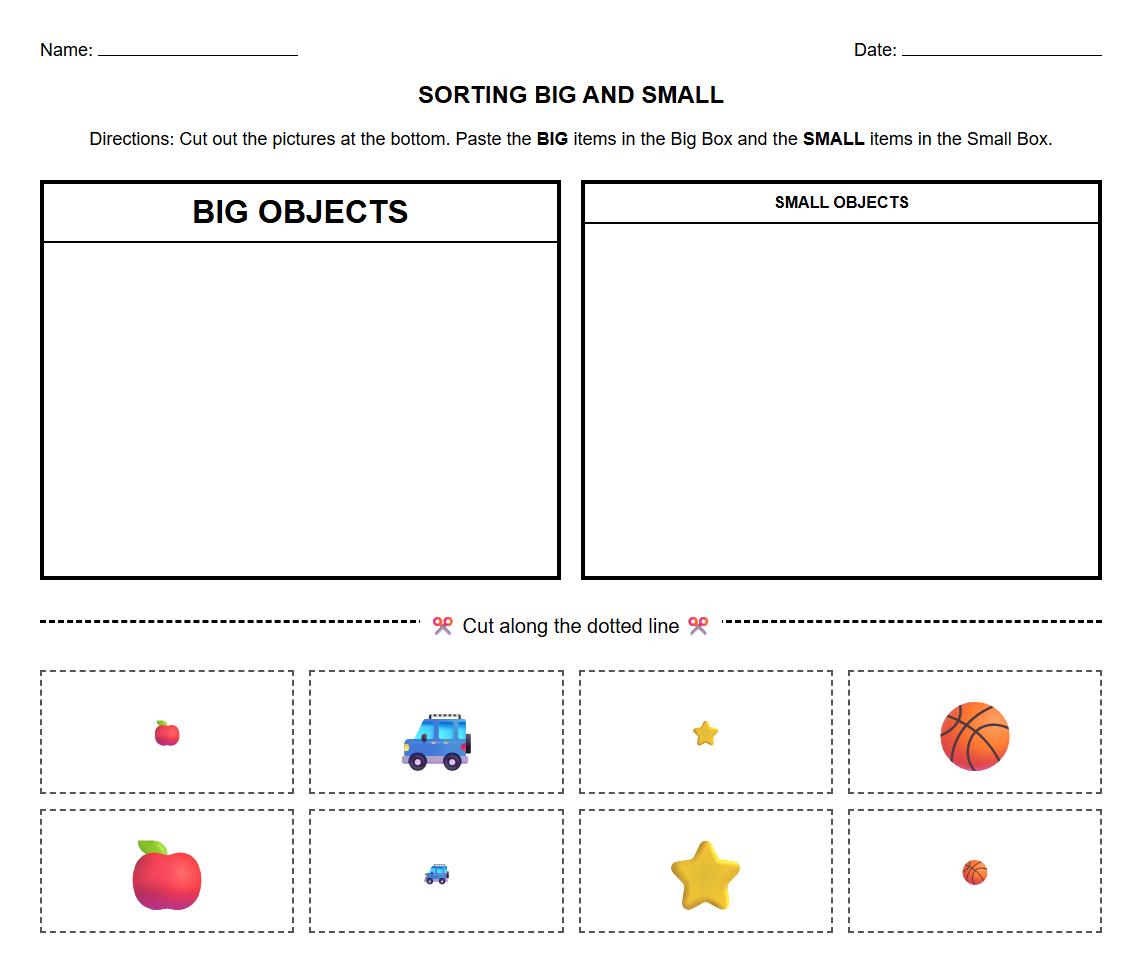
Cut and Paste Worksheet for Big and Small Object Grouping

Download PDF     Pin it

Spatial Reasoning Worksheet Featuring Big and Small Food Items
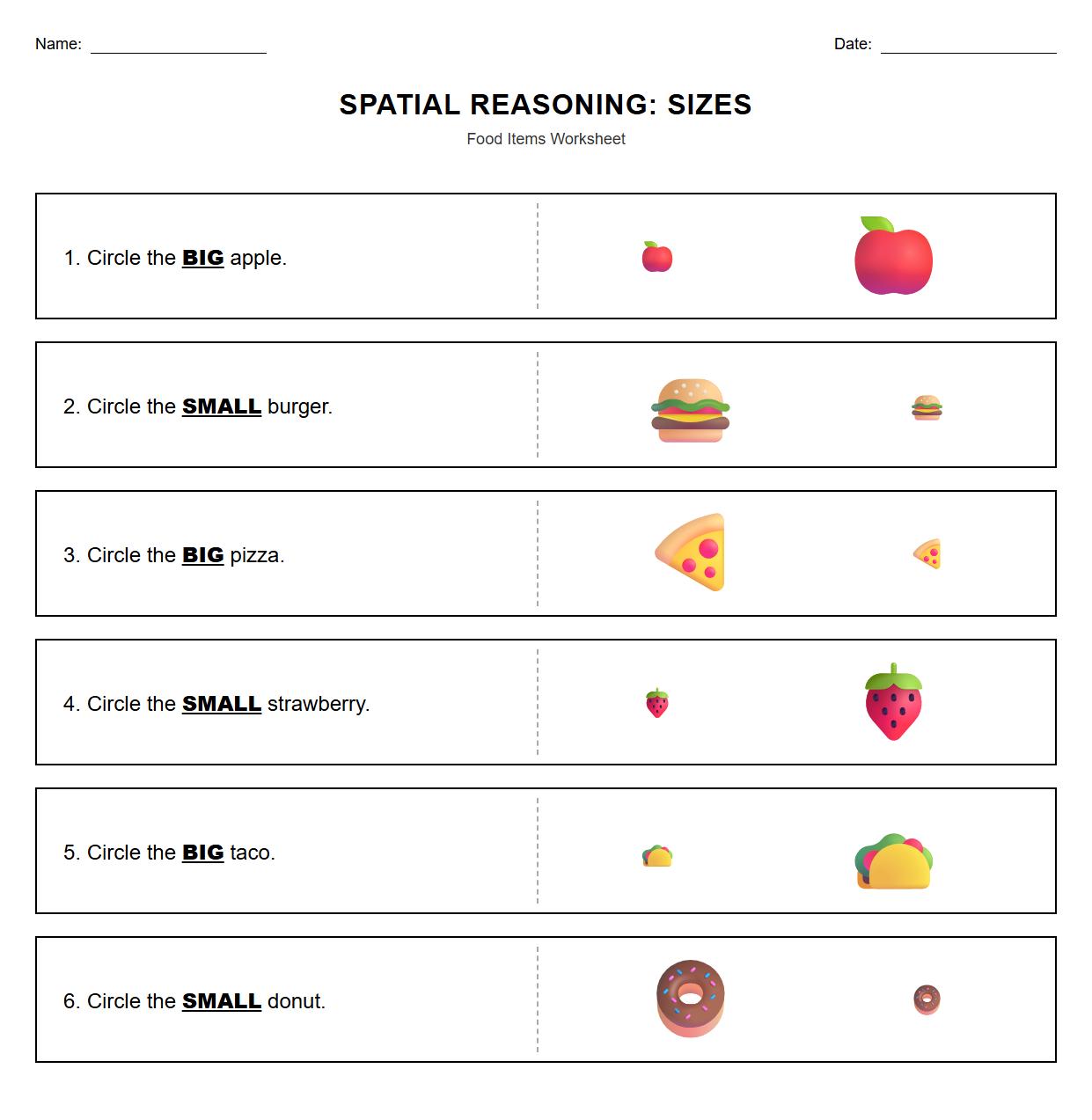
Spatial Reasoning Worksheet Featuring Big and Small Food Items

Download PDF     Pin it

Identifying the Biggest Object

Ask the children, "Which picture shows the biggest object?" This helps them recognize and compare sizes. Use bright and clear images to make the task engaging. Encourage them to explain their choice to boost verbal skills. Explore more on comparing object attributes.

Circling the Smallest Item

Have children circle the smallest item in each row to practice visual discrimination. This activity enhances attention to detail and size comparison abilities. Provide colorful crayons to make the task fun and interactive. Praise their efforts to build confidence. For more comparison practice, visit more and less comparison worksheets.

Comparing Animal Sizes

Pose the question, "Which animal is larger, the elephant or the cat?" This encourages understanding of size differences in the animal kingdom. Use pictures of familiar animals to make it relatable. Discuss why some animals are bigger, fostering curiosity. Check out worksheets on heavy and light objects for further learning.

Pointing to the Smallest Ball

Ask children to point to the smallest ball on the page, enhancing their ability to identify size variations in similar objects. This activity supports visual tracking and focus. Use balls of different colors and sizes to add interest. Reinforce learning with positive feedback. Consider pattern and color worksheets for added practice.

Finding the Big Apple

Guide children in finding the big apple among the small apples to develop comparison skills. This task promotes understanding of relative sizes. Use clear images and simple instructions for easy comprehension. Encourage them to verbalize their choices. Try sorting and categorization worksheets for similar activities.

Identifying the Biggest Shape

Ask, "Which shape is the biggest in this group?" to teach shape recognition alongside size comparison. Use basic geometric shapes to support early math skills. This activity helps children differentiate via visual clues. Provide examples and model answers. Integrate with number writing and recognition worksheets.

Choosing the Smaller Item

Encourage children to choose the picture where the item is smaller than the rest in a group. This promotes critical thinking and observation skills. Use everyday objects for better understanding. Celebrate correct guesses to motivate participation. Learn with number recognition activities.

Sticker Placement on Larger Objects

Let children place a sticker on the larger object in each pair to combine motor skills with size recognition. This interactive task makes learning tactile and enjoyable. Use colorful stickers to increase engagement. Offer guidance as needed for accuracy. For visual learning, see visual aid worksheets.

Drawing Lines Between Sizes

Have children draw a line connecting each big item with its small version, reinforcing size relationships. This activity improves hand-eye coordination and categorization skills. Use simple, familiar images for clarity. Encourage neat and careful work. More matching activities at money and coin identification worksheets.

Spotting the Smallest Toy Car

Ask, "Which picture has the smallest toy car?" to practice detailed observation. Use a series of car images varying in size to make the activity fun. Highlight differences gently and encourage discussion. Recognize all attempts to build confidence. For time-related comparisons, view clock reading worksheets.


More in Mathematics Category


About the author. Nylen Smith is a dedicated educator and cofounder of KWorksheet.com, a popular platform specializing in high-quality kindergarten worksheets and printable activities.

Disclaimer. The information provided in this document is for general informational purposes and/or document sample only and is not guaranteed to be factually right or complete. Please report to us via contact-us page if you find and error in this page, thanks.

Comments

No comment yet