Kindergarten Counting and Number Formation 0 to 20 Worksheet

📅 Apr 24, 2025 👤 Nylen Smith

Kindergarten Counting and Number Formation 0 to 20 worksheets help young learners develop essential math skills by practicing number recognition and proper writing techniques. These activities encourage fine motor development and build a strong foundation for early numeracy. Explore the available worksheets to support your child's counting and number formation journey.

Counting Objects and Tracing Numbers 0 to 20 Worksheet
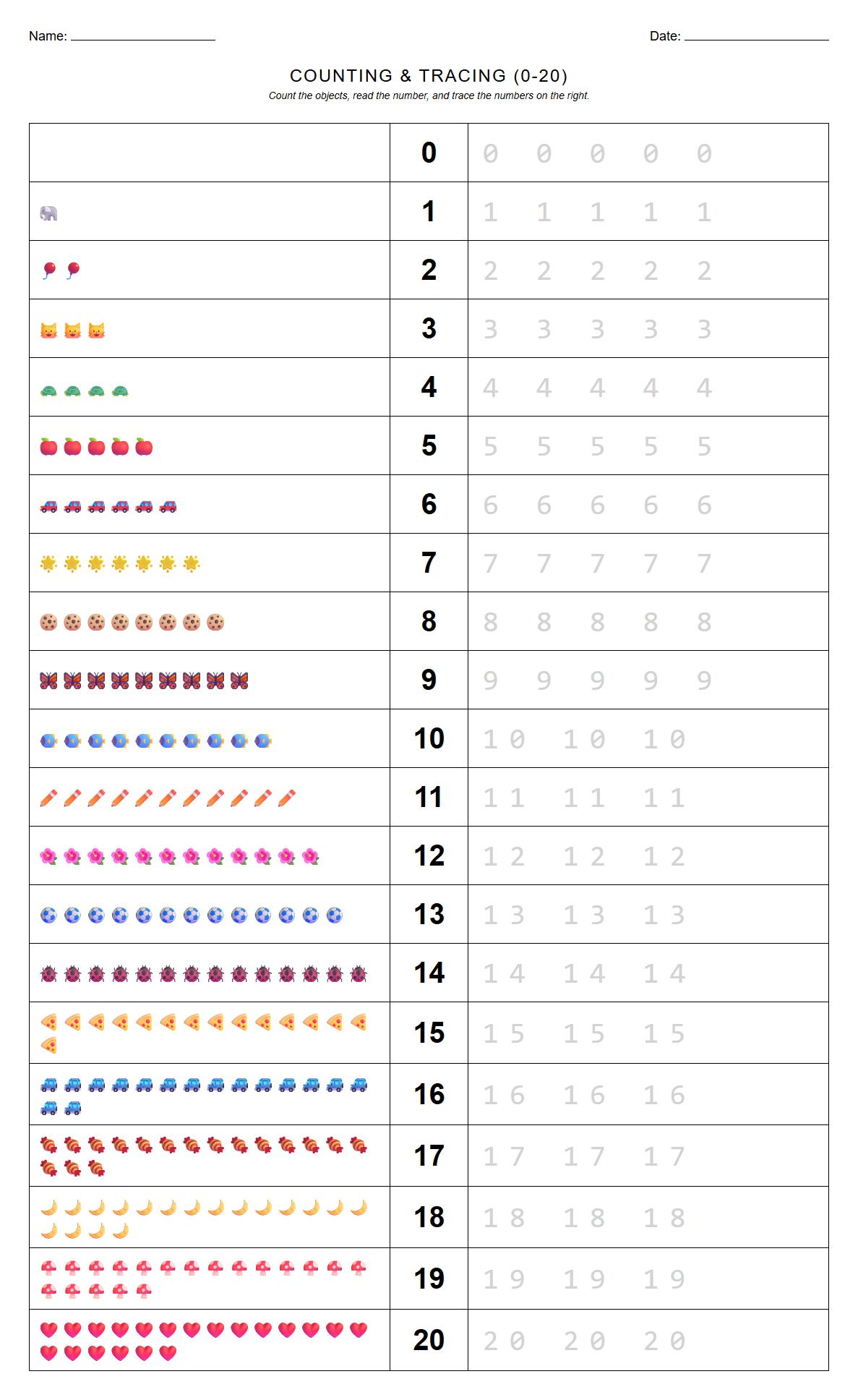
Counting Objects and Tracing Numbers 0 to 20 Worksheet

Download PDF     Pin it

Number Formation with Ten Frames 0 to 20 Worksheet
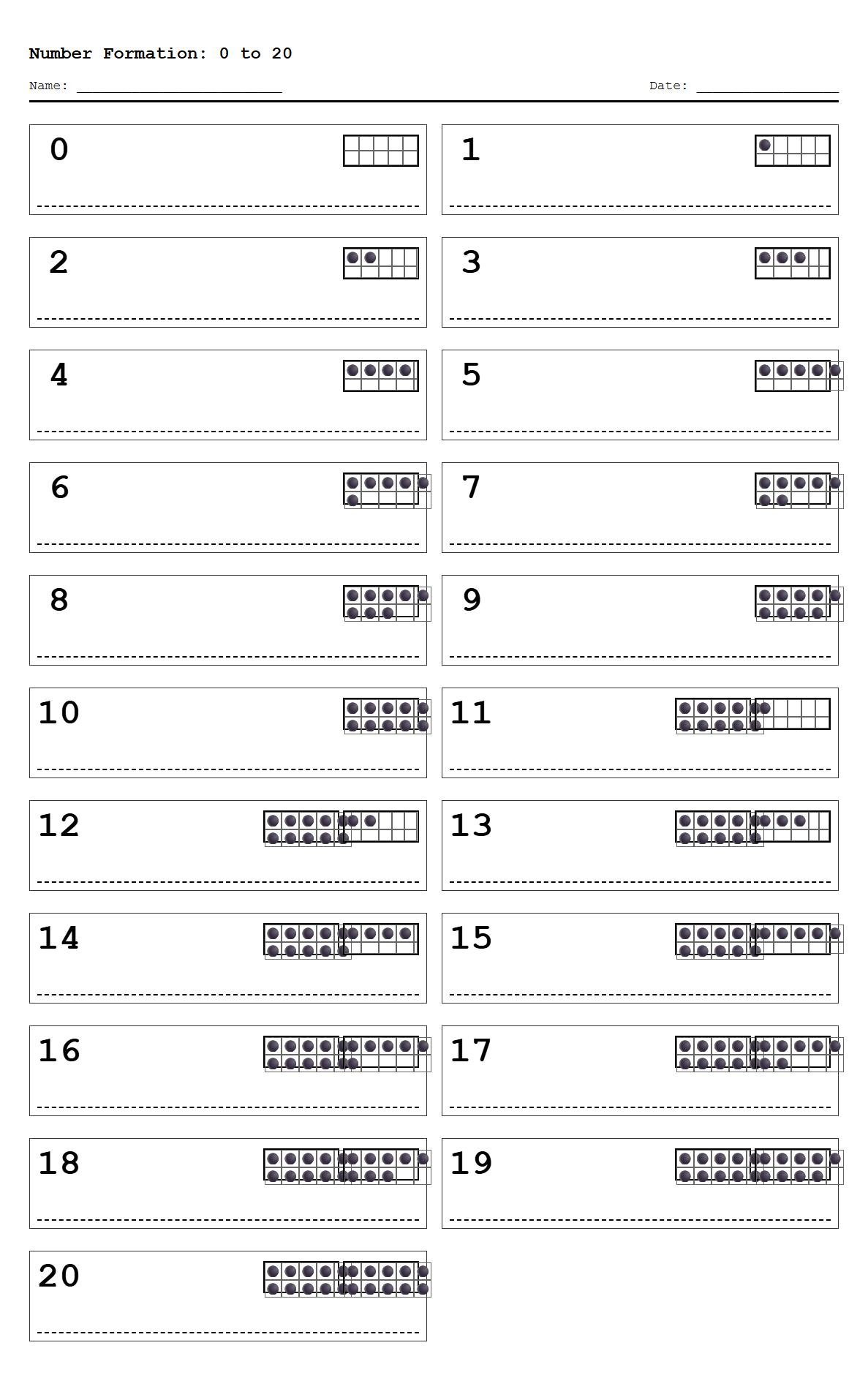
Number Formation with Ten Frames 0 to 20 Worksheet

Download PDF     Pin it

Dot to Dot Number Sequencing 0 to 20 Worksheet
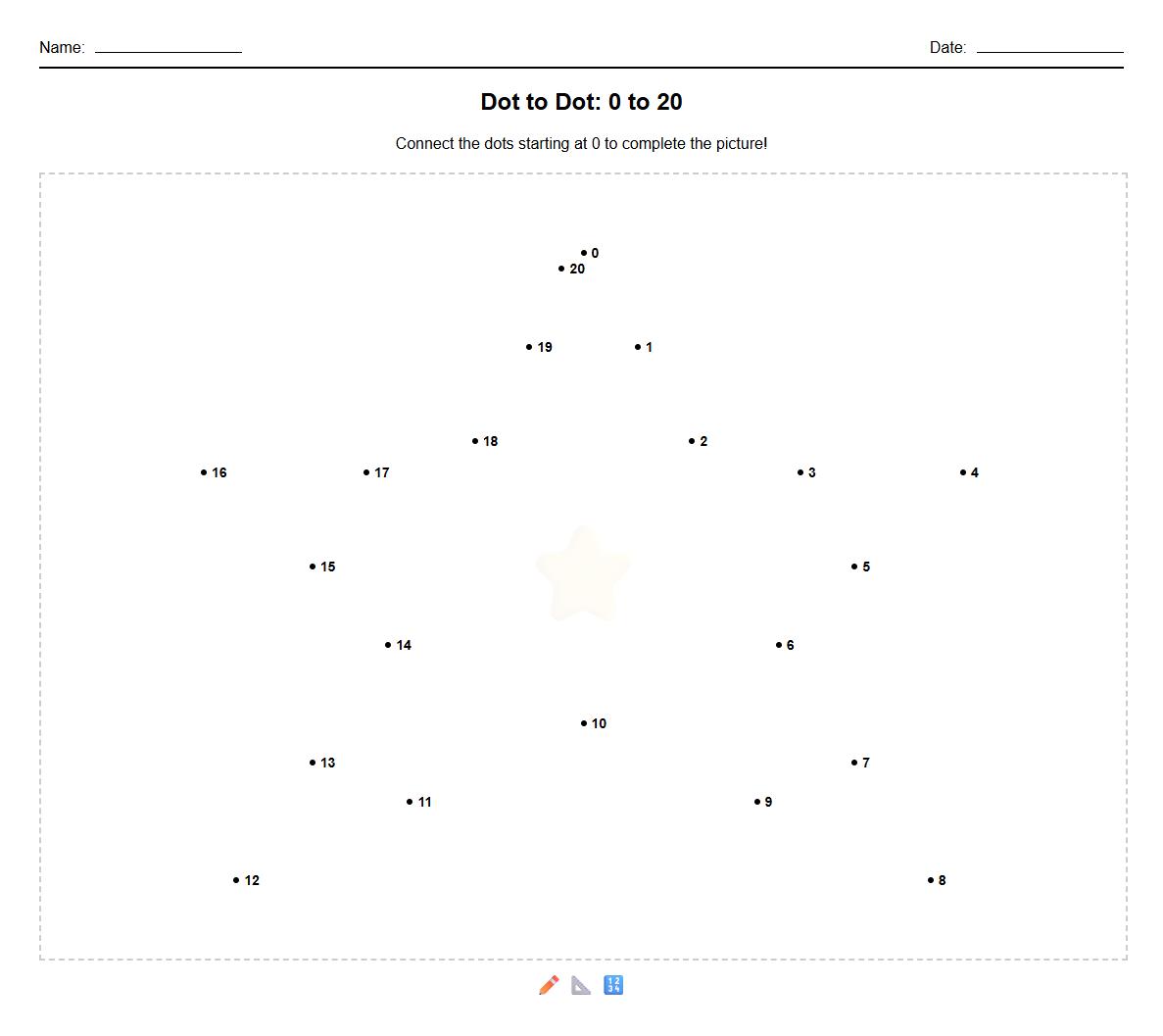
Dot to Dot Number Sequencing 0 to 20 Worksheet

Download PDF     Pin it

Missing Number Fill In 0 to 20 Worksheet
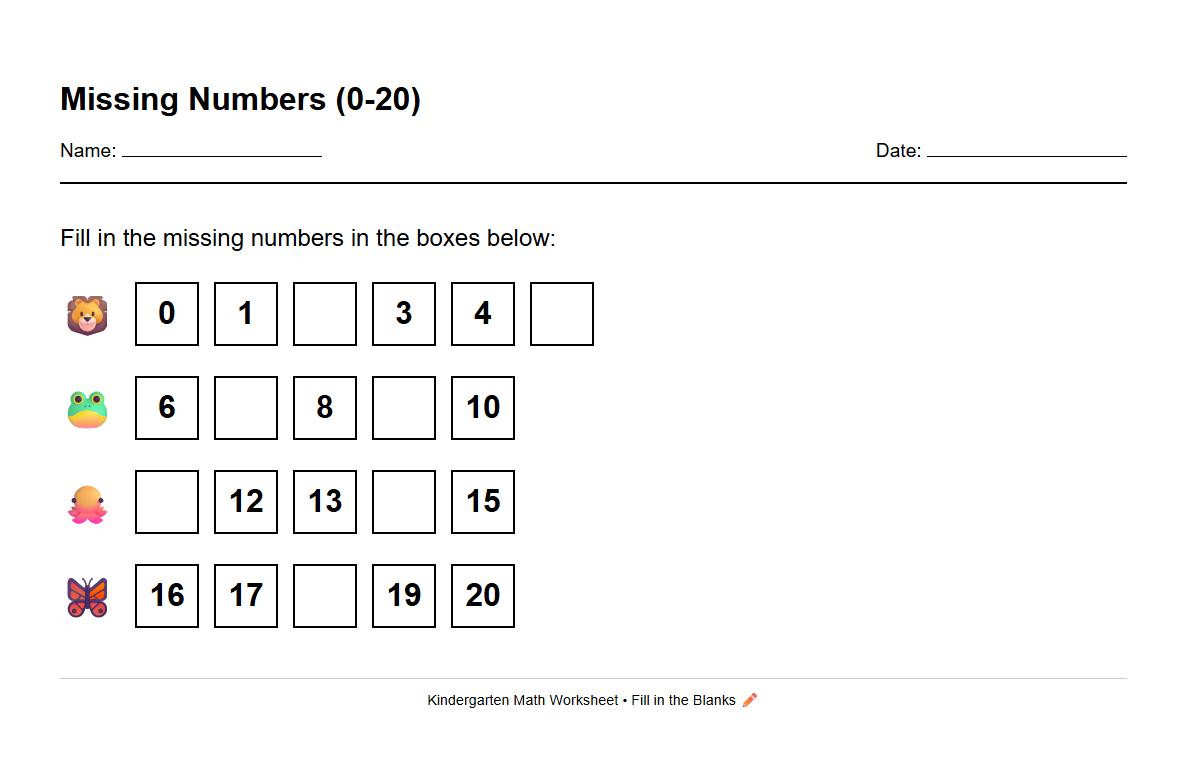
Missing Number Fill In 0 to 20 Worksheet

Download PDF     Pin it

Number Recognition and Coloring 0 to 20 Worksheet
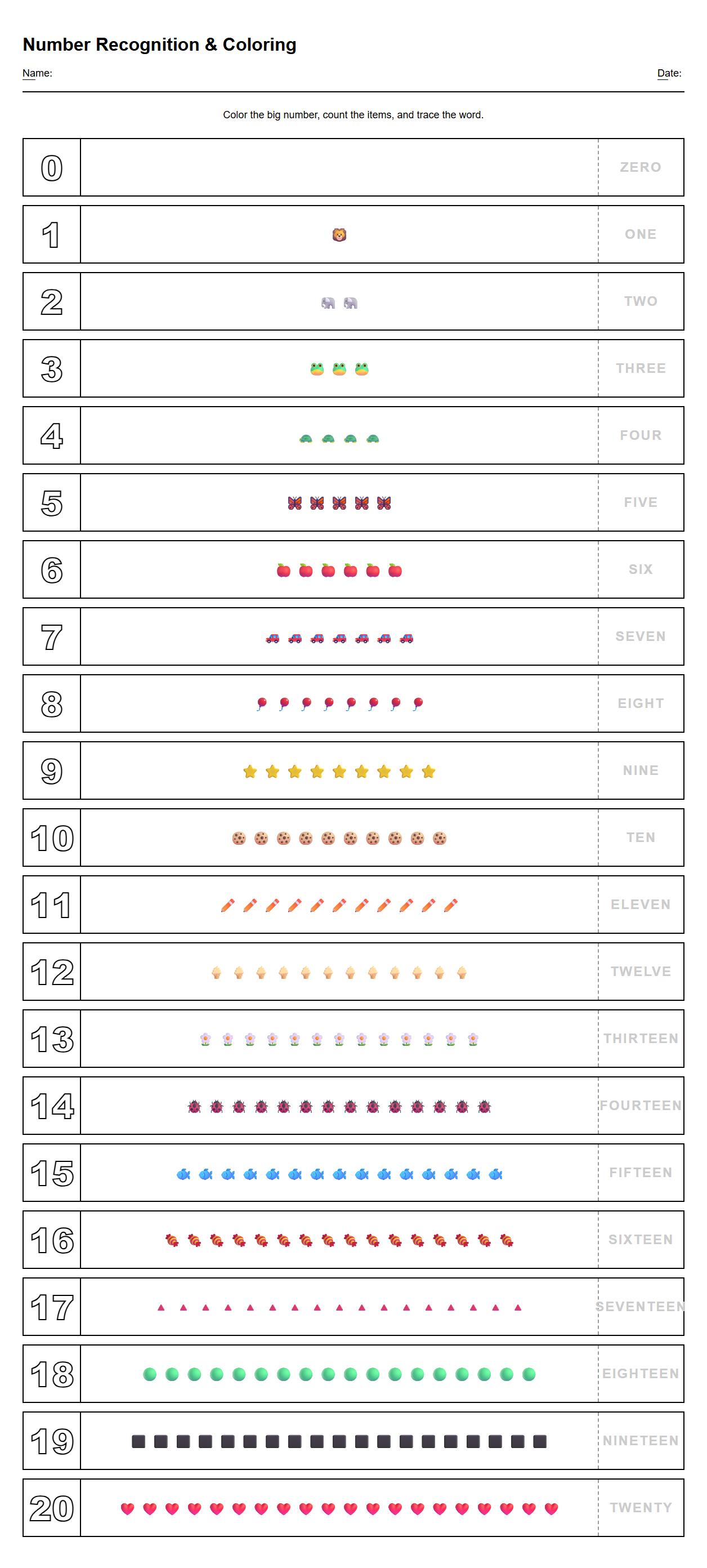
Number Recognition and Coloring 0 to 20 Worksheet

Download PDF     Pin it

Number Line Practice 0 to 20 Worksheet
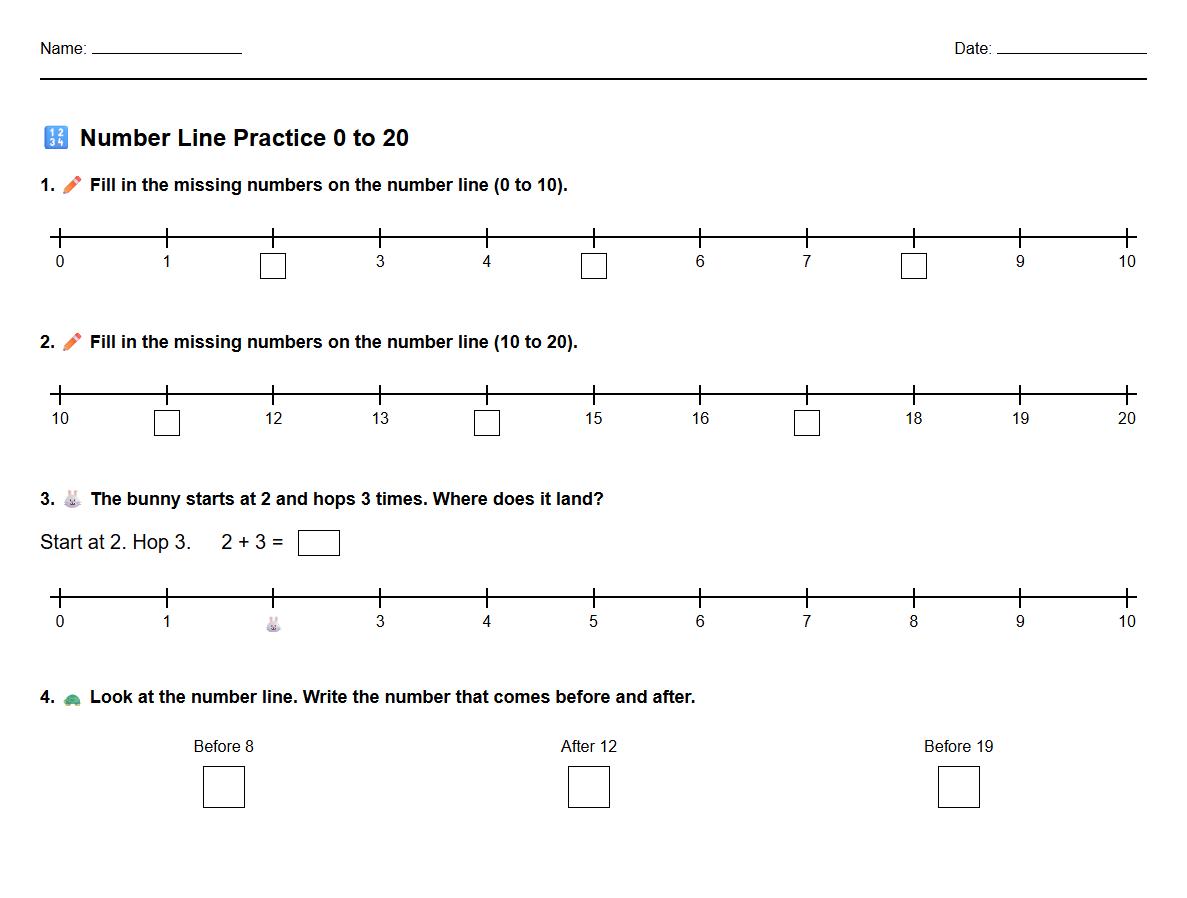
Number Line Practice 0 to 20 Worksheet

Download PDF     Pin it

Count and Write Numerals 0 to 20 Worksheet
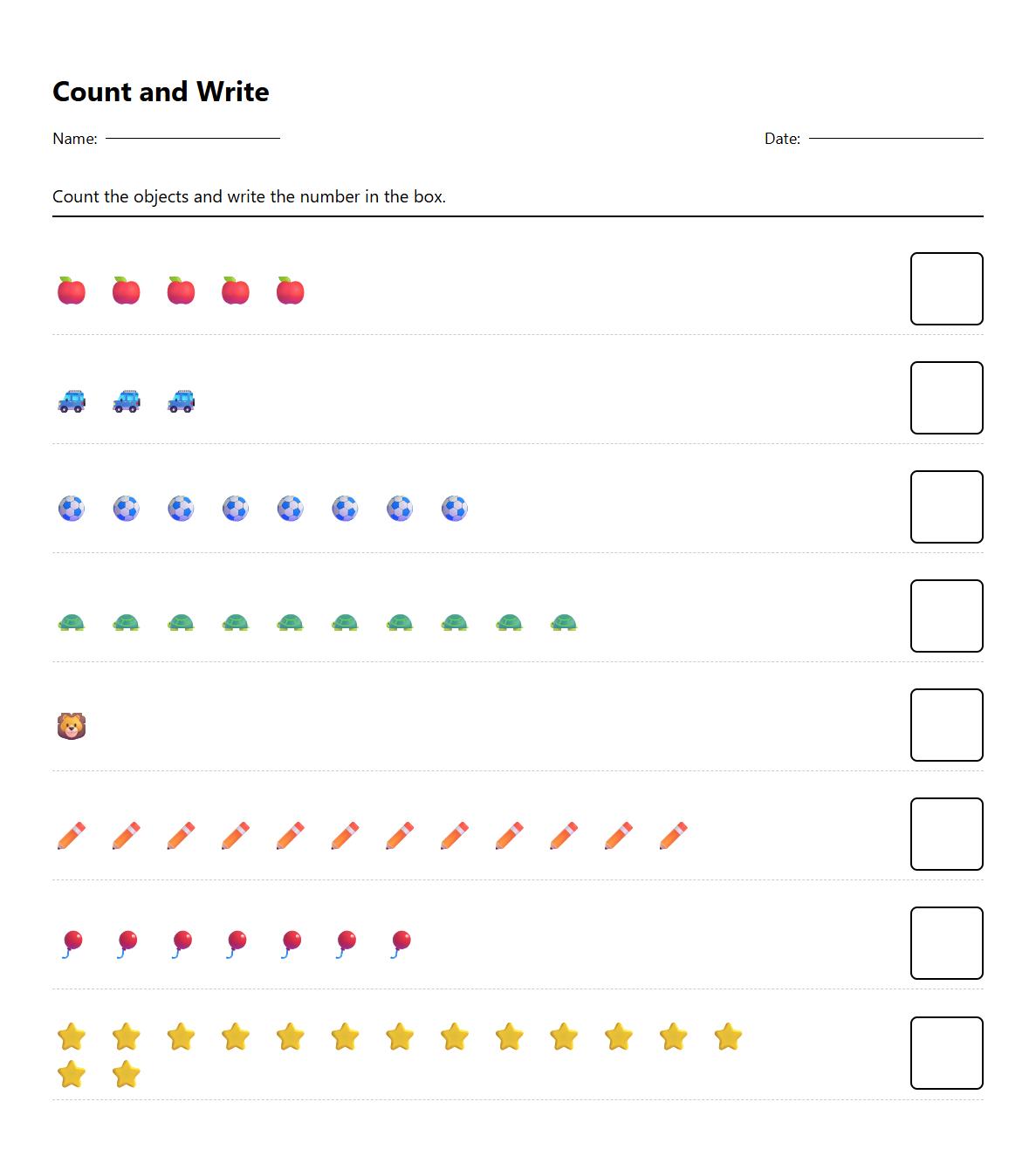
Count and Write Numerals 0 to 20 Worksheet

Download PDF     Pin it

Number Matching with Picture Sets 0 to 20 Worksheet
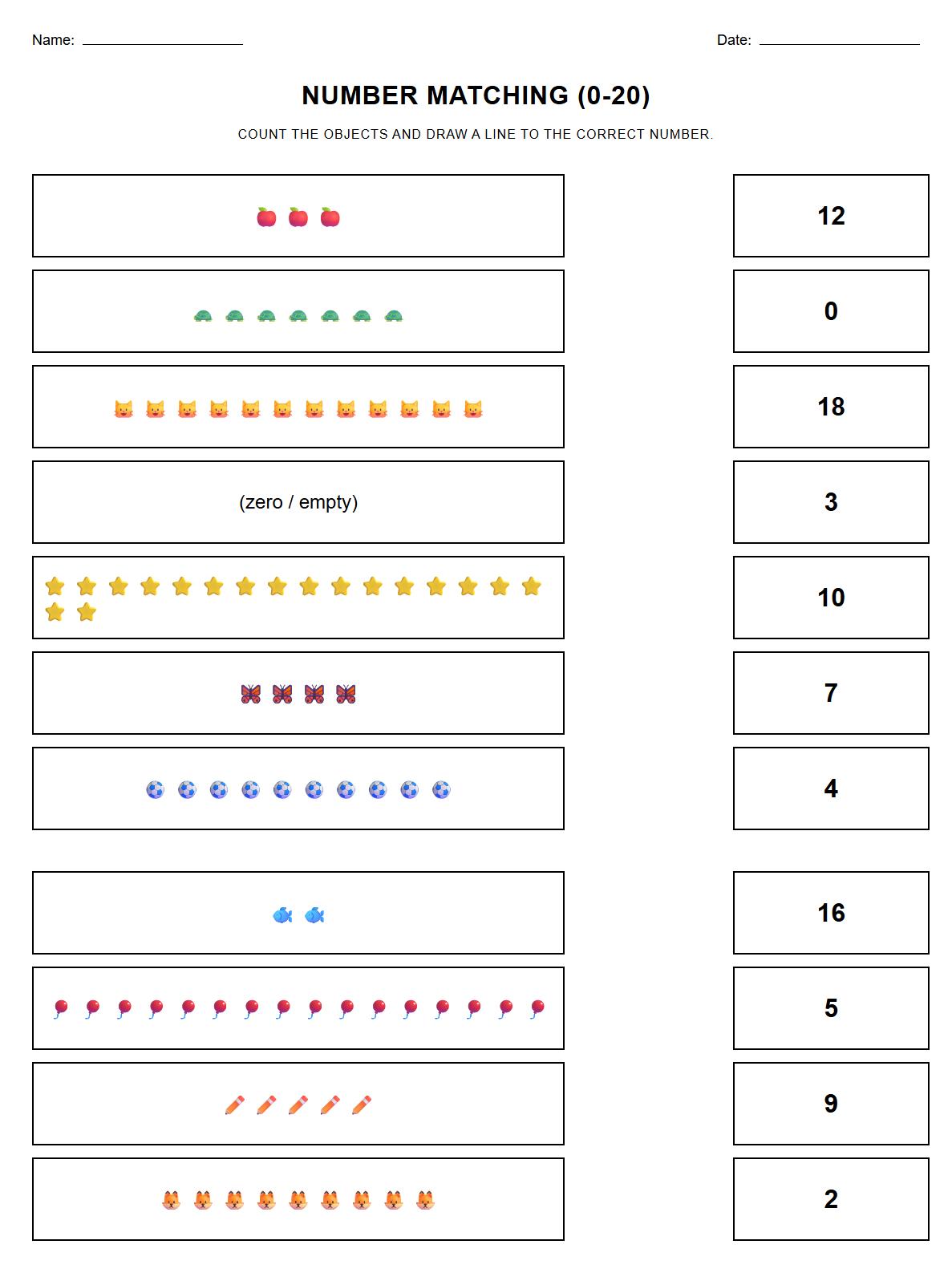
Number Matching with Picture Sets 0 to 20 Worksheet

Download PDF     Pin it

Hands On Manipulatives Number Tracing 0 to 20 Worksheet
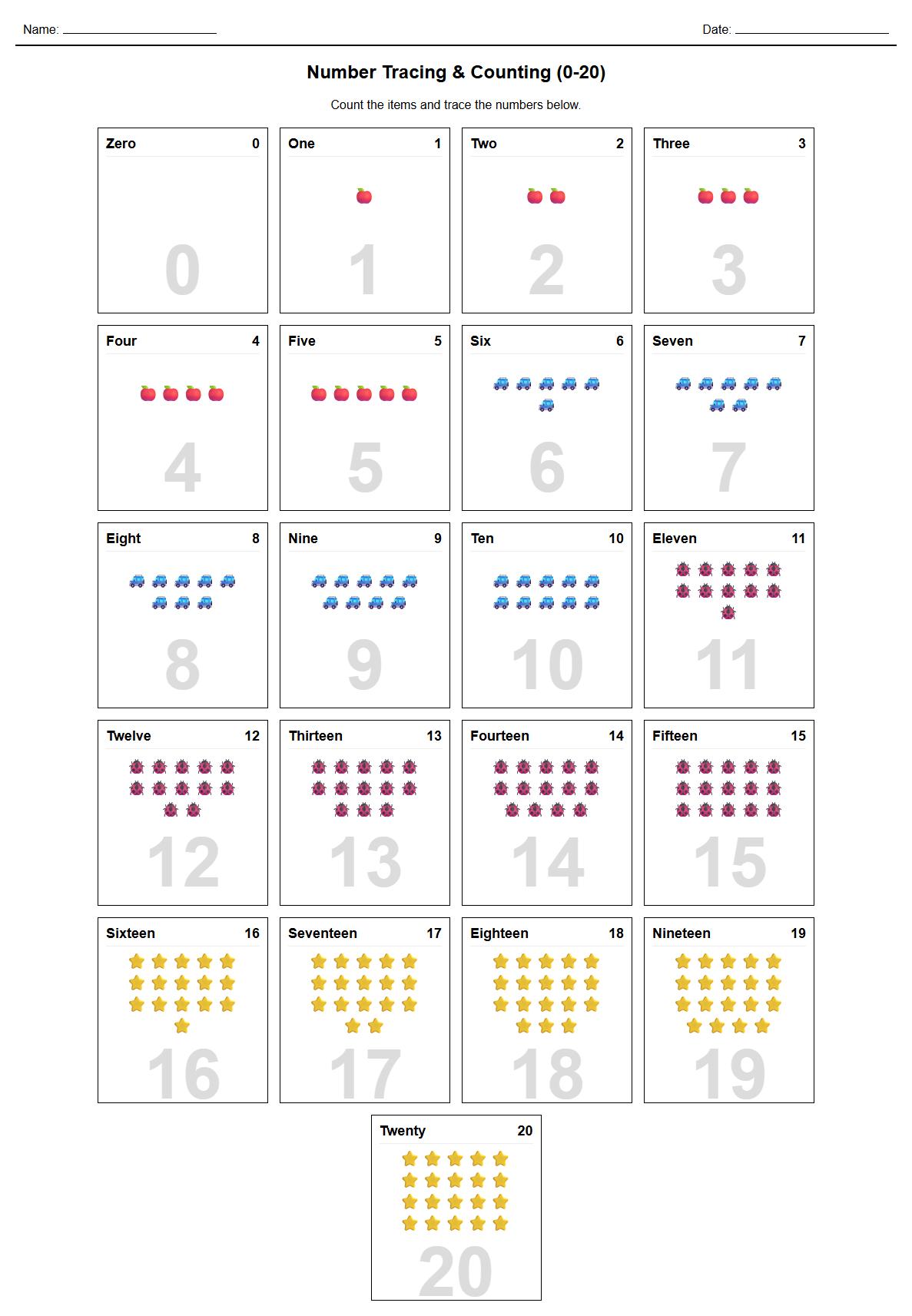
Hands On Manipulatives Number Tracing 0 to 20 Worksheet

Download PDF     Pin it

Tally Marks Counting and Number Formation 0 to 20 Worksheet
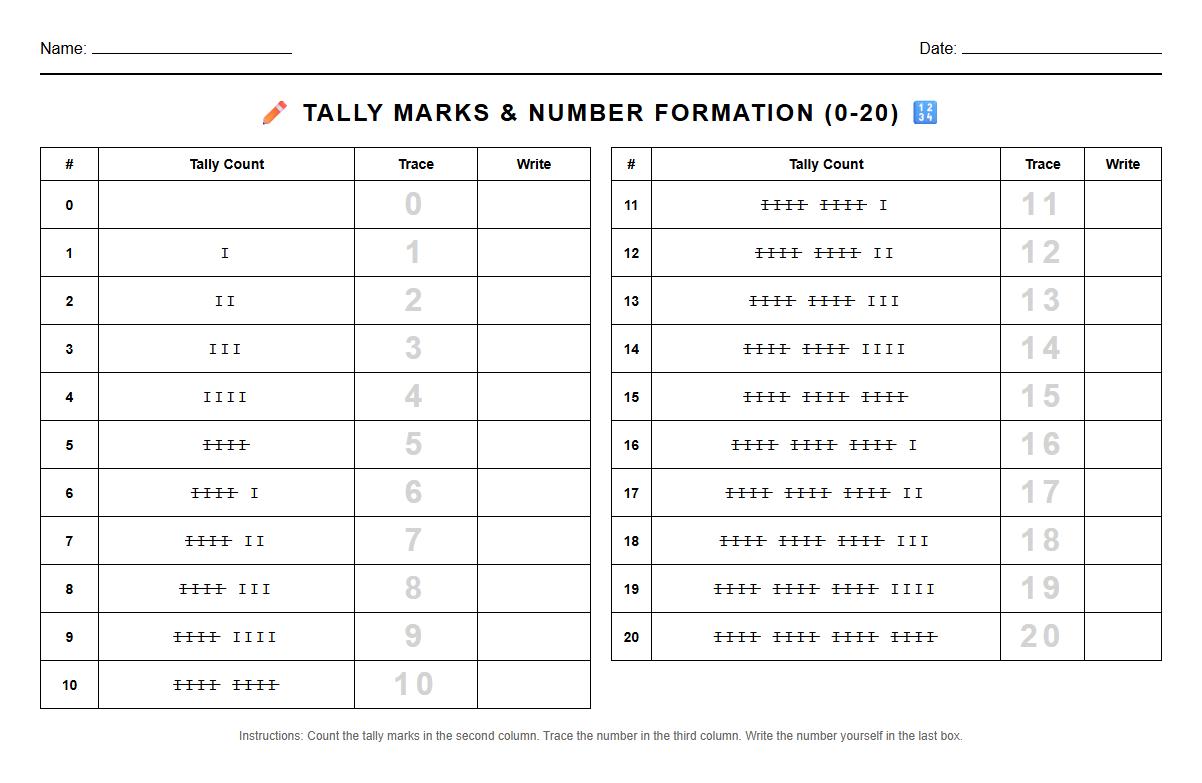
Tally Marks Counting and Number Formation 0 to 20 Worksheet

Download PDF     Pin it

Counting Aloud from Zero to Twenty

Encourage children to count aloud from zero to twenty. This activity helps develop number recognition and verbal counting skills. Counting aloud boosts confidence in young learners by making numbers familiar and fun. Practice regularly for better retention.

Identifying Numbers Before and After

Ask your child, "Which number comes after eleven?" to reinforce understanding of numerical order. Similarly, prompt them to write the number that comes before sixteen. These exercises build early math skills by teaching sequencing and number relationships.

Number Identification and Matching

Have children circle the number eighteen on their worksheet to sharpen number recognition. Drawing ten dots next to the number ten strengthens counting and fine motor skills. Matching groups of objects to the correct number enhances counting accuracy and visual discrimination.

Writing and Tracing Numbers

Guide children to trace the number four to practice proper number formation. Writing and tracing numbers improves handwriting and reinforces memory. Ensuring correct formation at this stage sets a strong foundation for future math learning.

Counting and Writing Quantities

Ask, "How many apples do you see?" and have the child write the corresponding number. This connects counting skills to real-world quantities and vocabulary. It also encourages observation and understanding of numerals representing amounts. You can further reinforce this with a counting and graphing worksheet.

Completing Number Sequences

Fill in the missing numbers between five and nine to practice number sequencing. This activity develops logic and helps children recognize patterns in numbers. Missing number exercises support mental math and problem-solving abilities.

Coloring Even Numbers

Have the children color all the even numbers from zero to twenty on the worksheet. This activity highlights the concept of even numbers and differentiates them visually. Coloring also makes learning interactive and enjoyable, encouraging attention to number properties.


More in Mathematics Category


About the author. Nylen Smith is a dedicated educator and cofounder of KWorksheet.com, a popular platform specializing in high-quality kindergarten worksheets and printable activities.

Disclaimer. The information provided in this document is for general informational purposes and/or document sample only and is not guaranteed to be factually right or complete. Please report to us via contact-us page if you find and error in this page, thanks.

Comments

No comment yet