Fun Tally Marks Worksheet for Kindergarten Math Practice

📅 May 2, 2025 👤 Nylen Smith

Kindergarten students develop early math skills by practicing fun tally marks, which help them learn counting and data representation. Engaging activities enhance number recognition and improve fine motor skills through hands-on learning. Explore our collection of worksheets designed to make tally mark practice enjoyable and effective.

Tally Marks Counting Worksheet for Kindergarten Numeracy
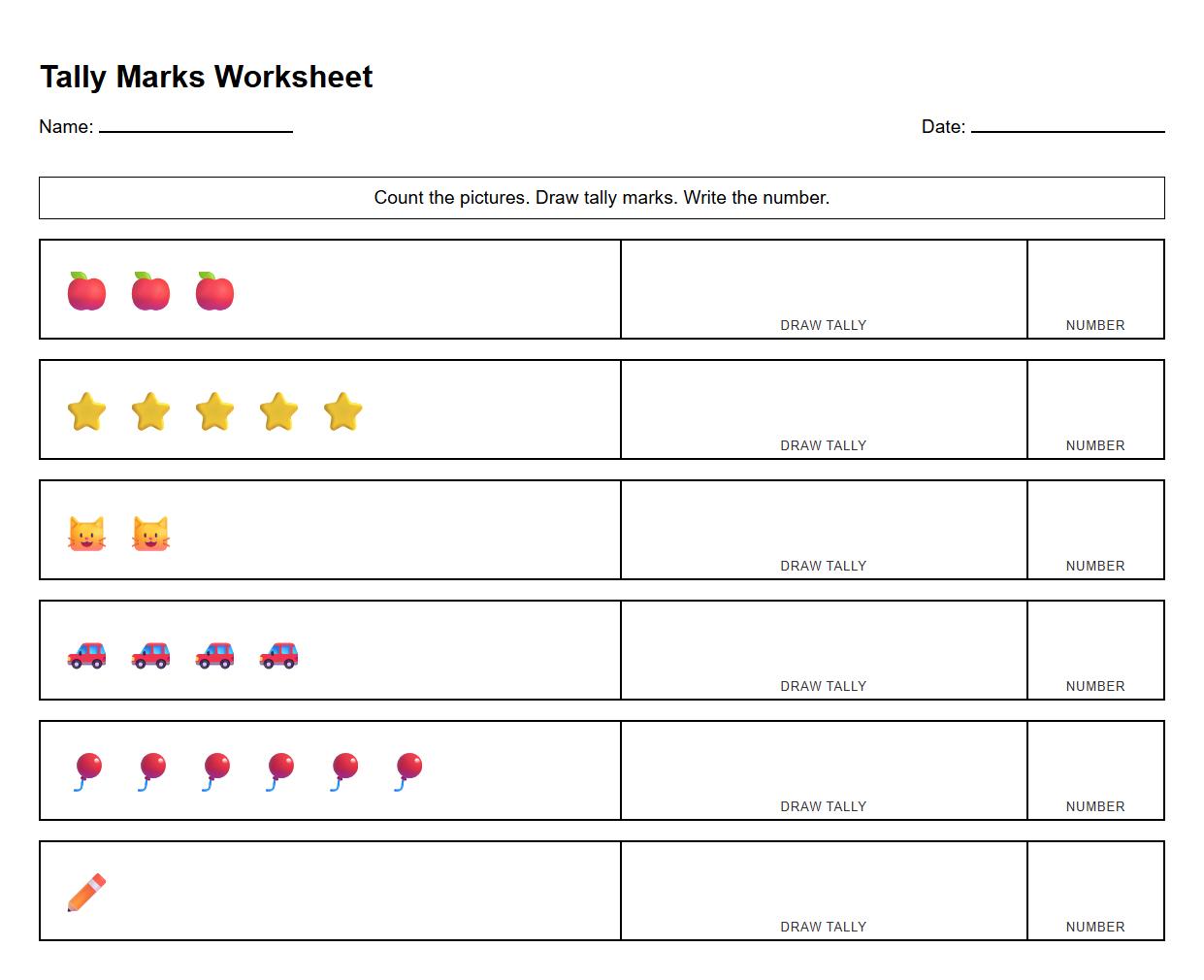
Tally Marks Counting Worksheet for Kindergarten Numeracy

Download PDF     Pin it

Tally Marks to Numbers Matching Worksheet
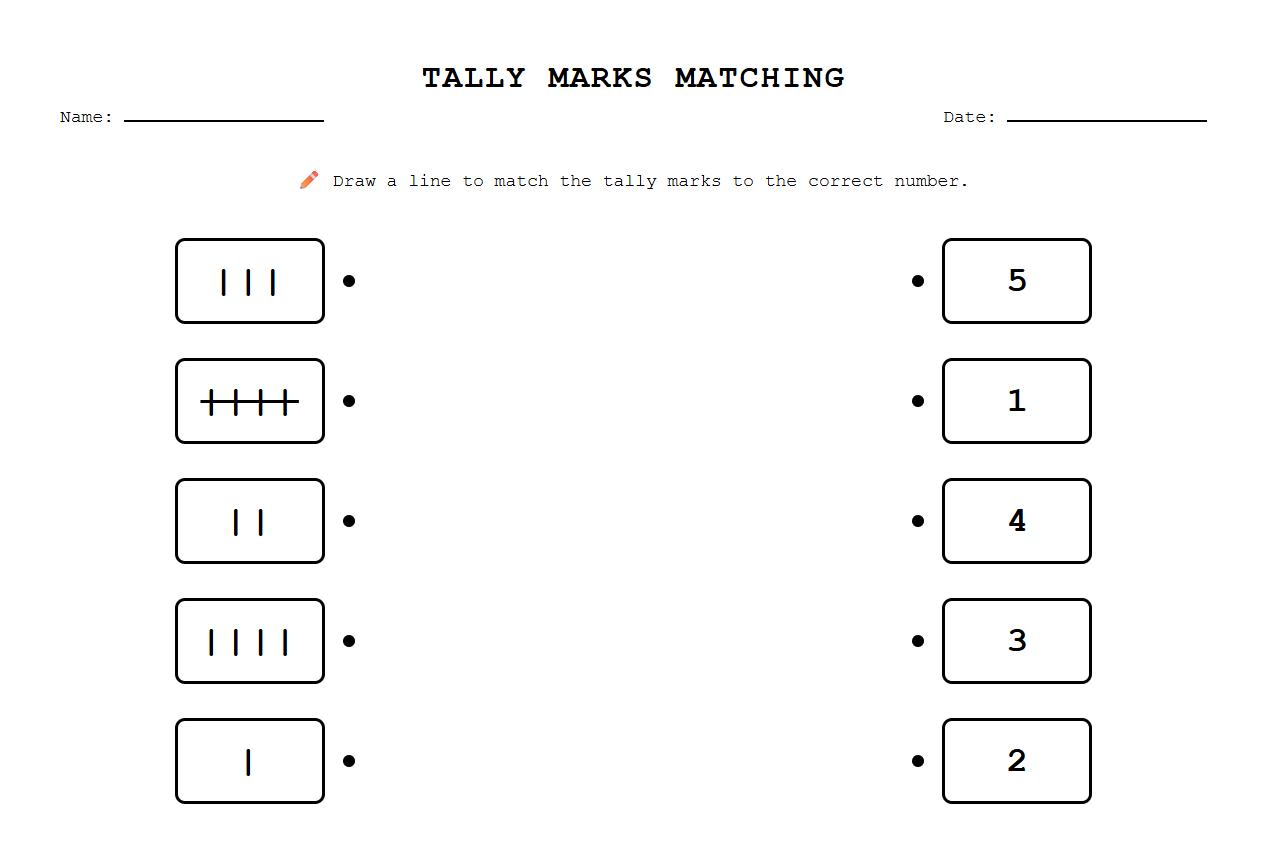
Tally Marks to Numbers Matching Worksheet

Download PDF     Pin it

Kindergarten Addition with Tally Marks Activity Sheet
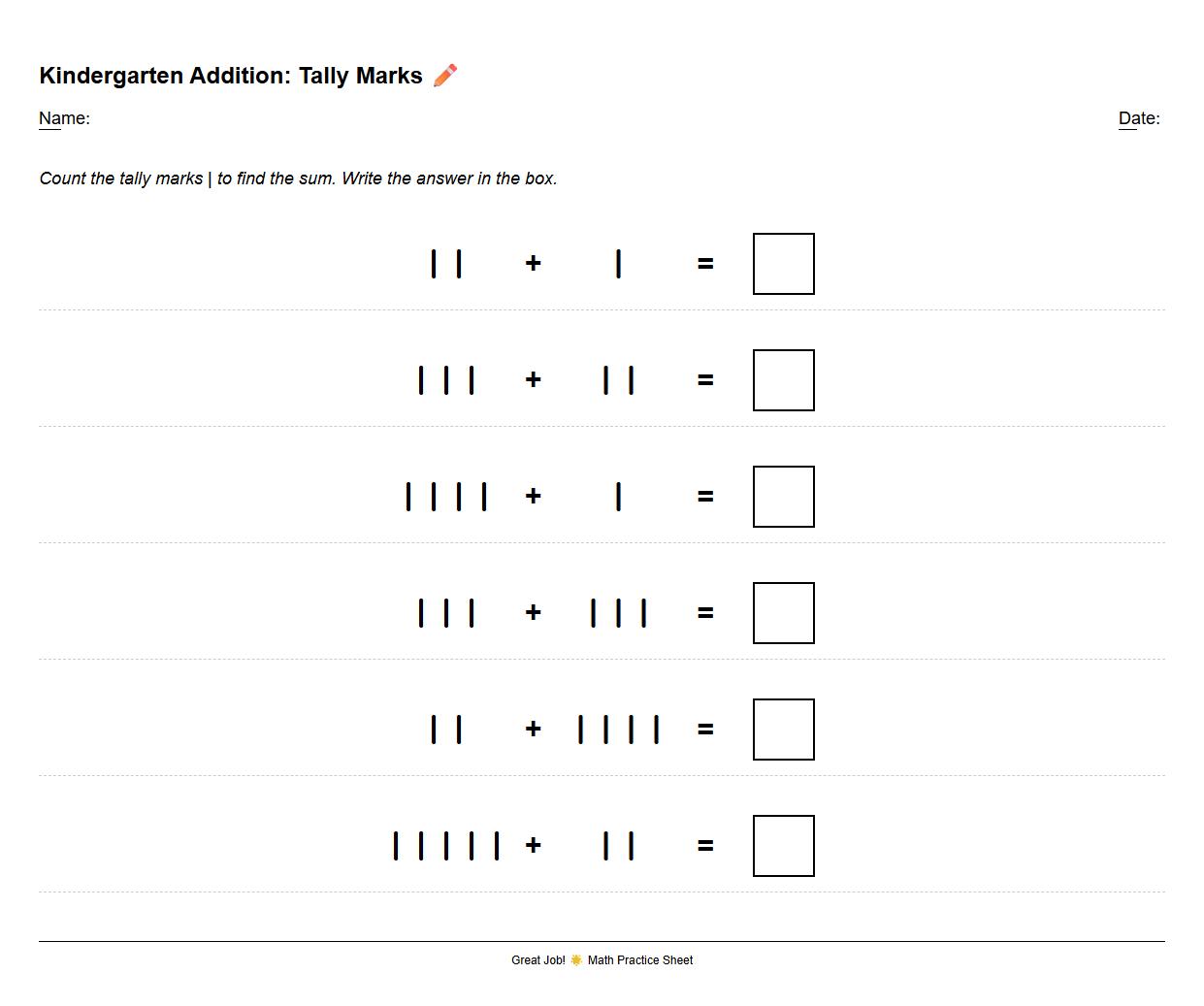
Kindergarten Addition with Tally Marks Activity Sheet

Download PDF     Pin it

Number Recognition Using Tally Marks Worksheet
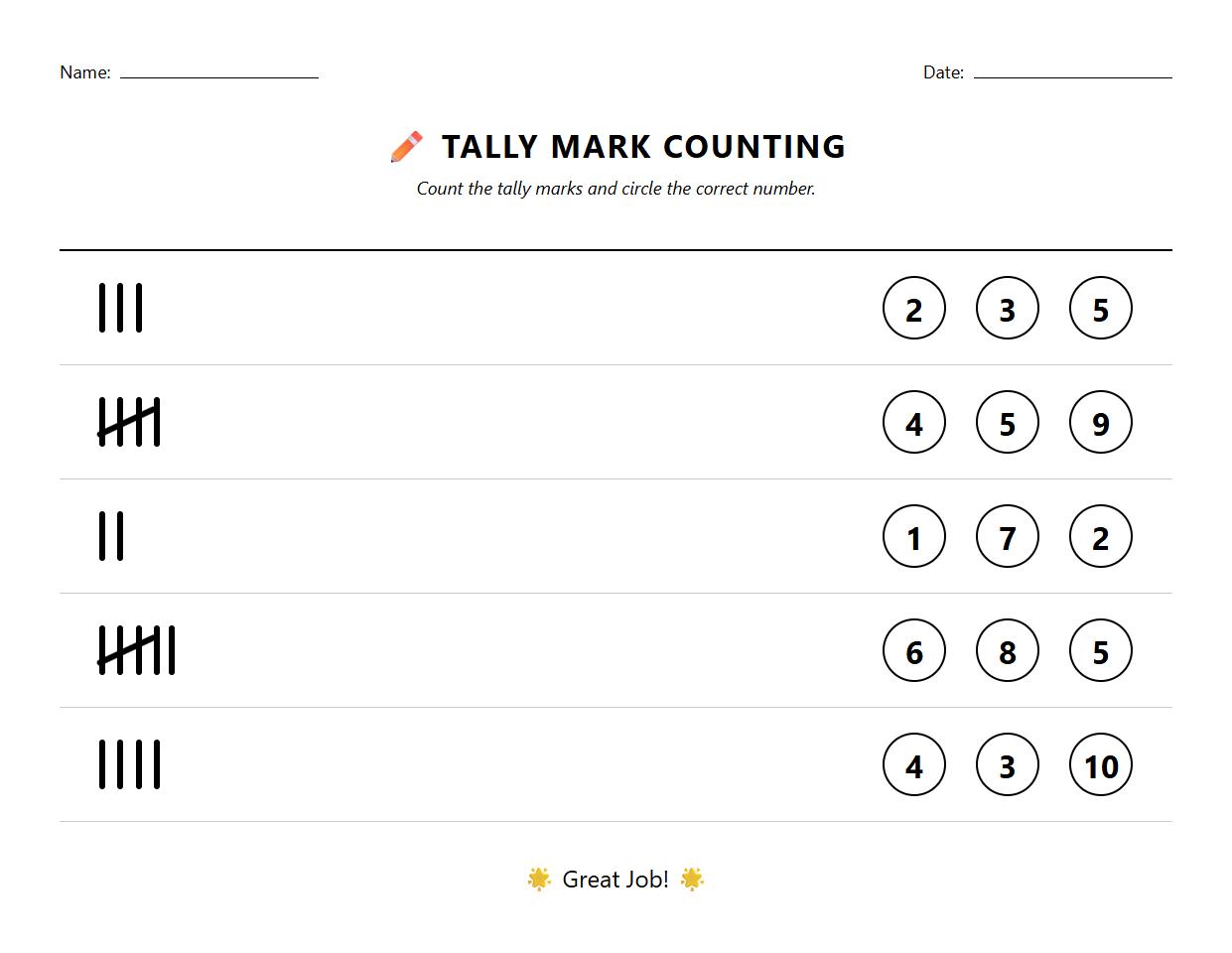
Number Recognition Using Tally Marks Worksheet

Download PDF     Pin it

Kindergarten Subtraction with Tally Marks Worksheet
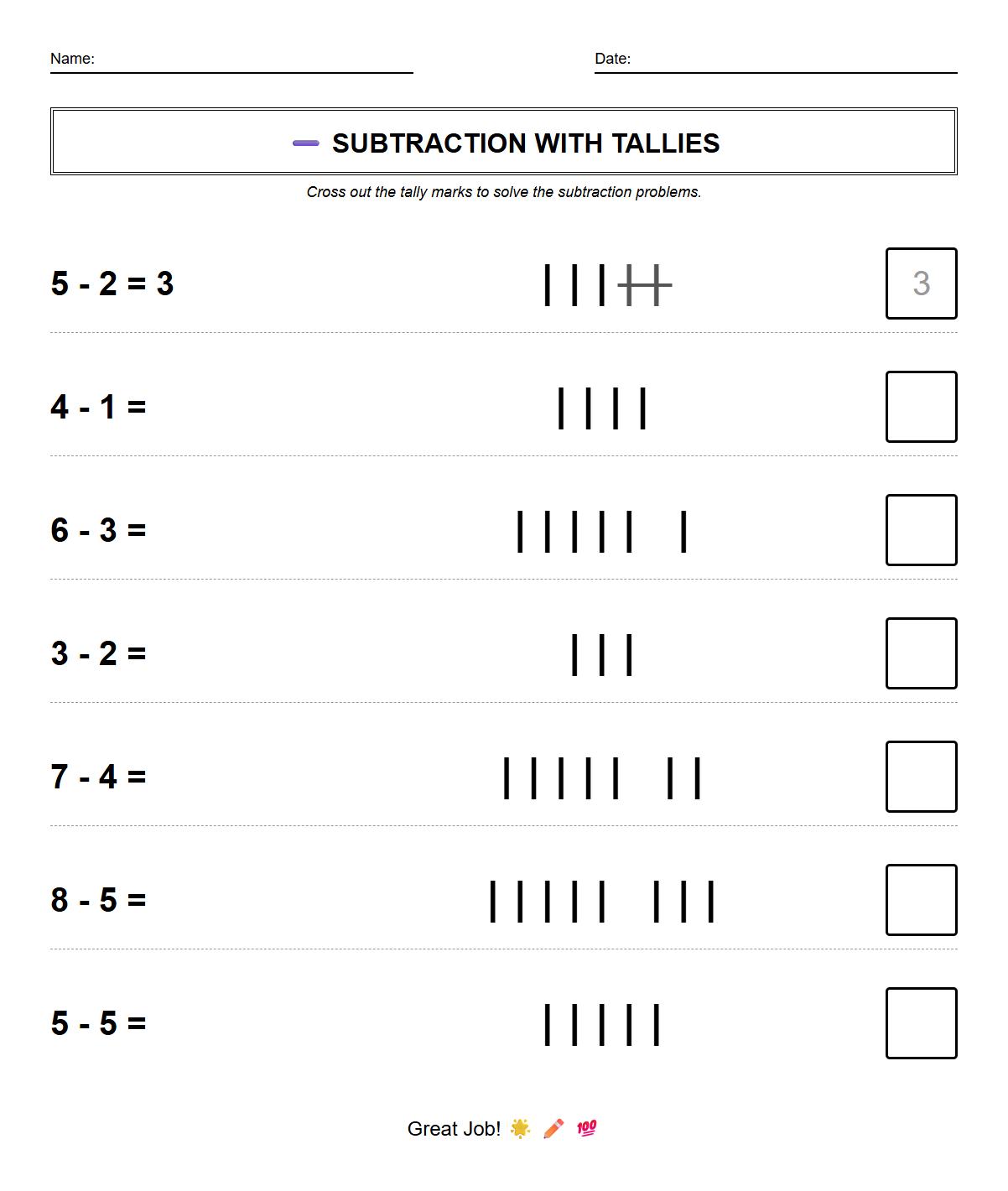
Kindergarten Subtraction with Tally Marks Worksheet

Download PDF     Pin it

Tally Marks and Number Line Integration Exercise
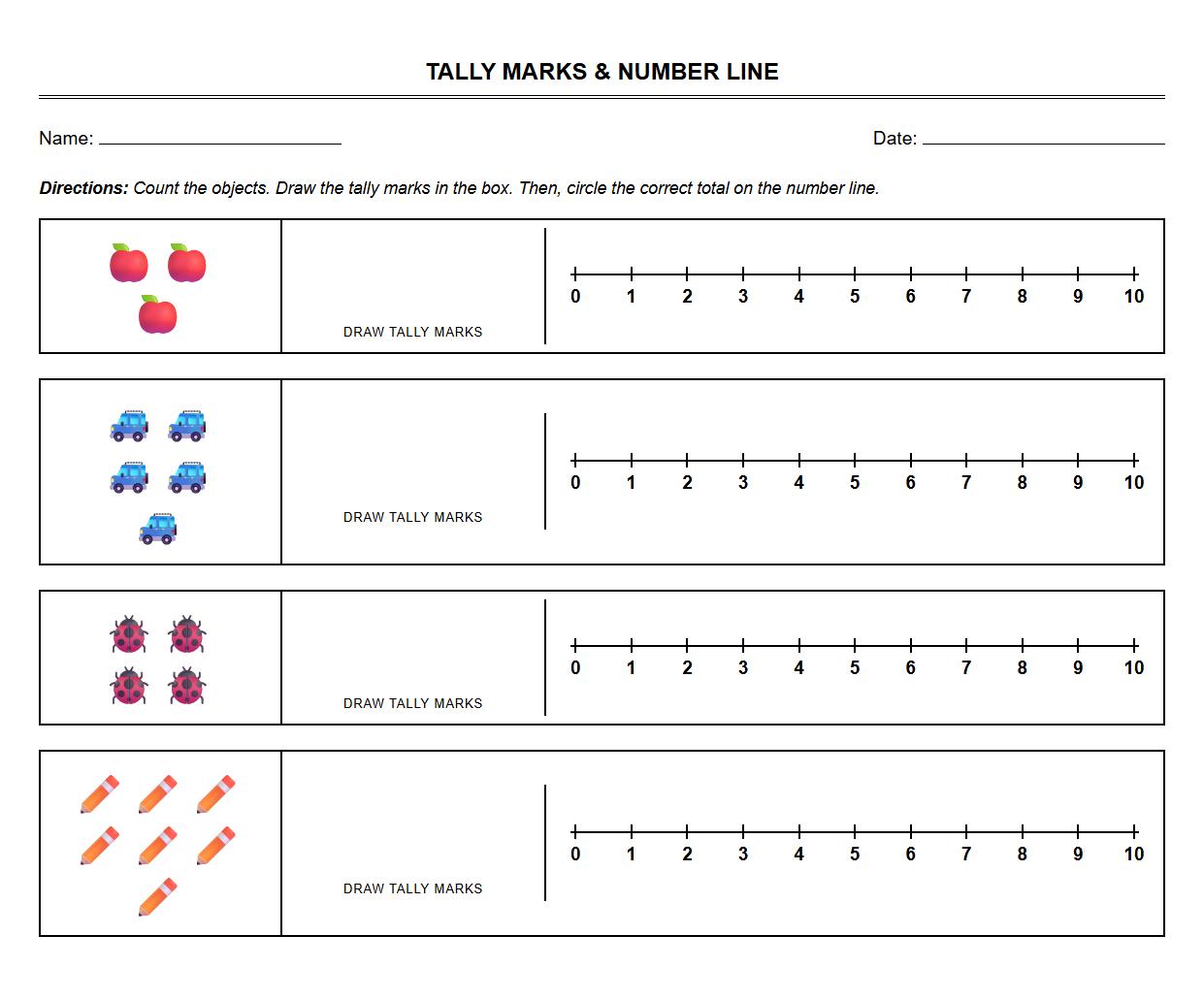
Tally Marks and Number Line Integration Exercise

Download PDF     Pin it

Tally Marks and Place Value Introduction Worksheet
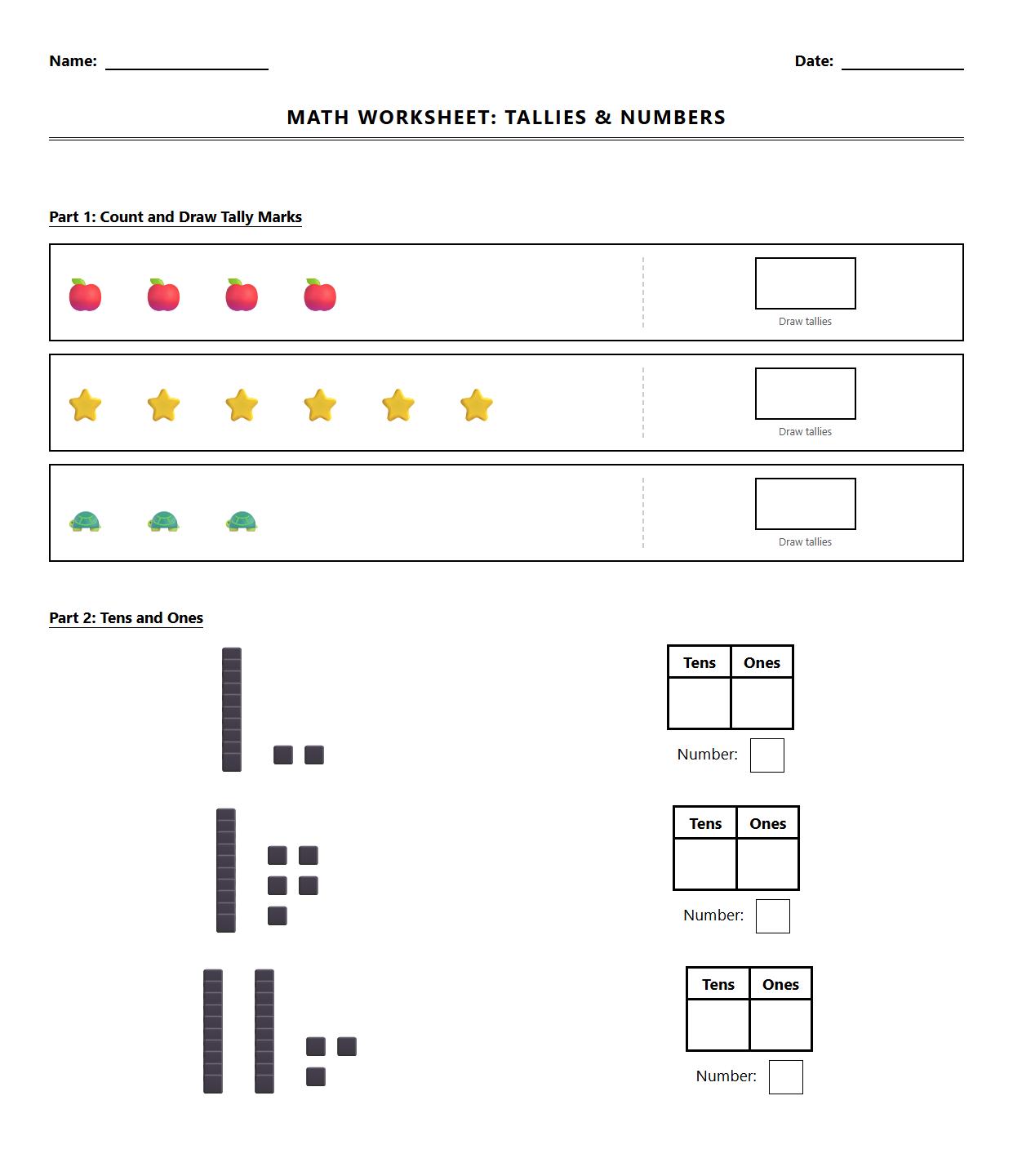
Tally Marks and Place Value Introduction Worksheet

Download PDF     Pin it

Tally Marks Grouping and Sorting Worksheet
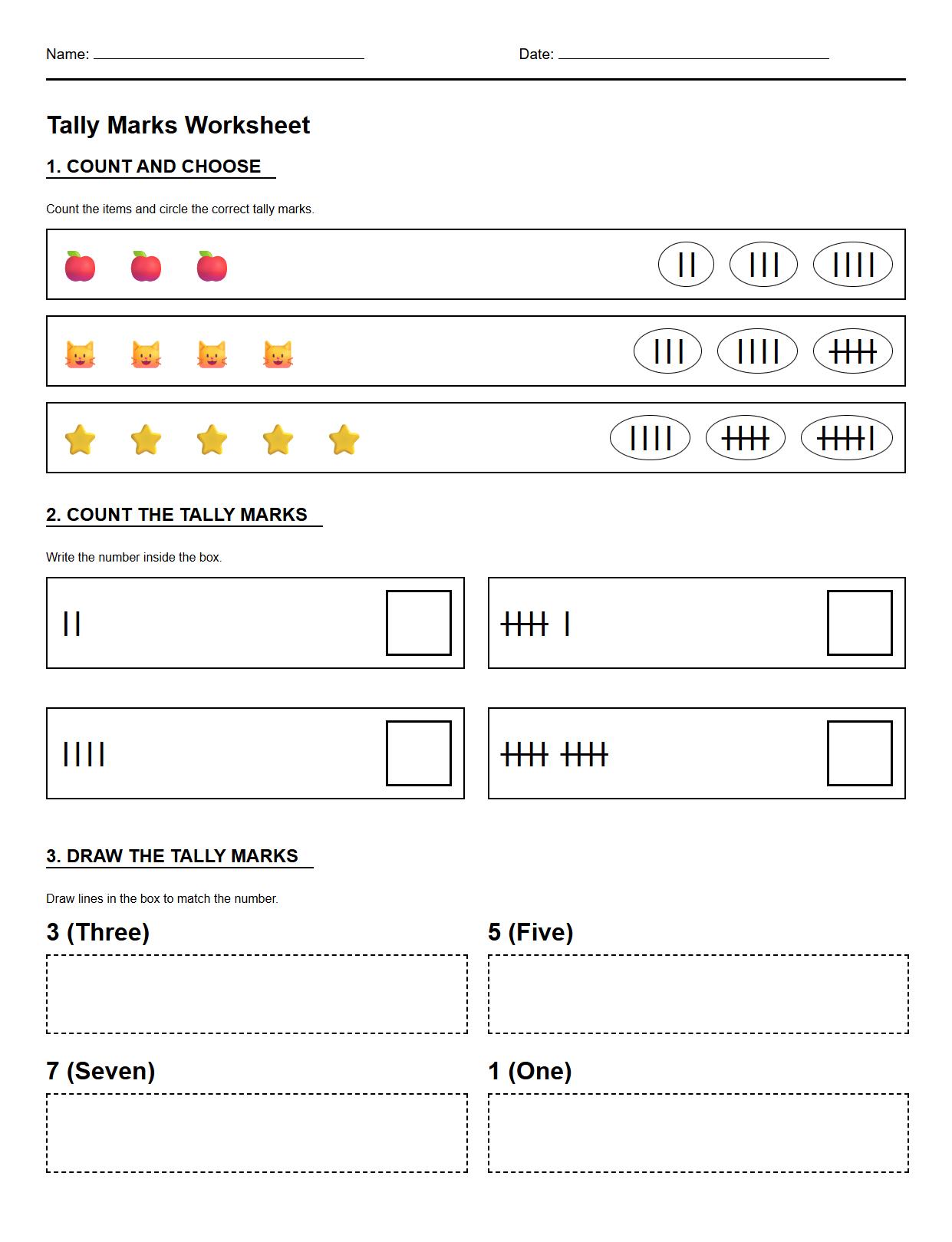
Tally Marks Grouping and Sorting Worksheet

Download PDF     Pin it

Tally Marks Pattern Recognition Worksheet
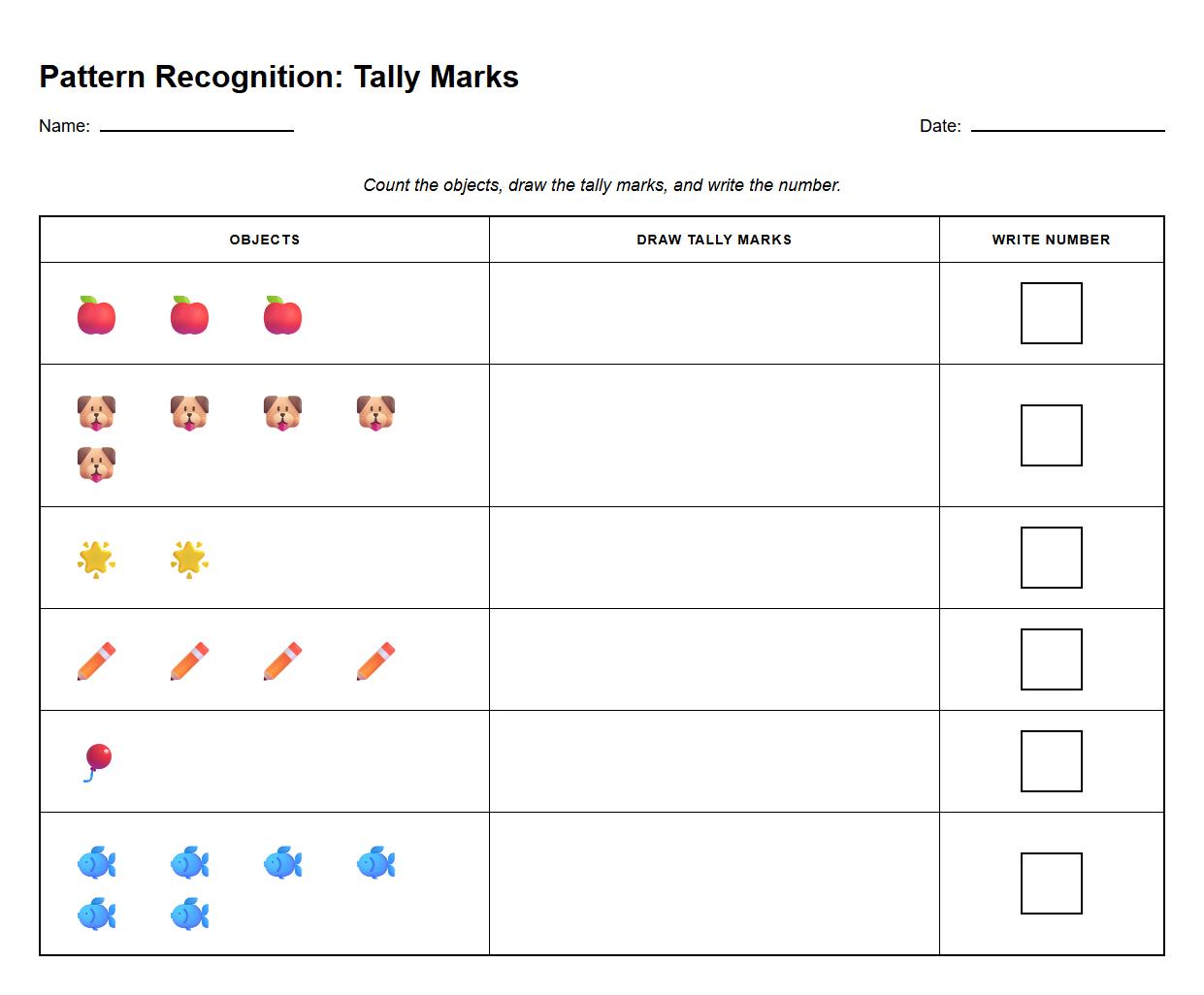
Tally Marks Pattern Recognition Worksheet

Download PDF     Pin it

Write and Draw Tally Marks for Data Collection Worksheet
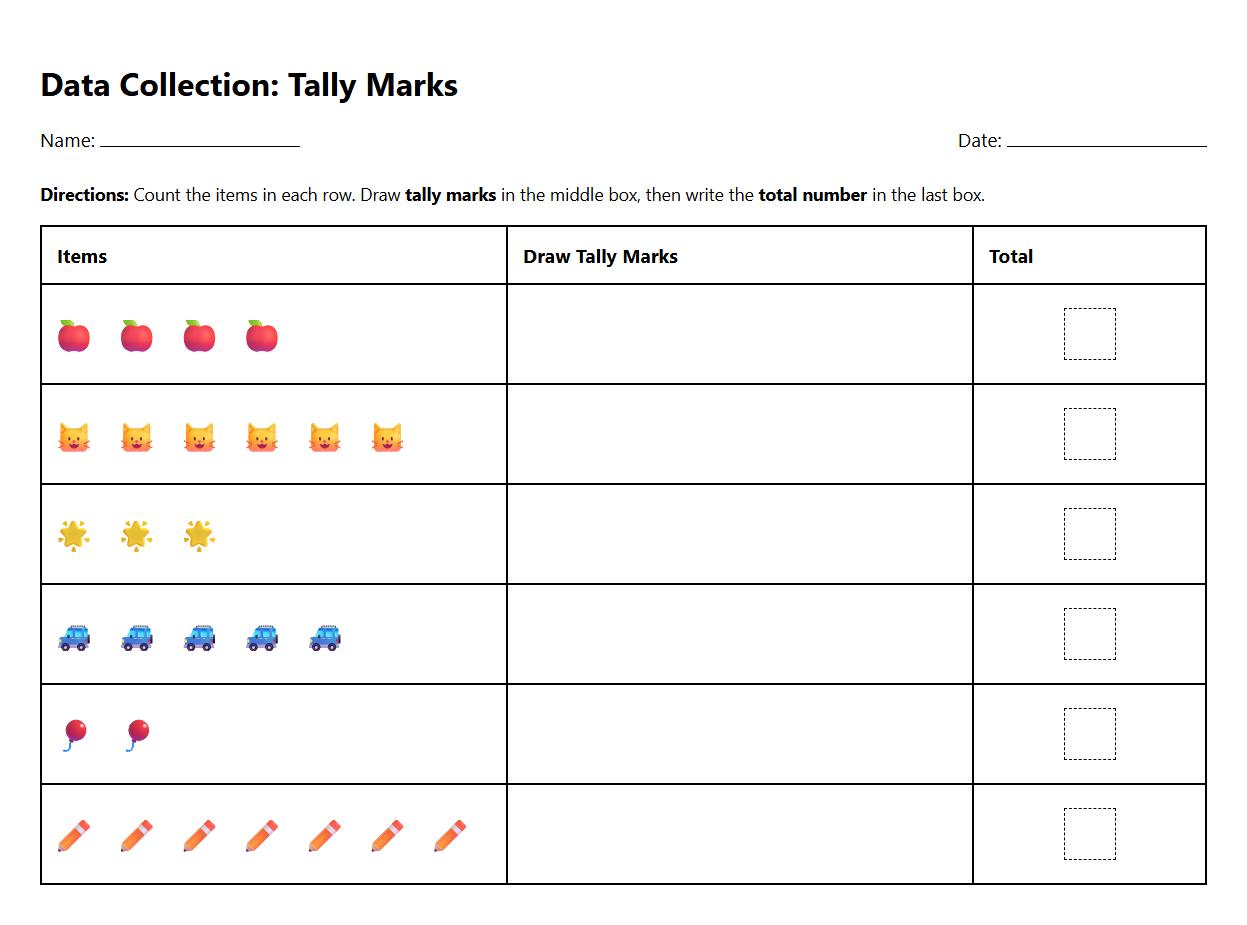
Write and Draw Tally Marks for Data Collection Worksheet

Download PDF     Pin it

What Are Tally Marks Used for in Kindergarten Math?

Tally marks are a simple and visual tool to help young children understand counting and data collection. They introduce students to the concept of grouping and organizing numbers. Teachers and parents use tally marks to make counting interactive and easier for children to grasp. Early exposure to tally marks builds a foundation for more complex math skills.

How Do Tally Marks Help Children Count Objects Easily?

Tally marks allow children to count objects without losing track by grouping counts into sets of five. This grouping reduces errors and makes it easier to quickly see the total. Children learn to associate physical objects with marks, strengthening their counting skills. The visual pattern also helps them understand number relationships and addition.

How to Group Tally Marks in Fives?

To group tally marks in fives, draw four vertical strokes first, then cross them with a diagonal line to create a bundle. Each bundle represents the number five, making counting faster and more efficient. This visual grouping technique helps children quickly total amounts without counting each mark individually. It's a foundational skill for reading and writing numbers.

What Kind of Objects Can You Count Using Tally Marks in Class?

Teachers and parents can use tally marks to count a variety of objects like classroom toys, colored blocks, students' favorite snacks, or animal pictures. Everyday items make counting relatable and interesting for young learners. Using familiar objects helps children connect math to real life. This approach encourages active participation and curiosity.

How Can Students Practice Making Tally Marks in a Worksheet?

Worksheets can include pictures of objects for children to count and record tally marks beside each set. Simple instructions guide students to group marks in fives, reinforcing the concept. Practice sheets with varied objects and quantities help build confidence and accuracy. Regular practice improves the skill of translating counted items into tally marks.

Why Is It Fun for Kids to Use Tally Marks Instead of Regular Numbers?

Using tally marks turns counting into a visual and hands-on activity, which is more engaging than just writing numbers. Kids enjoy creating groups and patterns, making math lively and creative. Tally marks give a sense of achievement as children see their marks grow. This playful approach encourages positive attitudes toward math learning.

How Can Tally Marks Worksheets Improve Counting Skills?

Tally mark worksheets strengthen number recognition, grouping ability, and counting accuracy in young learners. They promote fine motor skills as children draw lines carefully. Worksheets encourage attention to detail and reinforce the concept of quantity and number relationships. They provide structured practice that builds foundational math competence.

What Activities Can Be Included in a Tally Mark Worksheet for Engagement?

Include activities like counting favorite classroom objects, spotting differences, or recording daily weather tallies. Games and graphing activities such as "Find and Count" with tally marks or simple surveys (e.g., favorite fruit) make learning dynamic. Interactive challenges help children apply tally skills in fun scenarios. Variety keeps children motivated and focused on math tasks.

How Do You Check if Students Correctly Record Tally Marks?

Teachers and parents can review worksheets to ensure groups of five are properly formed and counts match the objects. Asking children to explain their problem-solving process reinforces understanding. Regular feedback helps catch mistakes early and encourages correction. Observing students during activities provides insight into their counting strategies.

How Can You Make a Game Using Tally Marks in the Classroom?

Create a classroom scavenger hunt where students find and tally items like colored blocks or shapes. Teams can compete to make the most accurate tally marks in a set time. Use tally marks to keep score in simple math games, turning counting into friendly competition. Games promote collaboration, excitement, and real-time practice of tally skills.


More in Mathematics Category


About the author. Nylen Smith is a dedicated educator and cofounder of KWorksheet.com, a popular platform specializing in high-quality kindergarten worksheets and printable activities.

Disclaimer. The information provided in this document is for general informational purposes and/or document sample only and is not guaranteed to be factually right or complete. Please report to us via contact-us page if you find and error in this page, thanks.

Comments

No comment yet