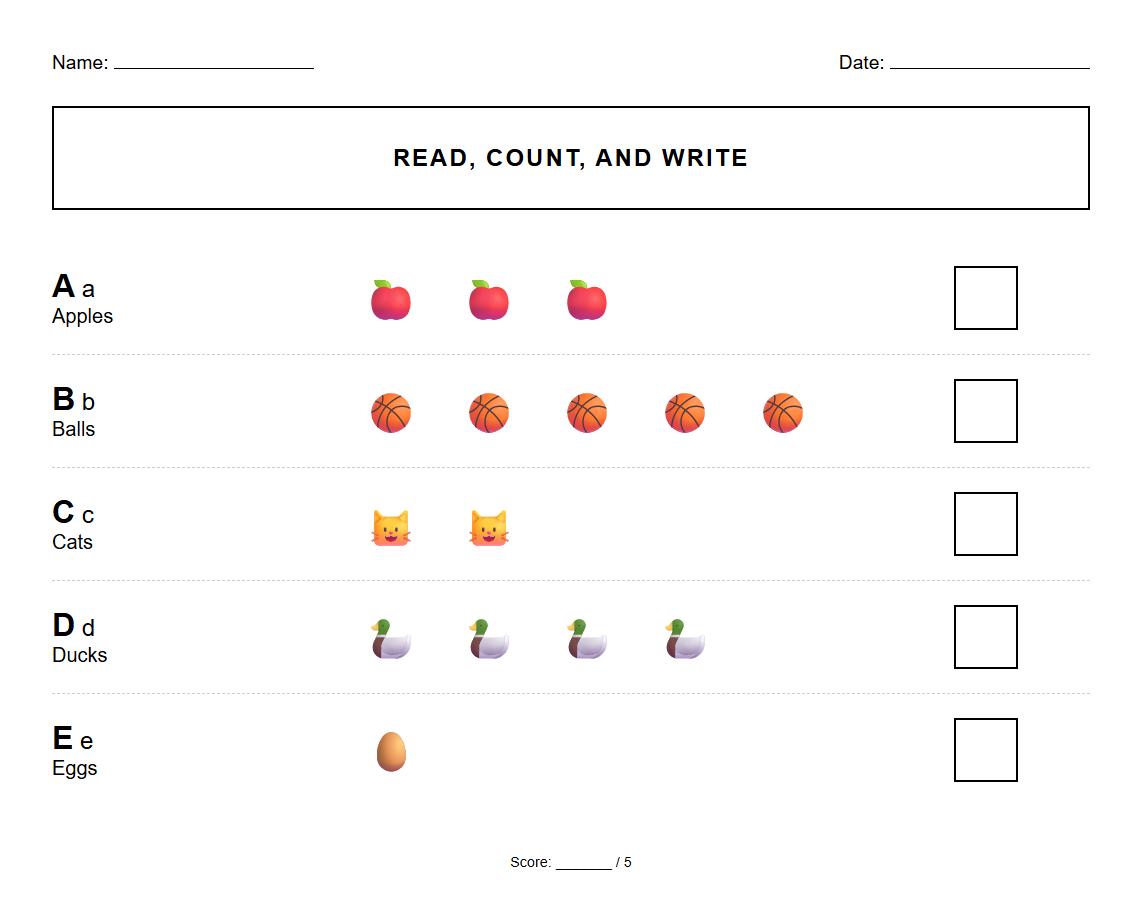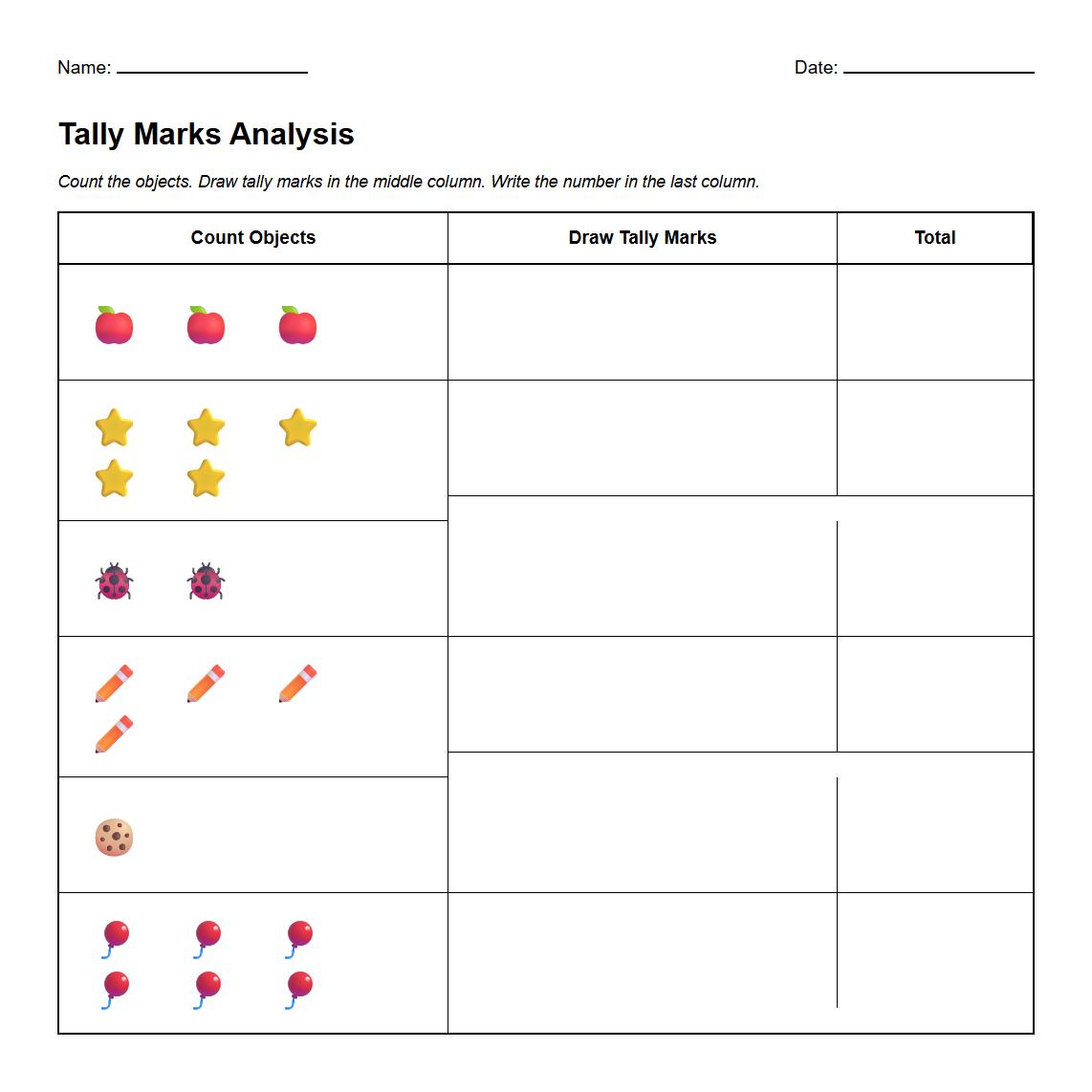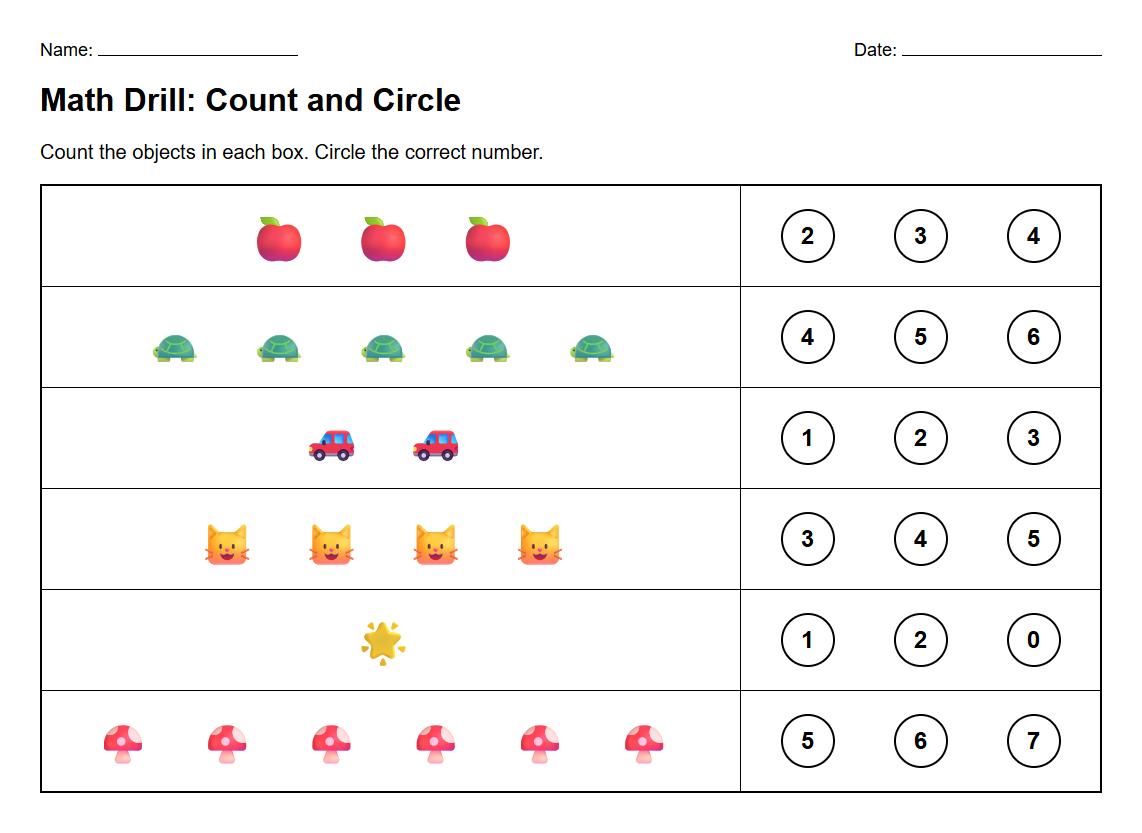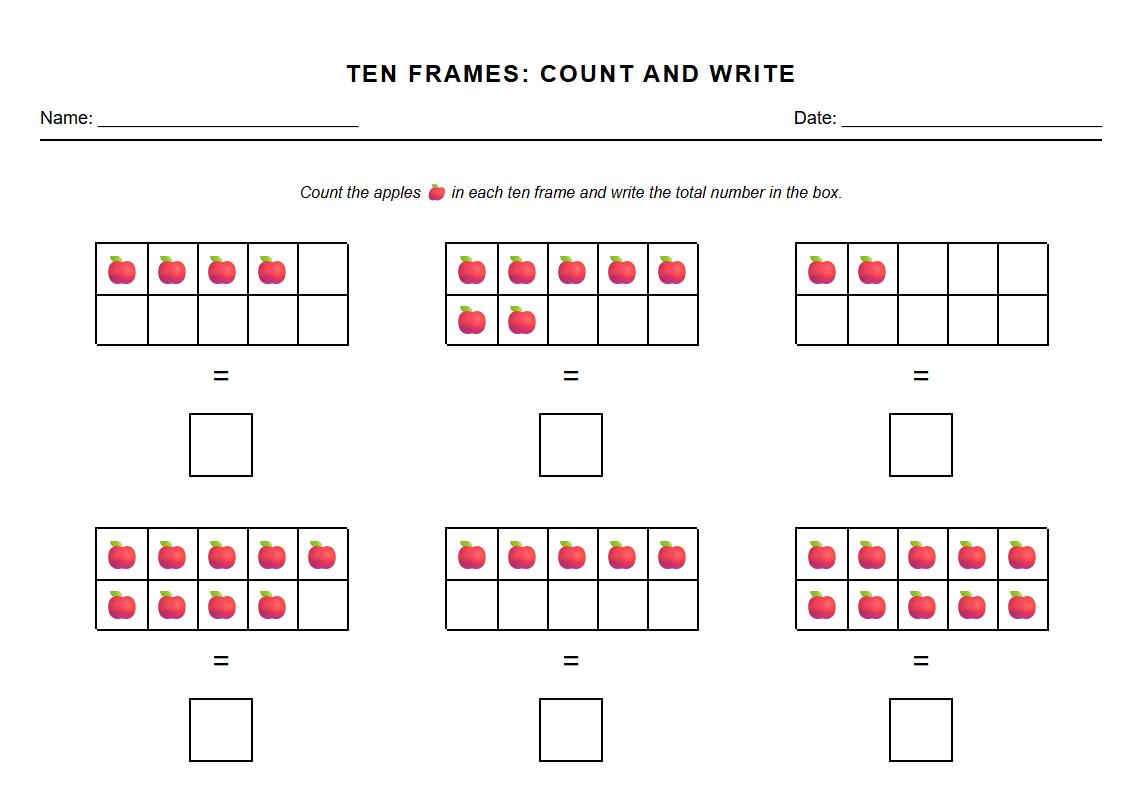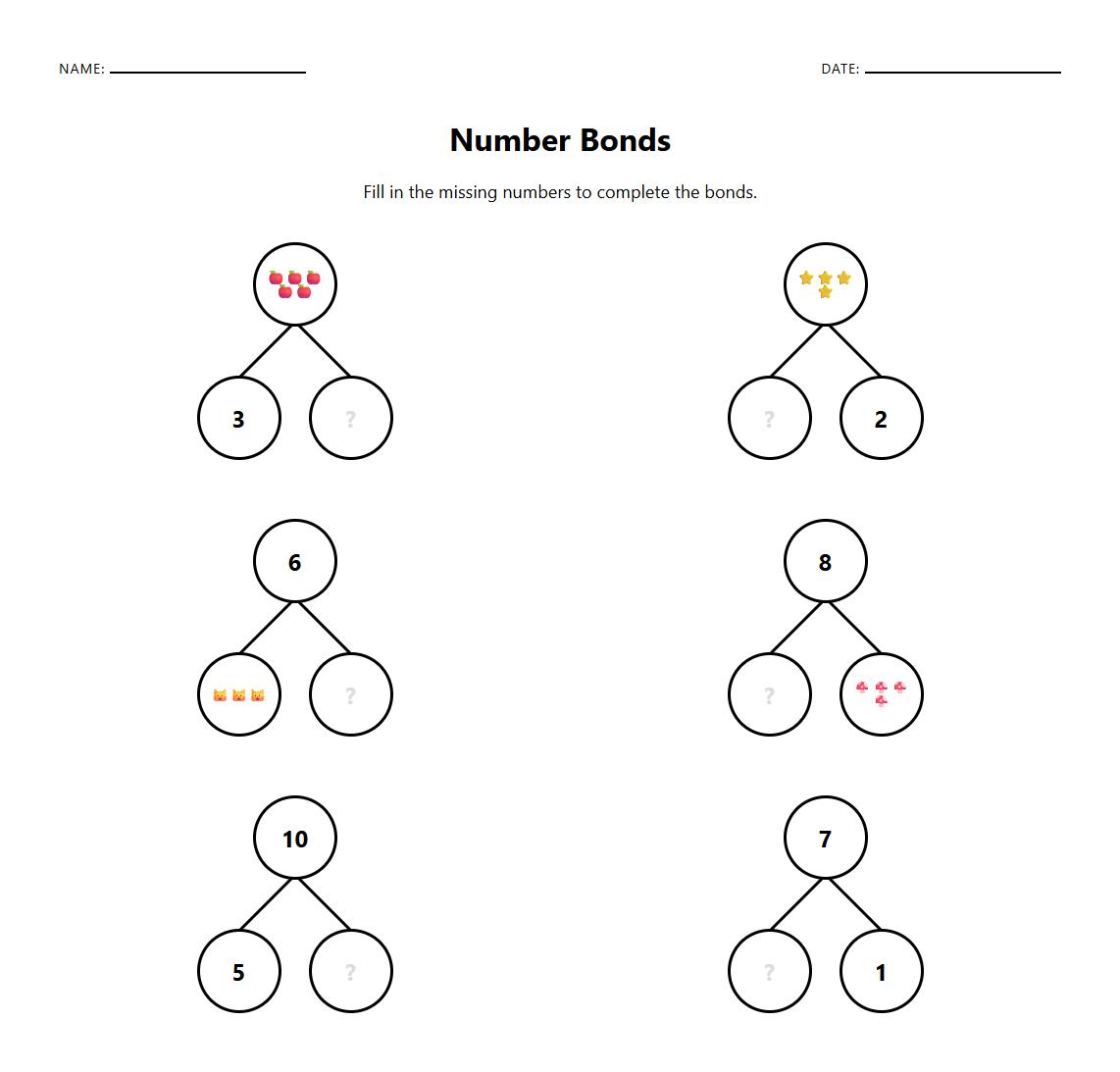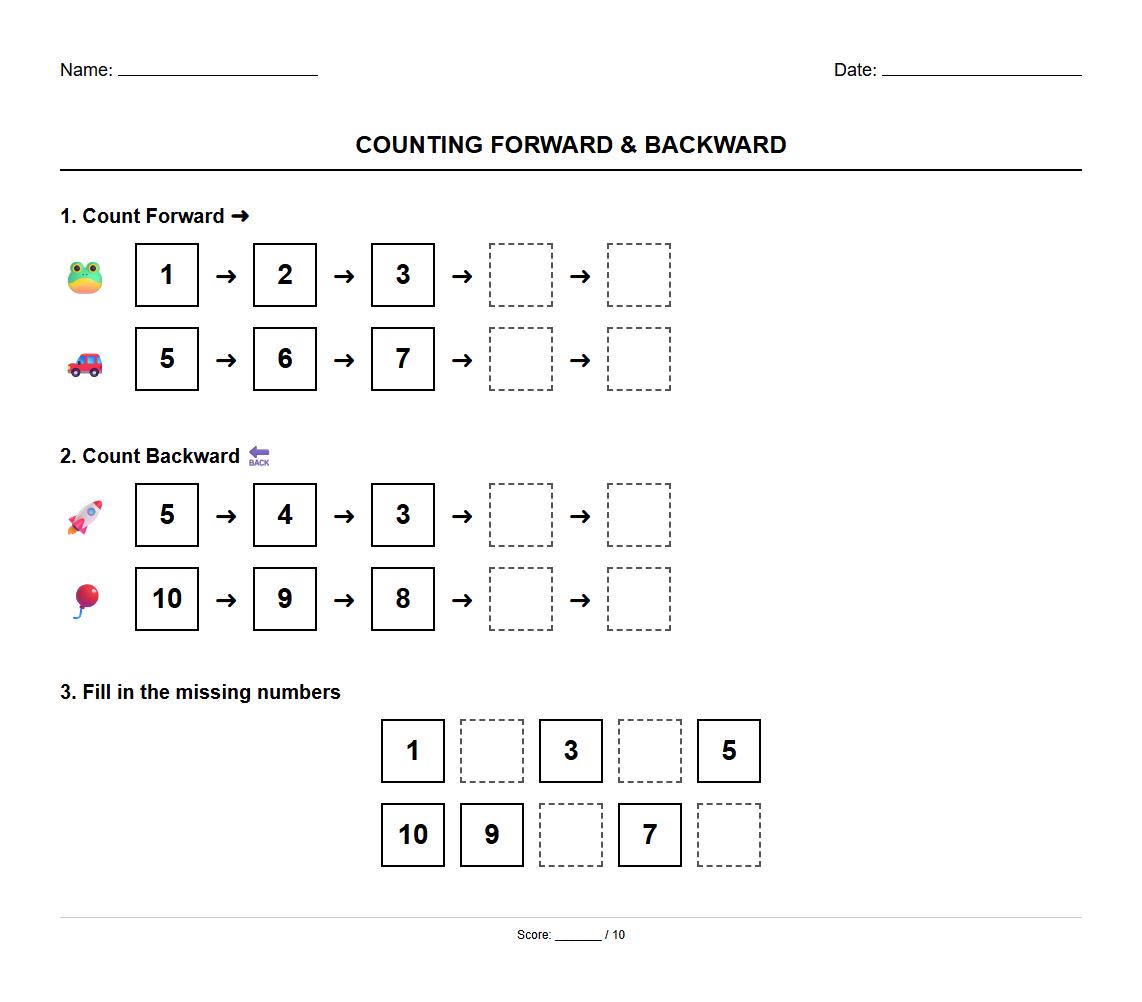
Counting and quantities worksheets for kindergarten help build foundational math skills by engaging children in recognizing numbers, counting objects, and understanding quantity concepts. These activities promote early numeracy through fun exercises that develop pattern recognition and number sense. Explore our diverse collection of worksheets to support your child's learning journey in counting and quantities.
Counting Apples in the Basket
Encourage children to carefully observe the basket and count the apples inside. This activity helps develop their numerical skills and attention to detail. Guide them to point and count each apple aloud for better understanding. Parents and teachers can use this to build early math confidence.
Counting Stars on the Page
Ask children to count the stars scattered across the worksheet. Counting stars improves their ability to recognize and quantify objects within a group. This task also enhances their focus and visual tracking skills. Make sure they count each star only once to ensure accuracy.
Comparing Groups of Pencils
Present two groups of pencils and ask which group has more pencils. This comparison exercise fosters understanding of quantity differences. Help children use terms like "more" and "less" to describe their observations. Such activities introduce basic concepts of inequality in numbers.
Circled Group with Fewer Balloons
Instruct children to circle the group that has fewer balloons. This encourages comparison and decision-making skills. It also reinforces vocabulary linked to quantity and counting. Teachers and parents should praise children for correct identification to boost their confidence.
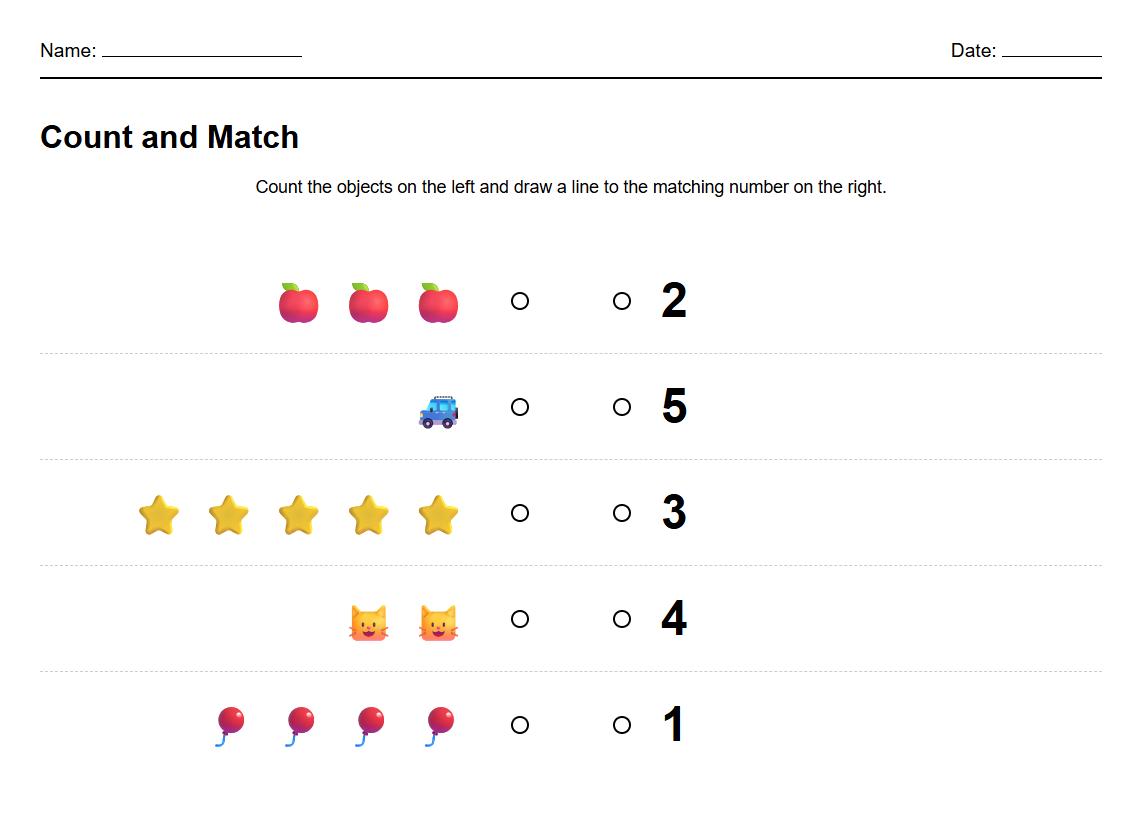
Matching Numbers to Sets of Objects
Challenge kids to match each number with the right set of objects on the page. This enhances number recognition and counting ability. It also connects abstract numbers with real-world quantities. Parents can guide the child's hand for better coordination during matching.
Counting Cars on the Worksheet
Ask children how many cars they see on the worksheet. This simple counting task improves attention to detail and numerical literacy. Encourage them to count carefully and point to each item as they say the number. Repetition helps solidify their learning.
Drawing Lines to Groups with Five Items
Have children draw a line connecting the number five to groups with exactly five items. This encourages number-to-quantity association and fine motor skills. It also makes learning interactive and enjoyable. Such exercises prepare children for more advanced math tasks.
Counting and Coloring Shapes
Instruct children to count and then color the correct number of shapes requested. This combines numerical skills with creativity and hand-eye coordination. Coloring helps maintain engagement and makes learning fun. It supports recognition of different shapes alongside number practice.
Identifying the Row with the Least Flowers
Ask which row has the least number of flowers to develop comparative counting skills. This exercise introduces children to concepts like least and most. It helps improve their ability to analyze and compare sets visually. Praise their effort to encourage positive learning experiences.
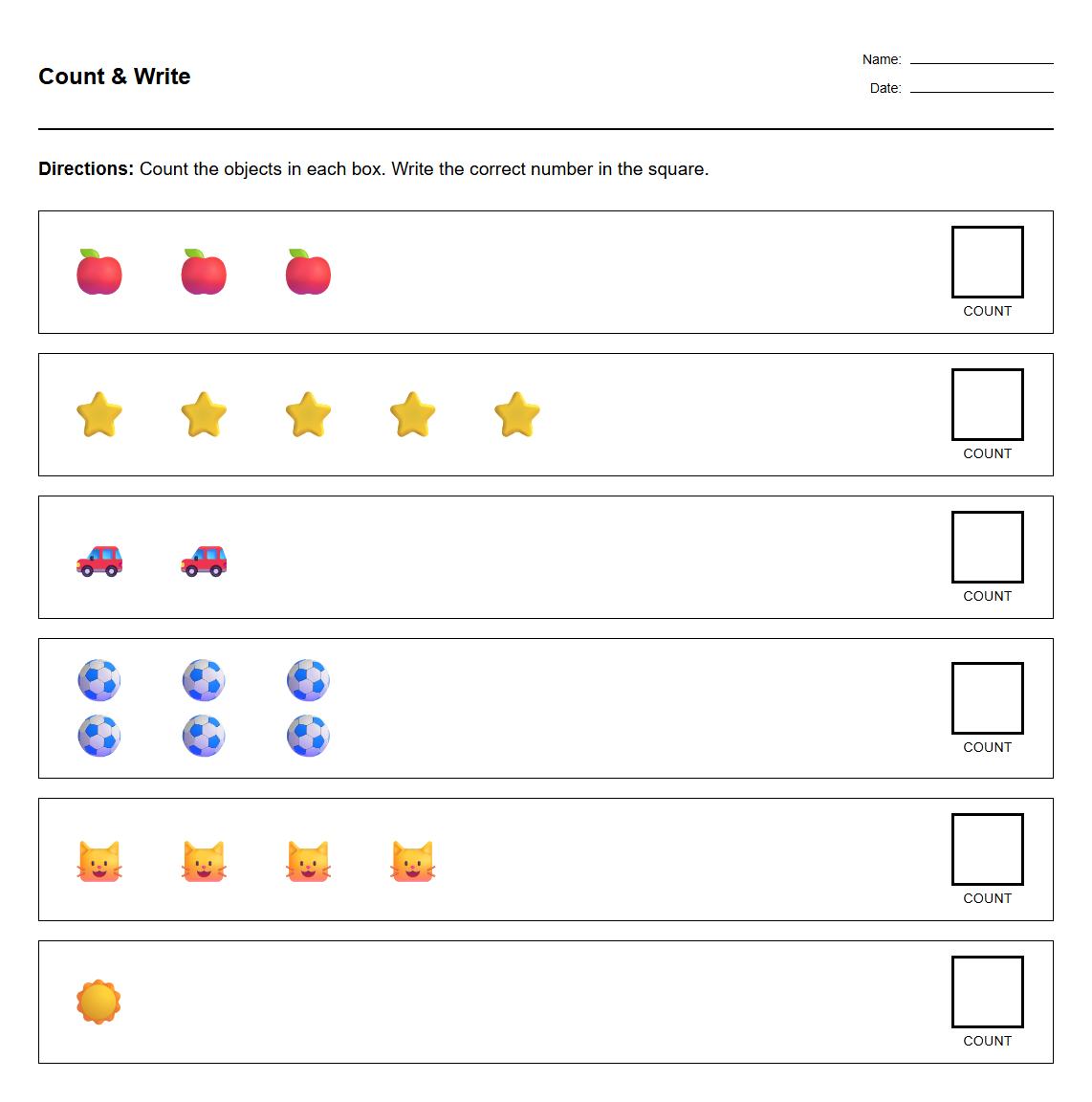
Filling in the Blank with the Correct Number
Encourage children to fill in the blank with the right number corresponding to each group of objects. This activity supports number writing and counting accuracy. It reinforces the connection between quantities and numeral symbols. Parents and teachers should provide gentle corrections to guide learning.


Phonics and Numbers for Kindergarten Counting Practice