Kindergarten Science Worksheet Template for Sorting and Classifying Items

📅 Jan 21, 2025 👤 Nylen Smith

Sorting and classifying items help kindergarten students develop critical thinking and observation skills by grouping objects based on shared characteristics. This activity enhances pattern recognition and lays the foundation for scientific inquiry. Explore our collection of worksheets designed to engage young learners in sorting and classifying exercises.

Phonics-Based Picture Sorting Worksheet for Living vs Nonliving Objects
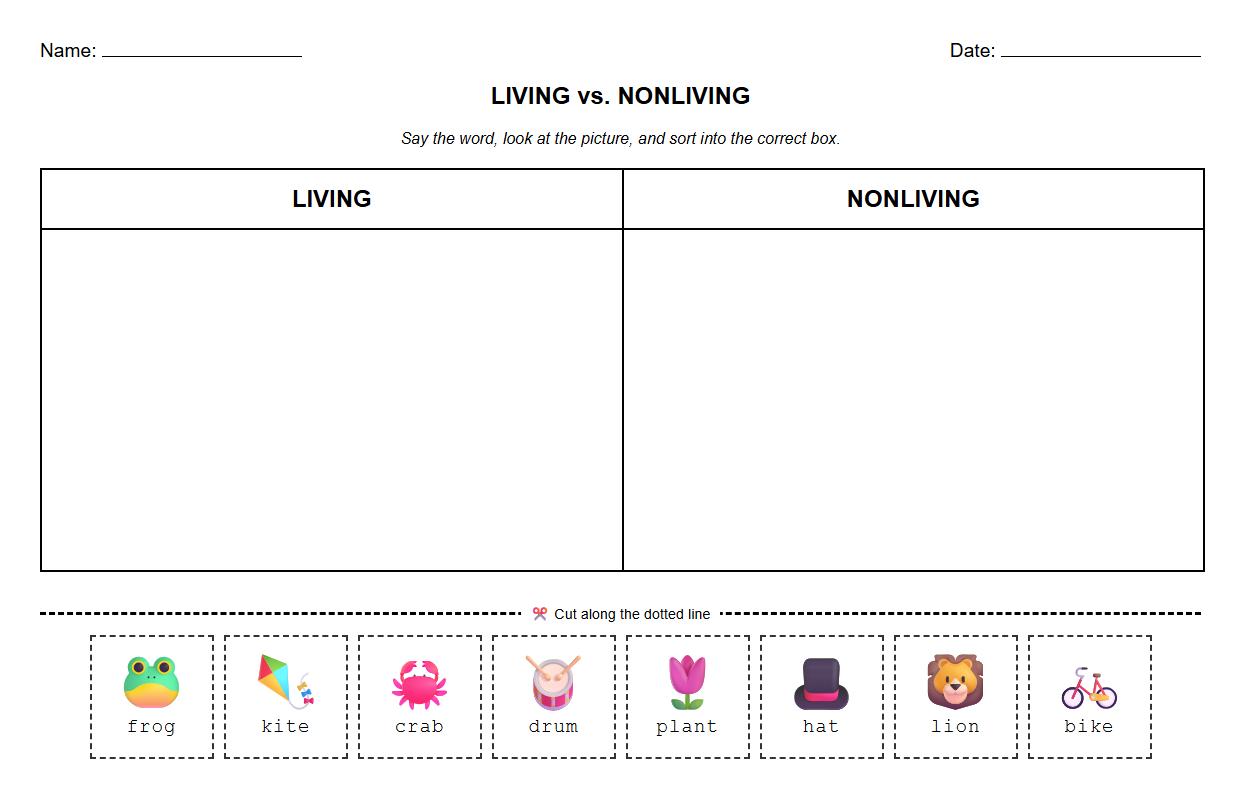
Phonics-Based Picture Sorting Worksheet for Living vs Nonliving Objects

Download PDF     Pin it

Sink or Float Item Classification Worksheet for Science Concepts
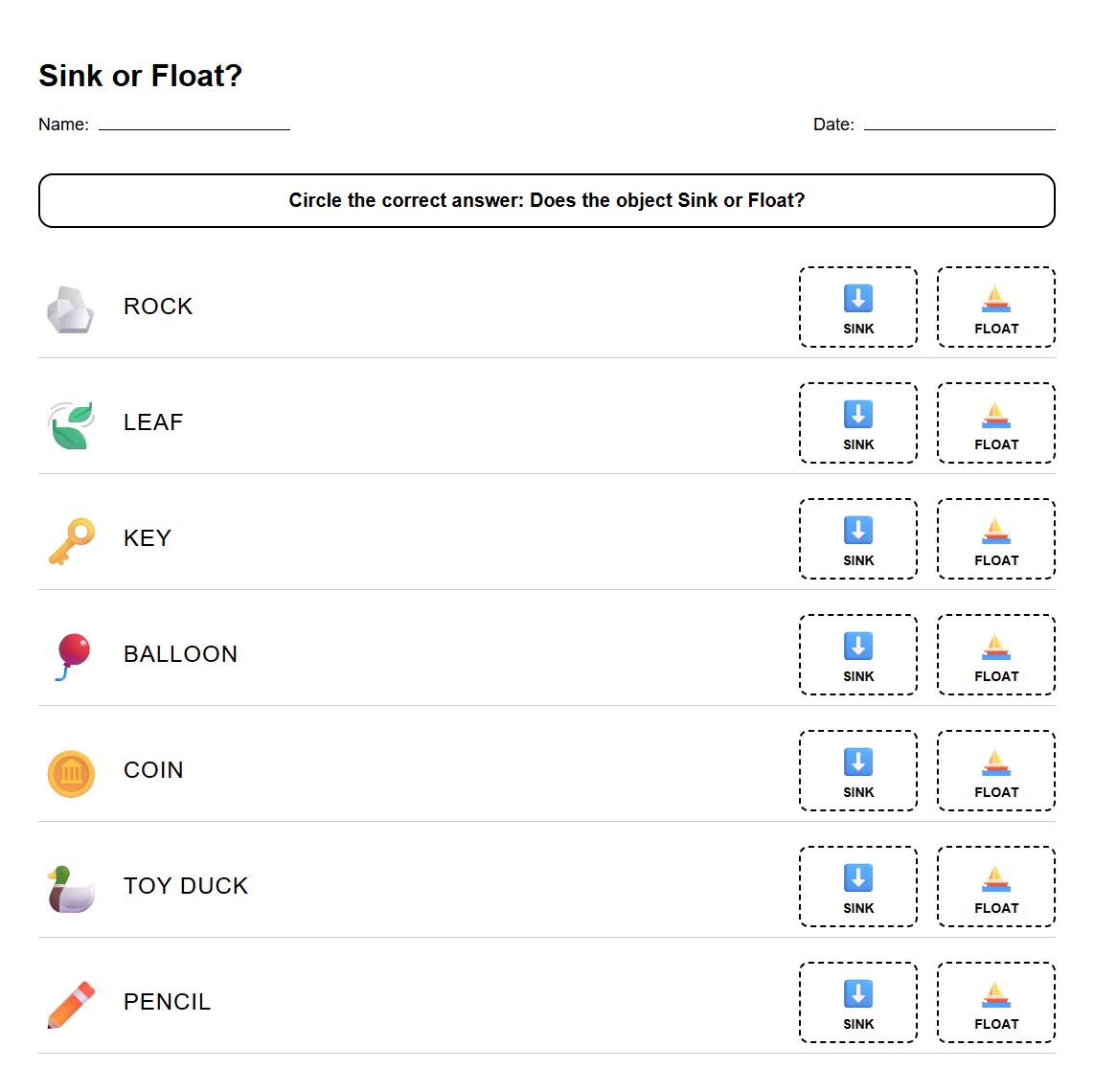
Sink or Float Item Classification Worksheet for Science Concepts

Download PDF     Pin it

Texture Sorting Worksheet for Soft and Hard Materials
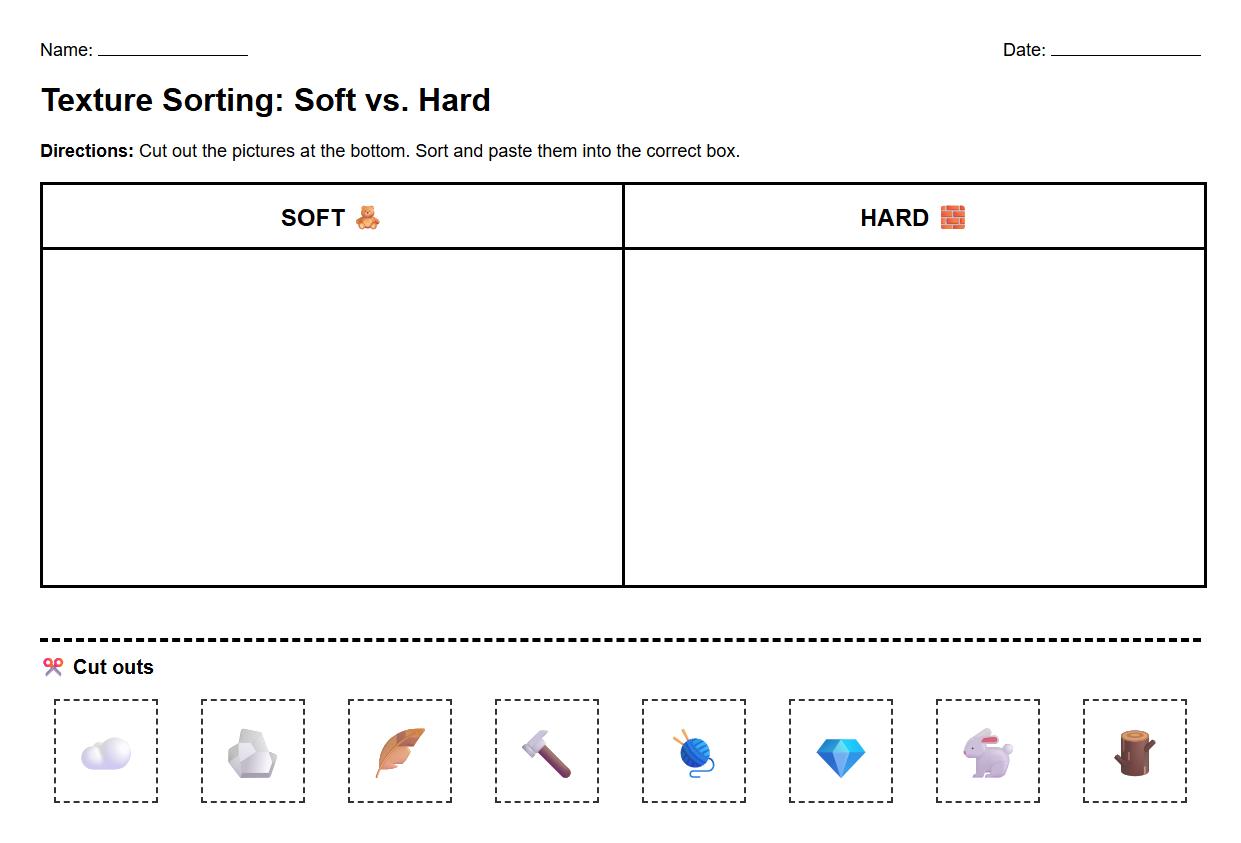
Texture Sorting Worksheet for Soft and Hard Materials

Download PDF     Pin it

Magnets Attraction Worksheet for Sorting Magnetic vs Nonmagnetic Items
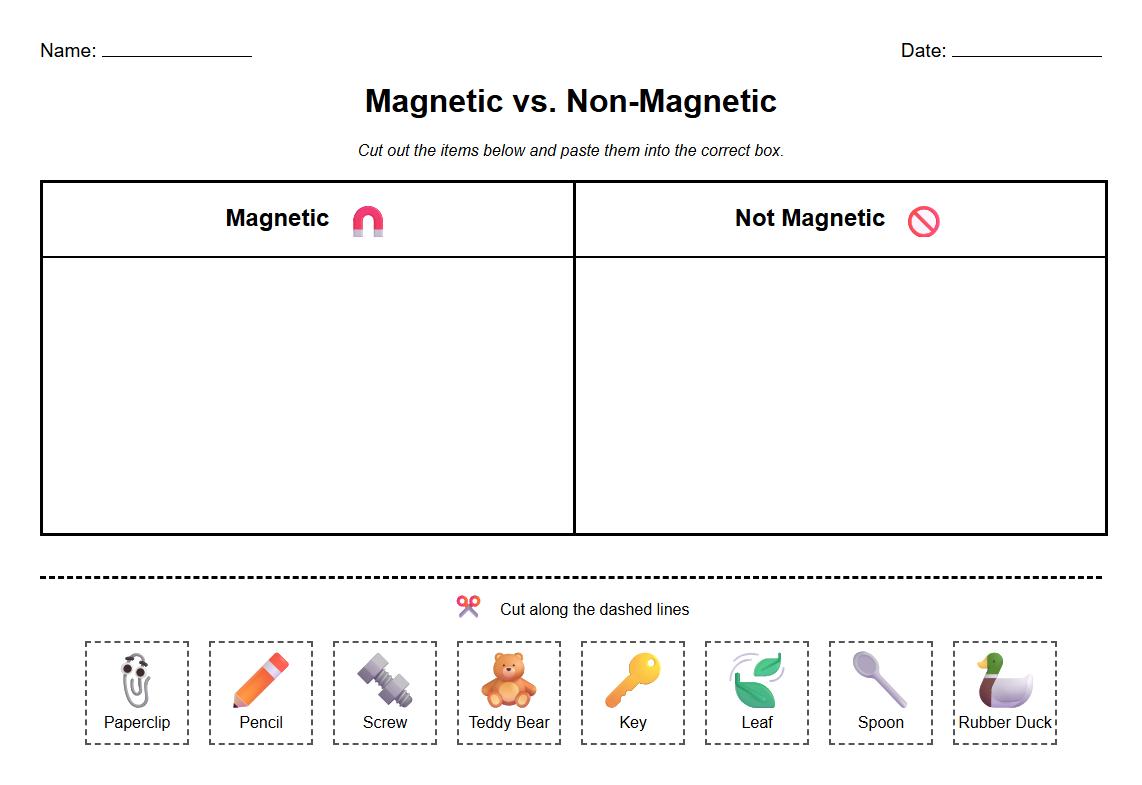
Magnets Attraction Worksheet for Sorting Magnetic vs Nonmagnetic Items

Download PDF     Pin it

Color Sorting and Classification Worksheet for Science Observations
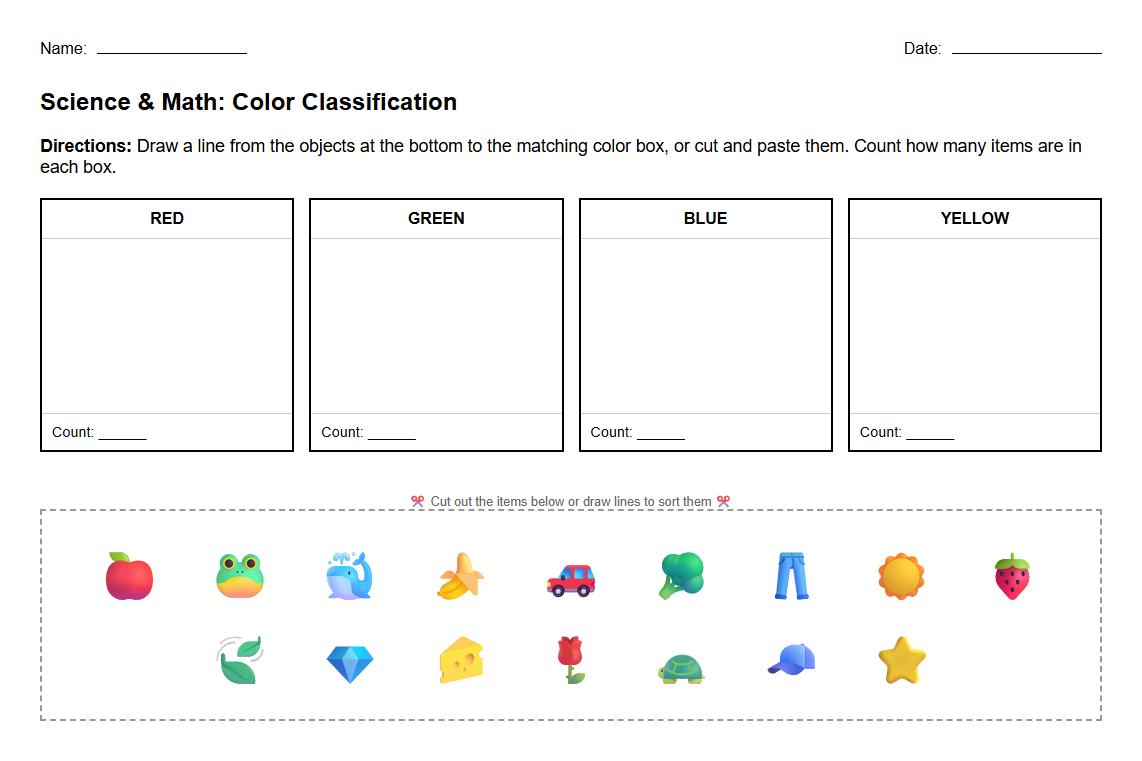
Color Sorting and Classification Worksheet for Science Observations

Download PDF     Pin it

Five Senses Worksheet for Sorting Objects by Sensory Attribute
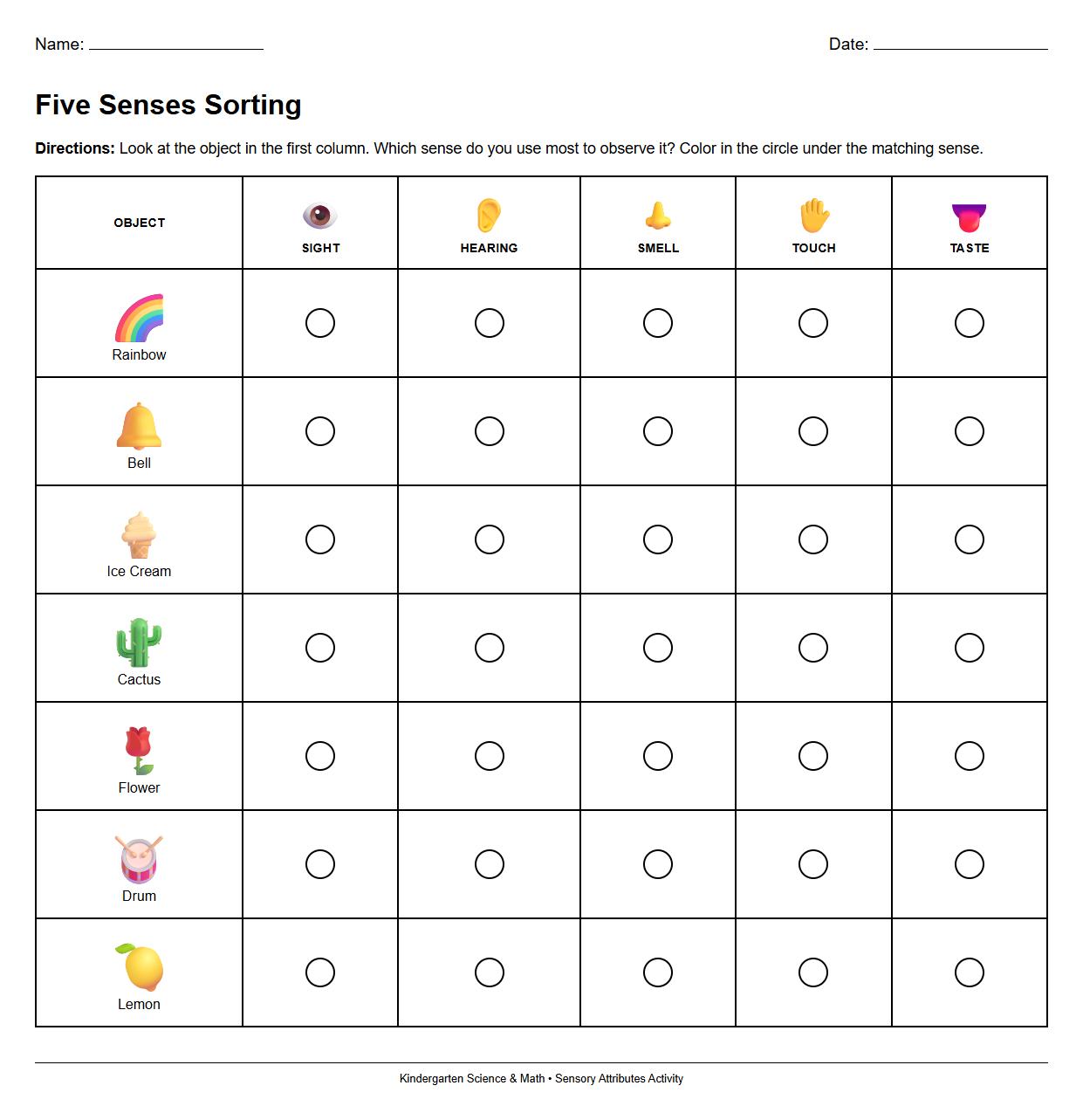
Five Senses Worksheet for Sorting Objects by Sensory Attribute

Download PDF     Pin it

Plant vs Animal Item Sorting Worksheet using Visual Cues
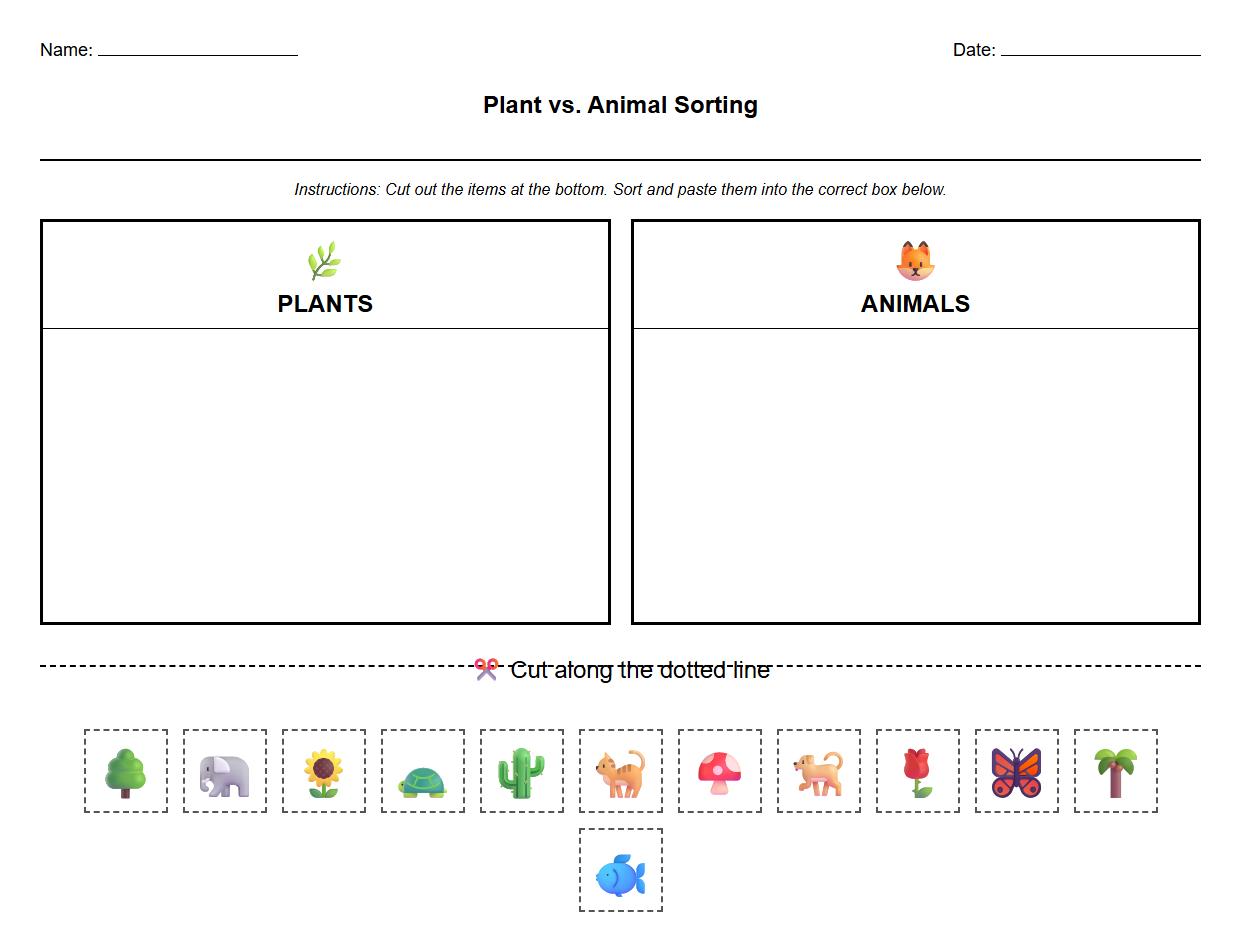
Plant vs Animal Item Sorting Worksheet using Visual Cues

Download PDF     Pin it

Solid and Liquid Object Classification Worksheet for States of Matter
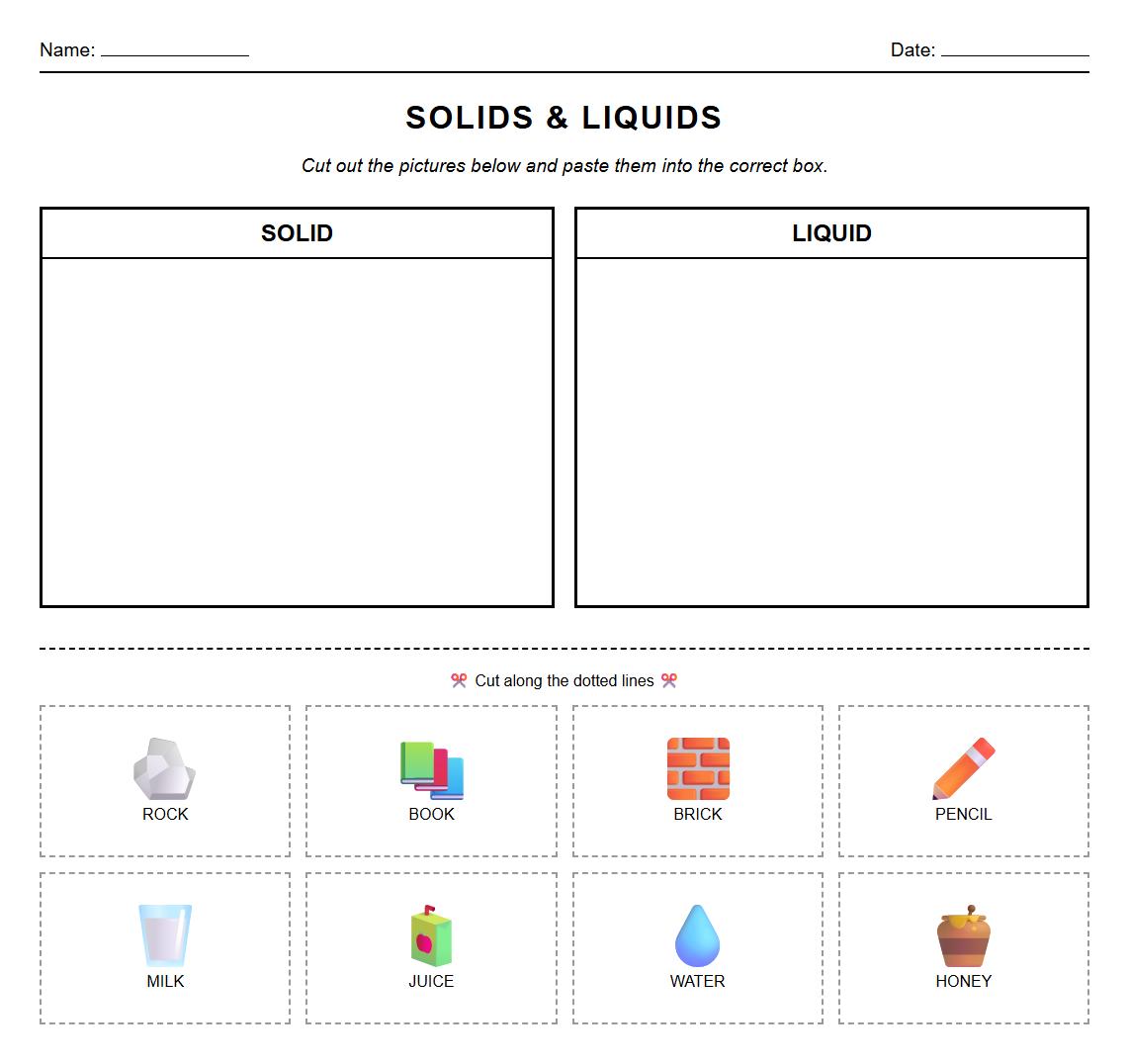
Solid and Liquid Object Classification Worksheet for States of Matter

Download PDF     Pin it

Sorting Natural vs Man-Made Items Worksheet for Environmental Science
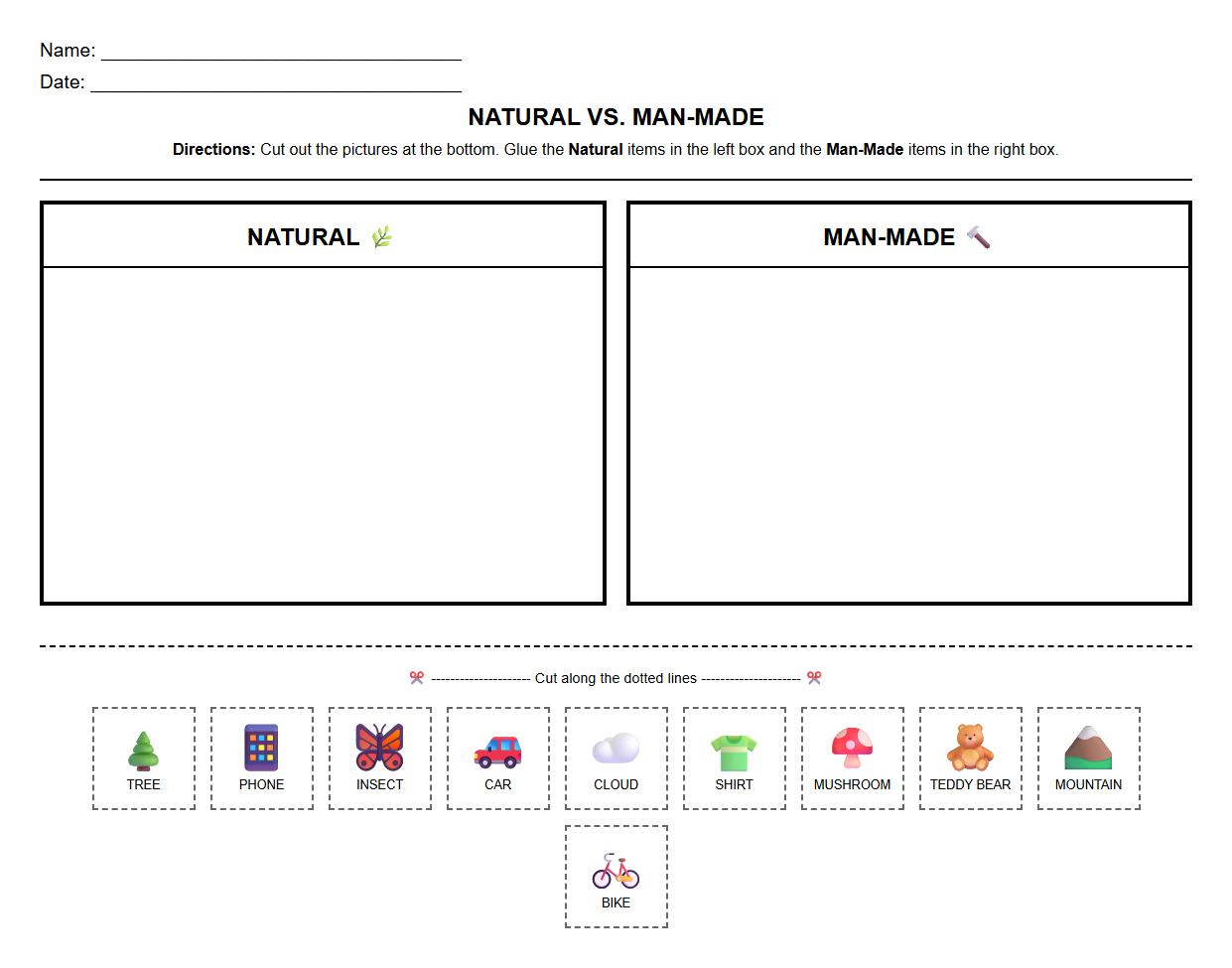
Sorting Natural vs Man-Made Items Worksheet for Environmental Science

Download PDF     Pin it

Sorting by Size Worksheet using Measurement and Comparison Skills
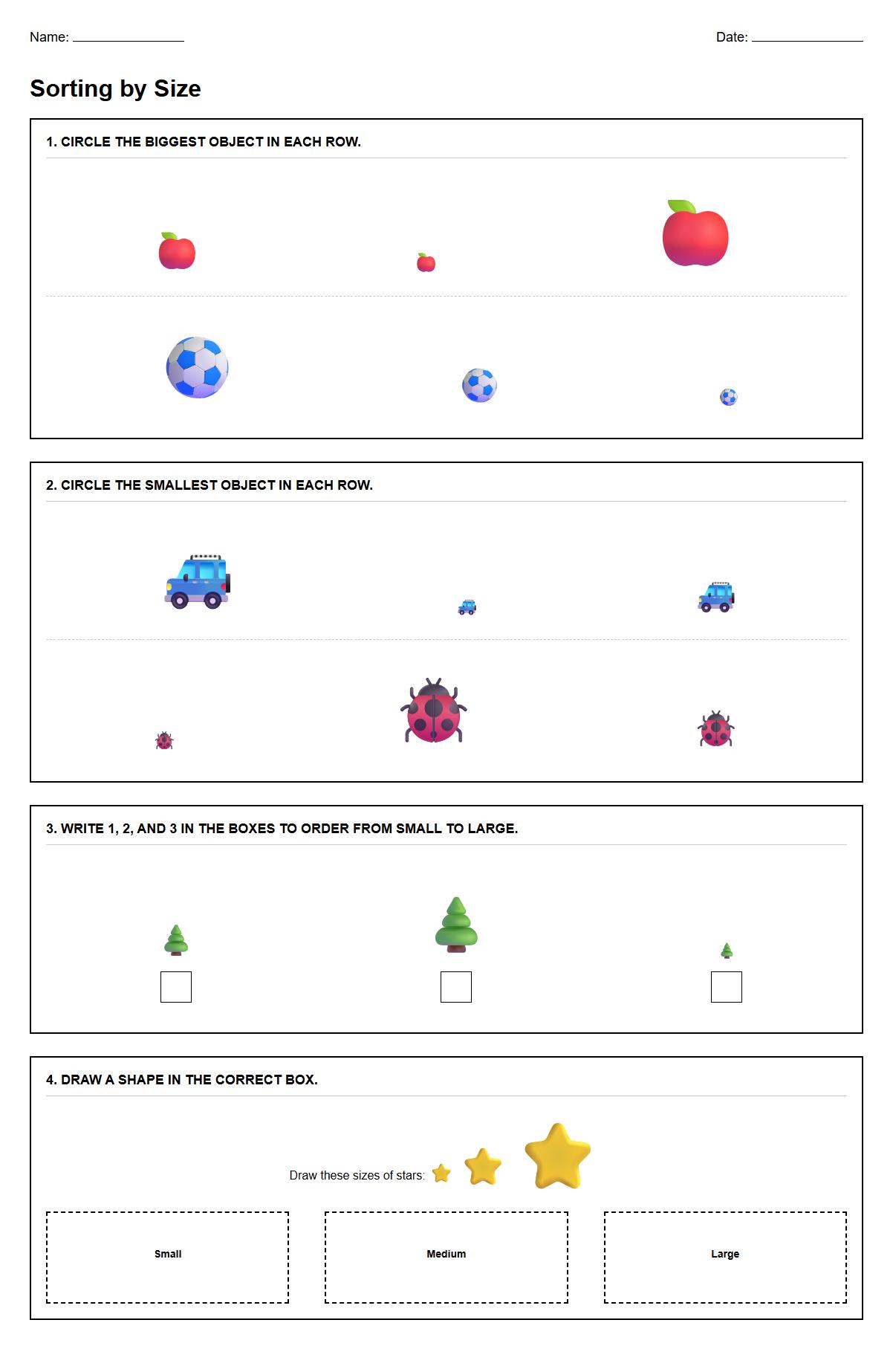
Sorting by Size Worksheet using Measurement and Comparison Skills

Download PDF     Pin it

Three Different Ways to Sort Objects

Encourage children to explore sorting methods by color, shape, and size. Sorting by color helps develop visual discrimination skills, while sorting by shape enhances geometric understanding. Sorting by size teaches concepts of big and small, promoting comparison abilities.

Grouping Items by Color

Ask children to find which items belong together based on their color. This activity improves their ability to identify and categorize colors. Use brightly colored objects to maintain engagement and make learning fun.

Grouping Items by Shape

Invite children to group items according to their shapes, such as circles, squares, and triangles. This strengthens their spatial awareness and helps them recognize patterns. Use a range of familiar shapes to encourage confidence in sorting.

Sorting by Texture

Encourage children to explore and sort objects by how they feel when touched, such as smooth, rough, or soft. This sensory activity supports tactile development and vocabulary building. Provide a variety of textured materials for a richer experience.

Sorting by Size

Guide children to sort objects by size, from smallest to largest or vice versa. This fosters an understanding of measurement concepts and comparison skills. Use everyday items to make the activity relatable and practical.

Sorting by Material

Ask children to identify items made from the same material, such as wood, plastic, or metal. This helps introduce basic science concepts and categorization based on physical properties. Encouraging hands-on sorting enhances learning through discovery.

Sorting Objects by Location

Help children decide which objects belong outside or inside the house. This contextual sorting builds awareness of environment and object function. Use familiar household and outdoor items for better understanding.

Identifying Living Things

Encourage children to find all the living things in pictures, such as animals and plants. This develops recognition skills and introduces the concept of living vs. non-living. Support discussion about characteristics of living things to deepen understanding.

Sorting by Weight

Invite children to explore which items are heavy and which are light. This activity introduces basic physics concepts and comparison skills. Use safe, easily handled objects to keep the activity engaging and hands-on.

Matching Related Items

Encourage children to match items that go together, such as a spoon with a bowl or shoes with socks. This improves logical thinking and understanding of relationships between objects. Use familiar pairs to reinforce everyday connections.


More in Mathematics Category


About the author. Nylen Smith is a dedicated educator and cofounder of KWorksheet.com, a popular platform specializing in high-quality kindergarten worksheets and printable activities.

Disclaimer. The information provided in this document is for general informational purposes and/or document sample only and is not guaranteed to be factually right or complete. Please report to us via contact-us page if you find and error in this page, thanks.

Comments

No comment yet