Engaging Kindergarten Time Telling Worksheets Covering Hour and Half Hour

📅 Mar 19, 2025 👤 Nylen Smith

Kindergarten time-telling worksheets focus on helping young learners master reading clocks for both the hour and half-hour marks. These exercises use simple, clear visuals and interactive activities designed to build foundational time skills effectively. Explore our collection of worksheets to support your child's learning journey today.

Analog Clock Matching Worksheet for Hour and Half Hour
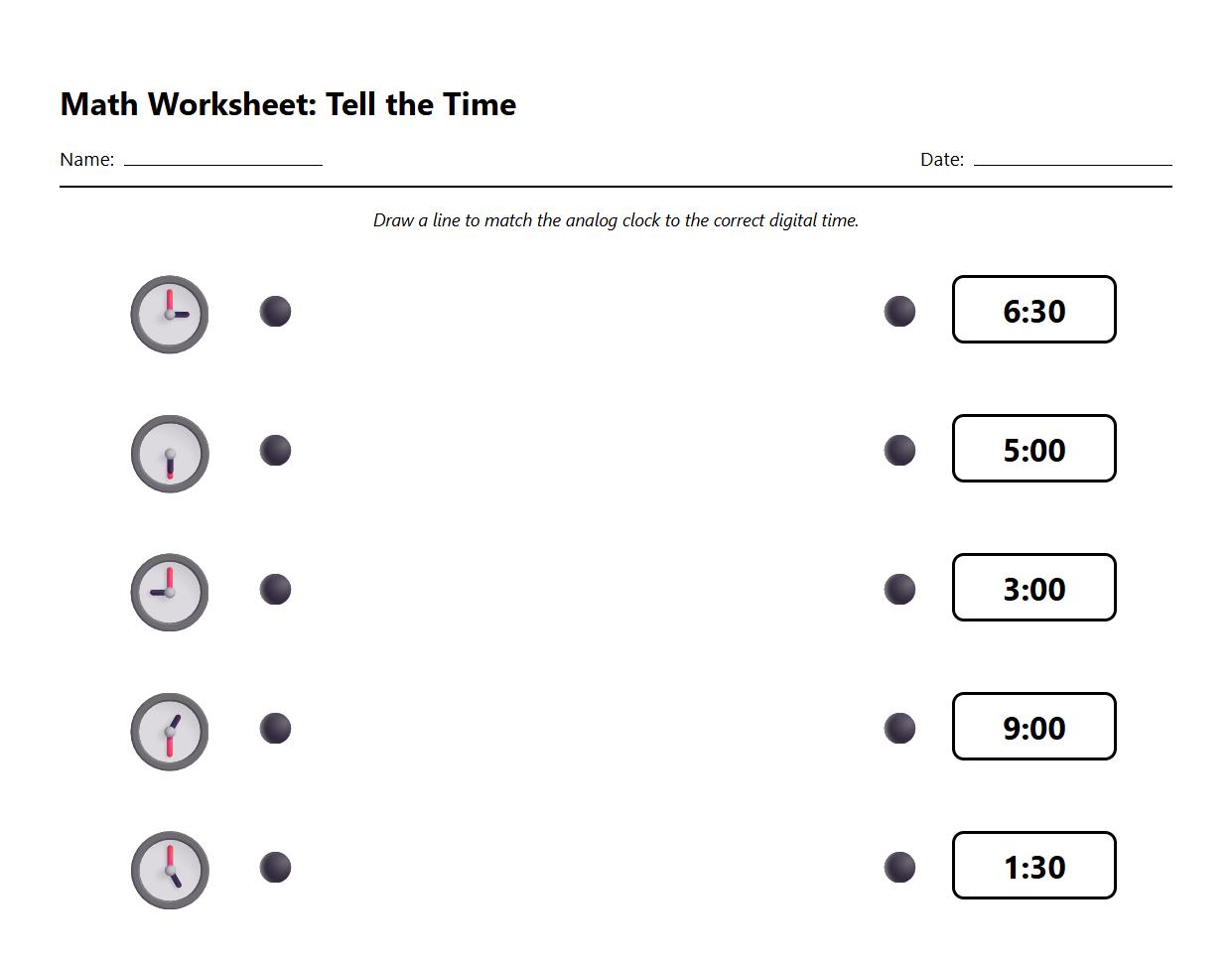
Analog Clock Matching Worksheet for Hour and Half Hour

Download PDF     Pin it

Digital and Analog Time Conversion Phonics Worksheet
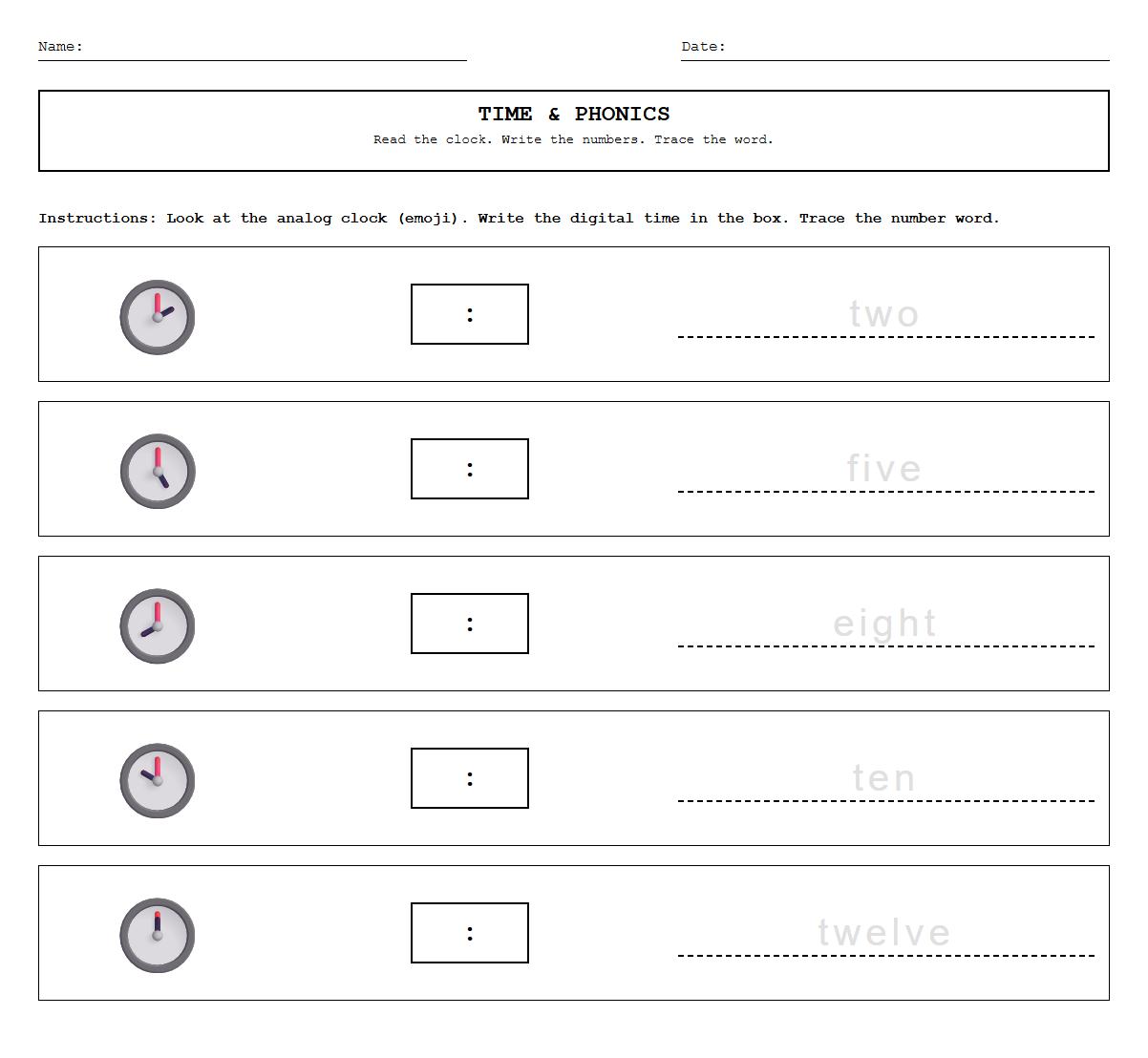
Digital and Analog Time Conversion Phonics Worksheet

Download PDF     Pin it

Draw the Hands Time Telling Worksheet for Kindergarten
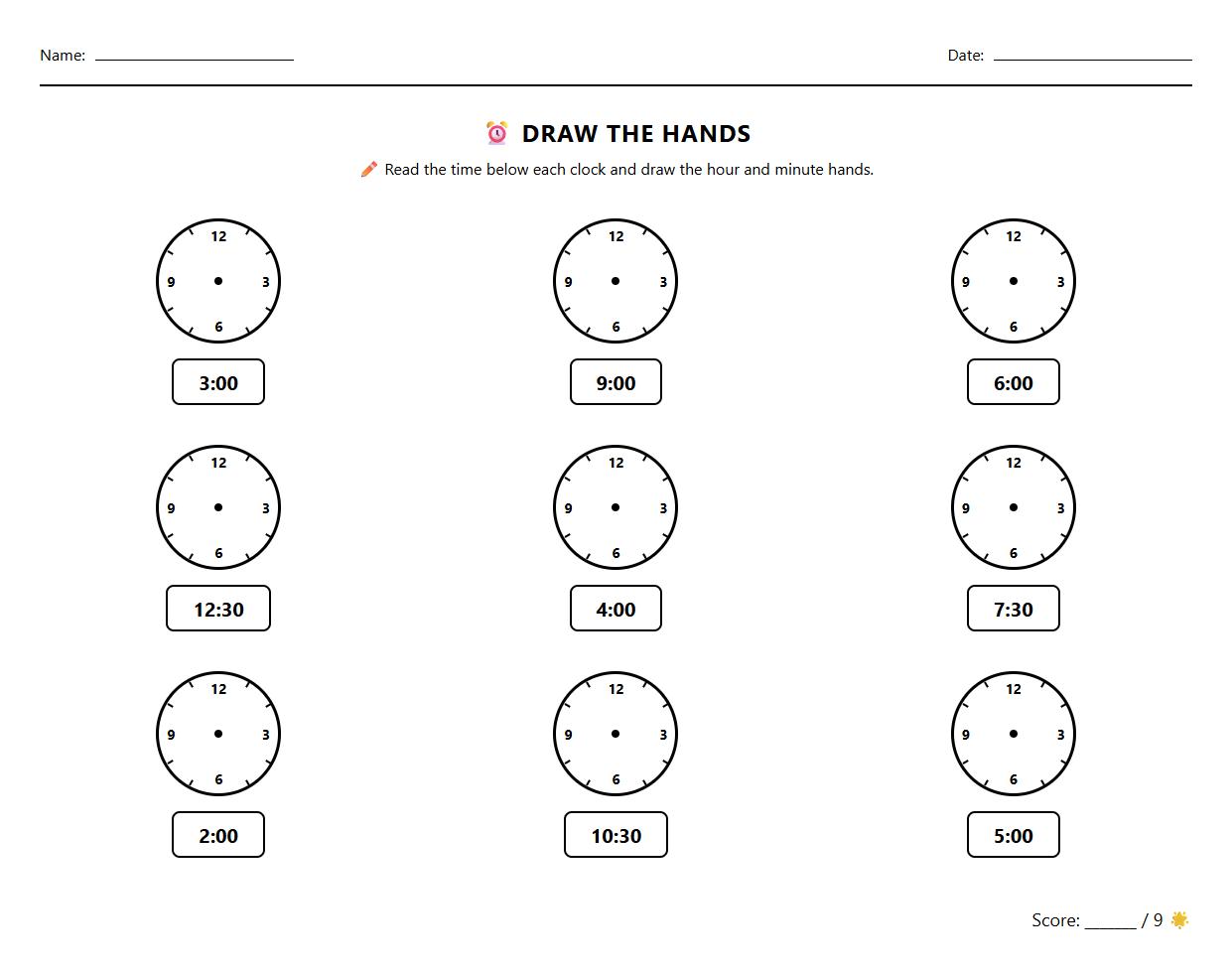
Draw the Hands Time Telling Worksheet for Kindergarten

Download PDF     Pin it

Cut and Paste Time Sorting Hour and Half Hour Activity
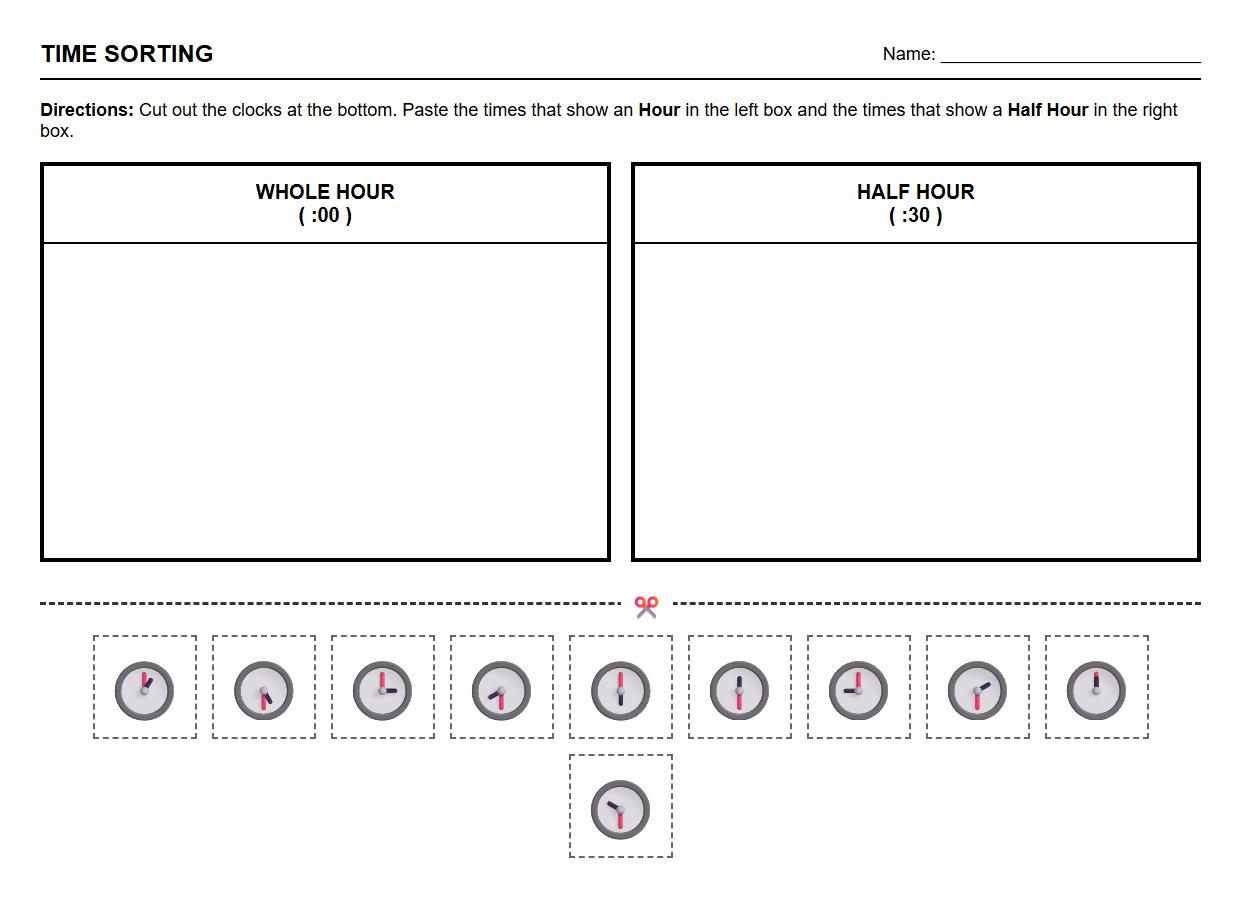
Cut and Paste Time Sorting Hour and Half Hour Activity

Download PDF     Pin it

Fill in the Blank Time Identification Worksheet
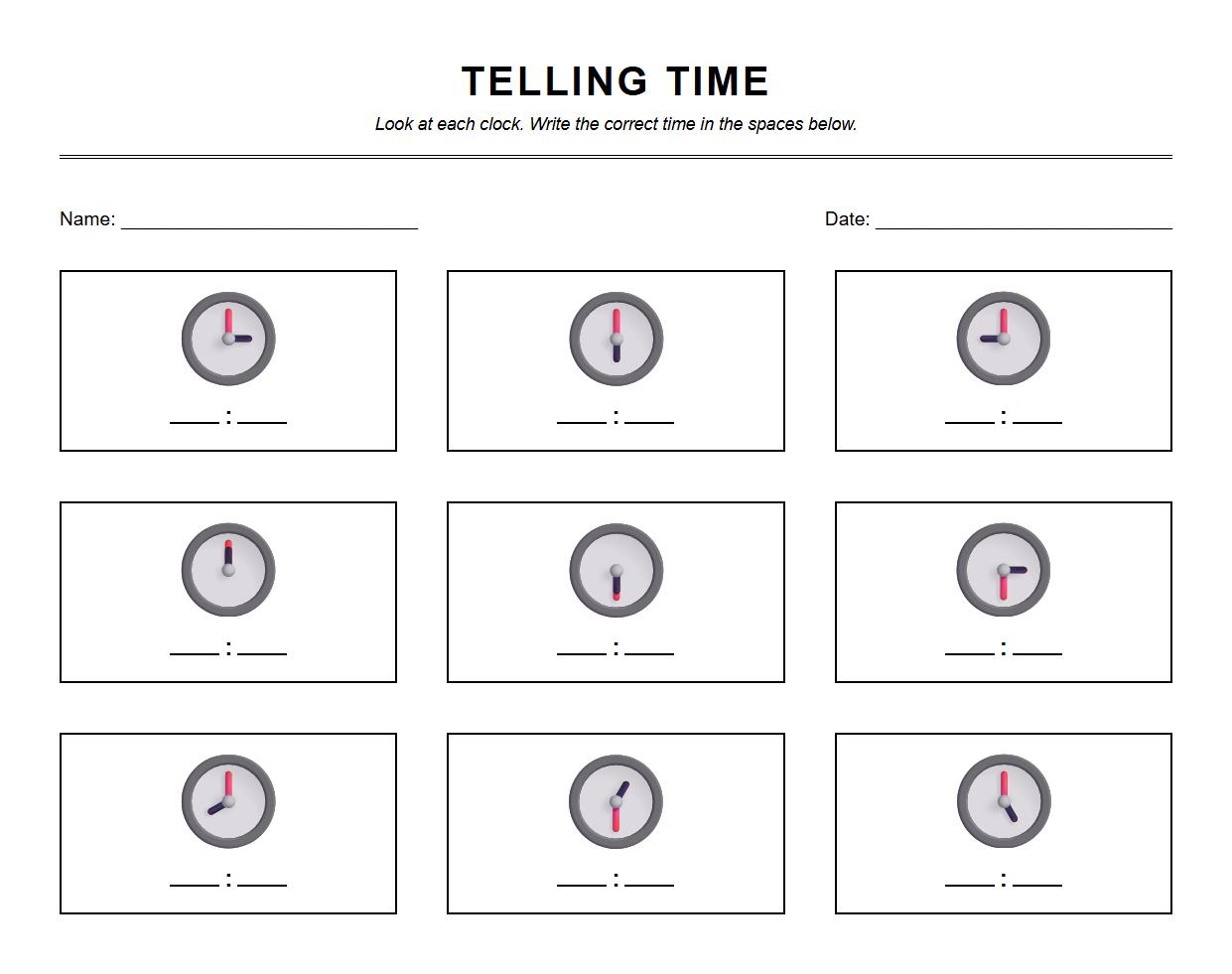
Fill in the Blank Time Identification Worksheet

Download PDF     Pin it

Time Telling Bingo with Hour and Half Hour Focus
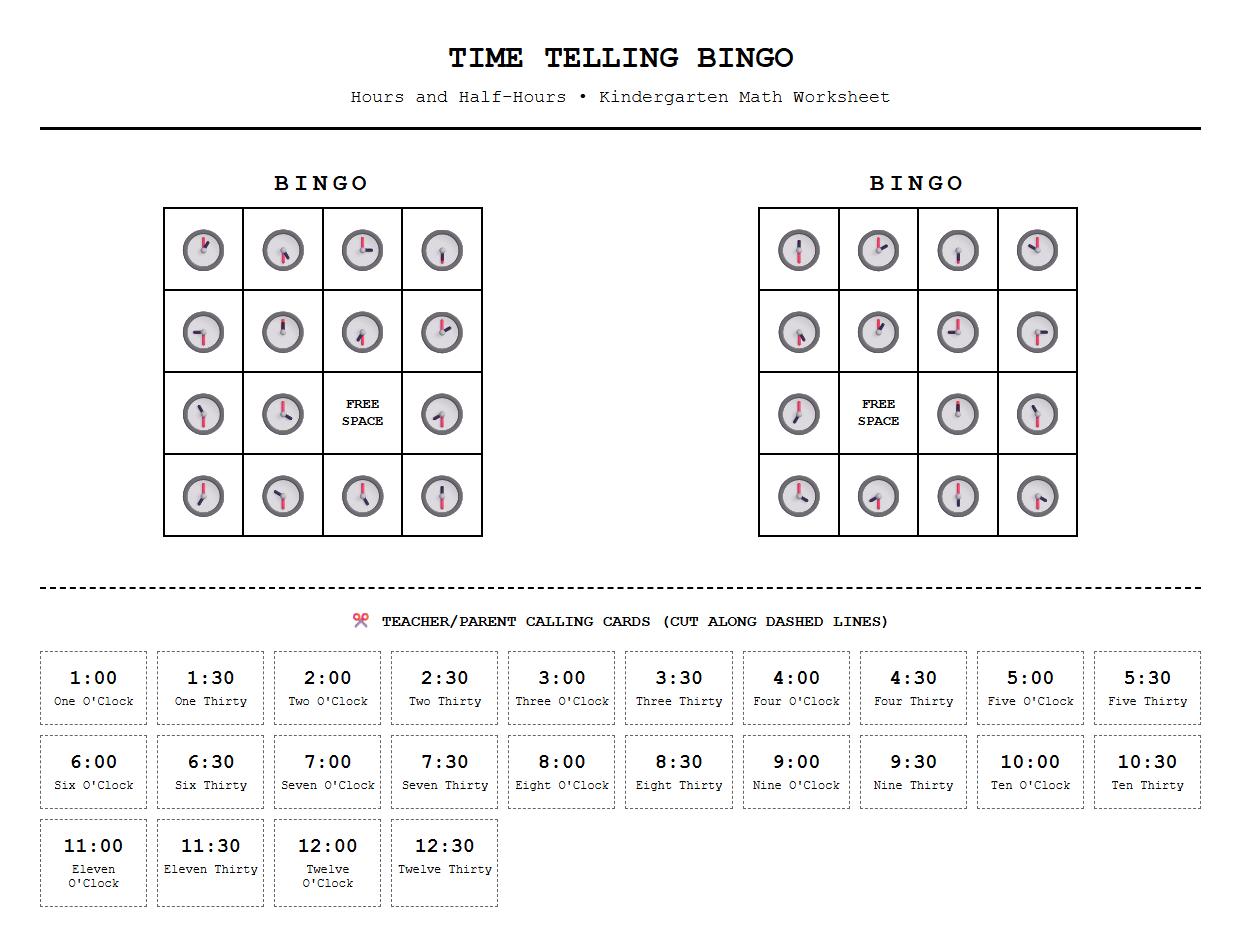
Time Telling Bingo with Hour and Half Hour Focus

Download PDF     Pin it

Trace and Write Clock Face Numbers Practice Sheet
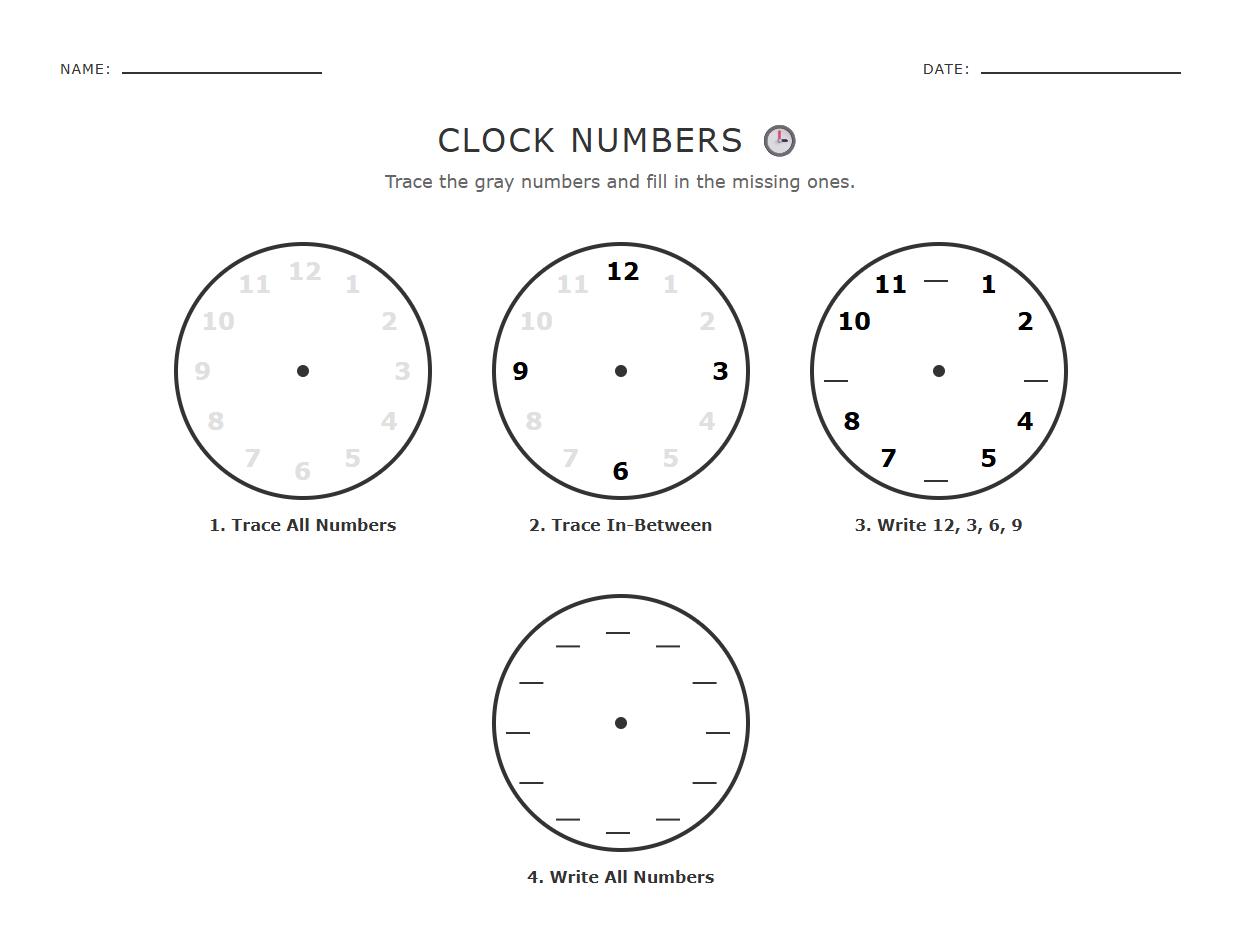
Trace and Write Clock Face Numbers Practice Sheet

Download PDF     Pin it

Multiple Choice Time Recognition Assessment Worksheet
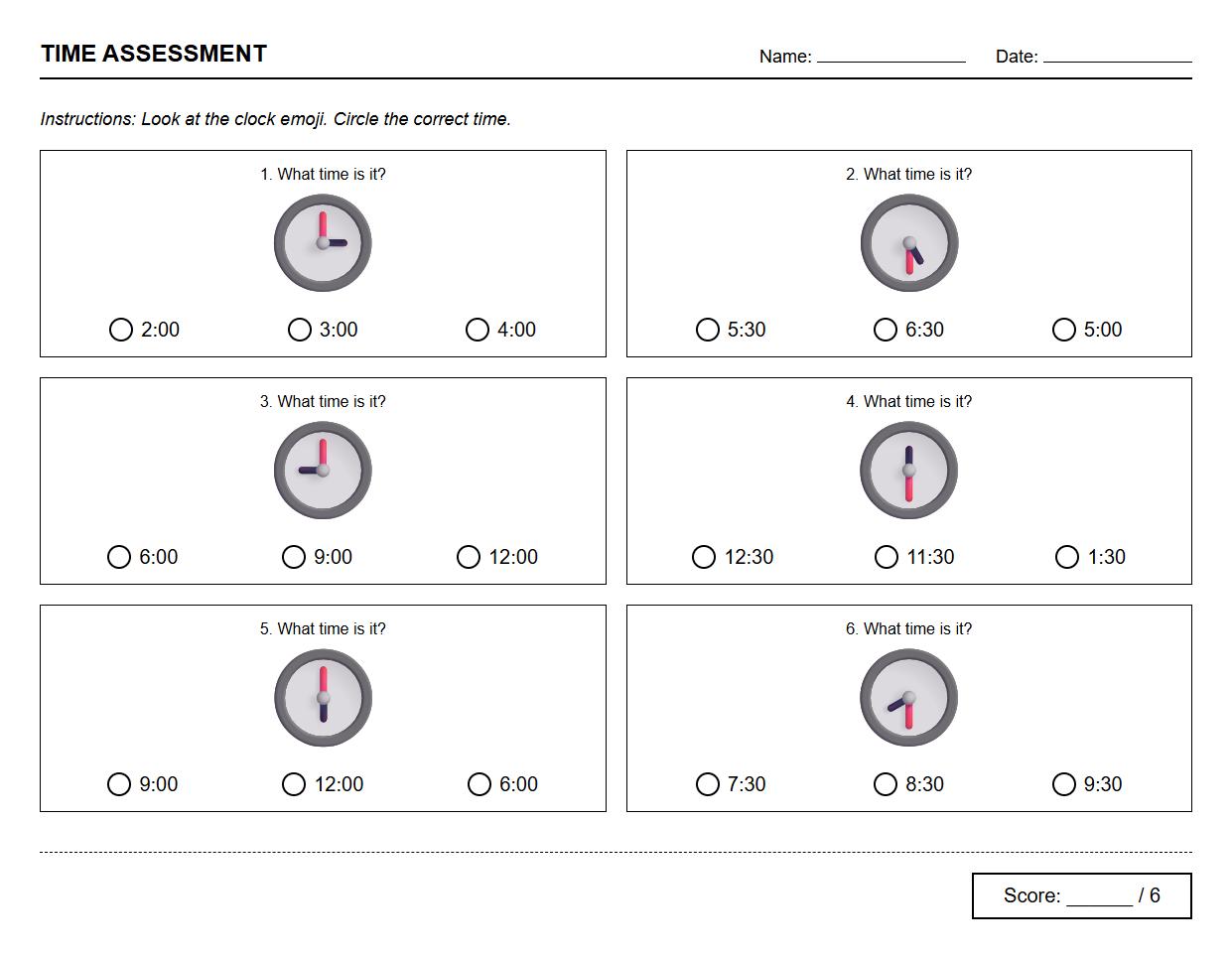
Multiple Choice Time Recognition Assessment Worksheet

Download PDF     Pin it

Daily Routine Time Sequencing Phonics Exercise
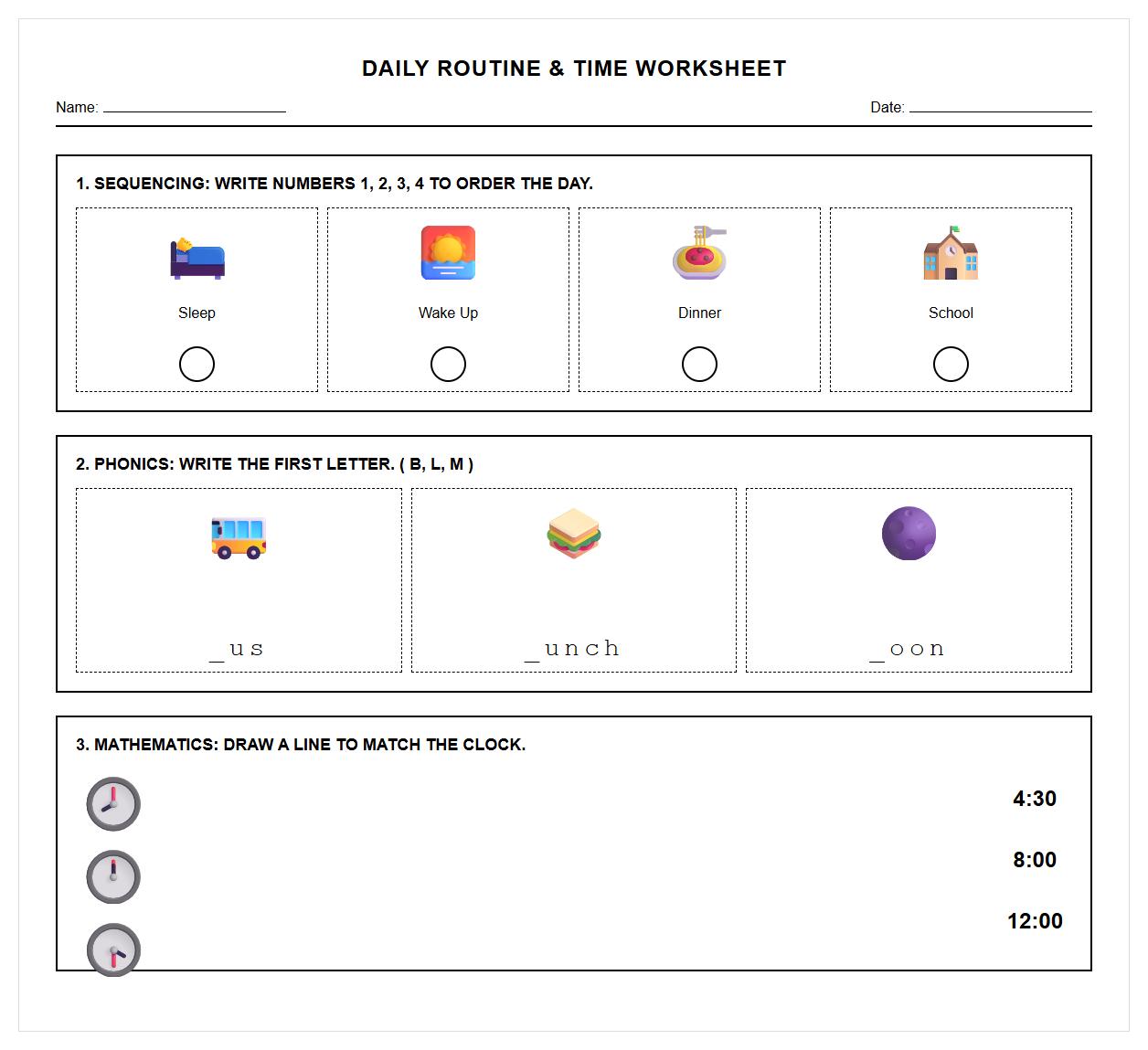
Daily Routine Time Sequencing Phonics Exercise

Download PDF     Pin it

Color by the Hour and Half Hour Clock Worksheet
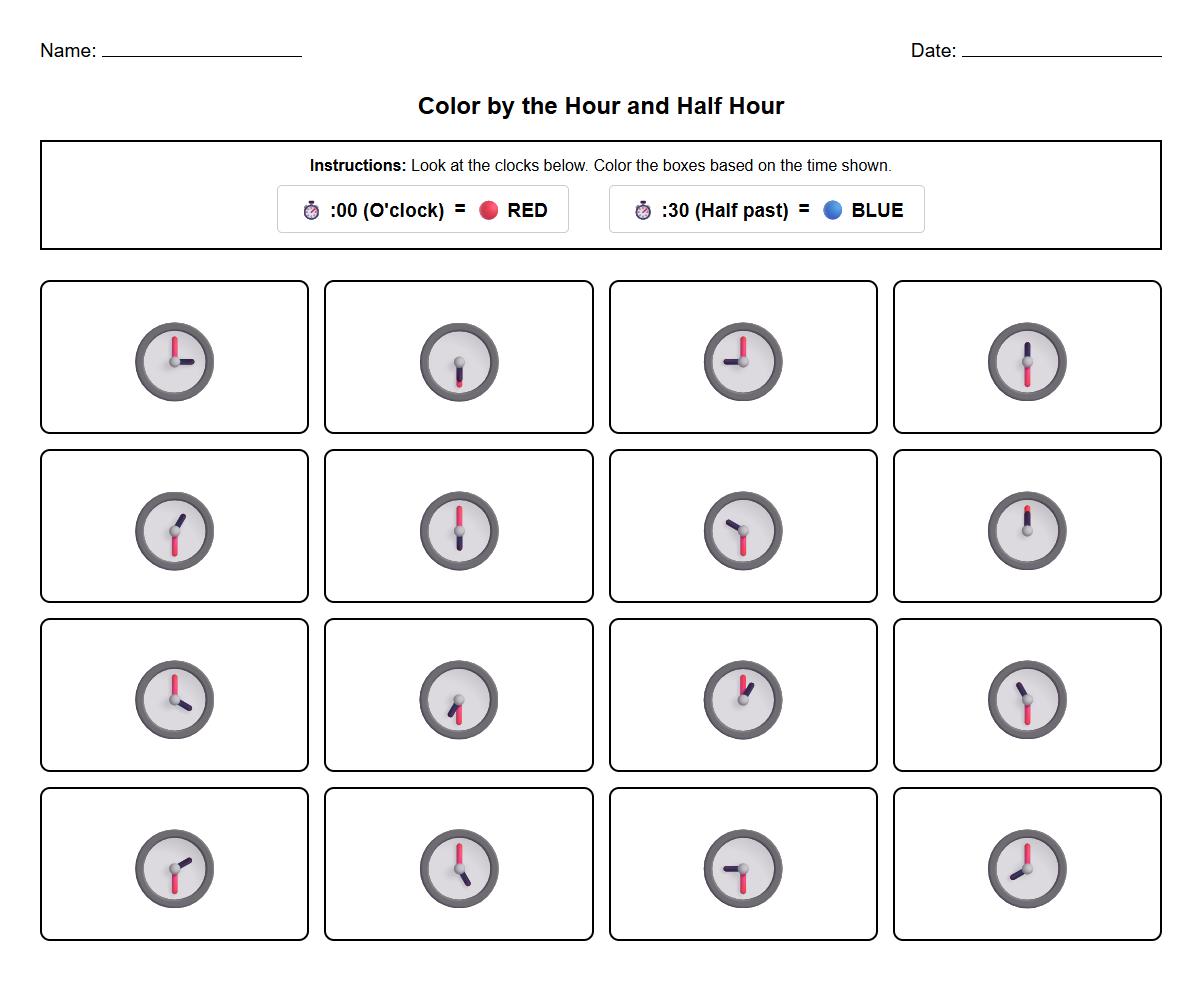
Color by the Hour and Half Hour Clock Worksheet

Download PDF     Pin it

Main Benefits of Using Time Telling Worksheets for Kindergarten Students

Time telling worksheets provide a structured learning approach that helps young learners grasp the concept of time progressively. They enhance fine motor skills-much like activities found in hands-on measurement worksheets-through writing and drawing clock hands. These worksheets also encourage independent learning for children, fostering confidence. Additionally, they help build foundational math skills essential for daily life.

How Hour and Half Hour Activities Improve Time Recognition Skills

Activities focused on the hour and half hour simplify time concepts for kindergarteners by breaking learning into manageable parts. These exercises reinforce recognition of clock positions, increasing accuracy and speed in reading time, similar to using visual aids in basic addition. Practicing half hour intervals helps children understand the idea of fractions in a tangible way. Regular practice strengthens memory retention and time sequencing.

Engaging Visuals to Include in Time Telling Worksheets

Using colorful clocks with clear numbers and distinct hour and minute hands enhances understanding. Incorporating familiar icons like animals or toys creates visual interest, making learning fun. Visual cues such as arrows or shaded sectors can illustrate intervals effectively, much like the strategies used in shape identification worksheets. Including real-life scenarios helps children relate time concepts to daily activities.

Supporting Hands-On Learning with Interactive Clock Exercises

Interactive clock exercises allow children to manipulate clock hands, reinforcing kinesthetic learning. These hands-on activities deepen understanding by connecting visual and physical movement, similar to experiences with ten frames subtraction worksheets. They encourage experimentation and discovery, promoting active engagement. This method supports various learning styles and builds practical skills.

Effective Strategies to Assess Comprehension of Hours and Half Hours

Regular quizzes or timed activities can track progress in time recognition. Using verbal questioning alongside worksheets helps gauge understanding comprehensively, as seen with sorting and classifying activities. Observation during interactive exercises reveals practical application skills. Providing immediate feedback encourages learning corrections and boosts confidence.

Enhancing Student Motivation with Themed Time Telling Worksheets

Themed worksheets featuring popular characters or seasonal motifs increase interest and engagement. Themes provide context, making abstract concepts more relatable and enjoyable. They cater to children's preferences, creating a positive learning environment, like the themed sorting worksheets. This approach supports sustained attention and enthusiasm.

Common Challenges Kindergarteners Face When Learning to Tell Time

Children often struggle with distinguishing hour and minute hands, causing confusion. Understanding the abstract concept of elapsed time can be difficult. Limited attention span may affect learning retention. Language barriers and lack of real-world practice also hinder progress, as can be observed during basic subtraction exercises.

How Parents Can Reinforce Time-Telling Skills at Home

Parents can utilize worksheets in daily routines to practice time concepts consistently, similar to using resources like tally worksheets at home. Incorporating time-related questions during activities promotes real-life application. Using interactive clocks at home supports hands-on learning. Offering praise and encouragement builds confidence and motivation.

Resources Complementing Worksheets for Teaching Hour and Half Hour Concepts

Digital apps and interactive games provide dynamic learning experiences alongside worksheets. Storybooks focused on time concepts add narrative context. Flashcards and manipulatives offer tactile reinforcement. Videos and songs can simplify abstract ideas through auditory learning, complementing practices found in skip counting resources.

Differentiating Time-Telling Worksheets to Meet Varied Learning Needs

Teachers can adjust worksheet difficulty by varying task complexity and support levels. Incorporating visual aids and step-by-step instructions helps diverse learners. Providing extra practice for struggling students and enrichment for advanced ones ensures inclusivity, a principle used in visual addition worksheets. Group activities encourage peer learning and collaboration.


More in Mathematics Category


About the author. Nylen Smith is a dedicated educator and cofounder of KWorksheet.com, a popular platform specializing in high-quality kindergarten worksheets and printable activities.

Disclaimer. The information provided in this document is for general informational purposes and/or document sample only and is not guaranteed to be factually right or complete. Please report to us via contact-us page if you find and error in this page, thanks.

Comments

No comment yet