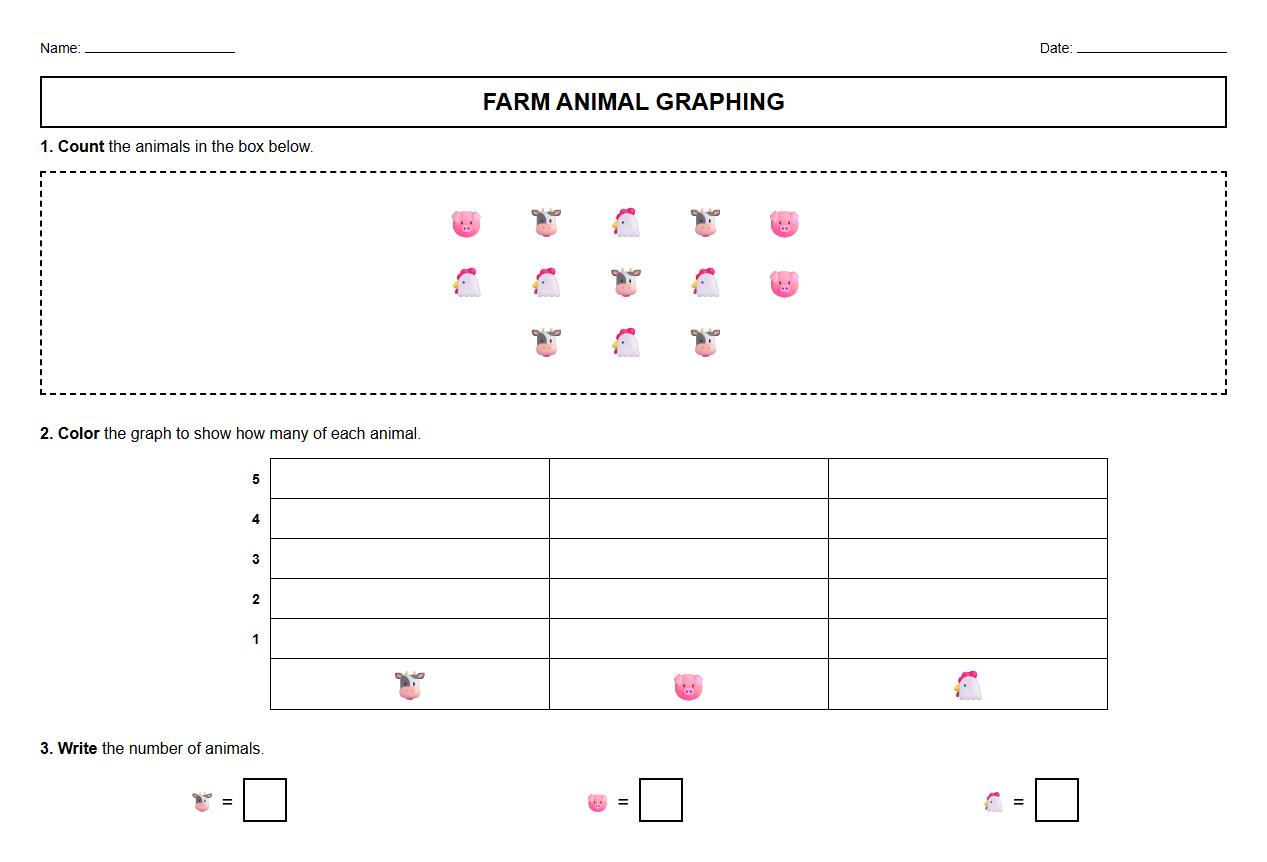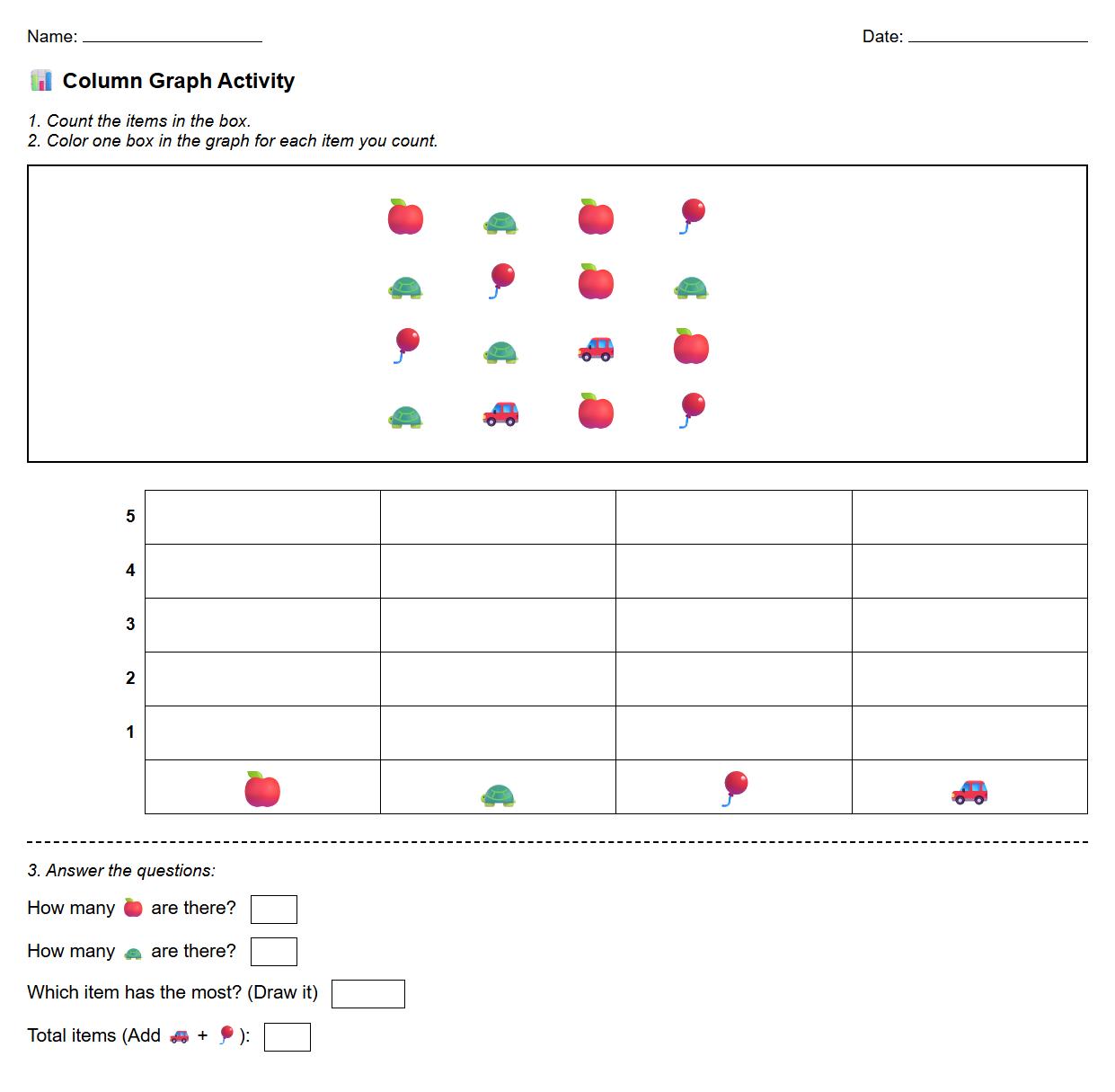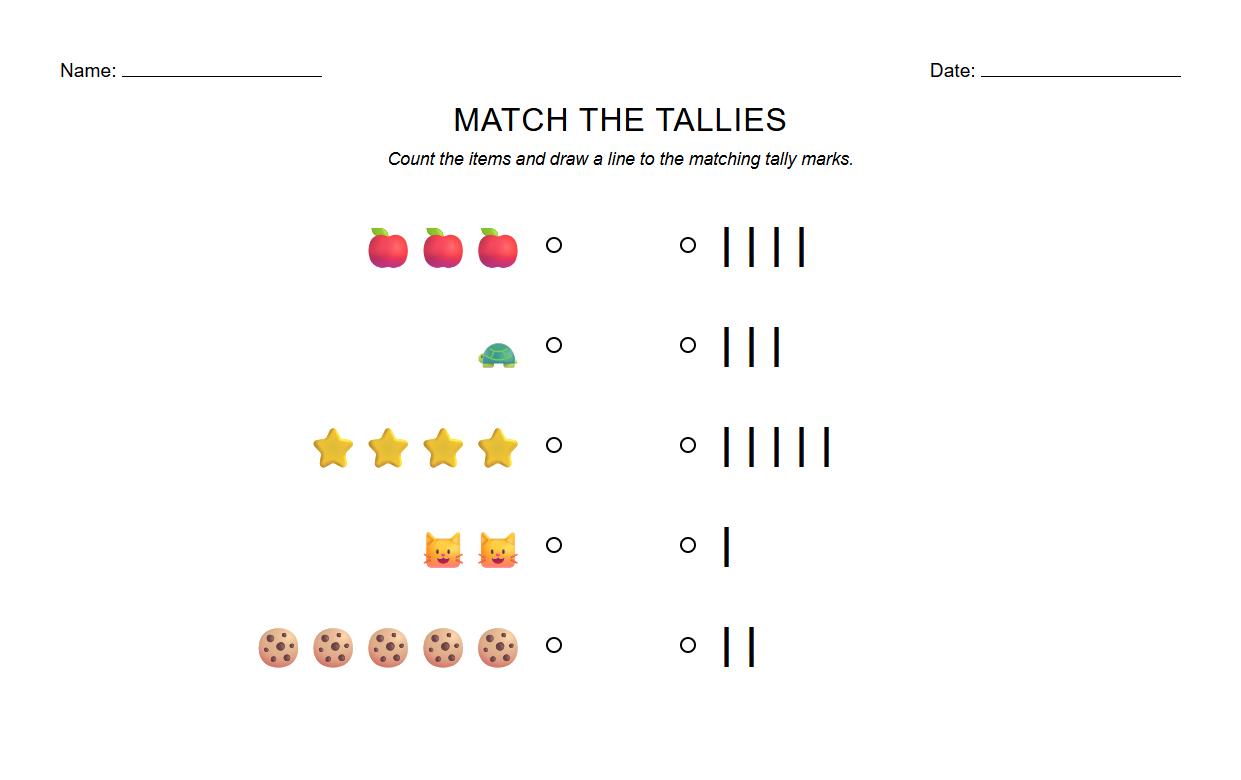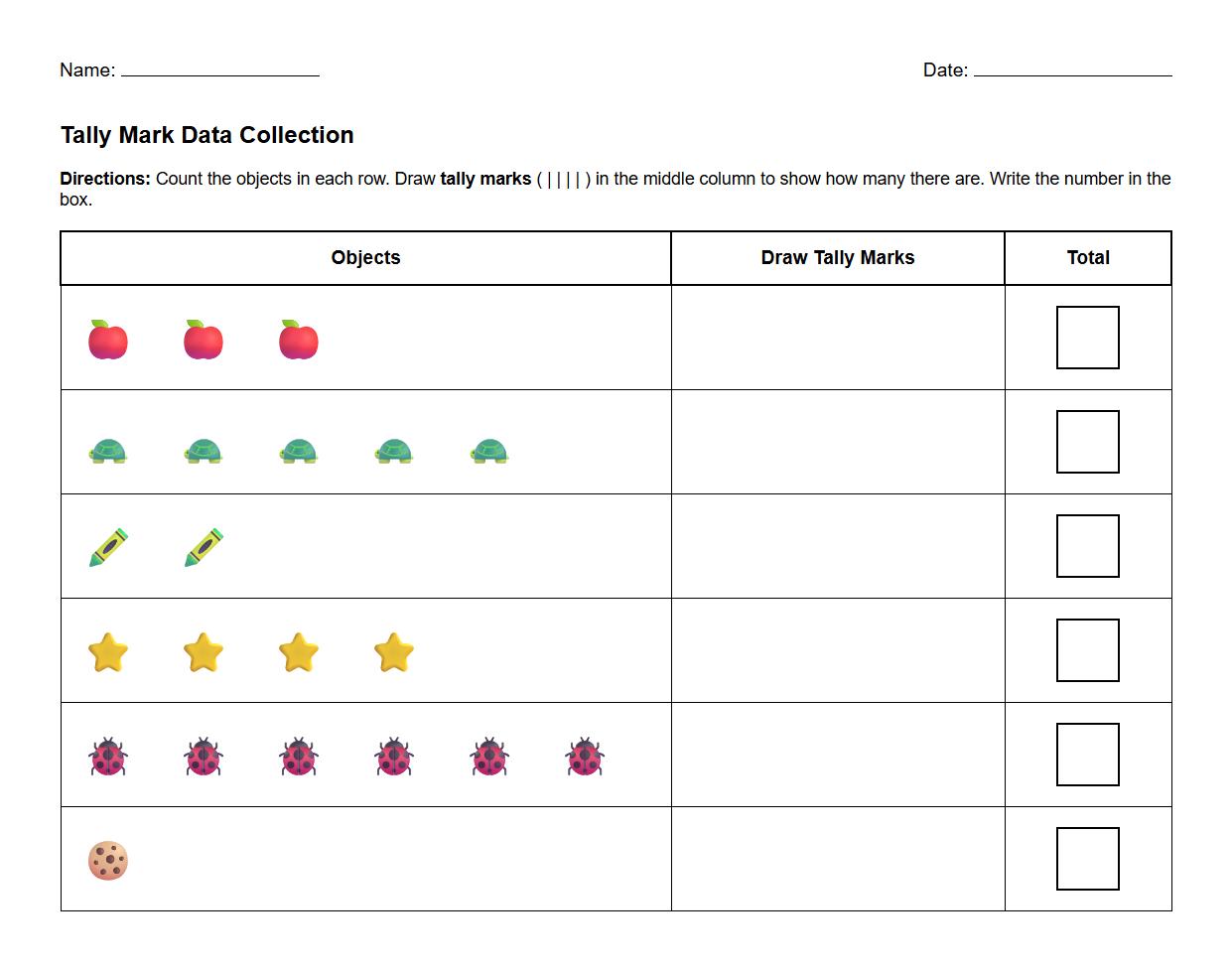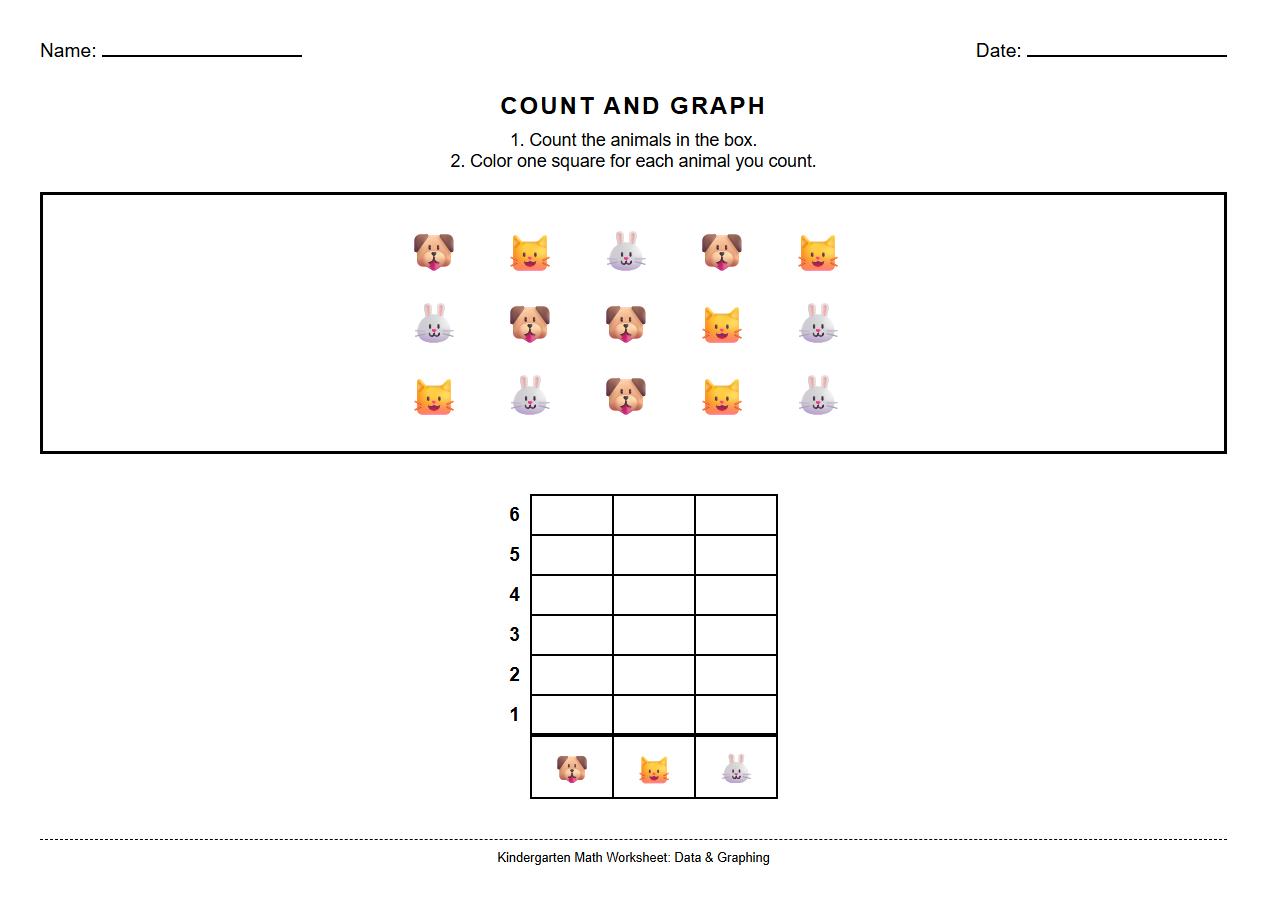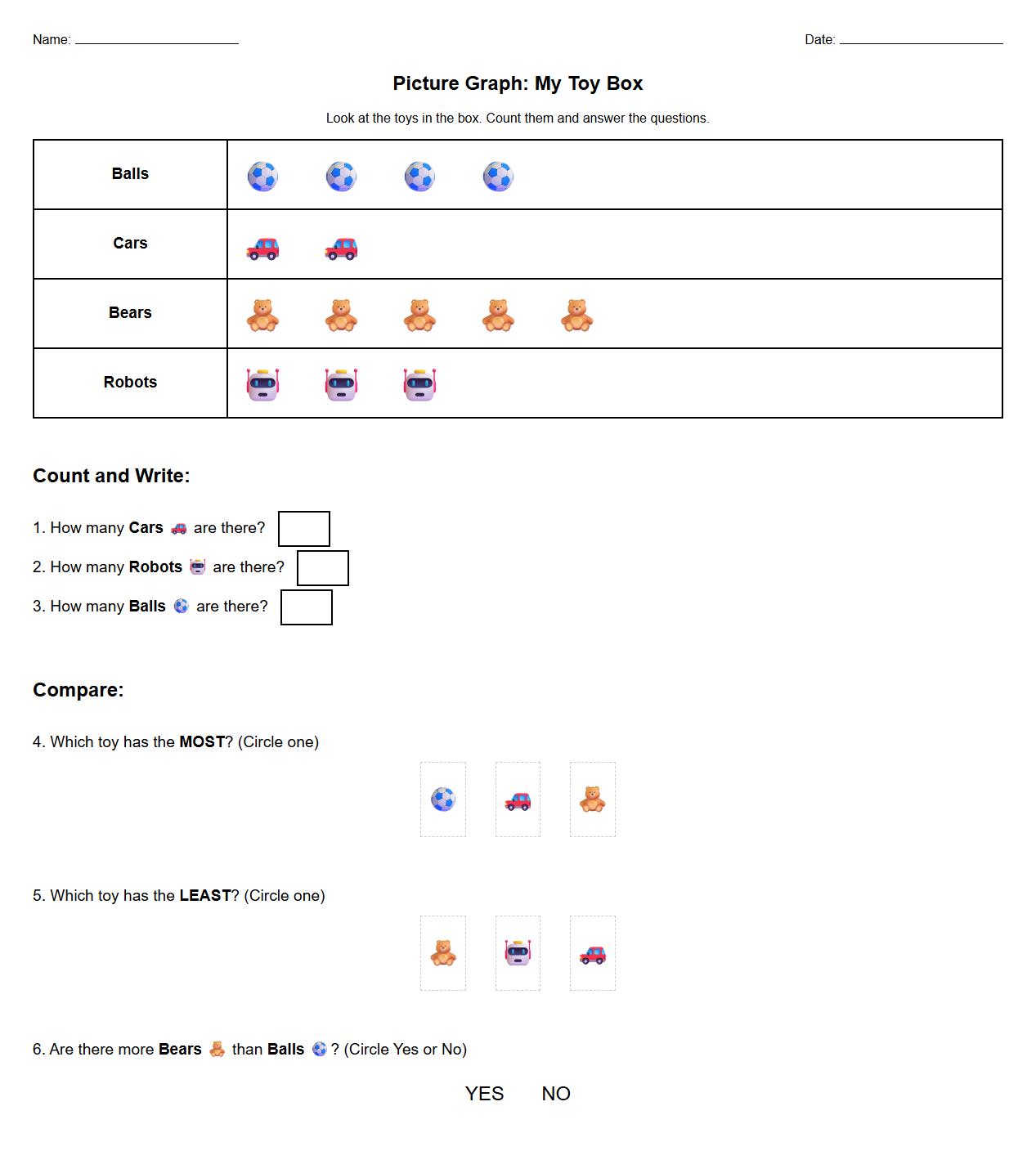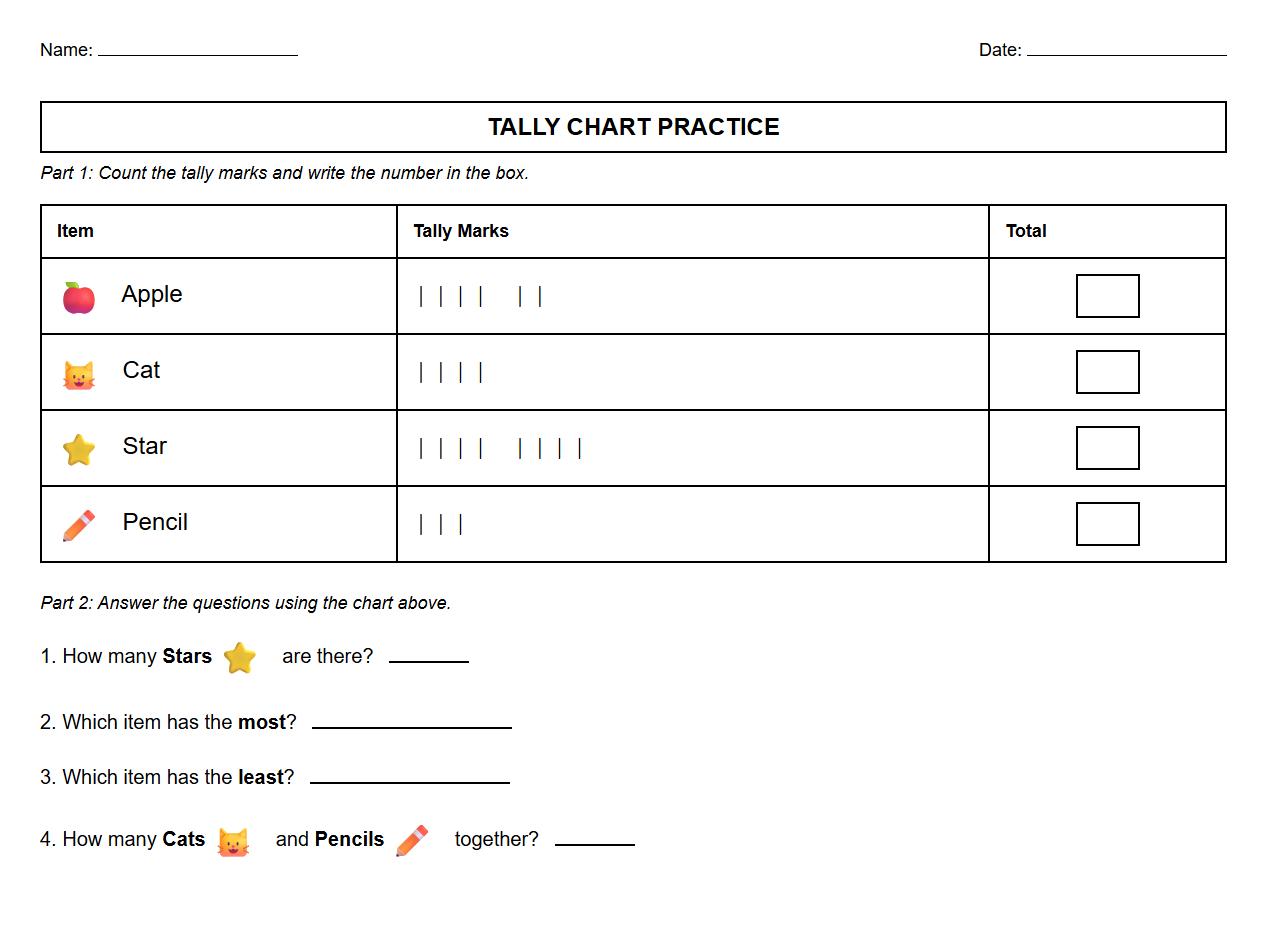
Kindergarten students develop essential data interpretation skills by practicing reading graphs and tally charts, which enhances their ability to collect and organize information visually. Engaging activities improve pattern recognition and numerical understanding through simple comparisons and counting. Explore our collection of worksheets designed to make learning fun and effective for young learners.
Understanding the Graph Title
The title of the graph helps identify the main topic or theme presented. It provides a clear summary of what the data represents, making it easier for children and adults to understand. In a worksheet guide, ensuring the title is simple and descriptive is essential for effective learning.
Counting Apples on the Tally Chart
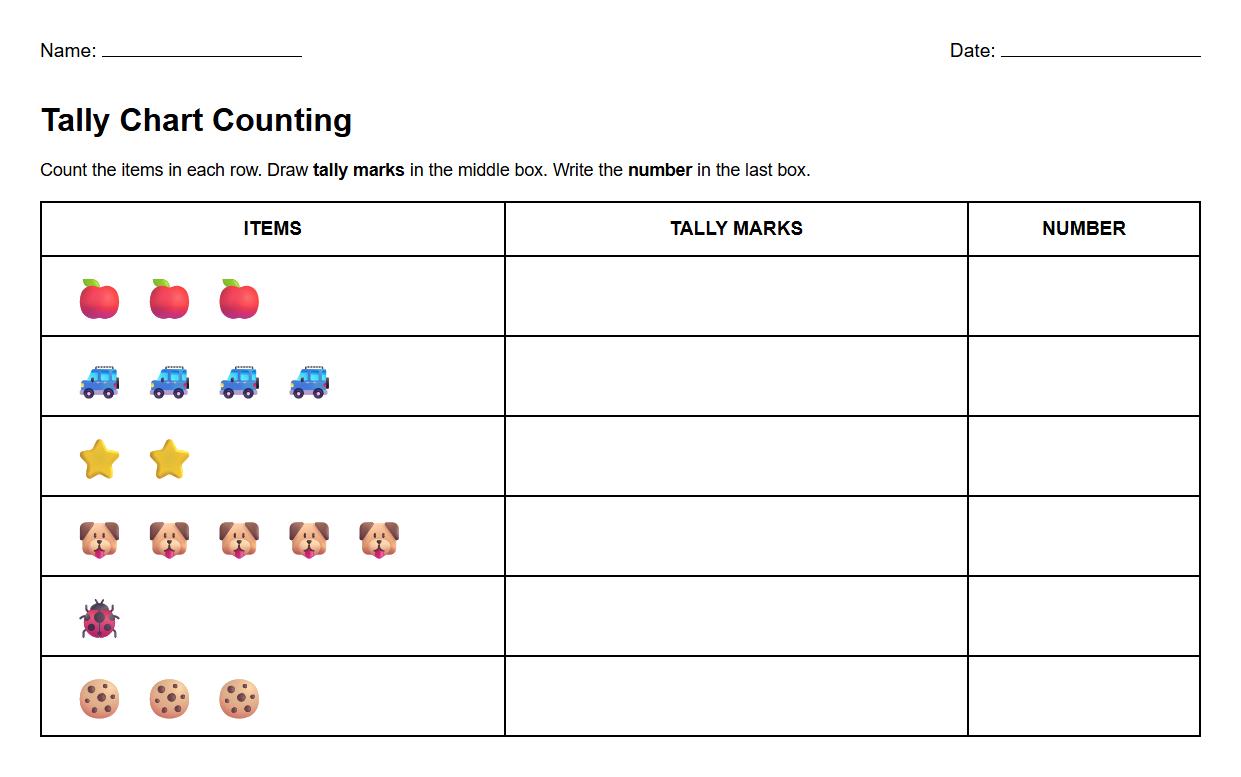
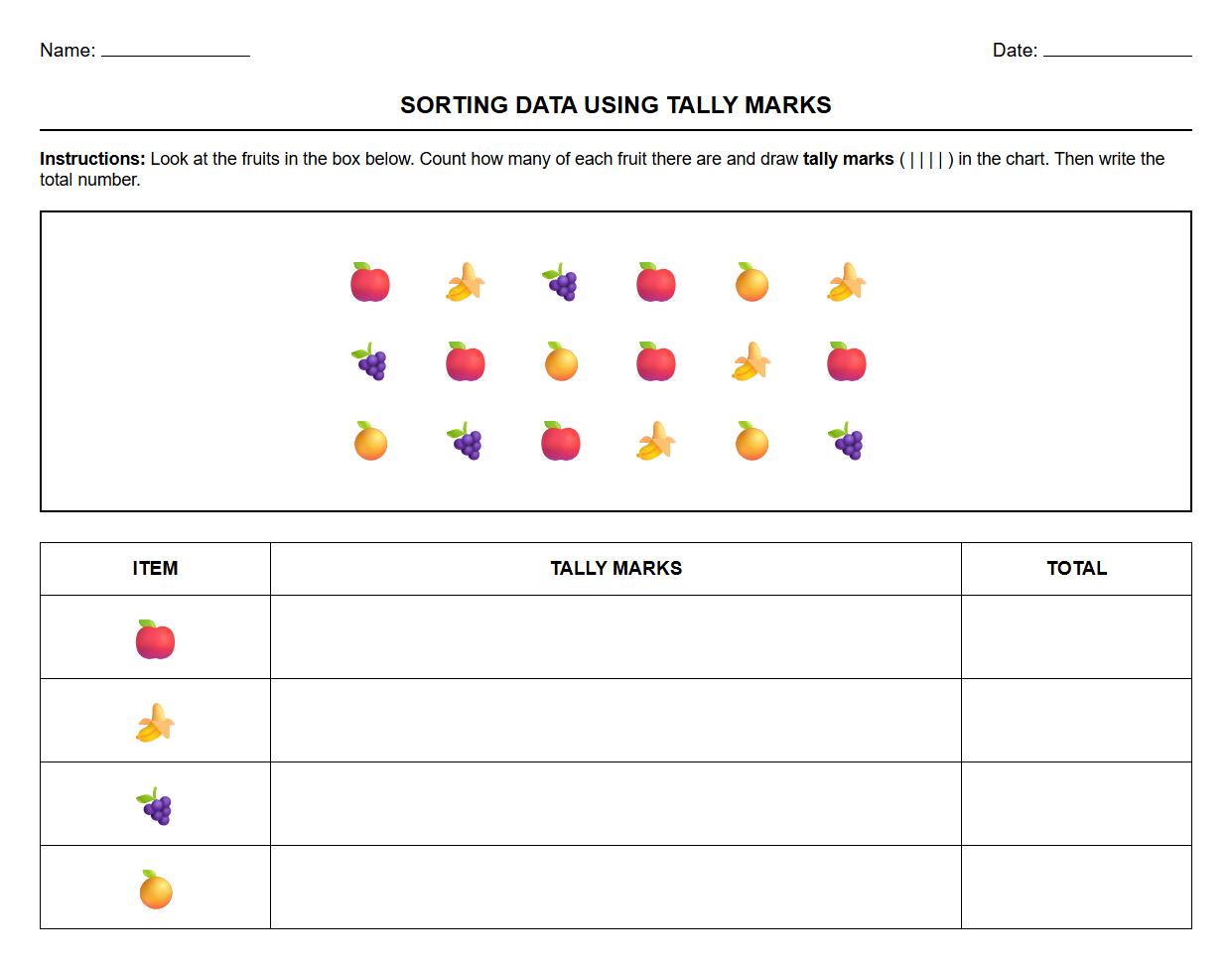
The tally chart shows the number of apples by tally marks, with each mark representing a specific count. For example, if there are 7 tally marks under apples, this means there are 7 apples. This visual aid helps children practice counting and comparing quantities.
Identifying the Fruit with the Most Tallies
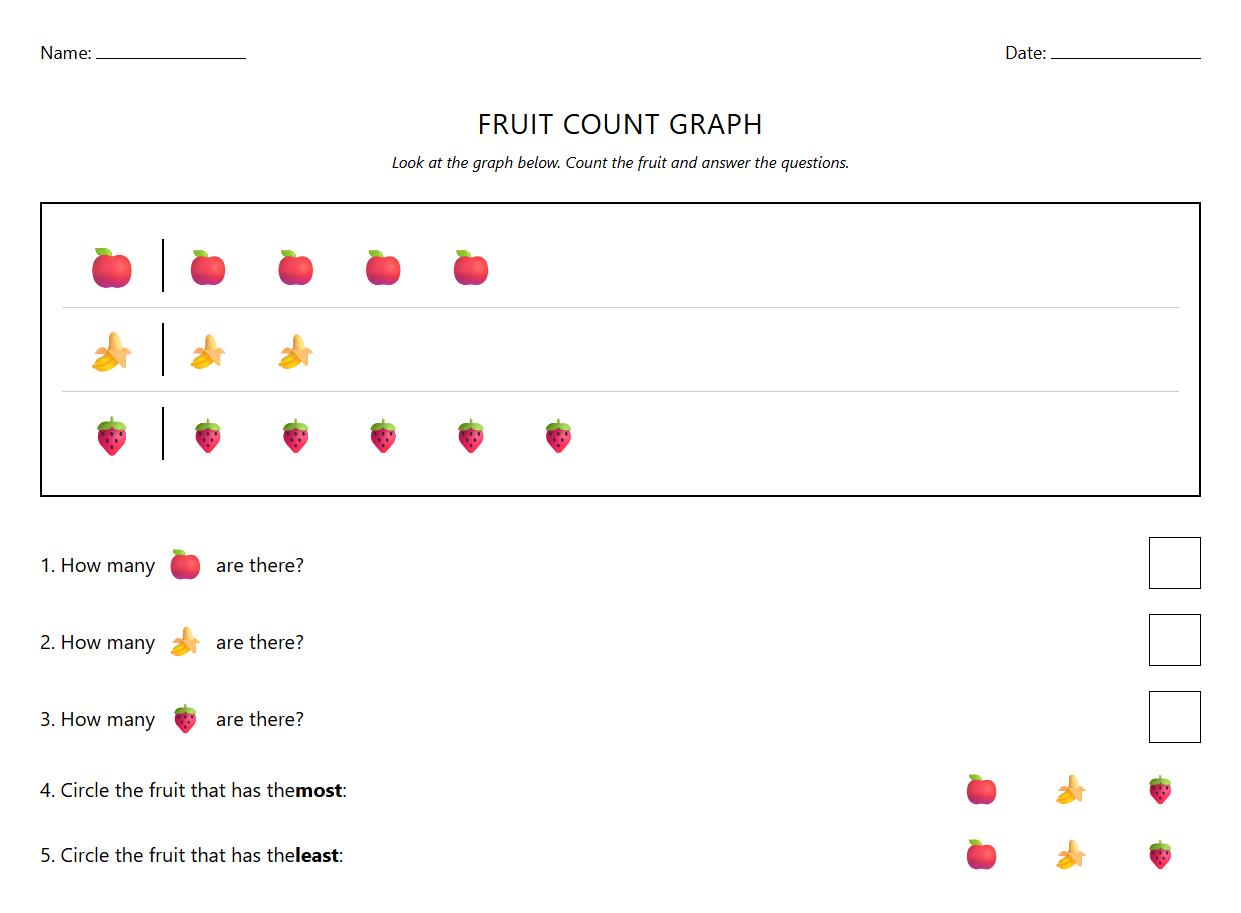
The fruit with the most tallies stands out as having the highest quantity on the chart. Teachers can guide students to compare the tallies for each fruit, determining which has the greatest number. This promotes analytical skills and attention to detail.
Comparing Bananas and Oranges
To find out how many more bananas than oranges there are, children subtract the number of tallies for oranges from bananas. This simple subtraction helps build basic math skills using real-life examples. It also encourages careful observation of the chart.
Finding the Item with the Least Amount
The item with the least amount on the graph is the one with the fewest tally marks or the shortest bar. Recognizing this helps students understand concepts like fewer and more in a visual context. It's a useful exercise for developing comparative reasoning.
Calculating the Total Number of Objects on the Graph
Adding all tally marks together gives the total number of objects shown on the graph, combining all categories. This reinforces addition skills and the idea of aggregating data. It also helps students appreciate the entire dataset rather than isolated parts.
Color Representation of Grapes on the Bar Graph
Each fruit is often represented by a distinct color on the bar graph to make identification easier. For example, grapes might be shown in purple, helping children associate colors with items. This use of color improves memory and visual learning.
Comparing Apples and Pears on the Chart
By comparing the tally marks or bars for apples and pears, students can see if there are more apples or pears. This teaches comparison and decision-making based on data. It also helps children practice describing quantities using charts.
Counting Items with the Same Number on the Chart
Identifying how many items have the same number of tallies encourages pattern recognition and grouping skills. Children learn to spot similarities and differences in data sets, which is a foundation for more advanced math concepts.
Understanding What Each Tally Mark Represents
Each tally mark typically represents one item in the chart, making it a basic counting tool. Explaining this to children helps them understand the direct connection between marks and quantities. It is a fundamental concept in data representation and numeracy.