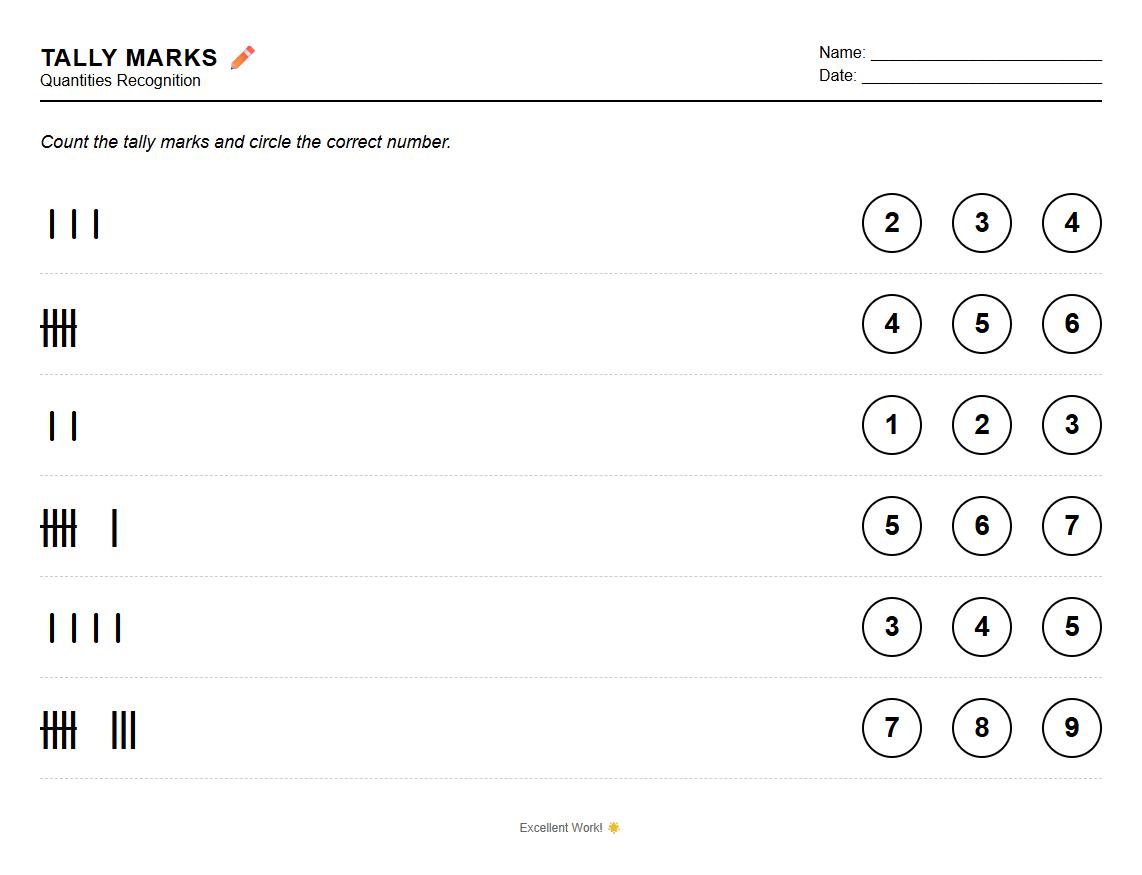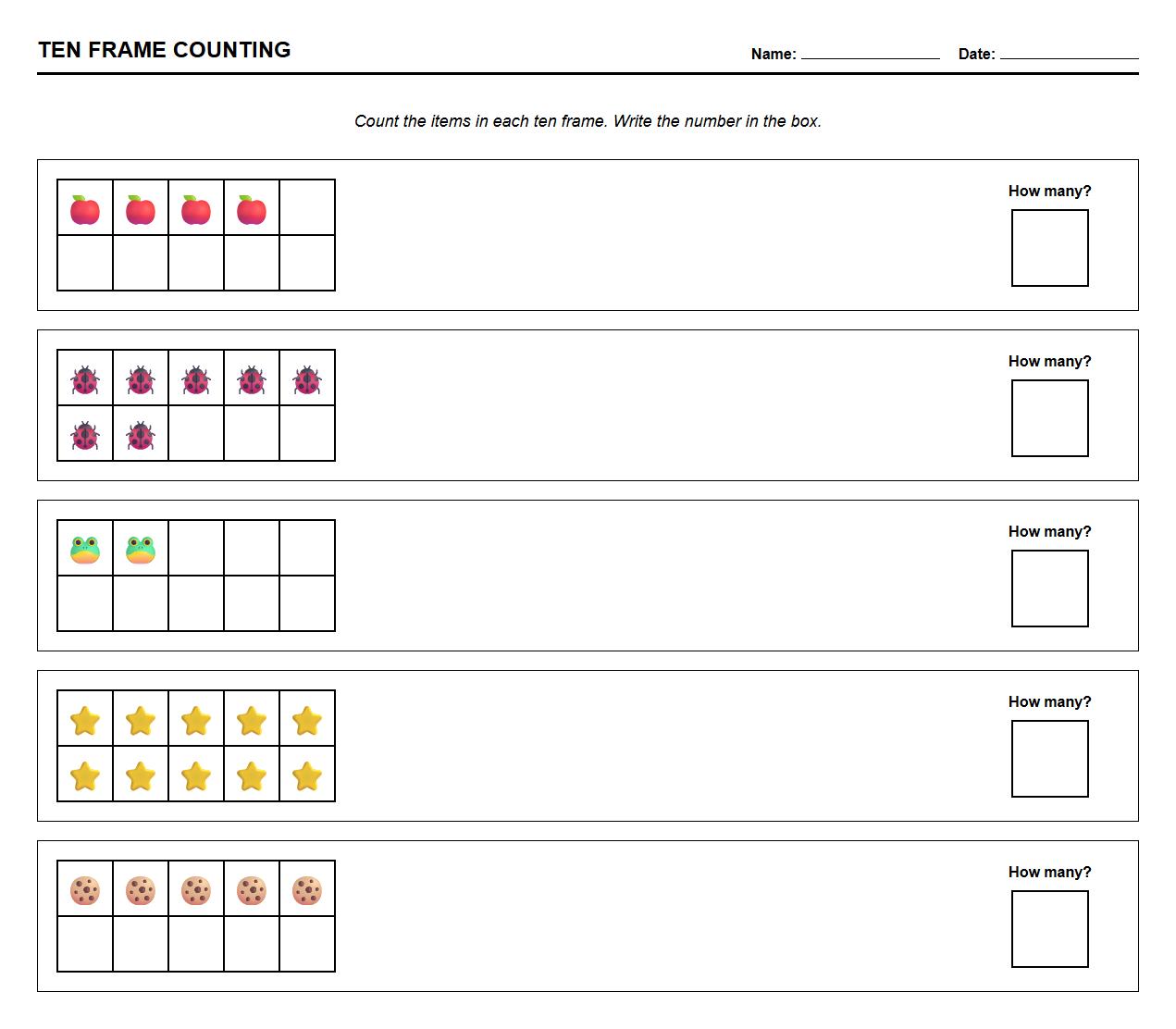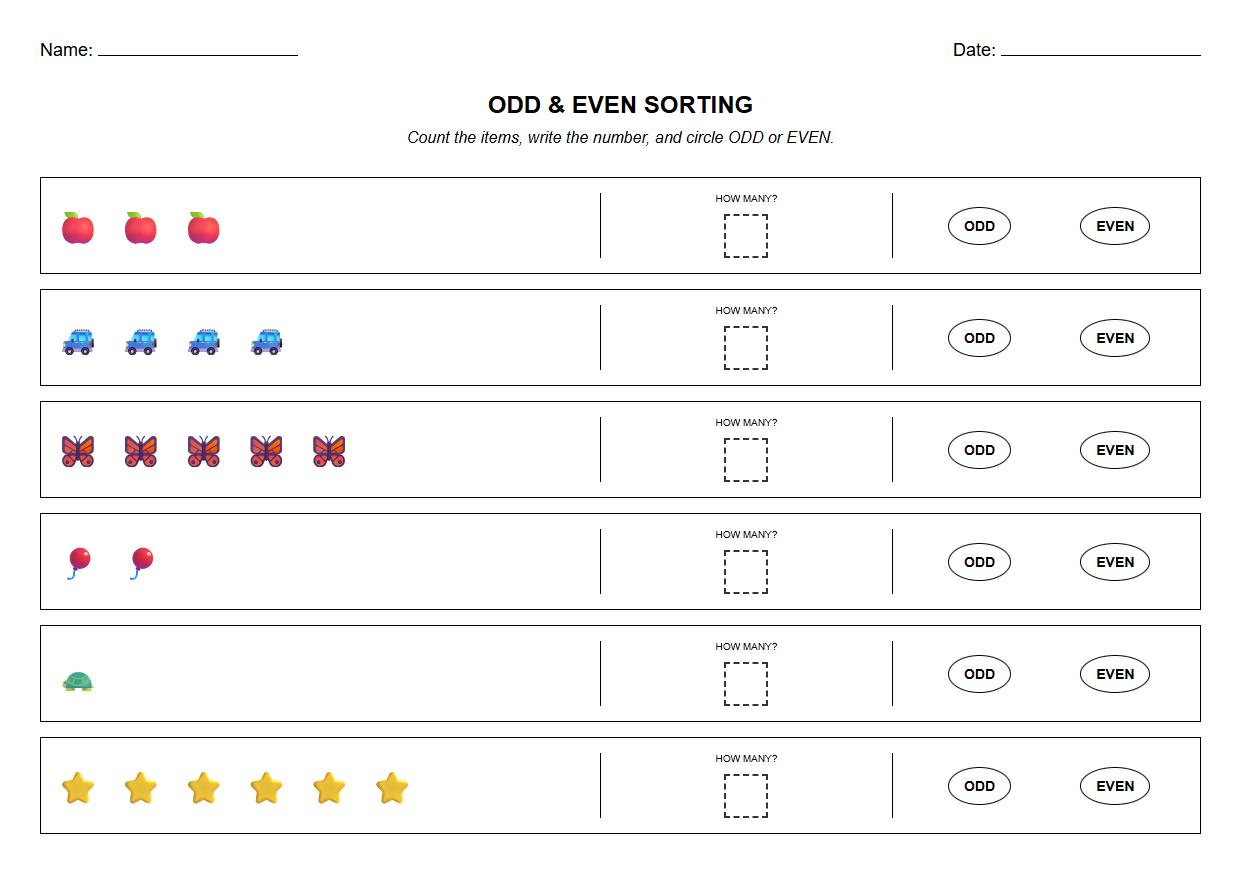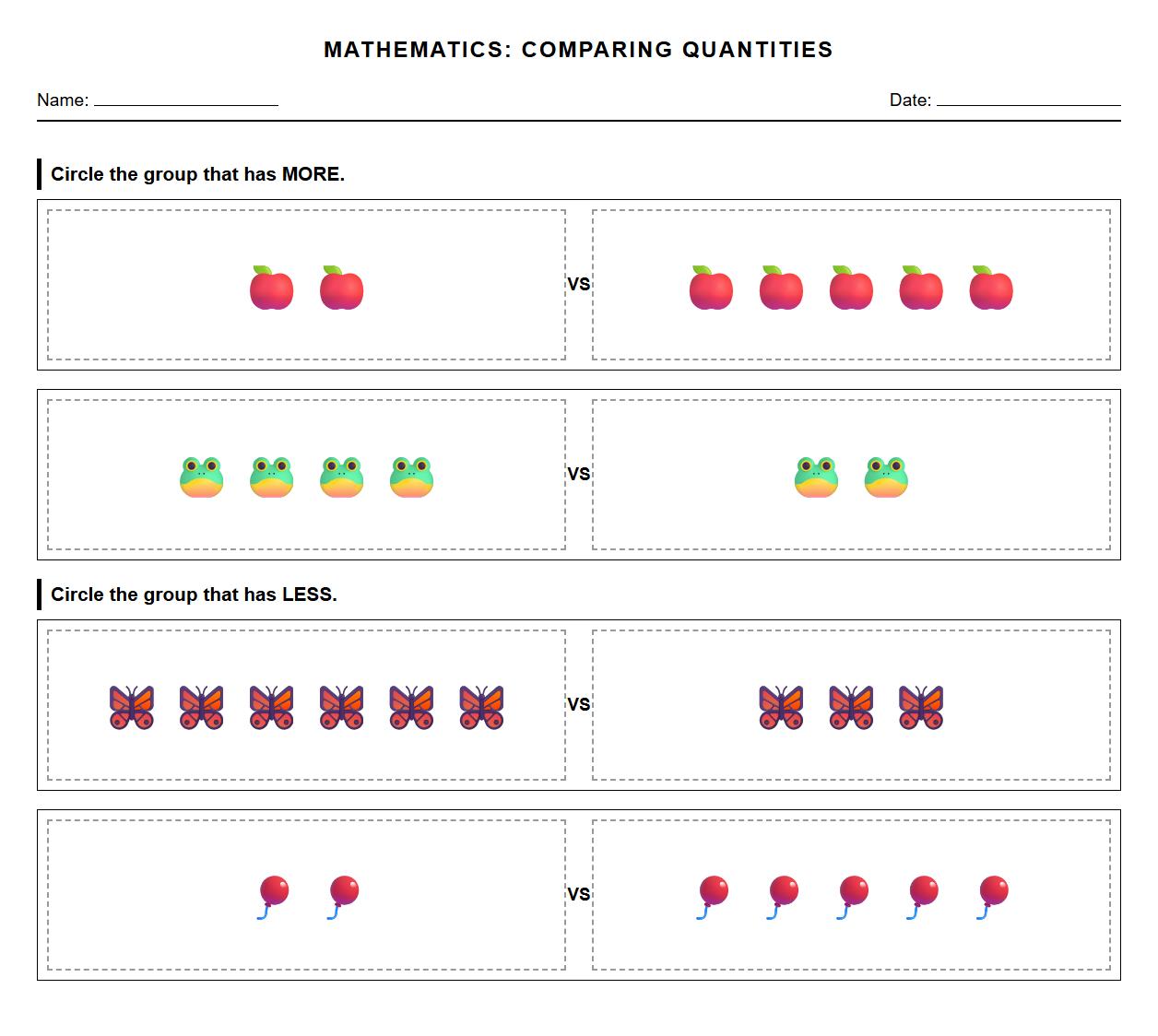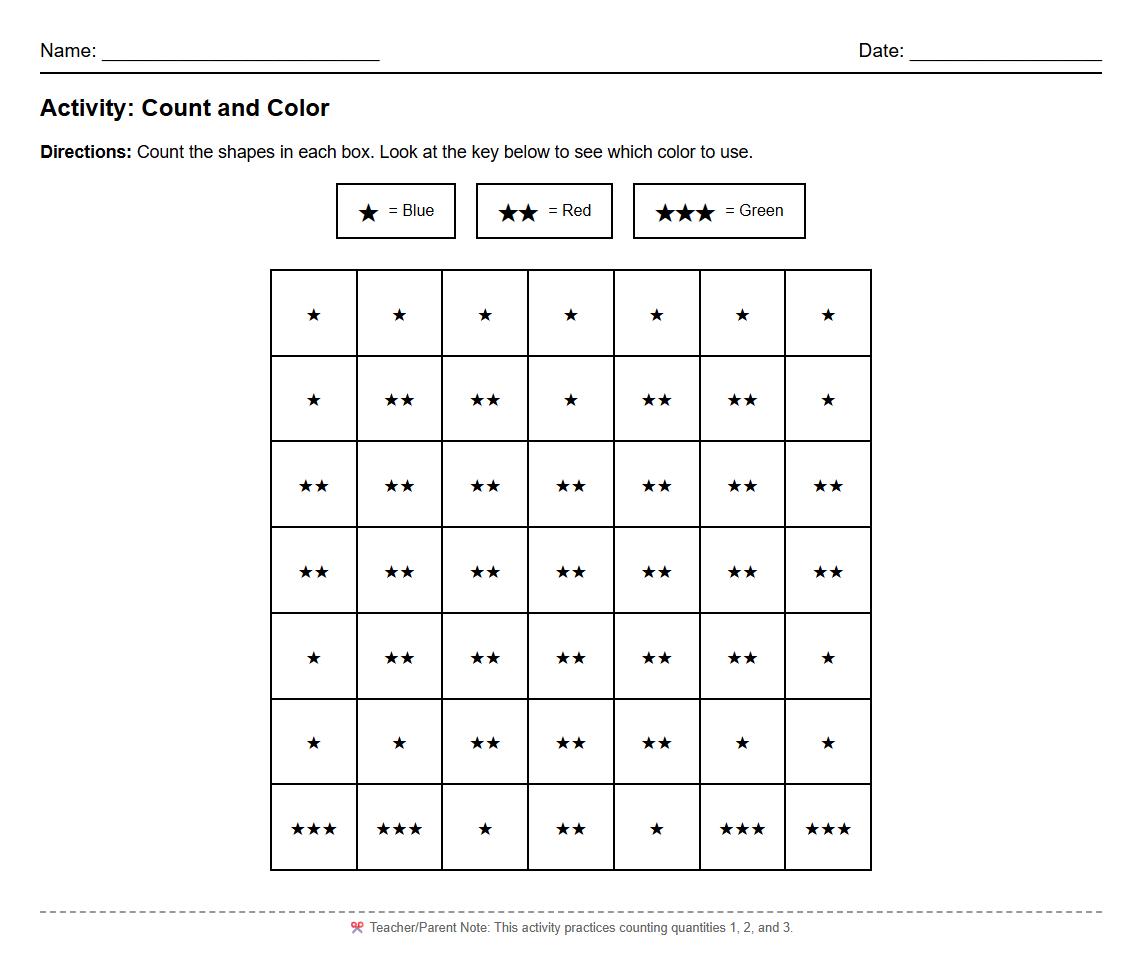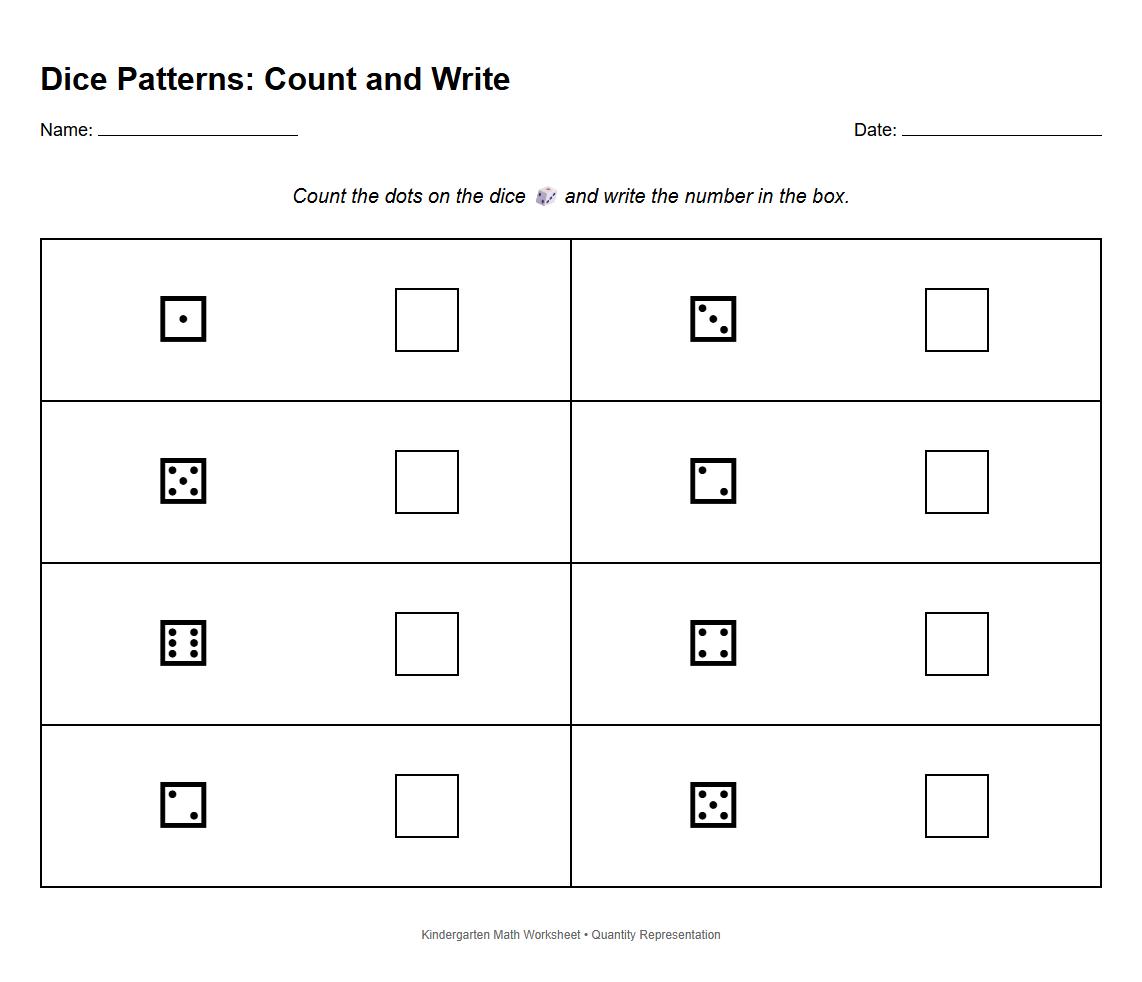
Quantities recognition worksheets help early learners identify and understand different amounts through engaging activities. These exercises enhance counting skills and promote number sense by associating quantities with visual representations. Explore the variety of available worksheets designed to support your child's foundational math development.
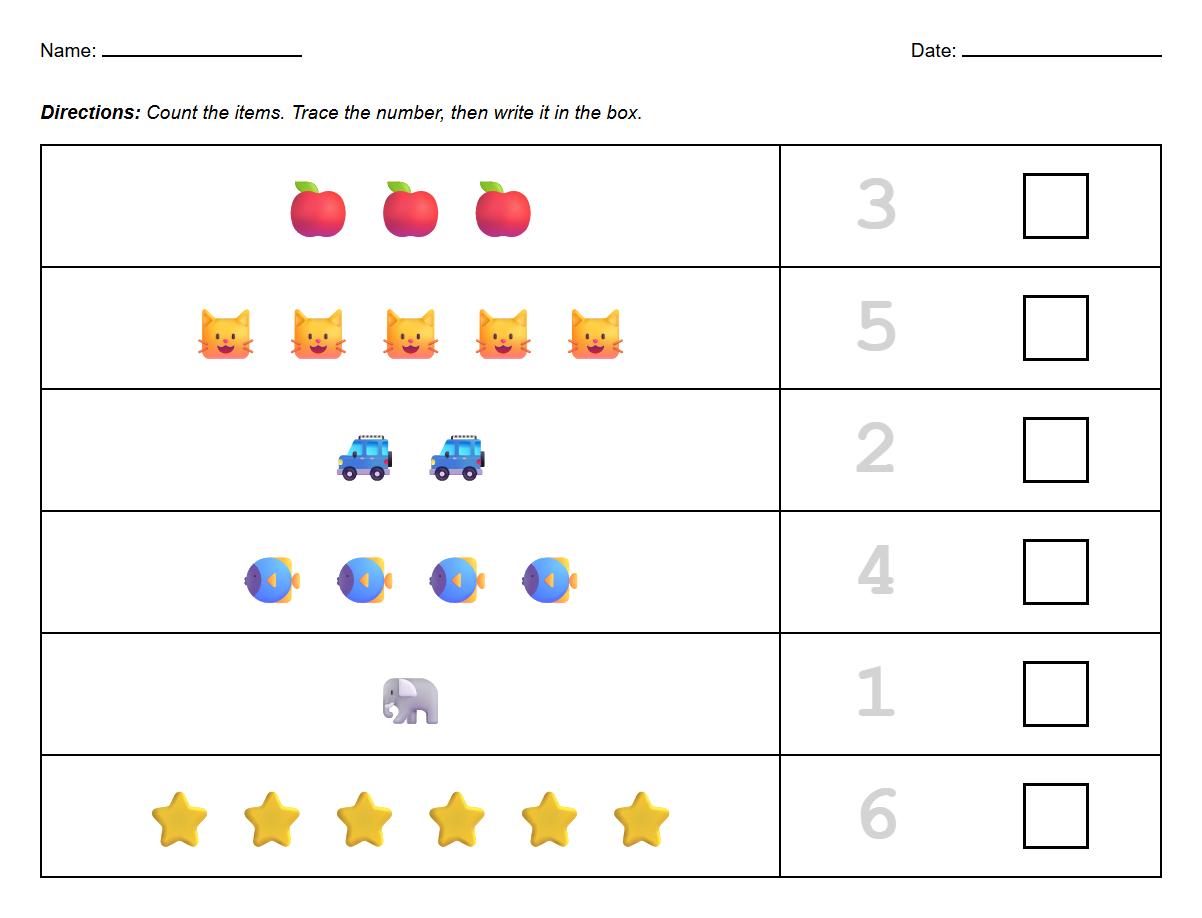
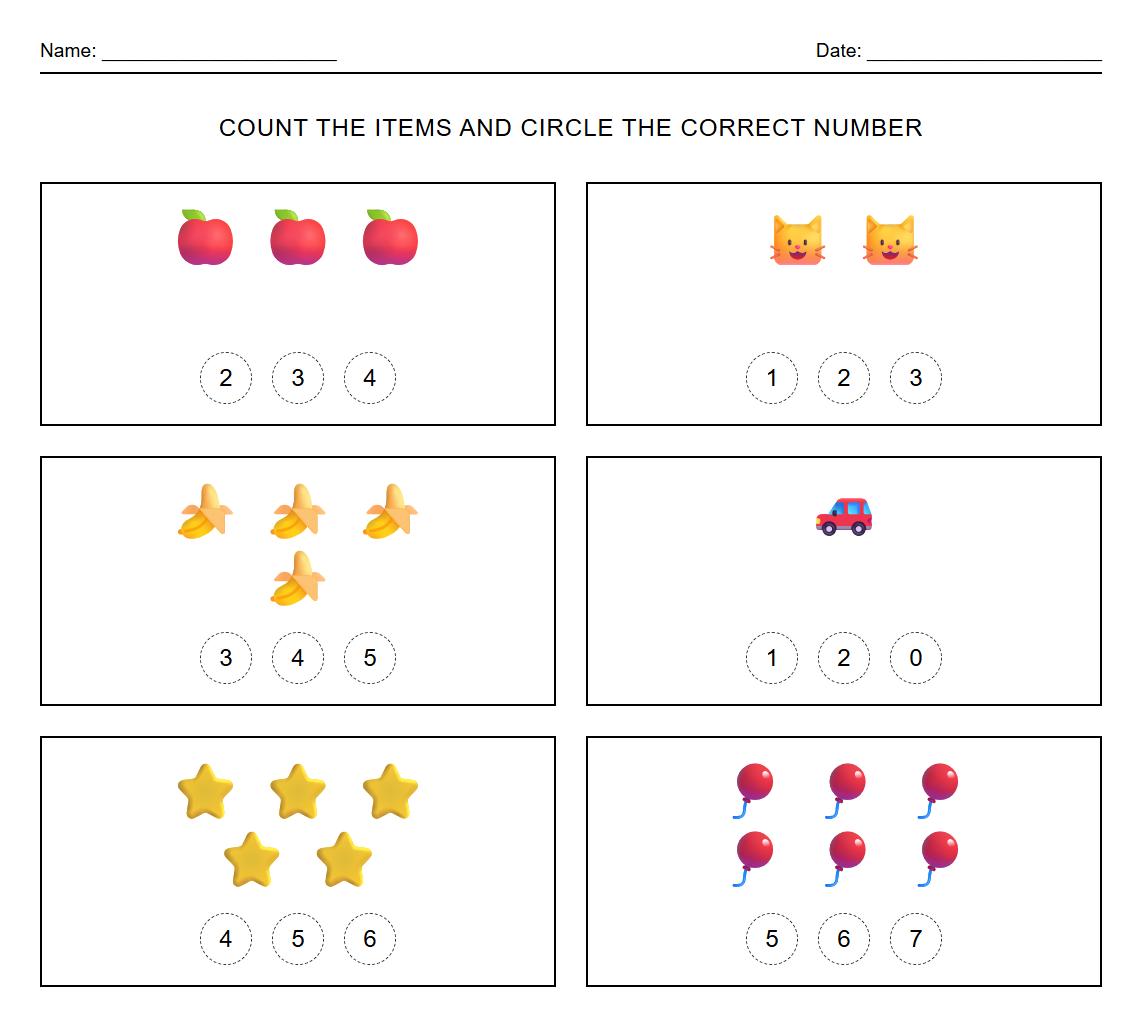
How many objects do you see in this group?
This activity helps children practice counting skills by identifying the number of objects in a group. Teachers and parents can encourage kids to look carefully and say the total out loud. It's a great way to develop number recognition and visual discrimination. Use various objects to keep the exercise engaging and fun.
Circle the group that has more items
Children compare two or more groups to find the one with the greater quantity. This task enhances comparison and analytical skills necessary for early math concepts. Encourage kids to count each group carefully before circling. It also builds confidence in decision-making based on numerical understanding.
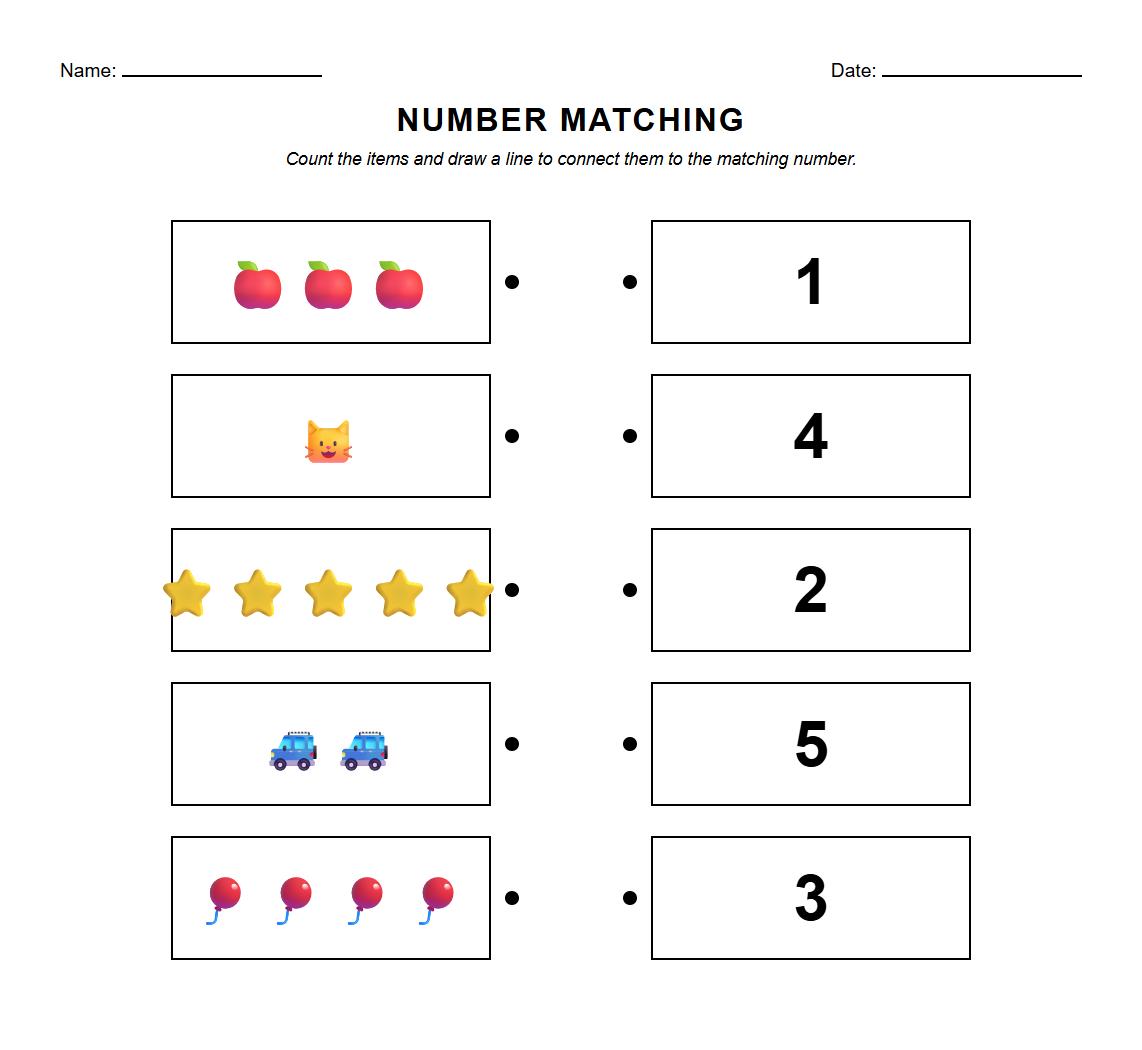
Draw a line to match the number with the correct set of objects
Matching numbers to object sets strengthens numerical correspondence and reinforces counting accuracy. Kids practice connecting abstract numbers with concrete quantities, a key early arithmetic skill. Use clear images and numbers to make the task straightforward. This activity supports both visual and cognitive learning styles.
Count and color five apples
This fun coloring activity combines counting practice with creative expression. Children count up to five and then color the corresponding apples, linking numbers with tangible items. This encourages attention to detail and fine motor skills. Coloring keeps young learners engaged while reinforcing numerical concepts.
Which set has fewer items?
The task of identifying the group with the smaller quantity helps children understand comparative concepts. It promotes critical thinking as kids analyze different sets and decide which has less. Use sets with varying numbers to challenge their reasoning. This also lays groundwork for subtraction and difference understanding.
Write the number that shows how many stars are here
Writing numbers after counting stars improves both numeracy and handwriting skills. Children reinforce number formation while quantifying objects. Encourage neat writing and verbal counting to strengthen learning. This integration boosts confidence in representing numerical values on paper.
Mark the group with the same quantity as the sample
Matching groups with equal amounts supports understanding of equivalence and builds a foundation for equality concepts. Kids identify sets with the same number of items as a model, deepening number sense. This task enhances attention to detail and comparison skills. Use simple shapes or objects to keep the focus clear.
Color the group with ten cars
Counting up to ten is an essential milestone in kindergarten math. This activity reinforces counting skills by focusing on a set of ten cars to be colored. Visual engagement with bright images encourages concentration and number familiarity. It cements the importance of the number ten in early math learning.
Are there more balls or blocks in the picture?
This question invites children to compare quantities using real-life objects like balls and blocks. It encourages critical thinking and verbal reasoning to decide which group is larger. By discussing the answer, kids practice language skills along with math concepts. This task integrates counting with comparison using everyday items.
Draw more shapes to make ten in total
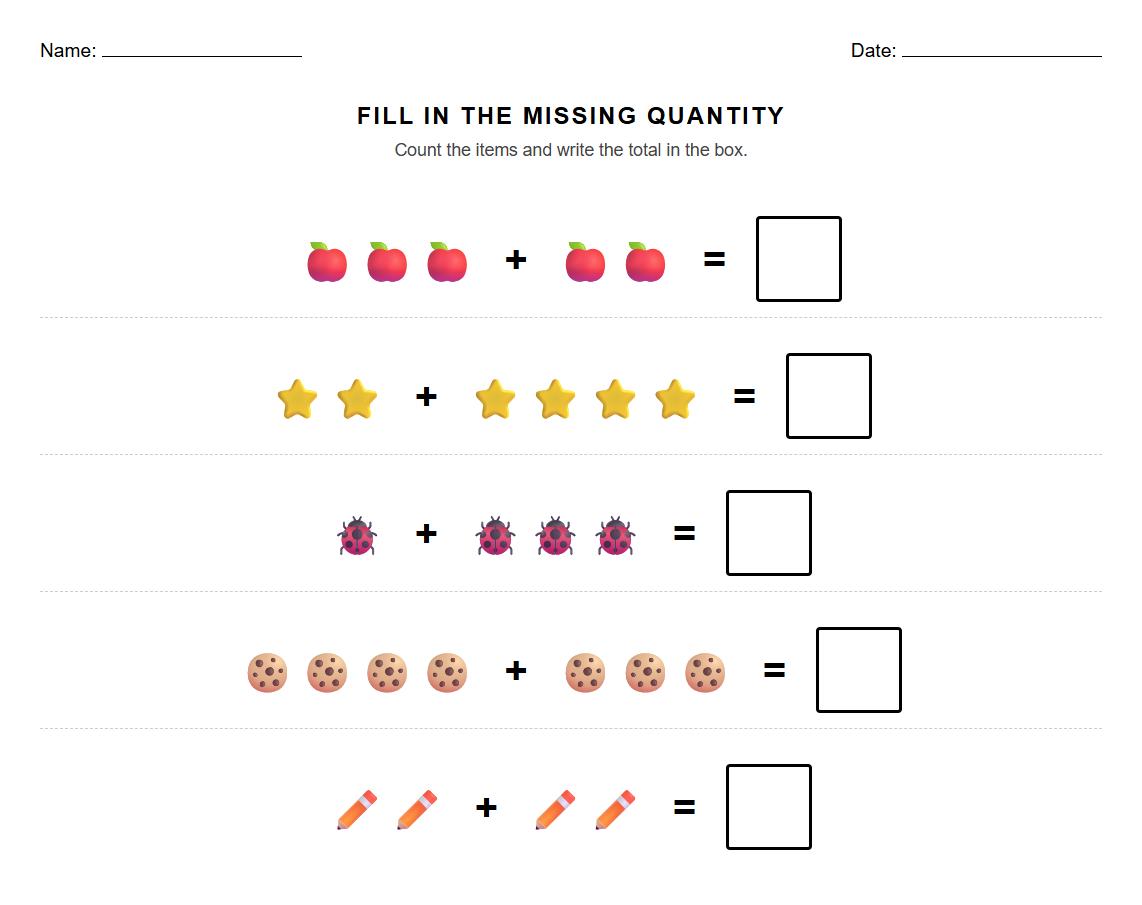
Completing a set to reach the number ten develops addition skills and an understanding of number composition. Children count existing shapes and then add more by drawing to reach ten. This hands-on activity builds fine motor skills and early math fluency. Emphasize the concept of making a whole by combining parts.


Number Sense and Counting Worksheet Activities for Kindergarten Grade