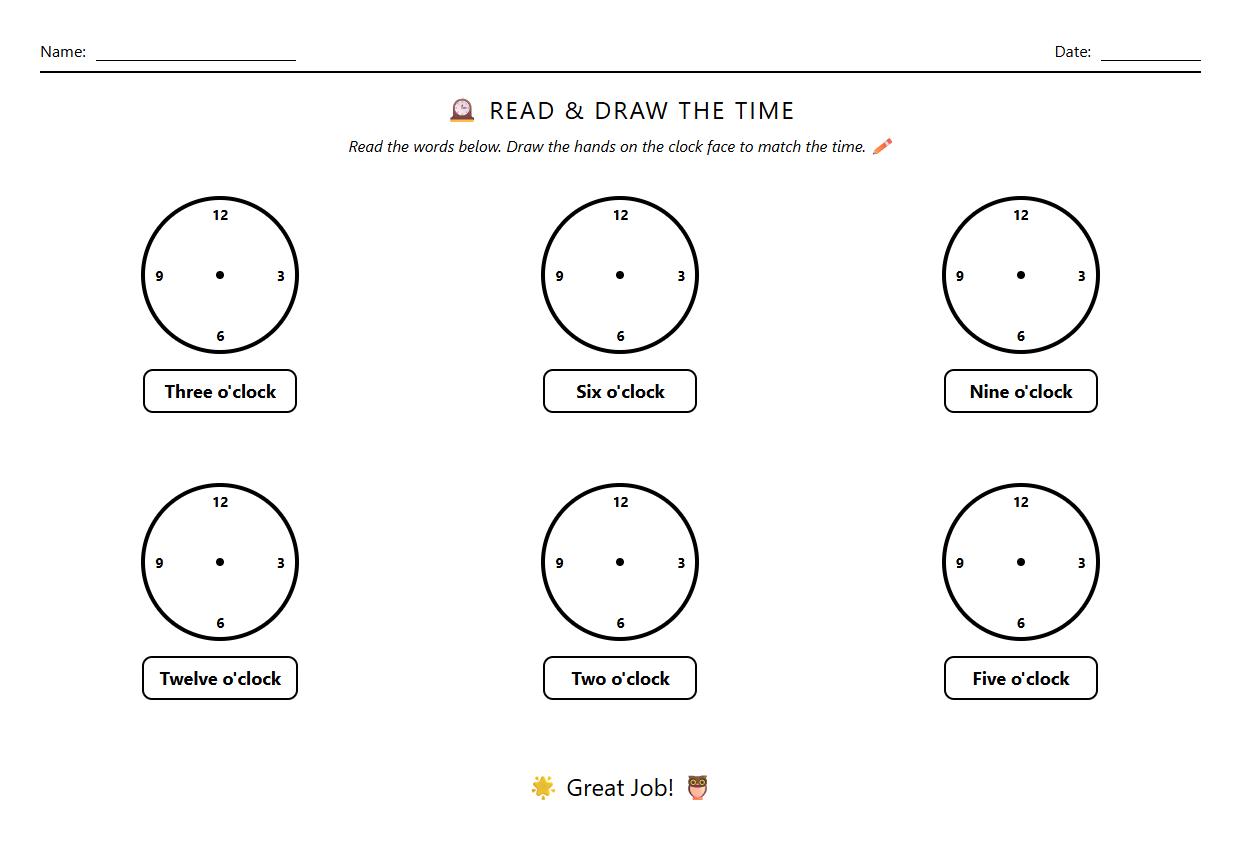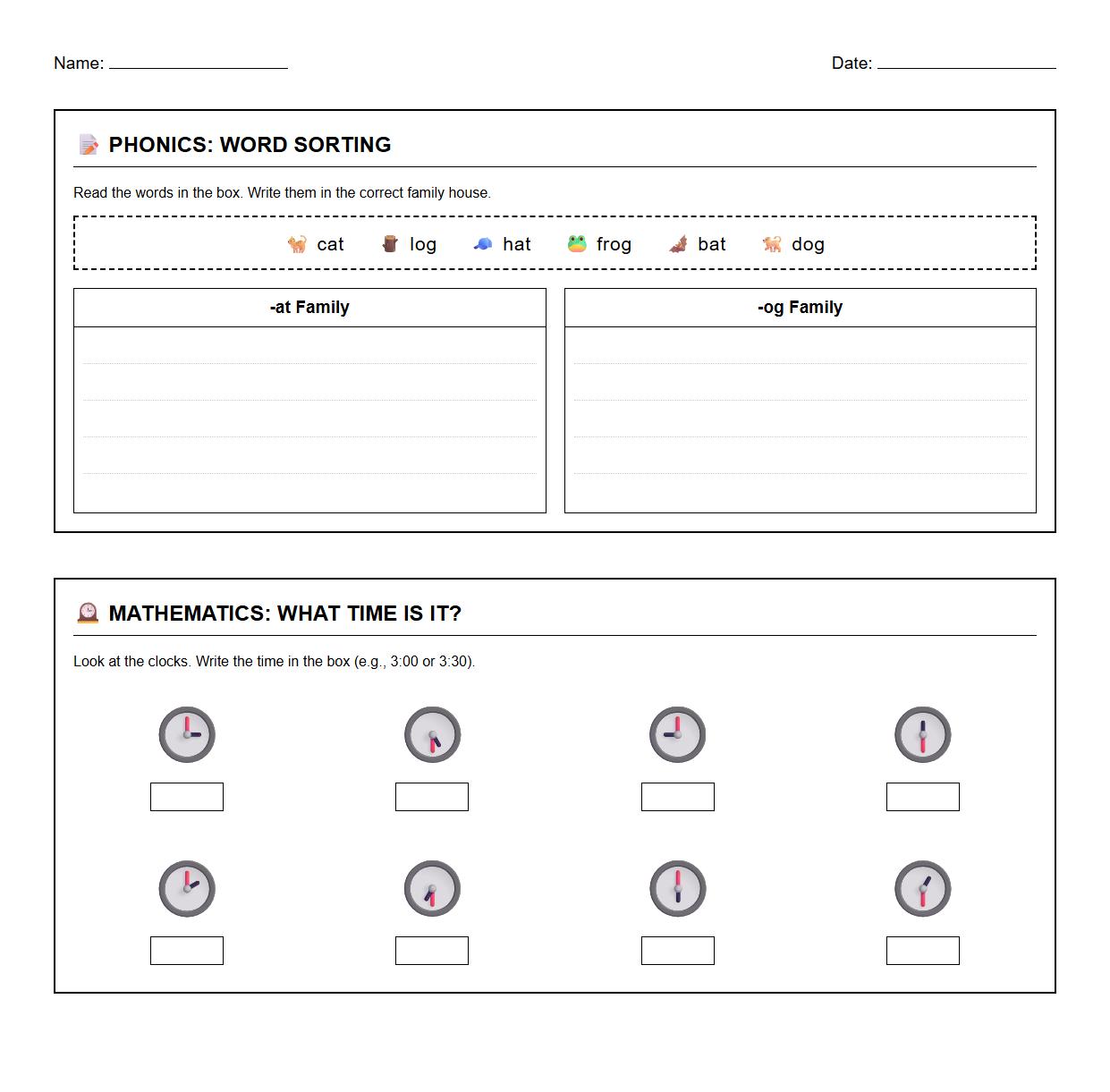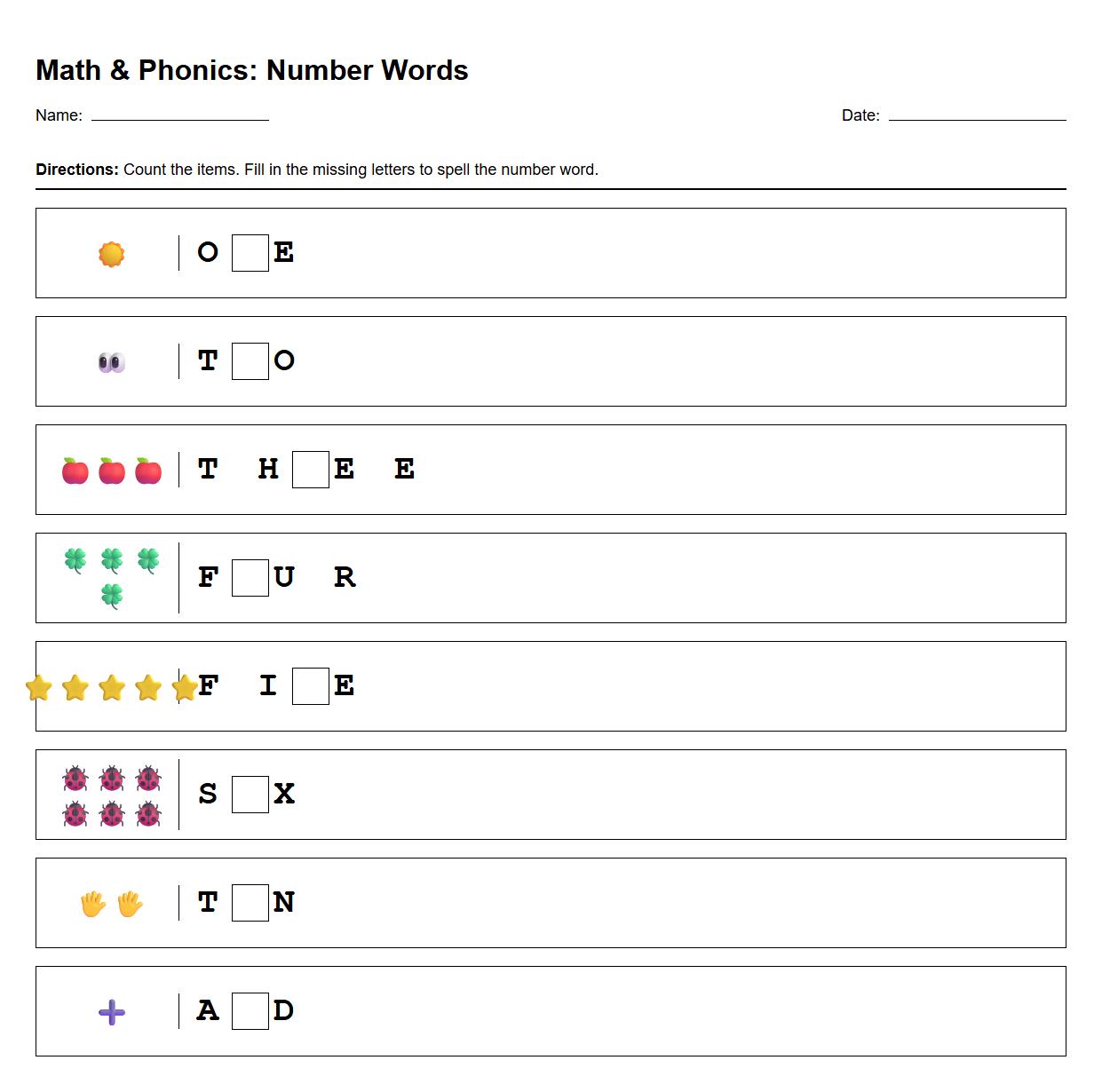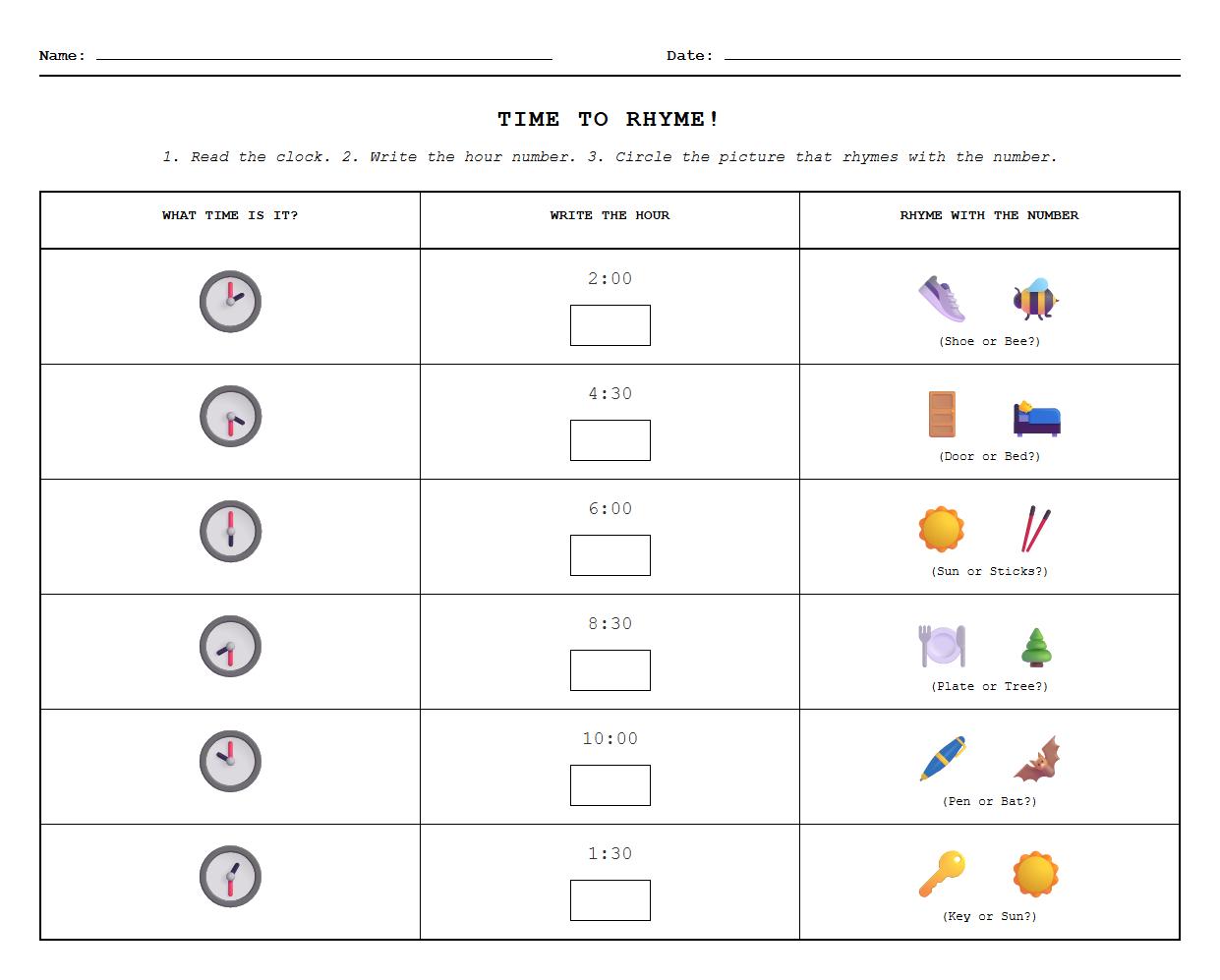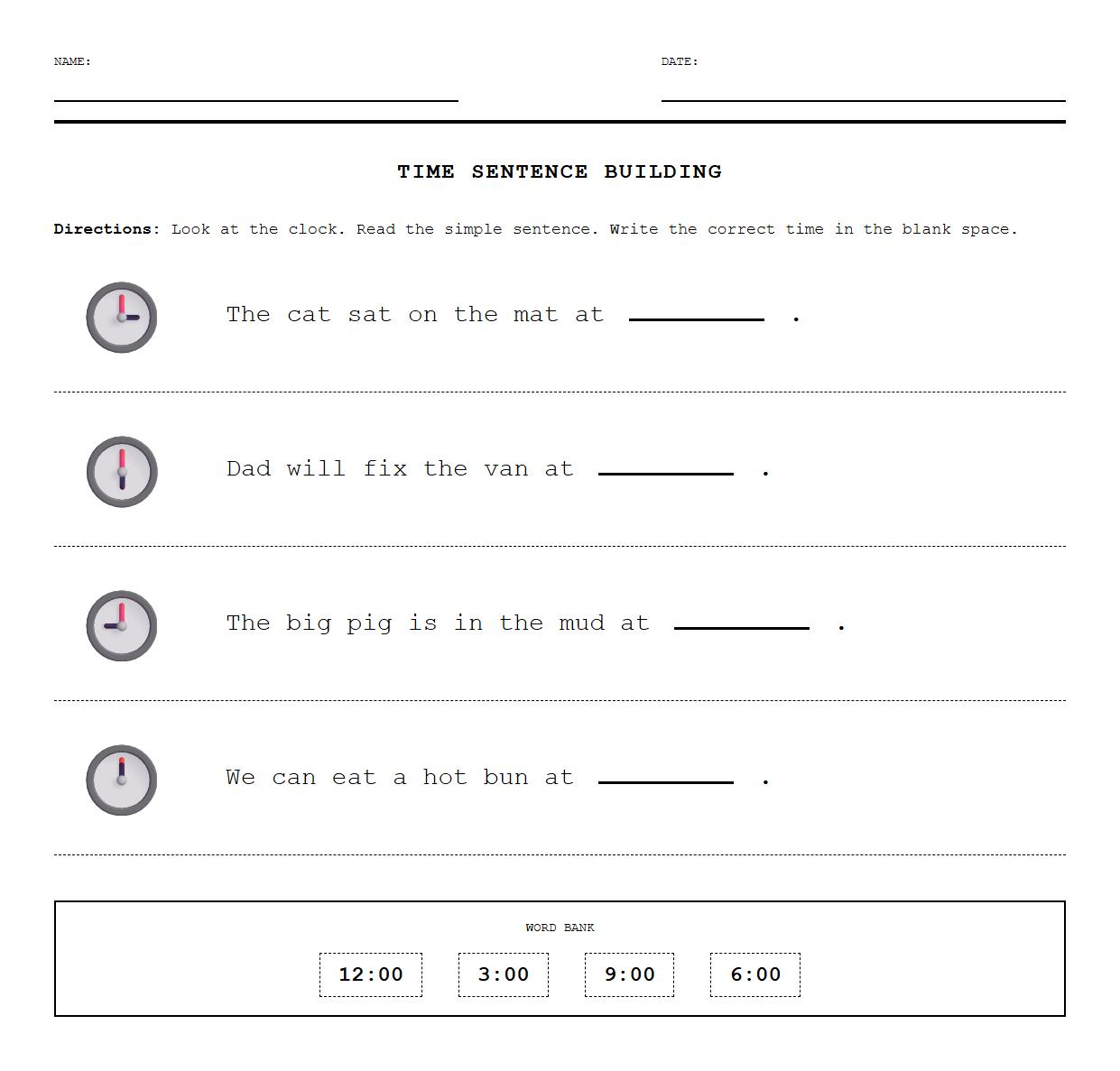
Kindergarteners develop essential time-telling skills through phonics-based worksheets that focus on the hour and half-hour. These engaging activities enhance both literacy and numeracy by linking sound recognition with clock reading. Explore the available worksheets to support your child's learning journey effectively.
Difference Between the Hour Hand and the Minute Hand
The hour hand is the shorter hand on a clock, and it shows the hour of the day. The minute hand is the longer hand and it points to the minutes. Understanding these two hands helps children learn to tell time effectively.
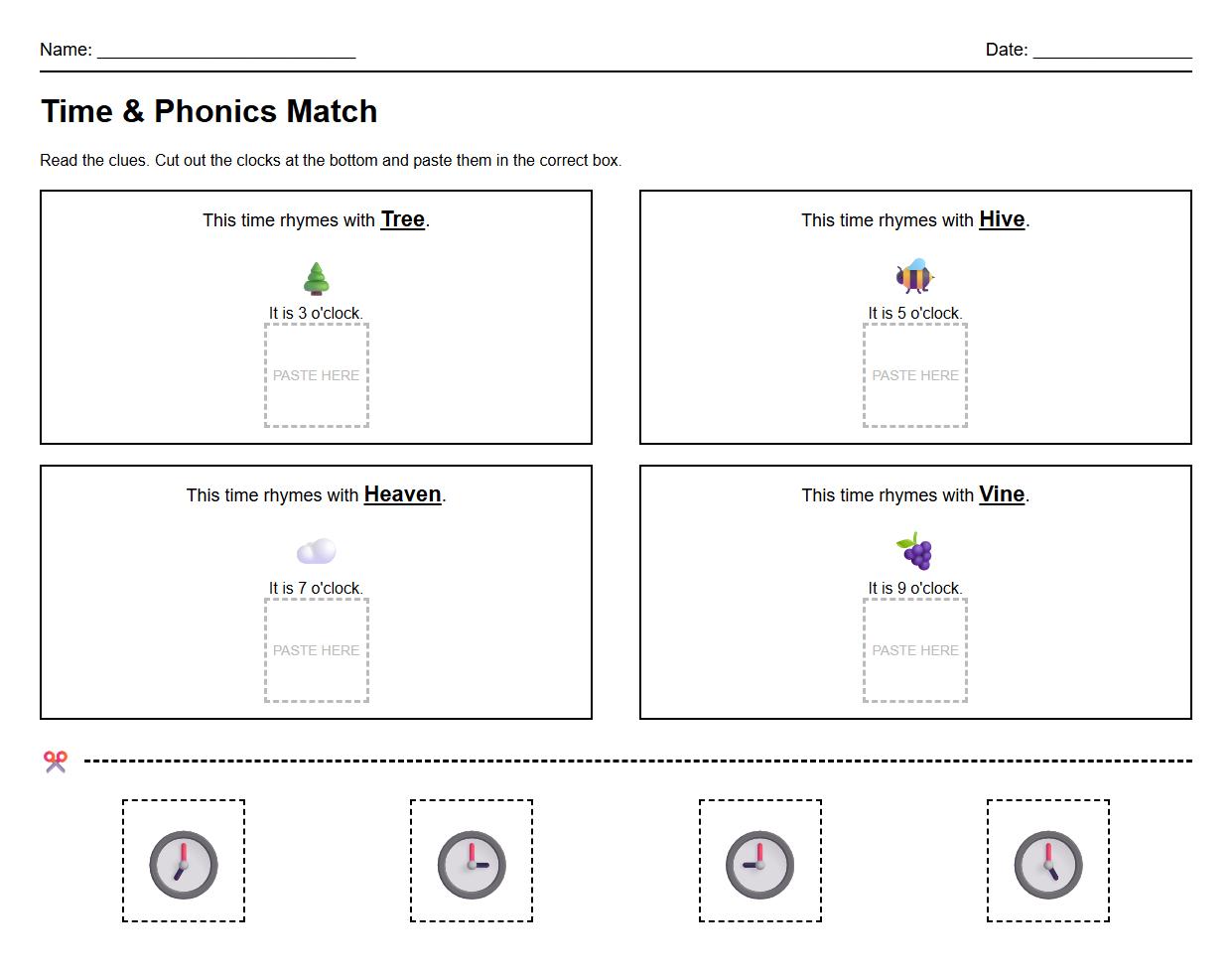
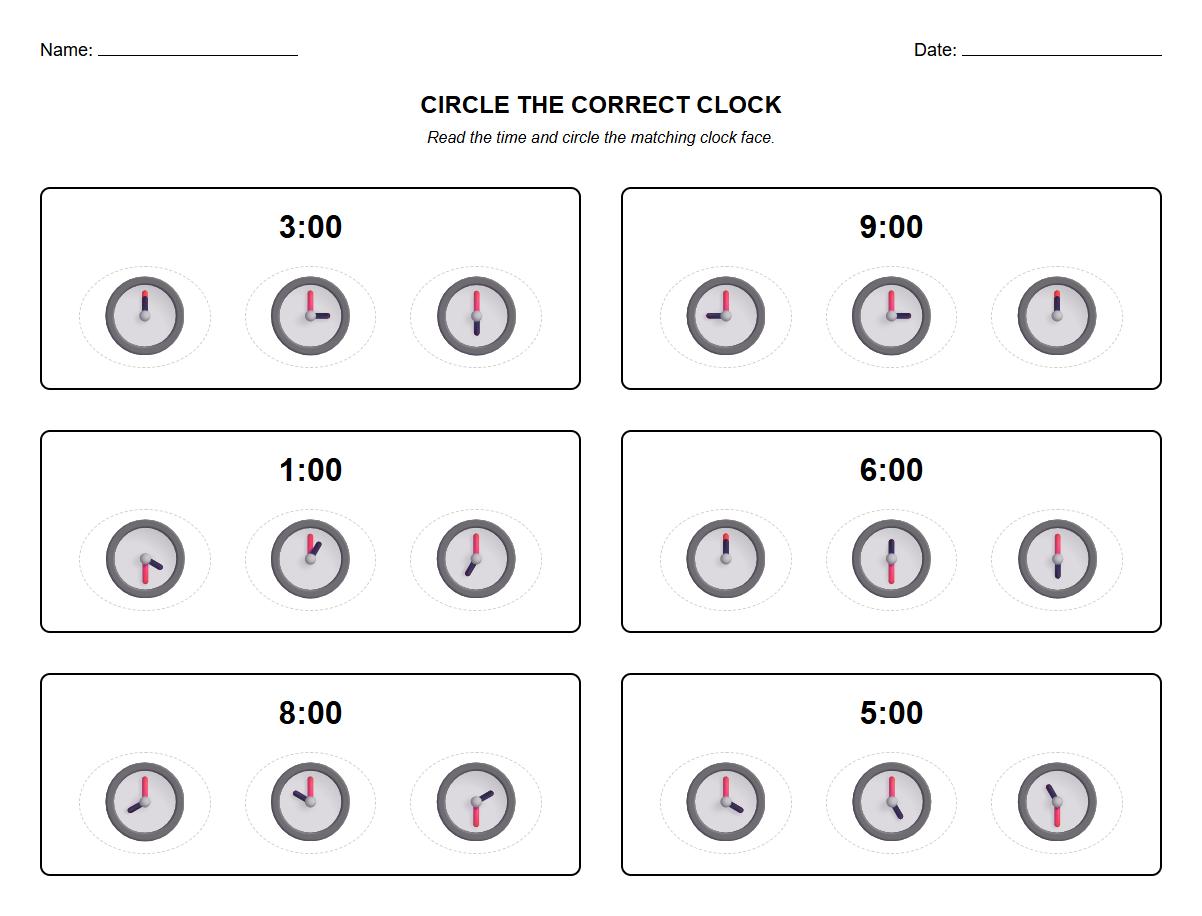
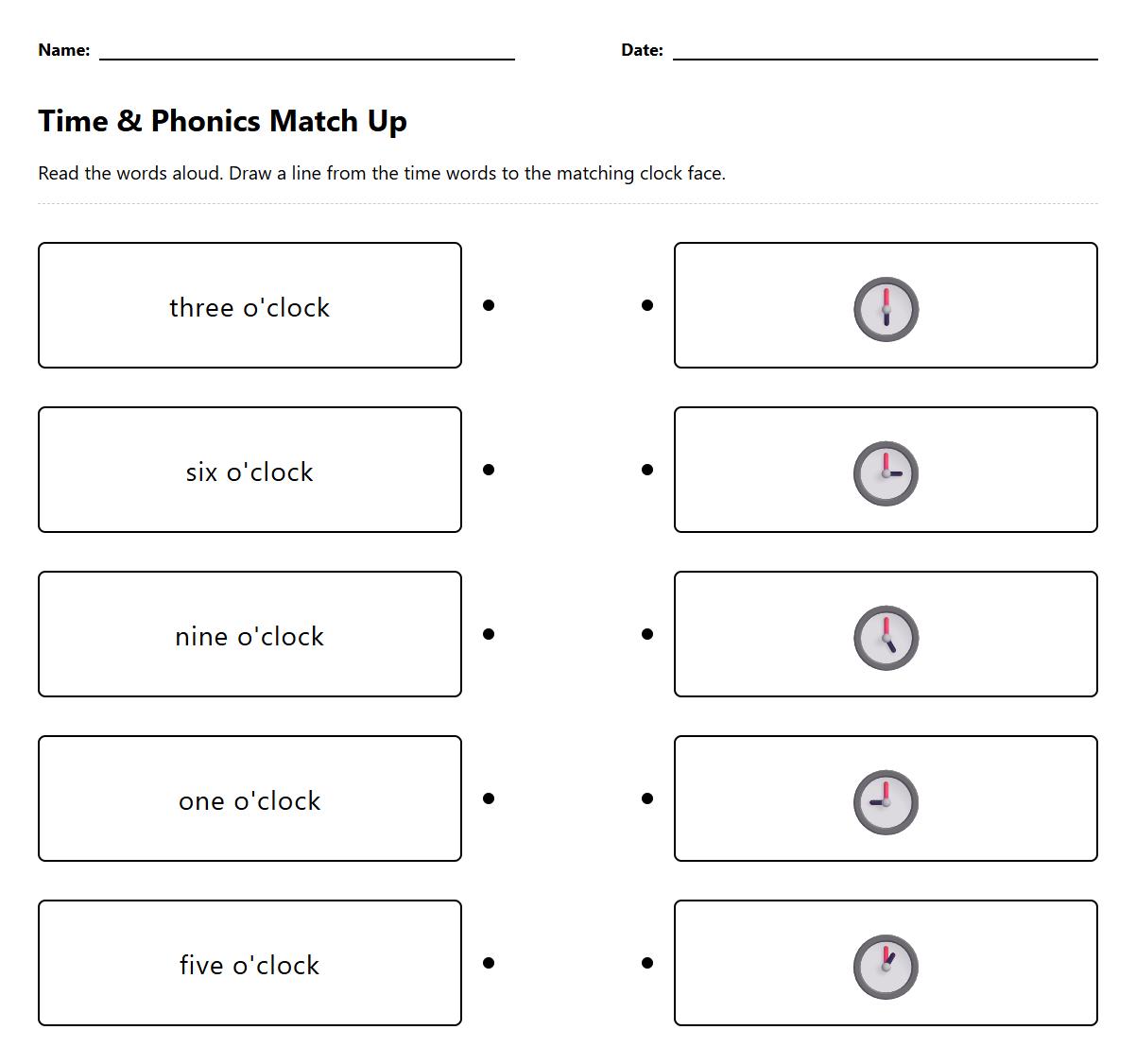
Match the Clock Showing 3 O'clock
Look for the clock where the hour hand points to 3 and the minute hand points to 12. This shows the exact time of 3 o'clock. Matching clocks to the correct time helps with time recognition skills.
Which Clock Shows Half Past Five?
The clock showing half past five has the hour hand between 5 and 6, and the minute hand on 6. This means 30 minutes past five. Recognizing half hours is an important step in learning to tell time.
Sound that the Word "Hour" Begins With
The word hour begins with the /aU/ sound, like in "our." It is important to practice sounds to improve phonics and early reading skills. Try saying the word slowly to hear the sound clearly.
Circle Clocks That Show a Time Ending with "O'clock"
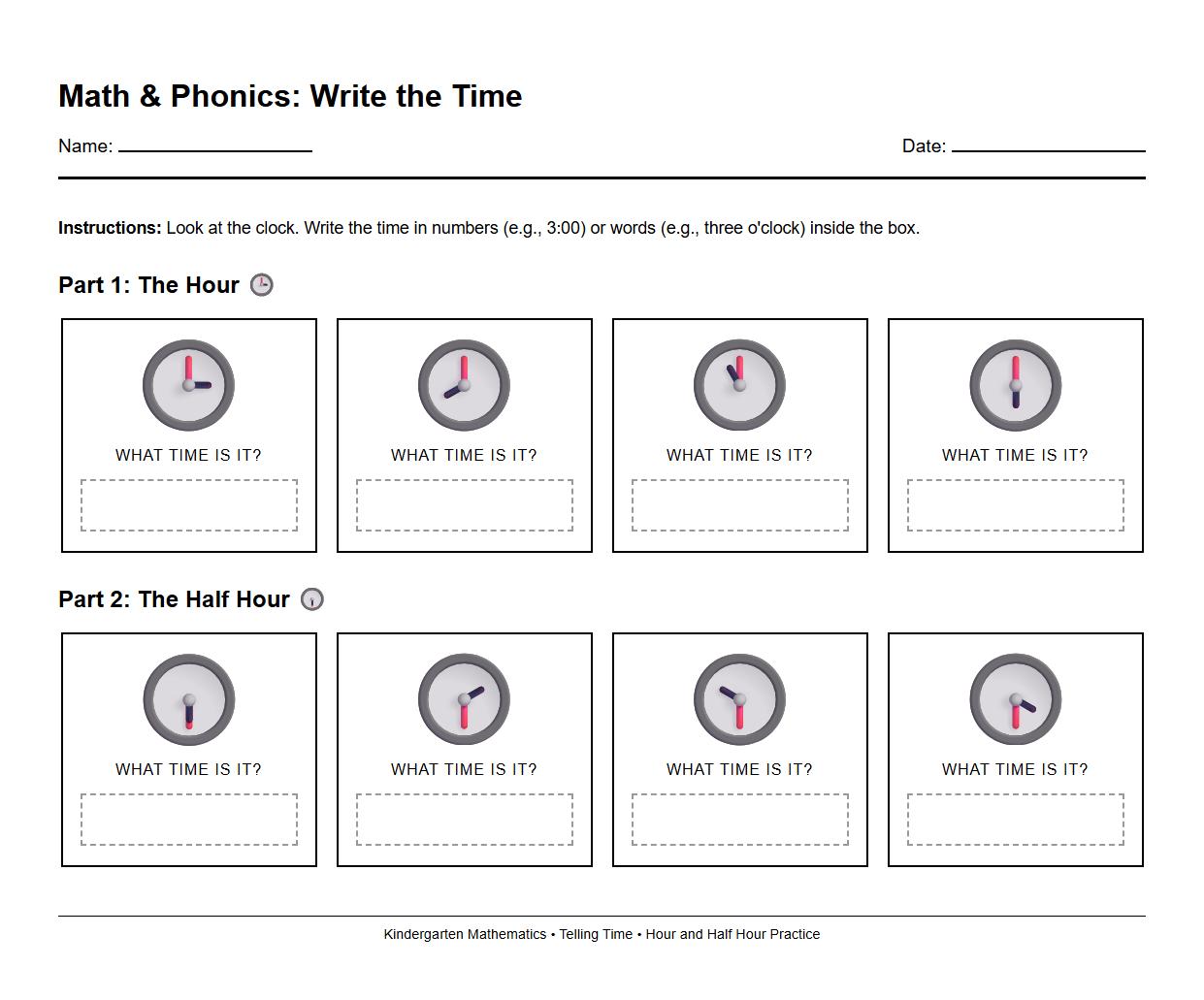
Look for clocks where the minute hand points to 12 and the hour hand points exactly to a number. These clocks show times ending with "o'clock." Circling these clocks helps children identify whole hours easily.
Which Time Says "Half Past Two"?
The clock for half past two shows the hour hand between 2 and 3 and the minute hand on 6. This represents 30 minutes past two. Identifying half past times builds a good foundation for telling time.
Trace and Say the Word "Minute"
Minute is a key word when learning to tell time. Tracing this word helps children improve handwriting and word recognition. Saying it aloud reinforces pronunciation and vocabulary skills.
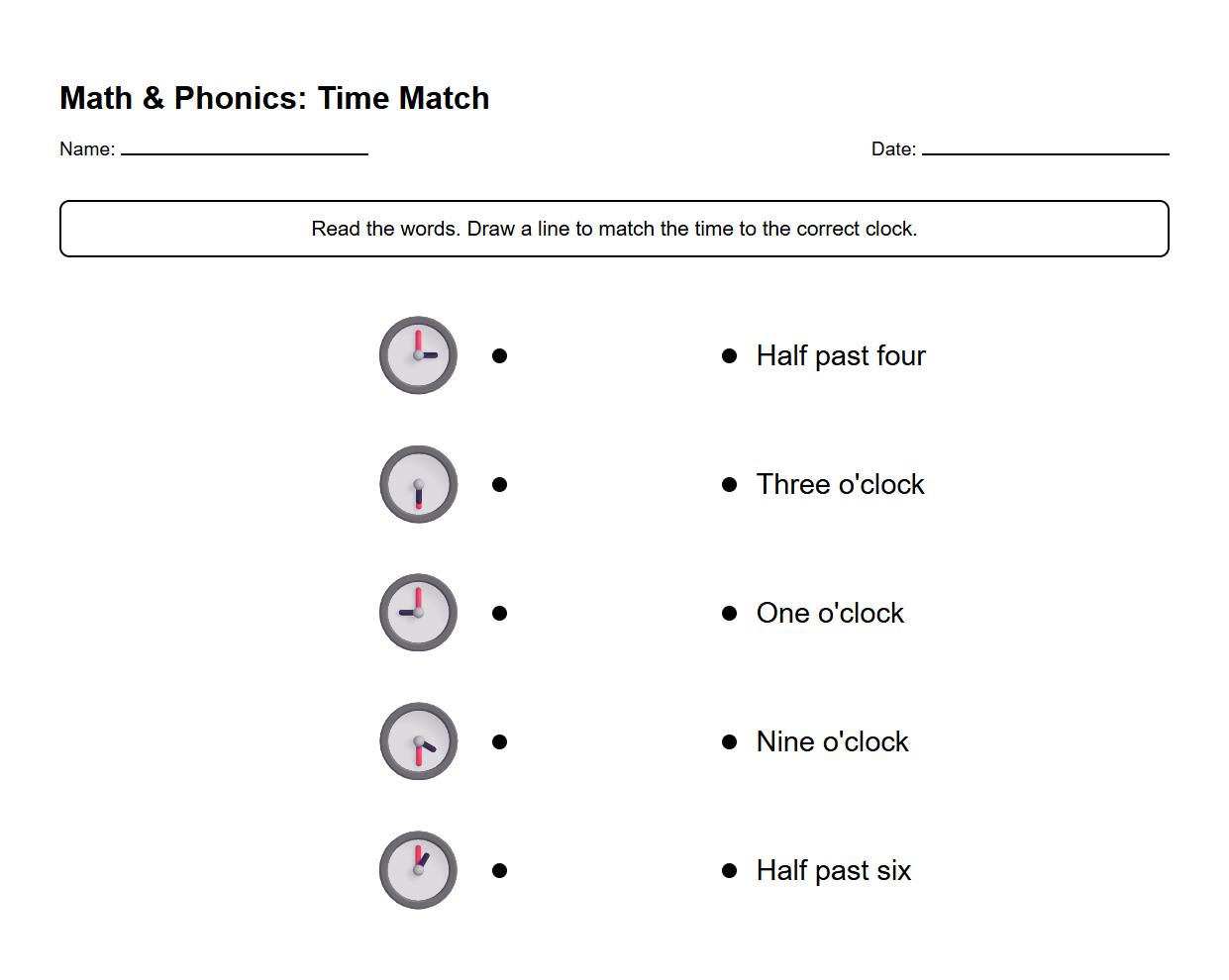
Draw a Line From the Picture of a Clock to "Hour" or "Half Hour"
This activity requires matching each clock to the correct time label: hour or half hour. It helps children understand the difference between full hours and half hours. Drawing lines strengthens fine motor skills and comprehension.
Color the Clock That Matches the Written Time Four O'clock
Find the clock where the hour hand points exactly to 4 and the minute hand points to 12. Coloring this clock helps children visually connect the written time with the clock face. This enhances time-telling confidence.
What Letter Does the Word "Time" Start With?
The word time starts with the letter 'T'. Recognizing the starting letter supports early literacy skills. Saying and writing this letter makes learning more fun and engaging for young children.


Kindergarten Math Practice Worksheets for Telling Time to the Hour and Half Hour