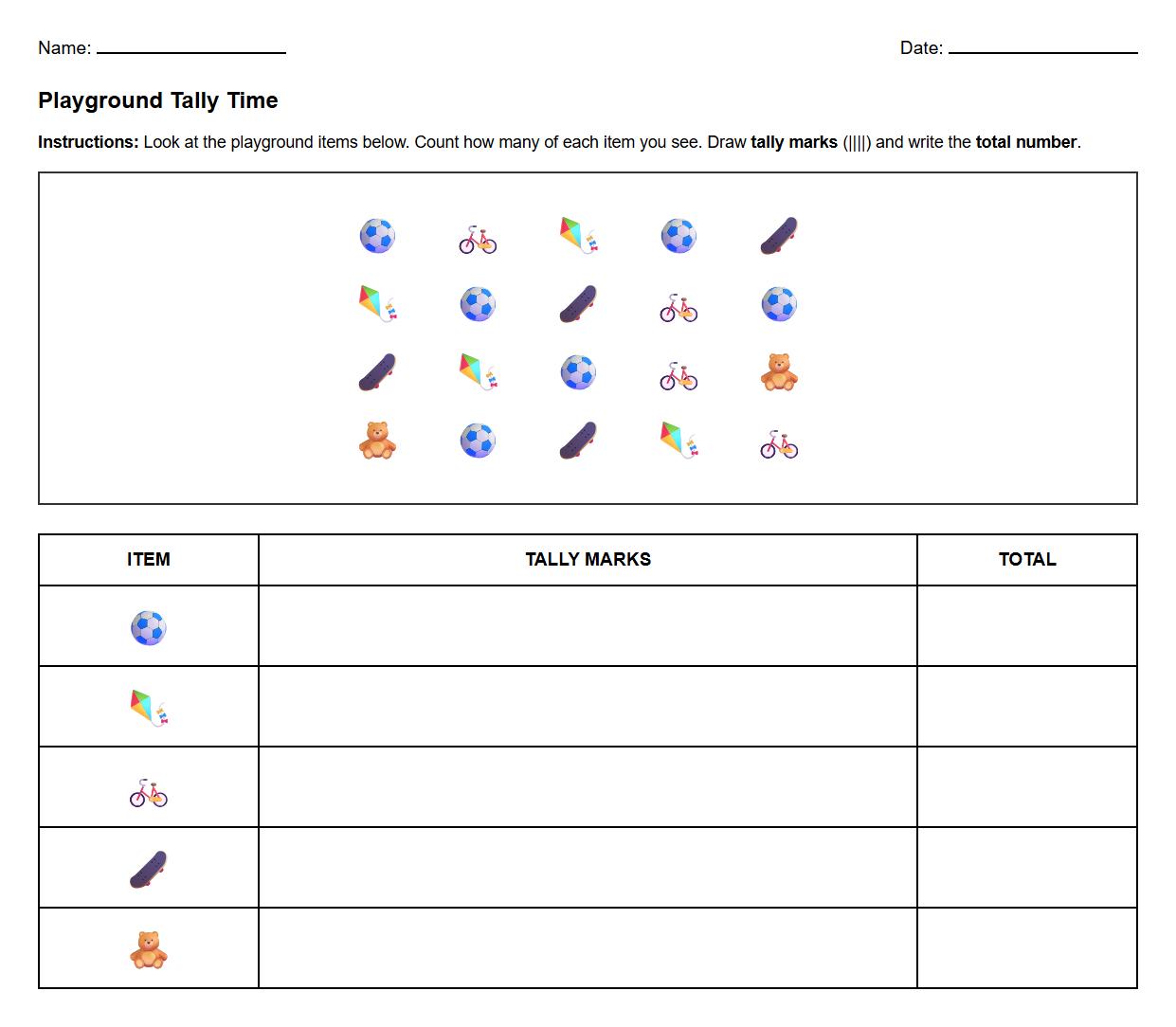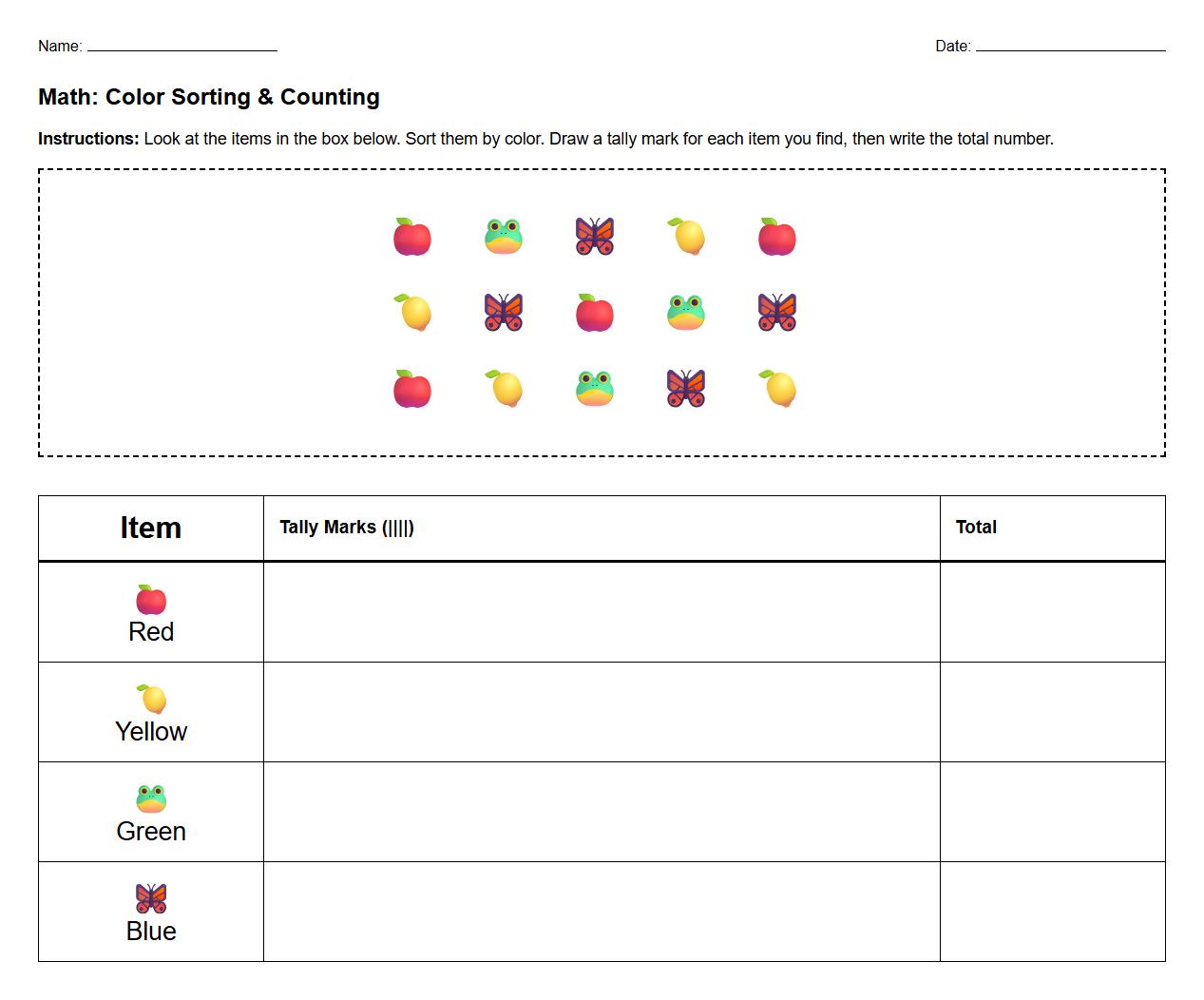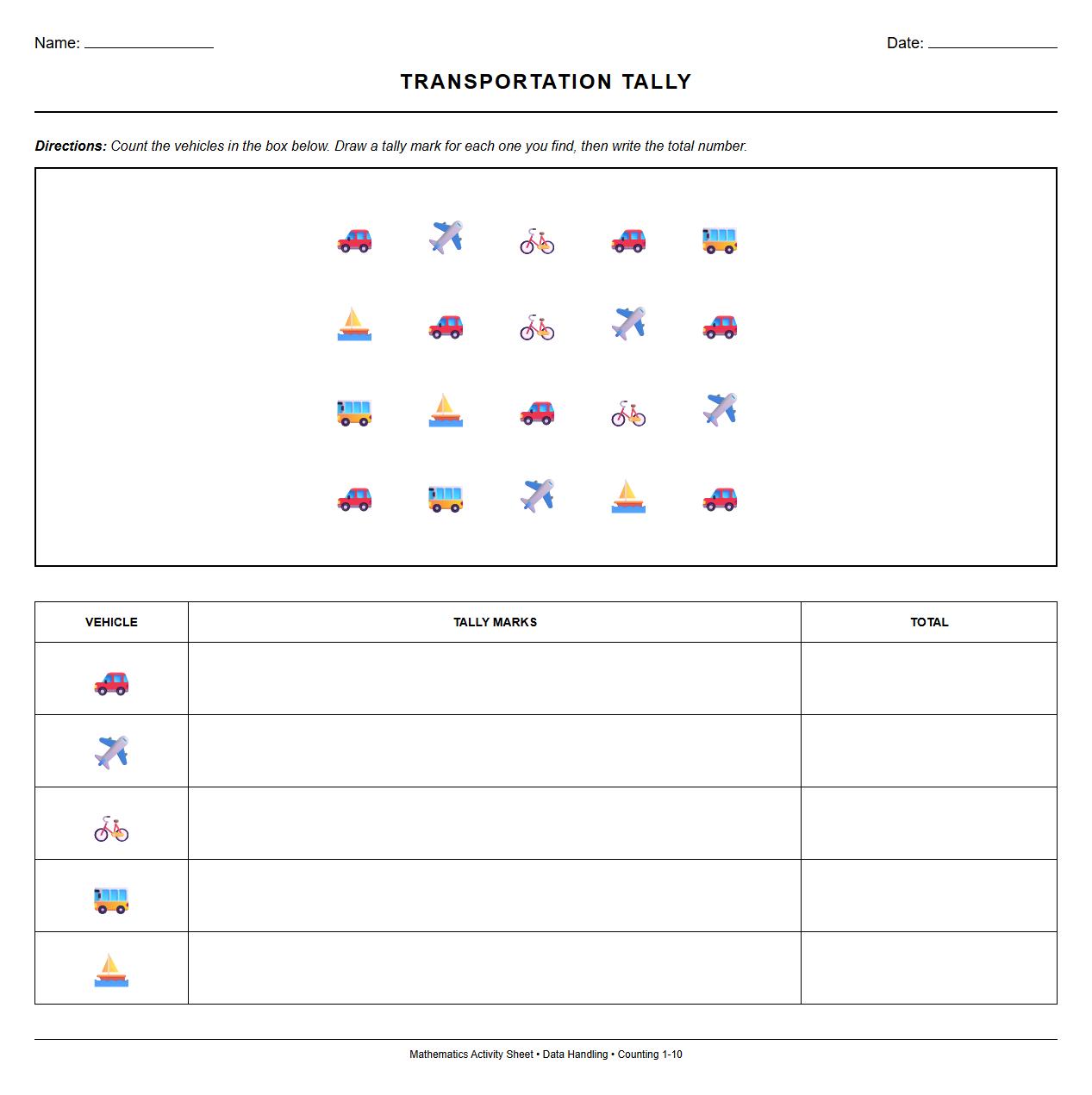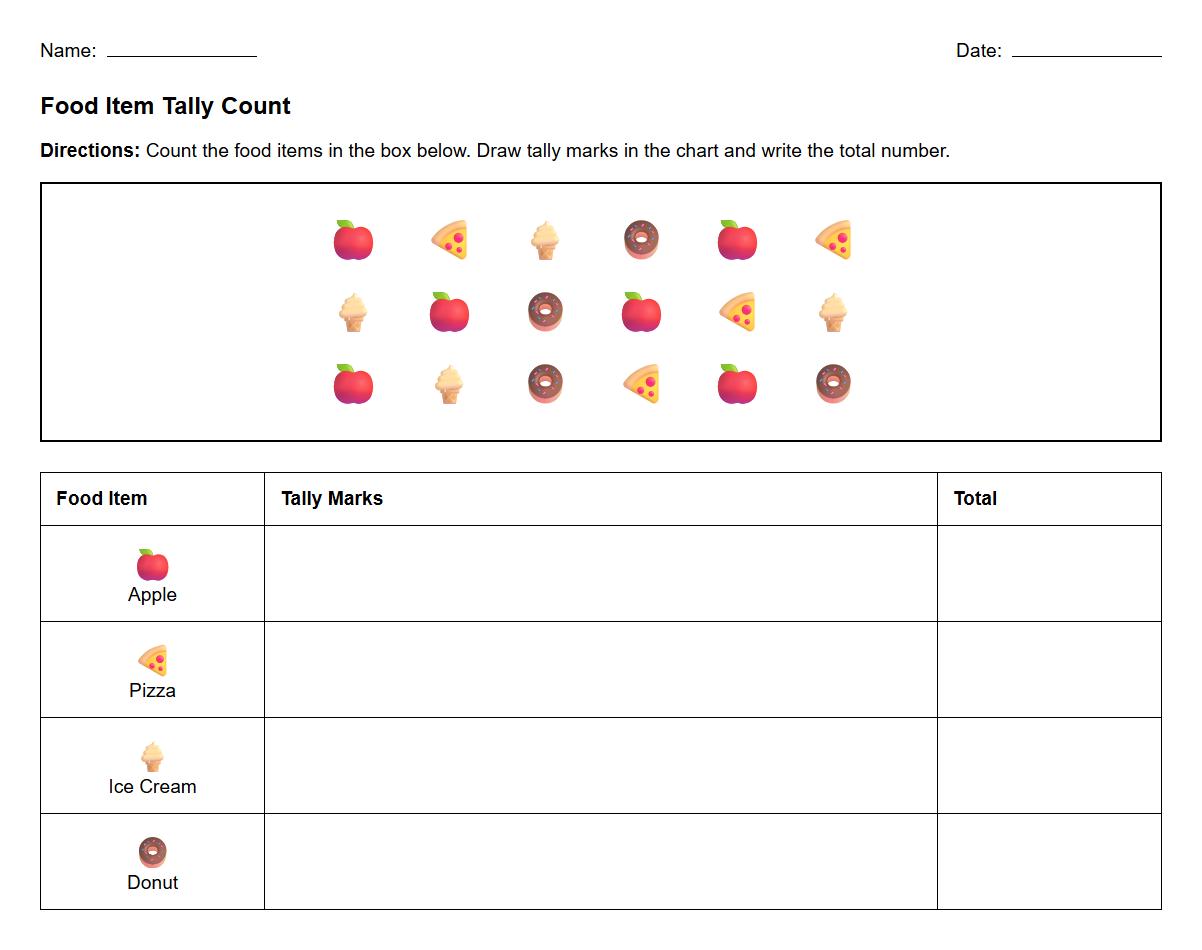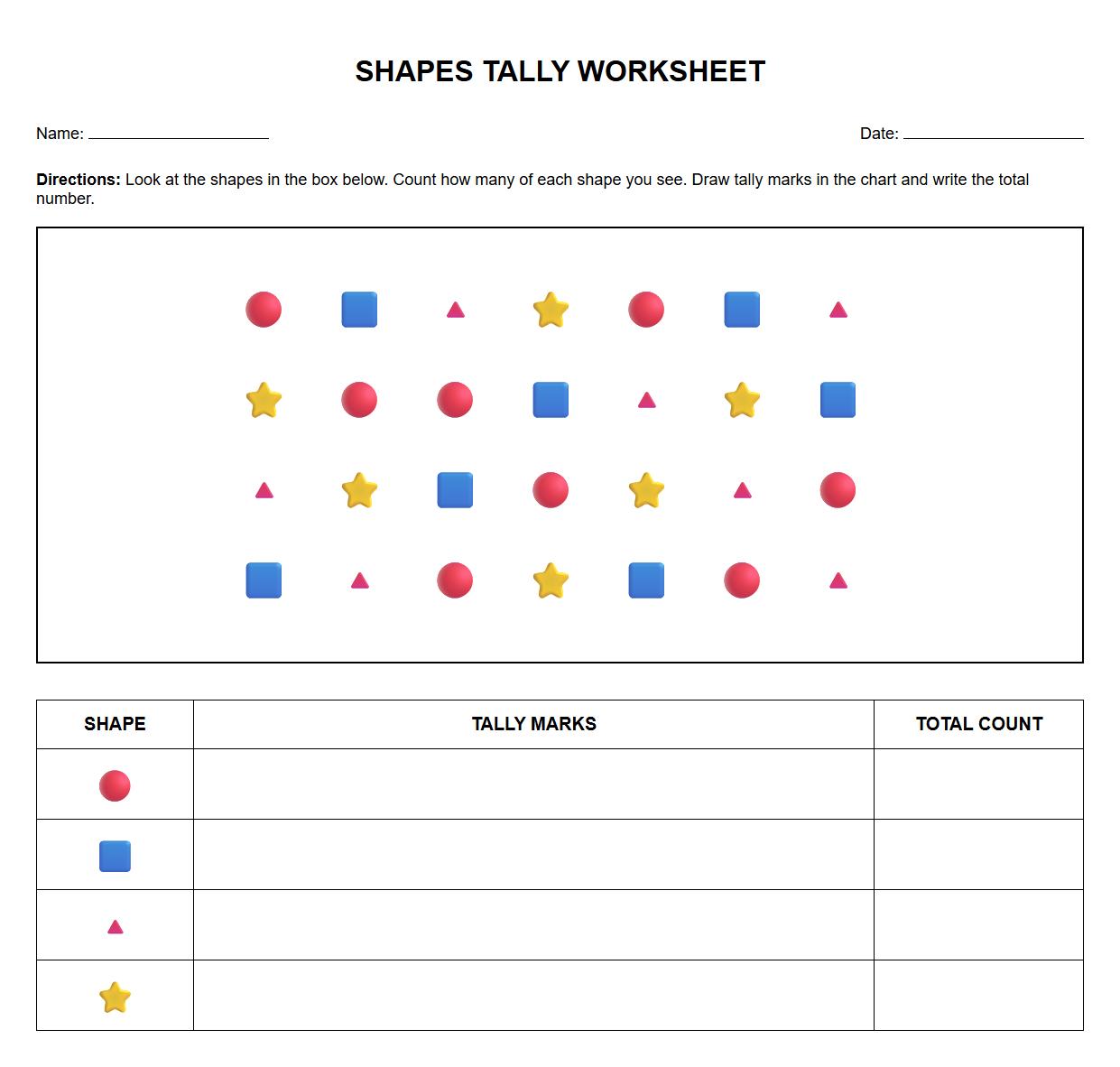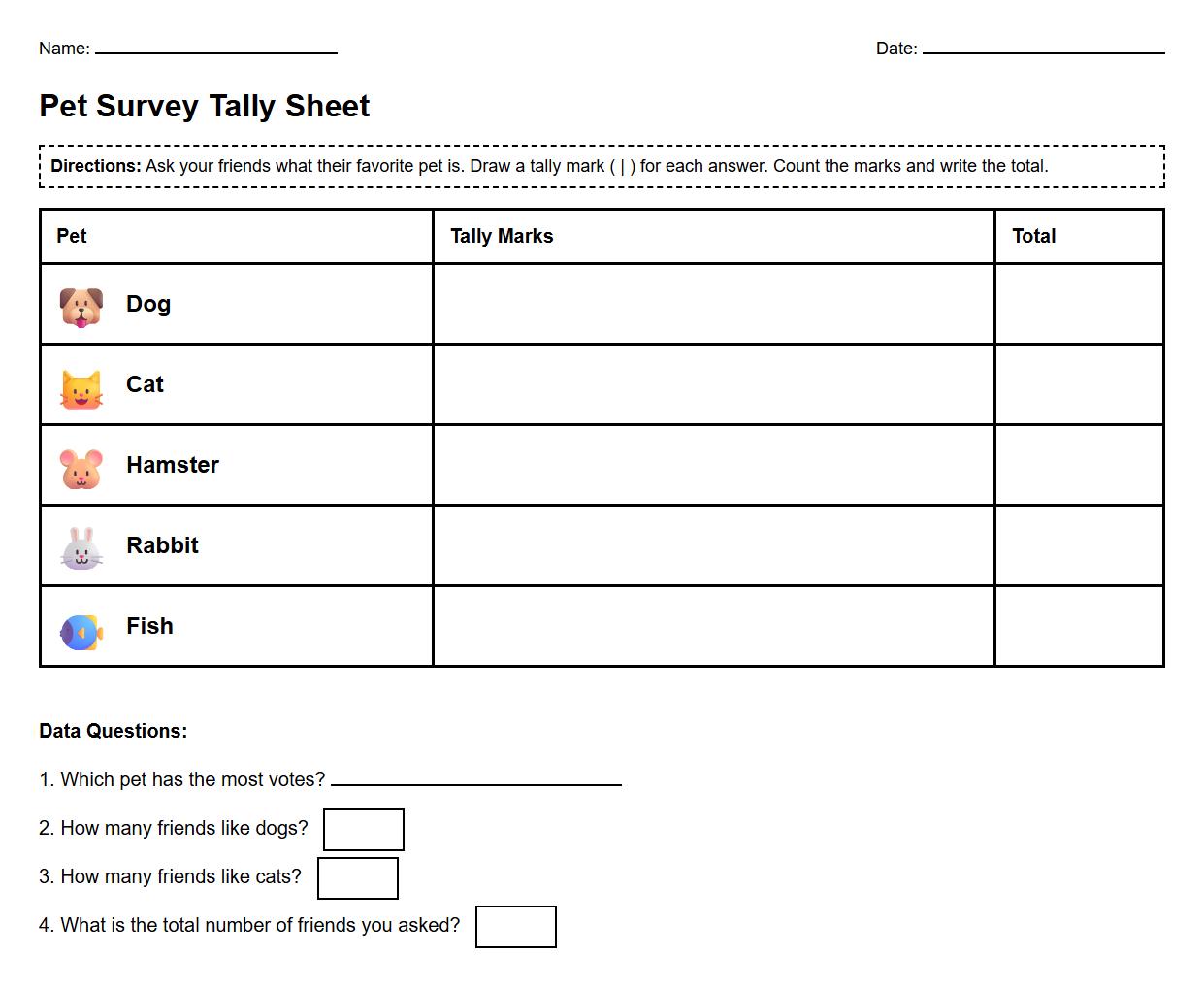
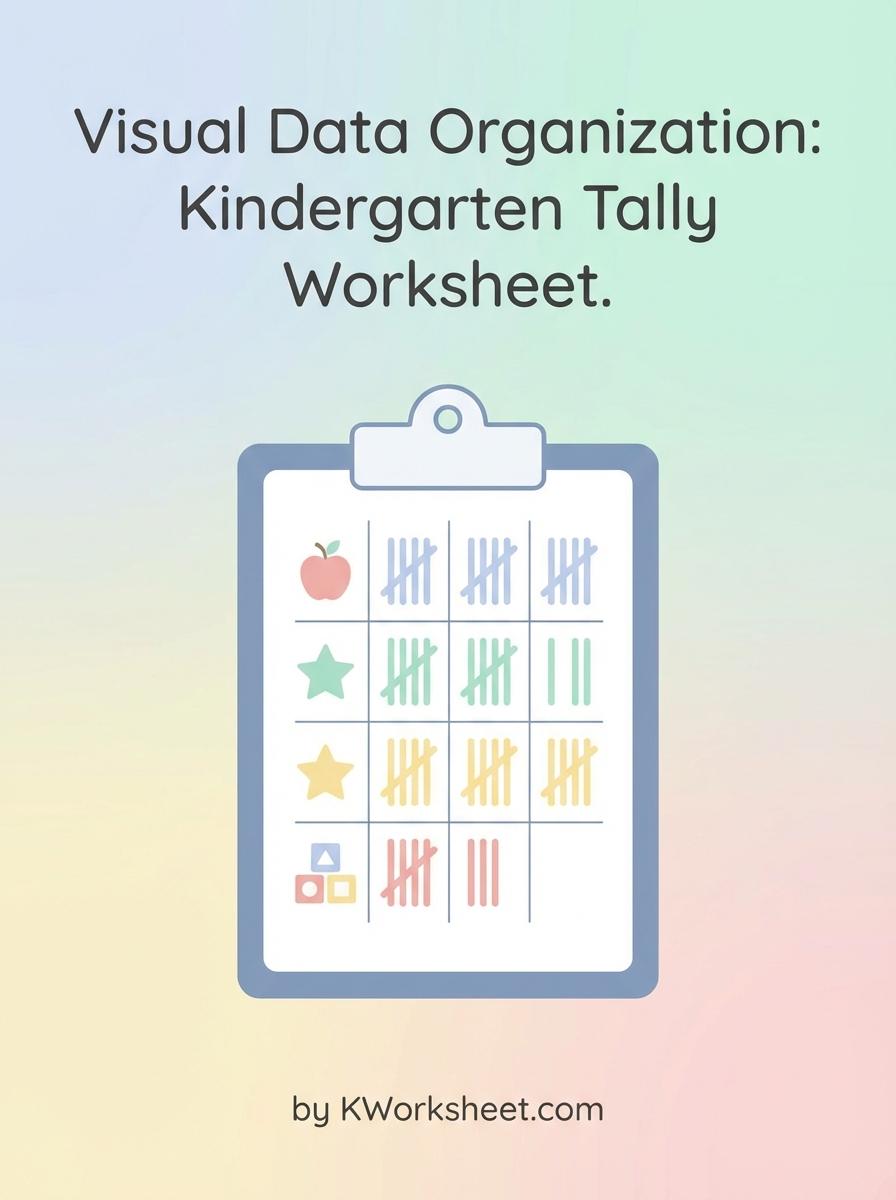
Kindergarten students develop early math skills by engaging with visual data organization through tallying objects and images. This worksheet encourages young learners to count, group, and record data using simple tally marks, enhancing their understanding of numbers and patterns. Explore the available Kindergarten Tally Worksheets to support hands-on learning and data recognition.
What is a Tally Mark Used For in Kindergarten Worksheets
Tally marks are a simple and effective way for young students to record and count objects. They help children visually represent numbers through easy-to-understand marks. These marks make counting interactive and fun. Teachers and parents can use tally marks to teach early math skills.
How Can Students Count Objects Using Tallies
Students count each object and represent it with one vertical tally mark. Every fifth tally is drawn diagonally across the previous four to form a group of five. This grouping technique helps students quickly count large numbers. It encourages accurate and organized counting.
Which Items Are Counted the Most in the Worksheet
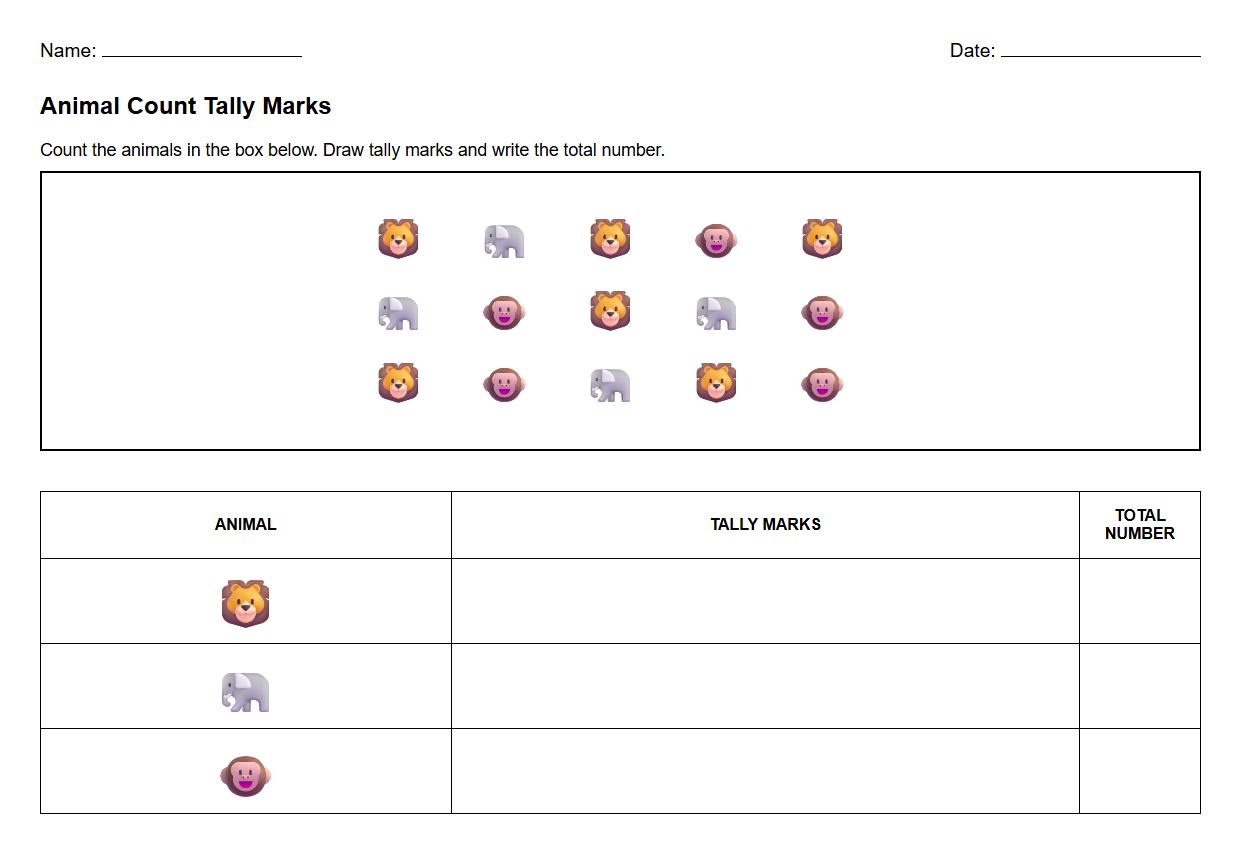
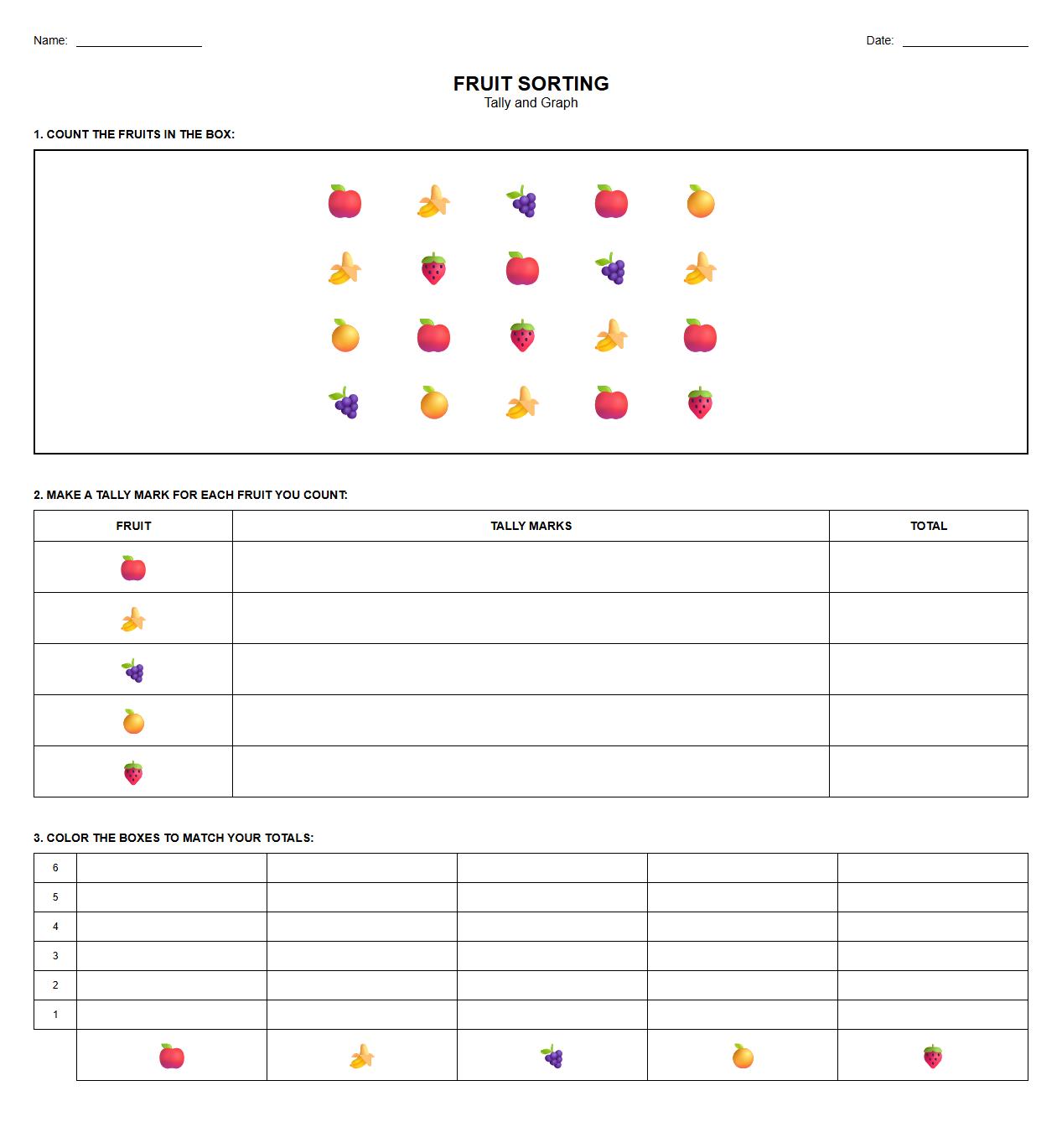
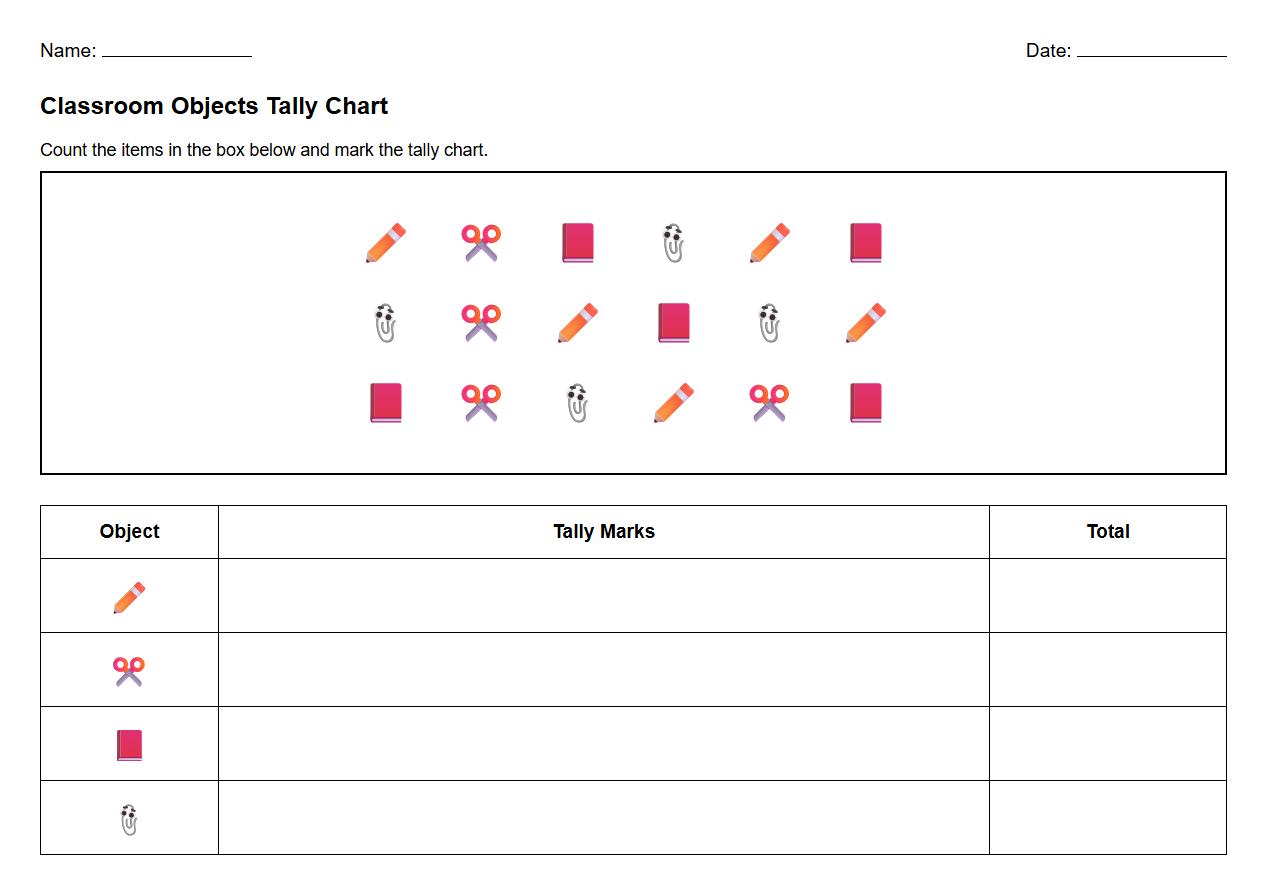
Items frequently counted include classroom supplies, such as crayons, blocks, and pencils. Students might also count toys, animals, or fruit pictures found on the worksheet. These familiar objects keep children engaged and motivated to learn. The choice of items supports practical learning scenarios.
What Symbol Represents a Group of Five Tallies
A group of five tally marks is represented by four vertical lines followed by a diagonal line crossing through them. This bundle of five makes counting faster and visually clear. It serves as a powerful tool for grasping basic number grouping. Young learners recognize and apply this symbol naturally.
How Do You Organize Collected Data in the Worksheet Visually
Collected data is organized by grouping tally marks in rows or columns on the worksheet. Each group of five tallies is easily distinguishable, creating a neat and tidy visual summary. This layout helps students review their counts quickly. It also supports data comparison and analysis.
Why Do We Use Tally Marks Instead of Writing Numbers
Tally marks are more accessible for kindergarteners who are still developing number writing skills. They provide a tactile and visual method of representing numbers. Using tallies builds foundational counting confidence without relying solely on numerals. It promotes engagement through hands-on learning.
How Can You Compare Groups Quickly with Tallies
Groups represented in tally marks can be compared instantly by counting the bundles of five and additional marks. This visual grouping highlights which group has more or fewer items. Teachers and parents can use this quick comparison to explain concepts like "more," "less," and "equal." It facilitates easy data interpretation for young learners.
What Do You Do After You Finish Counting with Tallies
After counting, students or teachers can write the total number next to the tally marks. This connects the visual tally with the numeric representation. It reinforces number recognition and completes the counting activity. This final step solidifies understanding.
Where Should You Draw Tally Marks on the Worksheet
Tally marks should be drawn clearly beside the images or names of the items counted. A designated column or box ensures tallies stay organized and easy to read. Clear placement prevents confusion and maintains worksheet neatness. It's important for accurate data collection and review.
How Can Tallies Help You See Classroom Favorites Easily
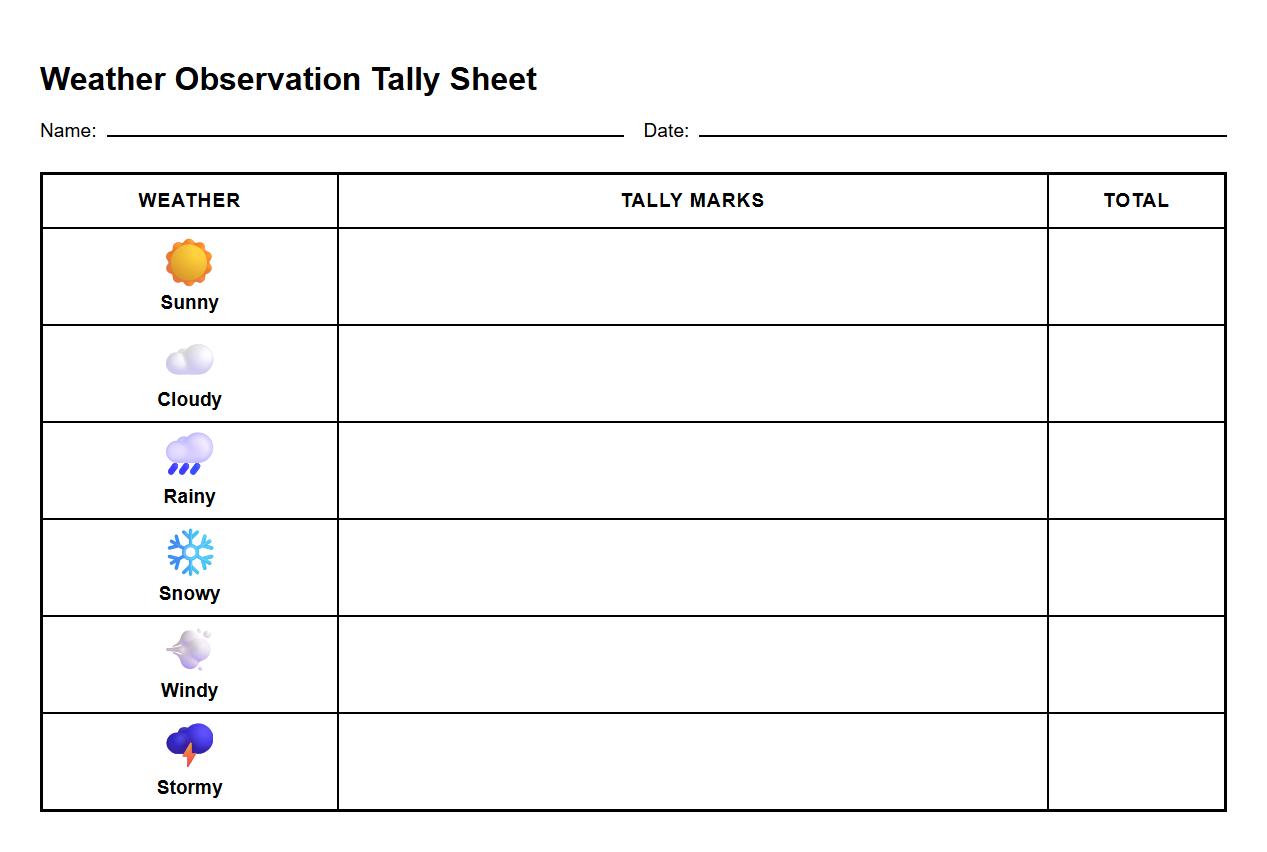
Tally marks visually reveal which items or activities are most popular among students. By counting preferences, teachers can identify classroom favorites quickly. This data helps in planning lessons or activities aligned with student interests. Tallies make preferences clear at a glance.


Practice Reading Graphs and Tally Charts for Kindergarten