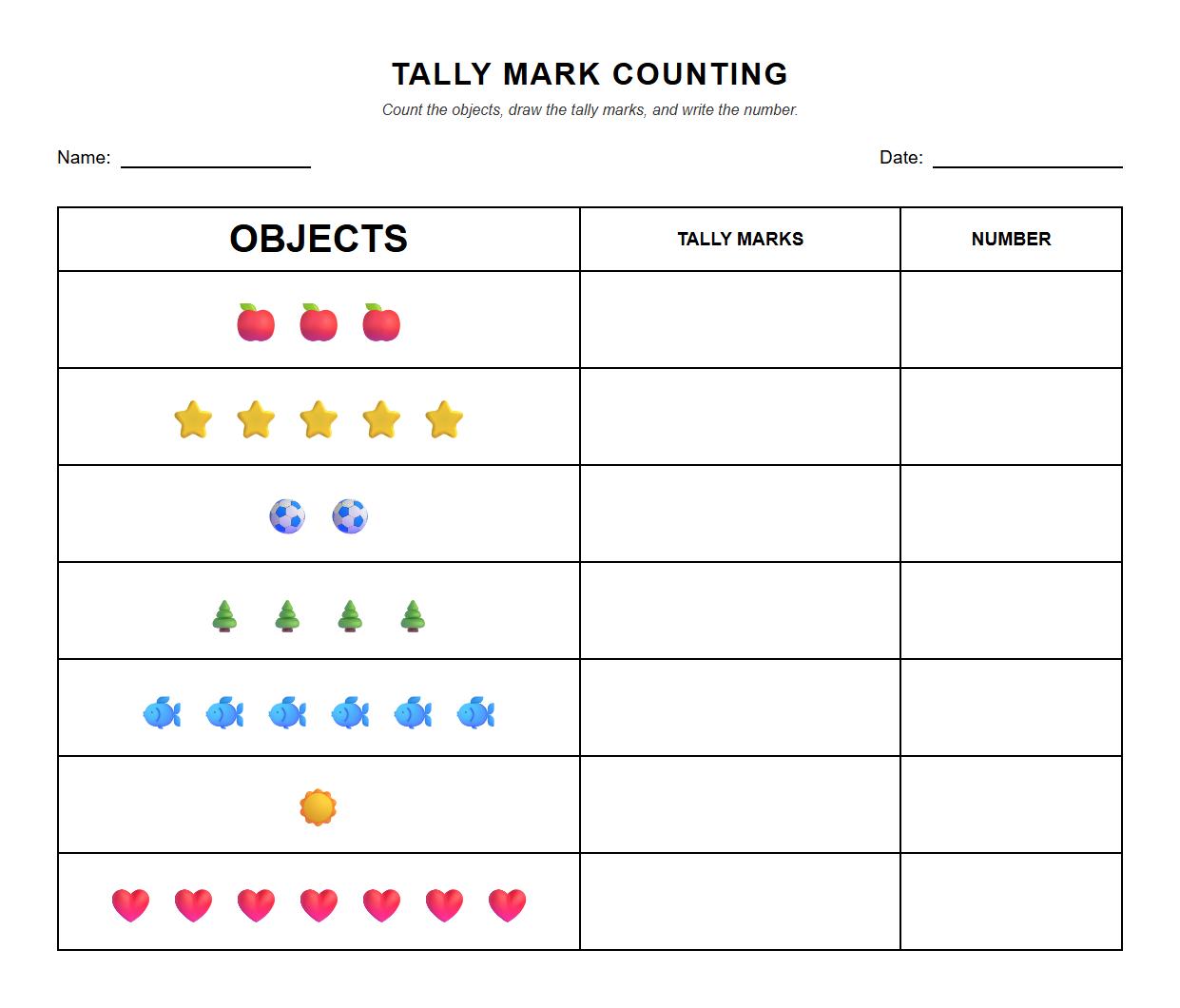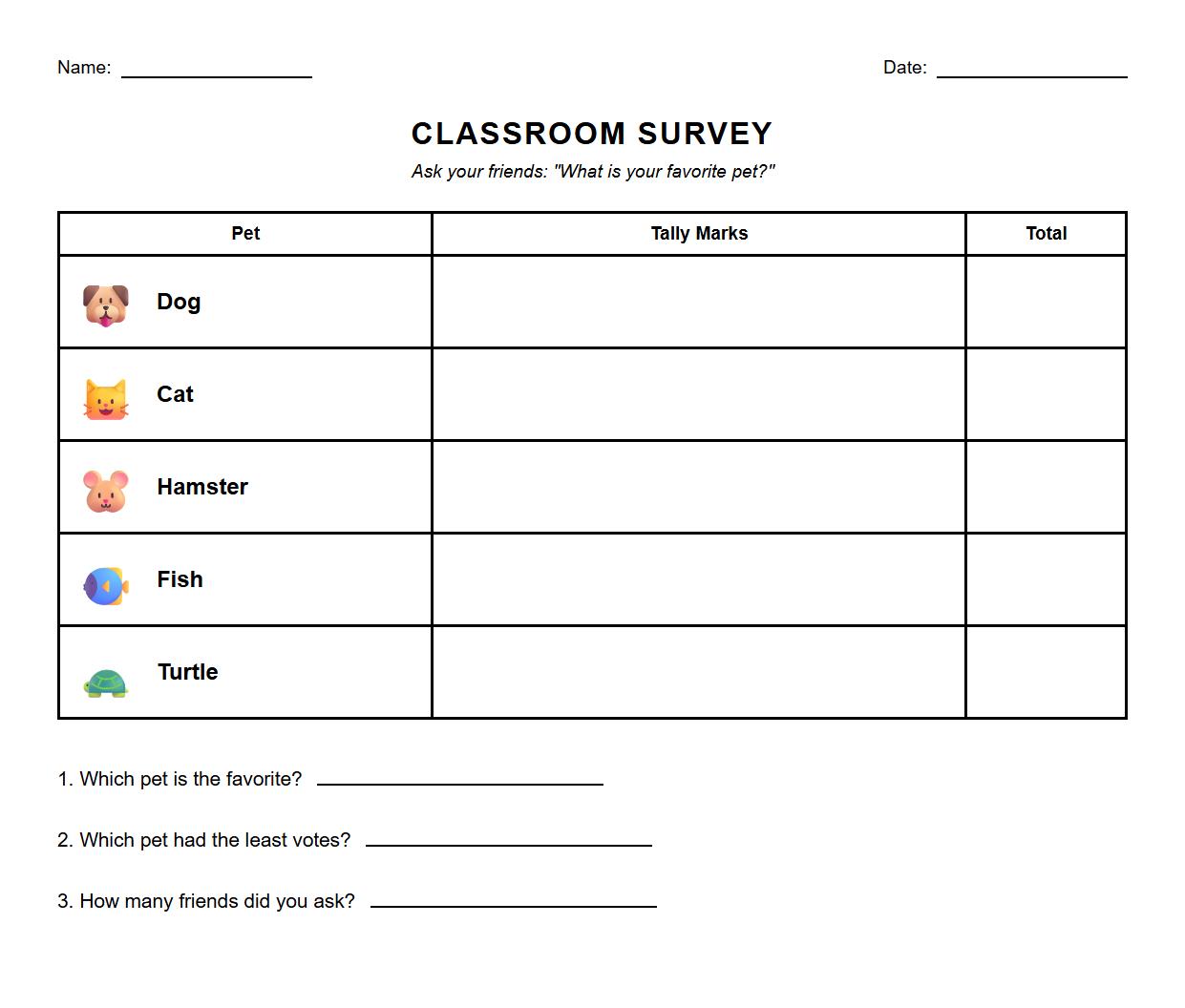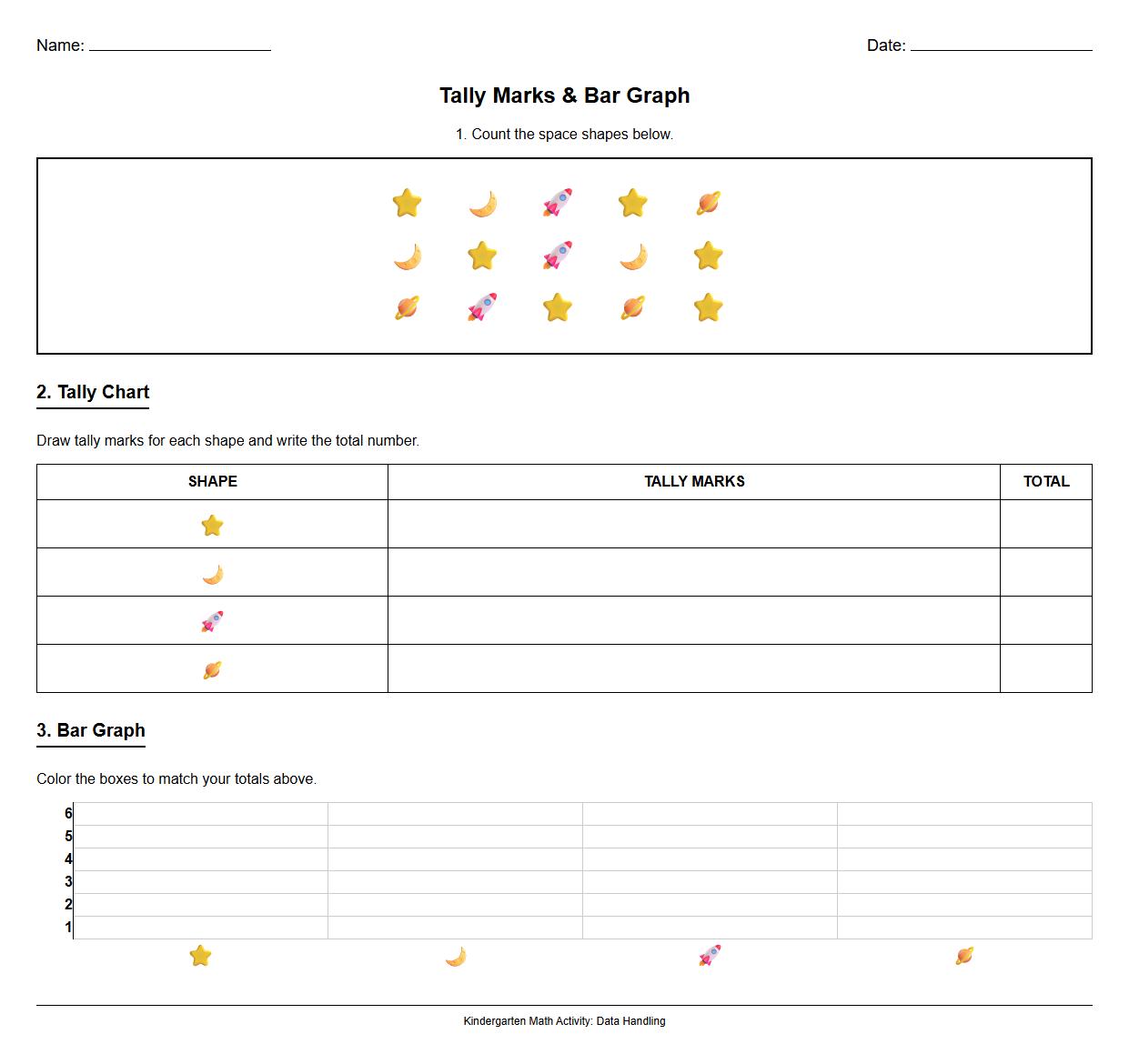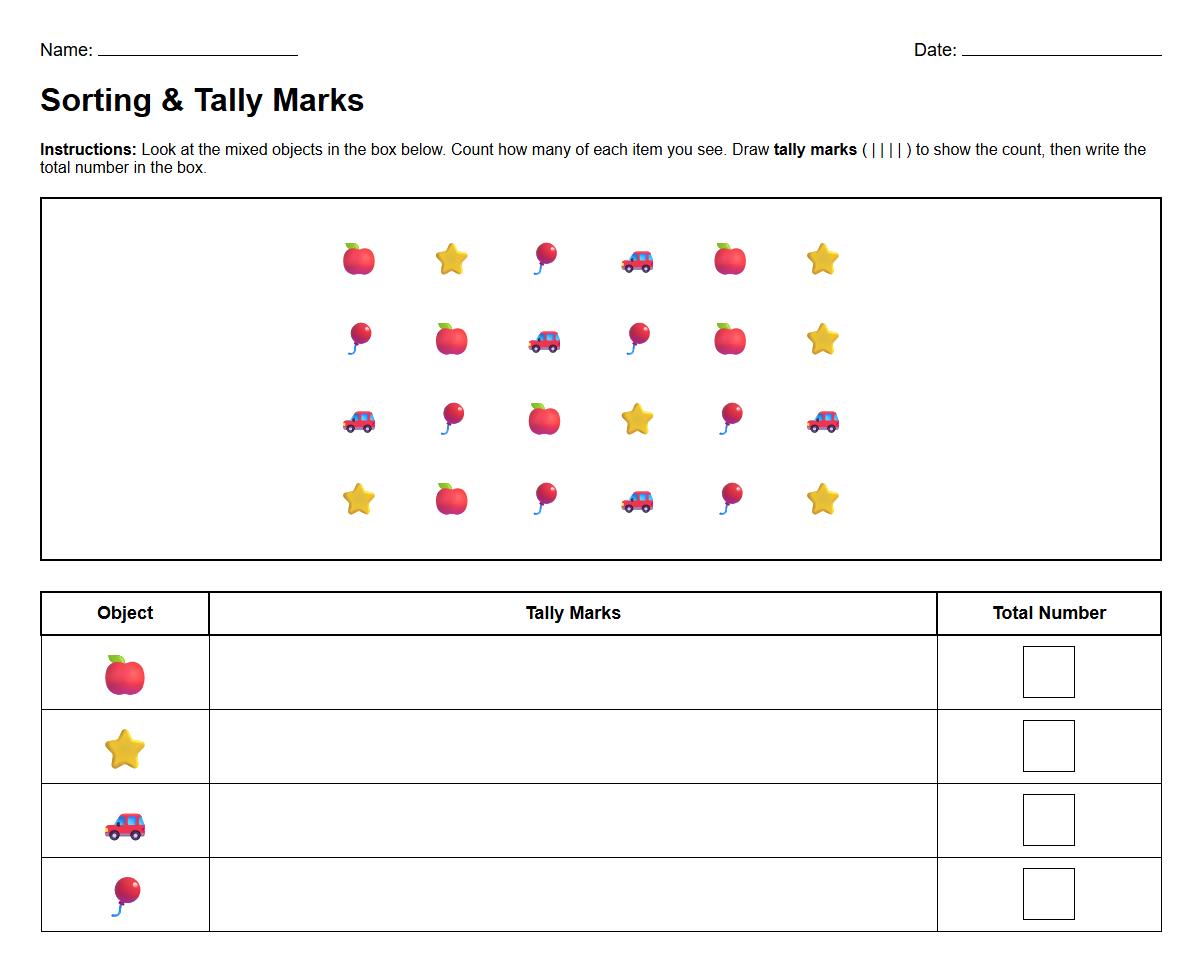
Kindergarten tally mark activities help young learners understand basic data collection and counting skills through engaging, hands-on exercises. These activities develop number recognition and introduce the concept of grouping items for easier tallying. Explore our selection of fun and effective worksheets to support your child's early math learning.
How Can Tally Marks Help Kindergartners Count Classroom Objects?
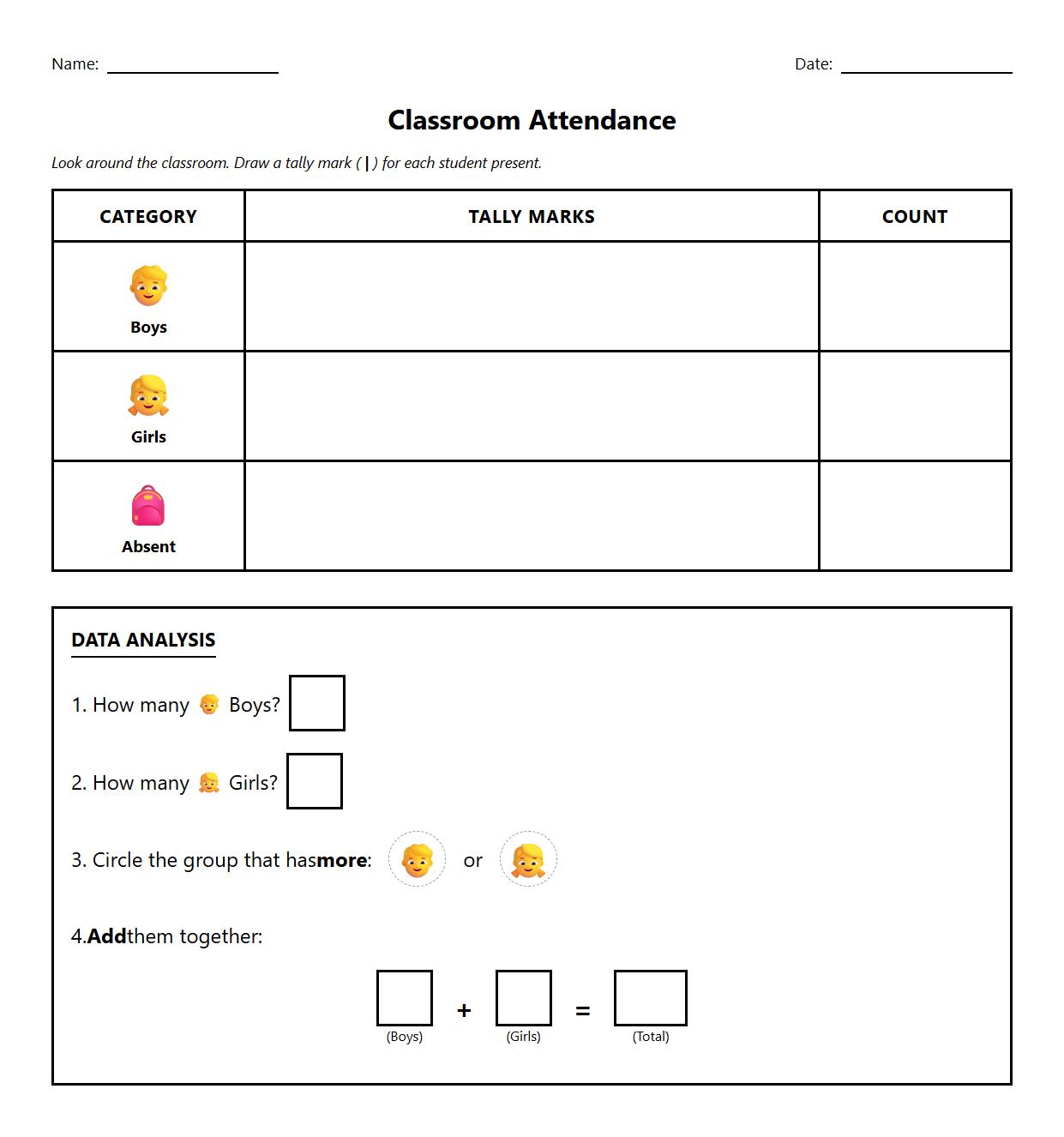
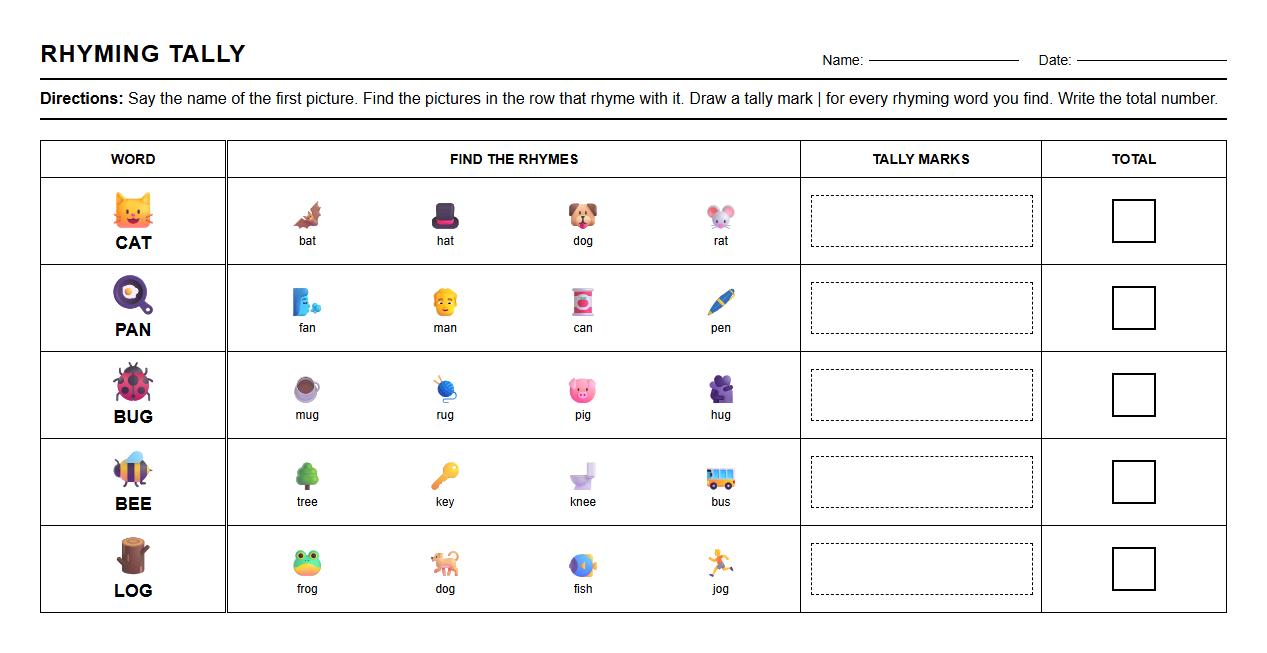
Tally marks provide a simple and visual way for kindergartners to count objects accurately. By marking one line per item, children can keep track without recounting. This method also introduces basic data recording skills. It helps develop their understanding of numbers and counting sequences.
Simple Tally Mark Activity to Collect Data on Favorite Fruits
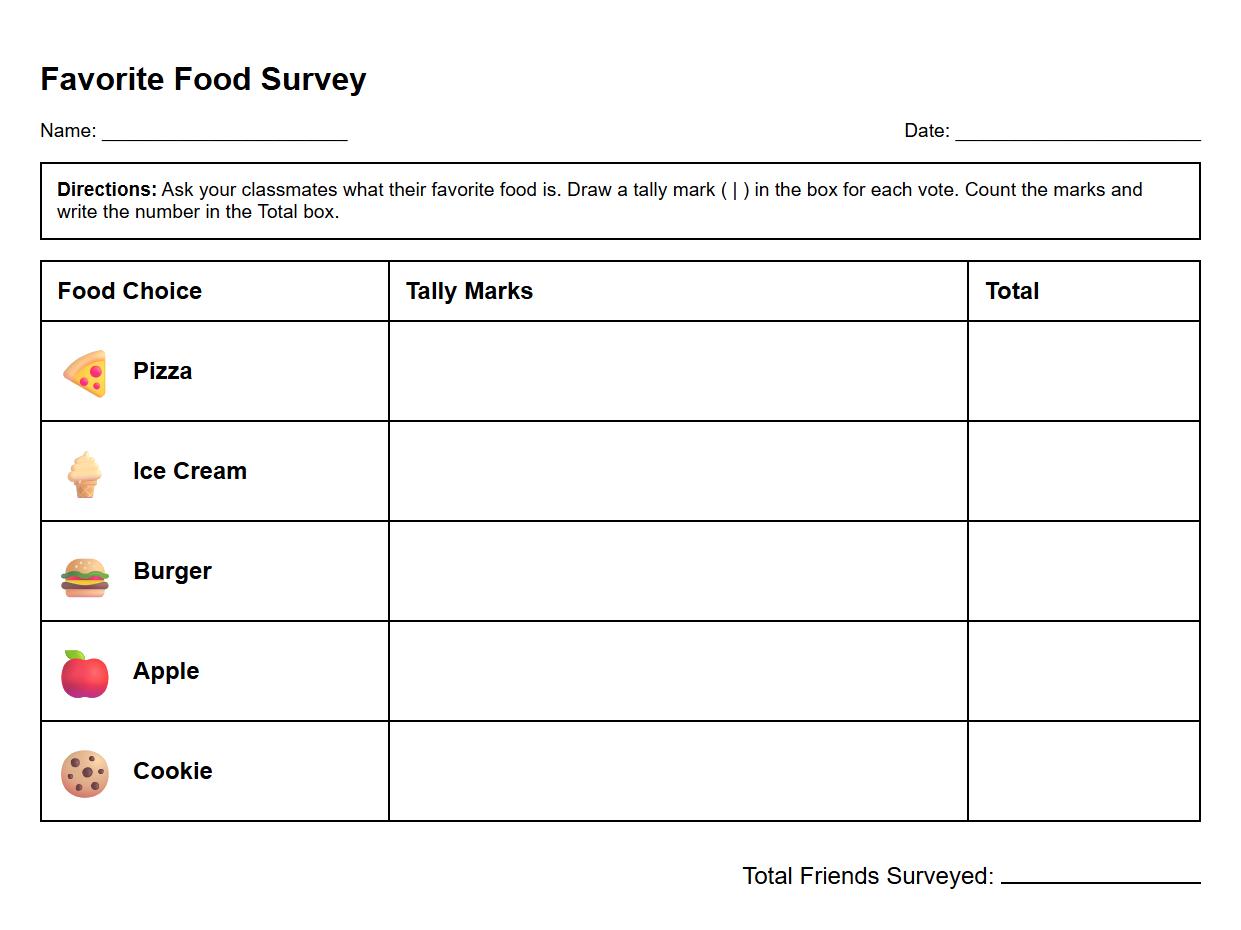
Start by showing pictures of common fruits and ask students about their favorites. Each child adds a single tally mark under their chosen fruit on a chart. This interactive activity encourages participation and good listening skills. It also introduces the concept of representing data visually.
Teaching Students to Group Tally Marks in Fives
Explain that every group of five tally marks makes counting easier to manage. Teach students to draw four vertical lines and a diagonal line across to form a group of five. Practicing grouping helps reinforce counting skills and number patterns. It also speeds up data interpretation in future activities.
Classroom Items for a Tally Mark Scavenger Hunt
Items such as pencils, books, chairs, and crayons are perfect for a tally mark scavenger hunt. Students find and count each item, then record their tallies on a worksheet. This hands-on activity combines movement with learning. It encourages observation and teamwork among students.
Using Tally Marks to Record Daily Weather Observations
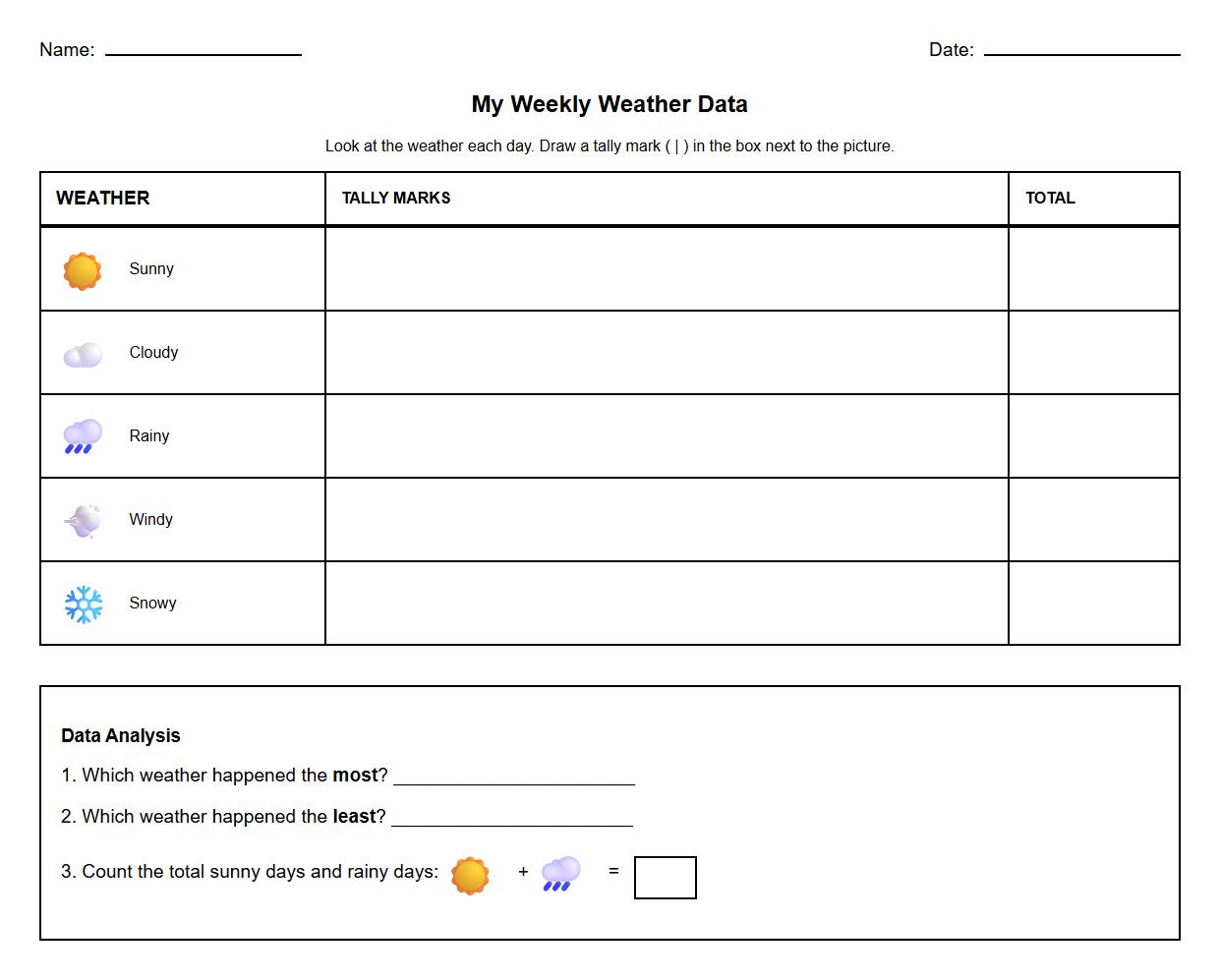
Have students observe the weather each day and tally occurrences of sunny, rainy, or cloudy conditions. Recording these daily weather tallies builds routine and data tracking skills. It also introduces basic weather vocabulary and scientific observation. This activity promotes consistency and curiosity about the environment.
Effective Ways to Display Tally Mark Data on a Chart
A large, colorful chart with labeled sections allows students to see their data clearly. Using bold lines and groupings of five makes the tally marks easier to count. Adding pictures related to the data adds interest and context. This visual display supports data interpretation and classroom discussion.
Introducing Voting with Tally Marks
Explain how tally marks can show group choices quickly and clearly. Present simple questions with two or three options, and have students vote by adding tally marks. This introduces respectful decision-making and counting practice. Voting helps children feel involved and understand majority rules.
Tally Mark Games That Encourage Teamwork Among Kindergartners
Games like "Tally Tag" require pairs to find and tally objects together. Others include group competitions where teams tally favorite stories or colors. These games foster cooperation, communication, and counting skills. They make learning fun while building social skills.
Using Tally Marks to Sort and Count Shapes
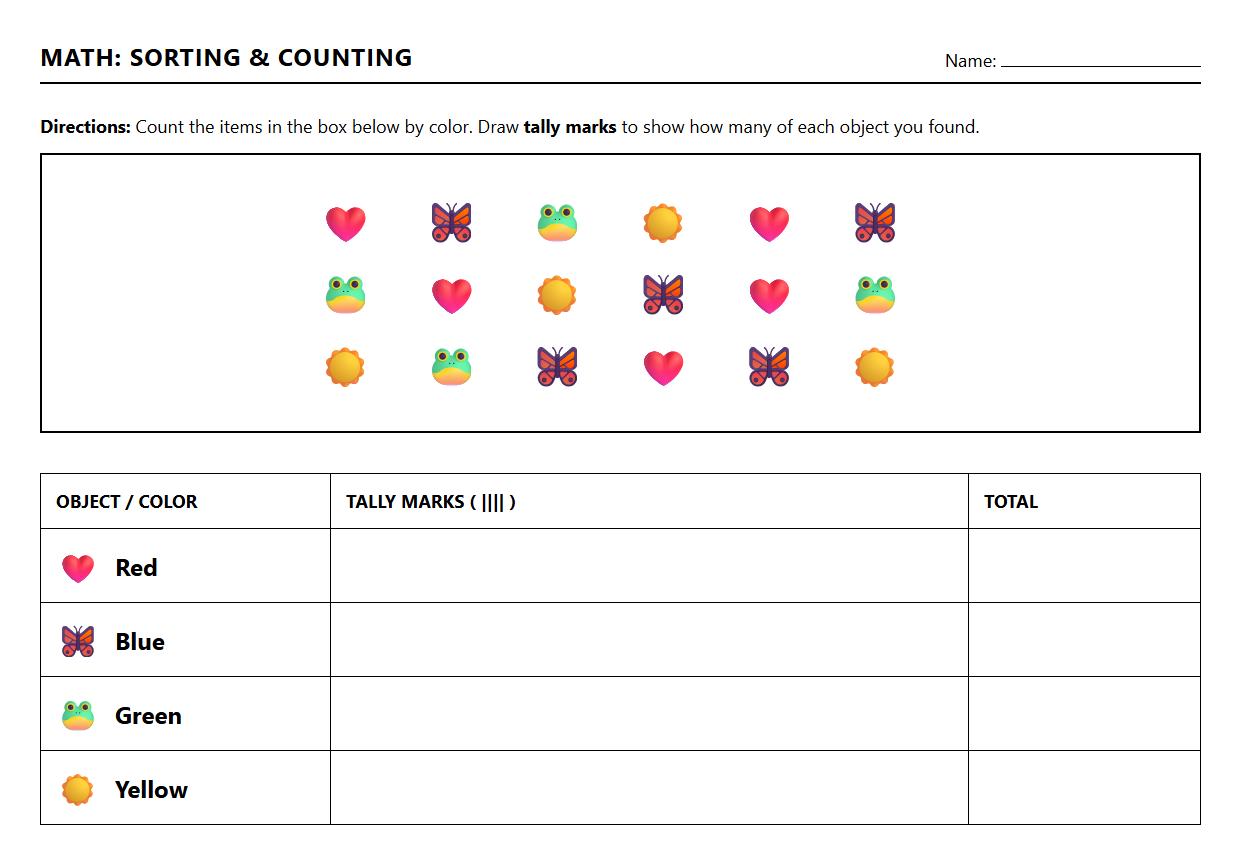
Provide students with various shapes to sort and then tally each group. Counting shapes with tallies reinforces shape recognition and early math concepts. This activity also encourages organizing skills and visual discrimination. Tallies make the counting process engaging and clear.
Questions to Help Students Interpret Data Collected with Tally Marks
Ask questions like "Which item has the most tallies?" or "How many fewer tallies does this group have?" to promote critical thinking. Inquire about patterns they notice or changes over time in the data. These questions deepen understanding and encourage communication about results. They help students connect numbers to real-world concepts.


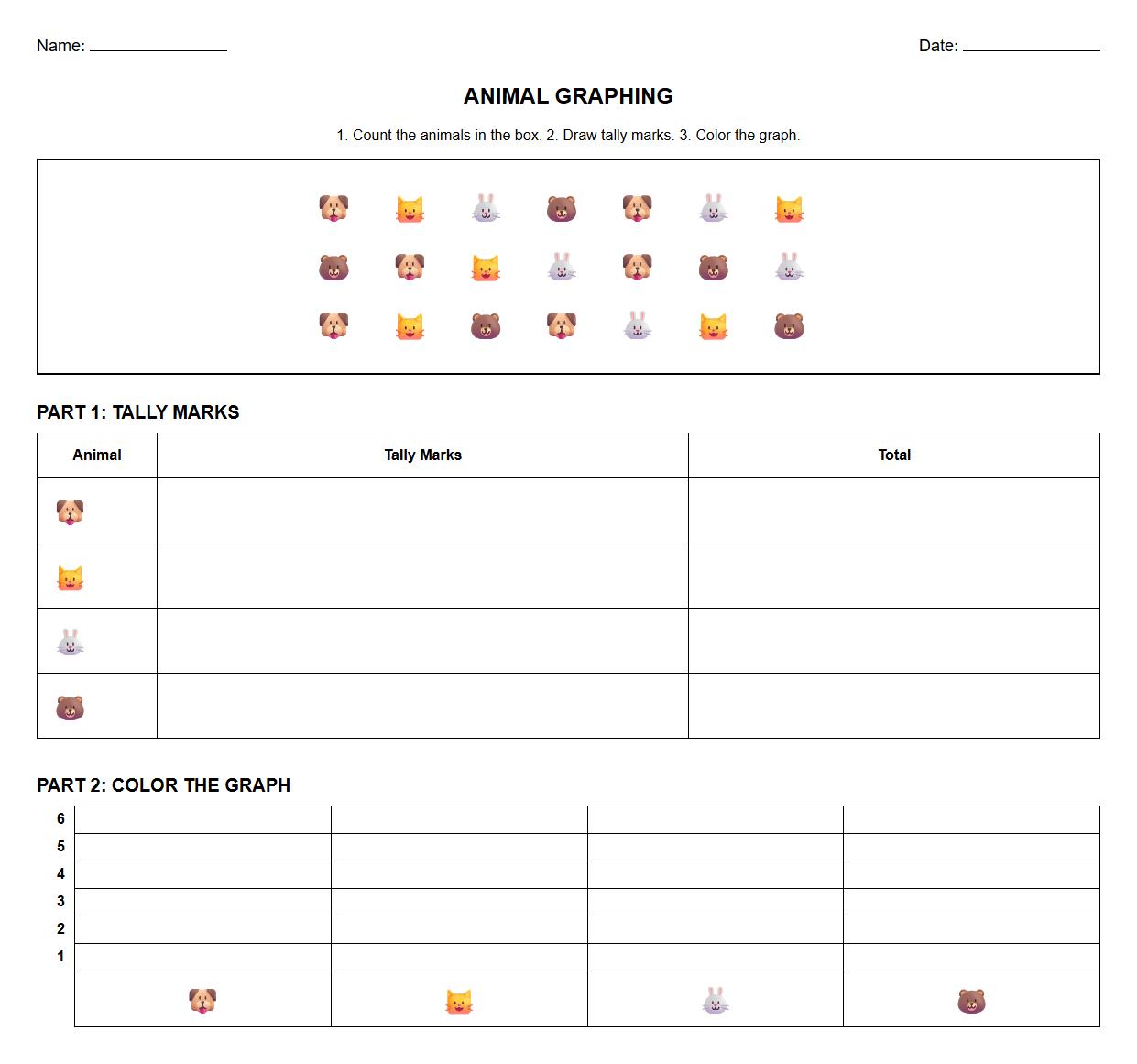
Hands On Bar Graph Worksheet for Kindergarten Students