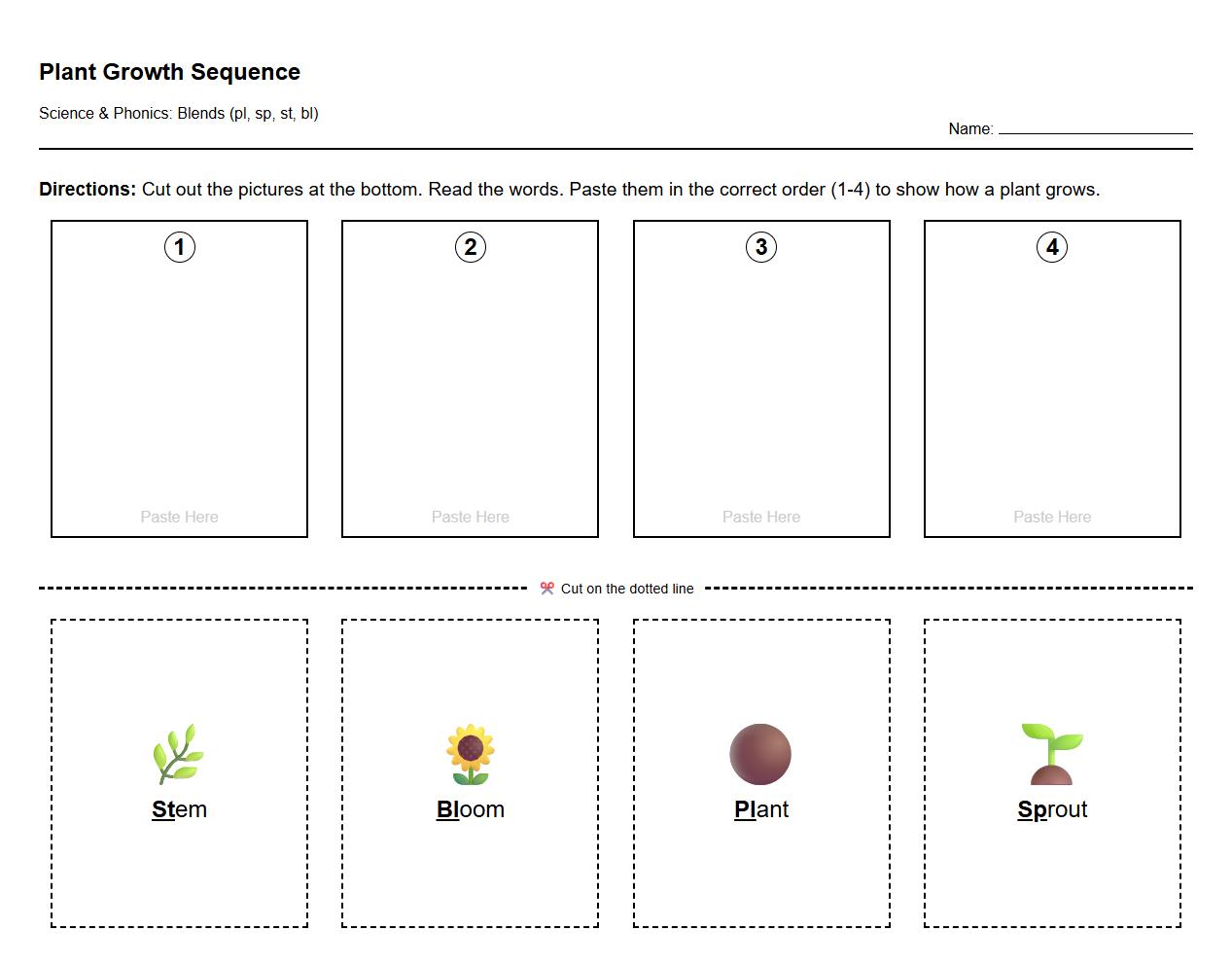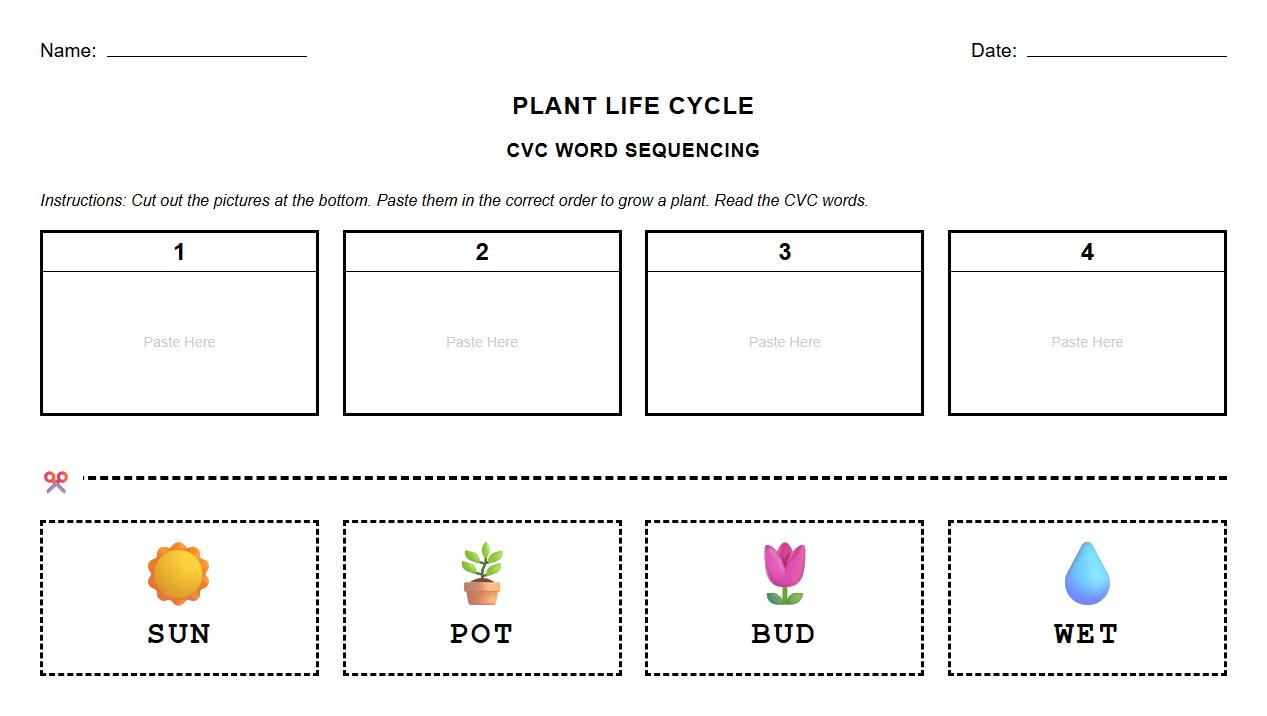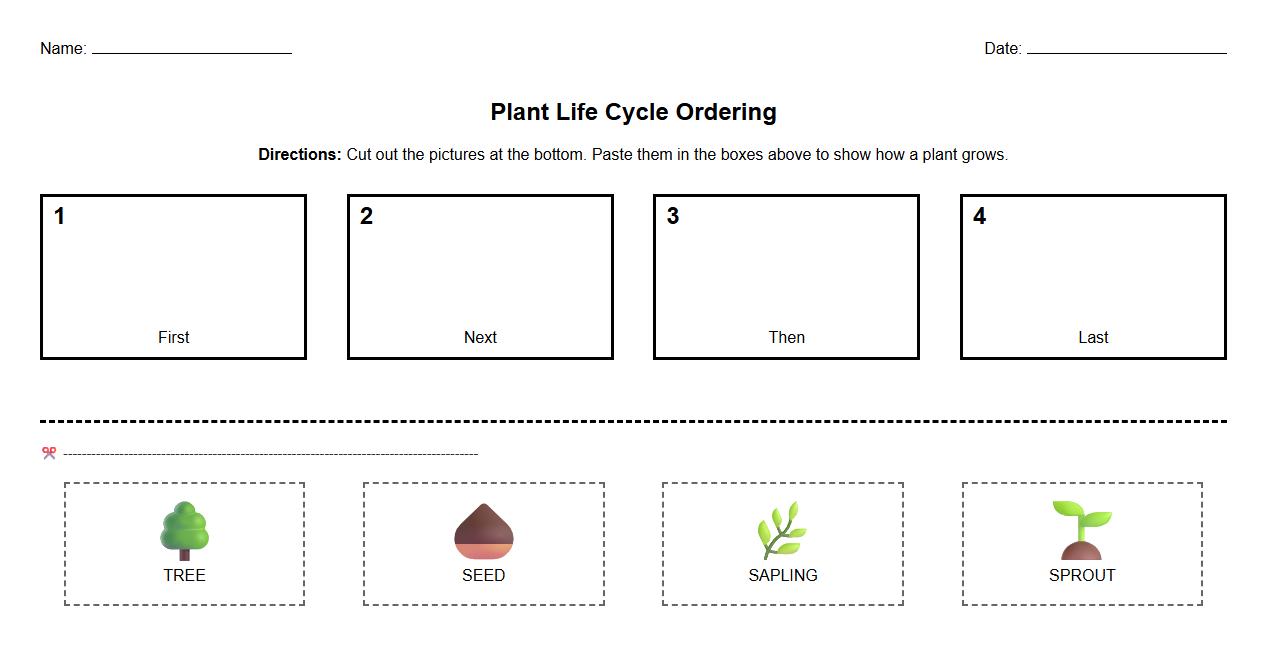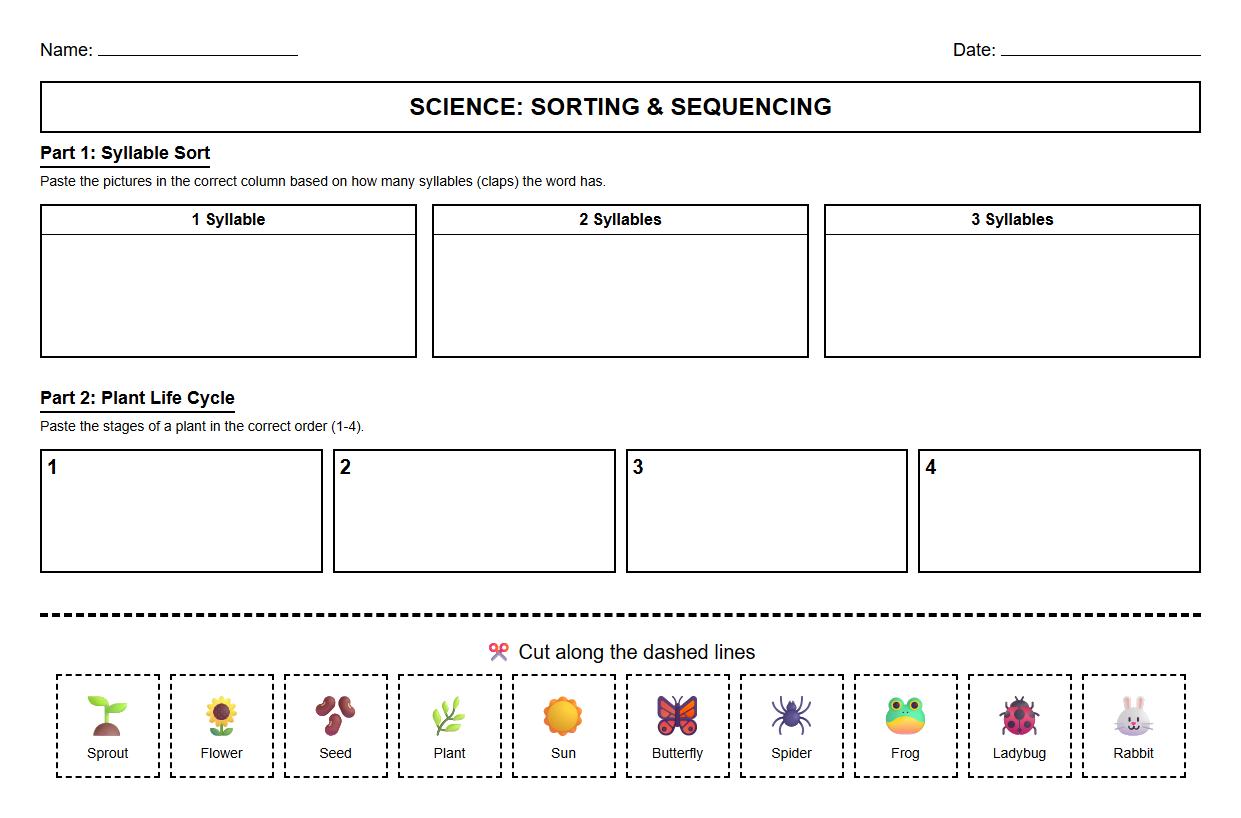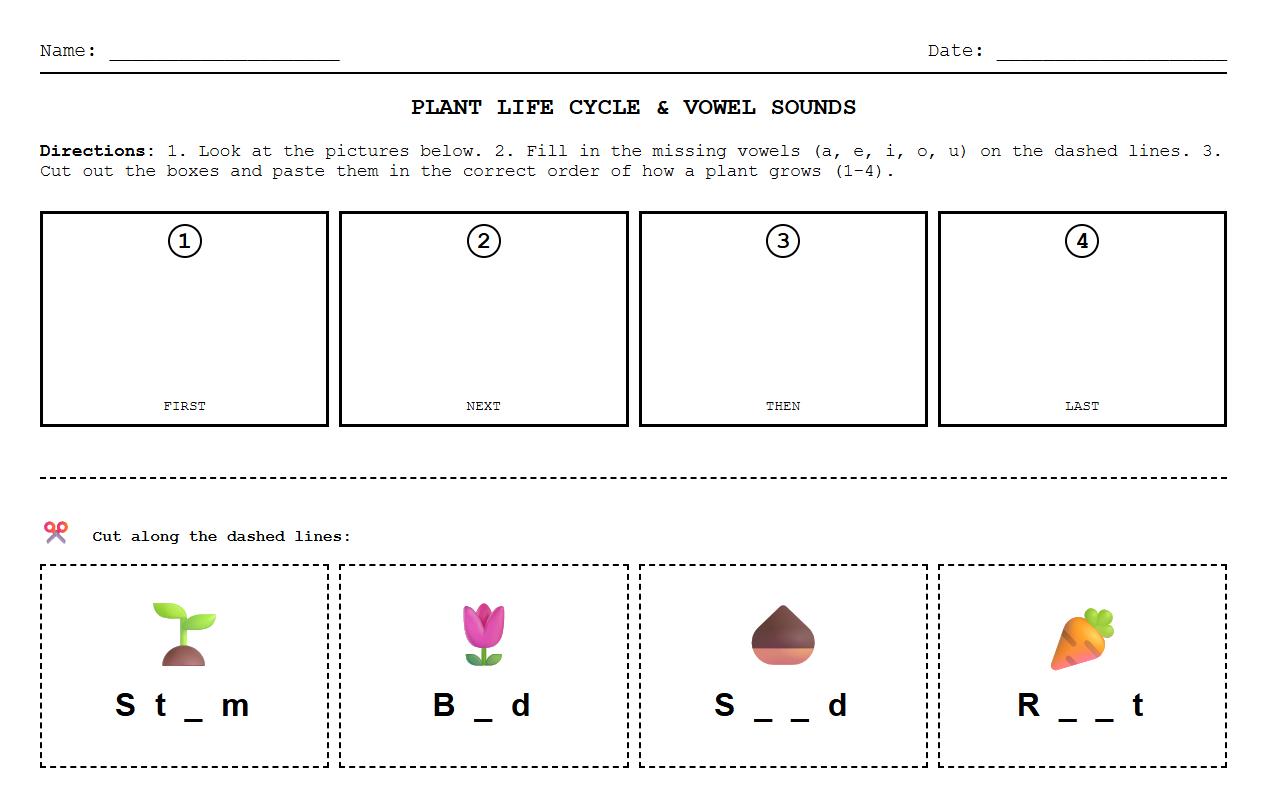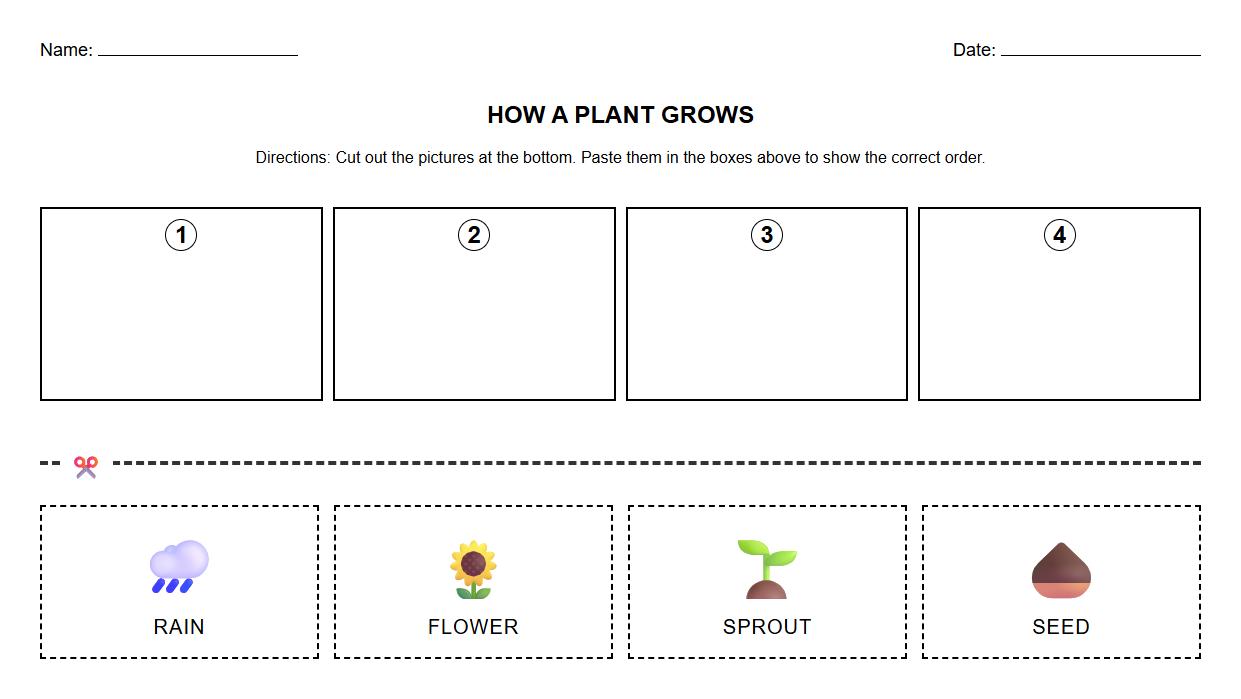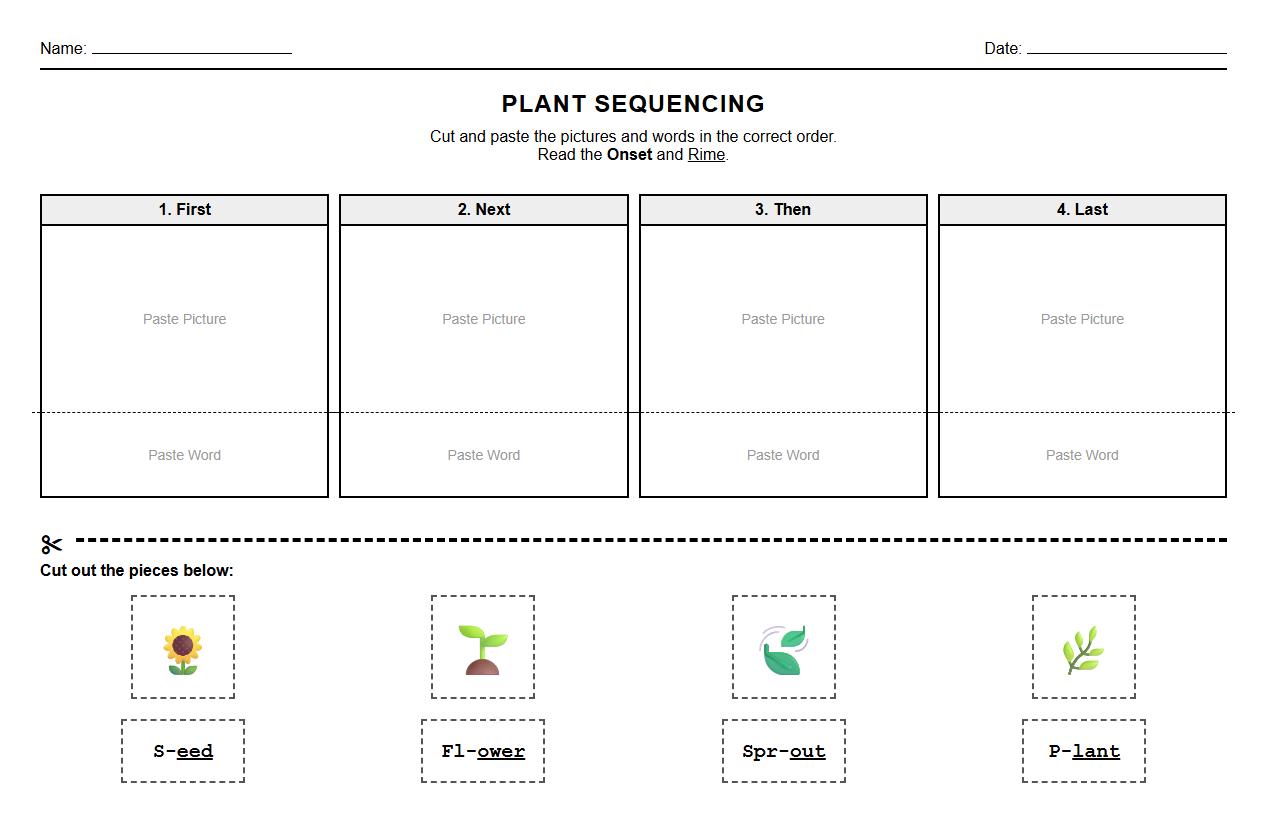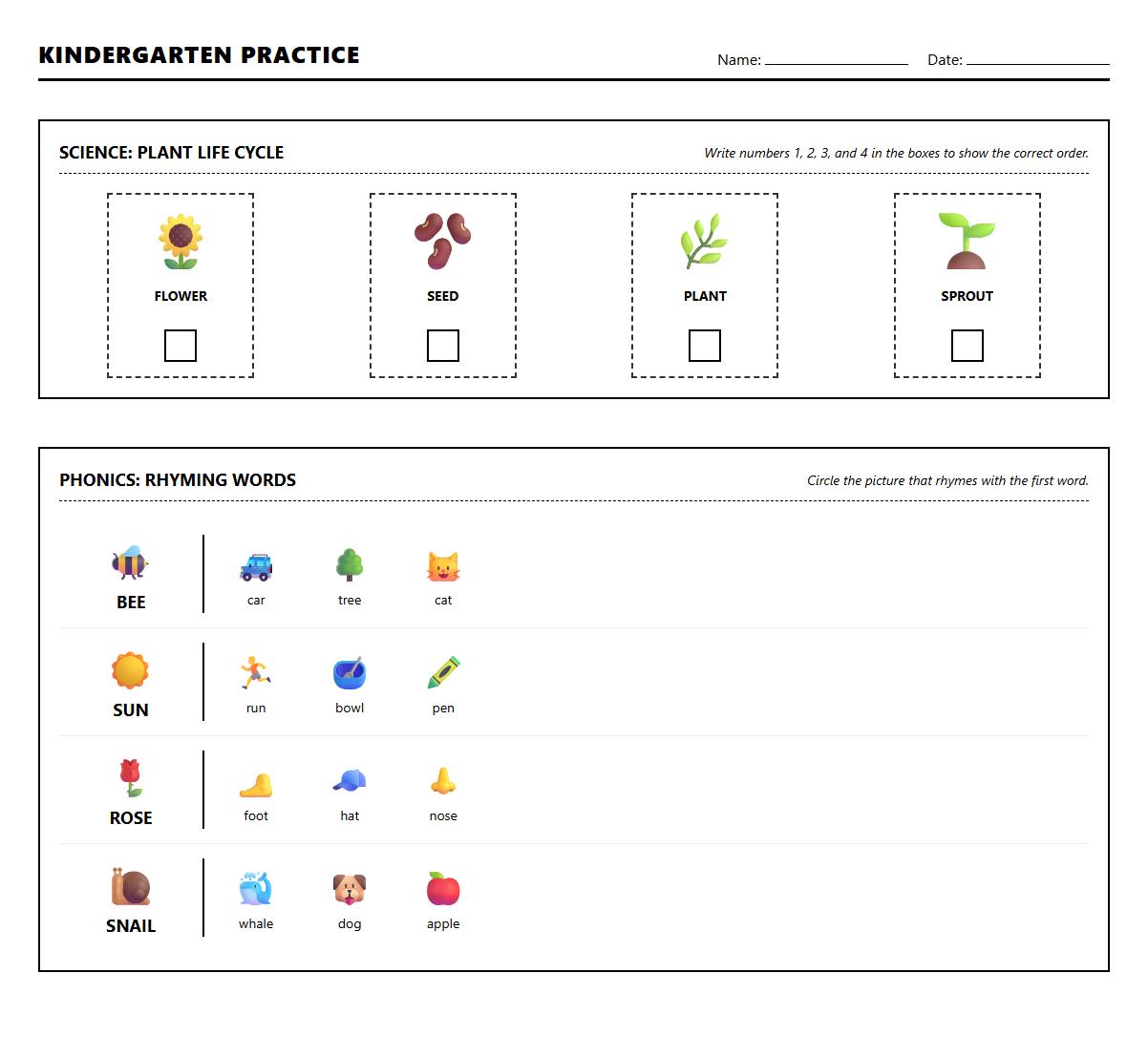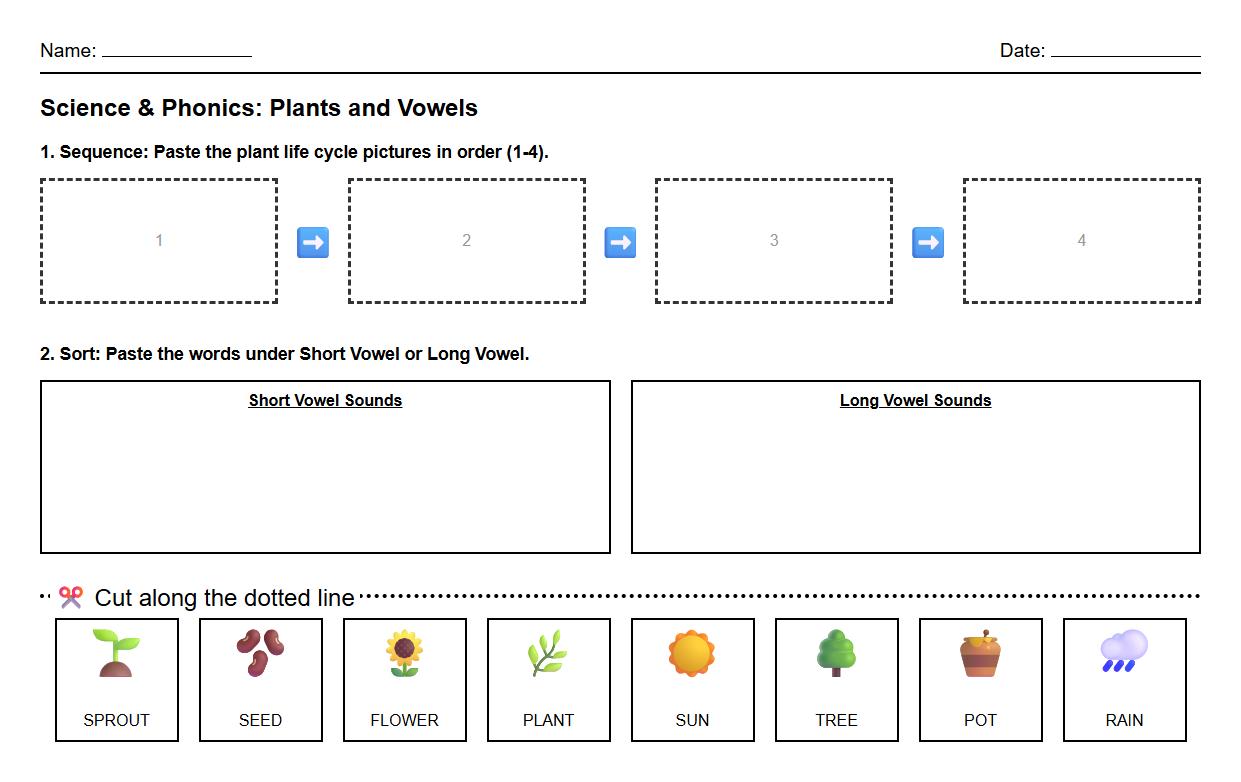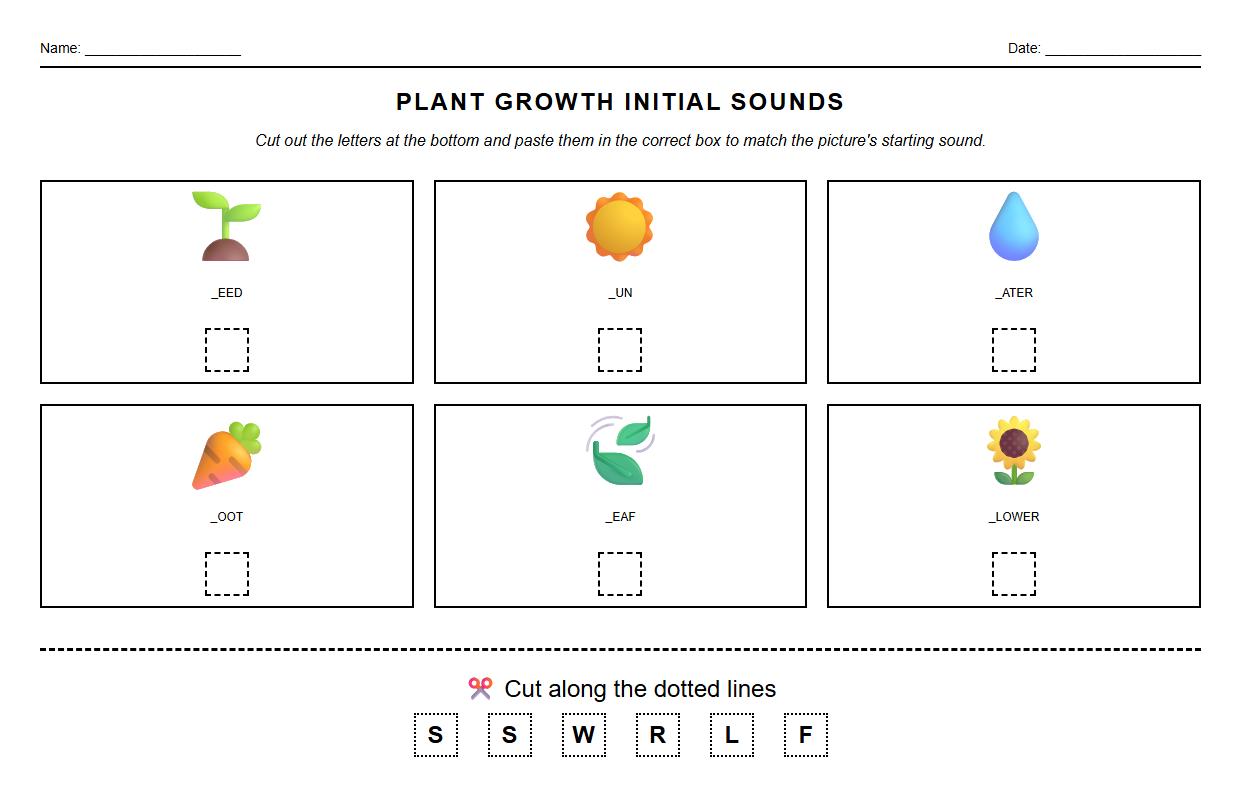
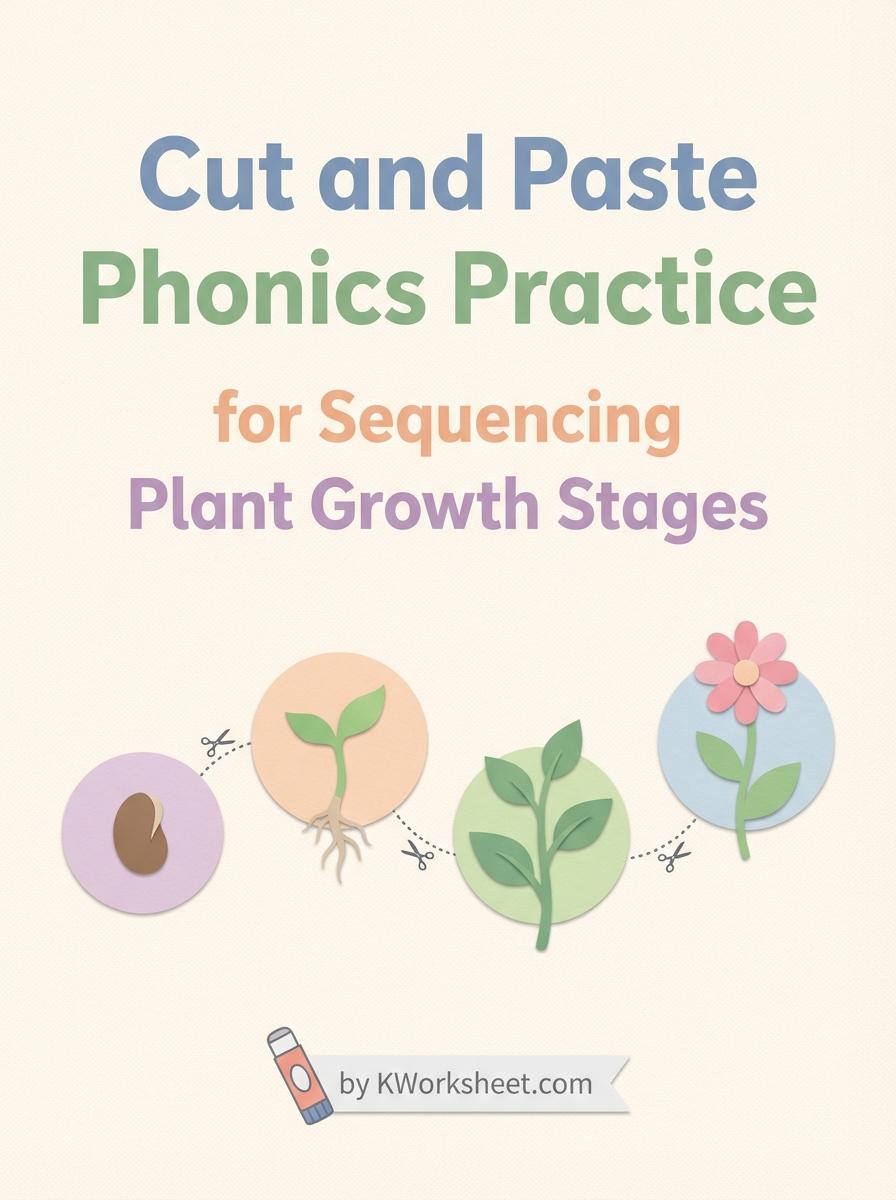
Master sequencing skills by cutting and pasting phonics-based words that describe each stage of plant growth, reinforcing both vocabulary and understanding of biological processes. This hands-on activity enhances fine motor skills while solidifying knowledge of plant development from seed to full maturity. Explore the available worksheets to support engaging and educational practice.
First Stage of a Plant's Growth
The first stage of a plant's growth that students will cut and paste is the seed. This stage represents the beginning of the plant's life cycle. Students learn to recognize the seed as the starting point of plant growth. It helps establish a foundation for understanding the sequence of growth.
Second Stage Growth: What Emerges from the Seed
During the second stage in the sequence, the root sprouts from the seed. This part anchors the plant and absorbs water and nutrients from the soil. It is crucial for the plant's early development. Students observe how the root grows downward first to support the plant.
Needs of the Sprout After Pastings
After pasting the sprout in the growth sequence, it needs sunlight, water, and soil nutrients to grow. These essential elements help the sprout develop into a healthy plant. Teachers and parents can explain that these needs keep the plant alive and growing. It reinforces the importance of care in plant growth.
Picture Showing Plant with Leaves
The picture that shows the plant with leaves is the next one students should paste after the sprout stage. Leaves are vital as they capture sunlight for photosynthesis. This stage demonstrates how the plant begins to produce its own food. Identifying the leaves helps children recognize growth progress.
Understanding the Correct Order of Plant Growth
Children know the correct order of plant growth stages by following the visual guides and sequence numbers on the pictures. Teachers and parents can assist by reviewing the natural cycle of plants. The cut-and-paste activity reinforces logical sequencing. This method supports memory and understanding of process order.
Final Stage with Flowers
The last stage to be pasted shows the plant with flowers. Flowering indicates maturity and reproductive readiness. Students learn that flowers follow the development of leaves and stems. This stage completes the plant growth cycle in the activity.
Tools for Safe Cutting
Students use child-safe scissors to cut out the plant growth images. These scissors prevent accidents while allowing fine motor skill development. Safety tools are essential in kindergarten activities. Proper guidance ensures a safe cutting experience.
Checking Correctness of Plant Growth Sequence
Students can check if their plant growth sequence is correct by comparing their work to the teacher's model or a reference chart. Reviewing the logical progression of stages reinforces learning. Parents can also guide children through the growth process. This step encourages self-assessment and validation.
Stage Before Stem Development
The stage that should be pasted before the plant develops a stem is the sprout with roots. This is when the plant starts growing upward but has not yet formed a distinct stem. Recognizing this helps children understand growth progression. It links root and stem development logically.
Educational Benefits of the Activity
This cut-and-paste activity helps students understand plant growth sequencing by providing a hands-on learning experience. It develops fine motor skills, sequencing ability, and scientific observation. The visual and tactile approach reinforces the concept clearly. It builds foundational knowledge in a fun, interactive way.


Kindergarten Life Cycle Worksheet Focusing on Plant Vocabulary