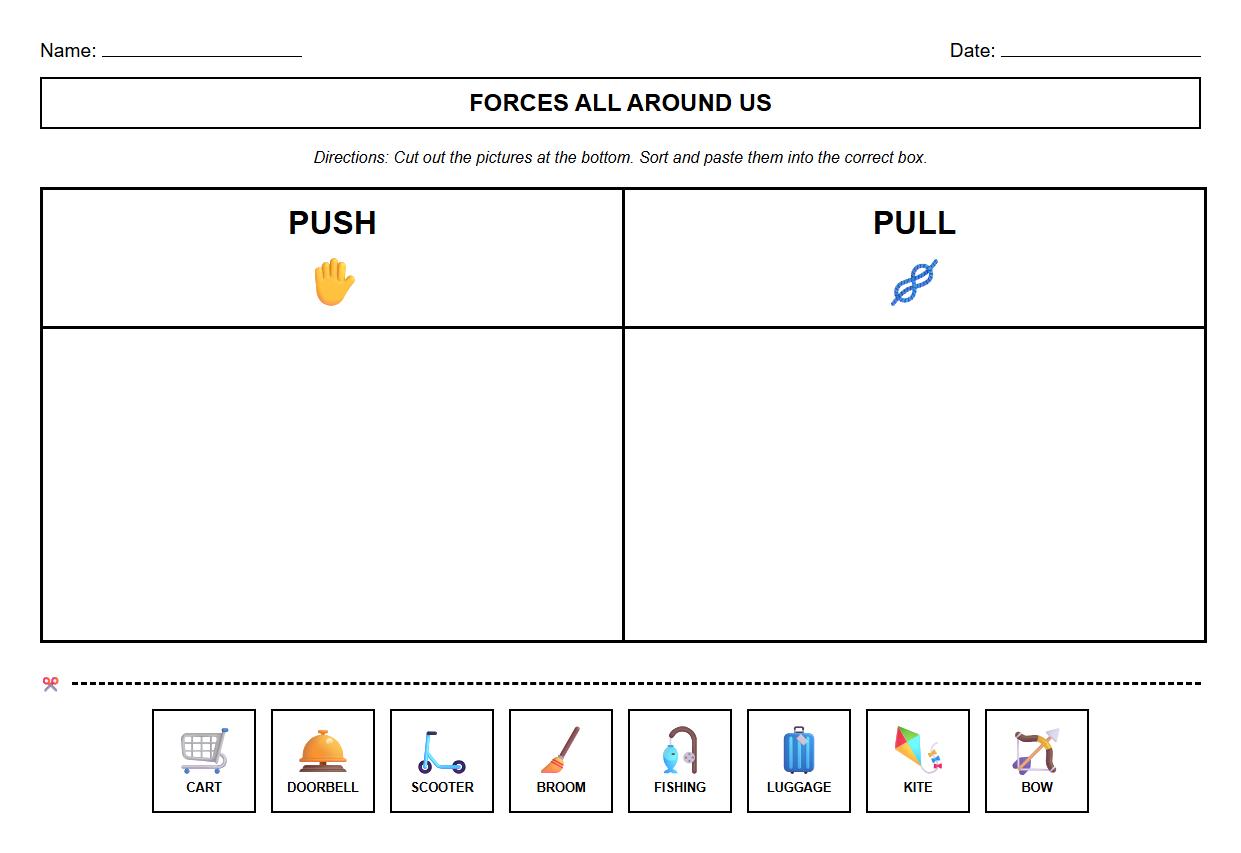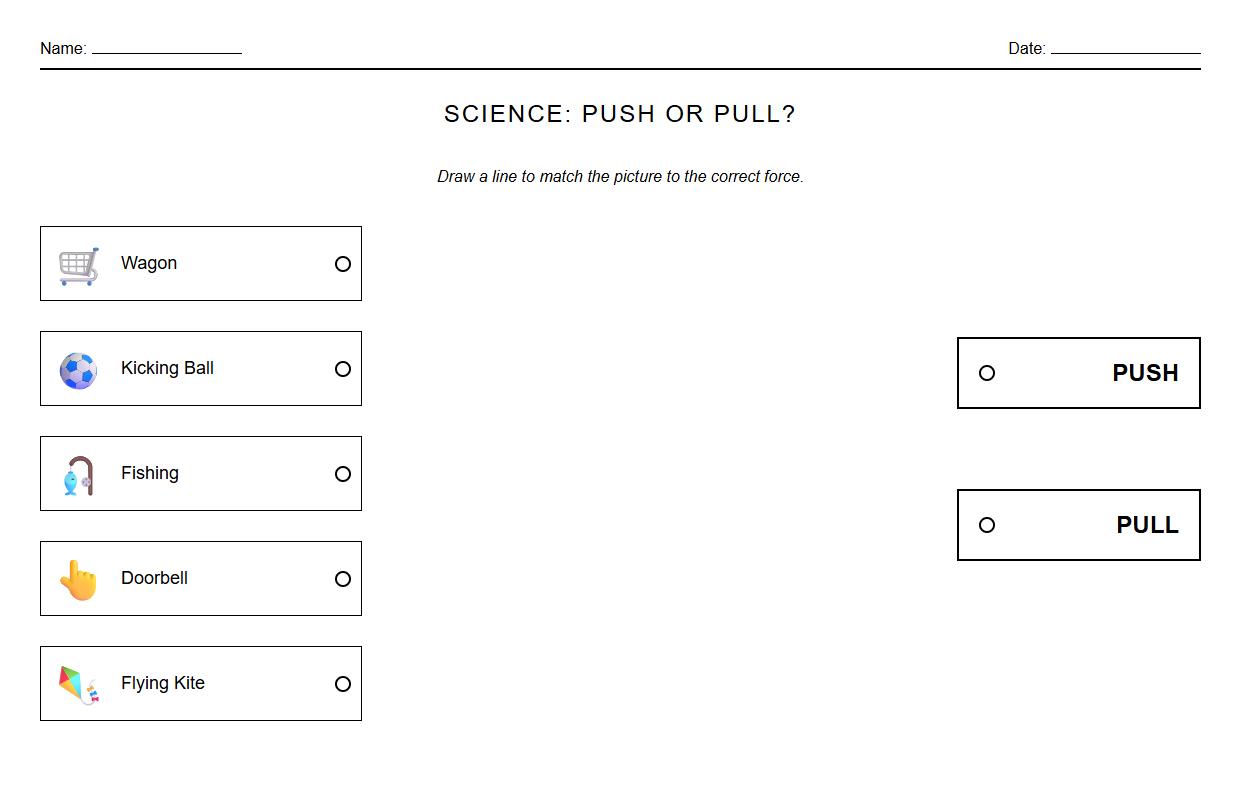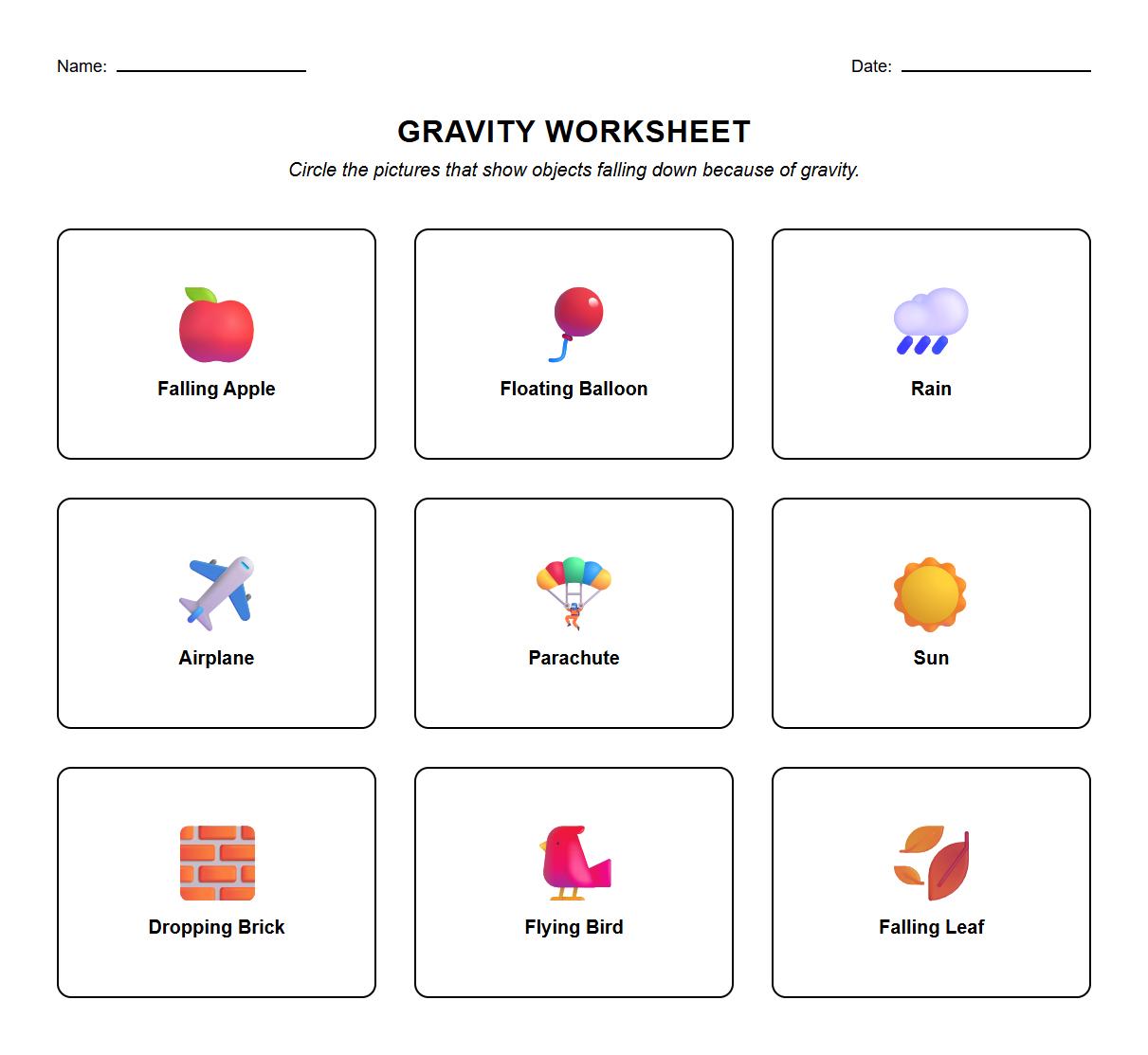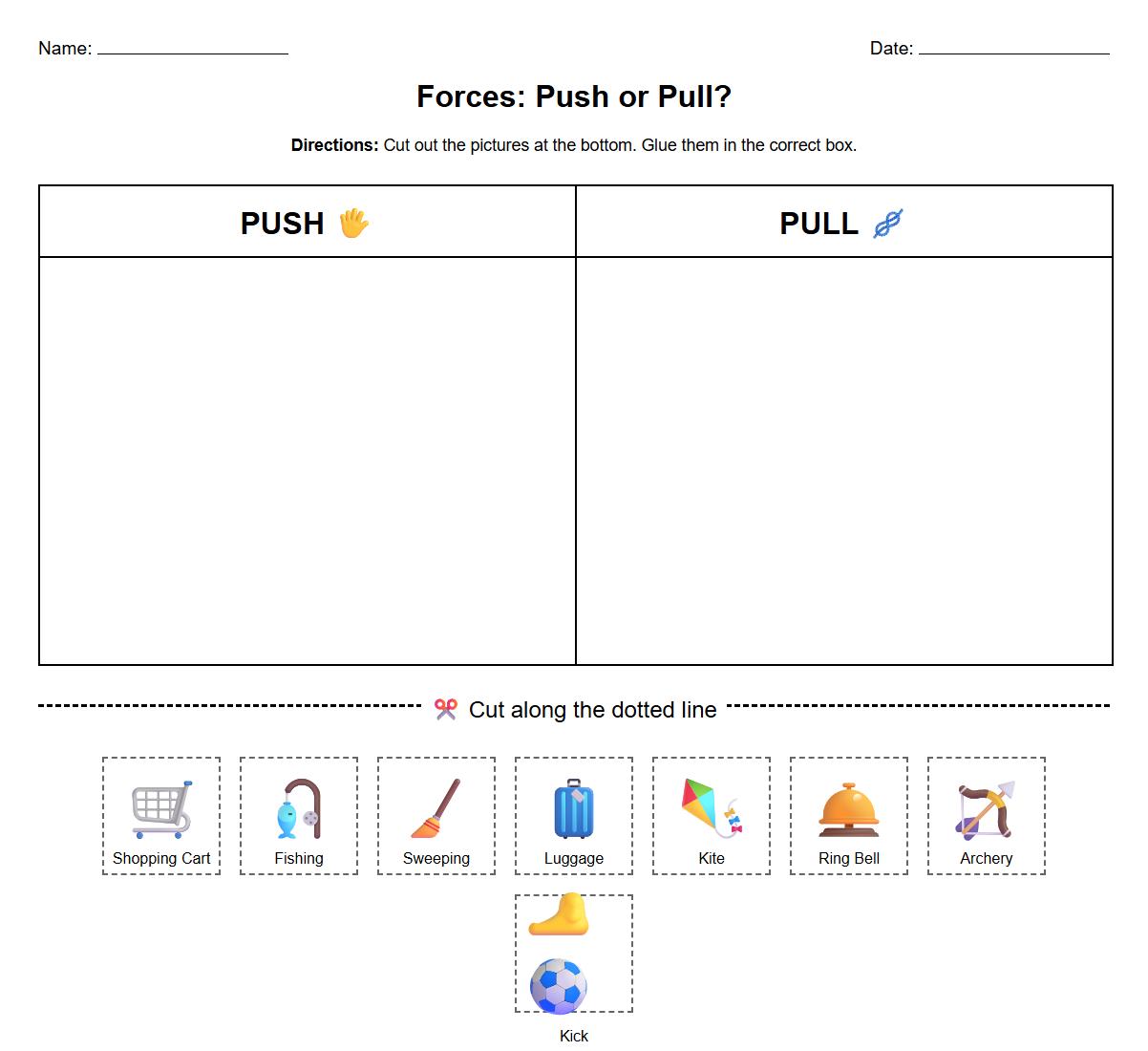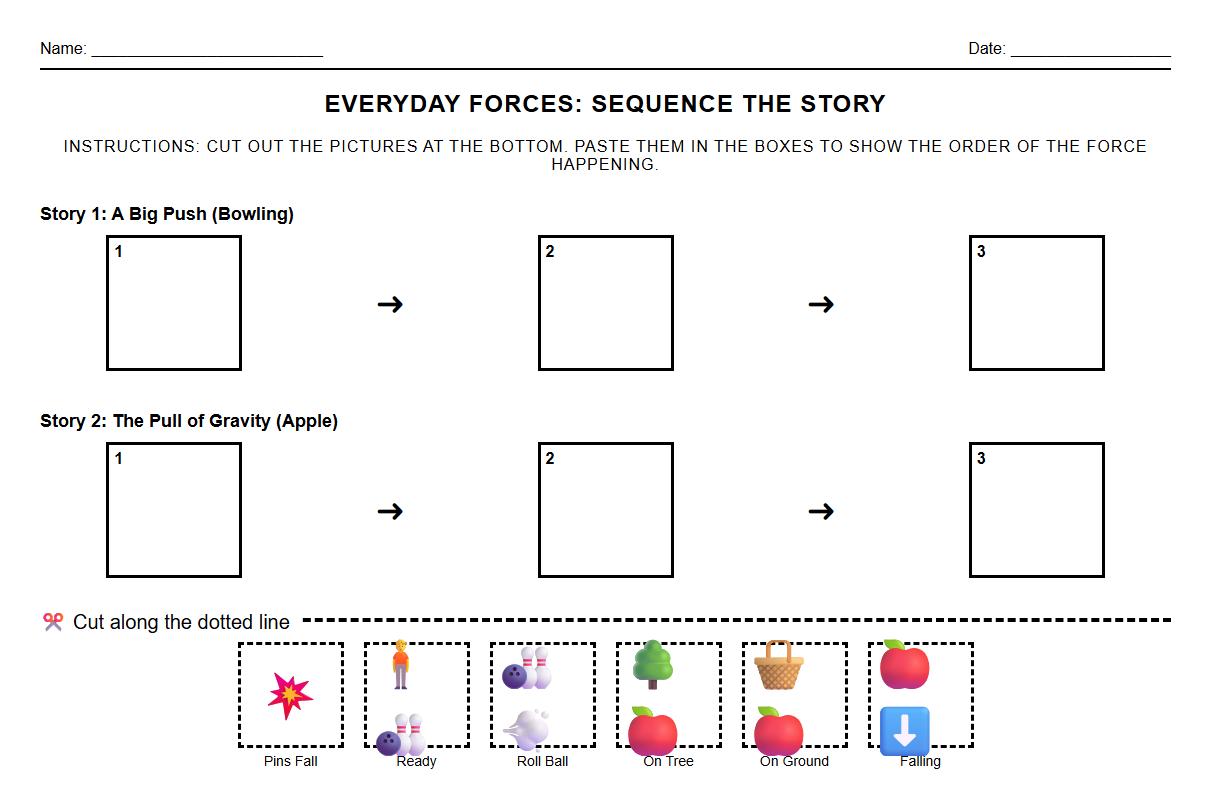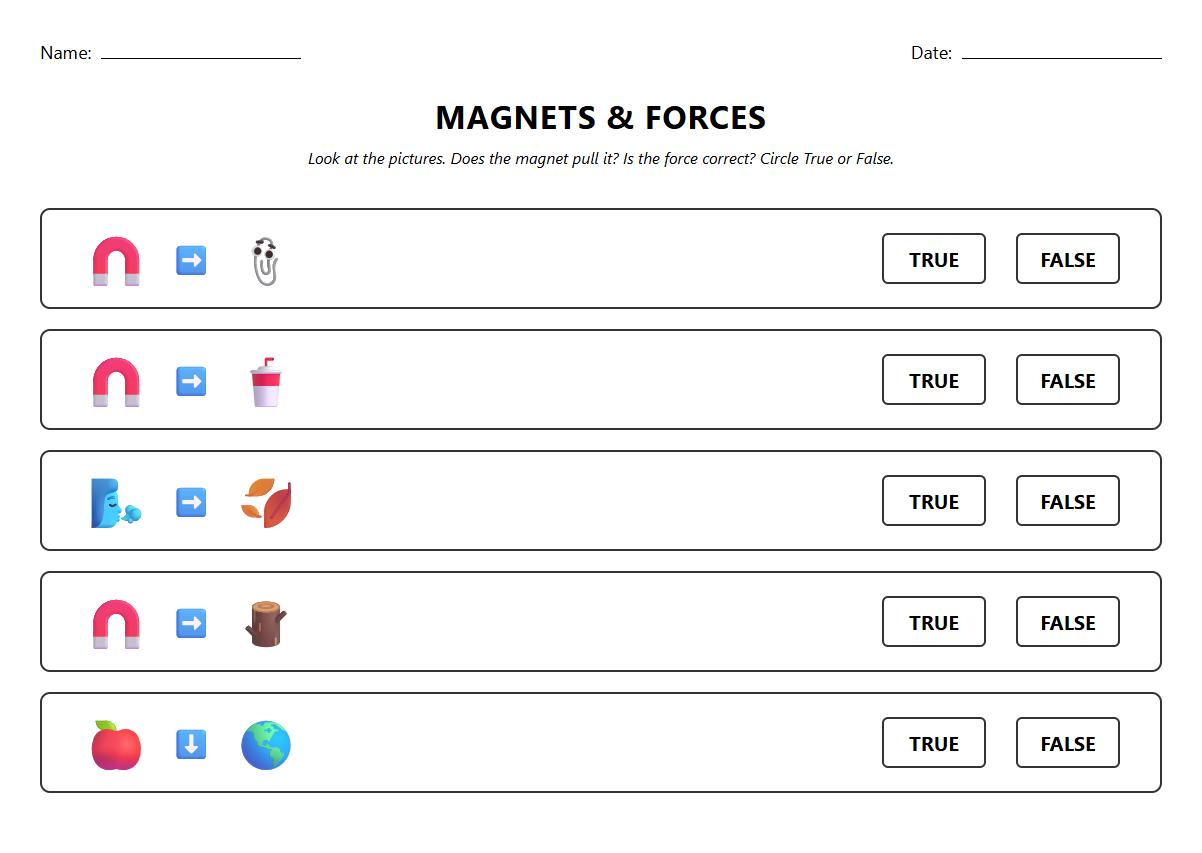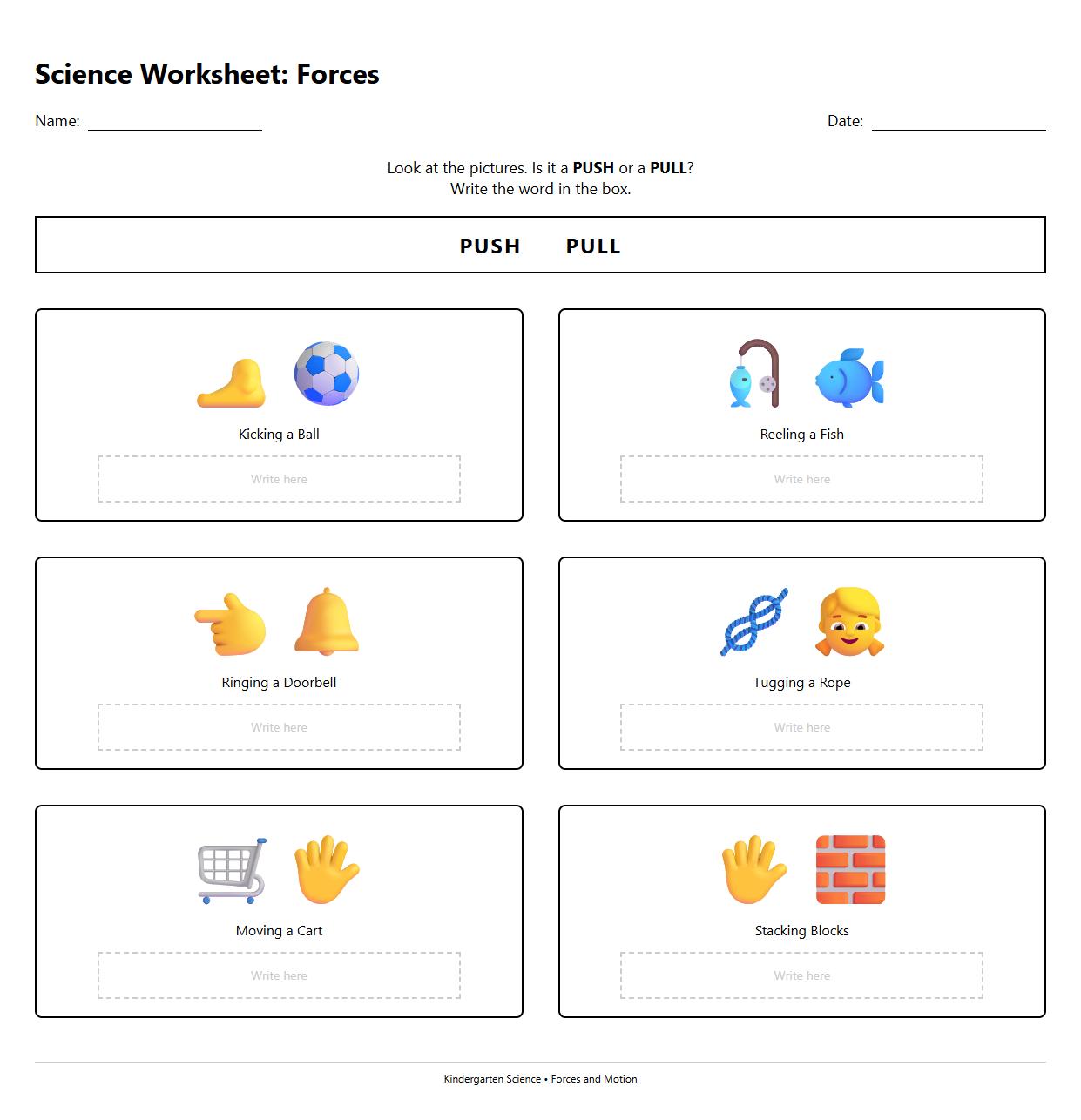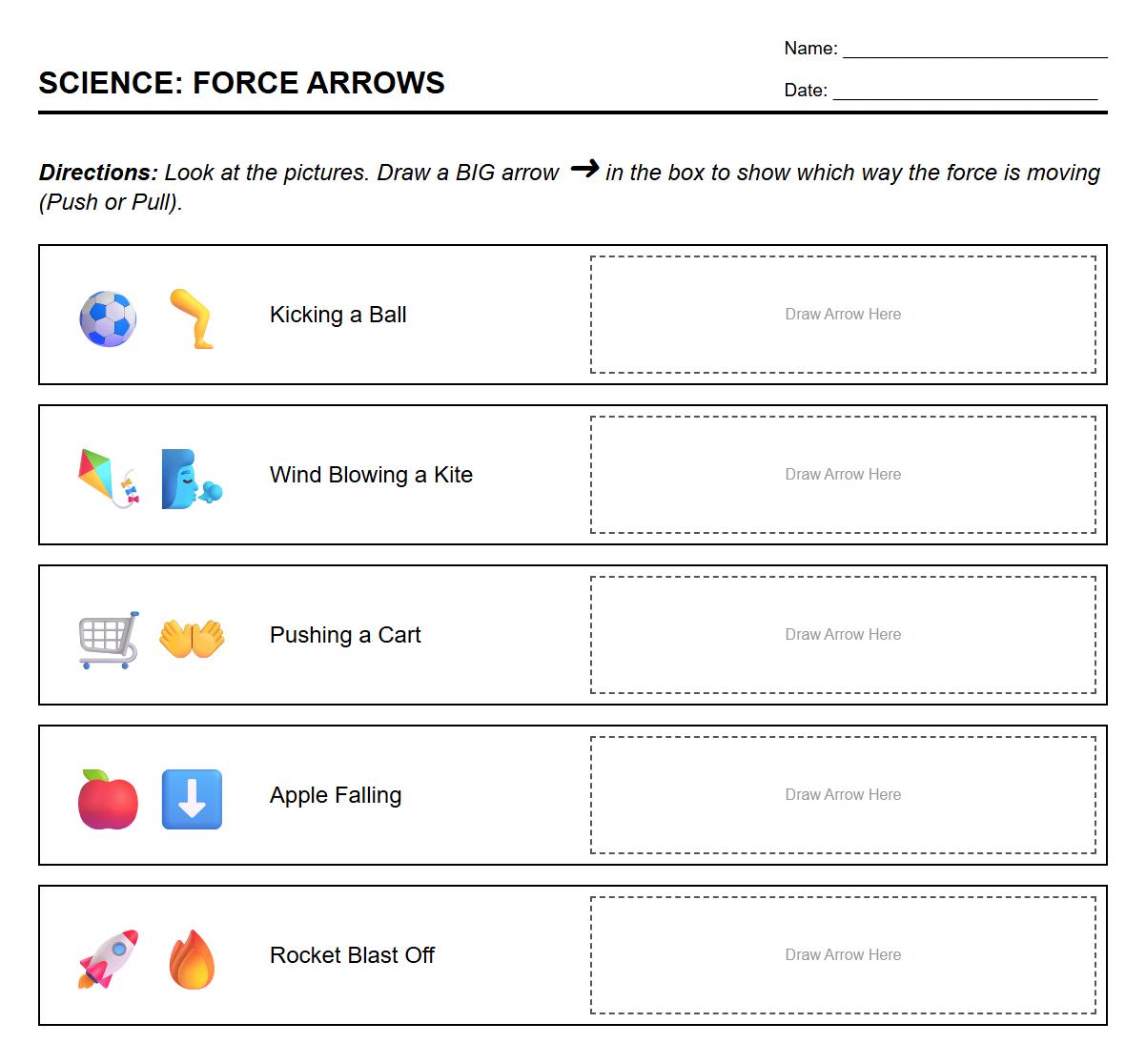
Forces impact everything in our daily lives, helping objects move, stop, or change direction. Young learners explore basic concepts like push, pull, and gravity through engaging activities designed to build early science skills. Discover our available worksheets to help kindergarteners grasp the forces all around us.
What Makes a Ball Move When You Push It?
Pushing a ball creates motion by applying force, which causes it to roll or slide. The strength and direction of the push determine how fast and far the ball will move. Understanding this helps children observe cause and effect in physical activities. Encouraging experimentation with pushing different objects enhances motor skills and scientific thinking.
How Do You Stop Your Swing from Moving?
To stop a swinging motion, you can apply a force in the opposite direction or simply wait for friction and air resistance to slow it down. Teaching children about forces helps them understand motion and rest. Observing swings come to a stop shows the natural effects of energy loss. It's a great way to introduce concepts of motion and stillness.
Can You Name Something You Can Pull in the Classroom?
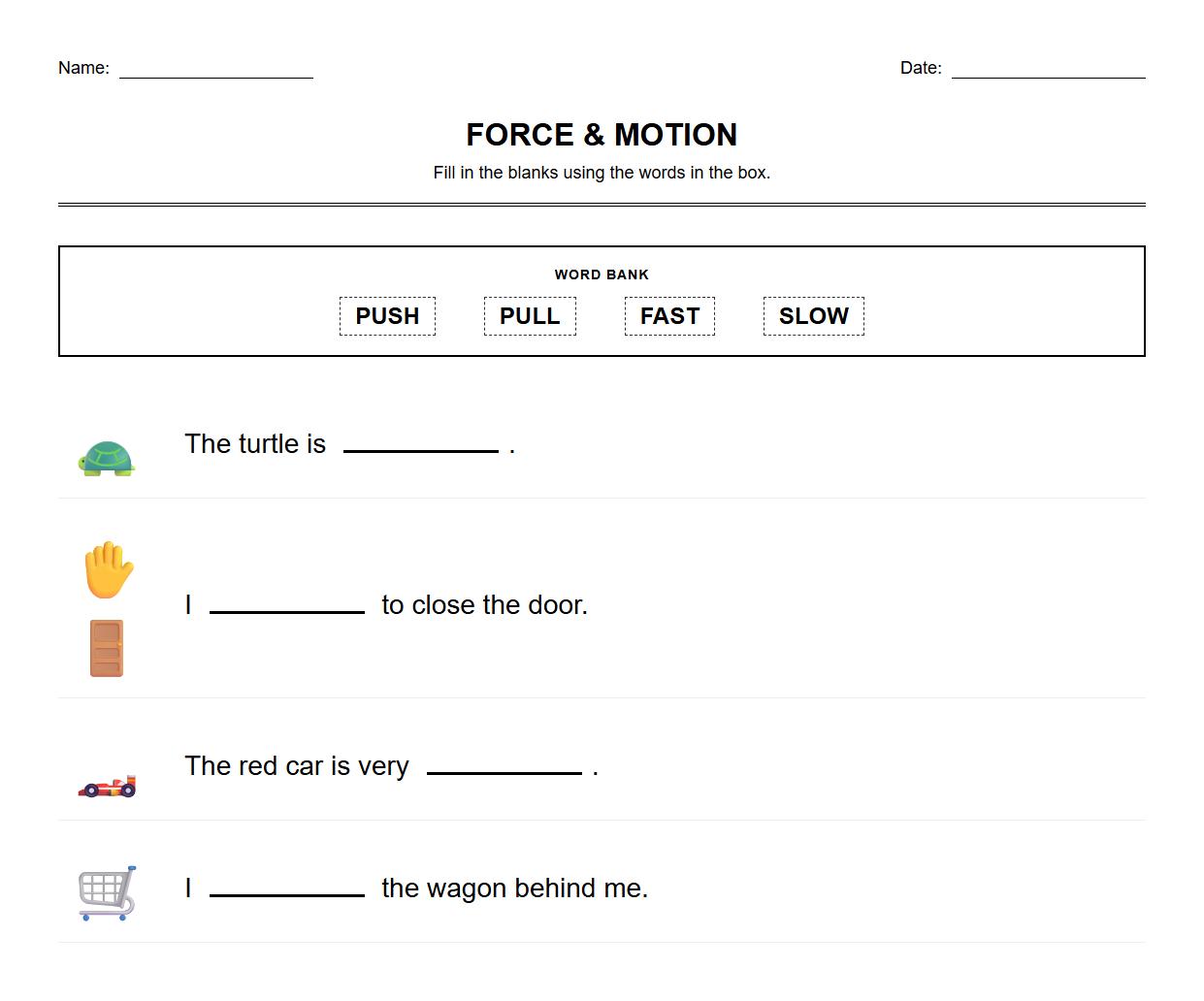
Objects like a drawer, door, or a rolling chair can be pulled in the classroom. Pulling involves exerting force towards yourself to move something closer. Identifying pullable items helps children learn about different types of forces in everyday life. It also promotes vocabulary building related to movement and interaction.
What Happens When You Let Go of a Balloon Filled with Air?
When you release an air-filled balloon, the air rushes out, propelling the balloon in the opposite direction. This shows the principle of action and reaction forces. Watching this helps children understand cause and effect and simple physics concepts. It's a fun way to introduce the idea of propulsion and movement.
Why Does a Toy Car Roll Down a Ramp?
A toy car rolls down a ramp because gravity pulls it downward, and the slope allows it to gain speed. The steeper the ramp, the faster the car moves, illustrating the effect of incline on motion. This activity helps children observe gravity's role and work with simple inclined planes. It also encourages hands-on learning through play.
What Do You Feel When You Push a Heavy Box?
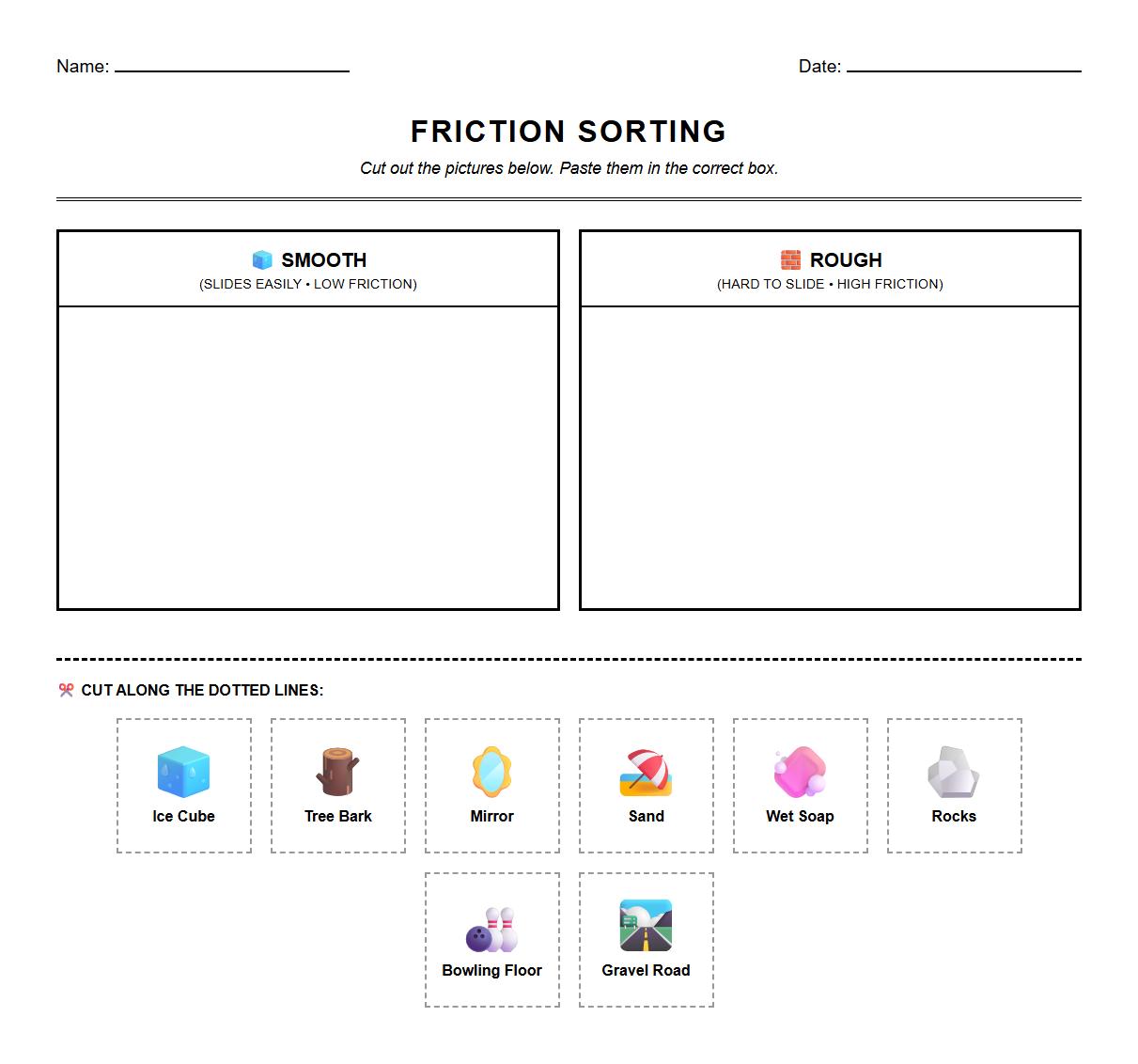
When pushing a heavy box, you feel resistance or effort because of the box's weight and friction with the floor. This teaches children about force, effort, and the concept of heavy versus light. It encourages awareness of how force changes depending on an object's size and weight. Such experiences develop strength and problem-solving skills.
How Do You Make a Toy Move Faster?
You can make a toy move faster by pushing it harder or giving it a stronger force. Reducing friction by moving it on a smooth surface also helps. These ideas help children experiment with force and speed in a tactile way. Understanding speed changes enhances their grasp of physical science basics.
Can You Find Something You Can Push and Something You Can Pull?
Look around the room for items that can be pushed, like a chair, and items that can be pulled, like a drawer or a backpack with wheels. Recognizing the difference between push and pull helps children differentiate types of forces. This activity enriches their vocabulary and promotes observation skills. It also links language with physical actions.
Why Does Your Backpack Stay Still on the Floor?
Your backpack stays still because of gravity pulling it down and friction between the backpack and the floor stopping it from sliding. It also remains at rest unless a force moves it. This teaches children about balance, gravity, and friction. Seeing objects stay still helps understand the concept of inertia.
What Happens If You Pull a Door Instead of Pushing It?
If you pull a door that needs to be pushed, it won't open because the force is applied in the wrong direction. This shows how the direction of force matters for movement. Teaching this helps children understand action and correct application of force. It also encourages problem-solving when interacting with their environment.


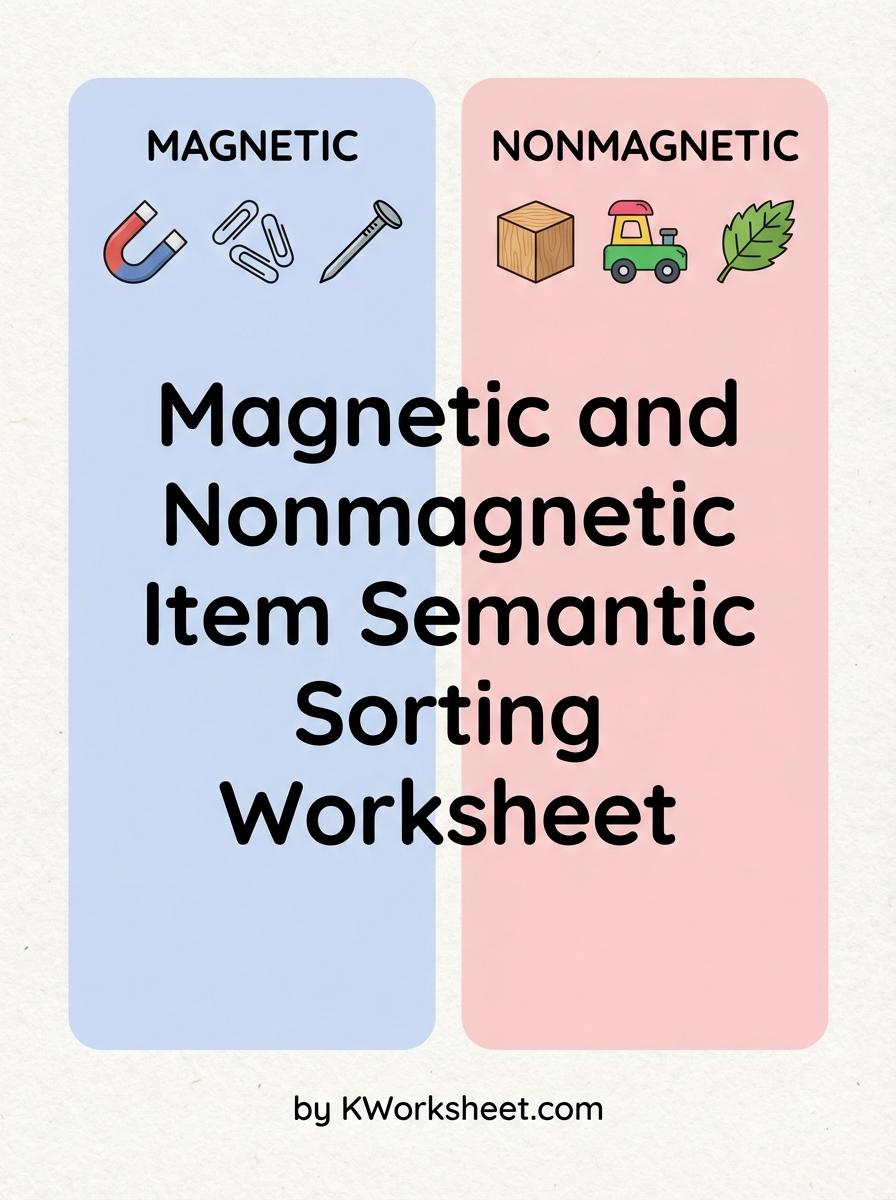
Magnetic and Nonmagnetic Item Semantic Sorting Worksheet