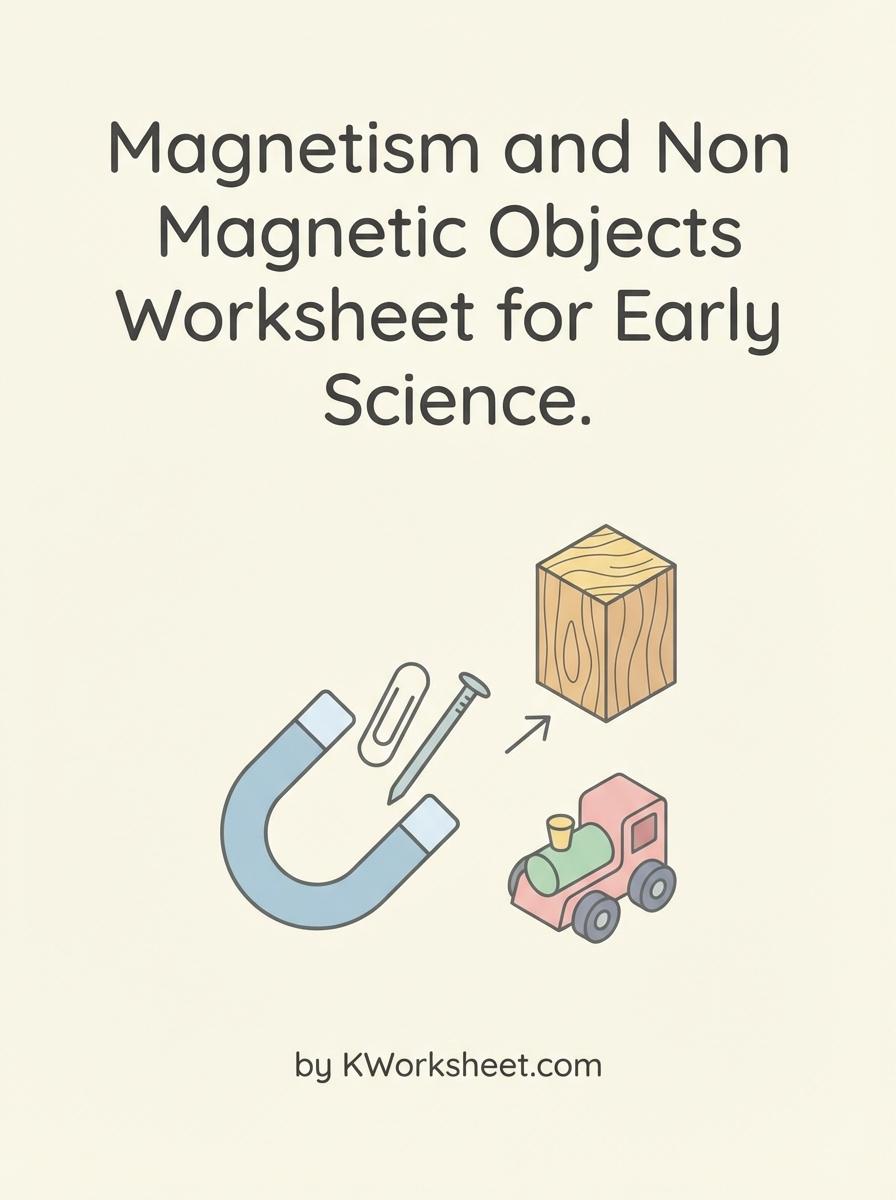
Magnetism and Non Magnetic Objects Worksheet for Early Science

📅 Mar 21, 2025 👤 Nylen Smith

Explore the fascinating concepts of magnetism and differentiate magnetic objects from non-magnetic ones with this engaging worksheet designed for early science learners. Activities focus on identifying materials that attract magnets, enhancing observational skills and scientific understanding. Check out the available worksheets to spark curiosity and strengthen foundational science knowledge.

Magnetism sorting activity worksheet using images of household objects
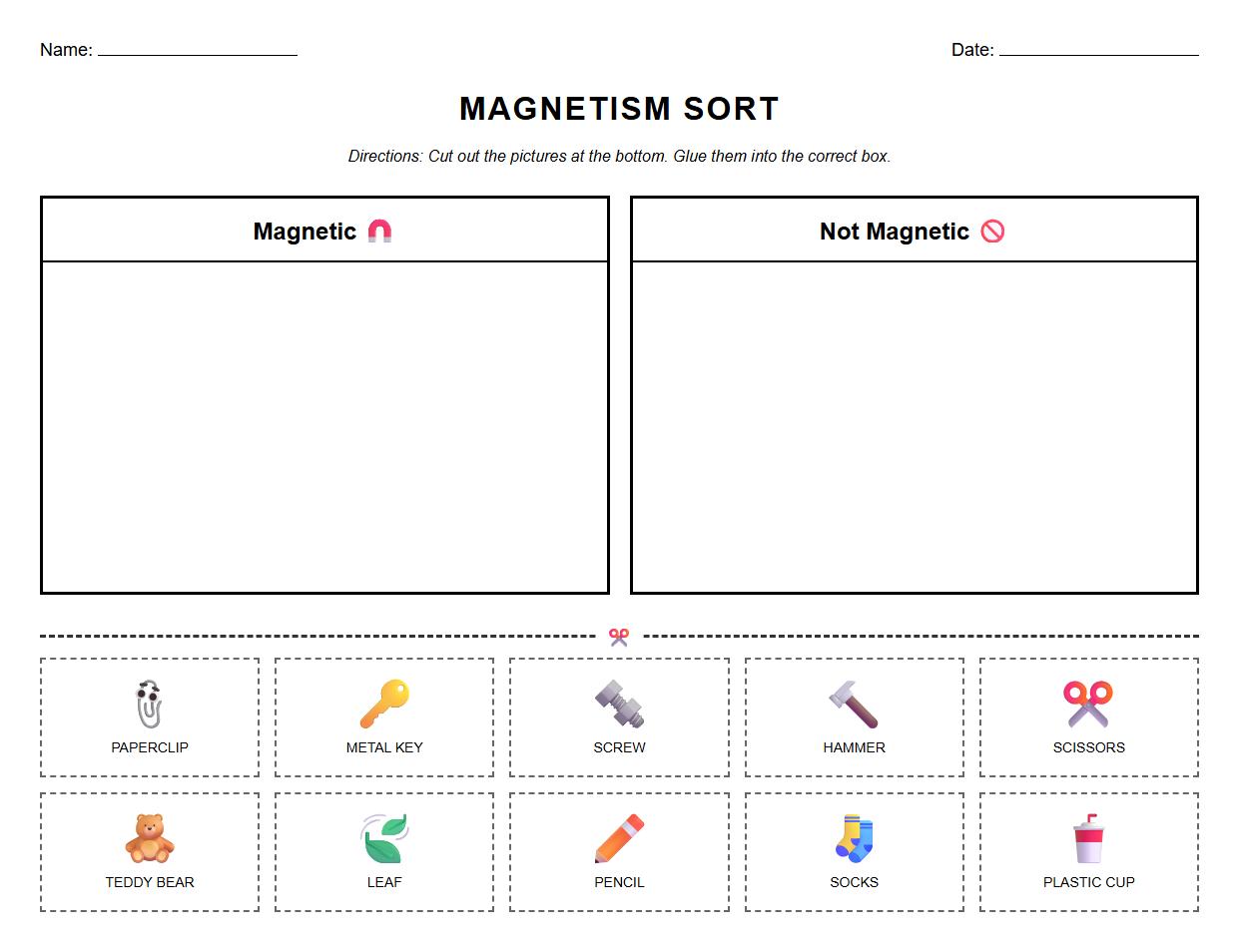
Magnetism sorting activity worksheet using images of household objects

Download PDF     Pin it

Cut and paste worksheet for classifying magnetic and nonmagnetic materials
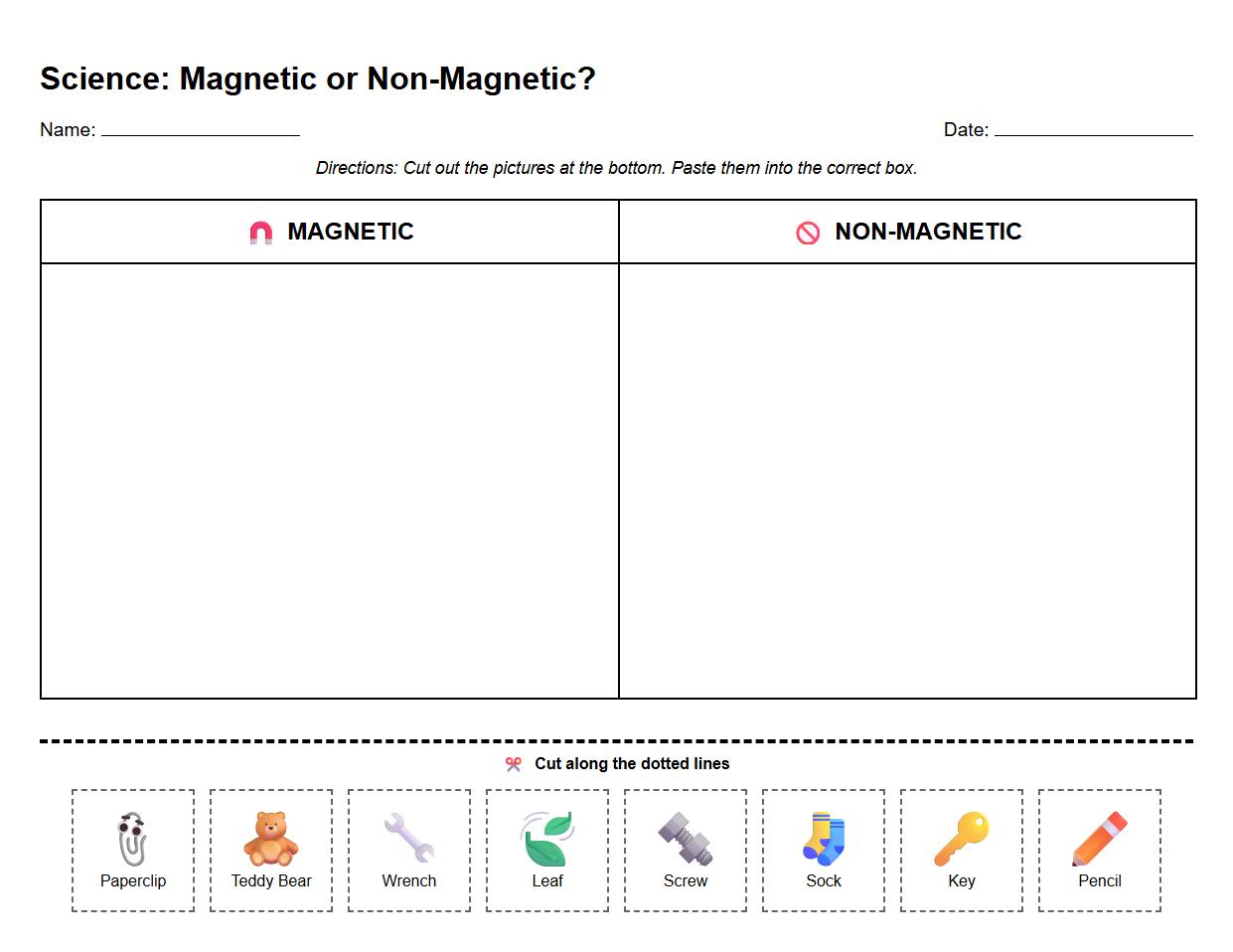
Cut and paste worksheet for classifying magnetic and nonmagnetic materials

Download PDF     Pin it

Magnet hunting worksheet with recording table for observed items
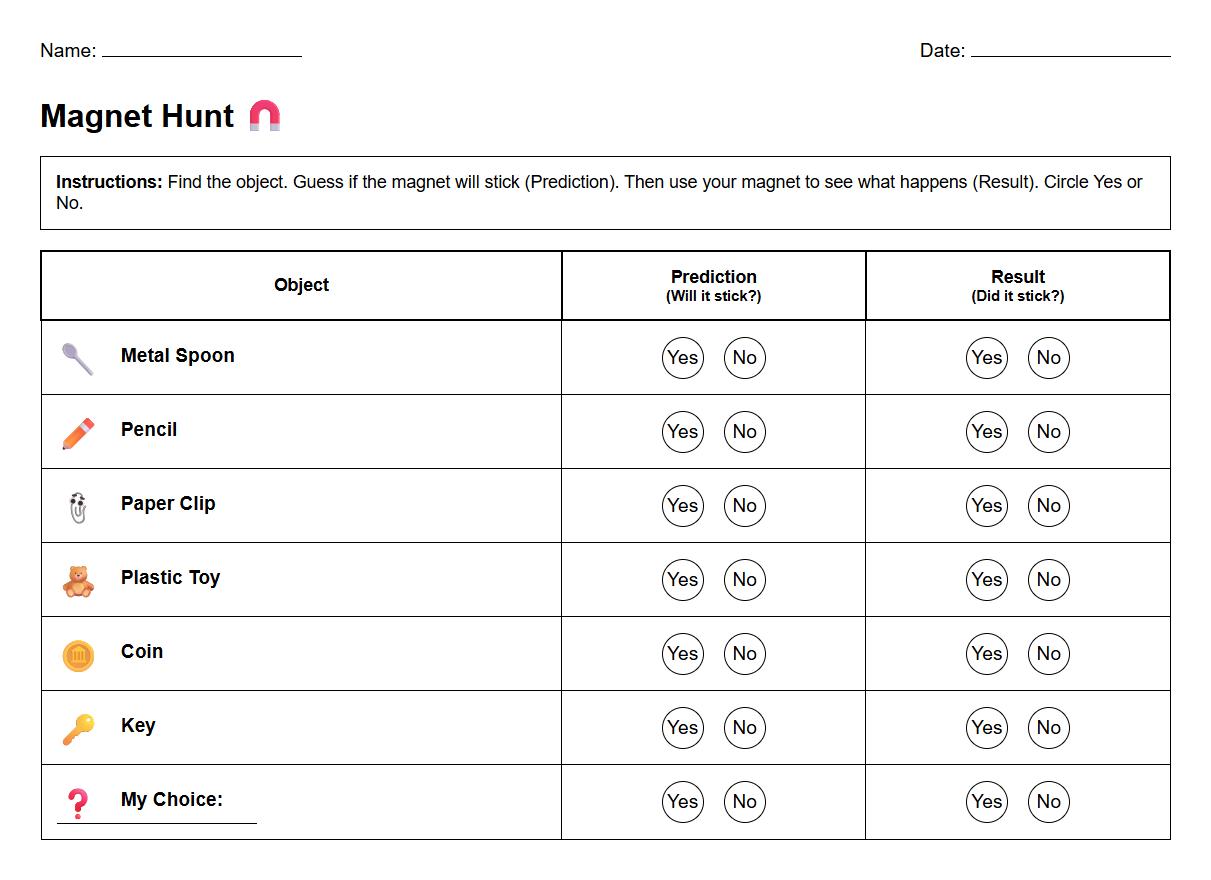
Magnet hunting worksheet with recording table for observed items

Download PDF     Pin it

Phonics integration worksheet matching objects to M for magnetism
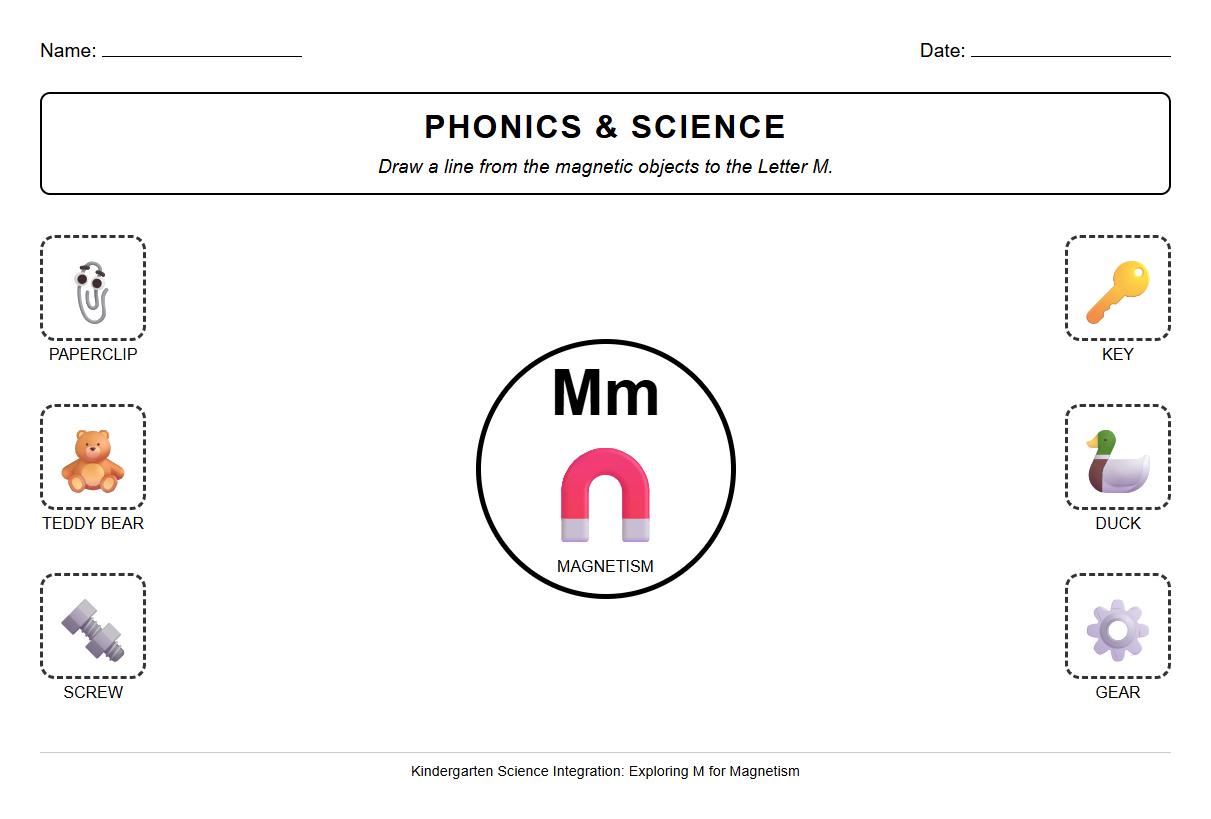
Phonics integration worksheet matching objects to M for magnetism

Download PDF     Pin it

Drag and drop digital worksheet for distinguishing magnetic objects
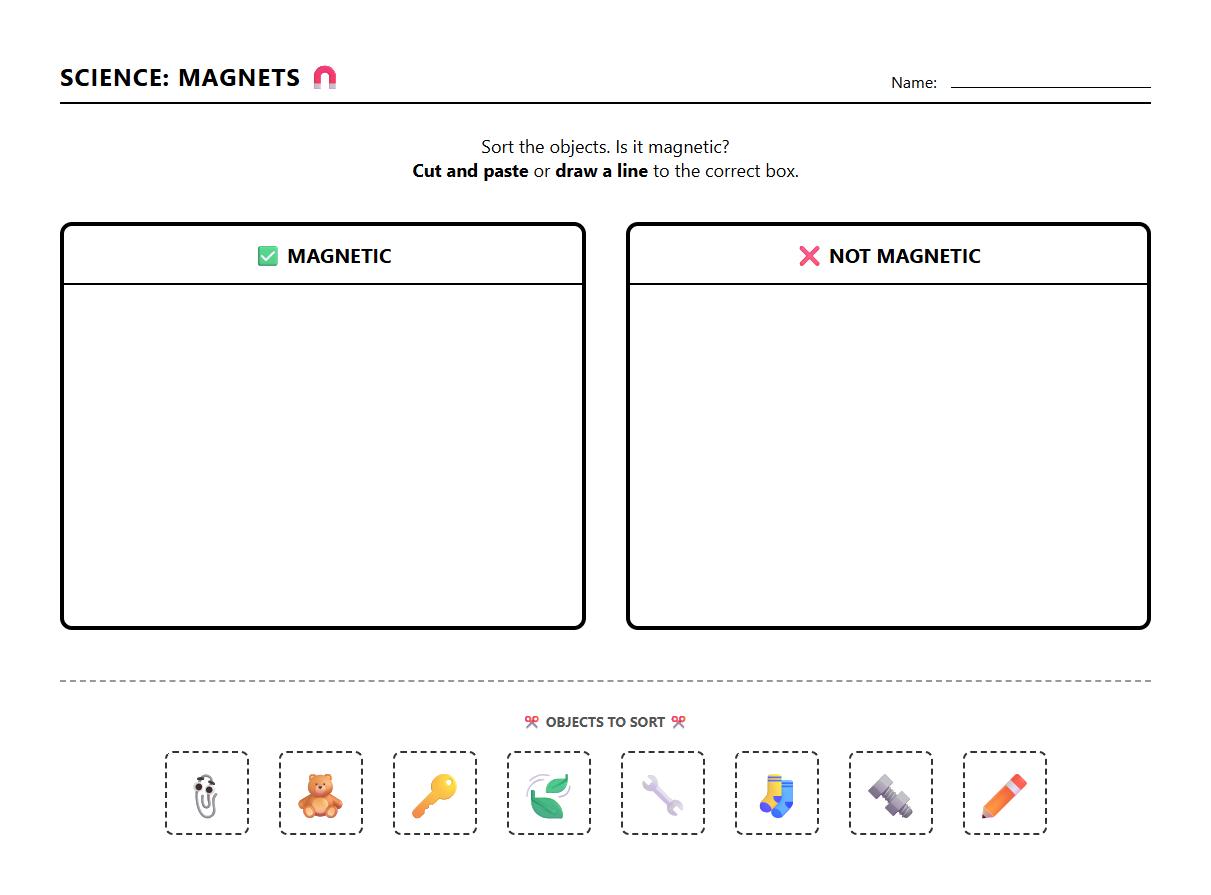
Drag and drop digital worksheet for distinguishing magnetic objects

Download PDF     Pin it

Interactive worksheet using Venn diagrams for magnetic properties
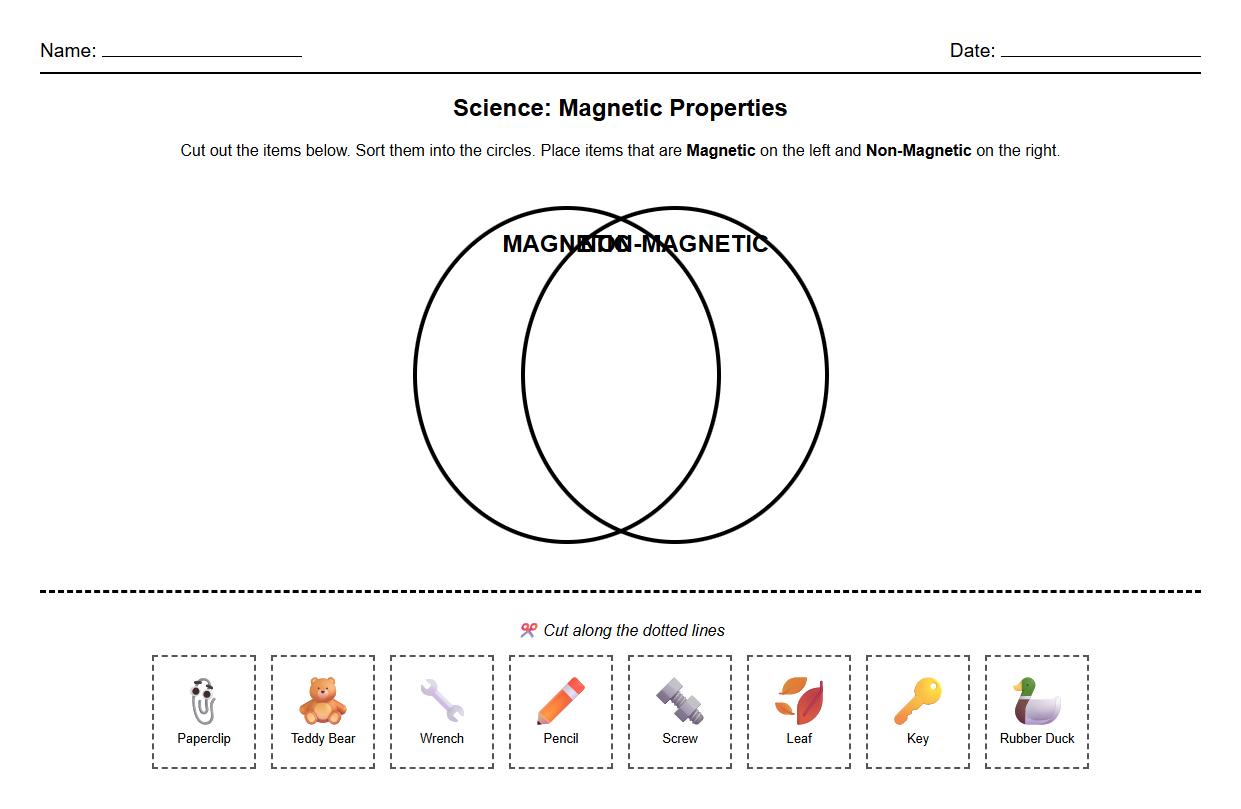
Interactive worksheet using Venn diagrams for magnetic properties

Download PDF     Pin it

Scientific observation log worksheet for magnetism experiments
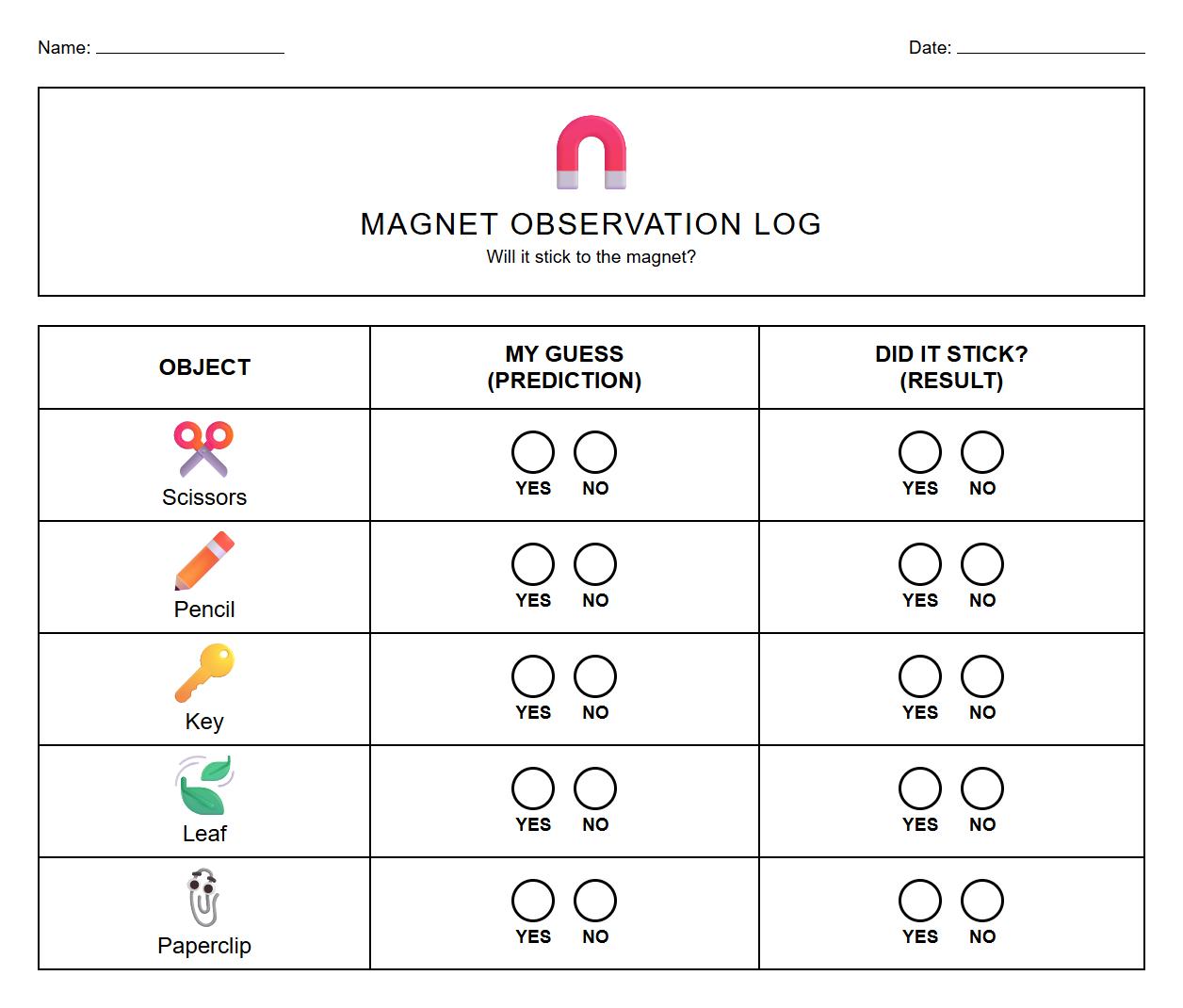
Scientific observation log worksheet for magnetism experiments

Download PDF     Pin it

True or false worksheet about properties of magnetic and nonmagnetic materials
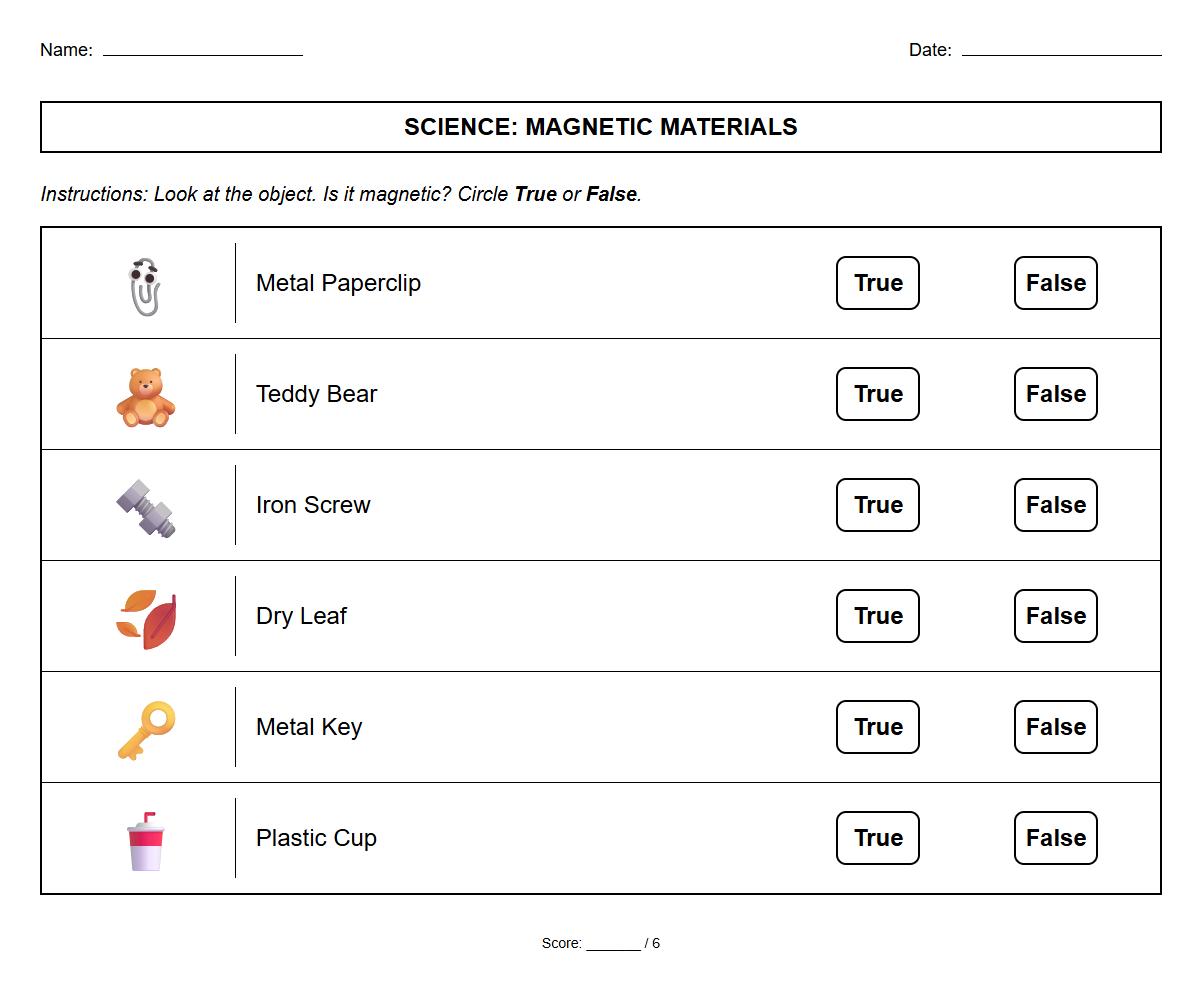
True or false worksheet about properties of magnetic and nonmagnetic materials

Download PDF     Pin it

Visual discrimination worksheet using color coding for magnetic response
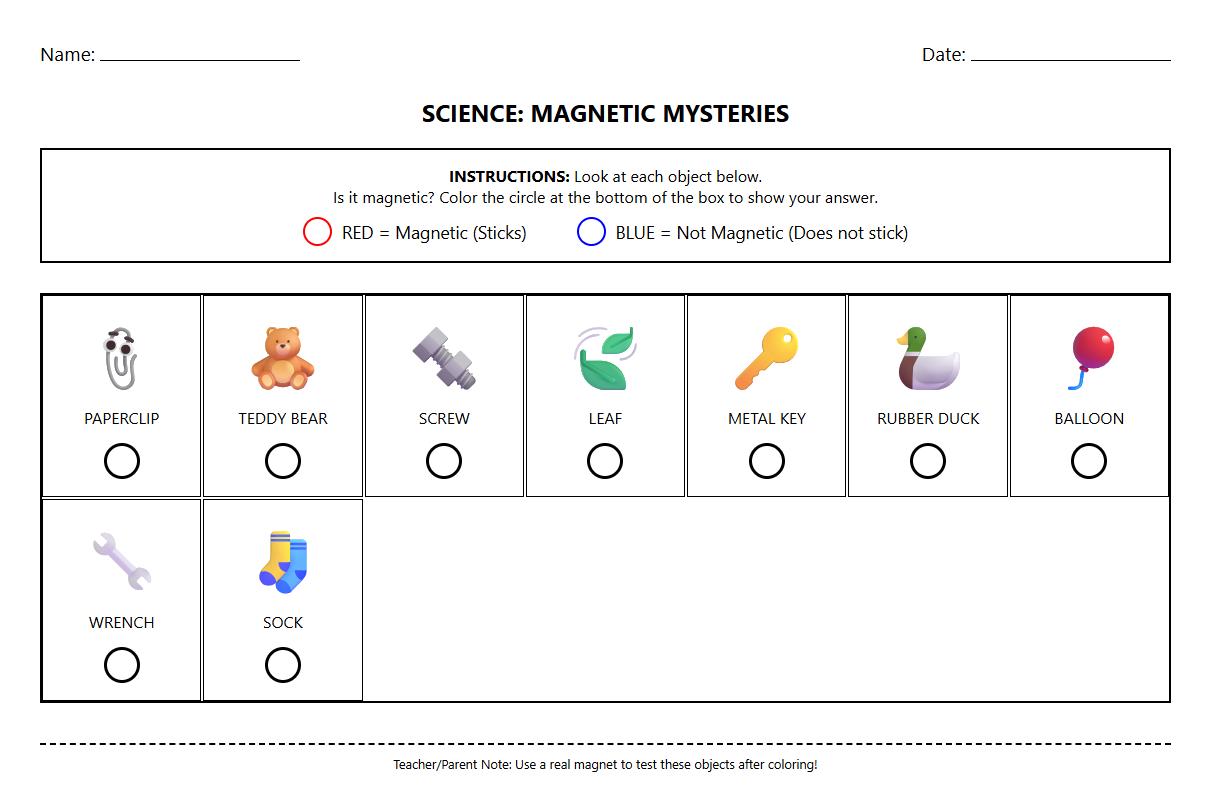
Visual discrimination worksheet using color coding for magnetic response

Download PDF     Pin it

Fill in the blanks worksheet with technical terms like attraction and repulsion
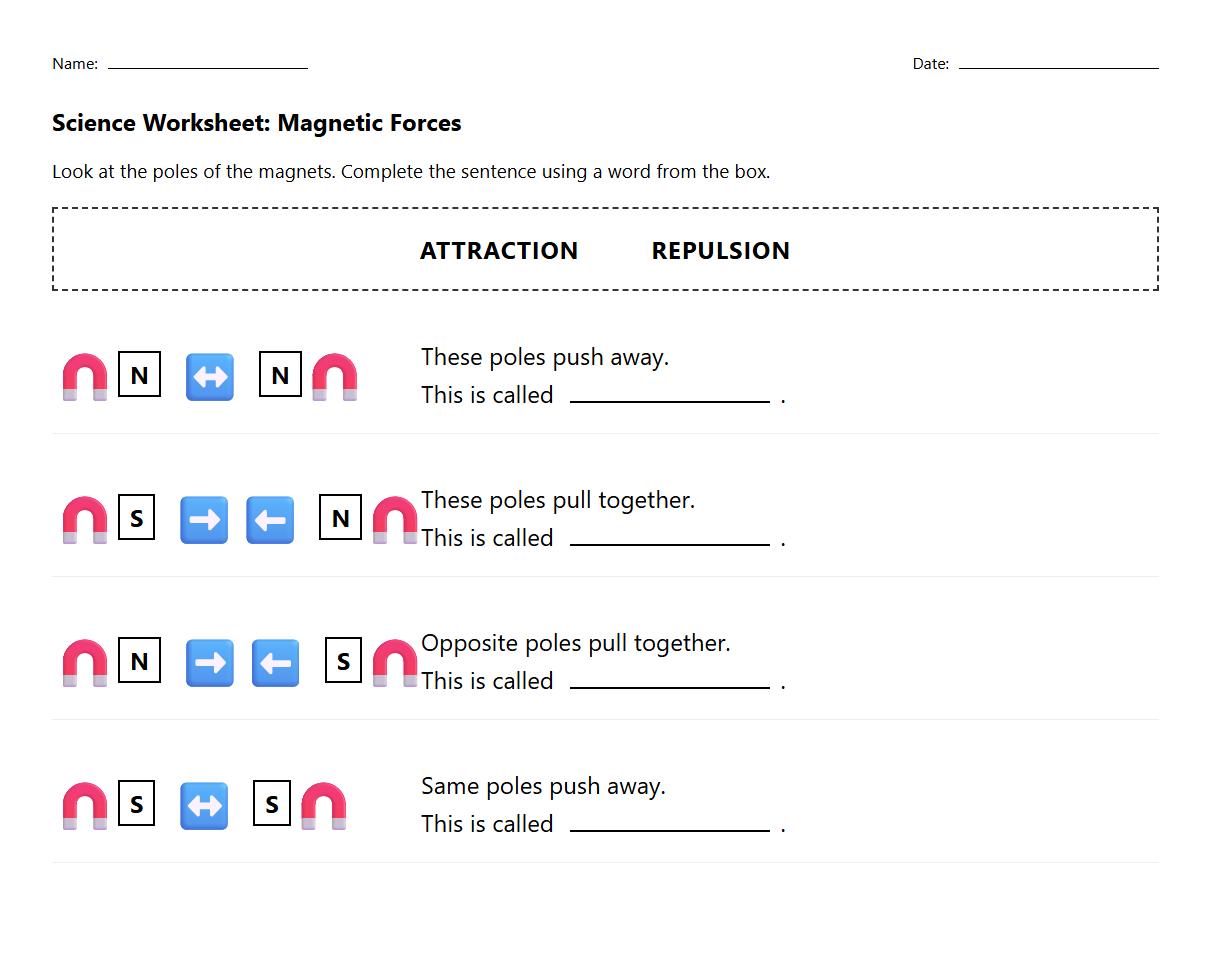
Fill in the blanks worksheet with technical terms like attraction and repulsion

Download PDF     Pin it

What is a Magnet and What Does It Do?

A magnet is an object that creates a magnetic field, attracting certain materials like iron and steel. It can pull or hold these materials without touching them directly. Magnets are used in many everyday items, such as fridge magnets and toys. Understanding magnets helps children explore the world of science in a fun way.

Can You Name Three Objects That a Magnet Will Stick To?

A magnet will stick to objects made of metal such as paperclips, nails, and coins. These items contain iron or steel, which magnets attract. Teaching kids to identify magnetic materials helps develop their observation skills. Encourage children to explore and list other magnetic items around them.

Can You Find Something in the Classroom That is Not Magnetic?

Items like a wooden desk, a plastic ruler, or a rubber eraser are not magnetic. These materials do not contain iron or steel, so magnets cannot stick to them. Finding non-magnetic objects helps children understand the difference between magnetic and non-magnetic materials. This activity improves critical thinking and categorization skills.

How Do You Know if an Object is Magnetic or Non-Magnetic?

You can test an object by bringing a magnet close to it. If the magnet sticks, the object is magnetic; if it doesn't, the object is non-magnetic. This simple experiment teaches kids to make predictions and observe outcomes. It also introduces basic scientific methods like testing and verifying.

Are Paperclips Magnetic or Non-Magnetic?

Paperclips are magnetic because they are usually made of steel, which magnets attract. This makes paperclips a perfect tool for magnet experiments in the classroom. Using familiar objects helps children relate science concepts to everyday life. It also keeps learning interactive and hands-on.

Will a Magnet Stick to a Wooden Block?

A magnet will not stick to a wooden block because wood is a non-magnetic material. It lacks the metals like iron or steel that magnets can attract. Understanding this helps children learn about different material properties. It's an important step in recognizing why some objects respond to magnets while others do not.

Is a Plastic Spoon Magnetic?

A plastic spoon is not magnetic because plastic does not contain iron or steel. Magnets only attract certain metals, so it won't stick to plastic items. This distinction teaches children the importance of material types in magnetism. It also encourages them to explore and classify objects by their properties.

Can You Use a Magnet to Pick Up Coins?

Only some coins are magnetic, depending on their metal content. For example, steel coins will stick to a magnet, but copper or aluminum coins will not. This activity allows children to test different coins and learn about metals. It is a fun way to combine science with daily life experiences.

What Happens When You Bring Two Magnets Together?

When two magnets are brought close, their magnetic fields interact, causing them to either attract or repel. Like poles (north-north or south-south) push away, while opposite poles (north-south) pull together. This shows children how forces work without touching. It introduces the concept of magnetic polarity and forces.

Which Items in Your Backpack Are Non-Magnetic?

Non-magnetic items in a backpack might include a notebook, pencil case, or a water bottle. These objects are made of materials like paper, plastic, or fabric that magnets do not attract. Identifying these helps children understand the variety of materials around them. It also encourages them to think about everyday object properties.


More in Science Category


About the author. Nylen Smith is a dedicated educator and cofounder of KWorksheet.com, a popular platform specializing in high-quality kindergarten worksheets and printable activities.

Disclaimer. The information provided in this document is for general informational purposes and/or document sample only and is not guaranteed to be factually right or complete. Please report to us via contact-us page if you find and error in this page, thanks.

Comments

No comment yet