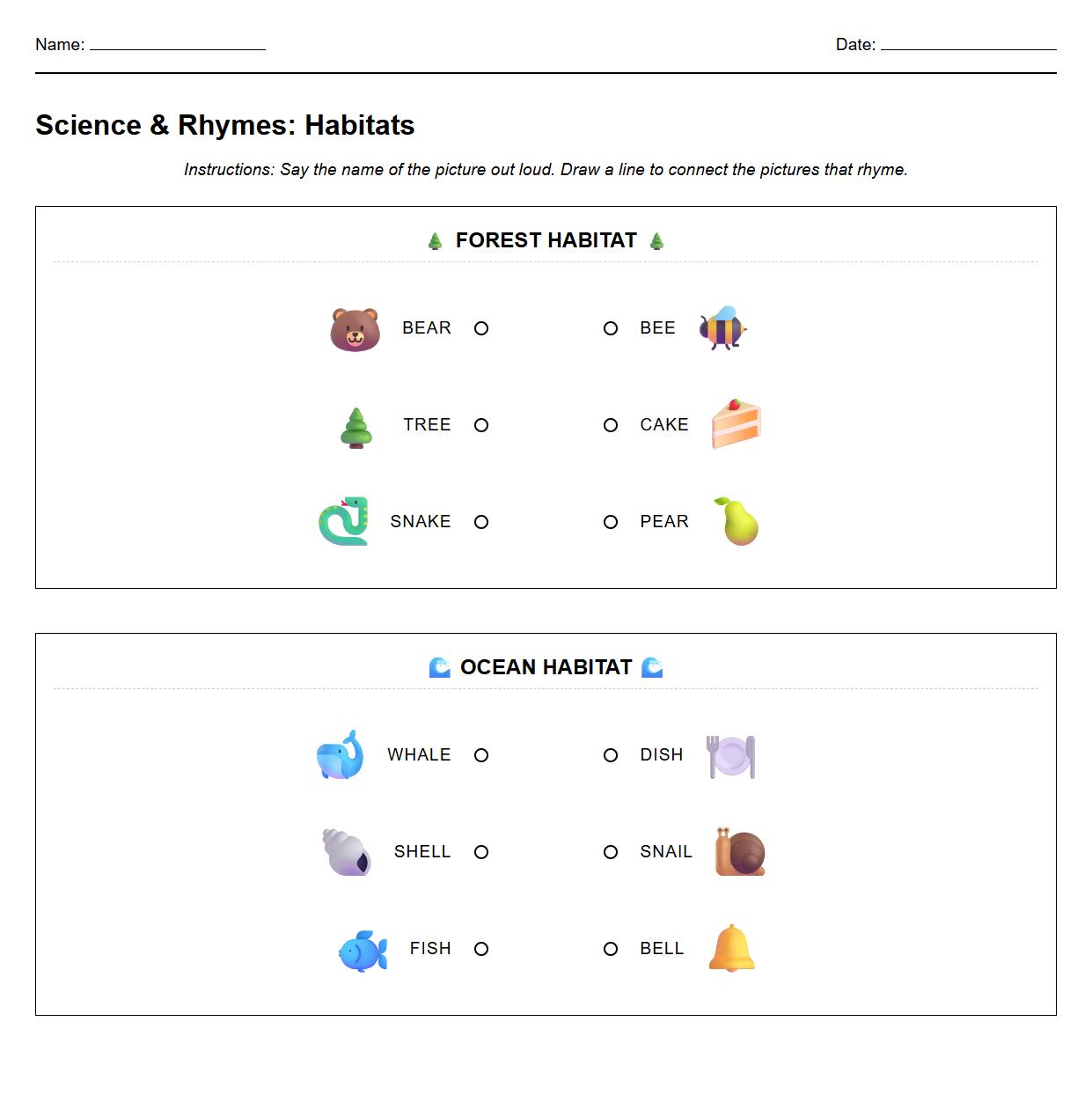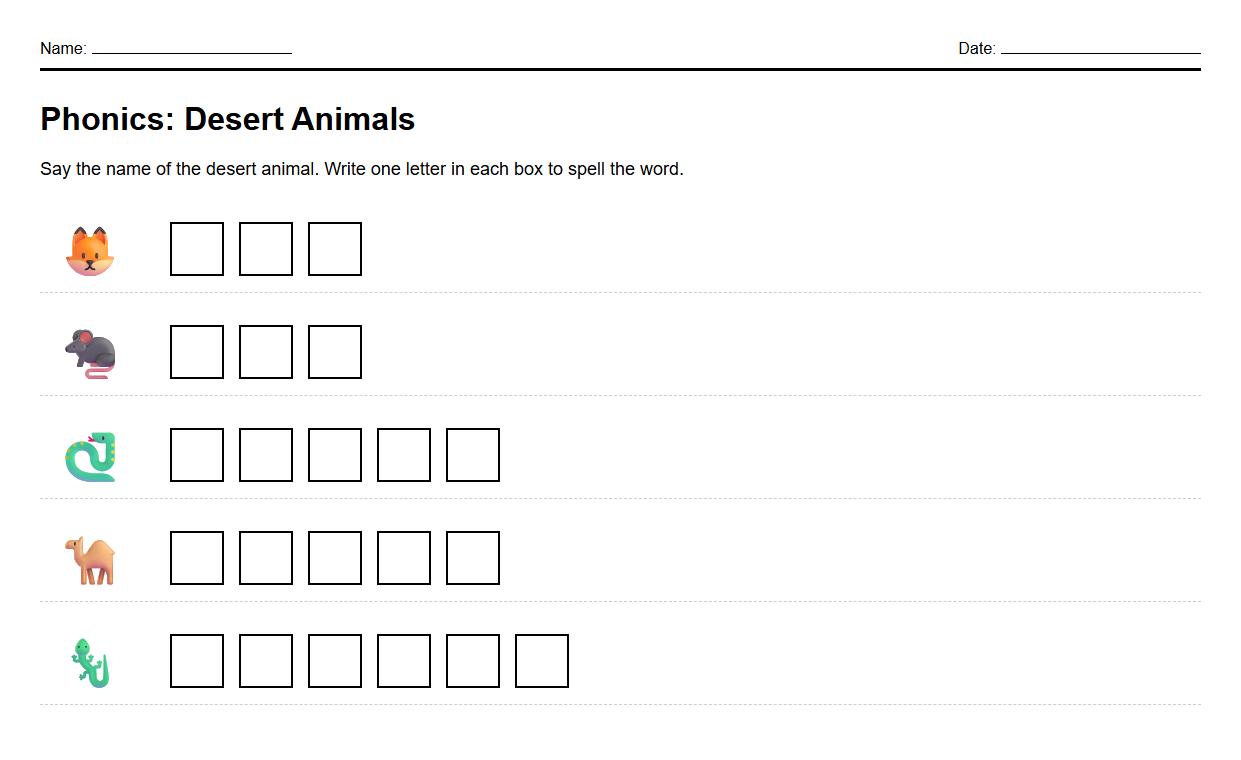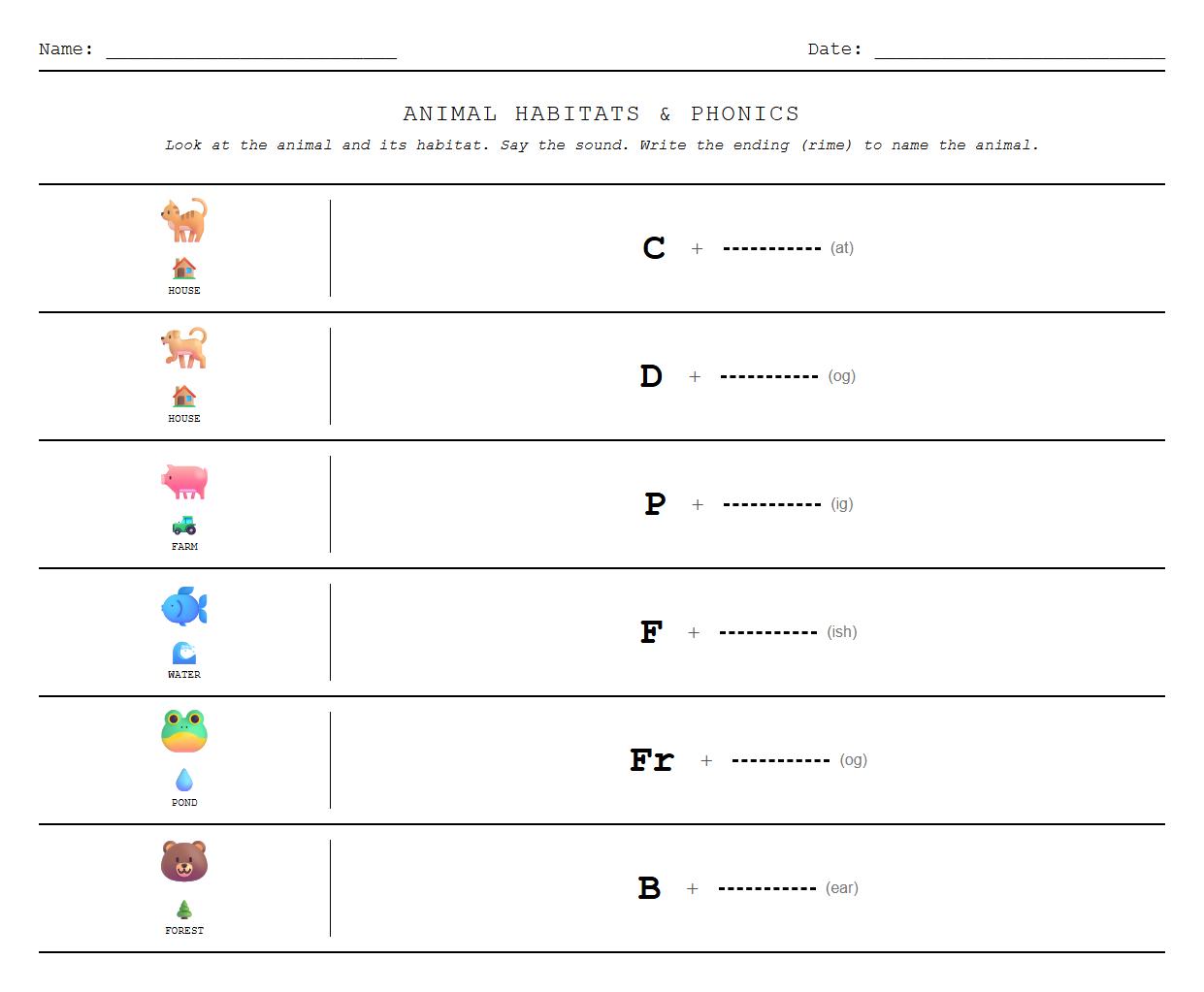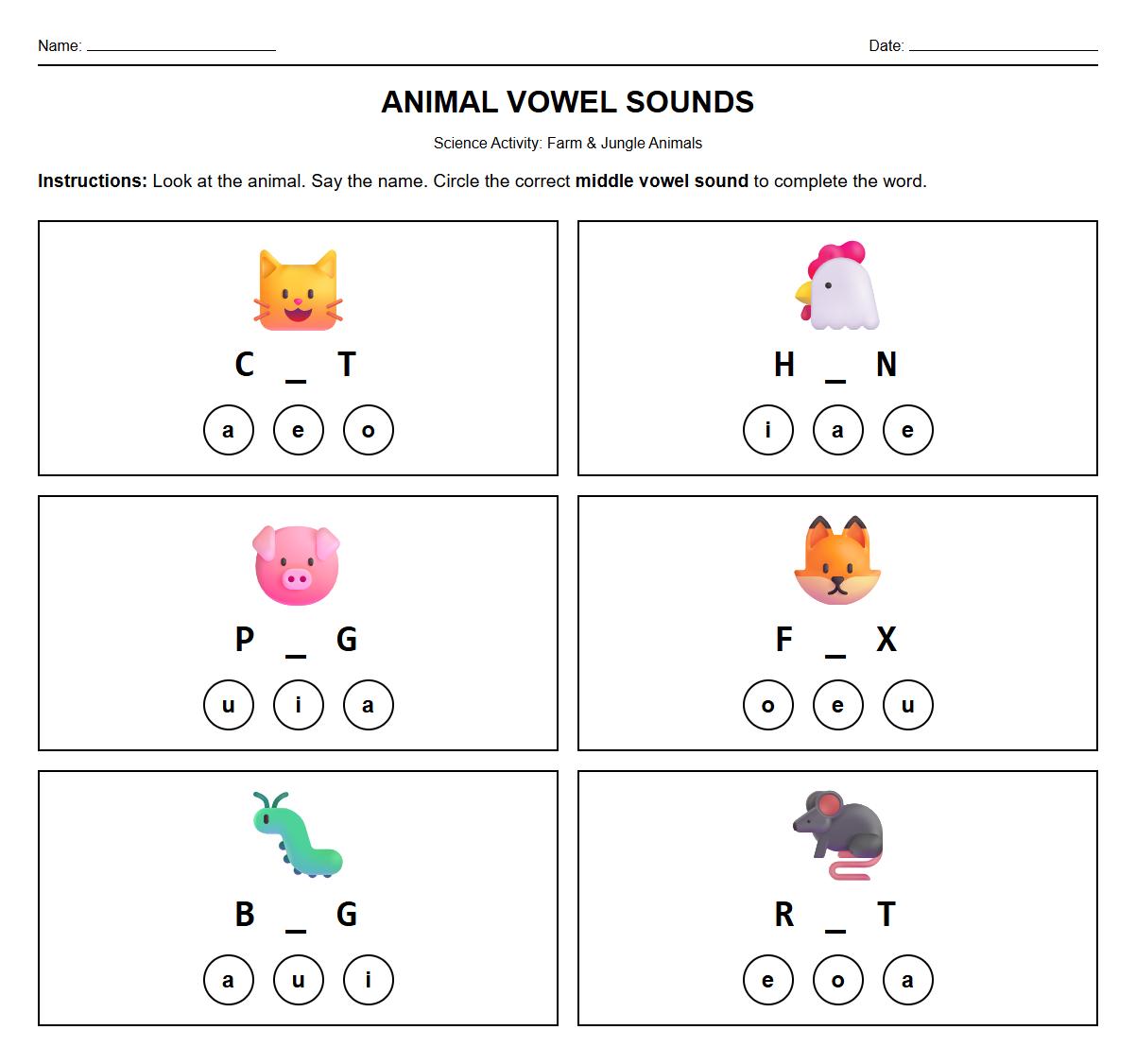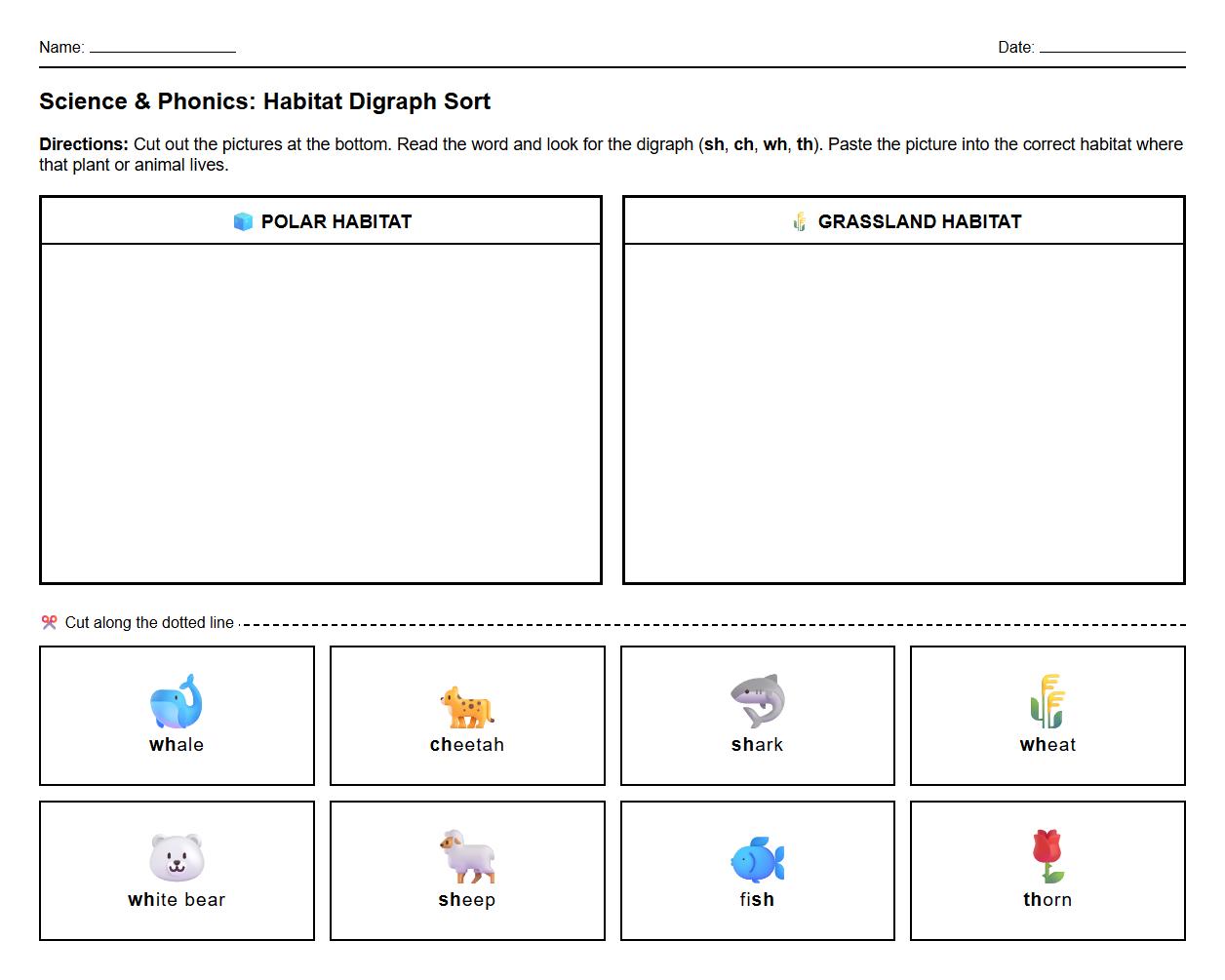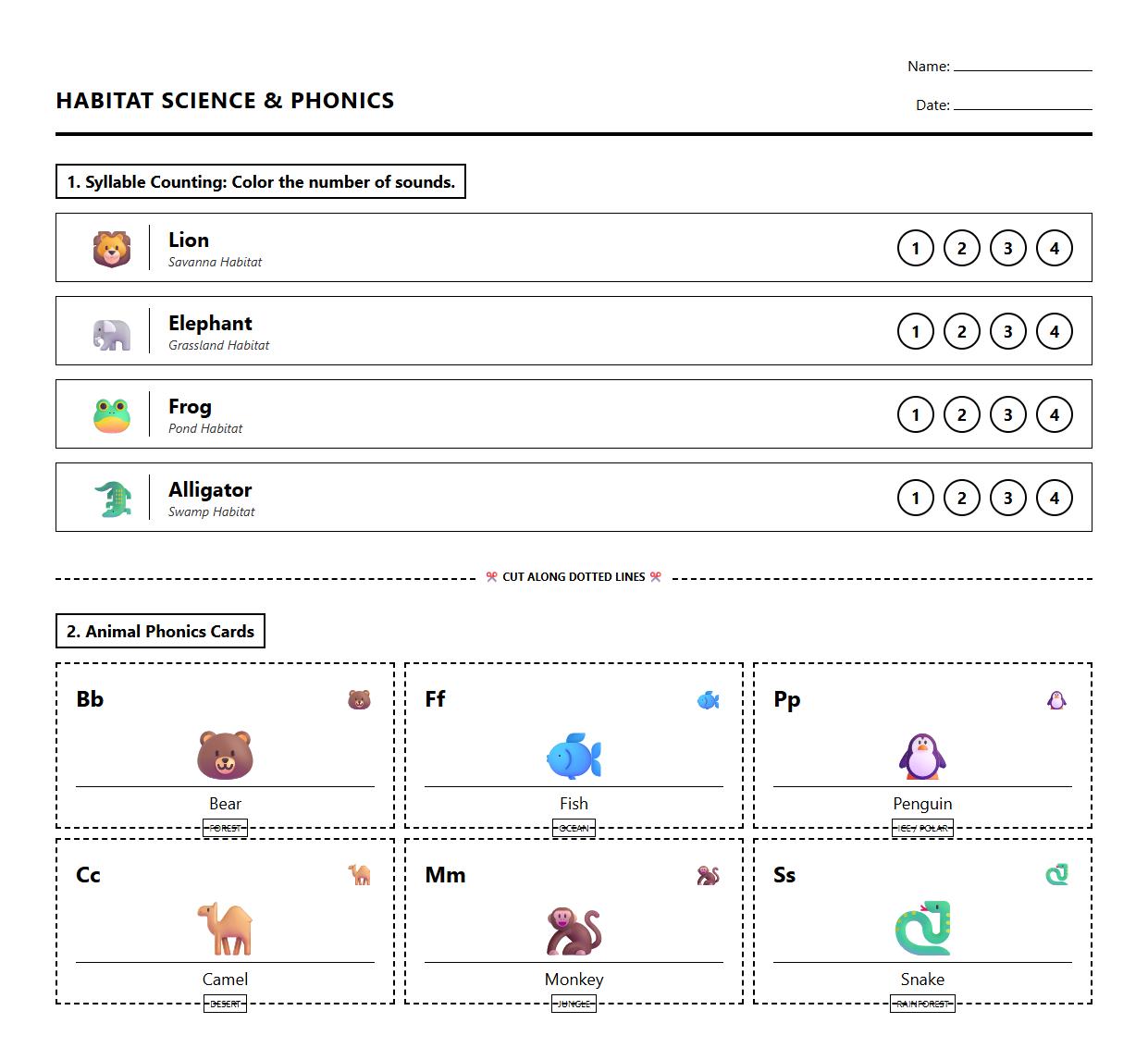
Kindergarten students explore various animal habitats through engaging phonics-based activities that enhance reading and vocabulary skills. This worksheet combines learning about animals and their environments with phonetic practice to promote early literacy. Check out the available worksheets to support young learners in discovering animal habitats while developing phonics proficiency.
Sound Recognition for the Letter F
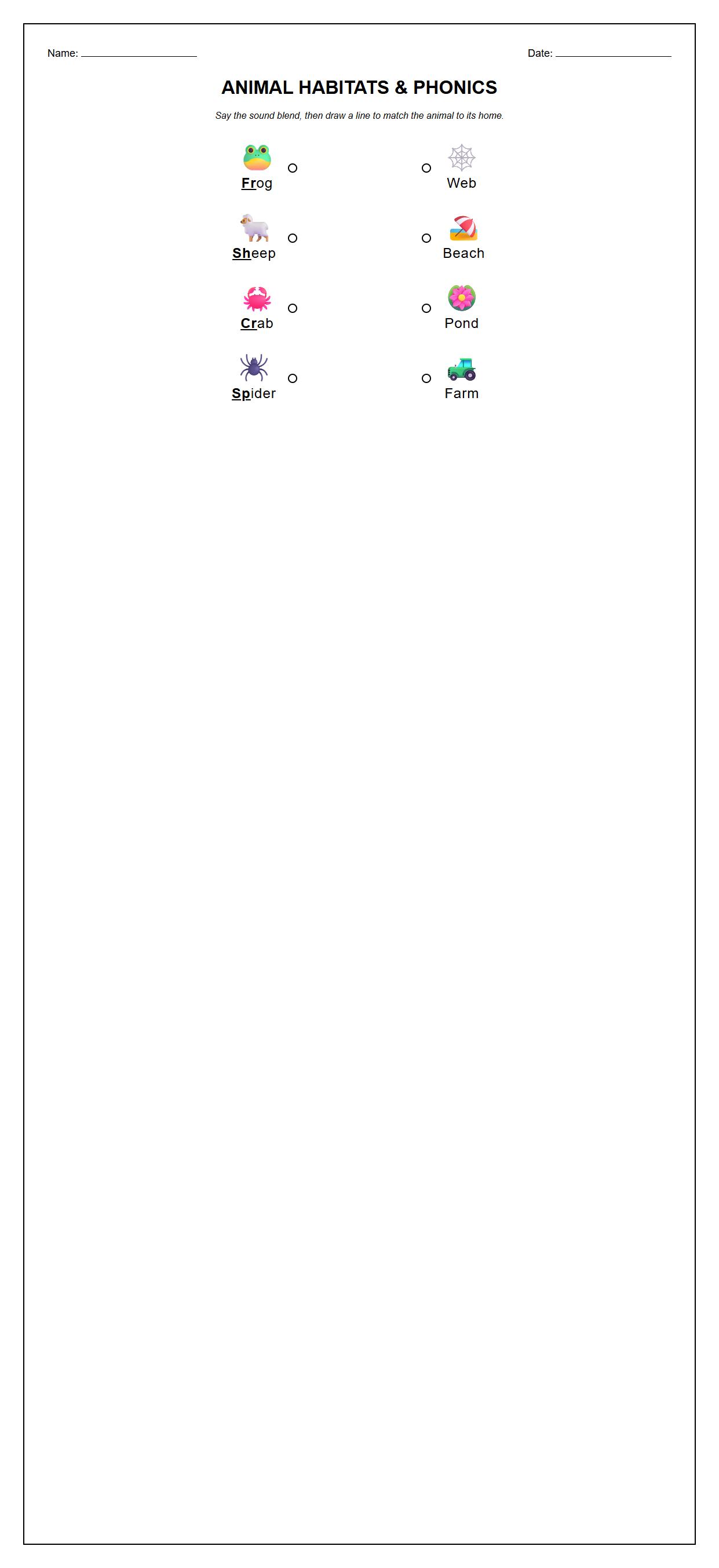
Ask the children to focus on the word frog and identify the first sound it makes when saying its home. This activity improves phonetic awareness by linking sounds to familiar animals and their habitats. Encourage children to say the sound aloud to reinforce learning. This helps develop early reading skills in a fun way.
Matching Habitat Sounds
Identify the habitat that starts with the same sound as the word beach. This exercise supports auditory discrimination and sound matching. Teachers and parents can guide children to recognize the initial "b" sound in both words. It strengthens vocabulary related to environments.
Animal and Sound Identification
Find an animal whose name begins with the sound "s" and lives in the sea to enhance sound-to-letter connection. This task encourages children to link sounds with specific animals and their habitats, expanding their understanding of marine life. Highlighting the "s" sound promotes phonemic awareness. Use visuals to make the activity engaging.
Forest Animal Sound Recognition
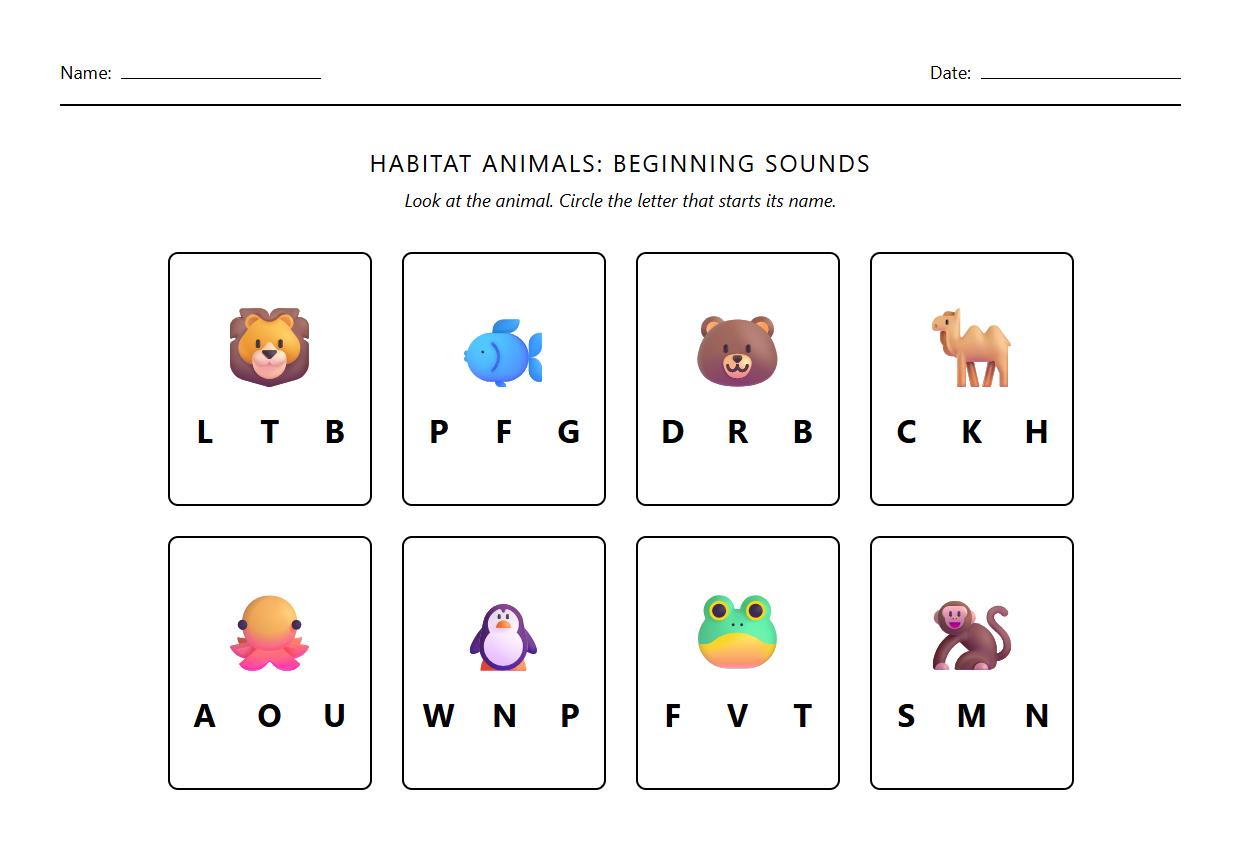
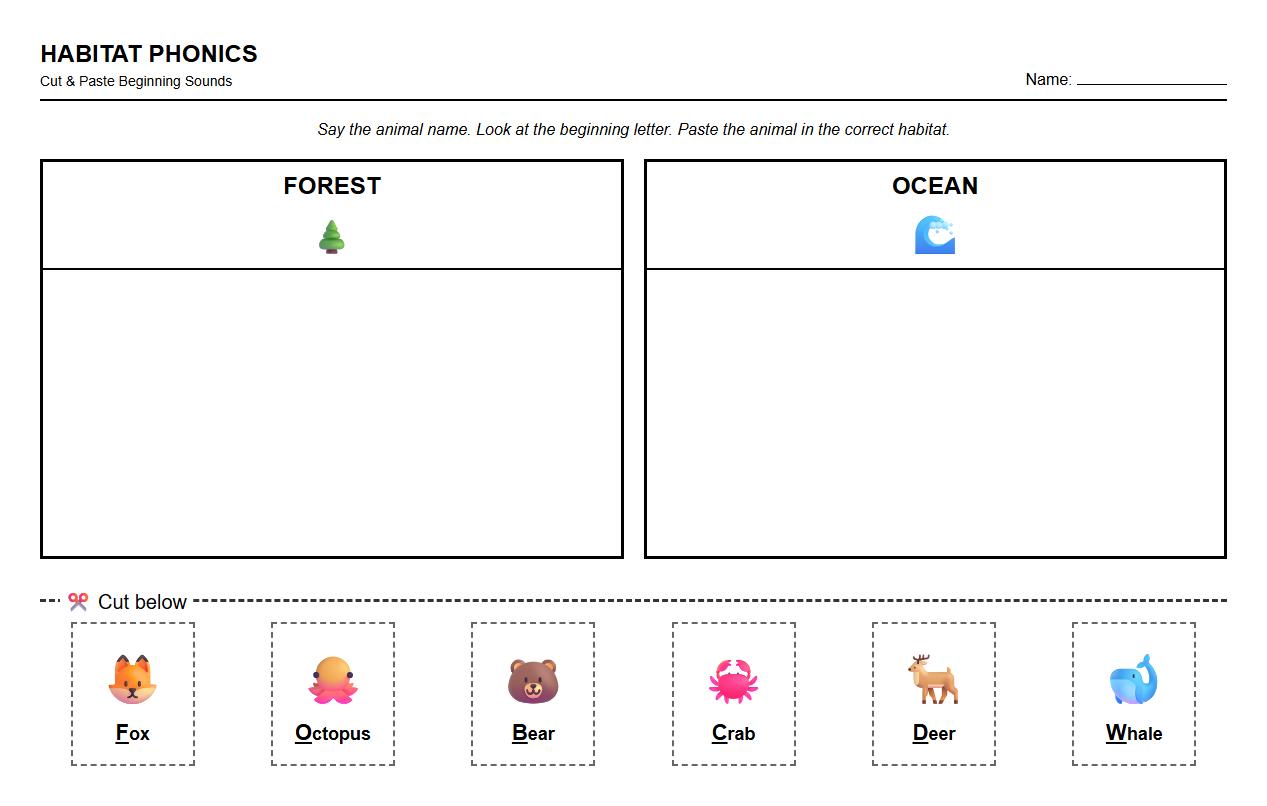
Ask the child to select an animal from the forest that starts with the letter b. This supports children's ability to recognize initial sounds in context. Connecting animals to their habitats builds knowledge about ecosystems. Reinforce the lesson by discussing why the animal lives in the forest.
Sound and Drawing Activity
Circle the animal whose name begins with the sound d and then draw its habitat. This multisensory approach strengthens sound recognition and reinforces habitat awareness. It combines listening skills with creative expression, making learning enjoyable. Parents and teachers can assist children in describing the habitat while drawing.
Matching Animals to Homes
Match the animal whose name starts with m to its home, fostering both letter recognition and comprehension of animal habitats. Pairing pictures with words aids memory retention and vocabulary growth. This activity also supports fine motor skills through matching tasks. Ensure children pronounce the initial "m" sound clearly.
Sound Pronunciation Practice
Point to the word pond and say its first sound, emphasizing the initial "p". This simple task helps develop phonological awareness in early learners. Repetition aids children in mastering beginning sounds. Use engaging dialogue to keep interest high, as seen in scientific inquiry activities.
Choosing Animals and Habitats
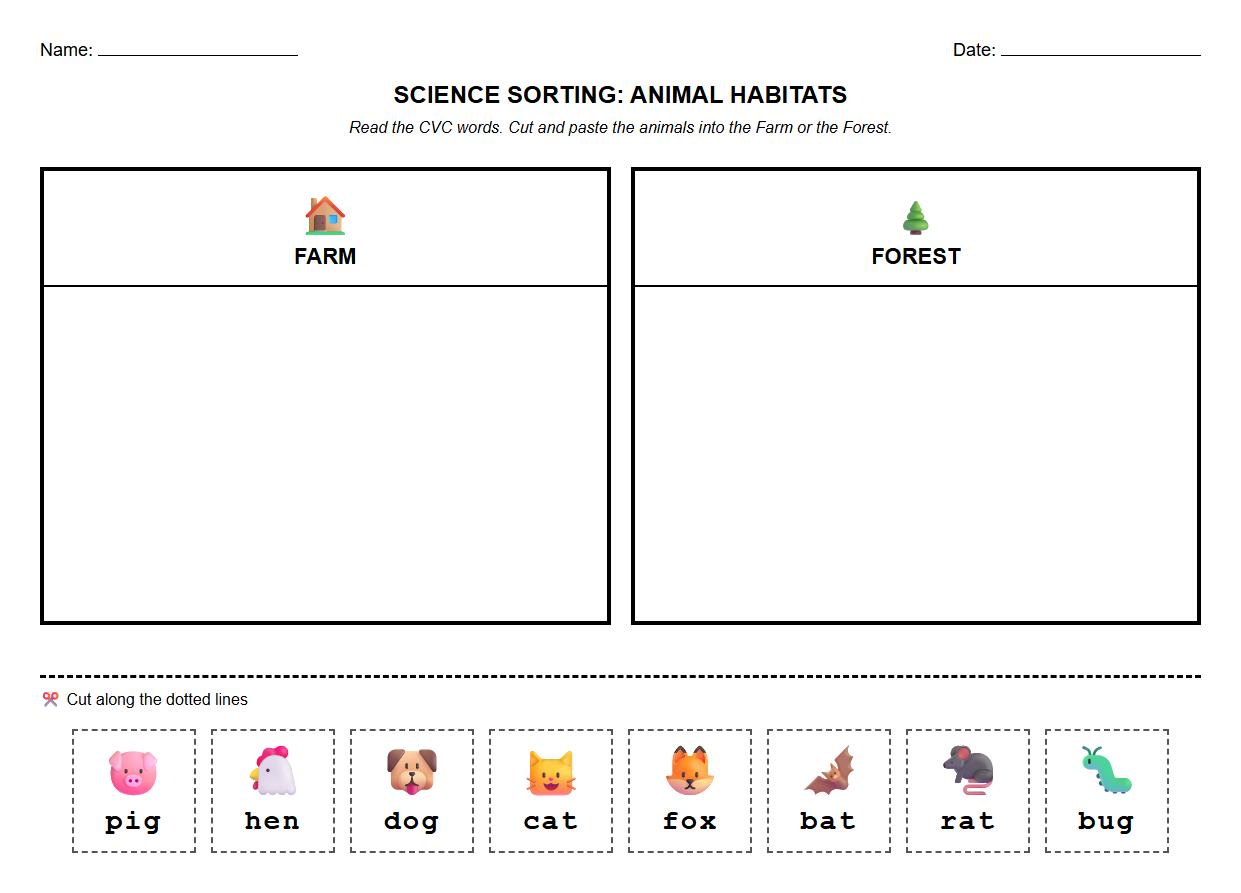
Choose an animal whose name and home both start with the letter f. This reinforces letter-sound association and connects animals to their environments. It encourages logical thinking by matching names and habitats. Promote verbal discussion about why the animal belongs in that specific habitat, similar to activities in foundational physics worksheets.
Beginning Sound and Habitat Matching
Say the beginning sound of the word nest and find an animal that lives there. This guides children to link sounds to specific animal homes. The activity fosters vocabulary building and comprehension of natural habitats. Encourage children to articulate the "n" sound clearly.
Connecting Words and Animals
Draw a line from the word river, starting with r, to a matching animal. This pairing activity supports letter recognition and strengthens habitat-animal relationships. It also enhances fine motor skills through drawing. Use this as a fun way to integrate literacy and science learning.


Animal Classification Worksheet for Early Learners