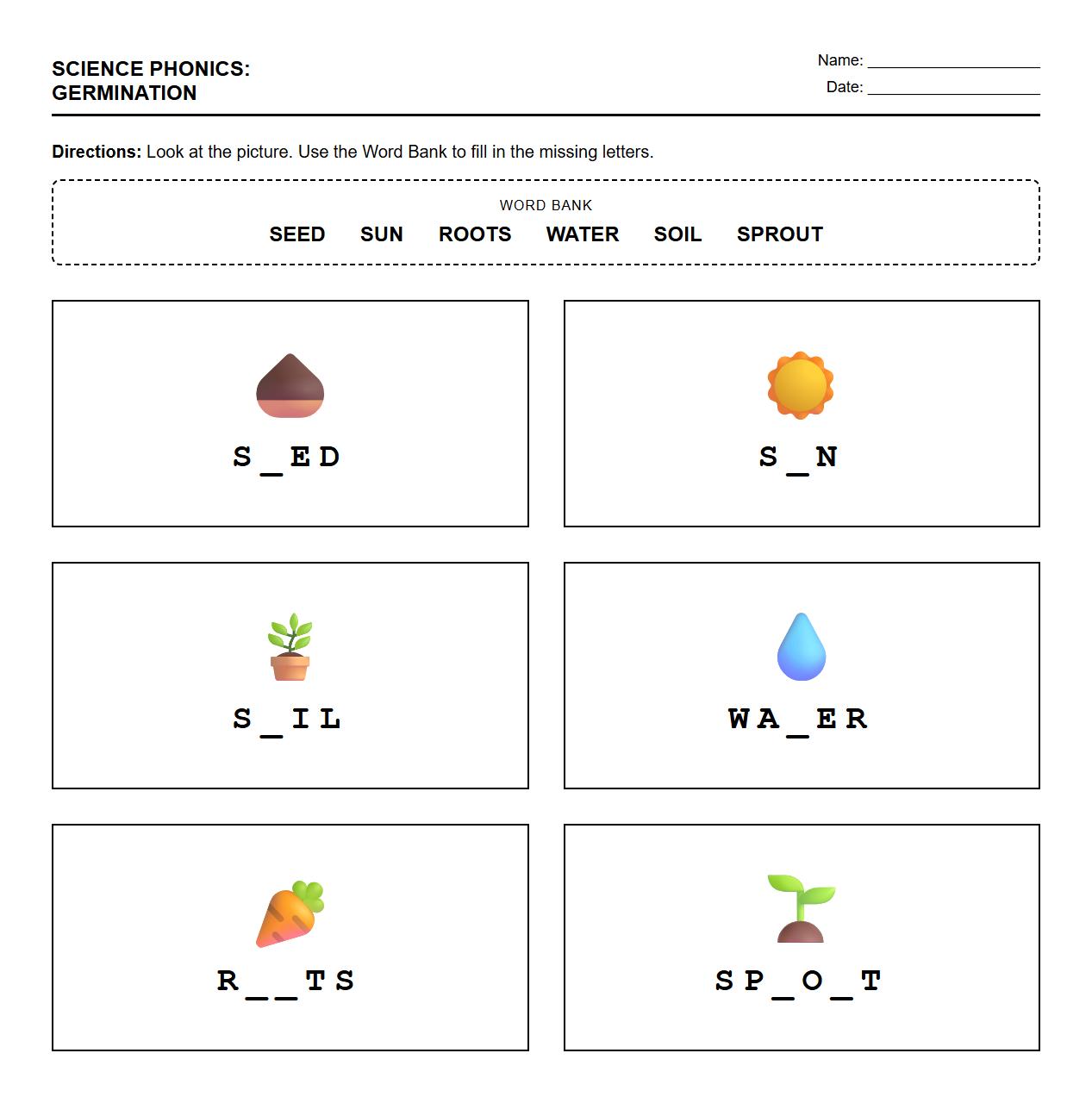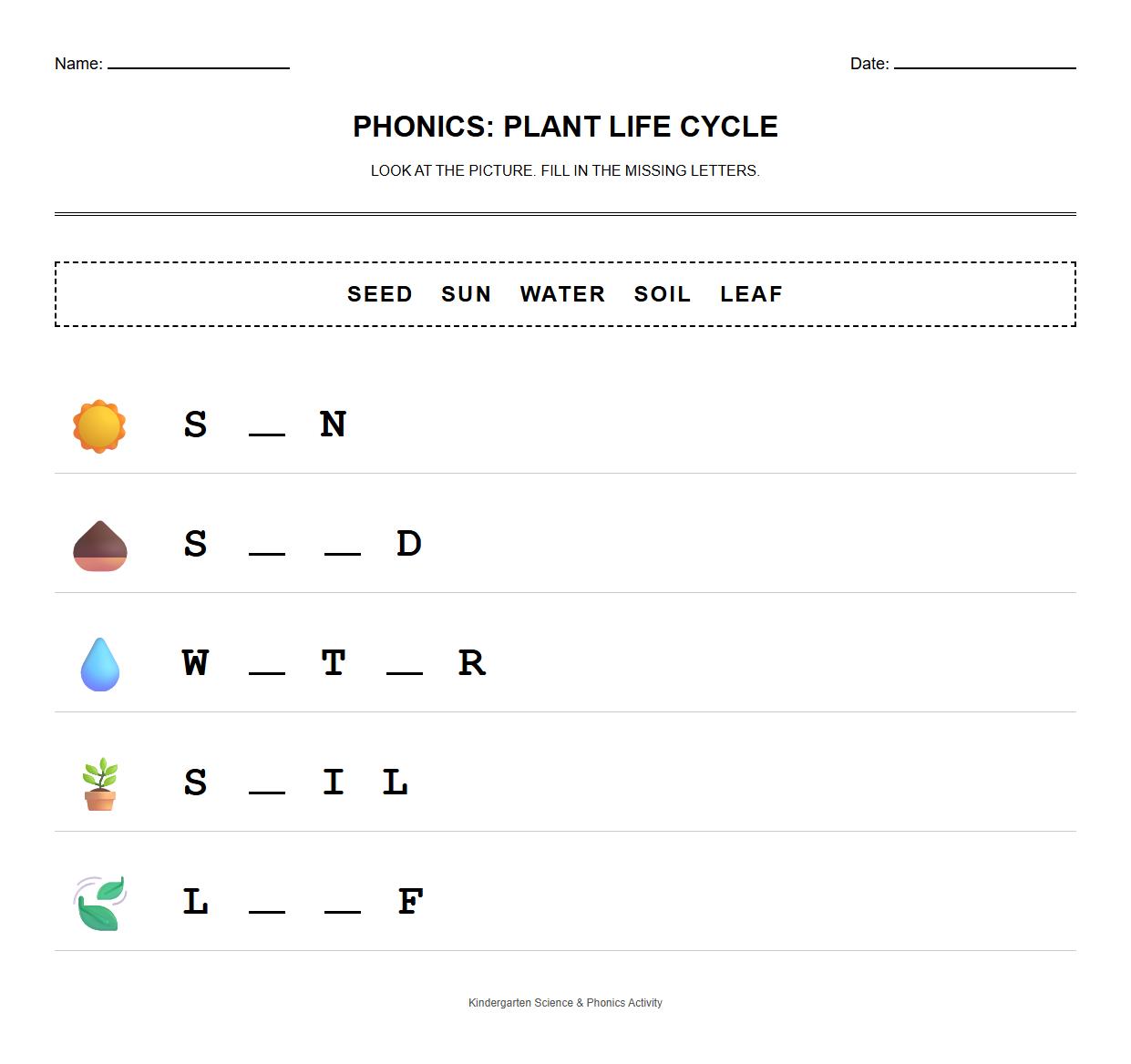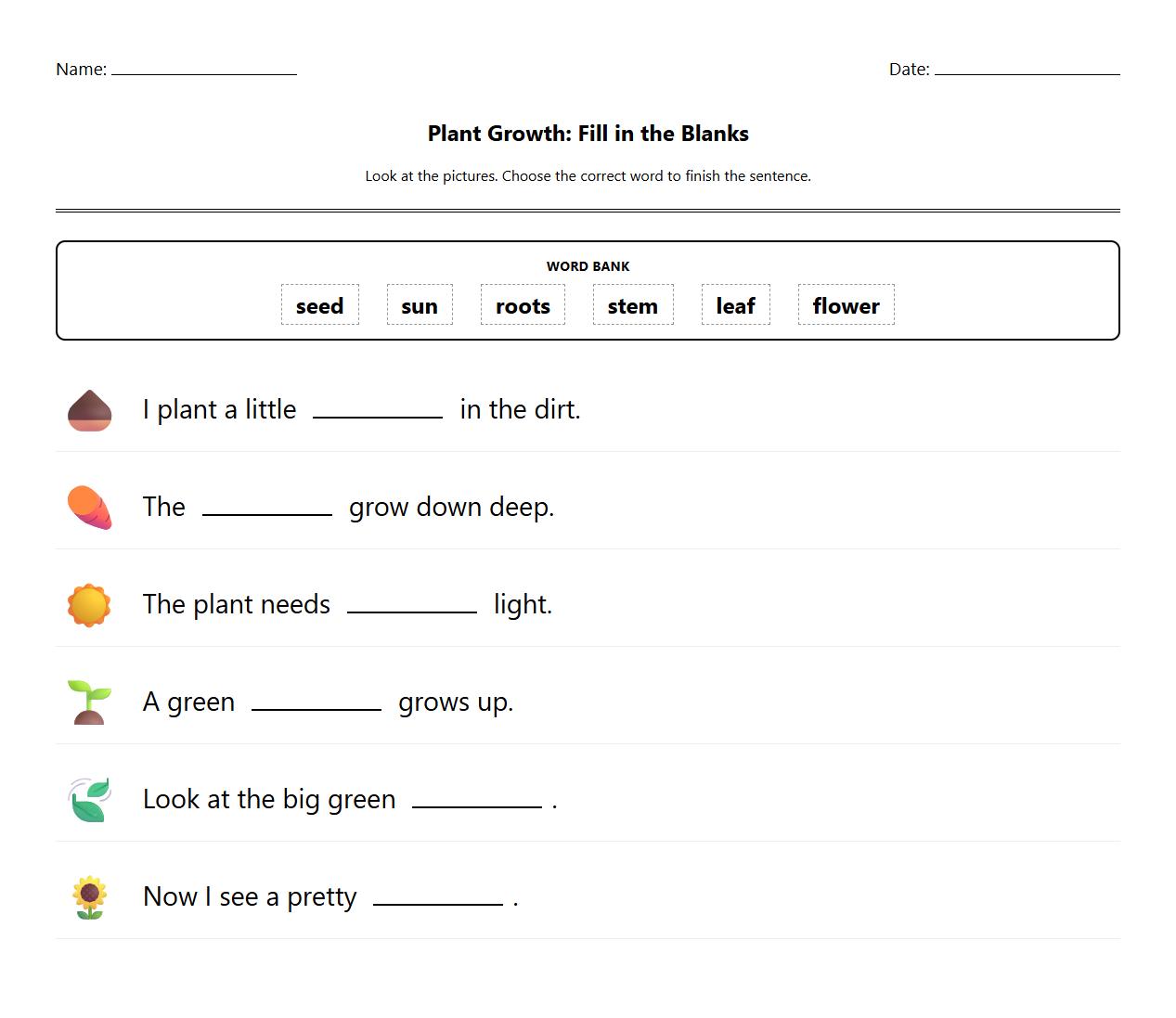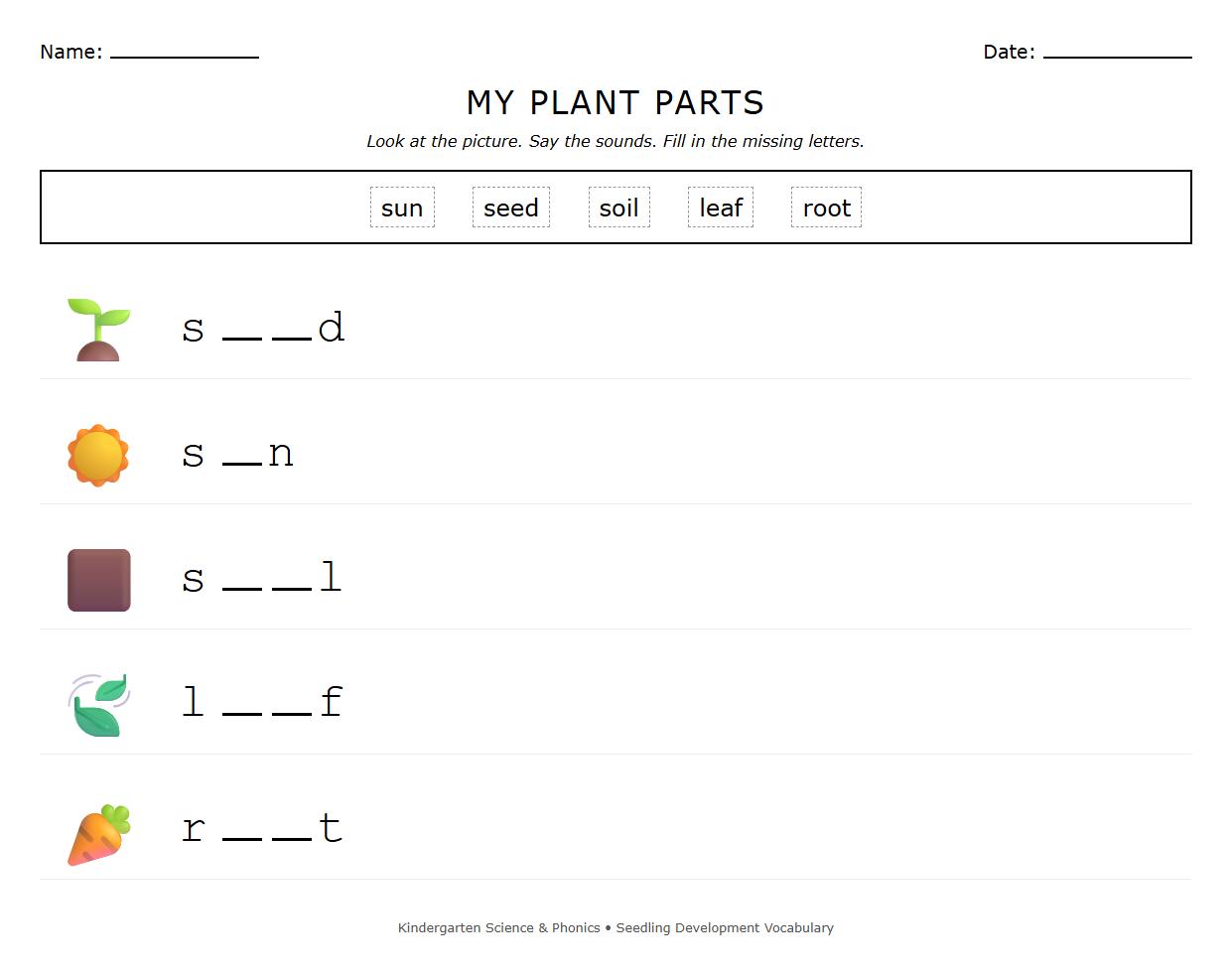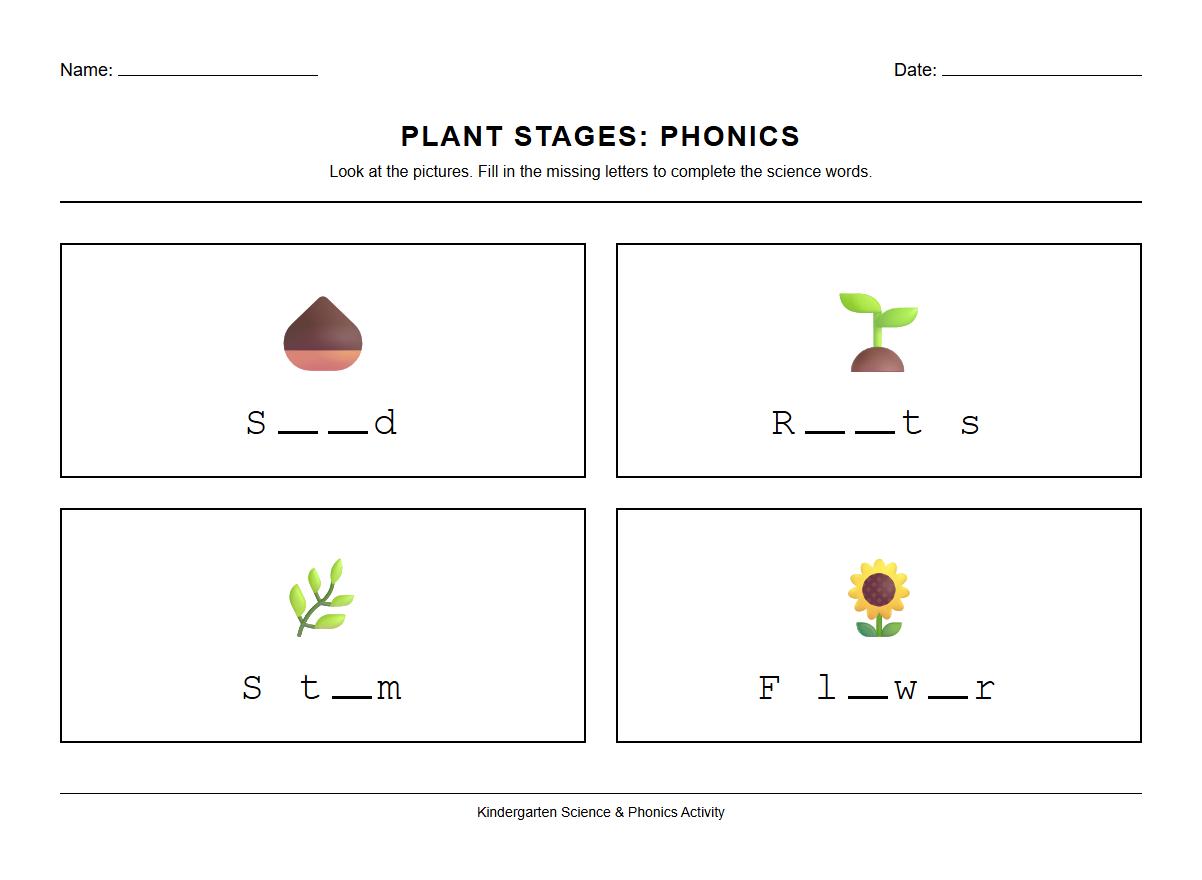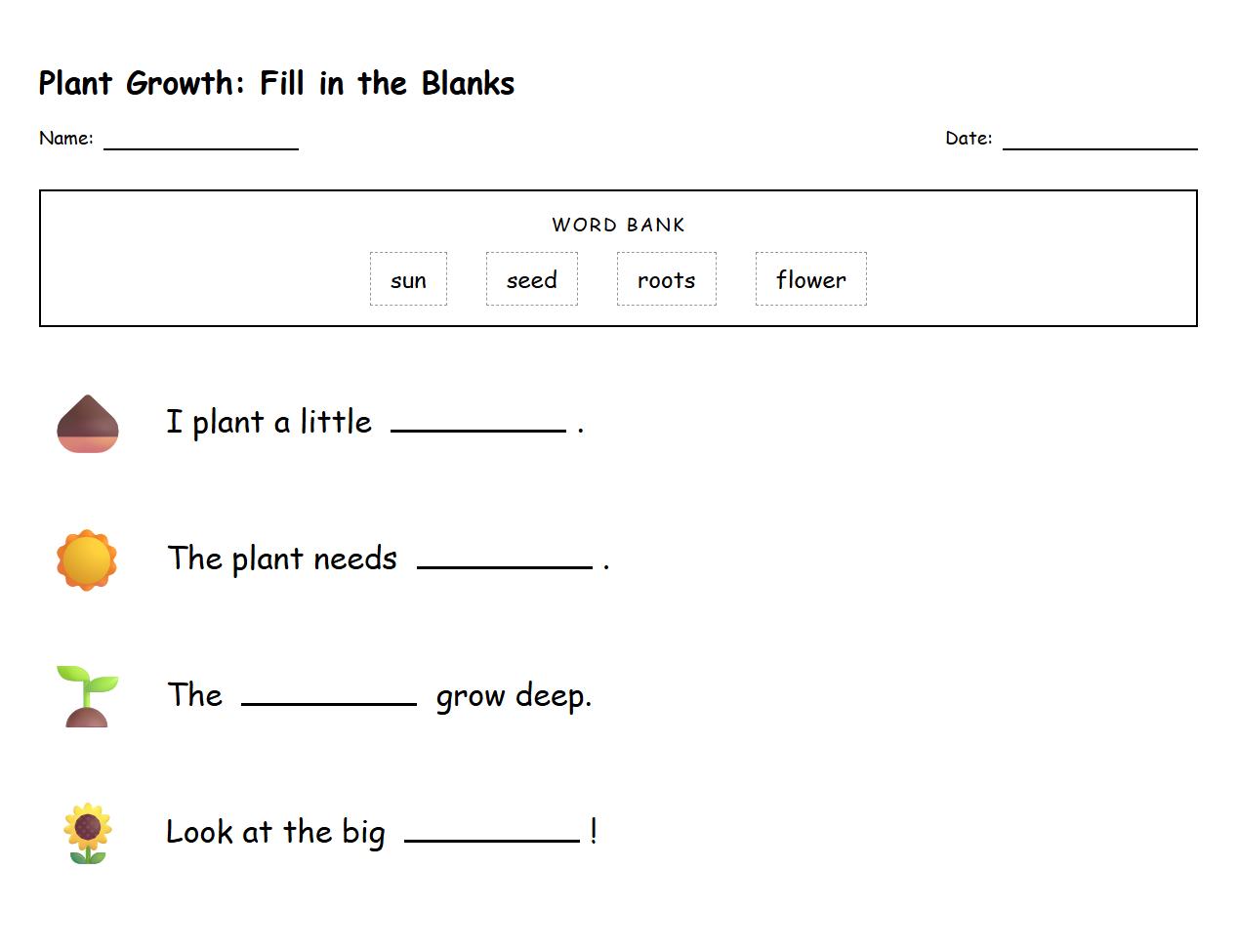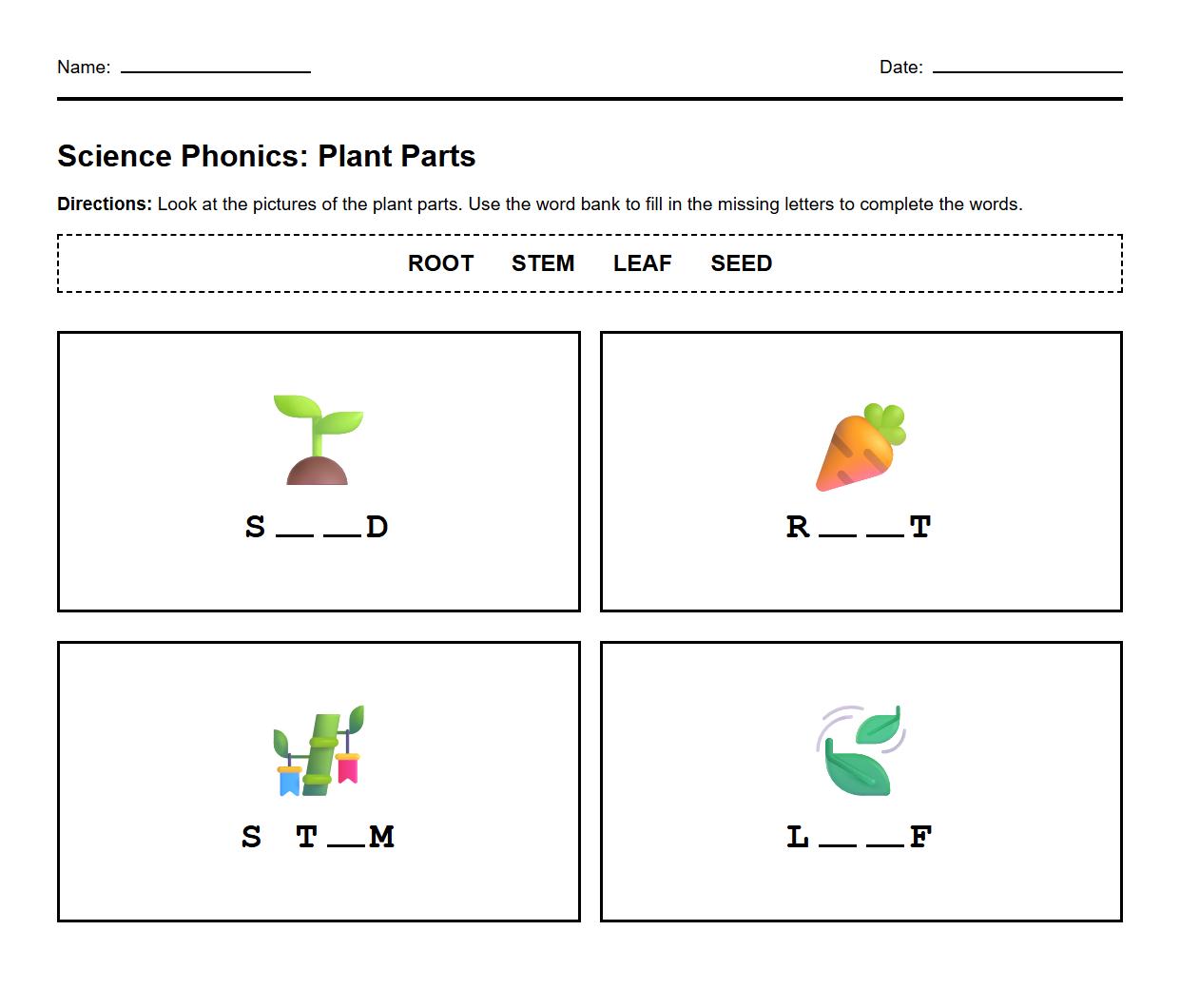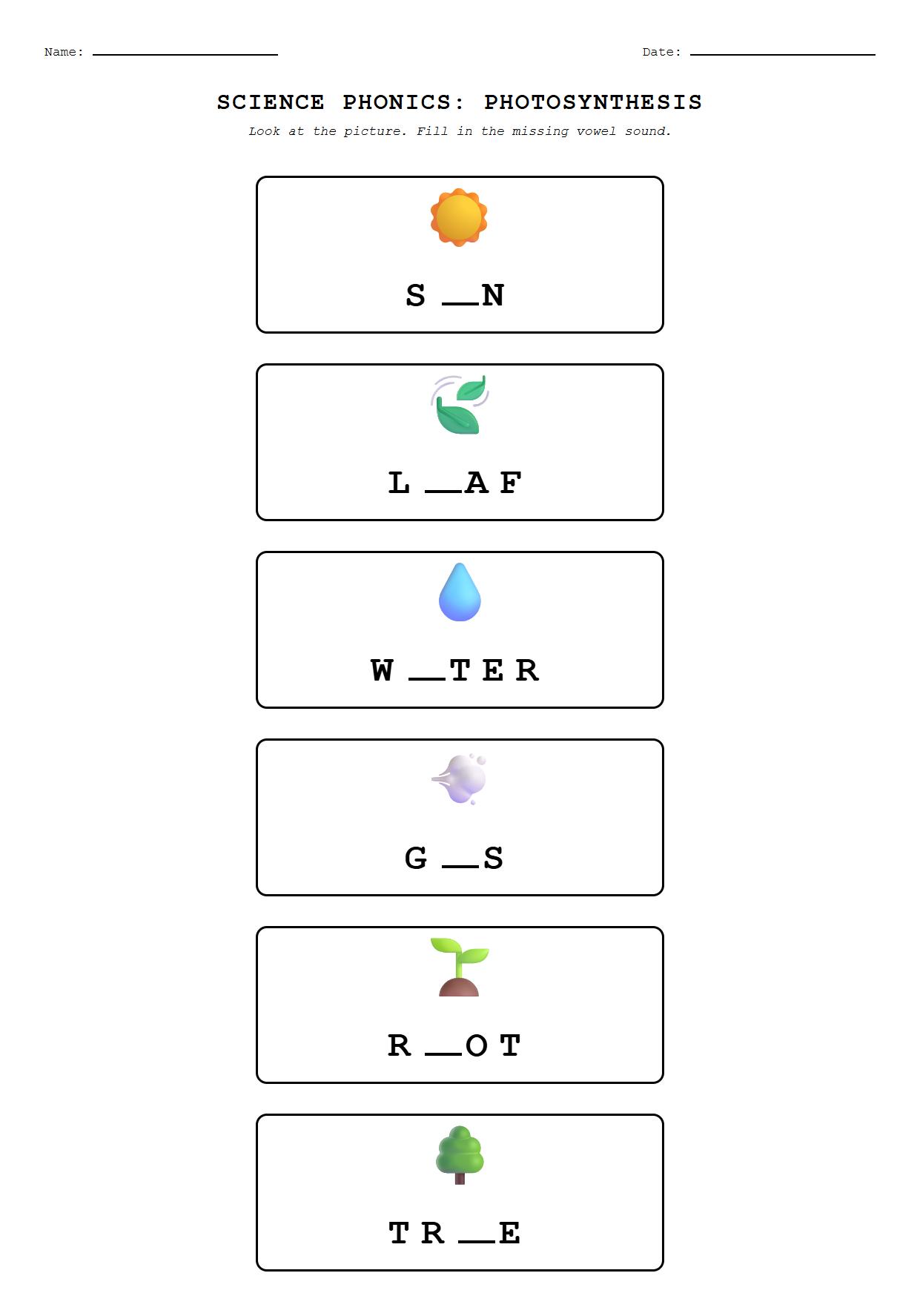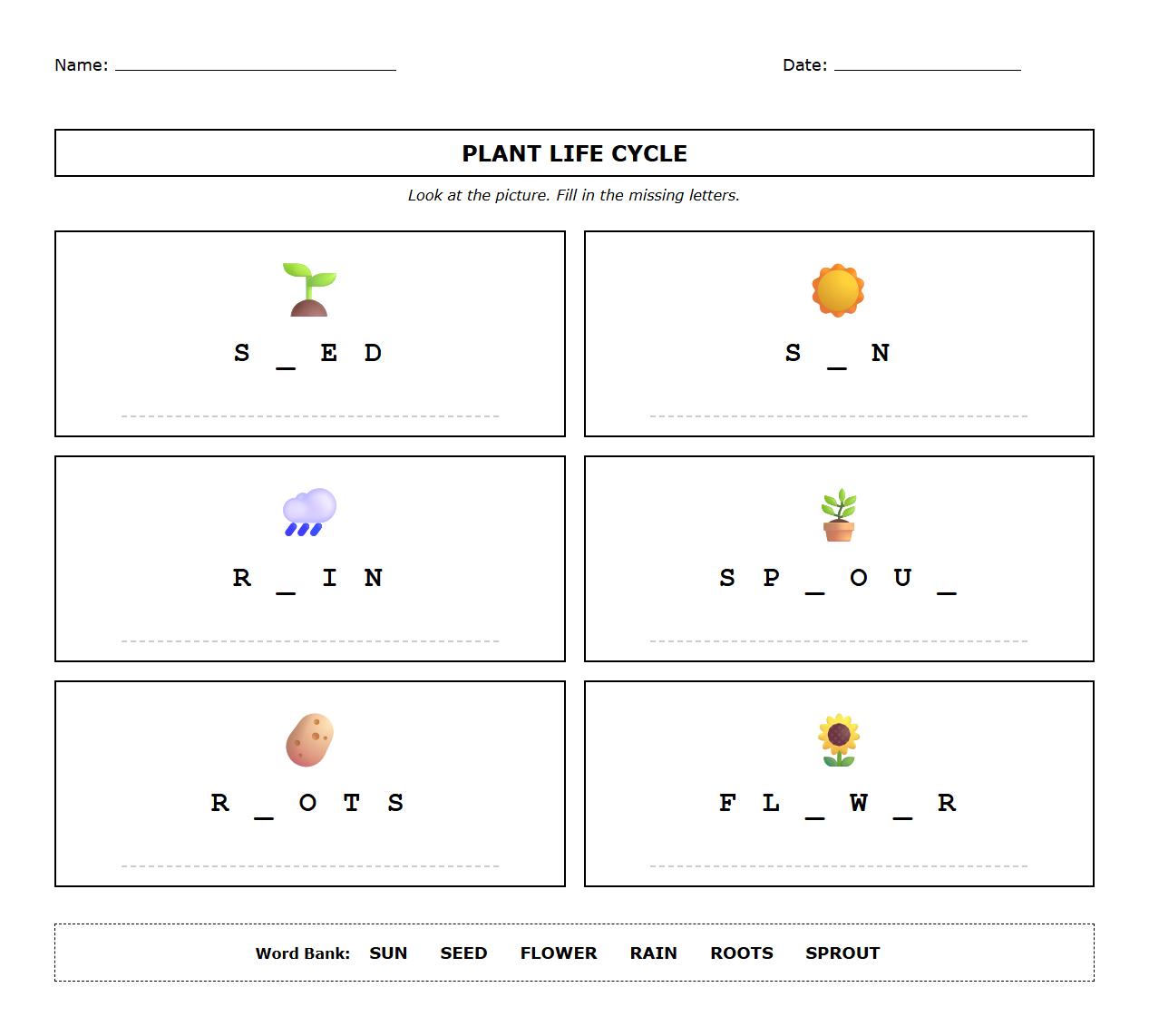
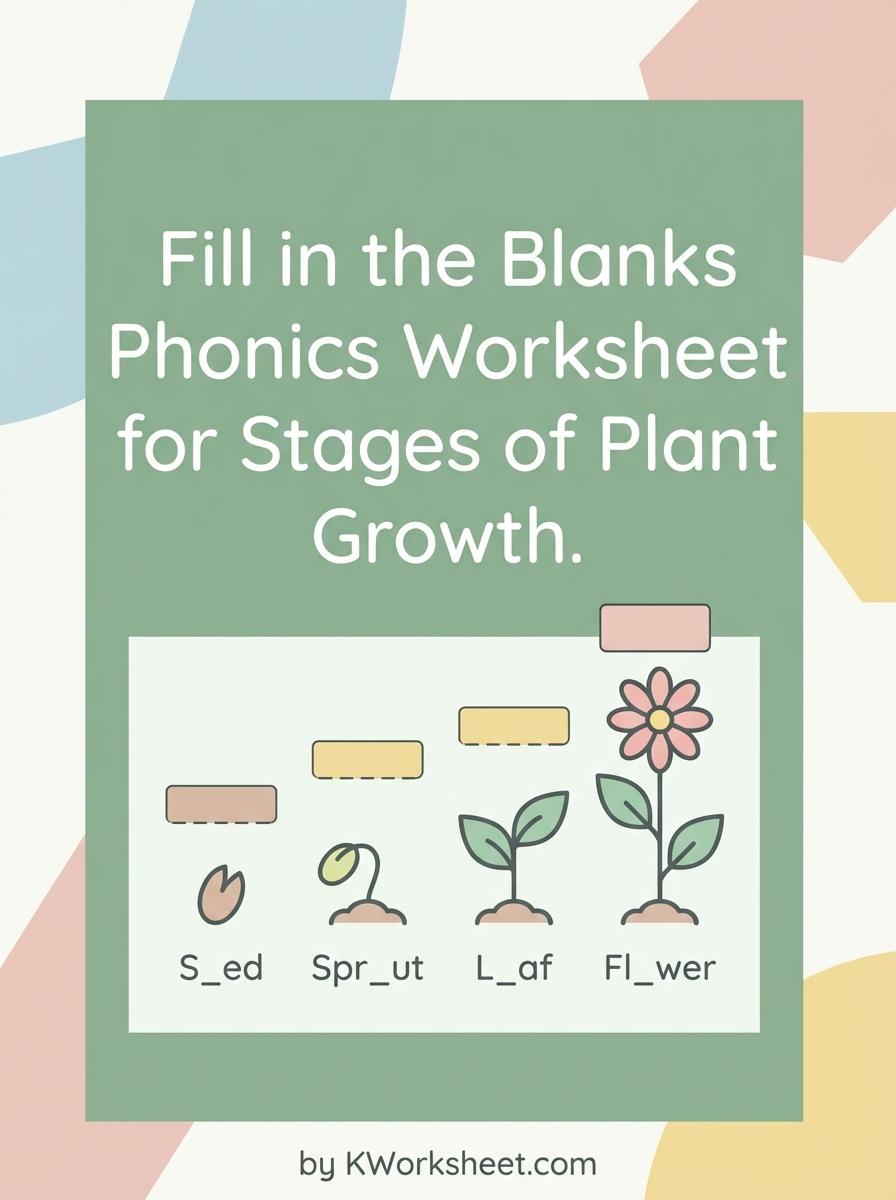
Fill in the blanks phonics worksheet focuses on key vocabulary related to the stages of plant growth, reinforcing spelling and comprehension skills. It encourages learners to connect phonetic patterns with botanical terms such as seed, sprout, and blossom. Explore the available worksheets to enhance your understanding of plant development through engaging phonics activities.
Plant Growth Basics for Kindergarten
The root is the first part of the plant that grows from a seed. It anchors the plant and absorbs water and nutrients from the soil. Understanding this helps children recognize the importance of roots in plant health. Teachers and parents can guide students through observing roots in real plants.
The seed needs water and warmth to start growing. These elements trigger the seed's growth process, allowing it to sprout. Emphasizing this step helps children grasp how plants begin their life cycle. Use simple experiments to show how water affects seed germination.
After the root, a small shoot pushes out of the soil. This shoot will eventually grow upward towards the light. Observing the shoot helps children see the plant's development stage clearly. Encourage students to gently uncover soil to watch shoots emerge.
The stem helps the plant stand tall and strong. It also transports water and nutrients between the roots and leaves. Teaching about stems reinforces the plant's structure and function. Use diagrams or real plants to show this vital part to kids.
Green leaves grow from the stem and collect sunlight. Leaves play a key role in photosynthesis, producing food for the plant. Helping children identify leaves enhances their understanding of how plants make energy. Incorporate leaf observation activities for effective learning.
The plant grows a bud that will open up into a flower. This stage introduces children to plant reproduction. Watching buds change fosters curiosity and connection to nature. Highlight how flowers attract pollinators for a complete picture of growth.
The flower can become a fruit that holds new seeds. Fruits protect seeds and help spread them for new plants. Explaining this cycle encourages appreciation for plants' life continuity. Use fruits as examples to show seed dispersal methods.
In the beginning, the plant is just a tiny seedling. This young plant is delicate and needs care to thrive. Teaching about seedlings helps children understand plant growth stages. Encourage careful watering and sunlight for healthy seedlings.
The process of a seed becoming a plant is called germination. Germination is a critical step where the seed begins life as a new plant. Defining this term introduces basic plant science vocabulary. Use hands-on activities to demonstrate germination clearly.
A plant needs soil, water, sunlight, and air to grow. These elements create an ideal environment for plant health and development. Teaching this promotes a holistic view of what plants need to survive. Discuss how each element supports different plant functions.


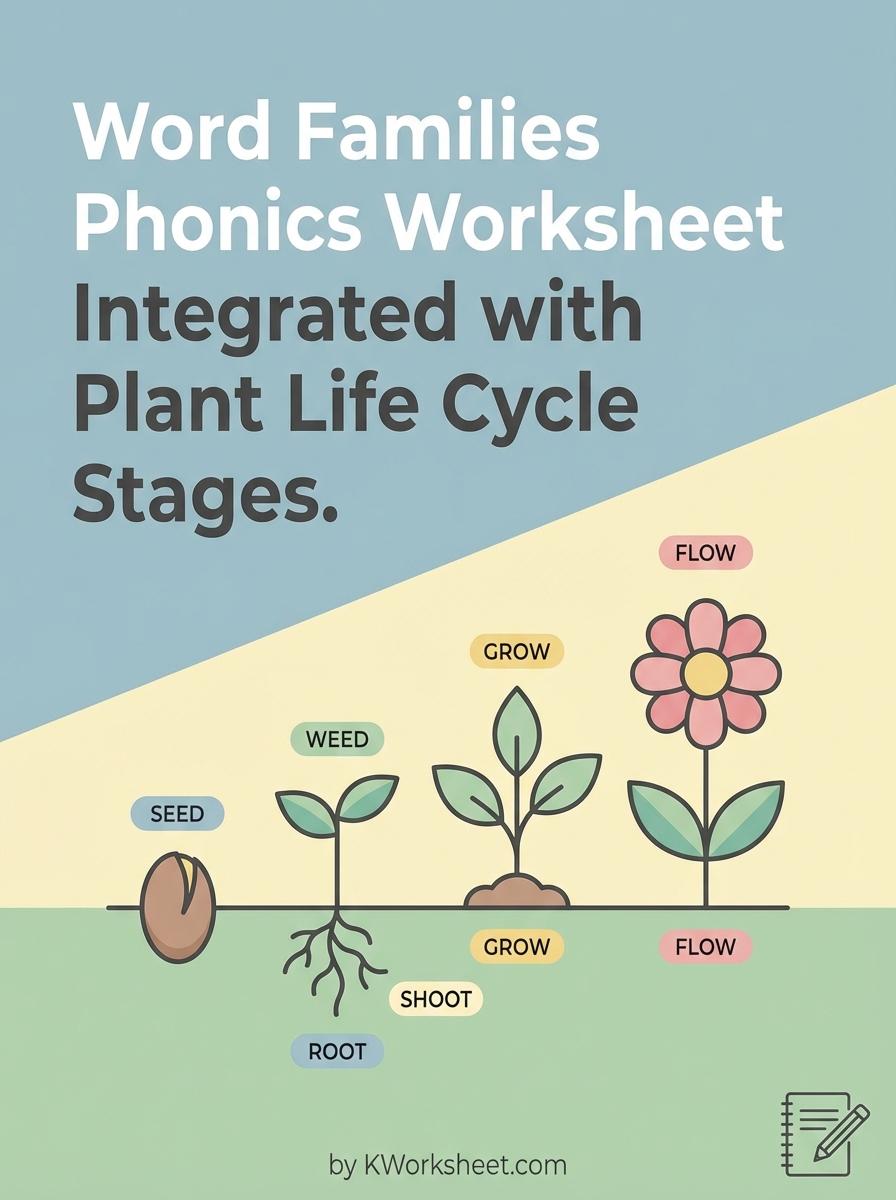
Word Families Phonics Worksheet Integrated with Plant Life Cycle Stages