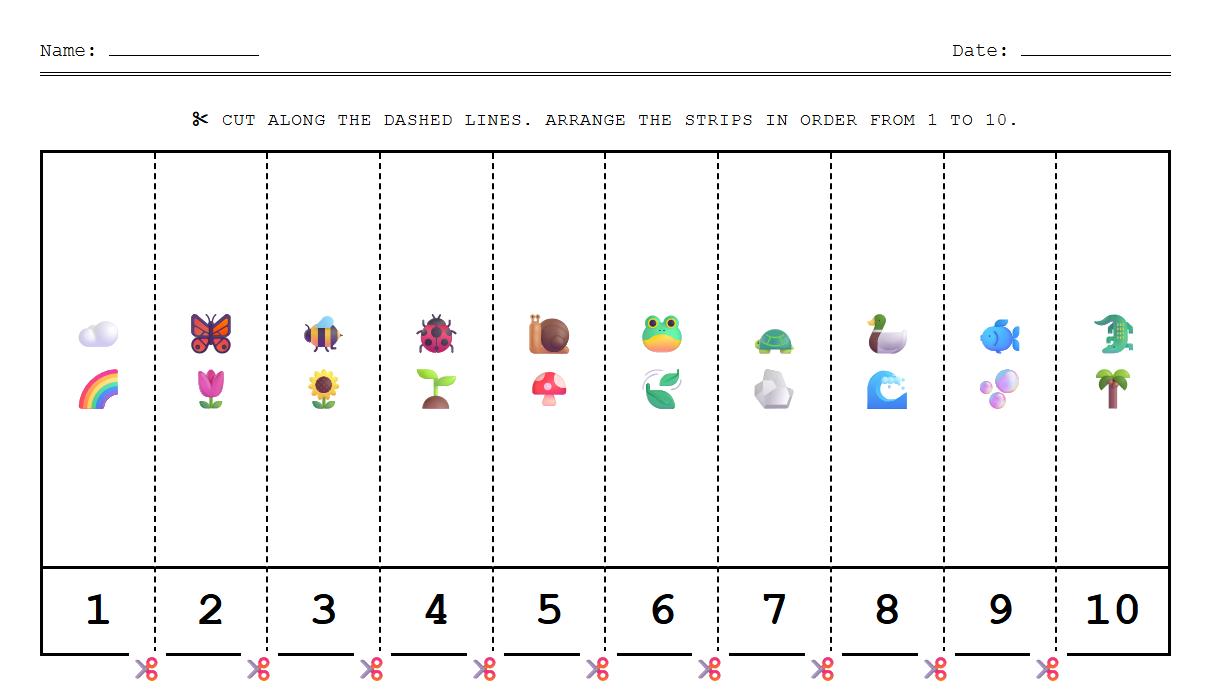
Developing fine motor skills through creative scissor cutting activities enhances preschool and kindergarten readiness. These skill-building sheets encourage hand-eye coordination, precision, and creativity in young learners. Explore the variety of available worksheets designed to make cutting practice both fun and educational.
Common Shapes in Kindergarten Scissor Cutting Worksheets
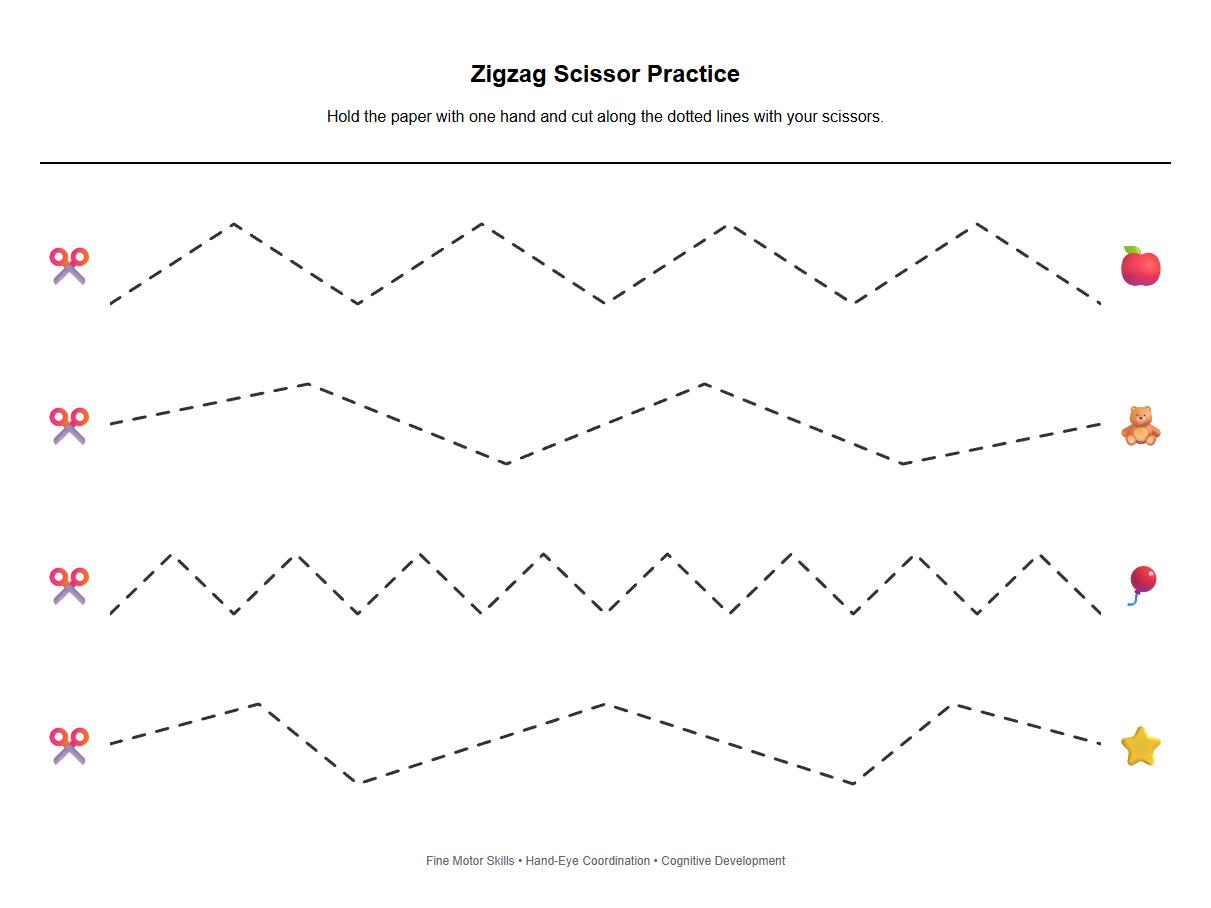
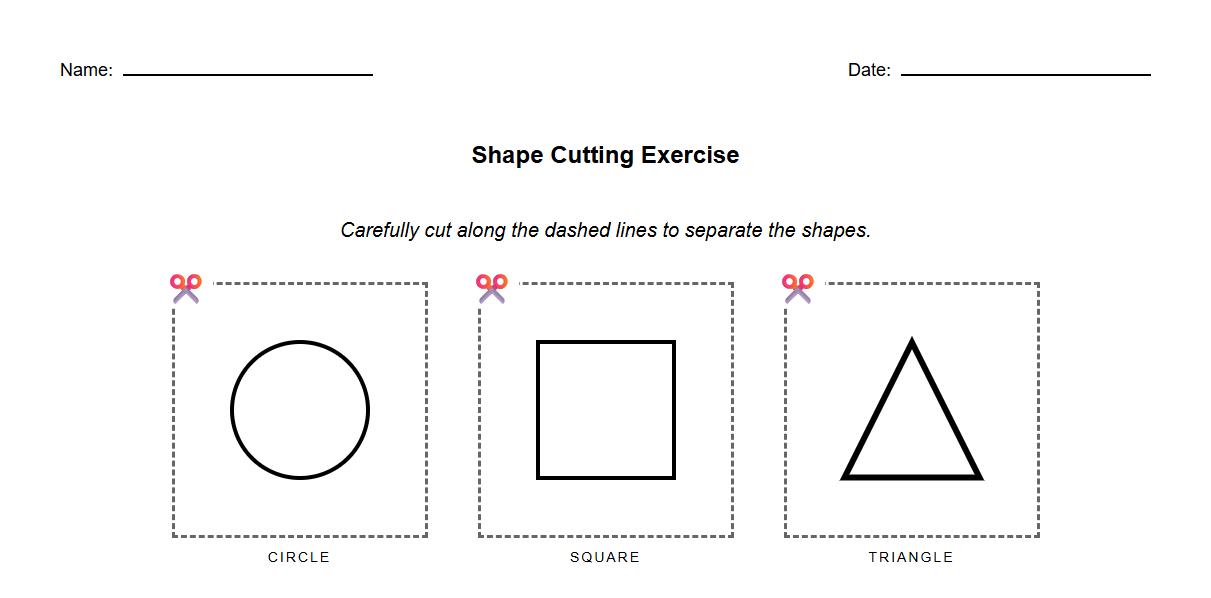
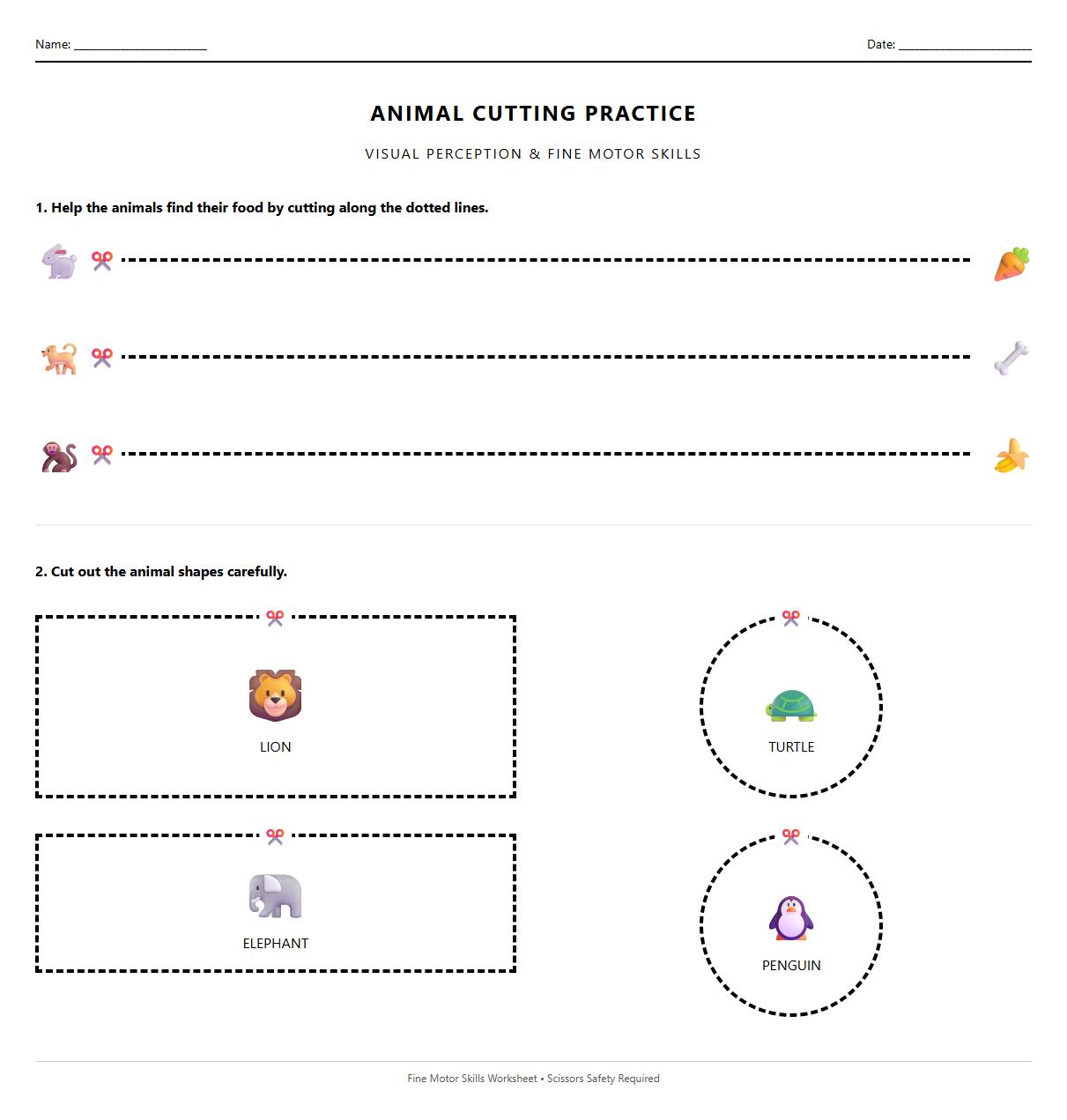
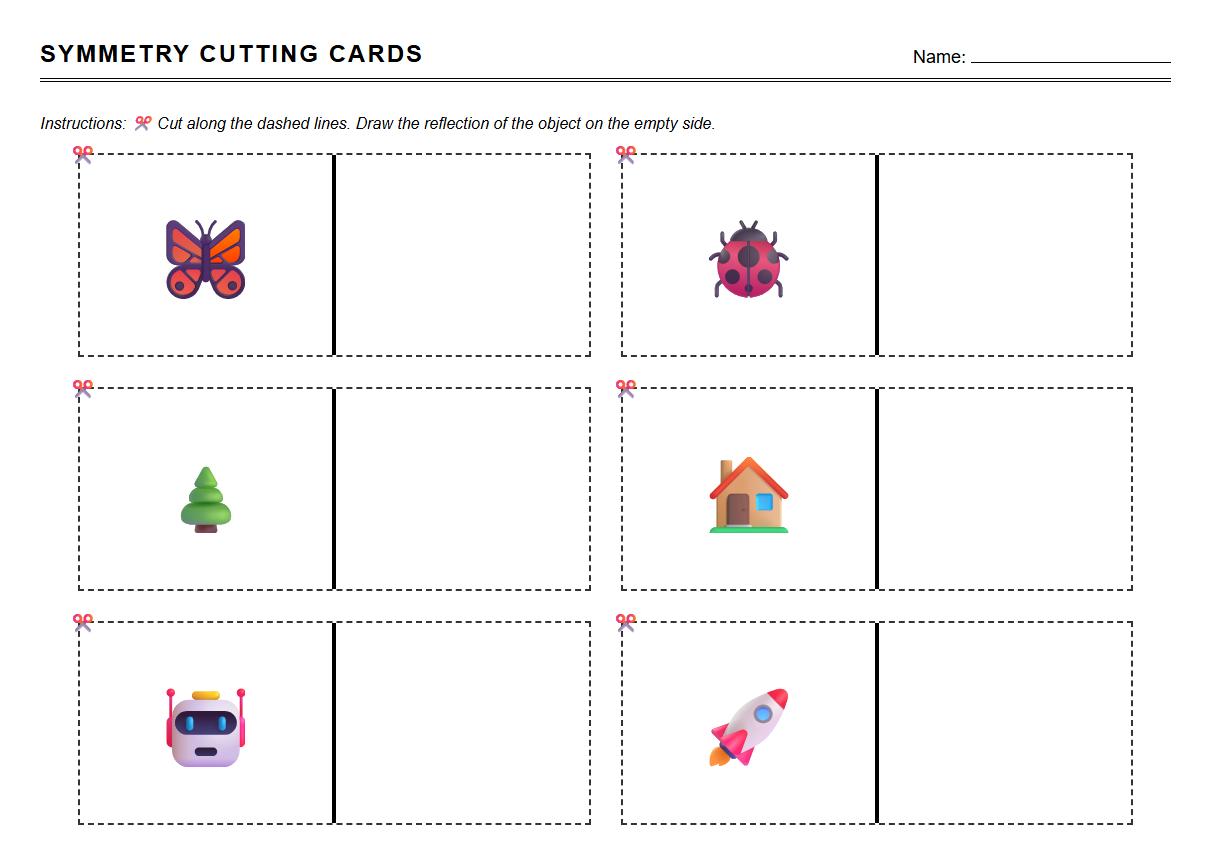
Kindergarten scissor cutting worksheets typically feature basic shapes such as circles, squares, triangles, and rectangles. Other common shapes include simple stars, hearts, and zigzag patterns. These shapes are chosen for their simplicity and suitability for young children's developing motor skills. Using a variety of shapes helps keep the activities engaging and educational. For more on spatial and visual shape activities, see spatial awareness mazes for brain development.
How Scissor Cutting Activities Develop Fine Motor Skills
Scissor cutting activities are essential for strengthening fine motor skills in young children. These exercises enhance hand-eye coordination, finger dexterity, and bilateral hand use. Regular practice helps children gain control over their hand movements, important for writing and other daily tasks. It also promotes concentration and patience during focused activities.
Safety Tips for Preschoolers Using Scissors
Teaching preschoolers about scissor safety includes emphasizing the use of child-safe scissors and always cutting away from the body. Children should be instructed to walk carefully when holding scissors and never run. Supervising all scissor activities and teaching proper hand positioning can prevent accidents. Reinforcing these safety rules consistently ensures a safe learning environment. For ideas about beginner-friendly worksheets, explore alphabet tracing mazes.
Best Types of Lines for Beginners to Practice Cutting
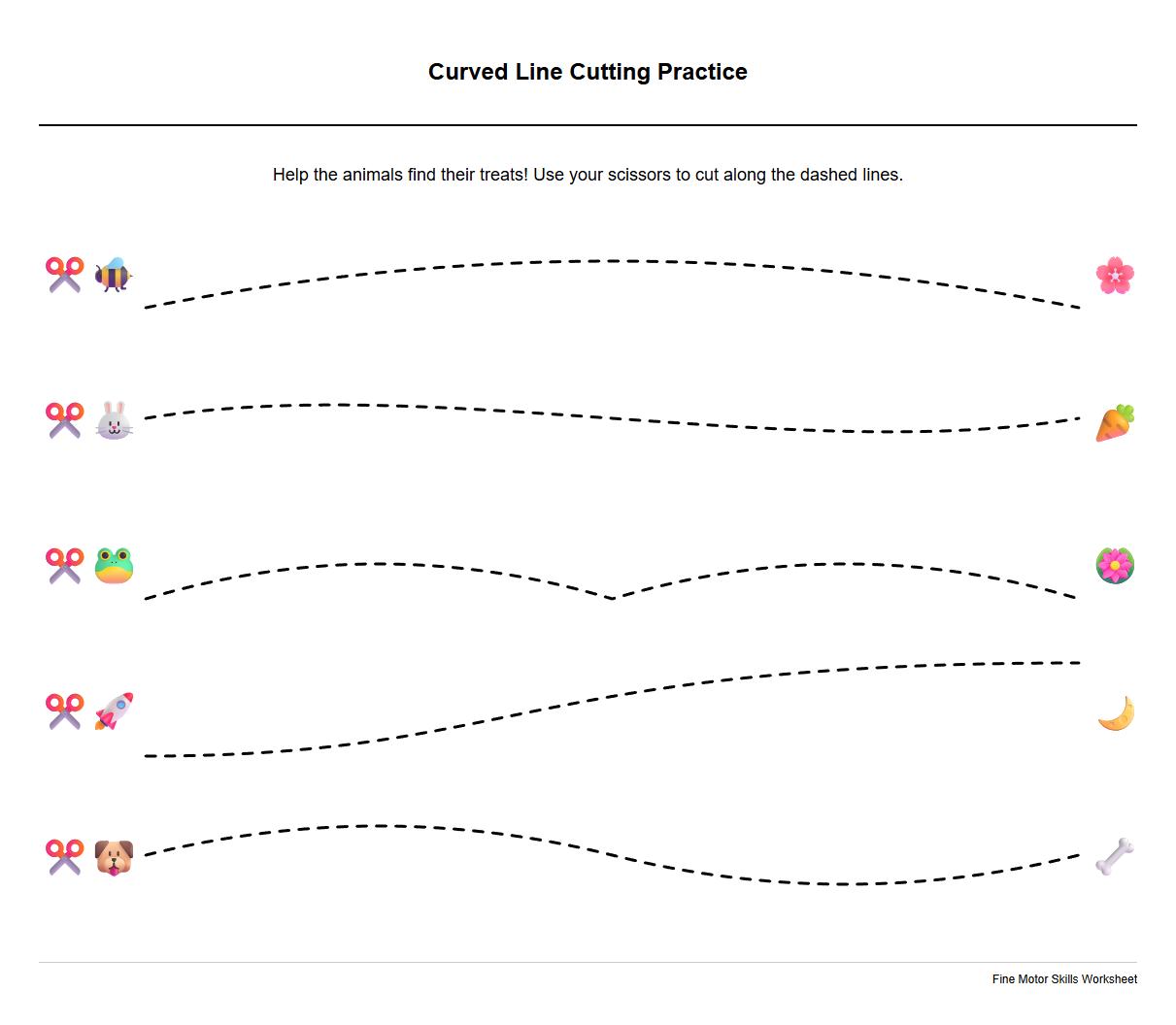
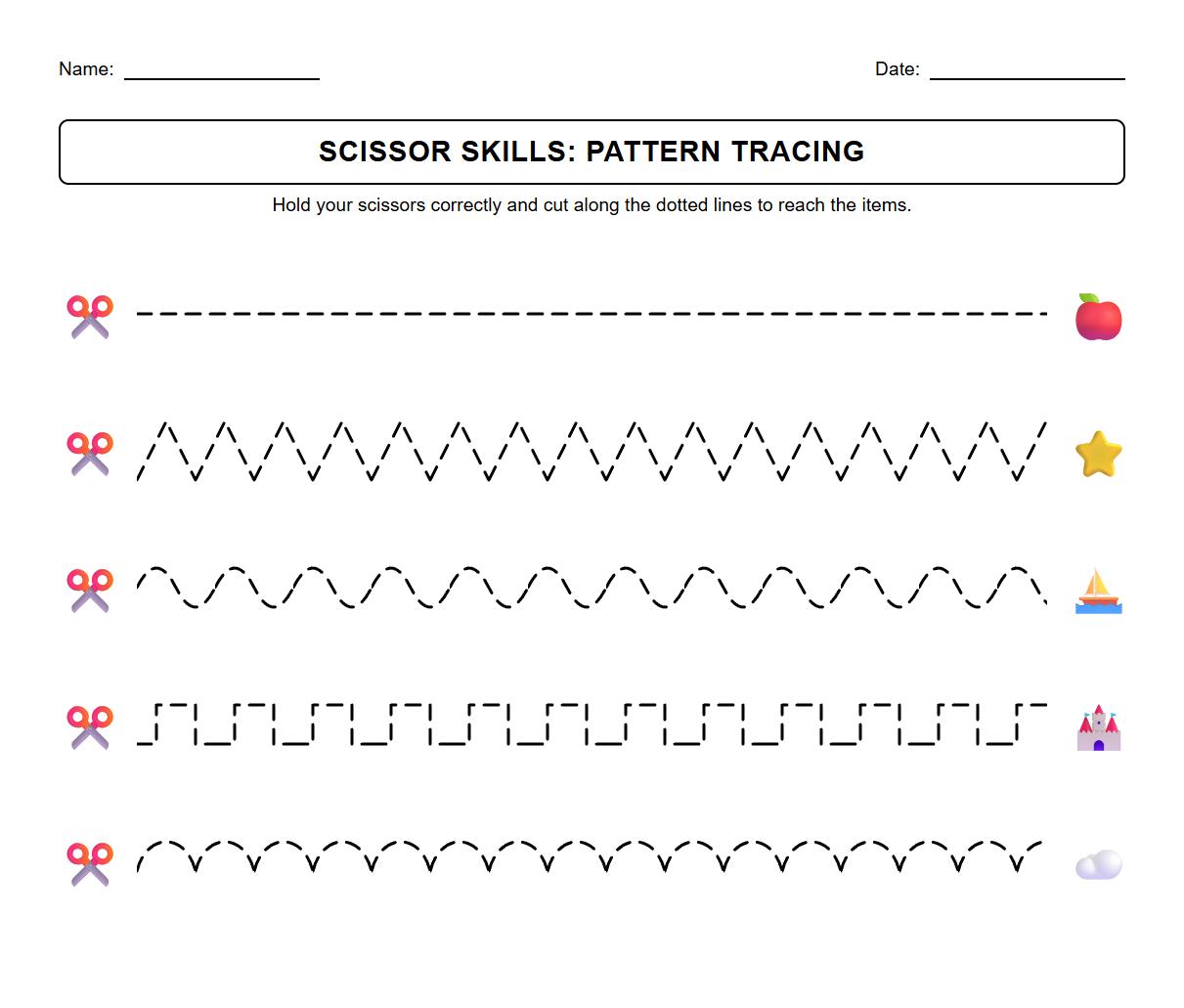
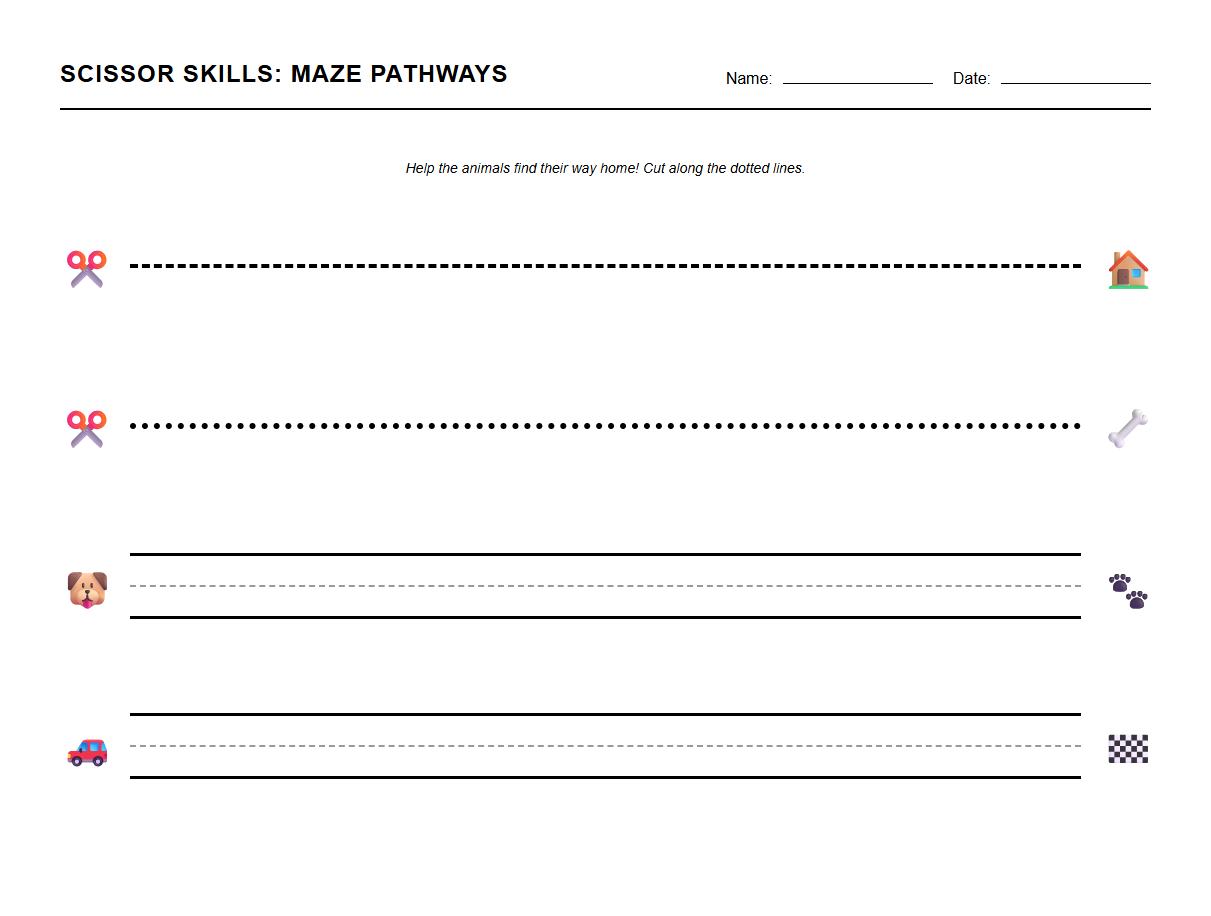
Beginners benefit most from practicing along straight, thick lines since they are easier to follow. Once comfortable, children can advance to cutting along curved or wavy lines for more challenge. Dotted or dashed lines can also guide beginners, providing a visual cue to improve accuracy. Gradual progression helps build confidence and skill with scissors. For a related tracing activity, view number sense through tracing worksheets.
Assessing Scissor Cutting Progress in Students
Teachers can assess progress by observing children's ability to follow lines with accuracy and independence. Tracking improvements in hand strength, coordination, and control over time provides measurable goals. Using simple checklists or portfolios of completed worksheets helps document development. Feedback from parents can also provide insight into cutting skills practiced at home. Encourage visual monitoring with visual perception and color matching worksheets.
Recommended Materials for Creating Scissor Practice Sheets
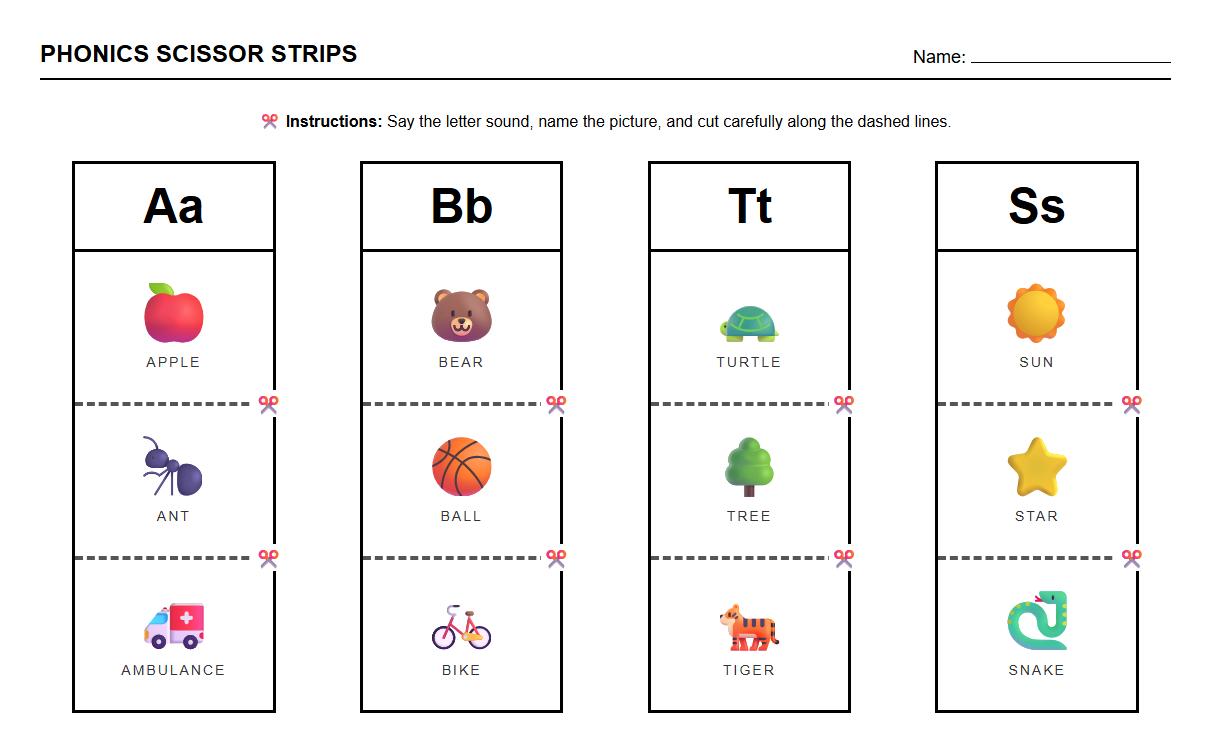
Scissor practice sheets are most effective when printed on thick, sturdy paper like cardstock to withstand repeated cutting. Brightly colored, laminated sheets can be reused with dry erase markers for tracing lines. Simple designs printed clearly on plain white or colored paper help maintain focus. Including visual cues or rewards on sheets can motivate young learners. See more material ideas at color recognition and phonics worksheet activity.
Frequency of Scissor Cutting Exercises in the Classroom
Incorporating scissor cutting exercises 2-3 times per week provides consistent practice without overwhelming children. Short, focused sessions of 10-15 minutes are ideal for maintaining attention and effectiveness. Regular integration with other fine motor activities supports comprehensive skill development. Frequent practice encourages steady improvement and confidence. For more frequent skill options, explore phonics mazes for reading fluency.
Creative Cut-and-Paste Projects Suitable for Kindergarten
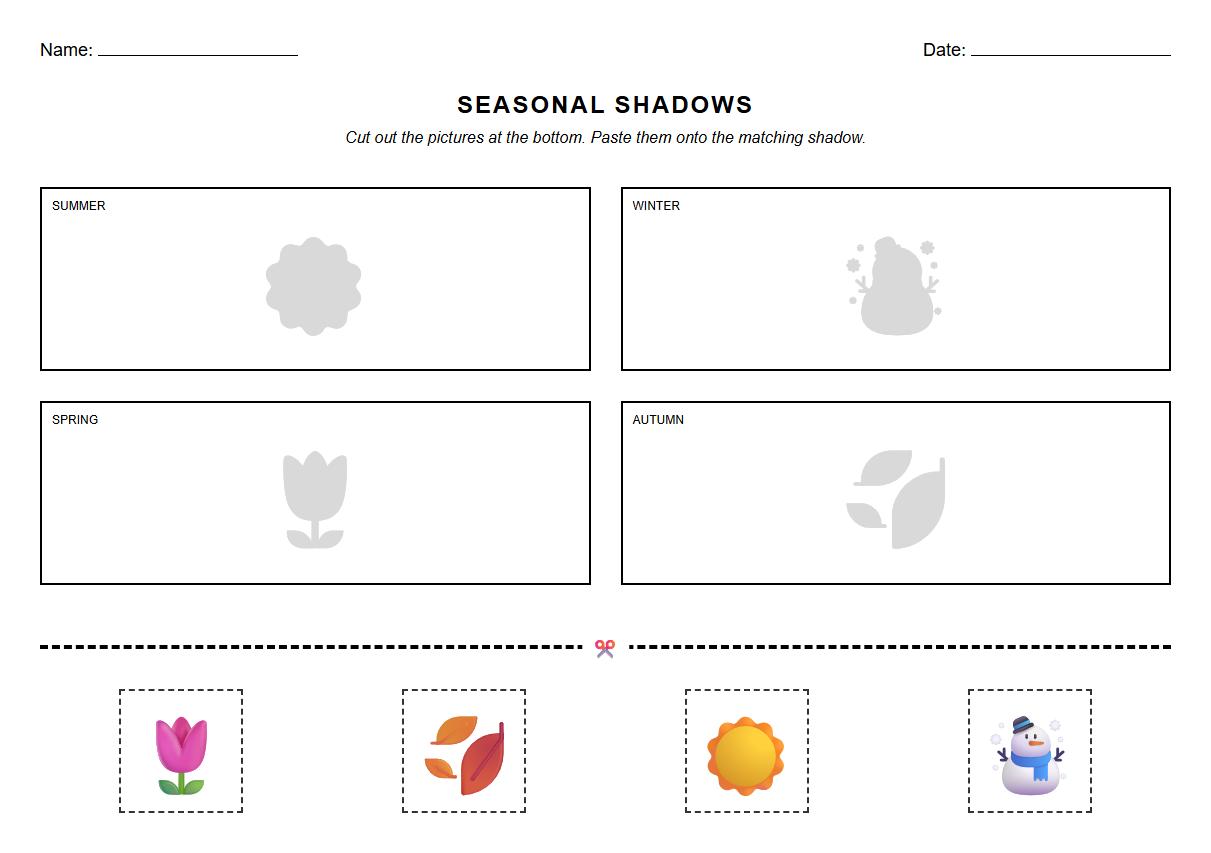
Creative projects such as making simple paper animals, collages, or greeting cards are excellent for developing cutting skills. Encouraging children to cut out shapes and arrange them to form pictures fosters creativity and fine motor control. Seasonal crafts and storybook-related projects increase engagement and learning relevance. These activities provide purposeful use of scissor skills. For cut-and-paste fun with colors, check color recognition and classification worksheet.
Supporting Children with Weak Hand Muscles During Cutting
Children with weak hand muscles benefit from using adaptive scissors specifically designed for easier grip and cutting. Engaging in hand strengthening exercises like playdough or squeezing stress balls helps build muscle tone. Providing one-on-one guidance and positive reinforcement encourages persistence. Allowing extra time and practicing simpler cutting tasks reduces frustration. Explore interactive problem-solving with critical thinking mazes.
Additional Skills Developed Through Regular Scissor Cutting Practice
Beyond fine motor improvement, regular scissor cutting enhances hand-eye coordination, concentration, and bilateral coordination. It also supports cognitive skills such as spatial awareness and problem-solving when planning cuts. Cutting activities build self-confidence as children master new abilities. These skills collectively prepare children for academic tasks like writing and art.


Developing Scissor Technique with Cutting Skills Worksheets for Kindergarten