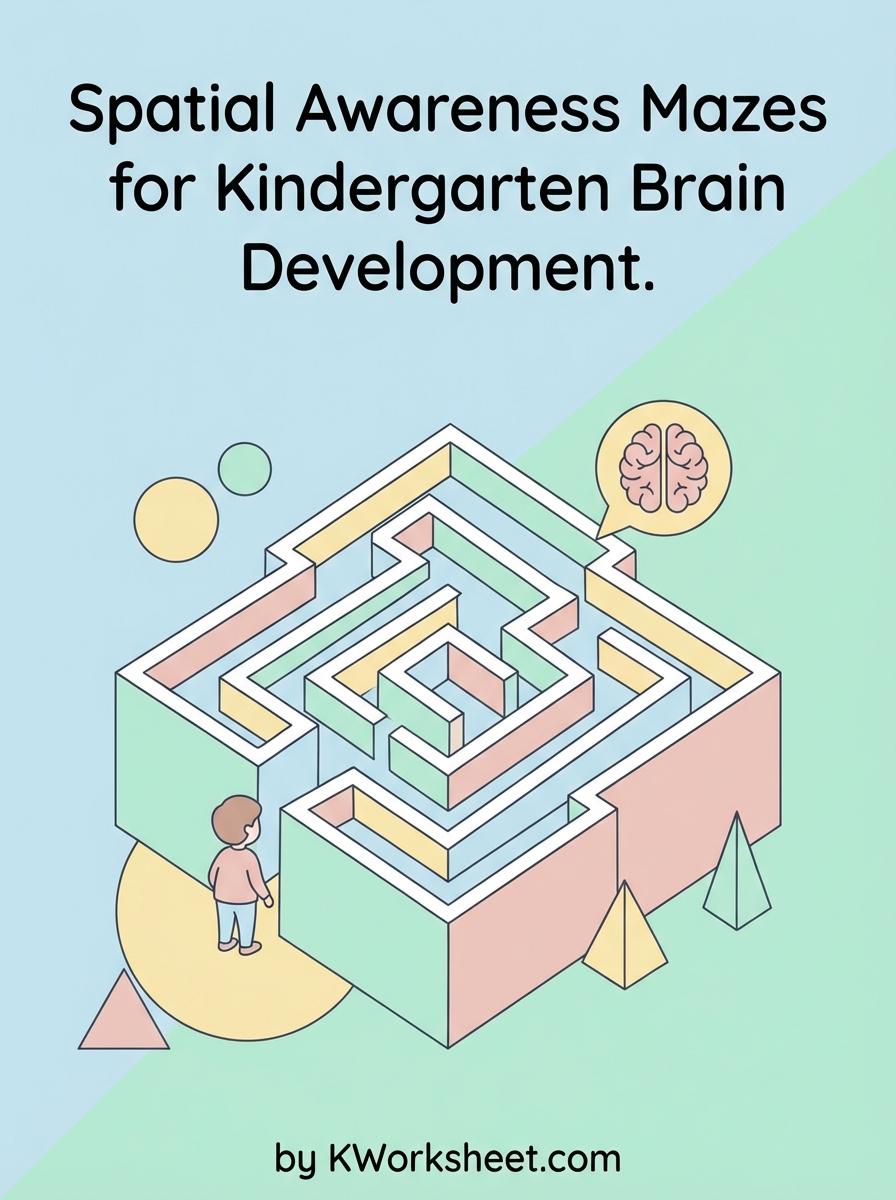
Spatial Awareness Mazes for Kindergarten Brain Development

📅 Jan 18, 2025 👤 Nylen Smith

Spatial awareness mazes enhance kindergarteners' ability to recognize shapes, directions, and spatial relationships, crucial for early cognitive growth. These engaging activities improve fine motor skills and problem-solving abilities as children navigate through complex patterns. Explore our collection of spatial awareness maze worksheets designed to boost your child's brain development effectively.

Spatial Awareness Mazes with Directional Arrows
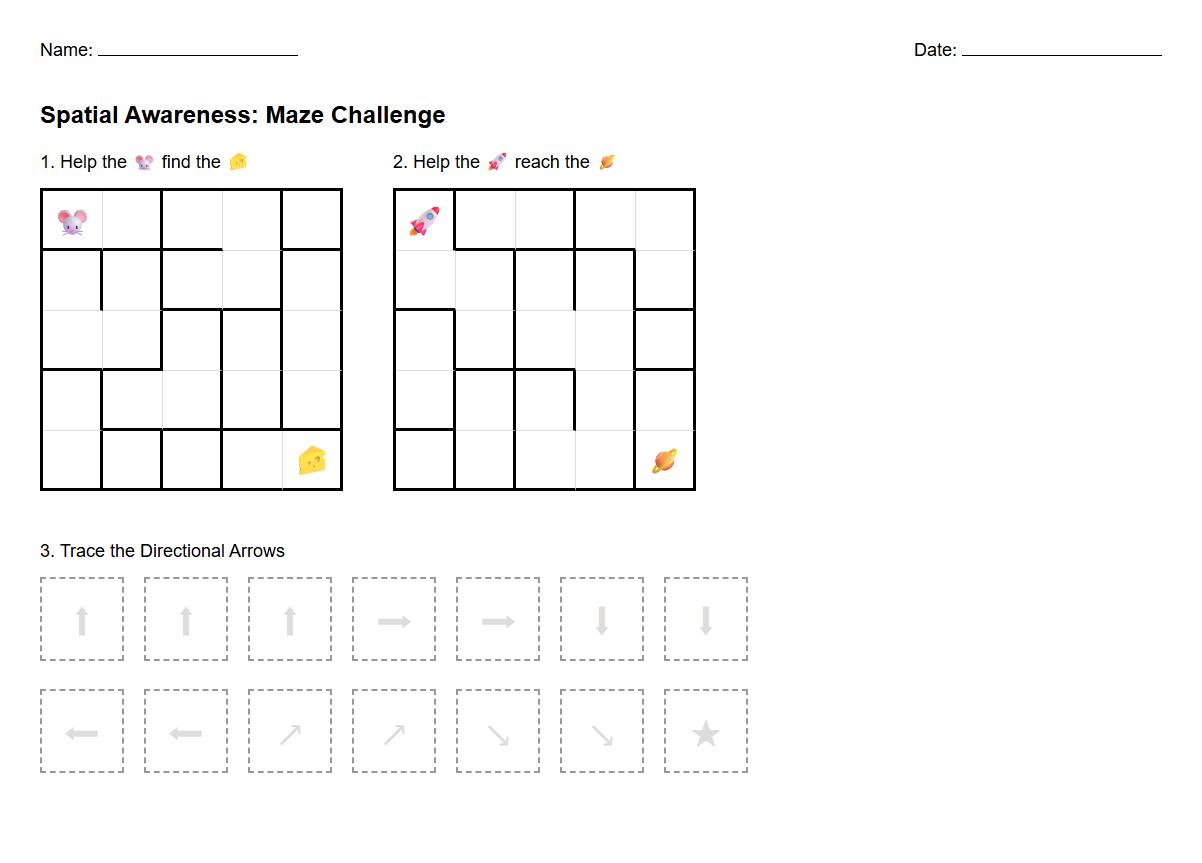
Spatial Awareness Mazes with Directional Arrows

Download PDF     Pin it

Maze Worksheets Focusing on Left and Right Orientation
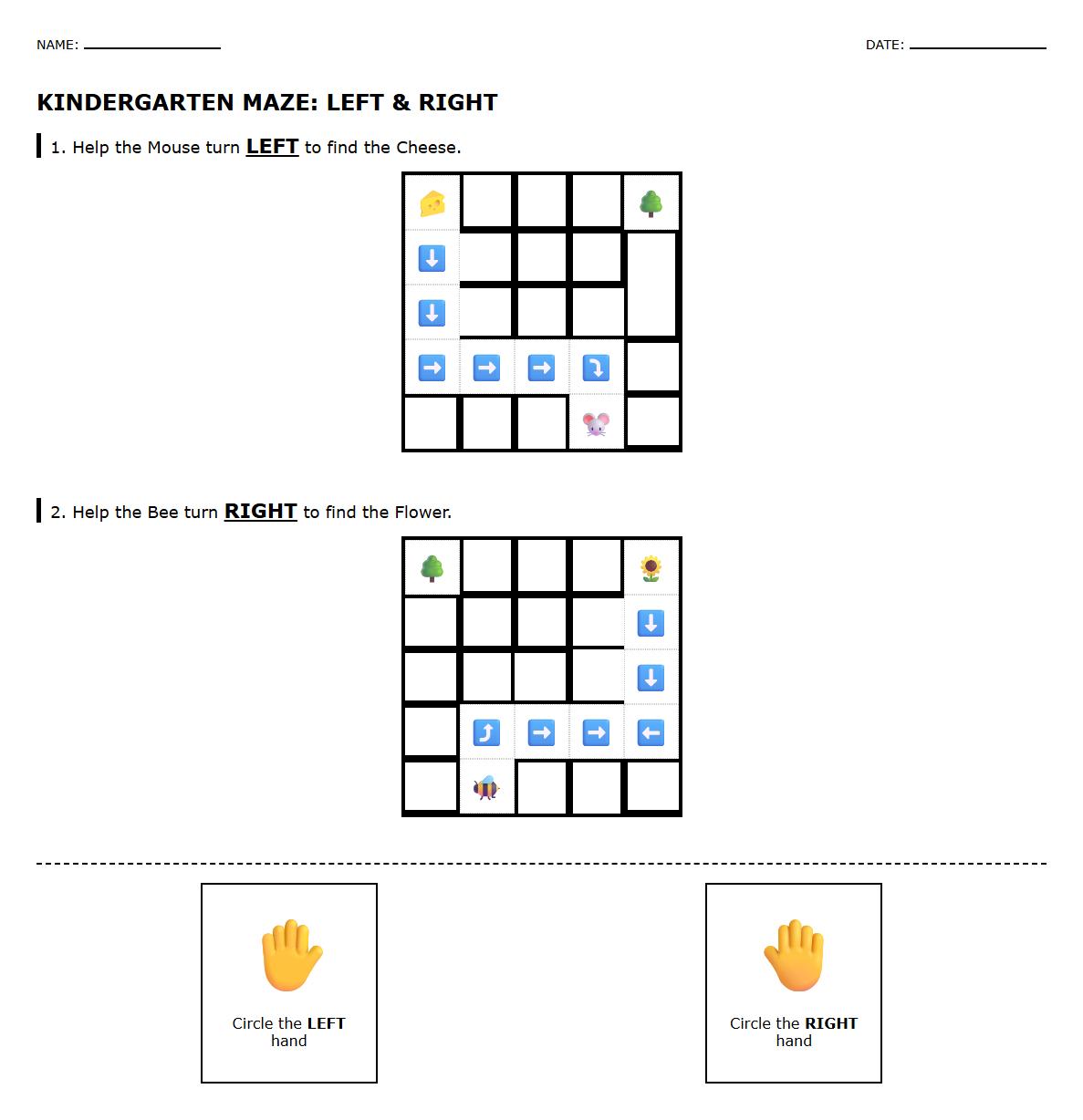
Maze Worksheets Focusing on Left and Right Orientation

Download PDF     Pin it

Patterned Path Mazes for Visual Discrimination Skills
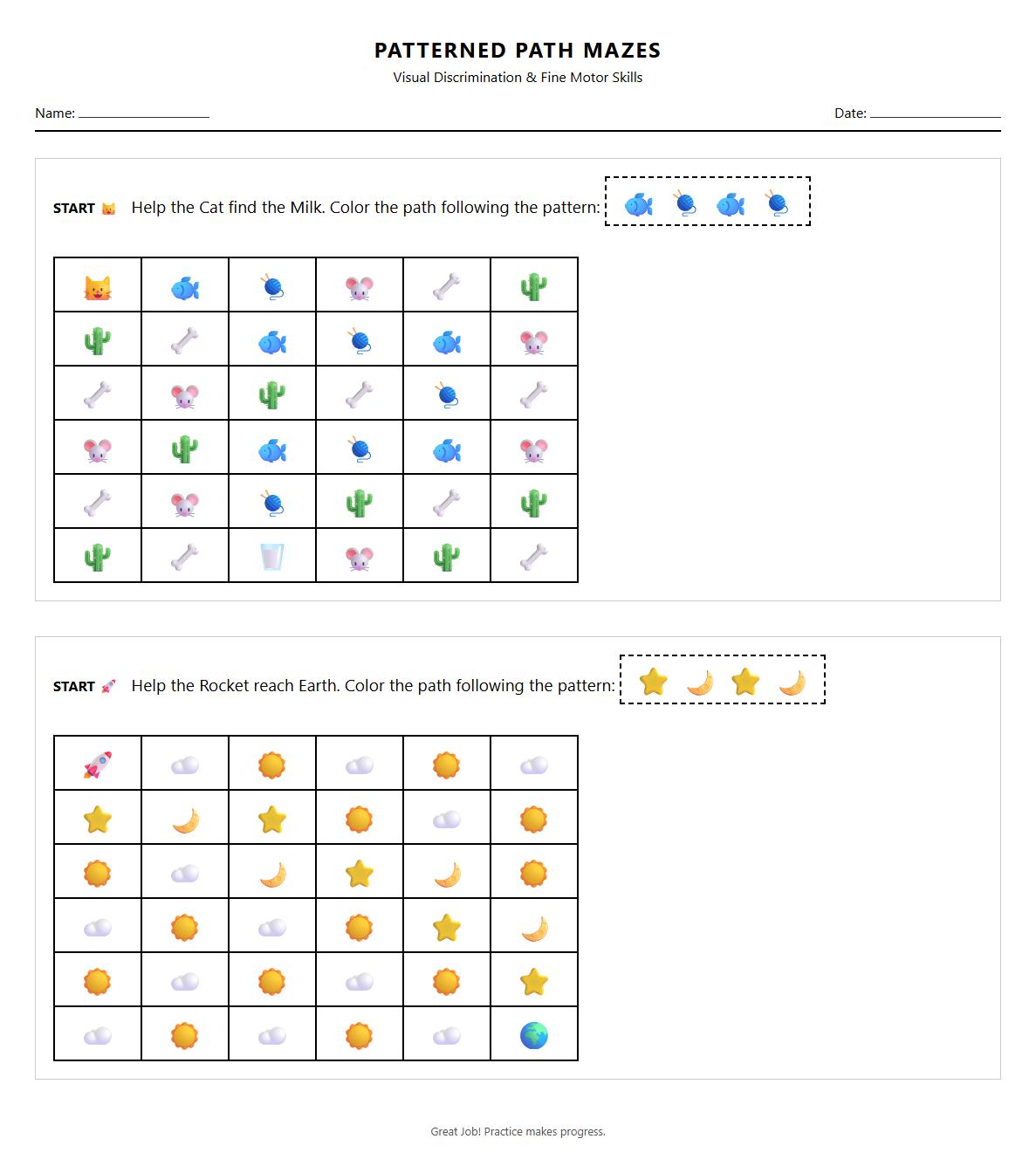
Patterned Path Mazes for Visual Discrimination Skills

Download PDF     Pin it

Shape Recognition Mazes for Early Geometry Concepts
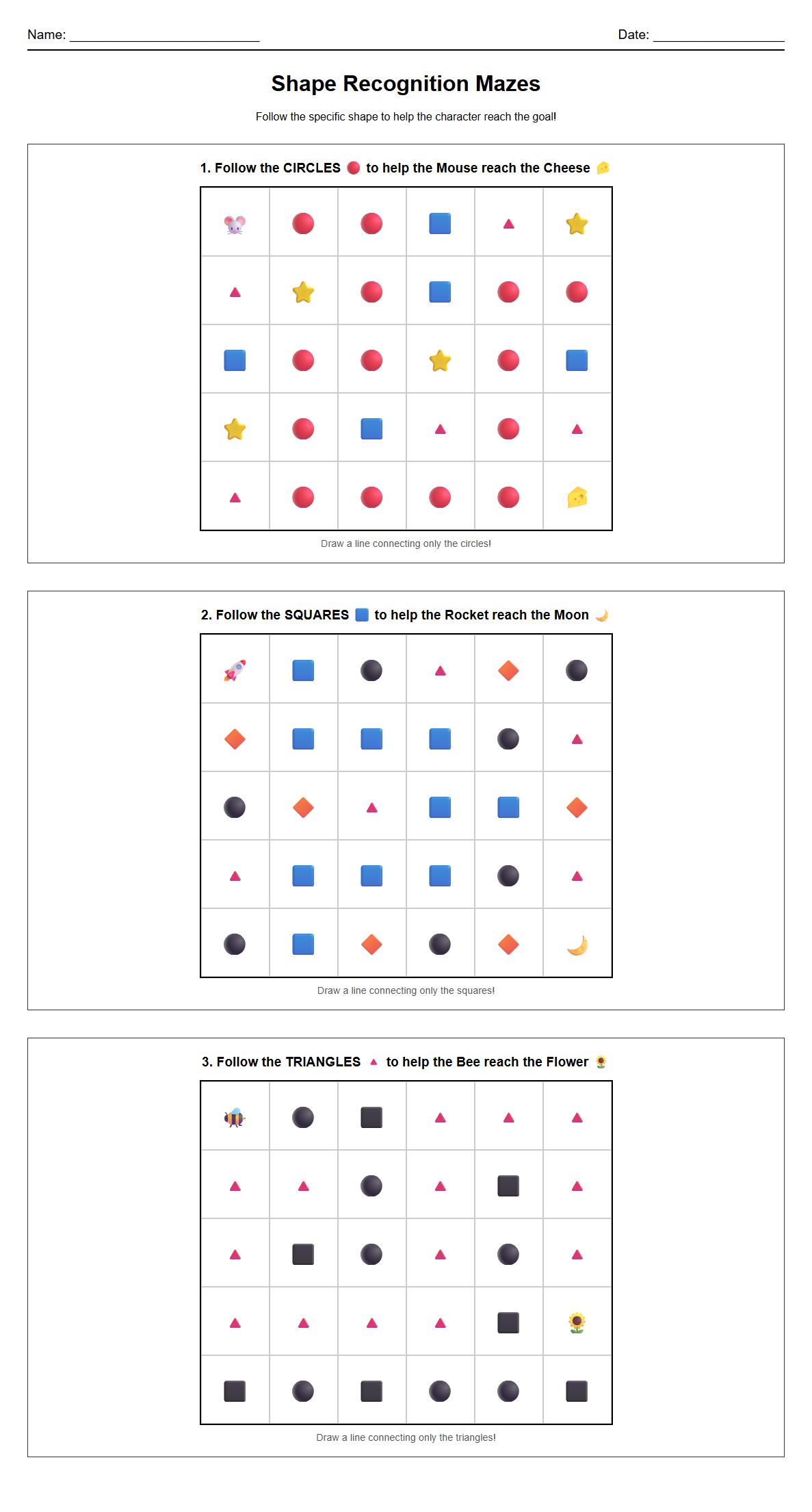
Shape Recognition Mazes for Early Geometry Concepts

Download PDF     Pin it

Pathfinding Mazes with Obstacles for Logical Reasoning
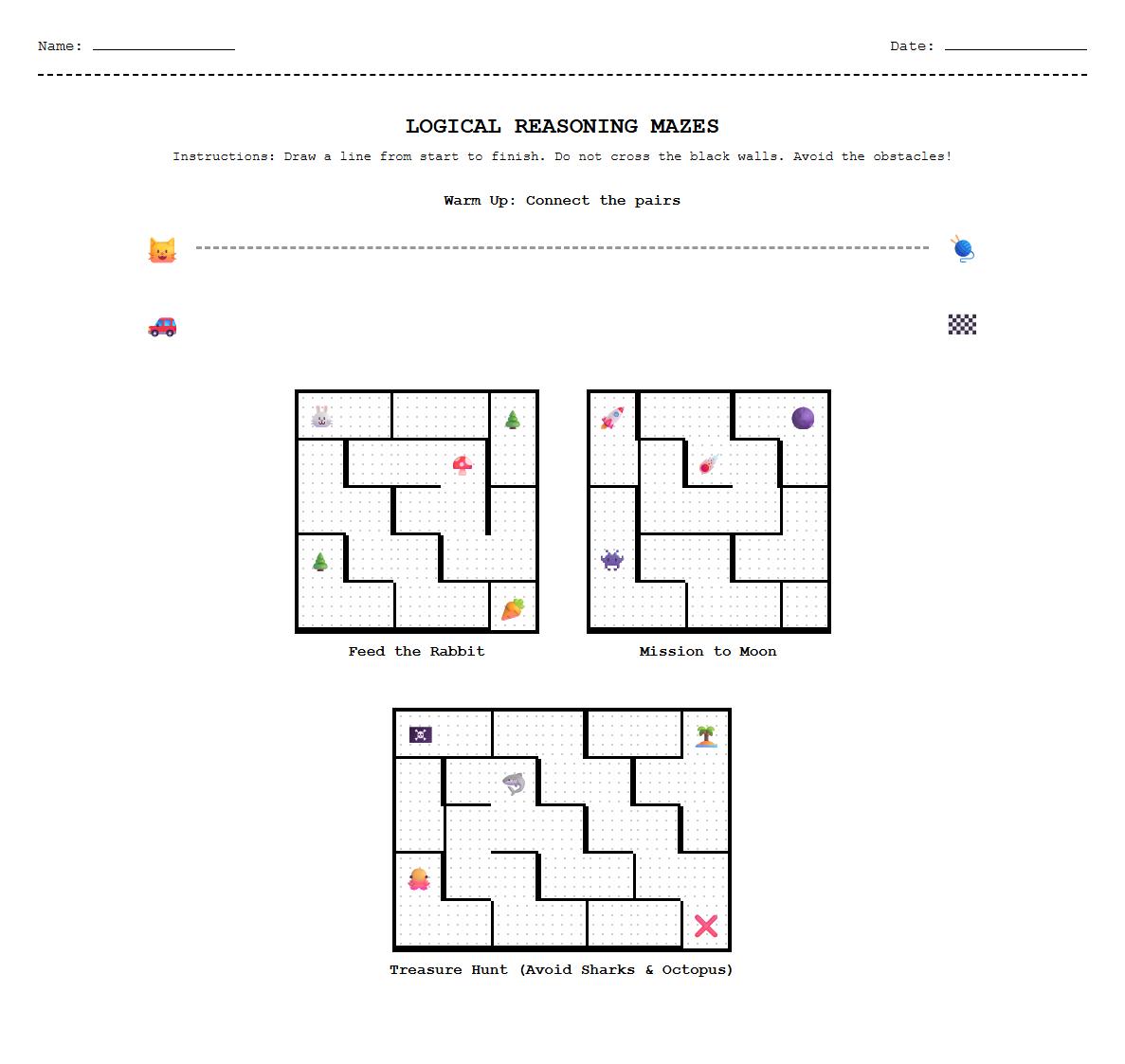
Pathfinding Mazes with Obstacles for Logical Reasoning

Download PDF     Pin it

Phonics Integrated Letter Mazes for Literacy and Spatial Skills
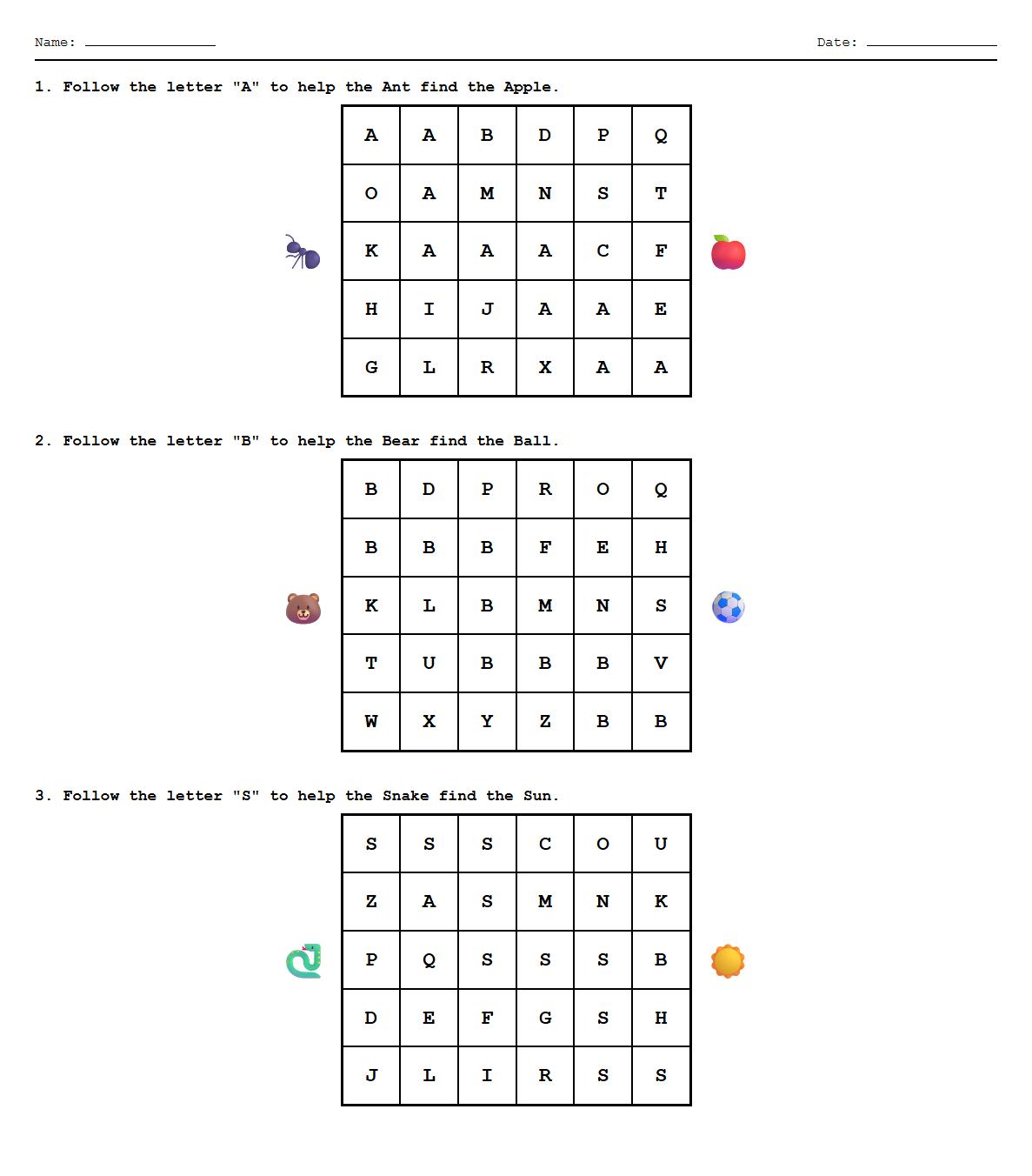
Phonics Integrated Letter Mazes for Literacy and Spatial Skills

Download PDF     Pin it

Number Sequence Mazes to Enhance Math Connections
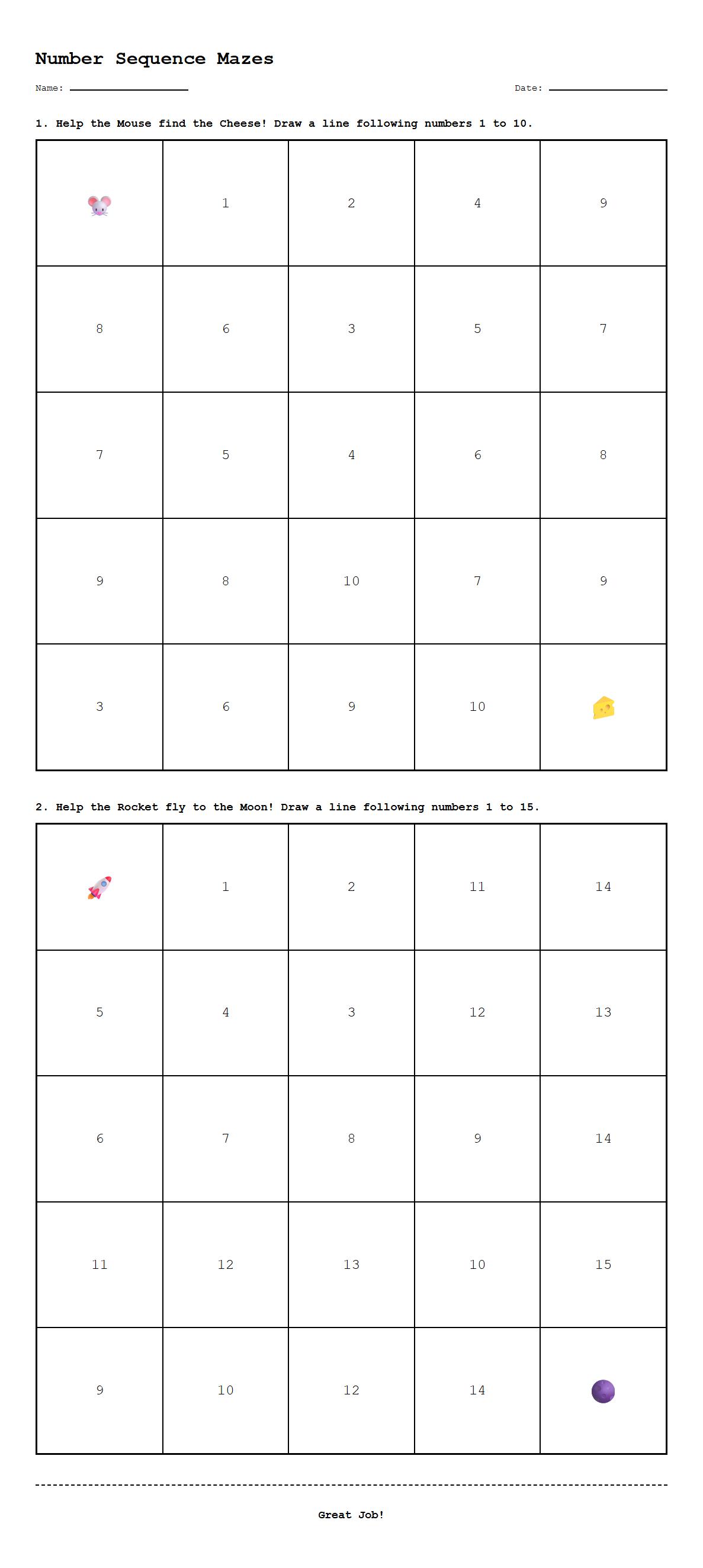
Number Sequence Mazes to Enhance Math Connections

Download PDF     Pin it

Object Location Mazes for Position and Classification
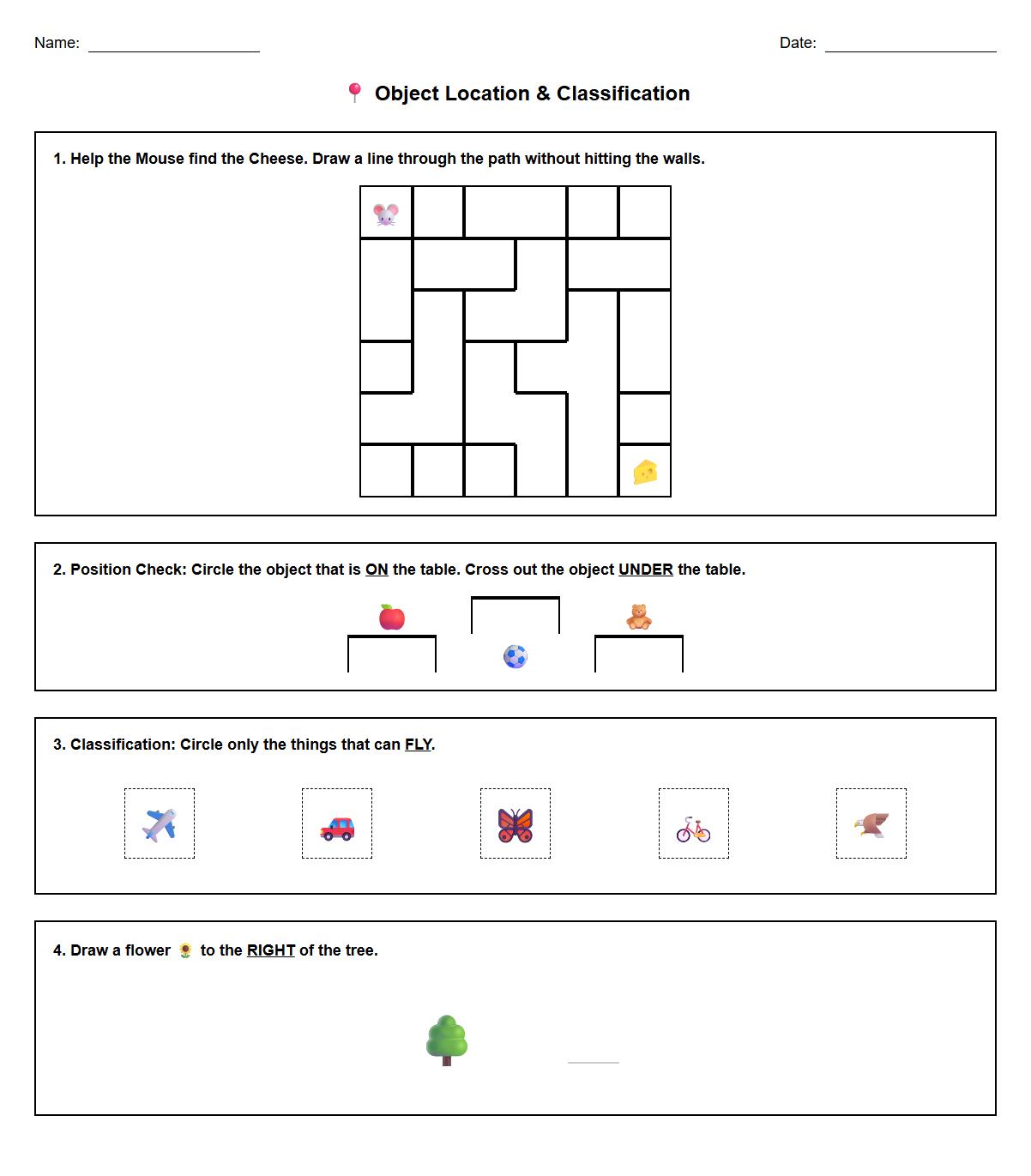
Object Location Mazes for Position and Classification

Download PDF     Pin it

Sequential Step Mazes for Procedural Thinking
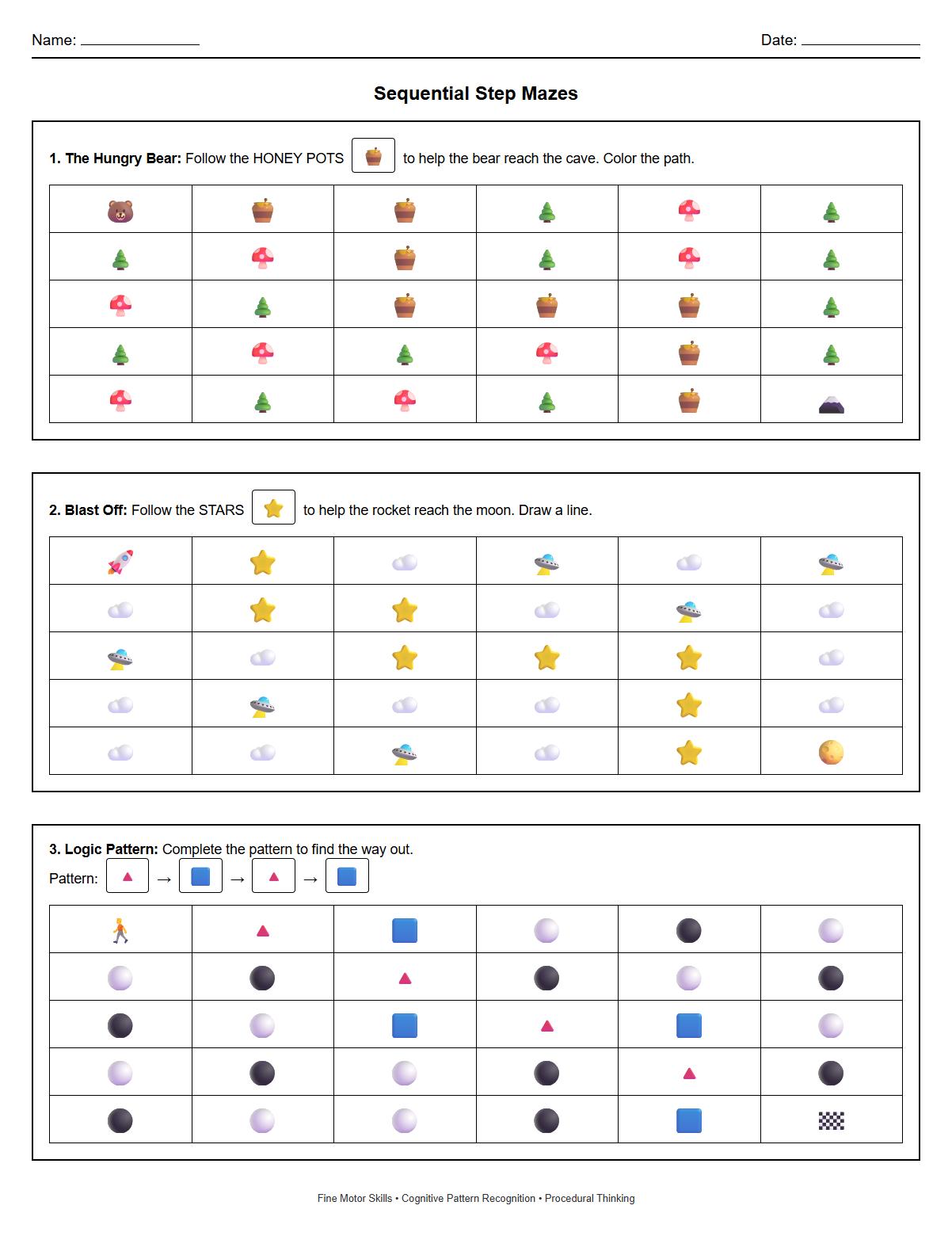
Sequential Step Mazes for Procedural Thinking

Download PDF     Pin it

Color Coded Mazes for Visual Perceptual Development
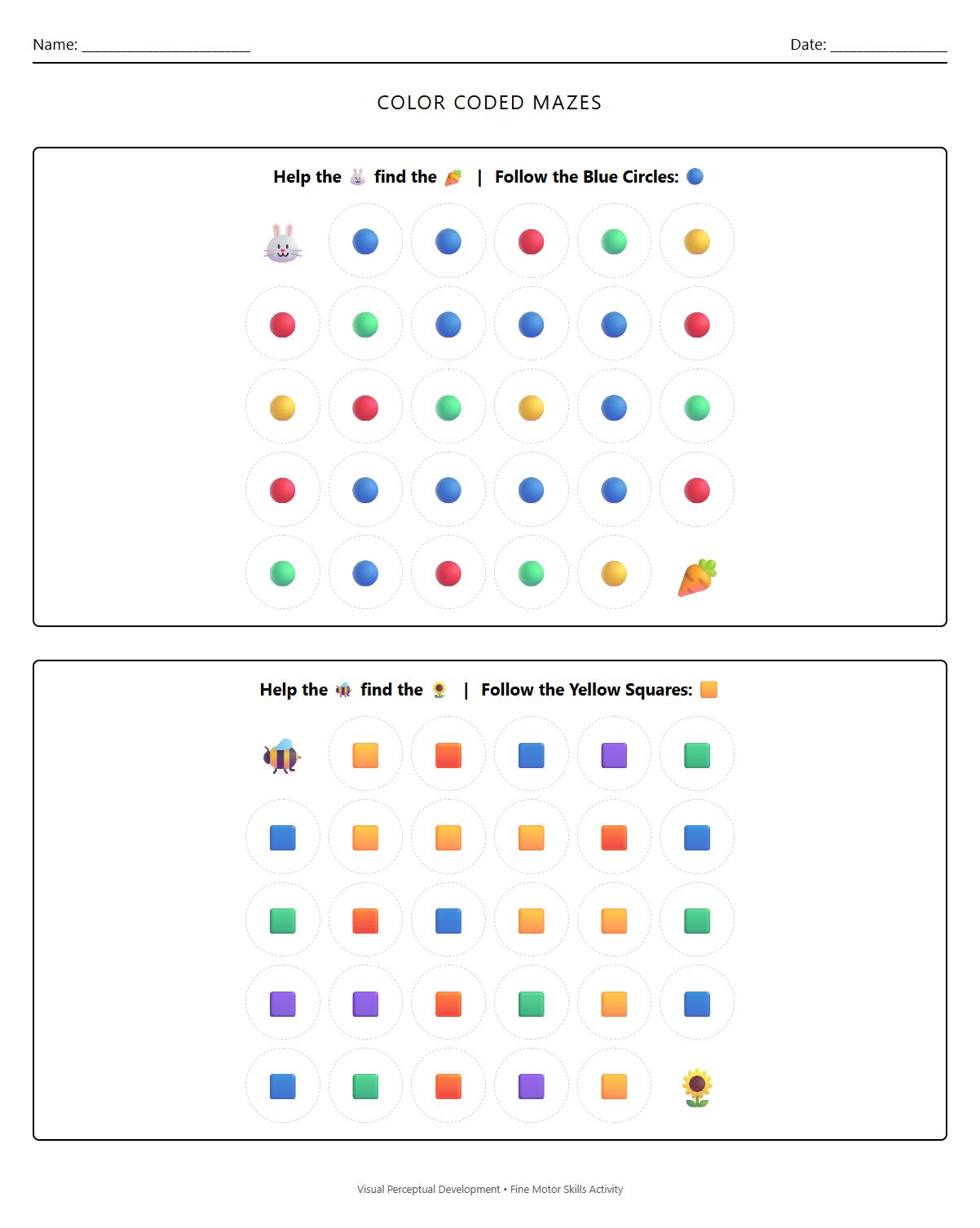
Color Coded Mazes for Visual Perceptual Development

Download PDF     Pin it

How Spatial Awareness Mazes Support Cognitive Growth in Kindergarten Students

Spatial awareness mazes encourage young learners to understand and navigate space, which is essential for cognitive development. These activities enhance problem-solving skills by requiring children to plan and visualize paths before moving. By working through mazes, students improve concentration and memory, supporting overall mental growth. Additionally, such exercises help build foundational skills for later math and reading success.

Key Skills Developed When Completing Mazes

Children develop critical problem-solving and critical thinking skills by figuring out how to reach the maze's end. They also improve fine motor skills as they guide their pencil or finger through the paths. Directional awareness and spatial reasoning are strengthened, helping with orientation and map reading. Completing mazes boosts persistence and focus as kids overcome challenges step-by-step.

Incorporating Mazes into Daily Classroom Activities

Teachers can integrate mazes during quiet time or as warm-up exercises to stimulate the brain. Mazes can be linked to lessons on shapes, directions, or storytelling to create cross-curricular engagement. Small groups or individual work help tailor difficulty levels to student needs. Rotating various maze types keeps children excited and ready for continued learning.

Best Materials for Creating Age-Appropriate Spatial Mazes

Use durable paper or laminated sheets allowing for repeated use with dry erase markers. Large-print and colorful designs attract and maintain children's interest. Incorporate tactile materials like textured paths or movable pieces to enhance sensory involvement. Safe, child-friendly scissors and crayons also support hands-on maze crafting activities.

How Mazes Improve Hand-Eye Coordination in Kindergartners

Tracing or drawing paths through mazes strengthens the connection between visual input and physical response. This practice boosts fine motor control and precision in pencil handling. Improved hand-eye coordination aids with writing, cutting, and other school-related tasks. Regular maze activities build muscle memory for smoother, more coordinated movements.

Frequency of Maze Activities in the Kindergarten Curriculum

Incorporating maze exercises 2-3 times a week supports steady spatial skill development without overwhelming students. Consistency helps reinforce strategies and build confidence. Mazes balance cognitive challenges with fun, providing a welcome break from routine lessons. Regular use allows teachers to track progress and adjust difficulty as needed.

Creative Ways to Make Mazes More Engaging for Young Learners

Turn mazes into stories or adventures where children help characters find their way home. Integrate themes like animals, seasons, or favorite cartoons to spark interest. Use large floor mats or interactive whiteboards for group maze activities. Reward progress with stickers or praise to motivate persistence and enthusiasm.

Assessing Students' Spatial Reasoning Progress Using Mazes

Teachers can observe problem-solving approaches and completion times for each maze. Gradually increasing maze complexity reveals improvements in logical thinking and planning. Recordkeeping of success rates and error patterns guides personalized support. Informal check-ins during activities provide real-time insight into skill development.

Digital vs. Traditional Paper-Based Mazes for Brain Development

Both digital and paper mazes offer benefits, but traditional mazes encourage physical pencil control and tactile feedback. Digital mazes add interactive elements and instant feedback, potentially increasing engagement. Screen time should be balanced with hands-on learning to optimize brain development. Combining both formats provides a well-rounded spatial awareness experience.

Supporting Spatial Awareness Development at Home with Maze Activities

Parents can practice mazes together during quiet evenings to reinforce skills learned at school. Using everyday items like puzzles and treasure maps promotes spatial reasoning in real-world contexts. Encouraging kids to explain their maze path strengthens verbal and cognitive abilities. Consistent, fun involvement builds confidence and enthusiasm for learning spatial concepts.


More in Fine Motor and Cognitive Skills Category


About the author. Nylen Smith is a dedicated educator and cofounder of KWorksheet.com, a popular platform specializing in high-quality kindergarten worksheets and printable activities.

Disclaimer. The information provided in this document is for general informational purposes and/or document sample only and is not guaranteed to be factually right or complete. Please report to us via contact-us page if you find and error in this page, thanks.

Comments

No comment yet