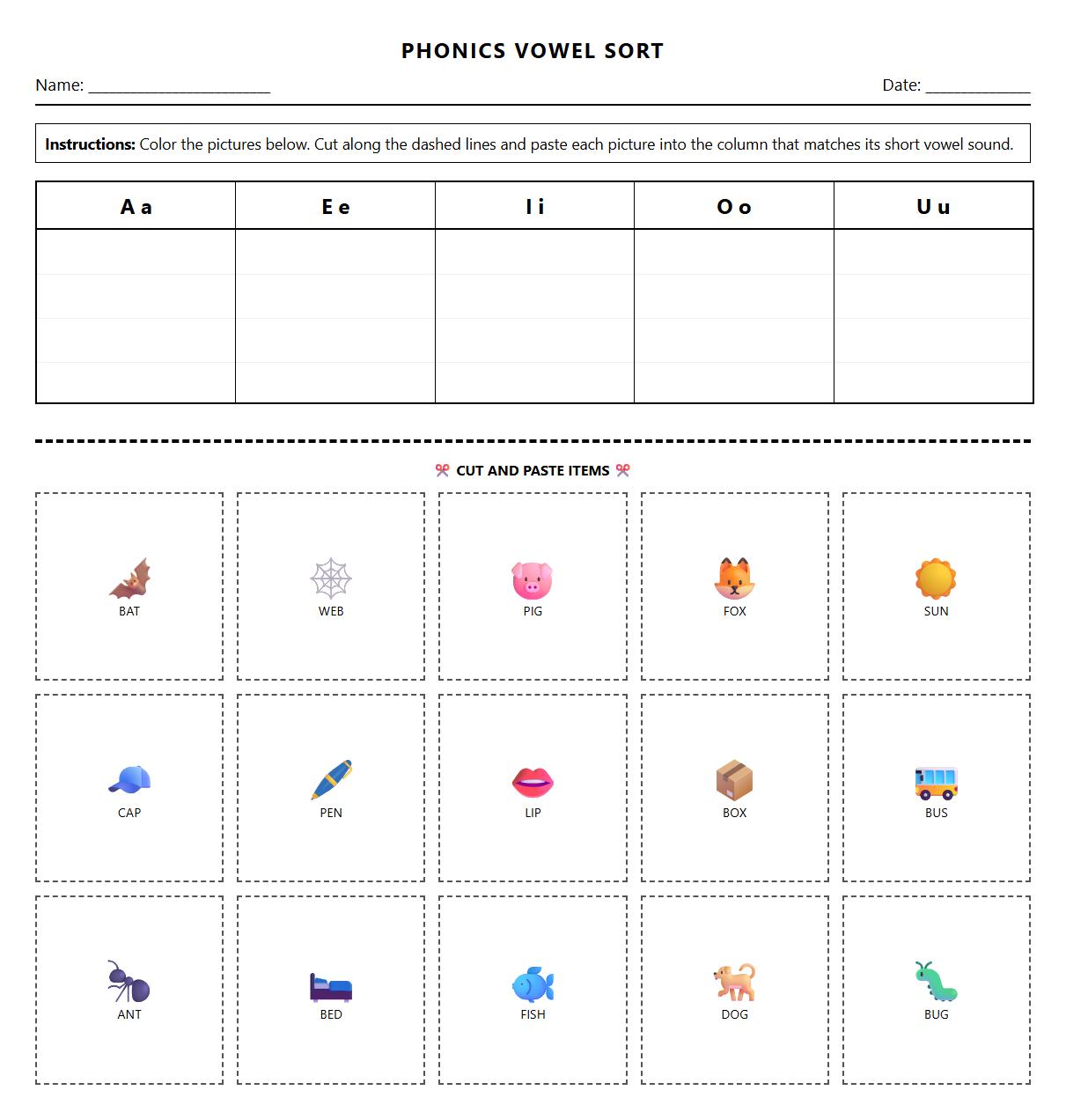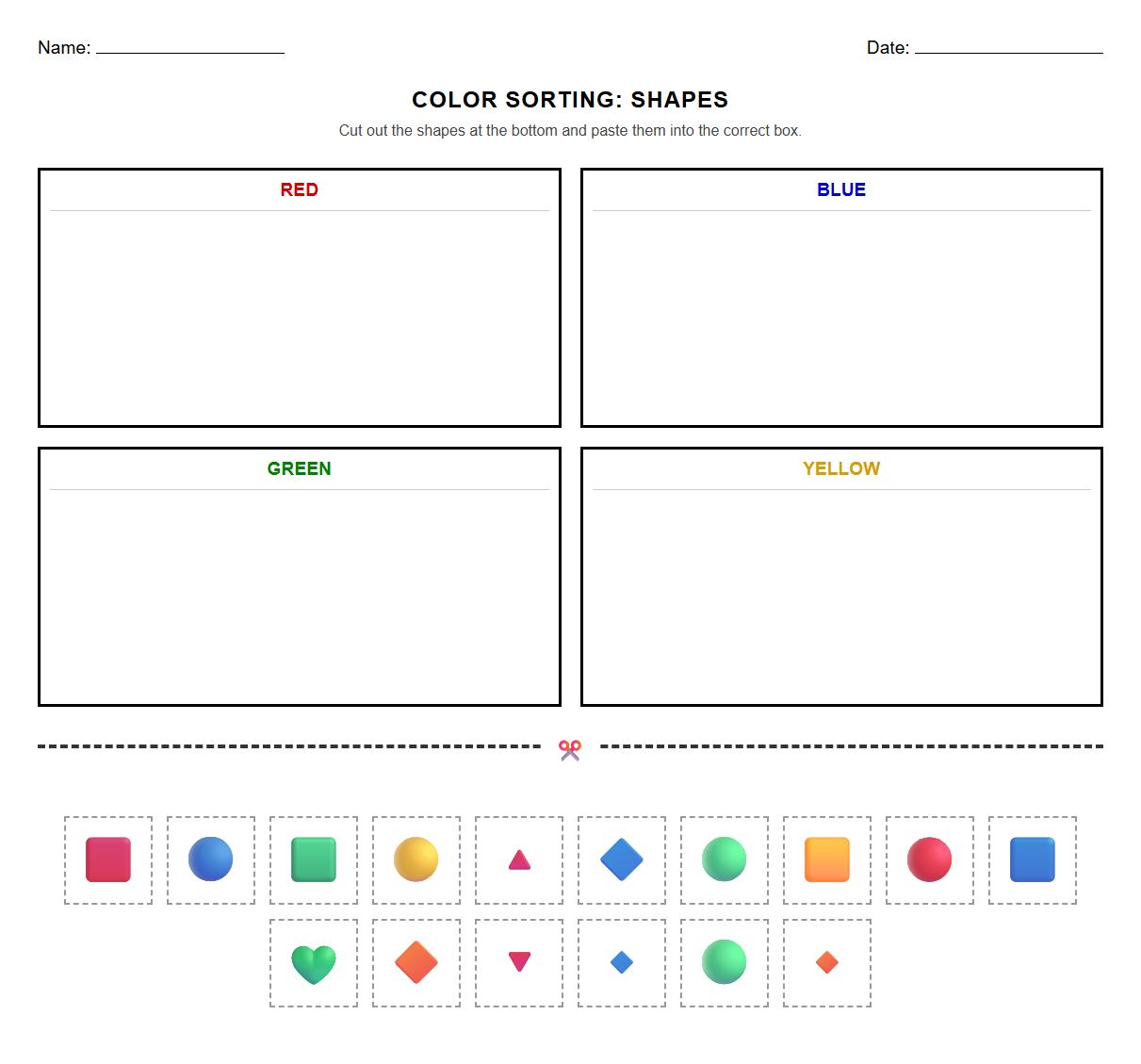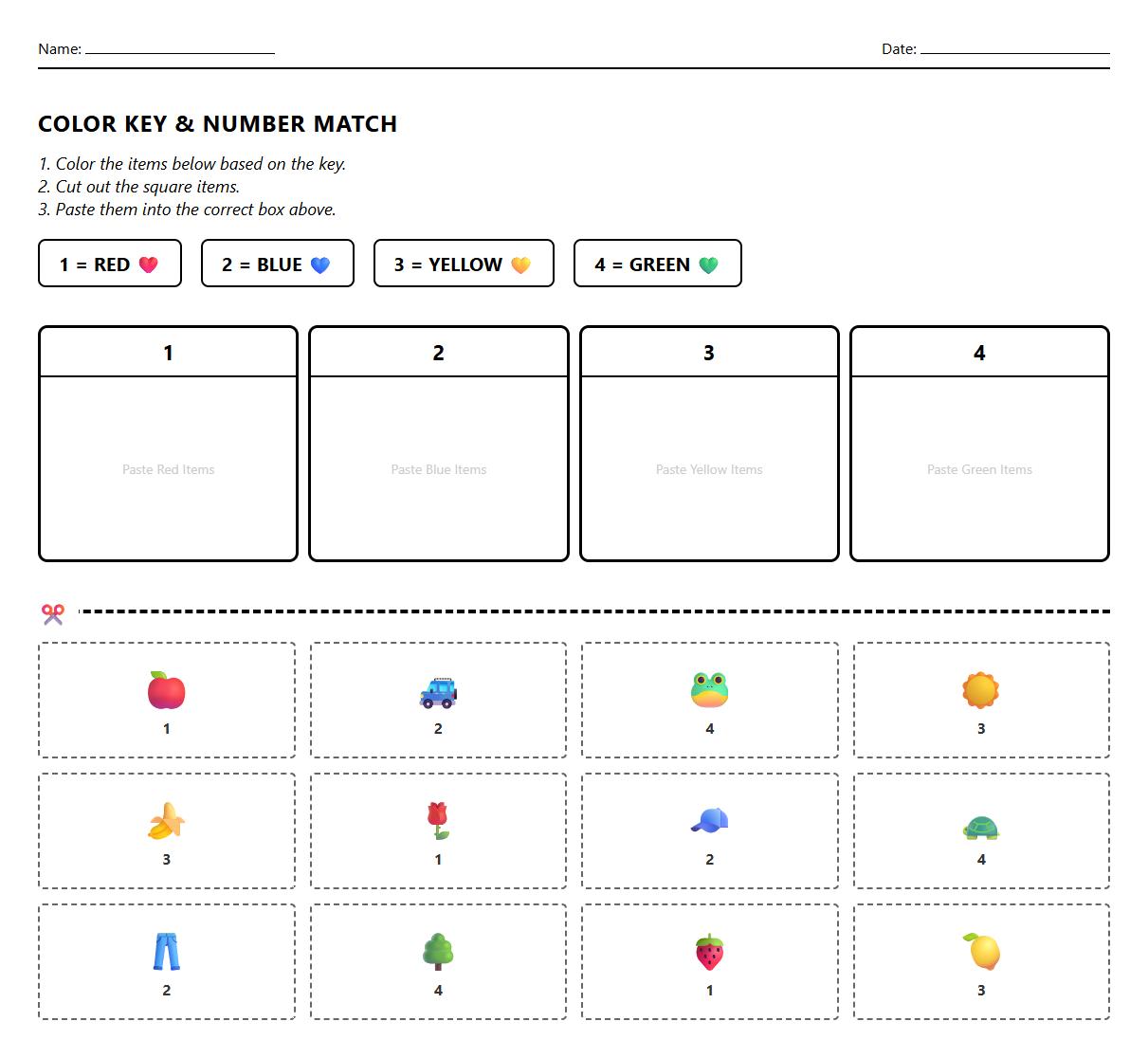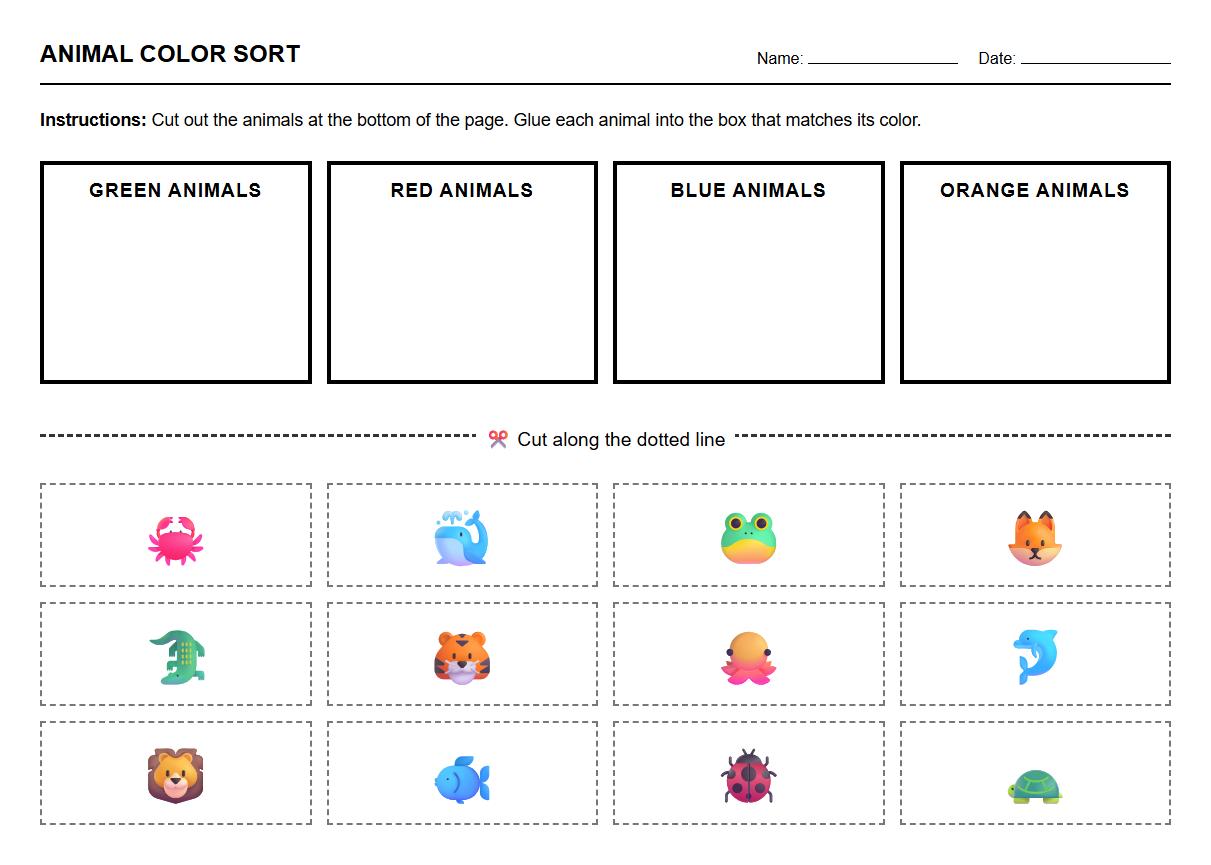
Enhance early learning skills with the Interactive Color Sorting Worksheet designed to improve visual discrimination and color recognition. This engaging activity encourages children to sort objects based on color, fostering cognitive development and attention to detail. Explore the available worksheets to support your child's learning journey.
Identifying Primary Colors in the Worksheet
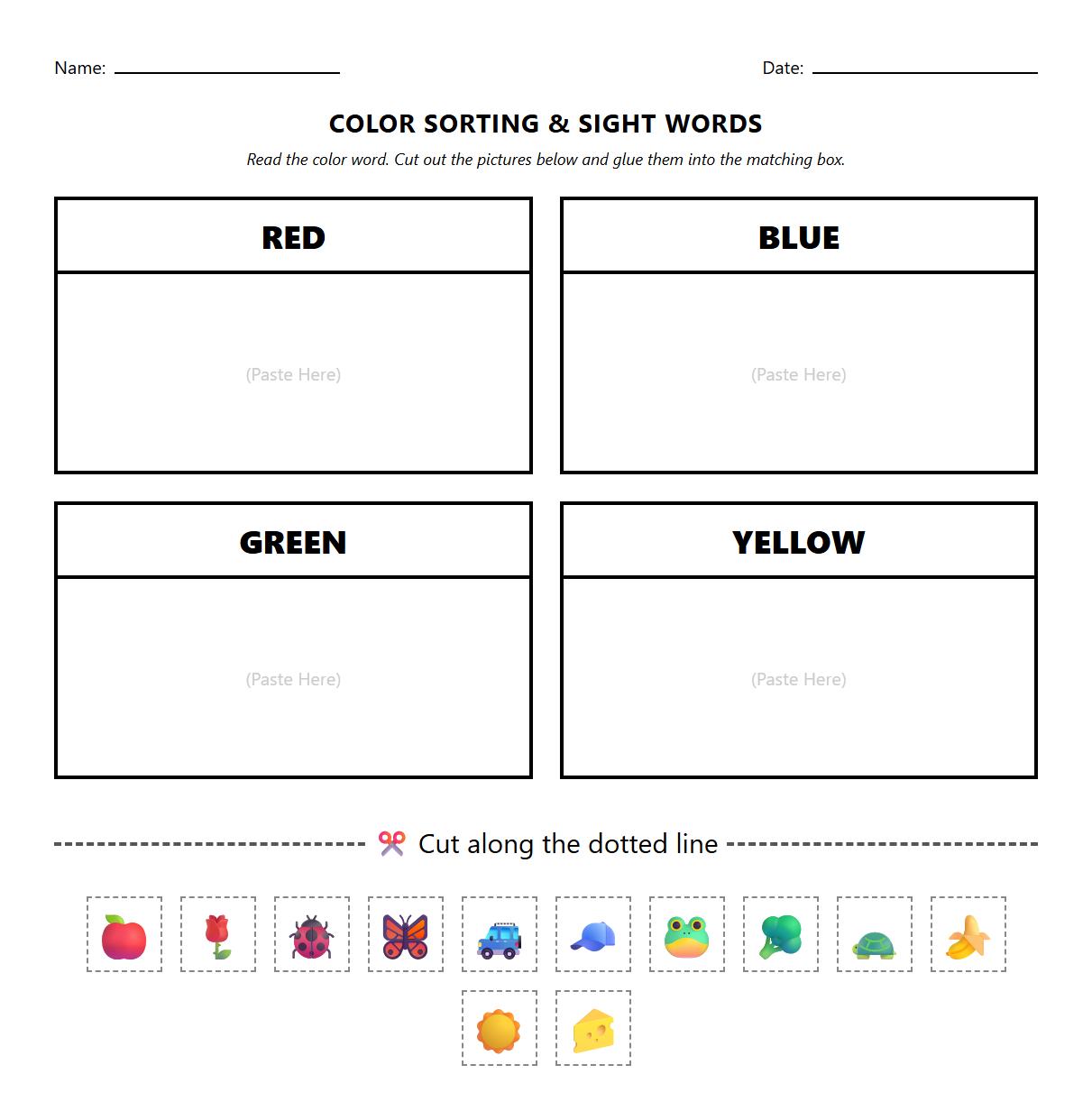
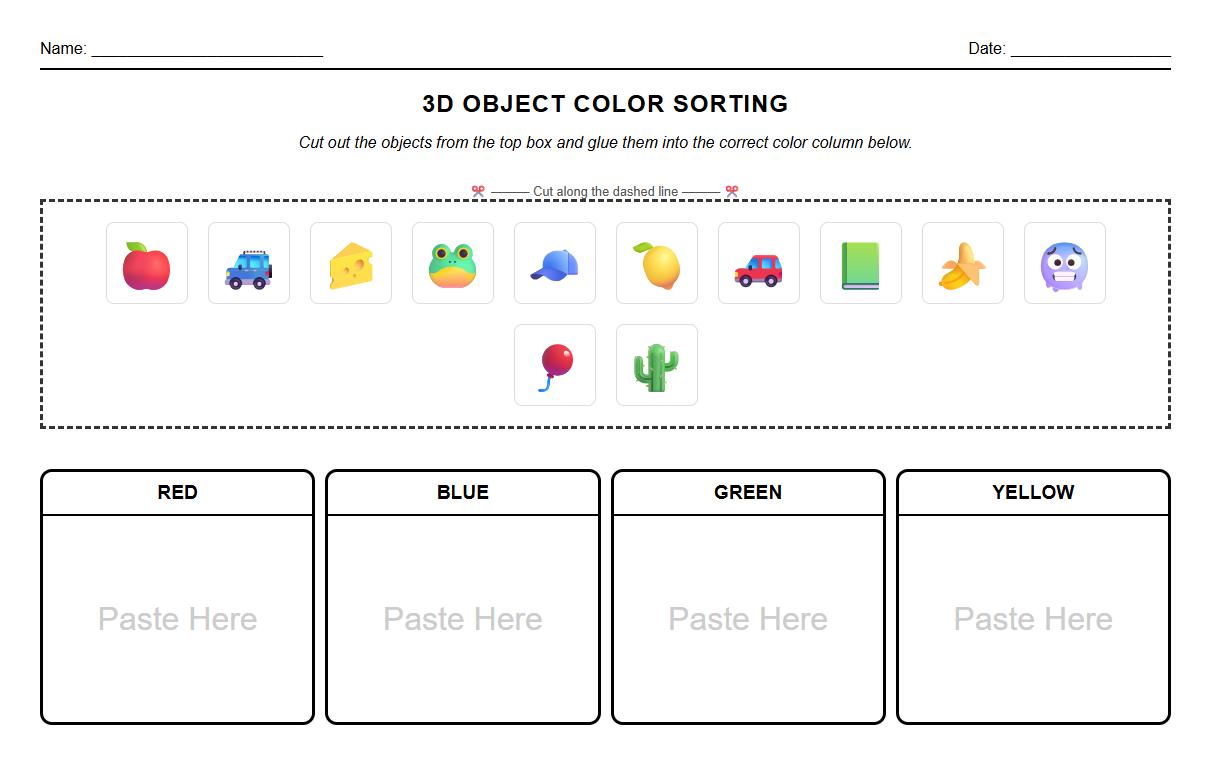
This worksheet allows children to recognize the primary colors of red, blue, and yellow. Teachers can guide students to observe objects carefully and name each color. Emphasizing these colors helps build a foundational understanding of color theory in young learners. Encouraging them to point and name colors promotes active engagement.
Matching Objects to Their Correct Color Group
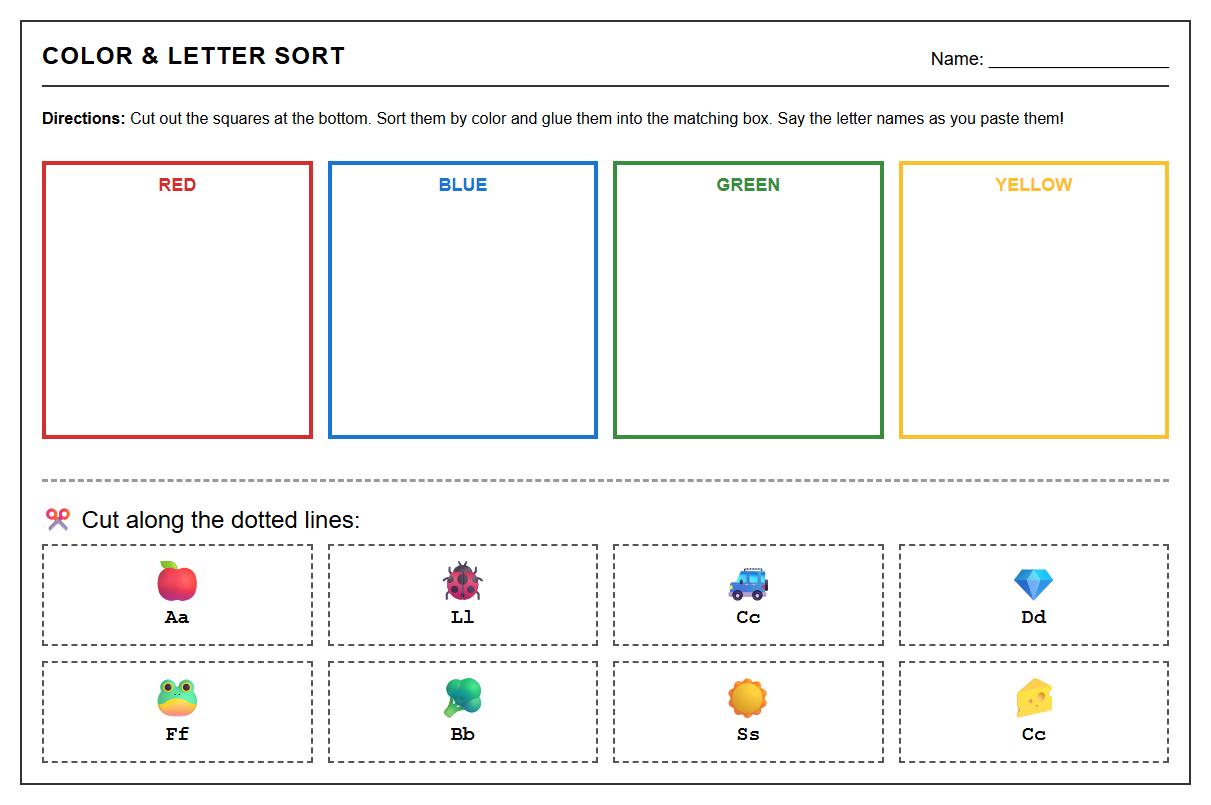
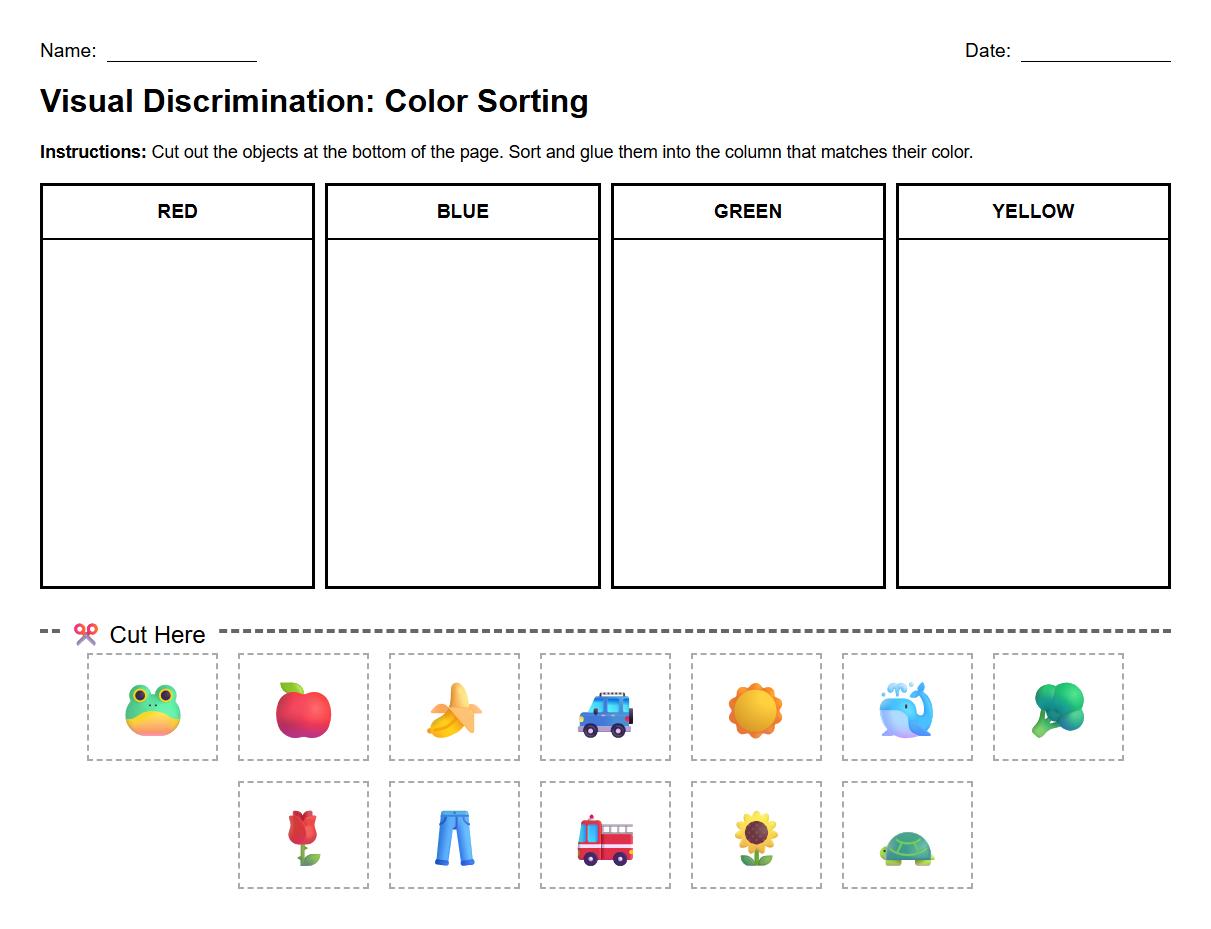
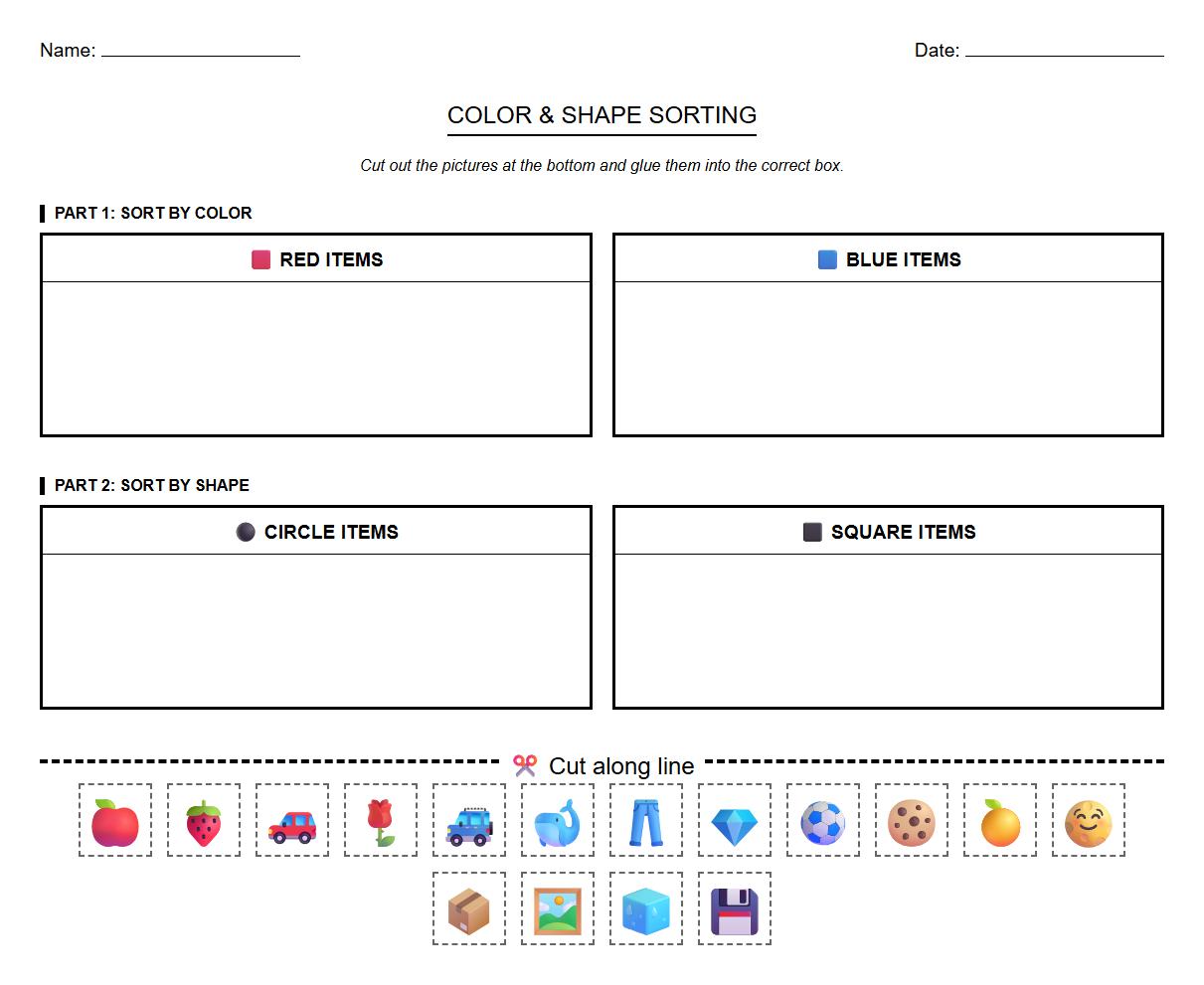
Children are asked to match objects with colors by sorting them into designated sections on the worksheet. This activity develops their ability to associate objects with specific color groups. Parents and teachers should prompt kids to compare each item's color carefully before placing it. Using visual cues and repetition reinforces the correct matching.
Items Belonging in the Red Section
The red section contains objects that share the bright red color characteristic. Typical items include apples, fire trucks, or strawberries illustrated in red. It's important to clarify that only those objects with a strong red hue belong here. This focused grouping helps sharpen color identification skills.
Placing Shapes Based on Color
Children place each shape into a color group based on its visible color on the worksheet. Teachers can encourage comparing each shape to the color groups before placing it correctly. Reinforcing the color vocabulary is key during this task. This practice enhances cognitive and sorting skills simultaneously.
Strategies for Sorting Similar-Looking Colors
A useful strategy is to observe subtle differences in hue and brightness among similar colors. Children may be prompted to describe what makes red different from orange or blue from green. Grouping objects under consistent lighting conditions reduces confusion. Visual comparisons help distinguish these challenging colors.
Grouping Shades of Blue Together
Not all shades of blue are grouped together on the worksheet--only the primary blue shade belongs in the blue section. Light blue or turquoise might be sorted separately to avoid confusion. This distinction aids in learning about color variations. Teachers can explain how shades relate but are different.
Spotting Items That Do Not Match Color Labels
Children should carefully check for mismatches where objects may be placed under incorrect color labels. Finding these errors encourages critical thinking and self-correction. It is an important step to ensure accuracy in understanding colors. Parents and teachers can guide this reflective process gently.
Role of Visual Discrimination in Color Sorting
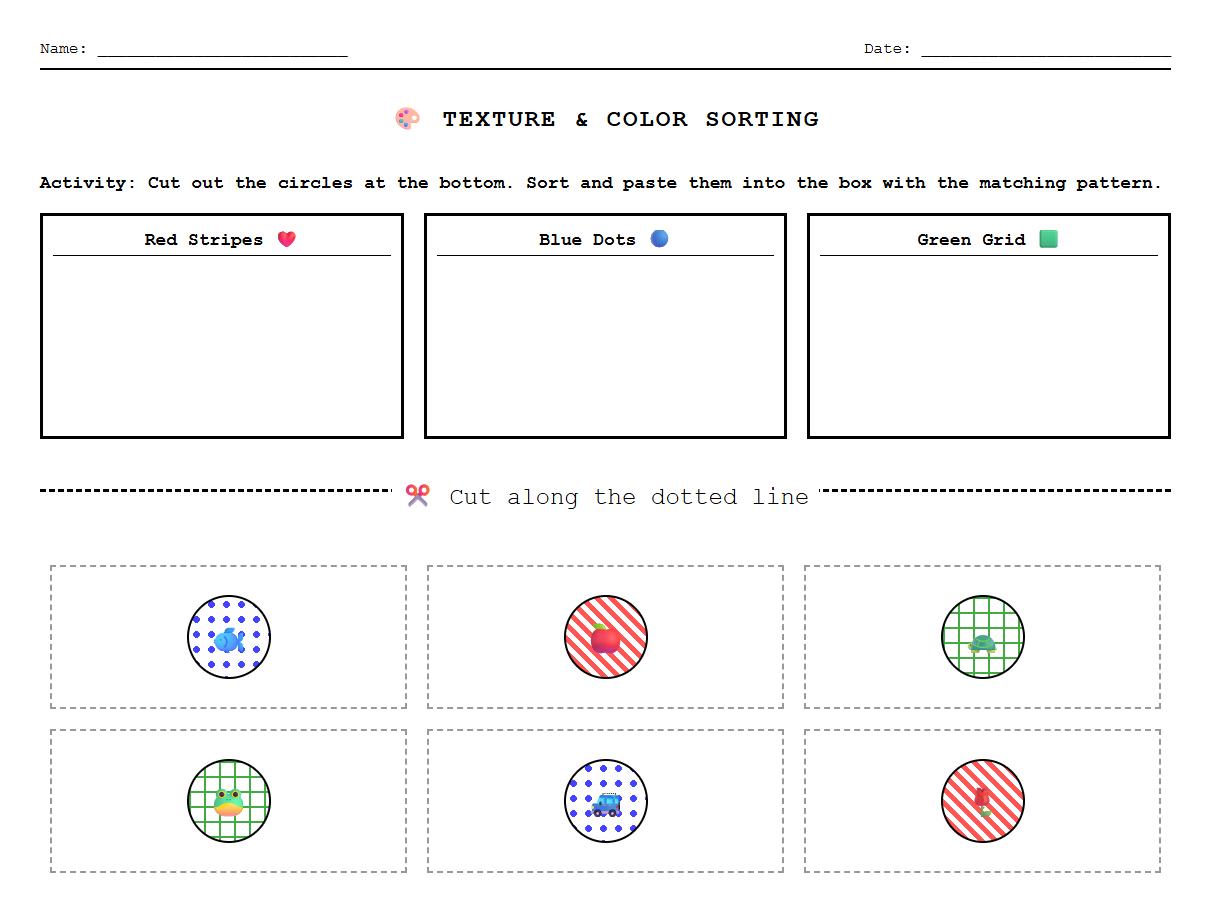
Visual discrimination helps children notice and distinguish differences in colors and shapes. This skill is crucial for accurately sorting items into correct color groups. Enhancing visual discrimination builds foundational perceptual abilities for reading and writing. Regular practice with colorful materials strengthens this ability.
Identifying the Color Group with the Most Objects
By counting, children can determine which color group has the most objects on the worksheet. This numeric comparison supports both color recognition and early math skills. It encourages observational awareness and classification. Teachers can extend the activity with simple counting challenges.
Most Challenging Color Group to Sort and Why
The most challenging group to sort is usually the one with colors that look similar to others, such as red and orange. This difficulty arises due to overlapping shades and hues. Teachers can address this by using additional visual examples and descriptive language. Patience and repeated practice ease this challenge.


Primary and Secondary Color Identification Worksheet for Kindergarten